


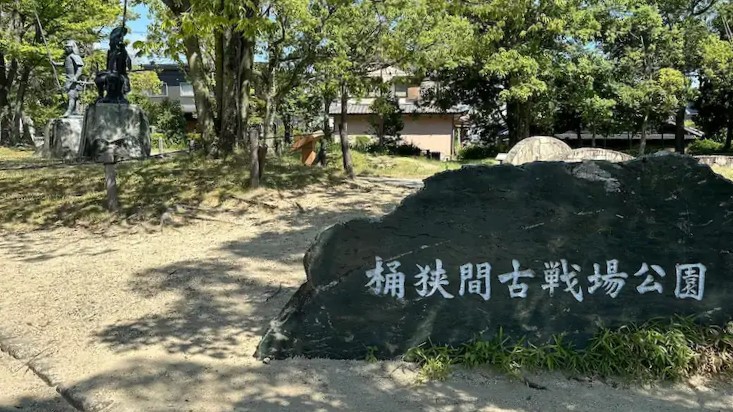
On the morning of the Battle of Okehazama in 1560, Oda Nobunaga rode out of Kiyosu Castle not knowing whether he would return. This guide follows that march site by site, from the castle gate at Kiyosu to the battlefield, across what are now Kiyosu City and Nagoya.
Okehazama does not begin at the battlefield. It begins the moment Oda Nobunaga rides out of Kiyosu Castle.
In the summer of 1560, Imagawa Yoshimoto — the most powerful lord in the region east of Nobunaga's own province — marched a far larger army into Owari Province, roughly the western half of today's Aichi Prefecture. Nobunaga was twenty-six, newly established, and heavily outnumbered. What he did over the following hours ended with Yoshimoto dead on the field at Okehazama and Nobunaga launched on the path that would eventually make him the most feared man in Japan.
The route on this page is the ground he covered in between: the shrines where tradition says he stopped to pray, the great sanctuary at Atsuta where he steadied himself, the enemy castle he could not ignore, and the two forward forts where a force said to number a few hundred grew to several thousand as an army was finally shaped into one body. Almost all of it now sits inside Kiyosu City and modern Nagoya — a shrine wedged between houses, a fort that is now a children's playground, a stone marker on a residential lane. None of it is spectacular. All of it is where the decisions were made.
A note on how certain each stop is: Kiyosu Castle, Atsuta Jingu, Narumi Castle, Zenshoji Fort and Nakashima Fort are documented positions tied to the campaign itself, drawn from city and shrine records. Enoki Hakusan Shrine, Hioki Shrine and Hojiji Temple are traditional stopping points — places local tradition and shrine history associate with Nobunaga's prayers before the battle, rather than sites confirmed in contemporary battle records. This guide keeps that distinction visible rather than presenting every stop as equally certain.
This is a guide for walking that march as a story rather than a commute. Each stop below carries a photo, travel time from the previous site, a map you can open on your phone, and the historical background you need to understand why Nobunaga stood there. If you have been watching the 2026 NHK taiga drama Toyotomi Brothers! — taiga dramas are NHK's year-long historical series, and this one covers the years around Okehazama — this is where that world is still standing.
On this page
The route, site by site: Kiyosu Castle to Okehazama
Start: Kiyosu Castle (清洲城)

Kiyosu Castle was Nobunaga's base and the place he rode out from on the morning of the battle. It stands in Kiyosu City, immediately northwest of Nagoya and an easy short hop from Nagoya Station — close enough that it is a normal half-day trip, not an expedition. The tower you see today is a modern reconstruction, but the location is the real one.
🚶 Access
About 30 minutes from Nagoya Station by train plus a short walk
Full guide to the castle:
Enoki Hakusan Shrine (榫白山神社)
⭐ Historical value: ☆☆ Visual appeal: ☆ Experience: ☆☆
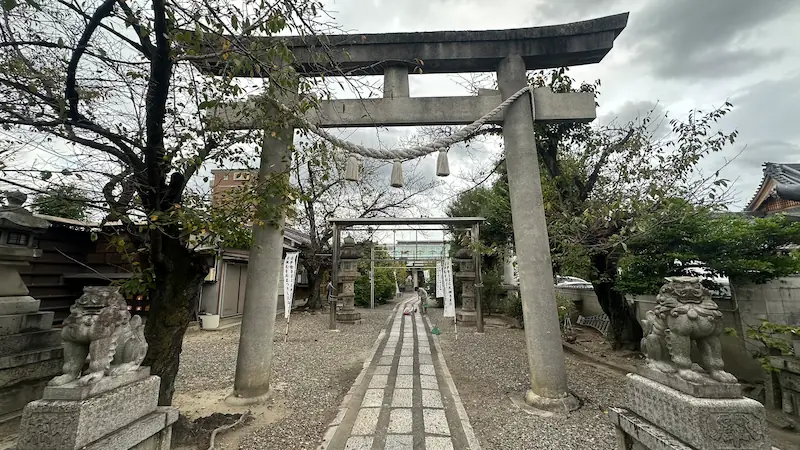
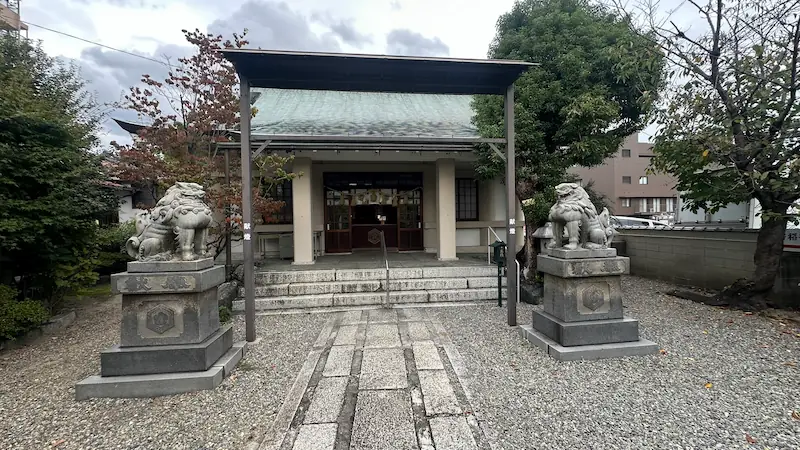
The road from Kiyosu to Okehazama was never simply a journey. For Nobunaga it was the march on which he settled his own mind: victory, or death in the field. Enoki Hakusan Shrine sits quietly in the Oshikiri district of western Nagoya, on the line of the old Minoji highway, and tradition holds that he stopped here to pray for victory on the way south.
The shrine was founded in 1477, when Shiba Yoshikado — one of the powerful provincial governors of the Muromachi period, two generations before Nobunaga's world — brought the deity of Shirayama Hime Shrine in Kaga (present-day Ishikawa Prefecture) to this spot. For centuries local people knew it as Enoki Gongen. The enoki in the name is a hackberry tree: a single great tree once stood here and was worshipped as the shrine's sacred tree, and the name is all that is left of it. Today the shrine is folded into an ordinary postwar neighbourhood, and what survives is not grandeur but a particular texture — the tension of a man on his way to a battle he might not win, and the prayer he left behind.
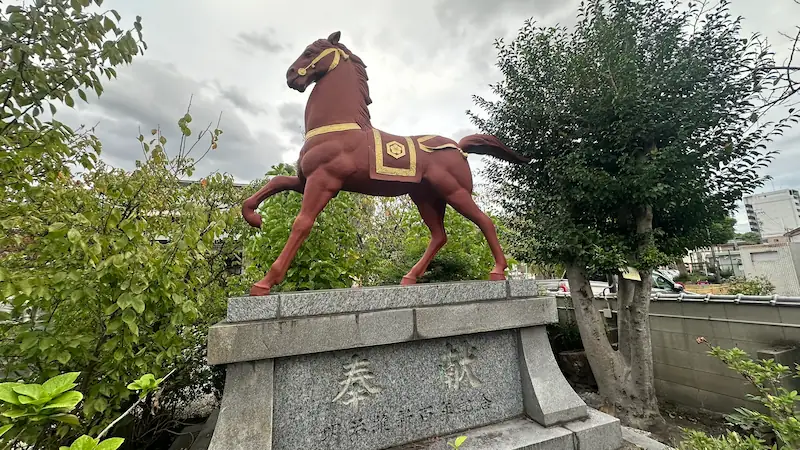
There is a second layer worth knowing about. In the grounds stands Tajimamori Shrine, dedicated to the guardian deity of confectionery — a rare thing to find in Nagoya. A shrine where warriors prayed for victory and bakers pray for sweets is a very local kind of overlap, and it turns a five-minute stop into something more memorable.
Tap to enlarge
| Founded | 1477 |
|---|---|
| Founder | Shiba Yoshikado, a Muromachi-period provincial governor |
| Character | Deity transferred from Shirayama Hime Shrine in Kaga (Ishikawa Prefecture); stands on the old Minoji highway; formerly known as Enoki Gongen; Tajimamori Shrine in the grounds |
| Rebuilding history | Main hall and treasures destroyed in the air raids of May 1945; rebuilt after the war |
| What remains today | Main hall and worship hall standing, with subsidiary shrines in the grounds |
| Loss and damage | Main hall and treasures burned in the air raids of May 1945; the sacred hackberry tree is said to have died as well |
| Cultural property status | No specific designation recorded |
| Notes | Tradition holds that Nobunaga prayed here for victory before Okehazama and dedicated a sword after he won. Nearest station: Sengencho (浸間町) on the Nagoya Municipal Subway Tsurumai Line. |
🗺 Address: 2-5-2 Oshikiri, Nishi Ward, Nagoya, Aichi 451-0063
🚶 Access
About 60 minutes from the previous site, Kiyosu Castle, by train plus walking
⏳ Time needed
Quick look: about 10 minutes
Unhurried visit: about 30 minutes
- A wayside stop, not a destination: the shrine faces the old Minoji highway rather than a main modern road, which makes it easy to picture as a prayer made in passing, mid-march.
- Tajimamori Shrine, the sweets deity: an unusual subsidiary shrine for Nagoya, and a reminder that a place of worship carries more than one kind of hope.
- Seasonal note: the annual festival falls on 17–18 July, when the neighbourhood turns out and the shrine reads as a living local institution rather than a historical footnote.
Hioki Shrine (日置神社)
⭐ Historical value: ☆☆☆ Visual appeal: ☆☆ Experience: ☆☆
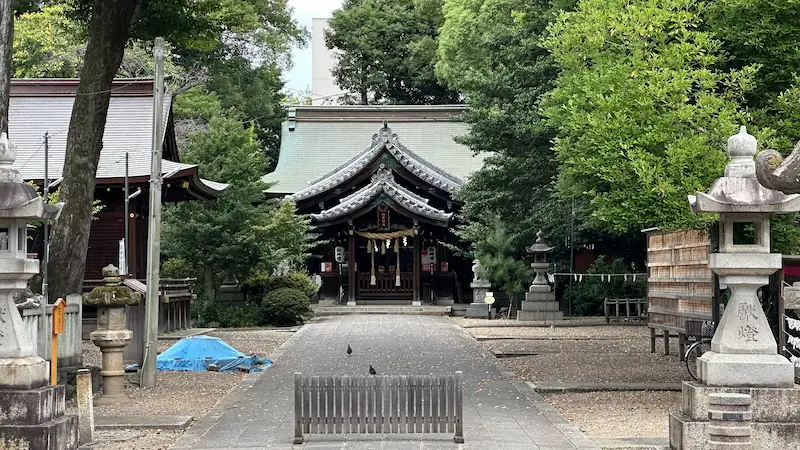
This is where the march takes its first deep breath. In the fifth month of 1560, having left Kiyosu Castle at a moment when nothing about the outcome was clear, Nobunaga is said to have stopped at Hioki Shrine, prayed for victory, and danced. The shrine sits on the southern edge of what was then the built-up area, on the road toward Atsuta, and it still holds the kind of stillness that suits an army waiting to assemble.
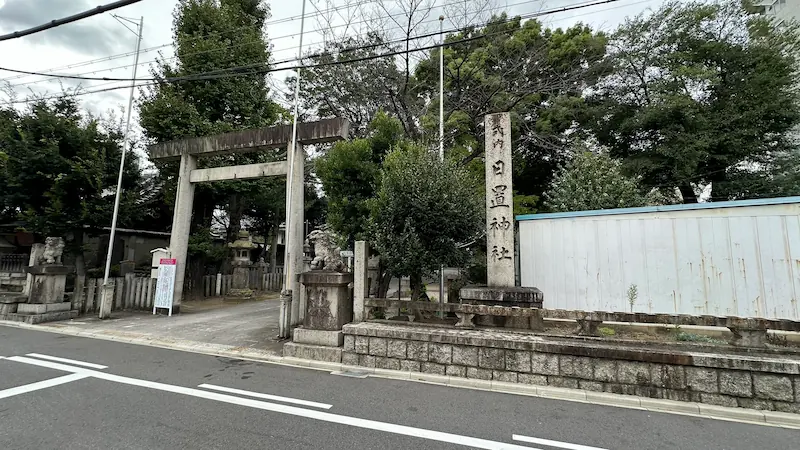
Hioki Shrine is identified with a shrine listed in the Engishiki, the imperial code compiled in 927 — meaning it was already old and officially recognised more than six hundred years before Nobunaga stood in it. Its principal deity, Ame-no-Futodama-no-Mikoto, presides over ritual itself. That is a fitting patron for what happened here: battles are not decided by blades alone, and what Nobunaga performed on this ground was less a request than a rite of departure — composing his own mind, drawing luck toward him, binding his men into one purpose.
Step through the gate and the traffic noise thins out; the approach draws your eye deep into the grounds. The buildings burned in the Nagoya air raids of 1945 and were rebuilt in 1958, so what stands is modern. The site is not.
| Founded | Unknown; believed to predate the 10th century, and listed in the Engishiki of 927 |
|---|---|
| Founder | Unknown |
| Character | Main hall in nagare-zukuri style; stands on the high ground of the Atsuta plateau; a deep approach and quiet grounds |
| Rebuilding history | Destroyed in the Nagoya air raids of 1945; reconstruction of the shrine buildings completed in 1958 |
| What remains today | Buildings and grounds intact, mostly postwar reconstruction |
| Loss and damage | Shrine buildings burned in the 1945 air raids |
| Cultural property status | None recorded; the present buildings are postwar reconstructions |
| Notes | Also known as Hioki Hachimangu. A local tradition calls it Senbonmatsu Hioki Hachimangu — "thousand-pine Hioki Hachimangu" — from a story that Nobunaga donated pine trees here. |
🗺 Address: 1-3-21 Tachibana, Naka Ward, Nagoya, Aichi 460-0016
🚶 Access
About 35 minutes from the previous site, Enoki Hakusan Shrine, by train (roughly 4.9 km)
⏳ Time needed
Quick look: about 15 minutes
Unhurried visit: about 30 minutes
- The depth of the approach: unexpectedly quiet for central Nagoya, and the single best place on this route to imagine a commander gathering himself before dawn.
- The chikara-ishi lifting stone: a strength-testing stone tucked into the grounds, a trace of ordinary people's worship where prayer and physical effort ran together.
- Seasonal note: cherry blossom in the grounds in spring, and local events such as the Hatsu-Ebisu festival in January.
Hojiji Temple (白鳥山 法持寺)
⭐ Historical value: ☆☆☆ Visual appeal: ☆☆ Experience: ☆☆
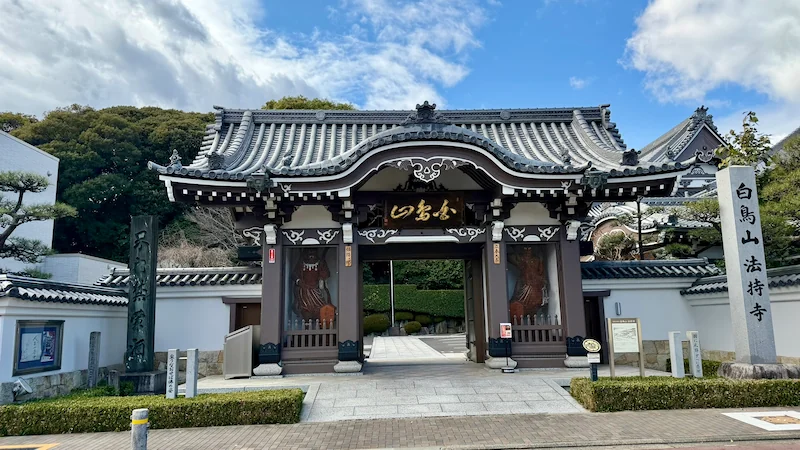
South through the city, as the atmosphere of Atsuta thickens, Hojiji Temple offers a quieter kind of Sengoku site — no keep, no battlefield, but a place where Nobunaga's footsteps register more deeply for the lack of spectacle. Its origins go back to the Tencho era (824–834), when the monk Kukai, better known as Kobo Daishi and the founder of Shingon Buddhism in Japan, is said to have secluded himself at nearby Atsuta Jingu. In reverence for the legendary prince Yamato Takeru he carved a Jizo image himself and built a small hall on this spot.
What makes Hojiji more than an ordinary temple is what stands beside it: the Shiratori Tumulus, a keyhole-shaped burial mound long identified in tradition as the grave of Yamato Takeru, who according to legend returned after death in the form of a white bird. The temple took on the role of guarding the treasures of that tomb, and in early times was known as Hojiji written with the characters for "treasure-keeping." It was later revived as a Soto Zen temple and renamed to its present form during the Joo era (1652–1654).
And in the Sengoku period, tradition holds that Nobunaga stopped here too, on his way to Okehazama, to pray for victory. Not before a god of swords and spears, but in the shadow of an ancient hero and the compassion of a Jizo — a combination that captures both sides of him at once: the cold clarity of a man planning to win, and the nerve of a man going out to seize his luck. The grounds also hold a poem stone connected to the haiku master Matsuo Basho, and traces of the sumo stables that lodged here during the Nagoya grand tournament. War and culture share a wall in Atsuta.
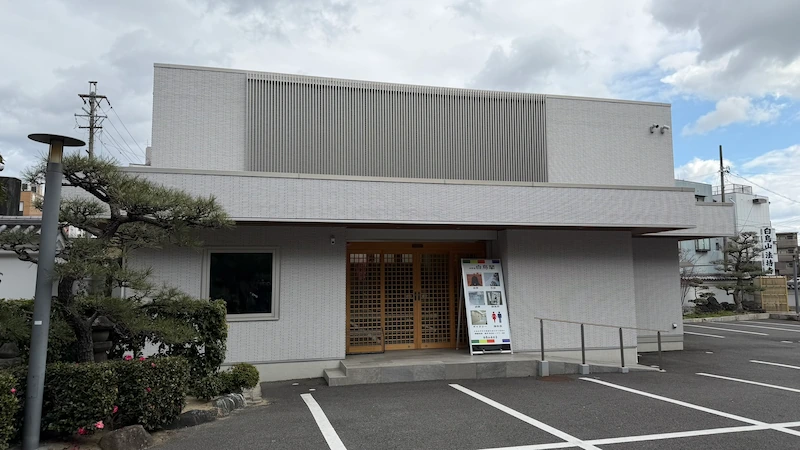
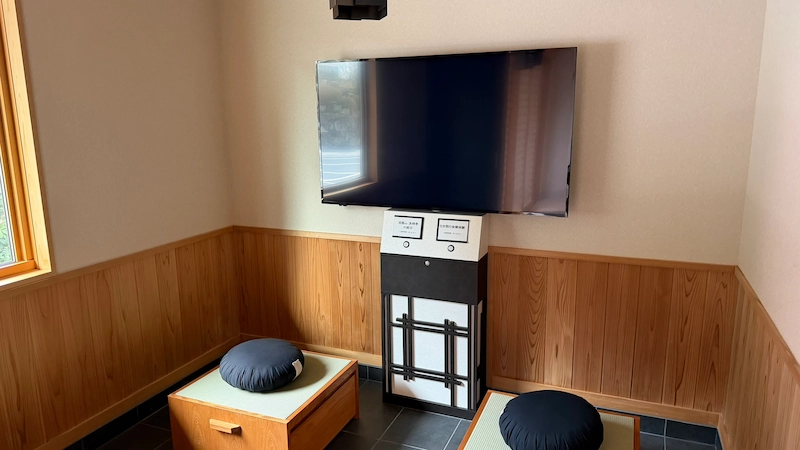
Tap to enlarge
The Shiratorikaku hall at Hojiji sells goshuin — the calligraphed and stamped seals collected by visitors to temples and shrines — and has a meditation room with a video and a space set aside for sitting. It makes a genuinely good pause partway through the walk.
| Founded | Tencho era (824–834) |
|---|---|
| Founder | Kukai (Kobo Daishi) |
| Character | Soto Zen temple; adjoins the Shiratori Tumulus; unusually rich in poem stones and monuments |
| Rebuilding history | Revived as a Soto Zen temple in the Muromachi period (accounts differ; around 1449 is one); renamed Hojiji during the Joo era (1652–1654); rebuilt after the great fire of 1757; destroyed in the 1945 air raids and moved to its present site in 1955 |
| What remains today | Main hall and gate open to visitors; the present buildings are modern |
| Loss and damage | Burned down entirely in the fire of 1757; largely destroyed again in the 1945 air raids |
| Cultural property status | Unconfirmed; no national designation for the temple itself has been verified |
| Notes | The adjoining Shiratori Tumulus is a keyhole-shaped burial mound long held in tradition to be the grave of Yamato Takeru. Stones in the grounds are said to still bear traces of the wartime bombing. |
🗺 Address: 1-2-17 Shiratori, Atsuta Ward, Nagoya, Aichi
🚶 Access
About 45 minutes on foot from the previous site, Hioki Shrine (roughly 3.6 km)
⏳ Time needed
Quick look: about 15 minutes
Unhurried visit: about 30 minutes
- The tumulus next door: with the burial mound pressing against the back of the temple, Nobunaga's prayer here reads less as a pre-battle formality than as something tied into the deeper story of the land.
- Poets and wrestlers alongside warriors: the Basho poem stone and the sumo-stable connection are quietly recorded in the grounds — a very Atsuta mixture of the martial and the cultural.
- Seasonal note: the greenery is deepest from spring into early summer, which is the nicest time to walk the Shiratori Tumulus area; autumn light suits the temple well too.
Atsuta Jingu Shrine (熱田神宮)
⭐ Historical value: ☆☆☆ Visual appeal: ☆☆☆ Experience: ☆☆☆
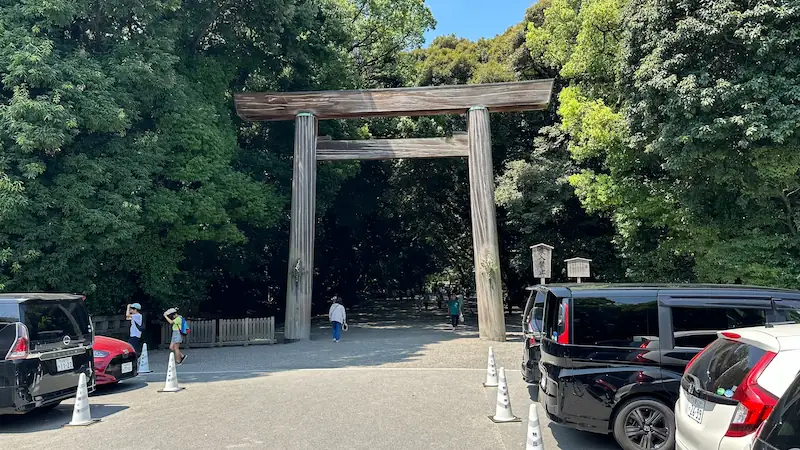
Of everywhere Nobunaga stopped on the way to Okehazama, Atsuta Jingu is the place where a decision hardens. It sits within Nagoya proper, and yet the air changes a step inside the gate. The deep woodland known as the Atsuta forest absorbs whatever noise the city sends into it, and it seems to settle even a commander's doubts.
What makes this more than a handsome shrine is the object at its heart. Atsuta Jingu enshrines Kusanagi-no-Tsurugi, one of the three Imperial Regalia of Japan — the sword, mirror and jewel that together symbolise the legitimacy of the imperial line. In tradition the sword came to rest here through the story of Yamato Takeru, and from then on the shrine drew the devotion of the imperial court and of warrior houses alike. It is, in other words, one of the most significant Shinto sites in the country, and it is on this route by accident of geography and by design of the man walking it.
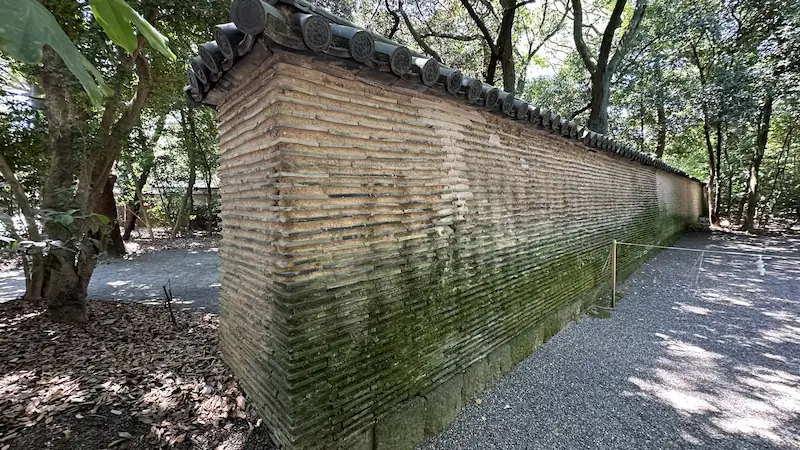
Then comes 1560. Setting out for Okehazama, Nobunaga prayed here for victory — and after he won, he left proof. The Nobunaga-bei still standing in the grounds is a tsuiji-bei, a rammed-earth wall: earth and lime worked together with oil and bound with layer upon layer of roof tiles, built massively enough to survive nearly five centuries. He dedicated it in thanks for the victory. Atsuta Jingu is therefore a place where the depth of myth and the hard fact of a Sengoku battle sit inside the same grounds.
Before pushing on to Narumi and the forward forts, stop here. What the forest lets you feel is not the question of whether he could win, but the moment he worked out what he was prepared to give up in order to.
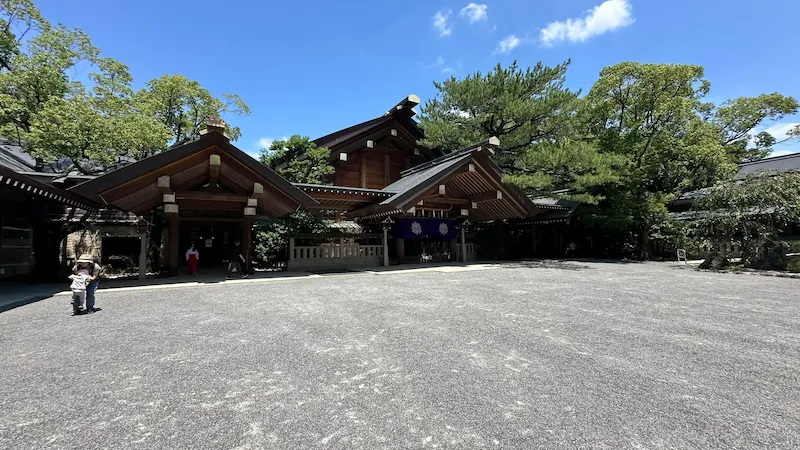
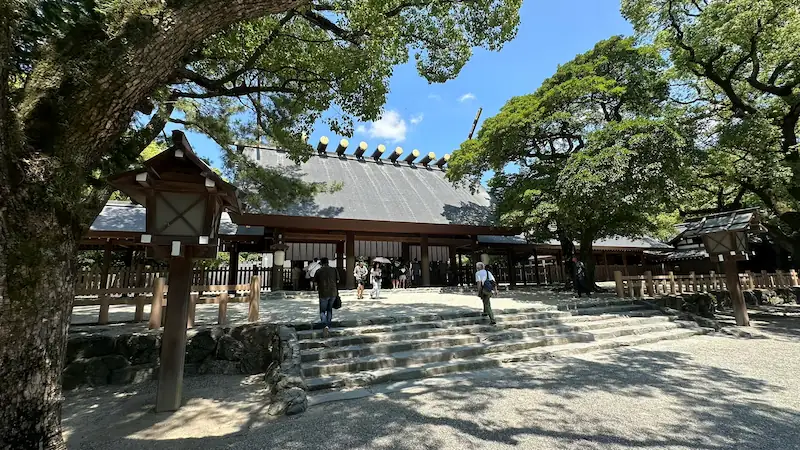
Tap to enlarge
| Founded | Traditionally 113, in the reign of Emperor Keiko |
|---|---|
| Founder | Traditionally Miyazu-hime-no-Mikoto |
| Character | Enshrines the sacred sword Kusanagi; the main sanctuary is in shinmei-zukuri style; set within the Atsuta forest |
| Rebuilding history | Rebuilt in shinmei-zukuri style in 1893; reconstructed after wartime damage in 1945; rebuilt again in 1955; 1,900th-anniversary works in 2009 |
| What remains today | Main sanctuary, the Nobunaga-bei wall and the treasure hall are all open to visitors |
| Loss and damage | Buildings in the grounds are recorded as damaged in the 1945 air raids |
| Cultural property status | The treasure hall holds a large collection of dedicated swords and other valuables; displays rotate |
| Notes | The Nobunaga-bei is counted among Japan's three great earthen walls. The annual Atsuta Festival (Shobu-sai) falls around 5 June. |
🗺 Address: 1-1-1 Jingu, Atsuta Ward, Nagoya, Aichi 456-8585
🚶 Access
About 6 minutes on foot from the previous site, Hojiji Temple (roughly 0.46 km)
⏳ Time needed
Quick look: about 25 minutes
Unhurried visit: about 1.5 hours
- The main sanctuary and the Atsuta forest: a stillness that is hard to credit this close to a major city. The further along the approach you walk, the more the mood of a sanctuary on the eve of battle takes hold.
- The Nobunaga-bei: the earthen wall he is said to have dedicated after Okehazama. Earth, lime, oil and tile, layered and rammed — his determination to convert a victory into something permanent, in physical form.
- Seasonal note: the Atsuta Festival in early summer, with its dedicatory rites and fireworks, marks the start of Nagoya's summer. The contrast between the solemnity of the forest and the noise of the festival is striking.
Narumi Castle Ruins (鳴海城跡)
⭐ Historical value: ☆☆☆ Visual appeal: ☆ Experience: ☆
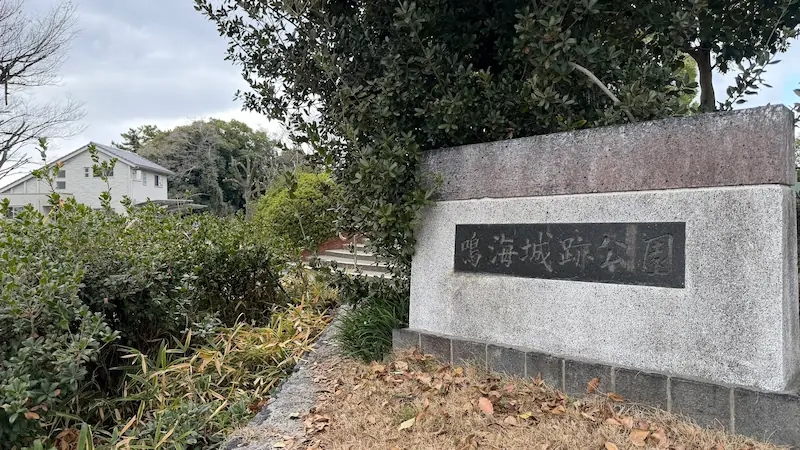
This is the point on the march where the fighting starts. With the prayers at Atsuta behind him, the next place Nobunaga turned toward was not a sanctuary but an enemy stronghold. Narumi Castle was a key Imagawa position driven deep into southern Owari — a blade held at the throat of the Oda.
Narumi Castle dates to the Oei era (1394–1428) and is said to have been built by Yasuhara Munenori. During the Sengoku period Yamaguchi Noritsugu, an Oda retainer, defected to the Imagawa and handed it over; later Okabe Motonobu, a hereditary Imagawa commander, took charge and strengthened it further. For Nobunaga this was never just a castle. It was the device that turned the Imagawa advance into an immediate crisis and pulled the decisive battle into being.
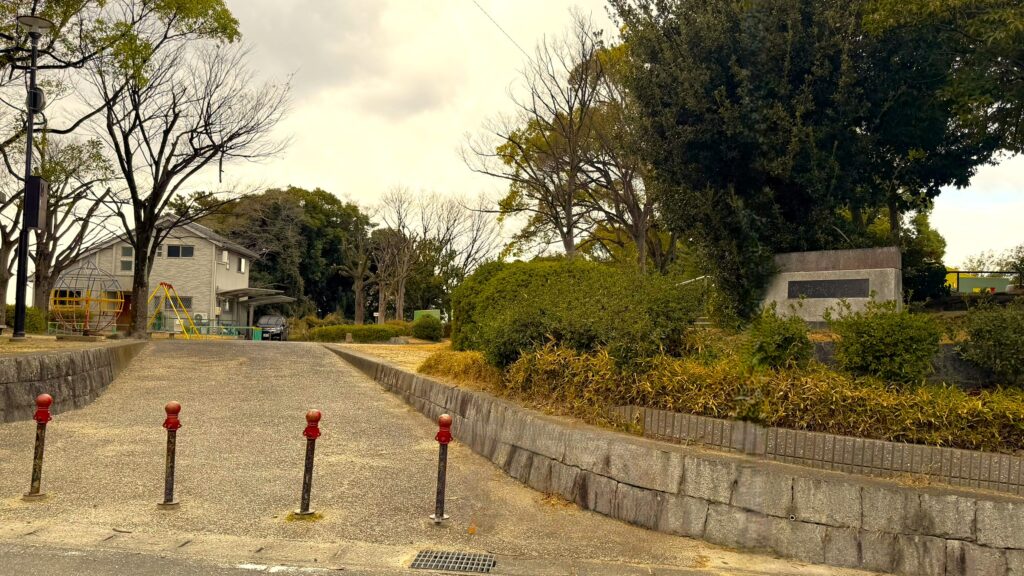
The site is now Narumi Castle Ruins Park, and nothing dramatic survives — no keep, no imposing stonework. But stand on this high ground and you notice at once how far you can see across the surrounding streets. The absence of ruins is what makes the place work: with nothing to look at, you are left to work out for yourself why Nobunaga judged that he could not leave this castle alone, and what it cost him to push into enemy-held ground.
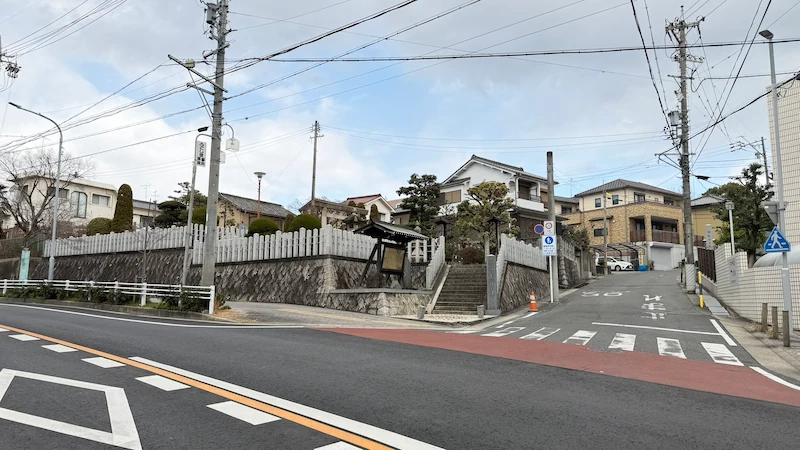
| Built | Oei era (1394–1428) |
|---|---|
| Builder | Said to be Yasuhara Munenori |
| Character | Hirayama-jiro, a castle on a low hill; enclosures arranged across high ground with good sightlines; now a public park |
| Later history | Became a key Imagawa position during the Sengoku period, with Okabe Motonobu as its commander; abandoned as a castle by the early Edo period |
| What remains today | The site is laid out as a park; surviving features are limited, though the terrain still shows why it was defensible |
| Loss and damage | Buildings disappeared after the castle was abandoned; no clear date recorded |
| Cultural property status | No specific designation recorded |
| Notes | An Imagawa base at the time of the Battle of Okehazama. Okabe Motonobu is said to have surrendered the castle in exchange for the head of Imagawa Yoshimoto. |
🗺 Address: Narumi Castle Ruins Park, Shiro 3, Narumi-cho, Midori Ward, Nagoya, Aichi
🚶 Access
About 35 minutes from the previous site, Atsuta Jingu Shrine, by train
⏳ Time needed
Quick look: about 15 minutes
Unhurried visit: about 30 minutes
- The high ground itself: with few surviving structures, the terrain is the exhibit. Standing here is enough to make the logic of the lookout and the defences obvious.
- A front line under a quiet park: precisely because children are playing here now, the contrast with the standoff that once ran through this ground lands harder.
- Seasonal note: cherry blossom in spring and fresh green in early summer make even a short visit to the ruins worthwhile.
Zenshoji Fort (善照寺砲)
⭐ Historical value: ☆☆☆ Visual appeal: ☆ Experience: ☆
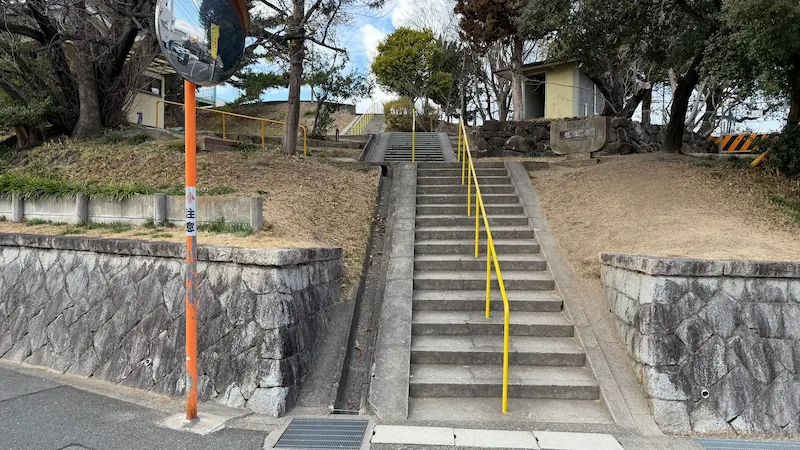
This is where an army becomes a single body. After the prayers at Atsuta, the next place Nobunaga headed for was neither a grand castle nor a famous shrine, but the forward position he had built to pin down the Imagawa-held Narumi Castle: Zenshoji Fort. On the day of the battle he is said to have arrived here around ten in the morning, formed up his troops, and grown a force of a few hundred at Atsuta into several thousand. Zenshoji Fort is the quiet evidence that Nobunaga's surprise attack rested on organisation and command, not on momentum.
Narumi Castle is only about 700 metres to the west. That closeness is what makes the tension here so immediate. At a distance where the enemy castle is effectively within sight, he gathered his men, reordered the ranks, sorted the intelligence and aligned everyone on a single direction of travel. Battles in this period were often settled before the first blow, in exactly this kind of preparation time — and the fact registers all the more strongly for the site now being a children's playground.
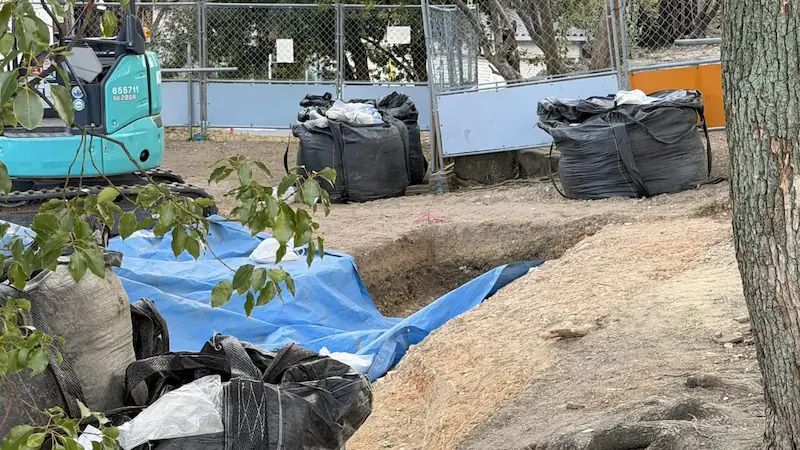
The steep slope falling away to the north, and the outlook from the high ground, are what remain. With no built ruins to distract you, the essential nature of a toride — a field fort — is legible in the shape of the land alone. Visit here and it clicks: the road to Okehazama was not travel. It was a sequence of arrangements aimed at winning.
| Built | 1559 |
|---|---|
| Builder | Oda Nobunaga |
| Character | A low-hill fort built to contain Narumi Castle; worked together with Tange Fort and Nakashima Fort; now laid out as a small park |
| Later history | Turned into a park after the war; no reconstruction of the fort itself |
| What remains today | The site survives as a park; the terrain still conveys how defensible the position was |
| Loss and damage | The structures are long gone and no built remains survive |
| Cultural property status | No specific designation recorded |
| Notes | On the day of the battle, Nobunaga is said to have formed up his army here before moving on to Nakashima Fort. |
🗺 Address: Toride 3, Narumi-cho, Midori Ward, Nagoya, Aichi 458-0801
🚶 Access
About 10 minutes on foot from the previous site, Narumi Castle Ruins (roughly 750 m)
⏳ Time needed
Quick look: about 15 minutes
Unhurried visit: about 30 minutes
- The atmosphere of a forward command post: this is where the troops regrouped immediately before the victory. On the quiet high ground, the tension of the hours before a decisive battle is easy to picture.
- The steep northern slope: with no ruins to see, the fall of the land into the valley explains on its own why a fort belonged here.
- Seasonal note: the shade is welcome in the fresh-green season, and even a short stop feels worthwhile as a pause on the march.
Nakashima Fort (中島砲)
⭐ Historical value: ☆☆☆ Visual appeal: ☆ Experience: ☆
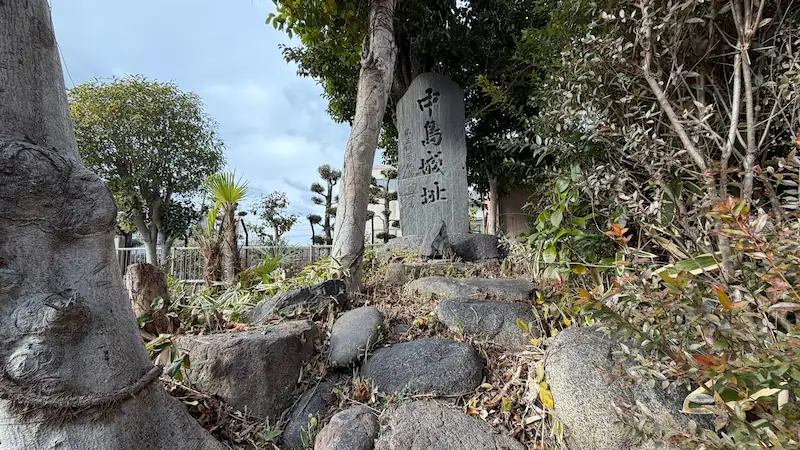
With his army formed up at Zenshoji, the next place Nobunaga pushed forward to was Nakashima Fort. Immediately before turning for Okehazama, what he chose was not a safe hilltop but a low-lying forward position ringed by rivers and marsh — a near-island of ground close to where the Ogi and Tegoshi rivers meet.
At the time this whole area was a tangle of paddy fields and watercourses with poor visibility. It was also easily observed from the Imagawa-held Narumi Castle, and the approach roads were narrow. His retainers are recorded as having tried to stop him, telling him it was too dangerous. He went anyway — out to the very front, to judge the distances with his own eyes and to take hold of the information and the momentum he needed.
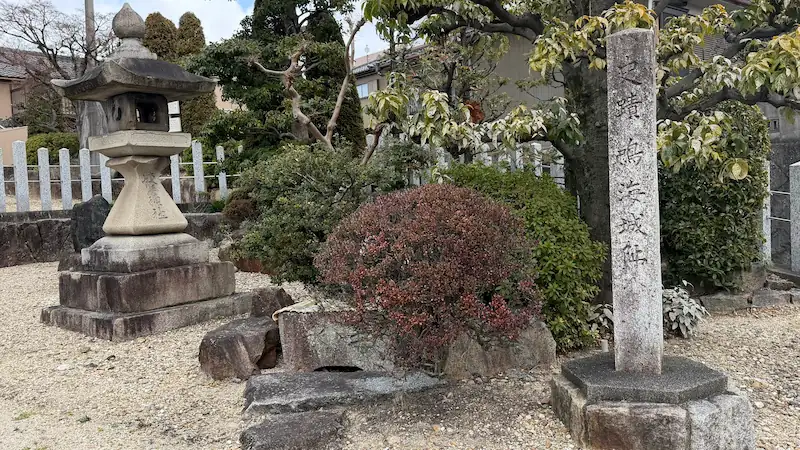
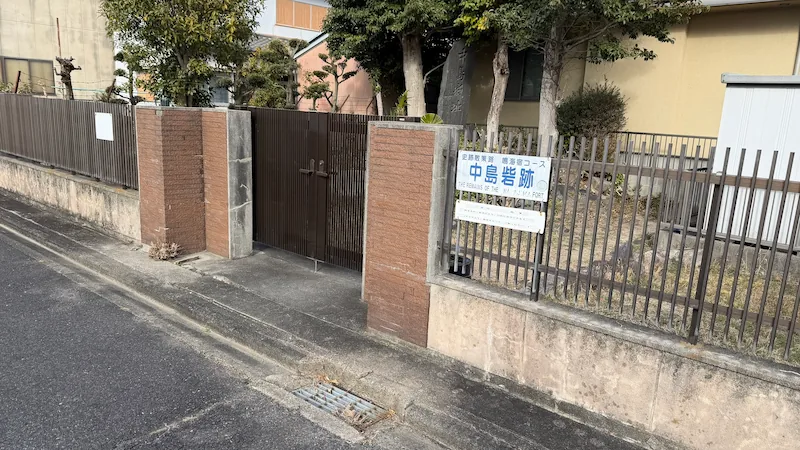
Nakashima Fort has nothing to show you. That is exactly why, the moment you pass through the gate and stand in front of the stone marker, the weight of the place lands quietly and completely. This is where the last hesitation before the charge was set down. If you want to stop thinking of Okehazama as a miracle and start reading it as a commander's judgement in the field, there is no better place on this route to do it.
| Built | 1559 |
|---|---|
| Builder | Oda Nobunaga |
| Character | A low-lying fort near the confluence of two rivers, on near-island ground |
| Later history | Unknown; no permanent reconstruction has been carried out |
| What remains today | Almost nothing survives; a stone marker and an information sign are all that can be seen |
| Loss and damage | Residential development reshaped the ground and the traces of the fort are gone |
| Cultural property status | None |
| Notes | The stone marker stands on private land; visitors must be considerate of the surrounding residents. |
🗺 Address: Shimonaka, Narumi-cho, Midori Ward, Nagoya, Aichi (around the Nakashima Fort site)
🚶 Access
About 10 minutes on foot from the previous site, Zenshoji Fort (roughly 750 m)
⏳ Time needed
Quick look: about 5 minutes
Unhurried visit: about 20 minutes
- The Nakashima stone marker: standing quietly in a corner of a residential street, it states plainly that this was the front line immediately before the charge.
- The rivers and the low ground: register the presence of water around the Ogi River and the wetland of the period, and the difficulty of moving through it, becomes concrete.
- Seasonal note: from early summer into the rainy season the water and greenery deepen, and the place takes on exactly the atmosphere of the advance through rain that Okehazama is remembered for.
Finish: Okehazama (桶狙間)
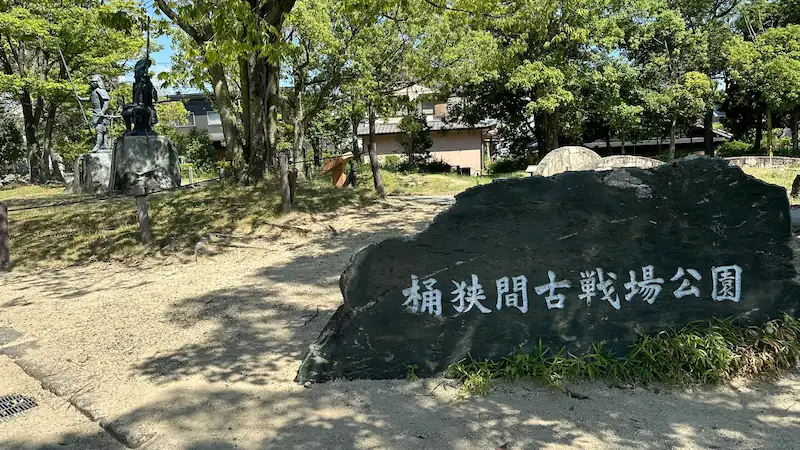
The end of the march, and the place where Imagawa Yoshimoto died. Okehazama Battlefield Park sits in the southeast of Nagoya, and after a day spent among shrines and low earthworks it is a strangely ordinary piece of ground on which to end a story this size.
🚶 Access
About 30 minutes from the previous site, Nakashima Fort, by train and bus
Full guide to the battlefield:
Frequently asked questions
Nine, visited in order: Kiyosu Castle, Enoki Hakusan Shrine, Hioki Shrine, Hojiji Temple, Atsuta Jingu Shrine, Narumi Castle Ruins, Zenshoji Fort, Nakashima Fort and Okehazama.
It varies by leg, and the route combines trains, walking and one bus. Kiyosu Castle to Enoki Hakusan Shrine is about 60 minutes by train plus walking; Hioki Shrine to Hojiji Temple is about 45 minutes on foot. Each site above lists an estimated travel time from the site before it.
Three separate operators run in this part of Nagoya: JR Central, Meitetsu (Nagoya Railroad) and the Nagoya Municipal Subway. They are different networks, and a Japan Rail Pass is valid on JR services only. The simplest approach for a route like this is a rechargeable IC card — ICOCA, Suica or the local manaca all work on all three. Enoki Hakusan Shrine's nearest station is Sengencho on the subway's Tsurumai Line; for the other legs, open the map embedded with each site for current routing.
It is a tsuiji-bei, a rammed-earth wall, that Oda Nobunaga is said to have dedicated to Atsuta Jingu in thanks for his victory at Okehazama. Earth and lime were worked together with oil and bound with layer upon layer of roof tiles, producing a wall solid enough to survive in the grounds today. It is counted among Japan's three great earthen walls.
Enoki Hakusan Shrine, Hioki Shrine, Hojiji Temple and Atsuta Jingu Shrine are all sites where tradition holds that Nobunaga prayed for victory on his way to Okehazama, and they fall in that order along the route.
Yes, in the sense that this guide is built so you can walk the eve-of-Okehazama world the drama depicts as an actual route from Kiyosu Castle to the battlefield. Toyotomi Brothers! is NHK's taiga drama for 2026 — the year-long historical series broadcast every Sunday evening.
Related guides


The warlords behind the route

☕ Support This Site
Following the Shogun is built on original fieldwork and on-site research.
If you found this guide useful, your support helps keep it going.

You can also support via QR code


comment