


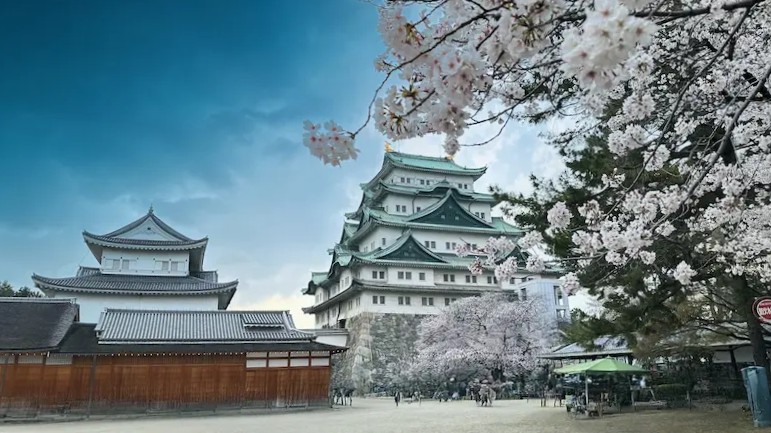
Nagoya Castle's Main Keep and Gates: Closed Inside, Still Worth the Walk
Nagoya Castle is home to a variety of historical gates and its iconic main keep, each with a unique architectural style and historical significance. From the original "Former Ninomaru East Second Gate" that dates back to the castle's early days, to the reconstructed "Akazu no Mon (Fumeimon)" and the restored "Tenshukaku (Main Keep)"—rebuilt after wartime destruction—each location offers a glimpse into the enduring prestige of the Tokugawa clan. Let's walk through these historic landmarks and experience the legacy of Nagoya Castle.
On This Page
4 Spots in the Northern Honmaru
The Former Ninomaru East Second Gate, Karame-te Umadashi Remains, Tenshukaku (Main Keep) and Akazu no Mon are all within a one- to three-minute walk of one another inside the Honmaru. Note that ongoing stone-wall restoration currently closes the area beyond the Former Ninomaru East Second Gate to visitors. Each spot's highlights, visit time, access notes, and trivia are available by tapping "Open Details" on its card.
Former Ninomaru East Second Gate
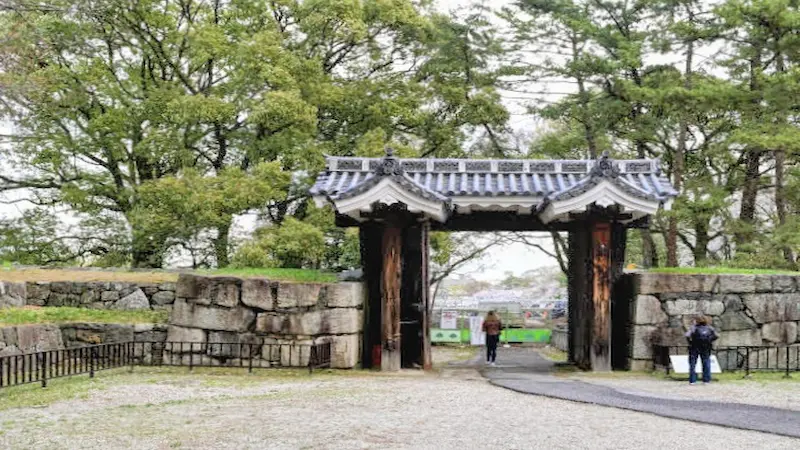
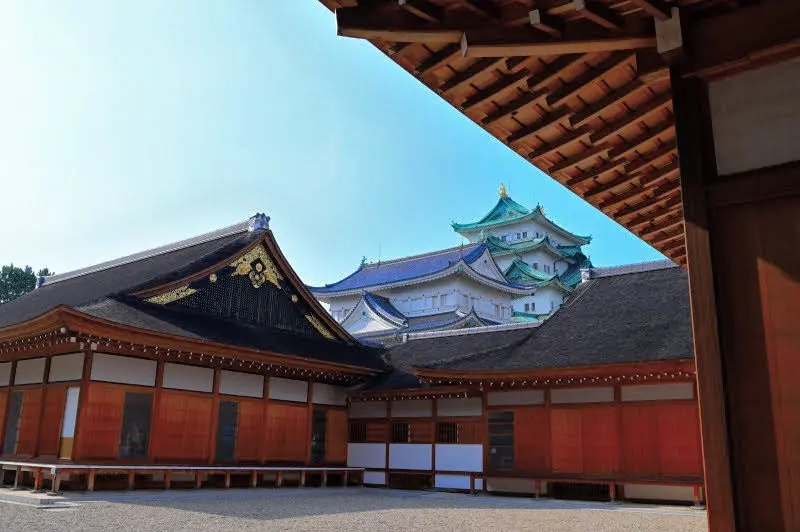
The Former Ninomaru East Second Gate (Kyū-Ninomaru Higashi-Nino-mon) is a Kōraimon-style gate built around 1612 (Keichō 17). It was originally located on the eastern side of the Ninomaru compound, serving as a key entryway. In 1972, the gate was relocated to the site of the Honmaru East Second Gate, where it stands today.
One of the few structures to survive World War II air raids, it was designated an Important Cultural Property in 1975.
- Kōraimon Structure: Known for its sturdy design with main and auxiliary pillars, this gate represents classic castle architecture from the Sengoku era.
- Relocation History: The move from its original location is a testament to efforts in historical preservation.
- Seasonal Beauty: Cherry blossoms in spring frame the gate with stunning elegance.
Recommended visit time: Quick visit ~10 minutes (viewing the exterior and surroundings) / In-depth visit ~20 minutes (examining the structure and history, plus photo ops)
Address: 1-1 Honmaru, Naka Ward, Nagoya, Aichi Prefecture
Access: About a 1-minute walk (20m) from Kiyomasa Stone.
Trivia- Hidden Historical Role: As one of the few original structures, it offers rare insight into the original layout of Nagoya Castle.
- Little-Known Fact: Its relocation in 1972 resulted in excellent preservation, allowing for close observation of period construction techniques.
- Connection to History: Built as part of Tokugawa Ieyasu's grand castle project.
Karame-te Umadashi Remains (Backstreets of the Horse Riding)
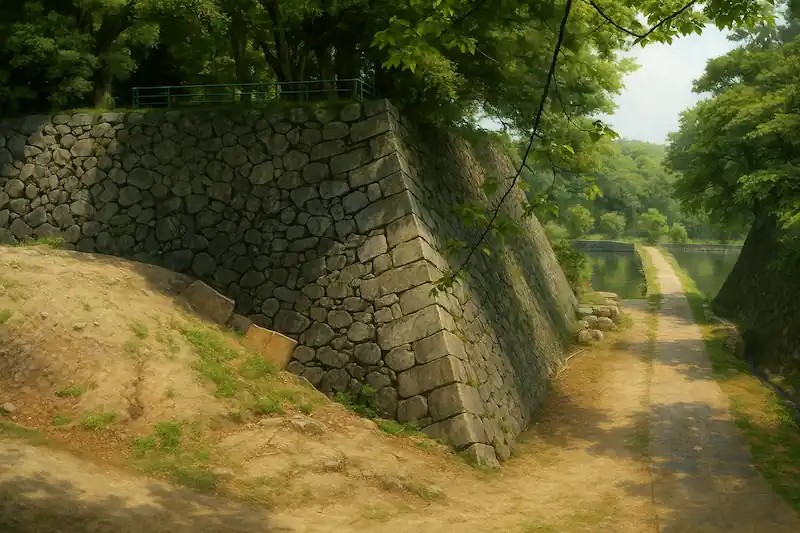
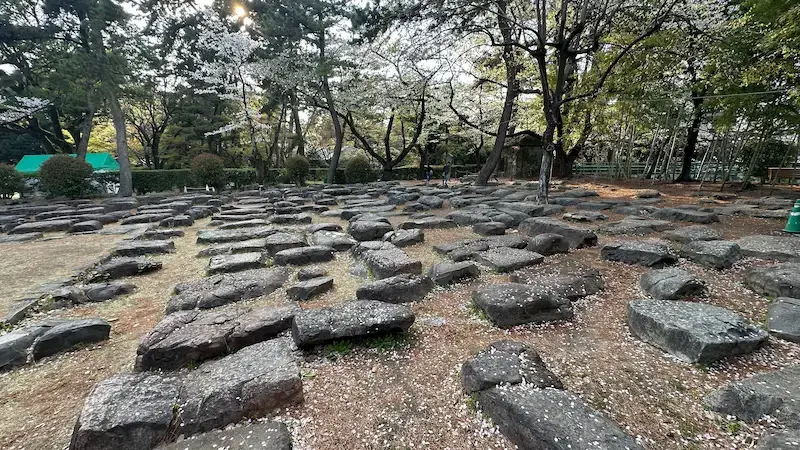
Located in the northeastern corner of the main compound, the Karame-te Umadashi Remains once served as a defensive stronghold for the castle's rear gate (Karame-te-mon). An umadashi is a small semi-circular or square enclosure designed to slow enemy advances and facilitate the castle's defense.
This particular umadashi bolstered defenses on the castle's eastern side and played a crucial role in protecting the main keep from direct assault.
Due to aging and potential collapse risks, restoration efforts began in 2004. As of 2023, full-scale stone wall repairs are underway—making this one of the castle's most significant renovation projects.
- Stone Wall Restoration: Visitors can observe traditional stone masonry techniques in action.
- Umadashi Design: The structure offers insights into wartime castle defense strategies.
- Seasonal Beauty: The cherry blossoms in spring create a captivating contrast with the historic stonework.
Recommended visit time: Quick visit ~10 minutes / In-depth visit ~20 minutes (detailed viewing of the stone walls and photos)
Address: 1-1 Honmaru, Naka Ward, Nagoya, Aichi Prefecture (Karame-te Umadashi Remains)
Access: Approx. 1-minute walk (20m) from the Former Ninomaru East Second Gate. Note: Currently closed to the public.
Trivia- Strategic Importance: This defensive feature supported both protection and tactical counterattacks from within the castle.
- Hidden Details: Restoration revealed daimyo seals and inscriptions on the stones, providing a direct link to the castle's original builders.
- Historical Ties: Tokugawa Ieyasu enlisted feudal lords nationwide in the construction of Nagoya Castle, and their mark remains on the stones here.
Tenshukaku (Main Keep)
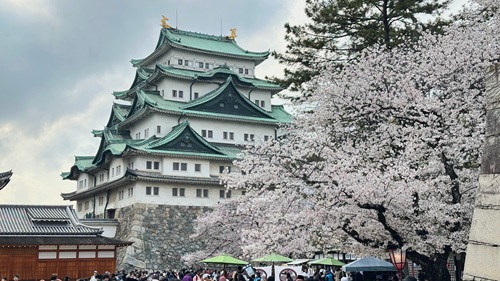
The Main Keep of Nagoya Castle was completed in 1612 as a five-story structure embodying the pinnacle of early Edo-period architecture and Tokugawa authority. Its roof famously featured golden shachihoko (mythical tiger-headed carp), earning the castle the nickname Kinshachi-jō ("Golden Dolphin Castle") and establishing it as the symbol of the Owari Tokugawa clan.
The original structure was destroyed during the 1945 air raids, and a reinforced concrete reconstruction was completed in 1959. After 60 years, structural aging and seismic concerns led to the building's closure.
- Main Keep Exterior: The glimmering golden shachihoko atop the structure remain a beloved symbol of Nagoya.
- Honmaru Palace: Located nearby, it features lavish interior décor showcasing the artistry of the Edo period.
- Seasonal Attractions: Enjoy cherry blossoms in spring and colorful leaves in autumn framing the majestic keep.
Recommended visit time: Quick visit ~10 minutes / In-depth visit ~30 minutes
Address: 1-1 Honmaru, Naka Ward, Nagoya, Aichi Prefecture
Access: Approx. 2-minute walk (150m) from the Former Ninomaru East Second Gate.
Trivia- National Recognition: In 1930, the original keep became Japan's first designated National Treasure under castle structures.
- Hidden Insight: The rebuilt keep served as a museum until its closure due to seismic risks.
- Historical Ties: Like other parts of the castle, the main keep was constructed under Tokugawa Ieyasu's command.
Akazu no Mon (Fumeimon)
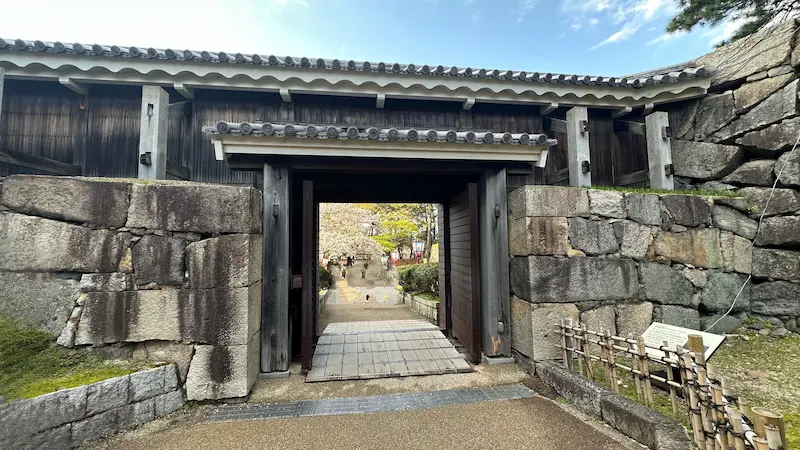
Located on the northern edge of the main compound, Akazu no Mon—translated as “The Sealed Gate”—was a secret entrance to the inner chambers of the Honmaru Palace. It is a type of Uzumimon (concealed gate), once tightly locked at all times, hence the name.
Built beneath the Tammonbei (corridor wall), the gate was further secured by Kenbei (spearhead palisades) on both sides. Destroyed during WWII, the gate was faithfully reconstructed in 1978.
- Gate Structure: This hidden gate beneath a long corridor wall offers a rare architectural form within the castle.
- Kenbei Palisade: Unique spear-tipped fencing on either side highlights its defensive role.
- Seasonal Scenery: Cherry blossoms and autumn foliage provide a breathtaking seasonal backdrop.
Recommended visit time: Quick visit ~3 minutes / In-depth visit ~15 minutes
Address: 1-1 Honmaru, Naka Ward, Nagoya, Aichi Prefecture (North of Honmaru)
Access: Approx. 1-minute walk (40m) from the Small Keep (Koten-shukaku)
Trivia- Secret Function: This gate provided restricted access to the inner palace, used only by select individuals.
- Hidden Feature: The Kenbei fence is not seen elsewhere in the castle, adding to the uniqueness of this structure.
- Historical Connection: Constructed as part of Tokugawa Ieyasu's grand vision for the castle.
A personal ranking based on repeated on-site visits by the Following the Shogun team (most recently June 2026). This is our own judgment, not the castle's official recommendation.
Crowned with golden shachihoko, this is the castle's symbol and the top priority as a photo subject. But note that the interior is currently closed — the present keep is a 1959 reinforced-concrete reconstruction, shut to visitors over seismic safety concerns. If you arrive expecting to climb it you will be disappointed, so plan around it as something you view from outside.
A genuine surviving gate built around 1612, relocated here to the Honmaru East Ni-no-mon site in 1972. Unlike the reconstructed keep, this retains its original timbers — a different order of authenticity. It is also why the "Ninomaru East Gate Ruins" in Ninomaru Area Vol. 1 no longer has a gate standing on it.
Burned in 1945 and rebuilt to its original form in 1978. What makes it worth a stop is the kenbei — a wall lined with spear blades — running along both sides, which makes the castle's defensive thinking immediately legible. It sits on the north side of the Honmaru, so it fits naturally after the keep.
The site of a defensive enclosure guarding the castle's rear gate. On the ground you have to read the outline of the earthworks yourself. Rewarding if you are interested in castle layout design, but fine to walk past on a first visit with limited time.
Nagoya Castle Guide Full Map
Nagoya Castle: Hours, Admission & Access
| Hours | 9:00 am – 4:30 pm (last entry to Honmaru Palace 4:00 pm) |
|---|---|
| Closed | December 29 – January 1 |
| Admission | Adults ¥500 (through September 30, 2026) / ¥1,000 (from October 1, 2026) Free for junior-high age and under, before and after the change Verified August 23, 2026. The increase was approved by the Nagoya City Council. Tickets bought before the change date remain valid afterwards. |
| Nearest station | Nagoya Castle Station (Meijo subway line), about a 5-minute walk |
Please check the official Nagoya Castle website for the latest hours and fees before you visit.
Why was Nagoya Castle built? Tokugawa Ieyasu, founder of the Tokugawa shogunate, ordered the castle rebuilt in November 1609; construction began in January 1610 and the main keep was completed in December 1612. It became the seat of the Owari Tokugawa family, the senior-most of the three Tokugawa branch houses (the Gosanke), and one of the most important castle towns in Japan.
FAQ
The Former Ninomaru East Second Gate was built around 1612 (Keichō 17) in the Kōraimon style. It originally stood on the eastern side of the Ninomaru compound and was relocated to the Honmaru East Second Gate site in 1972. Having survived World War II, it was designated a National Important Cultural Property in 1975.
The current Main Keep is a reinforced concrete reconstruction completed in 1959, after the original was destroyed in the 1945 air raids. After roughly 60 years, structural aging and seismic safety concerns led to its closure.
The stone walls around the Karame-te Umadashi Remains showed signs of bulging and possible collapse, so restoration began in 2004. As of 2023, full-scale stone-wall repairs are underway, and the area beyond the Former Ninomaru East Second Gate is currently closed to visitors.
Nagoya Castle is open 9:00 am to 4:30 pm (last entry to Honmaru Palace at 4:00 pm), closed December 29 through January 1. Adult admission is currently ¥500, rising to ¥1,000 from October 2026. The nearest station is Nagoya Castle Station on the Meijo subway line, about a 5-minute walk.
Related Articles on Nagoya Castle
Next Article
Previous Article
Index Article
More Nagoya Castle Guides
☕ Support This Site
Following the Shogun is built on original fieldwork and on-site research.
If you found this guide useful, your support helps keep it going.

You can also support via QR code


comment