


Battle of Okehazama: Oda Nobunaga's Legendary Upset Over Imagawa Yoshimoto
On June 12, 1560 (Eiroku 3), Oda Nobunaga defeated the far larger army of the powerful warlord Imagawa Yoshimoto at the Battle of Okehazama — one of the most famous underdog victories in Japanese history. This first-hand guide covers all 8 historic sites connected to the battle, spread across Toyoake City and Nagoya's Midori Ward.
| National Historic Site | Okehazama Battlefield Legend Site (附 Sennintsuka), Toyoake City — designated December 21, 1937 |
|---|---|
| Sites Covered | 8 (1 in Toyoake City, 7 in Nagoya's Midori Ward) |
| Nearest Station | Chukyo Keibajo-mae Station (中京競馬場前駅) on the Meitetsu Nagoya Main Line — about a 3-minute walk to the Battlefield Legend Site |
| Parking | 5 car spaces at the Okehazama Battlefield Tourist Information Center (no bus parking) / no parking at Okehazama Battlefield Park itself |
| Annual Festival | Mid-May (the Sunday nearest May 19) — Okehazama Battlefield Festival & Lantern Ceremony, with about 3,500 lanterns lit around the pond |
| Information Center Hours | 10:00 AM–4:00 PM (closed New Year holidays, occasional irregular closures) |
- What Was the Battle of Okehazama?
- The 8 Sites
- Okehazama Battlefield Legend Site (桶狭間古戦場伝説地, Toyoake City)
- Takeji-Kamagatani Valley (武路釜ケ谷, Nagoya, Midori Ward)
- Nanatsuzuka — "Seven Mounds" (七ツ塚, Okehazama)
- Mount Okehazama — Imagawa's Headquarters Site (おけはざま山, Imagawa Honjin Ato)
- Okehazama Battlefield Park (桶狭間古戦場公園, Nagoya, Midori Ward)
- Okehazama Battlefield Tourist Information Center (桶狭間古戦場観光案内所)
- Senpyo-no-Matsu — the "War Council Pine" (戦評の松, Okehazama Battlefield)
- Chofuku-ji Temple (長福寺, Okehazama Battlefield)
- Related Reading: Okehazama's Prelude and Nobunaga's March
- Frequently Asked Questions
- More Oda Nobunaga Sites
What Was the Battle of Okehazama?
On June 12, 1560 (Eiroku 3, 5th month, 19th day on the old lunar calendar), Oda Nobunaga — then a minor warlord controlling only Owari Province (roughly today's western Aichi Prefecture, the area around Nagoya) — defeated the invading army of Imagawa Yoshimoto, one of the most powerful daimyo (feudal lords) of the era, whose territory covered Suruga, Totomi, and Mikawa Provinces to the east. The older, popular version of the story described a long flanking march ending in a surprise attack from the rear. Historians today generally favor a different reading: Nobunaga approached from the front and struck during a moment of confusion inside the Imagawa ranks, launching what is best described as a sudden frontal assault rather than a rear ambush. Walking the battlefield today, it becomes clear that the key factor was not simply luck, but the way the valleys and low hills of this landscape broke up the Imagawa army's visibility, communication, and command structure.
That day, Nobunaga performed the Kowaka dance "Atsumori" just before marching out from Kiyosu Castle, his stronghold northwest of what is now central Nagoya, then rushed toward Atsuta, in present-day Nagoya, where a later tradition holds that he prayed for victory at Atsuta Shrine. The Shincho Koki (a chronicle of Nobunaga's life) records that he passed through Atsuta on the way to the front. At the front line, several small forts — including Zensho-ji Fort — served as waypoints, letting Nobunaga gather his troops as he advanced. Rather than one decisive dash to battle, the record suggests a more deliberate, fort-to-fort advance.
The turning point, as the story is usually told, was a sudden change in the weather. The Shincho Koki describes a violent storm — heavy rain mixed with hail — that cleared abruptly just before the attack. Combined with the broken terrain, the storm scattered the Imagawa forces and delayed their response. Nobunaga's army pushed into that gap in the chaos, and the Imagawa ranks collapsed. Yoshimoto himself was caught with only a small guard; according to the Shincho Koki, the retainer Hattori Kohyota struck the first blow, and Mori Shinsuke took his head.
One detail that often puzzles first-time visitors is that there are two separate "battlefield" sites, several kilometers apart. This is because the historical place names recorded in the sources — such as "Okehazama-yama" and "Dengaku-kubo" — cannot be pinned to a single confirmed spot, and the fighting (including the pursuit afterward) likely did not end in one place. The nationally protected Okehazama Battlefield Legend Site in Toyoake City is officially presented as the spot where Yoshimoto was killed. Meanwhile, Okehazama Battlefield Park (Dengaku-tsubo) in Nagoya's Midori Ward is also presented as Yoshimoto's death site, and is where visitors can most easily picture the battle's final moments. Visiting both helps make clear that Okehazama was not a single, isolated stroke of luck, but the product of a chain of terrain and timing.
Tap to enlarge
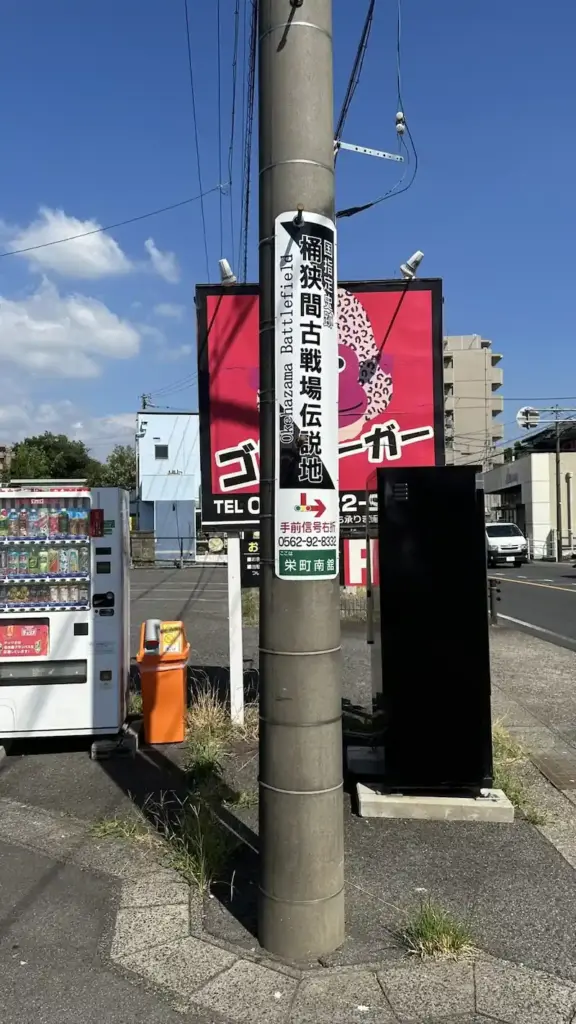
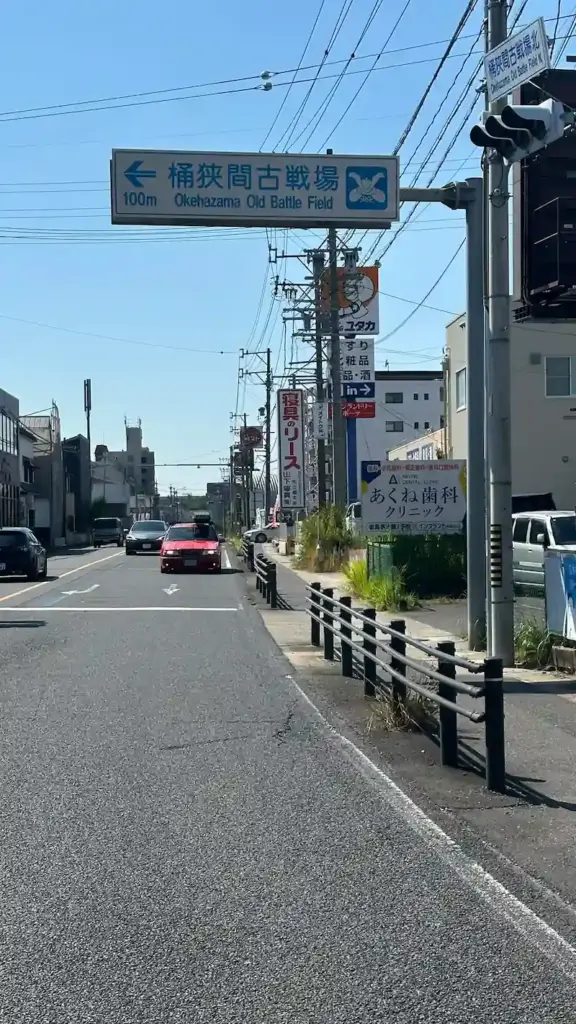
| Getting There from Nagoya | From Nagoya Station, take the Meitetsu Nagoya Main Line to Chukyo Keibajo-mae Station (中京競馬場前駅) — about 20 minutes, no transfer, roughly ¥460. Meitetsu (Nagoya Railroad) is a private railway separate from JR, so the Japan Rail Pass does not cover this line. From the station it's about a 3-minute walk to the first site, the Okehazama Battlefield Legend Site. |
|---|---|
| Getting to Nagoya | Nagoya Station is about 100 minutes from Tokyo Station and about 35 minutes from Kyoto Station on the fastest (Nozomi) Tokaido Shinkansen trains, making Okehazama an easy half-day side trip if you're based in Nagoya, or a longer day trip from Kyoto or Osaka. |
| Bus | The Nagoya City Bus (municipal bus, not Meitetsu) also stops at "Okehazama Kosenjo Koen" (桶狭間古戦場公園), reachable from Meitetsu Arimatsu Station or from JR Otaka / Minami-Otaka Stations. Confirmed via official sources as of July 2026 — check the Nagoya City Transportation Bureau website for current timetables. |
| Parking | 5 regular-car spaces (no bus parking) in front of the Okehazama Battlefield Tourist Information Center. Okehazama Battlefield Park itself has no parking lot, so use the Information Center's lot when visiting the area. |
| Information Center Hours | 10:00 AM–4:00 PM (closed over the New Year holidays; occasional irregular closures) |
| Suggested Walking Order | Okehazama Battlefield Legend Site → Takeji-Kamagatani Valley → Nanatsuzuka (Seven Mounds) → Mount Okehazama → Okehazama Battlefield Park → Okehazama Battlefield Tourist Information Center → Senpyo-no-Matsu → Chofuku-ji Temple (walking distances and times are listed under each site below) |
The 8 Sites
Okehazama Battlefield Legend Site (桶狭間古戦場伝説地, Toyoake City)
Recommendation
Historical Value: ☆☆☆
Visual Appeal: ☆☆
Experience Value: ☆☆
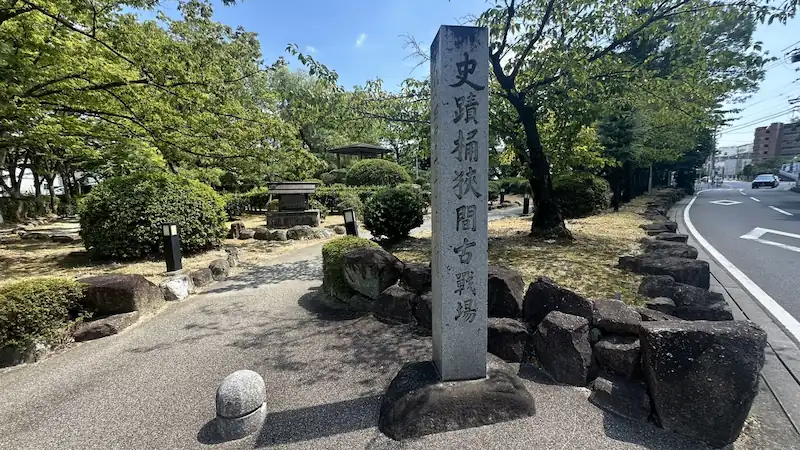
A few minutes' walk from the Meitetsu station into a residential neighborhood, along a road with steady car traffic, brings you to the "Legend Site" of the Battle of Okehazama.
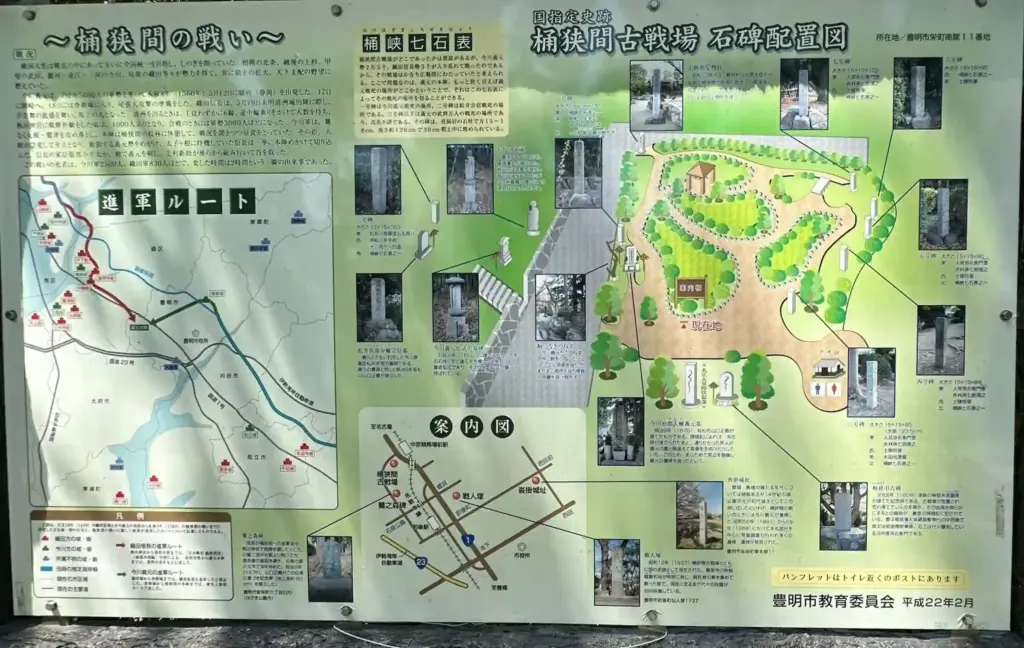
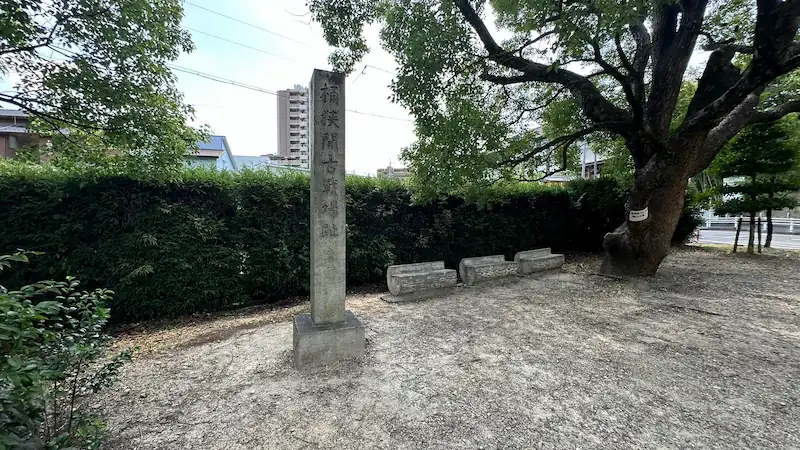
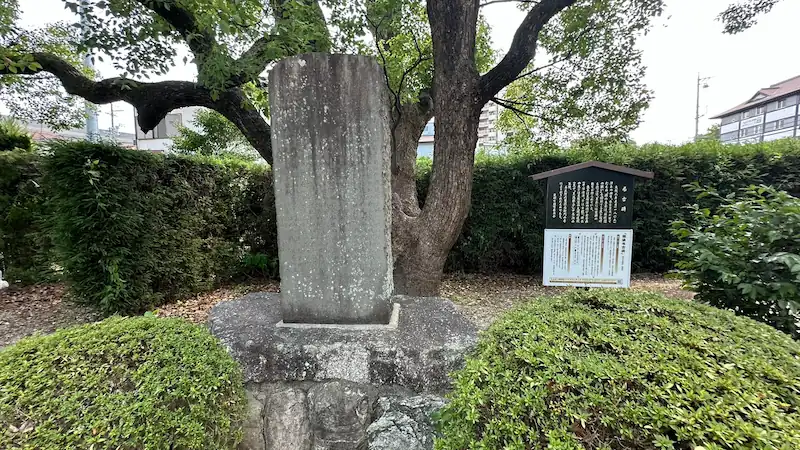
Despite the name "battlefield," what remains here is not a structure but a cluster of stones. There's the Okekyo-chokohi monument, put up in the late Edo period when locals lamented the site's neglect; the "Seven Stone Markers" (七石表), said to mark where Imagawa soldiers fell; grave markers for Yoshimoto and his senior retainer Matsui Munenobu; and the unusual "Ghost Jizo" statue, erected to quiet a local ghost story. Generation after generation added its own stone here, each trying to make sure Okehazama wasn't forgotten. Among the many candidate sites for "Yoshimoto's headquarters," this is the only one carrying official national historic site status — which quietly underscores how much weight this small plot of land carries.
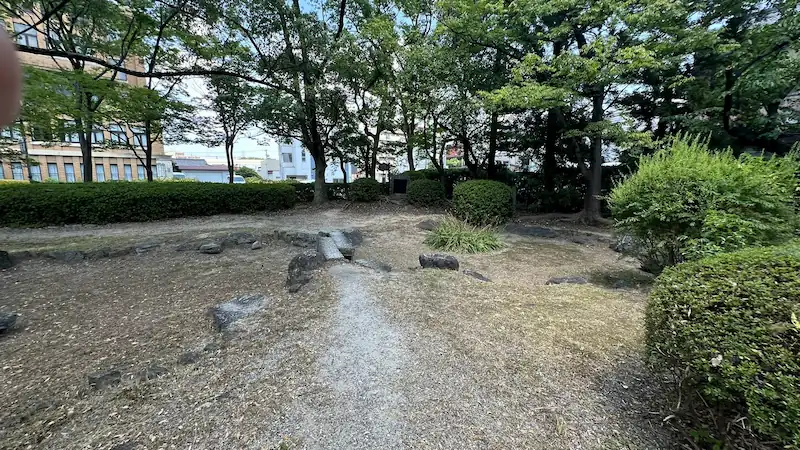
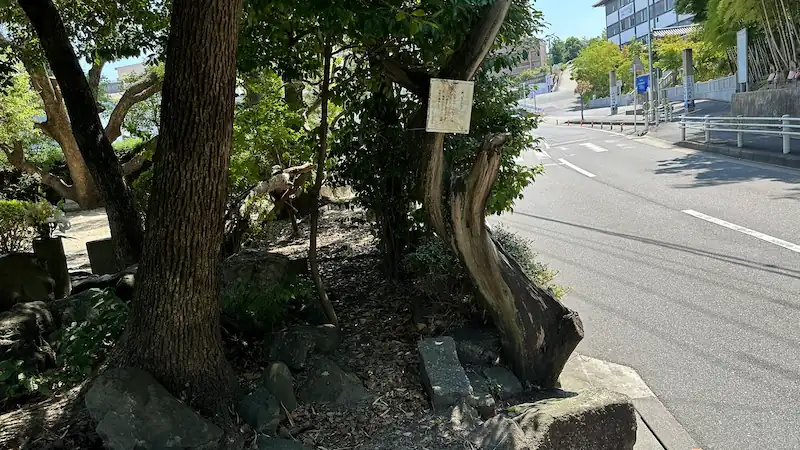
Tap to enlarge
| Built | Eiroku 3 (1560) — the battle itself. Designated a historic site on December 21, 1937; the site-designation stone pillar was erected in October 1941. |
|---|---|
| Built by | (The battle) Oda Nobunaga's and Imagawa Yoshimoto's forces. (Main monuments) The Seven Stone Markers: Owari domain retainers Hitomi Yaemon and Akabayashi Magoshichiro Nobuyuki (1771). Okekyo-chokohi: Tsushima Shinto priest Himuro Toyonaga (1809). Yoshimoto's grave marker: Yamaguchi Masayoshi of Arimatsu (1876). |
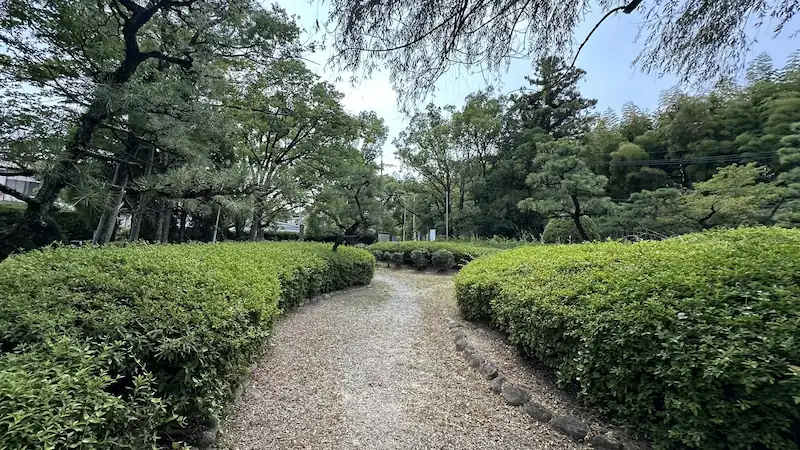
| Layout | A small garden-style historic site within a residential block, packed with stone monuments and grave markers (the Seven Stone Markers, the Okekyo-chokohi, Imagawa Yoshimoto's grave, Matsui Munenobu's grave, the Ghost Jizo, and the historic-site designation pillar). |
| Renovation history | In 1876, after travelers mistakenly began leaving offerings at the Okekyo-chokohi monument believing it to be Yoshimoto's grave, the area was reorganized and a proper grave marker, "Imagawa Jibu-no-Tayu Yoshimoto no Haka," was erected. |
| Current condition | Open to the public as a national historic site; the stone monuments and pillar remain within the designated site. |
| Losses | No physical remains of period military structures survive — what stands today is almost entirely later commemorative stonework. The surrounding area has since been developed into housing. |
| Heritage designation | National Historic Site: "Okehazama Battlefield Legend Site, with Sennintsuka" (designated December 21, 1937). |
| Notes | Kotoku-in Temple, across the street, is traditionally identified as the site of Imagawa Yoshimoto's headquarters. A volunteer guide tour deepens the visit considerably. |
📍 Address: 11 Minamiyakata, Sakae-cho, Toyoake City, Aichi Prefecture
🚉 Access
Nearest station: about a 3-minute walk (roughly 200 m) from Chukyo Keibajo-mae Station (中京競馬場前駅) on the Meitetsu Nagoya Main Line.
⏳ Suggested Visit Time
Quick visit: about 20 minutes
Unhurried visit: about 40 minutes
📍 Highlights
- Historic-site designation pillar: erected under Japan's prewar historic-preservation system, this pillar is proof that the site is more than legend — an officially recognized national historic site.
- The Seven Stone Markers (marking where Imagawa soldiers, including named commanders, are said to have fallen): erected in 1771, these stones translate the battle from an abstract map into an actual, walkable distance.
- Seasonal highlight: cherry blossoms along the walking path are lovely in spring — following the stone markers under a tunnel of blossoms turns the historic site into a pleasant stroll.
📌 Trivia
- An unexpected backstory: in the late Edo period, the Okekyo-chokohi monument was built specifically to lament the battlefield's neglect and to record its history — the stone itself is a record of an early preservation movement.
- Little-known detail: the "Ghost Jizo" statue was built to quiet a local ghost story, a rare case where memorial rites for the battle's dead blended into folk legend.
- Connection to famous figures: before marching out from Kiyosu Castle, Nobunaga is said to have performed the Kowaka dance "Atsumori" — and this victory is often described as the spark for everything that followed in his career.
Takeji-Kamagatani Valley (武路釜ケ谷, Nagoya, Midori Ward)
Recommendation
Historical Value: ☆☆☆
Visual Appeal: ☆
Experience Value: ☆
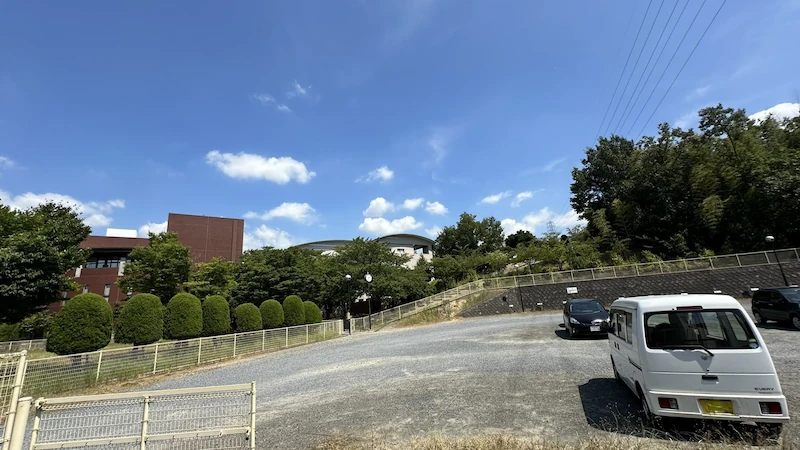
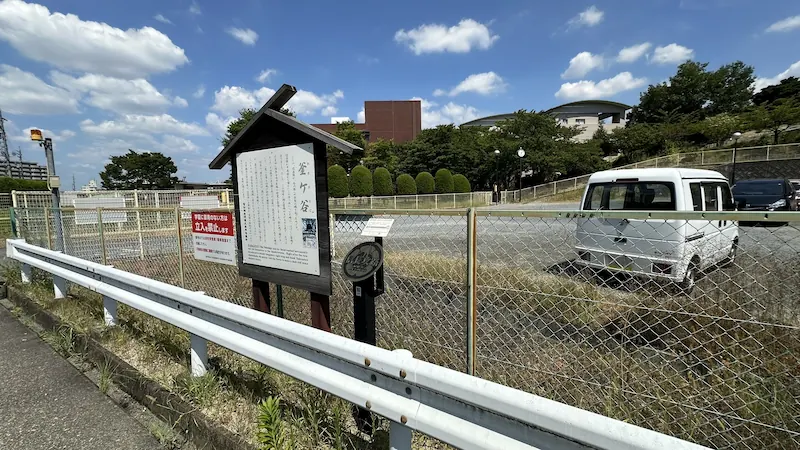
Tradition holds that this is where Oda Nobunaga's advancing troops waited for their decisive moment on the way to Okehazama. Having marched from Nakajima Fort, the Oda army is said to have taken cover in this valley, using the terrain to hide while waiting out a thunderstorm. The instant the rain broke, Nobunaga reportedly gave the order to charge, throwing the Imagawa side into chaos. Today the valley sits on the edge of a university campus and has been turned into a parking lot, but the way the land still hugs the base of the hillside helps you imagine the tension of troops massed and waiting to strike head-on. The more closely you study the ground's contours here, the more Okehazama starts to feel like a battle decided as much by terrain as by tactics.
Note: because this site is on university grounds, unauthorized entry is not permitted. Please view it from outside the property without causing any disturbance.
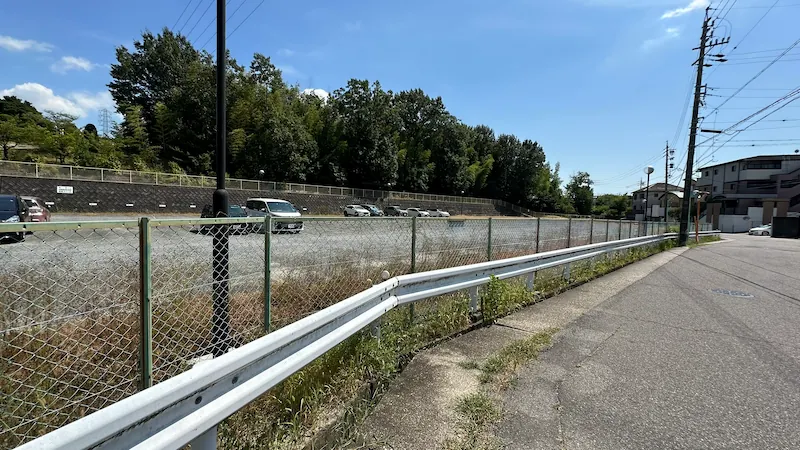
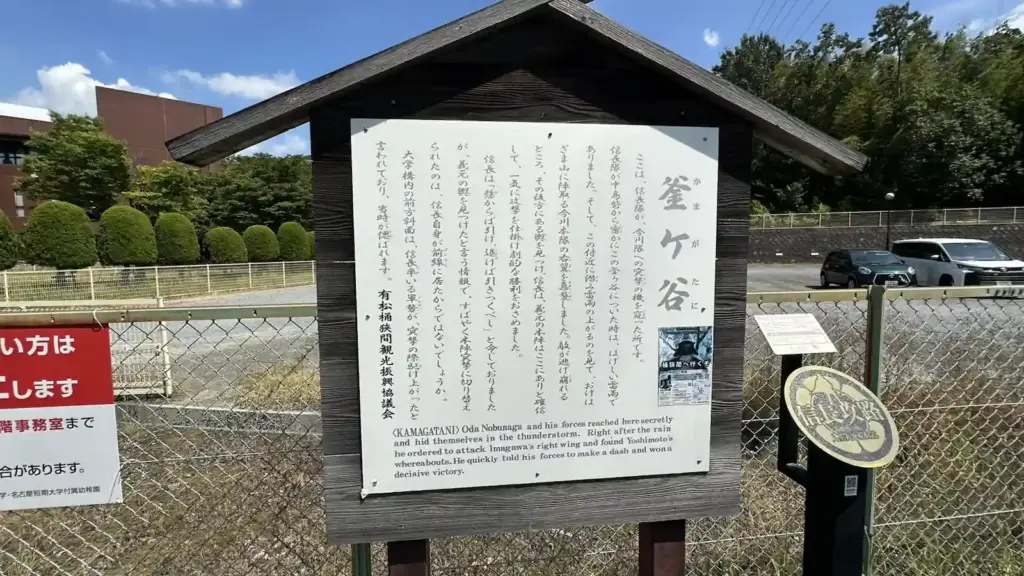
Tap to enlarge
| Built | Unknown — a natural landform. The event associated with the site (the Battle of Okehazama) took place in 1560. |
|---|---|
| Built by | — (natural terrain, no human construction) |
| Layout | A valley landform, now used as a parking area on the edge of a university campus. An information board stands outside the fence; a nearby slope is known locally as "Nobunaga-zaka" (Nobunaga's Slope). |
| Renovation history | Comparison with early Showa-era (1930s) photographs shows the landscape has changed considerably; it is now used as a parking lot (the exact date of this change is unknown). |
| Current condition | The information board remains; part of the original landform survives, though the site is mainly viewed from outside the perimeter fence. |
| Losses | Housing development and land grading have significantly altered the valley's original appearance. |
| Heritage designation | Not a national or other officially designated historic site — it's presented as one stop along a self-guided walking route. |
| Notes |
📍 Address: 2808 Takejicho, Midori Ward, Nagoya, Aichi Prefecture (near the Kamagatani information board)
🚉 Access
17-minute walk (about 1.2 km) from the previous site, the Okehazama Battlefield Legend Site (Toyoake City).
The route has more ups and downs than it appears on a map — bring water and sun protection on hot days.
⏳ Suggested Visit Time
Quick visit: about 3 minutes
Unhurried visit: about 15 minutes
📍 Highlights
- The Kamagatani information board (viewed from outside the fence): even this modest signboard helps you picture, alongside the surrounding terrain, the exact spot where Nobunaga's troops are said to have waited.
- Nobunaga-zaka (the slope): the slope soldiers reportedly charged up during the attack. Since it now sits on campus grounds, the trick is to sense the elevation change from what's visible along the outer perimeter.
- Seasonal highlight: walking here just after a rain shower during the rainy season connects, quite viscerally, with the tradition that Nobunaga's troops moved the instant a thunderstorm broke.
📌 Trivia
- An unexpected backstory: the story of troops charging "the instant the thunderstorm cleared" is more than just a dramatic frontal assault — it captures how much this battle's outcome hinged on terrain and weather.
- Little-known detail: Kamagatani is now described as "a university parking lot," and precisely because so little of the original scene remains, tracing what's left of the landform is part of the appeal for history walkers.
- Connection to famous figures: tradition holds that Nobunaga himself (or his main force) waited here for the right moment to charge — a story repeated in information boards and historical guides to the area.
Nanatsuzuka — "Seven Mounds" (七ツ塚, Okehazama)
Recommendation
Historical Value: [☆☆]
Visual Appeal: [☆]
Experience Value: [☆]
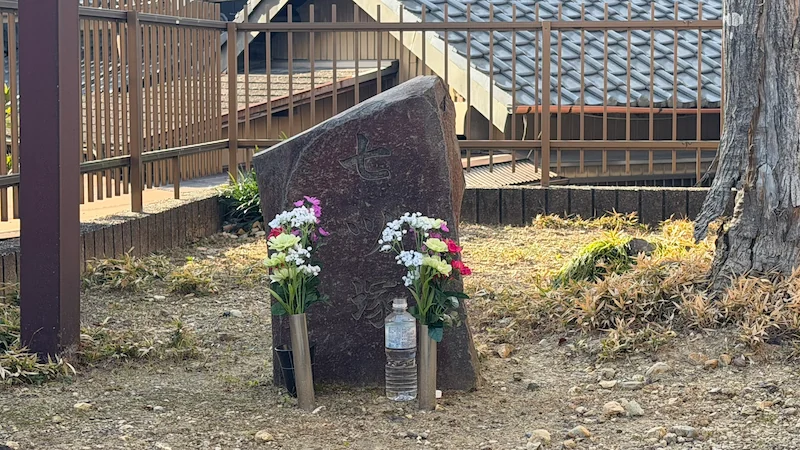
The name Okehazama is now synonymous with "Oda Nobunaga's great upset." But tucked into a quiet residential block in Okehazama-kita, Nagoya's Midori Ward, is a site that reminds visitors of the weight carried by the war's nameless dead: Nanatsuzuka, or "Seven Mounds."
According to tradition, after Yoshimoto was killed, Nobunaga gathered his troops nearby to celebrate the victory, then ordered local villagers to bury the dead before withdrawing. The villagers reportedly dug seven pits along the base of the hillside and buried the fallen there, raising mounds over them — hence the name Nanatsuzuka ("Seven Mounds," also written 石塚, "Stone Mounds"). Today, a narrow lane leads to a small mound, a stone monument, and an information board. There's nothing flashy about it. But by refusing to let Okehazama end as "only a warlord's story," and instead standing as a quiet memory the local community has carried forward, it's a historic site that leaves a different, gentler impression.
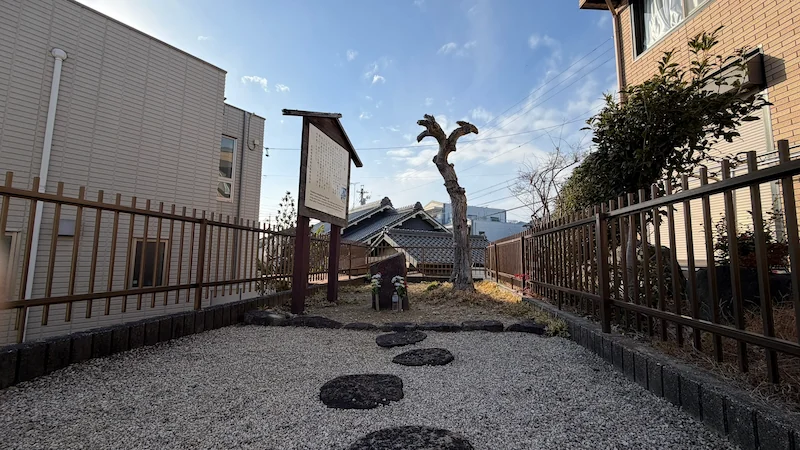
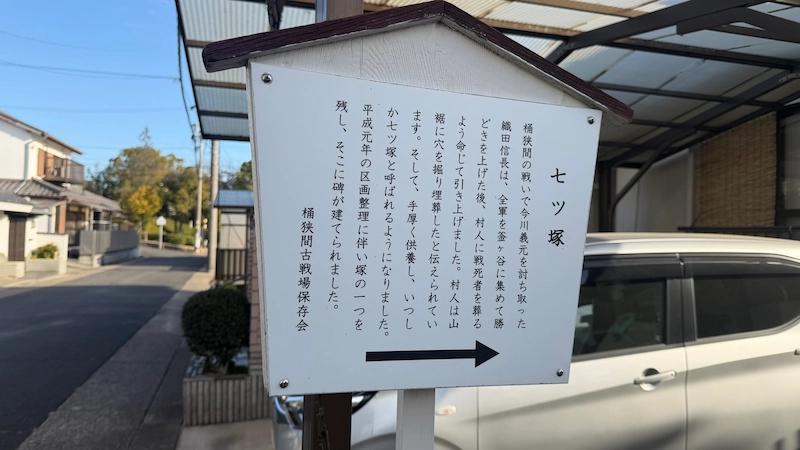
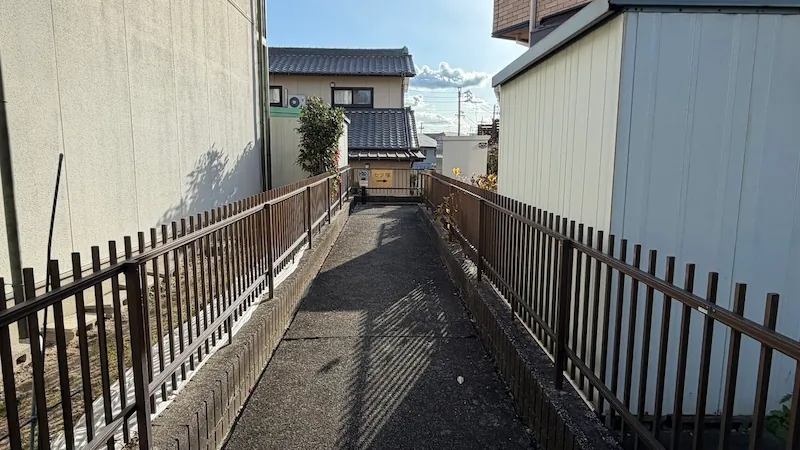
Tap to enlarge
| Built | 1560 (Eiroku 3), according to tradition, when the mounds were raised to bury the war dead after the battle — though other theories exist. |
|---|---|
| Built by | Local villagers, according to tradition, on Oda Nobunaga's order to bury the dead. |
| Layout | A small earthen mound with a stone monument and information board, tucked down a narrow residential lane — a quiet memorial site. |
| Renovation history | Reorganized in 1989 as part of a local land-readjustment project, with one of the original mounds preserved. |
| Current condition | Surviving (one restored mound remains). |
| Losses | The traditional "seven mounds" had already dwindled by recent times, apparently consolidated during the land-readjustment process. |
| Heritage designation | Not officially designated (a separate site from the nationally designated Okehazama Battlefield Legend Site). |
| Notes | Local oral tradition warns that "disturbing the mound brings a curse." As the site sits close to private homes, please visit quietly. |
📍 Address: 2-904 Okehazamakita, Midori Ward, Nagoya, Aichi Prefecture
🚉 Access
6-minute walk (about 450 m) from Takeji-Kamagatani Valley.
⏳ Suggested Visit Time
Quick visit: about 5 minutes
Unhurried visit: about 15 minutes
📍 Highlights
- The mound and stone monument: a symbol of the battle's aftermath — a chance to face the war's memory as a story of the land rather than of its victors.
- The narrow residential approach: the surprise of a historic site tucked at the end of a back lane brings home just how much Okehazama remains part of everyday local life.
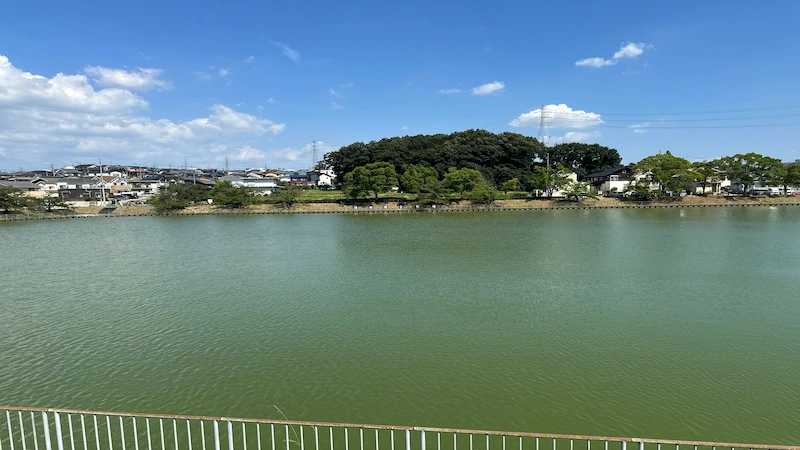
- Seasonal highlight: the Okehazama Battlefield Festival & Lantern Ceremony (Mando-e), held in mid-May (the Sunday closest to May 19), lights about 3,500 lanterns around the nearby pond in memory of the fallen.
📌 Trivia
- An unexpected backstory: alongside the tradition of a war-dead burial mound, some accounts suggest the mound may originally have served a religious purpose, similar to a sutra mound.
- Little-known detail: local oral tradition long held that "disturbing the mound brings a curse" — a story passed down with a mix of fear and protectiveness.
- Connection to famous figures: one of the sites where, according to tradition, Nobunaga ordered villagers to bury the war dead after raising his victory cry nearby.
Mount Okehazama — Imagawa's Headquarters Site (おけはざま山, Imagawa Honjin Ato)
Recommendation
Historical Value: ☆☆☆
Visual Appeal: ☆
Experience Value: ☆☆
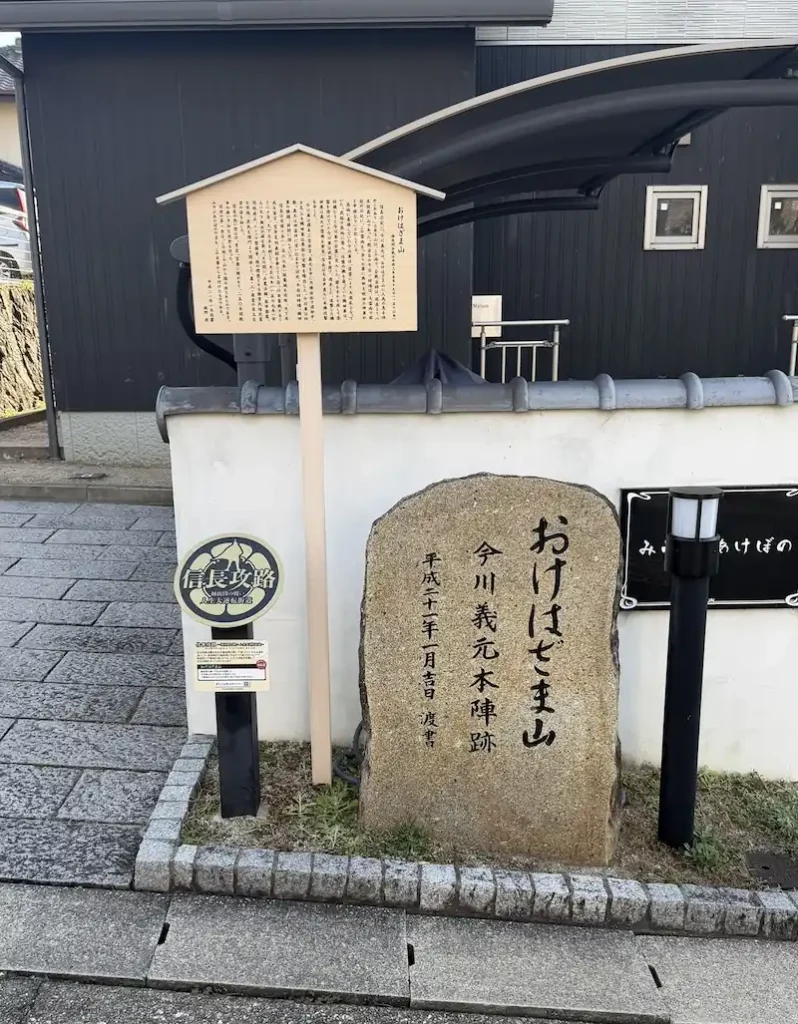
Tradition holds that Imagawa Yoshimoto set up his honjin (field headquarters) on this small hill, known as Mount Okehazama. Overlooking the surrounding area, this was also the spot where a stream of victory reports arrived, convincing the Imagawa army it had already won.
Yoshimoto is said to have been resting here and holding a small banquet — and it was that very complacency that Nobunaga's young forces exploited, striking out of a rainstorm before the Imagawa camp could react. Between the terrain, the sudden weather, and a fatal lapse in vigilance, Yoshimoto's path toward becoming a national power was cut short here, at Okehazama, without warning.
Today Mount Okehazama is a quiet historic site surrounded by houses, but standing on the hill, you can sense both the sweep of ground the Imagawa headquarters once overlooked and the tension of the instant before everything changed.
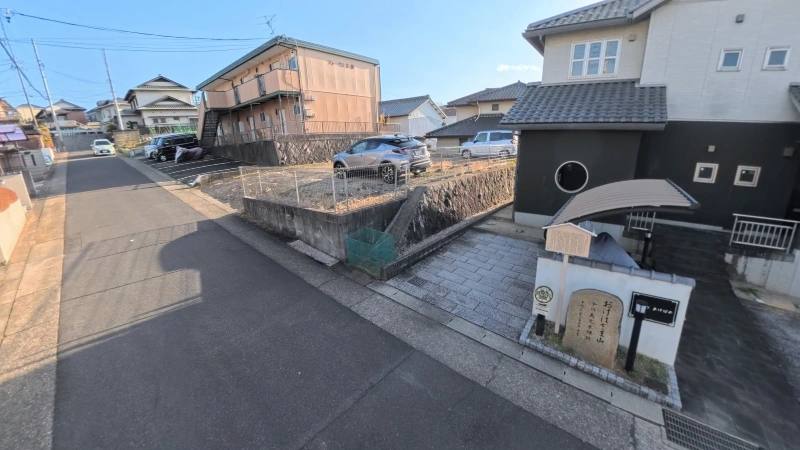
Tap to enlarge
| Built | Unknown — a natural landform. |
|---|---|
| Built by | — |
| Layout | A small hill, traditionally identified as the site of the Imagawa army's headquarters. |
| Renovation history | A historic-site marker and some surrounding improvements have been added (dates unknown). |
| Current condition | The landform survives. |
| Losses | Development has altered parts of the surrounding terrain. |
| Heritage designation | Unknown — not a nationally designated historic site. |
| Notes | One of the strongest traditional candidates for Imagawa Yoshimoto's headquarters site. |
📍 Address: Okehazama, Midori Ward, Nagoya, Aichi Prefecture
🚉 Access
About an 8-minute walk (roughly 550 m) from Nanatsuzuka.
⏳ Suggested Visit Time
Quick visit: about 5 minutes
Unhurried visit: about 15 minutes
📍 Highlights
- The headquarters-site monument: a stone marker indicating where, according to tradition, Yoshimoto set up his field headquarters.
- The view from the hilltop: overlooks the surrounding Okehazama area, helping explain why this rise was chosen as a headquarters site.
- Seasonal highlight: the early-summer greenery here helps evoke the storm and lush battlefield of that day.
📌 Trivia
- An unexpected backstory: Yoshimoto is said to have mistakenly believed the fighting was already over here, and let his guard down.
- Little-known detail: several sites are proposed as "the" Imagawa headquarters, and Mount Okehazama is considered one of the strongest candidates.
- Connection to famous figures: Yoshimoto's death here triggered the rapid decline of the Imagawa clan.
Okehazama Battlefield Park (桶狭間古戦場公園, Nagoya, Midori Ward)
Recommendation
Historical Value: ☆☆☆
Visual Appeal: ☆☆
Experience Value: ☆☆☆
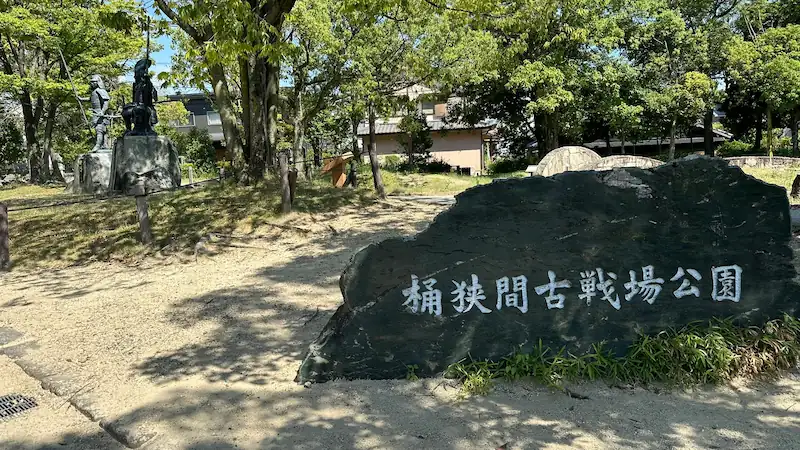
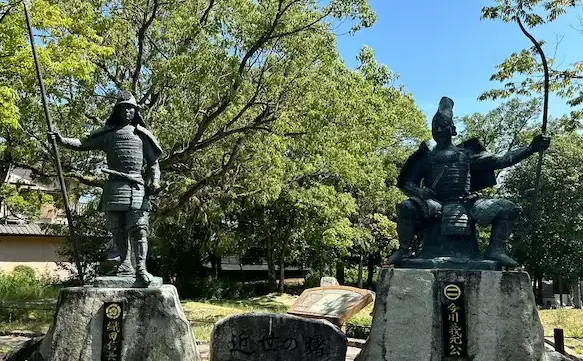
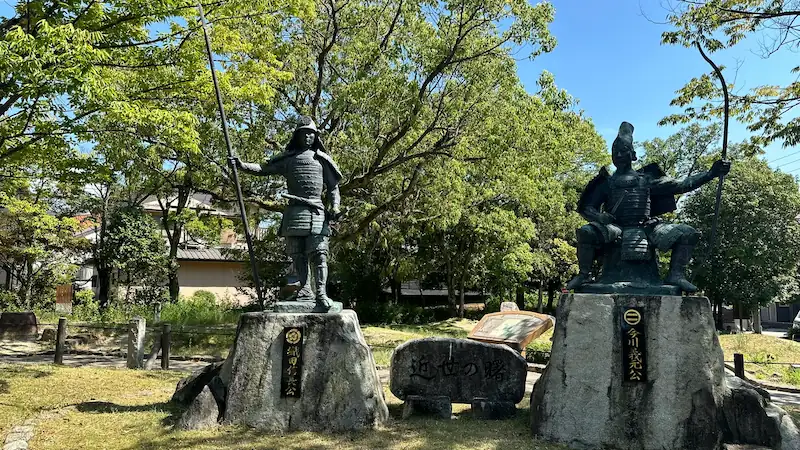
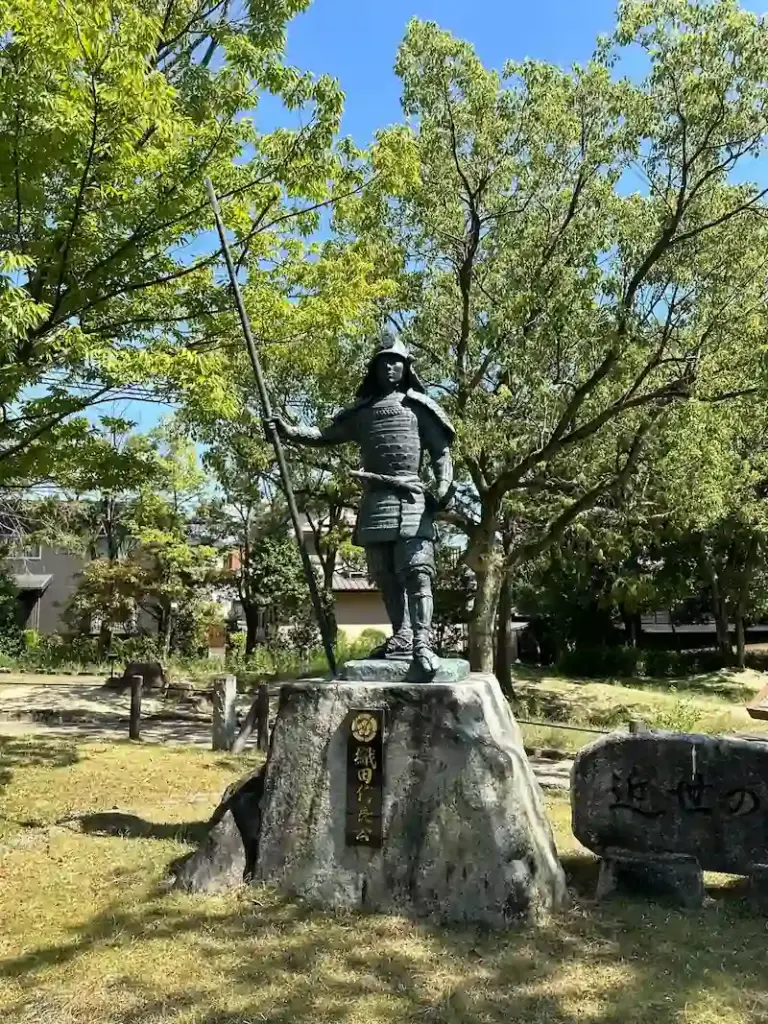
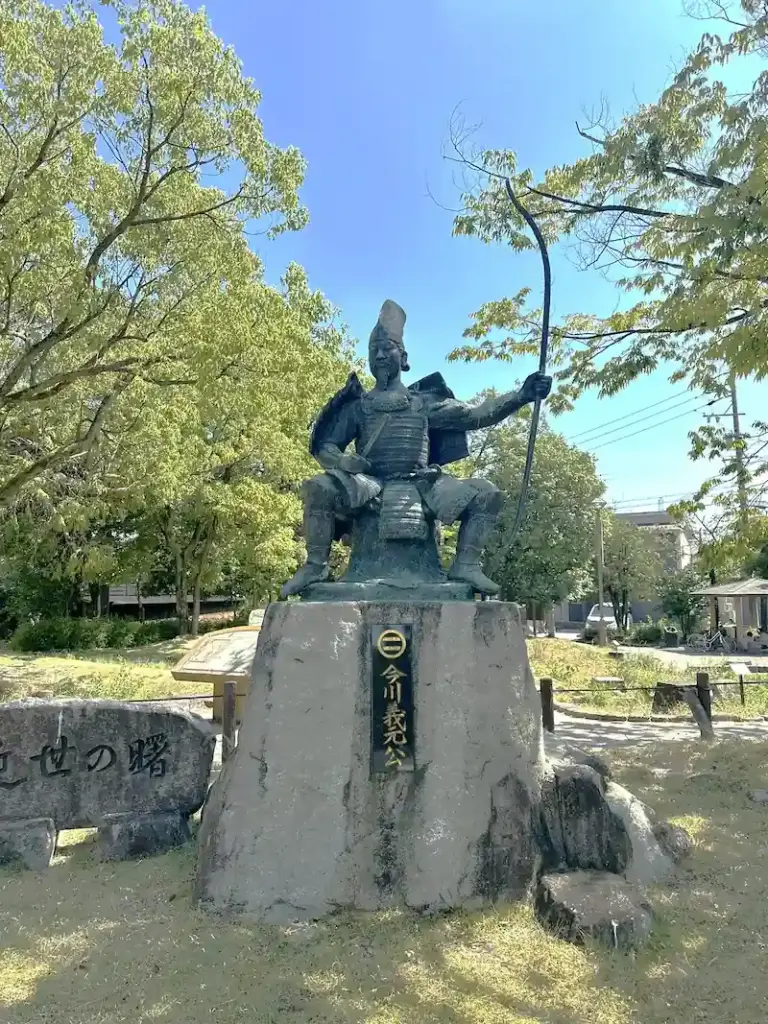
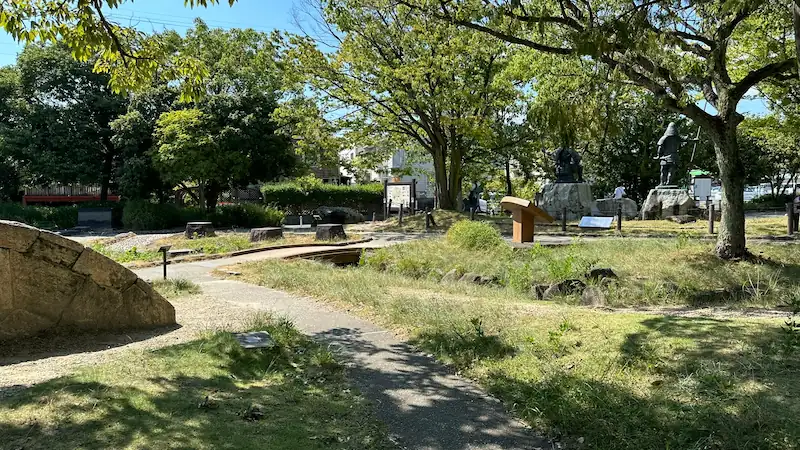
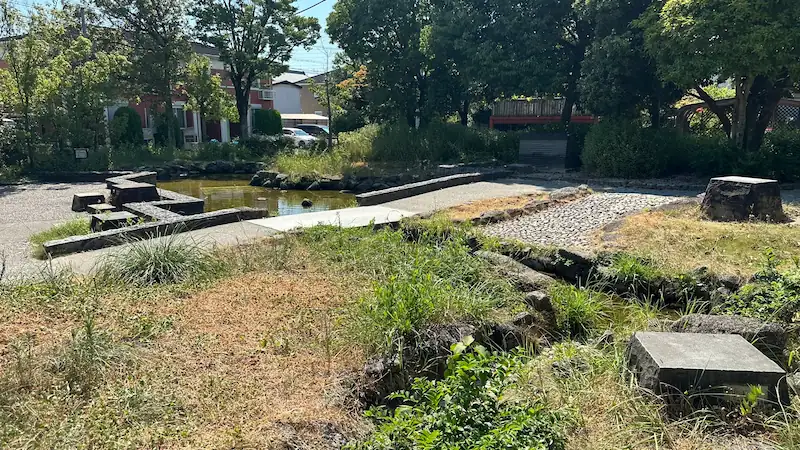
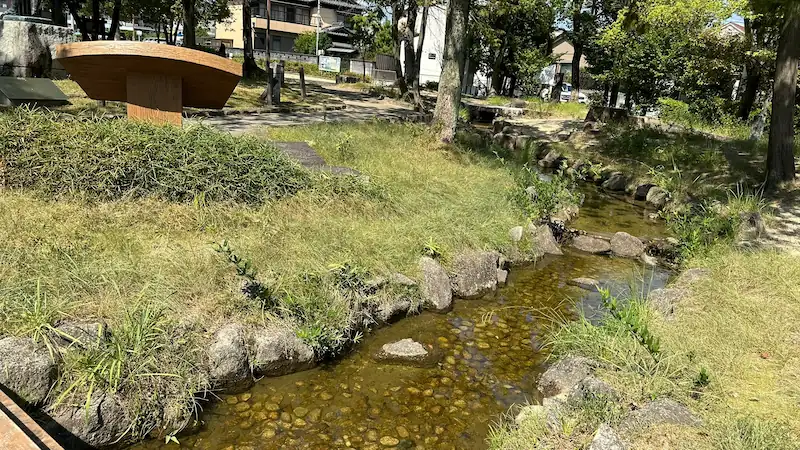
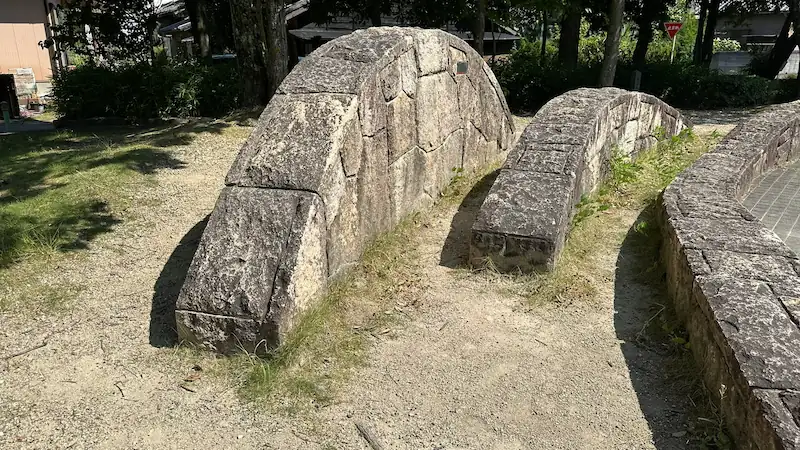
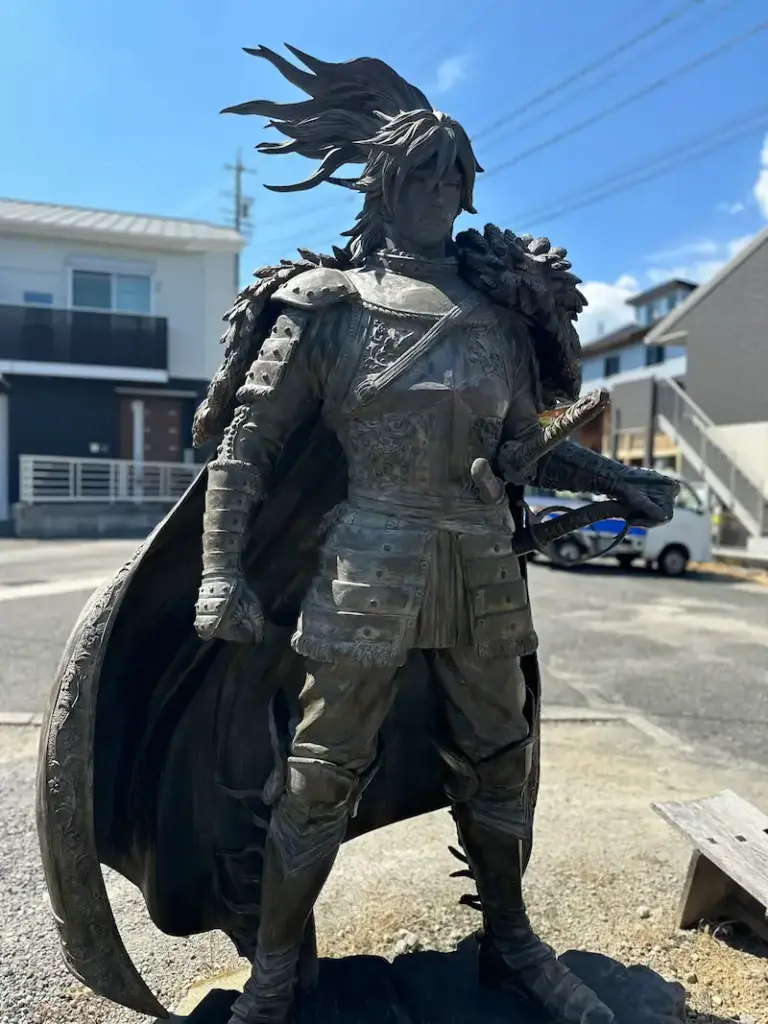
Right in the middle of a residential neighborhood, a genuine turning point in Japanese history suddenly rises into view — this is Okehazama Battlefield Park in Nagoya's Midori Ward. On June 12, 1560 (Eiroku 3), Oda Nobunaga of Owari Province defeated the much larger army of Imagawa Yoshimoto here. Tradition holds this area, known as Dengaku-tsubo, to be Yoshimoto's final battleground. For Nobunaga, Okehazama wasn't merely a victory — it was the starting point of his march toward national power. The statues of Nobunaga and Yoshimoto standing at the park's center capture not just that single decisive moment, but the sense that this is where the gears of history began to turn.
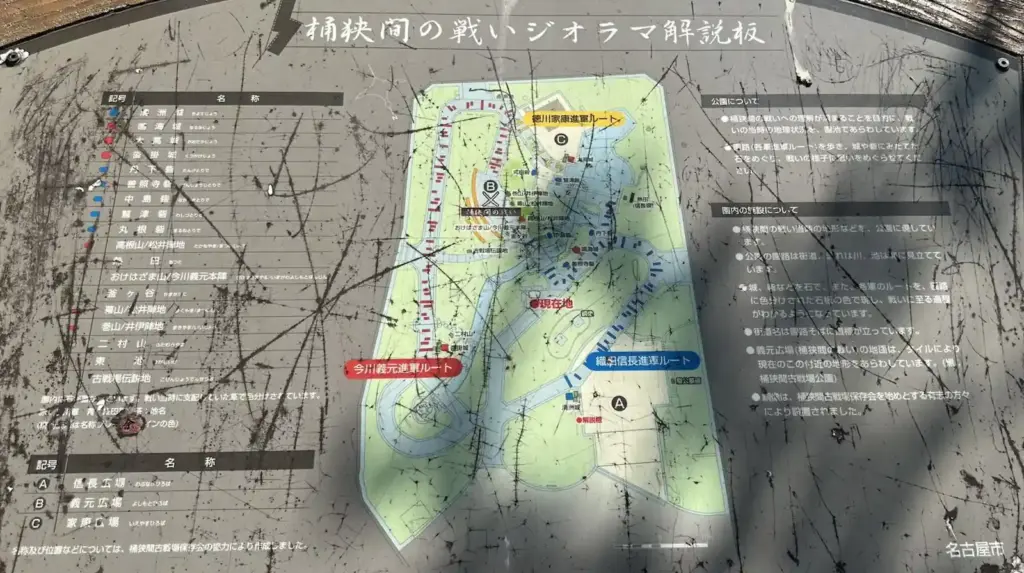
What makes this park worth visiting is that it doesn't stop at simply "reading" the history. A detailed diorama recreates the terrain, forts, and troop movements of the battle, and video displays walk visitors through the fighting scene by scene (the park itself was developed in 2010, the battle's 450th anniversary). Comparing the ground's contours with the model's layout makes it easier to picture how Nobunaga used the terrain to time his attack.
Tap to enlarge
Scattered through the park are smaller details that make the story tangible: the moss-covered Shunko Bokatsu memorial stone (date unknown), the Imagawa Yoshimoto's Head-Washing Well (義元首洗いの泉), and the tethering pine (馬つなぎの社松) — traces that resist being reduced to a simple story of the victor. The nearby Tourist Information Center also offers exhibits, guide referrals, and armor try-on experiences, tying the whole area together as a place to "walk through history."
| Built | (Battle) 1560 (Eiroku 3, 5th month, 19th day — June 12 on the Gregorian calendar). (Park development) 2010, the battle's 450th anniversary. |
|---|---|
| Built by | (Park development) City of Nagoya, as a historic-site park. |
| Layout | Statues of Oda Nobunaga and Imagawa Yoshimoto, a detailed diorama of the battle terrain, and information panels and video displays that walk visitors through the fighting. |
| Renovation history | 2010: developed as a park (diorama, statues, etc.). 2019: the Okehazama Battlefield Tourist Information Center opened nearby. |
| Current condition | Open to the public as an outdoor historic-site park. |
| Losses | Surrounding development has erased the original battlefield terrain, though the park's diorama recreates it for visitors. |
| Heritage designation | Not a national historic site (that designation belongs to the Okehazama Battlefield Legend Site in Toyoake City). |
| Notes | No on-site parking (see the Tourist Information Center for parking guidance for this and nearby sites). |
📍 Address: 3-1001 Okehazamakita, Midori Ward, Nagoya, Aichi Prefecture 458-0913
🚉 Access
6-minute walk (about 450 m) from the previous site, Takeji-Kamagatani Valley.
⏳ Suggested Visit Time
Quick visit: about 15 minutes
Unhurried visit: about 45 minutes
📍 Highlights
- The diorama and interpretive displays: the terrain, forts, and troop movements are made visible, letting visitors trace the flow of the battle across a three-dimensional model.
- The statues of Oda Nobunaga and Imagawa Yoshimoto: placing victor and vanquished side by side is a striking touch, capturing this as the moment everything turned.
- Seasonal highlight: the annual Okehazama Battlefield Festival & Lantern Ceremony each May includes a memorial service, talks, and an evening lantern lighting that turns the historic site into a living act of remembrance.
📌 Trivia
- An unexpected backstory: "Dengaku-tsubo," the traditional name for this area, has long been associated with the Shincho Koki's description of low-lying, marshy ground.
- Little-known detail: local tradition holds that touching the tethering pine "brings a fever" — a story that keeps the site's memory vividly alive beyond the outcome of the battle itself.
- Connection to famous figures: tradition credits the retainers Hattori Kohyota and Mori Shinsuke with killing Yoshimoto at his final battleground here, an act that instantly made Nobunaga's name known across Japan.
Okehazama Battlefield Tourist Information Center (桶狭間古戦場観光案内所)
Recommendation
Historical Value: ☆
Visual Appeal: ☆
Experience Value: ☆☆☆
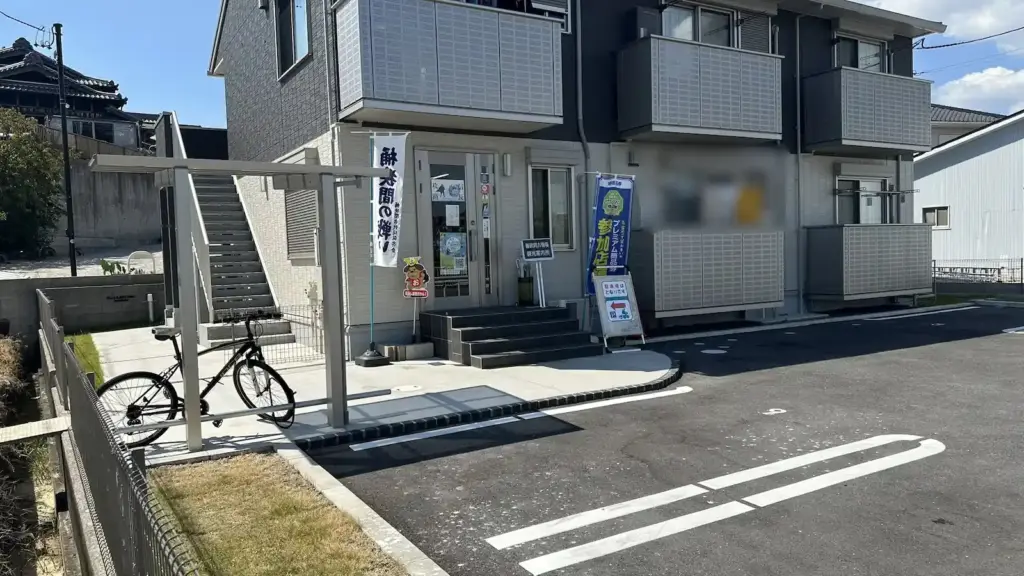
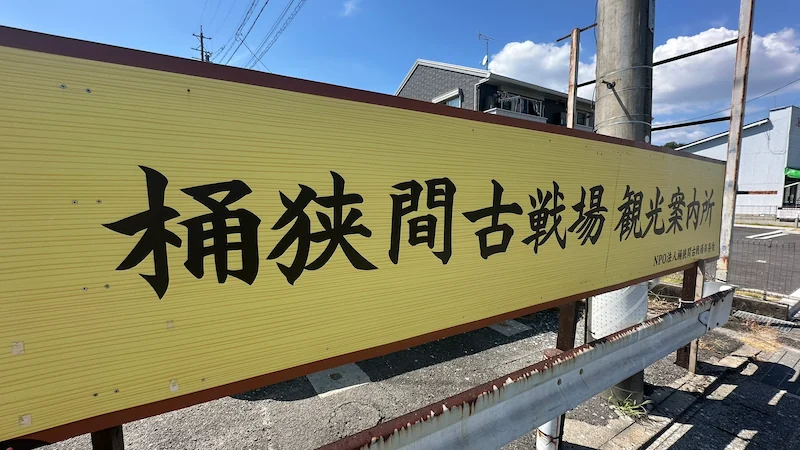
Before setting out to explore Okehazama, it's worth stopping first at the Okehazama Battlefield Tourist Information Center. This isn't a historic ruin itself — think of it as a "command room" for making sense of a single day in 1560 by connecting the terrain with the movements of the people who fought here. On paper, the young Oda Nobunaga taking on the vastly larger army of Imagawa Yoshimoto makes for a thrilling story; standing on the actual ground, though, the question "how did he actually win?" suddenly gets much harder to answer. That's where the center's panel displays, which walk through the flow of the battle, and its guide-referral service become genuinely useful. Map in hand, the scattered historic sites link into a single narrative thread, and Nobunaga's decisions start to feel grounded in the real terrain rather than in legend. It's also a convenient rest stop with battle-related souvenirs, making it a natural base for both understanding the story and pacing your visit.
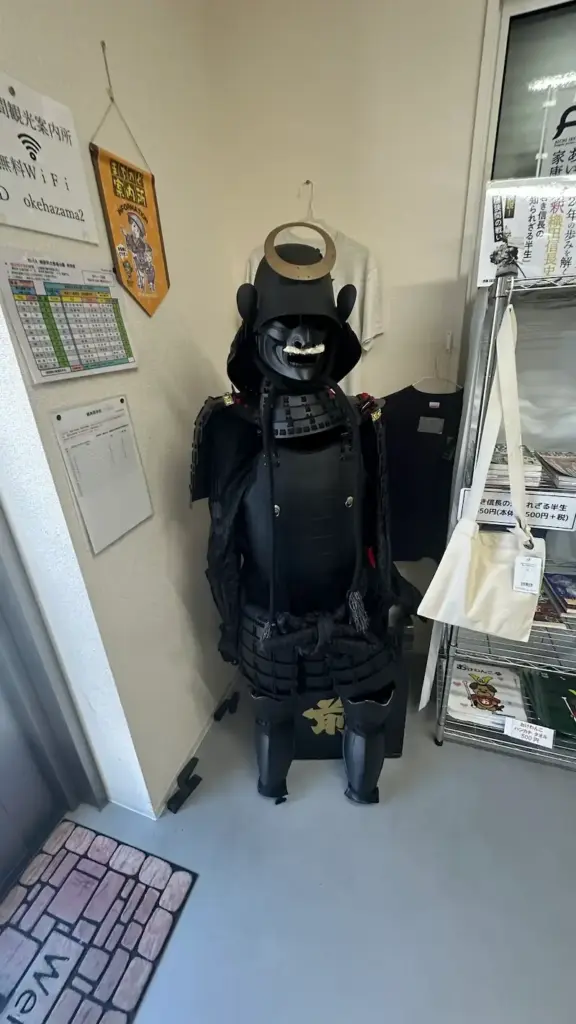
Tap to enlarge
| Built | 2019 (opened) |
|---|---|
| Built by | The Okehazama Battlefield Preservation Society (NPO), which operates the center and its visitor services. |
| Layout | A visitor center with panels explaining the Battle of Okehazama, referrals for historic-site guides, a rest area, and battle-themed souvenirs for sale. |
| Renovation history | Operated from a temporary information center from August 2022 to the end of February 2023 while the permanent building was rebuilt. |
| Current condition | Open and operating as a tourist information center. |
| Losses | None noted. |
| Heritage designation | None (a visitor facility, not a historic site). |
| Notes | Open 10:00 AM–4:00 PM. Closed over the New Year holidays, with occasional irregular closures. Parking: 5 regular-car spaces (no bus parking). Armor try-on experiences vary by schedule — check locally before visiting. |
📍 Address: 2037 Okehazamamakiyama, Midori Ward, Nagoya, Aichi Prefecture 458-0920
🚉 Access
4-minute walk (about 260 m) from the previous site, Okehazama Battlefield Park.
⏳ Suggested Visit Time
Quick visit: about 15 minutes
Unhurried visit: about 45 minutes
📍 Highlights
- Panel displays that frame the whole battle: rather than leaving the scattered sites as disconnected dots, the displays overlay Nobunaga's movements onto the terrain — well worth seeing before you set out, since it sharpens everything you see afterward on the ground.
- Guide referrals (a huge upgrade to your visit): touring with commentary turns the same roads into recognizable "advance routes." The less time you have, the more a guide's insight pays off.
- Seasonal highlight: the Okehazama Battlefield Festival & Lantern Ceremony, held in spring through early summer (dates vary by year), wraps the whole area in a mood of remembrance and storytelling.
📌 Trivia
- An unexpected backstory: the center opened in 2019, part of a recent push to establish Okehazama as a proper "place of learning" rather than just a battlefield legend.
- Little-known detail: the impression each site leaves can vary a great deal depending on which you choose to visit — the center's staff can help you plan a route that captures "the shape of the battle" even on a tight schedule.
- Connection to famous figures: the center also recommends nearby Takeji-Kamagatani Valley, where Nobunaga's troops are said to have gathered before their attack on the Imagawa headquarters — a good entry point for retracing Nobunaga's path to victory on foot.
Senpyo-no-Matsu — the "War Council Pine" (戦評の松, Okehazama Battlefield)
Recommendation
Historical Value: ☆☆☆
Visual Appeal: ☆
Experience Value: ☆
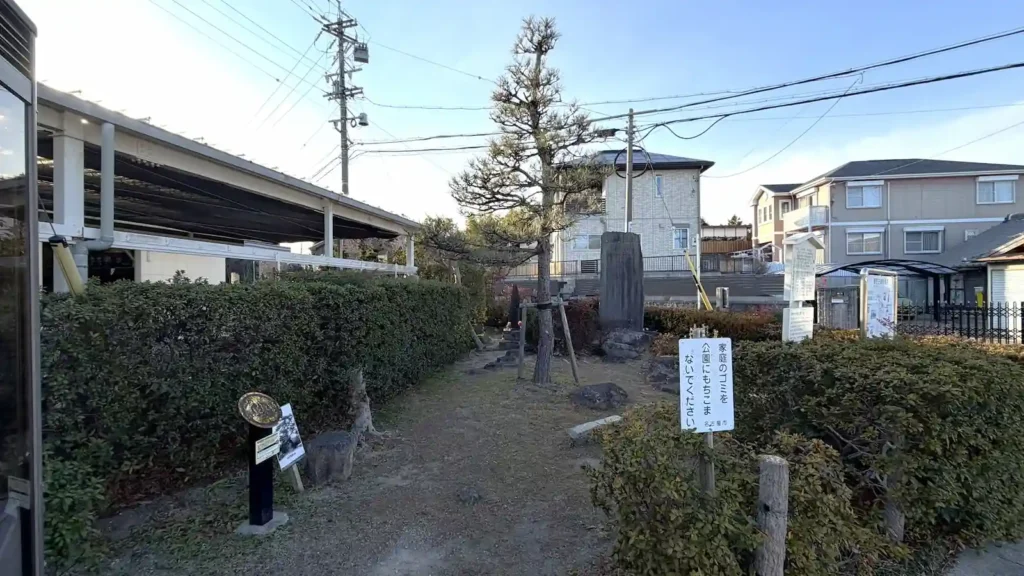
Senpyo-no-Matsu, the "War Council Pine," carries the tension of the moments just before the Battle of Okehazama began. Tradition holds that Sena Ujitoshi, a commander leading the Imagawa vanguard, gathered his fellow officers here beneath a large pine tree to hold a "senpyo" — a war council — to discuss strategy.
At the time, the Imagawa army had the upper hand at both Narumi Castle and Odaka Castle, and Yoshimoto himself, the supreme commander, had set up his headquarters at Okehazama. Senpyo-no-Matsu, held amid that mood of confidence, symbolizes the very complacency that was setting into the Imagawa ranks.
The pine standing today is a later replacement, but visiting the site brings home the irony and tension of the moment — the Imagawa side confidently assessing a battle they believed was already won, just before Nobunaga's surprise attack struck.
| Built | Unknown (the current pine is a later replacement) |
|---|---|
| Built by | Unknown |
| Layout | A stone monument and pine tree marking the traditional site of the war council. |
| Renovation history | Surrounding improvements have been made (date unknown). |
| Current condition | Surviving. |
| Losses | The original pine died; the current tree is a later successor. |
| Heritage designation | Unknown — not a designated historic site. |
| Notes | Part of the wider Okehazama Battlefield site cluster. |
📍 Address: Okehazama, Midori Ward, Nagoya, Aichi Prefecture
🚉 Access
1-minute walk (about 100 m) from the Okehazama Battlefield Tourist Information Center.
⏳ Suggested Visit Time
Quick visit: about 10 minutes
Unhurried visit: about 30 minutes
📍 Highlights
- The pine and its stone monument: a symbolic site traditionally linked to Nobunaga's later, more considered strategic thinking after the battle.
- The surrounding battlefield terrain: the low hills and valleys nearby help explain why the surprise attack succeeded.
- Seasonal highlight: the early-summer greenery here makes it easy to picture the scene on the day of the battle.
📌 Trivia
- An unexpected backstory: rather than rushing back to Kiyosu, Nobunaga reportedly prioritized a calm, methodical review of the battle here first.
- Little-known detail: this site sees fewer visitors than Yoshimoto's death site, making it a quieter spot to reflect.
- Connection to famous figures: this war council is often cited as an early example of Nobunaga's rational, methodical approach to military strategy.
Chofuku-ji Temple (長福寺, Okehazama Battlefield)
Recommendation
Historical Value: ☆☆☆
Visual Appeal: ☆
Experience Value: ☆☆
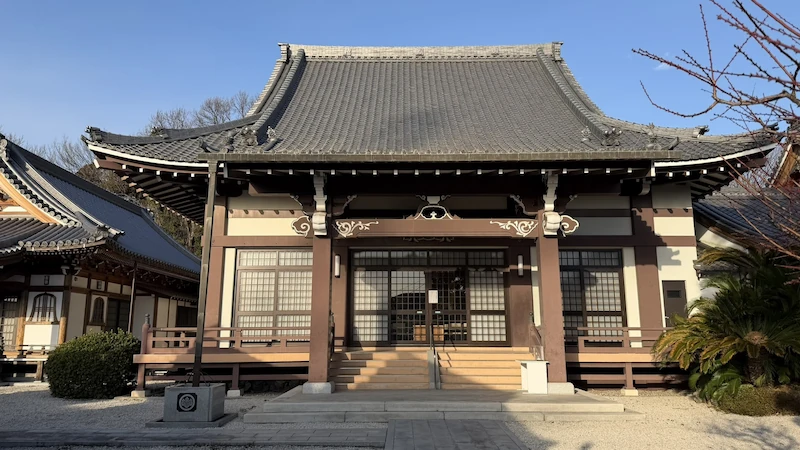
At the very heart of the Battle of Okehazama's story sits Chofuku-ji, a quiet temple in Nagoya's Midori Ward.
Chofuku-ji is traditionally said to have been established to pray for the repose of Imagawa Yoshimoto's soul after his death, and its grounds hold a monument that keeps the battlefield's memory alive today. There's nothing flashy about the architecture, but for visitors with a deeper interest in the period, it's a rewarding, understated site for reflecting on that single decisive moment in history.
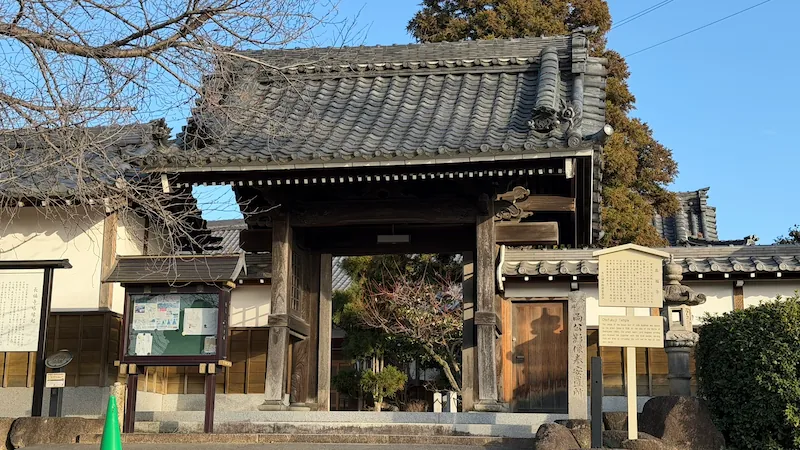
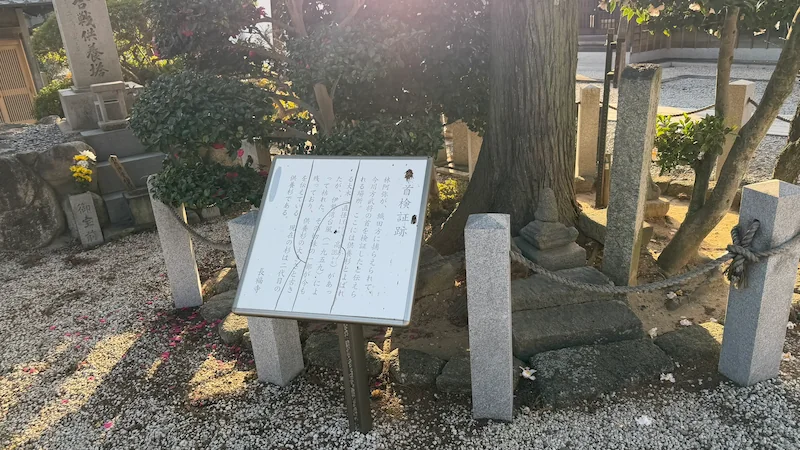
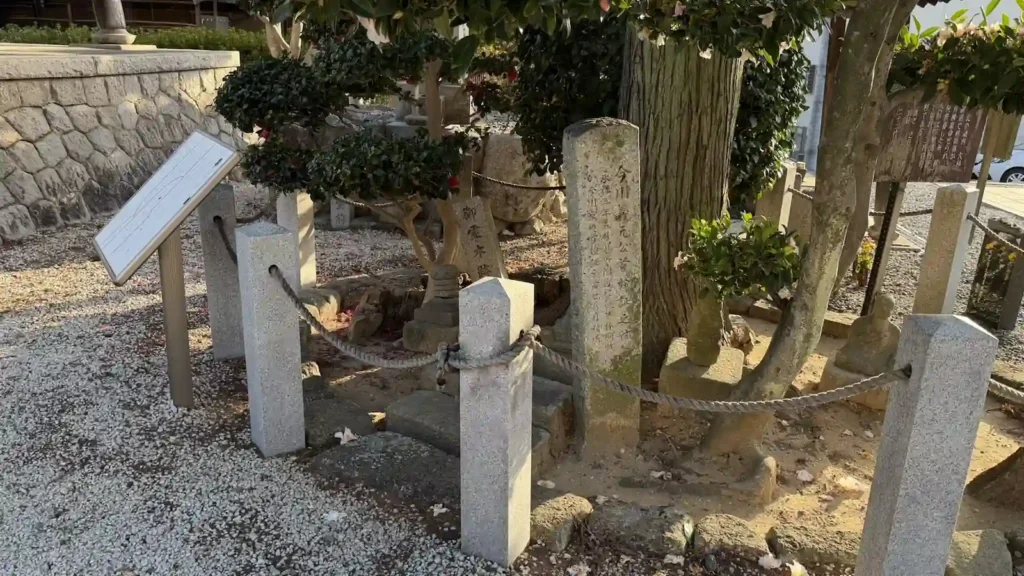
Tap to enlarge
| Built | Unknown (temple tradition places its founding before the Sengoku period) |
|---|---|
| Built by | Unknown |
| Layout | A Soto Zen temple whose grounds include a monument to the Okehazama battlefield. |
| Renovation history | Several rounds of maintenance in the early modern and modern periods (details unknown). |
| Current condition | Surviving. |
| Losses | No record of major destruction. |
| Heritage designation | Unknown — not a nationally or prefecturally designated cultural property. |
| Notes | One of several sites connected to the Battle of Okehazama. |
📍 Address: Okehazama, Midori Ward, Nagoya, Aichi Prefecture
🚉 Access
About a 5-minute walk (roughly 350 m) from the Okehazama Battlefield Tourist Information Center.
⏳ Suggested Visit Time
Quick visit: about 10 minutes
Unhurried visit: about 20 minutes
📍 Highlights
- The Okehazama Battlefield monument: a stone marker at the traditional site of Yoshimoto's death, a tangible reminder of one of the great reversals of fortune in Japanese history.
- The temple grounds: a hushed, contemplative space that carries the mood of remembrance following the battle.
- Seasonal highlight: the fresh greenery of early summer helps evoke the sudden storm and surprise attack of that day.
📌 Trivia
- An unexpected backstory: the exact spot where Yoshimoto died is disputed among several candidate sites, and Chofuku-ji is one of the leading contenders.
- Little-known detail: it draws fewer visitors than the other sites, making for a calmer, less crowded stop on the battlefield trail.
- Connection to famous figures: Yoshimoto's death here is the event that first put Nobunaga's name on the map nationally.
Related Reading: Okehazama's Prelude and Nobunaga's March
Frequently Asked Questions
The historical place names recorded in the sources — such as "Okehazama-yama" and "Dengaku-kubo" — cannot be pinned to a single confirmed location, and the fighting likely did not end in one spot. The Okehazama Battlefield Legend Site in Toyoake City is presented as the place where Yoshimoto was killed, while Okehazama Battlefield Park (Dengaku-tsubo) in Nagoya's Midori Ward is also presented as his death site.
The Okehazama Battlefield Legend Site (附 Sennintsuka) in Toyoake City, designated on December 21, 1937, is the only nationally protected historic site among the eight. Okehazama Battlefield Park and the other sites in Nagoya's Midori Ward do not carry national historic-site status.
The Okehazama Battlefield Tourist Information Center has 5 spaces for regular cars (no bus parking). Okehazama Battlefield Park itself has no parking lot, so use the Information Center's lot when visiting the area.
It's held every year in mid-May, on the Sunday closest to May 19, and includes a memorial service, talks, and an evening lantern ceremony (Mando-e) with about 3,500 lanterns lit around the nearby pond.
Yes. On foot, it's about a 3-minute walk from Chukyo Keibajo-mae Station (中京競馬場前駅) on the Meitetsu Nagoya Main Line to the Okehazama Battlefield Legend Site. You can also take the Nagoya City Bus to the "Okehazama Kosenjo Koen" stop, reachable from Meitetsu Arimatsu Station or from JR Otaka / Minami-Otaka Stations (confirmed via web sources as of July 2026 — check the Nagoya City Transportation Bureau website for the latest timetables).
Okehazama is easiest to reach via Nagoya. The Tokaido Shinkansen connects Tokyo Station to Nagoya Station in about 100 minutes, and Kyoto Station to Nagoya Station in about 35 minutes, on the fastest Nozomi trains. From Nagoya Station, take the Meitetsu Nagoya Main Line (a private railway not covered by the Japan Rail Pass) to Chukyo Keibajo-mae Station — about 20 minutes with no transfer. From there it's a 3-minute walk to the first site.
More Oda Nobunaga Sites

☕ Support This Site
Following the Shogun is built on original fieldwork and on-site research.
If you found this guide useful, your support helps keep it going.

You can also support via QR code


comment