


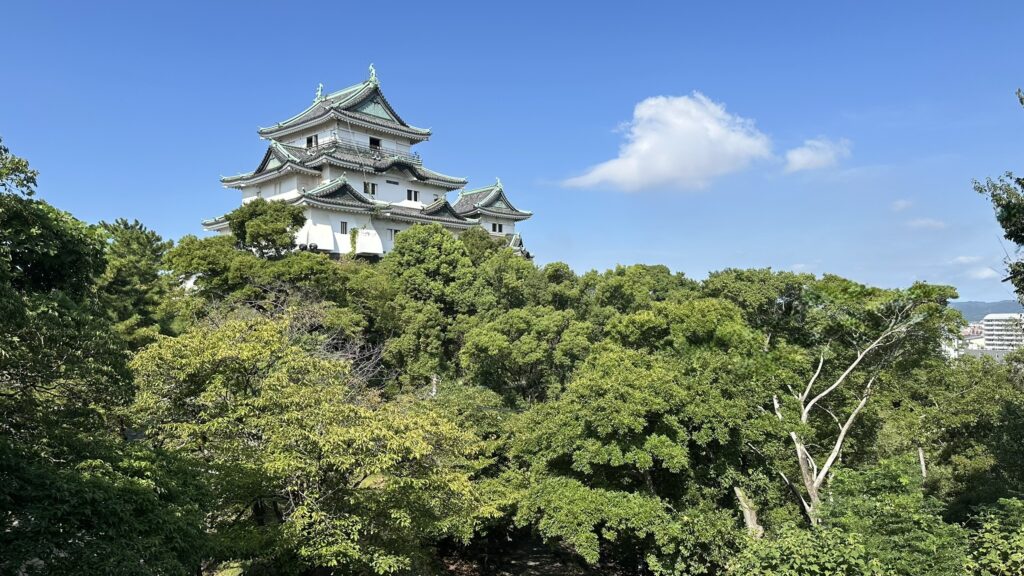
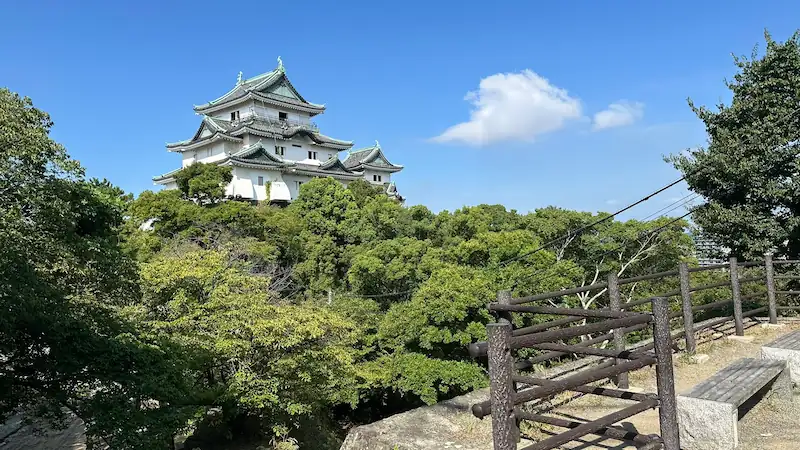
Climb to the top of the Omote Slope, pass Matsu-no-maru, and you’re standing at the heart of Wakayama Castle.
This guide covers all six spots in the honmaru and keep area, in walking order: Shichifuku Garden, said to have been laid out by first domain lord Tokugawa Yorinobu; the sweeping view from the site of the Honmaru Palace; Kusu Gate, the Ni-no-mon Turret, and the Inui Turret, which together make up the linked-keep complex; and the keep itself, which carries the story of the Kishū Tokugawa family. Seven 360° panoramas and firsthand, on-site detail bring the route to life.
THREE-AREA NAVFrom the honmaru and keep onward to the nishinomaru and Momijidani Garden
Back to the full guideEnter through the Ichi-no-hashi Bridge and Main Gate, walk the outer bailey, and climb the Omote Slope into the honmaru and keep. After the keep, heading down into the nishinomaru and Momijidani Garden keeps the route flowing naturally.
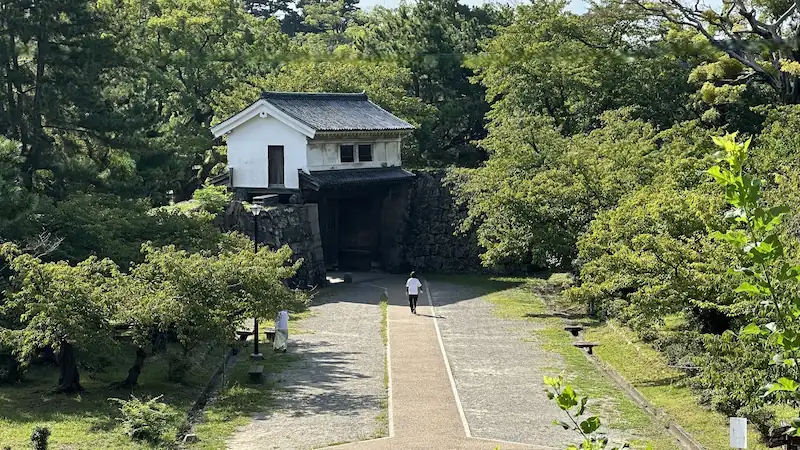
The Outer Bailey
Ichi-no-hashi Bridge to the Omote Slope
Built around Okaguchi Gate and the Matsu-no-maru wall, this area covers the castle’s entrance and its outer line of defense.
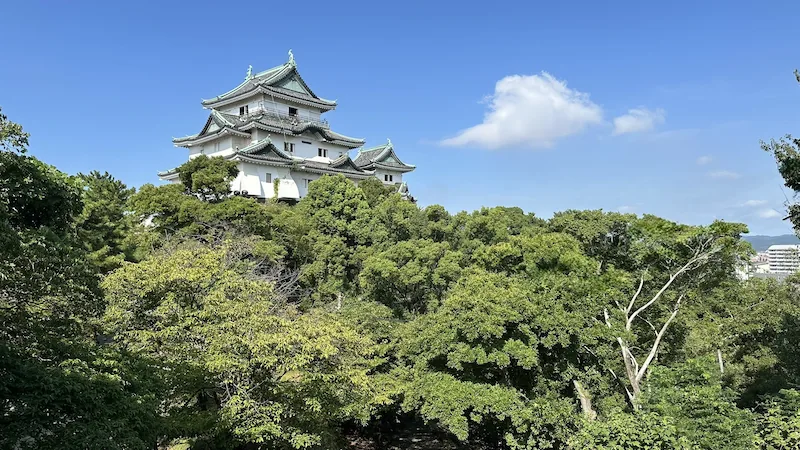
🏯 Visiting the Keep
| Hours | 9:00 a.m.–5:30 p.m. (last entry 5:00 p.m.) |
|---|---|
| Closed | December 29–31 |
| Admission | Adults (including high school students) ¥410 / Elementary and junior high school students ¥200 |
| Combined ticket | Available with the Wakayama History Museum |
The Honmaru Area, Spot by Spot (In Walking Order)
Starting at Shichifuku Garden, the route passes the site of the Honmaru Palace, goes through Kusu Gate, and arrives at the keep group, where the Ni-no-mon and Inui turrets line up in sequence. Walking today’s visitor path with the Edo-period layout of the keep bailey in mind makes the design easier to read.
1. What the Honmaru Remembers: Palace and Garden
Shichifuku Garden
An Edo-period rock garden shaped like a treasure ship, laid out for the first lord’s peace of mind
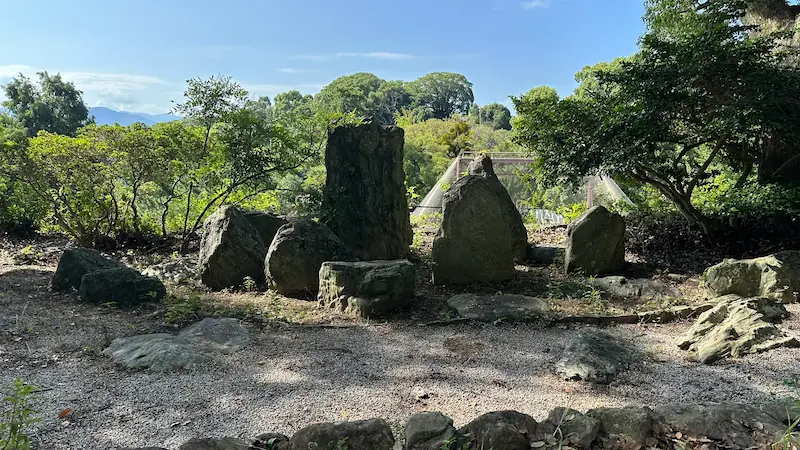
Tradition holds that Tokugawa Yorinobu, the domain’s first lord, laid out this garden as an inner courtyard of the Honmaru Palace in 1621 (Genna 7). Seven boulders, each standing in for one of the Seven Lucky Gods, are arranged into the shape of a treasure ship — a bit of Edo-period wit built right into the stonework. When the palace disappeared, the garden survived: a waterworks reservoir went in on the original site in 1923 (Taishō 12), and the stones moved to Matsu-no-maru, where they remain today. It sits along the park’s walking route and costs nothing to visit.
| Laid out | Traditionally dated to around 1621 (Genna 7). |
|---|---|
| Attribution | Said to have been commissioned by first lord Tokugawa Yorinobu as a courtyard for the Honmaru Palace. |
| Design | Seven boulders, mostly crystalline schist, arranged as a treasure ship, set around a basin lined with pebbles. |
| Relocation | Moved to the Matsu-no-maru site in 1923 (Taishō 12), when a waterworks reservoir was built on the original ground. |
| Admission | Free, right along the park’s walking route. |
⏳ Time to visit: about 5–10 minutes, or 15–20 minutes at an easy pace
🗺 Address: 3 Ichibanchō, Wakayama City, Wakayama Prefecture (within Wakayama Castle Park, near Matsu-no-maru)
🚶 Access: Right at the top of the Omote Slope, near Matsu-no-maru
- Seven boulders standing in for seven gods: the treasure-ship arrangement is a genuinely unusual touch, the kind of visual pun Edo-period garden designers liked to slip in.
- A garden that’s outlived its own setting: from palace courtyard to waterworks site to its current home at Matsu-no-maru, its relocations trace the castle’s changing fortunes almost as clearly as the stones themselves.
💡 Trivia: A garden built around such an explicit allegory — the Seven Lucky Gods, a treasure ship — is unusual among Japanese castle gardens. That it was moved rather than demolished says something about how this castle has been preserved and repurposed over the years.
Site of the Honmaru Palace
The best view of the keep on the grounds, its white walls set against green
Only the terrain and stone walls remain here now, marked simply as the site of the palace, but the view of the keep from this spot is the single best moment in the whole honmaru area. The white keep rises straight up out of the surrounding green, and under a clear summer sky it commands the whole scene. The palace itself came down when the castle system was abolished in the Meiji era, and a waterworks reservoir went in here in 1923 (Taishō 12); today, what’s left of the site — its stone walls and shape in the land — is visible from behind a fence.
Panorama Photo The spot for a head-on shot of the keep.
| Role | The site of the hilltop Honmaru Palace, said to have hosted the lord’s audiences, though from the early Edo period onward the real center of domain governance and daily life shifted to the ninomaru. |
|---|---|
| Loss and current state | The palace was demolished when the castle system was abolished in the Meiji era; a waterworks reservoir followed in 1923 (Taishō 12). Today the site is visible from behind a fence, marked by its stone walls and shape in the land. |
| Highlight | The head-on view of the keep — one of the most photogenic spots anywhere on the grounds. |
⏳ Time to visit: about 5–10 minutes to take in the walls, the view, and what remains of the old layout
🗺 Address: 3 Ichibanchō, Wakayama City, Wakayama Prefecture (honmaru area, within Wakayama Castle)
🚶 Access: 2 minutes on foot from Shichifuku Garden
- A lord’s-eye view: this is about as close as you’ll get to seeing the castle’s core the way its rulers once did.
- Traces of a lost palace and garden: Shichifuku Garden, once the palace courtyard, has since moved to Matsu-no-maru, but seeing the two sites together still conjures a sense of what once stood here.
💡 Trivia: The palace’s kitchen wing is said to have been relocated to nearby Kōon-ji temple, where it reportedly still stands as part of the temple’s living quarters.
2. Gateways Into the Linked Keep: Kusu Gate, the Ni-no-mon Turret, and the Inui Turret
Kusu Gate (the Keep’s Second Gate)
The last gate before the keep complex — a tower gate built entirely of camphor wood
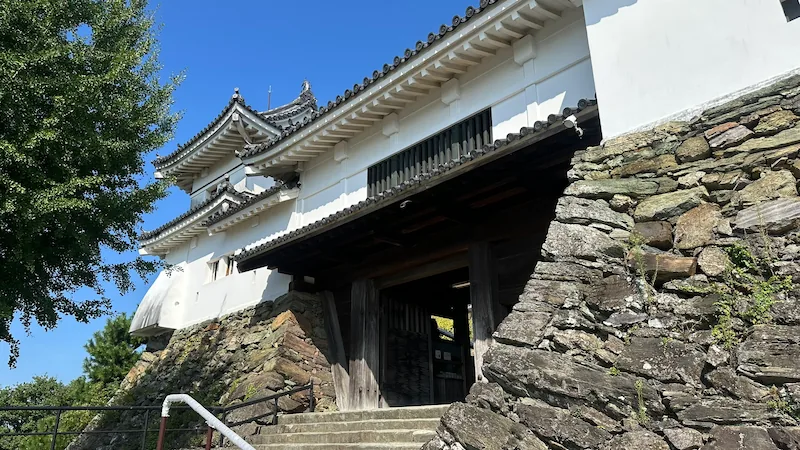
Kusu Gate marks the entrance to the keep bailey, and it’s also known as the keep’s second gate. The gate standing today is a wooden reconstruction from 1958 (Shōwa 33) — notably wooden, in fact, since most of the keep group beyond it, including the keep itself, was rebuilt in reinforced concrete. The earlier gate burned in a lightning strike in 1846 (Kōka 3), was rebuilt in 1850 (Kaei 3), and was lost again to wartime bombing in 1945 (Shōwa 20). Its name comes from the camphor wood, or kusu, used for its pillars and door panels.
Panorama Photo Just inside the gate.
| Built/rebuilt | The earlier gate burned in a lightning strike in 1846 (Kōka 3) and was rebuilt in 1850 (Kaei 3); the gate standing now is a wooden reconstruction from 1958 (Shōwa 33). |
|---|---|
| Design | A two-story tower gate with a tiled roof, built entirely of camphor wood — pillars and door panels alike. It connects to the earthen walls and corridor turrets as the formal entrance to the keep, and today it doubles as the ticket booth. |
⏳ Time to visit: about 5–10 minutes to take in the gate’s structure and exterior
🗺 Address: 3 Ichibanchō, Wakayama City, Wakayama Prefecture (entrance to the keep bailey)
🚶 Access: 2 minutes on foot from the site of the Honmaru Palace
- A tower gate built entirely of camphor wood: the pillars and door panels give it real heft, and even as a reconstruction, it carries the presence of the original.
- The weight of being the last gate: pass through it and you can feel yourself entering the castle’s core, where the keep, turrets, and connecting corridors all come together.
💡 Trivia: Kusu Gate is, in effect, the last checkpoint before the linked-keep complex — and these days it does double duty as both entrance and ticket window, making it the practical front door to a Wakayama Castle visit.
The Ni-no-mon Turret
A key piece of the linked-keep complex — one whose full role only shows itself from the top of the keep
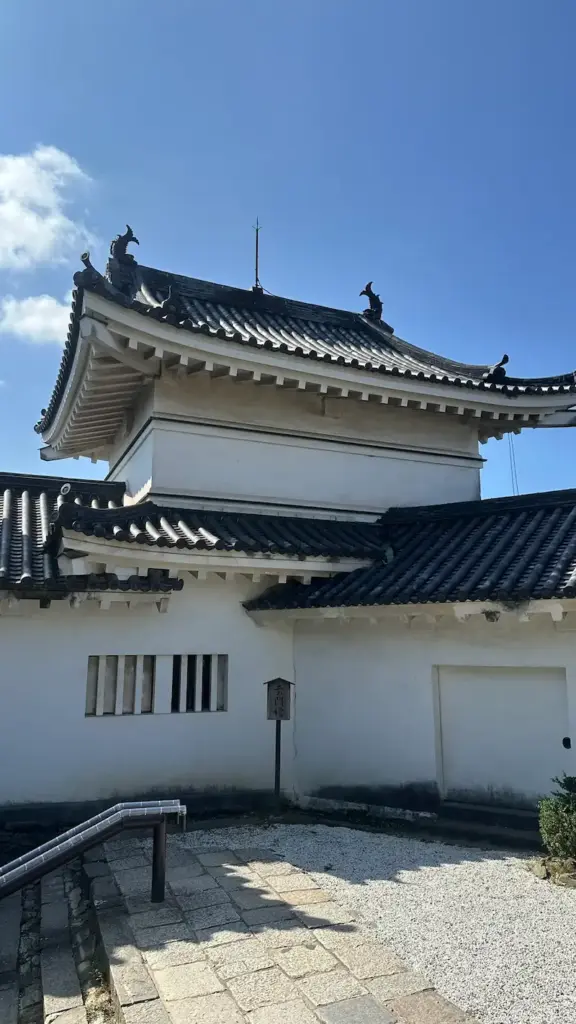
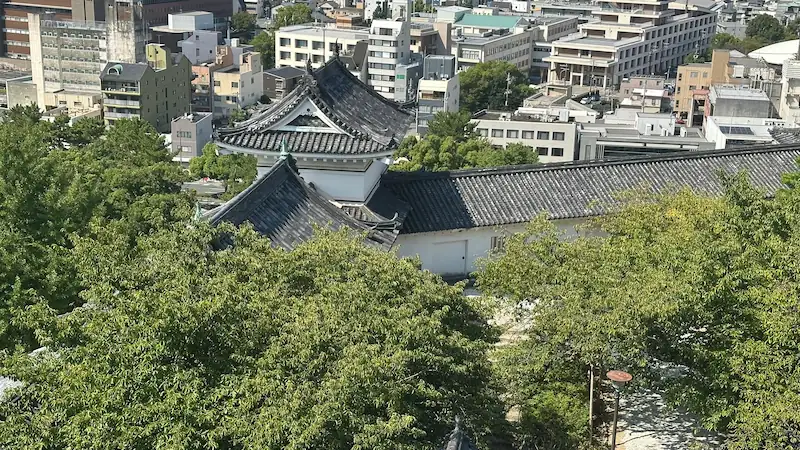
Standing beside Kusu Gate, the Ni-no-mon Turret is one piece of the larger keep group. It once tied into the main keep, the secondary keep, the connecting corridors, and the Inui Turret as part of that same linked design, doing double duty as both defense and lookout. From ground level, it’s genuinely hard to see how it all fits together — but climb to the top of the keep and look down, and the whole connected structure, this turret included, lays itself out in full.
Panorama Photo The view from the Ni-no-mon Turret.
| Built | Part of the linked-keep complex established under the Asano; the current structure belongs to the 1958 (Shōwa 33) reconstruction of the keep group. |
|---|---|
| Design | A turret built to double as a gate, tied into the main keep, secondary keep, and connecting corridors as part of the linked design. Walking through its interior gives a direct sense of how the keep group fits together. |
⏳ Time to visit: about 5–10 minutes to take in the reconstructed turret and how it connects to the rest
🗺 Address: 3 Ichibanchō, Wakayama City, Wakayama Prefecture (around the keep bailey)
🚶 Access: Right past Kusu Gate
- Look down from the top of the keep and it all makes sense: the complexity is nearly impossible to read at ground level, but from the summit, how the Ni-no-mon Turret, the Inui Turret, and the connecting corridors tie together is obvious at a glance.
- A key to understanding the whole linked design: walking through the turret’s interior gives you a physical sense of how the castle was actually laid out.
💡 Trivia: The name Ni-no-mon Turret comes from its job guarding the “second gate” (ninomon) — Kusu Gate itself — with gate and turret together forming a single defensive unit.
The Inui Turret
Guarding the northwest corner of the keep — a design built to leave no blind spot
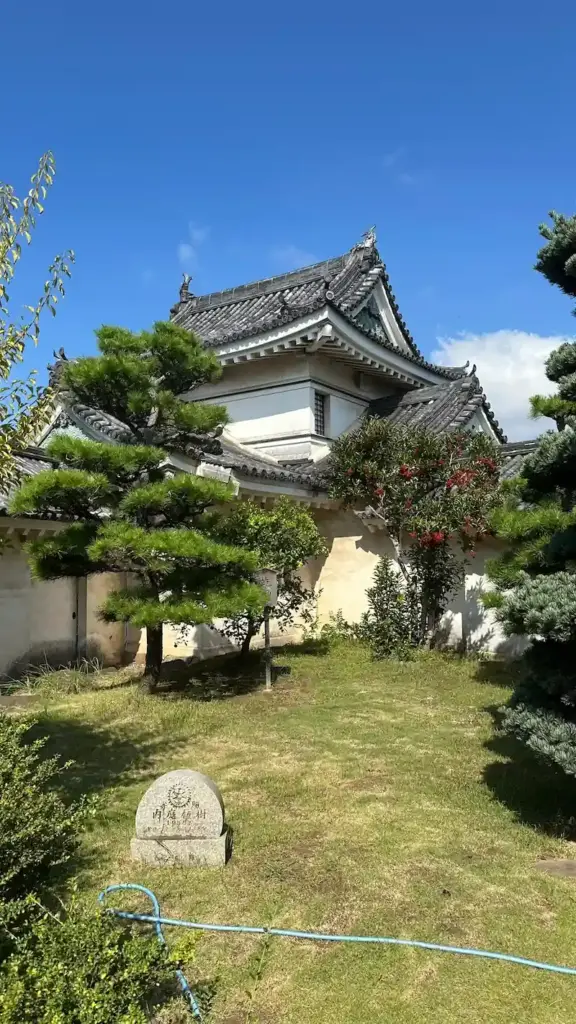
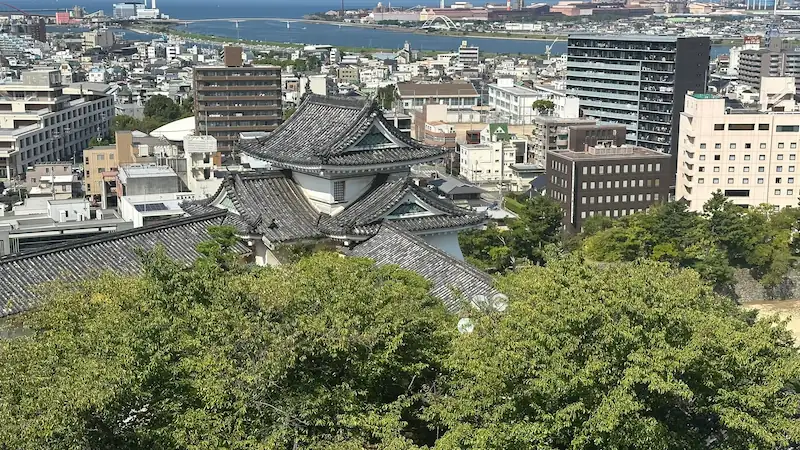
The Inui Turret holds down the northwest corner of the keep group — inui being the old directional term for that quadrant. From the top floor of the keep, this turret and the Ni-no-mon Turret spread out like two wings, joined by connecting corridors into the full linked-keep layout. Seen from ground level, each building looks like its own separate structure; only from above does the logic tying them together actually come through.
Panorama Photo Looking toward the Inui Turret.
| Location | Northwest of the main keep, in the direction traditionally called inui; visible from the keep’s top floor. |
|---|---|
| Design | The turret anchoring the keep group’s northwest corner, tied into the main keep, secondary keep, and connecting corridors as part of the linked design. Stone-drop openings, white plaster walls, and a roofed corridor extend its coverage across the whole complex. |
| Current state | Its exterior has been reconstructed, and it remains open to view. |
⏳ Time to visit: about 5–10 minutes to take in the exterior and the stonework
🗺 Address: 3 Ichibanchō, Wakayama City, Wakayama Prefecture (within the keep bailey)
🚶 Access: Across from the Ni-no-mon Turret
- A connection that only reveals itself from above: looking down on the Inui Turret from the top floor makes the whole arrangement of keep, turrets, and corridors, and how they sit relative to each other, genuinely clear — something ground level just can’t convey.
- What “inui” means: it’s the old name for the northwest direction, and the Inui Turret earns its name simply by guarding that corner of the keep group as part of the larger linked structure.
💡 Trivia: Linking the Inui Turret to the corridors and the other turrets was, by most accounts, a genuinely practical move — it strengthened the defenses of the whole keep bailey rather than just decorating it. Look down from the top of the keep and the connections between the buildings are easy to trace.
3. The Castle’s Emblem: The Keep
The Keep
Two crests, Toyotomi and Kishū Tokugawa, and a linked keep that commands the view in every direction
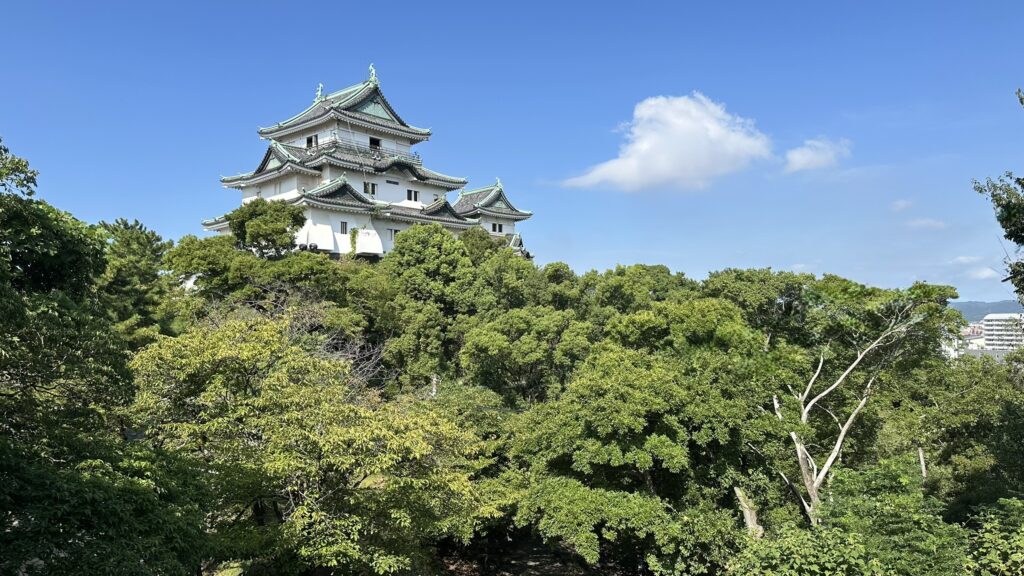
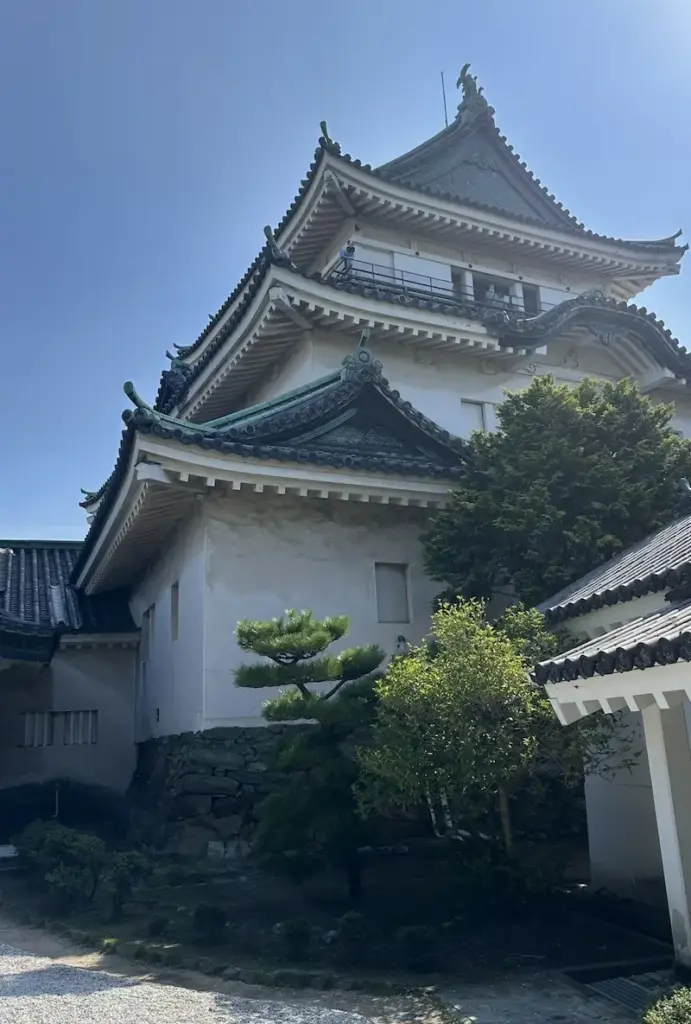
Wakayama Castle’s keep, lost to bombing in 1945 (Shōwa 20) and rebuilt in reinforced concrete in 1958 (Shōwa 33), is the emblem of the whole site. Construction began in 1585 (Tenshō 13) on the orders of Toyotomi Hideyoshi, and the official account credits the Asano family with assembling the linked-keep complex during the Keichō era, in the early 1600s. From there the castle carried the Kishū Tokugawa family’s name through the Edo period, and it’s remembered, too, as the castle that produced the eighth shogun, Tokugawa Yoshimune.
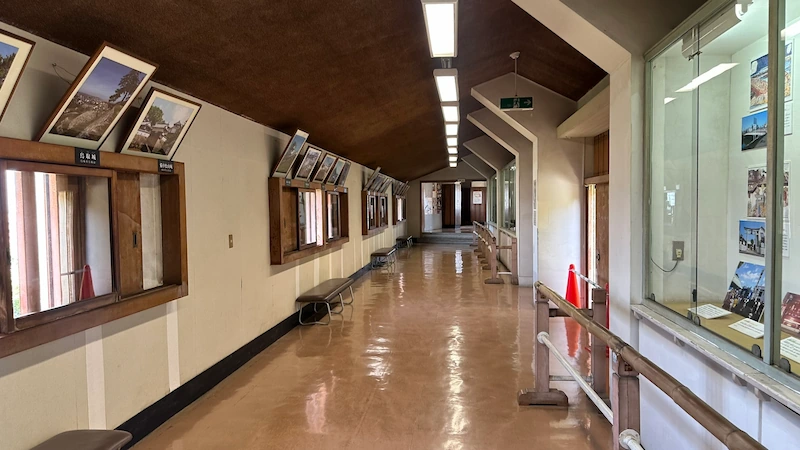
Covered corridors link the keep straight through to the Ni-no-mon and Inui turrets, forming an unusual loop you can walk all the way around. Inside, the displays include photographs and foundation stones tied to the castle’s history.
Panorama Photo The interior of the top floor.
The terrace at the top.
The keep, from outside.
| Founding and construction of the keep | Construction began in 1585 (Tenshō 13); the official account credits the Asano family with assembling the linked-keep complex during the Keichō era, in the early 1600s. |
|---|---|
| The keep through the years | The Asano-era linked-keep complex was resurfaced white in 1798 (Kansei 10), burned in a lightning strike in 1846 (Kōka 3), was rebuilt in 1850 (Kaei 3), burned again in the 1945 (Shōwa 20) bombing, and was reconstructed in reinforced concrete in 1958 (Shōwa 33). |
| Hours | 9:00 a.m.–5:30 p.m. (last entry 5:00 p.m.) |
| Admission | Adults (including high school students) ¥410 / Elementary and junior high school students ¥200 |
| Highlights on display | Campaign coats, armor, and weapons tied to the Toyotomi and Kishū Tokugawa families, along with finds from archaeological digs such as foundation stones |
| Cultural property status | The castle grounds are a National Historic Site; the keep itself is a 1958 (Shōwa 33) reconstruction. |
⏳ Time to visit: about 30–40 minutes for the exhibits and the view from the top
🗺 Address: 3 Ichibanchō, Wakayama City, Wakayama Prefecture
🚶 Access: Through Kusu Gate, following the path past the Ni-no-mon and Inui turrets
- The linked design, seen whole for the first time: look down on the Ni-no-mon and Inui turrets from the top floor and how each piece connects through the corridors becomes obvious at a glance. This is where “linked-keep complex” stops being a term and starts making sense.
- Campaign coats from two dynasties: a coat bearing the Toyotomi paulownia crest hangs beside one carrying the Kishū Tokugawa hollyhock crest, and the castle’s handoff from Toyotomi to Tokugawa rule stands right there in front of you, in cloth and thread rather than just text.
- A keep built for every season: the white walls play off the green of the hill beautifully, and against a clear summer sky the contrast is at its sharpest.
💡 Trivia: Locally, the keep has long gone by the affectionate nickname “otenshu,” which shifted over time into “otensu.” After the 1945 bombing took it down, it was donations and sheer local enthusiasm that brought it back in 1958 — reason enough that Wakayama still thinks of it as the people’s castle.
Frequently Asked Questions
The keep is open 9:00 a.m. to 5:30 p.m., with last entry at 5:00 p.m. Admission runs ¥410 for adults (including high school students) and ¥200 for elementary and junior high school students, and a combined ticket with the Wakayama History Museum is available. It’s closed December 29 through 31.
A renritsu-shiki, or “linked,” keep complex joins a main keep, a secondary keep, and several turrets together with covered corridors called tamon-yagura, so the whole assembly reads as one structure rather than several. Wakayama Castle is counted alongside Himeji Castle and Matsuyama Castle as one of the finest examples, with Kusu Gate, the Ni-no-mon Turret, the Inui Turret, and connecting corridors all forming a single keep group. Climb to the top floor and look down, and the way the Ni-no-mon and Inui turrets tie into the whole becomes obvious at a glance.
On a recent visit, the keep’s exhibits included campaign coats bearing the Toyotomi crest and others carrying the Kishū Tokugawa crest — the three-leaf hollyhock — alongside armor, weapons, and documents tied to the castle’s history, plus finds from archaeological digs such as foundation stones. Exhibits change from time to time.
Tokugawa Yoshimune came from the Kishū Tokugawa family, and the City of Wakayama’s official account places his birth in 1684 (Jōkyō 1) at the Fukiage residence, in the castle town rather than the castle itself. Wakayama Castle is nonetheless remembered as the seat of the Kishū Tokugawa family that produced him.
The gate standing today is a wooden reconstruction from 1958 (Shōwa 33). The earlier gate burned in a lightning strike in 1846 (Kōka 3), was rebuilt in 1850 (Kaei 3), and was lost again to wartime bombing in 1945 (Shōwa 20). Its name, Kusu-mon, comes from the camphor wood used for its pillars and door panels.
Shichifuku Garden sits within Wakayama Castle Park, near Matsu-no-maru. Tradition credits the first domain lord, Tokugawa Yorinobu, with laying out this rock garden as an inner courtyard of the Honmaru Palace in 1621 (Genna 7); it was moved to the Matsu-no-maru site in 1923 (Taishō 12). It sits right along the park’s walking route and costs nothing to see.
Next area: Leaving the keep, the route continues into the nishinomaru and Momijidani Garden — Oimawashi Gate, the Onbashi Corridor Bridge, and the garden itself.


comment