


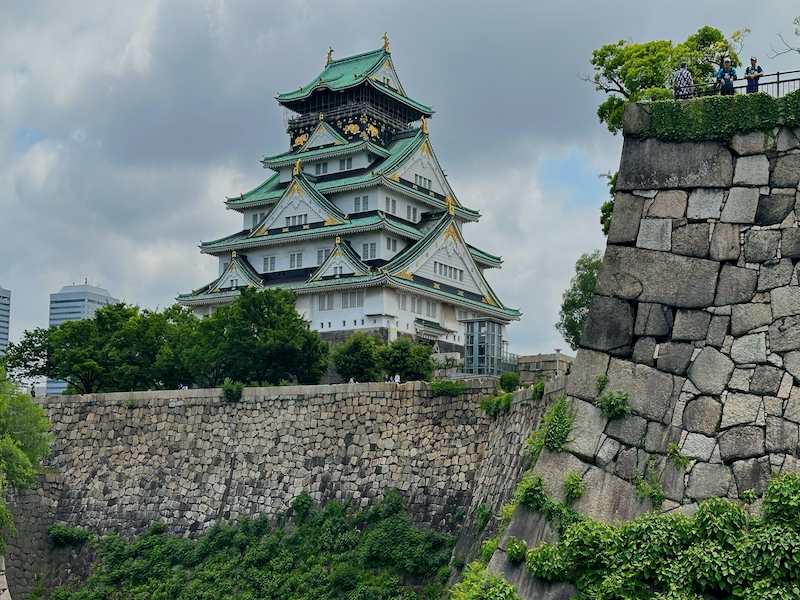
Osaka Castle Complete Guide
All 4 Areas & 13 Important Cultural Properties, Explored On-Site
A first-hand guide to Osaka Castle's four areas — Otemon Gate, Nishinomaru Garden, Honmaru, and the Northern Stronghold — based on an on-site visit. Covers the surviving Important Cultural Property structures, the giant stones tied to the Toyotomi and Tokugawa clans, and the Main Tower, so you don't miss anything worth seeing.
Osaka Castle was built by Toyotomi Hideyoshi as a symbol of his drive to unify Japan, and today Osaka Castle Park — a public park in Chuo-ku, in the heart of central Osaka — is laid out around its ruins. The park holds 13 surviving structures designated as Important Cultural Properties (Japan's official heritage status, one tier below National Treasure), an unusually high number for a single Japanese castle. This page is organized into four areas — the Otemon Gate Area, Nishinomaru Garden Area, Honmaru Area, and Northern Stronghold Area — each with a link to its own detailed guide, plus a rough sense of what to expect and how long to budget in each, so first-time visitors can get the full picture before setting out.
Osaka Castle: Key Facts
| Location | 1-1 Osakajo, Chuo-ku, Osaka City, Osaka Prefecture |
|---|---|
| Suggested Visit Time | 7 Must-See Spots quick tour (pass-through, exteriors only): about 1.5–2 hours / Highlights only: about 2–3 hours / All 4 areas: about 3–4 hours / In-depth, including the Main Tower, Nishinomaru Garden & Toyotomi Stone Wall Museum: about 4–5 hours |
| Important Cultural Properties | 13 surviving structures (Otemon Gate, Tamon Yagura, Sengan Yagura, Inui Yagura, Enshōgura, and others) |
| Highlights | Otemon Gate, the Takoishi stone (said to weigh 108 tons) at Sakuramon Masugata, the Main Tower, the Osaka Castle Toyotomi Stone Wall Museum, and the site traditionally said to be where Hideyori and Lady Yodo died |
| Paid Facilities | The Main Tower is a paid facility (admission includes the Osaka Castle Toyotomi Stone Wall Museum). Hours, fees, and open status are subject to change — check the official Osaka Castle Main Tower website before you visit. |
| Access | About a 10–15 minute walk from Tenmabashi Station or Tanimachi 4-chome Station (Osaka Metro Tanimachi Line) to the nearest park entrance. About 18–20 minutes to the Main Tower, depending on which station you use. |
| Visitor Notes | Nishinomaru Garden is a paid area (separate admission). Check in advance whether the Osaka Castle Toyotomi Stone Wall Museum is open. |
Short on Time? Start with the 7 Must-See Spots
If your time is limited, the 7 Must-See Spots walking tour covers Osaka Castle's main highlights in under two hours. It follows a single, no-detours route from Otemon Gate to Gokurakubashi Bridge, hitting the most photogenic classic spots efficiently — a great fit for a first visit.

See the Best of Osaka Castle in Half a Day
A walking route through 7 carefully chosen spots, from Otemon Gate to Gokurakubashi Bridge. Ideal for first-time visitors, with walking directions and on-site photos.
Explore All 4 Areas in Depth
If you want to explore every corner of Osaka Castle, the individual area guides below cover each spot in detail — on-site photography, historical background, data tables, and access information.
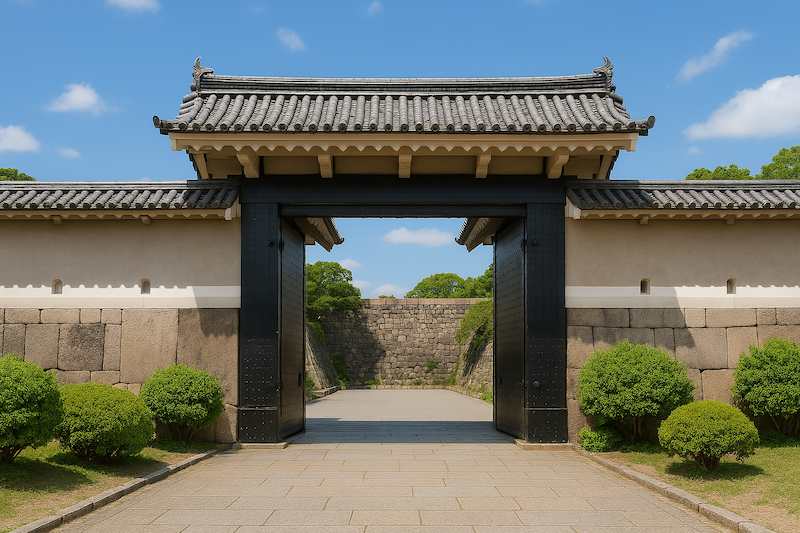
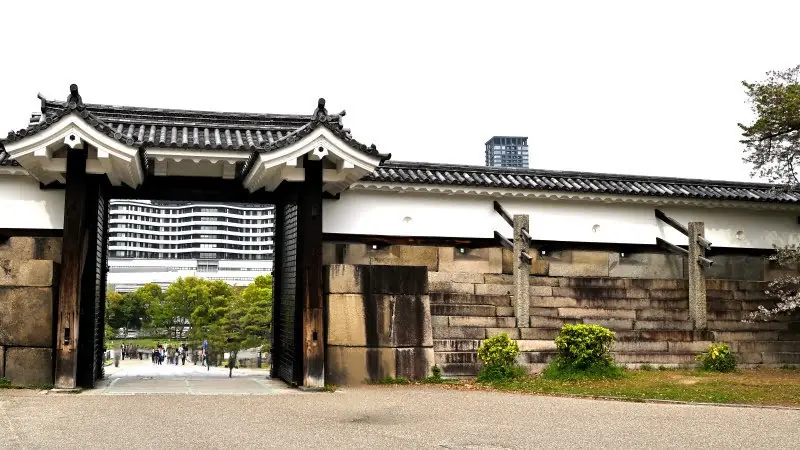
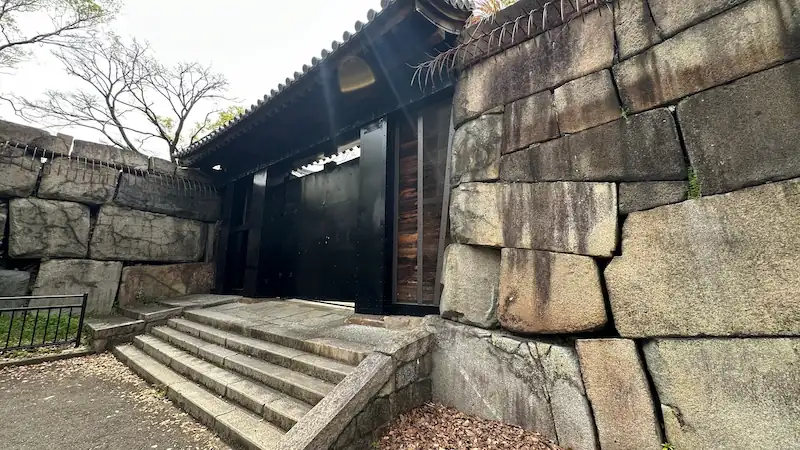
The Otemon Gate Area is Osaka Castle's main entrance. Both Otemon Gate and Tamon Yagura — a defensive turret, or yagura — were built in the early Edo period (1603–1868) and are designated Important Cultural Properties, making this the place where most visitors get their first real sense of the castle's scale. The stone walls of the Otemon South Wall and Otemon North Wall are equally impressive, and show off the advanced castle-building techniques of the era.
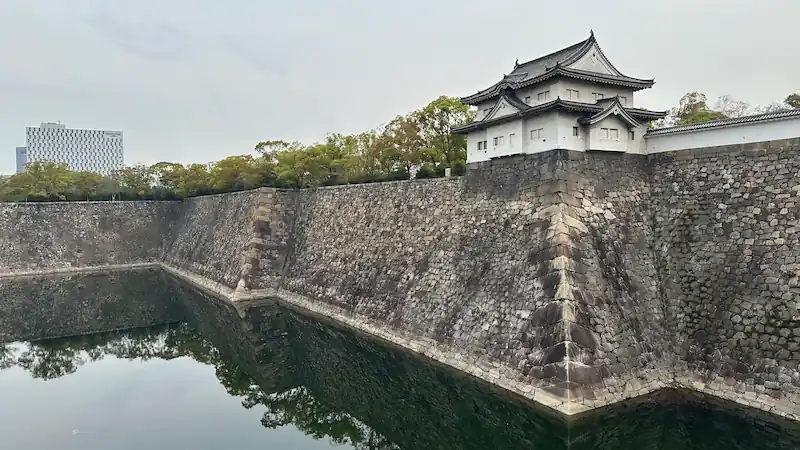
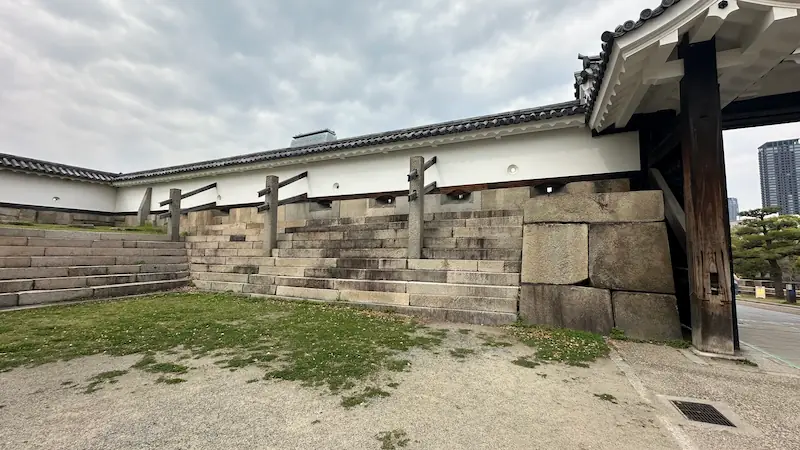
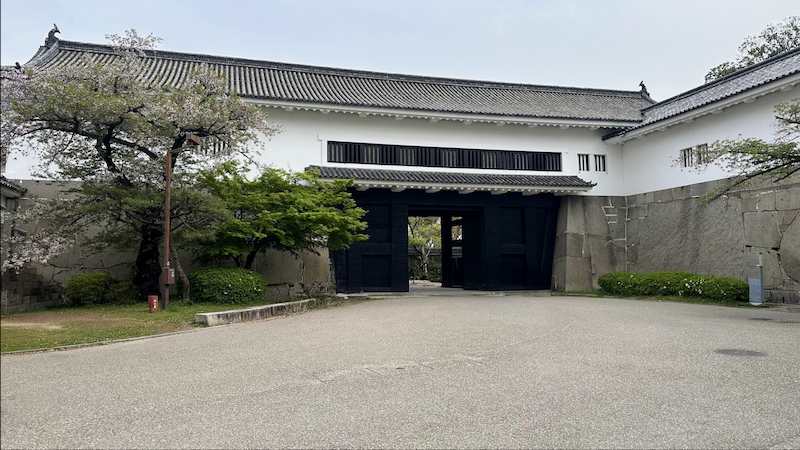
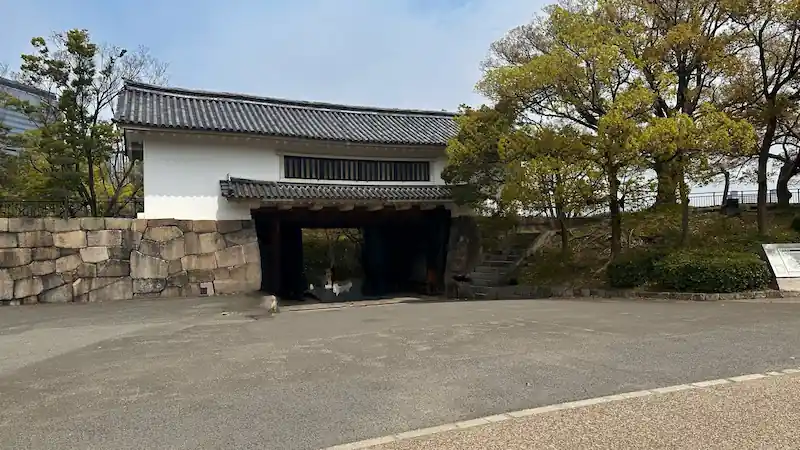
Nishinomaru Garden and the southern part of the Ninomaru (second enclosure) hold most of the castle's surviving Important Cultural Properties. Sengan Yagura, Inui Yagura, and the Enshōgura gunpowder storehouse can all be seen from inside the paid Nishinomaru Garden, while Rokuban Yagura and Ichiban Yagura are visible from outside the garden, in the free-entry area. Toyokuni Shrine, dedicated to Toyotomi Hideyoshi, stands just outside the garden too, and is a must for history enthusiasts.
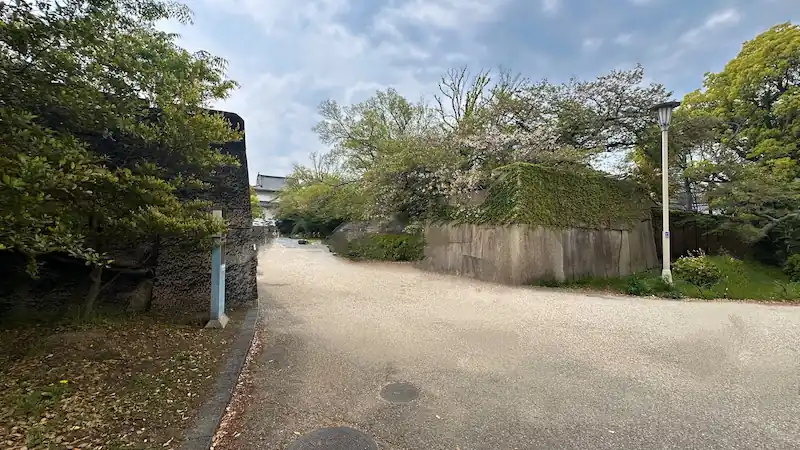
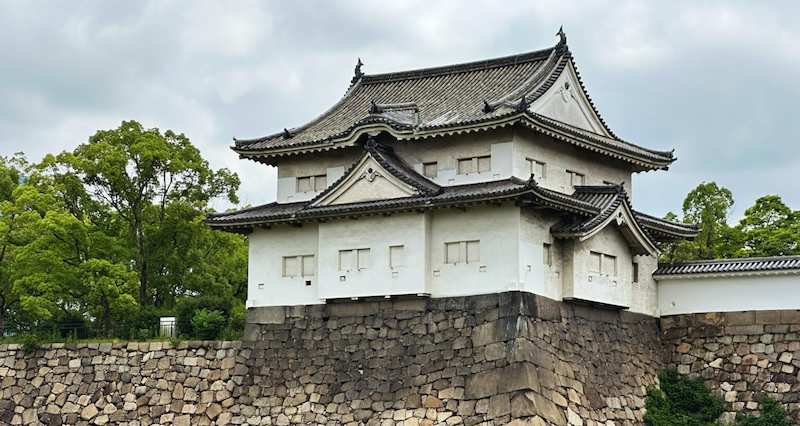
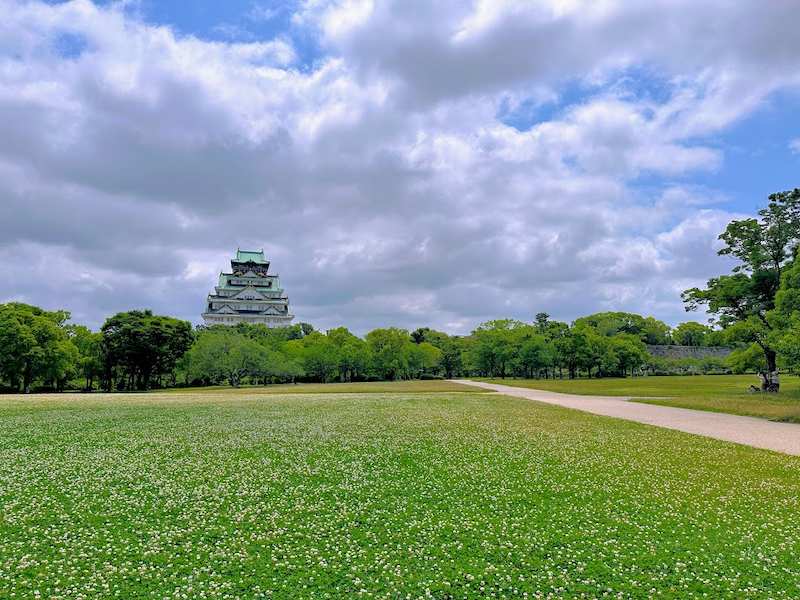
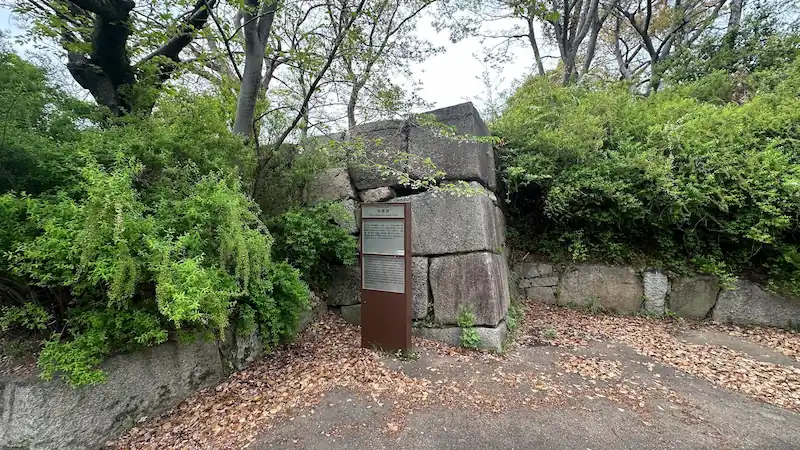
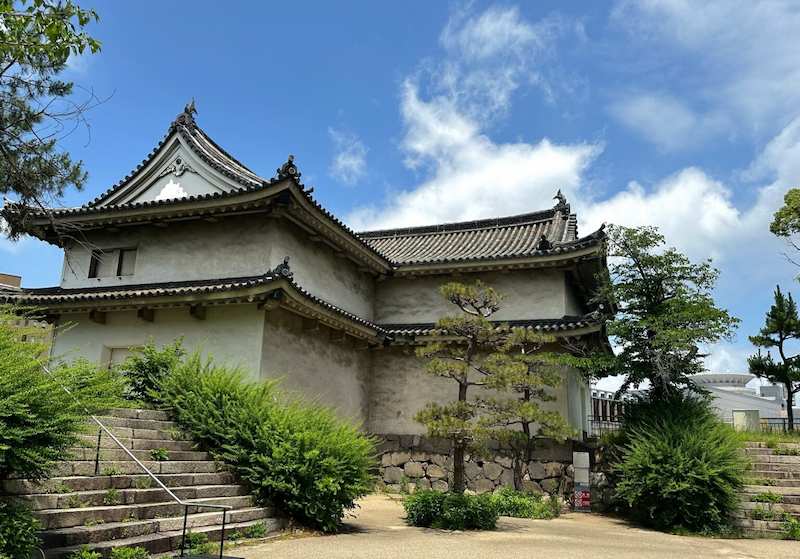
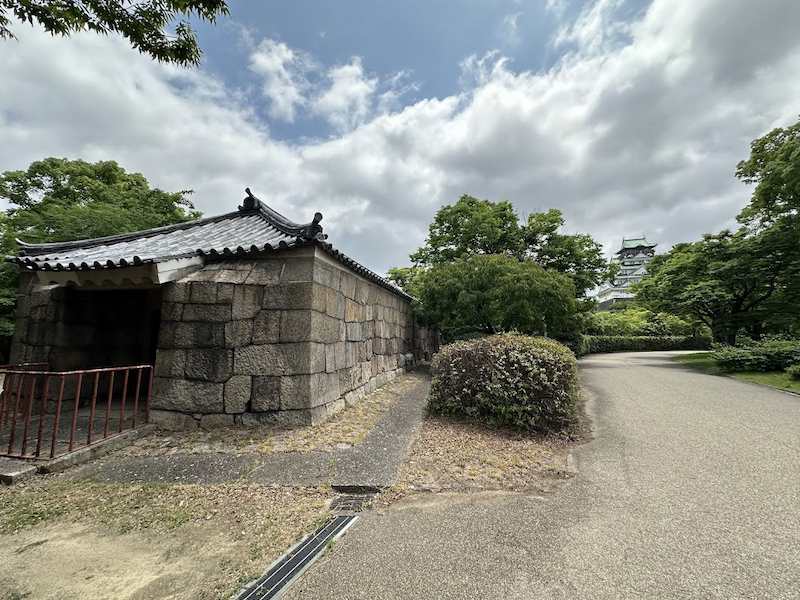
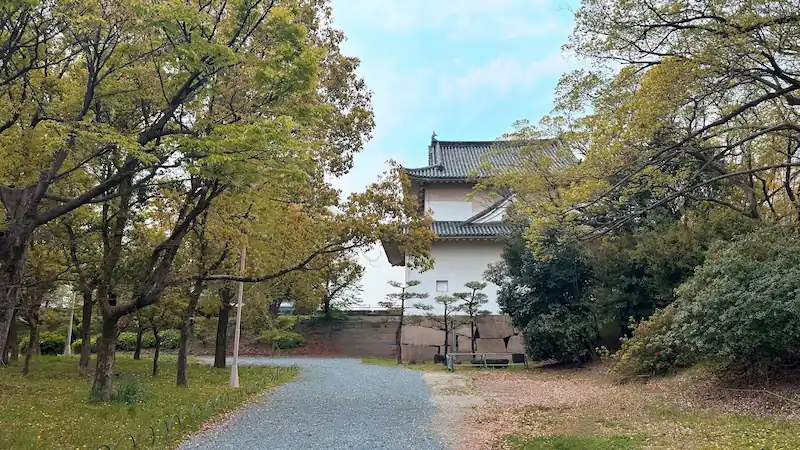
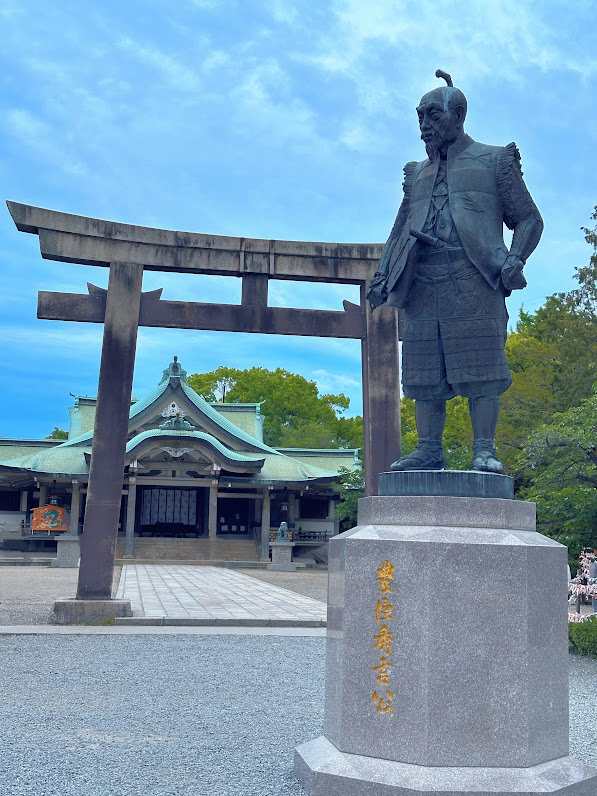
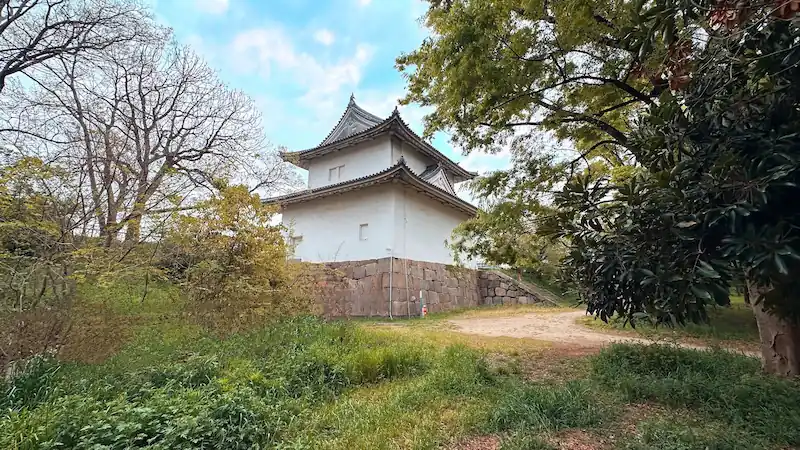
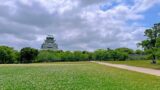
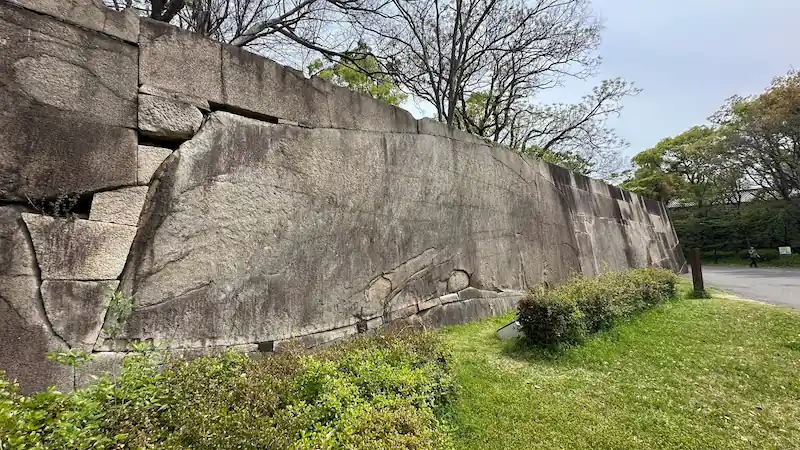
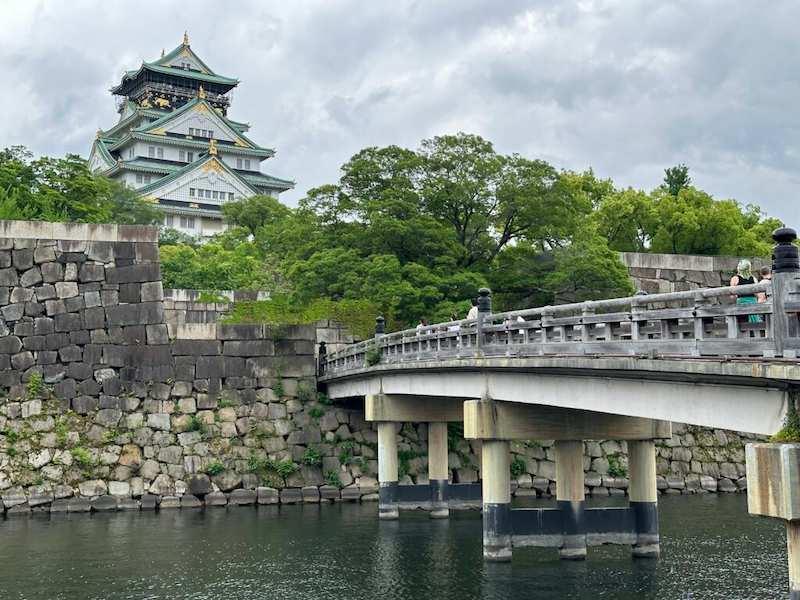
The Honmaru — the main enclosure of a Japanese castle — is the heart of Osaka Castle. At the Sakuramon Masugata, a box-shaped defensive gate enclosure, sits the Takoishi: a giant stone said to weigh about 108 tons, among the largest single stones used in any Japanese castle. Seeing it in person is genuinely overwhelming. The Honmaru is also home to a facility that displays Toyotomi-era stone walls preserved underground — a rare chance to see direct traces of Hideyoshi's original castle, distinct from the Tokugawa-era reconstruction visible above ground today. At the back of the Honmaru stands the Main Tower, which visitors can enter; the top floor offers a panoramic view over central Osaka.
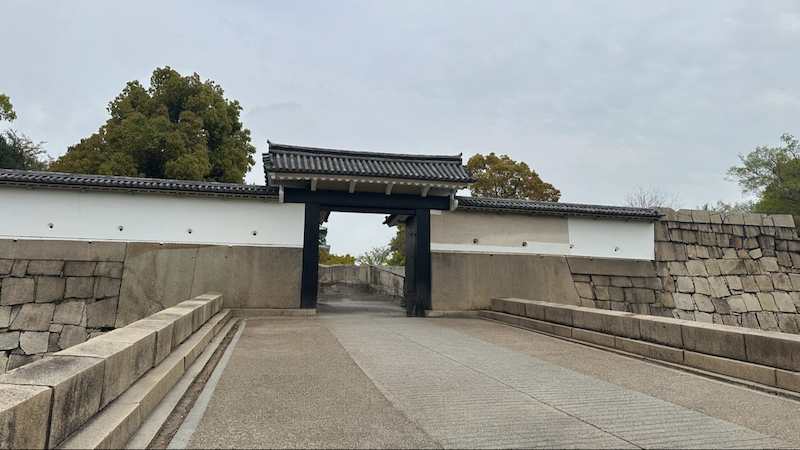
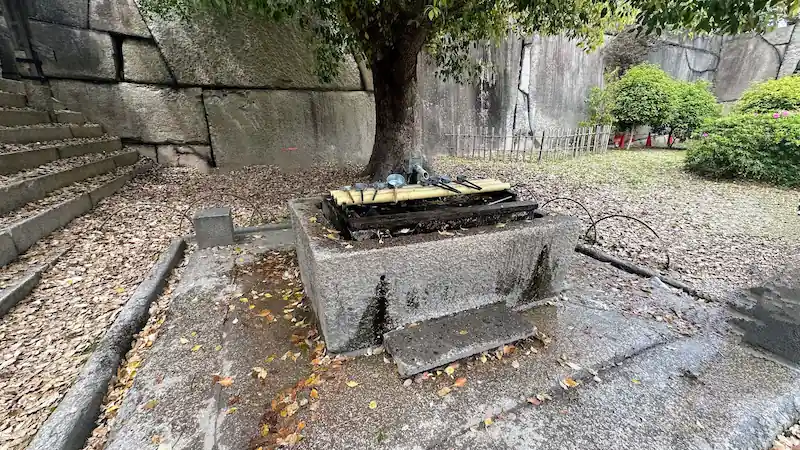
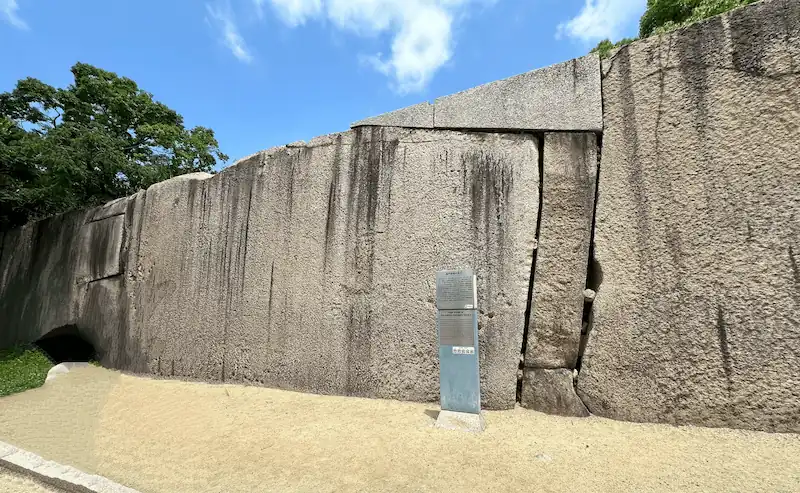
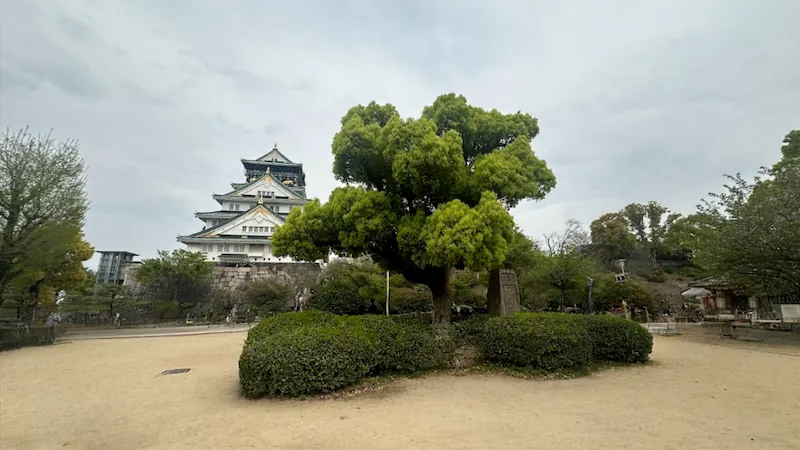
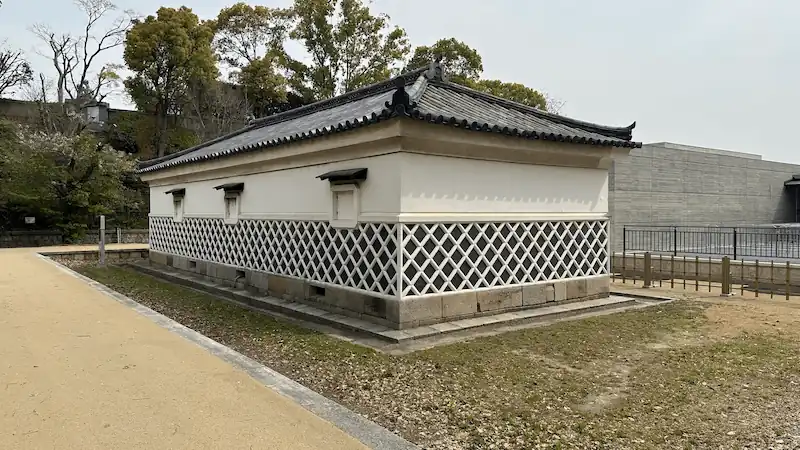
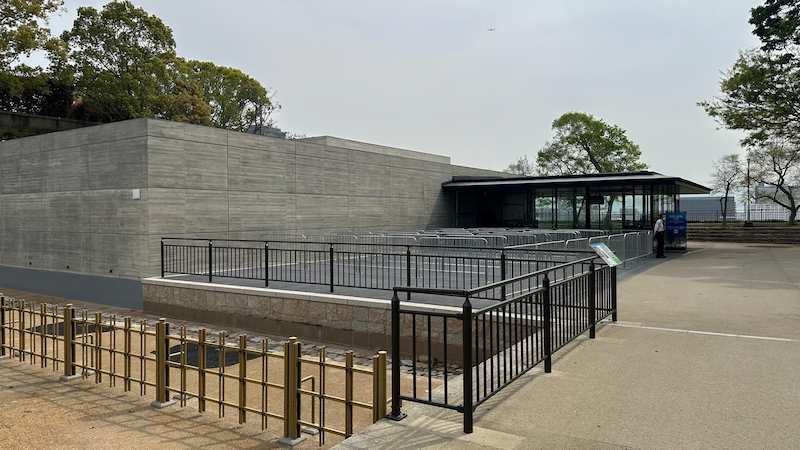
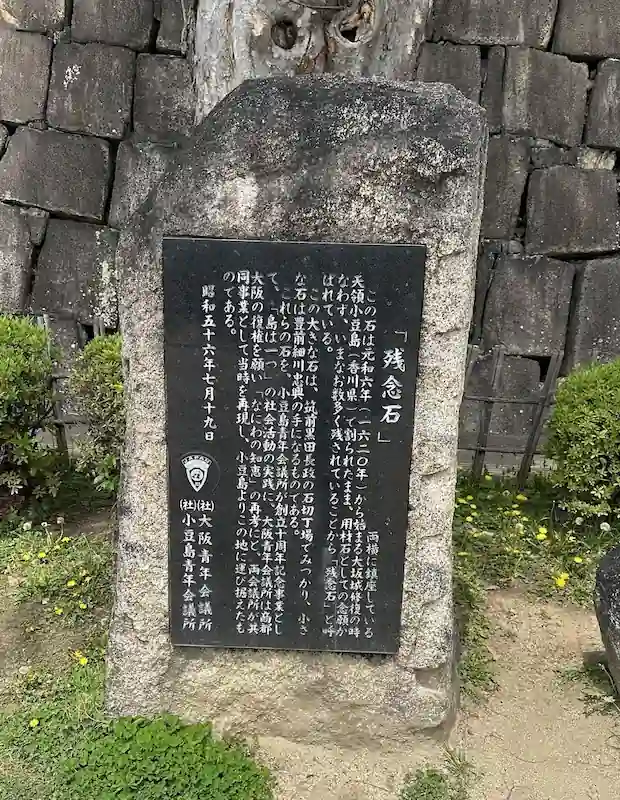
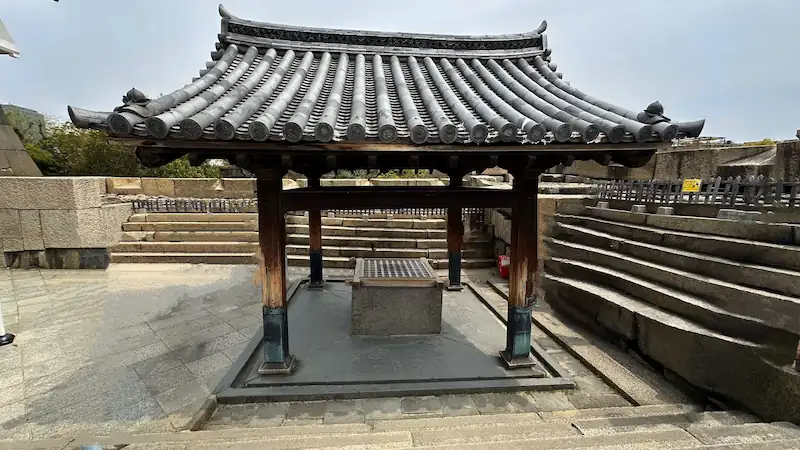
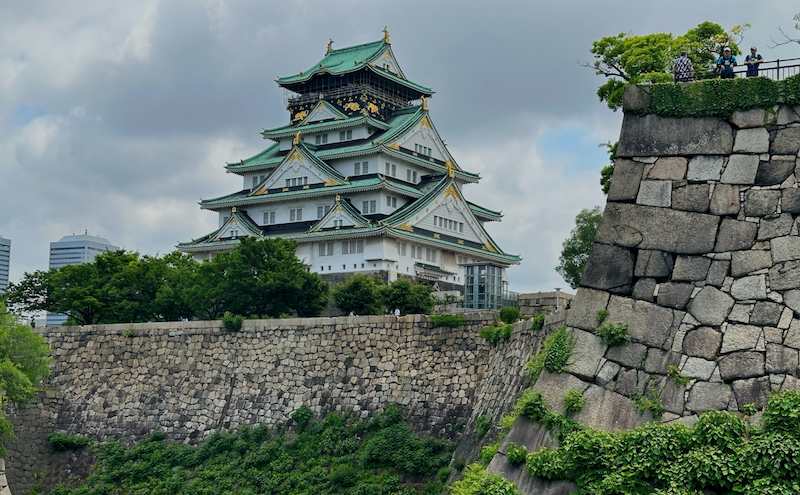
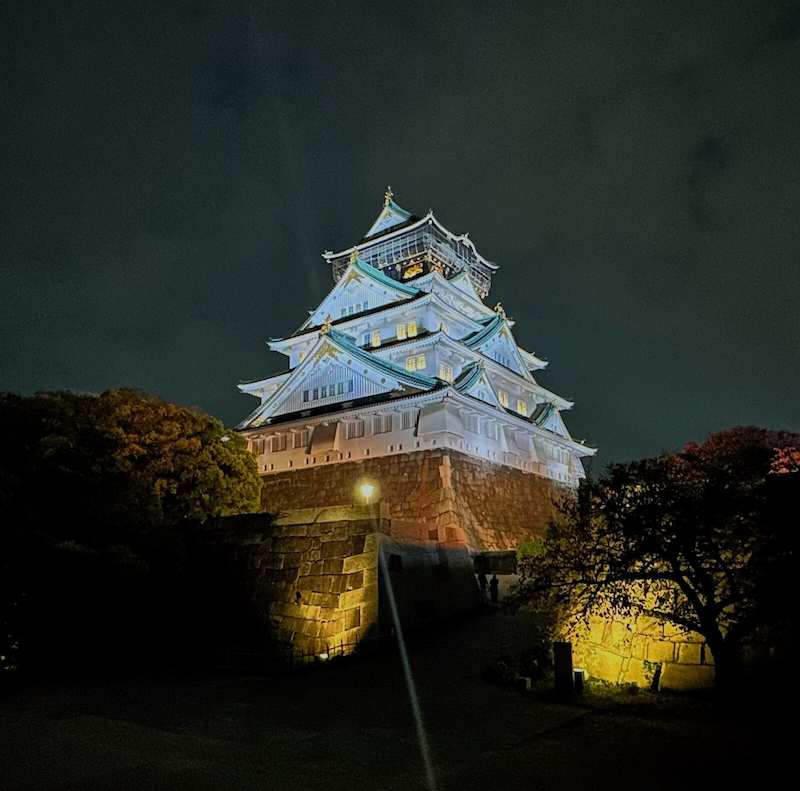
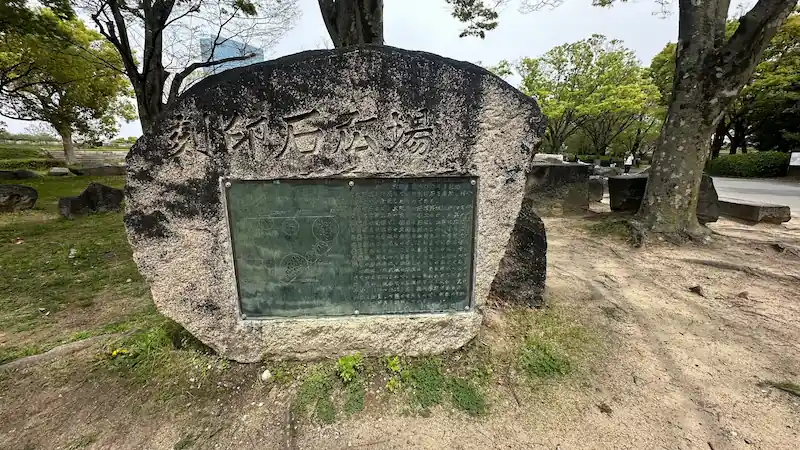
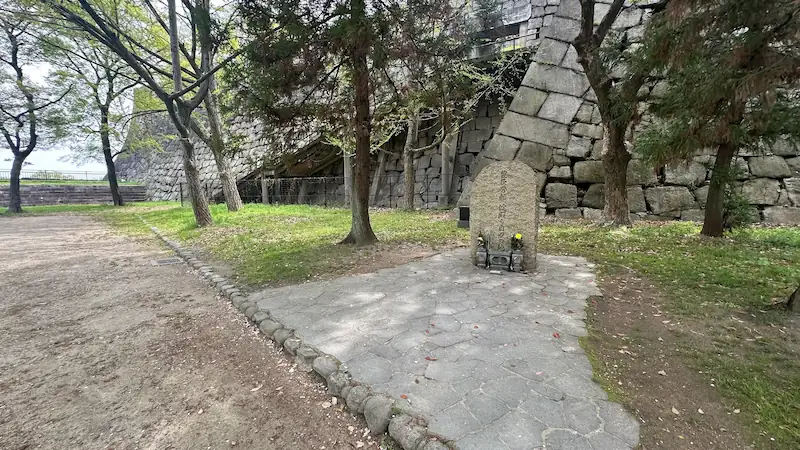
The Northern Stronghold is a quiet area that sees far fewer visitors, yet it includes some of the most dramatic sites in Osaka Castle's history. The site traditionally said to be where Toyotomi Hideyori and Lady Yodo died is associated with the Summer Siege of Osaka (1615) — a place where the weight of that history feels immediate. At Kokuinseki Plaza, visitors can see up close the marks carved into stones brought for the castle's walls, believed to be related to the daimyo lords or stonemason groups who supplied them, though no specific family has been definitively identified.
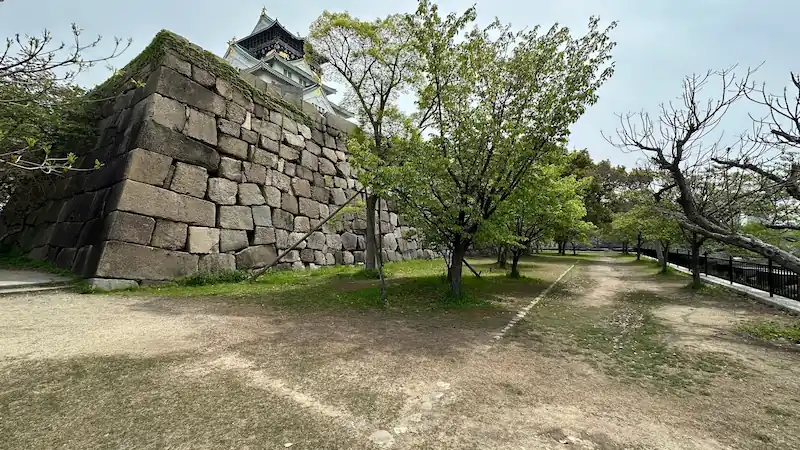
On-Site Observations
On-Site Observations
- Visit the Northern Stronghold first. Most visitors loop through Otemon → Honmaru → Northern Stronghold, which means the north side gets the afternoon crowds. Going in reverse keeps you ahead of the groups — though the Northern Stronghold tends to be quiet regardless.
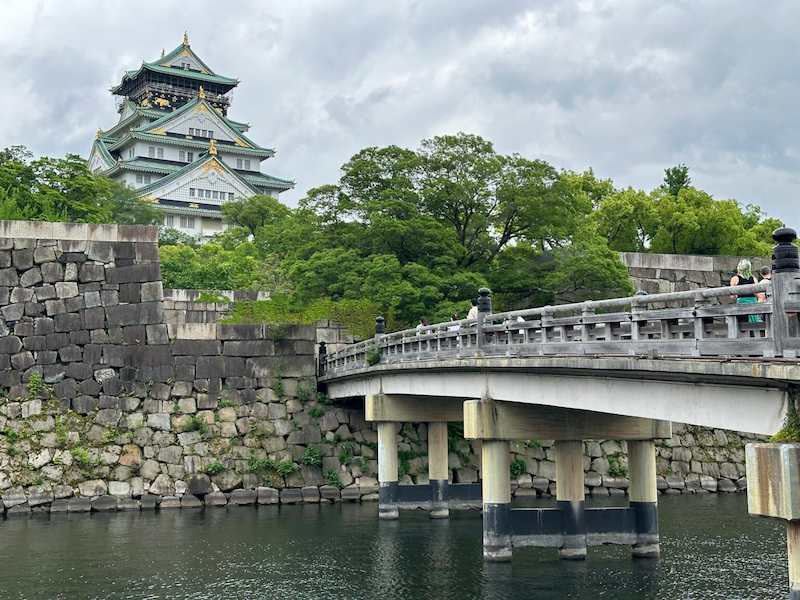
- The Gokurakubashi Bridge reflection is best in the morning. Morning light from the east creates the clearest mirror image of the Main Tower in the inner moat. By midday, the angle changes and the effect diminishes.
- Nishinomaru Garden fills up completely during cherry blossom season. In early April, the roughly 300 Somei Yoshino cherry trees create a spectacular scene — but the garden becomes wall-to-wall with visitors. Weekday mornings or late afternoon are noticeably calmer.
- The Honmaru gets busy from mid-morning on weekends. The queue for the Main Tower elevator can reach 30–40 minutes. Arriving at opening time (9 AM) helps you avoid the worst of it.
- Most of the historically significant spots are free. The 108-ton Takoishi, the Hidden Bailey, the site traditionally said to be where Hideyori and Lady Yodo died, and Gokurakubashi Bridge can all be seen without paying anything. Some Important Cultural Property structures in Nishinomaru require separate garden admission.
Osaka Castle: Full Area Map
Osaka Castle History: From 1583 to Today
1583
Toyotomi Hideyoshi — the warlord who unified Japan under his rule in the late 16th century — begins construction on the site of the former Ishiyama Hongan-ji temple. Conceived as the center of a unified Japan, the castle is designed with massive stone walls and gold ornamentation to symbolize Hideyoshi's authority.
1615
The Summer Siege of Osaka. Tokugawa Ieyasu eliminates the Toyotomi clan. Toyotomi Hideyori and his mother, Lady Yodo, are traditionally said to have died in what is now the Northern Stronghold area. The original Toyotomi-era castle is thoroughly destroyed, and its stone walls are buried under about 6 meters of earth.
1620–1629
The Tokugawa Shogunate rebuilds Osaka Castle from scratch, mobilizing 64 western domains for the construction. Every stone wall visible today — including the 108-ton Takoishi — dates from this Tokugawa-era reconstruction, not from Hideyoshi's original castle.
1665
The main keep is struck by lightning and burns down. It is not rebuilt for more than 250 years, leaving Osaka Castle without a central tower for the rest of the Edo period.
1931
The current Main Tower is reconstructed using donations from Osaka's citizens — a notable act of civic pride during the Great Depression. Its exterior is designed to evoke the Toyotomi-era keep.
1984
Excavations uncover the original Toyotomi-era stone walls buried beneath the Honmaru. They are now displayed at the Osaka Castle Toyotomi Stone Wall Museum.
1997
The Main Tower is registered as a Registered Tangible Cultural Property — a national heritage designation distinct from the Important Cultural Property status held by the surviving Edo-period structures — officially recognizing its value as a piece of early Showa-era architecture and civic history.
Getting to Osaka Castle
Access, Admission & Hours
| Nearest Station | Osaka Metro Tanimachi Line, Tanimachi 4-chome Station (T23/C18), Exit 1-B — about a 10-minute walk to Otemon Gate (the main gate) Osaka Metro Nagahori Tsurumi-ryokuchi Line, Osaka Business Park Station (N21) — convenient for the northern side, near Aoyamon Gate |
|---|---|
| Main Tower Hours | 9:00 AM–6:00 PM (last entry 5:30 PM); closed December 28–January 1 |
| Main Tower Admission | Adults ¥1,200; university and high school students ¥600 (ID required); junior high school students and younger free (ID required); includes admission to the Osaka Castle Toyotomi Stone Wall Museum |
| Nishinomaru Garden | ¥300 standard admission; ¥350 during the "Kanō Naitā" cherry-blossom night illumination period (dates vary by year); closed Mondays (or the following Tuesday if Monday is a public holiday) March–October: 9:00 AM–5:00 PM; November–February: 9:00 AM–4:30 PM; last entry 30 minutes before closing |
| Park Grounds | Most of the park grounds are open at all times and free to enter (paid facilities, gates, and management buildings have their own operating hours) |
| Official Websites | osakacastle.net · osakacastlepark.jp |
Frequently Asked Questions: Osaka Castle Visitor Guide
Yes, Osaka Castle is absolutely worth a visit. Having walked all four areas myself, I found it one of the most historically layered castle sites in Japan — not just for the Main Tower, but for details like the 108-ton Takoishi stone in the Honmaru, the Toyotomi-era stone walls preserved underground, and the site traditionally said to be where Hideyori and Lady Yodo died, tucked away in the quieter Northern Stronghold area. If you're focusing on the highlights, plan for 2–3 hours; to see all four areas properly, allow 3–4 hours.
The grounds of Osaka Castle Park are free to enter. The Main Tower (Osaka Castle Museum) costs ¥1,200 for adults and includes admission to the Osaka Castle Toyotomi Stone Wall Museum. Nishinomaru Garden requires separate admission (¥300 standard; ¥350 during the "Kanō Naitā" cherry-blossom night illumination period; closed Mondays, or the following Tuesday if Monday is a holiday). The dates of the Kanō Naitā period vary each year, so check the official Osaka Castle Park website before you go.
If you're focusing on the highlights, plan for about 2–3 hours. Covering all four areas thoroughly takes about 3–4 hours. If you also want to spend time in the Main Tower, Nishinomaru Garden, and the Toyotomi Stone Wall Museum, allow 4–5 hours for a relaxed visit. Our 7 Must-See Spots walking tour condenses the highlights into about 1.5–2 hours, focused on passing through and viewing exteriors.
The most convenient route is Osaka Metro Tanimachi Line to Tanimachi 4-chome Station (T23/C18, Exit 1-B), about a 10-minute walk to Otemon Gate. If you're heading for the Northern Stronghold or Aoyamon Gate, Osaka Business Park Station (N21) on the Osaka Metro Nagahori Tsurumi-ryokuchi Line is more convenient.
Late March to early April, when the cherry blossoms are in full bloom, is especially spectacular — around 300 Somei Yoshino cherry trees frame the Main Tower in Nishinomaru Garden. November brings beautiful autumn foliage. If you want to avoid crowds, weekday mornings are quietest; on weekends, the Honmaru area gets busy from mid-morning. The Northern Stronghold stays relatively quiet year-round.
Yes — the grounds of Osaka Castle Park are free to enter. You can walk through the Otemon Gate area, the Northern Stronghold, the exterior of the Honmaru, and Gokurakubashi Bridge without paying anything. The Main Tower Museum (¥1,200 for adults) and Nishinomaru Garden (separate seasonal admission) are the paid parts.
Osaka Castle has 13 surviving structures designated as Important Cultural Properties: Otemon Gate, the Otemon South Wall, the Otemon North Wall, the Tamon Yagura North Wall, Tamon Yagura, Sengan Yagura, Inui Yagura, Enshōgura, Rokuban Yagura, Ichiban Yagura, Sakuramon Gate, Kinzo, and the Kinmeisui Well House.
The stone walls and moats visible today all date from the Tokugawa Shogunate's reconstruction of the castle. The original Toyotomi-era stone walls are no longer visible above ground, but you can see them at the Osaka Castle Toyotomi Stone Wall Museum in the Honmaru area, where a section of the buried Toyotomi-era stone wall is preserved underground. Opening hours and public access can change or be suspended, so check the official Osaka Castle Main Tower website before visiting.
Yes — a memorial marking the traditional site is maintained in the Northern Stronghold area, known as the site traditionally said to be where Hideyori and Lady Yodo died. It is associated with the Summer Siege of Osaka in 1615, when Toyotomi Hideyori and his mother, Lady Yodo, are said to have died. Historical sources differ on the exact location. The Northern Stronghold sees relatively few visitors, making it a quiet place to reflect on this history.
The original Osaka Castle, built by Toyotomi Hideyoshi in 1583, was thoroughly destroyed by Tokugawa Ieyasu during the Siege of Osaka in 1615, and its remains were buried under about 6 meters of earth. Every stone wall visible today dates from the later Tokugawa-era reconstruction (1620–1629). The Toyotomi-era stone walls can be seen as an underground exhibit at the Osaka Castle Toyotomi Stone Wall Museum in the Honmaru.
Hideyoshi & Ieyasu: The Two Warlords of Osaka Castle
Osaka Castle is inseparable from the two figures who shaped Japan's unification era — the man who built it, and the man who destroyed and rebuilt it.


Return to the Homepage

☕ Support This Site
Following the Shogun is built on original fieldwork and on-site research.
If you found this guide useful, your support helps keep it going.

You can also support via QR code


comment