


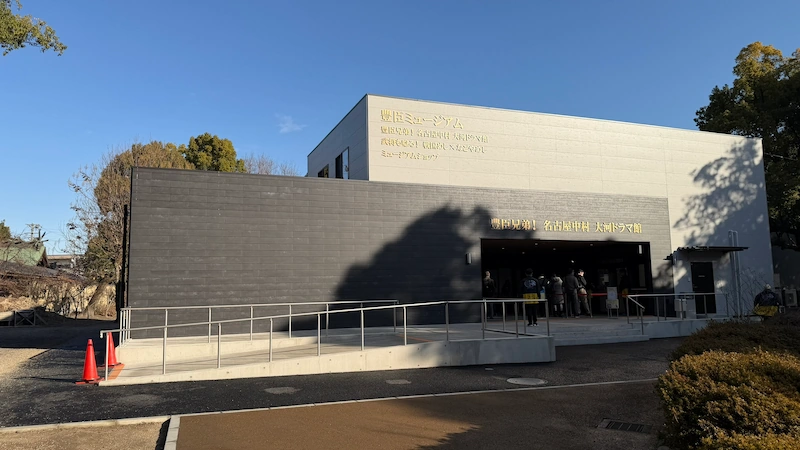
Toyotomi Museum in Nagoya Nakamura: Costumes, Props and the Actors’ Own Words from Toyotomi Brothers!
A limited-run Taiga Drama Museum for the NHK series Toyotomi Brothers!, set inside Nakamura Park beside the Hideyoshi birthplace monument and Toyokuni Shrine.
What to Expect at the Toyotomi Museum in Nakamura Park
Nakamura Park is already a destination for history enthusiasts — it's home to the monument marking the birthplace of Toyotomi Hideyoshi, as well as Toyokuni Shrine and the Hideyoshi and Kiyomasa Memorial Museum. In 2026, the Toyotomi Museum (Taiga Drama Museum) for the NHK series Toyotomi Brothers! opened here for a limited run, adding a new layer to the park: alongside the existing historic sites, visitors can now see the drama itself through production materials and behind-the-scenes content.
This page starts with the essential practical information — opening dates, hours, and admission — then covers clear directions from both the subway and from Nagoya Station (H08) by bus, what to watch out for on rainy days, and the highlights of what's currently on display inside. It also suggests how to combine the museum with nearby Hideyoshi-related sites like Toyokuni Shrine for a well-rounded half-day itinerary.
Dates, Hours and Closures
Toyotomi Museum (Taiga Drama Museum), Nagoya Nakamura
| Dates | Saturday, January 24, 2026 – Monday, January 11, 2027 |
|---|---|
| Hours | 9:00 AM – 5:00 PM (last admission 4:30 PM) |
| Free admission days | October 17, 18 and 31 (2026) |
| Closed | Generally open daily (occasional closures at the organizer’s discretion) |
| Official site | https://j-lppf3.jp/nagoya-nakamura-toyotomi/ (switch to English with the “Language” button) |
Check the official site before you go in case of unscheduled closures.
Getting There: Subway or City Bus from Nagoya Station
Getting There
| Address | 23-1 Kinoshitayashiki, Nakamura-cho, Nakamura Ward, Nagoya (within Nakamura Park) |
|---|---|
| By subway | About 10 minutes on foot from Exit 3 of Nakamurakoen Station (H04), Higashiyama Line (official directions). Nakamurakoen is about 7 minutes by subway from Nagoya Station (H08). |
| By bus | City Bus Route 25 from Nagoya Station (H08) to the Toyokuni-jinja stop, then a short walk through the park. Less walking overall, and a better choice in bad weather. |
Admission
| Category | Individual | Group (20 or more) |
|---|---|---|
| Adult (high school age and above) | ¥800 | ¥640 |
| Child (elementary and middle school) | ¥400 | ¥320 |
| Preschool children | Free | Free |
Advance tickets: Availability windows apply, so check the official website before your visit (as of February 11, 2026).
Purchase online: Ticket purchase page (Japanese only)
360° Panorama: The Museum Entrance
Drag (or swipe) the image to explore the surroundings in 360°.
Inside the Toyotomi Museum: Panels, Costumes, Props and Cast Interviews
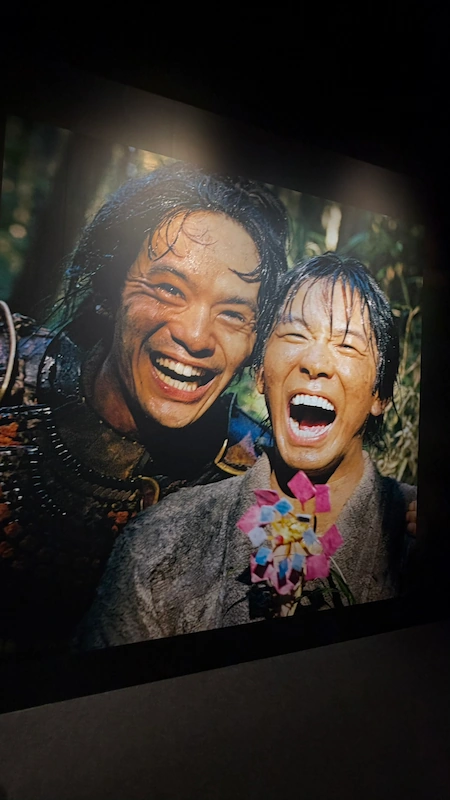
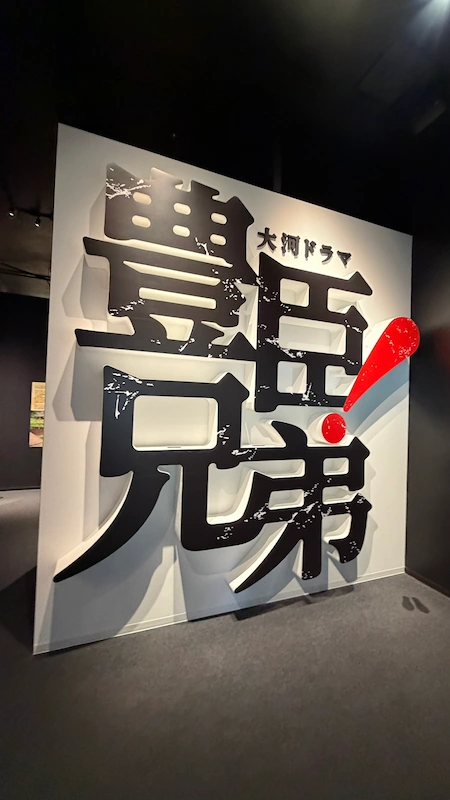
Tap to enlarge
A corner of Nakamura Park has been transformed. Where there was once an open, unobstructed stretch of parkland, there now stands the Toyotomi Museum — a substantial building with a presence that genuinely changes the character of the surrounding space.
Step through the entrance and you're met immediately by an enormous panel display that fills your field of vision.
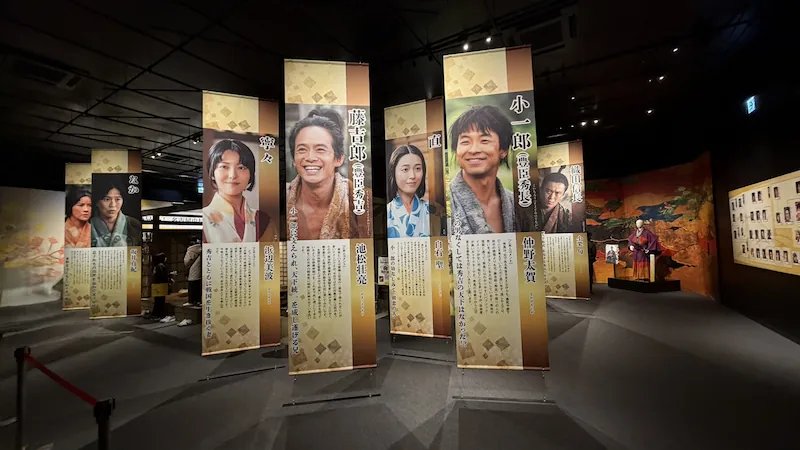
The interior is more spacious than you might expect. The first thing you see is a large wall-spanning panel that maps out the story's historical context and the relationships between the key figures — a well-designed introduction that draws you into the drama's world before you've even reached the main exhibits.
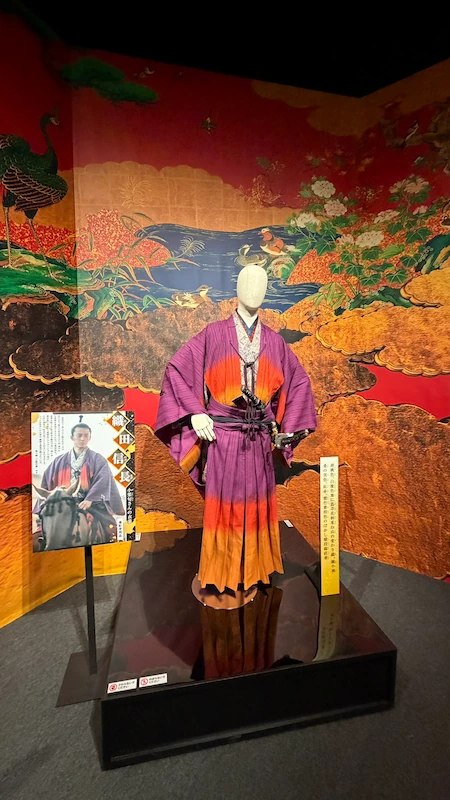
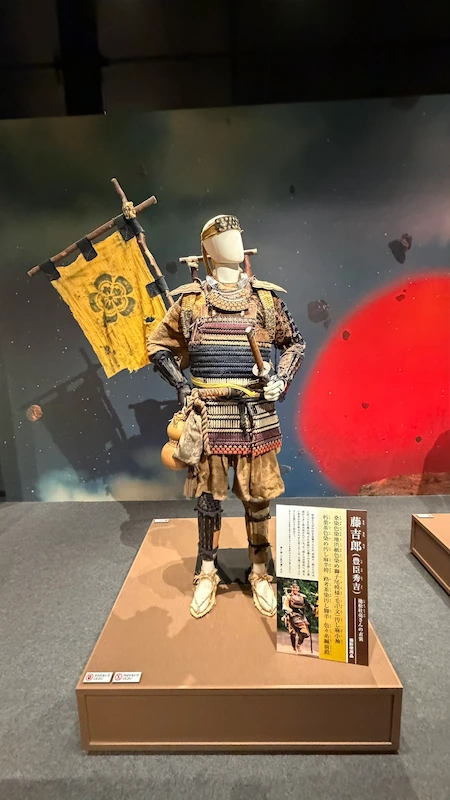
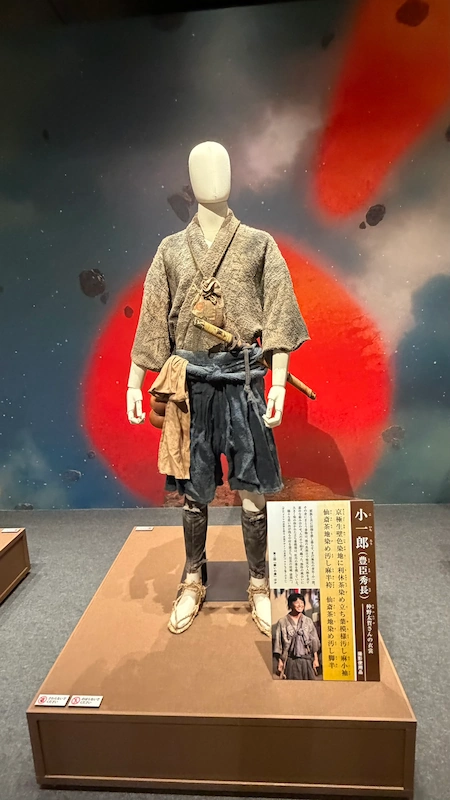
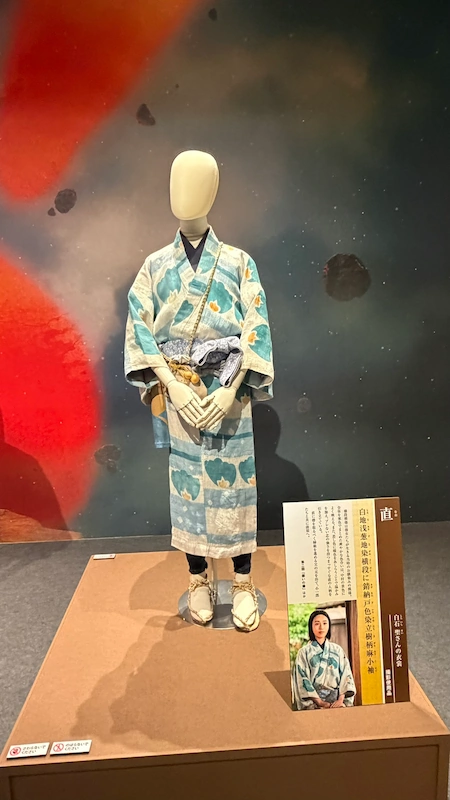
Tap to enlarge
The heart of the exhibition is the production-used costumes and props. The robes of major figures — Oda Nobunaga, Toyotomi Hideyoshi, and Toyotomi Hidenaga — are displayed close enough to examine in detail: the colors, the fabrics, the construction of the accessories. These are garments that appear on screen for only a moment, yet every element has been crafted with a precision you can only fully appreciate standing right in front of them.
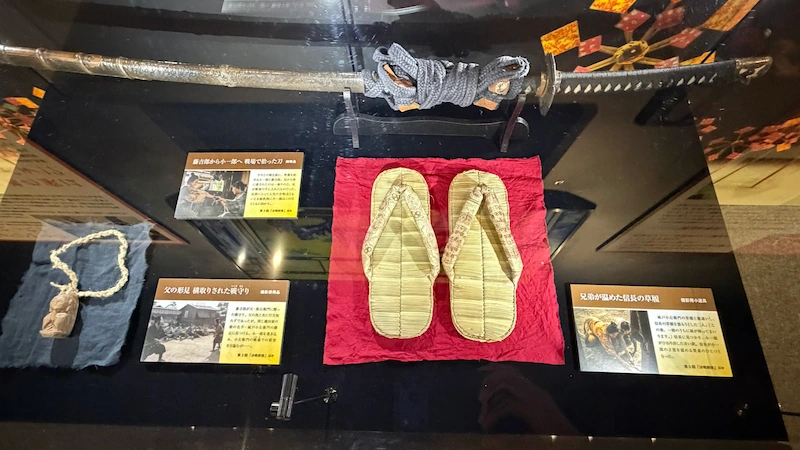
Swords, sandals, protective talismans, and other objects used in production are also on display. It's not only the weapons and battle gear — everyday items like sandals and good-luck charms are there too, and together they sketch a picture of daily life in the period that's surprisingly evocative.
The museum also features interview footage with the cast, in which the actors speak about how they approached their roles — how they interpreted their characters, what they chose to emphasize in their performances. Watching those interviews and then returning to look at the costumes and props again shifts your perception in a way that's hard to anticipate until it happens.
Behind-the-scenes footage from the production is screened as well, giving visitors a sense of how the sets were built and what the atmosphere on set was actually like. The finished drama tells one story; the making of it tells another. Getting access to both is something only a venue like this can offer.
The Toyotomi Museum feels less like a place to recap the drama and more like a place to get closer to the people in it — through the clothes they wore, the objects they handled, and the words the actors used to bring them to life.
See the costumes up close, hear the actors talk about their characters, learn what went on behind the camera — and then watch the drama again. The same scenes look different afterward. That's the particular value of a visit here.
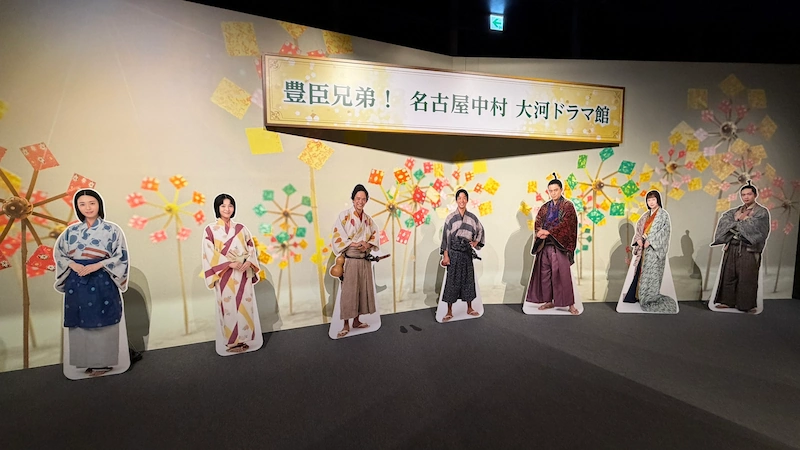
If you've already been watching the series, you'll find yourself recognizing costumes from specific scenes — and that recognition makes the whole experience more rewarding. My recommendation: watch first, then visit.
Frequently Asked Questions
The official directions recommend Exit 3 of Nakamurakoen Station (H04), then about 10 minutes north on foot. The subway route takes you past a large torii gate and several samurai-themed wayfinding signs along the way, which makes it a pleasant walk. The bus involves less walking if that's a priority.
Plan for 30–60 minutes inside (please verify on-site). Add another 30 minutes if you want time at the shop or a walk around the surrounding area.
The exhibition itself is entirely indoors. The paths through the park can get slippery when wet, so wear appropriate footwear.
Toyokuni Shrine nearby offers goshuin — the traditional ink stamps collected at Japanese shrines and temples, similar in concept to a passport stamp. Check current reception hours via the shrine's official information or local tourism sites before visiting.
This is a Taiga Drama Museum — an exhibition facility, not a castle or archaeological site. For historic ruins and original structures, the surrounding shrines and historic sites are the place to look. The museum works best as part of a combined itinerary.
Generally open daily, but occasional unscheduled closures are possible. Check the official website before you go.
Group pricing is available for parties of 20 or more. Discounts may also apply with certain subway day passes — check the official website for current details before your visit.
Individual admission is ¥800 for adults (high school age and above) and ¥400 for elementary and middle school children; preschool children are free. Groups of 20 or more pay ¥640 per adult and ¥320 per child.
Yes. Admission is free on October 17, 18 and 31 (2026). Preschool children are always free, and people with disabilities (with proof) and one companion are admitted free. Check the official website for other days.
It runs from January 24, 2026 to January 11, 2027, daily from 9:00 AM to 5:00 PM (last admission 4:30 PM), with occasional closures at the organizer’s discretion.
Yes. Advance tickets are sold online (Japanese only) through the ticket purchase page linked above, but availability windows apply, so check the official website first.
While You’re in the Area
☕ Support This Site
Following the Shogun is built on original fieldwork and on-site research.
If you found this guide useful, your support helps keep it going.

You can also support via QR code


comment