


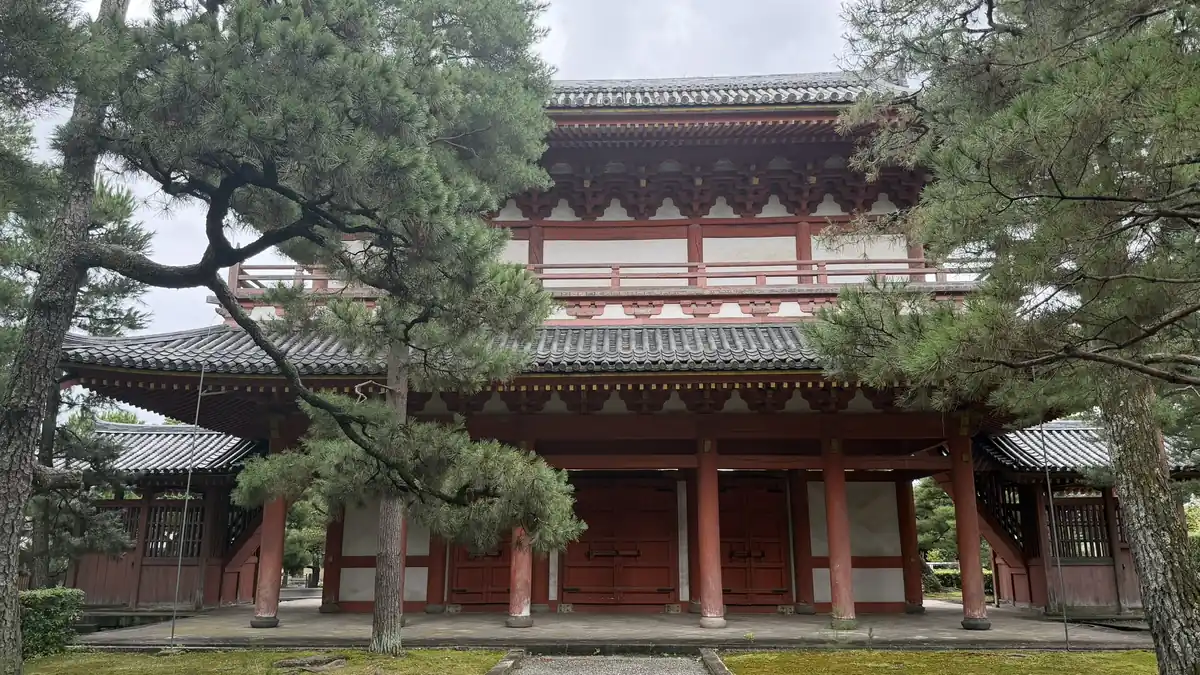
Daitokuji Temple in Kyoto: Which Sub-Temples and Zen Gardens to Visit, Fees and How to Get There
Daitokuji is a large Zen temple complex in northern Kyoto. Inside its grounds stand 20 small temples called sub-temples (tacchu), many with their own garden, and each with its own admission fee and opening days. Some are open all year; others open only during special openings. Oda Nobunaga's family graves, the Sanmon gate whose upper floor Sen no Rikyu added, and the family temple of Toyotomi Hidenaga, the hero of the 2026 NHK drama Toyotomi Brothers!, are all here. I visited between April 2024 and September 2026 and took the photos on this page.
Daitokuji's website says the monk Daito Kokushi (Shuho Myocho) founded it in 1315, as a temple of the Rinzai school, one of the main branches of Zen Buddhism in Japan. The Tokyo exhibition's website gives 1326 as the year of the temple's opening and calls 2026 its 700th anniversary. The Onin War damaged it, and the monk Ikkyu Sojun then rebuilt its halls (Daitokuji official). Toyotomi Hideyoshi held Oda Nobunaga's funeral here and built Soken-in to pray for him (Daitokuji official), and warlords of the period built sub-temples in the grounds for their own families.
In Tokyo, the Tokyo National Museum is holding a special exhibition for Daitokuji's 700th anniversary until December 6, 2026. This guide is about visiting the temple itself in Kyoto.
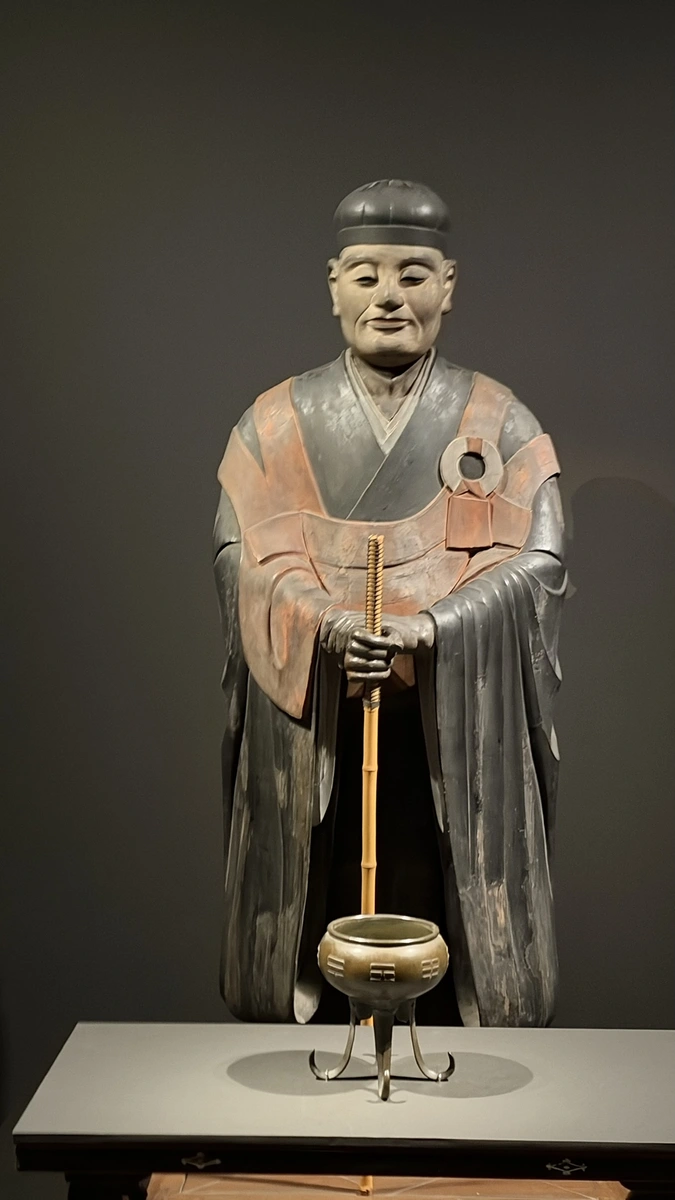
The Tokyo show ends with a recreation of the Sanmon gate's upper floor, where a standing statue of Sen no Rikyu can be photographed. The guide to the exhibition covers what is on view, how entry works and how to pay less for tickets.
 Visitor's guide | Tokyo National Museum, HeiseikanDaitokuji Exhibition Tokyo: Term 2 Guide, Crowds and TicketsI went in at opening time on October 18 and spent about two and a quarter hours inside. The guide covers what is on view in Term 2, how entry works, and how to pay less for tickets.Read the exhibition guide →
In this guide
If you are short on time, these links go to the parts of this guide you may want first.
Daitokuji at a glance: the main hall, the sub-temples and what to call them
The first thing to understand is the difference between the honbo (the head temple's central compound) and the sub-temples. The honbo is closed to the public except on special occasions, but you can walk through the grounds (Kyoto Tourism Federation). The sub-temples are separate temples, each with its own admission and opening days. Three are open all year: Daisen-in, Ryogen-in and Zuiho-in. Soken-in, Obai-in, Korin-in, Juko-in and others open only in special periods.
Which temples were open differed from one visit to the next, so my advice is to see whichever sub-temples are open on the day. The gardens I saw, including dry landscape gardens (karesansui: rocks and raked gravel standing for mountains and water), all seemed carefully maintained.
| The grounds | You can walk through the grounds around the Sanmon gate and the Butsuden. The honbo is closed except on special occasions |
|---|---|
| Open all year | Daisen-in (500 yen), Ryogen-in, Zuiho-in. Koto-in is closed in 2026 |
| Special openings | In autumn 2026: Soken-in, Obai-in, Korin-in and Juko-in. Dates and prices differ by temple, and payment is cash only |
Which Zen gardens to visit: Daisen-in, Ryogen-in and Zuiho-in compared
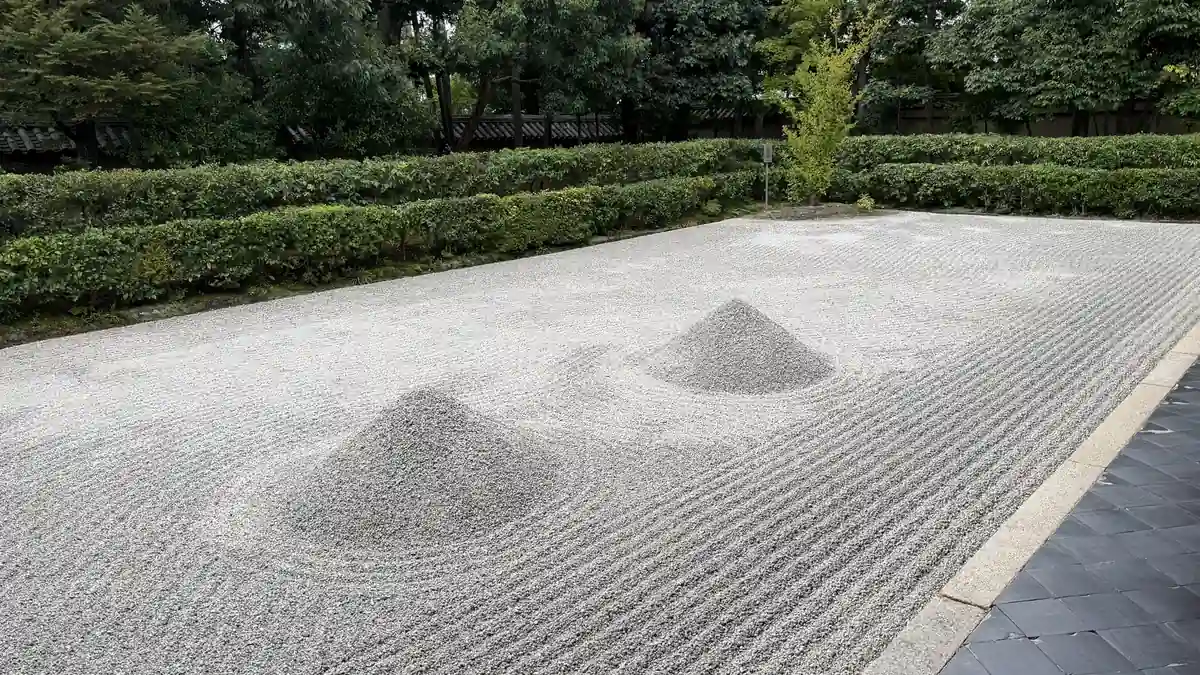
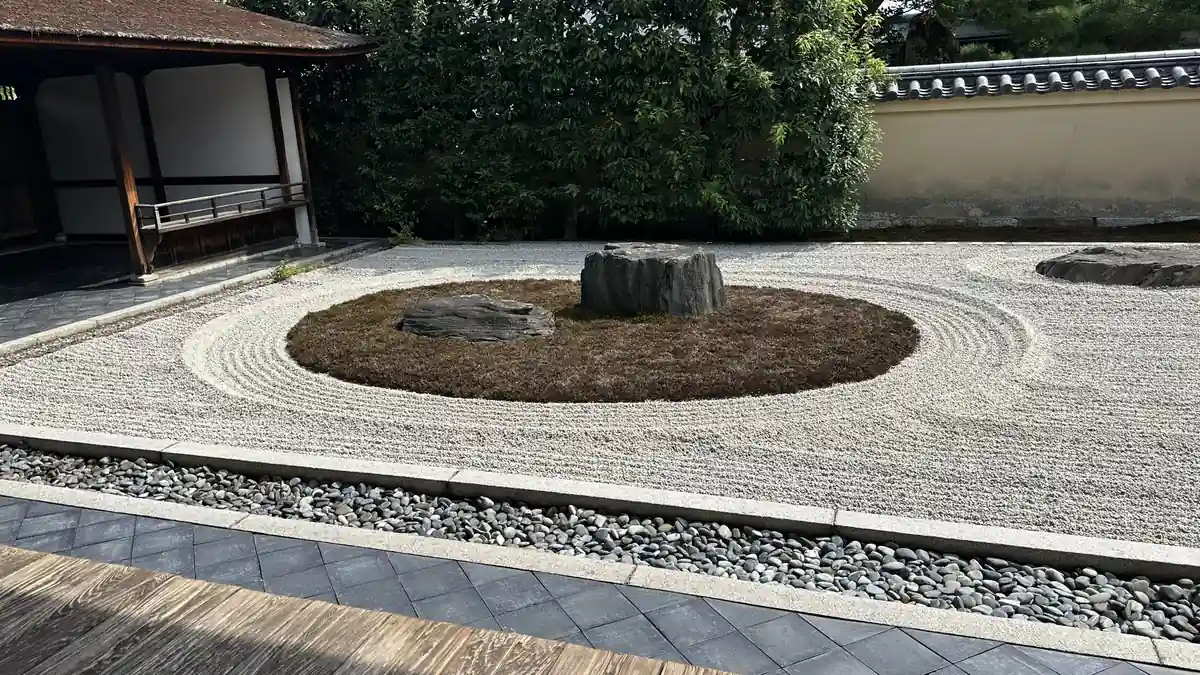
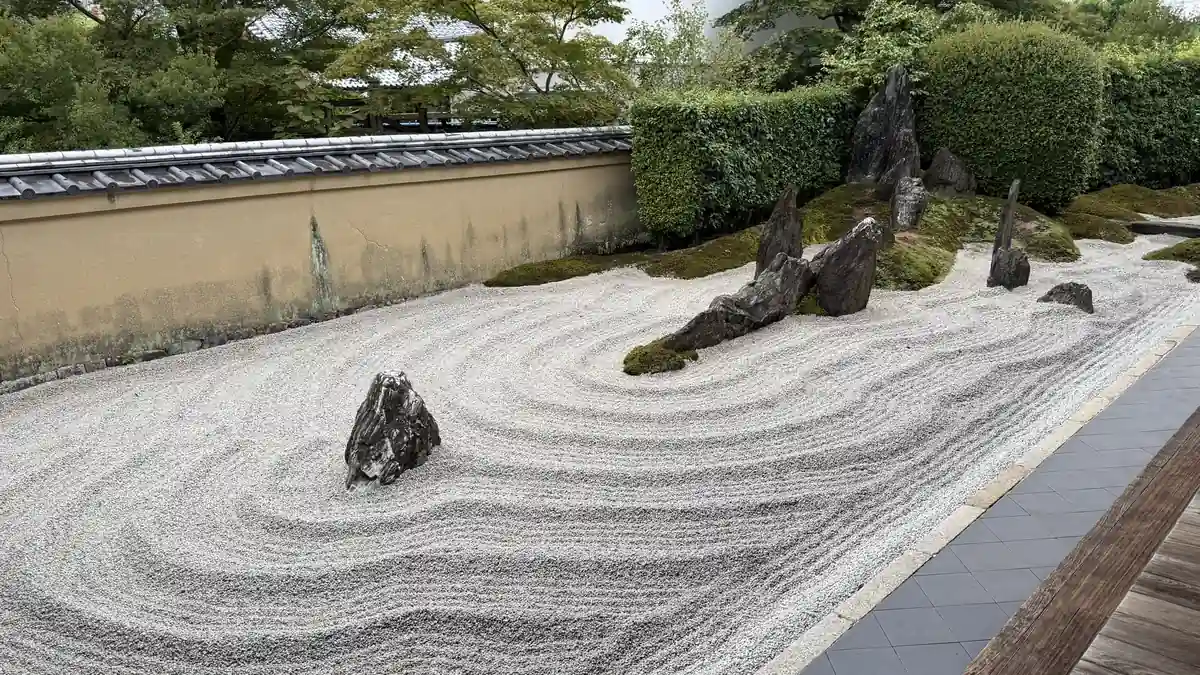
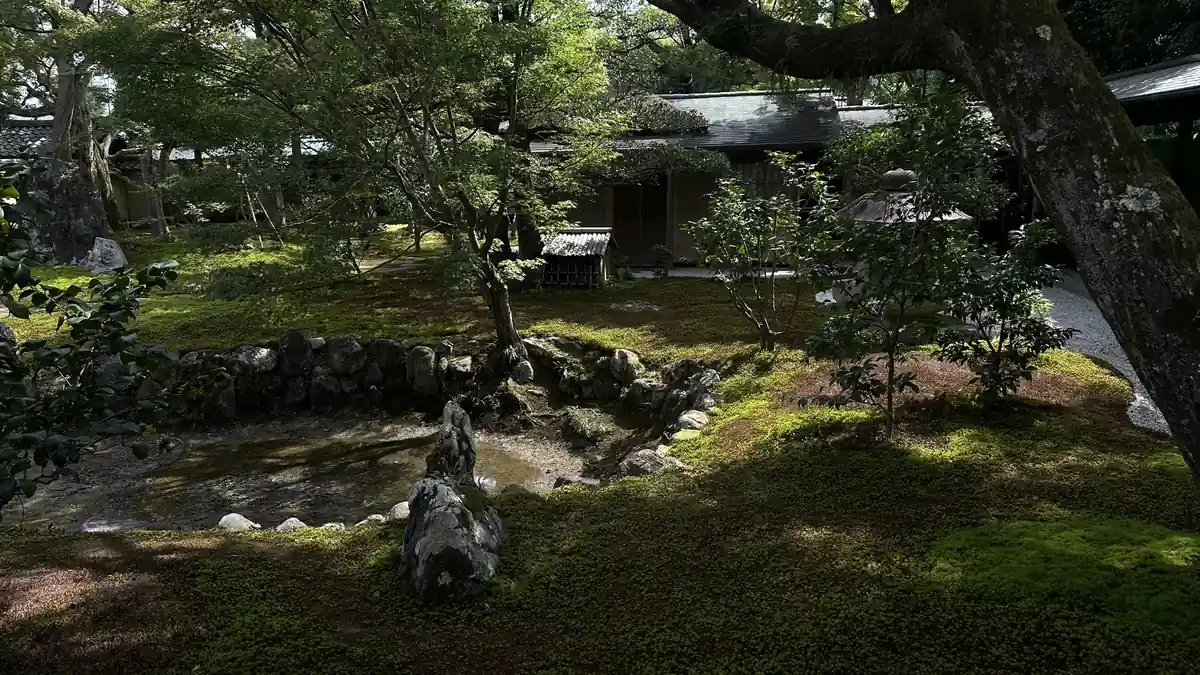
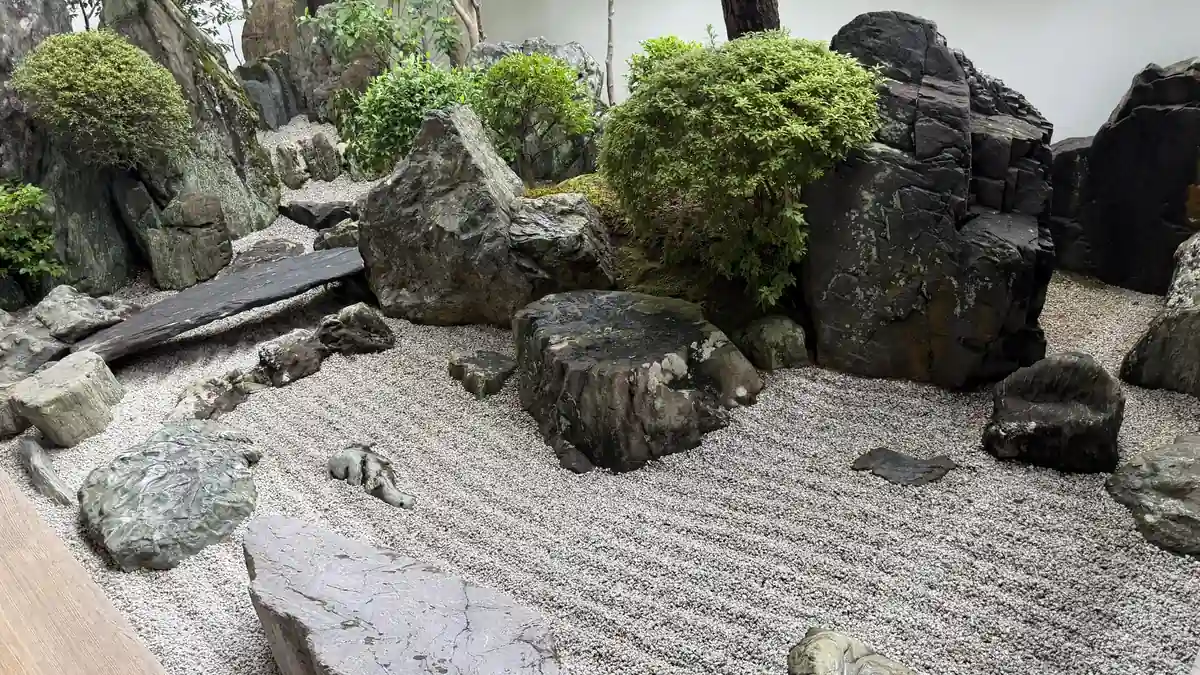
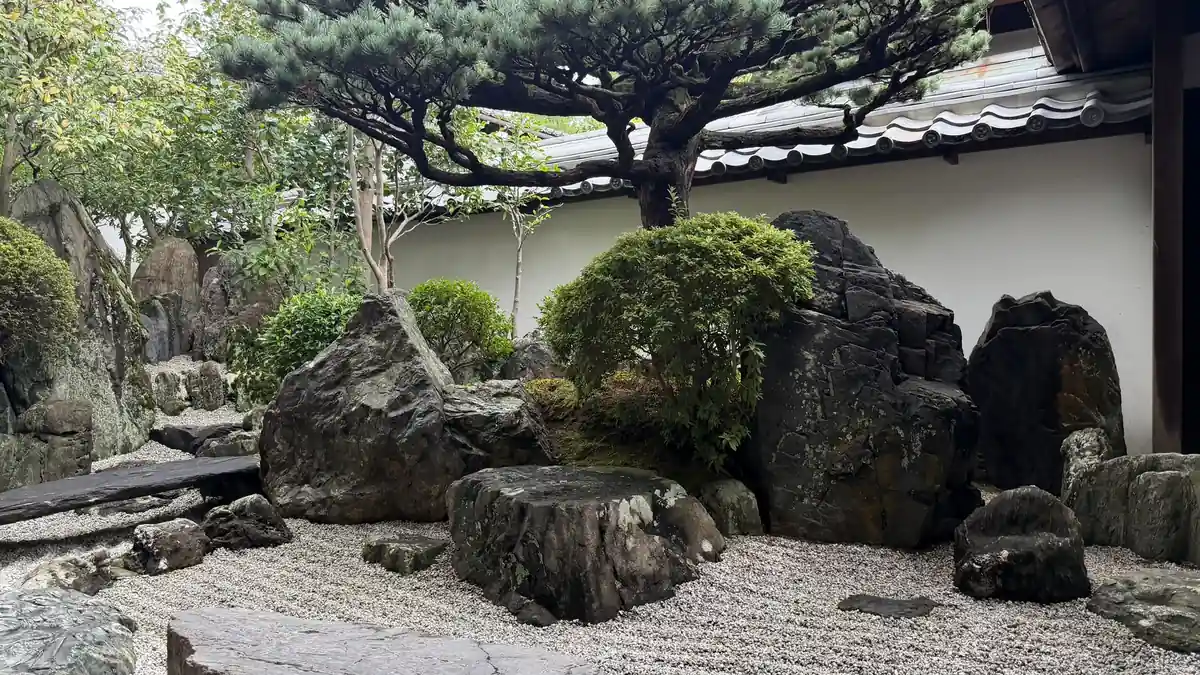
If you have time for one sub-temple, choose one of the three that are open all year. Their gardens look very different from one another, so here are the photos first. The fourth photo is Obai-in, which opens only in special periods.
Tap a photo to enlarge
| Daisen-in | Rocks and white gravel tell the story of a waterfall on a mountain that becomes a river and flows out to the sea. The hojo (the abbot's hall, the main hall of the sub-temple) is a National Treasure. Matcha 500 yen |
|---|---|
| Ryogen-in | Several small gardens around the hojo, including Ittekitei with a round moss island, Toteki-ko, a courtyard of five stones that is known as Japan's smallest rock garden, and the A-Un garden, whose stones came from Hideyoshi's Jurakudai palace |
| Zuiho-in | Dokuza-tei, with gravel raked into waves and a mountain of rocks, designed by Shigemori Mirei, and Kanmin-tei behind the hall, where stones are set in the shape of a cross. Founded for Otomo Sorin, a Christian daimyo |
| Obai-in (special openings) | Moss garden and white gravel garden. The one I picked for the green of the moss and the way light fell on it |
Koto-in, a fourth sub-temple normally open all year, is closed in 2026 for repairs, with no reopening date (Kyoto Travel's closure list, updated October 28, 2026). It was founded in 1601 by Hosokawa Tadaoki, and holds the graves of Tadaoki and his wife Gracia, a daughter of Akechi Mitsuhide (Kyoto Travel). The first head priest, Gyokuho Josou, was a younger brother of Tadaoki's father Hosokawa Yusai, and Tadaoki is counted among Rikyu's seven chief disciples (Kyoto Travel). For Gracia, see Hosokawa Gracia: Visit Her Real Sites.
Daisen-in: a National Treasure hall and a waterfall turned into sand
The garden at Daisen-in shows a waterfall on a mountain turning into a river and flowing out to the sea, all in rocks and white gravel. The temple says its hojo (the main hall, also called the abbot's hall), built around 1513, is the oldest Zen guest-hall building in the Daitokuji grounds and a National Treasure (Daisen-in).
The tea room in the shoin (the study wing) is called Suishoshitsu, and is said to be where Sen no Rikyu served tea to Hideyoshi (Daisen-in). On September 7, 2026, a wooden notice there told an anecdote from a book of tea stories, the Chawa Shigetsushu: Hideyoshi visited in summer and Rikyu set a flower vase on a rock outside the window and arranged flowers in it.
Daisen-in is open all year. The standard hours are 9:00 to 16:30 and admission is 500 yen for adults. Opening and closing times change from day to day, in November 2026 as well, so check the calendar on the temple website before you go. Matcha is served for 500 yen (Daisen-in).
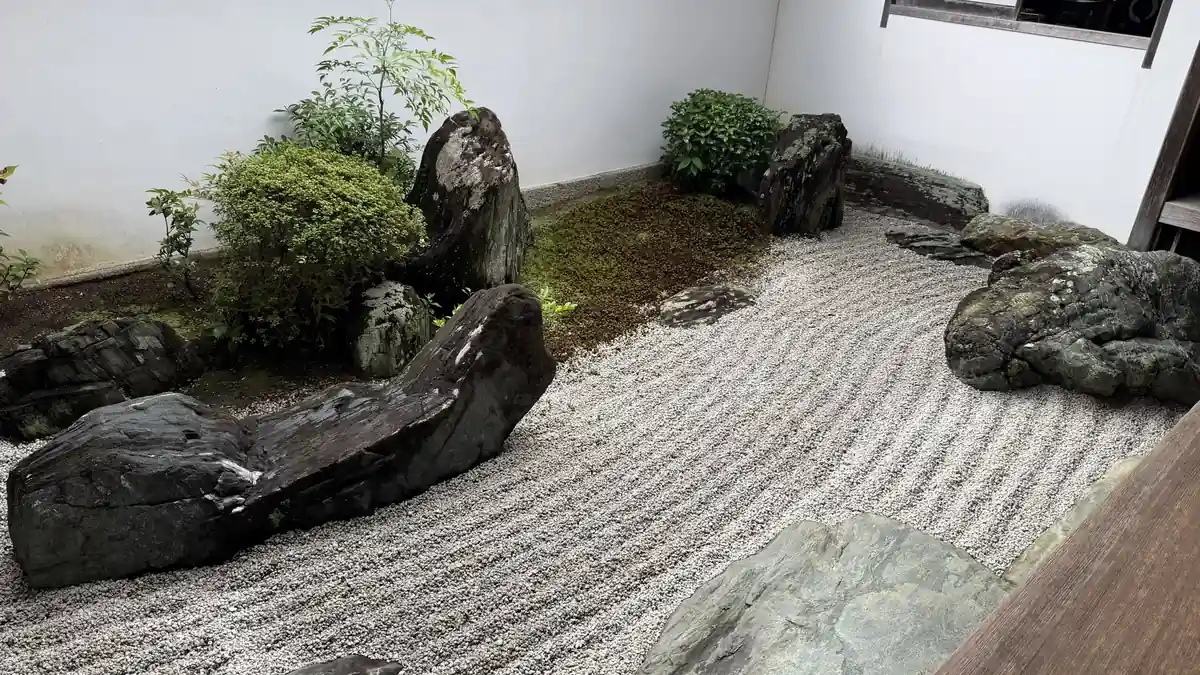
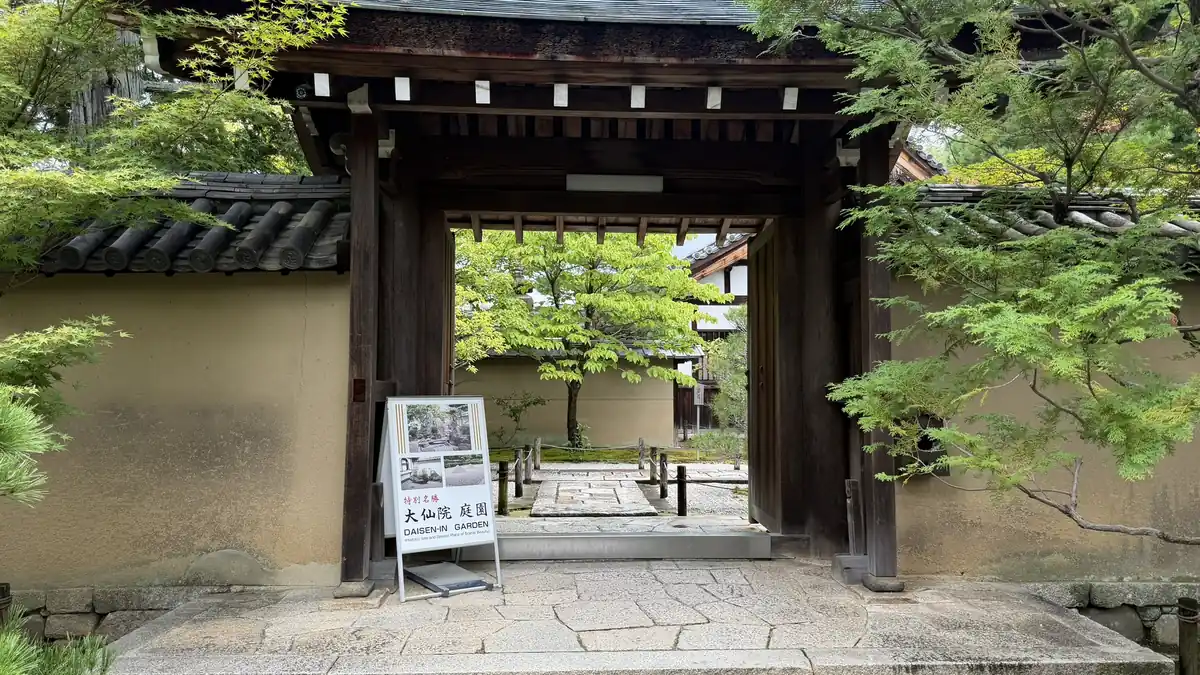
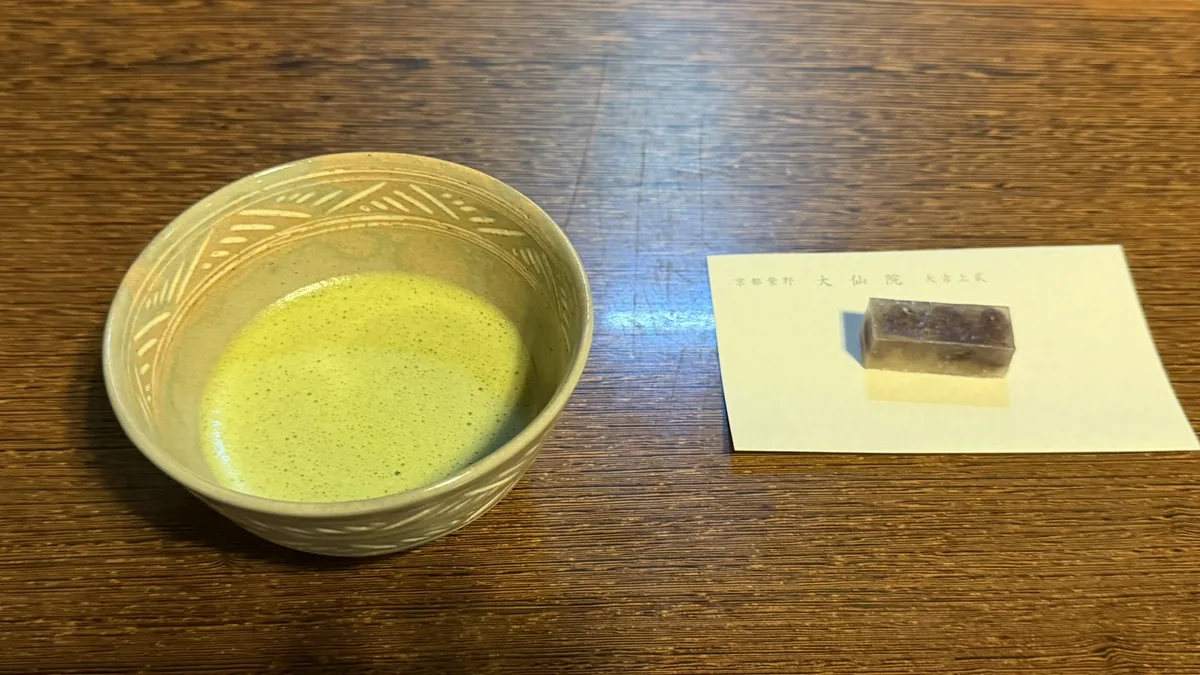
Tap a photo to enlarge
Ryogen-in: a moss island, the smallest rock garden and stones from Jurakudai
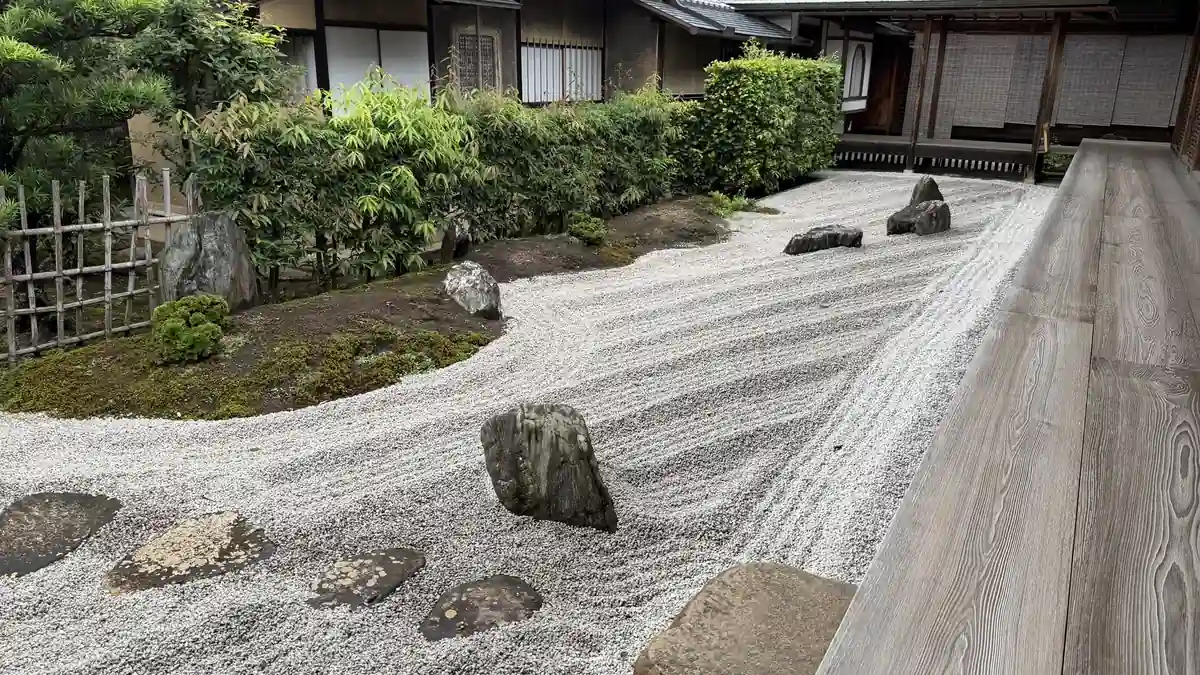
In front of Ryogen-in's hojo, a round moss island and stones sit in white gravel: the garden called Ittekitei. East of the hojo, Toteki-ko is a courtyard garden made of just five stones, known as Japan's smallest rock garden (Kyoto Travel).
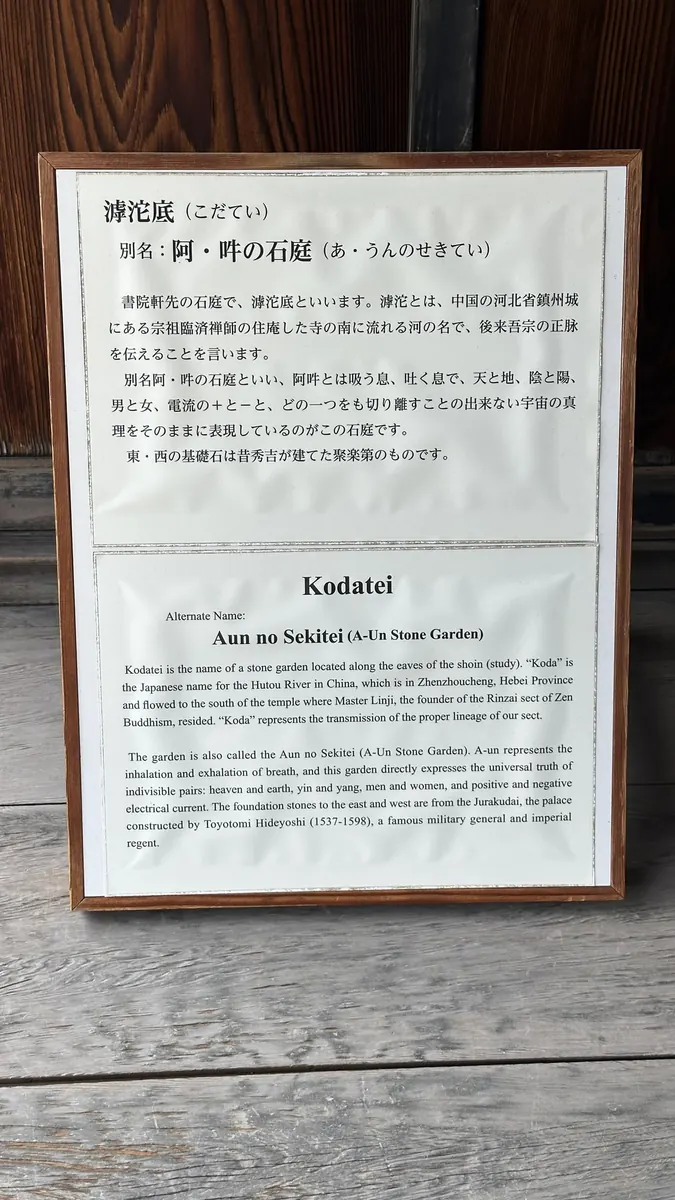
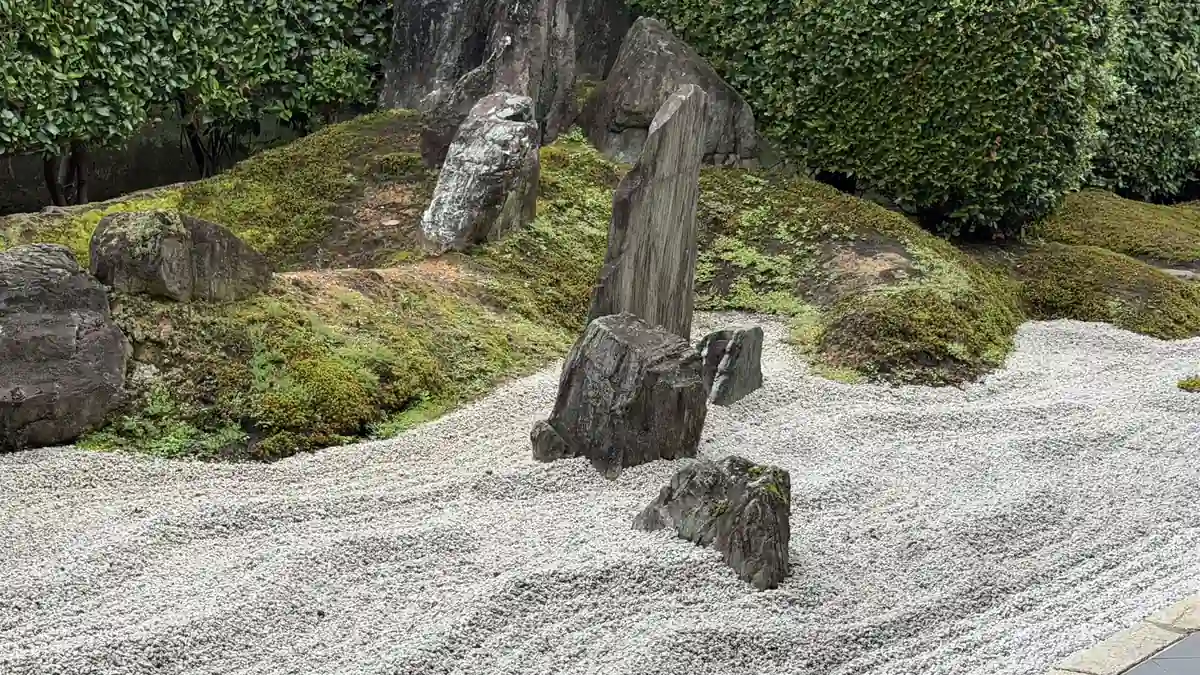
The small rock garden by the shoin eaves is called Kodatei (滹沱底), also known as the A-Un garden. According to the board on site, the foundation stones set to the east and west came from Jurakudai, the palace Hideyoshi built. You can read about the site in Jurakudai, Kyoto: A 4.2 km Walking Route.
Ryogen-in was founded in 1502 by Hatakeyama Yoshimoto of Noto, Otomo Yoshinaga and others, with the monk Tokei Soboku as its first head (Kyoto Travel).
A notice in the grounds on September 7, 2026 gave opening hours of 9:00 to 16:30 and said the temple is sometimes closed for temple reasons.
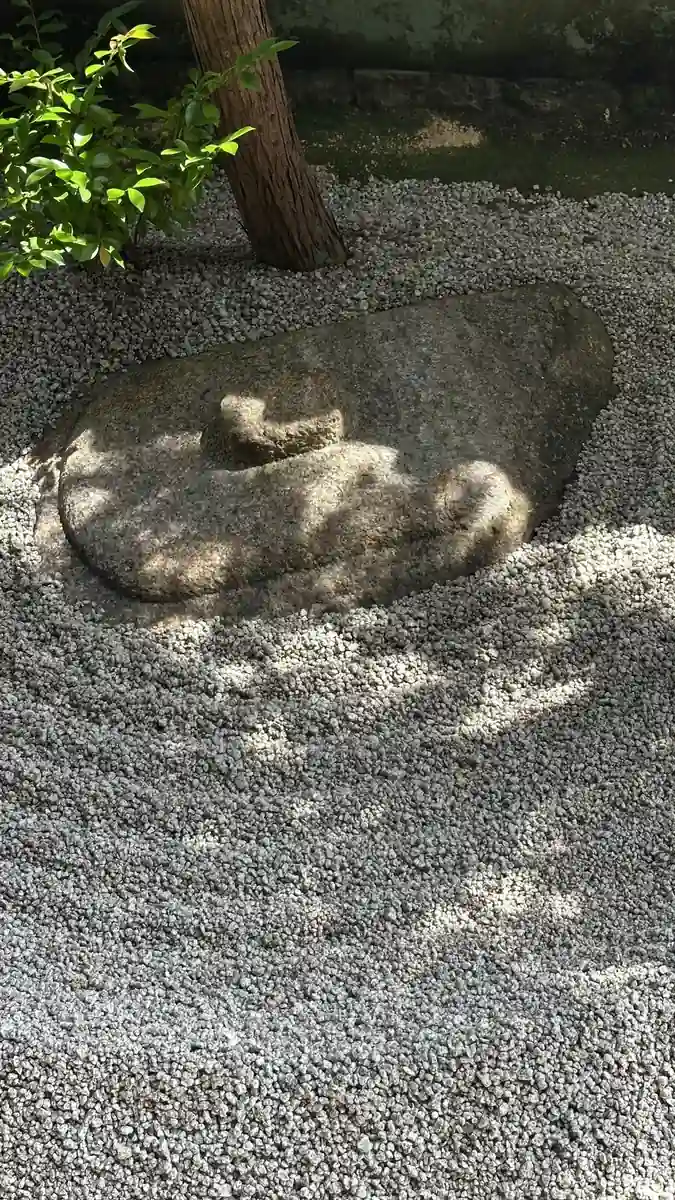
Tap a photo to enlarge
Zuiho-in: Otomo Sorin's temple, Shigemori Mirei's garden and the cross garden
Zuiho-in was founded as the family temple of Otomo Sorin, a daimyo known as a Christian convert. The garden in front of the hojo, Dokuza-tei, was designed by Shigemori Mirei: gravel raked into waves stands for the sea, and moss and rocks for Horai, the legendary island of immortals (Kyoto Travel).
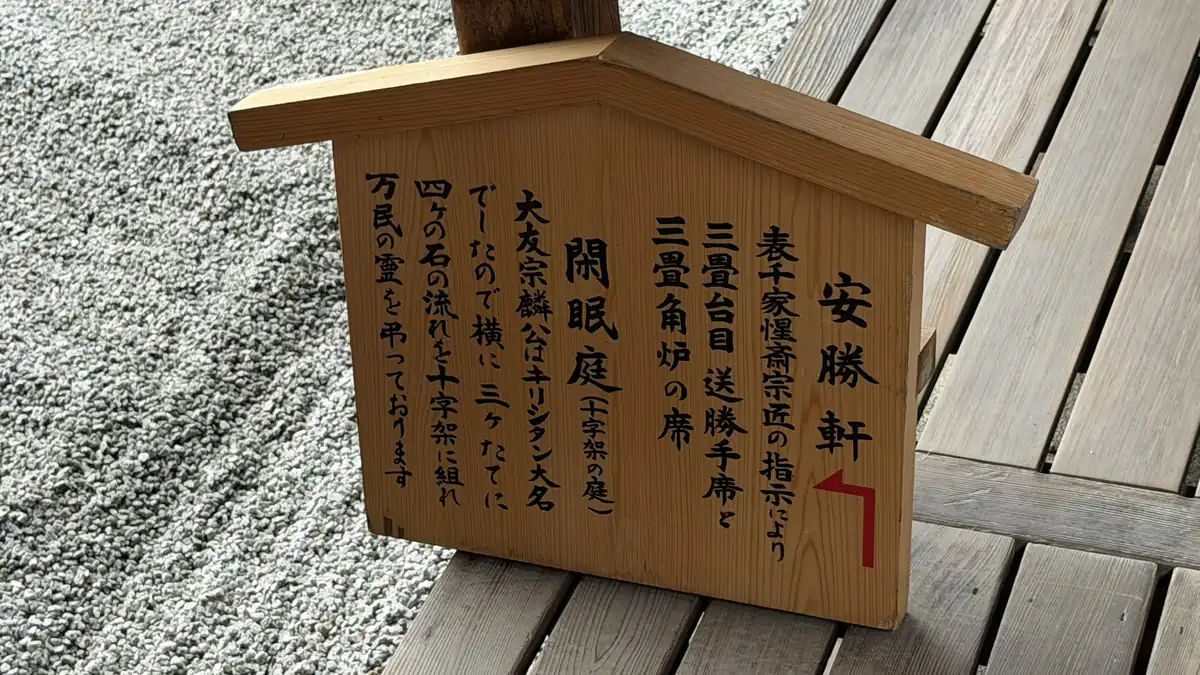
Behind the hall is Kanmin-tei, a garden whose stones are set in the shape of a cross. A wooden board on site says four stones lie in one direction and three in the other, making a cross to pray for all souls (the board is in Japanese).
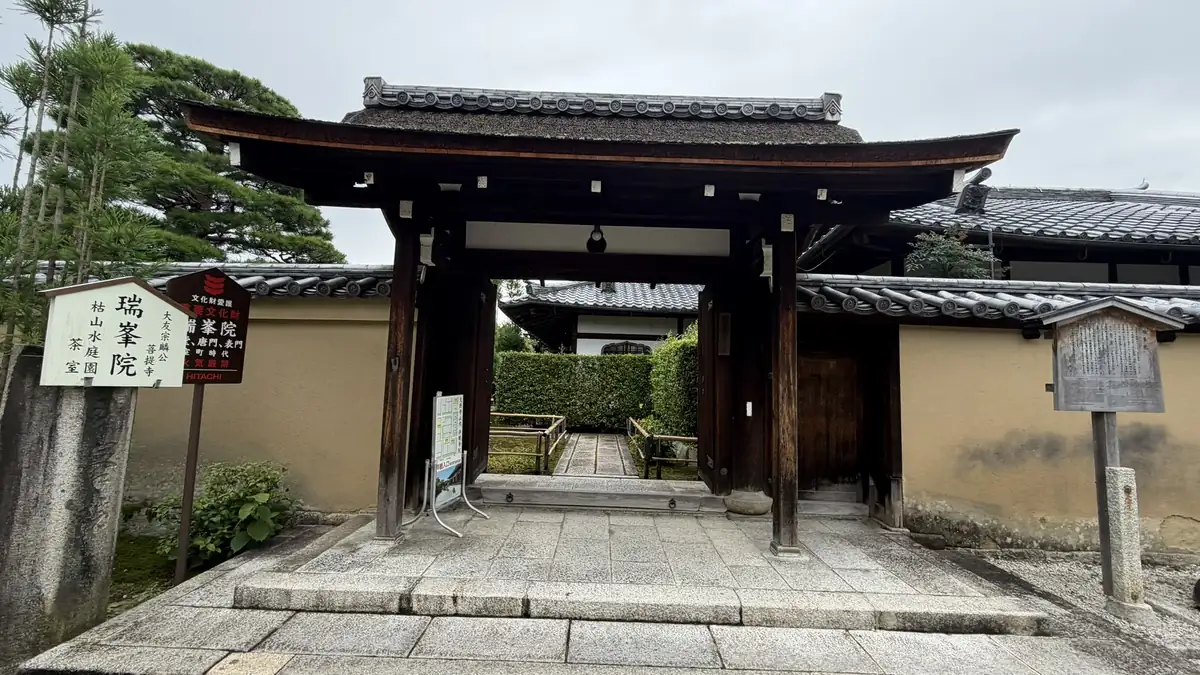
The admission notice on September 7, 2026 said 500 yen for adults and 300 yen for children from elementary to high school age, with matcha at 500 yen.
Tap a photo to enlarge
Getting to Daitokuji from Kyoto Station: city bus, subway or bicycle
Daitokuji is in northern Kyoto. A direct city bus runs from Kyoto Station. The stop you want is Daitokuji-mae, written 大徳寺前 on signs and in announcements.
Getting to Daitokuji
| Address | 53 Murasakino Daitokuji-cho, Kita Ward, Kyoto. Tel. +81-75-491-0019 (大徳寺) |
|---|---|
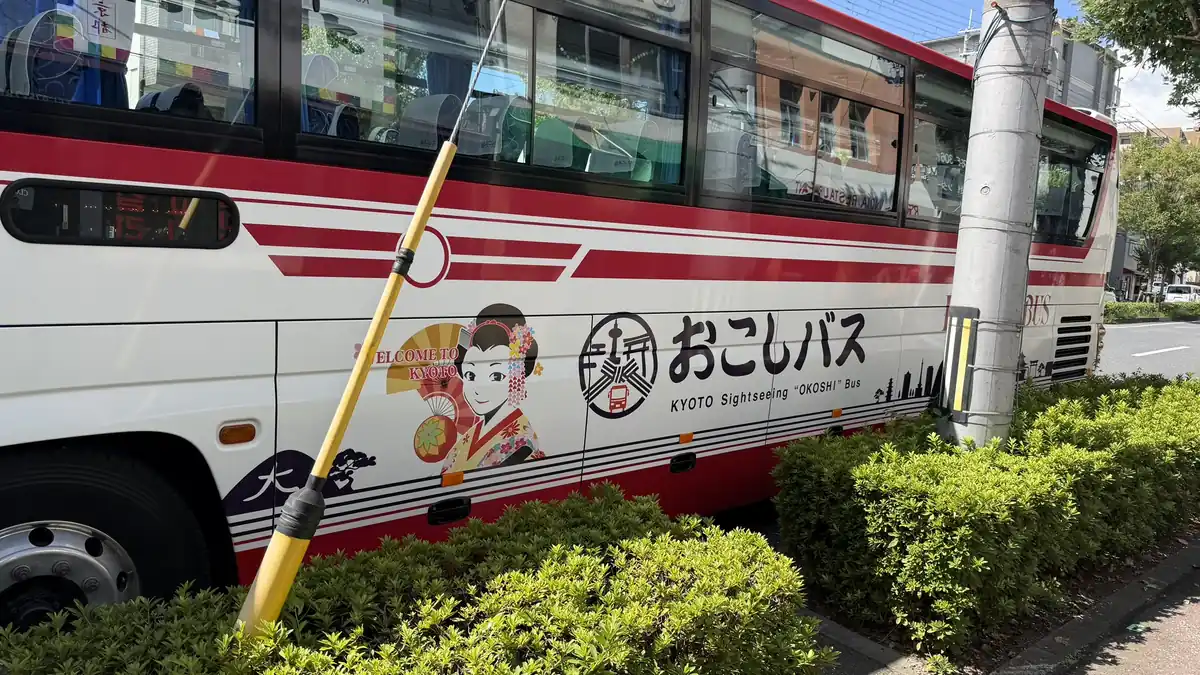
| City bus from Kyoto Station | Routes 205 and 206 stop at both Kyoto Station and Daitokuji-mae (大徳寺前) (Kyoto City Bus route pages). The temple's website names routes 204 and 206, but route 204 does not stop at Kyoto Station. It also names Kenkun-jinja-mae (建勲神社前) as a stop that is just as close. Japan-Guide gives the ride as about 45 minutes |
| Bus 9 | From Kyoto Station to Kitaoji-Horikawa (北大路堀川), then a walk of about 7 minutes (Daitokuji official). Japan-Guide gives the ride as about 30 minutes |
| Subway and bus | Take the Karasuma Line to Kitaoji Station (about 13 minutes, Japan-Guide), then a city bus to Daitokuji-mae, or walk about 20 minutes (Daitokuji official) |
| Fare and payment | City bus in the central flat-fare zone: 230 yen for adults (as of November 2026). Board at the rear door and pay when you get off at the front. Cash and IC cards such as ICOCA, Suica, PASMO and PiTaPa work; credit cards do not, and the Japan Rail Pass cannot be used on these buses (Kyoto City Transportation Bureau) |
| Bicycle | I have gone from Kyoto Station both by bus and by bicycle. A bicycle is handy if you want to visit other places the same day, but I once got caught in rain, so check the forecast |
| Keeping costs down | I think public transport is cheaper than a taxi, whether it is the bus alone or the subway and a bus together. Routes and travel times change with the time of day, so check the maps below |
| By car | Parking for 50 cars. 8:00 to 20:00: weekdays 200 yen per 60 minutes (daytime maximum 500 yen), weekends and holidays 200 yen per 30 minutes (maximum 700 yen) (Kyoto Tourism Federation) |
From Kyoto Station to Daitokuji: public transport
From Kyoto Station to Daitokuji: on foot
Routes are shown by Google Maps and change with the vehicle and the time. Google Maps cannot show a bicycle route here, so the walking route is shown instead. If you go by bicycle, check a bicycle route in your map app.
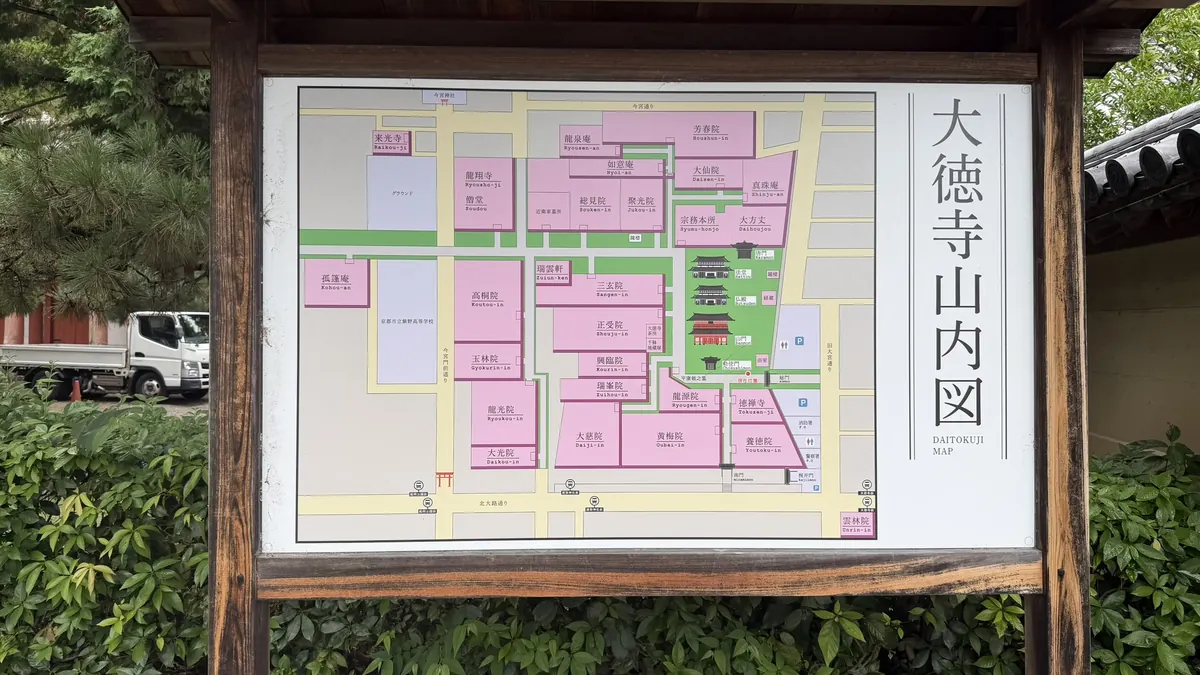
The map of the grounds on a notice board (photo below) shows every sub-temple. It is in Japanese, so the fee table below gives each temple's Japanese name.
Fees, hours and closed days at each sub-temple
Each sub-temple has its own reception desk and its own admission fee. Opening status and fees as of November 18, 2026:
| Daisen-in (大仙院) | Open all year. Standard hours 9:00 to 16:30, which change by day (see the temple calendar). Adults 500 yen, children (elementary to junior high) 300 yen, matcha 500 yen (Daisen-in) |
|---|---|
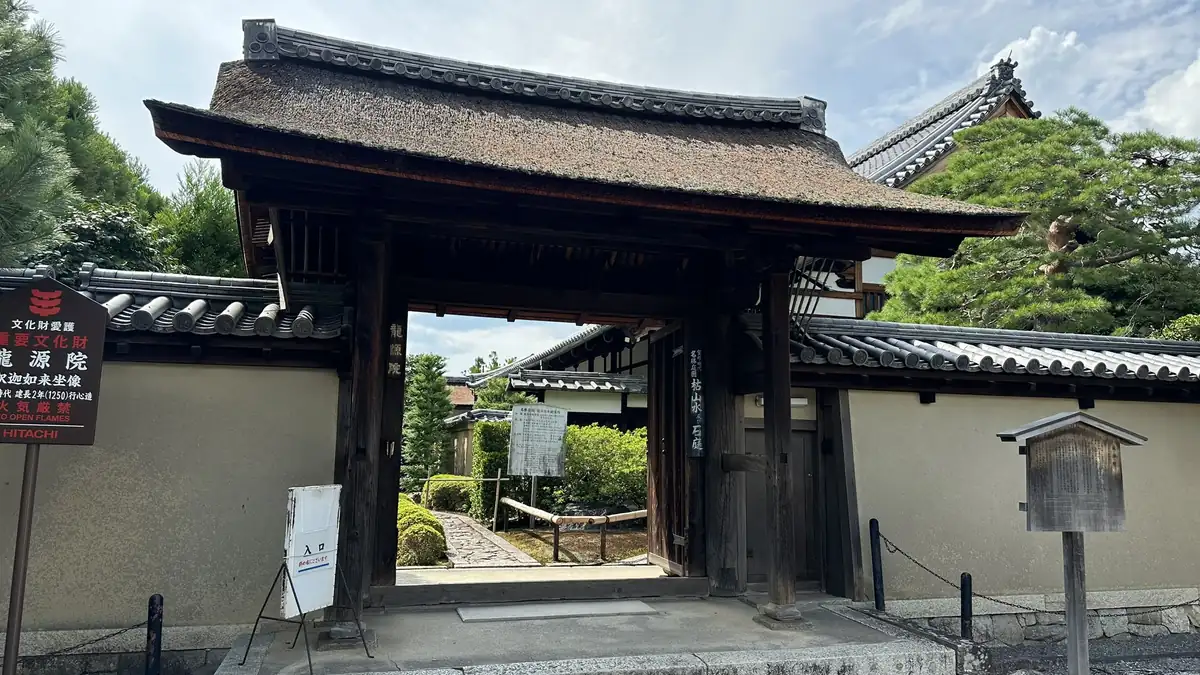
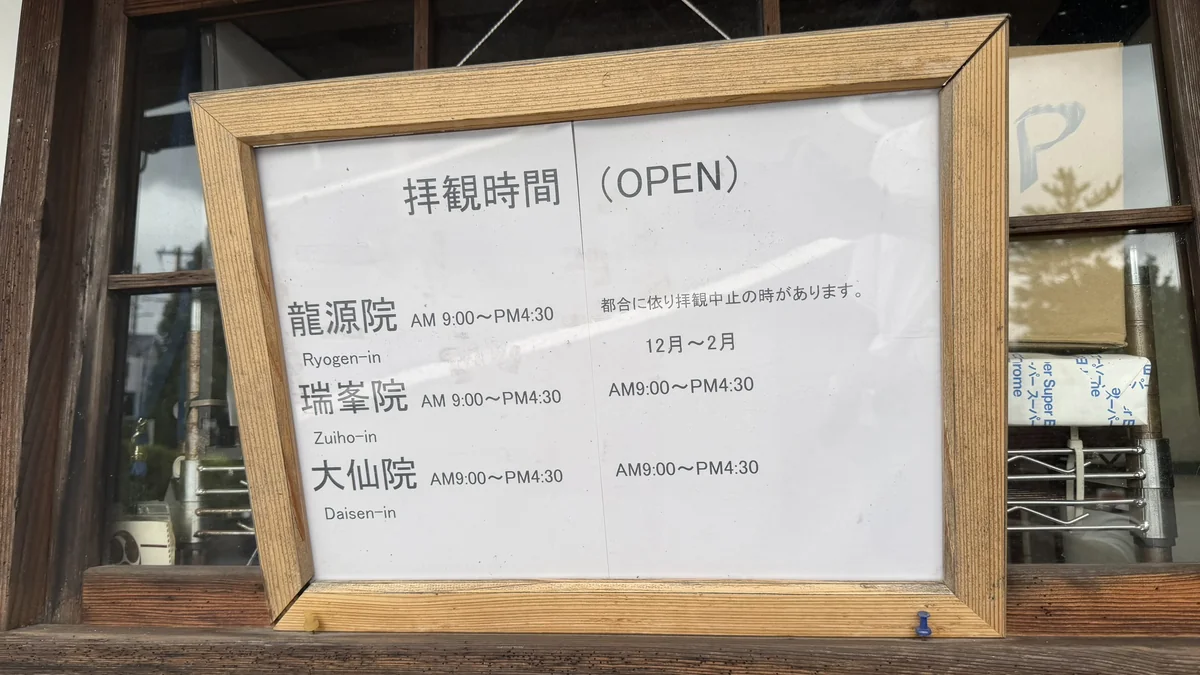
| Ryogen-in (龍源院) | Open all year. Notice on September 7, 2026: 9:00 to 16:30; sometimes closed for temple reasons. The notice I photographed gave hours only; travel sites list about 350 to 400 yen, so check at the gate |
| Zuiho-in (瑞峯院) | Open all year. Notice on September 7, 2026: 9:00 to 16:30; adults 500 yen, children (elementary to high school) 300 yen; matcha 500 yen |
| Koto-in (高桐院) | Closed in 2026, with no reopening date (Kyoto Travel) |
| Soken-in (総見院) | Special opening. Autumn 2026 until November 30; adults 800 yen |
| Obai-in (黄梅院) | Special opening. Autumn 2026 until December 6; adults 1,000 yen |
| Korin-in (興臨院) | Special opening. Until December 15, 2026; adults 800 yen |
| Juko-in (聚光院) | Special opening. Autumn 2026 until December 6; adults 1,000 yen. Children under school age are not admitted |
| Hoshun-in (芳春院) | Only the bonsai garden is open. Notice in September 2026: 1,000 yen; the main hall and other buildings are closed to visitors |
| Daiko-in (大光院) | Normally closed. Opened in 2026 for a winter special opening and for a summer sightseeing-bus course |
Bring cash. At the four autumn special openings payment is cash only (Kyoto Shunju). Photo rules also differ by temple. In the autumn 2026 openings, photography is banned inside the main hall at Soken-in, everywhere except the garden at Korin-in, and everywhere in the grounds at Juko-in. Obai-in allows still photos, but not photos with people in them, selfie sticks or tripods (Kyoto Shunju). Follow the instructions at each reception desk.
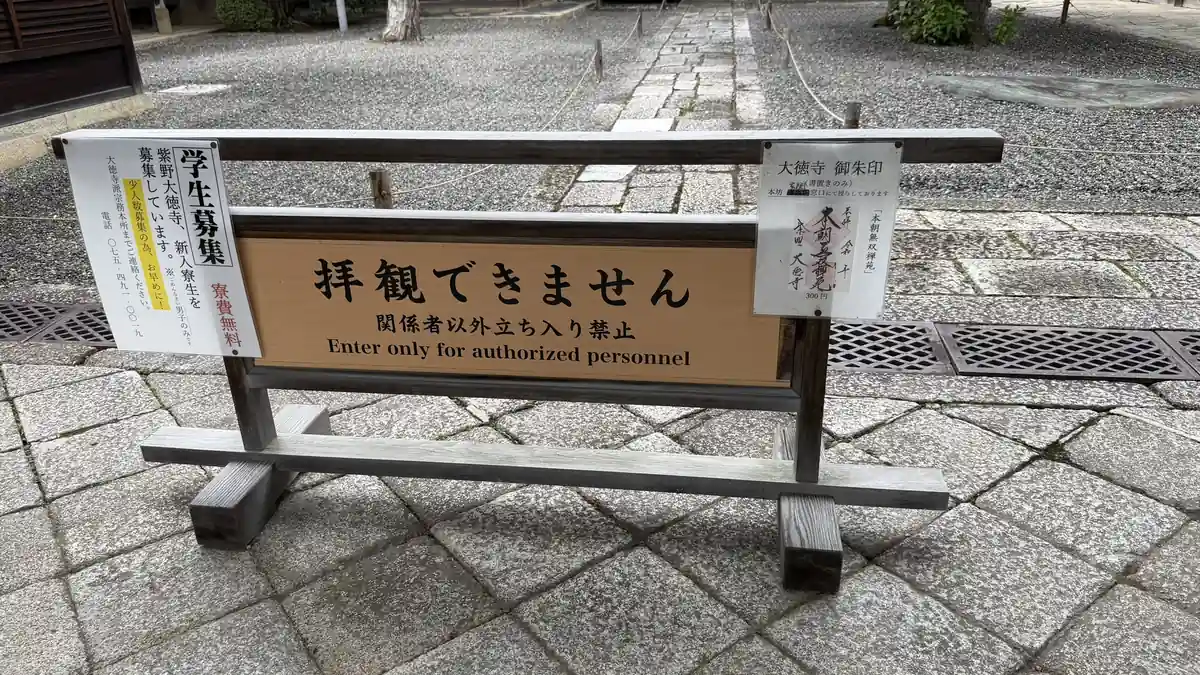
In my photos, many signs and notices carry some English next to the Japanese, for example the admission sign at Zuiho-in, the grave guide at Soken-in and the notice at Hoshun-in's bonsai garden. Much of the detail is in Japanese, so a translation app with a camera function is useful.
Tap a photo to enlarge
Inside the grounds: the Sanmon gate, the Butsuden and the sub-temple gates
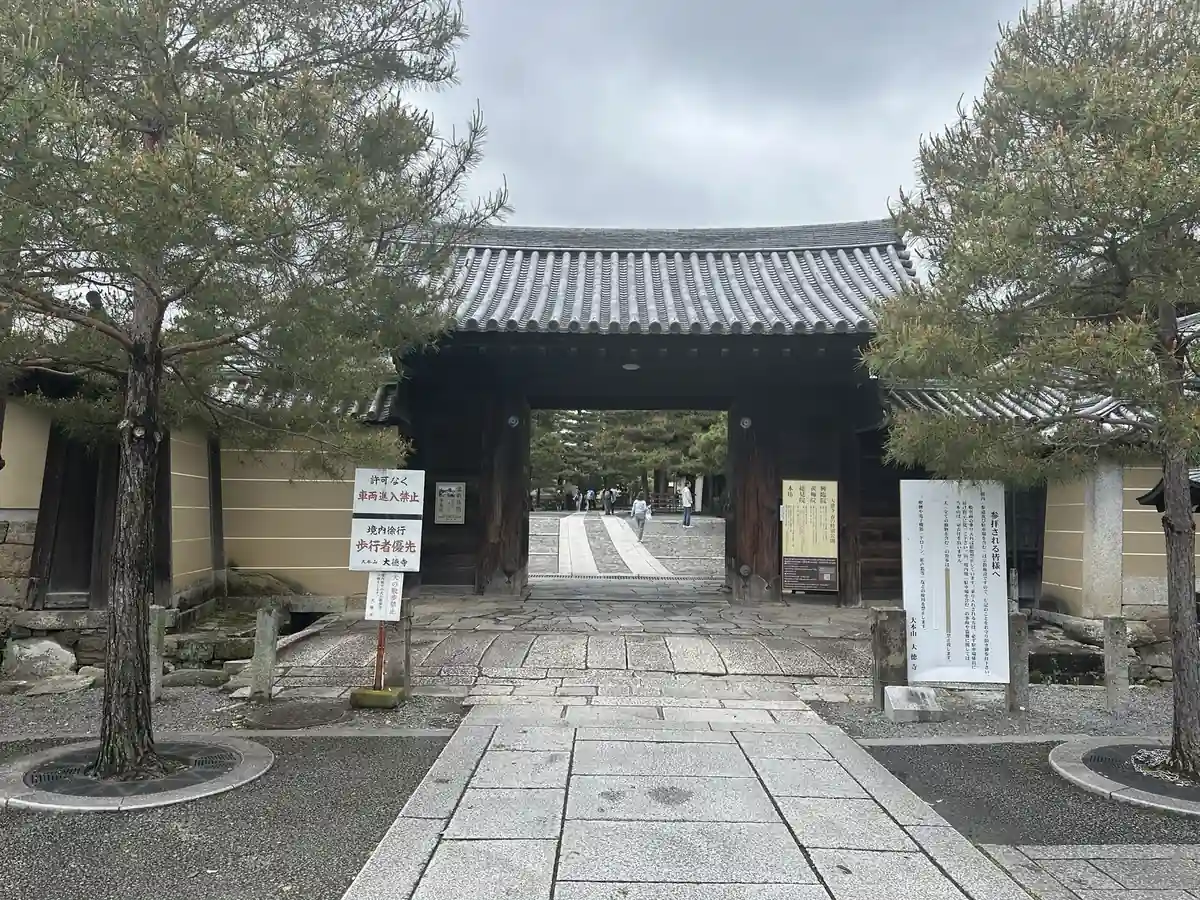
The Somon is the front gate of the grounds.
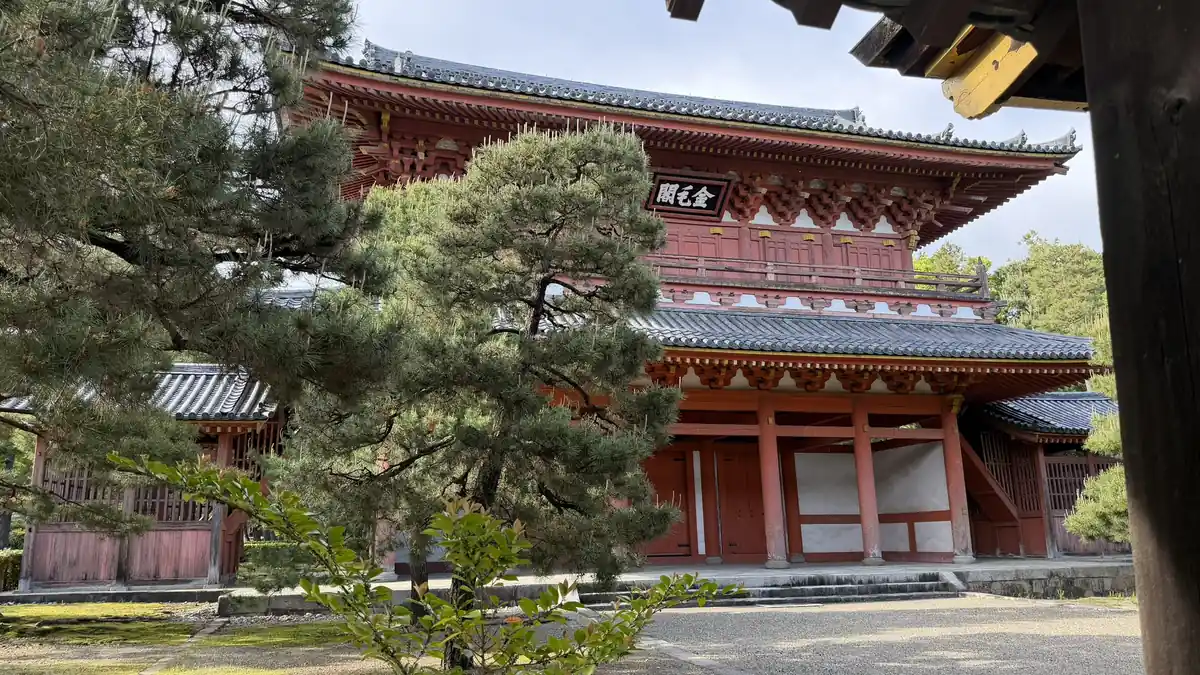
The vermilion Sanmon gate is the most eye-catching building in the grounds. According to Daitokuji, its upper floor was added by Sen no Rikyu and called Kinmokaku. Tradition says that Rikyu placed a statue of himself there, that this angered Hideyoshi, and that it was one reason Rikyu later took his own life.
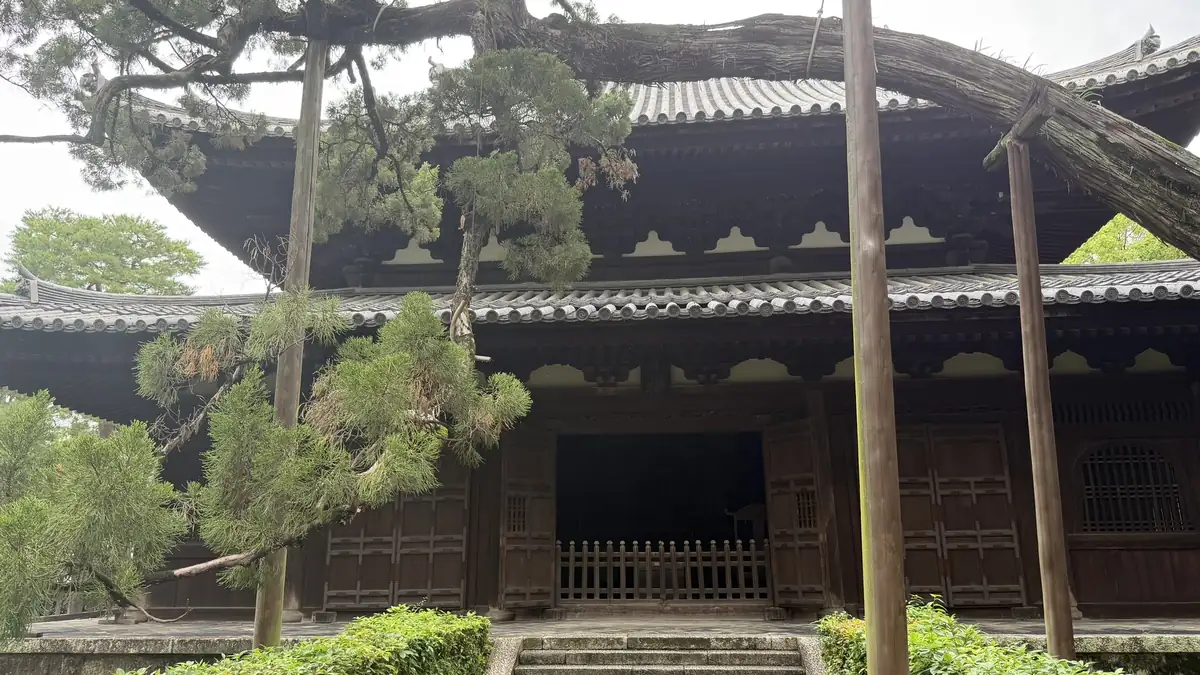
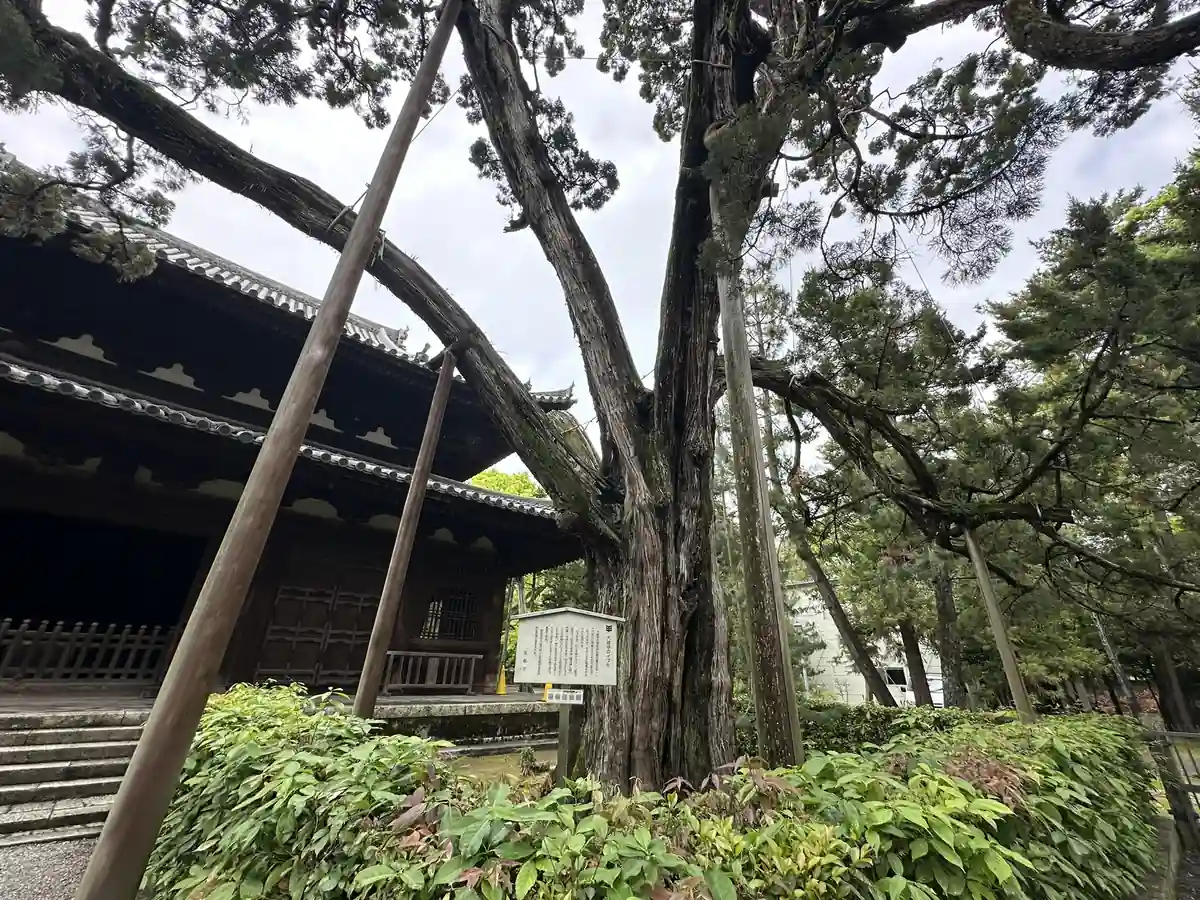
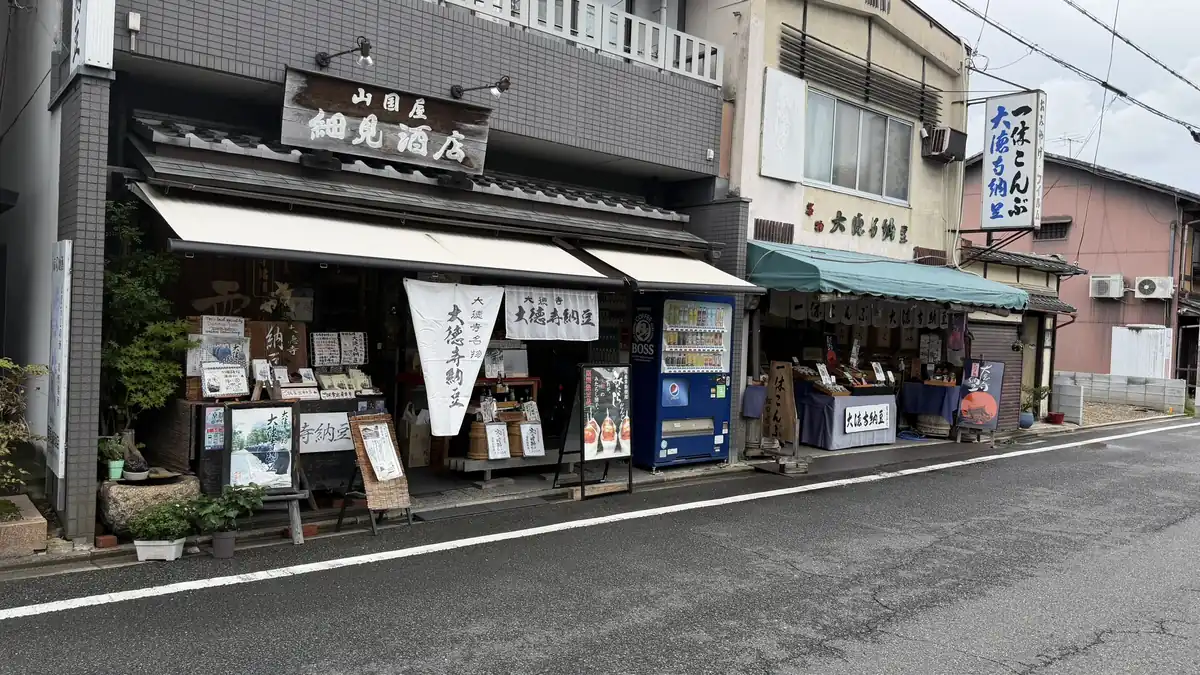
Behind the Sanmon stands the Butsuden (Buddha hall), with a large ibuki juniper tree in front of it. You can see both while you walk through the grounds. The street in front of the grounds has shops selling Daitokuji natto, a fermented-soybean food named for the temple.
Tap a photo to enlarge
As you walk through the grounds, gates appear one after another along the walls. Behind each one is a tatchu (a sub-temple): an independent temple such as Daisen-in, Ryogen-in or Obai-in. About twenty sub-temples cluster around the central compound where the Sanmon, the Butsuden and the Hatto (lecture hall) stand, and the large grounds are enclosed by walls and trees (Kyoto City).
The big gates are impressive, but so is the sight of temple gates lined up along a road between walls. It felt like walking through a period drama, a view you rarely see on ordinary city streets.
The word tatchu originally meant a high priest's tomb inside a Zen temple (Rinno.net). The first sub-temples were small hermitages that disciples built beside the grave to guard it, and later the word came to mean an independent temple inside the grounds of a large one (Myoshinji). Not every sub-temple has a graveyard. At Daitokuji, Sangen-in holds the grave of Ishida Mitsunari and Juko-in holds the graves of the successive heads of the Sen tea families (Kyoto City board, Kyoto Shunju).
Nobunaga, Hideyoshi and the warlords' sub-temples
Many sub-temples at Daitokuji were built for warlords' families. Soken-in, Obai-in and Korin-in open only during special openings; Hoshun-in lets you into its bonsai garden only. For Nobunaga's other sites, see Oda Nobunaga: Who He Was, and the Sites You Can Still Visit.
Two words appear below. A tatchu is an independent temple inside the grounds of a large temple. A bodaiji (family temple) is the temple a family asks to look after its ancestors' memorial services; it holds services and funerals and manages the graves (Kouunji). The two can overlap. Juko-in is a tatchu of Daitokuji, the temple Sen no Rikyu chose as the place for his own memorial services, and the burial ground of the successive heads of the Omotesenke, Urasenke and Mushanokojisenke tea schools (Kyoto Shunju). Temples are also sorted by role into family temples, prayer temples (which grant worldly benefits such as business success and traffic safety) and training temples for monks (Kouunji).
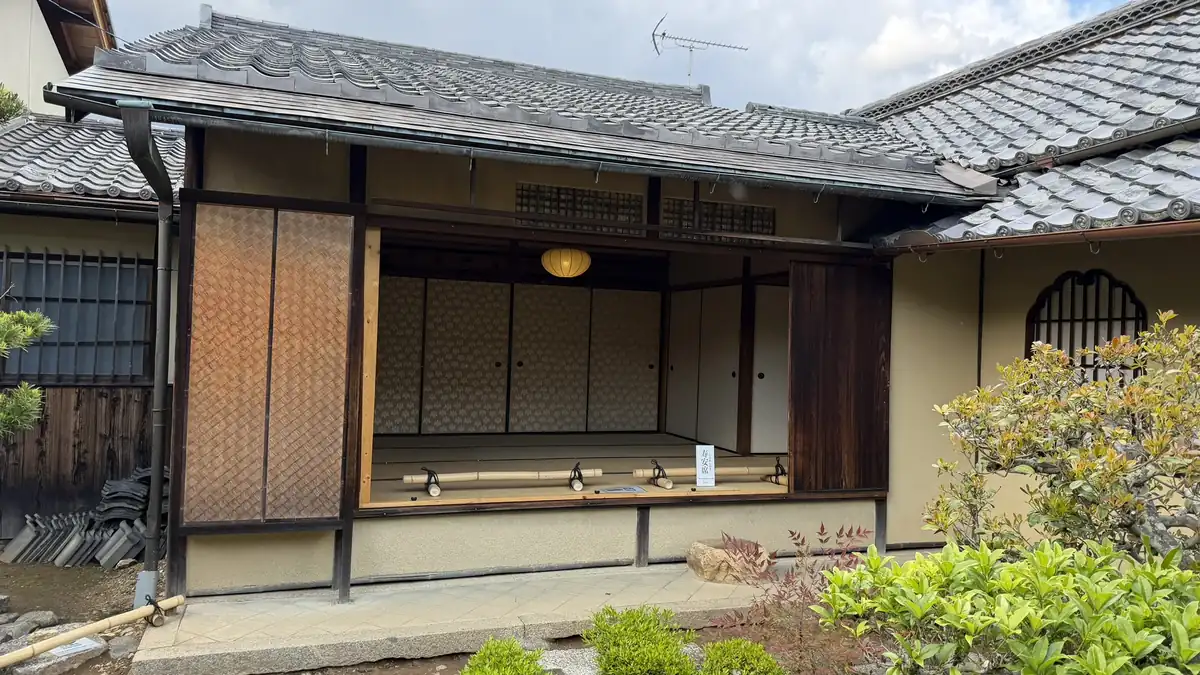
Soken-in: the temple Hideyoshi built for Nobunaga, and the Oda family graves
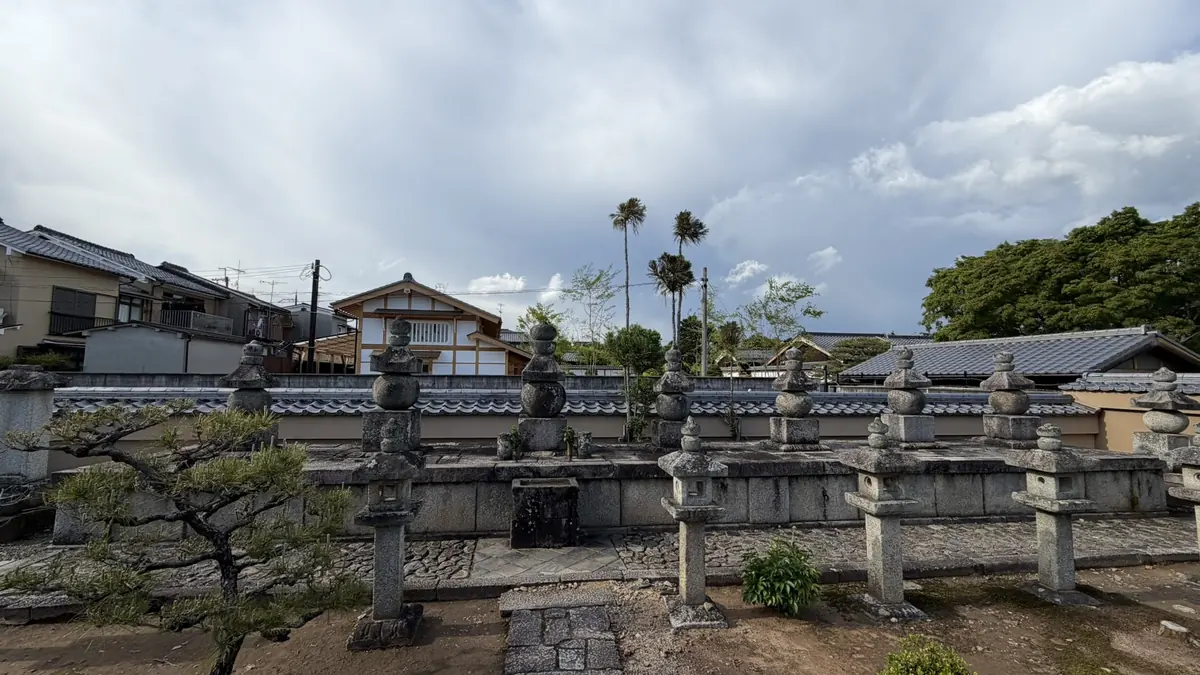
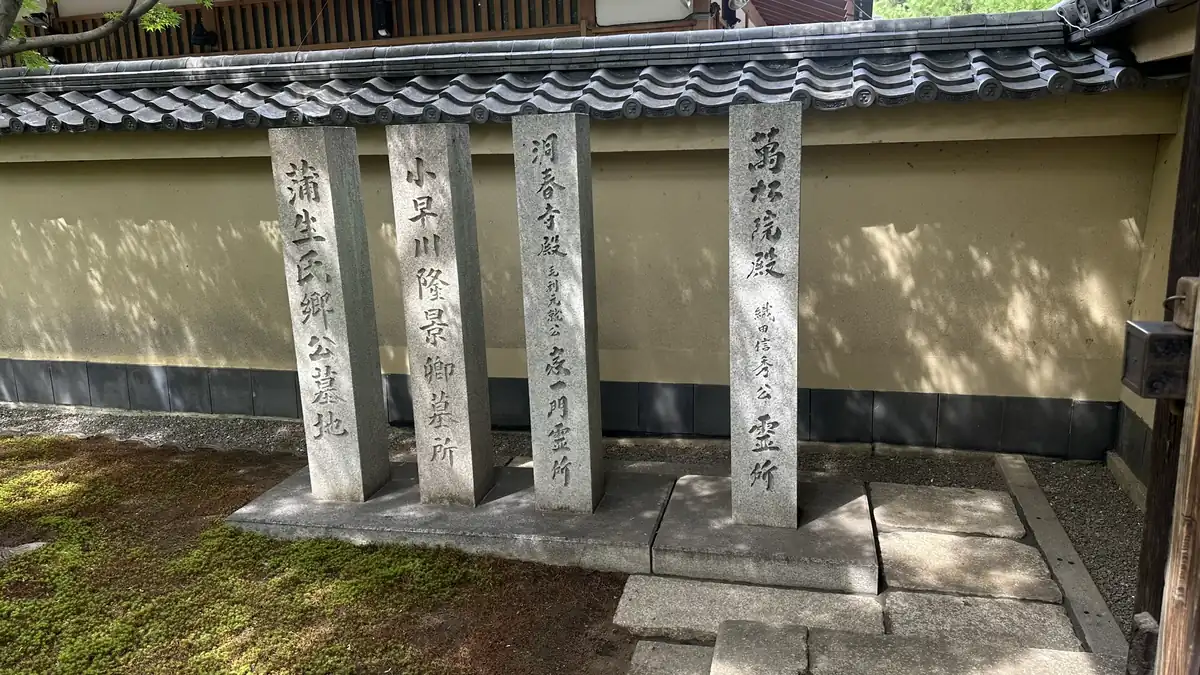
Hideyoshi built Soken-in to pray for Nobunaga, and held his funeral at Daitokuji (Daitokuji official). The main hall holds a life-size (about 115 cm) wooden statue of Oda Nobunaga, an Important Cultural Property. In the graveyard, five-tier stone pagodas and gravestones stand for Nobunaga and his family, including his wife Nohime, his concubine Onabe no Kata and his daughter Tokuhime (Kyoto Shunju).
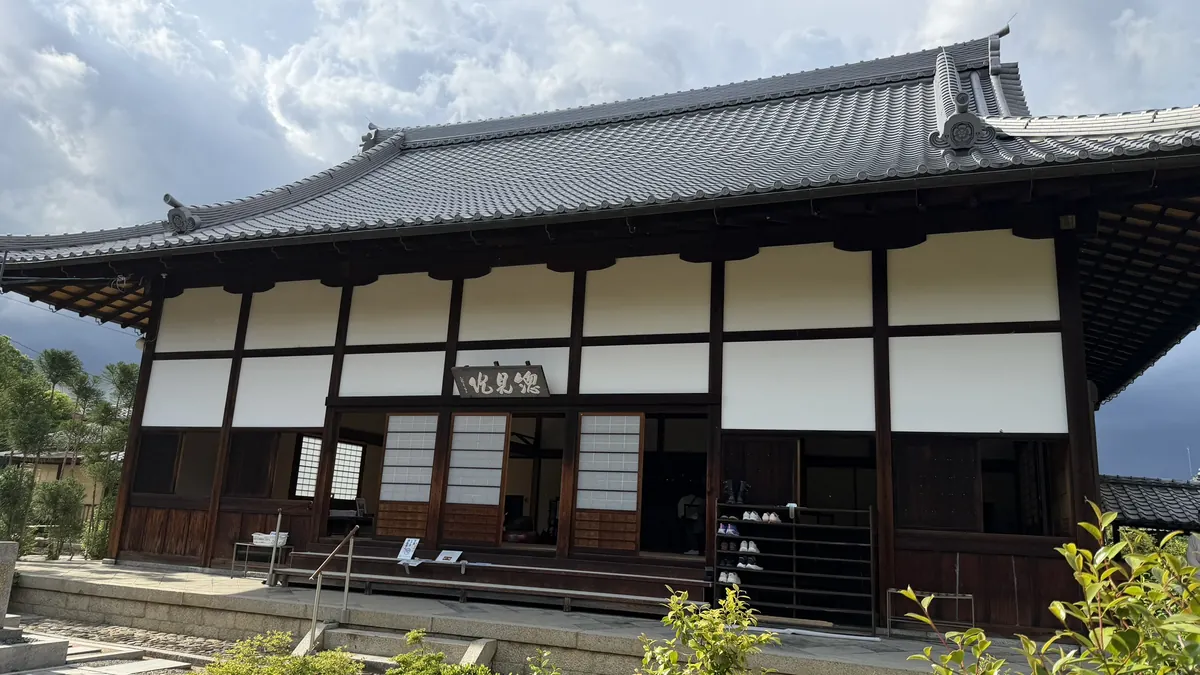
I went to Soken-in's special opening about twice. It was a place I wanted to visit as a Nobunaga site, and I was glad to see his statue as well as the graves. Photography inside the main hall is banned, so my photos show the grounds and the graveyard.
The autumn 2026 opening runs until November 30, and the temple is closed on November 21 and 22 (Kyoto Shunju).
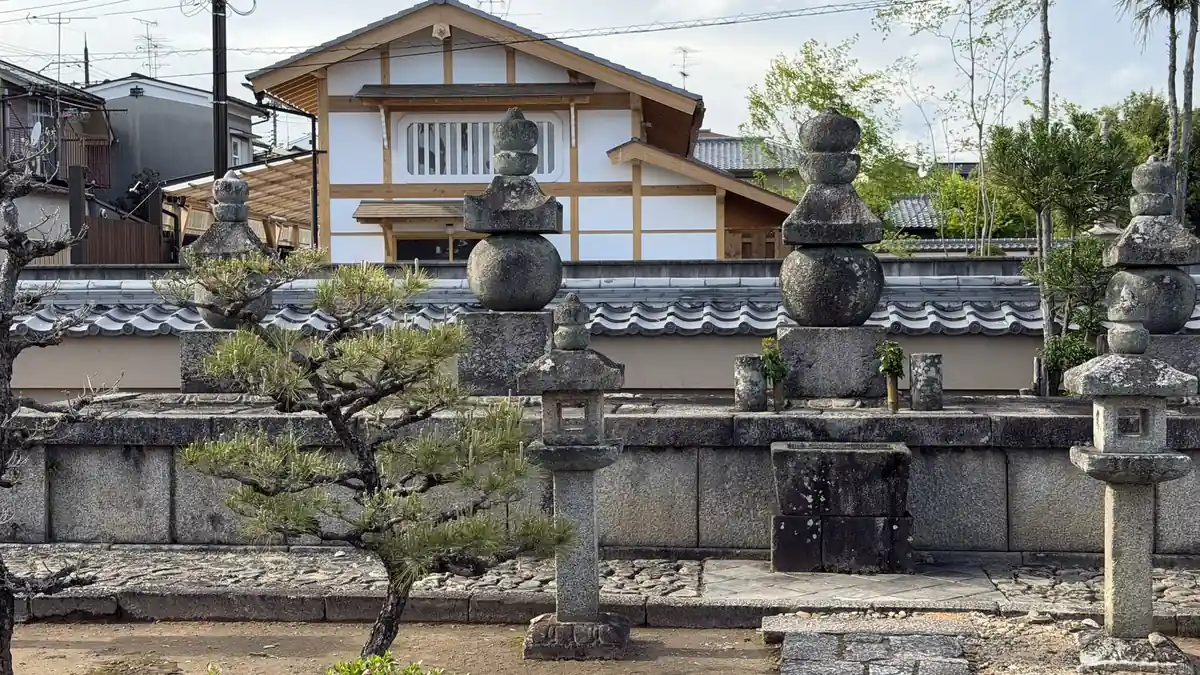
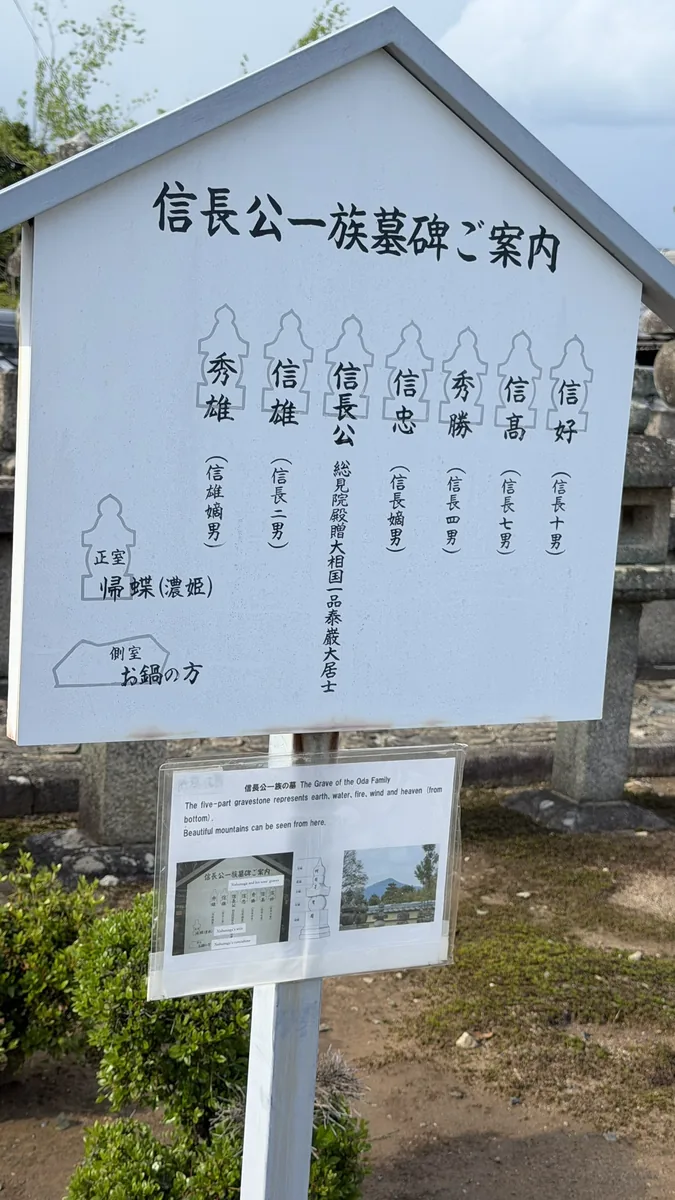
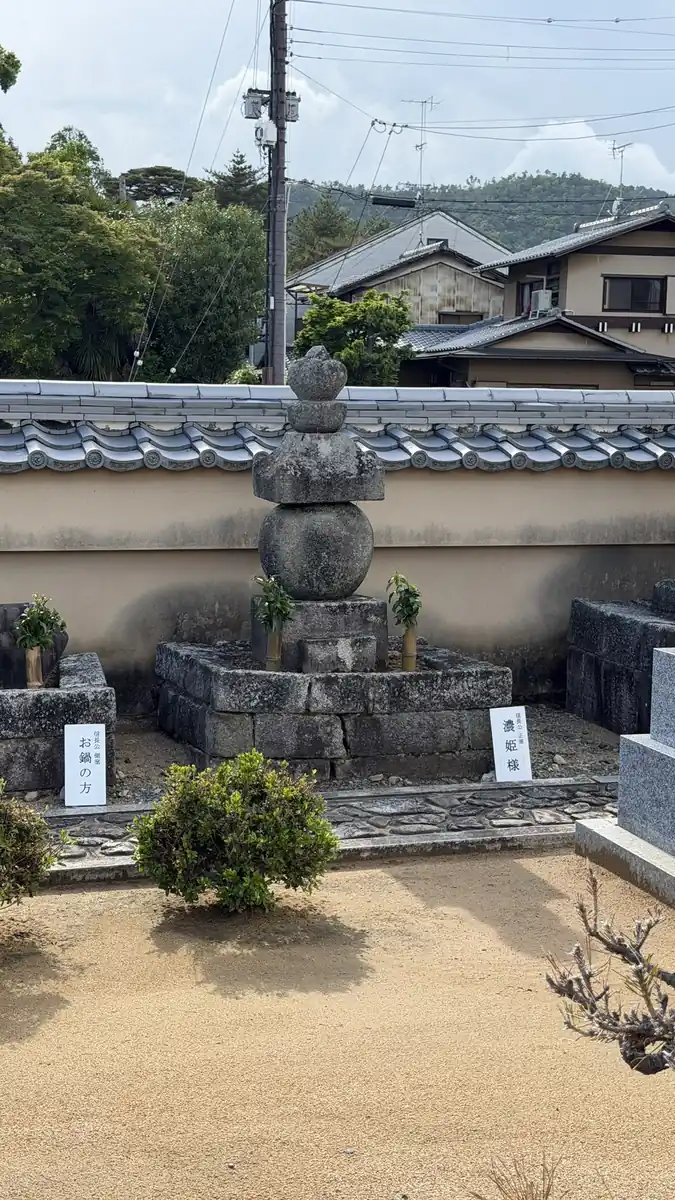
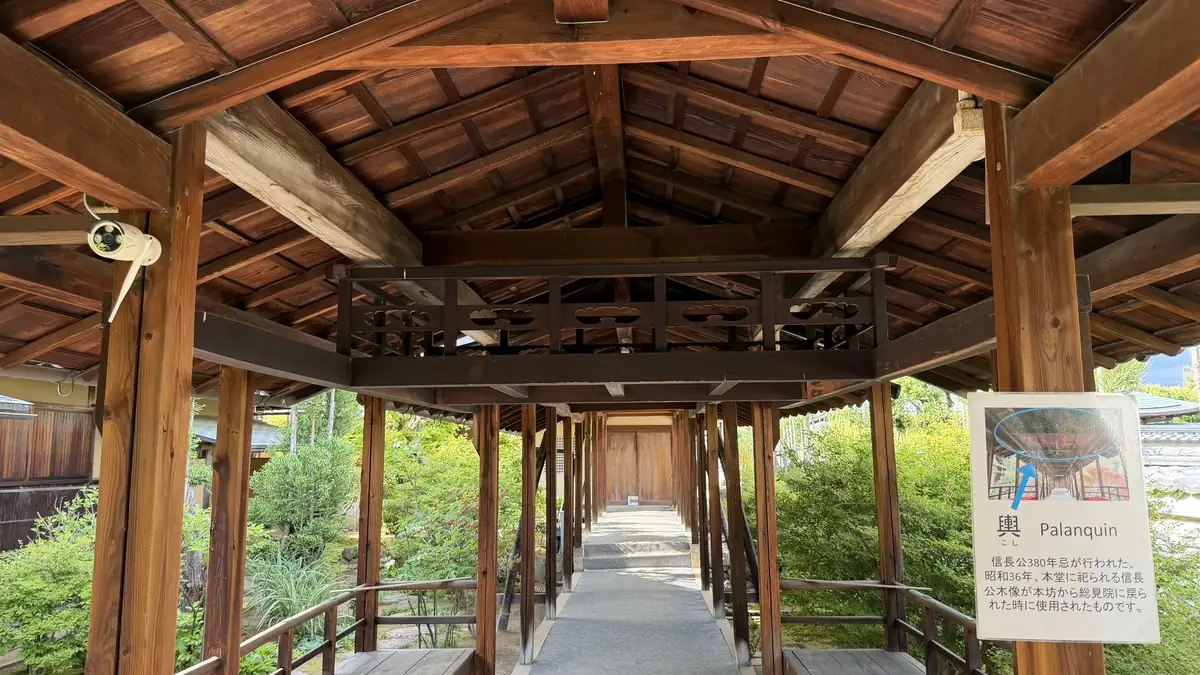
Tap a photo to enlarge
Obai-in: the temple Nobunaga had built for his father, and a garden said to be Rikyu's
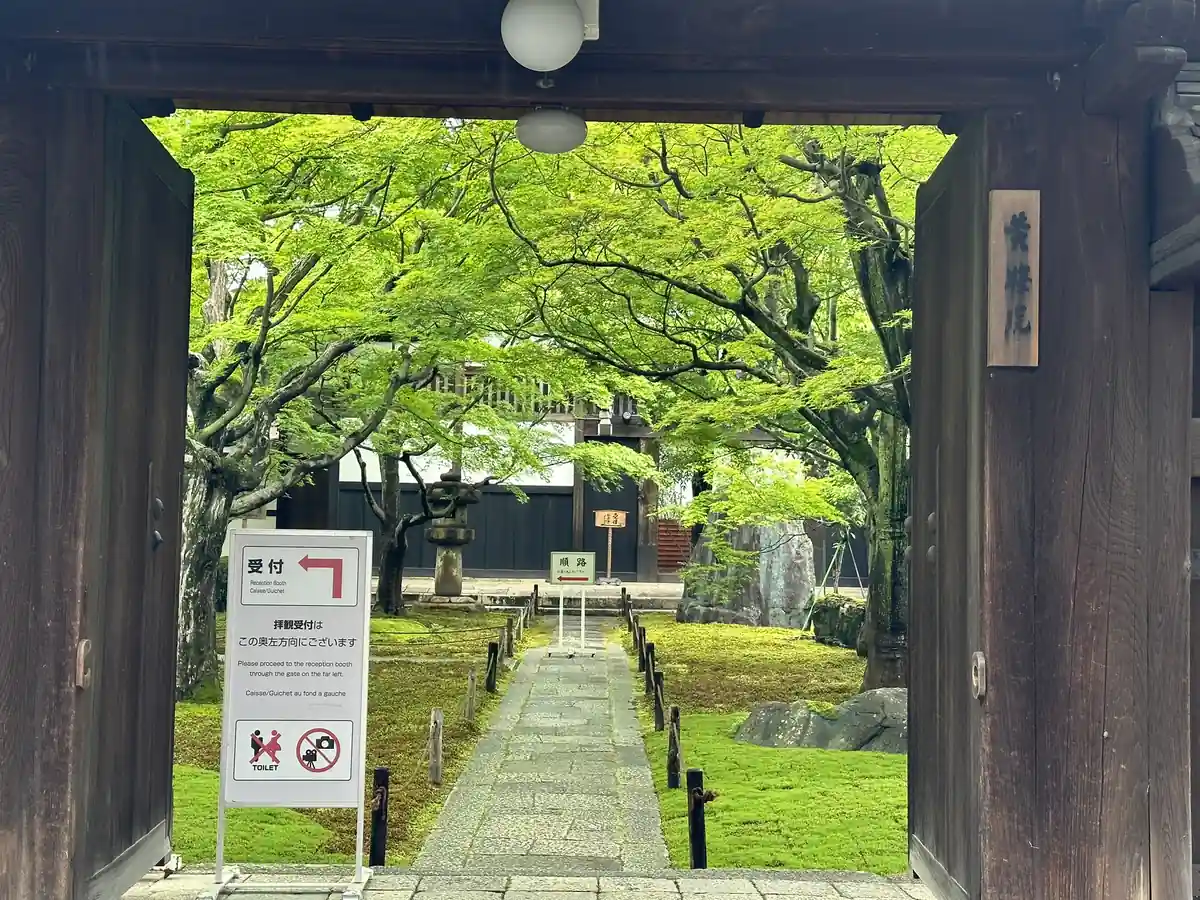
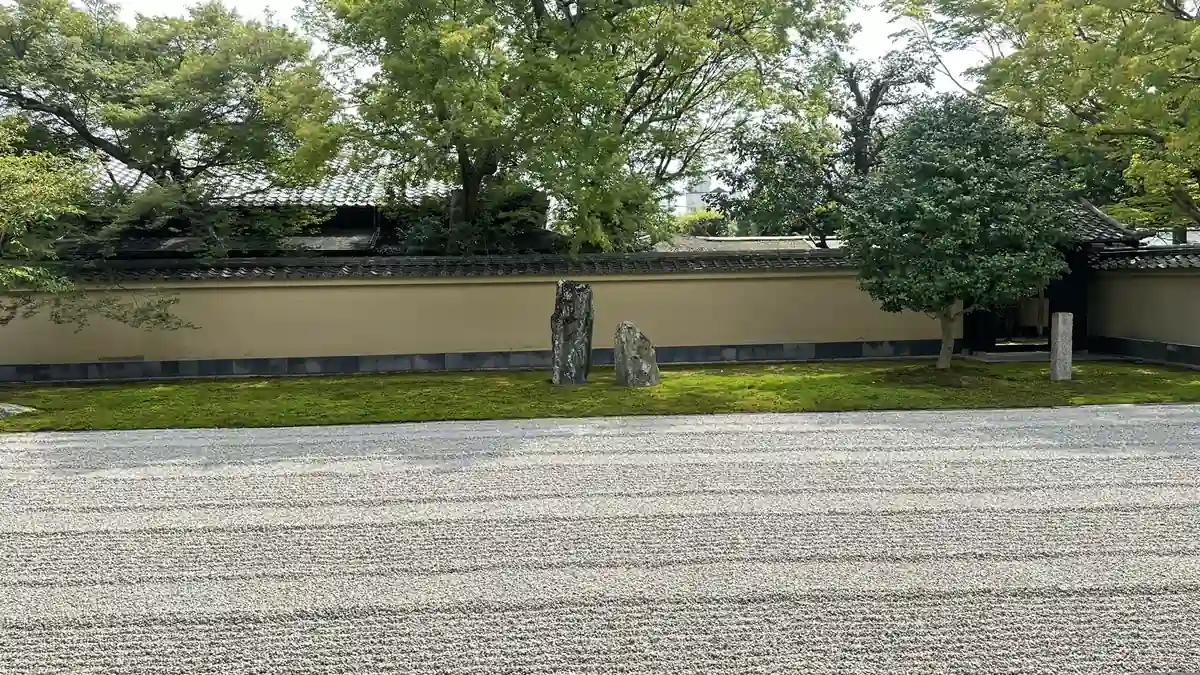
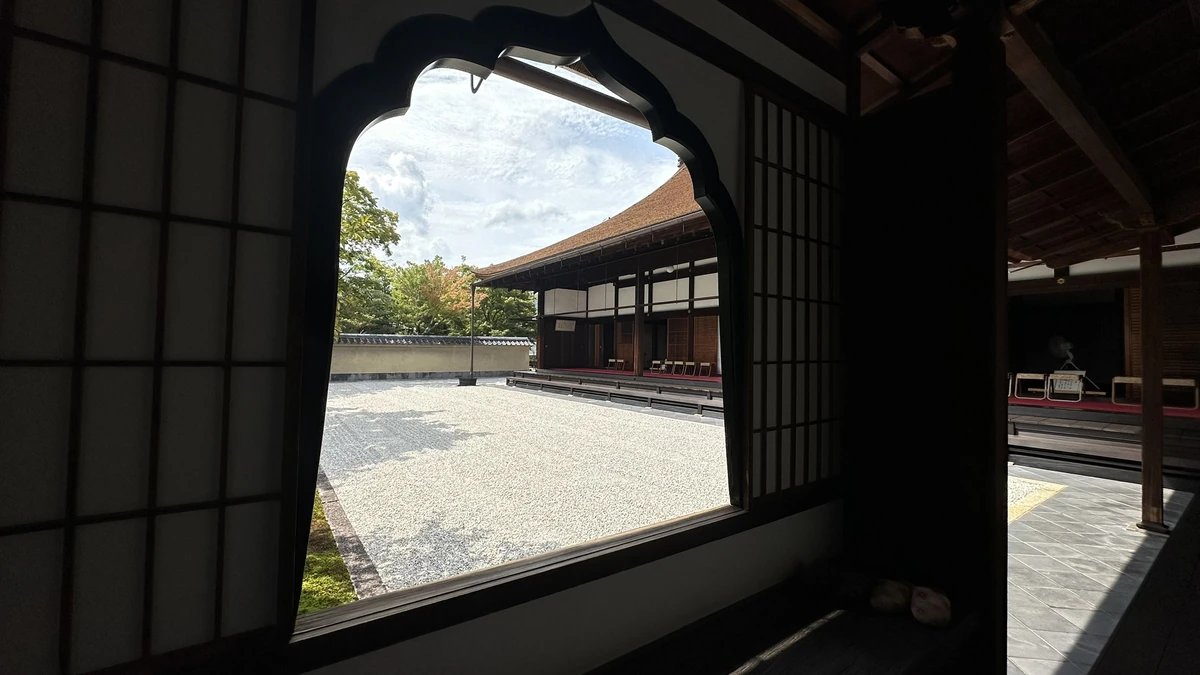
According to the Kyoto City board at the gate, Obai-in began as a small hermitage that Oda Nobunaga had Hashiba Hideyoshi (later Toyotomi Hideyoshi) build in 1562 to pray for his father Nobuhide. In 1586 Hideyoshi had the main hall and the Karamon gate built, and in 1589 Kobayakawa Takakage rebuilt the kitchen and the front gate. The garden called Chokuchu-tei is said to have been laid out by Sen no Rikyu at Hideyoshi's wish. Graves of Oda Nobuhide, Mori Motonari and Gamo Ujisato are in the grounds.
Every garden I saw at Daitokuji was beautiful, but at Obai-in the green moss, the light and the atmosphere of the place were especially beautiful. On the route I walked, I did not notice a place to put my hands together in front of a Buddha statue.
According to Kyoto Shunju, the special opening shows the Chokuchu-tei garden, the hojo garden called Hato-tei (破頭庭), and part of the main hall's wall paintings by Unkoku Togan, an Important Cultural Property. The paintings on show are currently reproductions. The Agency for Cultural Affairs database lists the main hall as Honto (also written Kyakuden, the guest hall).
The autumn 2026 opening runs until December 6, and the last admission is at 15:45. Adults pay 1,000 yen (Kyoto Shunju).
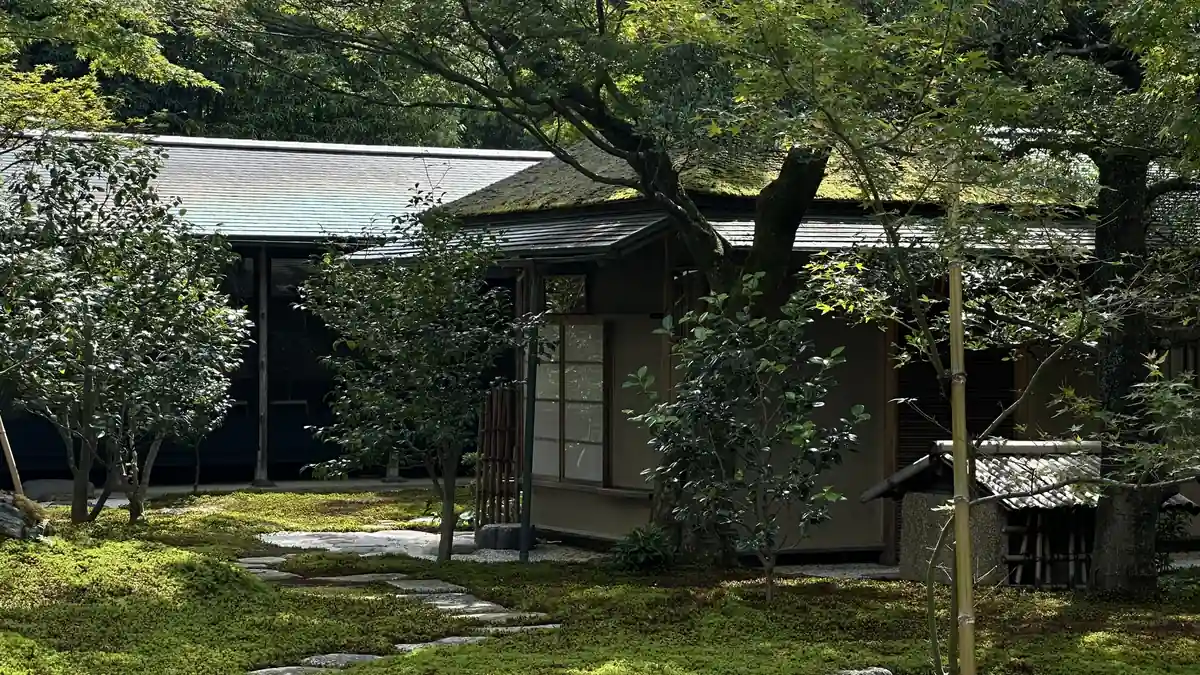
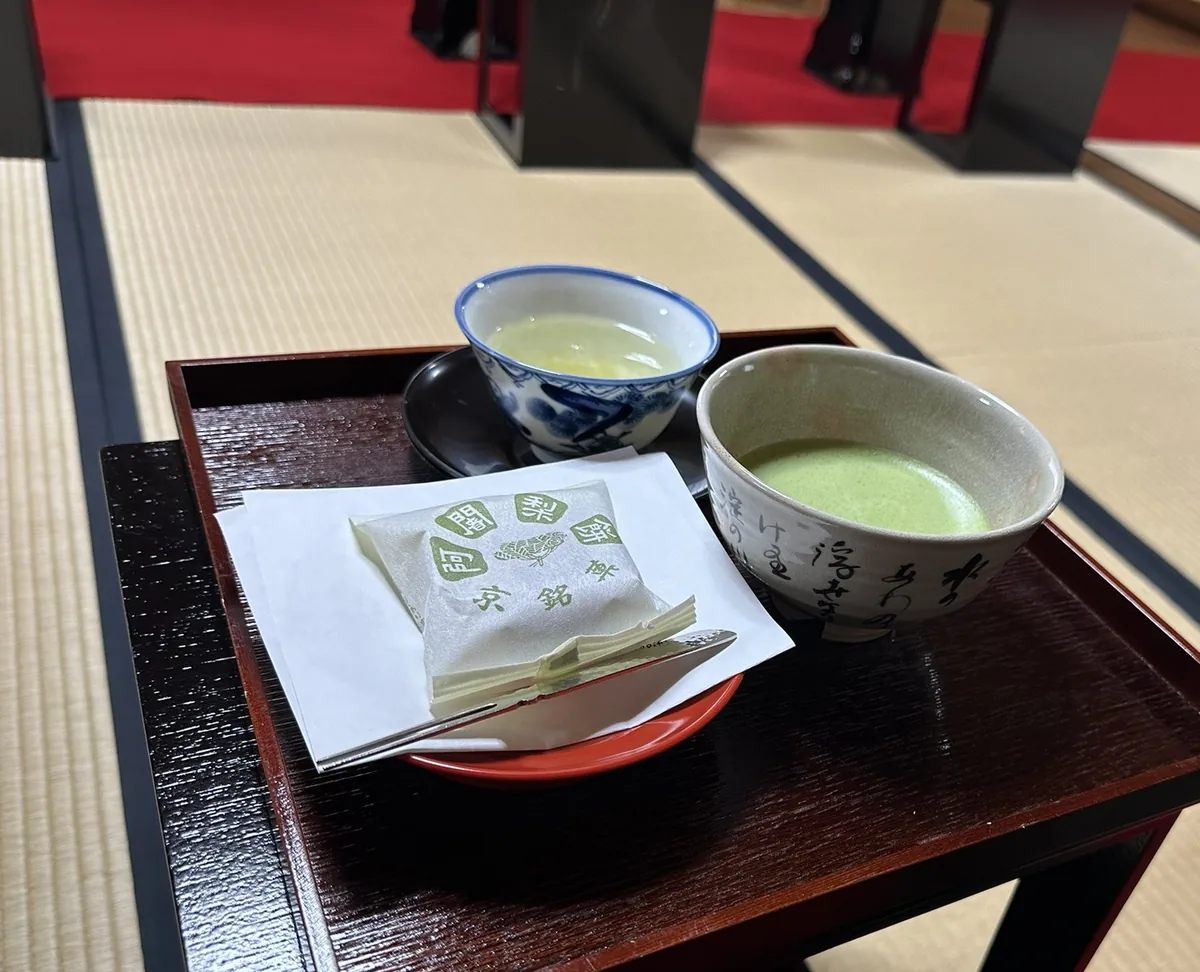
Tap a photo to enlarge
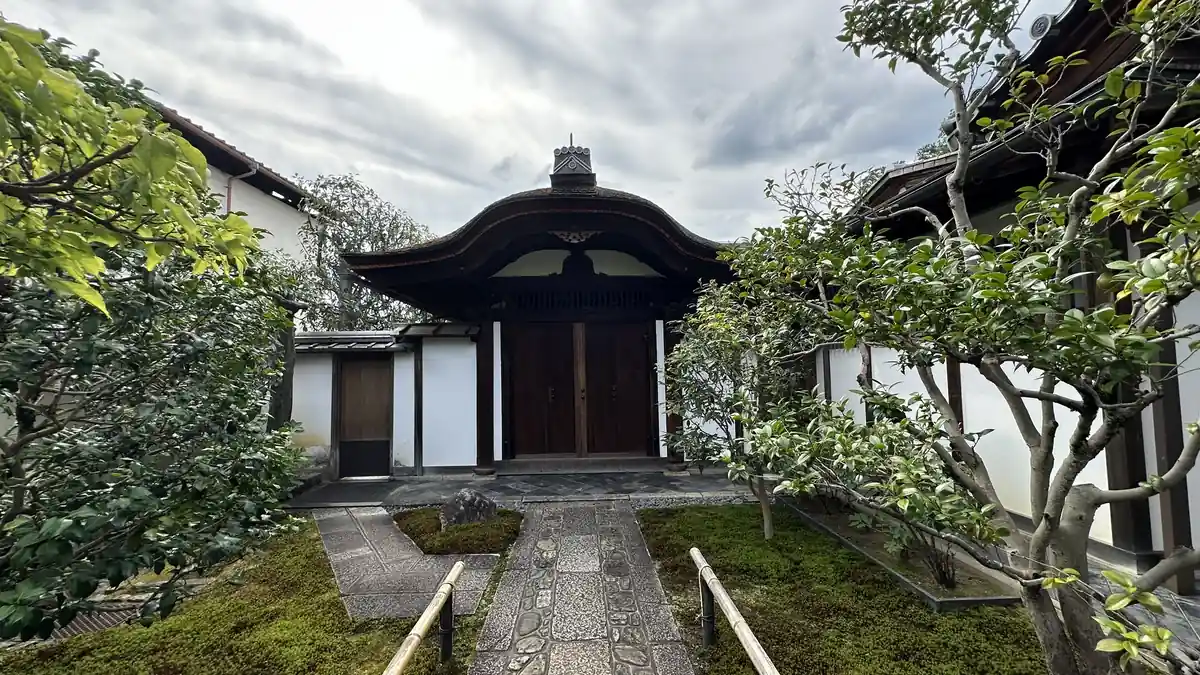
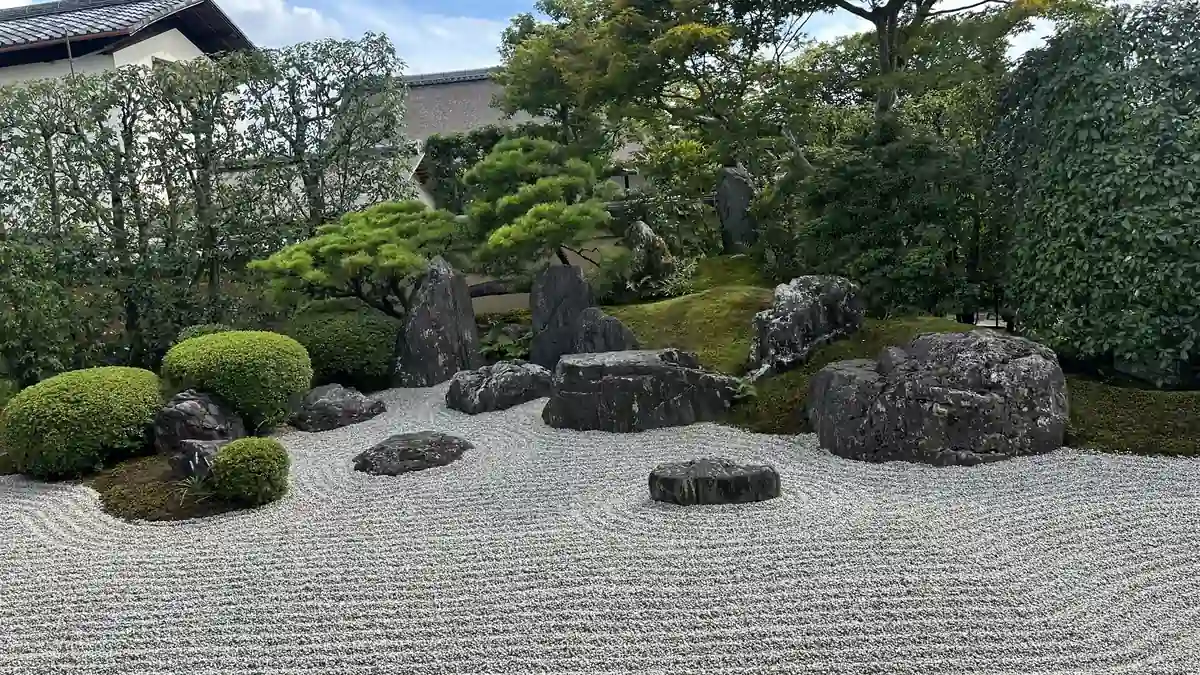
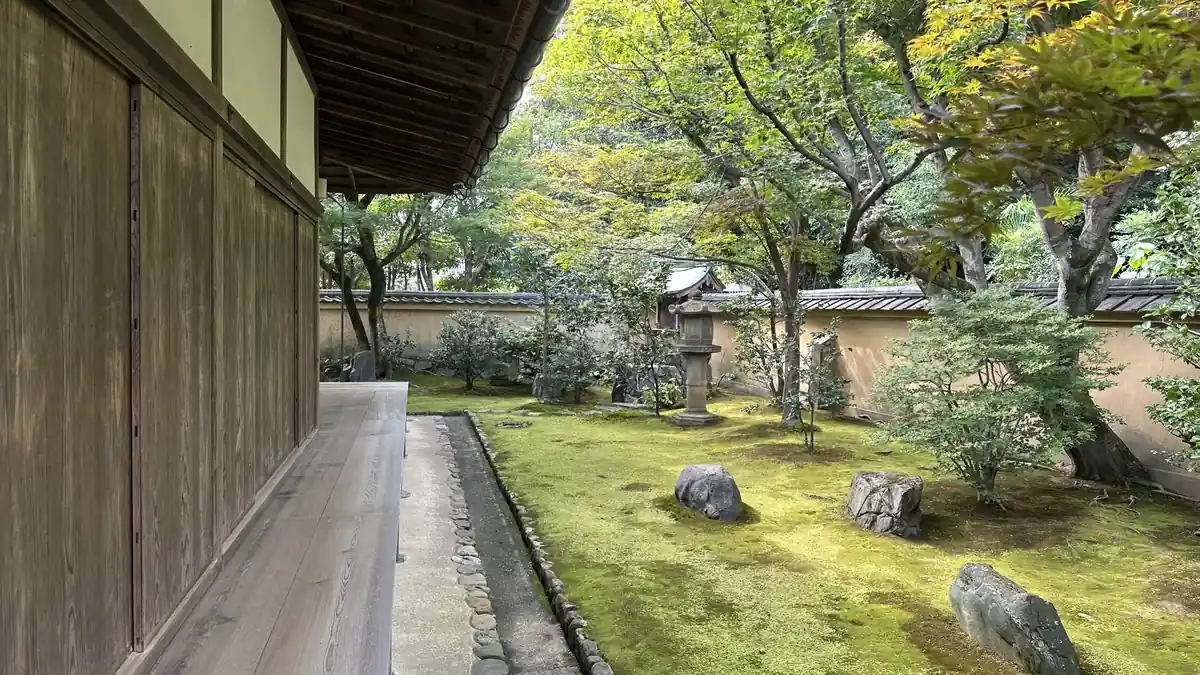
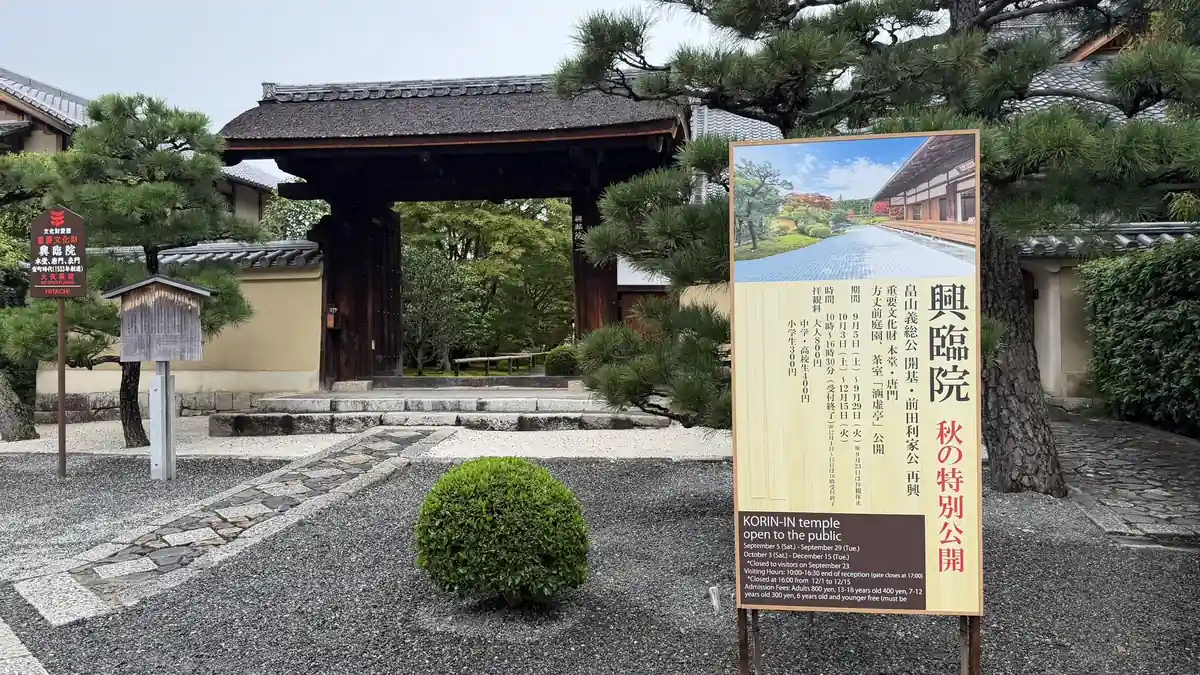
Korin-in: Maeda Toshiie's repairs and the garden in front of the hall
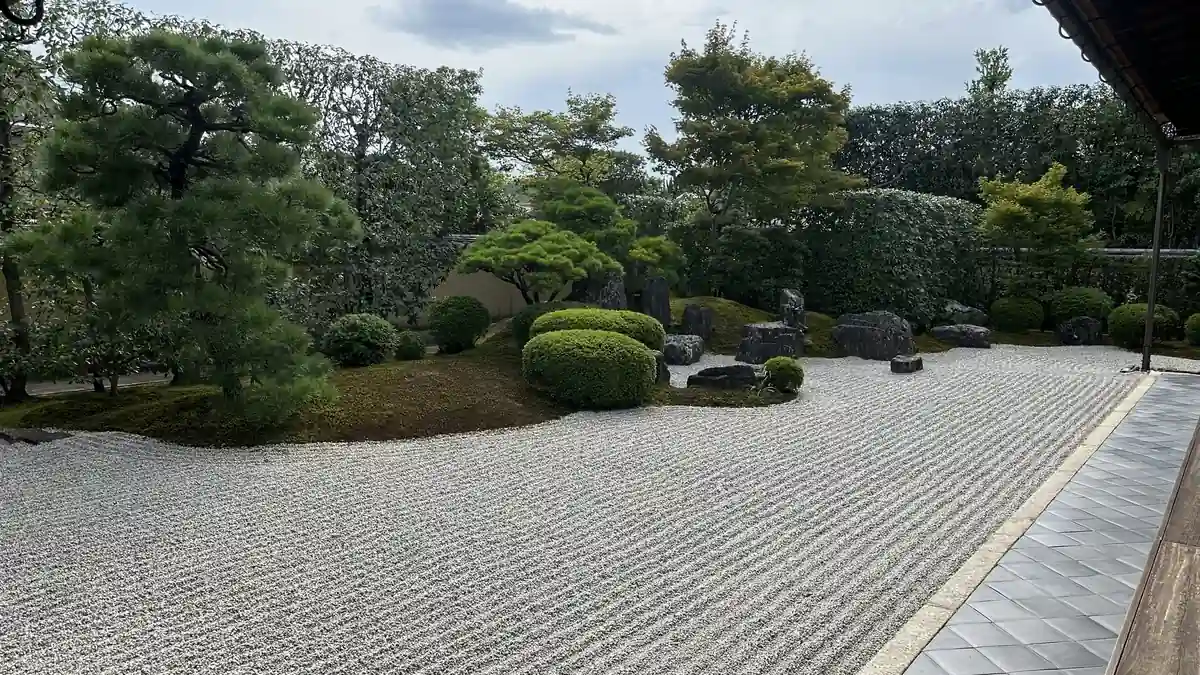
Korin-in was founded by Hatakeyama Yoshifusa, the lord of Noto. Maeda Toshiie repaired the main hall's roof in 1581, and the temple then became the Maeda family temple. The main hall and the front gate are Important Cultural Properties (the board on site). For Toshiie, see Maeda Toshiie.
The garden in front of the hall was restored by Nakane Kinsaku, nicknamed the Kobori Enshu of the Showa era after the famous garden designer of the Edo period (the 2026 special-opening notice).
The 2026 opening runs until December 15. Photography is allowed in the garden only (Kyoto Shunju).
Tap a photo to enlarge
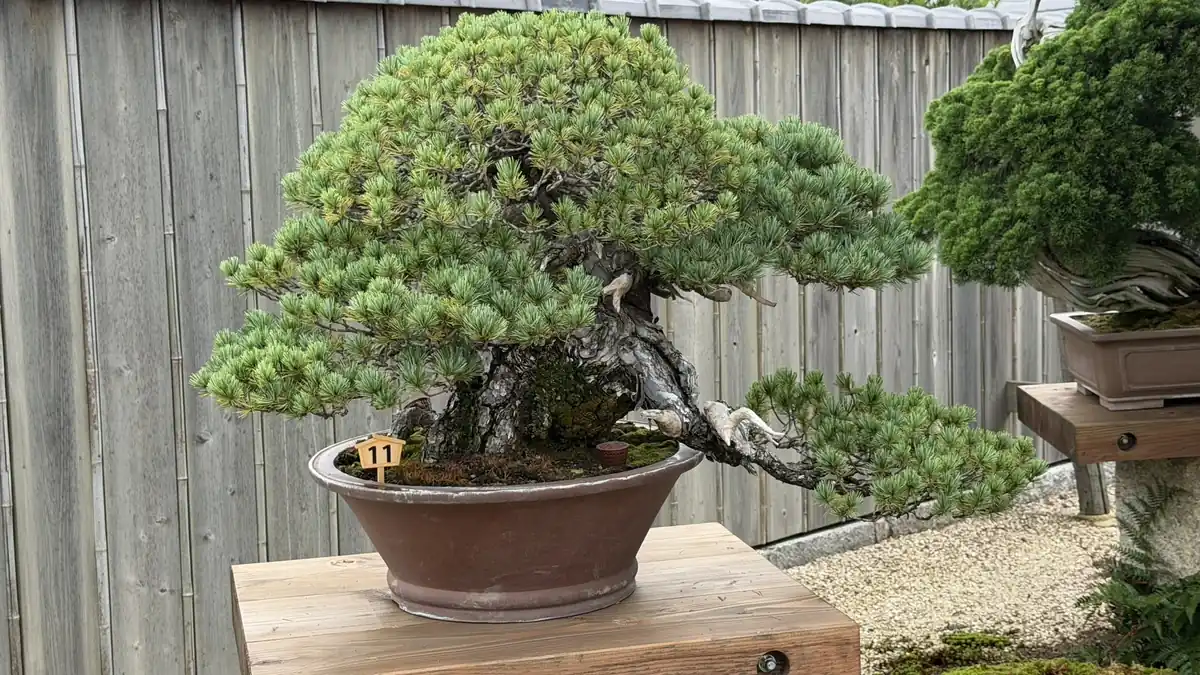
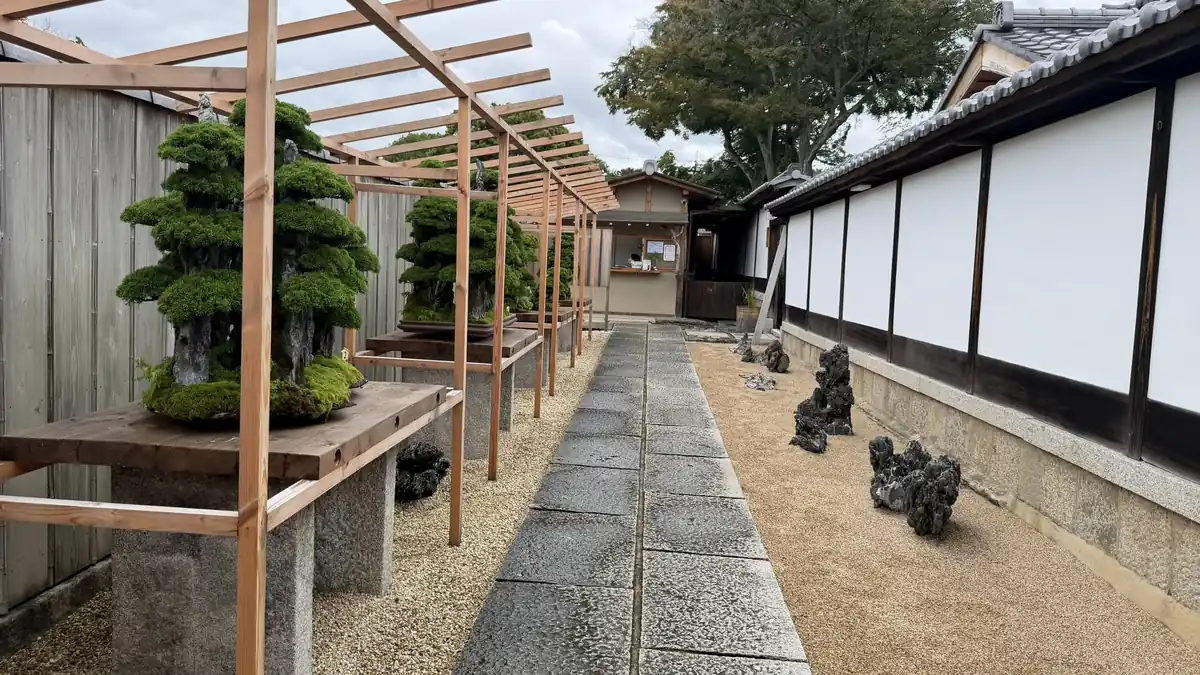
Hoshun-in: the Maeda family temple built by Matsu, and its bonsai garden
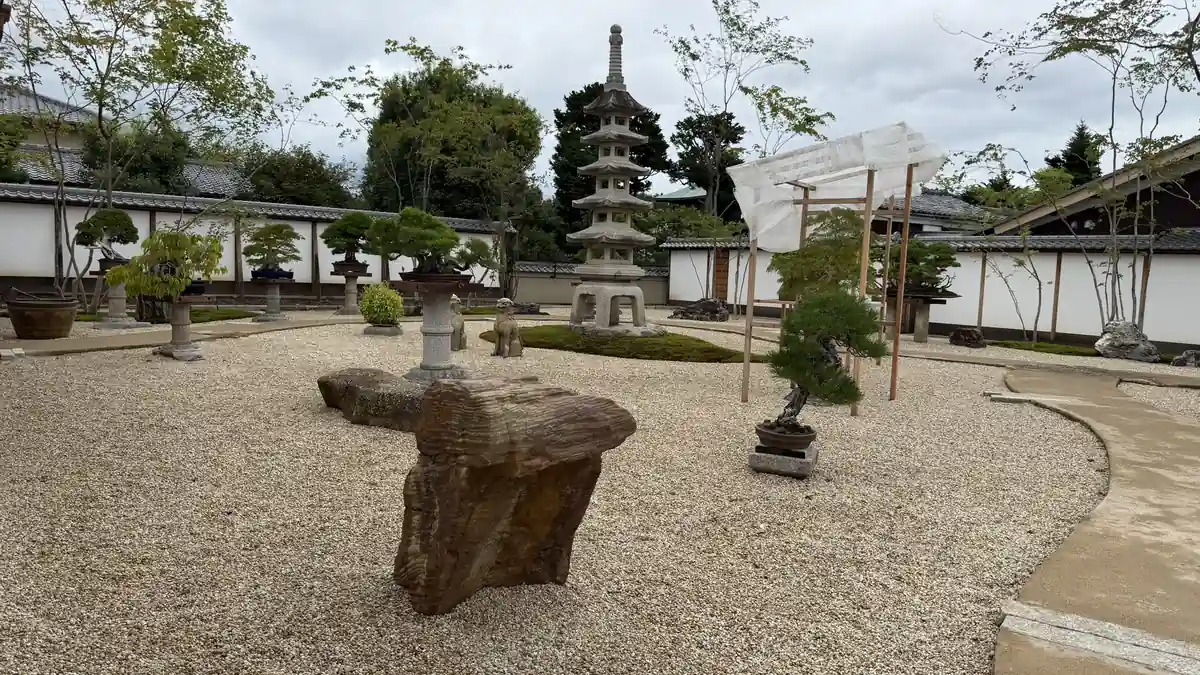
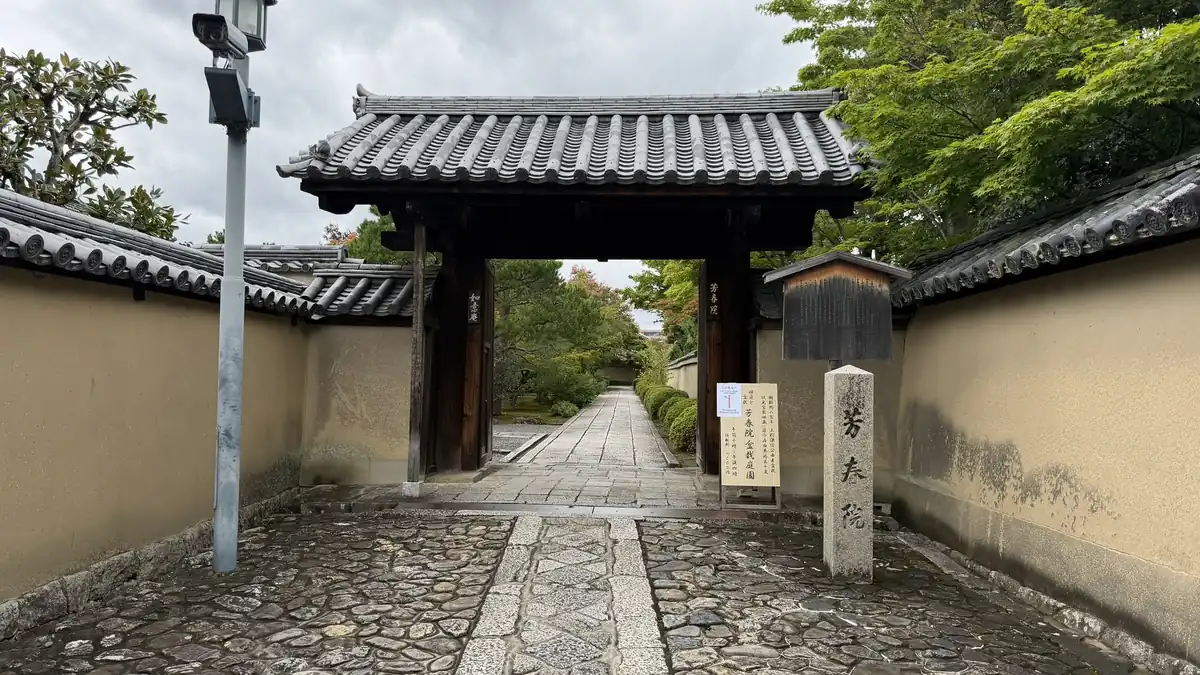
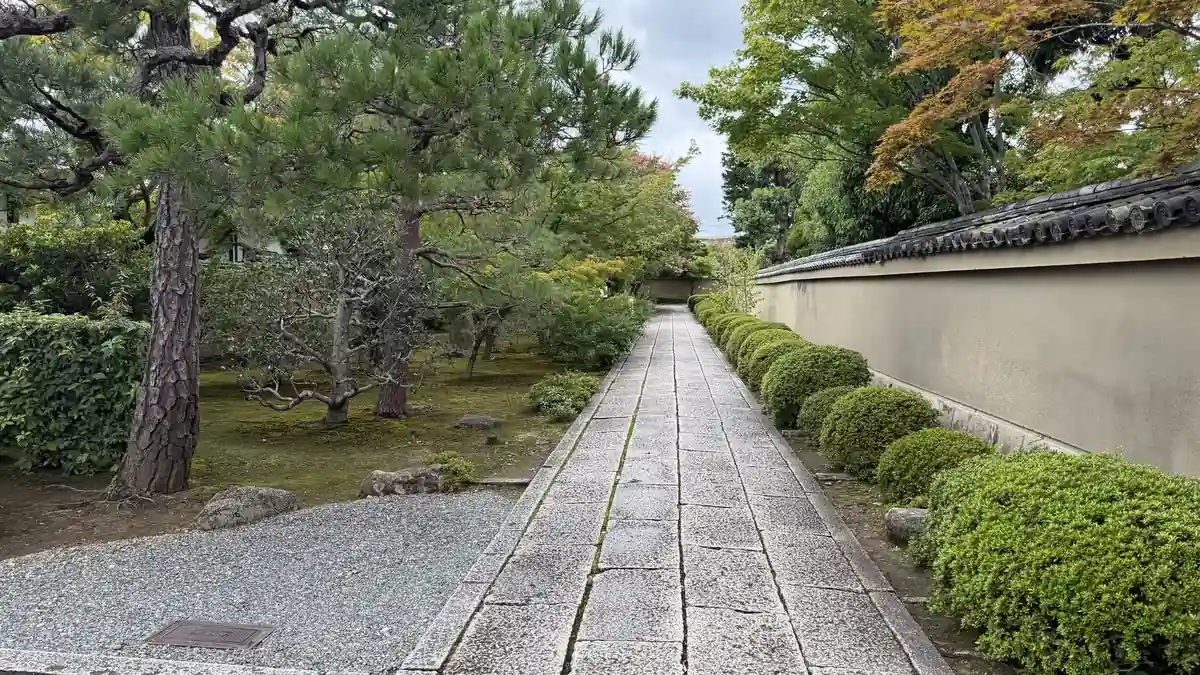
Hoshun-in was built in 1608 by Matsu, the wife of Maeda Toshiie, as the Maeda family temple (Kyoto City board). Matsu is known by her Buddhist name Hoshun-in, and the temple takes its name from it. Its first head priest was the Zen monk Gyokushitsu Sohaku, and the grounds hold mortuary halls (tamaya) of the Maeda family, including those of Hoshun-in (Matsu), Maeda Toshinaga and Maeda Toshitsune (Kyoto Travel).
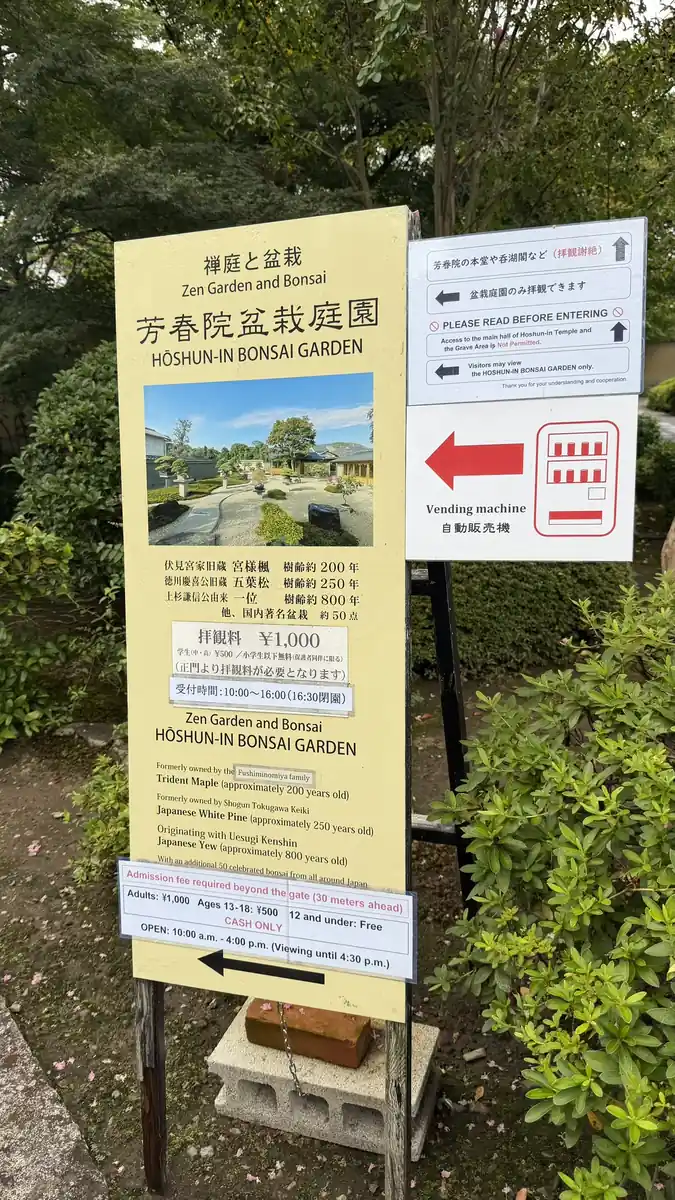
I went to Hoshun-in hoping to visit Matsu's grave, but only the bonsai garden was open (September 7, 2026). The notice on site also said the main hall and other buildings were closed to visitors and that only the bonsai garden could be visited.
According to the notice, the bonsai garden shows about 50 bonsai, including a five-needle pine about 250 years old that once belonged to Tokugawa Yoshinobu. In September 2026 the fee was 1,000 yen (500 yen for junior and senior high school students; free for younger children with a guardian), and reception ran from 10:00 to 16:00.
Tap a photo to enlarge
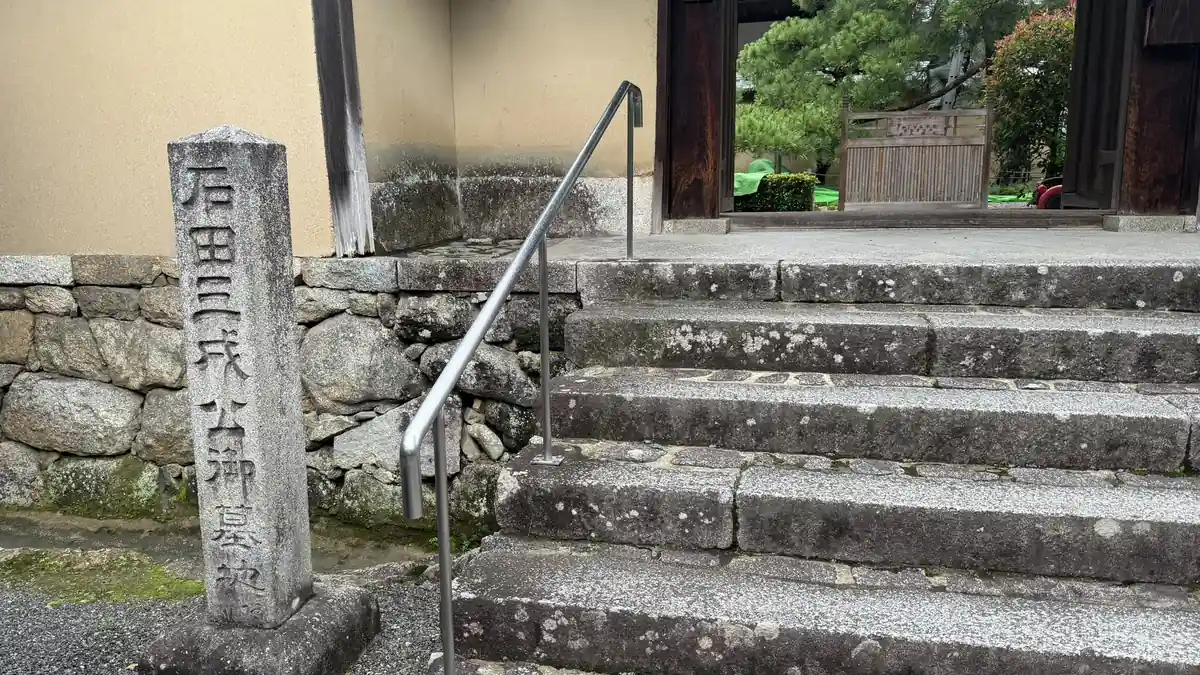
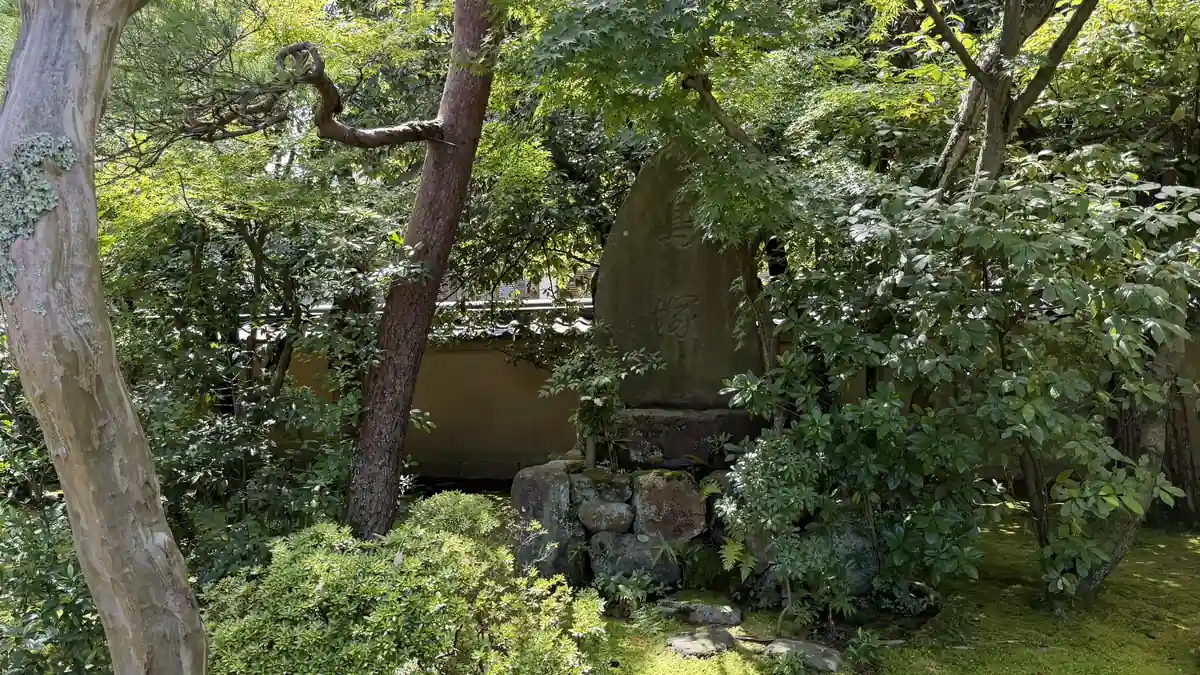
At the foot of the steps to Sangen-in, a stone marker reads Ishida Mitsunari-ko Gobosho (the grave of Ishida Mitsunari). According to the Kyoto City board, Sangen-in was founded in 1589 by Asano Yoshinaga, Ishida Mitsunari and Mori Tadamasa, and holds the graves of Mitsunari and Furuta Oribe, among others.
Other temples at Daitokuji also have links to warlords and their families. Many are normally closed, and some graves cannot be visited, so check each temple's notice, or the notice of each special opening, before you go.
| Juko-in (聚光院) | Founded in 1566 by Miyoshi Yoshitsugu to pray for his adoptive father Miyoshi Nagayoshi, with the monk Shorei Sokin as its first head. Sen no Rikyu, who studied Zen under Shorei Sokin, chose it as the place for his own memorial services, and it holds the graves of the successive heads of the three Sen tea families (Kyoto Shunju). Open in autumn 2026 |
|---|---|
| Daiji-in (大慈院) | Founded in 1585 by Anyo-in, an older sister of Oda Nobunaga, and Kensho-in, an older sister of Otomo Sorin, together with Murakami Suo-no-kami, Yamaguchi Sama and others (Daiji-in official) |
| Ryuko-in (龍光院) | Founded in 1606 by Kuroda Nagamasa to pray for his father Kuroda Yoshitaka (Kanbei, also known as Josui). The Agency for Cultural Affairs says the Kuroda family mortuary hall was probably completed in 1608; it holds the five-ring stone pagodas of Kanbei and his wife Shofuku-in |
| Koho-an (孤篷庵) | Founded in 1612 inside Ryuko-in by Kobori Masakazu (Enshu), a tea master, with the monk Kogetsu Sogan as its first head. It moved to its present site in 1643 because the old one had become too small (Enshu-ryu tea school) |
| Shoju-in (正受院) | Founded with Seian Soi, the 93rd head of Daitokuji, as its first head. Seki Moriakira, lord of Kameyama Castle in Ise, and Hachiya Yoritaka, lord of Tsuruga Castle in Echizen, were its patrons (Shoju-in) |
| Tenzui-ji (former) | The Important Cultural Property Former Tenzuiji Juto Fukudo, in the Sankeien garden in Yokohama, is the building that covered a juto, a tomb built during a person's lifetime. Hideyoshi built it to pray for the long life of his mother, Omandokoro, after she recovered from an illness. It was built in 1591 and moved to Sankeien in 1905 (Sankeien) |
Special openings in autumn 2026
Four sub-temples are open in autumn 2026: Juko-in, Korin-in, Obai-in and Soken-in. Payment is cash only at all four, and extra closed days can be added for religious services (Kyoto Shunju).
| Soken-in | October 10 to November 30 (closed November 21 and 22). Last admission 16:00. Adults 800 yen, junior and senior high school students 400 yen, younger children free with a guardian |
|---|---|
| Obai-in | October 9 to December 6. Last admission 15:45. Adults 1,000 yen, junior and senior high school students 500 yen, younger children free with a guardian |
| Juko-in | September 18 to December 6 (closed November 21, 22 and 27 to 29). Last admission 15:30. Adults 1,000 yen, elementary to high school students 500 yen. No reservation for individuals |
| Korin-in | October 3 to December 15. Last admission 16:30, and 16:00 from December 1. Adults 800 yen, junior and senior high school students 400 yen, elementary school children 300 yen (with a guardian) |
Korin-in's 2026 notice says the autumn leaves in its grounds are at their best from mid-November; Kyoto Shunju says they become beautiful around the main hall from late November.
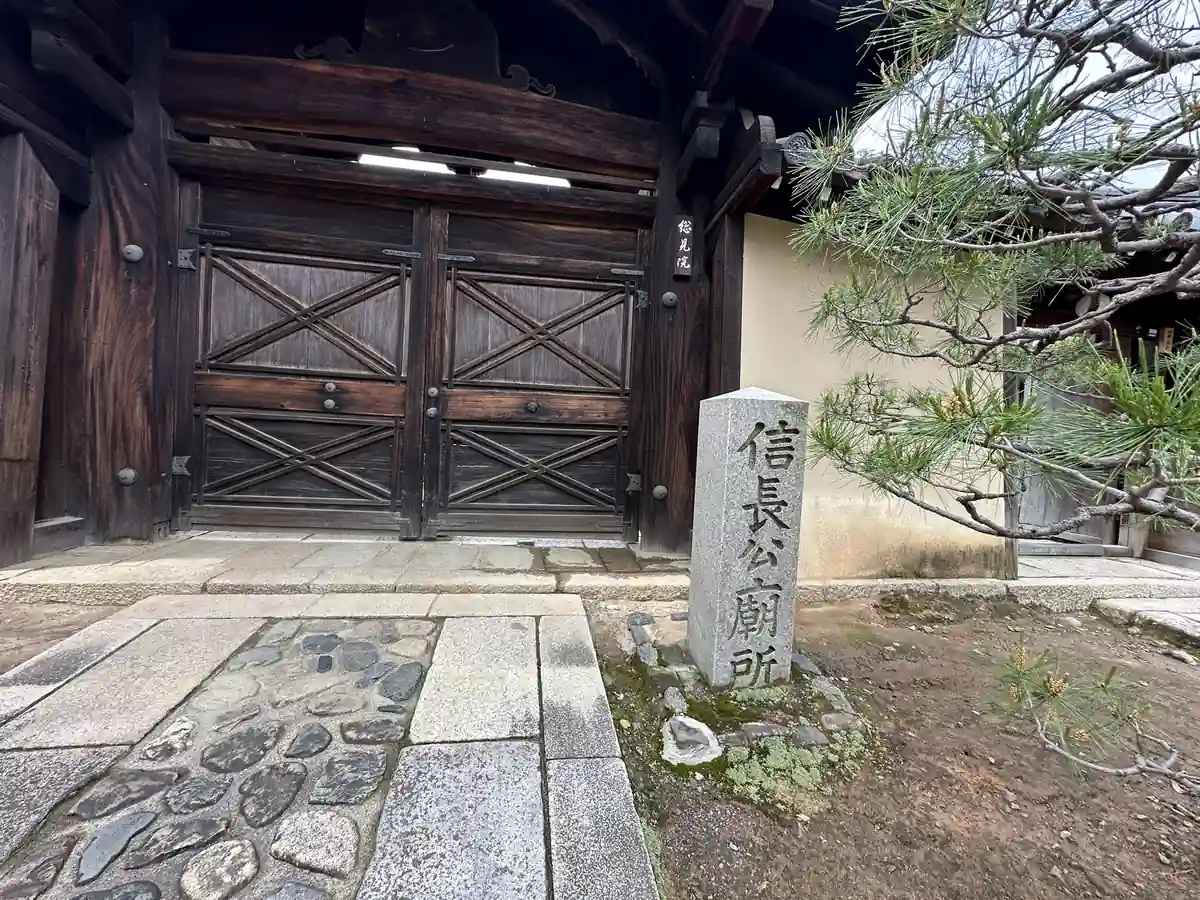
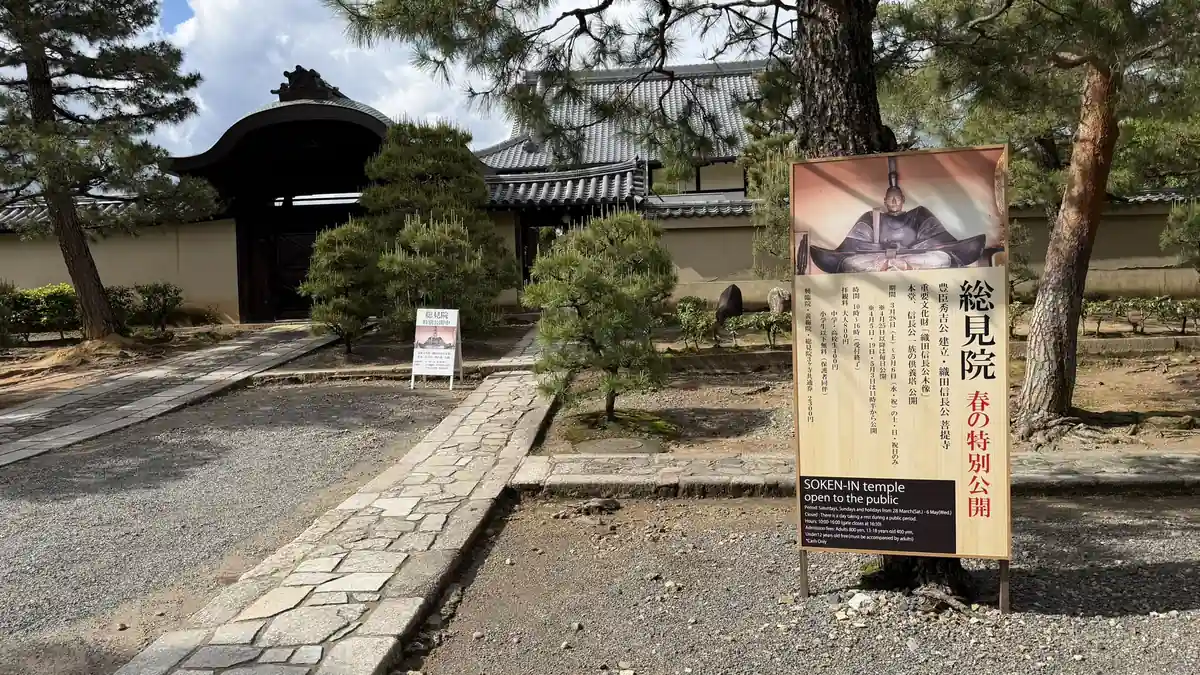
Soken-in's gate stays closed on days it is not open. When I passed on April 30, 2024, the gate was closed and only a stone marker reading Nobunaga-ko Byosho (Lord Nobunaga's mausoleum) stood outside. At the spring special opening on May 1, 2026, the gate was open and a signboard stood in front.
Tap a photo to enlarge
The Tokyo National Museum (Heiseikan) exhibition runs from October 14 to December 6, 2026. Term 2 starts on November 10. It is closed on Mondays and on November 24, but open on November 23 and 30.
Daiko-in, the family temple of Toyotomi Hidenaga
Toyotomi Brothers! is the 2026 NHK Taiga, the broadcaster's year-long historical drama, starring Hideyoshi's younger brother Hidenaga. Daiko-in is Hidenaga's family temple, and it is normally closed to visitors. In 2026 it opened for a winter special opening in Kyoto, which ran until March 18 (Kyoto Travel), and for a summer sightseeing-bus course.
Daiko-in was built in Yamato-Koriyama, Hidenaga's castle town, in the Bunroku era (1592 to 1596), after Hidenaga died in 1591, with the monk Kokei Sochin invited as its first head. In the Genna era (1615 to 1624) Todo Takatora, who had served Hidenaga, moved it into the Daitokuji grounds, and in 1954 it moved again to its present site, south of Ryuko-in (Kyoto City stone marker).
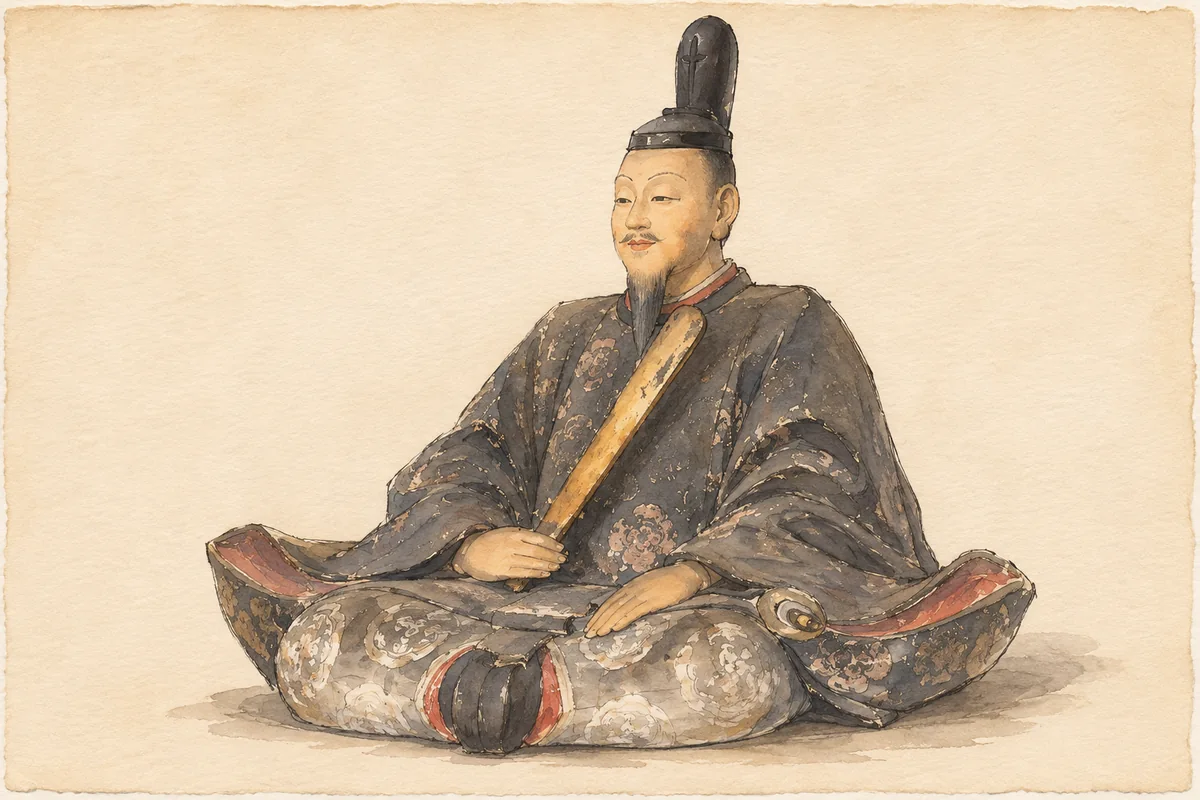
According to Kyoto Travel's article on the winter special opening, the guest hall holds wooden statues of the first head, Kokei Sochin, and of Hidenaga. The tea room Hoan is a small tea room (nijo-daime, about 2.75 mats) favored by Kuroda Josui (Kanbei), who supported Hideyoshi as a strategist. Tradition says that his son Kuroda Nagamasa, Kato Kiyomasa and Fukushima Masanori each donated one stone for its garden path, so the room is also called Mitsuishi no Seki, the room of three stones.
Daiko-in: seen on a sightseeing-bus course
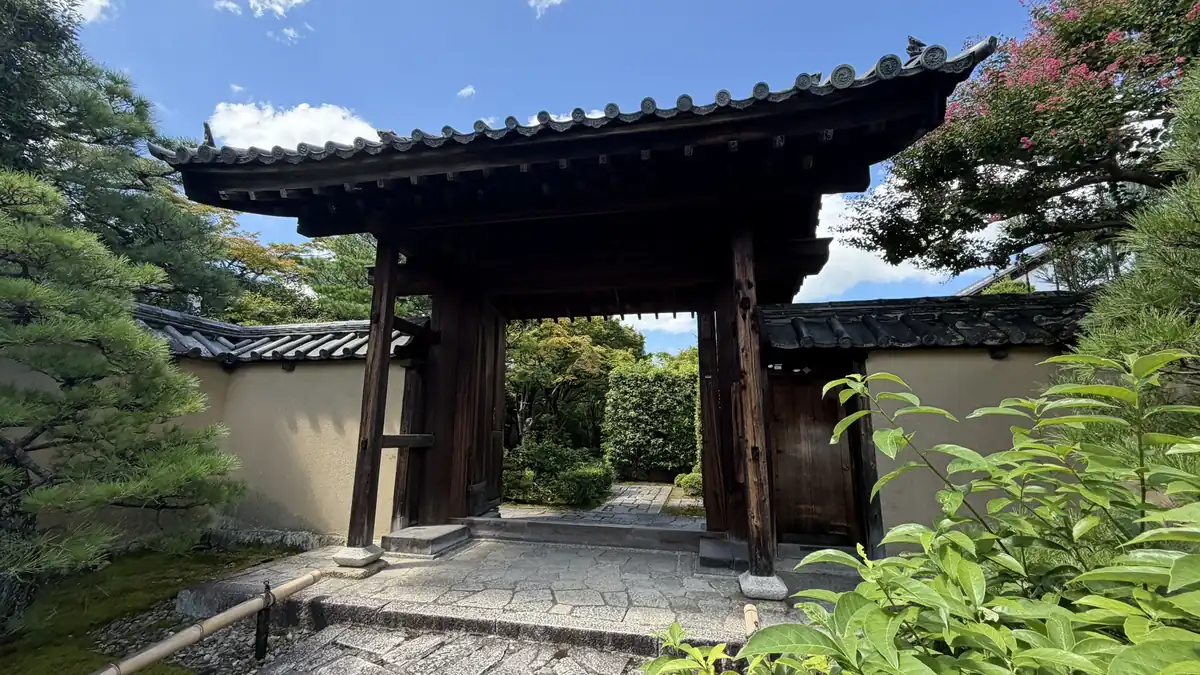
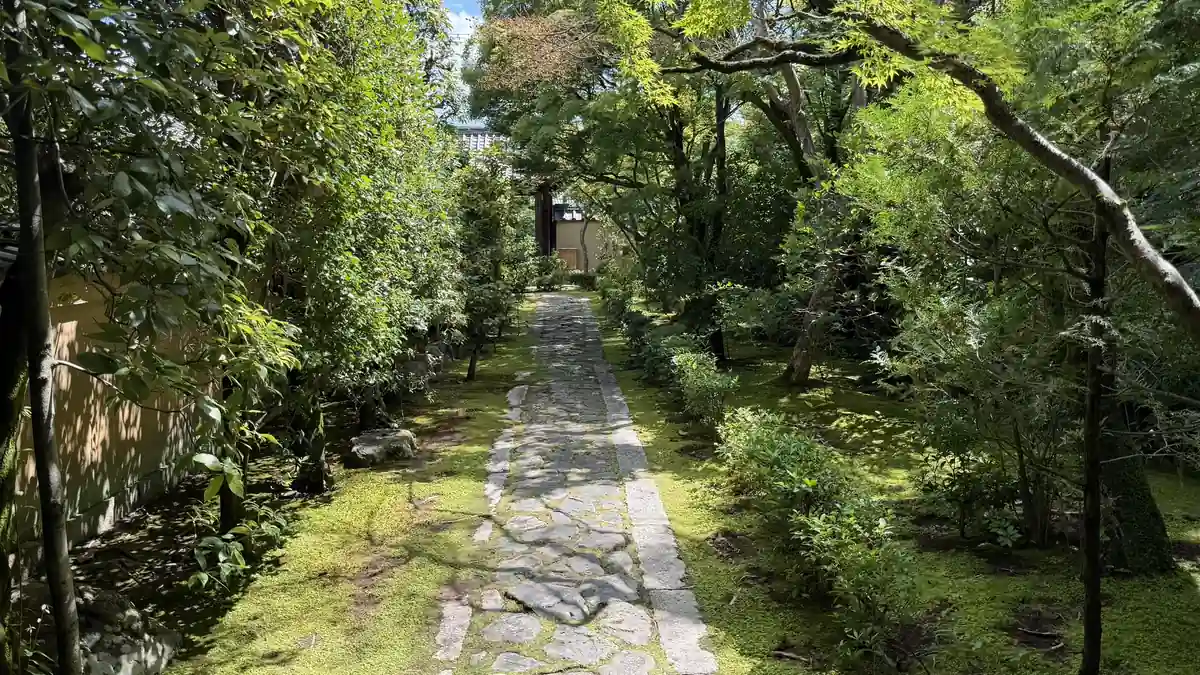
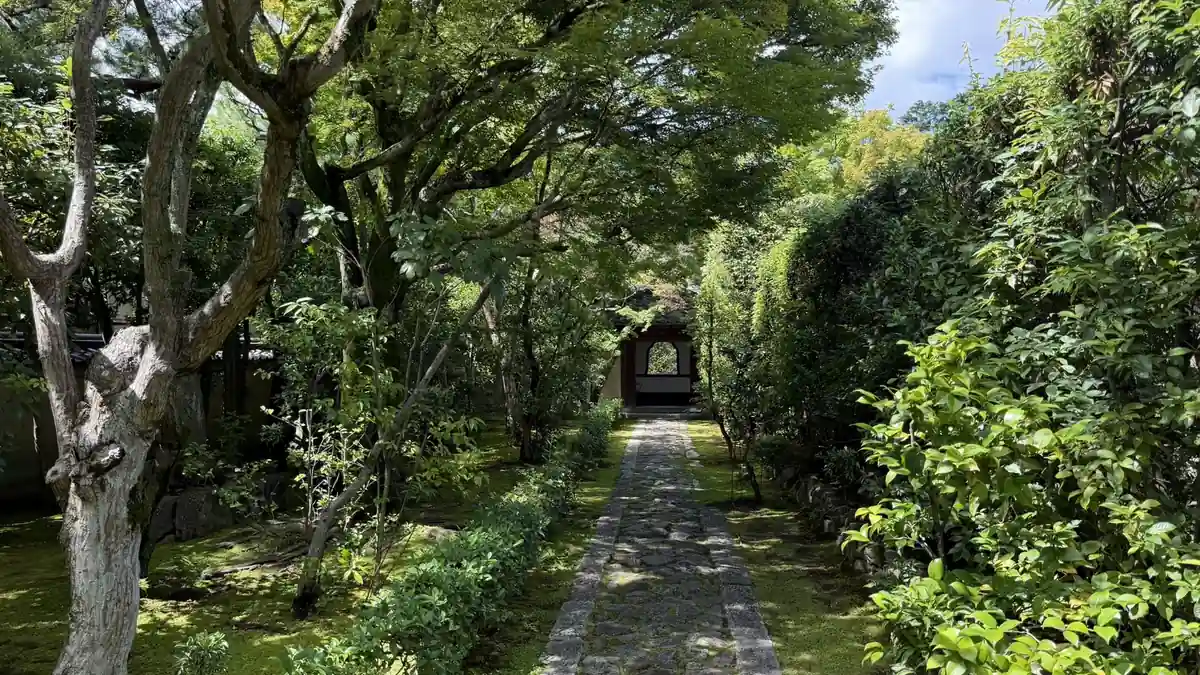
On September 5, 2026, I visited Daiko-in on the Kyoto sightseeing bus course Special Course for the Toyotomi Brothers: Hidden Cultural Properties of the Toyotomi Family and Warlords (my translation of the Japanese course name). Only people on that course could go in during this opening.
According to the course description, the guest hall holds a wooden statue of Hidenaga, and sliding doors painted with Black Cloud Dragon, made from a screen attributed to Kano Tanyu. The course also took in the treasure hall of Kitano Tenmangu and Gion-kaku at Daiun-in.
The course was scheduled from July 10 to September 30, 2026 (a few days were cancelled, and Daiko-in was swapped for another temple on some dates). It left Kyoto Station (Karasuma exit) at 10:00 and took about six hours. The adult price was 12,200 yen, which included transport, admission fees, lunch and tea sweets. The 2026 course has ended.
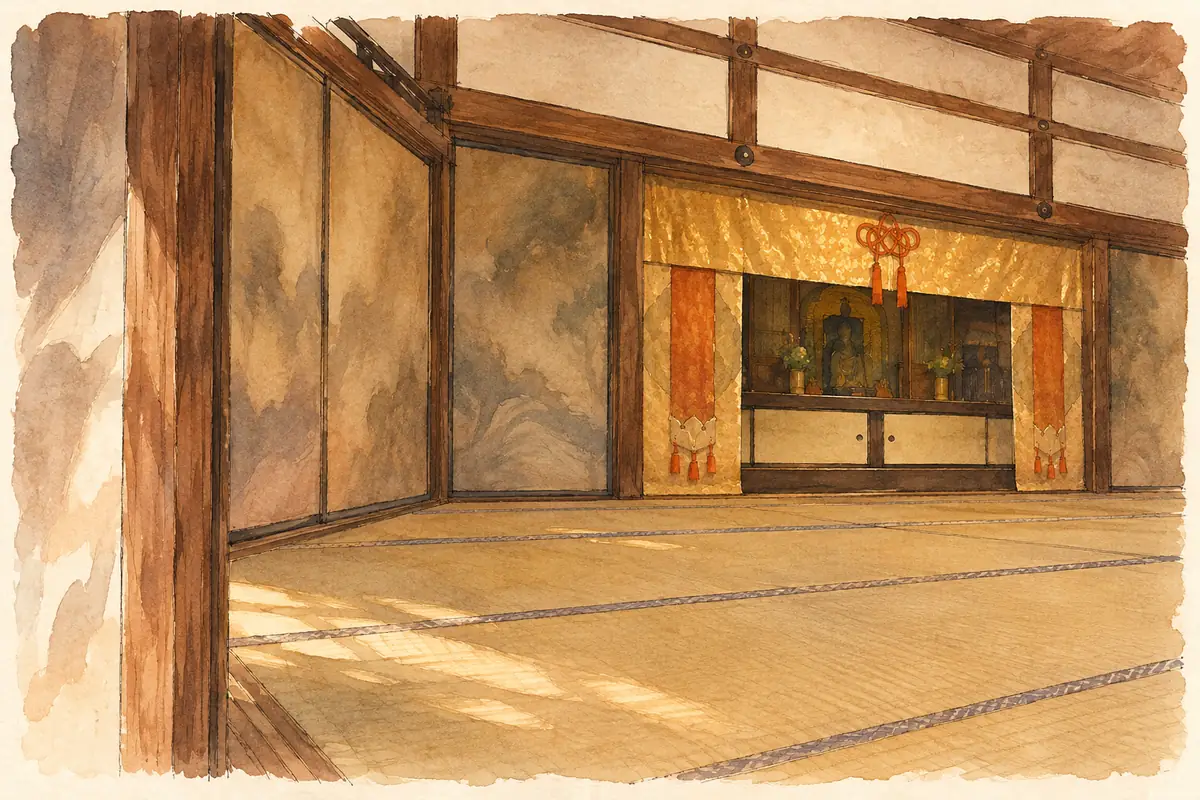
The guest hall and other interiors are shown with AI illustrations, not photographs. Open the AI illustrations section below to see them.
Tap a photo to enlarge
AI illustrationThese are not photographs. They imagine the guest hall, the statue of Hidenaga, and a hall and garden at Daiko-in, and differ from the real ones.
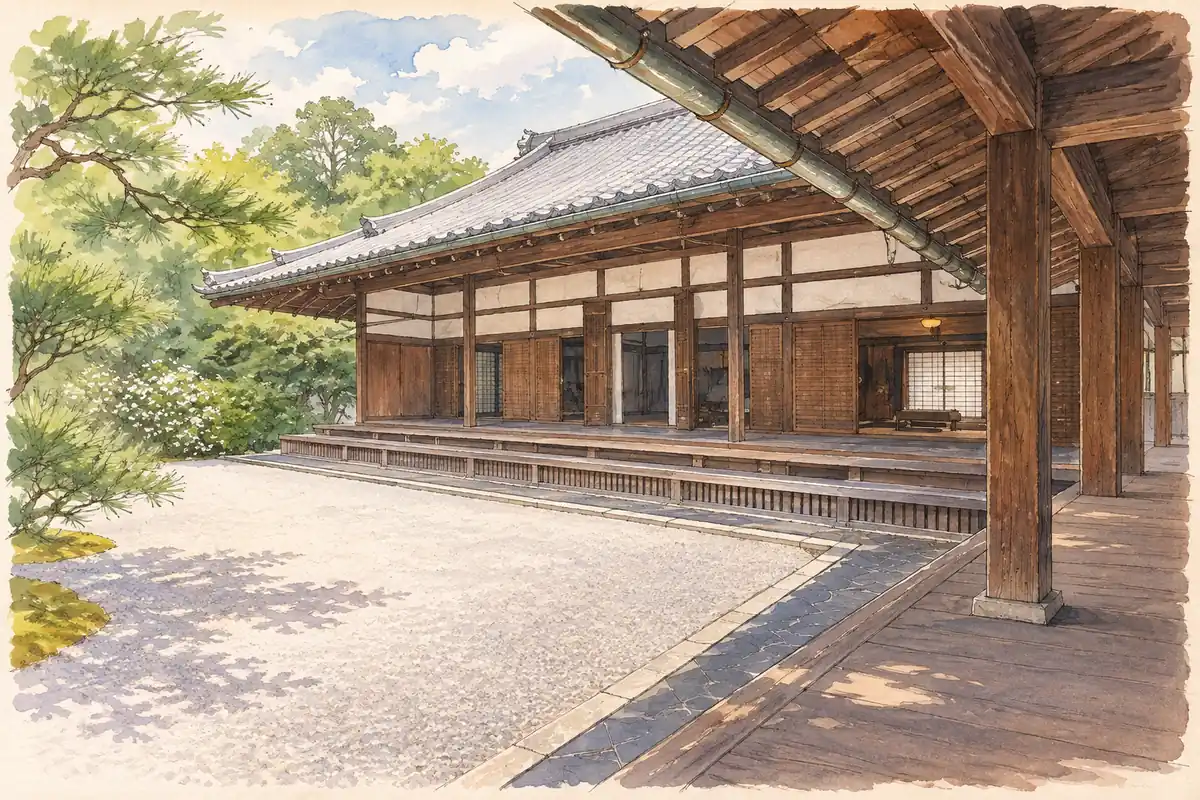
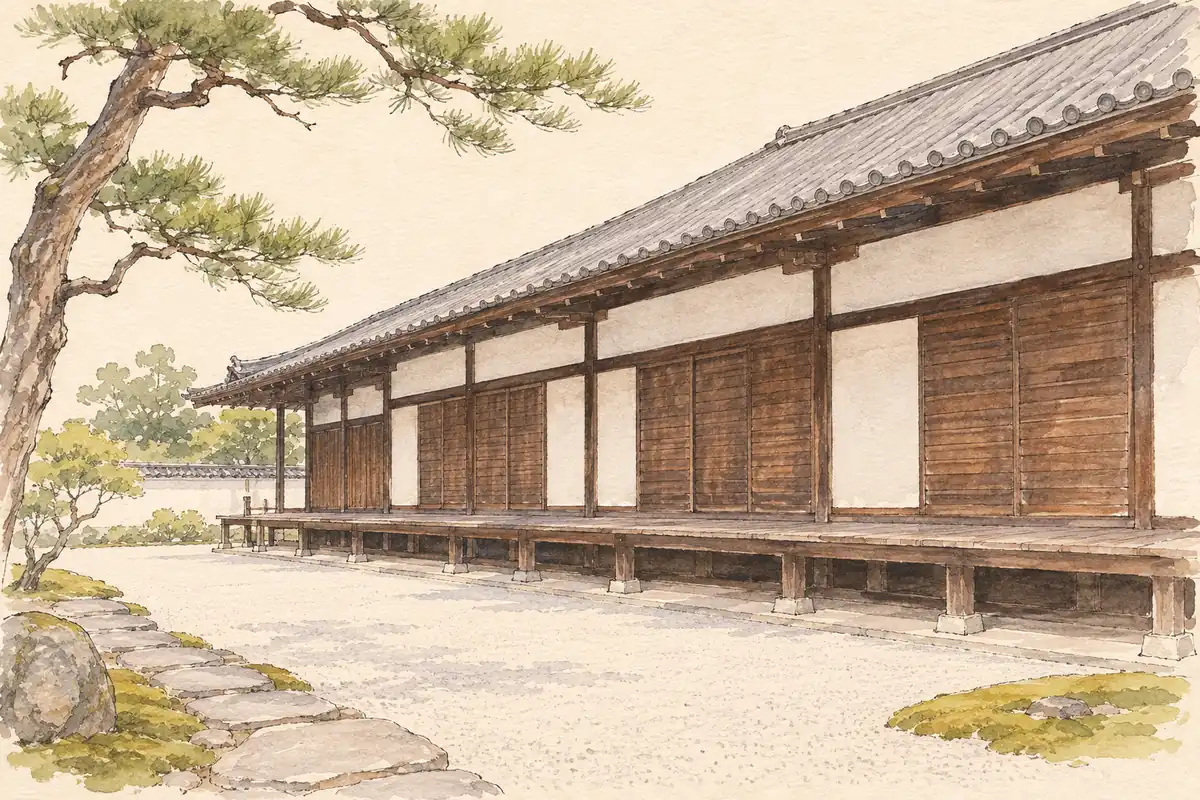
Tap an image to enlarge
For Hidenaga's other sites, see Toyotomi Hidenaga: Hideyoshi’s Brother and the Toyotomi Brothers! Taiga Drama Museum guide. Check Kyoto Travel's special-opening pages to find out whether Daiko-in opens again.
Where to stay before or after Daitokuji
PRThis section contains affiliate links to Agoda. If you book through them, this site earns a commission.
Daitokuji works as a day trip from anywhere in Kyoto. If you arrive by Shinkansen, or leave Kyoto the next morning and want to stop at Daitokuji on the way, the area around Kyoto Station is the base. For a relaxed stay, a small luxury hotel near Nijo Castle is another choice. Two options are listed by purpose, and prices change a lot with dates and rooms, so they are not compared here. Check prices and availability for your dates on Agoda.
EASY TO MOVE ON
Around Kyoto Station
A direct city bus to Daitokuji-mae, or the subway to Kitaoji and a bus
A good base if you arrive in Kyoto by bullet train, or leave the next day, and want to fit Daitokuji in.
Agoda's area is Shimogyo, the ward where Kyoto Station is. Not every property in this area is close to the station.
Browse Kyoto Station area hotels on AgodaA SPECIAL STAY
Garrya Nijo Castle Kyoto
Near Nijo Castle (Nakagyo Ward). 2 minutes on foot from Nijojo-mae Station on the Tozai subway line
A small luxury hotel with 25 rooms. A good fit if you want a relaxed stay in central Kyoto before or after Daitokuji.
It is some distance from Daitokuji, so you will travel by subway or bus. Check the route and time for your travel day in a map app. For a lower budget, start with option 01, around Kyoto Station.
Check rates on AgodaThe links open with default dates and guest counts. Check the dates, price and cancellation terms on the booking page before you reserve.
FAQ
Both. Daitokuji is a head temple with 20 sub-temples and 2 branch temples in its grounds (Daitokuji official). The honbo, the head temple's central compound, is closed except on special occasions. The sub-temples are separate temples with their own admission and opening days.
Take a Kyoto city bus to the stop Daitokuji-mae (大徳寺前). Routes 205 and 206 stop at both Kyoto Station and Daitokuji-mae; the temple's website names 204 and 206, but route 204 does not stop at Kyoto Station. The fare is 230 yen for adults, paid when you get off at the front door. Another way is the Karasuma subway line to Kitaoji Station and then a city bus, or a walk of about 20 minutes (Daitokuji official). I have also gone by bicycle.
Daisen-in, Ryogen-in and Zuiho-in. Koto-in is normally open, but it is closed in 2026 for repairs, with no reopening date (Kyoto Travel).
Because the grounds hold about twenty independent temples called tatchu (sub-temples), clustered around the central compound where the Sanmon, the Butsuden and the Hatto stand (Kyoto City). The word originally meant a high priest's tomb inside a Zen temple, and the first sub-temples were small hermitages that disciples built beside it to guard it (Rinno.net, Myoshinji). Not every sub-temple has a graveyard.
A tatchu is an independent temple inside the grounds of a large temple. A bodaiji (family temple) is the temple a family asks to look after its ancestors' memorial services; it holds services and funerals and manages the graves (Kouunji). Juko-in is both: a tatchu of Daitokuji, the temple Sen no Rikyu chose as the place for his own memorial services, and the burial ground of the Sen tea families (Kyoto Shunju).
Each sub-temple charges its own admission. Daisen-in is 500 yen for adults, and Zuiho-in was 500 yen on a notice in September 2026. The autumn 2026 special openings charge 800 to 1,000 yen each (Kyoto Shunju). For Ryogen-in, the notice I photographed gave hours only; travel sites list about 350 to 400 yen, so check at the gate. Bring cash.
Juko-in says individual visitors need no reservation, while groups of 15 or more must book (Kyoto Shunju). For the other temples, check the temple's own page or ask at the reception desk. For Daiko-in, only people on the sightseeing-bus course could go in during the 2026 summer opening.
Five-tier stone pagodas and gravestones for Nobunaga and his family stand in the graveyard of Soken-in (Kyoto Shunju). Soken-in opens only during special periods. On days it is not open the gate is closed and a stone marker reading Nobunaga-ko Byosho stands outside.
Not at the moment. Koto-in is closed in 2026 for repairs, with no reopening date (Kyoto Travel). It holds the graves of Hosokawa Tadaoki and his wife Gracia.
When I visited on September 7, 2026, only the bonsai garden was open, and the main hall and other buildings were closed to visitors. I wanted to visit Matsu's grave but could not go in.
Not normally. In 2026 it opened in winter until March 18 (Kyoto Travel) and in summer on a Kyoto sightseeing-bus course, which I joined on September 5. The 2026 bus course has ended. Check Kyoto Travel's special-opening pages for the next opening.
A goshuin is a temple seal that many visitors collect in a special book. On September 7, 2026, the honbo window sold a pre-written paper goshuin reading Honcho Muso Zenen (本朝無双禅苑) for 300 yen. Zuiho-in's notice also listed a goshuin for 300 yen, and Hoshun-in's bonsai garden sold a paper one for 500 yen. What is offered can change, so ask at each temple.
It depends on the temple. In the autumn 2026 openings, photography is banned inside the main hall at Soken-in, everywhere except the garden at Korin-in, and everywhere in the grounds at Juko-in. Obai-in allows still photos, but not photos with people in them, selfie sticks or tripods (Kyoto Shunju). Follow the instructions at each reception desk.
No. The Japan Rail Pass cannot be used on Kyoto city buses (Kyoto City Transportation Bureau). Cash and IC cards such as ICOCA and Suica work; credit cards do not.
At the Tokyo National Museum (Heiseikan), on December 6, 2026. It is closed on Mondays and on November 24, but open on November 23 and 30 (official exhibition site).
Sources
Fees, opening dates and transport were checked on these pages on November 18, 2026. The descriptions of the grounds and gardens, and my impressions, come from my visits between April 2024 and September 2026. Fees and dates change, so check each page before you go.
- Daitokuji (official): About (Japanese)
- Daitokuji (official): Access (Japanese)
- Kyoto Tourism Federation: Daitokuji (Japanese)
- Daisen-in (official): admission and hours (Japanese)
- Daisen-in (official): highlights (Japanese)
- Kyoto Travel: Ryogen-in (Japanese)
- Kyoto Travel: Zuiho-in (Japanese)
- Kyoto Travel: Koto-in (Japanese)
- Kyoto Travel: facility closures in Kyoto (Japanese)
- Kyoto Shunju: Soken-in (Japanese)
- Kyoto Shunju: Obai-in (Japanese)
- Kyoto Shunju: Korin-in (Japanese)
- Kyoto Shunju: Juko-in (Japanese)
- Hoshun-in Bonsai Garden (Japanese)
- Kyoto City: Daitokuji area (Japanese)
- Rinno.net: glossary, tatchu (Japanese)
- Myoshinji: about sub-temples (Japanese)
- Kouunji: how temples are classified (Japanese)
- Agency for Cultural Affairs database: Obai-in main hall (Japanese)
- Kyoto Travel: Hoshun-in (Japanese)
- Kyoto Travel: Koto-in signboard (Japanese)
- Daiji-in (official, Japanese)
- Agency for Cultural Affairs database: Ryuko-in, Kuroda family mortuary hall (Japanese)
- Enshu-ryu tea school: Koho-an (Japanese)
- Shoju-in: about the temple (Japanese)
- Sankeien: Former Tenzuiji Juto Fukudo (Japanese)
- Kyoto City: stone marker for Daiko-in (Japanese)
- Kyoto Travel: winter special openings, Toyotomi Brothers (Japanese)
- Kyoto Travel: summer special openings (Japanese)
- Kyoto City Transportation Bureau: how to ride the bus (English)
- Kyoto City Transportation Bureau: IC cards (English)
- Kyoto City Bus: route 205 stops (Japanese)
- Japan-Guide: Daitokuji (English)
- Travel Voice: opening of Garrya Nijo Castle Kyoto, June 2022 (Japanese)
- Special exhibition Daitokuji (official, Japanese)


comment