


Kenrokuen & Oyama Shrine: Kanazawa’s Historic Core
Oyama Shrine dedicated to Lord Toshiie Maeda, the vivid vermilion Ozaki Shrine, Kenrokuen — one of Japan's Three Great Gardens — Seisonkaku Villa built for a feudal lord's mother, and the Meiji-era red-brick museums — explore 7 spots in the Kanazawa Castle & Kenrokuen area with 360° panoramas.
Toshiie Maeda was the founding lord of the Kaga Domain, which encompassed Kaga, Noto, and Ecchu provinces. The urban landscape, culture, and faith of Kanazawa were shaped by Toshiie and his clan. This is the Cultural Corridor of Kanazawa Castle and Kenrokuen, preserving the refined atmosphere of the Kaga Domain's “One Million Koku” era — from Oyama Shrine, dedicated to Toshiie, and the vivid vermilion Ozaki Shrine linked to the Tokugawa family, to Kenrokuen, a garden reflecting the seasons, the elegant Seisonkaku Villa built for a feudal lord's mother, and the red-brick museums that carry the spirit of the Meiji era. In this area, you can feel the harmony between samurai aesthetics and modern architecture. On this page, explore these landmarks through 360° panoramic photos, with their architectural designs, historical backgrounds, and must-see highlights. Immerse yourself in Kanazawa's “quiet dignity” and its “timeless beauty” through the screen.
Oyama Shrine 🎥 360°
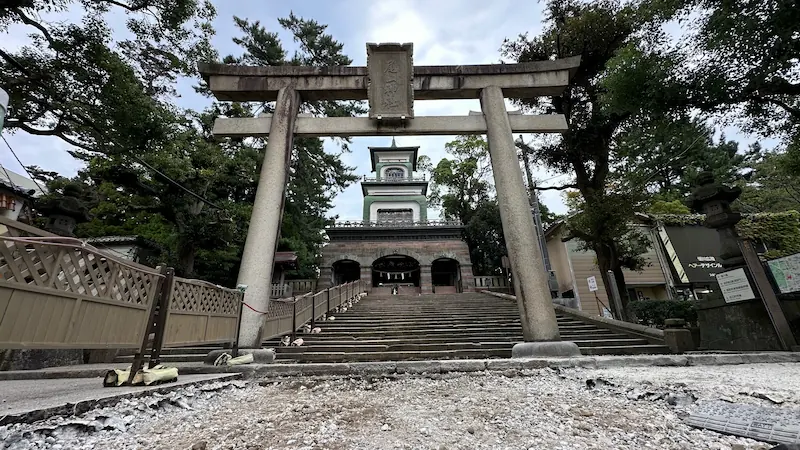
Oyama Shrine, dedicated to Lord Toshiie Maeda — the founder of the Kaga Domain — and his wife Lady Matsu, was relocated to its current site in 1873 as the family shrine of the Maeda clan. The story of Toshiie, a fierce general who survived the turbulent Sengoku period to lay the foundations of Kaga’s prosperity, begins here. Upon entering the shrine grounds, your eyes are drawn to the three-tiered Shinmon Gate, a unique blend of Japanese, Chinese, and Western styles. The lower level features triple arches, the upper level is decorated with colorful glass (known as gyaman), and it is said that lights once shone from the tower to guide ships on the Sea of Japan. The lightning rod atop the roof is among the oldest still in existence. In the tranquil atmosphere honoring the domain’s founder, the spirit of modern civilization breathes — Oyama Shrine stands as a Kanazawa landmark where samurai memory and modern aesthetics coexist.
- Shinmon Gate (Important Cultural Property): A one-of-a-kind gate blending Japanese, Chinese, and Western motifs. The colored glass shines by day and glows beautifully when illuminated at night.
- East Gate (Registered Tangible Cultural Property): Said to have been reconstructed in the Taisho period using materials relocated from the Karamon Gate of the former Kanazawa Castle’s Ninomaru Palace (moved here in 1963).
- Shin’en “Garden of Musical Instruments”: A stroll garden designed with motifs of musical instruments such as the biwa and koto — perfect for quiet walks.
- Seasonal Attractions: Fresh greenery and cherry blossoms in spring, and colorful autumn leaves reflected on the pond. The Shinmon Gate is illuminated nightly until around 10:00 p.m.
🌎 Official Website (Japanese only)
⏳ Visiting Time: Main highlights: about 20 minutes / In-depth visit: about 40 minutes
🗺 Address: 11-1 Oyama-machi, Kanazawa, Ishikawa
🚶 Access: A short walk from Nezumitamon Bridge at Kanazawa Castle — ideal to visit along your castle walk.
⭐ Recommendation: Historical Value ★★★ / Visual Appeal ★★★ / Experiential Value ★★★
| Year Built | Originally founded on Mt. Utatsu in 1599 after Lord Toshiie’s death. |
|---|---|
| Founder | Built and maintained by former Kaga retainers and parishioners after the abolition of the domain system; the gate was crafted by Meiji-era carpenters and masons. |
| Structure & Features | Three-story tower gate combining Japanese, Chinese, and Western elements; lower level has triple arches (wood frame with stone exterior), upper level with colored glass, and a lightning rod on the roof. |
| Restoration History | Conservation and restoration works carried out as a designated cultural property (details recorded in preservation archives). |
| Current Condition | Excellent; the Shinmon Gate remains as a designated Important Cultural Property of Japan. |
| Cultural Designation | Shinmon Gate: National Important Cultural Property (designated August 29, 1950) / East Gate: Registered Tangible Cultural Property (registered July 1, 2003) |
Oldest Lightning Rod: The lightning rod atop the Shinmon Gate is one of Japan’s oldest — a symbol of early modernization.
“Lighthouse” Function: It is said that a light once shone through the upper glass section to guide ships offshore.
Samurai Couple Deities: The enshrined deities are Toshiie Maeda and Lady Matsu — revered for marital harmony and victory prayers.
Ozaki Shrine 🎥 360°
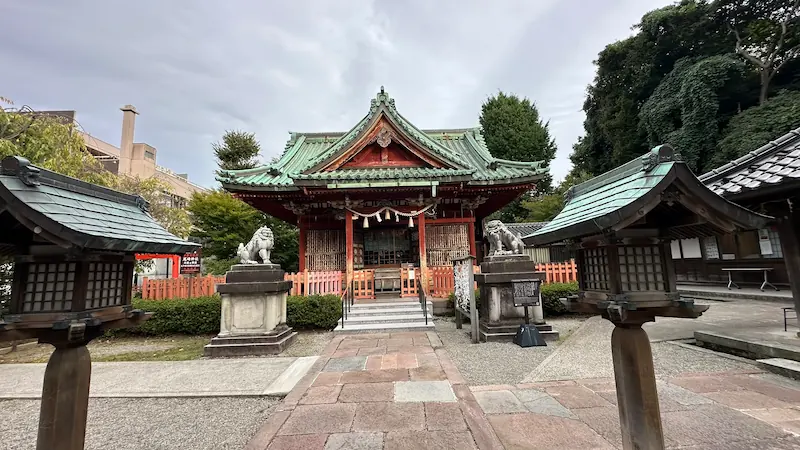
Ozaki Shrine, once known as the “Kanazawa Tōshōgū,” is a historic shrine originally founded in the Kan’ei era as a Tōshōgū dedicated to Tokugawa Ieyasu. With shogunate approval, the 4th Kaga lord Maeda Mitsutaka constructed it within the North Bailey (Kita-no-maru) of Kanazawa Castle. Following the Meiji-period separation of Shinto and Buddhism, it was renamed to its current title and relocated outside the castle grounds. Featuring a vermilion main sanctuary, sukibei (openwork fence), and a Karamon-style middle gate, the complex preserves exemplary elements of traditional Tōshōgū architecture and is highly valued as a structure associated with Kanazawa Castle.
- Unified Vermilion Shrine Buildings: A stately ensemble of haiden, heiden, honden, middle gate, and openwork fence in matching vermilion.
- Openwork Fence (Sukibei): The striking vermilion fence encircling the main sanctuary — a key element in its Important Cultural Property status.
- Middle Gate (Karamon Style): A dignified Karamon-style gate demarcating the space before the sanctuary.
- Architectural Details: Decorative metalwork, carvings, closely spaced eaves, and polychromy reflecting Kaga craftsmanship.
- Harmony with the Seasons: Spring greenery and autumn foliage create vivid contrasts with the vermilion structures and nearby plantings.
⏳ Visiting Time: Quick highlights: 15 minutes / Detailed look at interiors and details: 40 minutes
🗺 Address: 5-5 Marunouchi, Kanazawa, Ishikawa
🚶 Access: 2 minutes on foot (140 m) from Kanazawa Castle’s Kuro-mon Gate
⭐ Recommendation: Historical Value ★★★ / Visual Appeal ★★★ / Experiential Value ★★
| Year Founded | Kan’ei 20 (1643) |
|---|---|
| Founder | Maeda Mitsutaka (4th lord of Kaga), who invited the Tōshōgū deity |
| Structure & Features | Honden (three-bay nagare-zukuri), haiden & heiden (hip-gabled copper roofs), middle gate (Karamon), encircled by a vermilion openwork fence |
| Repairs & Relocation | Repairs in Enpō 5 (1677), Hōreki era, and others / Renamed in Meiji 7 (1874) / Relocated from inside the castle to the current site in Meiji 11 (1878) |
| Current Condition | Well preserved; multiple buildings designated as National Important Cultural Properties |
| Cultural Designation | Honden, haiden, heiden, middle gate, and openwork fence: National Important Cultural Properties (designated 1931) |
| Notes | Tokugawa aoi crests appear throughout the buildings; the site is sometimes called “Nikkō of Hokuriku.” |
Former Name “Tōshōgū”: At its founding, the shrine was called “Tōshō Sansho Daigongen,” centered on the worship of Tokugawa Ieyasu. It was renamed “Ozaki Shrine” in 1874 under the separation of Shinto and Buddhism.
Oldest Kanazawa Castle Relics: The relocated structures preserve buildings originally within the castle, among the oldest surviving castle-related architecture.
Aoi Crests: Tokugawa aoi crests adorn carvings and metal fittings, preserving the character of a Tōshōgū shrine.
Goshuin & Blessings: Known for blessings of advancement, business prosperity, and matchmaking; goshuin (seal stamps) are available at the shrine office near the sanctuary.
Kenrokuen Garden 🎥 360°
Kenrokuen is a strolling pond garden developed over roughly two centuries by the Maeda family, lords of the Kaga Domain, and is counted among Japan’s Three Great Gardens. Its origins date to the late 17th century, when the 5th lord Maeda Tsunanori built the “Hasuike Palace” on the outer enceinte of Kanazawa Castle. Successive lords later expanded and refined the grounds, and during the tenure of the 12th lord Maeda Narinaga, Matsudaira Sadanobu of Shirakawa (Ōshū) named it “Kenrokuen” — the “Garden of Six Qualities” — an ideal that combines vastness, seclusion, human ingenuity, antiquity, abundant water, and fine views. True to its name, scenes of ponds, waterfalls, hills, and teahouses shift with the seasons: cherry blossoms in spring, lush greenery in summer, crimson foliage in autumn, and yukizuri snow supports in winter — a garden where Japanese aesthetics and samurai serenity live on.
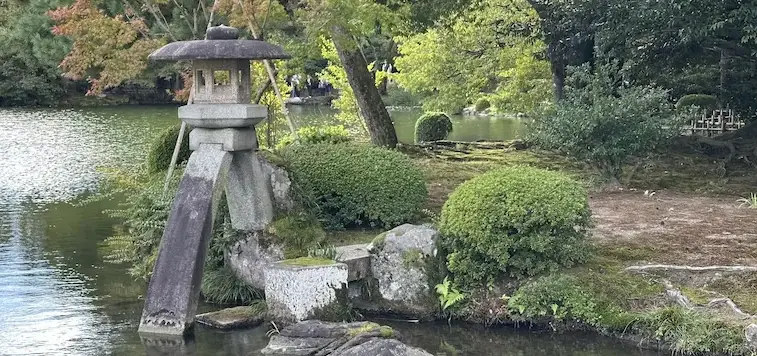
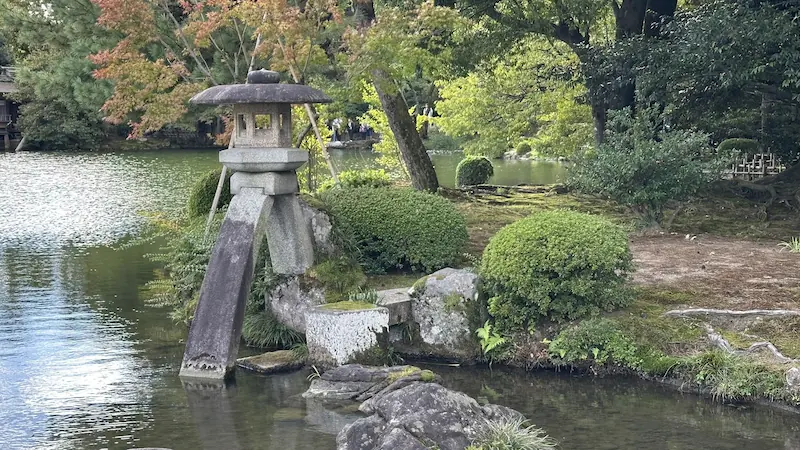
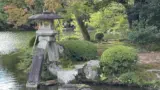
- Kotoji Lantern: Modeled after the bridges of a koto; an emblem of Kenrokuen. Its reflection on Kasumigaike Pond is elegant.
- Kasumigaike Pond: The garden’s central pond, ringed by islets and bridges along strolling paths rich in atmosphere.
- Neagarimatsu Pine: A rare pine with exposed roots — a symbol of striking form and vitality.
- Shiguretei Teahouse: A reconstructed rest pavilion of the lords; enjoy matcha while taking in seasonal views.
- Seasonal Pleasures: Winter yukizuri, spring cherry and plum blossoms, and autumn foliage illuminations are especially popular.
⏳ Visiting Time: Quick highlights: about 20 minutes / Leisurely visit: about 60 minutes
🗺 Address: 1 Kenrokumachi, Kanazawa, Ishikawa
🚶 Access: 2 minutes on foot (120 m) from the Ishikawa Gate of Kanazawa Castle
⭐ Recommendation: Historical Value ★★★ / Visual Appeal ★★★ / Experiential Value ★★★
| Year Built | Origins in the late 17th century (era of the 5th lord Tsunanori); overall framework completed in the early 19th century (era of the 12th lord Narinaga). |
|---|---|
| Patrons | Maeda Tsunanori (5th lord; early development) / Maeda Narinaga (12th lord; naming) |
| Structure & Features | Strolling pond garden with hills, ponds, waterfalls, tea pavilions, stone lanterns, and bridges, laid out to exploit the site’s varied topography |
| Repairs & Restoration | Rebuilt after the 1759 fire; reorganized during the An’ei–Tenmei eras; continuous conservation since the Meiji period |
| Current Condition | Excellent; open to the public as a Special Place of Scenic Beauty managed by Ishikawa Prefecture |
| Loss & Damage | Some buildings were lost, but the garden’s composition largely survives as in former times |
| Cultural Designation | National Special Place of Scenic Beauty (designated March 20, 1985) |
| Notes | One of Japan’s Three Great Gardens (with Kairakuen and Korakuen) |
| Admission & Hours | Adults (18+) ¥320, children (6–17) ¥100. Open 7:00–18:00 (Mar 1–Oct 15) and 8:00–17:00 (Oct 16–end of Feb); early-morning opening is free. As of September 2026. |
Origin of the Name: “Kenroku” means “combining six virtues,” the six ideal scenic elements of a garden.
Link to Matsudaira Sadanobu: The name is said to have been inscribed by Sadanobu, famed for the Kansei Reforms.
Defensive Role: Adjacent to the outer enceinte of Kanazawa Castle, the garden is thought to have served defensive and vantage functions.
Japan’s Oldest Fountain: A gravity-fed fountain using natural head pressure (elevation difference), said to be the oldest of its kind still operating in Japan.
Seisonkaku Villa
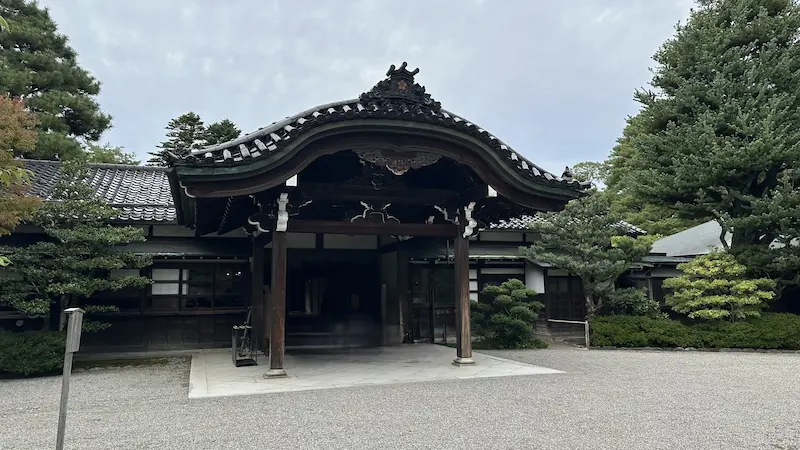
Seisonkaku is a palatial residence built in 1863 (Bunkyū 3) by the 13th Kaga lord Maeda Nariyasu for his mother, Shinryūin (Takako). Standing to the southeast of Kanazawa Castle — the “tatsu-mi” (southeast) direction — it was originally called “Tatsumi Palace,” later renamed “Seisonkaku” when Kenrokuen opened to the public.
The architecture synthesizes two styles—samurai shoin on the first floor and sukiya-influenced shoin on the second—an uncommon composition for a late-Edo daimyo residence. Rooms such as the “Audience Chamber” and the “Ultramarine Room” showcase Kaga-style colors and motifs, with lavish use of floral-bird designs, painted shoji, and gyaman (Western glass). The accompanying garden, “Hikakutei,” forms the core of the grounds with Seikōken pavilion, inner courts, and flowing water; it was designated a National Place of Scenic Beauty in 1929 (Shōwa 4).
- Audience Chamber: A grand hall befitting a principal lady’s residence, adorned with exquisite bird-and-flower transoms.
- Ultramarine Room: Striking ultramarine walls bathed in natural light — a noble hue associated with the Kaga domain.
- Study Room, Pine Room, and small chambers: Delicate ornamentation, gyaman glass, and shoji craftsmanship throughout.
- Hikakutei (Main Garden): A beautiful garden facing Seikōken, harmonizing flow, stone bridges, and tree placement.
- Courtyards / “Omoto” and “Tsukushi” Edge Gardens: Fed from the main garden’s waterways, with gentle streams and miniature hills adding charm.
- Red Gate, Namako Walls, Gate Ensemble: The red gate signifies a residence for a noble lady; the dignified wall construction is also notable.
⏳ Visiting Time: Quick highlights: about 20 minutes / Leisurely visit: about 40 minutes
🗺 Address: 1-2 Kenrokumachi, Kanazawa, Ishikawa
🚶 Access: Adjacent to Kenrokuen; there is an entrance from within the garden.
⭐ Recommendation: Historical Value ★★ / Visual Appeal ★★★ / Experiential Value ★★★
| Year Built | Bunkyū 3 (1863) |
|---|---|
| Patron | Maeda Nariyasu (13th lord of Kaga) |
| Structure & Features | Two stories; first-floor samurai shoin style; second-floor sukiya-style shoin; inventive color schemes and decorative details throughout |
| Repairs & Restoration | Additions and improvements from the Meiji era onward; minimal war damage; ongoing conservation |
| Current Condition | Excellent; open to the public (former National Treasure → National Important Cultural Property) |
| Cultural Designation | Building: National Important Cultural Property (1950) / Garden (Hikakutei): National Place of Scenic Beauty (1929) |
| Notes | Separate admission from Kenrokuen; features such as the “Red Gate” and namako (sea-cucumber) walls are also highlights |
| Admission & Hours | Adults/university ¥700 (regular exhibition) or ¥1,000 (special exhibition); junior/senior high ¥300, elementary ¥250. Open 9:00–17:00 (last entry 16:30), closed Wednesdays. As of September 2026. |
Name Origin: Renamed from “Tatsumi Palace” to “Seisonkaku”; one theory links “tatsu-mi” (southeast) with characters implying achievement or fulfillment.
Uniqueness: As a principal lady’s residence combining samurai shoin and sukiya-shoin styles, it is exceptionally rare among surviving examples in Japan.
Expanded Scenic Designation: The main garden was designated in 1929, with later expansion to include inner and front gardens.
Ultramarine & Gyaman Details: Dutch-imported colored glass appears in shoji and transoms, evidencing the fusion of Western elements.
Collections & Hina Doll Exhibitions: Exhibitions sometimes feature furnishings and hina dolls connected to the Maeda family.
Kanazawa Shrine 🎥 360°
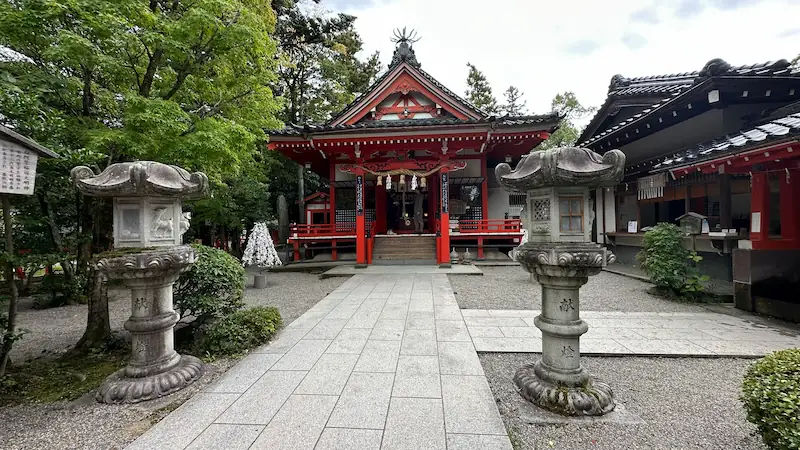
Kanazawa Shrine stands just south of Kenrokuen beside Kinjo Reitaku Spring. It enshrines Sugawara no Michizane, the deity of scholarship, with Shirahebiryūjin, Inari Ōkami, and Kotohira Ōkami as co-deities. Established in Kansei 6 (1794) by the 11th Kaga lord Maeda Harunaga as guardian of the domain school Meirindō, it initially served as the tutelary shrine of the Takezawa Palace. Renamed “Kanazawa Shrine” in Meiji 7 (1874), it is now visited for prayers for exam success, academic achievement, prosperity, and protection from misfortune.
- Main Deity: Sugawara no Michizane: Famous as the god of learning; during exam season, many votive plaques (ema) are dedicated here.
- Co-deities including the White Serpent Dragon God: Distinctive worship associated with protection from misfortune and good fortune.
- Kinjo Reitaku (Sacred Spring): Legend says that when “Imohori Tōgorō” washed yams here, gold flakes emerged; some say water can be drawn from the grounds.
- Wart-Removing Stone, Dream Ox, Keiga Torii: Legendary stones and commemorative objects scattered around the precincts.
- Vermilion Shrine and Torii: Vivid vermilion structures that catch the eye; the main buildings are treated as preserved cultural properties.
- Goshuin with Gold Leaf: Goshuin featuring gold leaf are reportedly available.
⏳ Visiting Time: Quick highlights: about 10 minutes / Leisurely visit: about 20 minutes
🗺 Address: 1-3 Kenrokumachi, Kanazawa, Ishikawa
🚶 Access: About 1 minute on foot (40 m) from Kenrokuen’s Zuishinzaka Entrance
⭐ Recommendation: Historical Value ★★★ / Visual Appeal ★★★ / Experiential Value ★★
| Year Founded | Kansei 6 (1794) |
|---|---|
| Founder / Purpose | Lord Maeda Harunaga / As guardian deity of the Meirindō domain school |
| Structure & Features | Vermilion shrine buildings — haiden and honden — with a torii at the entrance, harmonizing with the sacred pond and shrine grove |
| Renovations & Changes | Renamed and ranked as a district shrine in Meiji 7; subsequent repairs to shrine buildings |
| Current Condition | Excellent; free access to the grounds (visitation limited to the precincts) |
| Cultural Designation | The shrine buildings are described as nationally preserved cultural properties (per official guidance) |
| Notes | Legends of Kinjo Reitaku; tale of “Imohori Tōgorō”; white-snake faith; distinctive goshuin stamped with gold leaf |
Link to Meirindō: At its founding, the shrine served as guardian for the Meirindō domain school; general worship was said to be limited to festival days.
Renaming & Ranking: Originally called “Takezawa Tenjin,” it was renamed Kanazawa Shrine in the Meiji era and ranked as a village/district shrine.
Close to Kenrokuen: Located right next to the garden, making it an easy stop on sightseeing routes.
Popular “Power Spot”: Especially well-known among students for academic success and good fortune.
Ishikawa Prefectural Museum of History (Ishikawa Red Brick Museum)
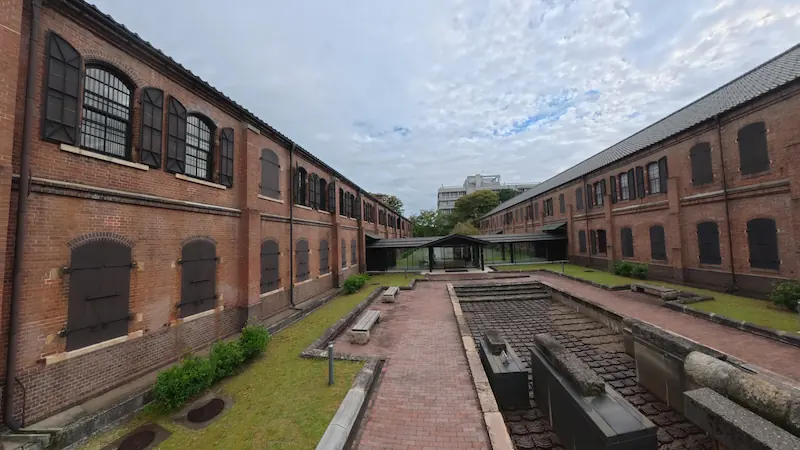
The Ishikawa Prefectural Museum of History sits in Honda-no-Mori Park in Dewamachi, Kanazawa, repurposing red-brick buildings once used as an army arsenal. Also known as the “Ishikawa Red Brick Museum,” the exterior itself is valued as significant modern architecture. Inside, engaging exhibits trace Ishikawa’s history and culture from prehistoric times to the modern era through artifacts, dioramas, and video content.
- Red-Brick Architecture: Three imposing restored warehouses from the former arsenal — the buildings themselves are part of the exhibit.
- Permanent Galleries: History & Folklore: Chronological displays from prehistory to modern times, plus exhibits on regional culture such as festivals.
- Hands-on History Corner: Try on period costumes, explore recreated daily-life settings, and learn through tactile experiences.
- Festival Experience Theater: Immersive videos and staged exhibits featuring local festivals.
- Special Exhibitions: Regular themed shows, including those related to the Sengoku era and the Maeda family.
⏳ Visiting Time: Permanent exhibits only: about 40–60 minutes / Including special and interactive exhibits: about 1.5–2 hours
🗺 Address: 3-1 Dewamachi, Kanazawa, Ishikawa
🚶 Access: About 3 minutes on foot (220 m) from Kanazawa Shrine
⭐ Recommendation: Historical Value ★ / Visual Appeal ★★ / Experiential Value ★★
| Opening | October 25, 1986 (relocated and opened from the former local history museum) |
|---|---|
| Architectural Origin | Restored and reused red-brick buildings constructed as Imperial Army arsenals from the late Meiji to Taishō eras |
| Structure & Features | Three primary red-brick buildings restored/renovated and integrated with modern exhibition facilities |
| Cultural Designation | All three red-brick buildings designated National Important Cultural Properties (1990) |
| Renovation | Renewed in 2015 as the “Red Brick Museum,” with additional amenities such as a salon |
| Current Condition | Excellent; operating as both exhibition and preservation facility |
| Notes | Active exhibit rotations and special exhibitions; hands-on history corners and a festival experience theater are available |
Rare Museum Reuse: Nationwide, conversions of former army arsenals into museums are rare; this is cited as a success in preservation and adaptive reuse.
Cultural Designation & Awards: Designated an Important Cultural Property in 1990; received the Architectural Institute of Japan Award the following year.
Photography Rules Eased: Since April 2019, personal photography is permitted for many items in the permanent collection.
Origins of the Three Brick Buildings: Records indicate they were warehouses of the former arsenal, including Nos. 5–7.
Discoveries via Exhibit Rotation: Regular rotations unveil new materials, contributing to local historical research.
Kaga Honda Museum
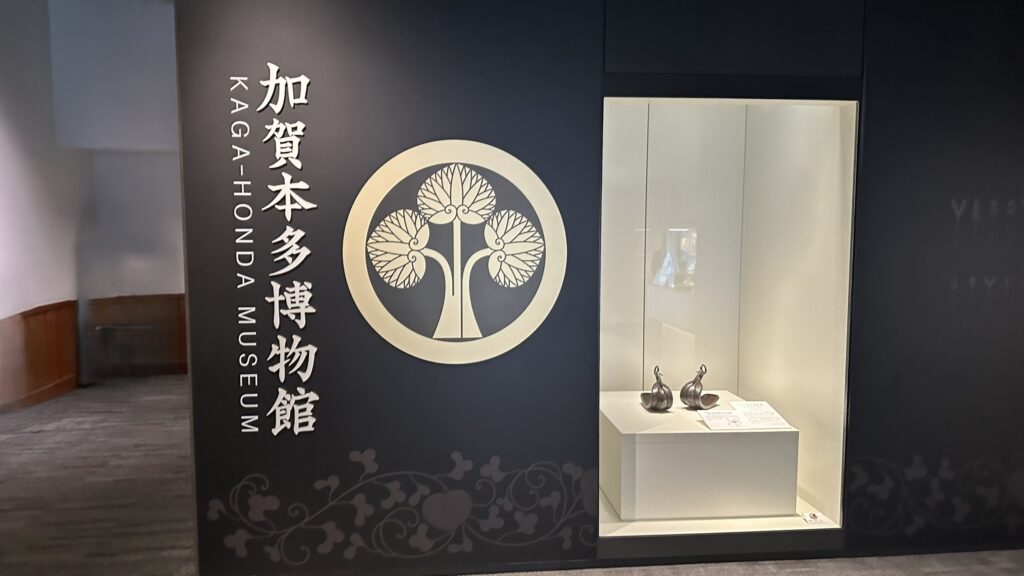
The Kaga Honda Museum showcases arms, furnishings, and archival materials handed down in the Honda family, chief retainers of the Kaga Domain. Developed as part of the “Ishikawa Red Brick Museum” complex, it adjoins the Ishikawa Prefectural Museum of History. Within the red-brick setting, the displays convey the culture of Kanazawa’s castle town and the dignity of samurai households.
- Honda Family Arms, Armor, and Tack: A systematic display of weapons and equipment passed down through generations.
- Firefighting Attire: Historic firefighting garments used by the Honda family — insight into daily life and ceremonial culture.
- “Murasame” Tea Jar: A treasured tea jar said to have been named by Toyotomi Hideyoshi.
- Documents, Furnishings, and Gifts: Items presented by the Maeda family and records of inter-domain exchanges that illuminate domain governance.
- The Red-Brick Building Itself: A former arsenal warehouse makes an atmospheric exhibition space.
- Linked Displays with the Prefectural Museum: Combined tickets make it convenient to gain a broad view of Kanazawa and Kaga history.
⏳ Visiting Time: Quick overview: about 15 minutes / Detailed viewing: about 30 minutes
🗺 Address: 3-1 Dewamachi, Kanazawa, Ishikawa
🚶 Access: Connected by a walkway from the previous stop (e.g., the Prefectural Museum of History), making it easy to visit in sequence.
⭐ Recommendation: Historical Value ★ / Visual Appeal ★★ / Experiential Value ★★
| Opening | — (no official opening year listed) |
|---|---|
| Operator | Honda Collection House Foundation |
| Structure & Features | Located in the third red-brick building; a former arsenal warehouse repurposed as a gallery |
| Exhibits | Armor, helmets, swords, spears, horse tack, firefighting gear, documents, and gifts received from the Maeda family |
| Admission | Adults: ¥400; college students: ¥300; high school and under: free (combined tickets with the Prefectural Museum available) |
| Hours | 9:00–17:00 (last entry 16:30) |
| Closed | Thursdays from December to February; New Year holidays; during exhibit changes |
| Location | 3-1 Dewamachi, Kanazawa, Ishikawa (Red Brick Museum Building No. 3) |
| Access | 3 minutes on foot from Hokuriku Railroad bus stop “Dewamachi,” or about 8 minutes from “Hirosaka / 21st Century Museum.” 30 parking spaces (shared with the Prefectural Museum). |
| Notes | Among Japan’s leading collections of samurai materials; conveys the presence of a senior retainer house through the culture of arms. |
The first-generation Honda Masashige was born to a close retainer of Tokugawa Ieyasu and later served the Kaga Domain in his later years.
The collection is said to exceed 1,000 items and is notable nationwide for the number of arms and horse tack.
The museum occupies a former red-brick arsenal building repurposed for exhibitions.
A combined ticket for the museum and the Ishikawa Prefectural Museum of History offers good value when visiting both.
Based on multiple personal visits — this is the author’s own priority order, not an official recommendation for the Kanazawa Castle & Kenrokuen area.
One of Japan’s Three Great Gardens and a National Special Place of Scenic Beauty — the standout highlight of this area. Budget about 60 minutes for a leisurely visit.
Dedicated to Lord Toshiie Maeda and Lady Matsu, with a National Important Cultural Property Shinmon Gate worth seeing, and it sits right along the route to Kenrokuen.
Adjacent to Kenrokuen and easy to combine, but admission is separate from the garden — weigh it against your interest and time.
Adjoining buildings within the same Red Brick Museum complex, with a combined admission ticket — efficient to see together.
Both lie directly on the route to Kenrokuen with free access to the grounds, so a brief stop along the way is enough for most visitors.
Kenrokuen Area Map
| Nearest Station | JR Kanazawa Station |
|---|---|
| From the Station | Local bus (e.g. the Kanazawa Loop Bus) from Kanazawa Station to “Kenrokuen-shita / Kanazawa Castle” stop, about 15–20 minutes (general public info, unverified on-site) |
| Useful Shinkansen Station | JR Kanazawa Station (Hokuriku Shinkansen) |
| From Tokyo | About 2 hours 30 minutes via the Hokuriku Shinkansen “Kagayaki” (general public info, unverified on-site) |
| From Osaka | Limited Express Thunderbird to Tsuruga, transfer to the Hokuriku Shinkansen; about 2 hours 20 minutes total (general public info, unverified on-site) |
| From Kyoto | Limited Express Thunderbird to Tsuruga, transfer to the Hokuriku Shinkansen; about 2 hours total (general public info, unverified on-site) |
| From Nagoya | Limited Express Shirasagi to Tsuruga, transfer to the Hokuriku Shinkansen; about 3 hours total (general public info, unverified on-site) |
| Getting Around Locally | Kanazawa Castle and Kenrokuen area concentrate the main sights within walking distance, making it manageable even on a first visit (see each spot’s walking time above) |
| Recommended Transport | Local buses from Kanazawa Station are convenient; within the area, walking is the most practical way to get around |
| Parking | Paid parking available around Kenrokuen (capacity and rates unconfirmed) |
| Notes | Seisonkaku Villa, the Ishikawa Prefectural Museum of History, and the Kaga Honda Museum each require separate admission from Kenrokuen (see each spot’s details above) |
※ Shinkansen times, fares, and bus details above are general estimates based on publicly available information, not figures verified on-site by this website. Please check official sources such as JR West / JR East for the latest information.
Explore More of the Toshiie Maeda Heritage
Frequently Asked Questions
Adding up the visiting-time estimates for each spot, a quick tour takes about 2 hours in total, while a leisurely visit takes about 4–5 hours. See the “Visiting Time” note under each spot above for details.
No. As noted above, Seisonkaku Villa requires separate admission from Kenrokuen.
Yes. Both museums are adjoining buildings within the same Ishikawa Red Brick Museum complex, and a combined admission ticket is available. See the Kaga Honda Museum section for details.
Yes. Oyama Shrine enshrines Lord Toshiie Maeda and his wife Lady Matsu, while Ozaki Shrine was originally built as the “Kanazawa Tōshōgū” within Kanazawa Castle by the 4th Kaga lord, Maeda Mitsutaka.
Oyama Shrine, which enshrines Toshiie Maeda and Lady Matsu as its main deities. See the Oyama Shrine section above for details.
☕ Support This Site
Following the Shogun is built on original fieldwork and on-site research.
If you found this guide useful, your support helps keep it going.

You can also support via QR code
Next Page

Back to the Toshiie Maeda Heritage Index
Back to the Homepage



comment