


Kuroshima, Usuki: Where William Adams Landed in Japan, and How to Get There
A small island in Usuki, Oita, where the Dutch ship De Liefde arrived in 1600. The ferry crossing takes 3 to 5 minutes, and the boat is called by phone rather than run to a timetable.
- Where Kuroshima is and what it is
- Getting to Kuroshima and arranging the boat
- What you can see on the island today
- Time needed and walking around the island
- What to wear and bring
- William Adams, the Liefde and the SHŌGUN connection
- More places linked to William Adams
- Combining Kuroshima with other stops and staying overnight
- FAQ
Where Kuroshima is and what it is
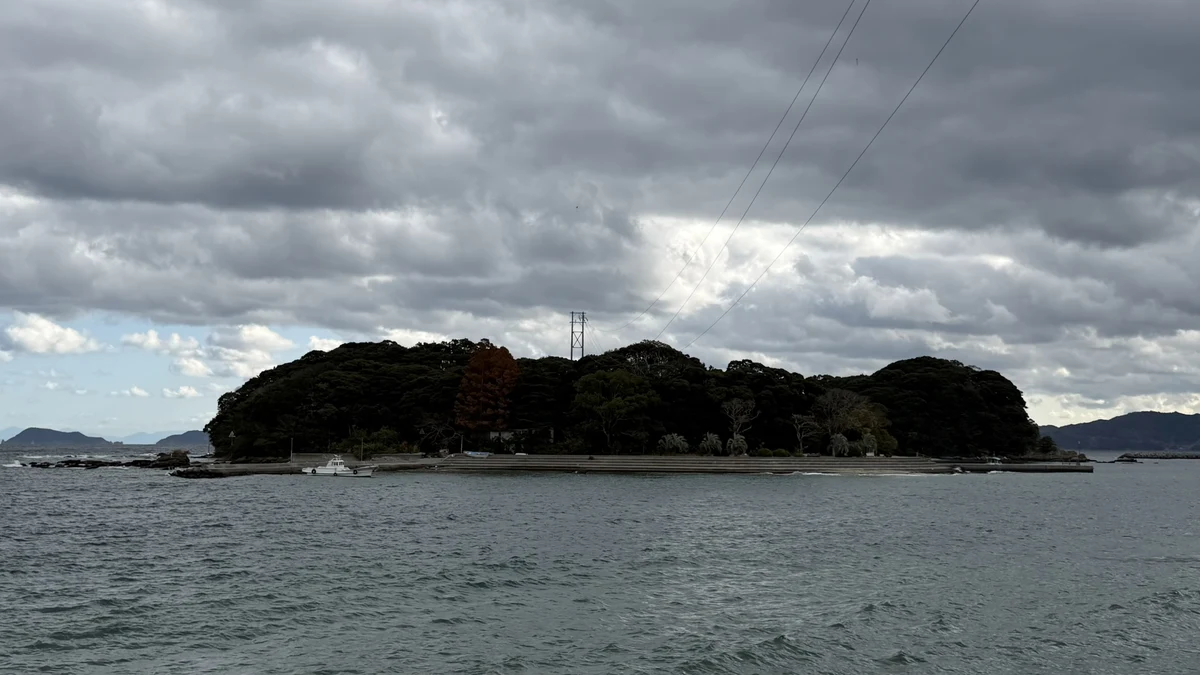
Kuroshima is a small island, about 3 km around, roughly 300 m off the coast at Sasiu in Usuki, Kyushu. It sits in Usuki Bay on the Oita side of the island of Kyushu. From Oita Station, take the JR Nippo Line to Sasiu Station. Do not confuse it with the other islands called Kuroshima in Nagasaki, Okinawa and Kagoshima.
Usuki City says the Dutch ship De Liefde reached Sasiu Bay, today’s Kuroshima, on 19 April 1600. Its pilot was the Englishman William Adams, later known in Japan as Miura Anjin, who became an adviser to Tokugawa Ieyasu. His life is covered in William Adams (Miura Anjin): The Real Man Behind SHŌGUN’s John Blackthorne, and the other places tied to him in the William Adams (Miura Anjin) Travel Guide.
What stands on the island today is not left over from 1600. It is a set of memorials built later: the De Liefde Museum, a park with statues and monuments, a well and a beach. None of it marks the exact landing point.
The author went on 12 December 2025 and spent about 50 minutes on the island, 25 of them in the museum. The visit suits anyone who wants some contact with William Adams’s story. Apart from the boat captain there was almost nobody there, so it also suits people who simply want a quiet walk by the sea. Because the boat has to be called, fit it around fixed plans, such as a train home, with plenty of slack.
Getting to Kuroshima and arranging the boat
From Sasiu Station to the ferry landing
The nearest station is Sasiu on the JR Nippo Line. Oita Prefecture’s tourism site gives 20 minutes on foot from the station to the landing, then 3 minutes by boat; the same site’s introduction says about 5 minutes. Plan on 3 to 5 minutes on the water. For car navigation, enter the Japanese name 黒島行渡船所 (Kuroshima-iki Tosenjo). The author flew into Oita Airport, rented a car and drove to the landing.
Map: Sasiu Station to the ferry landing
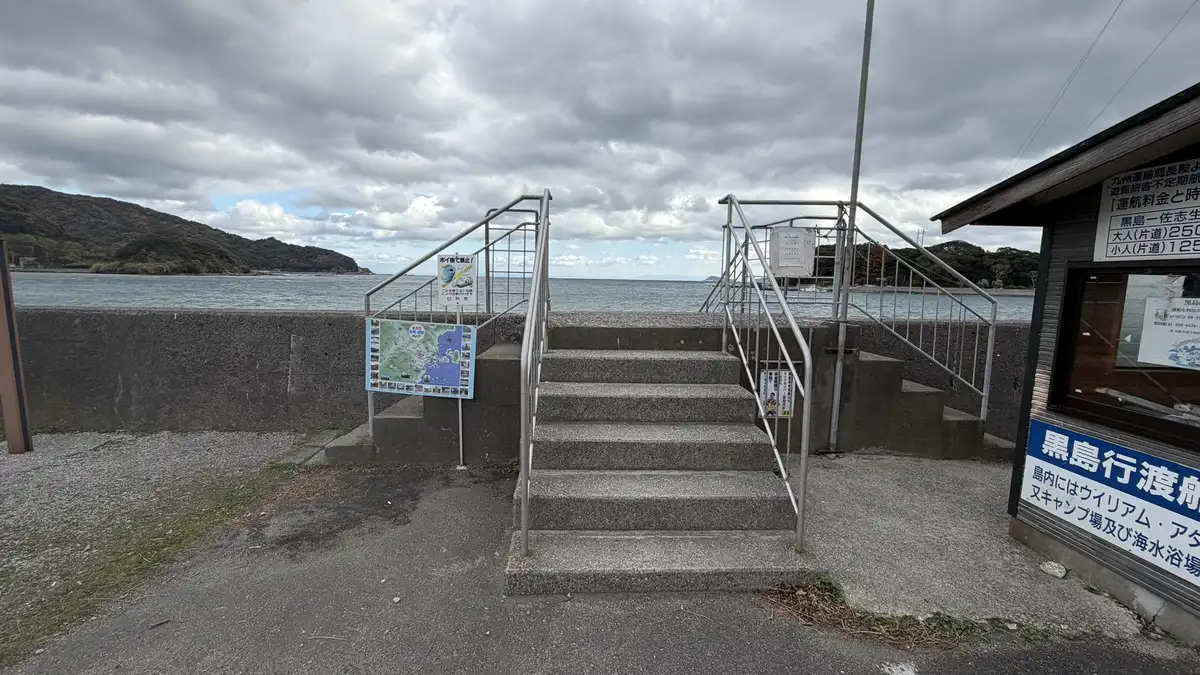
The route ends at the ferry shelter on the Sasiu shore, where the author took the photos. Open in Google Maps
How the author called the boat (12 December 2025)
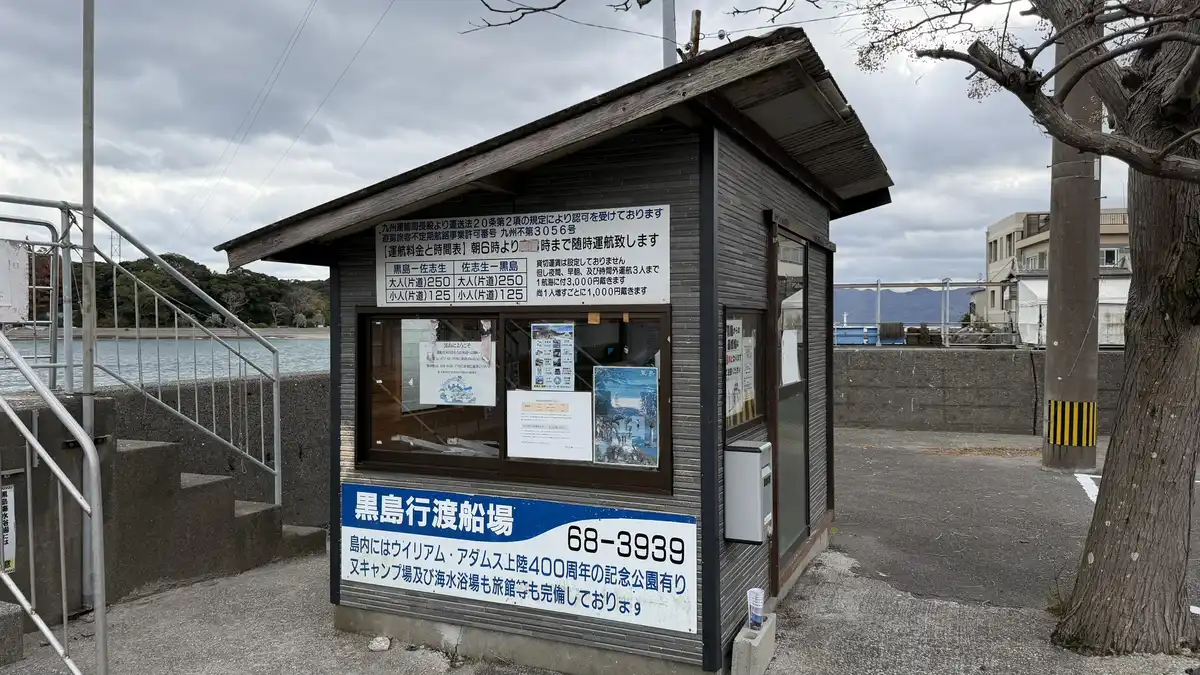
There was no timetabled ferry. The author was told there is no scheduled service, and arranged the crossing like this.
The author called Kuroshima-so, the number listed on the Usuki Tourism Association’s Kuroshima page, and said which day they were coming.
Calling the same number on arriving at the landing brought the boat over.
On getting off, the captain said he would be pruning trees on the island and to call out when ready to go back.
After the visit the author called out to him and got back to the mainland without any trouble.
The author does not know whether the staff handle English on the phone. Plan on arranging the crossing in Japanese, or ask your hotel or a Japanese speaker to call for you.
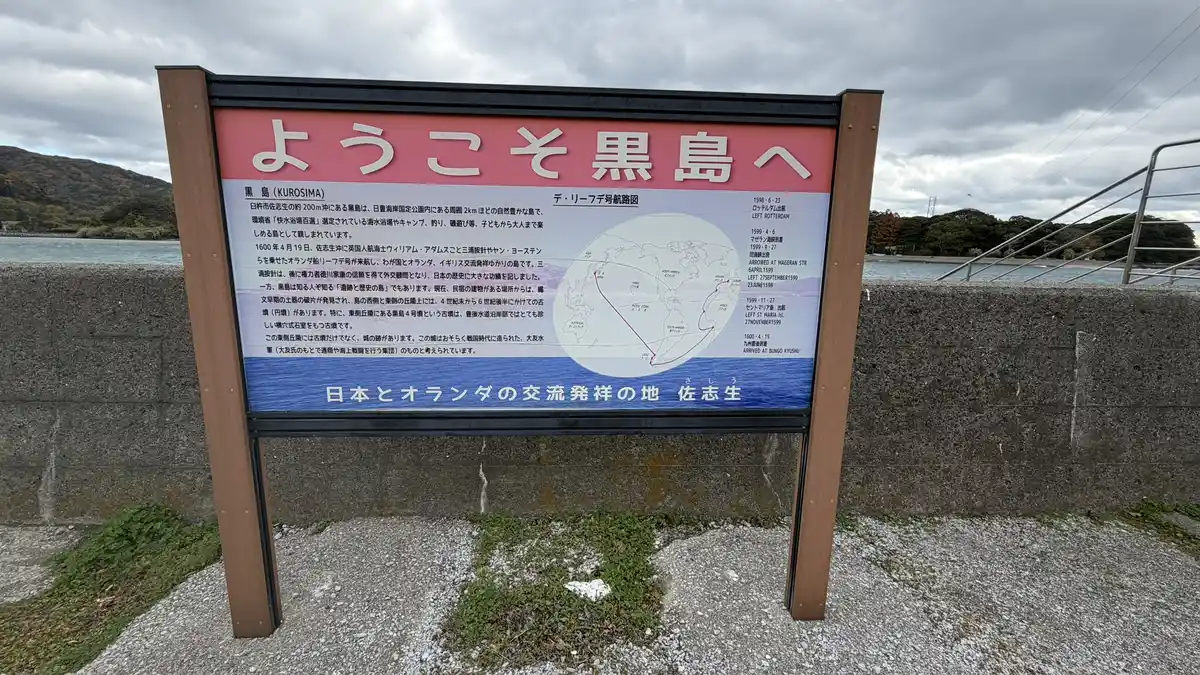
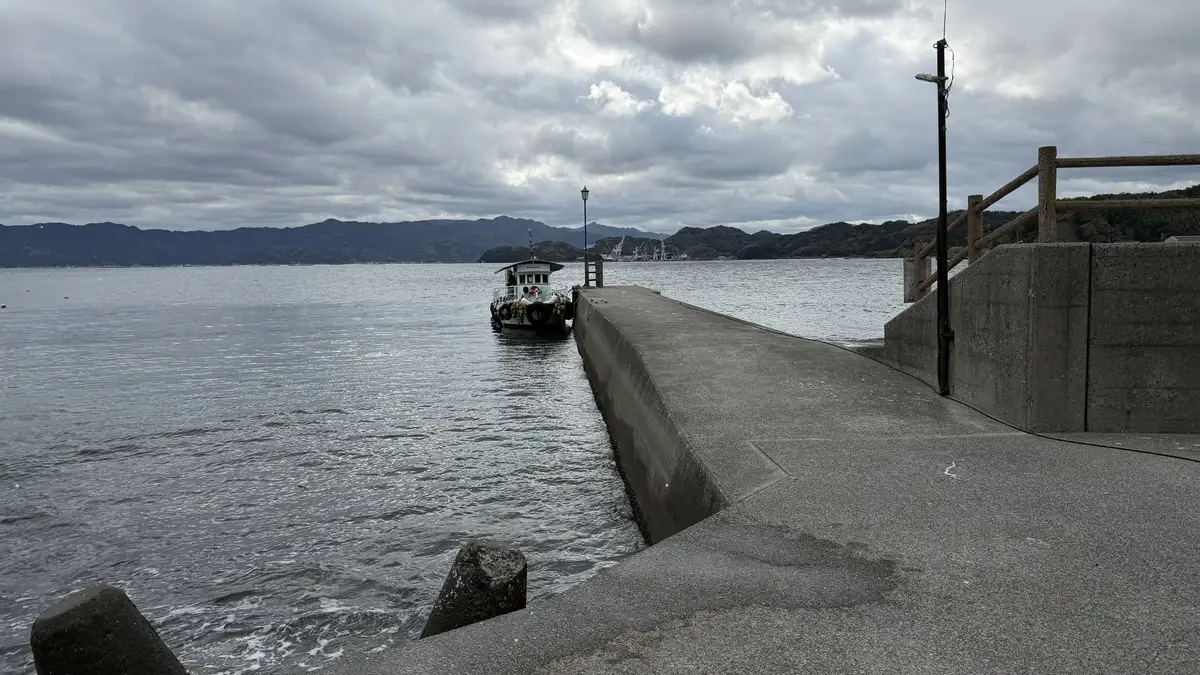
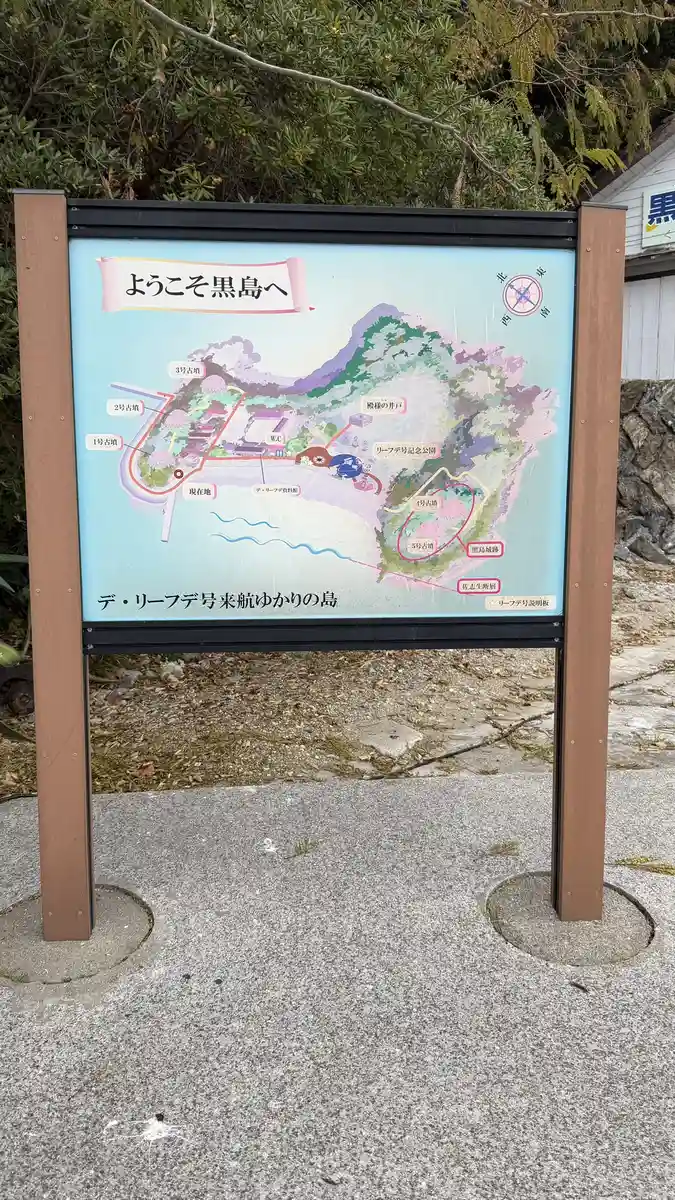
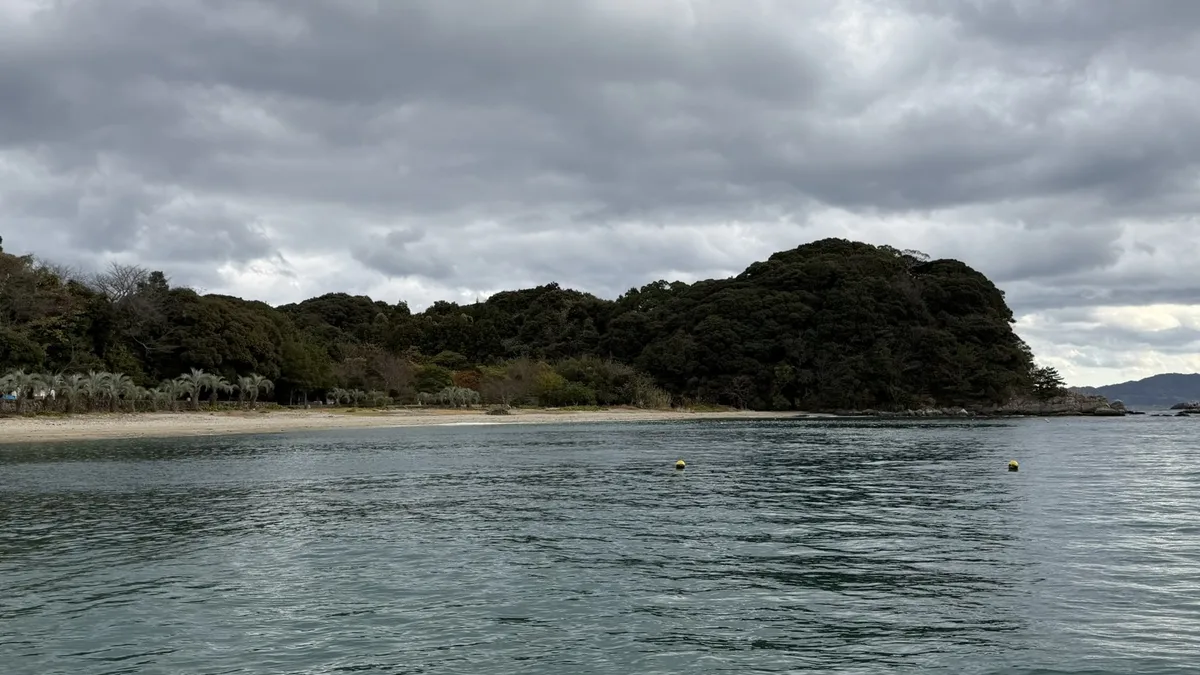
Tap a photo to enlarge it
The boarding area and the crossing in 360°
These two panoramas show the boarding area on the Sasiu shore and the view during the crossing. Drag to look around.
| Nearest station | Sasiu Station, JR Nippo Line |
|---|---|
| Station to landing | About 20 minutes on foot (Oita Prefecture tourism site) |
| Crossing | 3 to 5 minutes (the prefecture’s page gives both “3 minutes” and “about 5 minutes”) |
| Listed fare | ¥500 adult return; ¥250 for children aged 3 to elementary school. Extra conditions for your date or group size are not confirmed. |
| Ferry contact | Kuroshima-so, +81 972-68-3939 |
| Car navigation | 黒島行渡船所 |
| How the author went | Rental car from Oita Airport to the landing (12 December 2025) |
By train
If you come by train, work backward from the time you want to leave the island and choose your return train from that. The walk from Sasiu Station to the landing takes about 20 minutes. Timetables and fares vary by day, so check the JR Kyushu timetable for your date. The author drove, so there is no train round trip described here.
What you can see on the island today
In the order the author walked: the museum, the memorial park, the well and the beach.
De Liefde Museum
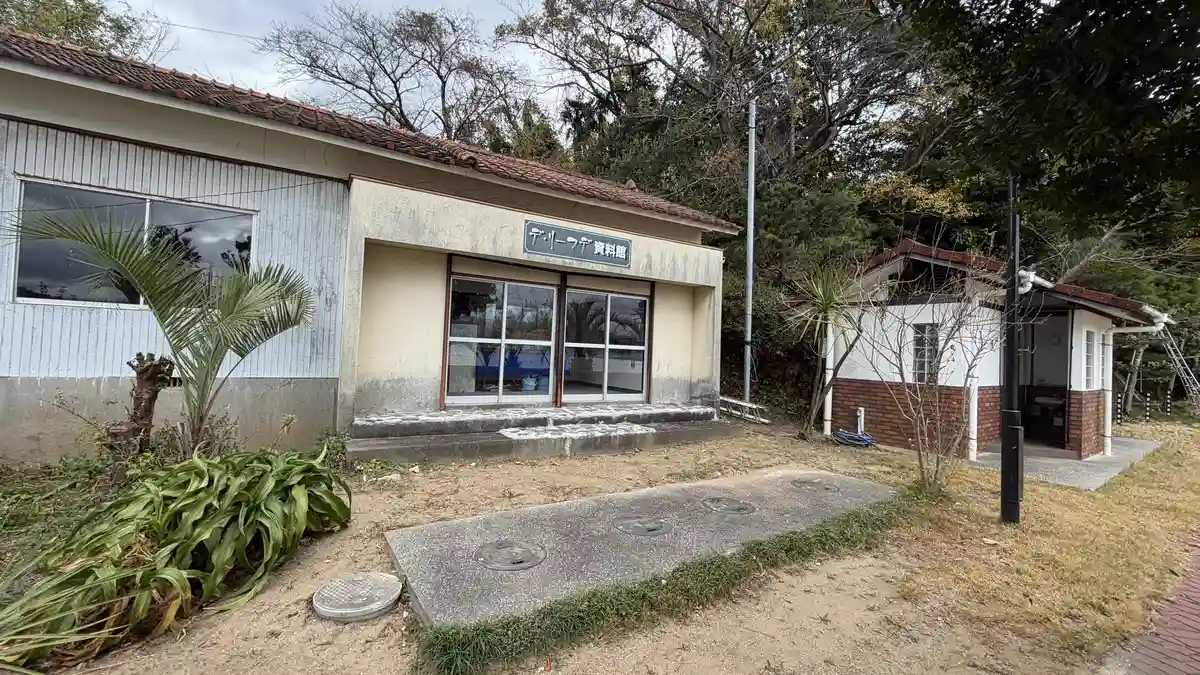
The first stop after landing was the De Liefde Museum. While the author was reading the displays, the boat captain came in and talked about the exhibits and the island. The visit took about 25 minutes.
A model of De Liefde stands in a glass case, and wall panels introduce Adams and Jan Joosten. Current opening hours and closing days are not confirmed, so ask the ferry contact when you arrange the boat.
Things that stood out. Names follow the labels in the museum.
- The De Liefde model: bow, stern, masts and rigging are all built in detail. The label beside it gives the ship’s name and outlines its voyage to Japan.
- Jan Joosten bust (indoors): the plaque below it is in Japanese and English.
- Panel on Ieyasu’s trust in Adams: titled “What’s great about Miura Anjin, part 1”, it centres on his relationship with Tokugawa Ieyasu.
- Background panel: explains the rivalries among European countries and the religious context of the period.
- Usuki and Adams panel: a coastal photograph introduces the link between Usuki and Adams.
- Old photographs of Adams-related places: labels include “Anjincho near Nihonbashi, Tokyo” and “Hirado, Dutch trading post site”.
- Miura Anjin quiz and relationship chart: these set out his life and his ties to people in Japan and Europe.
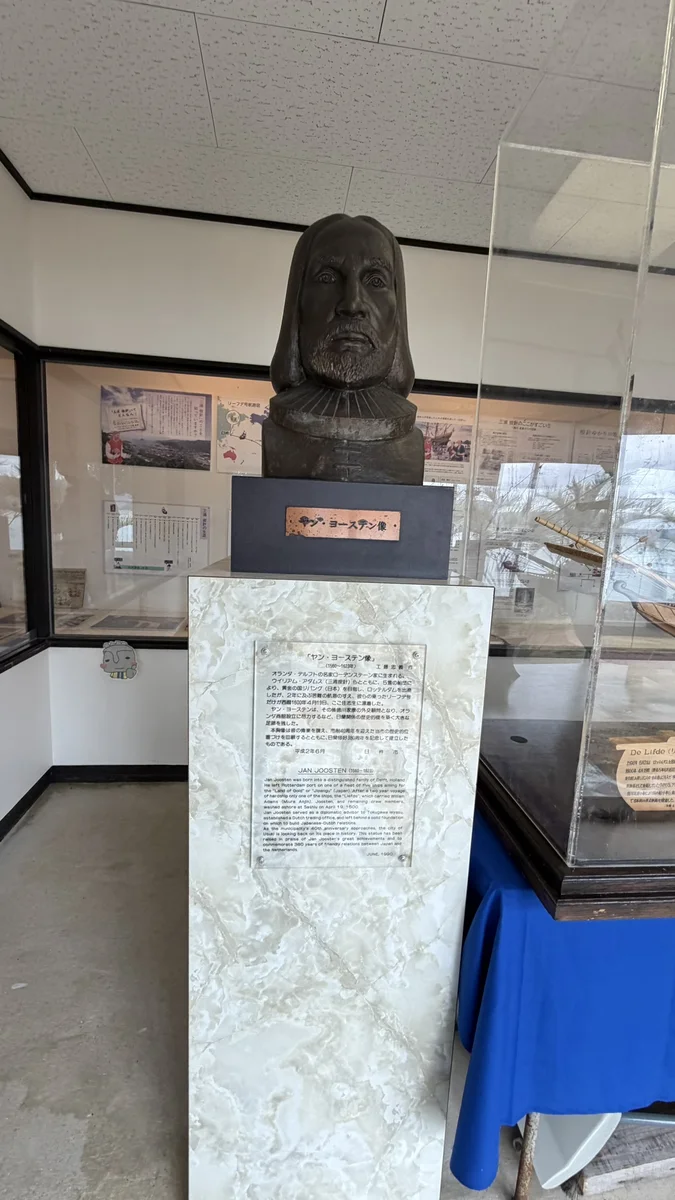
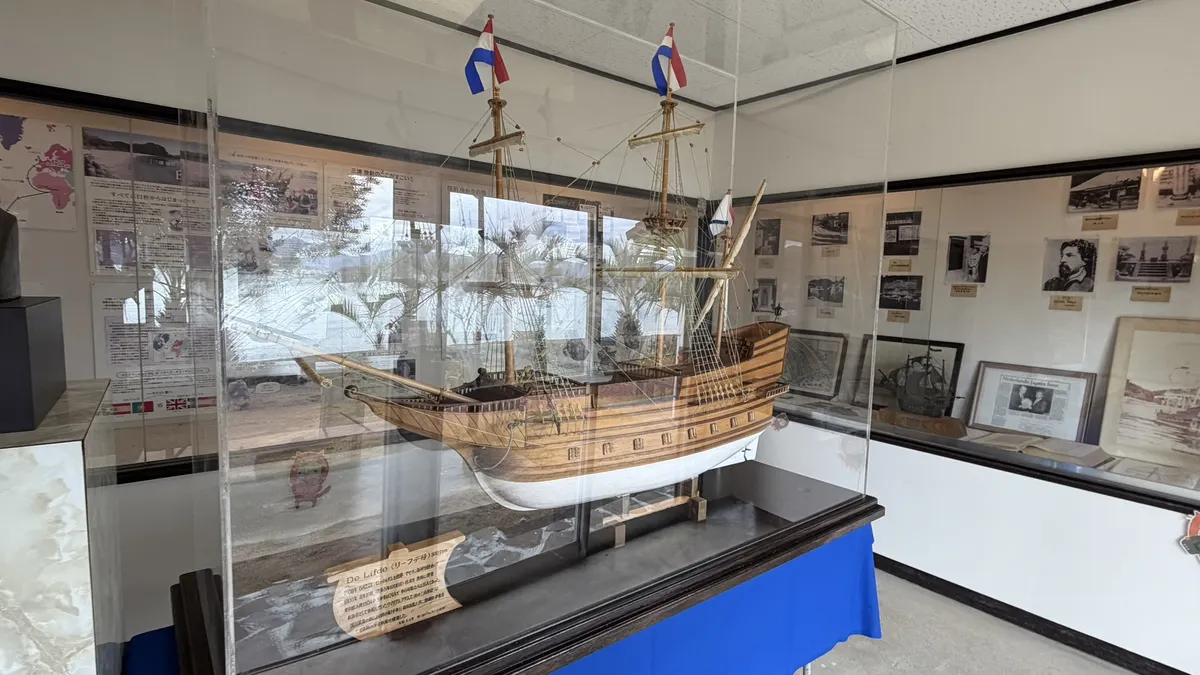
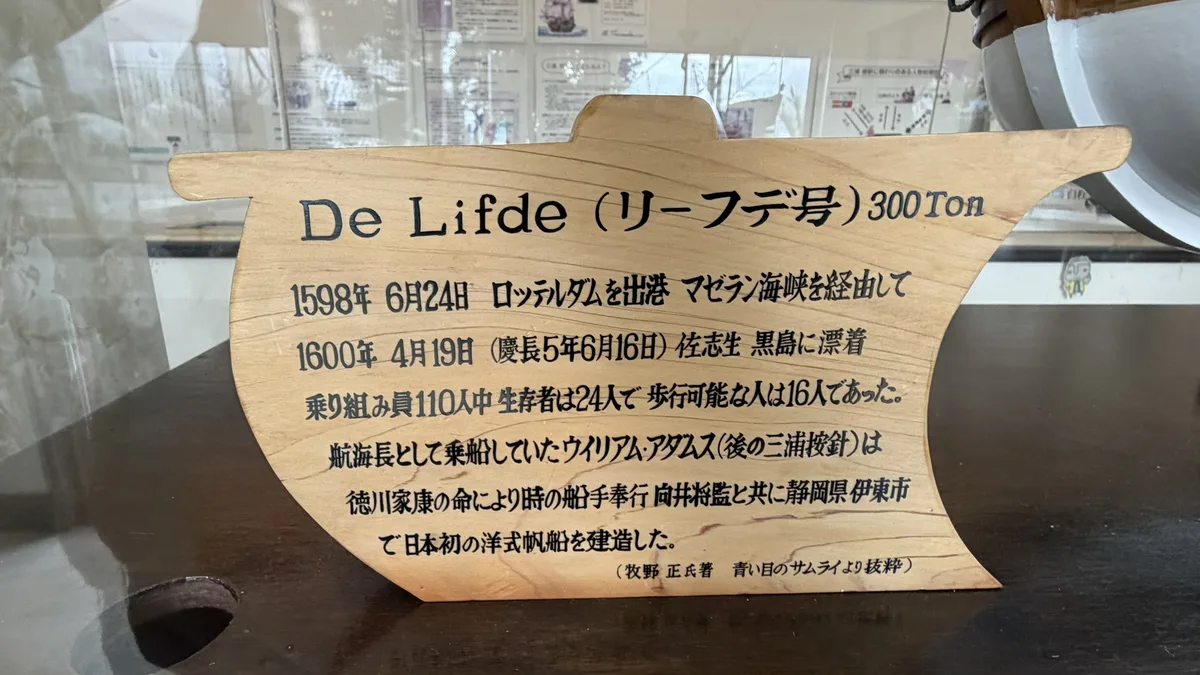
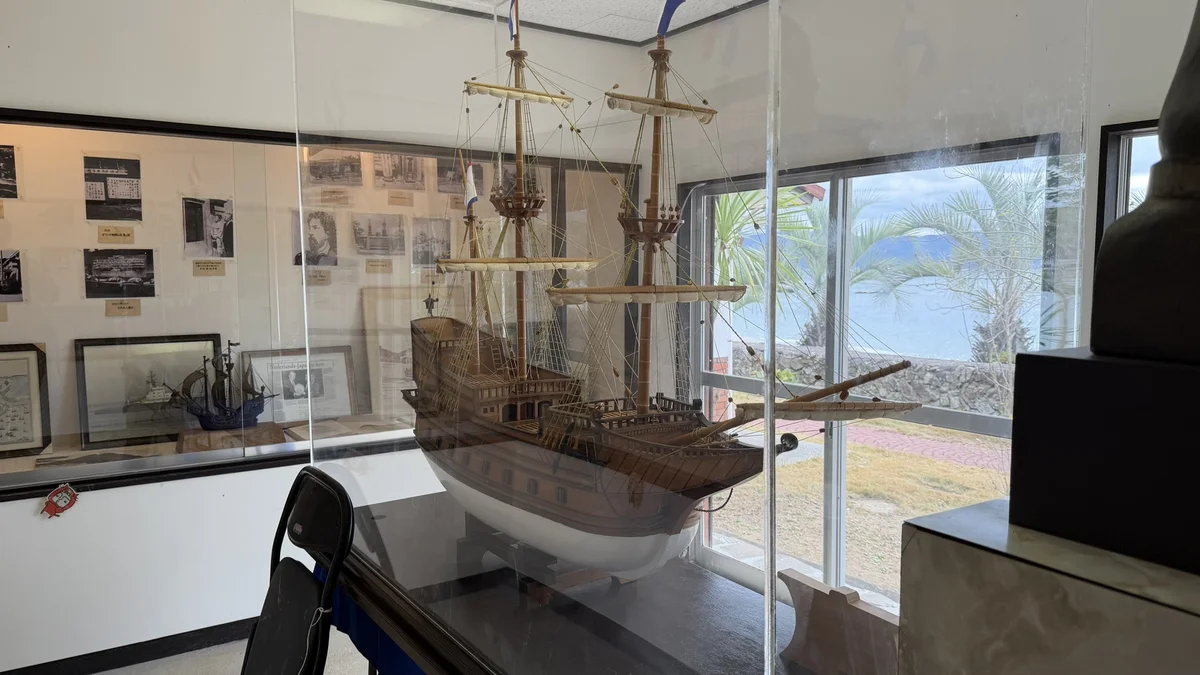
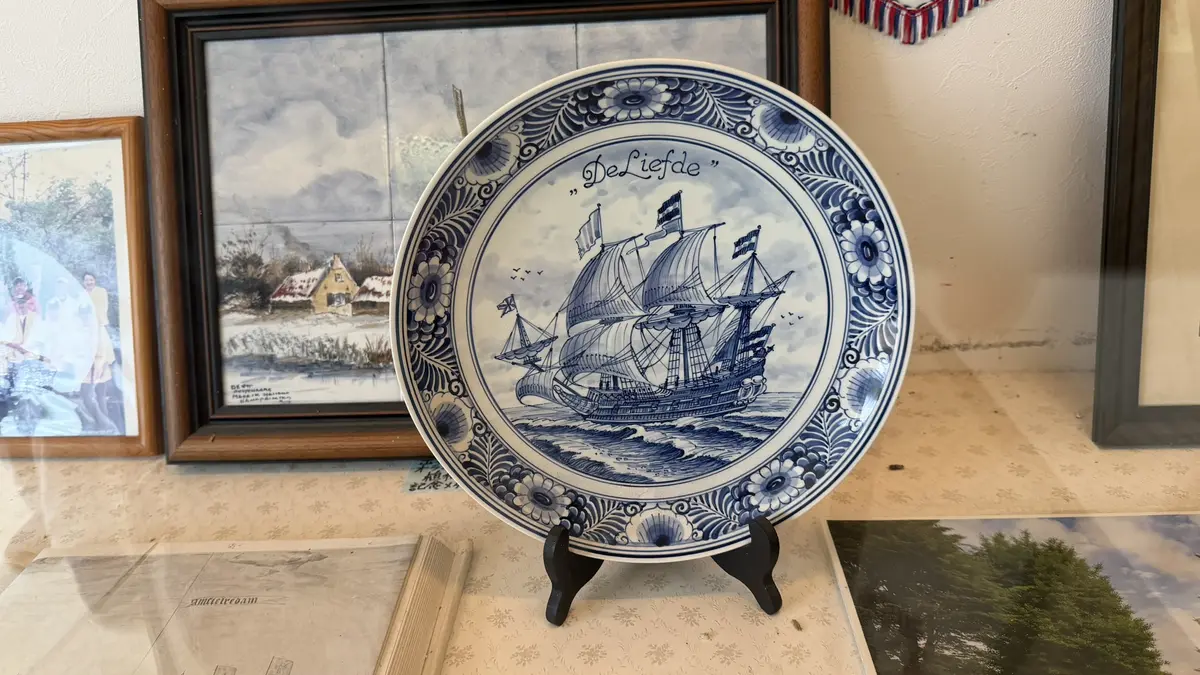
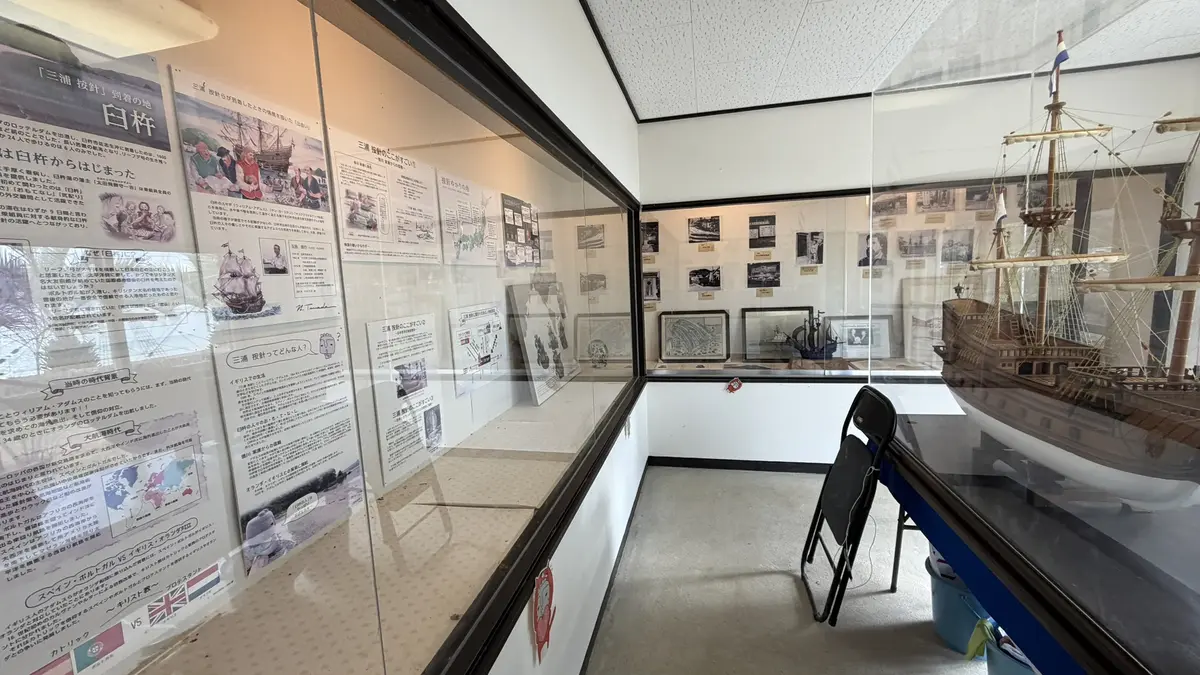
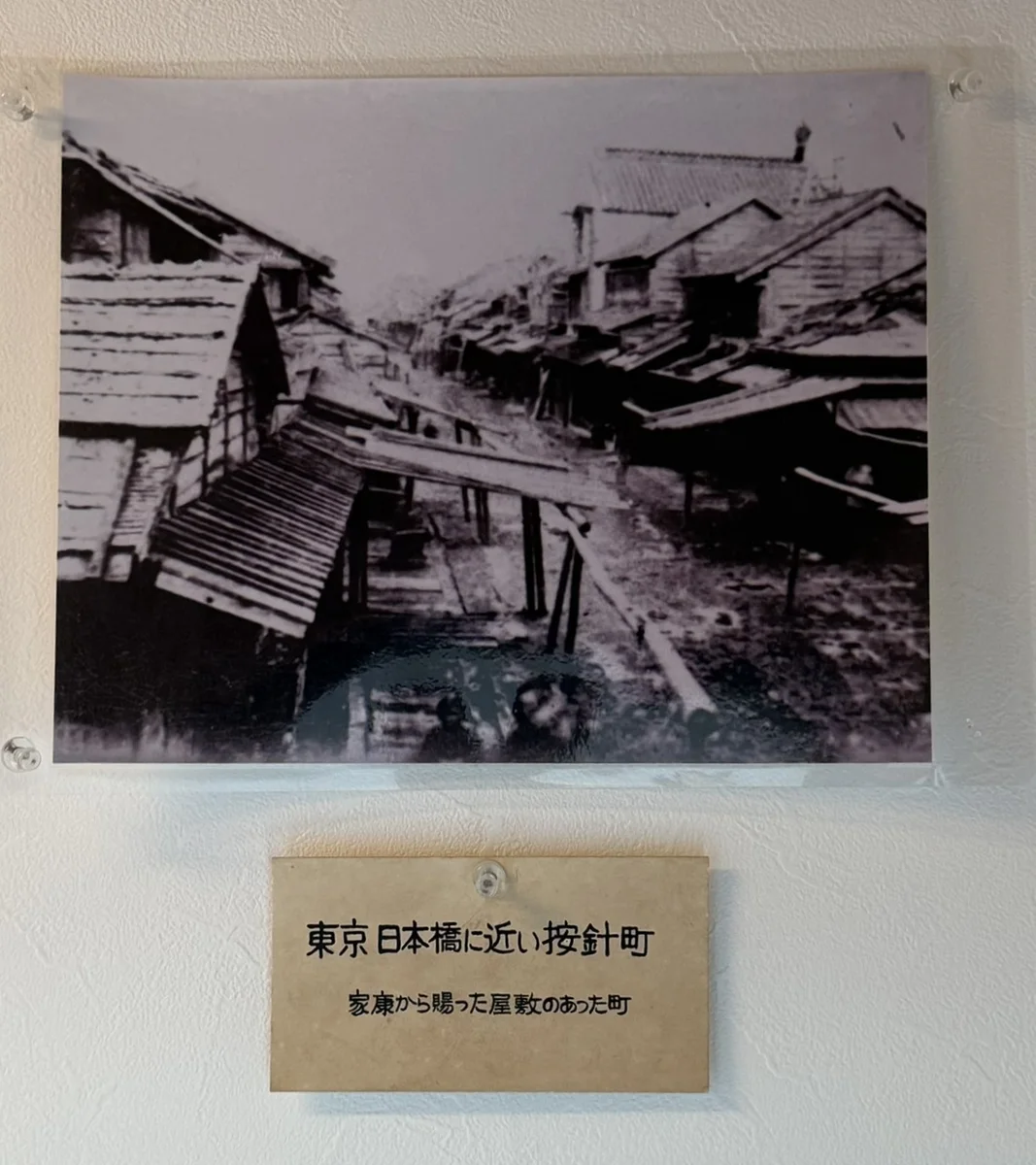
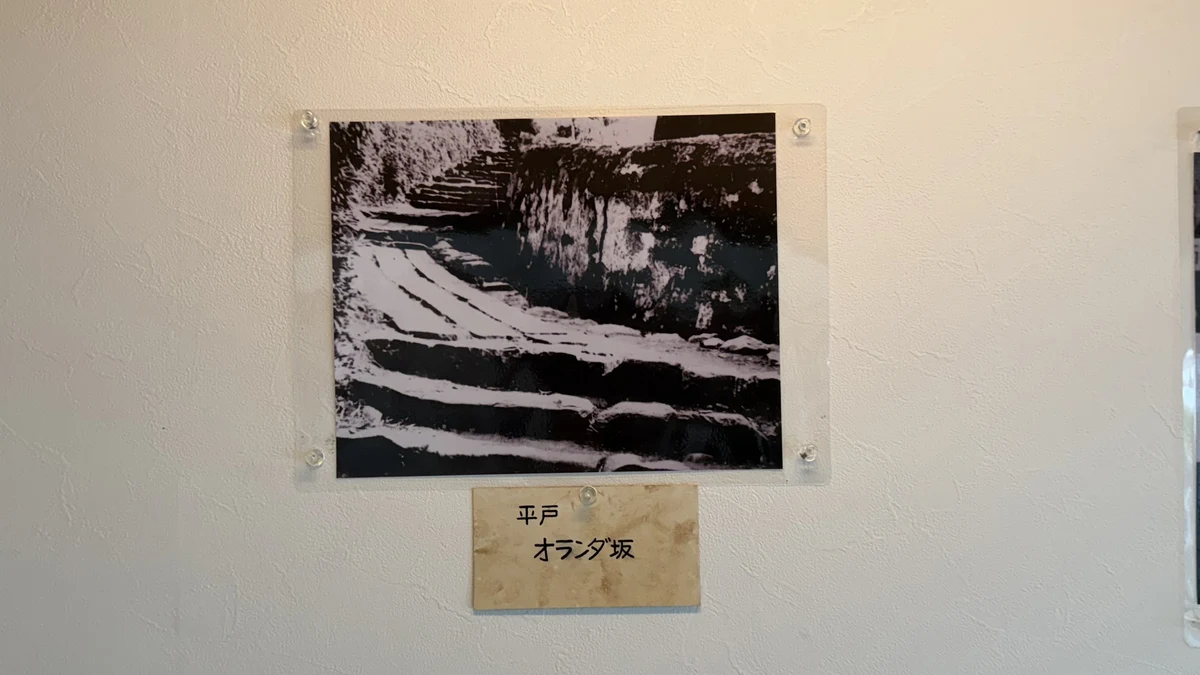
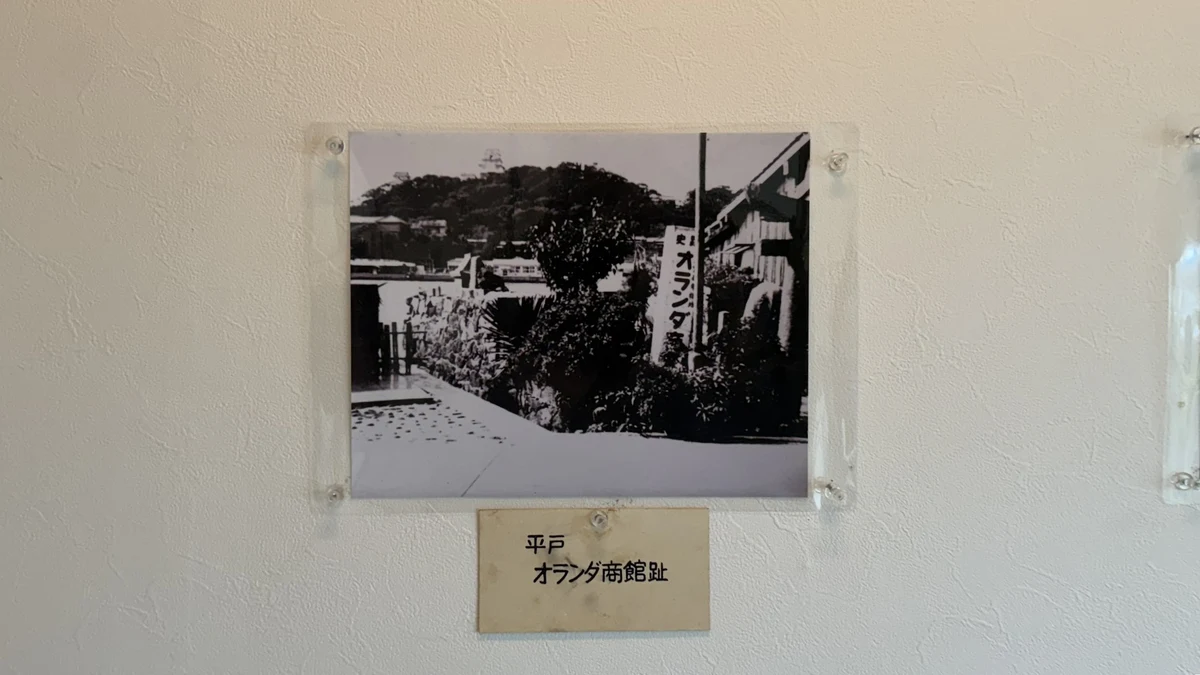
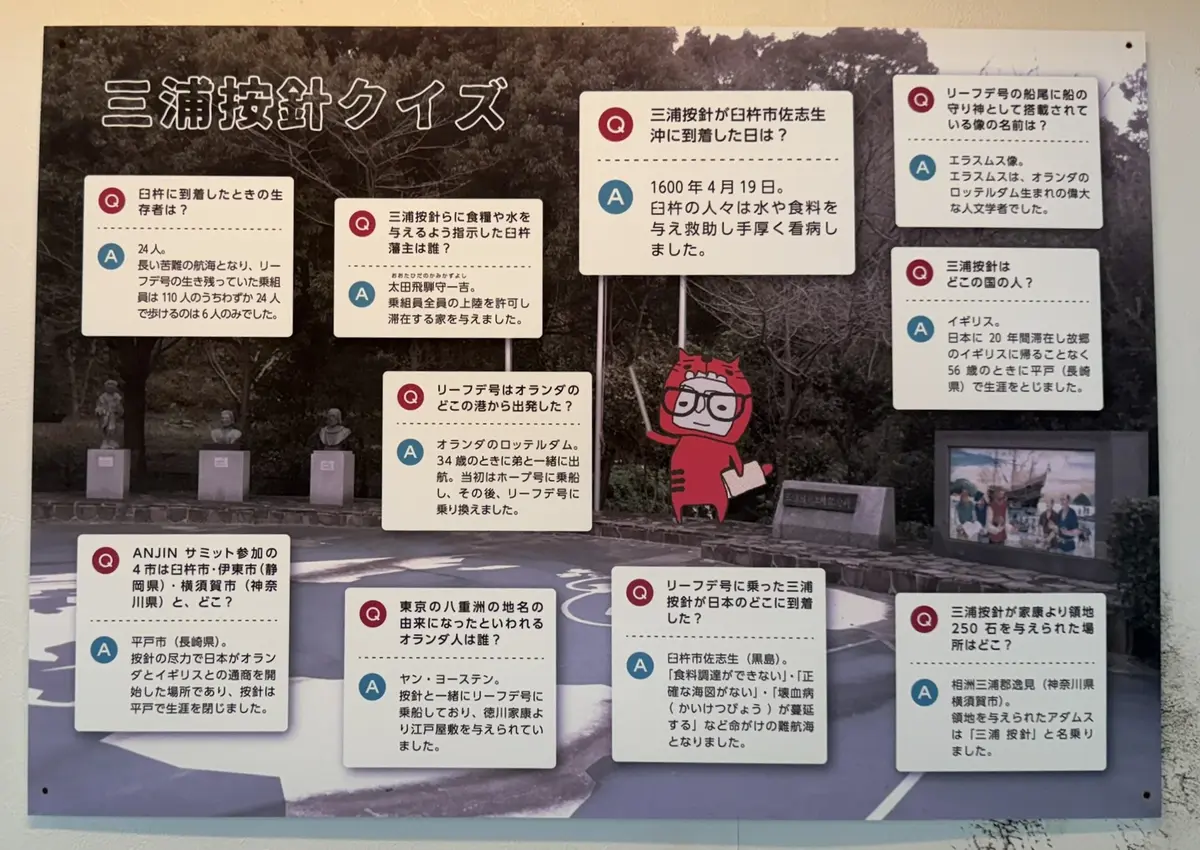
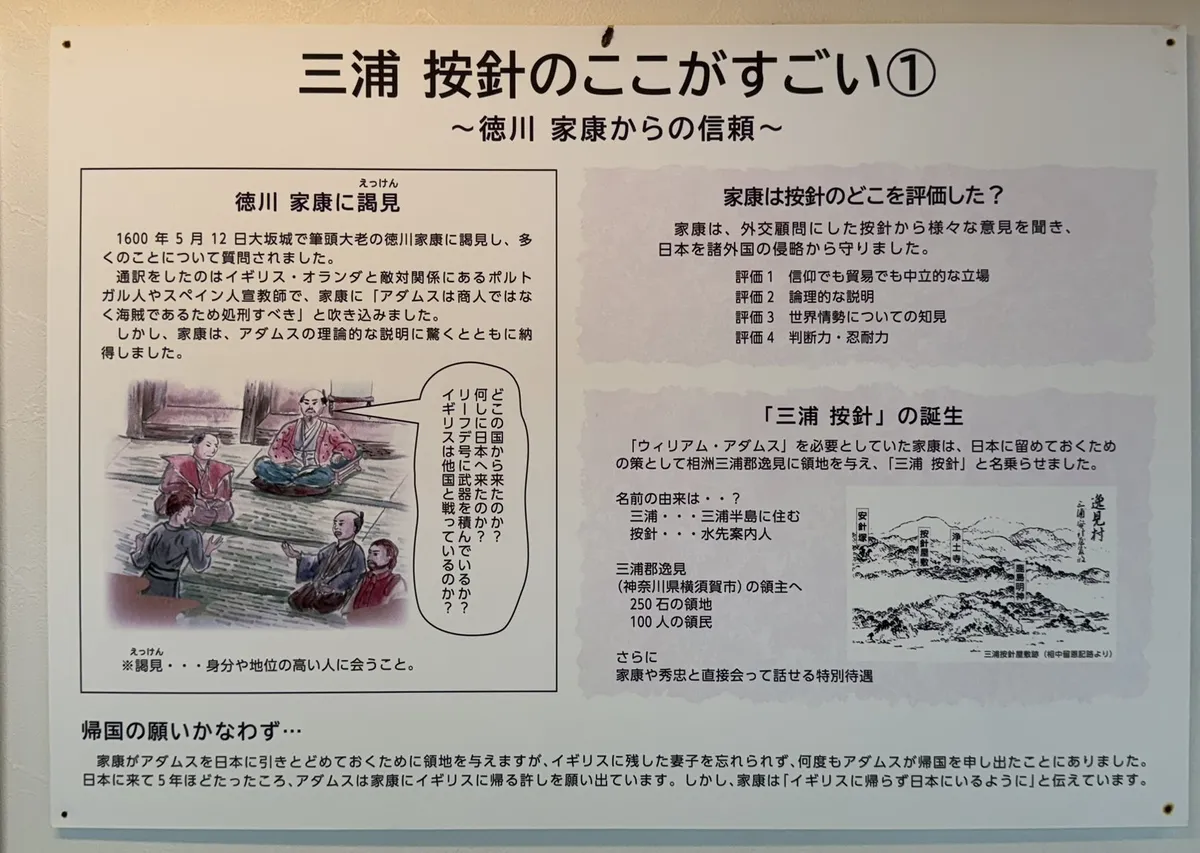
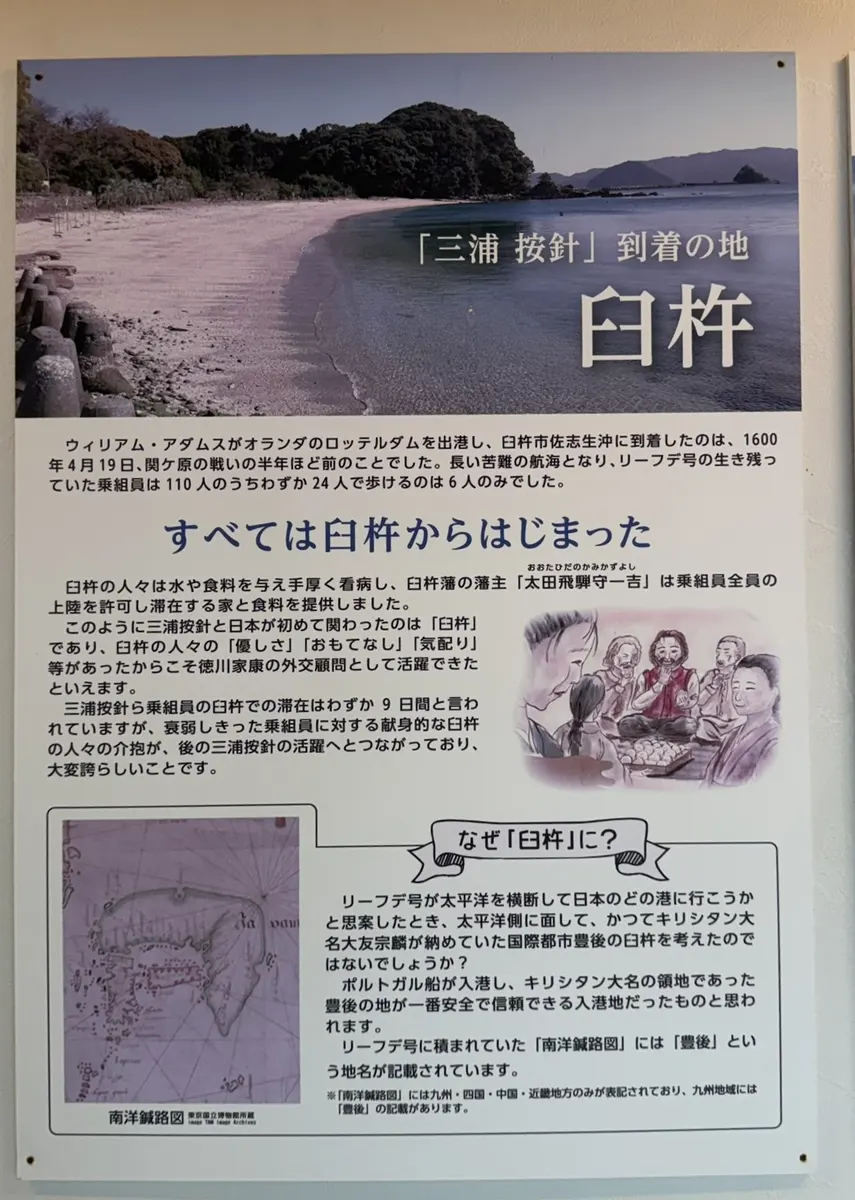
Tap a photo to enlarge it
Memorial park: statues and monuments 🎥 360°
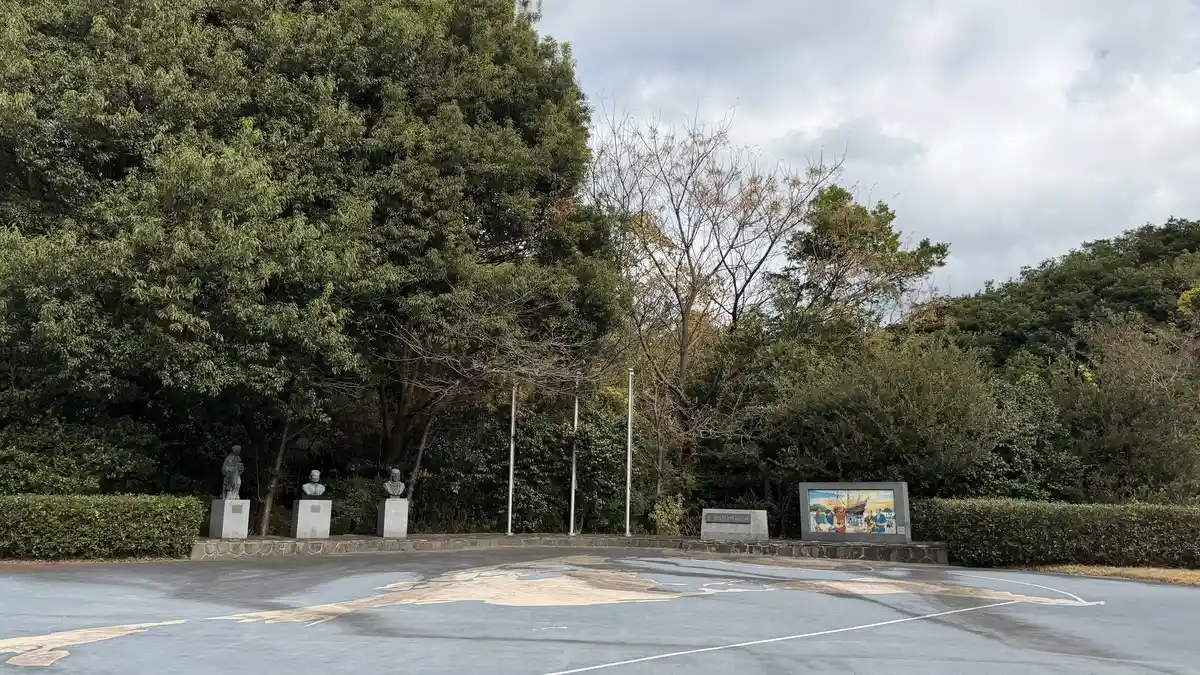
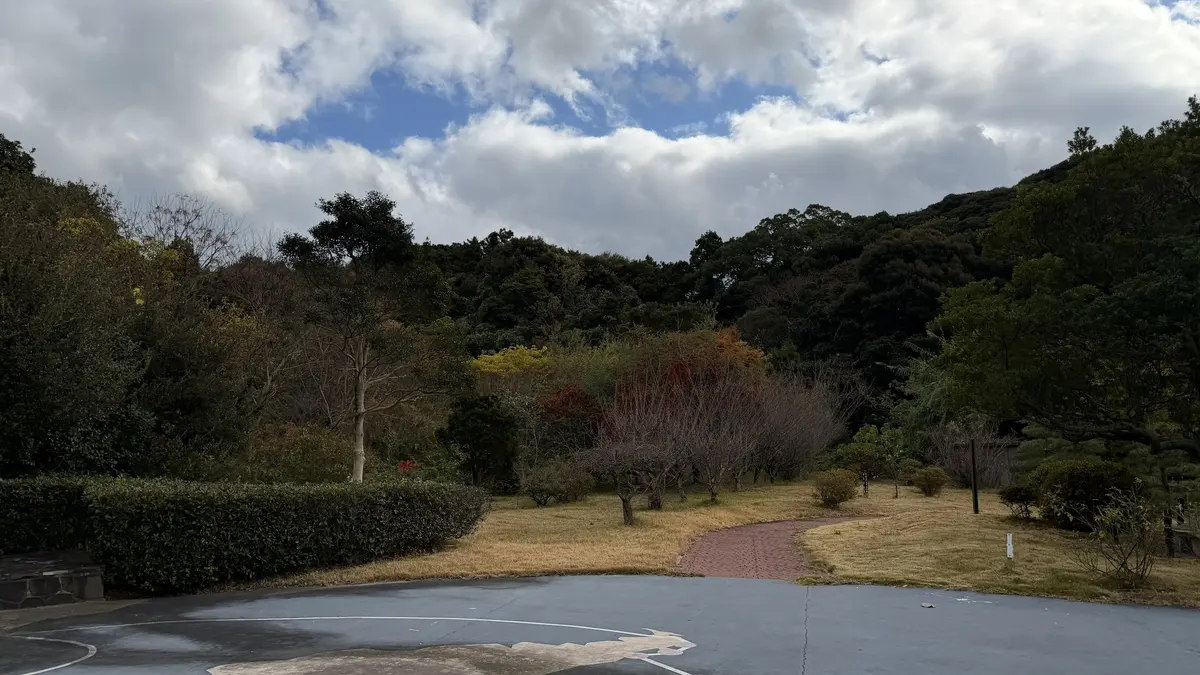
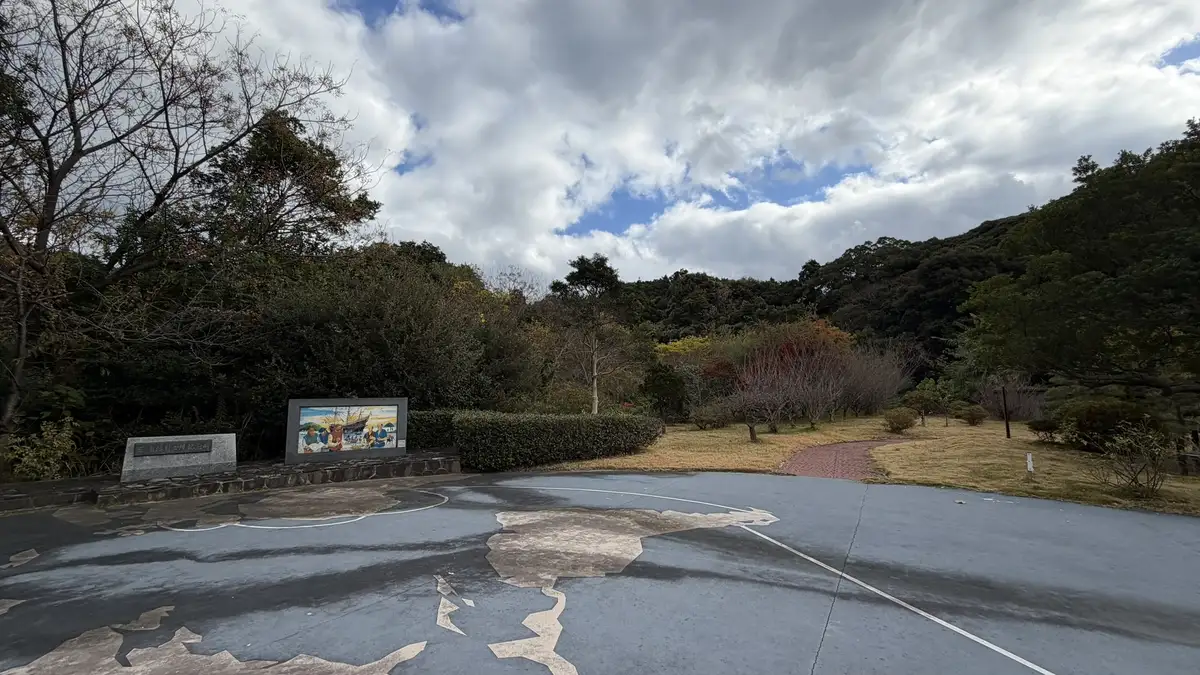
After the museum the author walked through the memorial park. Busts of William Adams and Jan Joosten, a statue of Erasmus whose plaque calls him the guardian of De Liefde’s stern, and a painted monument of the ship’s arrival stand together, with a world map painted on the ground of the plaza.
Panels titled “Arrival of De Liefde”, “Departure of De Liefde” and “The Dawn of Dutch-Japanese Friendship” describe the voyage and the landing at Sasiu. According to the tourism association, a monument marking Adams’s landing was put up on the island in 1966 (Showa 41).
What the author saw in the park. Names follow the plaques and signs.
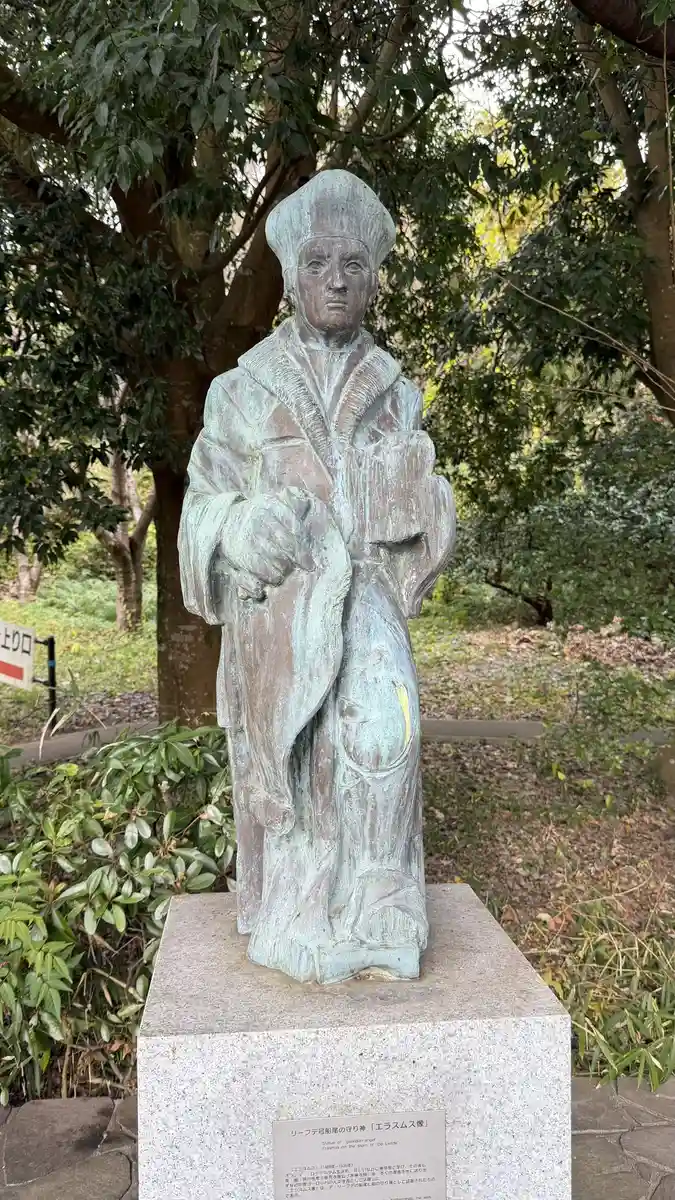
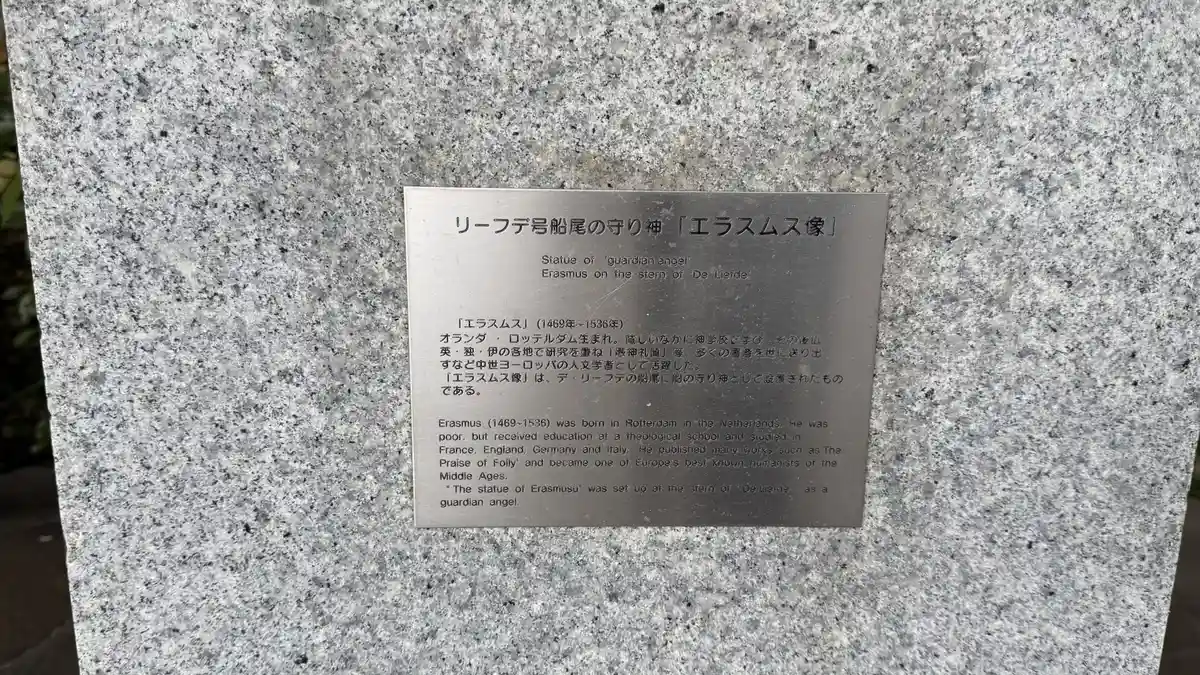
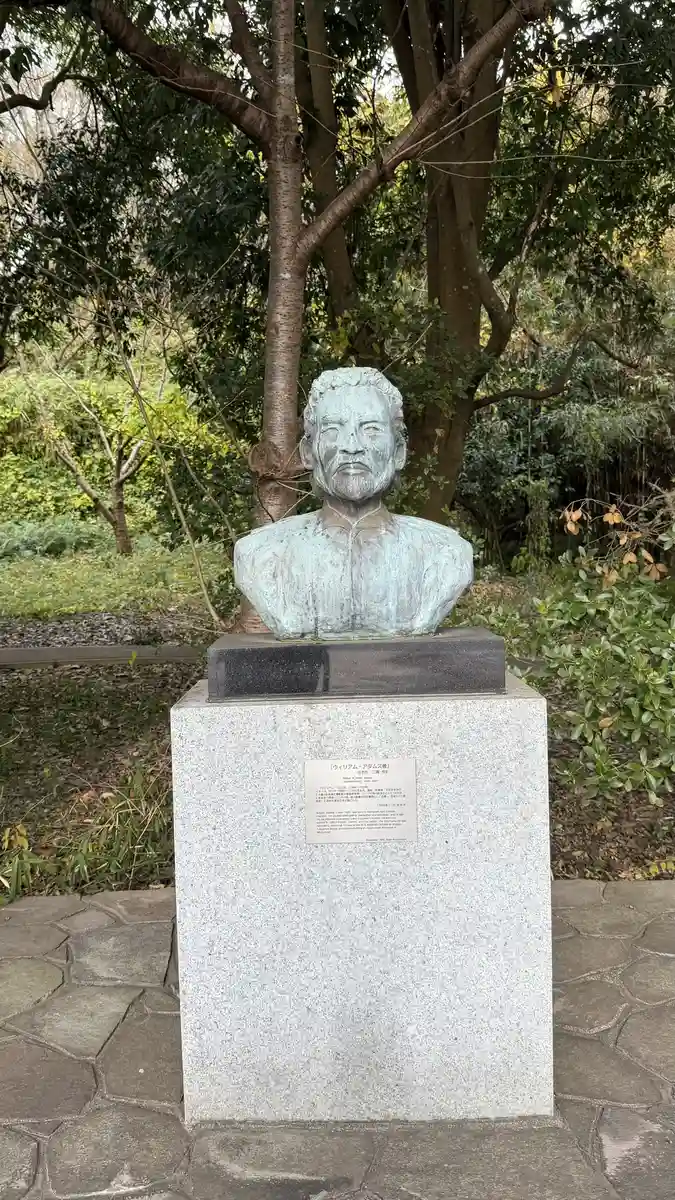
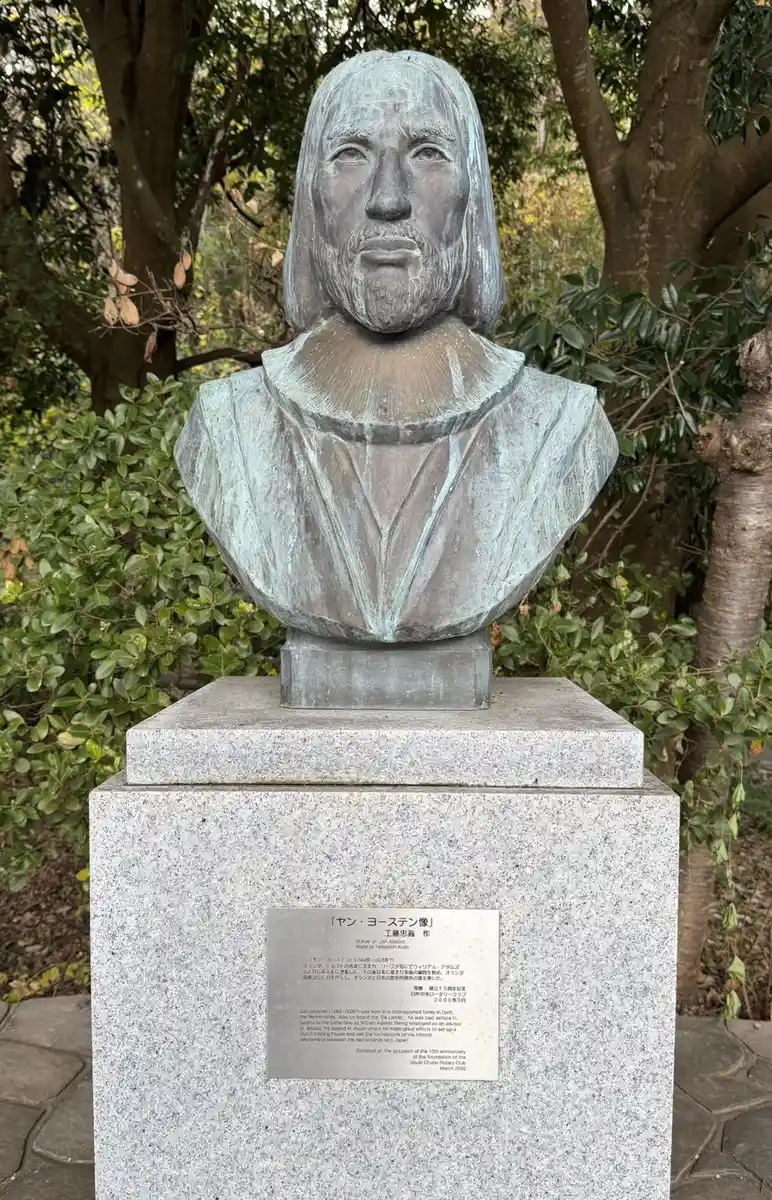
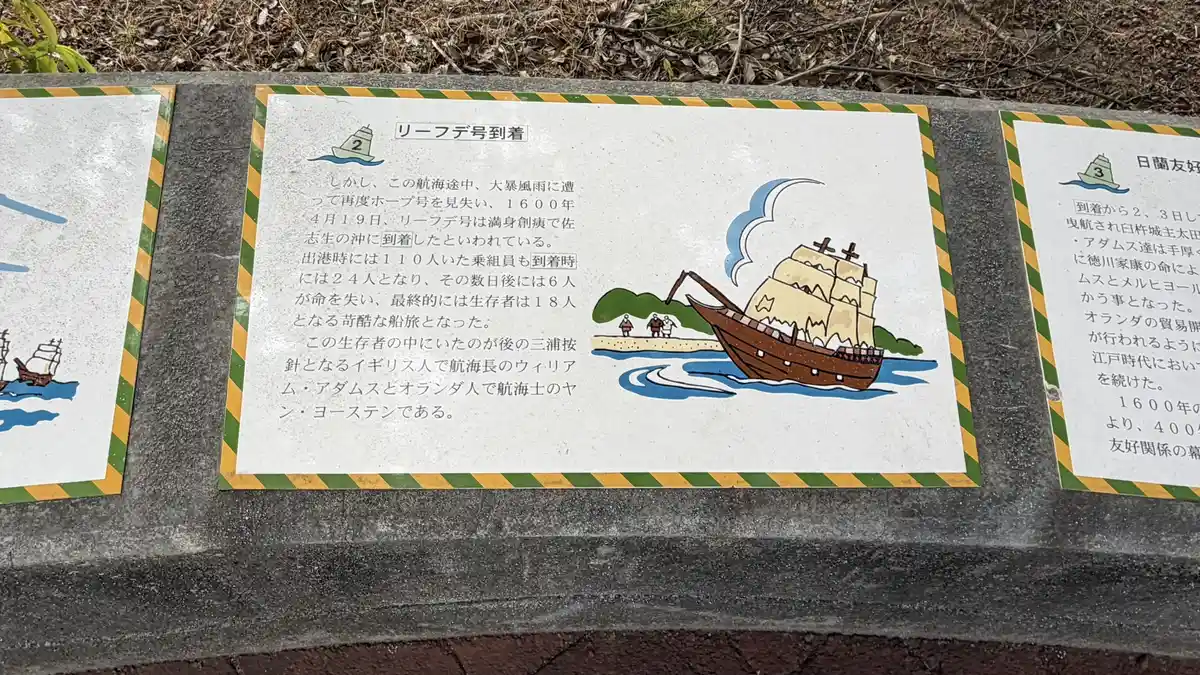
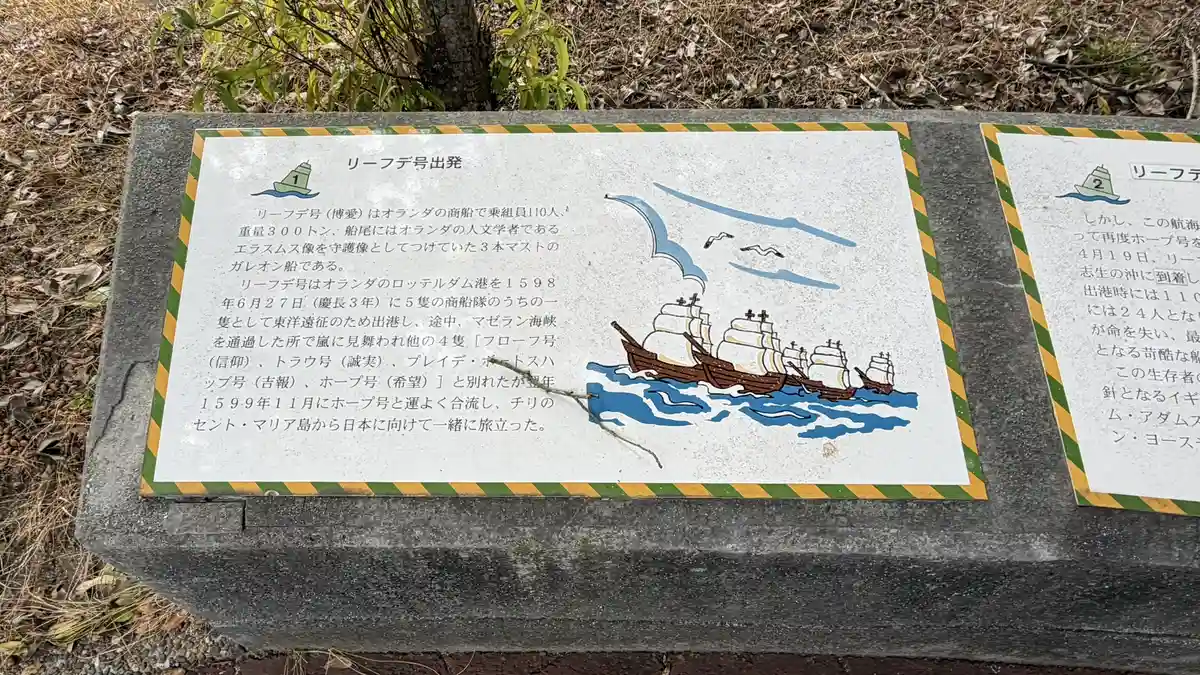
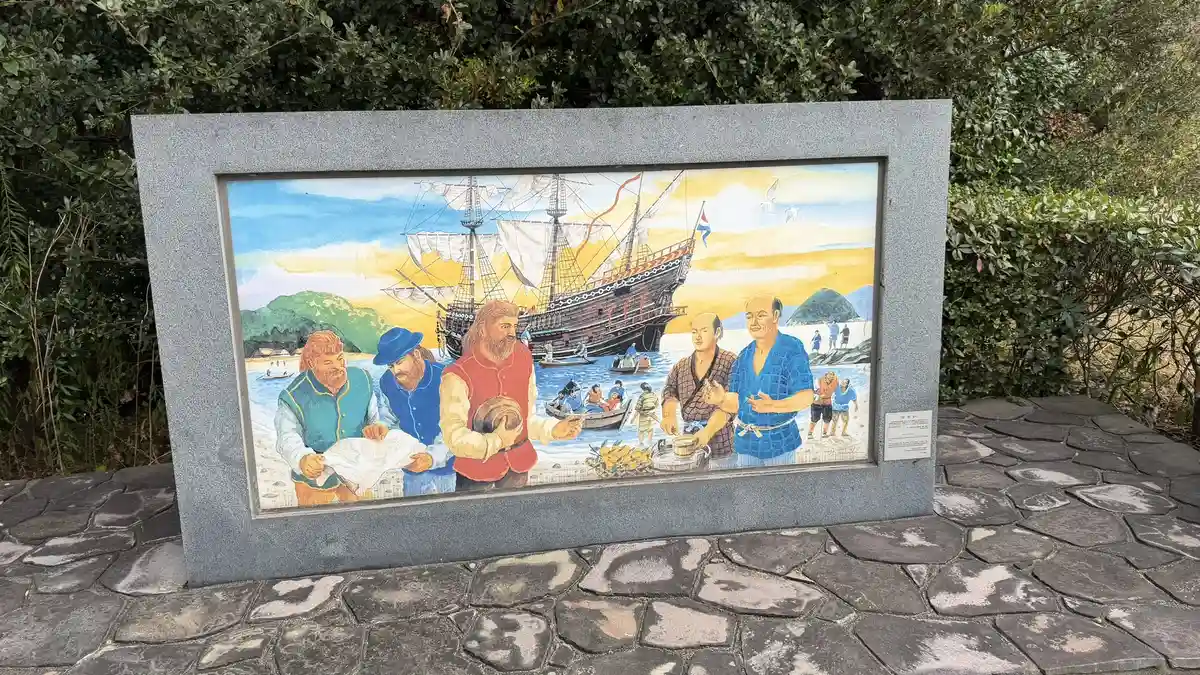
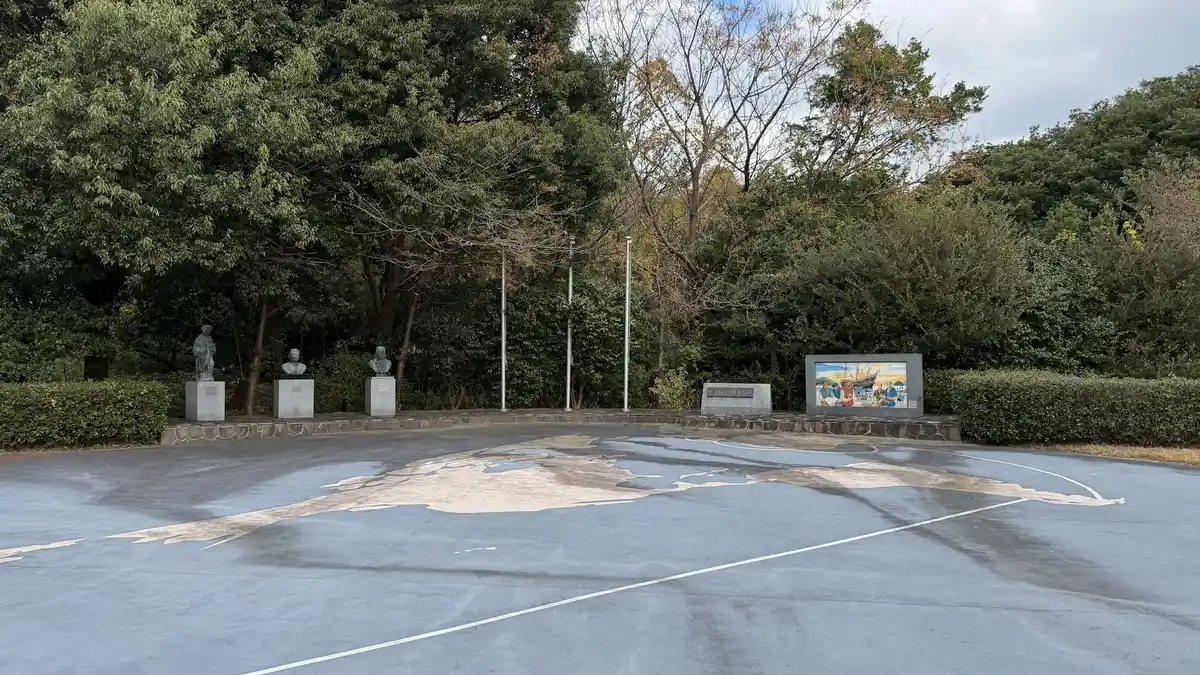
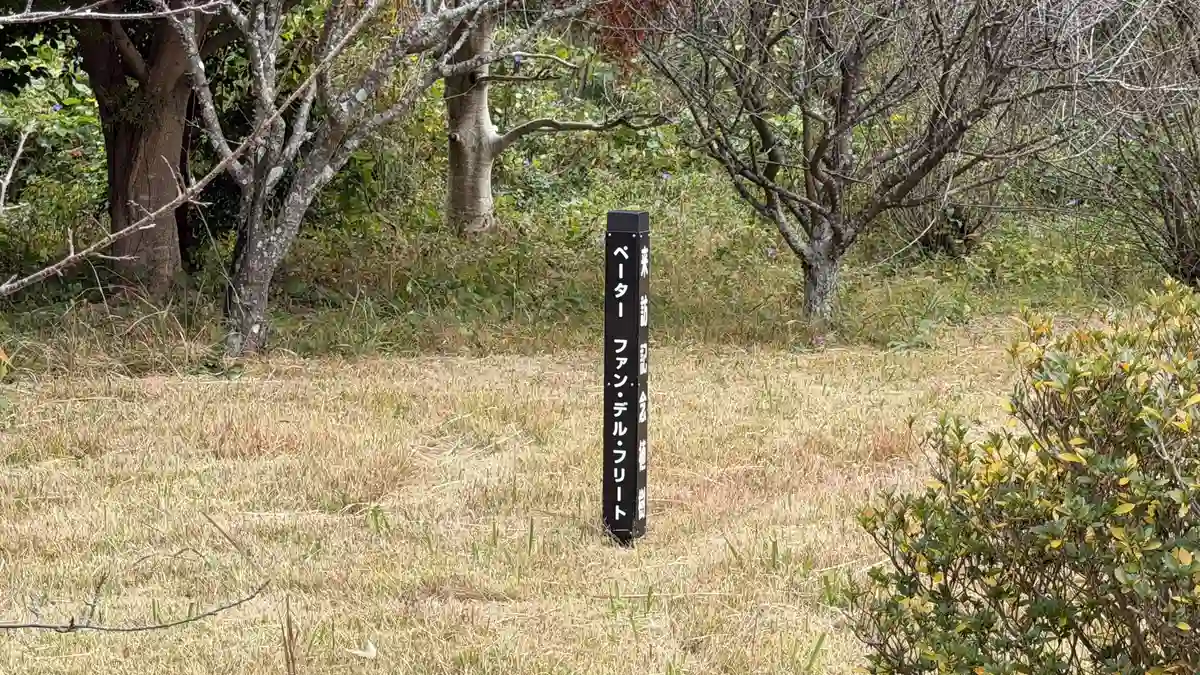
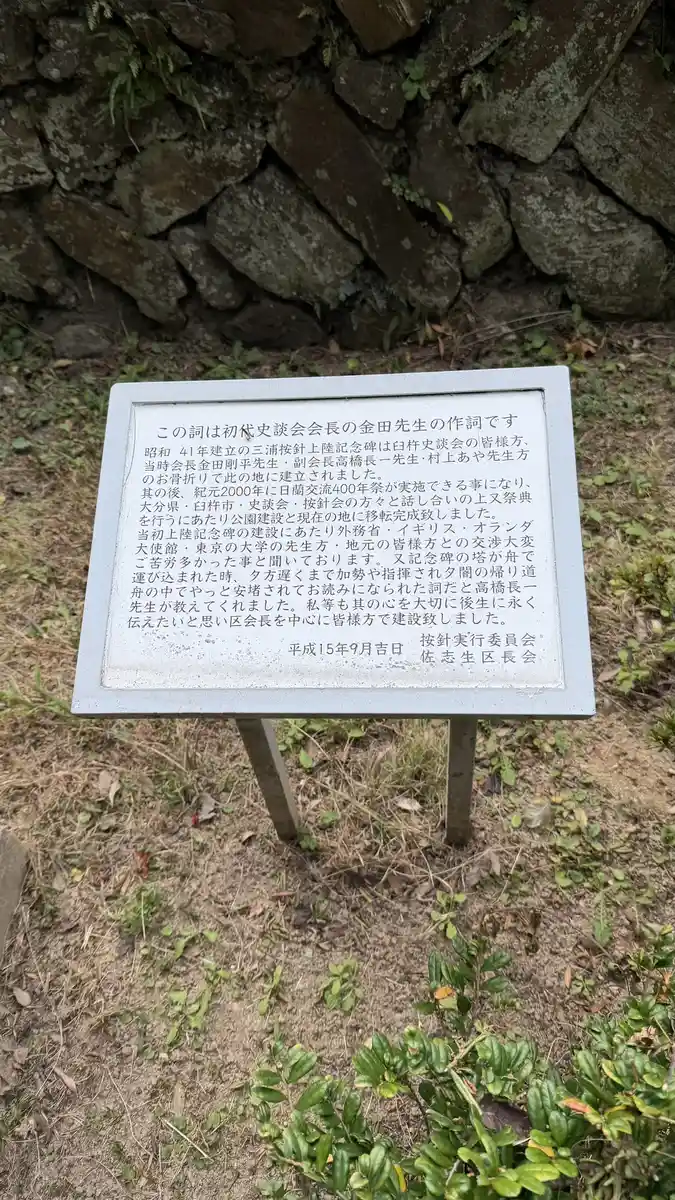
The black markers carry the names of people connected with Dutch-Japanese exchange.
The Lord’s Well (Tonosama no Ido) 🎥 360°
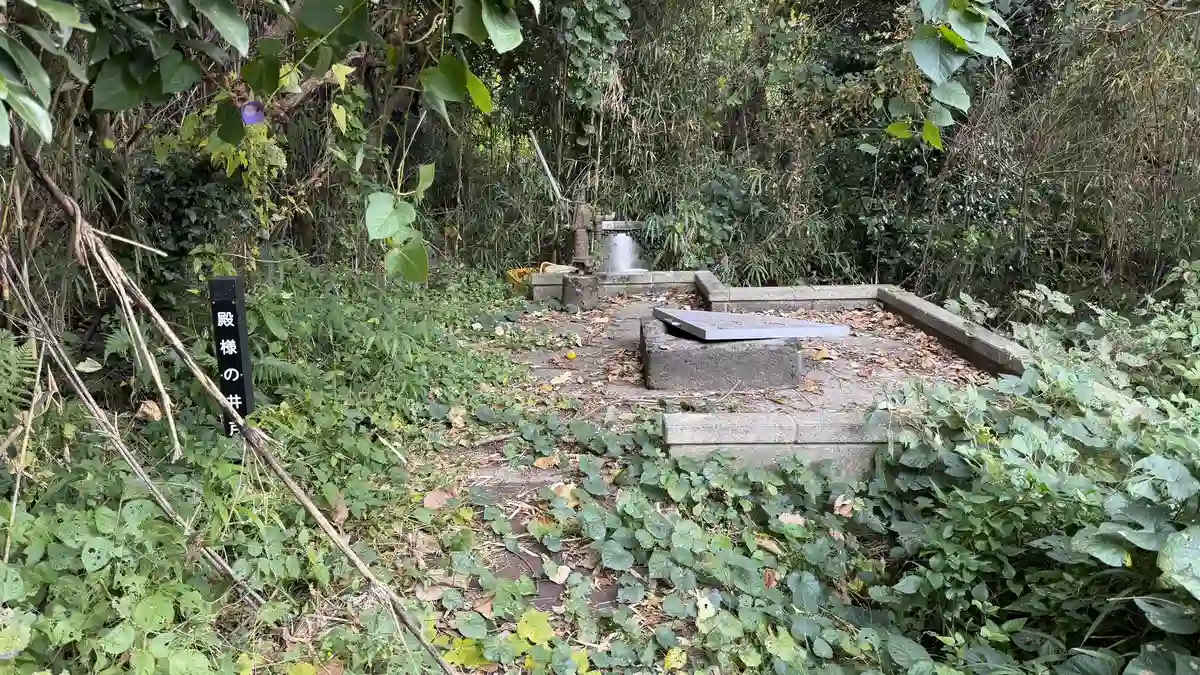
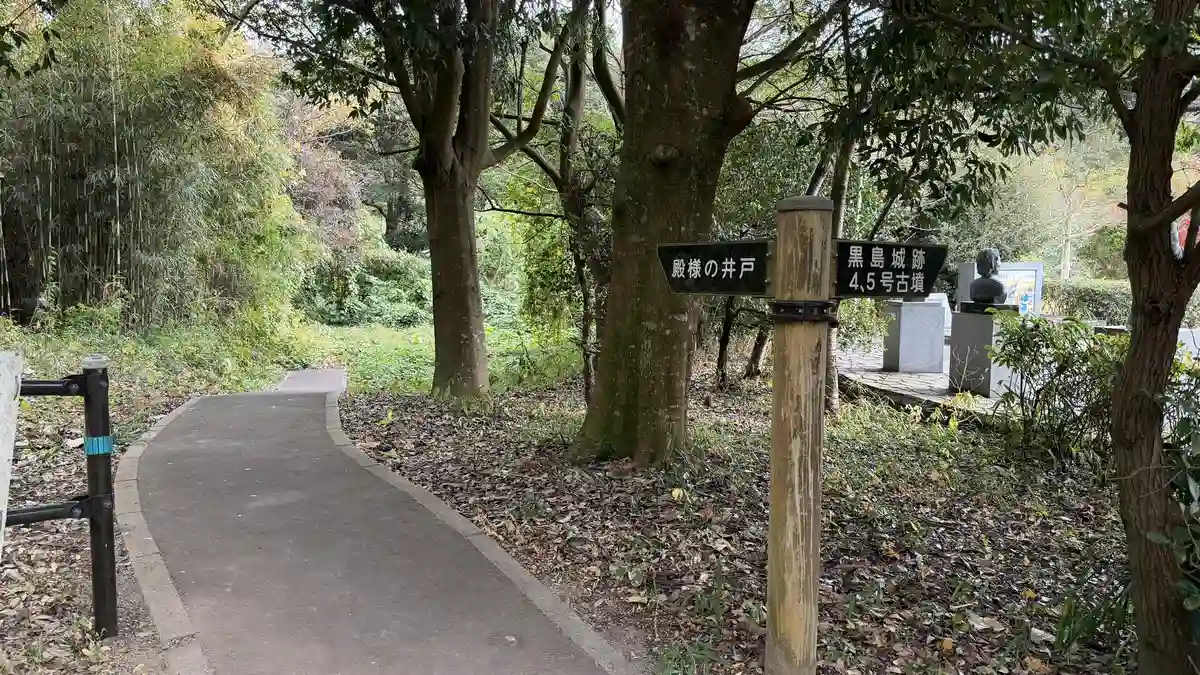
A wooden signpost at a fork in the path points to the well, which stands among trees with a marker beside it. Stonework surrounds a square opening. There was no explanation of its history on site.
Two island guides describe it as an old well just north of the memorial park, near the middle of the island, about 2 m deep and said to hold fresh water on such a small island (Kuroshima tanbo and SHIMAOMOI, both in Japanese). Neither source says who the “lord” was.
Kuroshima beach 🎥 360°
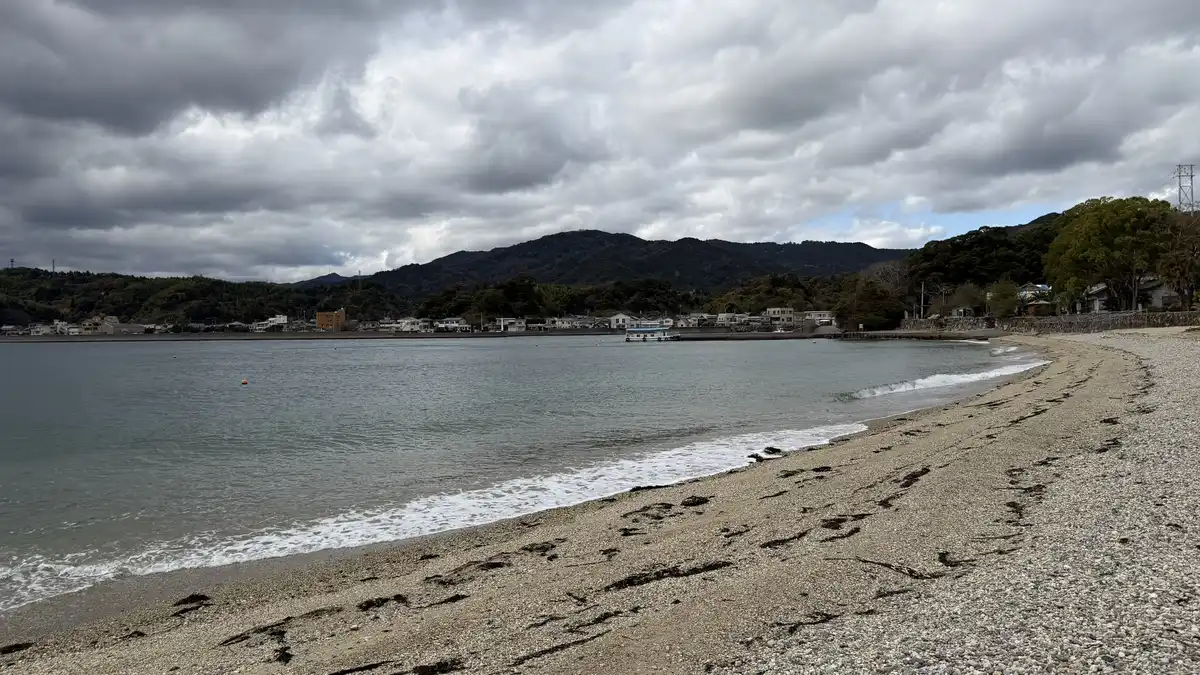
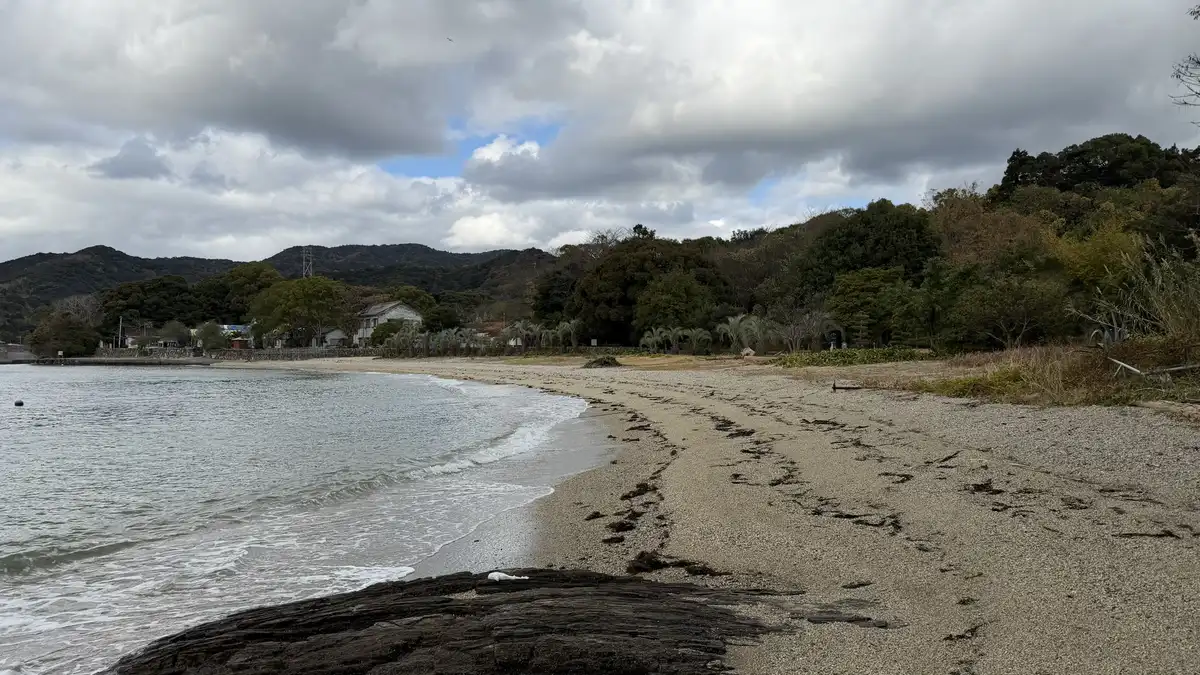
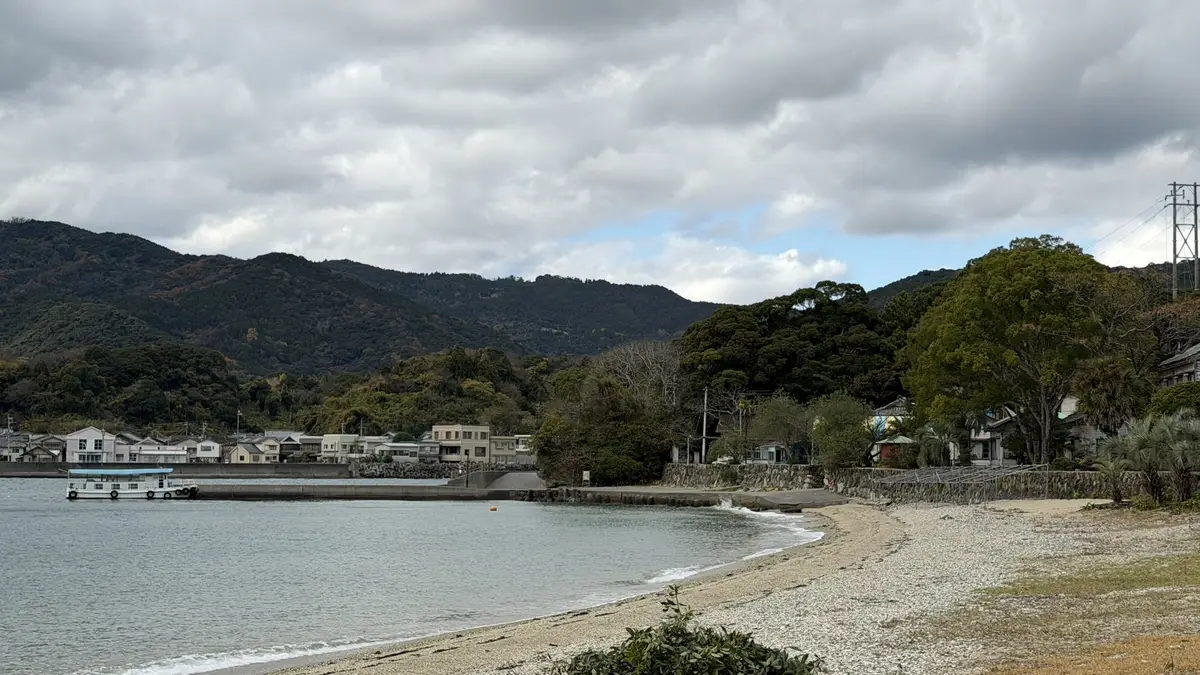
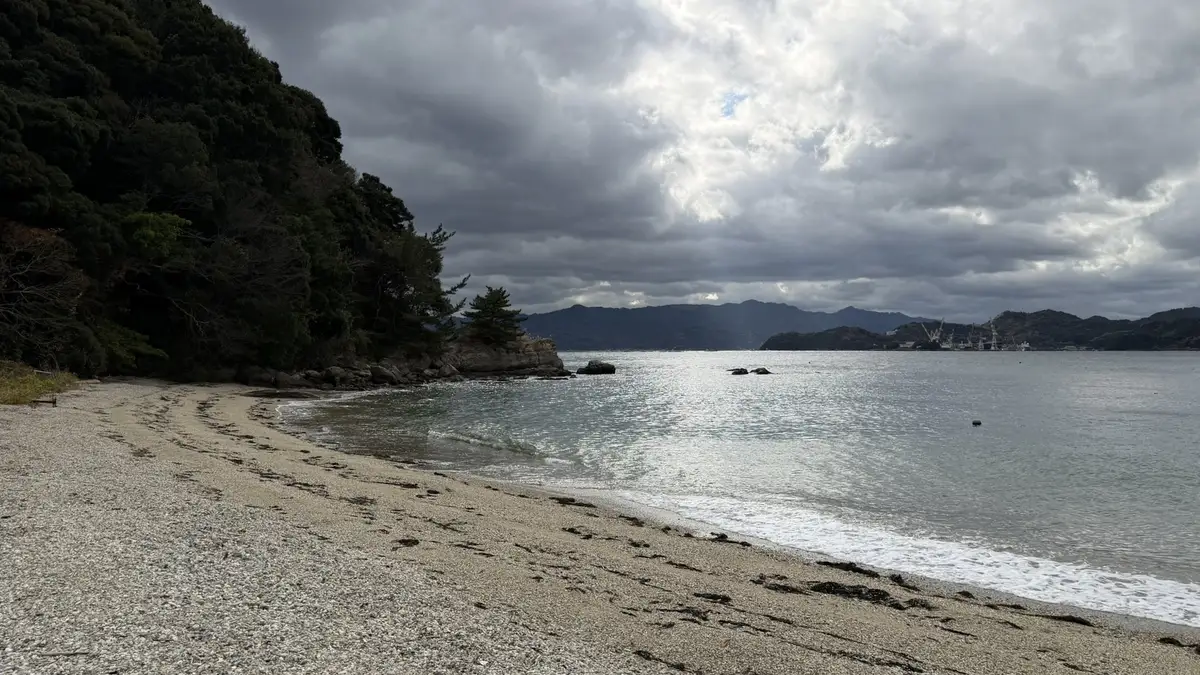
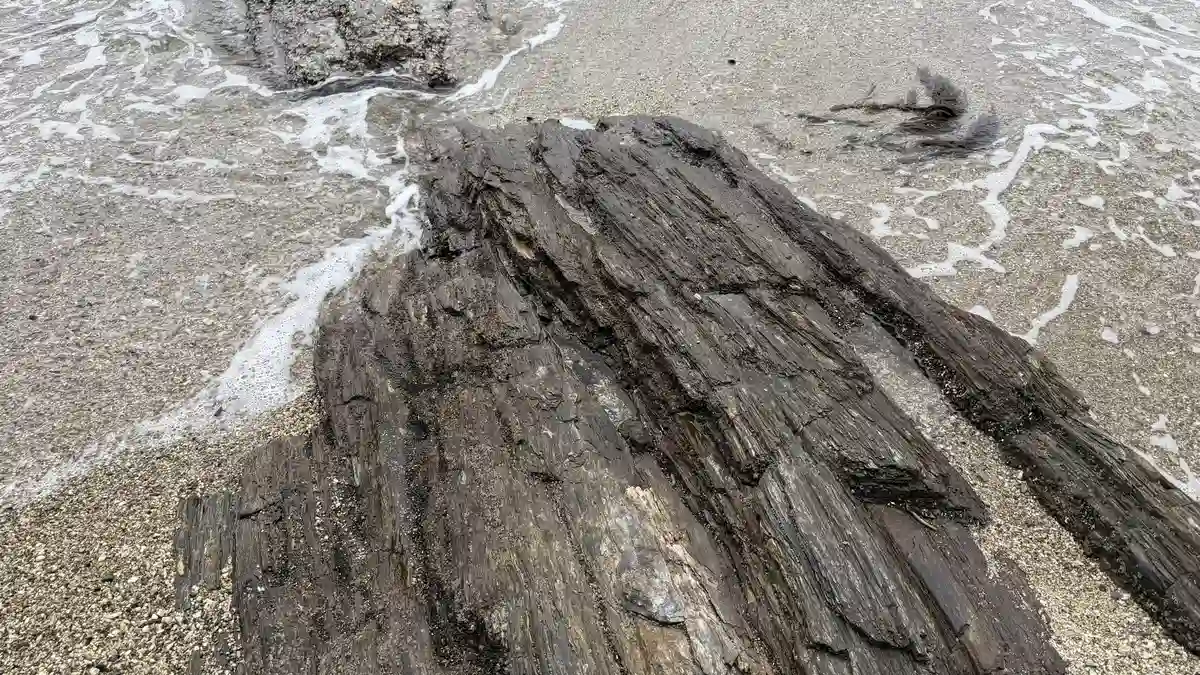
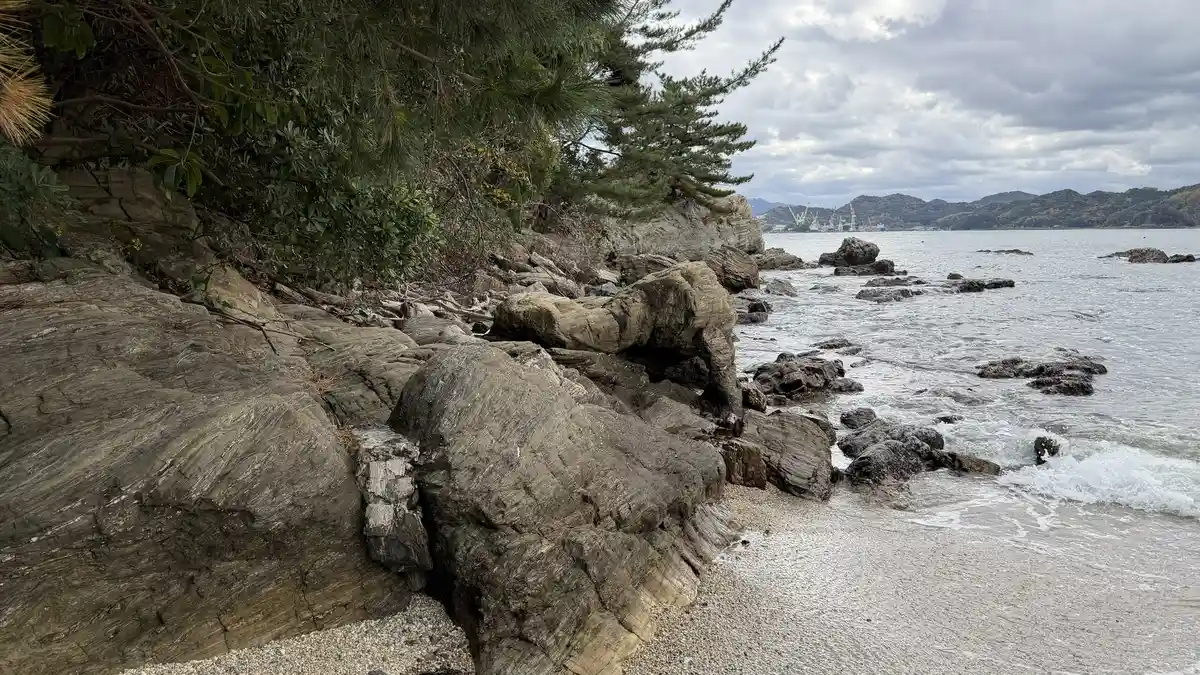
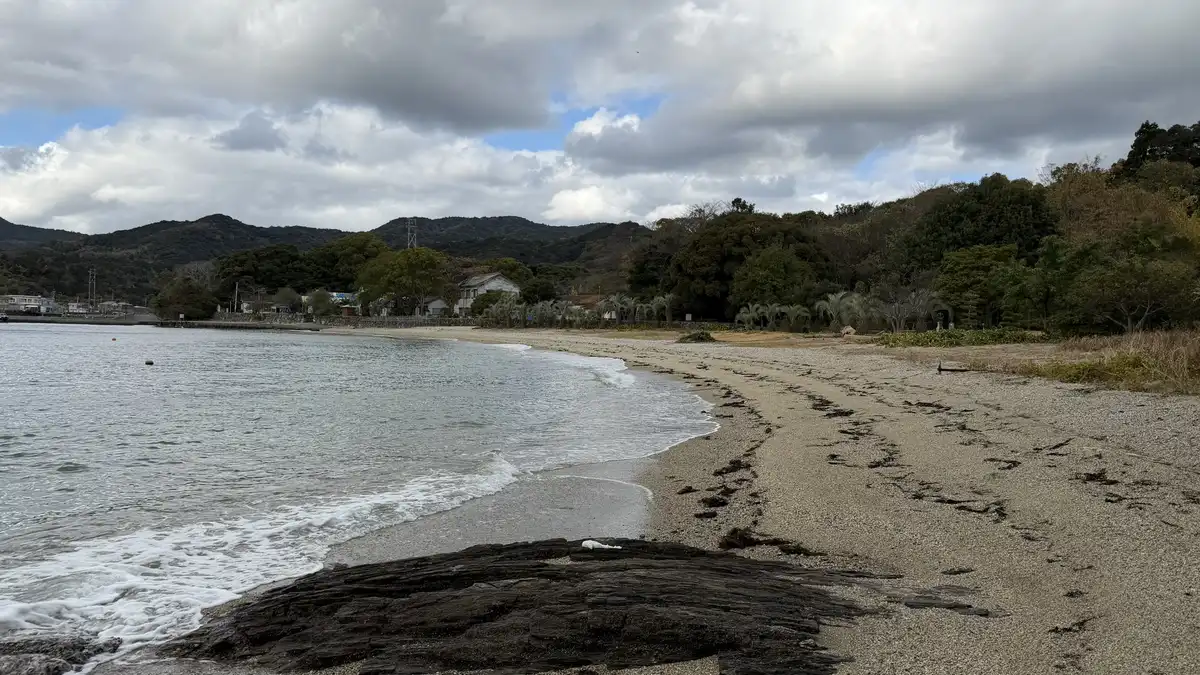
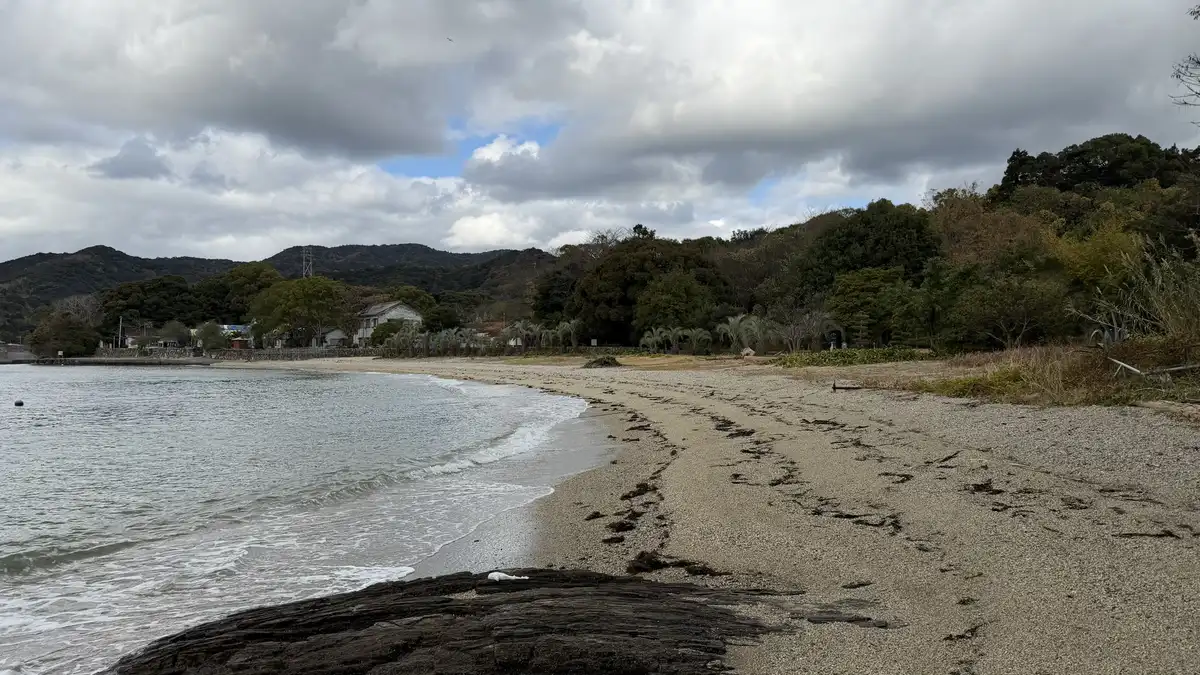
The visit ended on the beach. It curves along the bay, with the mainland hills across the water. Oita Prefecture’s tourism site says the island is listed among the Ministry of the Environment’s 100 best swimming beaches, and that swimming and camping run from early June to the end of August. In December the author simply walked the sand and looked at the view.
Time needed and walking around the island
The author walked from the pier to the museum, the memorial park, the well and the beach, and then finished. That is a visit to four places, not a walk around the whole island.
| Time on the island | About 11:50 to 12:40 (50 minutes). Author, 12 December 2025 |
|---|---|
| Of which, museum | About 25 minutes. Author |
| Crossing, one way | 3 to 5 minutes. Oita Prefecture tourism site |
| Walk, station to landing | About 20 minutes. Oita Prefecture tourism site |
| Calling and waiting for the boat | Cannot be fixed, since there is no timetable. The author phoned before the trip and again on arriving at the landing |
The museum has many panels, so reading them all may take longer than 25 minutes.
What to wear and bring
Paths on the island are mostly sand and dirt. The author had no trouble, but recommends comfortable shoes that you do not mind getting dirty.
The kiosk opens only in July and August (irregular closing days), and sells only shaved ice and instant noodles, according to the official listing. At other times, bring drinks with you before you cross. Toilets, showers and changing rooms are listed too, but the author did not use them in December, so ask Kuroshima-so whether they are available out of season.
William Adams, the Liefde and the SHŌGUN connection
William Adams, known in Japan as Miura Anjin, was born in Kent, England, in 1564. He learned shipbuilding and navigation and became a ship’s pilot, then sailed for the Far East as pilot of De Liefde, part of a Dutch fleet.
After storms along the way, the ship reached Sasiu Bay, today’s Kuroshima, on 19 April 1600. Adams’s diary says about 24 people were aboard, including the sick. Ota Kazuyoshi, then lord of Usuki Castle, gave them medicine and food and sent word to Tokugawa Ieyasu in Osaka.
Ieyasu met Adams in Osaka and was interested in his knowledge of navigation and world affairs. He had De Liefde taken to Uraga, and Adams became his trusted adviser, receiving the Japanese name Miura Anjin and an estate in Miura District, Sagami.
The FX series SHŌGUN based its pilot, John Blackthorne, on William Adams. The series is fiction, and this page does not claim that the island appears in it. For the difference between the show and the record, see Fact vs Fiction in SHŌGUN and SHŌGUN Characters and the Real Historical Figures Who Inspired Them.
Four cities tied to Adams (Usuki, Itō, Yokosuka and Hirado) signed the ANJIN Project partnership declaration in 2013. Usuki describes itself as where De Liefde arrived, Itō as where he built Japan’s first Western-style sailing ship, Yokosuka as the site of his estate, and Hirado as where he helped set up the trading posts and spent his last years. The museum shows old photographs of Hirado and of Anjincho near Nihonbashi.
More places linked to William Adams
Kuroshima is where Adams arrived, and his later life left traces across Japan. If you want to follow the story further, these pages are the next step.
Combining Kuroshima with other stops and staying overnight
On the same day the author also visited Sakurahachiman Shrine, which has a Tōshōsha, and Tochihara Hachimangu, the Ichinomiya of Bungo Province.
Usuki Castle ruins, the former seat of Otomo Sorin, are a park in the town with stone walls still standing. They belong to a different part of local history from the Anjin story. The author did not visit, so visit time and how to fit it with Kuroshima are not confirmed.
You do not need to stay on the island. Kuroshima-so lists tatami rooms (room only) and camping, but the author made a day trip and did not check overnight stays. Sasiu Station can be reached from both Oita and Usuki on the JR Nippo Line.
FAQ
When the author visited, there was no regular ferry. The author called ahead, then called again from the landing to have the boat come. The tourism association said the 2025 ferry season began on 1 July; timing and conditions may change by year. Contact Kuroshima-so on +81-972-68-3939 (Japanese).
The author entered on 12 December 2025 and stayed about 25 minutes. Current opening hours and closing days are not confirmed, so ask Kuroshima-so when you arrange the boat.
The official guide says the kiosk is open only in July and August (irregular closing days) and sells only shaved ice and instant noodles. At other times, bring drinks and snacks with you.
There are islands named Kuroshima in Sasebo (Nagasaki), the Yaeyama Islands (Okinawa) and Kagoshima. De Liefde arrived at Kuroshima in Usuki, Oita. Search or map it together with “Usuki” and “Sasiu”.


comment