


Ishigakiyama Castle (the “One-Night Castle”): What Actually Remains, and How to Walk It
Ishigakiyama was the siege castle Toyotomi Hideyoshi built above Odawara in 1590, when he moved against the Hojo clan. No buildings survive, but the stonework does — most strikingly at Ido-kuruwa, where an entire ravine was walled in to hold a spring. The nickname “One-Night Castle” is a story about how the finished castle was revealed, not how long it took: Odawara City puts the work at roughly 80 days between the fourth and sixth months of 1590, using 40,000 worker-days. This guide is based on a visit on 16 November 2025, walking up from Hayakawa Station and spending two and a half hours inside the site.
- Is it worth visiting, and who is it for?
- The “One-Night Castle”: about 80 days, 40,000 worker-days, and a roof tile dated 1591
- Getting there: a 50-minute walk, or the weekend loop bus
- Walking the site: anticlockwise from the entrance, about 2.5 hours
- What remains: six places to stop
- Frequently asked questions
- Related Pages
- Official sources
Is it worth visiting, and who is it for?
First, a point that trips up a lot of visitors: Ishigakiyama is not Odawara Castle. Odawara Castle sits down in the city and has a reconstructed keep you can walk into. Ishigakiyama is the castle Hideyoshi built on the mountain opposite in order to besiege it, and nothing above ground level survives. What you come for is masonry, terraces, and the shape of the ground.
That masonry is more impressive than the castle’s modest profile next to Odawara Castle would suggest. At Ido-kuruwa a whole ravine was enclosed in high stone walls, and the structure is largely intact; you only grasp the scale once you have climbed down and looked back up. Elsewhere, walls have collapsed and left boulders strewn across the slopes, which is its own kind of sight.
Good fit
If you want original stonework
The walls use nozura-zumi, a technique that stacks barely worked natural stone. Odawara City describes it as an early method in Japanese castle masonry. You can examine it up close, including where it has failed.
Good fit
If you are following Hideyoshi
Most sites connected to Hideyoshi are in western Japan. This is one of the few places in the Kanto region where his campaign headquarters survives as a designated historic site you can walk across.
Good fit
If you are already seeing Odawara Castle
From the viewpoint here you can pick out Odawara Castle in the townscape below. Visiting both lets you see the same 1590 siege from the attacking and the defending side.
Think twice
If you want buildings or exhibits
There is no keep, no museum and no staffed office on site. Odawara City states plainly that the park has no management building. Come to read stone and terrain, not to tour interiors.
Two practical notes before you plan anything else. There are no vending machines inside the park, so carry your own water up. And sections of the route run over collapsed stone, so wear trainers or hiking shoes rather than smooth soles.
The “One-Night Castle”: about 80 days, 40,000 worker-days, and a roof tile dated 1591
The Japanese name, Ishigakiyama Ichiya-jo, literally means “Ishigakiyama One-Night Castle,” and it is easy to assume the castle went up overnight. The signboards on site and Odawara City’s own account say the opposite.
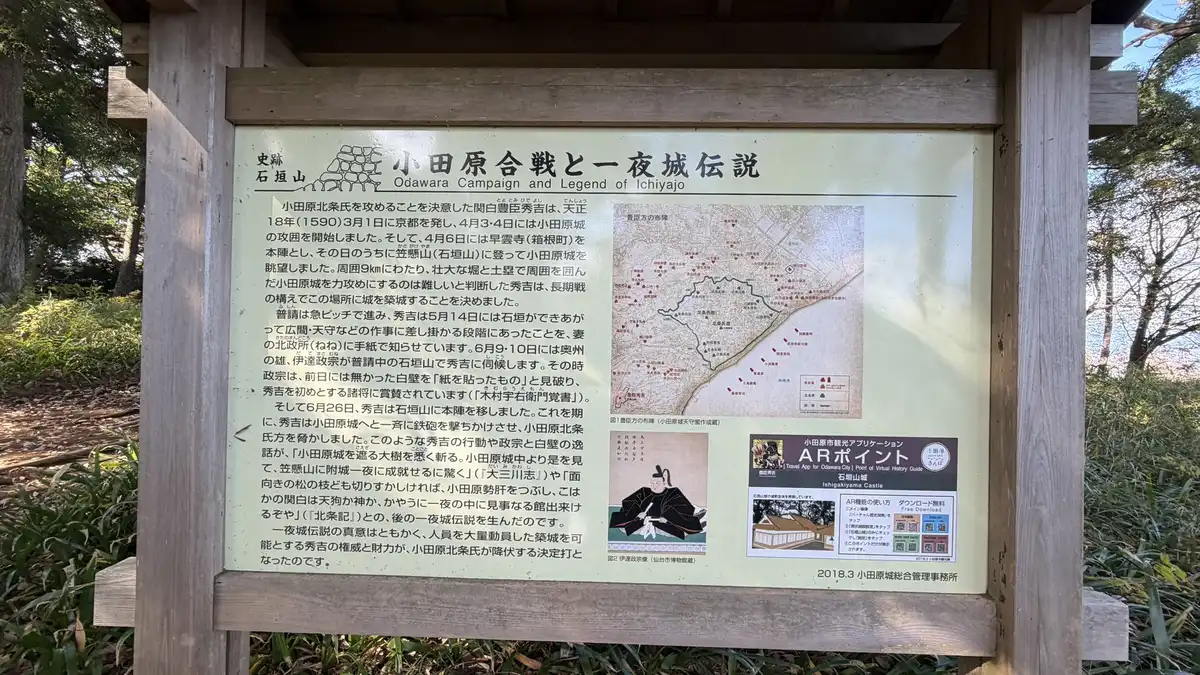
According to Odawara City, construction ran from the fourth month to the sixth month of 1590 — roughly 80 days — and consumed 40,000 worker-days of labour. Hideyoshi climbed the mountain on the sixth day of the fourth month and made it his headquarters; the stone walls were in place by the middle of the fifth month, and work on the great hall and keep followed in the sixth. The “one night” belongs to a different moment: the story goes that once the castle was finished, the trees screening it were felled all at once, so that from inside Odawara Castle a white-walled fortress appeared to have materialised overnight.
Building work seems to have continued after the siege ended. Odawara City’s heritage listing notes that large quantities of roof tiles were excavated around the keep platform, and that some carry inscriptions brushed into the clay reading Tensho 19 and eighth month of the year of the metal rabbit. Tensho 19 is 1591 — the year after the Hojo surrendered. For a castle remembered as a piece of overnight theatre, that is a striking detail.
A board near the main enclosure sets out the siege and the one-night legend as later chronicles record them. Whether the Hojo side was genuinely shaken by the reveal, and whether it contributed to their surrender, is not something those accounts can establish. It reads best as legend rather than documented cause and effect.
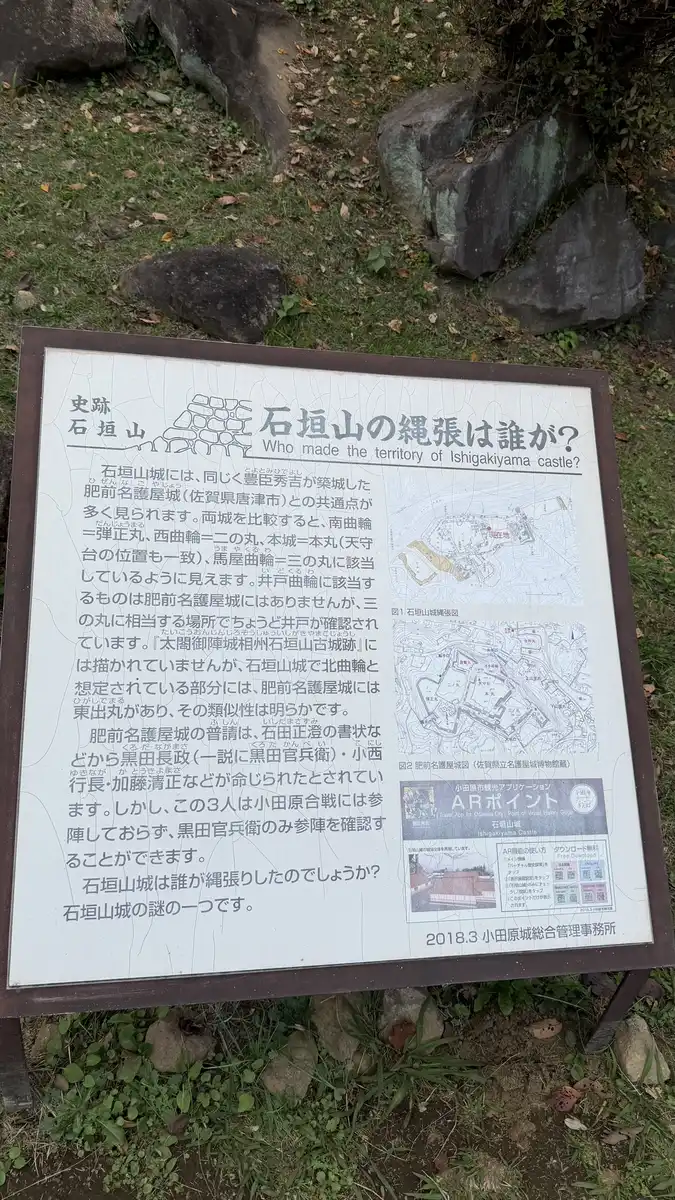
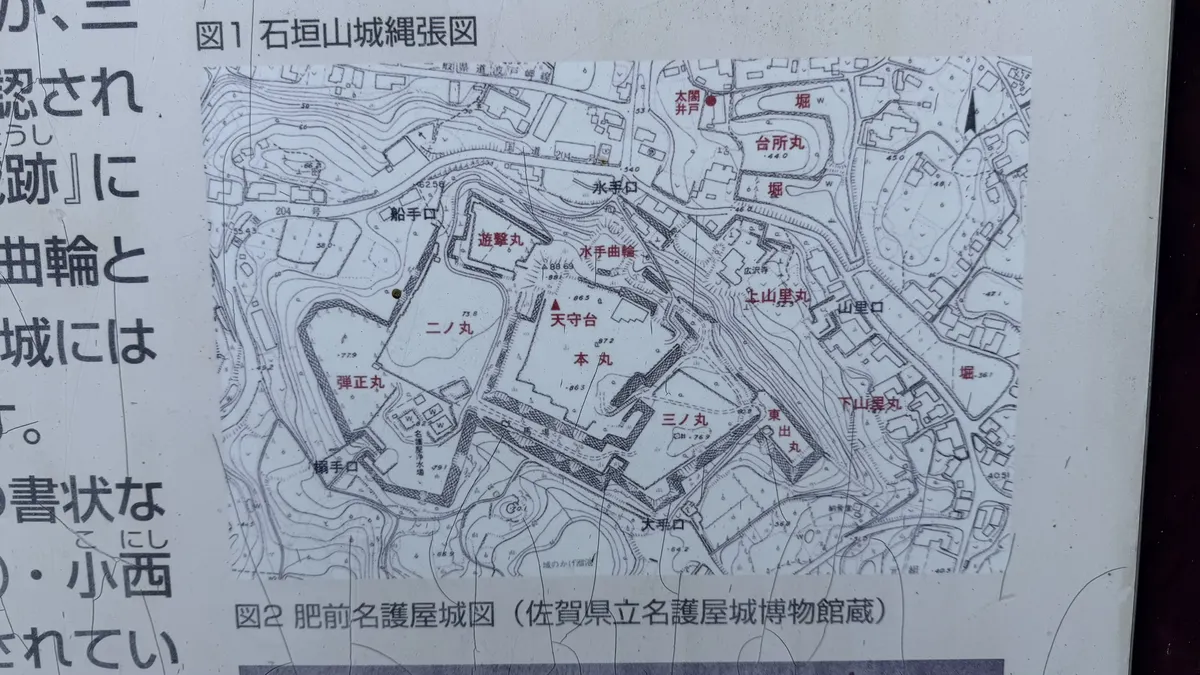
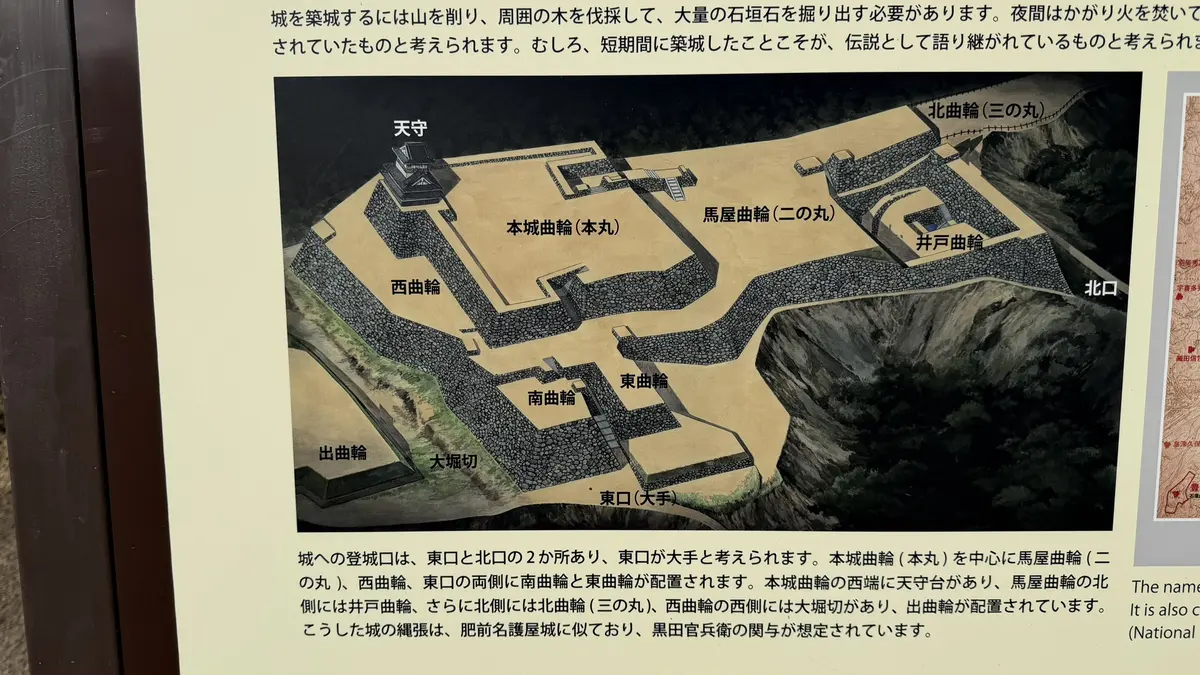
One more board is worth stopping at. Titled “Who laid out Ishigakiyama?”, it sets the plan of this castle beside that of Hizen Nagoya Castle — the base later used for the invasions of Korea — and compares how the enclosures are arranged. It is a question rather than an answer, but it changes how you look at the walls afterwards.
Tap to enlarge
Getting there: a 50-minute walk, or the weekend loop bus
The castle sits on a ridge at roughly 250 m. Public transport reaches the site itself only at weekends and on public holidays, so the single most important planning question is which day you are going. On a weekday you either walk up or drive.
Access — Ishigakiyama Ichiya-jo Historic Park
| Address | 1383-12 Hayakawa, Odawara, Kanagawa |
|---|---|
| Nearest station on foot | JR Hayakawa Station (Tokaido Line), about 50 minutes uphill via the Ishigakiyama farm road. Iryuda Station on the Hakone Tozan Line is about 60 minutes. Both figures are Odawara City estimates |
| Usable shinkansen station | JR Odawara Station, served by the Tokaido Shinkansen. Hayakawa is one stop from Odawara on the local line |
| From major cities | Tokyo to Odawara is roughly 35–45 minutes by shinkansen, or roughly 1 hr 20 min to 1 hr 40 min on local lines. From Kyoto, Hikari services take roughly 1 hr 55 min to 2 hr 5 min; from Shin-Osaka, roughly 2 hr 10 min to 2 hr 20 min (Kodama services take noticeably longer). From Nagoya, travel by shinkansen and change at Odawara. Journey times vary by service, so check timetables on the day |
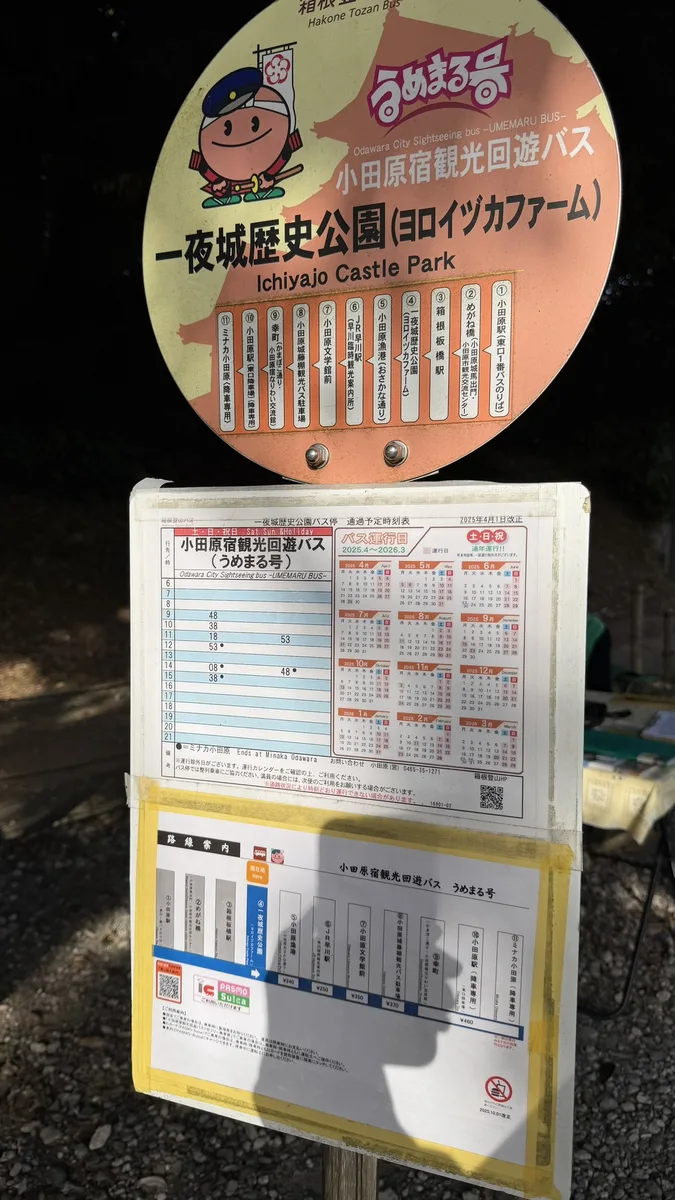
| Loop bus | The Umemaru-go sightseeing loop bus runs on Saturdays, Sundays and public holidays (excluding the New Year period), 8 services a day, from bay 1 at the east exit of Odawara Station. Odawara City states that Umemaru-go is the only public transport that stops at Ishigakiyama Ichiya-jo |
| Bus fare | One-day pass: 600 yen adult, 300 yen child (confirmed 24 September 2026) |
| Taxi | About 15 minutes and 2,000 yen from Odawara Station; about 10 minutes and 1,500 yen from Hayakawa or Hakone-Itabashi Station (figures from the on-site leaflet; fares can change) |
| On weekdays | No loop bus service to the castle. Walk from Hayakawa Station or drive |
| Recommended approach | Walk from Hayakawa if you want the climb. Time your visit to a weekend and take Umemaru-go if you do not |
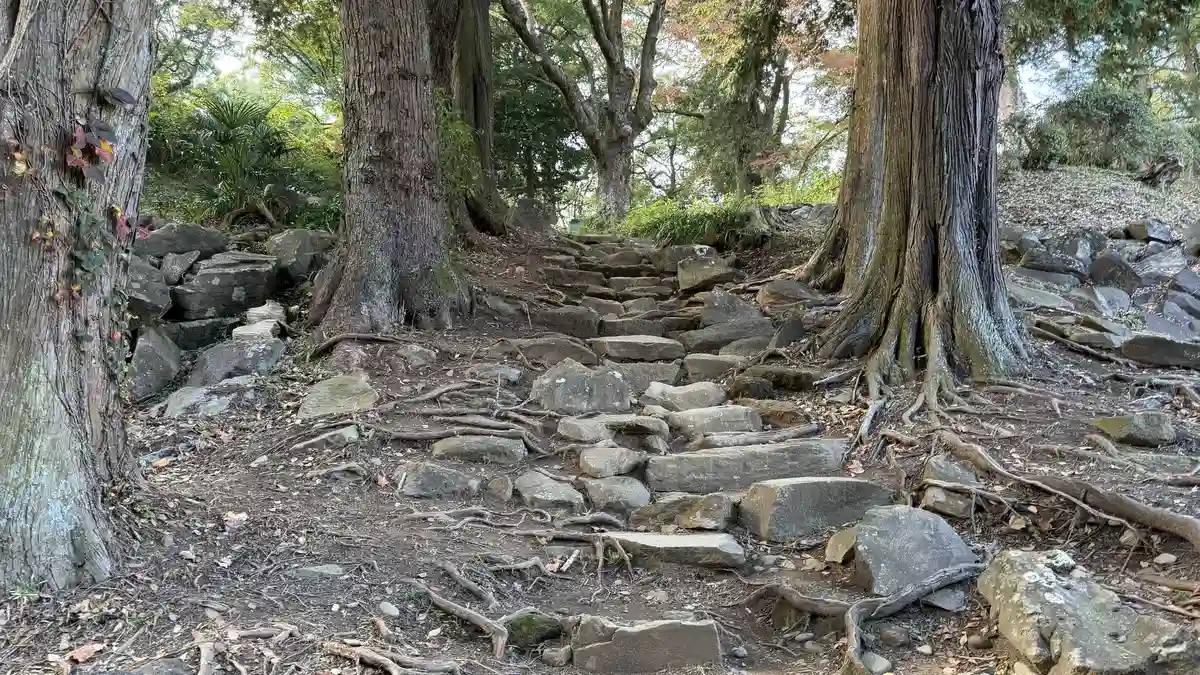
| Terrain | The approach from the station is paved road and farm track, continuously uphill. Inside the castle the paths are unpaved, with sections over collapsed stone |
| Parking | Car park at the historic park (shown on the on-site park map) |
| Toilets | Available in the park (shown on the on-site park map). There are no vending machines |
| Admission and hours | No admission charge is published; this is an open historic park. Odawara City notes that there is no management office on site |
| Guides | Free fixed-point guides are offered mainly on loop-bus operating days, but not during January and February, and they may be cancelled in bad weather. Paid guided tours of the castle by the NPO Odawara Guide Association are separate and require booking |
| Before you go | Services are occasionally suspended. If you plan to use Umemaru-go, check the current timetable and service notices on the Odawara City page on the day |
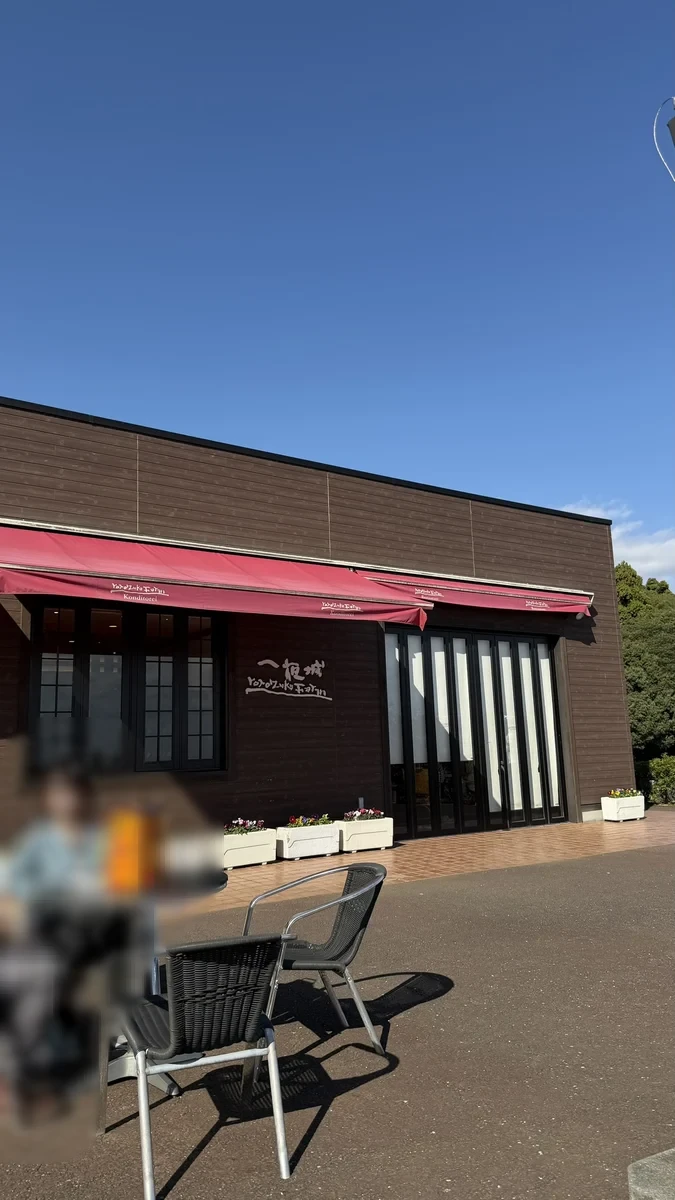
Ichiya-jo Yoroizuka Farm sits directly outside the park entrance, with a bakery, a patisserie, a farm shop and a restaurant. It closes on Tuesdays and Wednesdays (confirmed 24 September 2026 against Kanagawa Prefecture and travel listings). Since there are no vending machines inside the castle either, those two days leave you with nowhere on site to buy a drink. Pick up water before you start climbing.
Several routes lead up from Hayakawa Station. On one of them, water has been running down the surface like a stream after heavy rain. If you are walking up the day after rain, choose footwear accordingly.
This is a ruin where collapsed walls have been left as they fell. Trainers or hiking shoes are the sensible choice; these are not manicured garden paths.
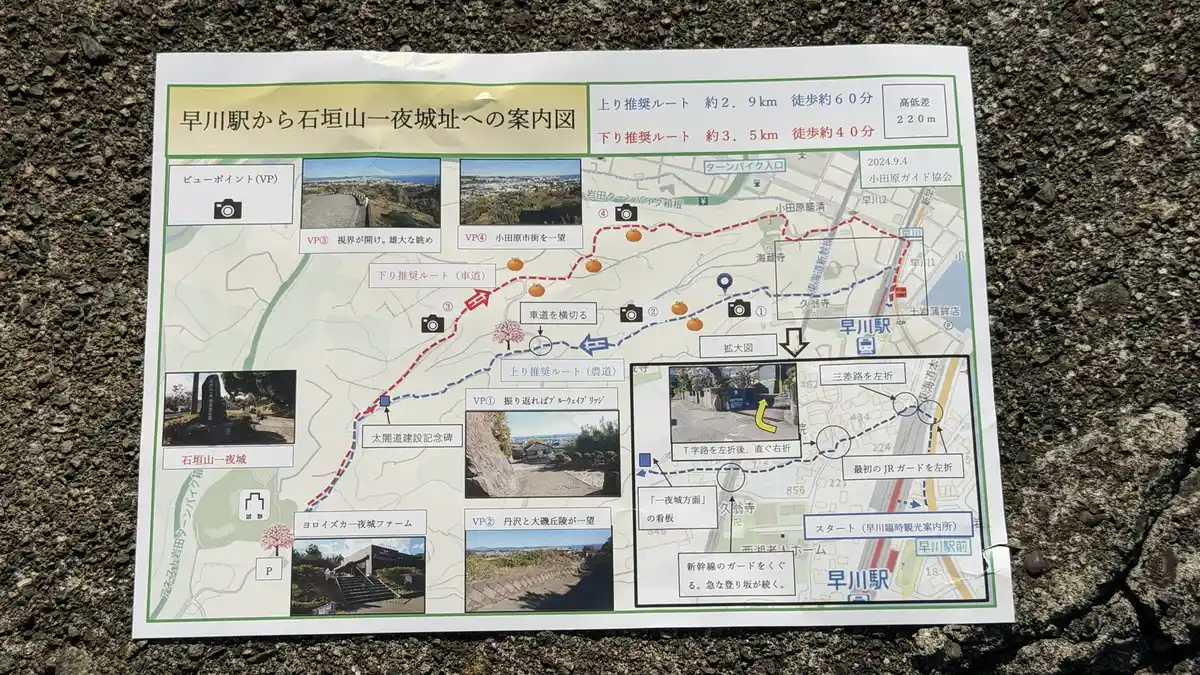
Maps: the route from each station
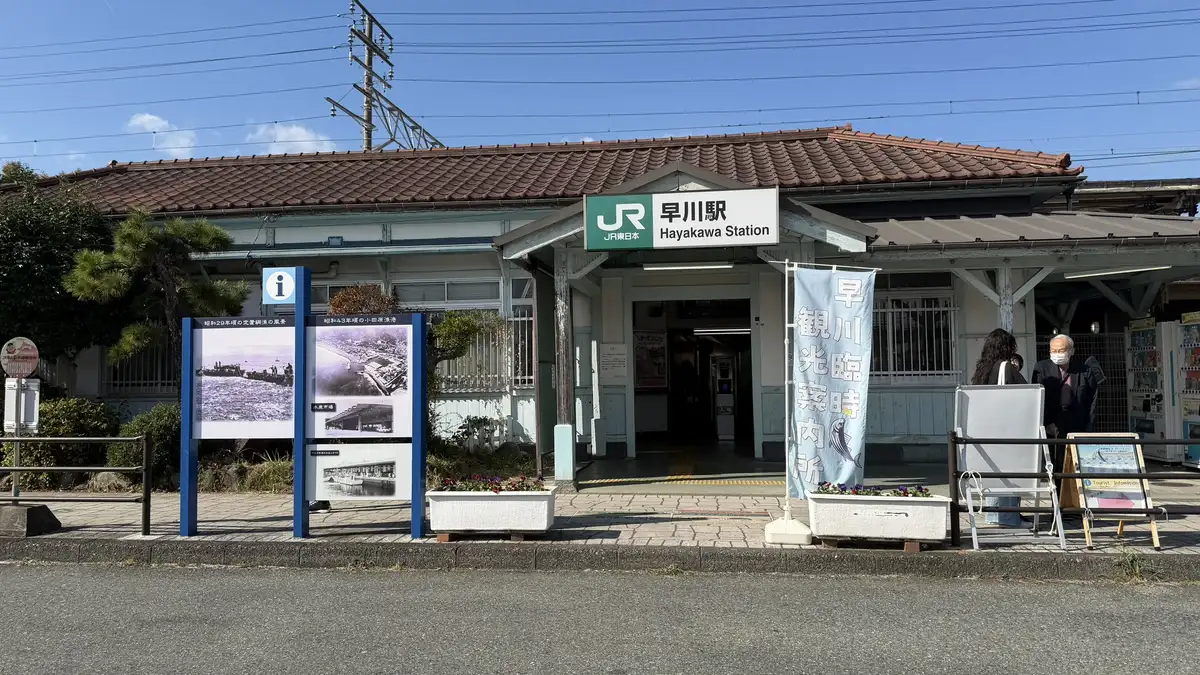
From JR Hayakawa Station
From Iriuda Station (Hakone Tozan Line)
Tap to enlarge
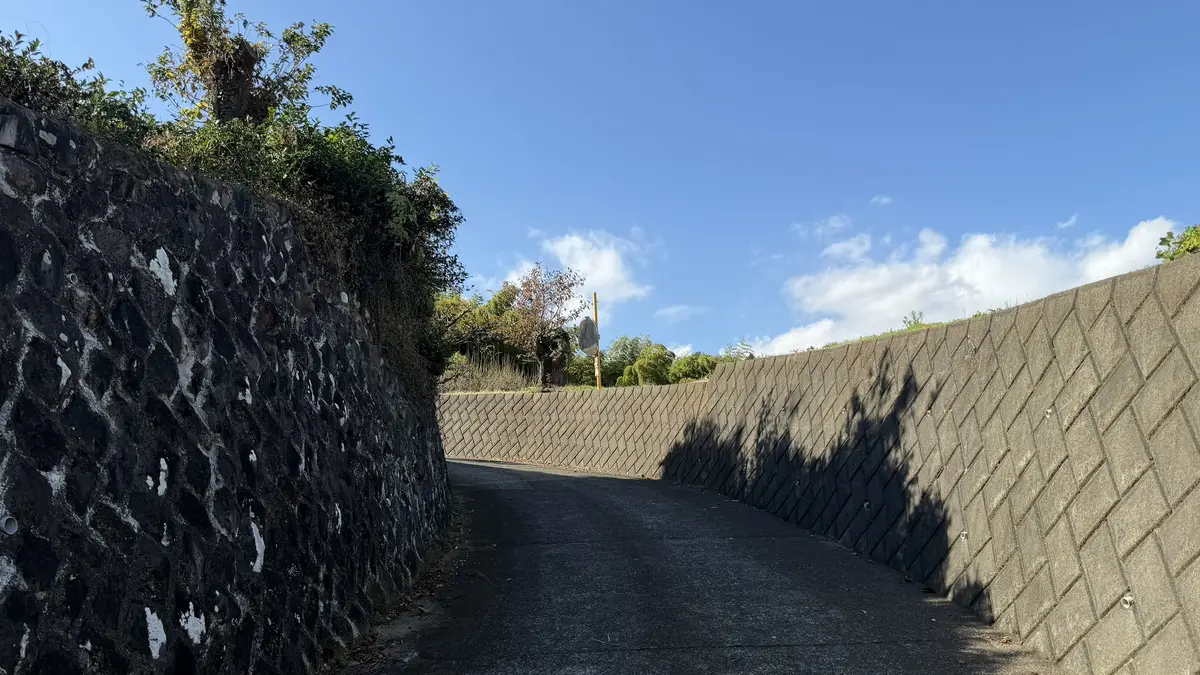
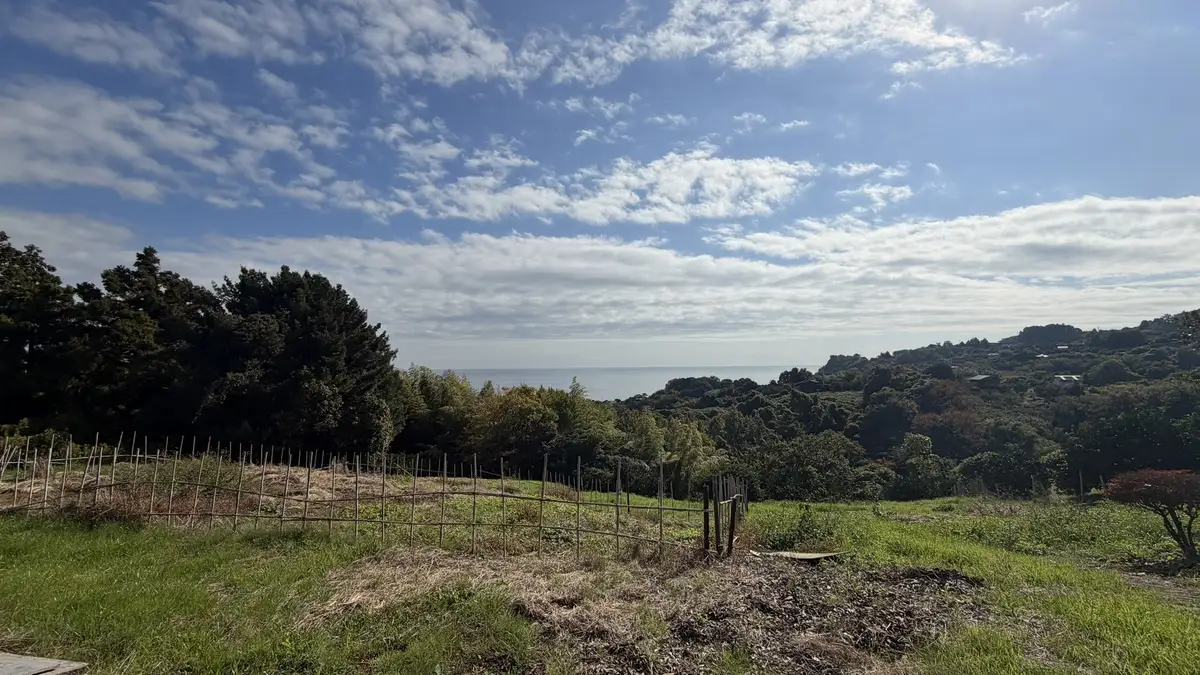
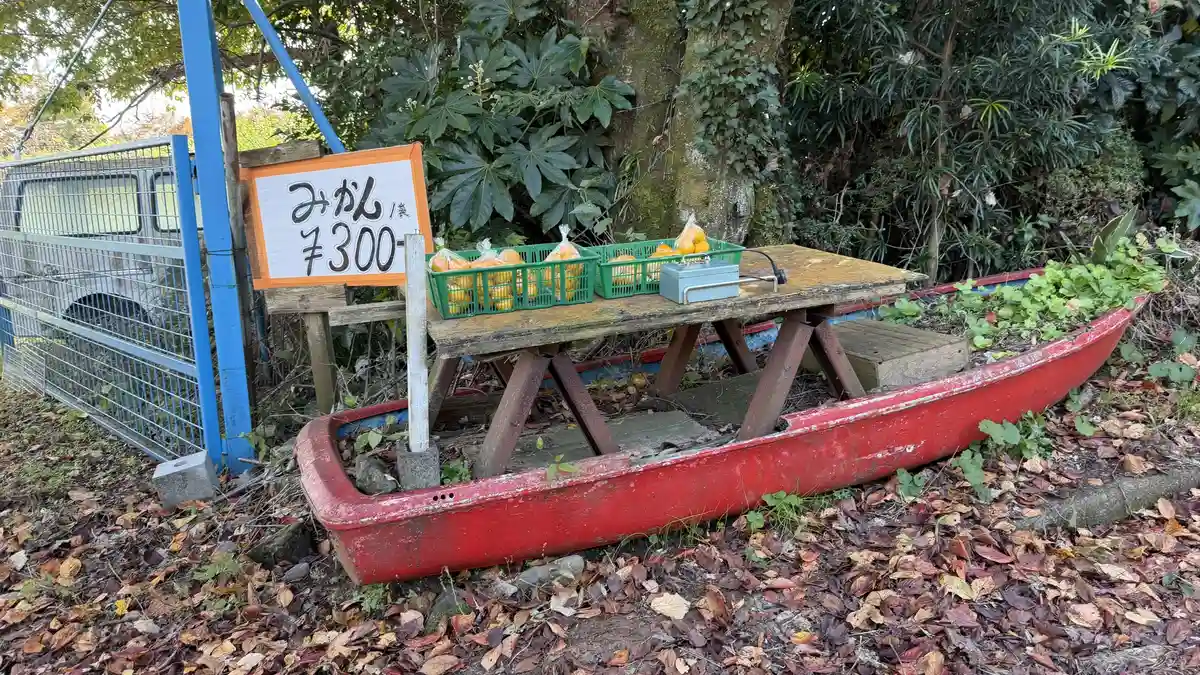
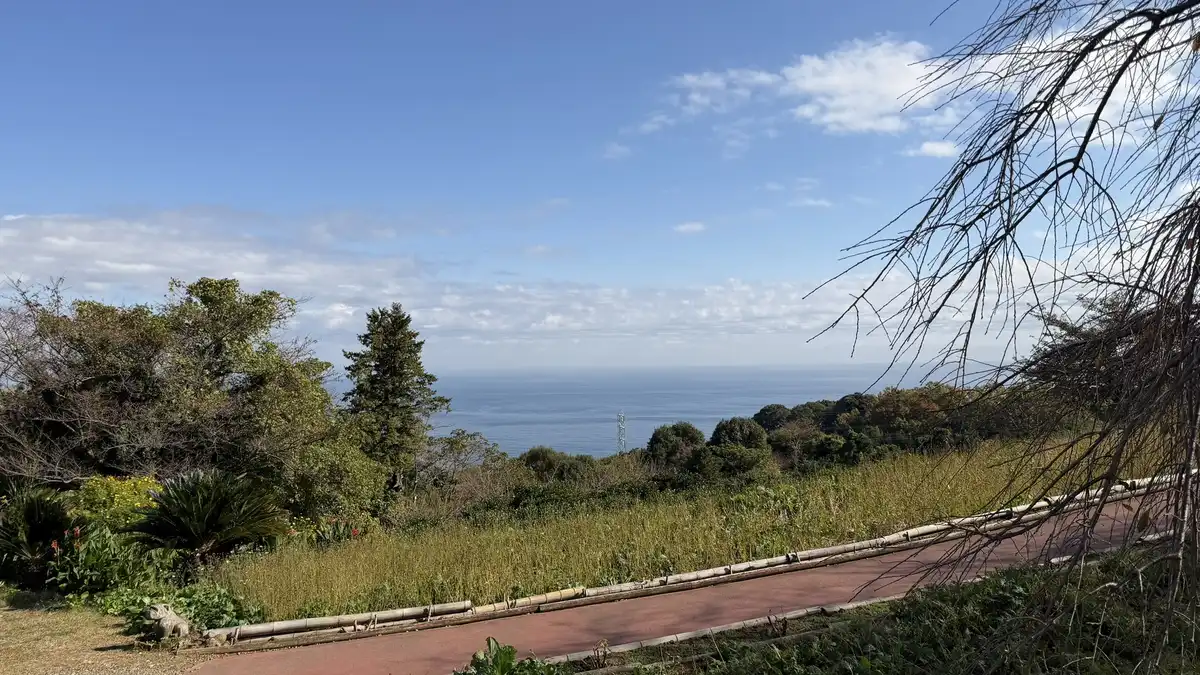
If you walk, expect a steady climb the whole way. Houses give way to terraced citrus orchards, and Sagami Bay opens up behind you as you gain height. Unstaffed fruit stalls and a series of boards profiling the commanders who camped here break up the ascent.
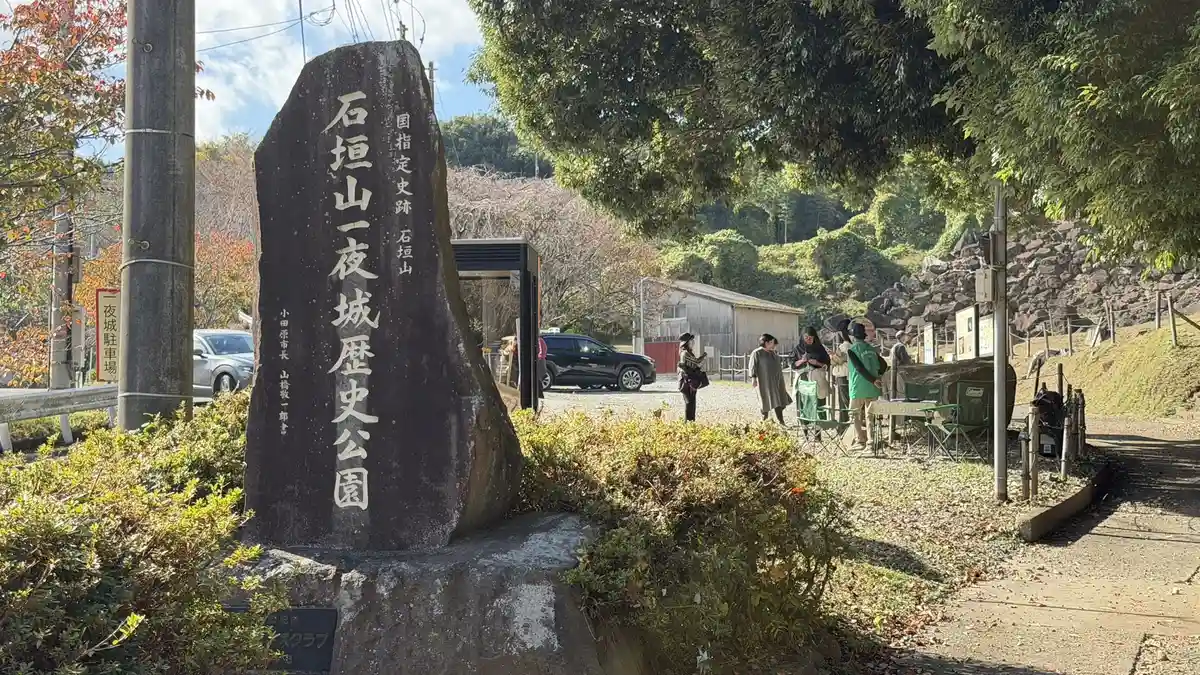
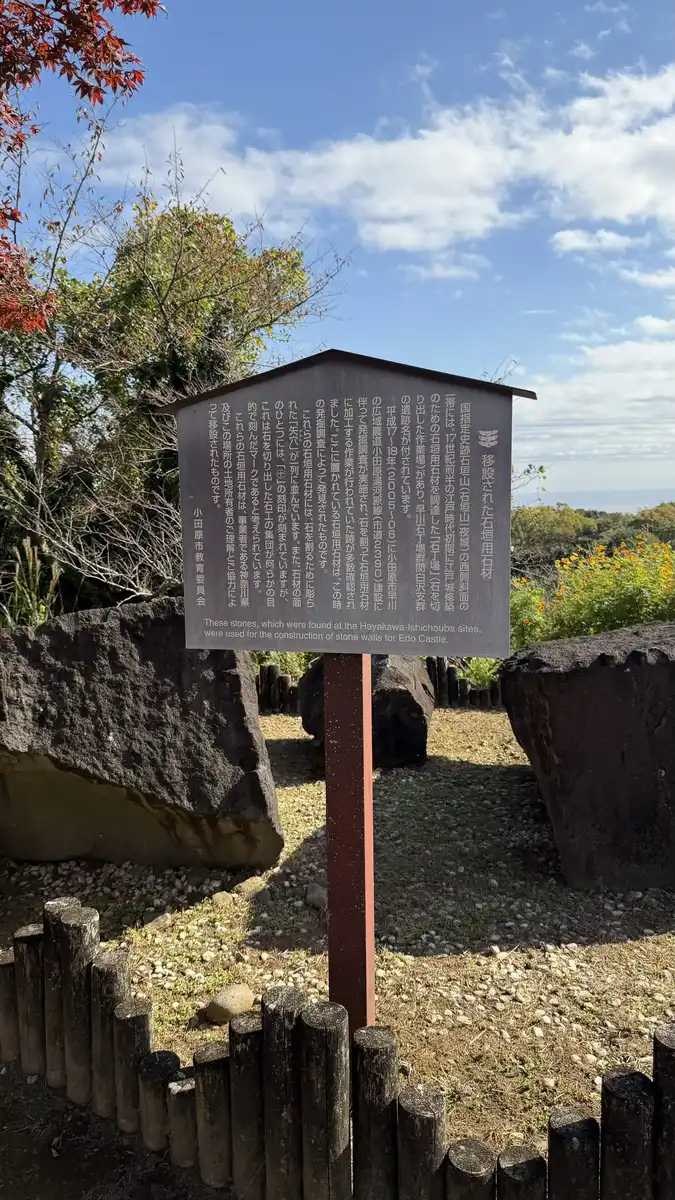
The big quarried block near the entrance is not from this castle. Just inside the park you will find large stones marked with wedge holes and mason’s inscriptions. They come from the Hayakawa Ishichoba quarry group, Kanpakuzawa branch, and were moved here. That quarry supplied stone for the rebuilding of Edo Castle between 1603 and 1636 — a different century and a different project from the 1590 walls above. Seeing it first makes the difference easy to keep straight.
Walking the site: anticlockwise from the entrance, about 2.5 hours
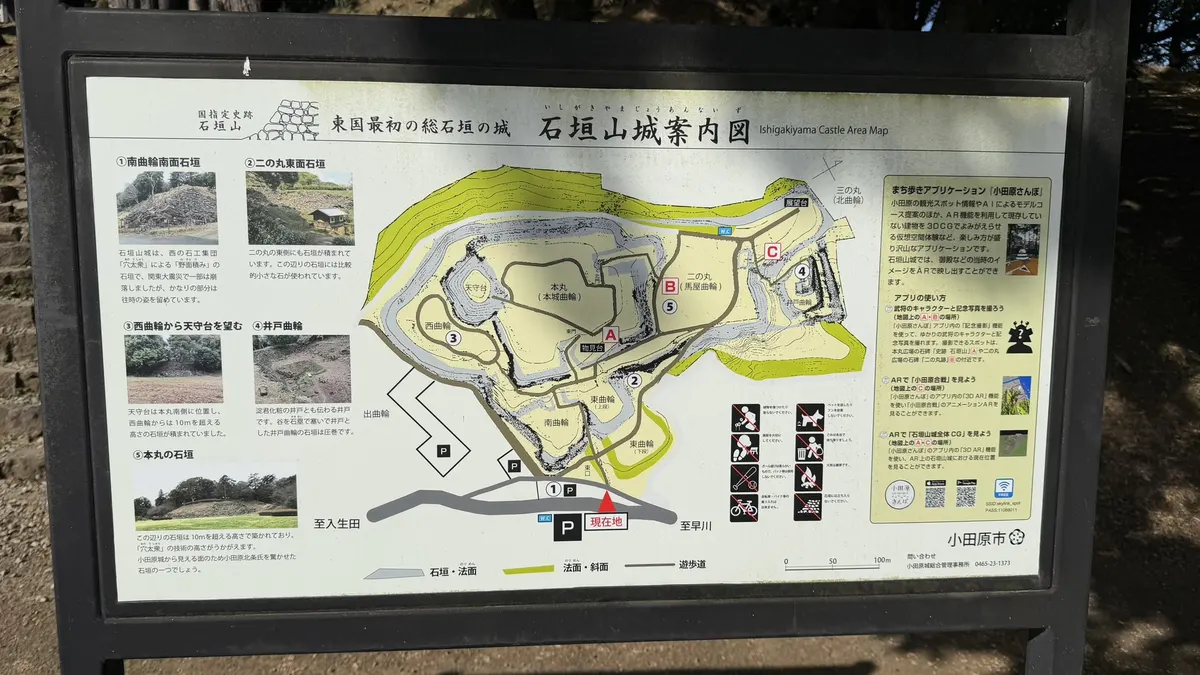
There is only one way in, beside the car park. Turning left from there and walking anticlockwise saves the best stonework for the second half and brings you down into Ido-kuruwa near the end. Covering the site thoroughly in November 2025 took two and a half hours. Sticking to the main enclosures takes considerably less.
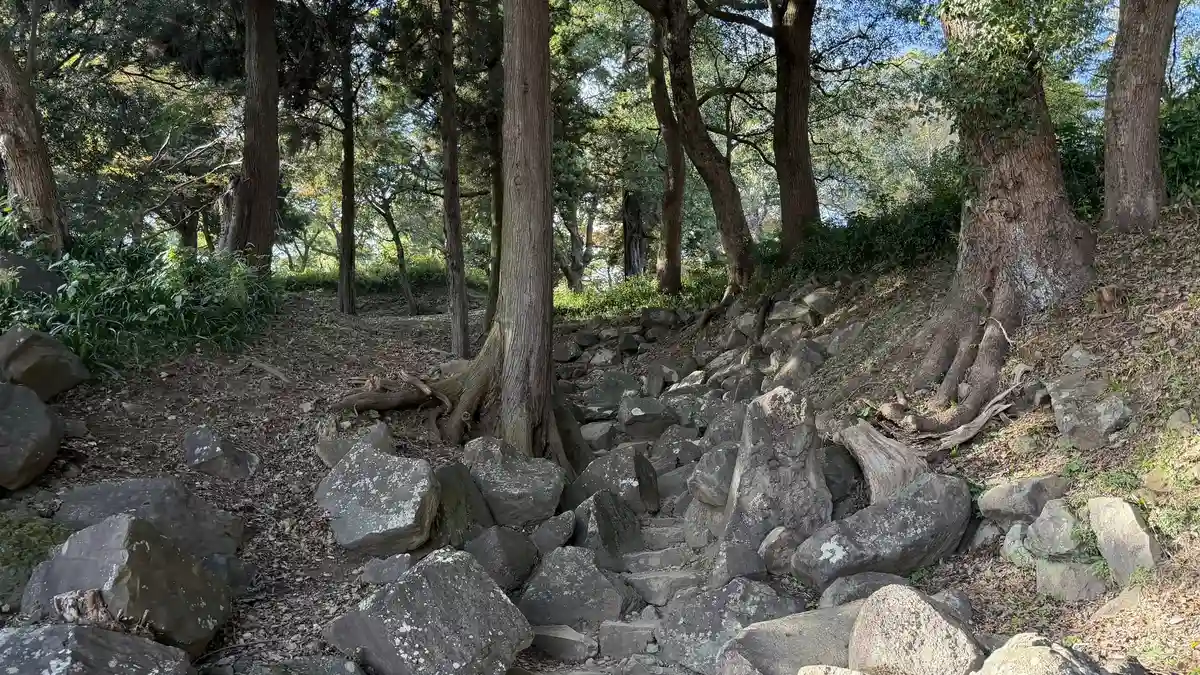
Left from the entrance. Collapsed blocks are scattered across the slope here, and the way the walls have failed is itself the thing to look at.
The terrace west of the main enclosure. Trace the flat ground and the remains of the walls that retained it as you head for the centre.
The heart of the castle. A stone marker stands on wooded level ground, and wooden posts carry explanations of where the buildings once stood.
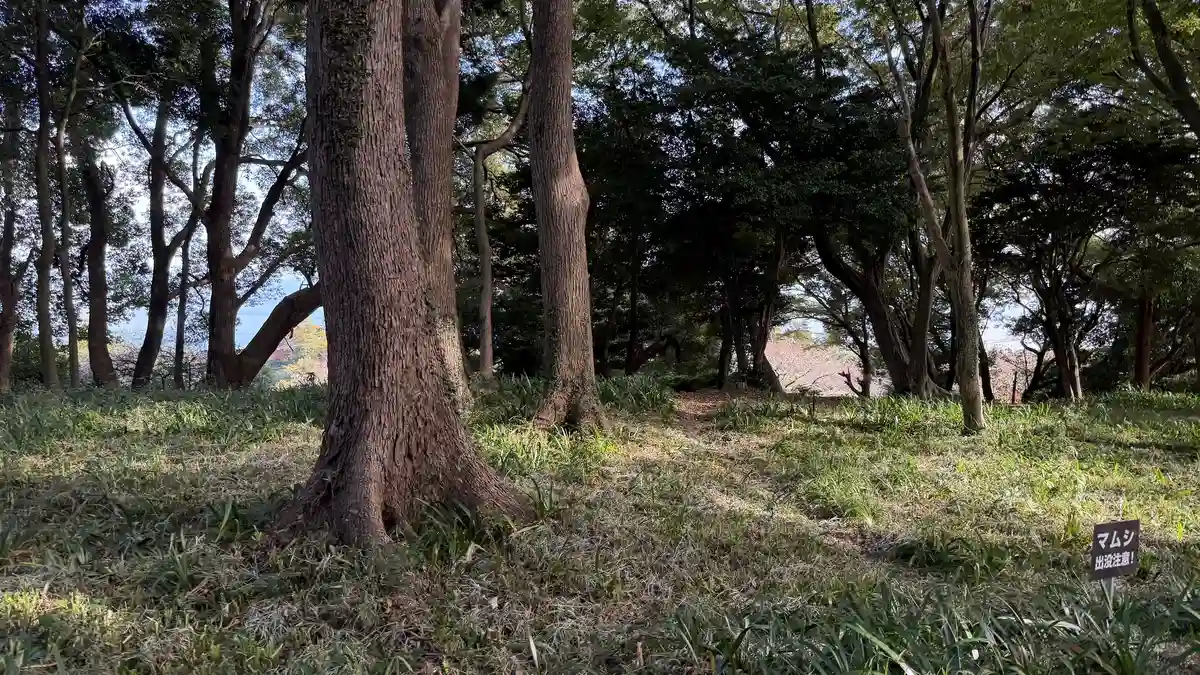
A broad terrace kept as lawn. Looking down from the main enclosure makes the difference in height between the levels obvious.
A wooden deck looking over Odawara and Sagami Bay. Odawara Castle is visible from here.
Descend into the walled ravine. This is where the scale of the stonework finally registers.
Follow the path round towards the east side. Substantial walls stand near the entrance, and the afternoon backlight sharpens their outlines.
What remains: six places to stop
These follow the walking order above. Open each card for the photographs taken at that spot and the practical detail.
Minami-kuruwa — the south enclosure
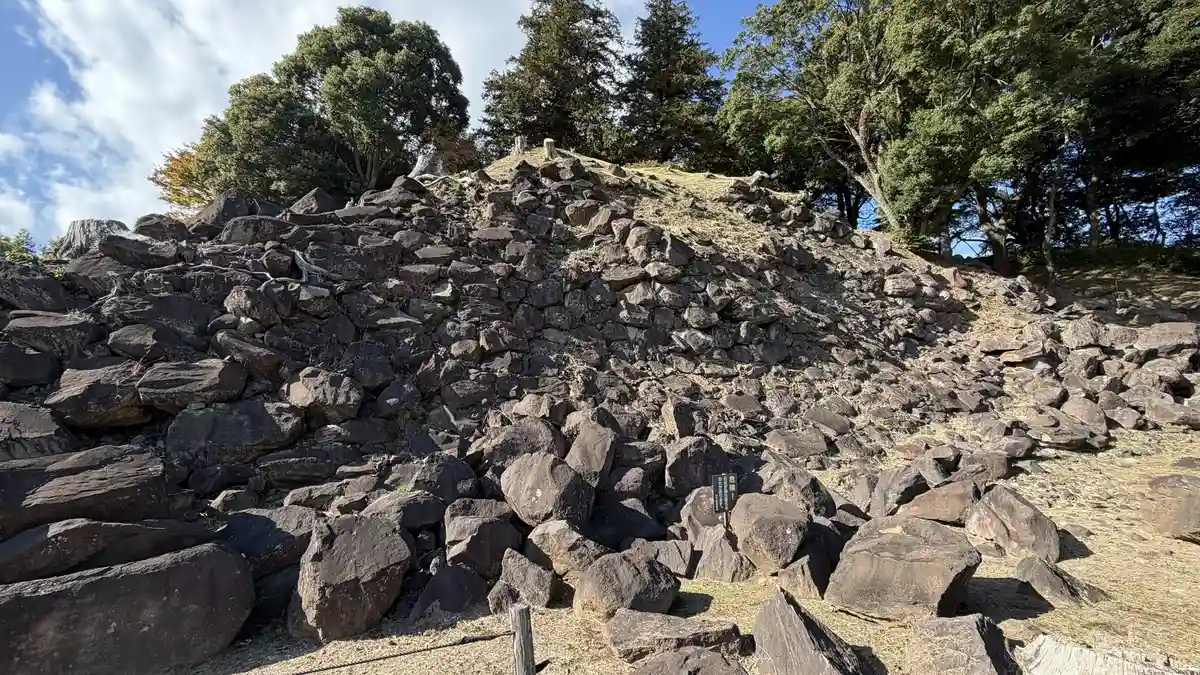
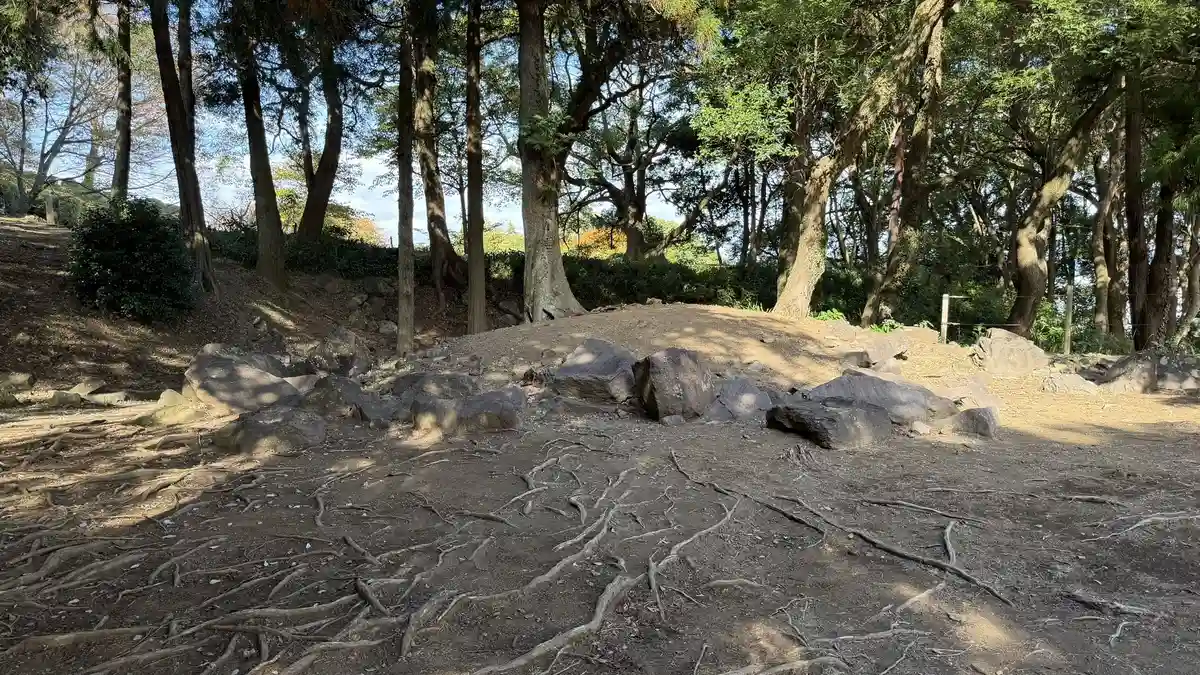
Collapsed walls, left as they fell
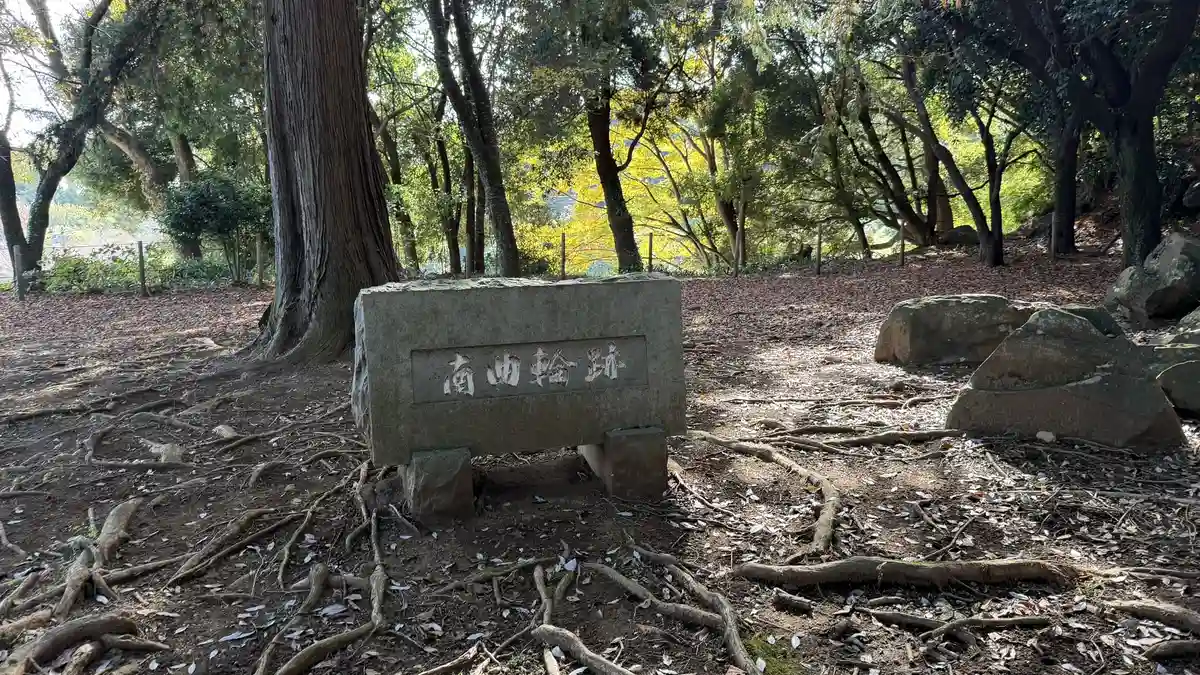
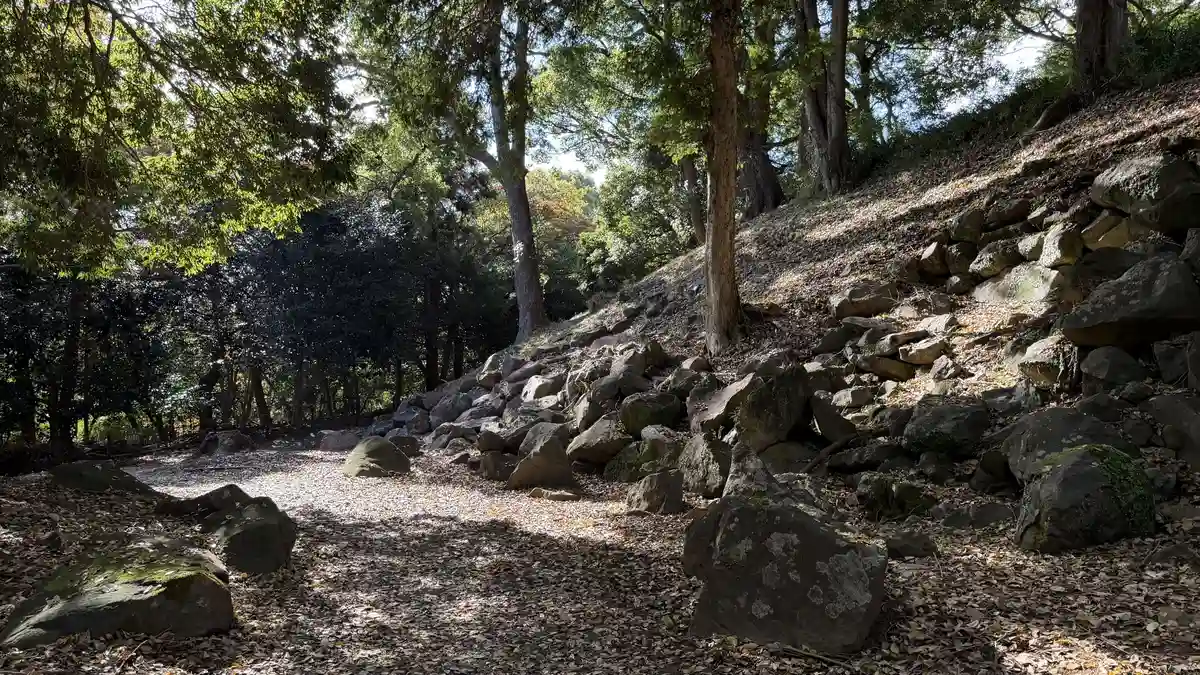
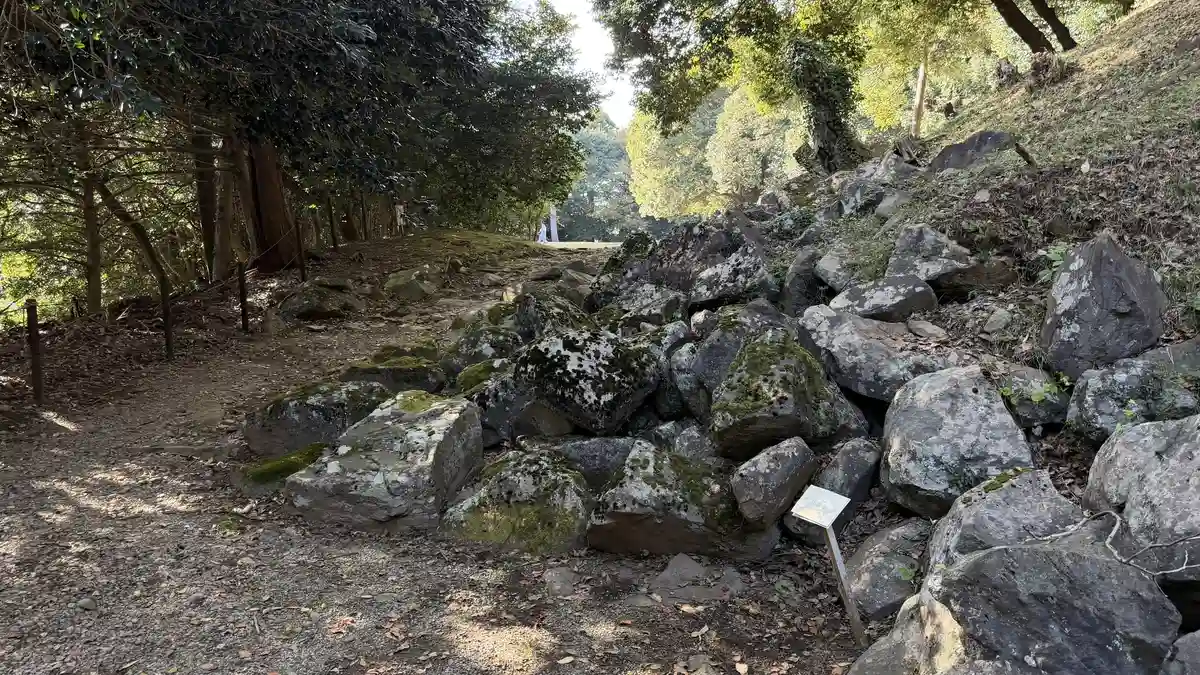
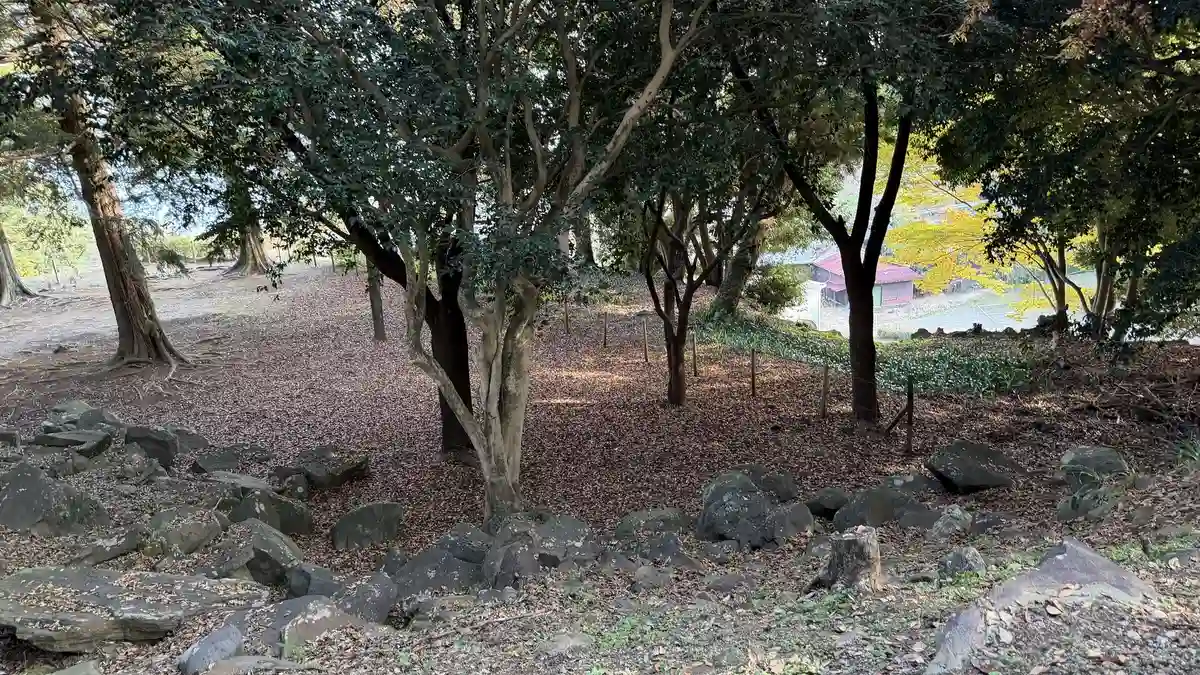
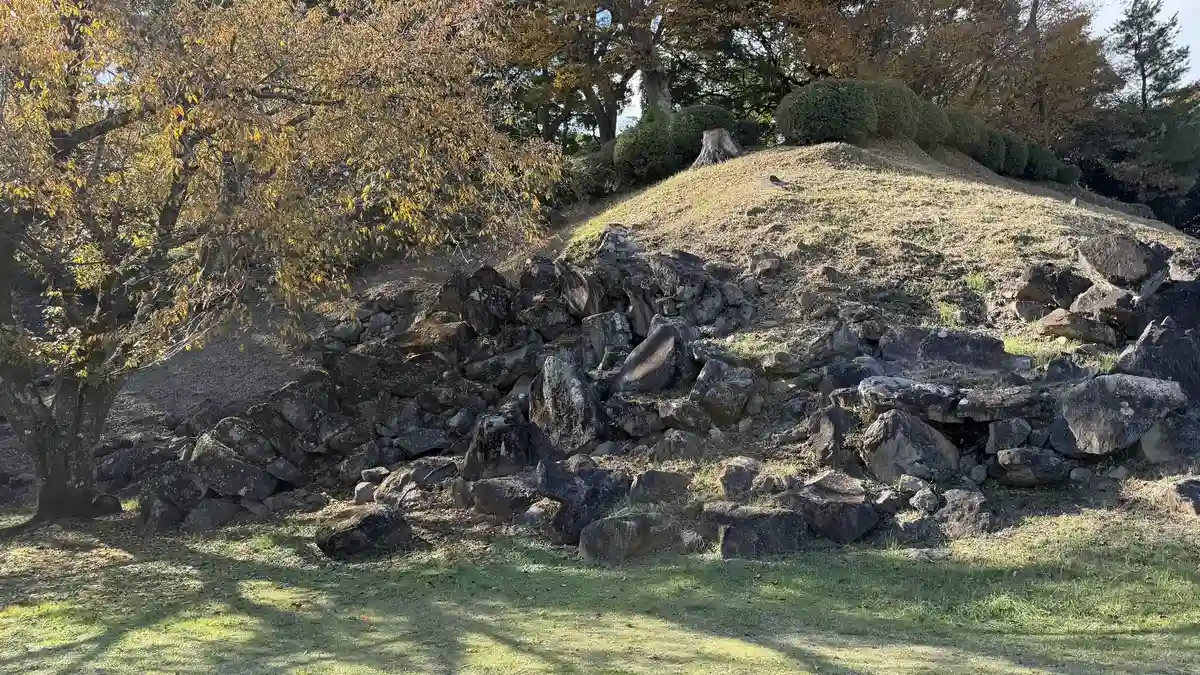
Turning left from the entrance, this is the first enclosure you reach. A marker stands among the trees, with stone of every size scattered around it. The impression is less of tidy masonry than of sheer quantity of rock left where it landed.
The park leaflet explains the collapse here as traces of shiro-wari, the practice of deliberately breaking part of a castle once it had ceased to serve a purpose, and attributes the broken gateways and wall corners to it. Whether every individual collapse has that cause is not something you can judge by eye, so it is worth treating as the leaflet’s reading rather than settled fact.
What to look for
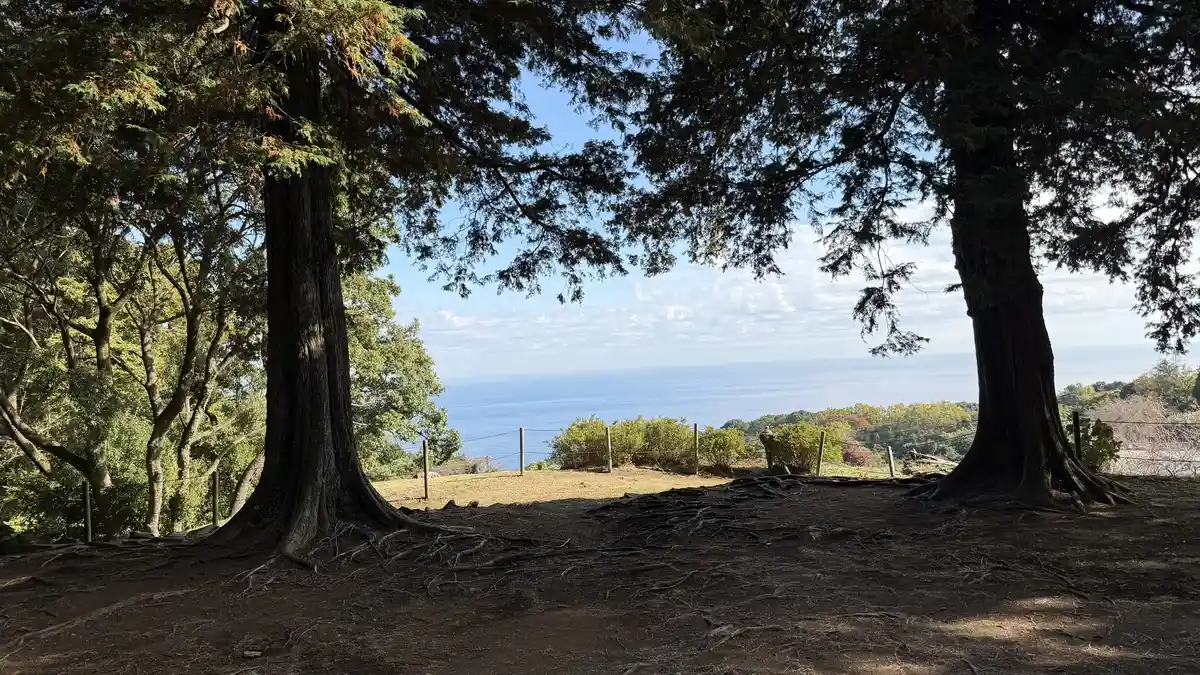
- The size and sheer volume of stone across the slope
- Wall corners that have given way
- The wooded, lightly managed character of this part of the ruin
Tap to enlarge
Time needed
Ten to fifteen minutes at a slow pace, looking at the stone.
| Status | Original remains: collapsed blocks and wall traces |
|---|---|
| Buildings | None |
| Underfoot | Unpaved, with sections over loose stone |
Honmaru and the keep platform
No buildings, but the ground still reads
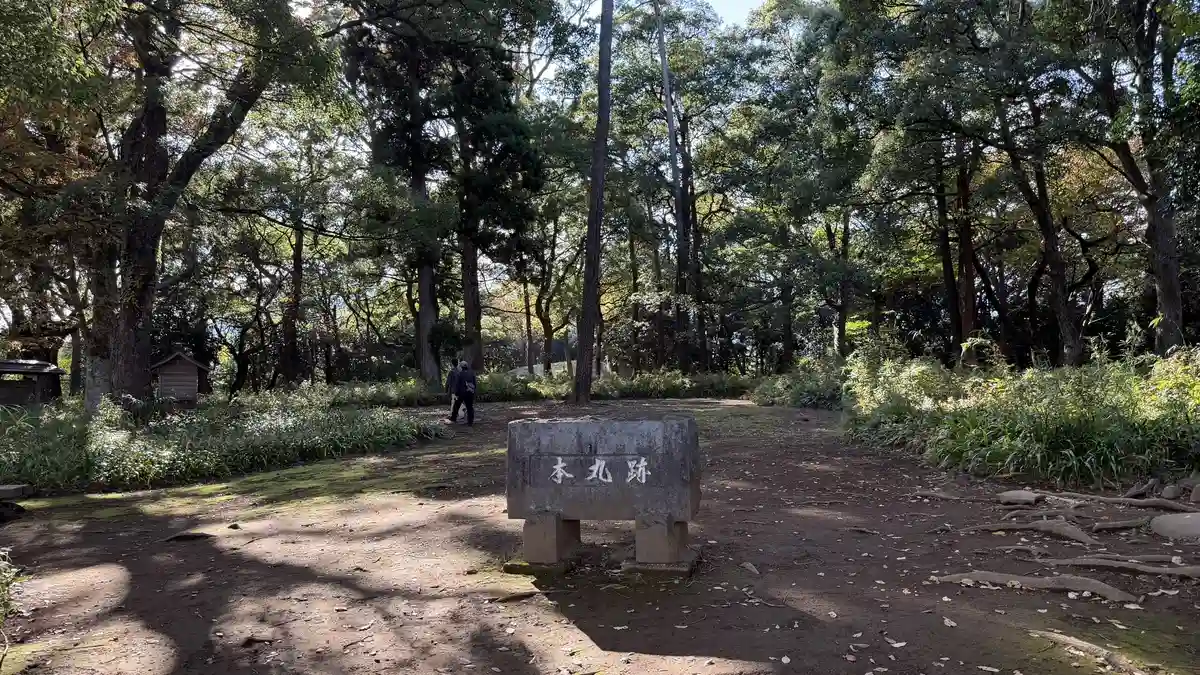
This is the core of the castle: a level clearing ringed by trees, with a marker at its centre. Large quantities of roof tile were excavated around the keep platform, and Odawara City infers from them that a keep and turrets once stood here. None of it survives, and nothing has been reconstructed.
Even so, working out what stood where is not guesswork. Wooden posts on site carry explanations, and you can match them against the changes in ground level as you walk. From the edge of the main enclosure you look down onto the lawn of Ninomaru, which makes the stepped arrangement of the terraces immediately clear. Nishi-kuruwa, the west enclosure, sits right next to Honmaru, so it is easy to visit both together.
What to look for
- Wooden posts marking where buildings stood
- The shrine hall enshrined at the main enclosure
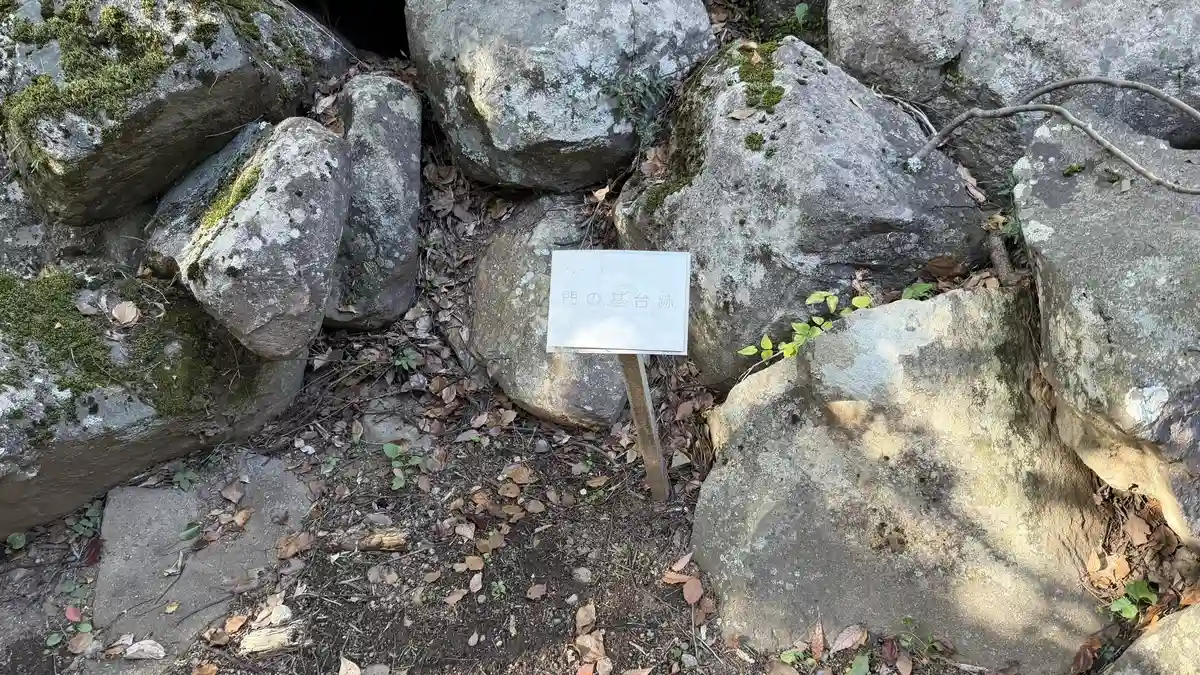
- The marker post for the old gate base
- The drop from the main enclosure down to Ninomaru, and the keep platform seen from Honmaru
- The stone marker at the adjacent Nishi-kuruwa
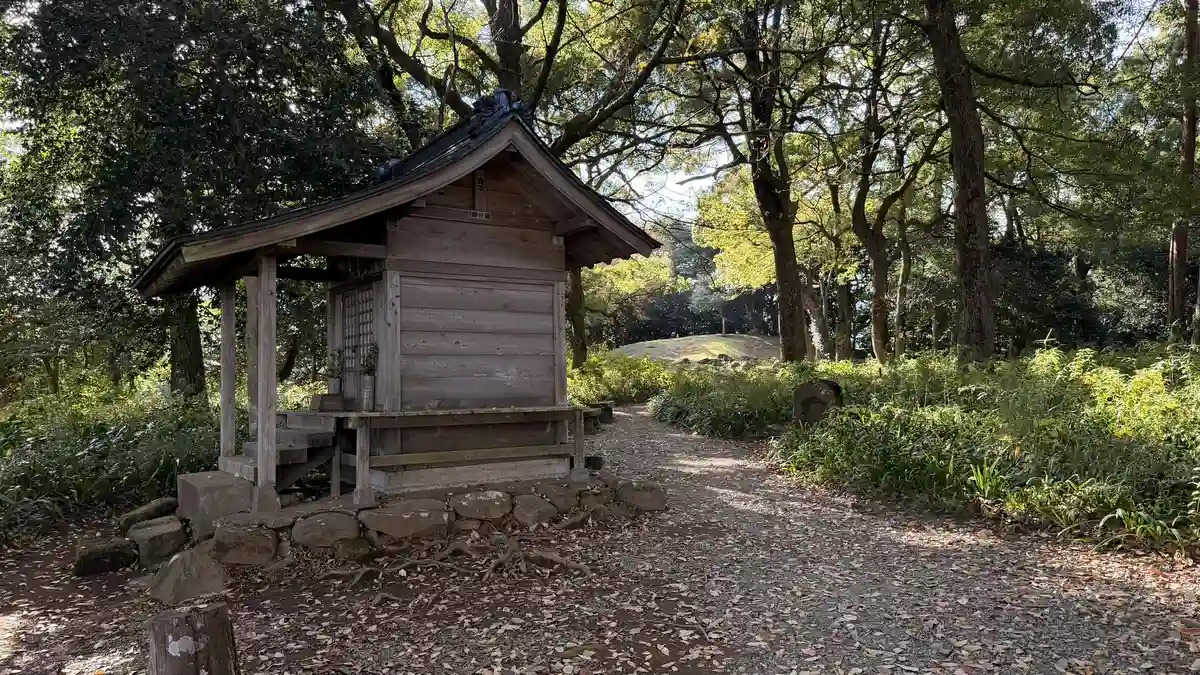
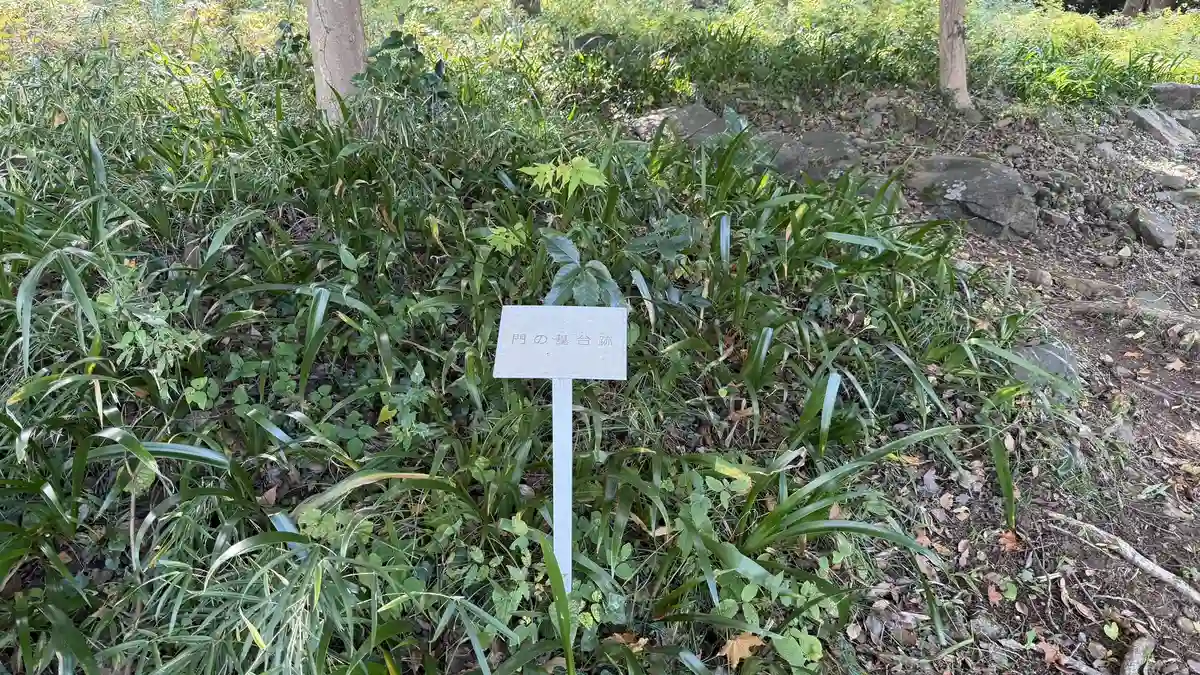
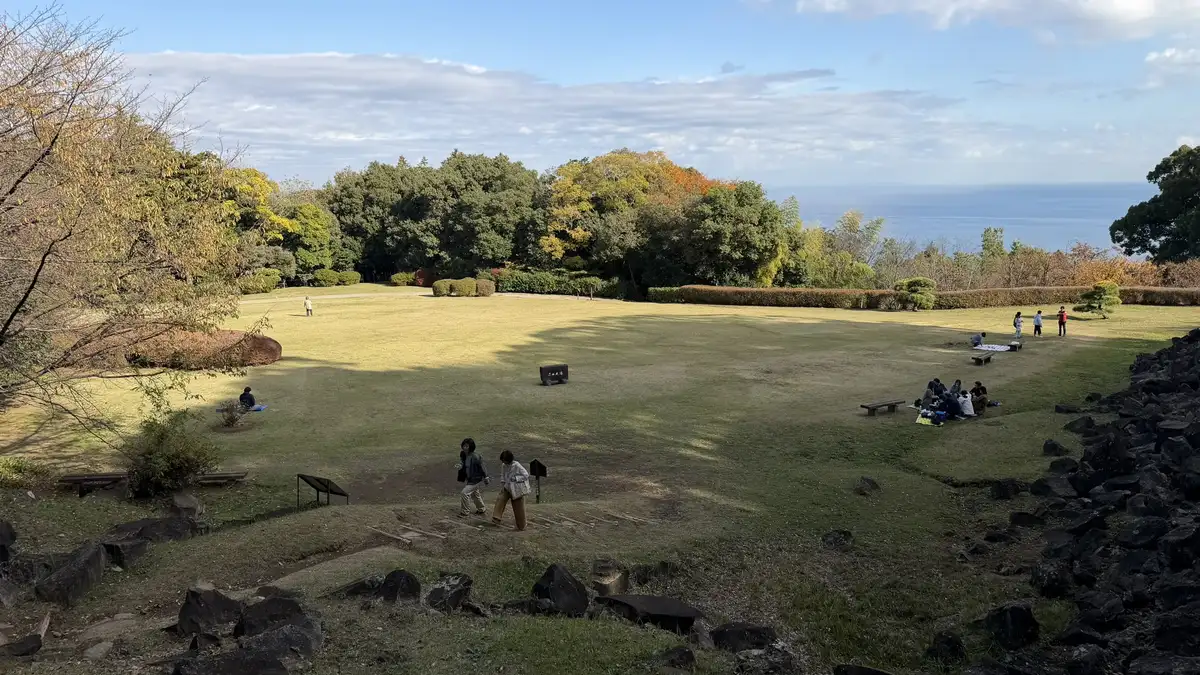
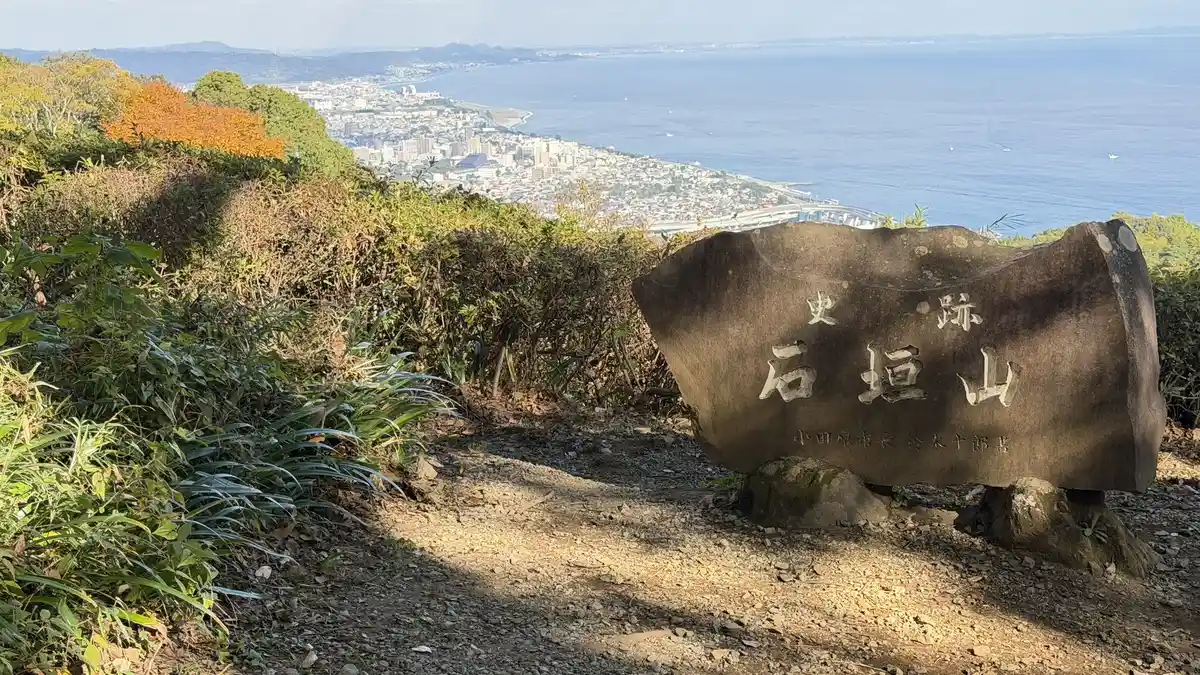
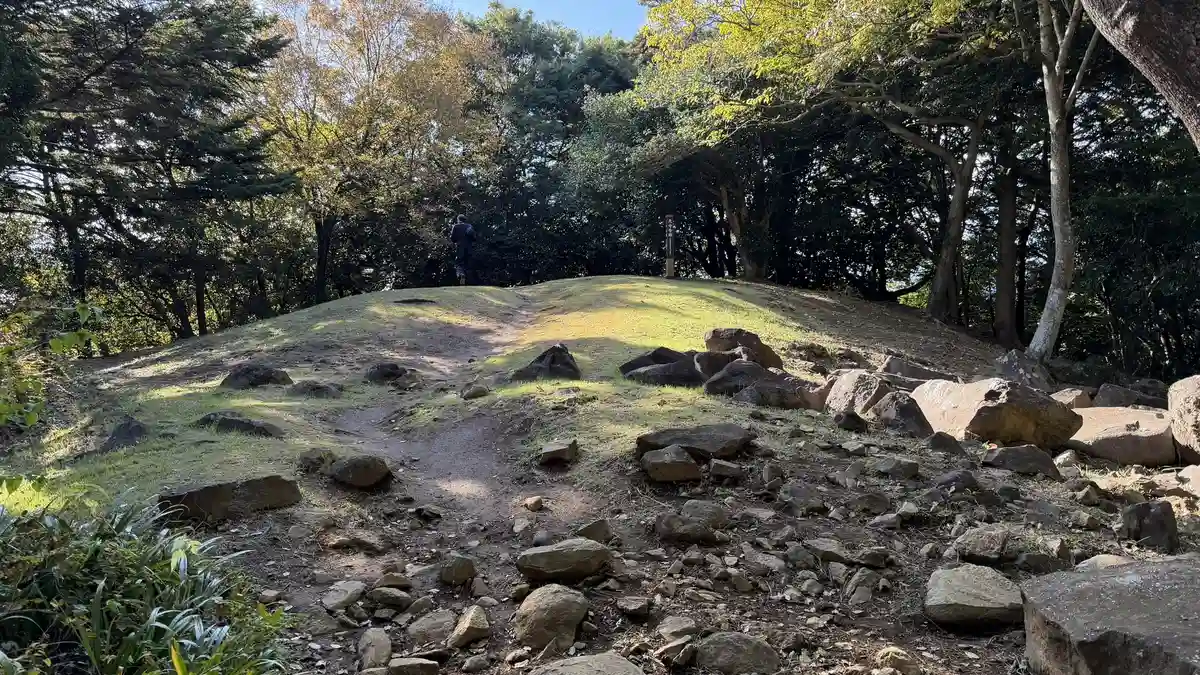
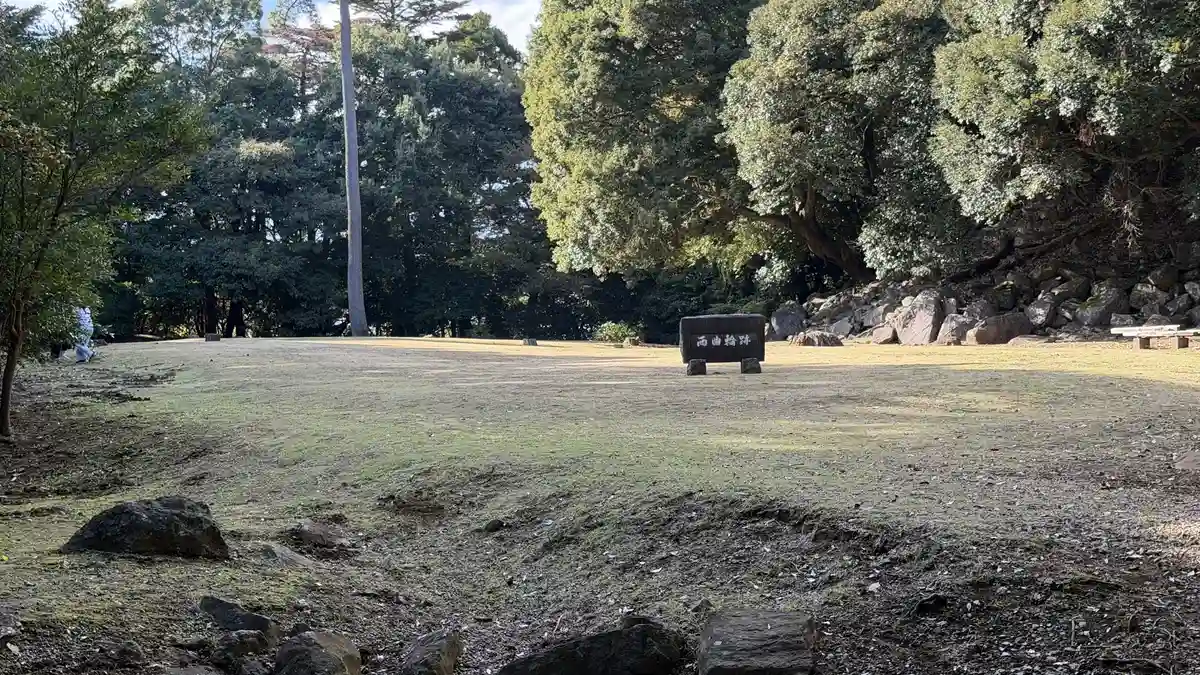
Tap to enlarge
Time needed
Around thirty minutes if you read the boards. This took the longest of anywhere on the site.
| Status | Original remains: terraces and wall traces |
|---|---|
| Buildings | None surviving; a keep and turrets are inferred from excavated roof tiles |
| Interpretation | Wooden posts with explanatory text |
| Views | Sagami Bay and the town of Odawara |
The park leaflet notes that the walls around the main enclosure face towards Odawara Castle and were built to a height of over 20 m. It credits the skill of the Anoshu, the stonemason guild employed on the work, and suggests this was one of the walls intended to impress the Hojo.
Ninomaru — the second enclosure
The widest terrace, and the easiest place to sit
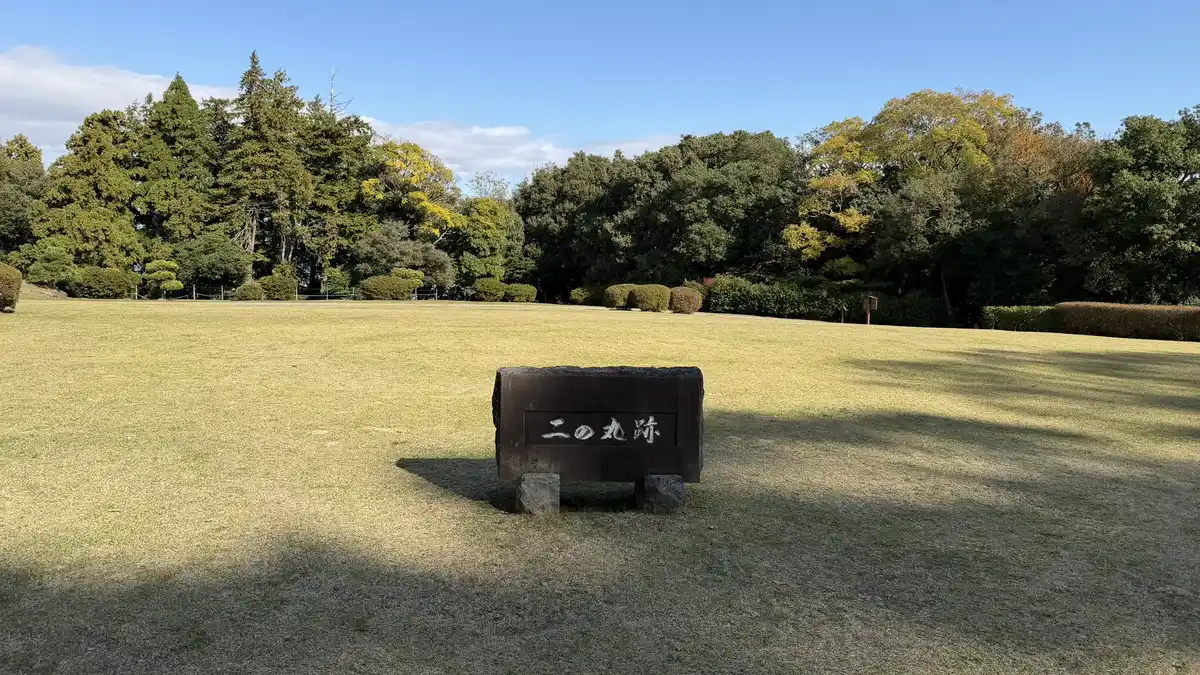
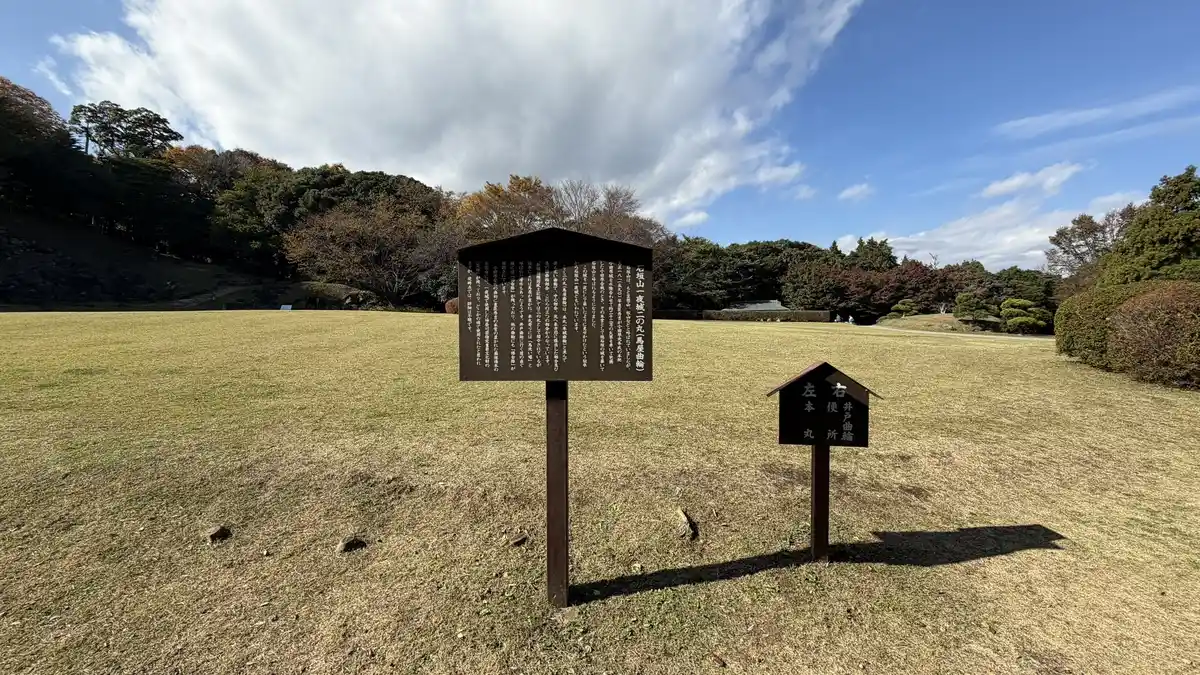
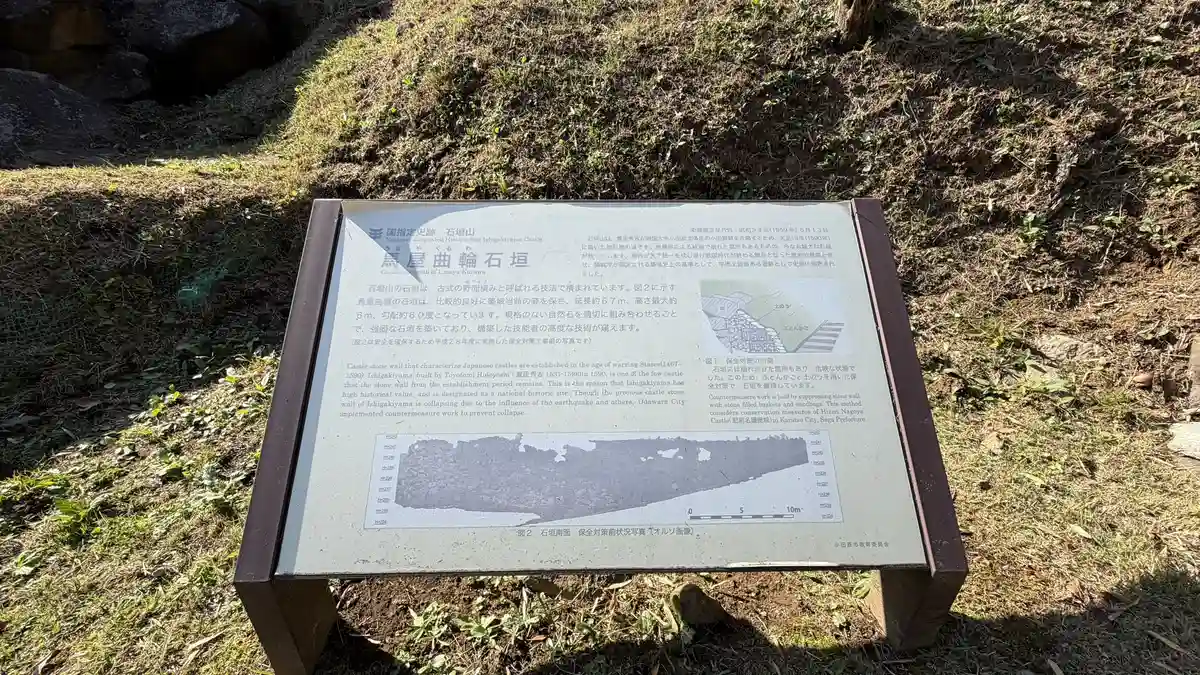
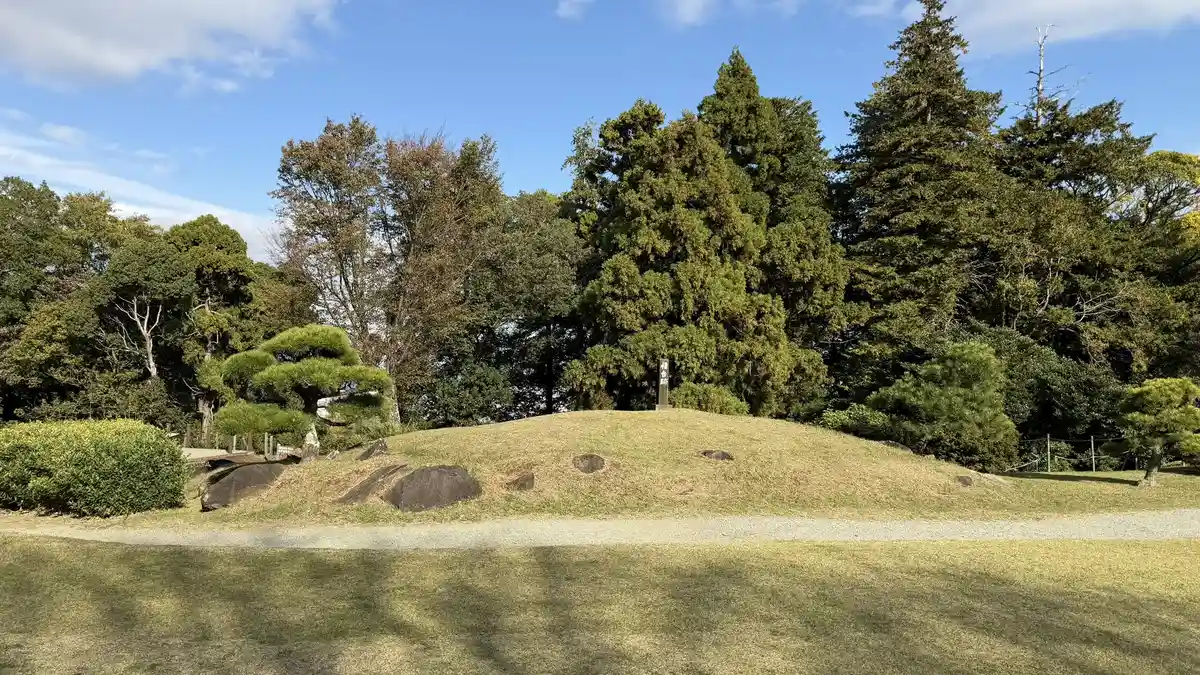
Also called Umaya-kuruwa, the stable enclosure, this is the largest open space in the castle and now kept as lawn. It is one of the few places where sitting down is straightforward. The surrounding trees close off the view, so it is easy to forget you are on a ridge.
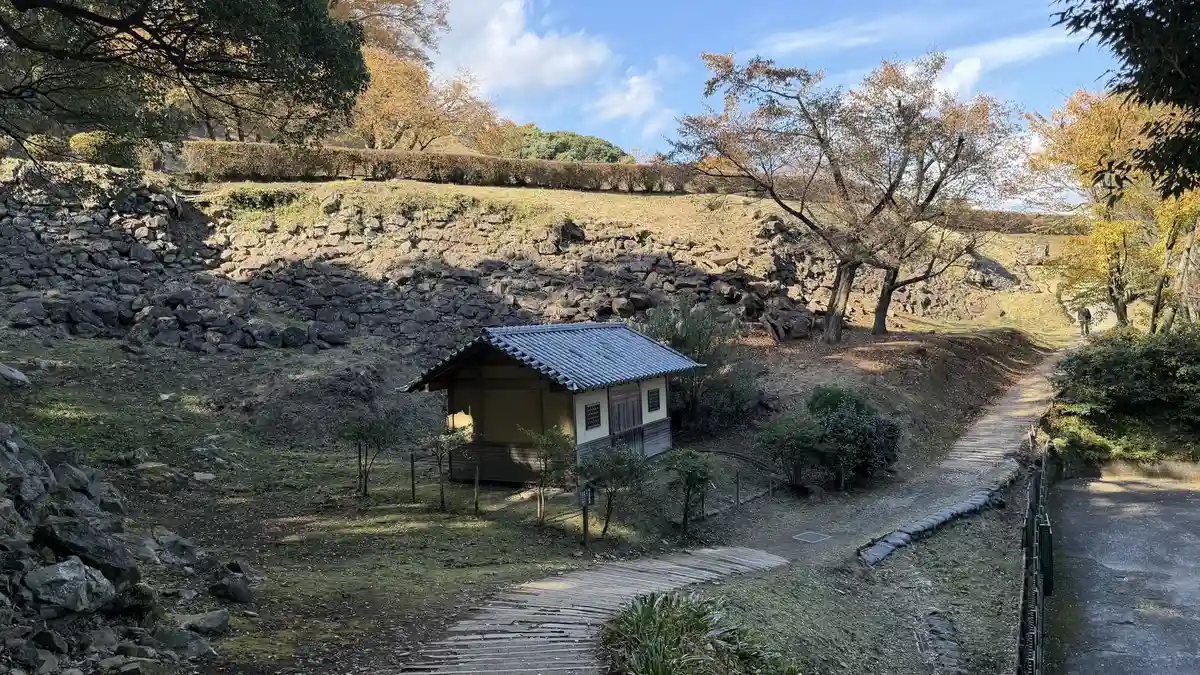
Walls survive on the eastern side of this enclosure too. The park leaflet points out that the stone used here is comparatively small. Set against the large blocks at Ido-kuruwa and around the main enclosure, it shows that the choice of material and the way it was laid varied across the site.
What to look for
- The board explaining the walls of the stable enclosure and their conservation
- The smaller stone used on the eastern side
- The size of the lawn and the terraces stepping up around it
Tap to enlarge
Time needed
Fifteen to twenty minutes with the walls. This is the place to take a break.
| Also known as | Umaya-kuruwa, the stable enclosure |
|---|---|
| Status | Maintained as lawn, with original walling around it |
| Underfoot | Flat and easy across the lawn |
| Facilities | No vending machines |
The viewpoint over Odawara Castle
The besieger’s view of the besieged
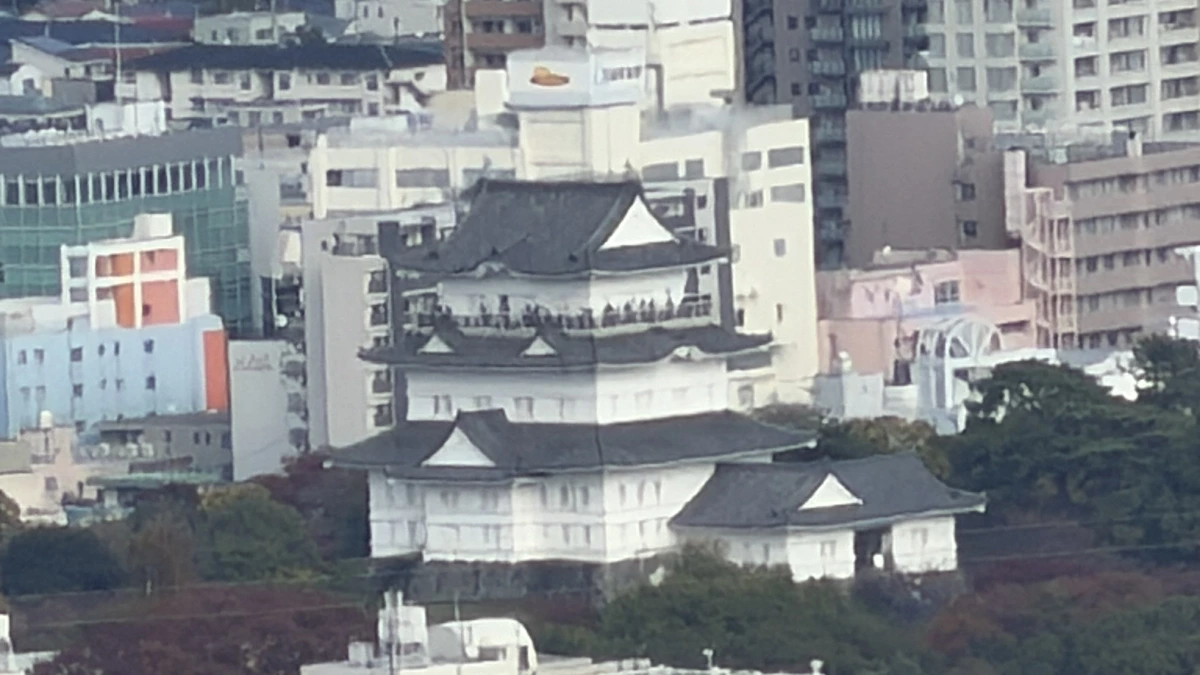
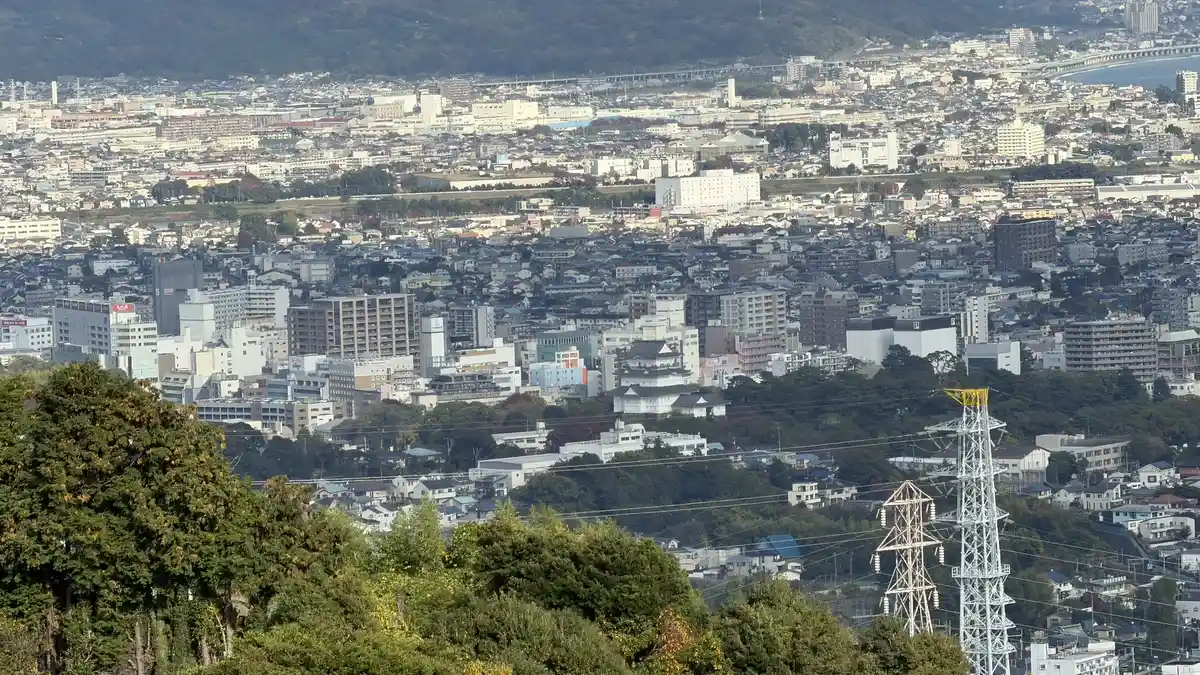
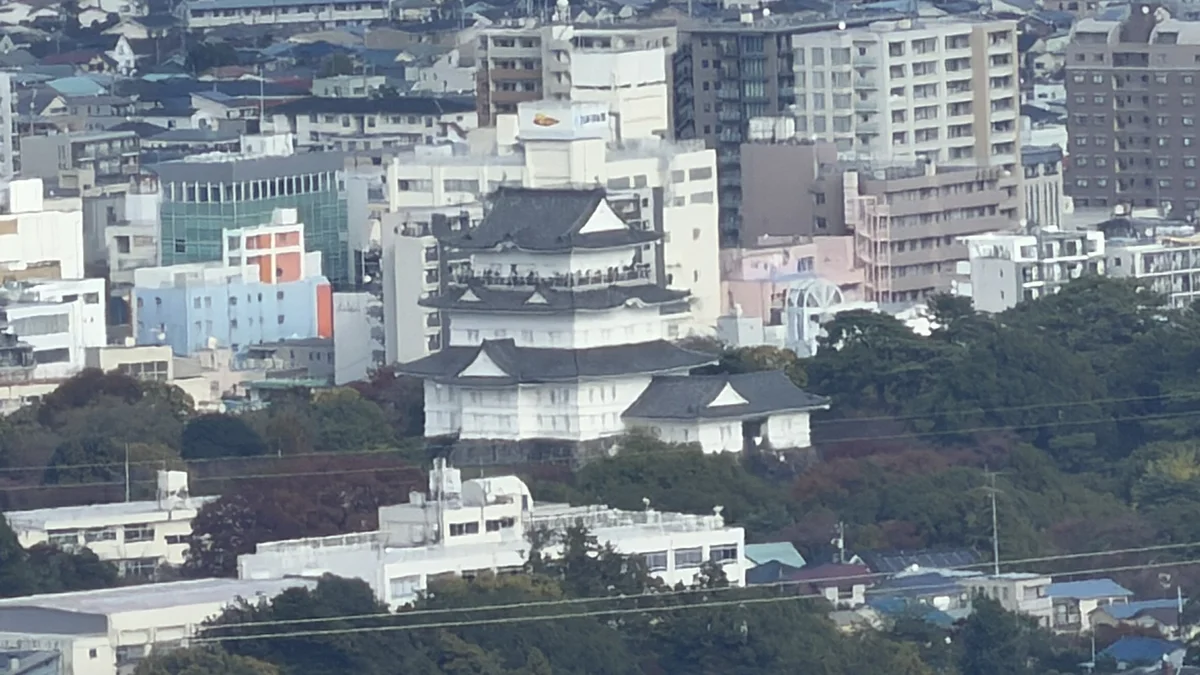
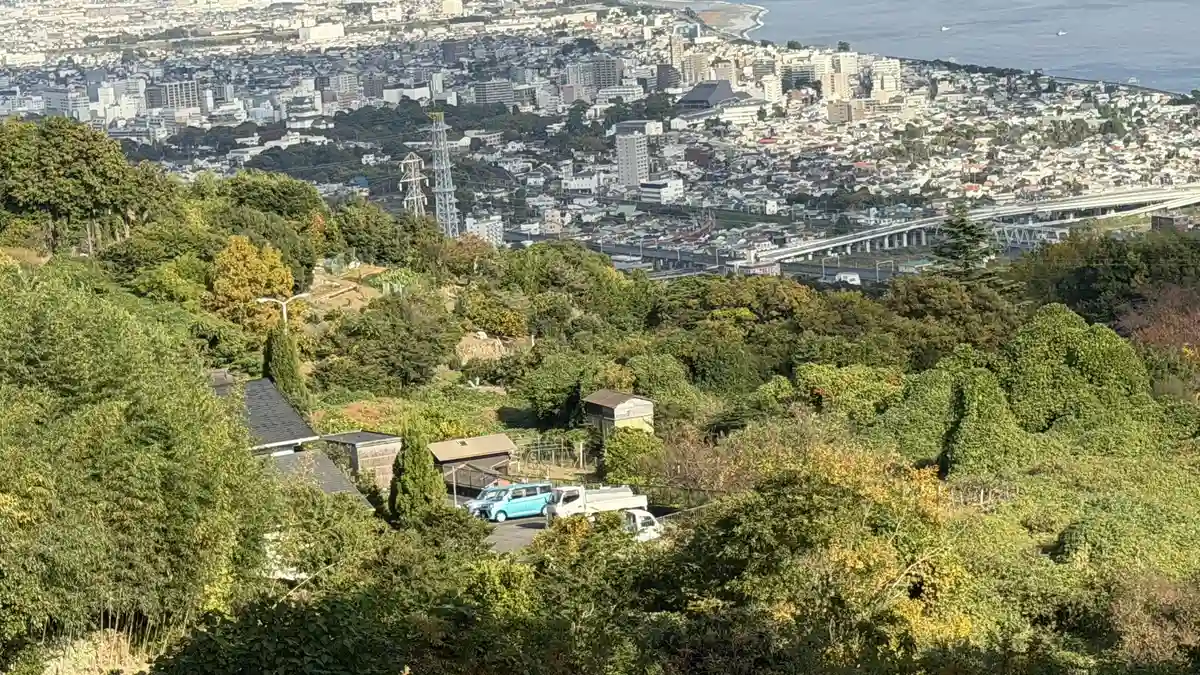
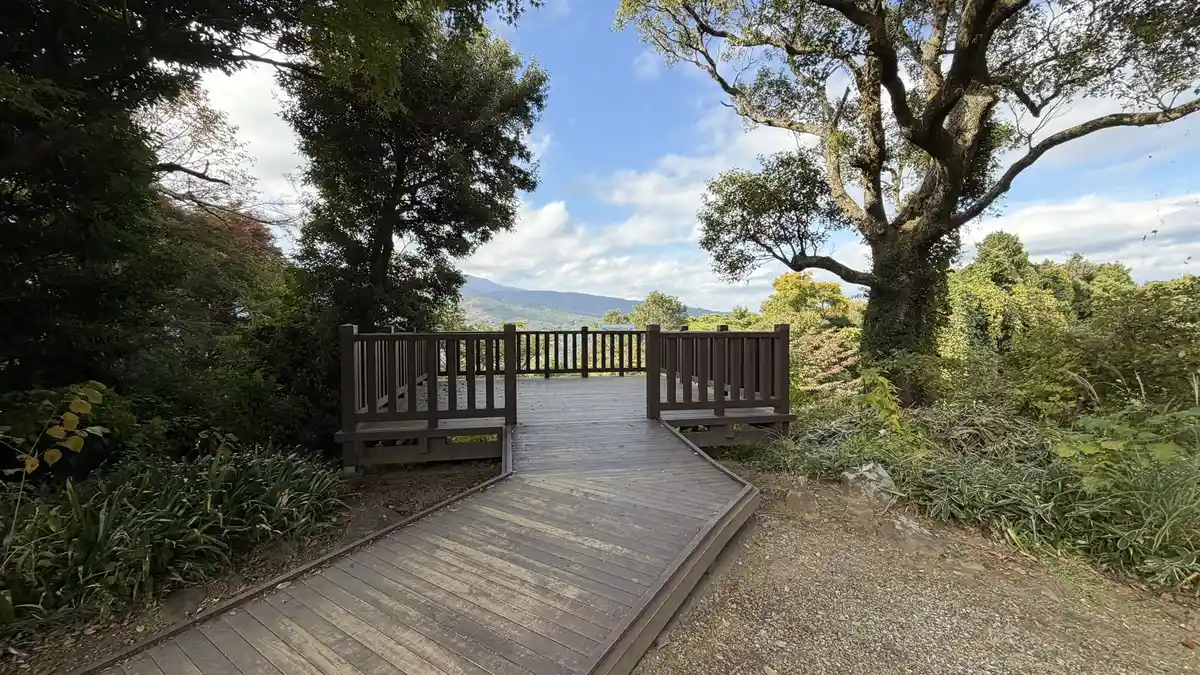
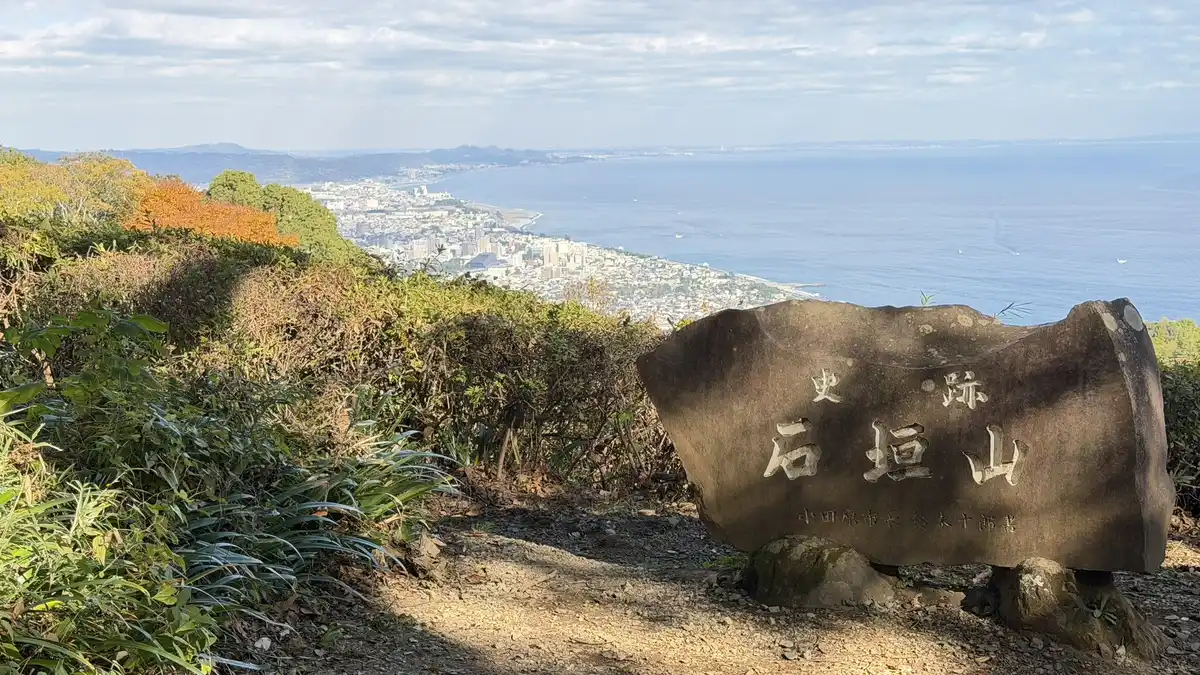
This is where the choice of site finally makes sense. A wooden deck opens onto Odawara and Sagami Bay, and somewhere in that townscape is Odawara Castle. With the naked eye it is small but findable; with the zoom on a phone or camera it comes up clearly. The photograph above was taken that way.
Hideyoshi based himself here and looked out at the castle in that direction. Seen the other way round, the Hojo were looking up at a stone fortress that had appeared on the opposite ridge. If you visit Odawara Castle first and then stand here, you end up reading the same year from both sides. How much you see depends on the weather and on how the trees have grown.
What to look for
- Odawara Castle in the townscape; use zoom to pick it out
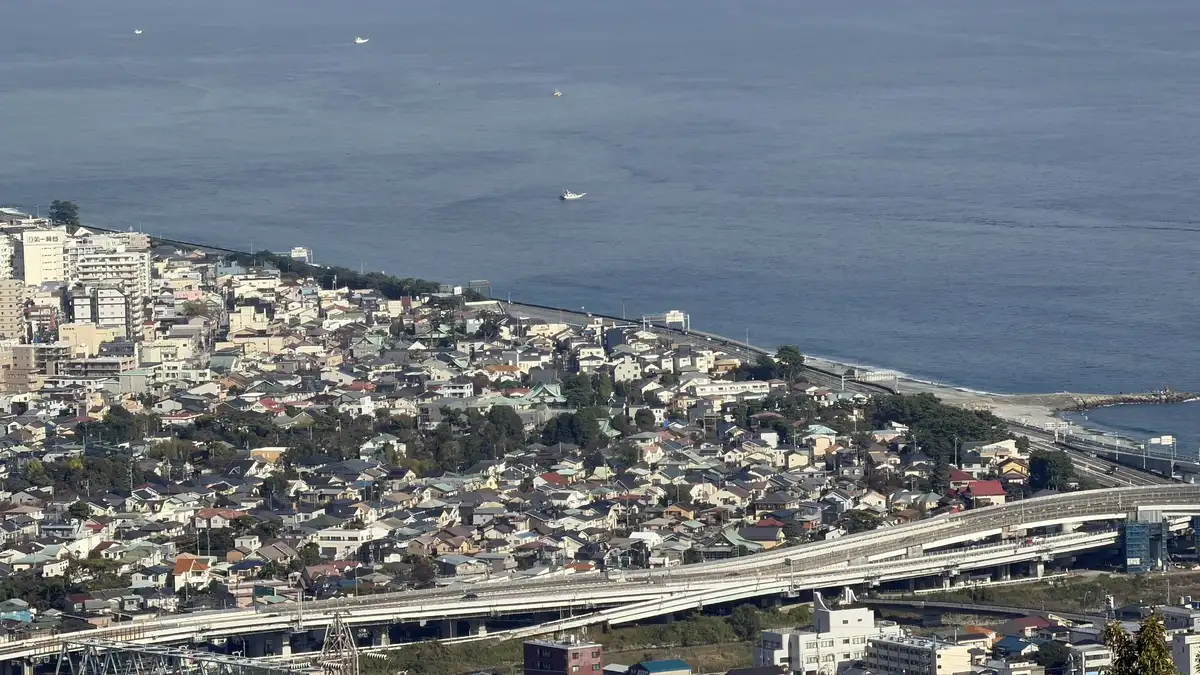
- The sweep of Sagami Bay and the hills beyond it
- How far the castle town extends along the shore
Tap to enlarge
Time needed
About ten minutes, plus a little longer if you are hunting for the castle through a zoom lens.
| Visible from here | Odawara Castle, the town of Odawara, Sagami Bay |
|---|---|
| With the naked eye | Small but distinguishable; zoom makes it clear |
| Conditions | Depends on weather and tree growth |
| Facilities | Wooden viewing deck |
For the castle on the other side of that view, see Odawara Castle Guide: Tickets, Time Needed and Lunch at Seikantei. To understand why Hideyoshi chose a siege over an assault, the Hojo defences are covered in Odawara Castle Earthworks: Walking the Hojo Dry Moats, Ramparts and Hachimanyama.
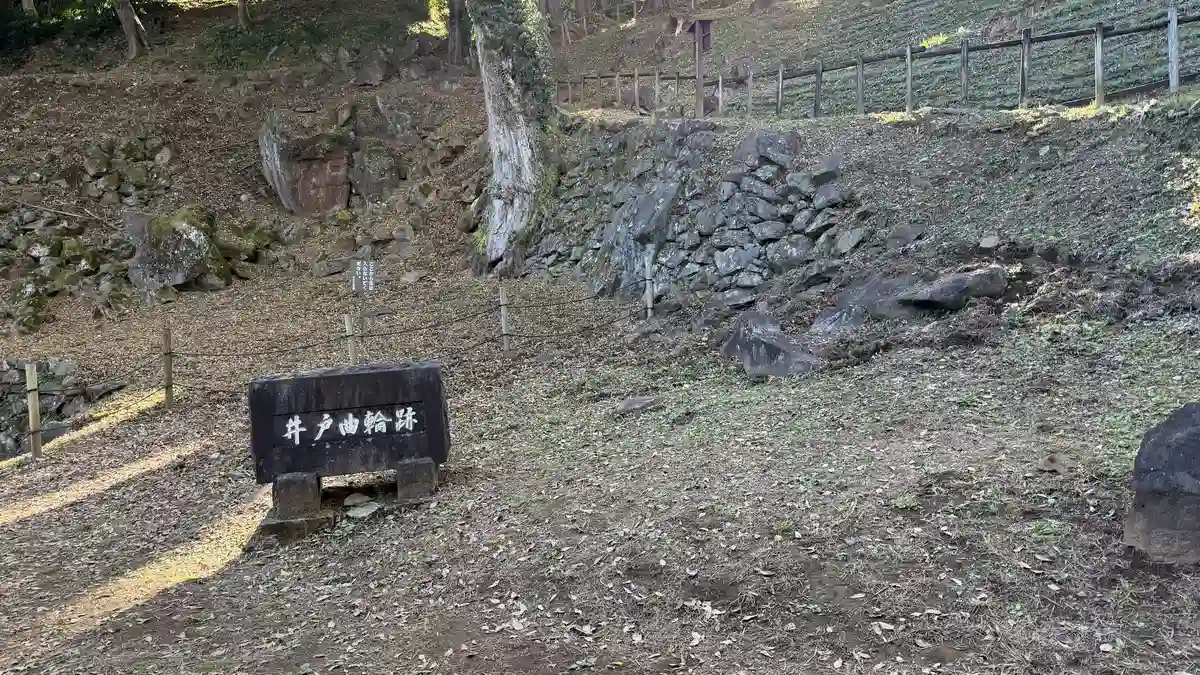
Ido-kuruwa — the well enclosure
An entire ravine walled in to hold a spring
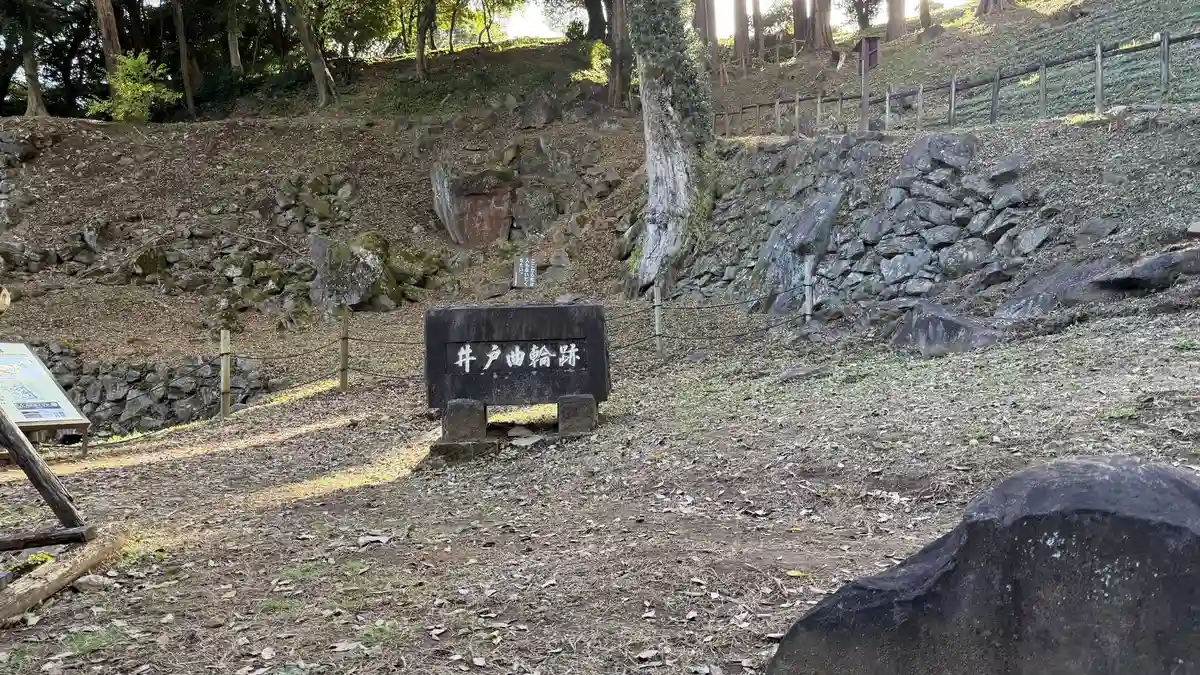
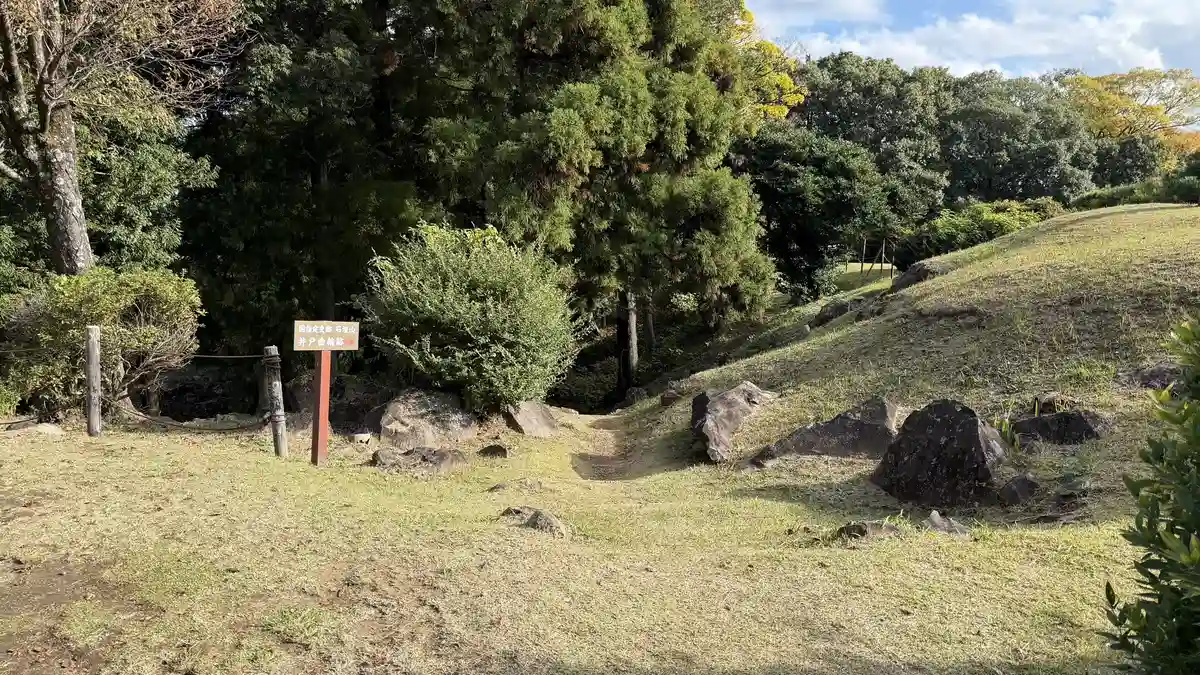
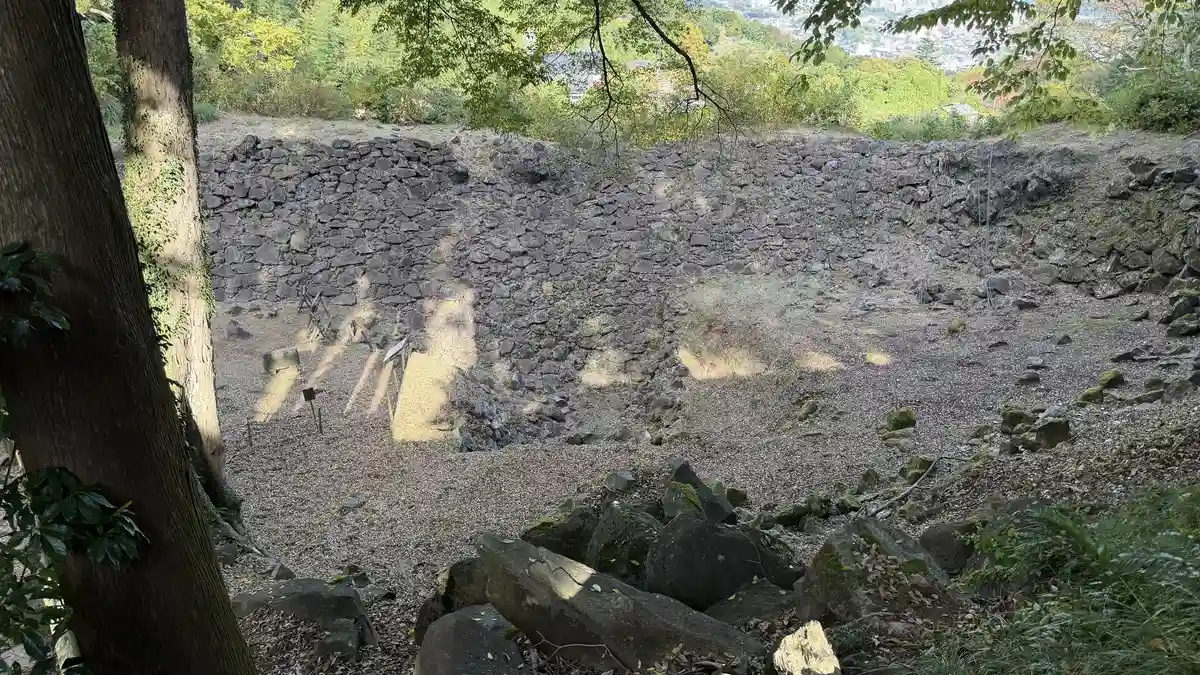
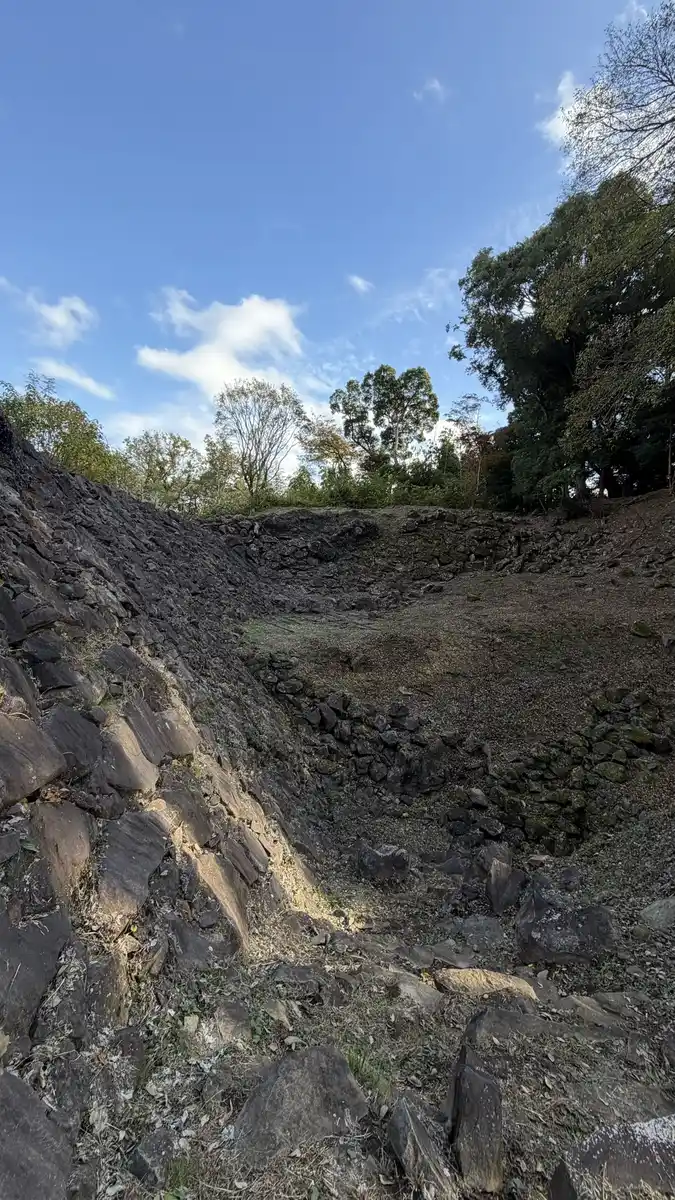
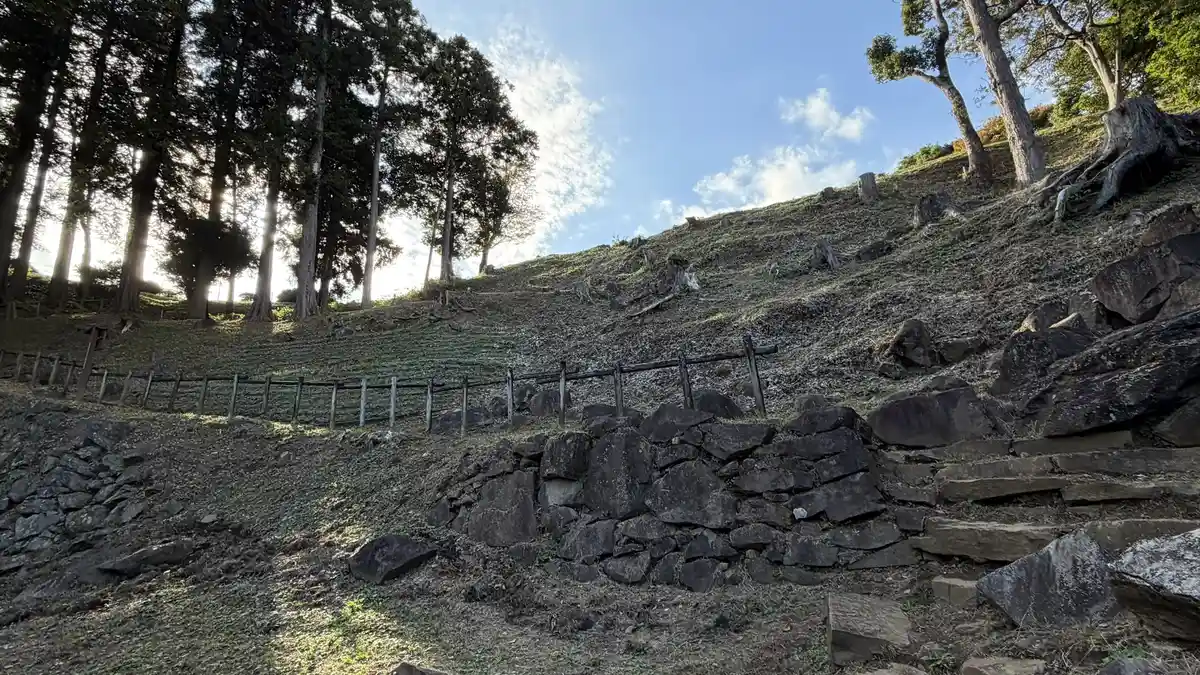
This is the best-preserved and most impressive part of the castle. A natural ravine was enclosed with stone walling and revetments so that its spring could be held as a water supply. Looking down from the rim tells you very little; it is only when you have gone down to the floor and turned to look up that the height and the extent of the enclosure register. That scale is precisely what photographs struggle to convey.
The board here includes a plan, which makes the enclosing structure much easier to follow. The nickname Sazae no Ido, the turban-shell well, refers to the spiralling descent to the bottom. If you have walked anticlockwise, this comes last, so leave time for it.
What to look for
- The height of the walls seen from the floor of the ravine
- How the walling and revetments wrap around the valley
- The plan on the interpretation board
- The texture of nozura-zumi, barely worked natural stone
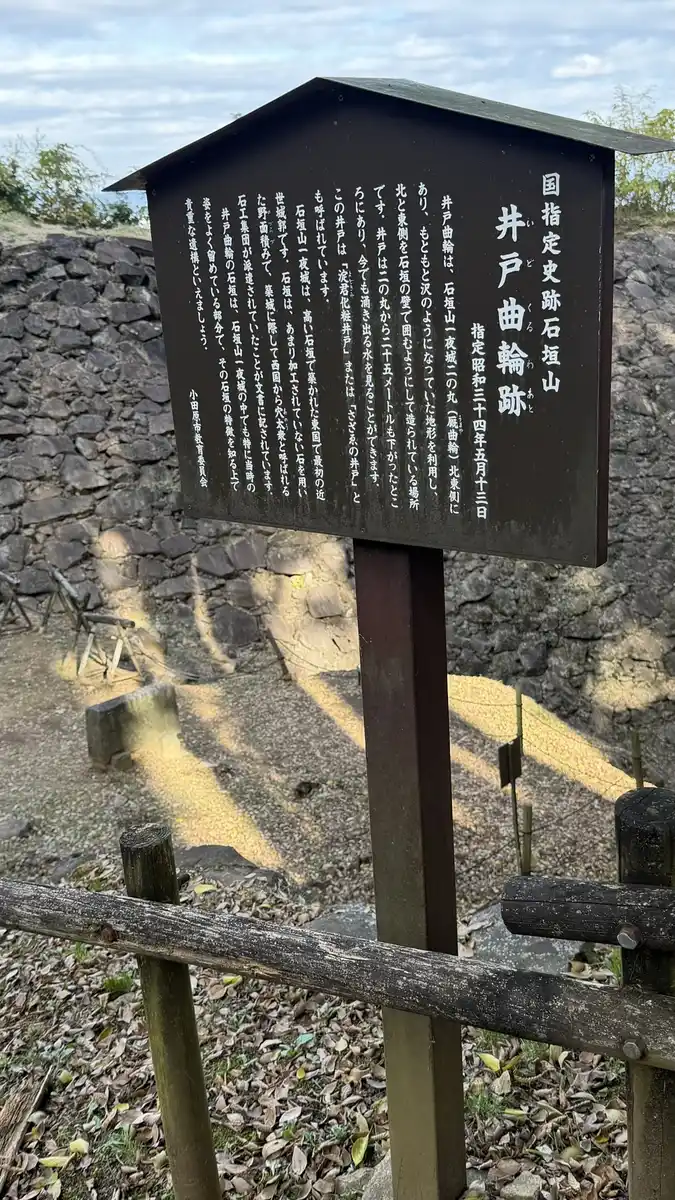
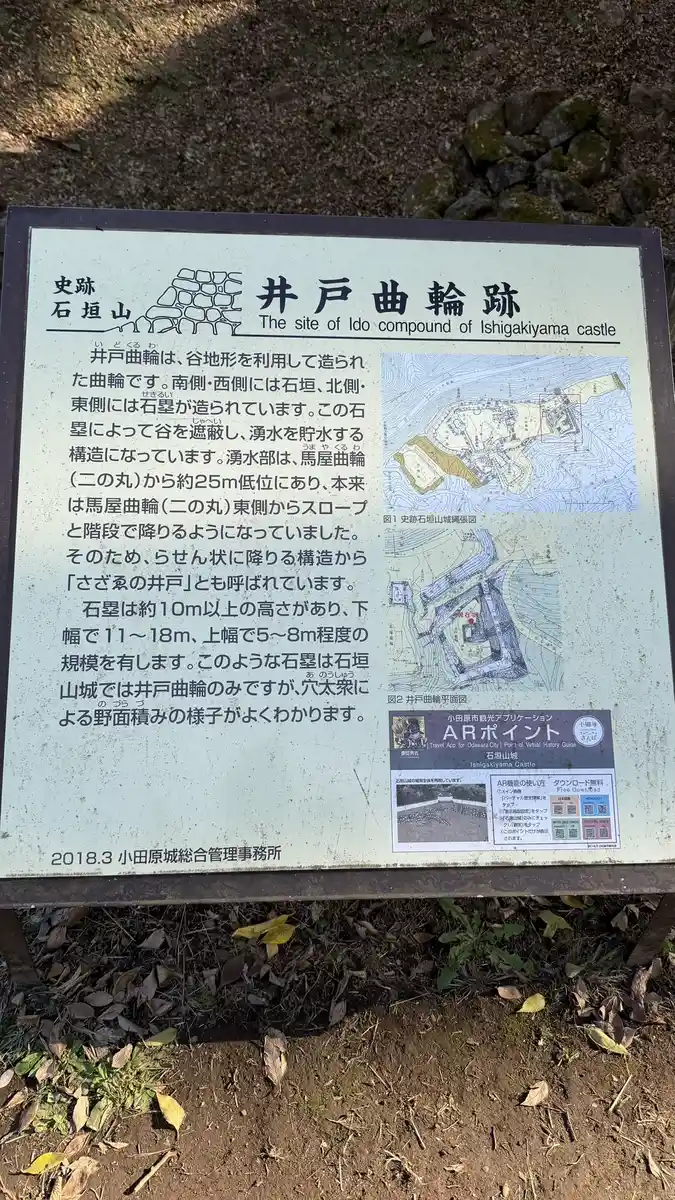
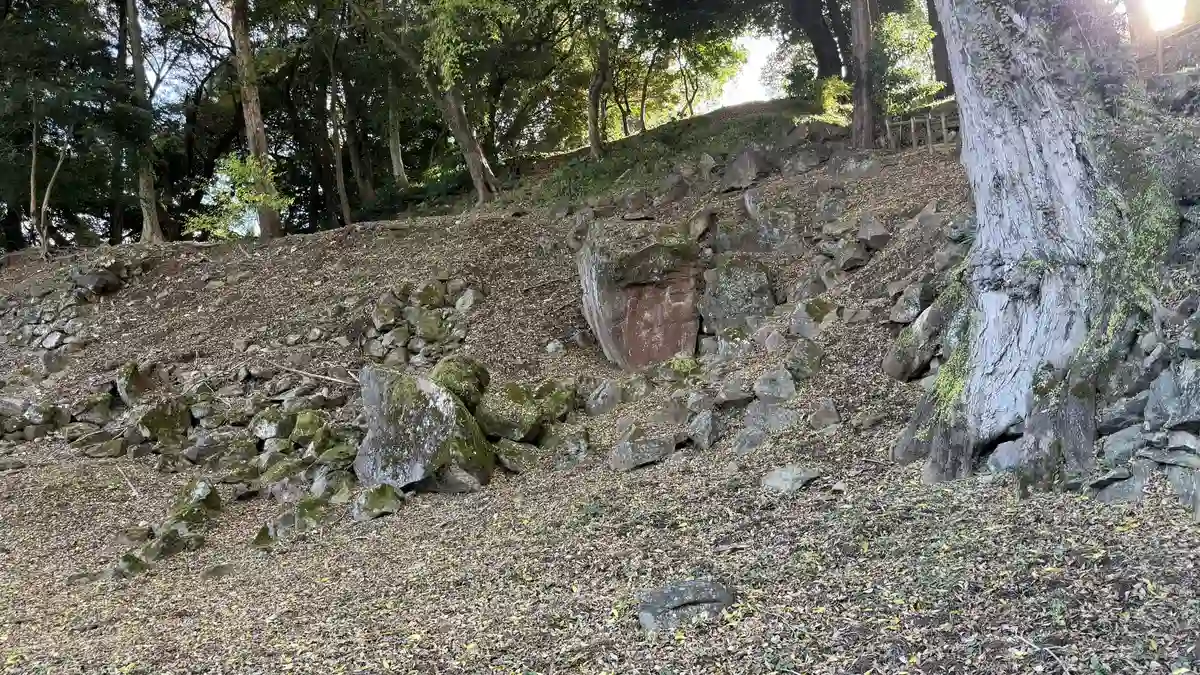
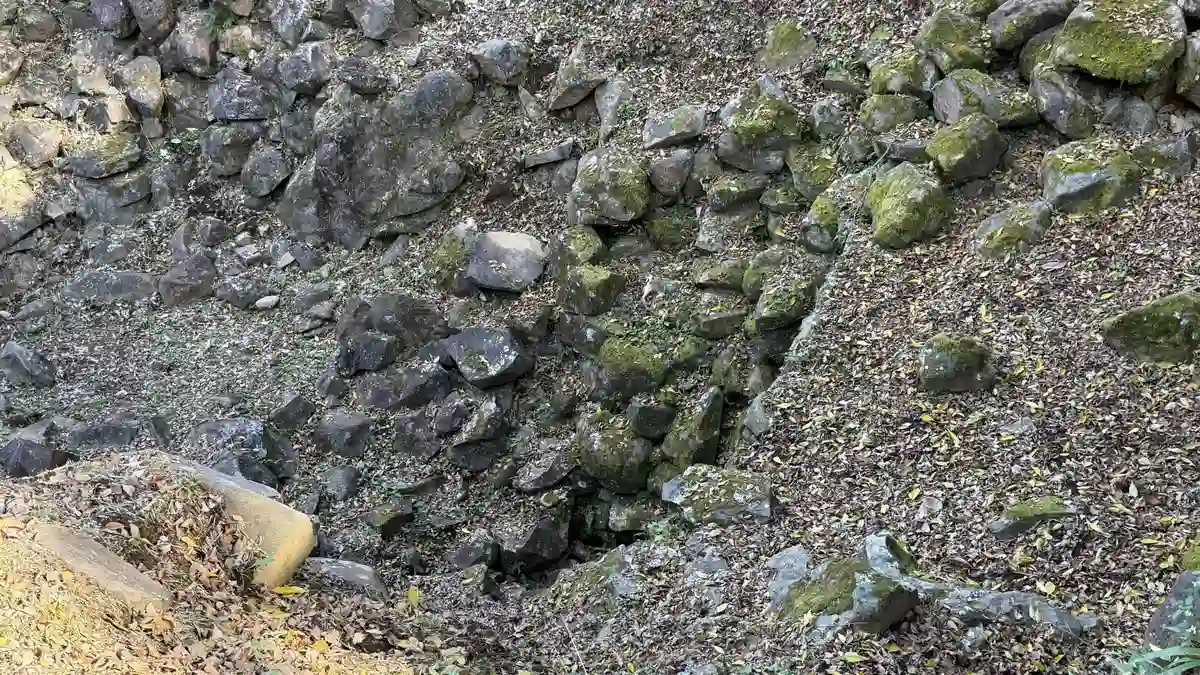
Tap to enlarge
Time needed
Around thirty minutes to go down, look up and read the board. If you are running short, take the time from somewhere else.
| Also known as | Sazae no Ido, the turban-shell well |
|---|---|
| Structure | A ravine enclosed by walling and revetments to hold a spring |
| Status | Original remains; Odawara City notes the good state of preservation |
| Underfoot | Descent to the floor of the ravine; proper shoes advised |
The park leaflet describes the structure as damming the ravine with stone revetments to create a well, and calls the walling here overwhelming. Securing water was an existential problem for a siege camp, and at Ishigakiyama the solution to that problem is also the finest thing to look at.
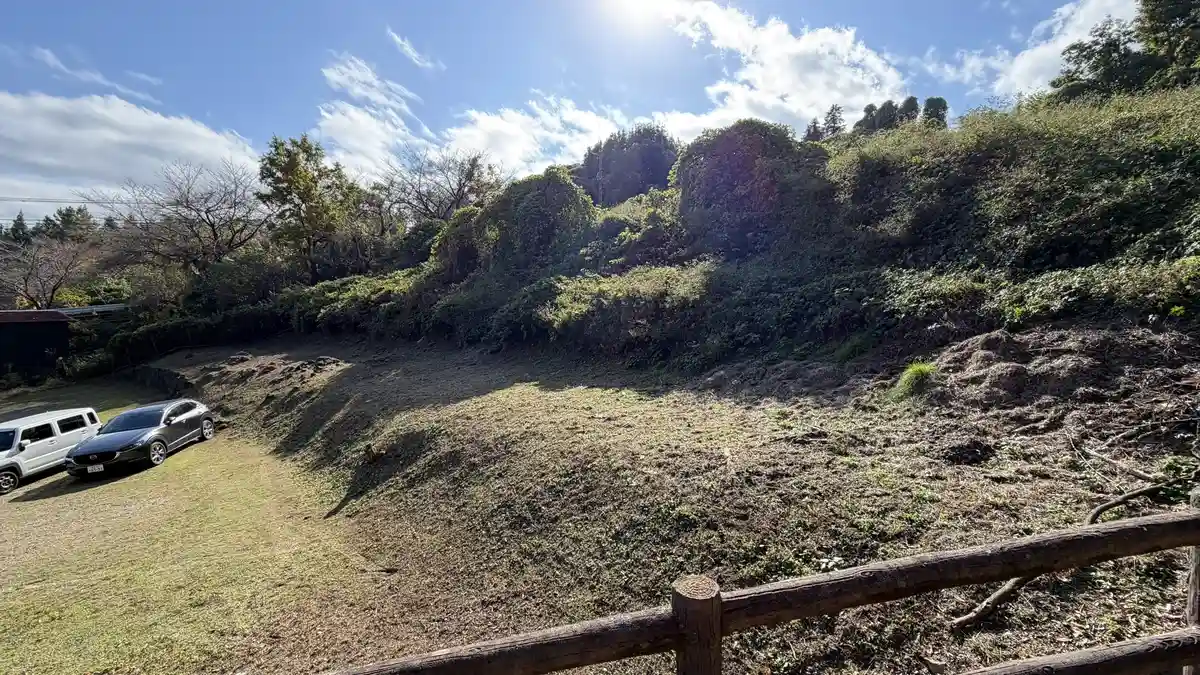
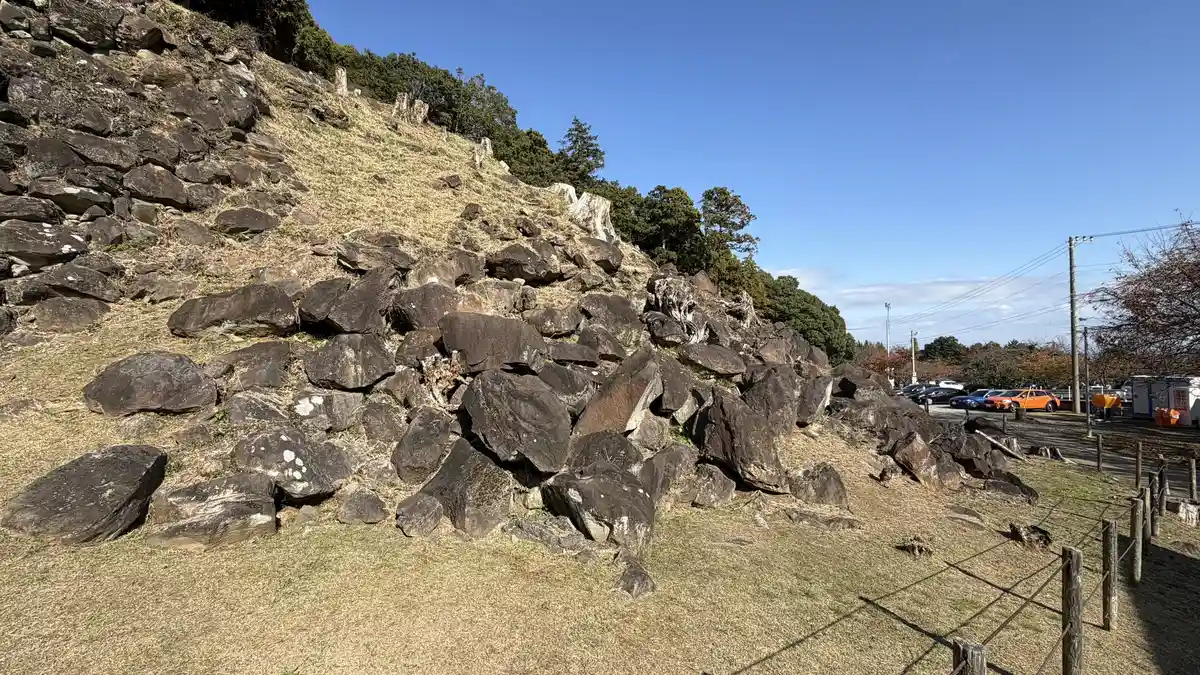
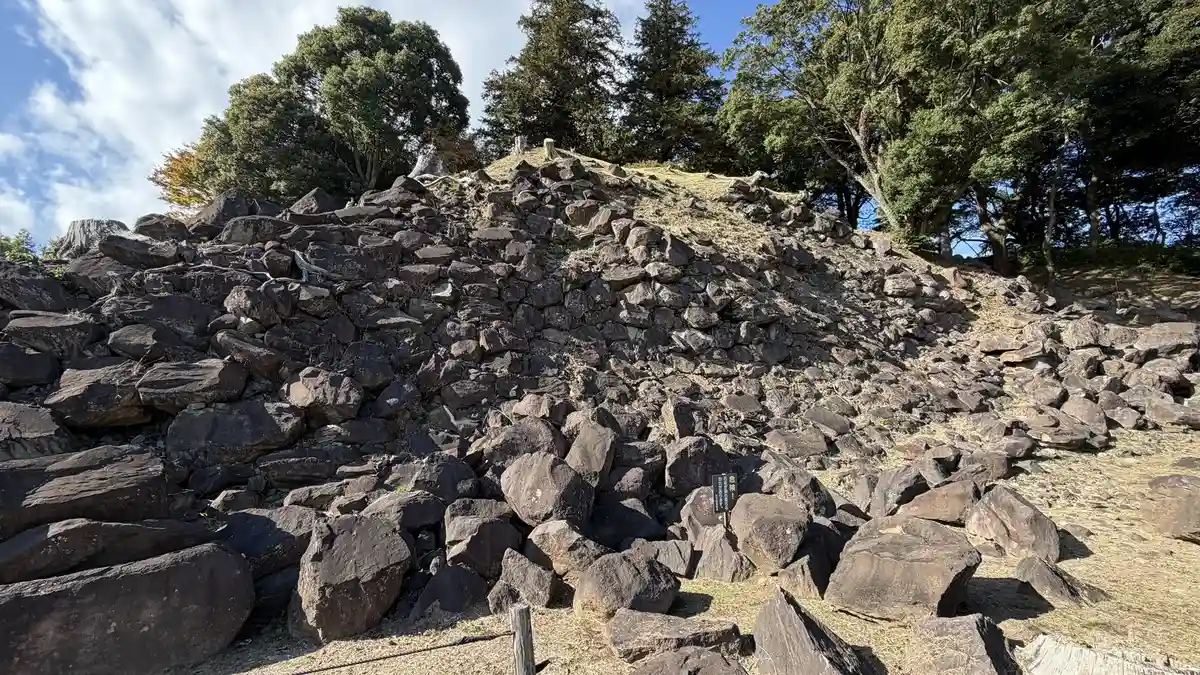
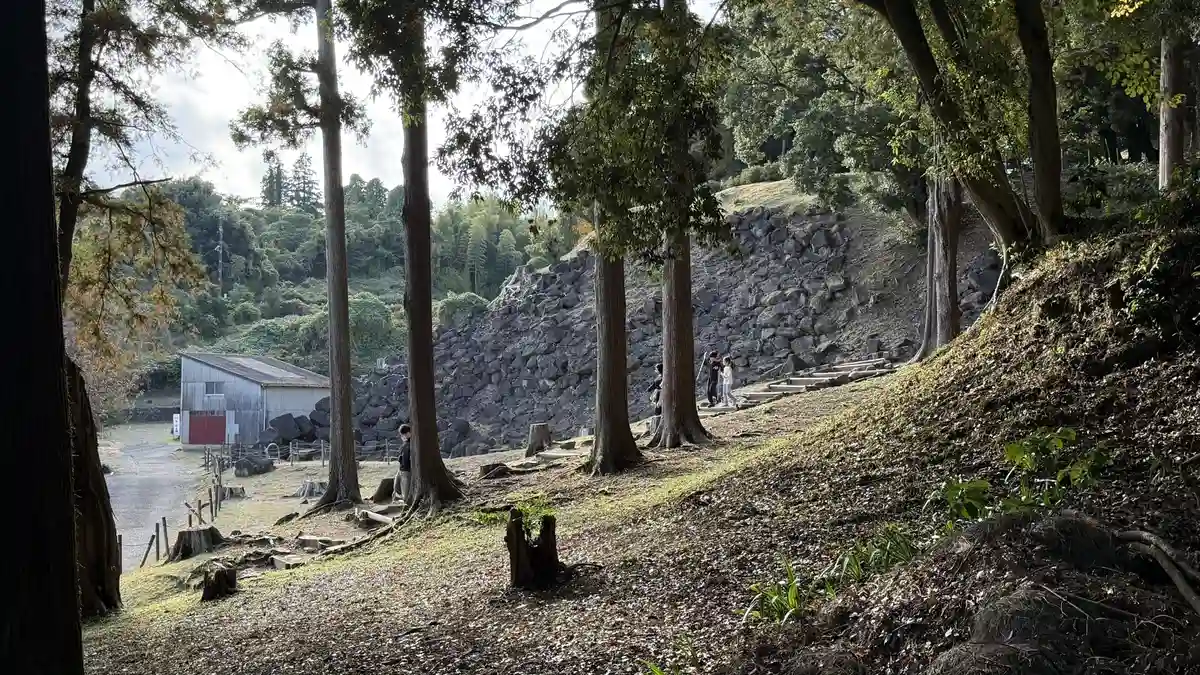
Higashi-kuruwa and the walls by the east entrance
Worth seeing twice, on the way in and on the way out
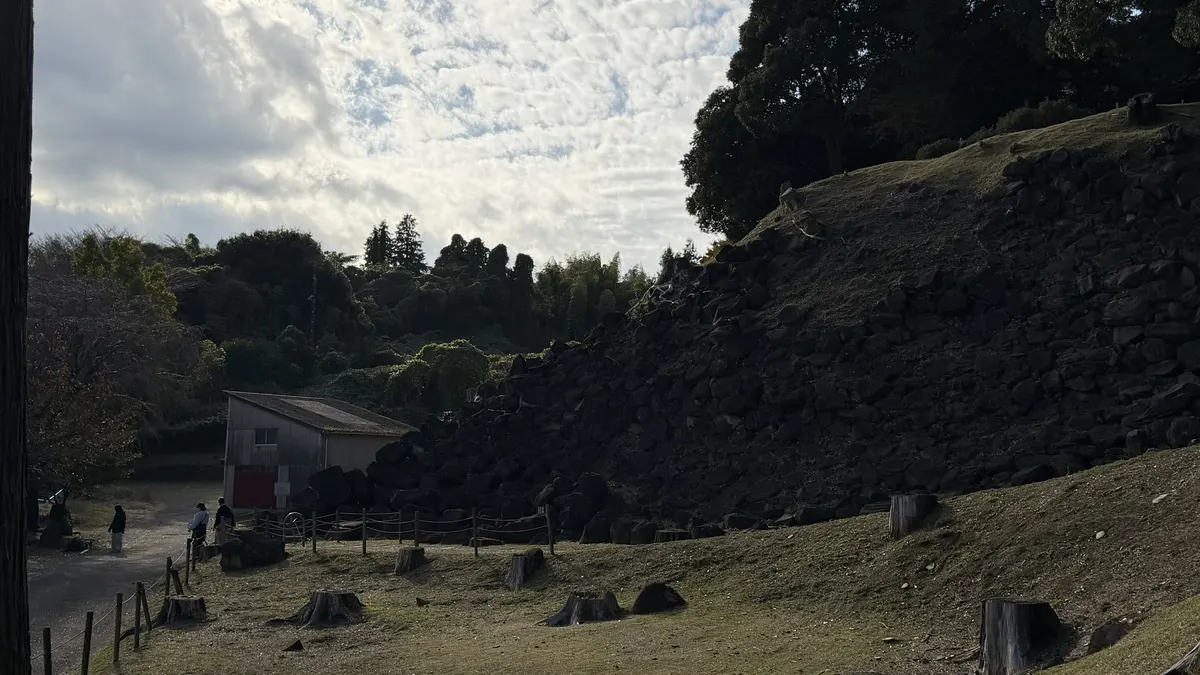
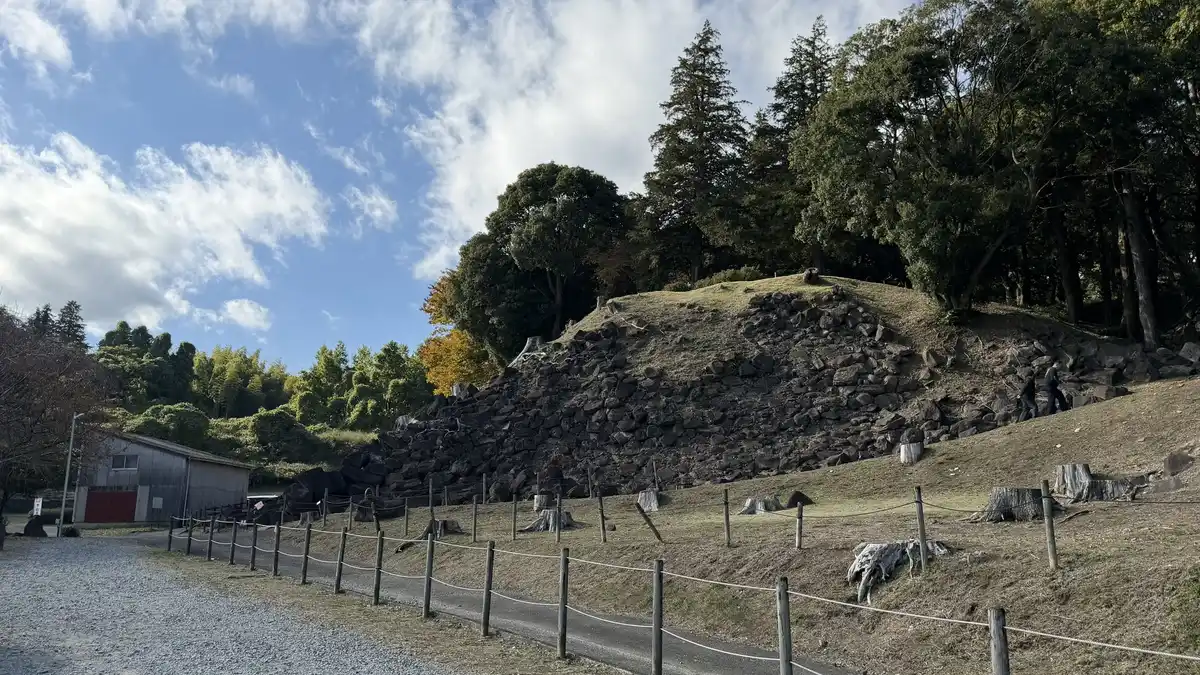
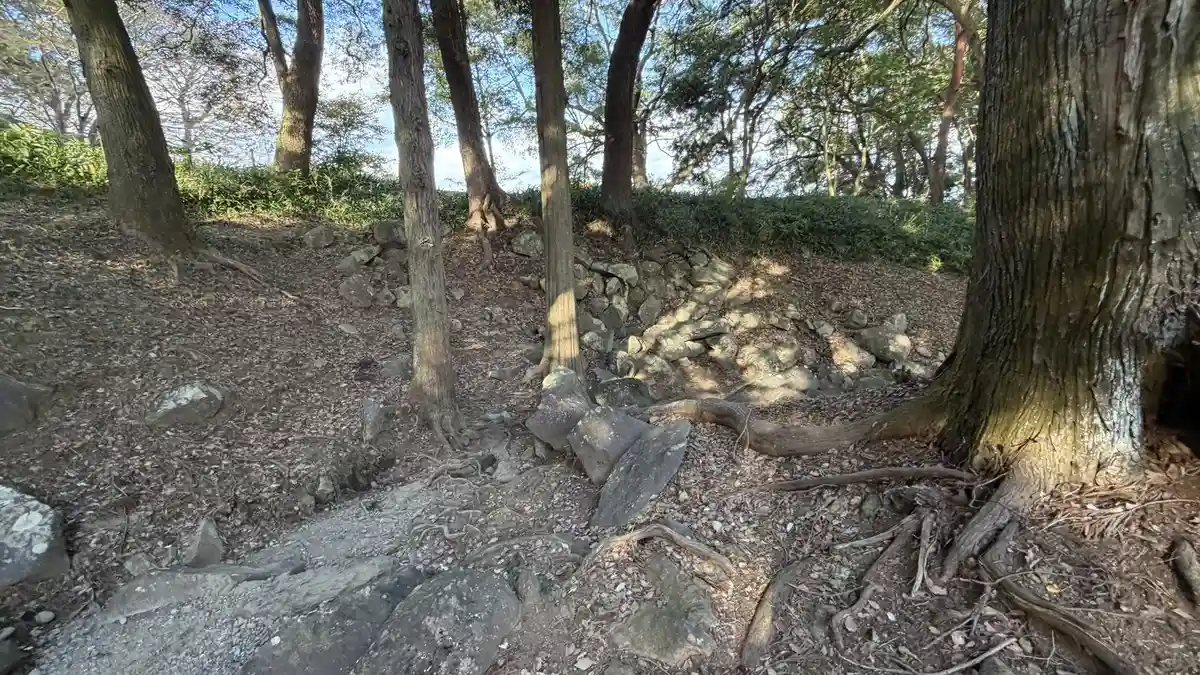
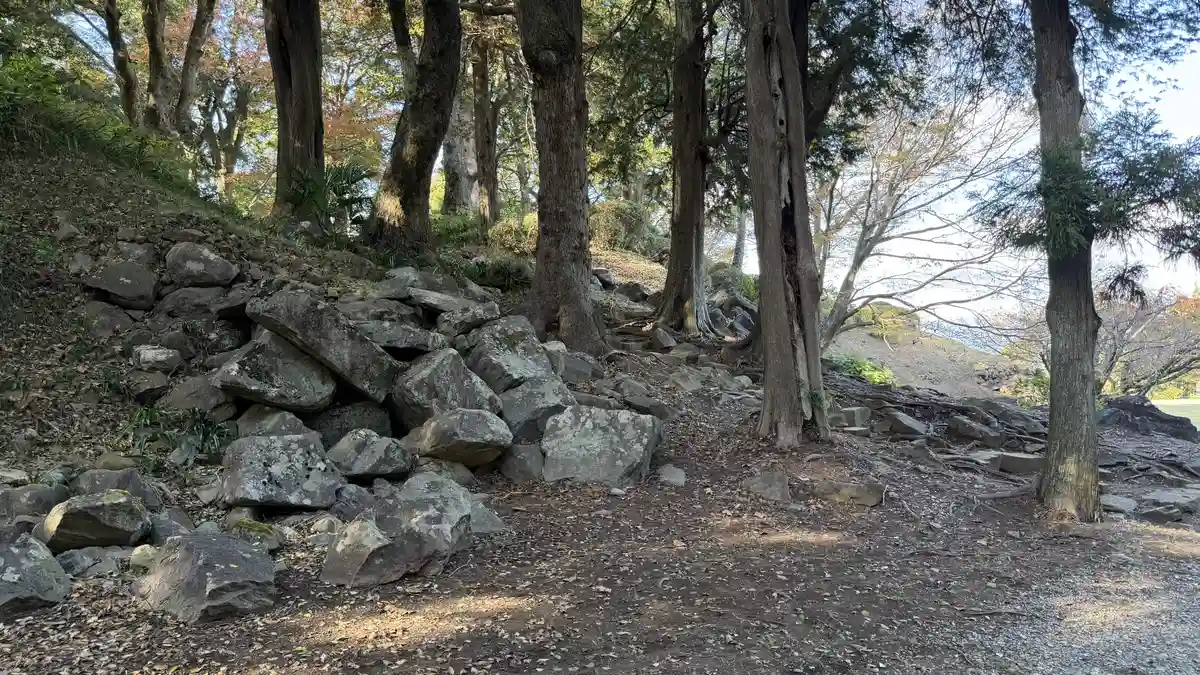
Substantial walling stands close to the entrance on the east side. Some faces are easy to walk straight past on the way in, so it is worth looking again once you have completed the anticlockwise loop and come back round.
By the afternoon the light is behind these walls, and shadow settles into the joints so the stacking pattern reads much more clearly. Photographing the same wall on the way in and on the way out shows the difference plainly.
What to look for
- The dry-stacked walls framing the castle entrance
- Stone edges thrown into relief by the afternoon backlight
- Walling along the path back from Ido-kuruwa to Ninomaru
Tap to enlarge
Time needed
About fifteen minutes across both passes.
| Status | Original remains: dry-stacked stone walling |
|---|---|
| Location | Immediately inside the entrance by the car park |
| Photography | Afternoon backlight sharpens the stone edges |
My own ranking, based on the visit of 16 November 2025. This is not the order recommended by Odawara City or by the site itself.
The walled ravine survives largely intact, and going down to the floor is the only way to grasp its scale. Skip this and you have missed half the reason to come.
Seeing the besieged castle from the besieger’s position is something you cannot get anywhere else. A zoom lens brings Odawara Castle up clearly.
Nothing is standing, but the wooden posts let you place the buildings on the ground, and this is where the roof tiles pointing to a keep and turrets were found.
Broad and easy to walk, but being maintained as lawn it offers less stonework than Ido-kuruwa or the main enclosure. It is on the route anyway, so passing through is enough.
Frequently asked questions
No. Odawara City puts the work at roughly 80 days, from the fourth month to the sixth month of 1590, using 40,000 worker-days of labour. The name refers to a story that once the castle was complete, the surrounding trees were felled all at once so that it seemed to appear overnight when viewed from Odawara Castle. Roof tiles excavated around the keep platform carry inscriptions dated Tensho 19, that is 1591, suggesting that building work continued after the siege had ended.
No buildings survive and none have been reconstructed. Odawara City infers from the large quantity of excavated roof tiles that a keep and turrets once stood here, but what you see today is original stone walling, terraces and collapsed blocks. Wooden posts at the main enclosure explain where the buildings stood, so the layout is still readable on the ground.
No, they are two separate castles. Odawara Castle was the Hojo clan’s stronghold and has a reconstructed keep in the middle of the city. Ishigakiyama is the siege castle Hideyoshi built on the mountain above, in sight of it. From the viewpoint at Ishigakiyama you can see Odawara Castle, and visiting both lets you follow the 1590 siege from the attacking and defending sides.
Not to the castle itself. The Umemaru-go loop bus runs only on Saturdays, Sundays and public holidays, excluding the New Year period, and Odawara City states that it is the only public transport stopping at the site. On a weekday you walk up from JR Hayakawa Station, which the city estimates at about 50 minutes. Services are occasionally suspended, so check the Odawara City page for the current timetable before you travel.
Covering the site thoroughly on 16 November 2025 took two and a half hours. That is time inside the castle only, excluding travel from the station and any stop for food. Concentrating on Ido-kuruwa, the main enclosure and the viewpoint takes noticeably less. If you are walking up, add about 50 minutes each way.
There are toilets in the park, but no vending machines anywhere inside the castle, so carry water up with you. Ichiya-jo Yoroizuka Farm just outside the entrance sells bread, cakes and meals, but it closes on Tuesdays and Wednesdays (confirmed 24 September 2026). If you are visiting on either of those days, plan to bring everything you need.
Trainers or hiking shoes. This is a ruin where collapsed walling has been left in place, and you will be walking over loose stone. One of the routes up from Hayakawa Station has also had water running down it like a stream after heavy rain, so if you are climbing the day after rain, choose shoes you do not mind getting wet.
Related Pages
☕ Support This Site
Following the Shogun is written from my own visits and field photography.
If this guide was useful, a coffee helps keep the work going.

You can also support via the QR code
Official sources
Official sources
- Odawara City — Historic Site: Ishigakiyama (Japanese) — designation, the enclosures, nozura-zumi walling, excavated and inscribed roof tiles, walking times from the stations
- Odawara City — Ishigakiyama Ichiya-jo Historic Park (Japanese) — the roughly 80 days of construction, 40,000 worker-days, park area
- Odawara City — Umemaru-go sightseeing loop bus (Japanese) — operating days, one-day pass fares, boarding point, guide arrangements, service notices
- Odawara City — Visiting Ishigakiyama Ichiya-jo Historic Park (Japanese) — address, paid guided tours by booking, absence of a management office
- Odawara City — Edo Castle stone quarry site, Hayakawa Ishichoba group, Kanpakuzawa branch (Japanese) — that the quarry served the rebuilding of Edo Castle between 1603 and 1636
- Kanagawa Prefecture — Ichiya-jo Yoroizuka Farm (Japanese) — opening hours and closing days, confirmed 24 September 2026
- On-site leaflet, Ishigakiyama Ichiya-jo, issued by the Odawara Castle General Management Office — the walls of the main, south and well enclosures and the east side of Ninomaru, shiro-wari, the one-night legend, and the park map
- On-site interpretation boards, including “Ishigakiyama Castle, the first all-stone castle in eastern Japan”, “The siege of Odawara and the one-night castle legend”, “Who laid out Ishigakiyama?”, the well enclosure and the stable enclosure walls
Fares, operating days and opening hours change. This guide reflects official information as of 24 September 2026; please confirm the current details on the official pages before you travel.


comment