


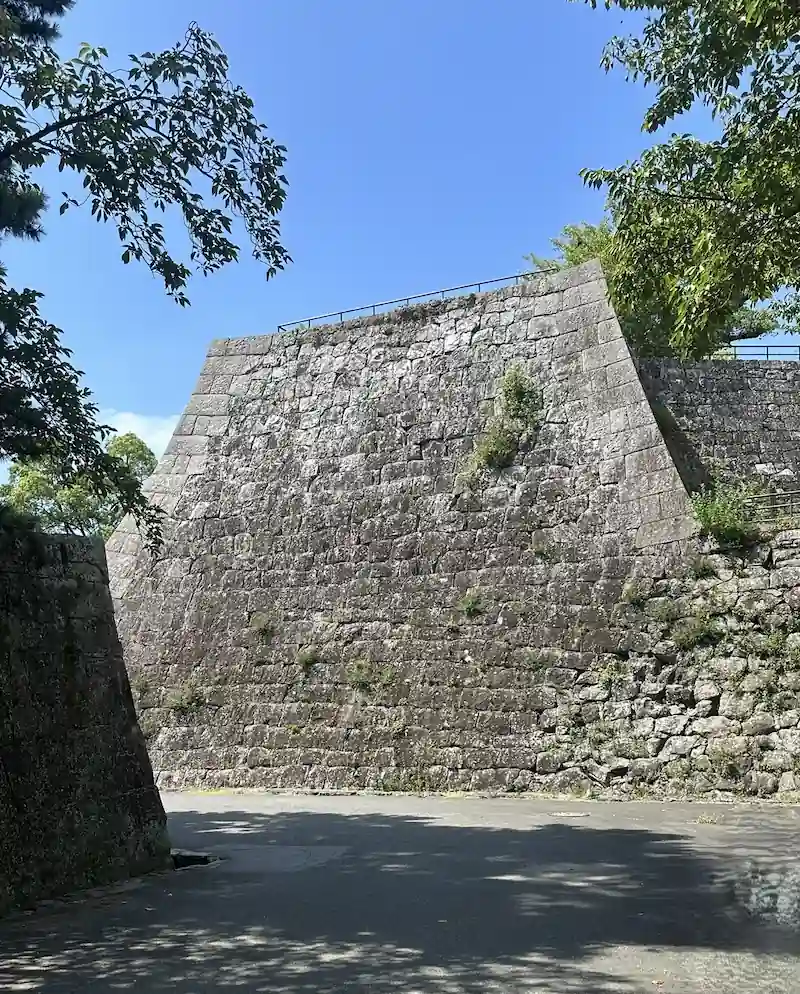
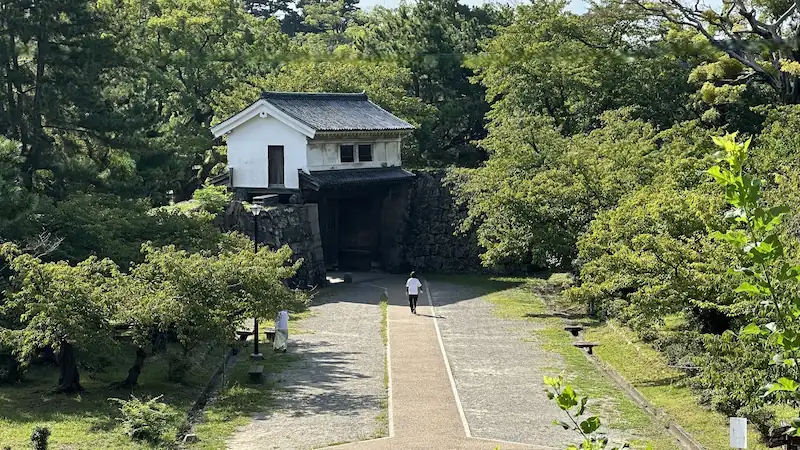
Wakayama Castle’s outer bailey brings together the landmarks that trace the castle’s story from its founding through the Edo-period rebuilding, chief among them the Important Cultural Property Okaguchi Gate. Okaguchi Gate survives from the domain era intact, and the Matsu-no-maru turret platform wall nearby — rising, by on-site accounts, to around 14 meters — shows off the stonework of that Edo-period overhaul in full. In a castle where most structures are reconstructions, this is the area where you get closest to the real thing.
This guide walks through all 11 spots in the outer bailey in order, starting from the site of the Main Gate, passing Okaguchi Gate and the Matsu-no-maru walls, and following the Omote Slope up toward the honmaru — the same route castle-goers would have climbed centuries ago.
THREE-AREA NAVFrom the outer bailey onward to the honmaru and keep, then the nishinomaru
Back to the full guideEnter through the Ichi-no-hashi Bridge and Main Gate, then move from the outer bailey to the honmaru and keep and on to the nishinomaru and Momijidani Garden — walked in that order, the castle’s history and terrain unfold naturally.
The Outer Bailey
Ichi-no-hashi Bridge to the Omote Slope
Built around Okaguchi Gate and the Matsu-no-maru wall, this area covers the castle’s entrance and its outer line of defense.
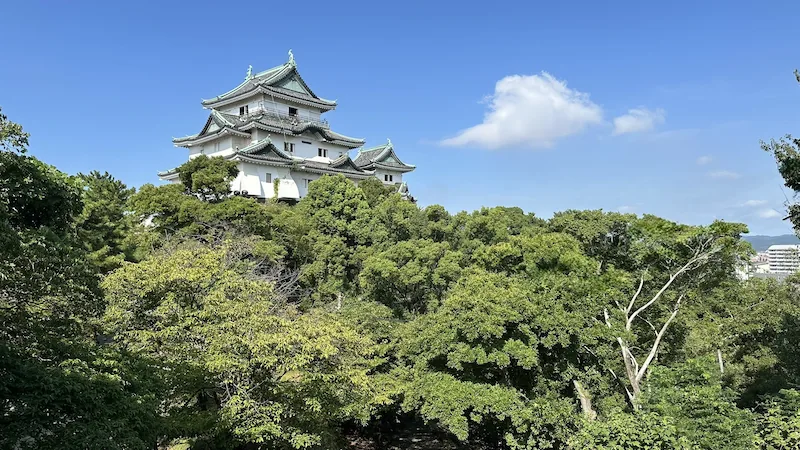
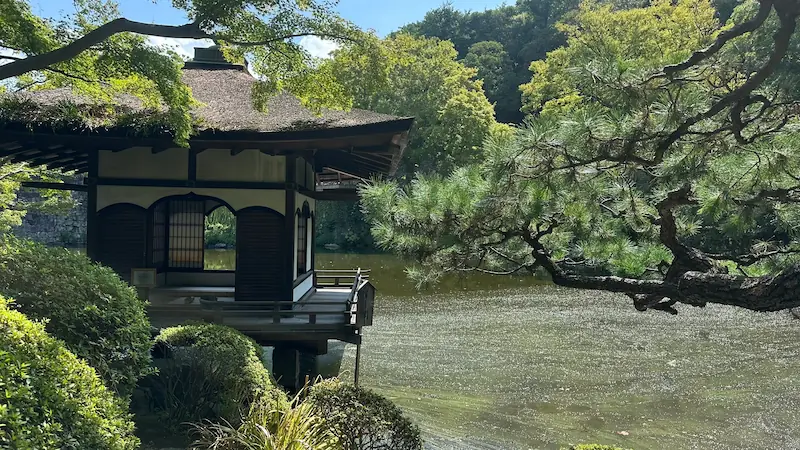
The Outer Bailey, Spot by Spot (In Walking Order)
This route starts at the site of the Main Gate and works inward from the castle’s outer perimeter, passing Okaguchi Gate and climbing the Omote Slope toward the honmaru — the same formal approach used since the Edo period. Budget roughly 60 to 90 minutes.
1. Where Castle Met Town: The Entrance and Outer Zone
Ichi-no-hashi Bridge and the Main Gate (Reconstructed)
What’s left of the castle’s original front door, where fortress met town
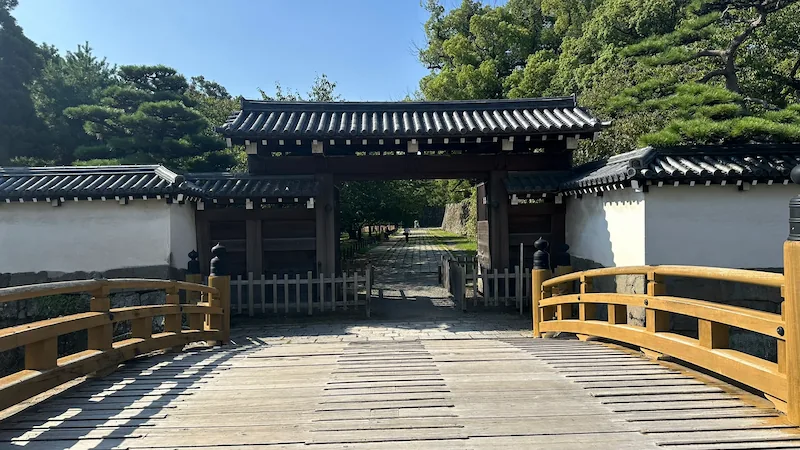
The Ichi-no-hashi Bridge and Main Gate you see today mark the spot that took over as Wakayama Castle’s front entrance partway through the Asano era. The original gate collapsed in 1909 (Meiji 42) and wasn’t rebuilt until 1982 (Shōwa 57). The castle’s very first main gate, though, is thought to have stood over by Okaguchi — it was the Asano family’s rebuilding of the castle town that shifted the main entrance here, to Ichi-no-hashi.
Panorama Photo The approach to the castle park entrance.
| When the Main Gate was first built | Served as the castle’s first main gate from the founding era, beginning in 1585 (Tenshō 13). |
|---|---|
| Relocation | In the early Edo period, under the Asano, the main gate was moved to the Ichi-no-hashi side. The original site has been a “former gate site” ever since. |
| Current state | The gate itself is gone. Only signage marking the “site of the Main Gate” remains. |
| Cultural property status | No individual designation, though the site falls within the castle grounds’ overall National Historic Site status. |
⏳ Time to visit: about 3–5 minutes just to see the site, or 10–15 minutes to take it in properly
🗺 Address: Near Ichibanchō, Wakayama City, Wakayama Prefecture (on the former castle-town side)
🚶 Access: About 10 minutes by bus from JR Wakayama Station
- What’s left of the castle-and-town “front door”: The site of the Main Gate was once the main link between castle and town, a key spot for understanding how the castle town took shape and how it was defended.
- Traces in the terrain and stonework: Though the gate itself is gone, the surviving shape of the old moat, stone walls, bridge, and waterways still let you picture how the castle once fit together.
- A place that tells the castle’s history in stages: founding era, then reshaping under the Asano, then Tokugawa-era development of the town — each shift in era and use left its mark, quite literally, in the gate’s relocation.
💡 Trivia: Moving the Main Gate to Ichi-no-hashi also set the stage for Honmachi-suji, the castle town’s main street, shaping where commerce would center for years afterward.
The Well House
An Edo-period structure, unchanged, that once guarded the castle’s water supply
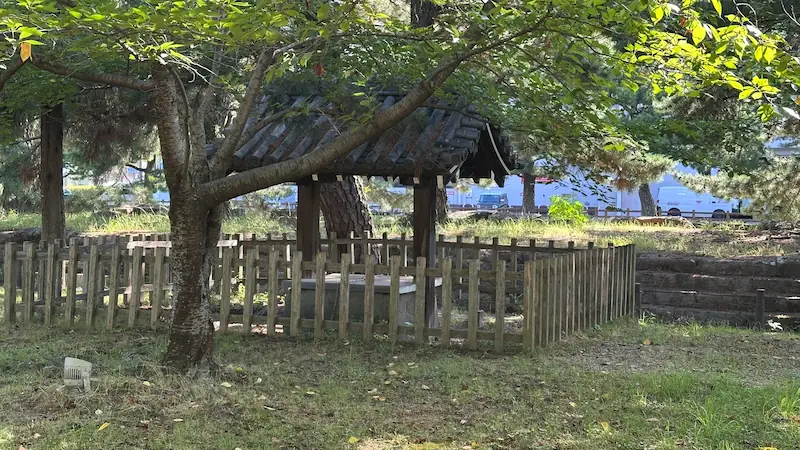
A handful of Edo-period structures still stand within Wakayama Castle, and the Well House is one of them. It’s modest — tucked away in an outer bailey rather than the castle’s core — but it offers a rare glimpse into the everyday infrastructure of a working castle. Along with Okaguchi Gate and Oimawashi Gate, it’s one of the few buildings here that actually survive from the domain era.
| Built | Late Edo period (the exact year isn’t recorded). |
|---|---|
| Design | A simple roofed structure built over a well, used to manage the castle’s water supply. |
| Repair history | Dismantled and restored in 1984 (Shōwa 59), which has kept it in good condition since. |
| Current state | Still standing — one of the castle’s few surviving domain-era buildings. |
| Cultural property status | Falls under the castle grounds’ overall National Historic Site designation. |
⏳ Time to visit: about 10–15 minutes to view the exterior
🗺 Address: 3 Ichibanchō, Wakayama City, Wakayama Prefecture (within Wakayama Castle)
🚶 Access: 1 minute on foot from the site of the Main Gate
- A genuine Edo-period building: one of the very few structures on the grounds that actually dates to the Edo period.
- Water management, up close: the Well House offers a rare look at the practical infrastructure that kept the castle running.
- A window into everyday castle life: unlike the showpiece keep and turrets, this is a working building, and it grounds the whole site in something more real than spectacle.
💡 Trivia: The 1984 restoration addressed structural stability and aging, and the building has held up well ever since — proof that the plainest structures often preserve the truest picture of daily castle life.
Site of Icchū Gate (Icchū-gomon-ato)
A box-shaped entrance and a mirror stone that still speak to the castle’s defensive design
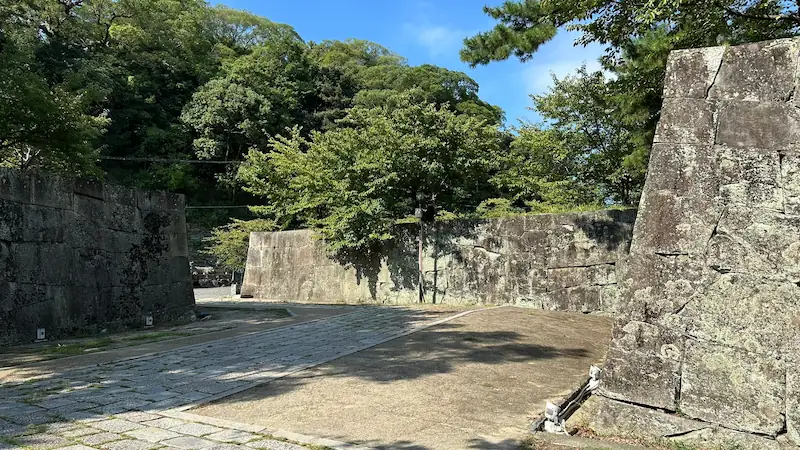
The gate itself is long gone, but the bent stone walls and box-shaped masugata entryway, along with a few surviving foundation stones, still lay out the old defensive layout clearly enough to read. In front of where the gate stood, a large flat stone known as a kagami-ishi, or “mirror stone,” was set into the wall — placed there as much to intimidate an approaching enemy as to serve any structural purpose.
| Design | A turret gate (yagura-mon) combined with a masugata box entrance. The approach forces a sharp right turn followed by a left, a zigzag built to slow down any attacker. |
|---|---|
| Current state | The gate is gone, but the stone walls, foundation stones, and the shape of the old passage still mark the site. |
| Cultural property status | Part of the castle grounds’ overall National Historic Site designation. |
| Notes | The masugata entrance features a large “mirror stone,” set there to unsettle attackers as much as to reinforce the wall. |
⏳ Time to visit: about 5–10 minutes to take in the stonework and the old passage
🗺 Address: 3 Ichibanchō, Wakayama City, Wakayama Prefecture (within Wakayama Castle)
🚶 Access: 1 minute on foot from the Well House
- The masugata’s stone layout: the tight zigzag of right and left turns creates a genuine sense of confinement — you can feel the defensive intent in the design.
- Traces in the foundation stones: the old turret gate’s footing and the mirror stone beside it are enough to picture the structure that once stood here.
💡 Trivia: One theory holds that koguchi (“tiger’s mouth,” the term for a castle entrance) evolved from a homophone meaning simply “narrow opening.” The mirror stone, meanwhile, is thought to have done double duty — reinforcing the wall while visually asserting the castle’s authority to anyone passing through.
The Crouching Tiger Statue (Fukko-zō)
A monument that embodies the castle’s nickname, Torafusu-jō
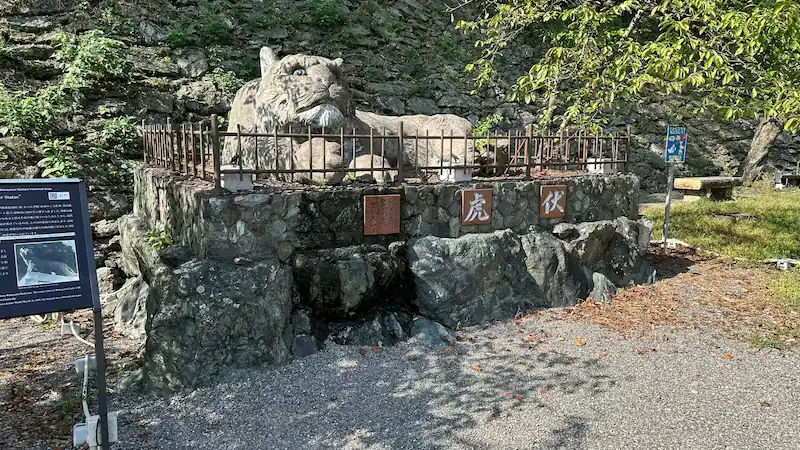
This statue takes its cue from the castle’s alternate name, Torafusu-yama or Torafusu-jō — “Crouching Tiger Mountain,” or “Castle” — a nickname earned because the hill the castle sits on was said to resemble a tiger lying in wait. The crouching tiger became the castle’s emblem as a result. The statue standing today, made in 1959 (Shōwa 34), is actually the second version; the original, a standing bronze tiger, was melted down for its metal during the war.
| Installed | Original: around 1922 (bronze, standing pose) / current second version: 1959 (Shōwa 34) |
|---|---|
| Sculptor | The current statue, cast in concrete, is the work of sculptor Kakuta Sofū. |
| Current state | Still standing, on display in the castle’s public grounds. |
⏳ Time to visit: about 5–10 minutes, enough for photos
🗺 Address: 3 Ichibanchō, Wakayama City, Wakayama Prefecture (within Wakayama Castle Park)
🚶 Access: 1 minute on foot from the site of Icchū Gate
- An unusual pose: you won’t find many monuments like this at other castles — it embodies the castle’s very identity, tied directly to the shape of the hill beneath it.
- A natural photo spot: framed against the stone walls or the keep, it makes for a shot that says “Wakayama Castle” at a glance.
💡 Trivia: When the statue was rebuilt, the pose was changed to crouching in keeping with the “Crouching Tiger Mountain” name. Sculptor Kakuta Sofū, who made the current version, was himself a native of Wakayama Prefecture.
Site of Okura-no-maru (Mikura-no-maru-ato)
Where the domain kept its rice stores and supplies — the castle’s working quarters
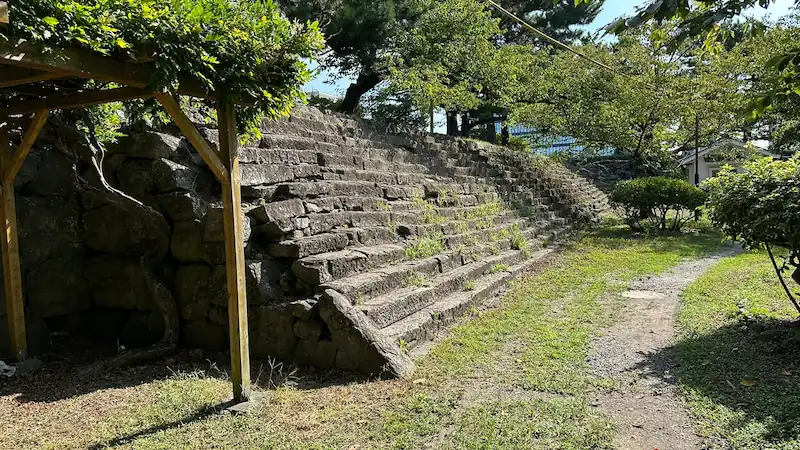
This bailey once held the domain’s storehouses and rice stocks. Today it’s marked simply as a former site, but it’s a useful place to picture how the castle actually functioned day to day — supply and storage rather than defense and display. It’s said to have been ringed by a water moat on three sides: north, east, and south.
| In use | Mid-Edo period; records show storehouses were already standing here by 1820 (Bunsei 3) at the latest. |
|---|---|
| Purpose | A dedicated area for rice storehouses, used to stock and manage the castle’s supplies. |
| Current state | Neither the storehouses nor the moat survive; the site is marked today only by signage and the shape of the land. |
⏳ Time to visit: about 5–10 minutes
🗺 Address: 3 Ichibanchō, Wakayama City, Wakayama Prefecture (within Wakayama Castle)
🚶 Access: 1 minute on foot from the Crouching Tiger Statue
- A look at the castle’s working side: a chance to picture the parts of castle life that had nothing to do with defense — supply, storage, upkeep.
- Echoes of a lost moat: with water said to have surrounded the bailey on three sides, there’s still a sense of the defensive thinking built into even a storage area.
💡 Trivia: Records show that Wakayama’s first city hall was built on this very site during the Meiji era — a fitting turn for a castle bailey once dedicated to keeping the region running.
Site of Okanaka Gate (Okachū-gomon-ato)
A masugata entrance that still hints at the castle’s quieter line of defense
The gate is gone, but the stone walls and the masugata entryway remain, and together they still make the case for how carefully the defenses here were planned. It sits close to Okaguchi Gate, and seeing the two together gives a much clearer picture of how the castle’s southeast flank was meant to hold.
| Design | A turret gate paired with stone walls, its approach bent into a masugata layout for extra defense, tied directly into the high stone wall facing Matsu-no-maru. |
|---|---|
| Current state | The gate itself is gone, but the masugata shape, the walls, and the old turret platform are all still visible on site. |
⏳ Time to visit: about 5–10 minutes
🗺 Address: 3 Ichibanchō, Wakayama City, Wakayama Prefecture (within Wakayama Castle)
🚶 Access: 1 minute on foot from the site of Okura-no-maru
- The masugata’s tight stonework: the bent passage narrows the space enough that the old defensive intent is easy to feel firsthand.
- Right next to Okaguchi Gate: seeing the two together gives a much fuller, three-dimensional sense of how the castle’s southeast corner was defended.
💡 Trivia: The Matsu-no-maru wall right beside this gate site rises as high as roughly 14 meters in places, tall enough to defend the approach and command the ground below at the same time.
2. An Important Cultural Property and a Towering Wall: The Outer Bailey’s Centerpiece
The High Stone Wall at the Matsu-no-maru Turret Platform
A wall built to repel — up to 14 meters of precise Tokugawa-era stonework
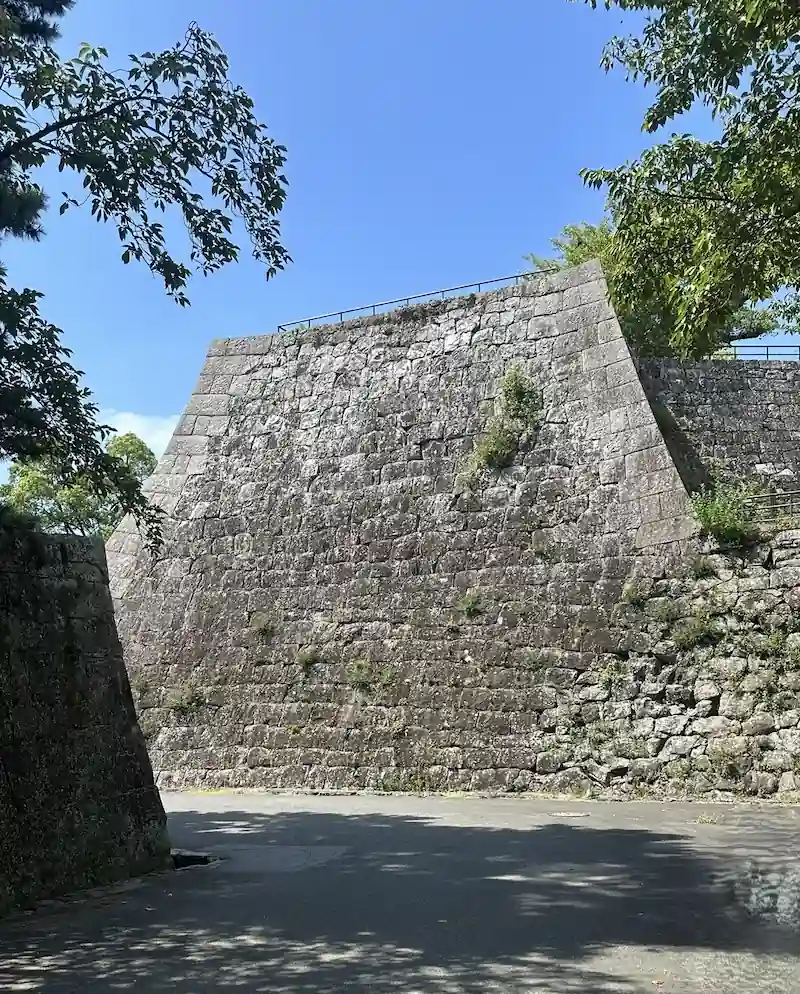
Of all the stonework at Wakayama Castle, the high wall at the Matsu-no-maru turret platform is the one that really stops you. It’s a textbook example of musha-gaeshi, curving to nearly vertical as it rises — a shape that’s as much about beauty as it is about keeping people out. Standing right beside the Important Cultural Property Okaguchi Gate, it’s worth taking the two in together; that’s when the full logic of the castle’s defenses comes into focus.
| Built | Tokugawa era; likely built sometime between the late 17th and early 18th centuries. |
|---|---|
| Design | A high wall in the kirikomihagi style, with tightly fitted cut stones curving to nearly vertical near the top — a musha-gaeshi profile meant to keep even a determined climber from scaling it. |
| Height | Reaches roughly 14 meters at its tallest. |
| Current state | Still standing in good condition. |
⏳ Time to visit: about 5–10 minutes just to see it, or 20–30 minutes to study it properly
🗺 Address: 3 Ichibanchō, Wakayama City, Wakayama Prefecture (within Wakayama Castle)
🚶 Access: 1 minute on foot from the site of Okanaka Gate
- The musha-gaeshi curve: the wall grows more vertical the higher it climbs, and the whole defensive logic behind it is still legible in the stone itself.
- Precision kirikomihagi stonework: cut and fitted with enough care to be stable and handsome at once.
- A matched set with Okaguchi Gate: the Important Cultural Property gate and this wall, seen together, make one of the most photogenic pairings anywhere on the grounds.
💡 Trivia: Wakayama Castle’s stone walls change character era by era — Toyotomi and Kuwayama, then Asano, then Tokugawa each used different stone and different techniques. The precise work around Matsu-no-maru belongs to the Tokugawa rebuilding, and comparing it to walls elsewhere on the grounds is a good way to read the castle’s whole history in stone.
Okaguchi Gate
The gate that survived the fires of war — the only Important Cultural Property building left standing at Wakayama Castle
Of all the gates still standing at Wakayama Castle, only Okaguchi Gate carries an Important Cultural Property designation. It once served as the castle’s main gate, and the structure standing here today is a turret gate rebuilt in 1621 (Genna 7) — a genuine domain-era survivor that made it through both wartime bombing and the chaos of the castle’s abolition.
This is thought to be roughly where the castle’s very first main gate stood, back when Kuwayama Shigeharu, a retainer of Toyotomi Hidenaga, governed the castle as its keeper following the 1585 (Tenshō 13) founding. The gate here now was built later, under the Tokugawa, but the ground itself still carries the memory of that earlier, Toyotomi-era castle.
| Built/rebuilt | Rebuilt in 1621 (Genna 7), under the Tokugawa. |
|---|---|
| Design | A turret gate with a gabled, tiled roof, white plaster walls, an earthen wall, and a small side door; built with two stories. |
| Current state | Still standing, and designated an Important Cultural Property together with the earthen wall running north of it. |
| Cultural property status | Important Cultural Property (the gate and its earthen wall), designated in 1957 (Shōwa 32). |
| Notes | Originally the castle’s front entrance, it was demoted to a rear gate once the main entrance moved elsewhere during a later rebuilding. |
⏳ Time to visit: about 5–10 minutes to see the gate and wall, or 15–20 minutes to look closely
🗺 Address: 3-2 Ichibanchō, Wakayama City, Wakayama Prefecture (southeast corner of Wakayama Castle)
🚶 Access: 1 minute on foot from the Matsu-no-maru turret platform wall
- The only Important Cultural Property building on the grounds: the keep, Kusu Gate, the Ni-no-mon Turret — all of them reconstructions. Okaguchi Gate is the real thing, and the texture of its plaster walls, tiled roof, and earthen wall makes the difference obvious the moment you’re standing in front of it.
- Gun ports in the connecting wall: the earthen wall running north from the gate has firing slits (sama) built right into it — function and form working together, and it still reads as genuinely defensive rather than decorative.
- Where two eras overlap: the gate itself is Tokugawa-built, but the ground it stands on is believed to be the site of the original Toyotomi-era main gate — two chapters of the castle’s history layered on top of each other.
💡 Trivia: While most of the castle’s turrets and keep were lost to wartime bombing or the abolition of the domain system, Okaguchi Gate came through the fire untouched — a genuine rarity here. Its doors have a latticed upper section that let defenders see out even with the gate shut, built with guns and spears in mind. This wasn’t a ceremonial entrance; it was a gate meant to be fought from.
3. The Road to the Keep: The Approach Route
The Omote Slope (Omote-zaka)
A broad stone stairway built to impress — the formal approach where you feel the castle’s rank underfoot
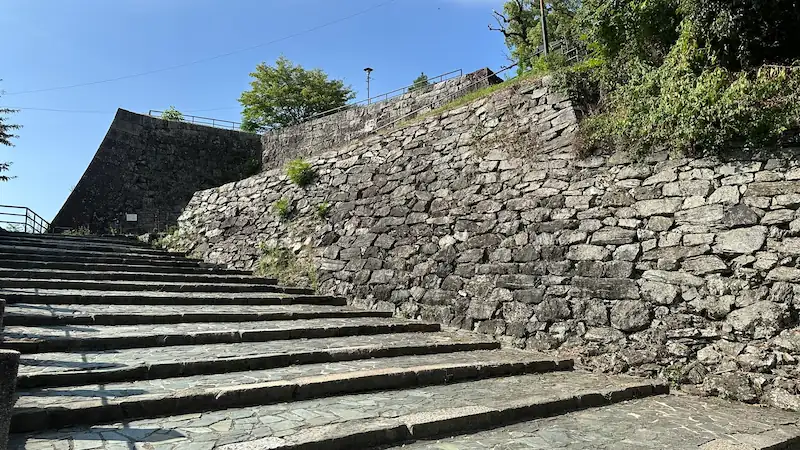
The Omote Slope is the formal route up to the honmaru and the keep, and what sets it apart from stairways at other castles is sheer width. The climb stays gentle throughout — this wasn’t built for a quick ascent so much as to make visitors feel the castle’s weight and authority as they walked it. The steps, cut from Kishū blue stone, take on a deeper blue after rain, giving the slope a character all its own in wet weather.
| Role | The castle’s primary approach, running from the Main Gate past Icchū Gate up to the honmaru and keep. |
|---|---|
| Design | A switchback slope lined with stone steps and walls, wide and gently graded, built with Kishū blue stone. |
| Stone | Local Kishū blue stone, which deepens in color when wet. |
| Current state | The steps and walls remain intact and open to the public as a walking route. |
⏳ Time to visit: about 5–10 minutes to take in the slope, steps, and walls
🗺 Address: 3 Ichibanchō, Wakayama City, Wakayama Prefecture (within Wakayama Castle)
🚶 Access: 2 minutes on foot from the site of Okura-no-maru
- Authority built into the width: this design shows up nowhere else quite like it, and the intent — to make visitors feel the castle’s rank — comes through clearly.
- Kishū blue stone at its best in the rain: wet weather deepens the blue in the stone, giving the slope a different character than it has on a clear day.
- A payoff at the top: finish the climb and the honmaru and keep open up ahead of you, with the old castle town spread out below.
💡 Trivia: The grounds also have newer routes, like the Shin-ura-zaka, built in more modern times. But if it’s the feel of the Sengoku and Edo periods you’re after, the Omote Slope is the way to climb.
Site of Matsu-no-maru
Walls 10 to 14 meters high, marking a key point in the castle’s defenses
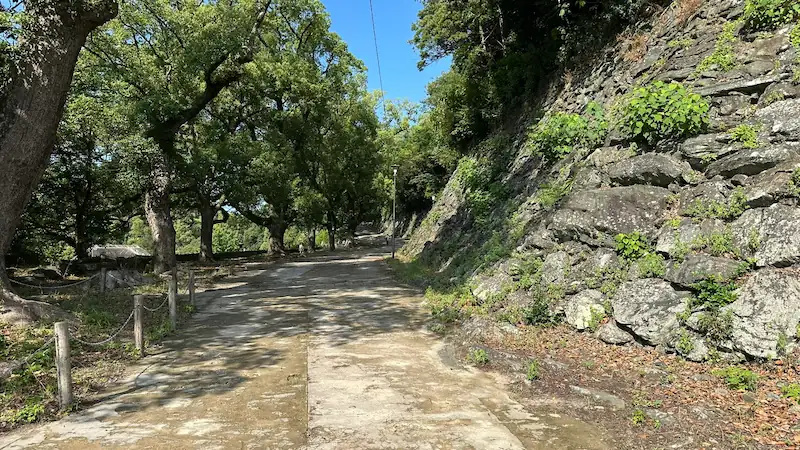
This was once a key bailey in its own right, a waypoint between the outer defenses and the honmaru and keep beyond. The buildings here are gone, but the stone walls and the shape of the land still make clear how big it was and where it stood. It’s also a good place to compare stonework across eras — older nozura-zumi (roughly stacked, unworked stone) sits alongside later kirikomihagi cut-stone work here.
| Wall height | Sections of the surviving wall reach around 10 meters, with records putting the tallest nearby stretches at roughly 14 meters. |
|---|---|
| Current state | The buildings are gone, but the walls, the terrain, and the remains of a turret platform still mark out the bailey’s extent. |
⏳ Time to visit: 1 minute on foot from the Omote Slope
- Two techniques side by side: older roughly stacked stone sits right next to later cut-stone work, letting you compare eras of stonemasonry in a single glance.
- The terrain tells the story: walking toward the honmaru, you feel each bailey’s elevation change underfoot, and the cleverness of the castle’s overall layout becomes obvious.
💡 Trivia: At its largest, Wakayama Castle covered roughly four times the area it does today. That the stonework and terrain still convey a sense of that original scale is thanks to a good deal of conservation work over the years.
The Omote Slope Camphor Tree
The castle’s second-largest tree, a green waypoint amid the stone
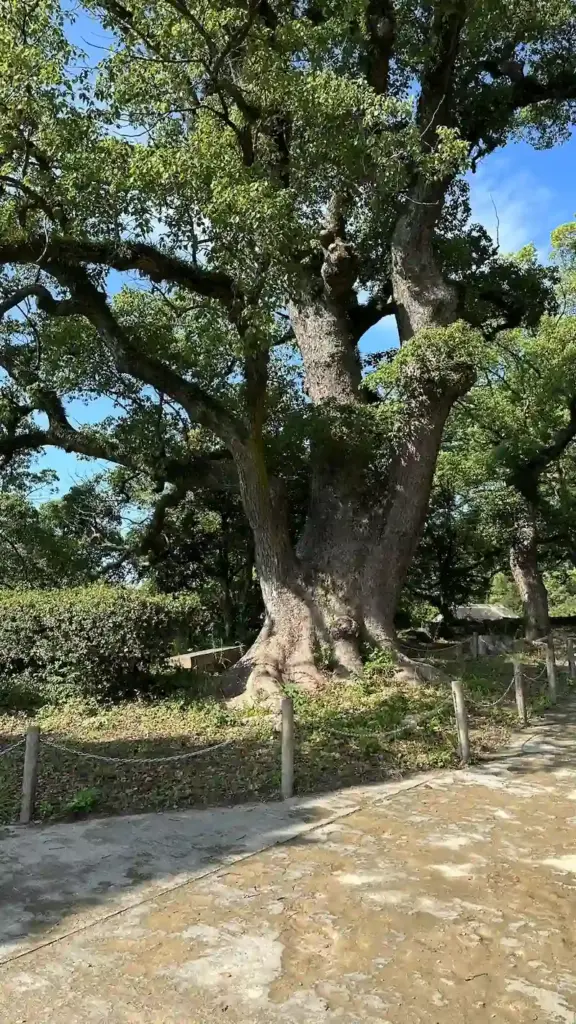
Partway up the Omote Slope stands this camphor tree, the second-thickest by trunk girth anywhere on the grounds. Against all the hard stone of the steps and walls, its green stands out as a natural pause point on the climb — stop in front of it for a moment and the sheer age of the castle sinks in. Visit in summer, and the shade here offers a welcome break from the glare bouncing off the stone steps.
| Species | Camphor tree (kusunoki) |
|---|---|
| Notable | The second-largest tree on the grounds by trunk girth, standing along the Omote Slope and softening the climb with a bit of green. |
| Current state | In good health, and open to view right along the walking route. |
⏳ Time to visit: just a few minutes to take it in / 1 minute on foot from the site of Matsu-no-maru
🗺 Address: 3 Ichibanchō, Wakayama City, Wakayama Prefecture (along the Omote Slope, within Wakayama Castle)
🚶 Access: 1 minute on foot from the site of Matsu-no-maru
- Green against stone: set among the hard lines of the steps and walls, this tree’s lush canopy is a quiet reminder of just how much time has passed here.
- A good spot to catch your breath in summer: the stone steps reflect a lot of heat, and the shade under this tree makes for a natural rest stop.
💡 Trivia: It’s counted among the oldest and largest trees on the grounds, notable for both its girth and its sheer presence.
Frequently Asked Questions
Okaguchi Gate stands in the southeast corner of Wakayama Castle, right beside the high stone wall at the Matsu-no-maru turret platform. The two-story gate you see today dates to 1621 (Genna 7), built during the Tokugawa-era rebuilding of the castle, and it was designated an Important Cultural Property in 1957 (Shōwa 32) along with the earthen wall running north from it. It’s the only surviving gate from the domain era at Wakayama Castle to hold that designation.
According to signage on site, parts of the wall near Matsu-no-maru rise to roughly 14 meters. Built in the precise kirikomihagi style, with cut stones fitted tightly edge to edge, the wall curves to nearly vertical near the top — a defensive profile called musha-gaeshi, or “warrior repeller.” It’s one of the most striking stretches of stonework anywhere in the castle.
The stone steps of the Omote Slope are unusually wide, and the climb itself is fairly gentle. Walking it, the design feels less about getting up the hill quickly and more about impressing on visitors the castle’s authority. Cut from Kishū blue stone, the steps take on a deeper blue cast after rain, giving the slope a distinctive character in wet weather.
Toyotomi Hidenaga, the central figure of NHK’s 2026 taiga drama Toyotomi Brothers!, oversaw the founding of Wakayama Castle in 1585 (Tenshō 13) on the orders of his brother Hideyoshi. Hidenaga’s own base remained at Yamato-Kōriyama, and it was his retainer Kuwayama Shigeharu who is said to have governed the castle as its keeper. The area around today’s Okaguchi Gate is believed to have served as the castle’s main gate in that earliest phase, and the outer bailey is where those traces survive — a historical thread you can still walk. The gate standing there now, though, was built by the Tokugawa in 1621 (Genna 7), not a structure from Hidenaga’s own era.
Walking straight through all 11 spots, from the site of the Main Gate to the camphor tree on the Omote Slope, takes roughly 60 to 90 minutes. If you want to linger over the stonework at Okaguchi Gate and the Matsu-no-maru wall, give yourself closer to 90 to 120 minutes.


comment