


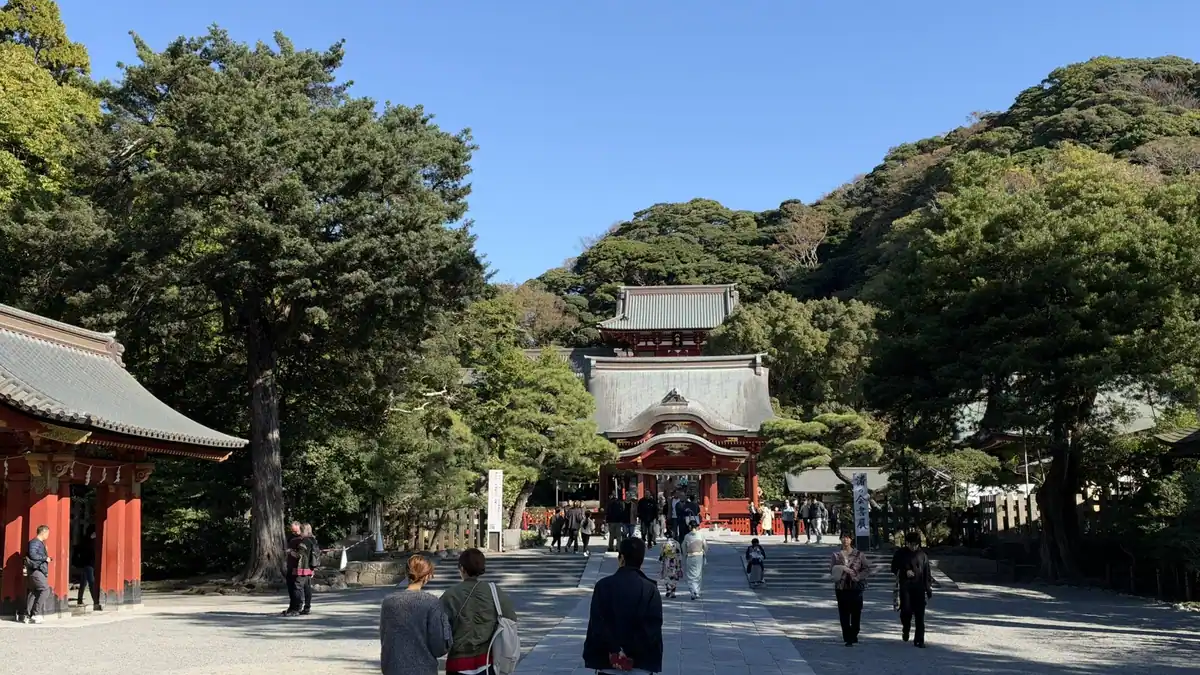
Tsurugaoka Hachimangu Shrine, Kamakura: From Tokyo, Time Needed and What to See
Tsurugaoka Hachimangu (tsoo-roo-gah-oh-kah hah-chee-mahn-goo) is the Shinto shrine that Minamoto no Yoritomo, the first shogun, placed at the center of Kamakura in 1180. Kamakura is a seaside town in Kanagawa Prefecture, about an hour south of Tokyo by direct train. From the station you walk about 10 minutes down a long avenue, then through a raised, tree-lined approach called Dankazura, to the shrine gate. I walked it on November 8 and November 22, 2026. This guide covers the train from Tokyo, the walk, what to see inside, how much time to allow, and the three museums on the grounds.
A shrine, in Japan, is a Shinto site, not a Buddhist temple. A torii is the gate that marks the entrance to a shrine, and a shogun was Japan's military ruler before 1868. Tsurugaoka Hachimangu honors Hachiman, the patron god of warriors. According to the shrine, Minamoto no Yoritomo, who founded Japan's first samurai government in Kamakura, moved it to its present site in 1180. The avenue you walk from the station, Wakamiya-oji, is described in the medieval chronicle Azuma Kagami as an approach that Yoritomo had built in 1182.
Two places were worth stopping for: the Hataage Benzaiten shrine on an island in the pond, and the upper shrine at the top of the long stone stairs. The walk itself is part of the visit. Dankazura, the raised approach, is wide and easy; Komachi-dori, the shopping street beside it, is crowded and lively in the daytime.
| Getting there | About 10 minutes on foot from JR or Enoden Kamakura Station. Tokyo Station to Kamakura Station is about 1 hour on the direct JR Yokosuka Line; from Yokohama Station about 25 minutes |
|---|---|
| Shrine visit | Free. The gates are open 6:00 a.m.–8:00 p.m. |
| Time to allow | About 35–45 minutes for a short visit, or 55–75 minutes to see most of the grounds, counting the walk from and back to the station. Add 30–60 minutes for one museum |
| Museums | The shrine's Treasure Hall, the Kamakura National Treasure Museum and the Tsurugaoka Museum each charge their own admission and keep their own hours |
In this guide
Getting there from Tokyo and Kamakura Station
From Tokyo Station, take the JR Yokosuka Line to Kamakura Station. It is a direct train, about 1 hour. From Yokohama Station it is about 25 minutes. Check the current timetable and fare on the day you travel.
Kamakura has two stations: the JR station and the Enoden station, a small private line that runs along the coast. They have separate gates. Use the JR station's East Exit (the exit on the side facing the bus rotary and the shops) and the shrine is about 10 minutes on foot. From the Enoden station it is also about 10 minutes (shrine website).
Getting to Tsurugaoka Hachimangu
| Address | 2-1-31 Yukinoshita, Kamakura, Kanagawa |
|---|---|
| By train | About 10 minutes on foot from JR Yokosuka Line Kamakura Station (East Exit) or Enoden Kamakura Station. Tokyo Station to Kamakura Station: about 1 hour on the direct JR Yokosuka Line |
| Gates open | 6:00 a.m.–8:00 p.m. (hours can change on festival days) |
| Admission | Free |
| By car | The shrine lists parking for 40 cars. The lots are open 9:00 a.m.–7:30 p.m., three hours after the gates open, at ¥600 for the first hour and ¥300 per 30 minutes after that (shrine website). The access page does not say where the lots are. Check the shrine's current notices for traffic restrictions on festival days |
| IC cards | Rechargeable IC cards such as Suica work on trains, buses and boats. You can also use them at many vending machines and convenience stores. Visitors can get Welcome Suica or TOURIST PASMO without a deposit. |
|---|---|
| Japan Rail Pass | The pass is not valid on any seat on Nozomi and Mizuho Shinkansen trains. On private railways you pay the fare separately, and the pass is not valid on JR Bus express routes. |
| Cash | Seven Bank ATMs in 7-Eleven stores dispense yen day or night to many overseas cards, including Visa, Mastercard and American Express. Some cards with these logos may not be accepted, so bring a backup. |
| Driving | To drive in Japan, get an International Driving Permit before you leave home. It must be issued under the 1949 Geneva Convention. Permits under the 1968 Vienna Convention are not valid. Cars drive on the left. |
| Tolls and parking | Expressways charge tolls. If you rent a car, ask the rental company for an ETC card and settle the tolls when you return the car. Parking can be hard to find in some city centers. |
| Shoes | At many indoor entrances, you take off your shoes just inside the doorway and slip on the slippers provided. Place your shoes in the shoebox or neatly to the side. |
Location of Tsurugaoka Hachimangu
The map is from Google Maps. The walk from the station is described below.
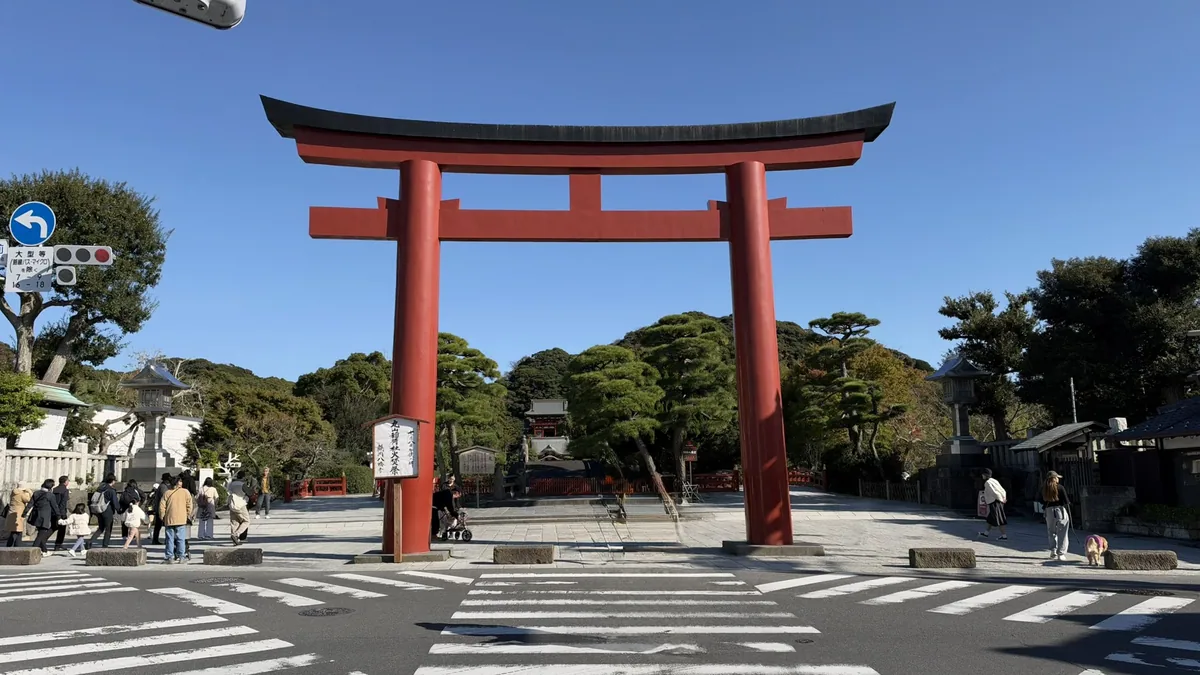
The classic route starts at the East Exit. Walk to Wakamiya-oji, the wide avenue that leads straight to the shrine, and enter the raised path called Dankazura at the second torii (the red gate with a stone guardian dog on each side). Dankazura runs from the second torii to the third torii, between rows of stone lanterns and cherry trees. The shrine grounds begin just past the third torii, across a crosswalk. Near the station there is another red torii at the entrance of Komachi-dori. It is not the second torii.
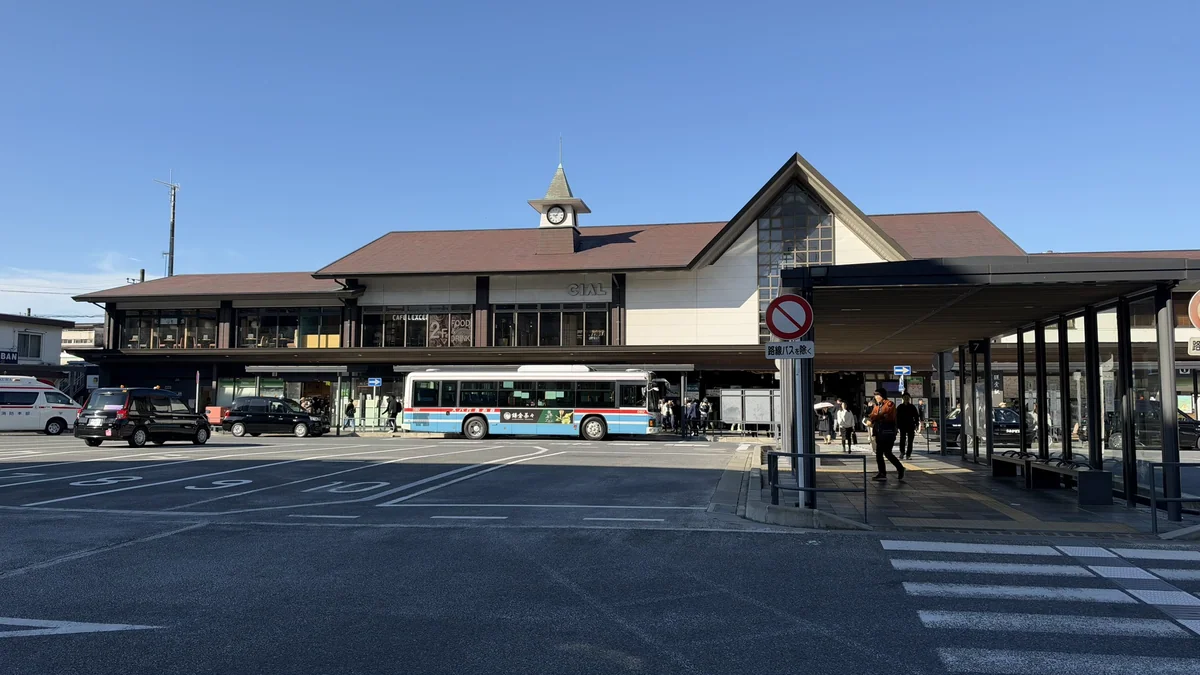
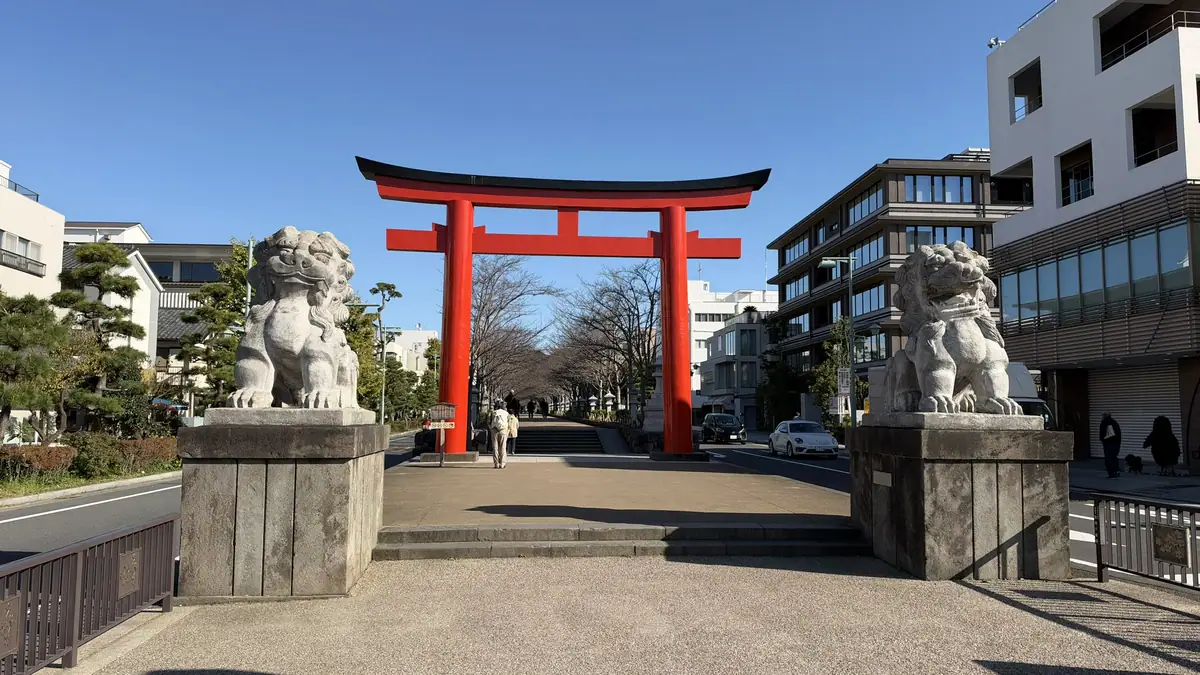
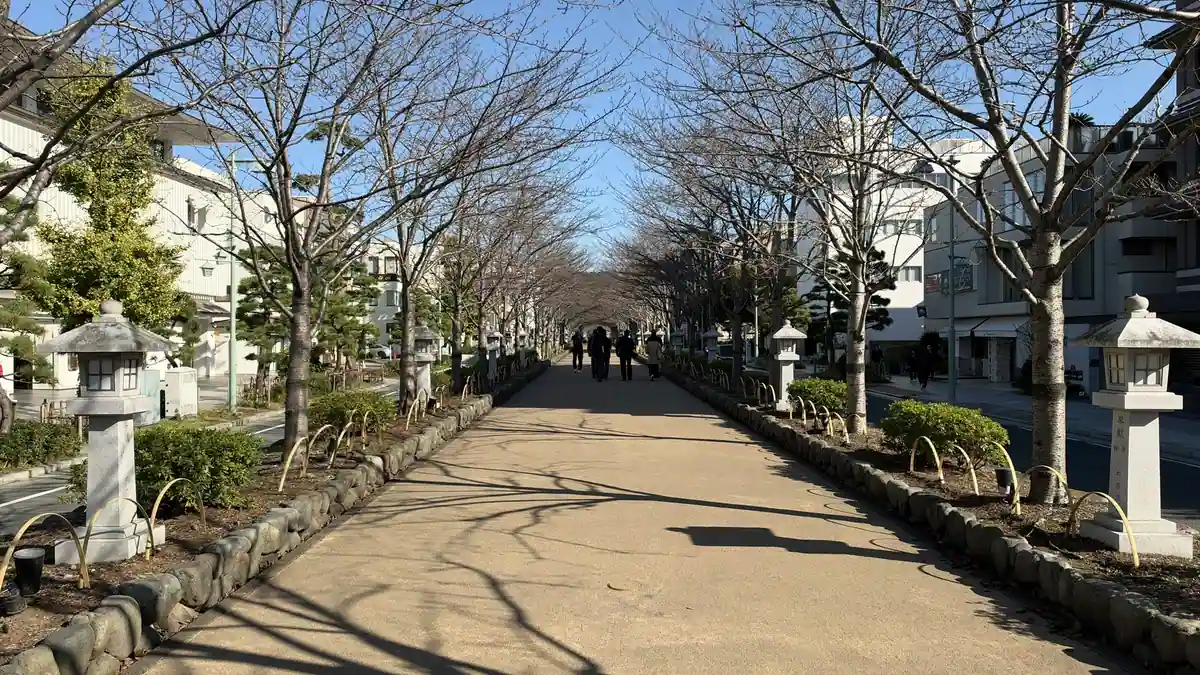
Tap a photo to enlarge it
According to the Azuma Kagami, the avenue was built in 1182, when Yoritomo prayed for the safe delivery of his wife, Hojo Masako. The Dankazura you walk today, from the second to the third torii, was renovated between November 2014 and March 2016.
There are two ways to walk from the station. Dankazura is wide, and I found it easier to walk than Komachi-dori even at busy times. Komachi-dori is crowded in the daytime, but it is lined with shops and has the lively feel of a tourist street. If you dislike crowds, take Dankazura; if you want the bustle, take Komachi-dori. You can also go one way on each. On the morning of November 22 I went out along Komachi-dori and came back along Dankazura.
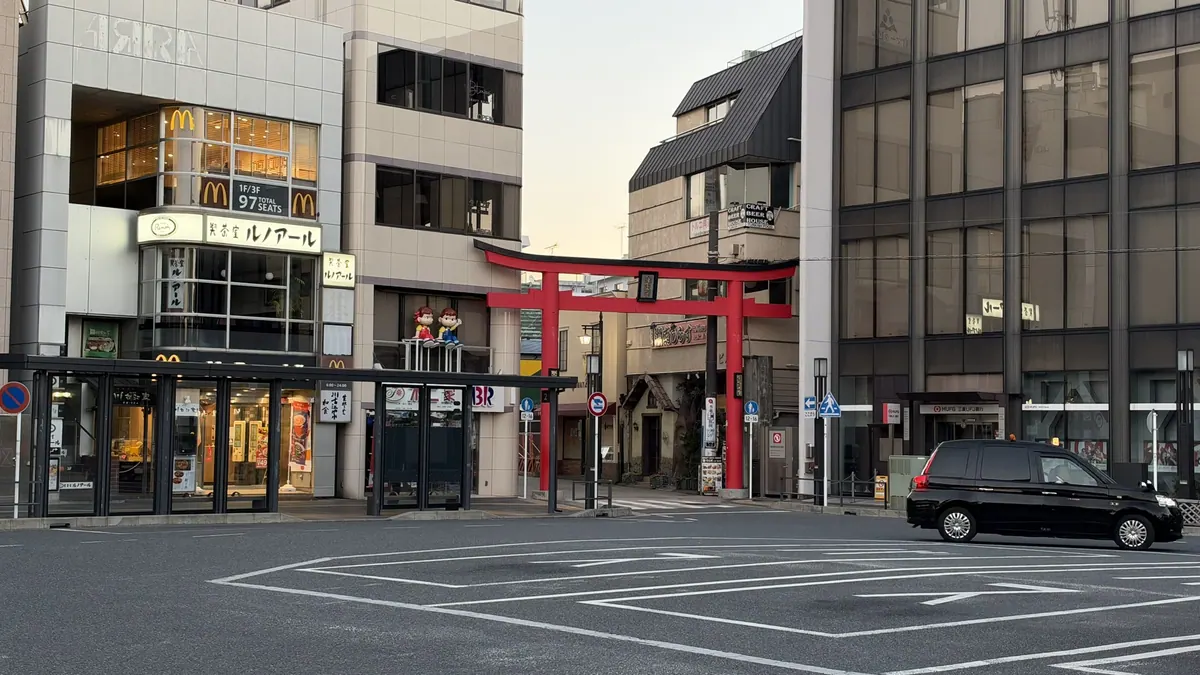
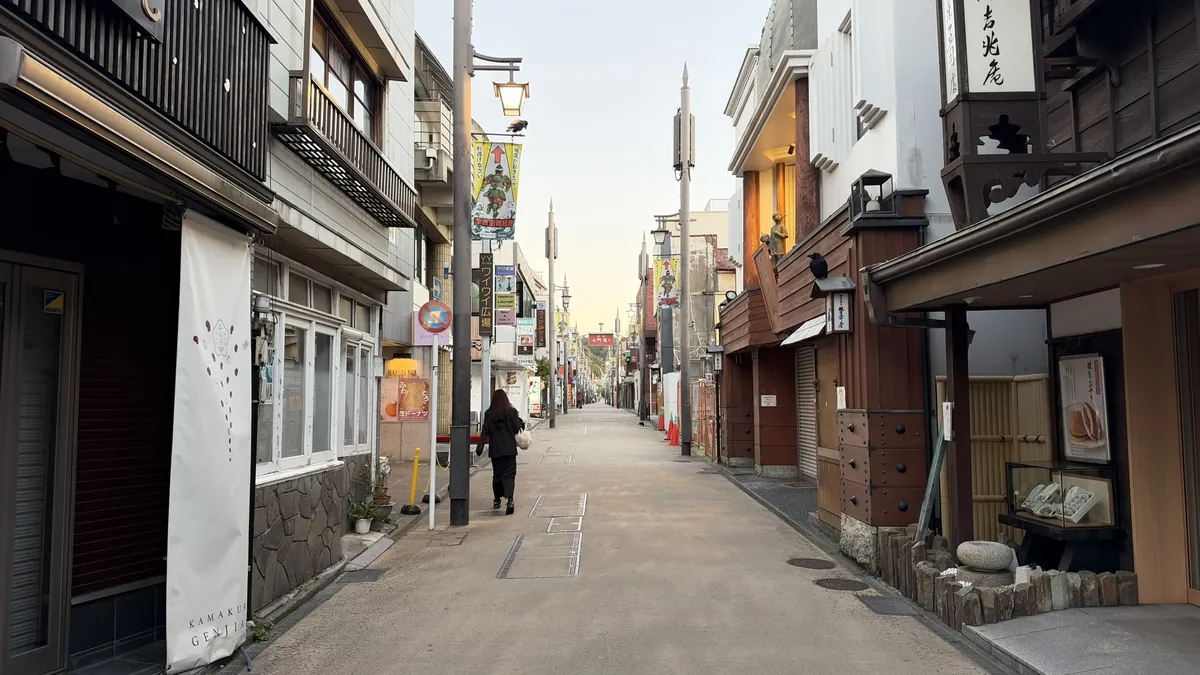
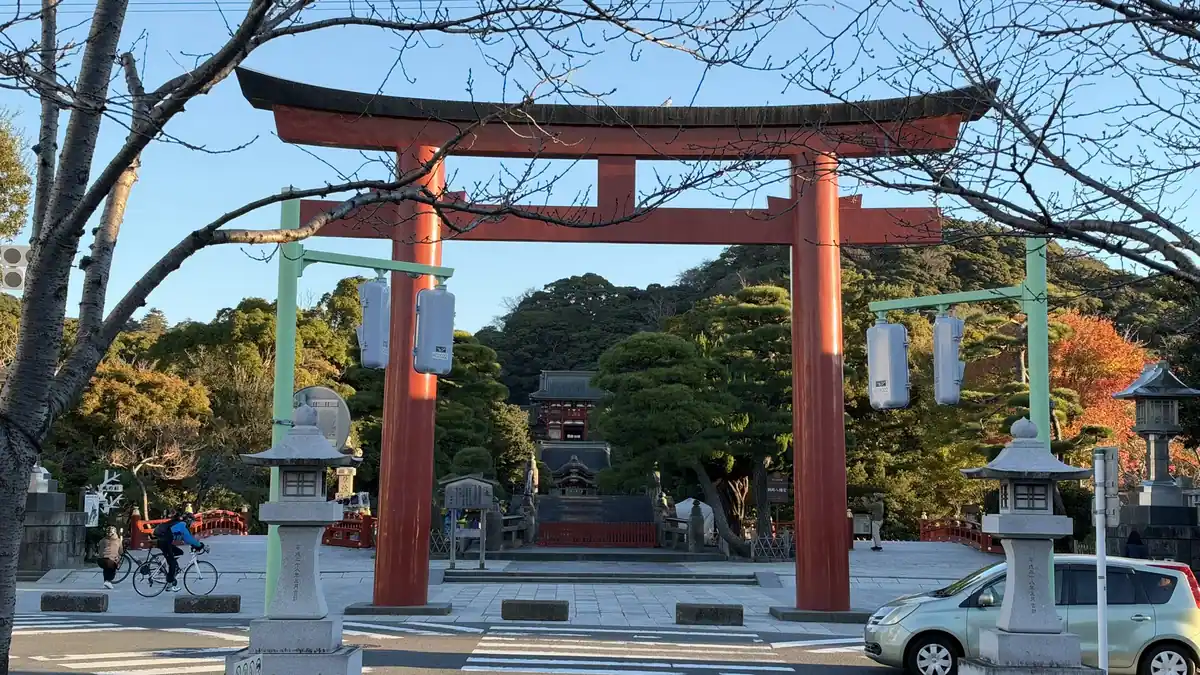
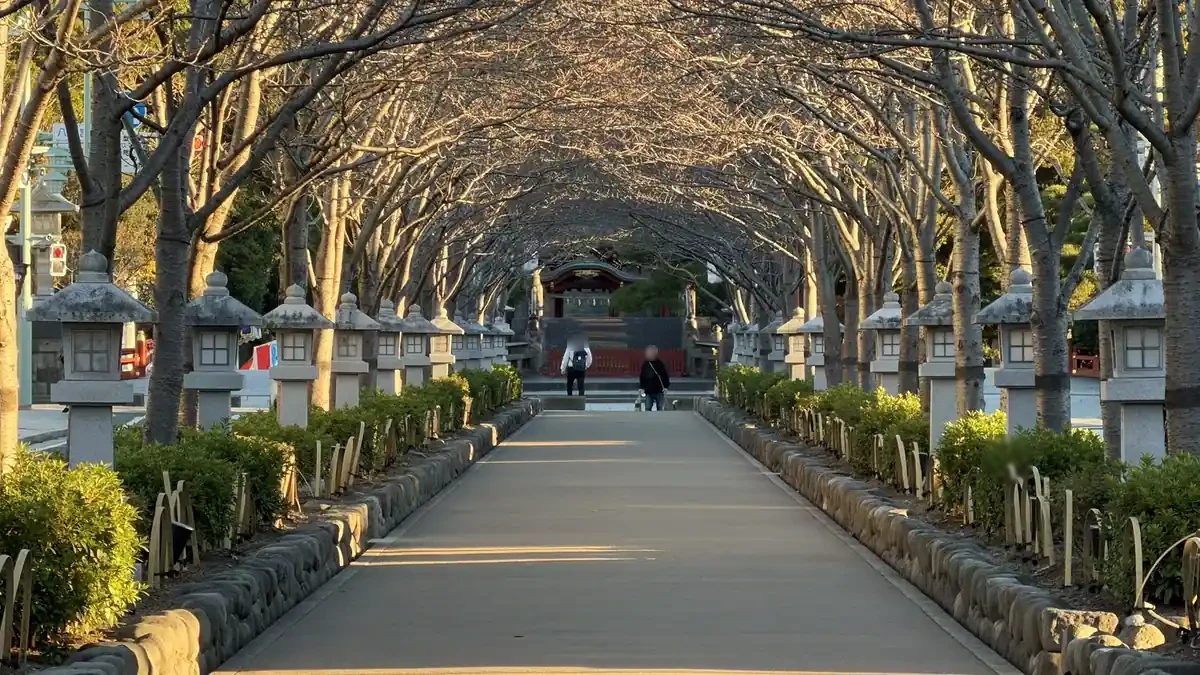
Tap a photo to enlarge it
How much time to allow, and what it costs
Visiting the shrine grounds is free, and the gates are open 6:00 a.m.–8:00 p.m. (shrine website). The Treasure Hall, the Kamakura National Treasure Museum and the Tsurugaoka Museum are on the grounds but charge their own admission and keep their own hours. They are covered below.
These times are a planning estimate, not measured times: the shrine's stated 10-minute walk from the station, plus time on the grounds. Add time for traffic lights, photos, lines at the shrine and goshuin stamps.
| A short visit | About 20 minutes of walking to and from the station, plus 15–25 minutes on the grounds: about 35–45 minutes in total. This covers the third torii, the dance stage and the upper shrine, out and back |
|---|---|
| Most of the grounds | About 20 minutes of walking, plus 35–55 minutes on the grounds: about 55–75 minutes in total. Add what you like from the pond and Benzaiten shrine, Wakamiya, the ginkgo and the Shirahata shrine. The Maruyama Inari shrine takes extra time because of its stairs |
| Add a museum | Add 30–60 minutes for one museum. If you also visit the Hokke-do ruins or other historic sites, allow extra time |
For reference, on November 8 it took me about 11 minutes from the station's East Exit (9:06) to the front of the third torii (9:17), with stops for photos at the second torii and on Dankazura. On November 22, going by Komachi-dori, it took about 10 minutes from the East Exit (6:21) to the front of the drum bridge (6:31), again with photos.
What to see from the third torii to the upper shrine
Through the third torii you reach a drum bridge and two ponds. Facing the shrine, Genji Pond is on the right and Heike Pond is on the left. Farther in stands the Maiden, an open dance stage, with Wakamiya, the lower shrine, to its east. Then come the long stone stairs and, at the top, the upper shrine.
Genji Pond and the Hataage Benzaiten shrine
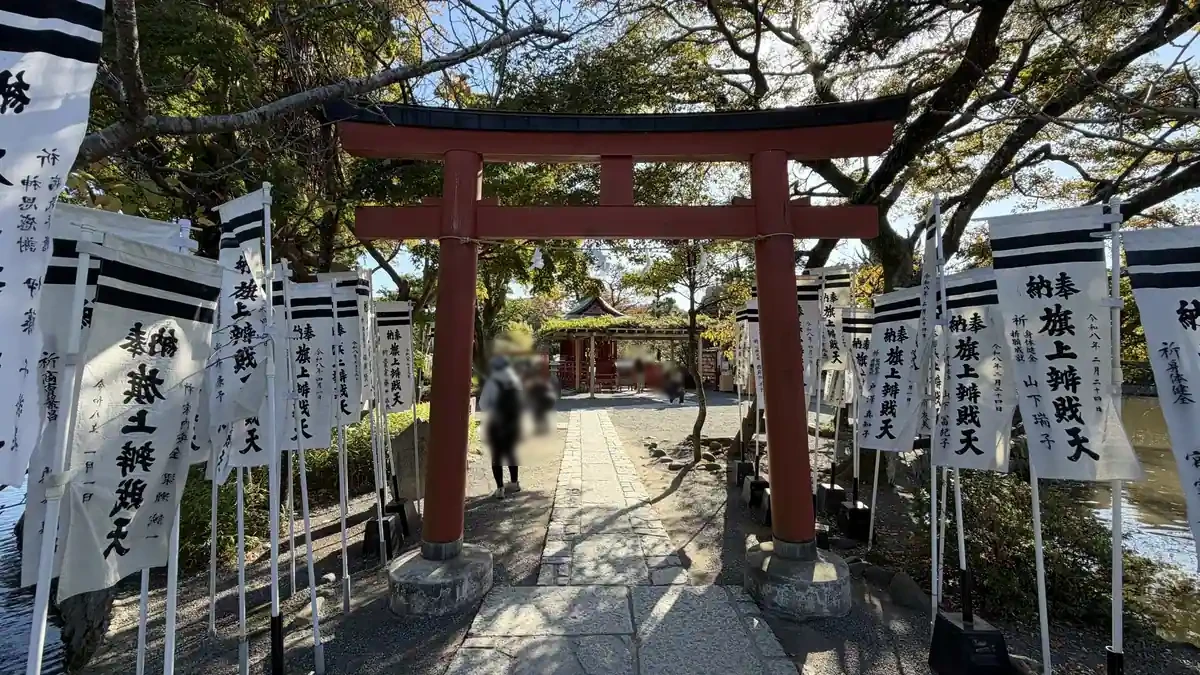
The Hataage Benzaiten shrine stands on an island in Genji Pond. A stone path runs through a red torii, with white votive banners on both sides. I was glad I stopped here.
From the edge of the pond you can see the shrine, its stone base and the banners reflected in the water. If you walk around to the water channel, you can see the stonework under the arch of the drum bridge.
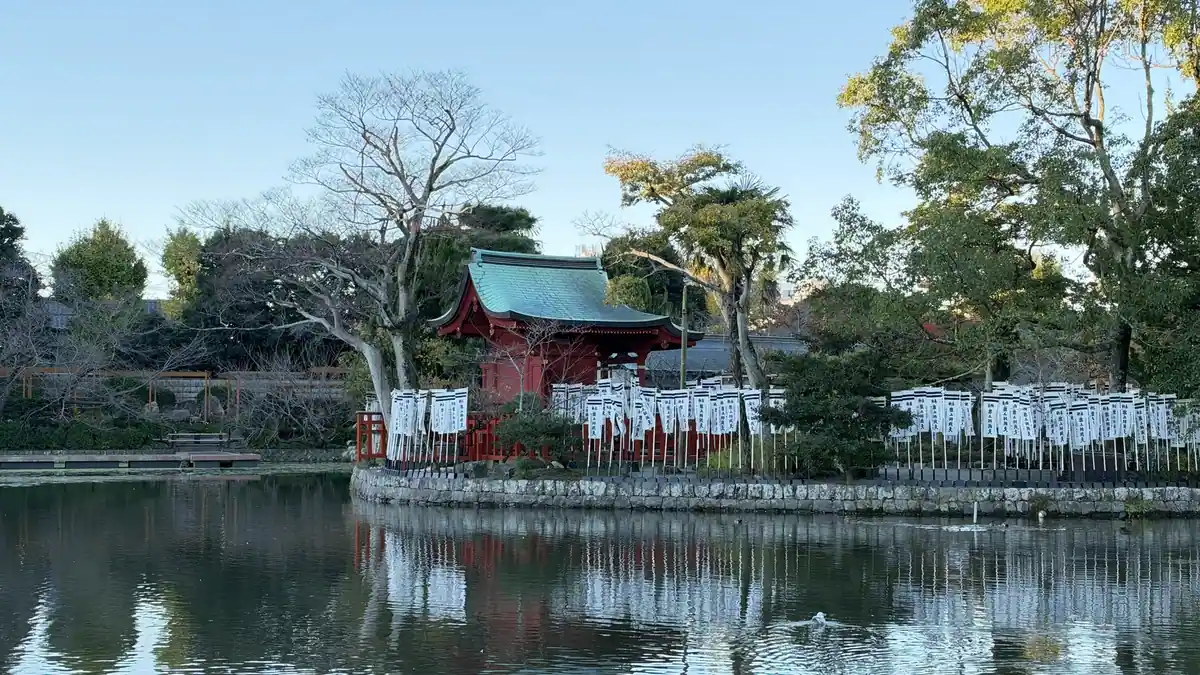
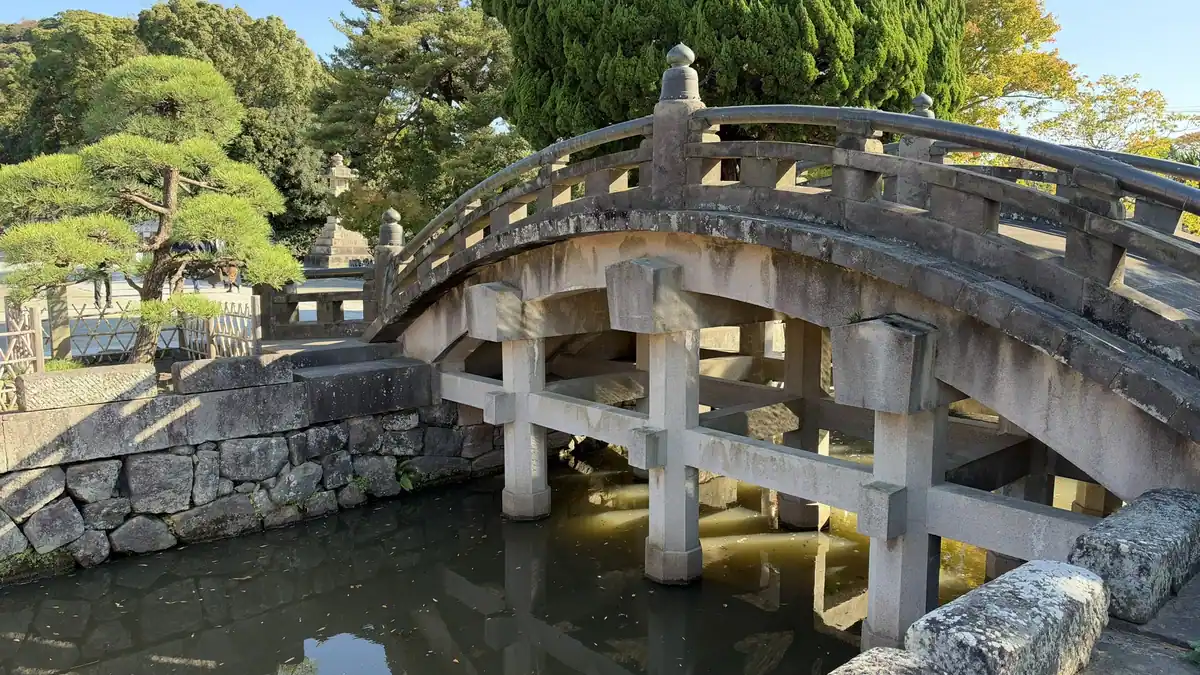
Tap a photo to enlarge it
The Maiden (lower worship hall) and Wakamiya (lower shrine)
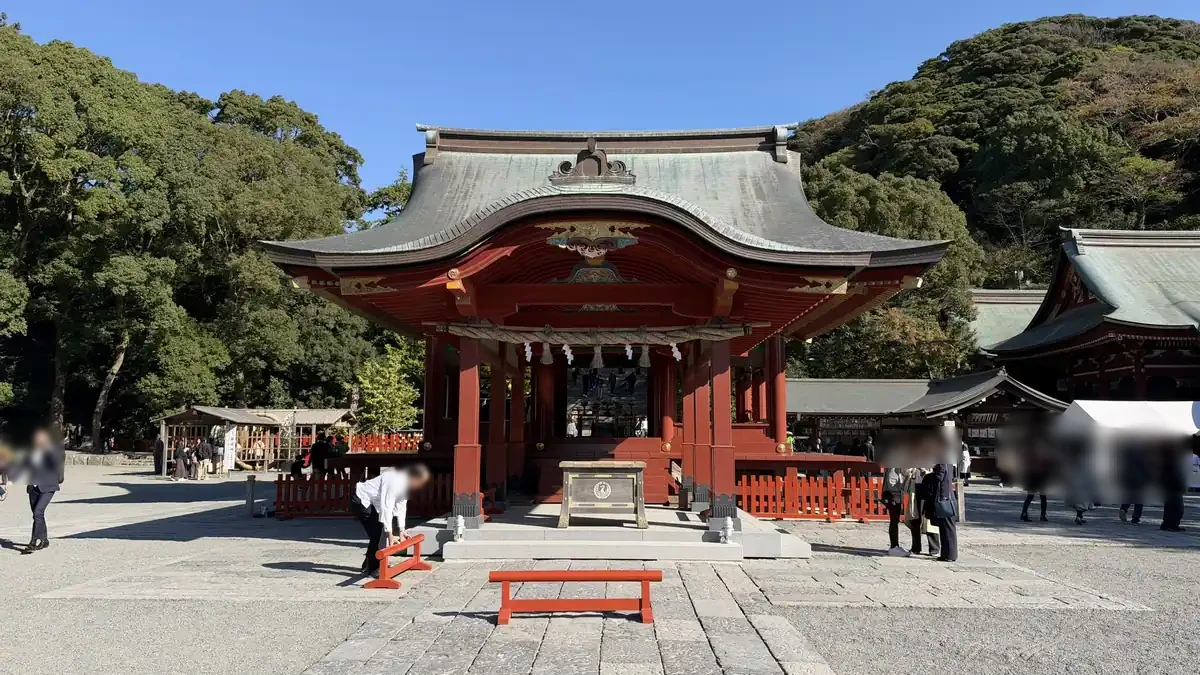
The Maiden is a free-standing hall in front of the Great Stairs. According to the Azuma Kagami, Shizuka Gozen, the dancer and partner of Yoshitsune (Yoritomo's brother), danced in 1186 in the corridor of the shrine then standing here. The Maiden you see now was built later on the site of that corridor; it is not the building where she danced.
Wakamiya stands east of the Maiden. The present building was rebuilt in 1624 by Tokugawa Hidetada, the second Tokugawa shogun. It is a building closely tied to the Tokugawa family, and I was glad to have visited it.
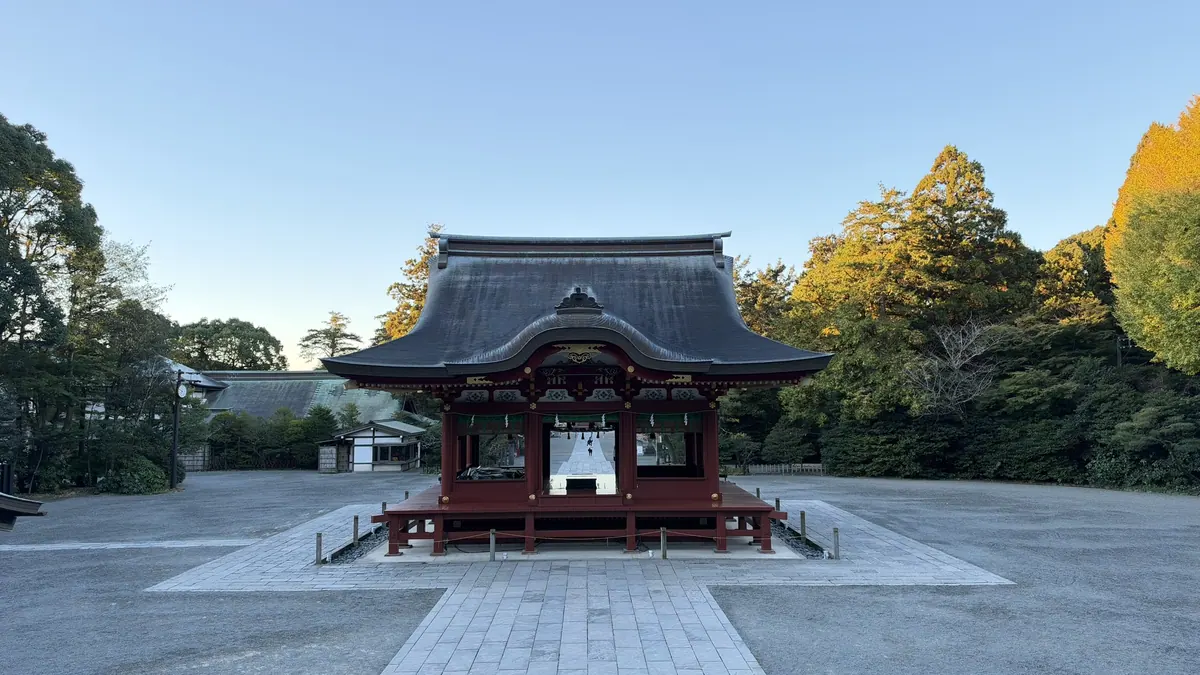
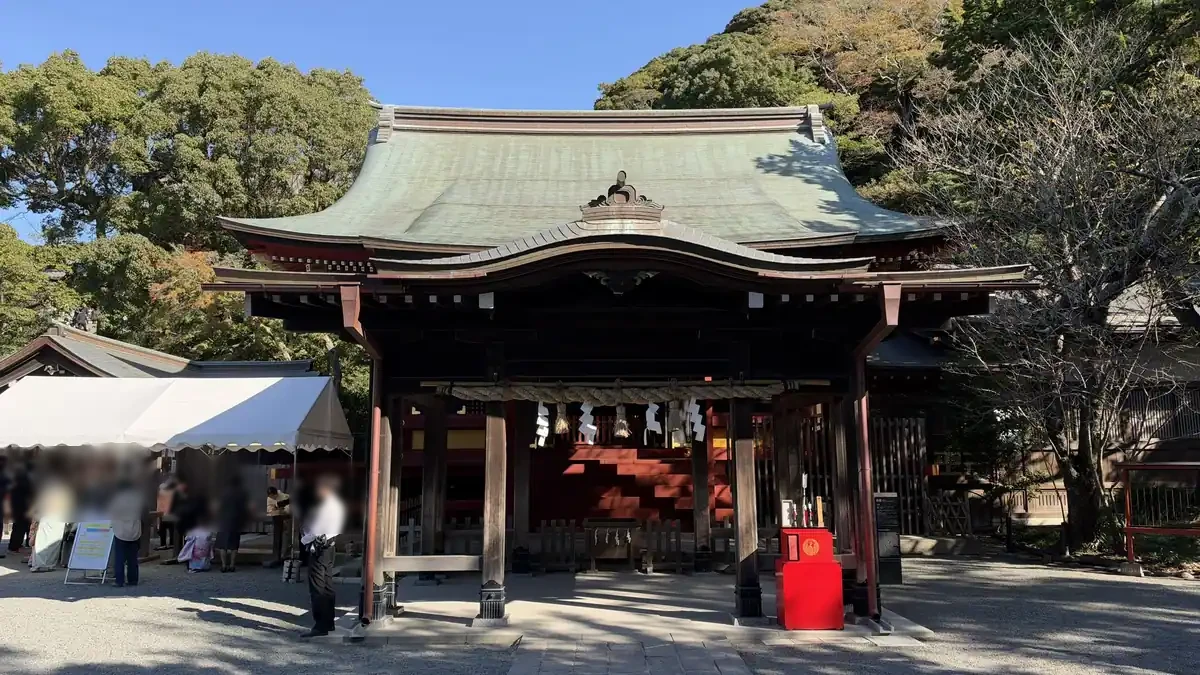
Tap a photo to enlarge it
The Great Stairs and the ginkgo
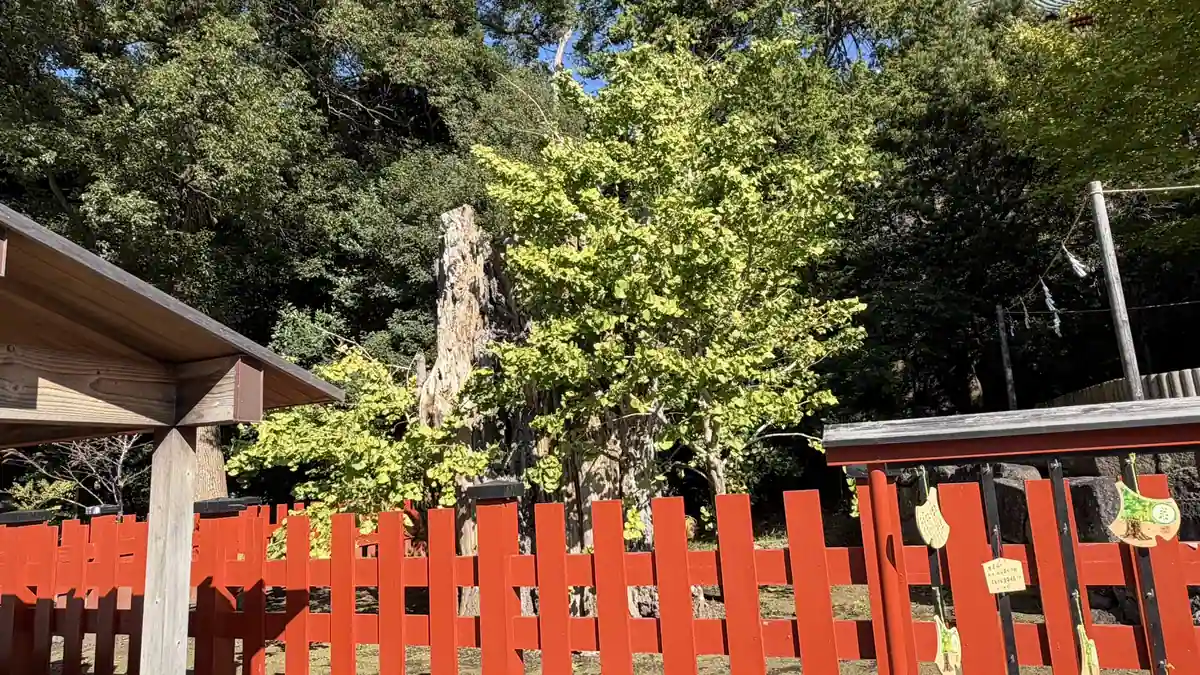
The Great Stairs lead from the Maiden up to the upper shrine. Beside them stand ginkgo trees. A huge ginkgo fell in 2010. A piece of its trunk was replanted beside it (the "parent" ginkgo), and a shoot that grew back from the base is the "child" ginkgo (shrine website).
In 1219 the third shogun, Minamoto no Sanetomo, was killed at this shrine by his nephew Kugyo. The NHK historical drama The 13 Lords of the Shogun shows the scene in episode 45, titled "The Stairs of the Shrine." A story says that Kugyo hid behind the great ginkgo, but it is only a tradition, and this guide does not point to an exact place.
There is another stairway beside Wakamiya. I walked up it from the bottom to the upper shrine. There are steps at the front of the second torii and on the Great Stairs, so if steps are hard for you, ask the shrine in advance.
The upper shrine and its tower gate: the view from the top
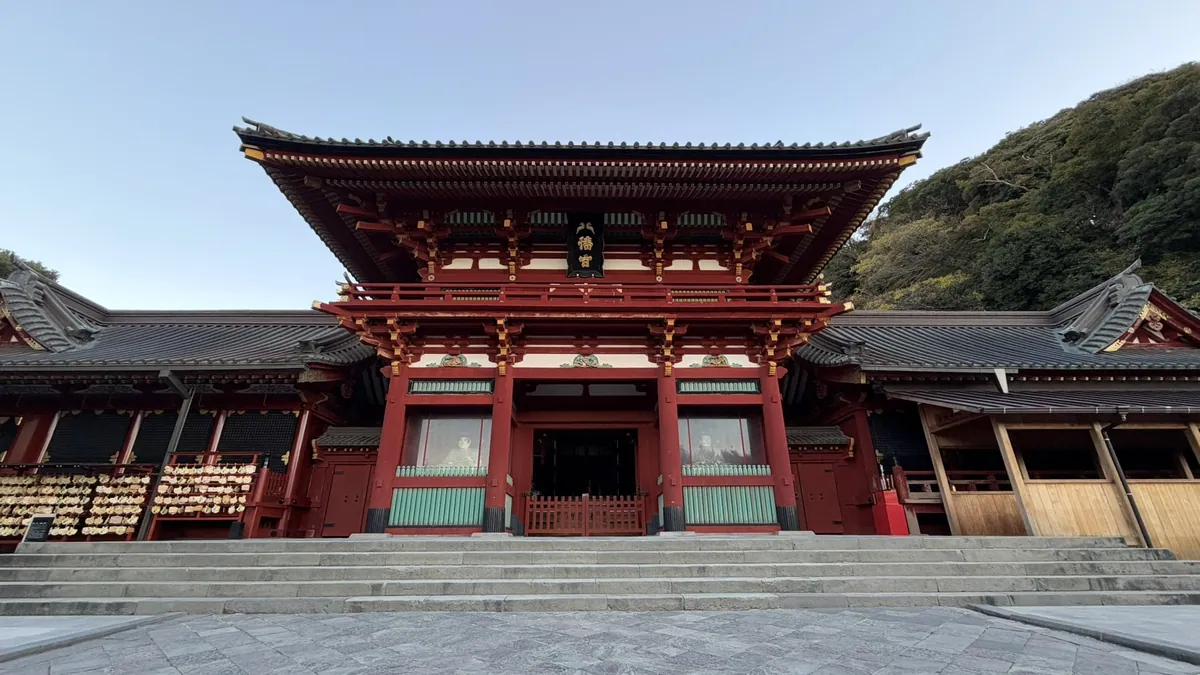
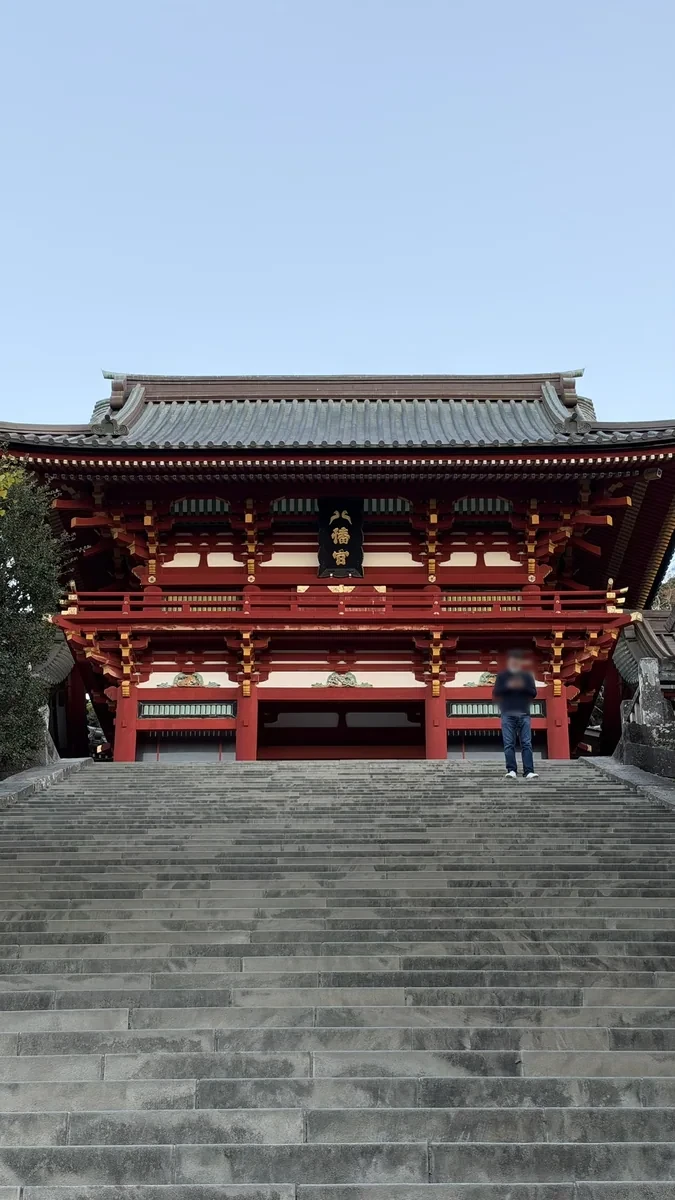
At the top of the stairs are the red tower gate and covered corridors, and beyond them the upper shrine. The present buildings were rebuilt in 1828 by Tokugawa Ienari, the eleventh Tokugawa shogun. I was glad I climbed up to it.
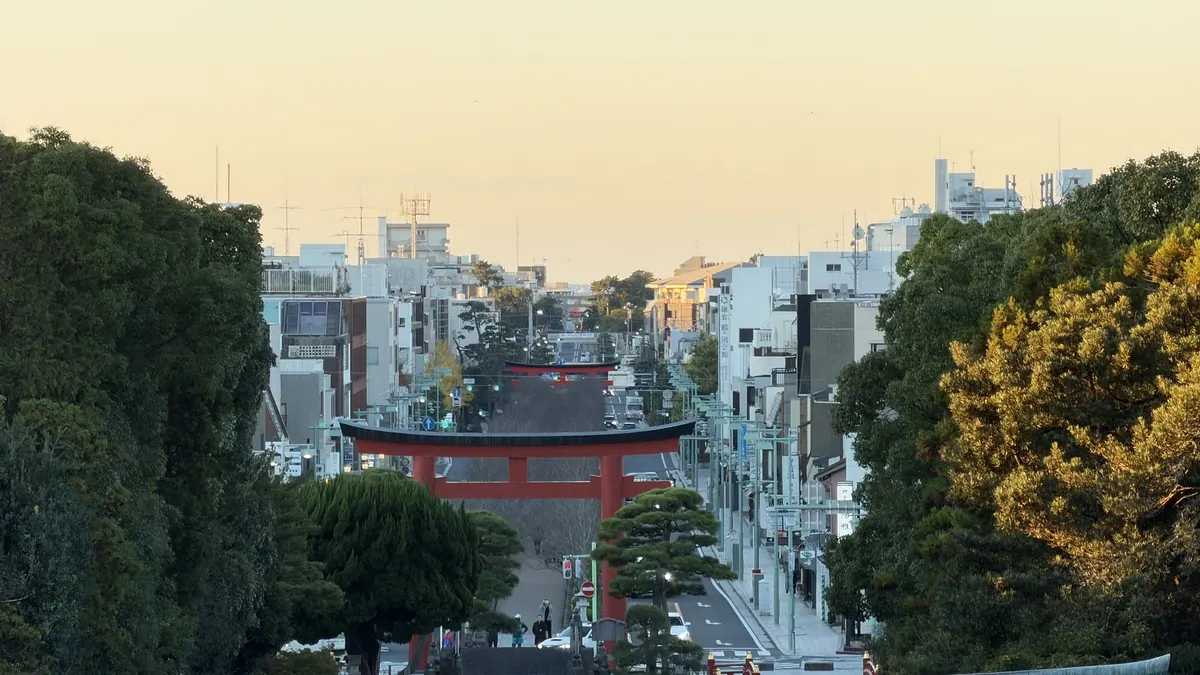
Turn around at the top and look south. The third torii is in front, the second torii beyond it, and the avenue Wakamiya-oji runs straight south in front of you. I also enjoyed the view toward Kamakura Station from the upper shrine.
Tap a photo to enlarge it
The Maruyama Inari shrine and the Shirahata shrine
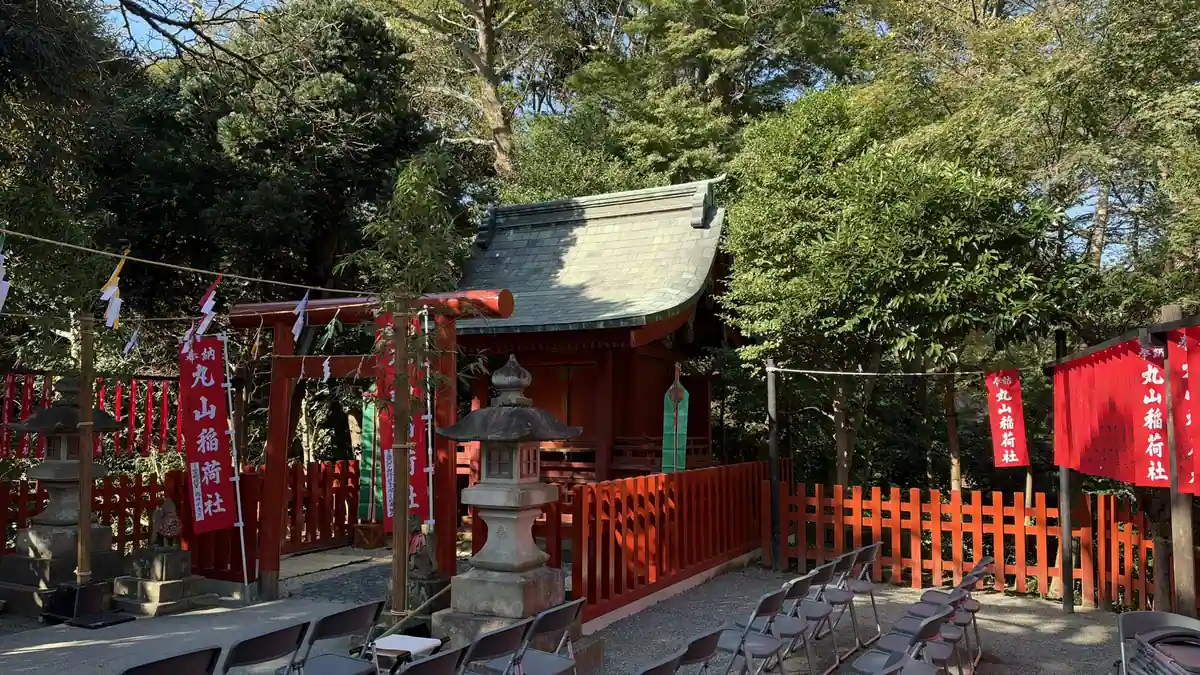
The Maruyama Inari shrine is a small shrine on the upper-shrine side. Its main building dates from the Muromachi period and is a National Important Cultural Property. You climb stone stairs through torii gates to reach it, so allow extra time if you add it.
The Shirahata shrine honors Minamoto no Yoritomo and Sanetomo. The Yuigawakamiya worship site is a place for praying toward the shrine's original site in Zaimokuza (the Yuigawakamiya). It is a separate spot from the Shirahata shrine.
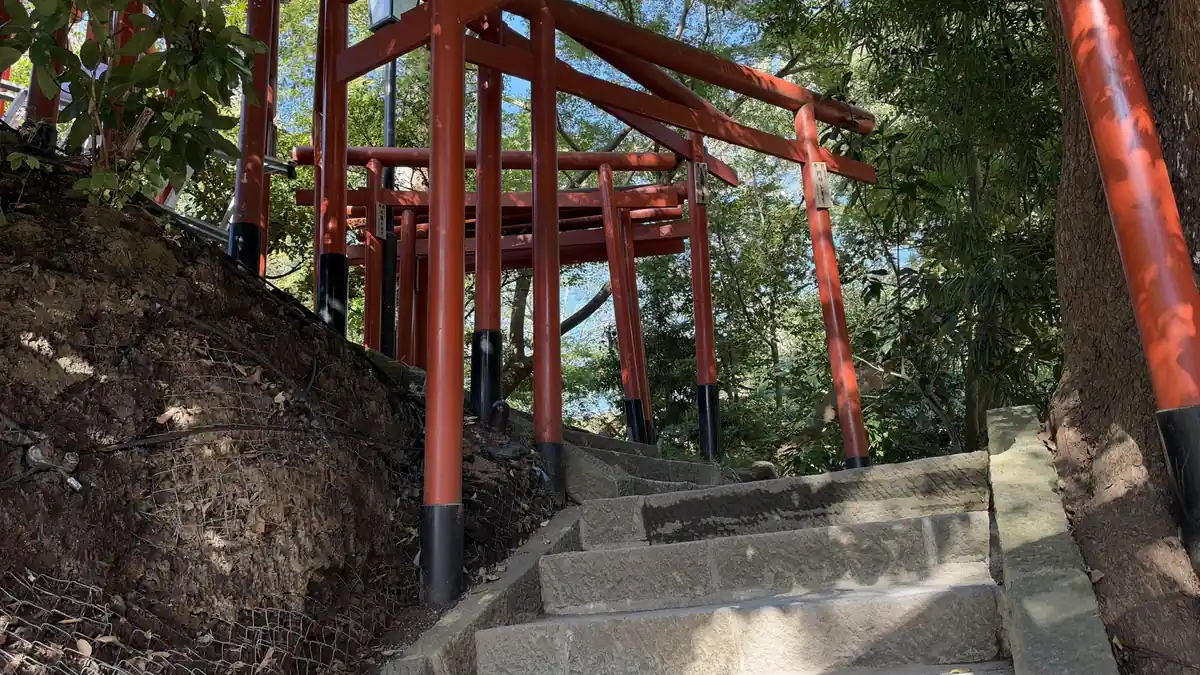
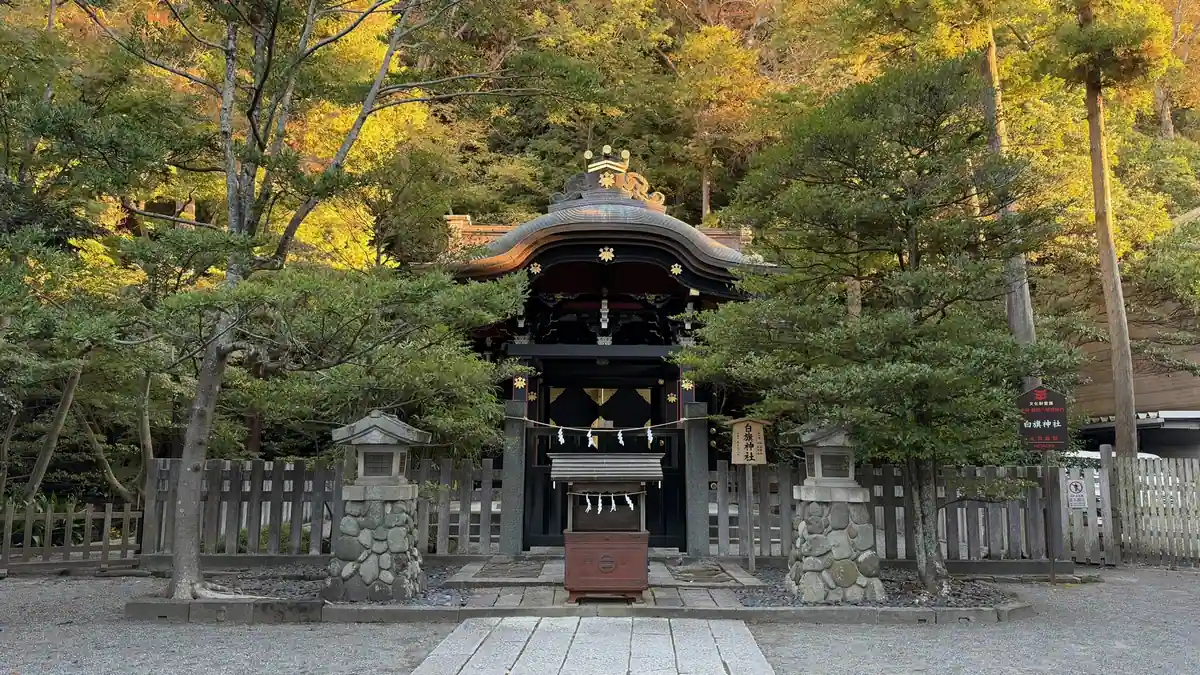
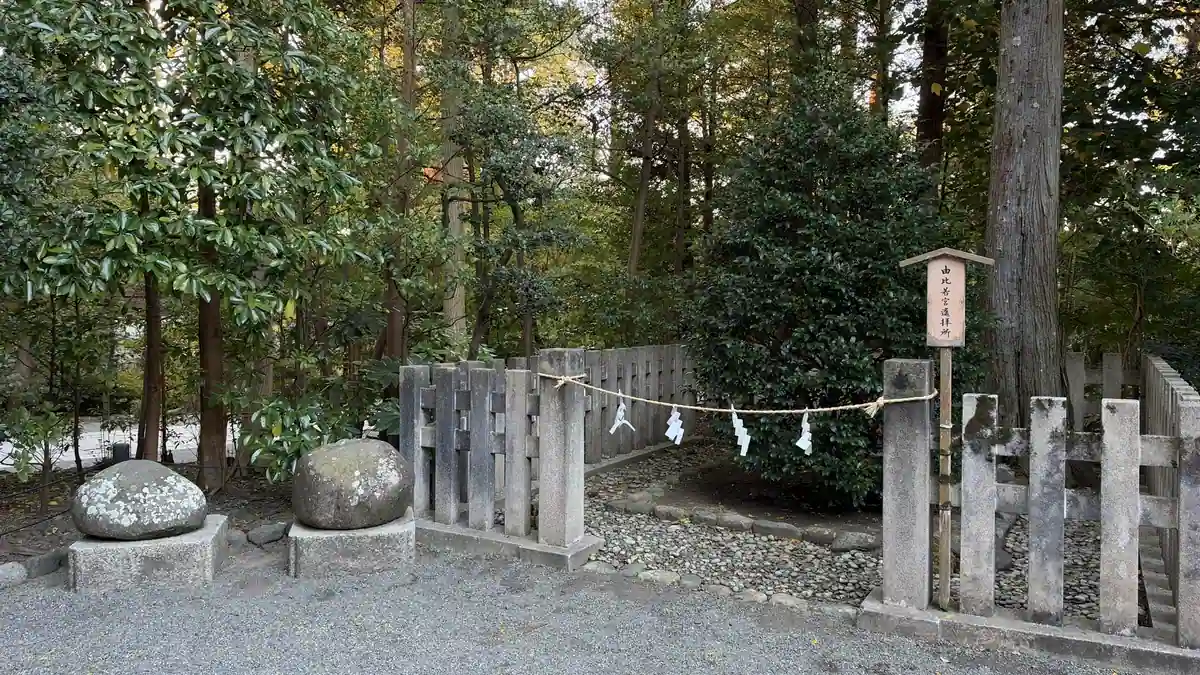
Tap a photo to enlarge it
Goshuin stamps and the three museums
A goshuin is a hand-stamped and hand-written temple or shrine stamp that visitors collect in a small book. The goshuin counter was just to the right of the Great Stairs as you face them. On November 8 I saw a sign for the autumn goshuin near Wakamiya. For hours and fees, and how long the autumn design is offered, check the shrine's official notices.
There are three museums on the grounds. If you add one, choose by what you want to see.
| Treasure Hall | Beside the upper shrine, on the west side of the main corridor. Treasures of the shrine. 9:00 a.m.–4:00 p.m. Adults ¥200, elementary school children ¥100. It sometimes closes between exhibitions |
|---|---|
| Kamakura National Treasure Museum | A city museum of Buddhist statues, paintings and other cultural properties of Kamakura and the area. 9:00 a.m.–4:30 p.m. (last entry 4:00 p.m.). Closed Mondays (the next weekday if Monday is a holiday). Admission depends on the exhibition. The special exhibition "700 Years of Zuisen-ji" (Oct 24–Dec 6, 2026) is ¥1,000 for adults and ¥500 for elementary and junior high school students (as of Nov 25, 2026) |
| Tsurugaoka Museum (Kamakura Bunkakan) | A former museum of modern art, now used for special exhibitions. 10:00 a.m.–4:30 p.m. (last entry 4:00 p.m.). Closed Mondays (check the museum for holidays). Buy tickets on the day. The exhibition "Sacred Treasures of Tsurugaoka Hachimangu" (Oct 9, 2026–Jan 24, 2027) is ¥800 for adults and ¥400 for elementary and junior high school students. Closed Dec 28–Jan 5 (as of Nov 25, 2026) |
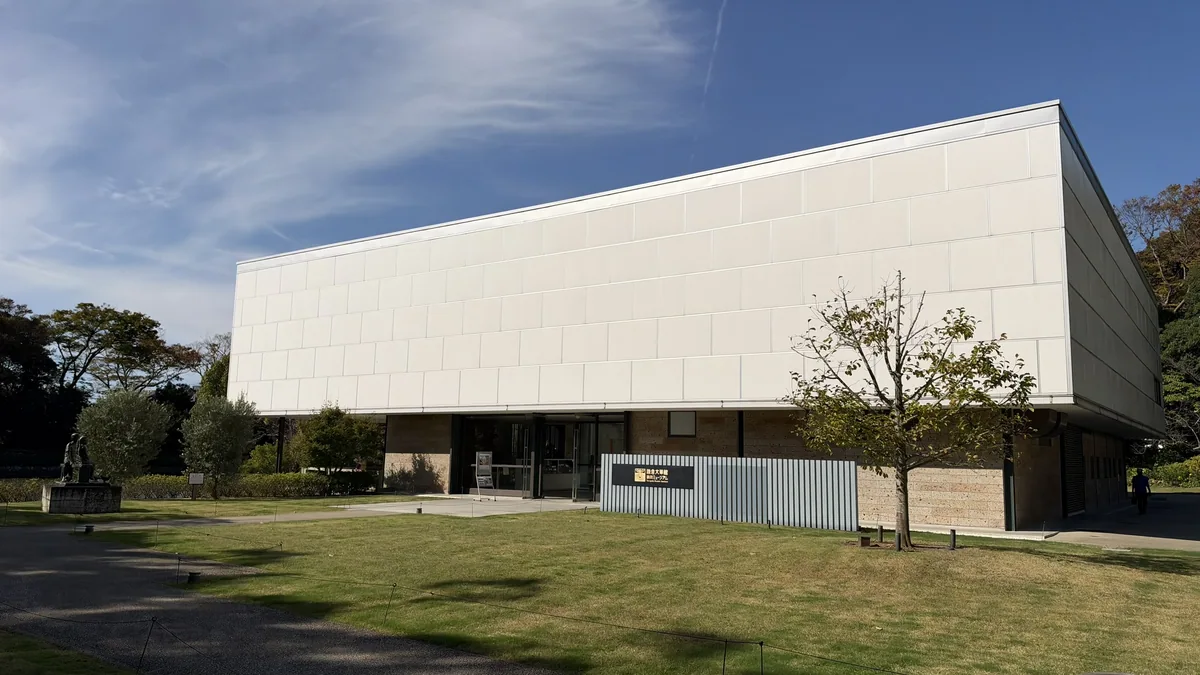
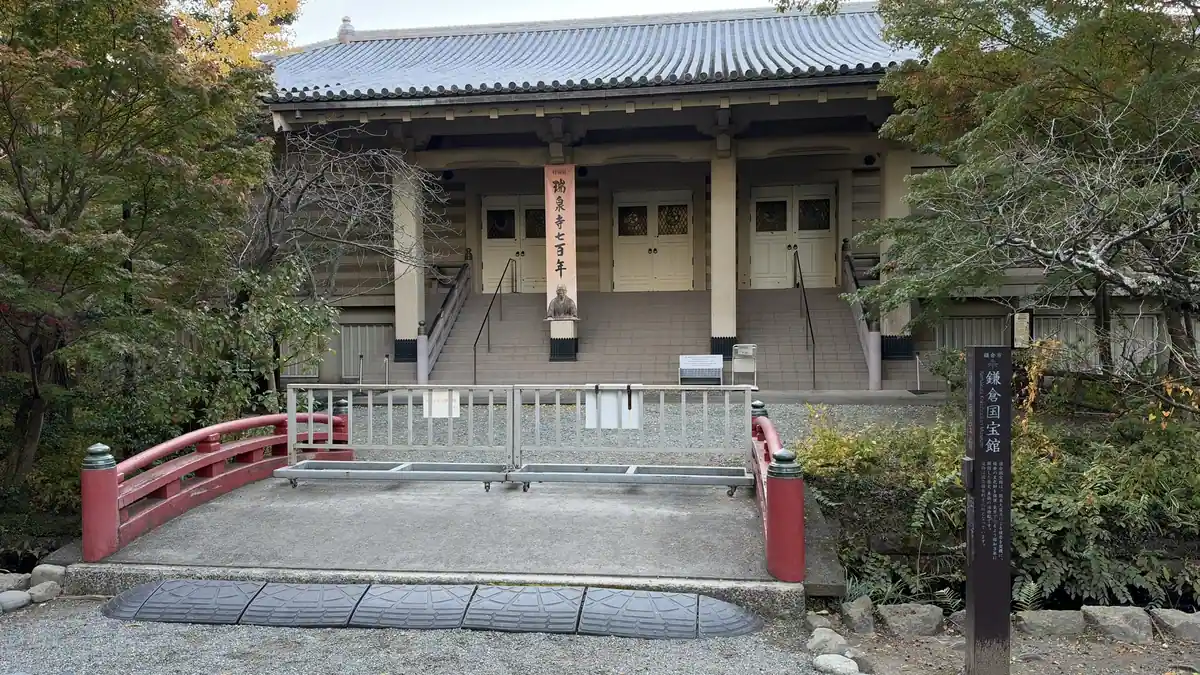
Tap a photo to enlarge it
I went into the Treasure Hall by the upper shrine. Exhibits change, but I saw a folding screen of the Genpei War and a seated statue of Yoritomo (both Edo period), roof tiles and a bridge-post finial from the Kamakura period, the ridge-beam tablets from Hidetada's construction and Ienari's reconstruction, the signboards of the shrine and of Wakamiya, and replicas of Yoritomo's land-donation document, the blood-written prayer of Ashikaga Mochiuji and a suit of armor laced with dark blue cord.
From Yoritomo's Kamakura to Hideyoshi and Ieyasu
| 1063 | Minamoto no Yoriyoshi brings the deity of Iwashimizu Hachimangu in Kyoto to Yui (in today's Zaimokuza) |
|---|---|
| 1180 | Yoritomo enters Kamakura and moves the shrine to its present site |
| 1182 | The Azuma Kagami records that Yoritomo directed the building of the approach, also praying for the safe delivery of Hojo Masako. This was the start of Wakamiya-oji |
| 1186 | Shizuka Gozen dances in the corridor of Wakamiya (Azuma Kagami) |
| 1191 | The upper and lower shrines are set in place, according to tradition |
| 1219 | The third shogun, Minamoto no Sanetomo, is killed by his nephew Kugyo |
| 1590–1592 | After Hideyoshi's siege of Odawara, Hideyoshi states his intention to order repairs; in 1592 the lower shrine is repaired and the deity is moved back (see below) |
| 1624 | Tokugawa Hidetada rebuilds Wakamiya. The present Wakamiya dates from then |
| 1828 | Tokugawa Ienari rebuilds the upper shrine. The present upper shrine dates from then |
The link with Toyotomi Hideyoshi and Tokugawa Ieyasu is easier to follow if you separate the documents, the plan and the work. In 1590, after the siege of Odawara, a seal-stamped letter from Hideyoshi dated August 22 (old calendar) told the shrine's officials that he meant to order repairs after returning to Kyoto. A draft of a letter to Ieyasu dated May 14, 1591 gives the instruction. A plan drawing of the same date shows the buildings of the time and the buildings to be newly built. The work itself is only recorded for the lower shrine: the Nihon Rekishi Chimei Taikei reports that the lower shrine was repaired and the deity returned in 1592.
The Wakamiya and upper shrine you see now were rebuilt in the Edo period, not in this war-era work. The Kamakura-period regents, the Hojo family, and the Late Hojo family of Odawara in the Warring States period are two different families. For the background of the Odawara siege, see our guides to Odawara Castle and its outer works and Ishigakiyama Castle.
Nearby sites and the Great Buddha
Outside the grounds are early sites of the Kamakura shogunate. The Okura shogunate site was Yoritomo's seat of government. The Hokke-do ruins hold the graves of Minamoto no Yoritomo and Hojo Yoshitoki (a national historic site). For the location and visiting conditions, see the city of Kamakura's page (in Japanese). Yuigawakamiya, the shrine's original site, is in the Zaimokuza area and is a different place from the worship site on the grounds.
To reach the Great Buddha at Kotoku-in, return to Kamakura Station and take the Enoden to Hase Station. According to Kotoku-in, it is about a 7-minute walk from Hase Station. Allow extra time for the walk back to the station and for changing trains.
Tours from Tokyo and other Kamakura experiences
PRThis section contains affiliate links to Klook and KKday. If you book through them, this site earns a commission.
Visiting the shrine is free, so there are no admission tickets to buy. If you would rather see Kamakura on a guided day trip from Tokyo, these booking pages are a place to start. Check the details, dates and prices on each page.
Klook
Kamakura one-day tour with Enoden ticket
A day trip from Tokyo of about 9 hours. According to the Klook listing, it visits the Great Buddha, rides the Enoden, and stops at the railway crossing in front of Kamakura High School Station, Enoshima and Tsurugaoka Hachimangu.
See on KlookKKday
Kamakura travel guide
KKday's Kamakura page, with day tours from Tokyo to Kamakura and Enoshima.
See on KKdayBefore you book, check the meeting point, price and cancellation terms on the booking page.
Where to stay near Tsurugaoka Hachimangu
PRThis section contains affiliate links to Agoda. If you book through them, this site earns a commission.
If you already have a hotel in Tokyo or Yokohama, you can do Kamakura as a day trip by train. If you stay in Kamakura, you can reach the shrine when the gates open at 6:00 a.m. If you plan to see Yokohama or Tokyo the next day, the area around Yokohama Station is easy to move on from. Check prices and availability on Agoda for your dates.
Close to the shrine
Kamakura
Kamakura city
For an early-morning visit. Near the station, the Hotel Metropolitan Kamakura is a 2-minute walk from the JR Kamakura Station East Exit (hotel website).
This is a search of Kamakura city. Some hotels in it are far from the shrine.
Browse Kamakura hotels on AgodaEasy to move on
Around Yokohama Station
Yokohama, Kanagawa
For seeing Yokohama or Tokyo the next day. Yokohama Station to Kamakura Station takes about 25 minutes on the JR Yokosuka Line (Kamakura Tourism Association). You then walk from Kamakura Station to the shrine.
Shin-Yokohama Station is a different station.
Browse Yokohama Station hotels on AgodaA special stay
Kamakura Prince Hotel
1-2-18 Shichirigahama-higashi, Kamakura
A hotel by the sea at Shichirigahama. The hotel's website says guests can enjoy the Shichirigahama sea from every room. It is an 8-minute walk from Shichirigahama Station on the Enoden, or about 5 minutes by the free shuttle bus.
To reach the shrine, you take the Enoden to Kamakura Station and then walk.
Check rates on AgodaThe dates and number of guests in the links are defaults. Before booking, check the dates, price and cancellation terms.
FAQ
About 10 minutes from JR or Enoden Kamakura Station (shrine website). On November 8 I walked from the East Exit through the second torii and Dankazura to the front of the third torii in about 11 minutes, including photo stops.
Visiting the grounds is free, and the gates are open 6:00 a.m.–8:00 p.m. (shrine website). The Treasure Hall, the Kamakura National Treasure Museum and the Tsurugaoka Museum charge their own admission.
I found Dankazura wide and easier to walk than Komachi-dori even at busy times. Komachi-dori is crowded in the daytime but lively and lined with shops. You can also go one way on each. The red torii at the entrance of Komachi-dori is not the second torii.
Counting the walk from and back to the station, allow about 35–45 minutes for a short visit and 55–75 minutes for most of the grounds. Add 30–60 minutes for a museum. This is a planning estimate, not a measured time: the shrine's stated 10-minute walk plus time on the grounds. Traffic lights, photos and lines are extra.
There is another stairway beside Wakamiya, and I walked up it from the bottom to the upper shrine. There are steps at the front of the second torii and on the Great Stairs. If steps are hard for you, ask the shrine how to reach the upper shrine. You can also visit only the lower area with the dance stage, Wakamiya and the ponds.
The goshuin counter I saw was just to the right of the Great Stairs as you face them. Check the shrine's official notices for hours and fees.
The Treasure Hall shows treasures of the shrine itself (adults ¥200, elementary school children ¥100). The Kamakura National Treasure Museum is a city museum of cultural properties from Kamakura and the area; admission depends on the exhibition. The Tsurugaoka Museum is in a former museum of modern art and holds special exhibitions. Hours and fees as of November 25, 2026 are in the section on goshuin and the three museums.
No. According to the Azuma Kagami, she danced in 1186 in the corridor of Wakamiya. The Maiden you see now was built later on the site of that corridor.
After the siege of Odawara in 1590, Hideyoshi announced that he would order repairs, and a draft letter to Ieyasu dated 1591 carries the instruction. The Nihon Rekishi Chimei Taikei reports that the lower shrine was repaired in 1592. The present Wakamiya dates from 1624 (Tokugawa Hidetada) and the upper shrine from 1828 (Tokugawa Ienari).
Yes. Return to Kamakura Station and take the Enoden to Hase Station. Kotoku-in is about a 7-minute walk from Hase Station. Allow extra time for getting back to the station and changing trains.
Sources
Hours, admission, exhibitions and dates were checked on the pages below on November 25–26, 2026. The walk, the grounds and the photos come from my visits on November 8 and 22, 2026. Hours and fees change, so check the official pages before you go.
- Tsurugaoka Hachimangu (official): access
- Tsurugaoka Hachimangu (official): history
- Tsurugaoka Hachimangu (official): the grounds
- Tsurugaoka Hachimangu (official): Treasure Hall
- Kamakura National Treasure Museum (City of Kamakura)
- Tsurugaoka Museum / Kamakura Bunkakan (official)
- Kotoku-in (official)
- City of Kamakura: Dankazura
- City of Kamakura: Hokke-do ruins
- Kamakura Tourism Association: access
- Agency for Cultural Affairs: Wakamiya
- Agency for Cultural Affairs: Upper shrine
- City of Odawara: the Odawara campaign


comment