



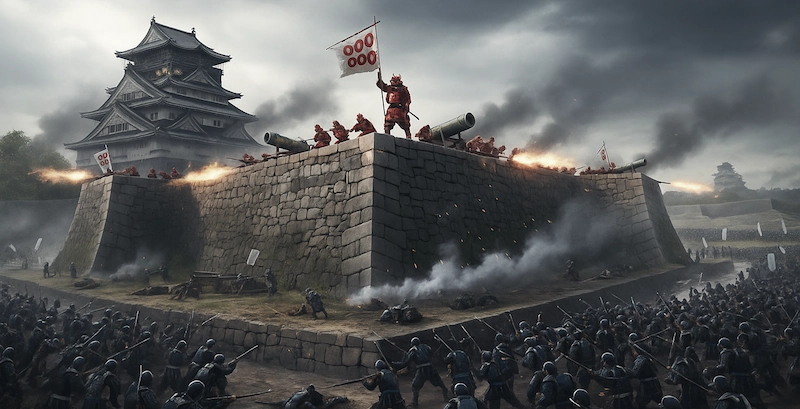
Taiga Drama Sanada Maru: The Life of Sanada Nobushige (Yukimura) and Where the Drama Departs from History
A guide to NHK’s 2016 Taiga drama Sanada Maru. It follows Sanada Nobushige (Yukimura) in four chapters and sets the drama’s inventions beside the historical record.
The life of Sanada Nobushige, known to later generations as Sanada Yukimura, runs through the turmoil of Japan’s late Sengoku period, the age of warring states. This guide follows his story through Sanada Maru, one of NHK’s Taiga dramas (the broadcaster’s year-long historical series), and separates what the historical record supports from what the series added to heighten the story.
Overview
| Broadcast | January 10 – December 18, 2016 (NHK Taiga drama No. 55; 50 episodes) |
|---|---|
| Writer | Kōki Mitani |
| Lead | Masato Sakai, as Sanada Nobushige |
| Main cast | Sanada Masayuki: Masao Kusakari Sanada Nobuyuki: Yō Ōizumi Toyotomi Hideyoshi: Fumiyo Kohinata Tokugawa Ieyasu: Seiyō Uchino Haru (Nobushige’s wife, daughter of Ōtani Yoshitsugu): Mayu Matsuoka |
| Story covers | From the fall of the Takeda clan (1582) to the Summer Campaign of the Siege of Osaka (1615). The Winter and Summer Campaigns take up nearly ten episodes. |
| History vs. fiction | Six points that this guide flags as dramatization or legend are collected in the comparison table. |
Nobushige’s Life in Four Chapters
1. The Fall of the Takeda Clan and Diplomacy for the Sanada Family’s Survival
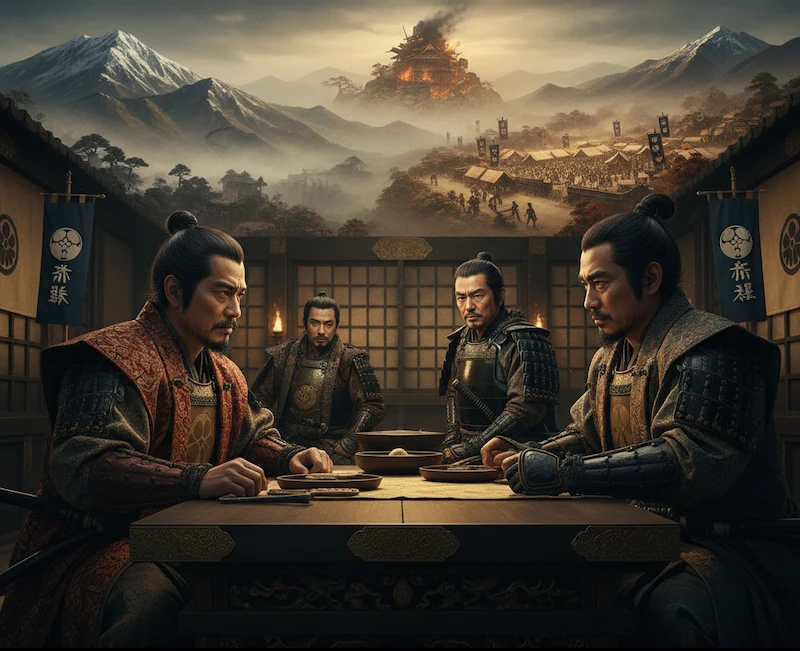
The story opens as the Takeda clan collapses. Takeda Katsuyori was betrayed by his own retainers and killed in 1582, in the middle of his conflict with Oda Nobunaga, the warlord then unifying much of Japan. The Sanada family, whose lands lay in Shinano Province (present-day Nagano Prefecture), now faced a perilous choice: side with the Uesugi or with the Oda, and hope the family survived.
The Sanada served the Oda and came under Takigawa Kazumasu, whom Nobunaga had put in charge of Shinano. Kazumasu rarely appears in historical dramas, but his dealings with the Sanada were an important part of the story.
Most Taiga dramas center on the Kinai region around Kyoto and Osaka and on the three men who unified Japan in turn: Nobunaga, Hideyoshi and Ieyasu. Sanada Maru turns instead to the Kantō region around Tokyo and the Kōshin’etsu region (Yamanashi, Nagano and Niigata). That wider view gives a clear picture of how alliances shifted across eastern and central Japan.
2. Hostages and the Sanada Family’s Isolation
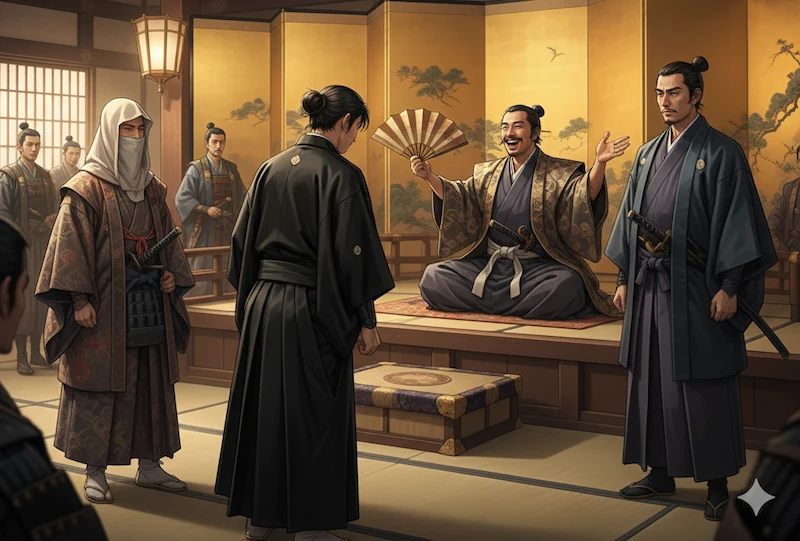
Nobushige is then sent to the Uesugi as a hostage, and a close bond forms between him and Uesugi Kagekatsu.
When Tokugawa forces attack the Sanada in the First Battle of Ueda (1585), the drama has Nobushige return briefly from Uesugi territory to help drive them off. (Note: this is a dramatic invention. By the generally accepted account, Nobushige did not fight in this battle. His father, Masayuki, played the central role in repelling the Tokugawa.)
Nobushige next moves to the side of Toyotomi Hideyoshi, serving as a personal attendant in the mounted guard (umamawari-shū). Close to Hideyoshi, he meets leading retainers such as Ishida Mitsunari and Ōtani Yoshitsugu, who later becomes his father-in-law.
Nobushige is the protagonist, but his father Sanada Masayuki is written as a brilliant strategist and becomes one of the drama’s main figures. His elder brother, Sanada Nobuyuki, portrayed as serious and straightforward, rounds out the family’s story.
3. The Numata Arbitration and the Road to Sekigahara
Control of the Numata territory was negotiated among the Hōjō, the Sanada and the Tokugawa. (The setting and participants of the negotiation scene may be dramatized.) When the Hōjō overturned the ruling and attacked Nagurumi Castle, it gave Hideyoshi, by then the ruler of Japan, the opening to step in. The result was the Odawara Campaign (1590), Hideyoshi’s offensive against the Hōjō.
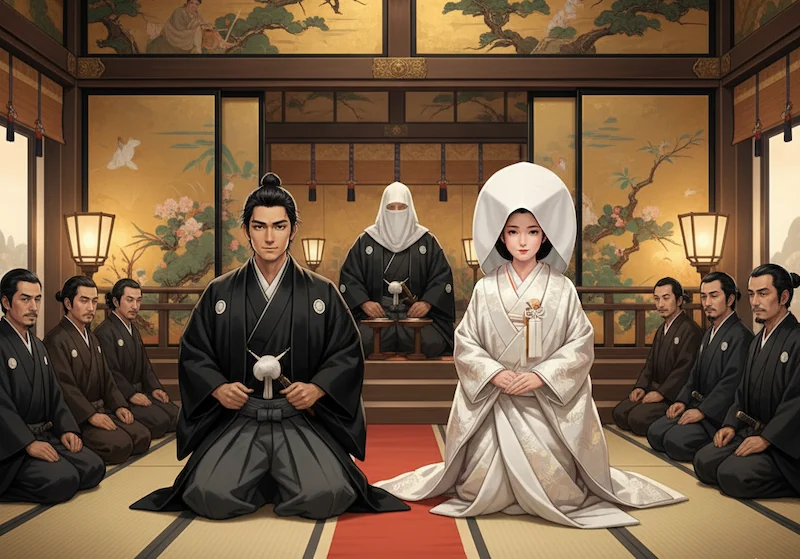
Nobushige marries Haru (also known as Chikurin-in, 竹林院), the daughter of Ōtani Yoshitsugu.
Then came the Battle of Sekigahara (1600), the clash that decided who would rule Japan after Hideyoshi. Expecting a long war, Masayuki launches the Second Battle of Ueda. Some scenes suggest he was aiming to seize national power himself. (That is the drama’s own interpretation. The generally accepted view is that he hoped for a victory by the Western Army, the coalition opposed to Tokugawa Ieyasu, which would have preserved the Toyotomi family.) Sekigahara, however, was settled almost at once.
4. Exile at Kudoyama and the Last Stand at Osaka
After Sekigahara, Nobushige and Masayuki were treated as criminals and confined at Kudoyama (九度山), at the foot of Mount Kōya in Wakayama Prefecture. A well-known story says Nobushige invented and sold Sanada himo, braided cords, to pay for daily life there. (This is a famous legend; no historical source confirms it.)
When the Siege of Osaka began in 1614, Toyotomi supporters invited Nobushige to join them. He left Kudoyama and entered Osaka Castle. There he is said to have changed his name to Yukimura, taking the character 幸 from his father’s name, Masayuki (昌幸). (Note: the name “Yukimura” appears in no source from Nobushige’s lifetime. It is a later invention or nickname.)
At Osaka Castle he joined famous rōnin (samurai without a lord) such as Gotō Matabē, Mōri Katsunaga and Chōsokabe Morichika, and became a main commander of the Osaka forces. The drama spends nearly ten episodes on the Winter and Summer Campaigns. In the Winter Campaign, Nobushige defended the Sanada Maru, the fort he had built, and drove back the Tokugawa army, which made his name.
In the Summer Campaign (1615), he pressed forward until he was close to Tokugawa Ieyasu’s own headquarters. According to the drama, his troops lost heart after his banner was pulled back into the castle, and his army was defeated. (The banner scene is a dramatic invention. The defeat is attributed mainly to the Tokugawa side’s much larger force and the collapse of the allies around him.)
Sanada Nobushige’s story keeps its hold on viewers because of his documented courage, but also because of the family portraits and invented touches the drama layers on top of it.
History vs. Fiction at a Glance
The notes marked “Note” in the story above are collected here, scene by scene, so you can compare the drama’s version with the generally accepted historical account.
| First Battle of Ueda | In the story: Nobushige returns from Uesugi territory and helps drive off the Tokugawa army History: He did not take part. His father Masayuki led the defense (Chapter 2) |
|---|---|
| Numata talks | In the story: The Hōjō, Sanada and Tokugawa negotiate over Numata History: The setting and participants may have been dramatized (Chapter 3) |
| Masayuki’s aim | In the story: Masayuki uses the Second Battle of Ueda to go after national power History: Generally believed to have wanted a Western Army victory that would preserve the Toyotomi family (Chapter 3) |
| Sanada himo | In the story: Nobushige invents and sells braided cords at Kudoyama to support his household History: A famous legend that no historical source confirms (Chapter 4) |
| The name “Yukimura” | In the story: Nobushige takes the name at Osaka Castle, using a character from his father’s name History: It appears in no source from his lifetime; a later invention or nickname (Chapter 4) |
| Summer Campaign defeat | In the story: His troops lose heart after the banner is pulled back into the castle History: The banner scene is dramatization. The defeat is attributed mainly to the larger Tokugawa force and the collapse of allies (Chapter 4) |
The Sanada Maru (真田丸): The Fort of the Winter Campaign
The Sanada Maru was a demaru, an outwork built outside a castle’s main defenses, raised for the Winter Campaign of the Siege of Osaka. Osaka City’s Tennōji Ward, an inner district south of Osaka Castle, describes it as the scene of the fiercest fighting in that campaign and says it is believed to have stood within what is now the ward.
Shingan-ji Temple (心眼寺), in the 餌差町 district, is recognized as the “Sanada Maru fort site” (真田丸出城跡) and is a historic site commended by Osaka City. The temple gate carries the Sanada family’s six-coin crest, and a grave for Yukimura and his son was built on the grounds in 2014.

Sanada Sites in Tennōji Ward
| Shingan-ji Temple (心眼寺), 餌差町 | Recognized as the Sanada Maru fort site. The gate bears the six-coin crest, and a grave for Yukimura and his son was added to the grounds in 2014. |
|---|---|
| Yasui Shrine (安居神社), 逢阪1丁目 | Has a statue of Sanada Yukimura and a monument marking the place of his death. It is said to be where Yukimura, wounded in the Summer Campaign, took shelter and was attacked by Echizen troops. |
| Enju-an (円珠庵), 空清町 | Has a sacred tree called “Kama Hachiman.” Tradition says Yukimura drove a sickle into it to pray for victory in the Winter Campaign. |
| Tennōji Ward Community Center (天王寺区民センター), 生玉寺町 | A “Sanada Maru reconstruction diorama” is displayed in the second-floor lobby. |
The details above come from a Tennōji Ward explanatory document (PDF, in Japanese). Exhibits can change, so check current information before you visit.
For the castle that stood at the center of the Siege of Osaka, see our Osaka Castle Park guide. The northern area where Toyotomi Hideyori and Lady Yodo made their last stand is covered in Northern Stronghold.
Sanada Maru FAQ
Yes. The name “Yukimura” does not appear in any source from Nobushige’s lifetime and is considered a later invention or nickname. He is said to have taken it at Osaka Castle, adopting one character from his father’s name, but that is not confirmed by sources either.
The drama shows Nobushige returning briefly from Uesugi territory to help drive off the Tokugawa army. That is a dramatic invention. By the generally accepted account, Nobushige did not take part in the battle, and his father Masayuki led the defense.
A story says he invented and sold Sanada himo, braided cords, to pay for daily life during his exile at Kudoyama. It is a famous legend, but no historical source confirms it.
No. The drama shows his troops losing heart after the banner is withdrawn, but that detail is a dramatic invention. The defeat is attributed mainly to the Tokugawa side’s much larger force and the collapse of the allies around him.
Some scenes in the drama suggest that Masayuki launched the Second Battle of Ueda to take national power for himself. That is the drama’s own interpretation. The generally accepted view is that he hoped for a Western Army victory that would preserve the Toyotomi family.
It was a fort built outside Osaka Castle’s main defenses for the Winter Campaign of the Siege of Osaka. According to Osaka City’s Tennōji Ward, it was the scene of the fiercest fighting in that campaign, and Shingan-ji Temple is recognized as the “Sanada Maru fort site.”
It aired on NHK from January 10 to December 18, 2016, as the 55th Taiga drama, with 50 episodes. Kōki Mitani wrote it, and Masato Sakai played Sanada Nobushige.
Related Guides
☕ Support This Site
Following the Shogun is built on original fieldwork and on-site research.
If you found this guide useful, your support helps keep it going.

You can also support via QR code


comment