


Furuta Oribe Museum: A Kyoto Visit and Hideyoshi Exhibition
Golden tea utensils, samurai letters and a film about Furuta Oribe: a visit to this small museum in northern Kyoto, with practical advice and a report on its Hideyoshi exhibition in September 2026.
- About Furuta Oribe Museum
- Access, admission and practical information
- The Hideyoshi exhibition: my September 2026 visit
- Golden tea utensils and a decorated bowl stand
- A tiger-shaped pillow associated with Hideyoshi
- Hideyoshi’s written arrangement of tea utensils
- Kuroda Josui’s tea-hall rules, preserved in a later copy
- A letter from Rikyu and a bamboo scoop by Oribe
- Mori Hidemoto: a letter and a tea caddy
- Poems by Hideyoshi, Hidenaga and Hidetsugu
- Hideyori’s calligraphy: his father’s divine title
- What stayed with me after the visit
- Questions about visiting
- Continue exploring Toyotomi history
- Sources
About Furuta Oribe Museum
Furuta Oribe Museum is a small basement museum in Kitayama, northern Kyoto, devoted to the warrior and tea master Furuta Oribe. His influence on tea culture and the ceramics known as Oribe ware makes this a worthwhile stop for anyone interested in the artistic tastes of Japan’s samurai.
A small museum off Kitayama-dori
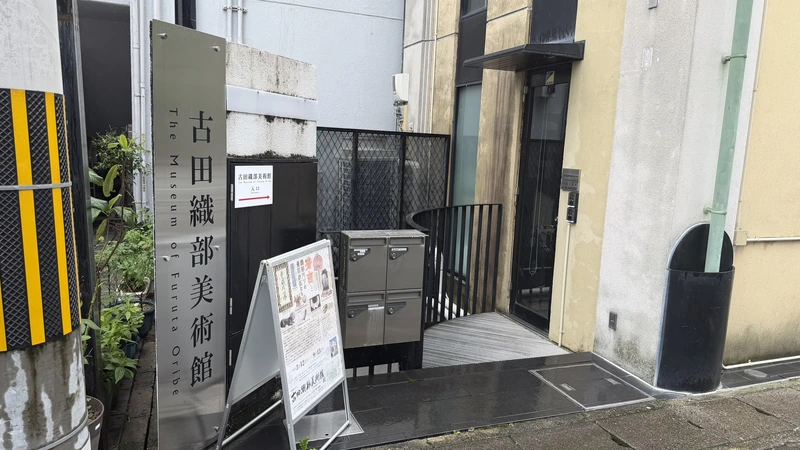
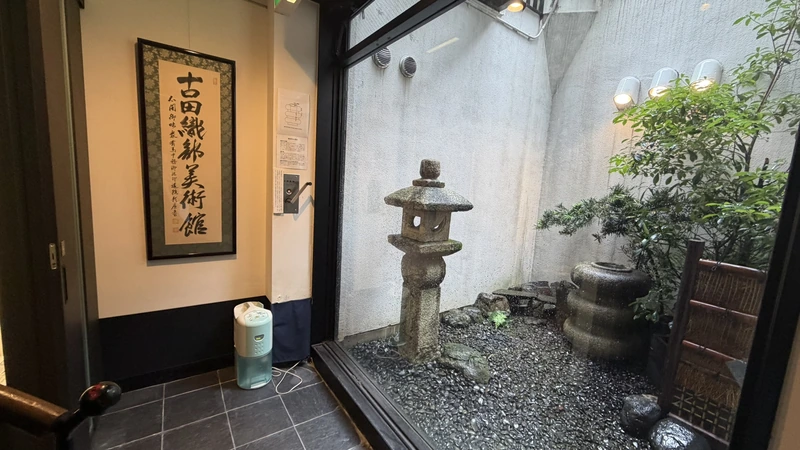
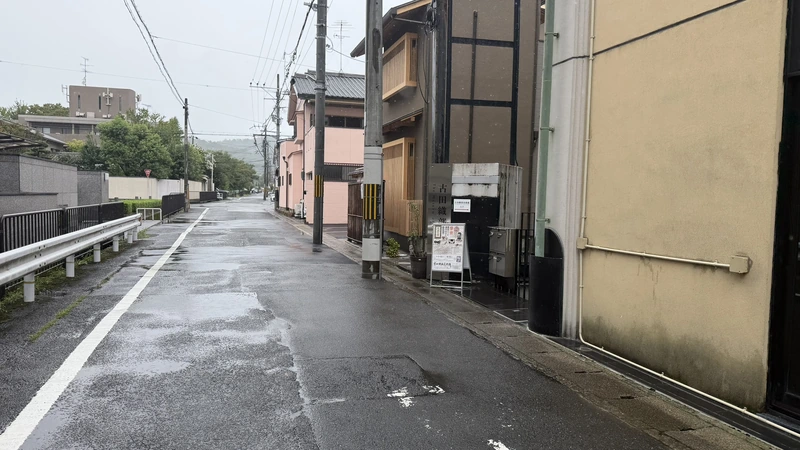
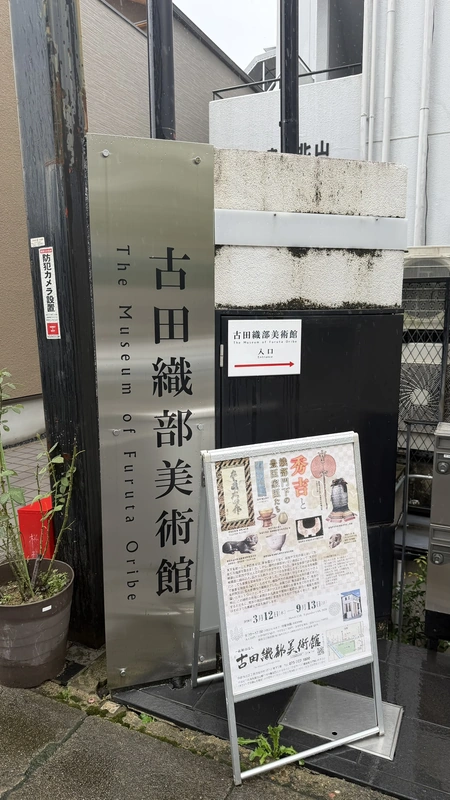
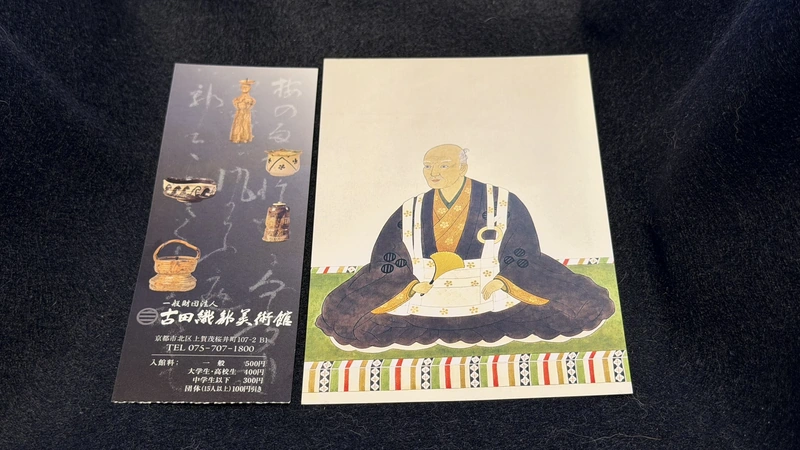
Look for the museum sign on Kitayama-dori, then turn into the side street to find the entrance leading downstairs. Inside, a window overlooks a small courtyard with a stone lantern.
I visited on 9 September 2026 for an exhibition about Toyotomi Hideyoshi and the warriors in Oribe’s tea circle. As someone interested in the Toyotomi family, I found plenty to enjoy in its golden tea utensils and historical letters.
The museum film: Oribe’s art and choices
A film shown during my visit explored Oribe’s taste for irregular shapes and cracks, and the choices he faced as conflict grew between the Toyotomi and Tokugawa families. Specialists and artists discussed his work and what he may have sought to preserve as a tea master. If the unconventional designs leave you curious about the man behind them, the film is worth making time for.
Access, admission and practical information
Visiting information
| Address | B1, 107-2 Kamigamo Sakuraicho, Kita Ward, Kyoto |
|---|---|
| Hours | 9:30–17:00; last admission 16:40 |
| Closures | Mondays, with holiday exceptions; year-end/New Year; exhibition changeovers. Check holiday opening dates with the museum. |
| Admission | Adults ¥500; university/high-school students ¥400; elementary/junior-high students ¥300; preschool children free |
| My visit | Roughly 40 minutes, including the film; an estimate from my visit. |
| Photography | On 9 September 2026, photography was prohibited in the exhibition room. Staff said the basement courtyard could be photographed. |
| Telephone | 075-707-1800 |
Information checked on 11 September 2026 against the Kyoto City Tourism Association listing and the museum’s exhibition checklist. Consult the museum website for opening dates, particularly around holidays and exhibition changeovers. If you need English explanations, ask the museum what is available before your visit.
From Kyoto Station to Kitayama
Take the Karasuma subway line from Kyoto Station (K11) towards Kokusaikaikan and get off at Kitayama (K03). The ride takes approximately 20 minutes, with no transfer. The museum is about three minutes on foot from Exit 4. If travelling by city bus, get off at Shokubutsuen Kitamon-mae, also about a three-minute walk away. Kyoto subway line information
Look for the museum’s sign on Kitayama-dori before turning into the side street. An antiques shop stands near the entrance; the museum’s name sign and arrow help identify the way downstairs.
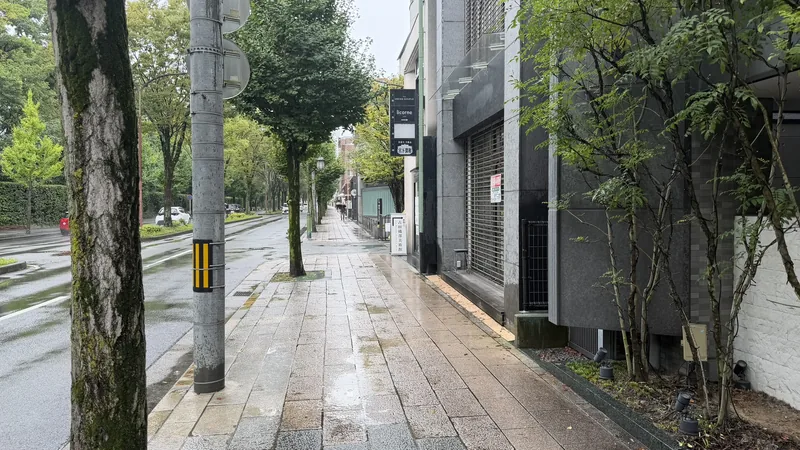
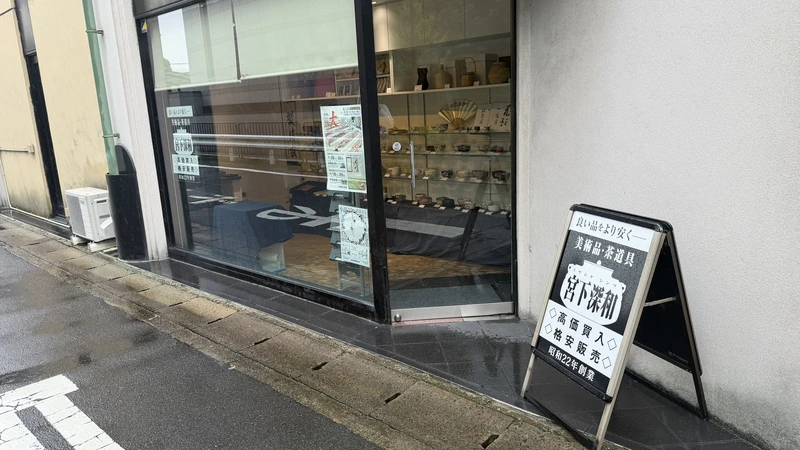
Tap an image to enlarge it.
Museum location
Route from Kyoto Station
The Hideyoshi exhibition: my September 2026 visit
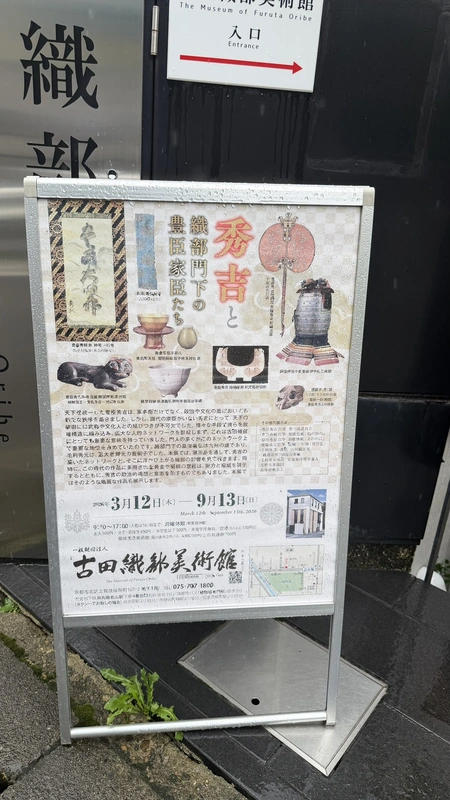
Exhibition dates: 12 March–13 September 2026. Visited: 9 September 2026. This account records that exhibition, titled “Hideyoshi and the Toyotomi Retainers among Oribe’s Pupils” in descriptive English translation. Displays change; check the museum’s current programme before planning a visit around a particular object.
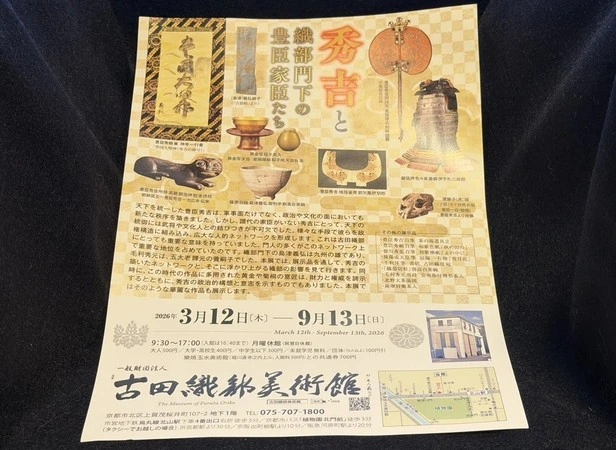
Toyotomi Hideyoshi brought Japan under his authority in the late sixteenth century. This exhibition explored his circle of warriors and cultural figures, including those who studied tea under Oribe. Its published introduction also drew attention to gold, chrysanthemum and paulownia motifs as expressions of authority. Alongside the splendid tea utensils were letters and poems by some of the period’s best-known figures.
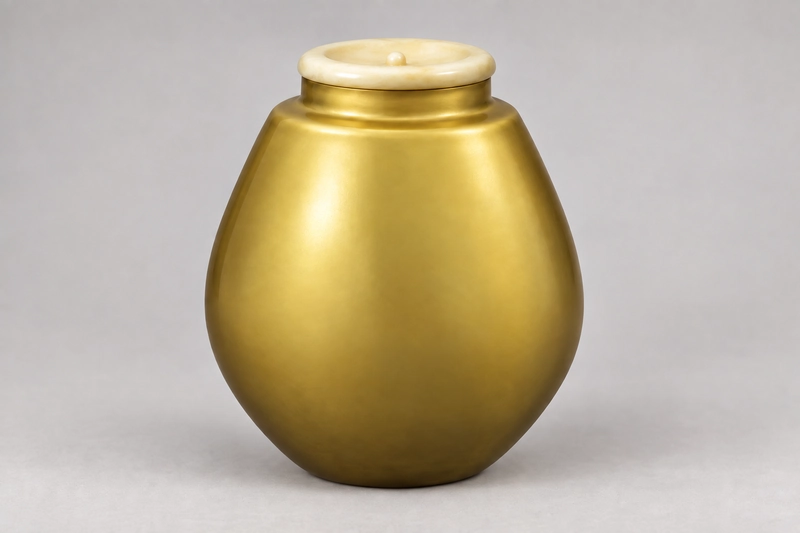
Photography was prohibited in the exhibition room. The three illustrations below were generated with AI to convey an impression of selected objects. Their shapes, colours and materials are not verified reproductions of the exhibits.
Tap an image to enlarge it.
Golden tea utensils and a decorated bowl stand
The object I remember best is the golden nasu tea caddy, listed as Ōgon-utsushi Nasu Chaire (checklist no. 4). A chaire holds powdered tea; nasu means aubergine and names this rounded type of caddy. Most tea caddies I had seen before were dark, so the gold came as a surprise. Its smooth surface reminded me of brass, and I still remember the beauty of that rounded shape and gleaming finish.
Beside it stood a golden tenmoku tea bowl and a bowl stand decorated with chrysanthemum and paulownia motifs. The stand was as carefully ornamented as the vessel it supported; both caught my eye.
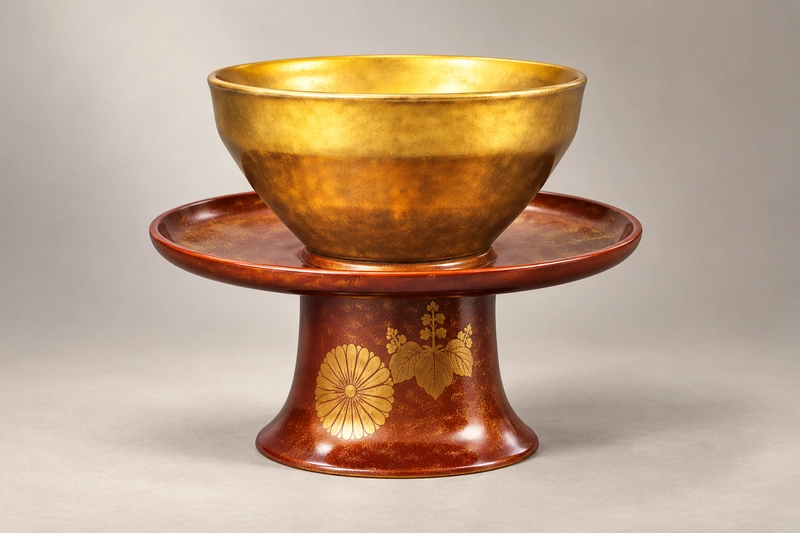
The checklist dates the golden caddy and bowls (nos. 4, 5 and 7) to the Momoyama–Edo periods, and the decorated stand (no. 8) to the early Edo period. Seeing them still gleaming after so many years was part of the pleasure of this visit.
A tiger-shaped pillow associated with Hideyoshi
Among the tea utensils was a rather unexpected object: a pillow shaped like a tiger (checklist no. 12). Its Japanese title describes silver leaf and dry lacquer and identifies it as a possession of Hideyoshi.
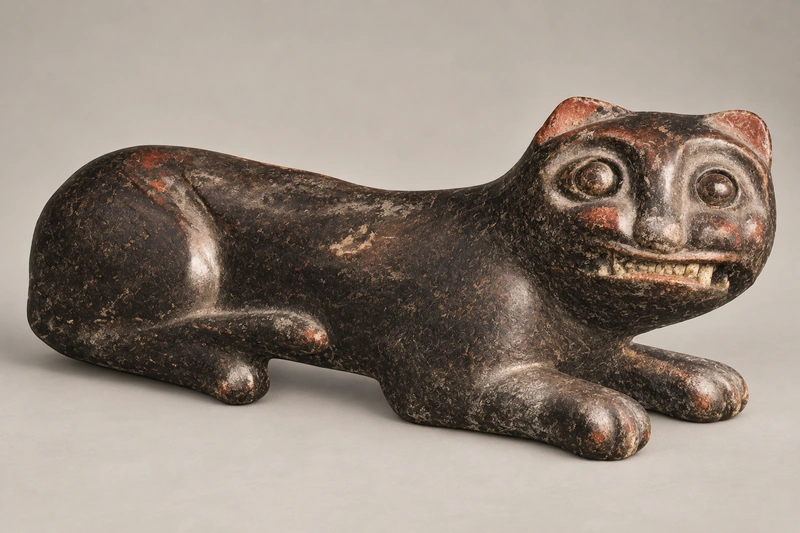
According to the checklist, it dates to the middle of the Joseon dynasty and passed from a Korean king to Hideyoshi, then to Hōkō-ji Temple. That journey across the sea and into a temple’s care is as intriguing as its unusual shape.
Hideyoshi’s written arrangement of tea utensils
Chanoyu Dōgudate (checklist no. 1) is a Momoyama-period work attributed to Hideyoshi’s brush. Dōgudate means the selection of utensils for a tea gathering. Choosing which bowls, caddies and other pieces to use together is part of the art of tea, and this document invites us to imagine Hideyoshi making those choices himself.
Kuroda Josui’s tea-hall rules, preserved in a later copy
Kuroda Kanbei, also known as Josui, was a figure I knew chiefly as a warrior. A copy of his three tea-hall rules (checklist no. 37) surprised me: I had not realised how deeply he was involved in tea culture.
The exhibited document is a late Edo-period copy. The rules associated with Josui’s tea hall were still being copied long after his lifetime.
A letter from Rikyu and a bamboo scoop by Oribe
A letter attributed to Sen no Rikyū (checklist no. 45) is addressed to Oribe. Also on display was a bamboo tea scoop made by Oribe (no. 44), used for transferring powdered tea. Both date to the Momoyama period. A letter exchanged between these famous tea masters, alongside such a small, practical utensil, gives their relationship a more personal scale.
Mori Hidemoto: a letter and a tea caddy
The exhibition introduced Mōri Hidemoto as one of Oribe’s pupils, displaying a letter attributed to him (checklist no. 40) and a tea caddy recorded as his possession (no. 41). Together, his writing and tea utensil show a side of his life less familiar from accounts of warfare and politics.
Poems by Hideyoshi, Hidenaga and Hidetsugu
Juraku Kaishi Utsushi (checklist no. 3) preserves poems by Hideyoshi, his brother Hidenaga and his nephew Hidetsugu in an early Edo-period copy. These men are usually remembered for military campaigns and government; here, all three appear as poets. Hidenaga’s presence may especially interest viewers of the Japanese historical drama Toyotomi Kyōdai!
Hideyori’s calligraphy: his father’s divine title
The single-line calligraphy attributed to Toyotomi Hideyori (checklist no. 18) reads Hōkoku Daimyōjin, the divine title used for the deified Hideyoshi. The title’s background is also described in the history of Toyokuni Shrine in Kyoto. The exhibition thus included both objects associated with Hideyoshi’s lifetime and a work by his son commemorating him as a deity.
What stayed with me after the visit
In the film, former prime minister Morihiro Hosokawa spoke about the importance of passing culture on to later generations. His words stayed with me, along with the sight of those gleaming tea utensils. I left feeling fortunate to have seen objects that had survived for so long.
Including the film, I estimate that my visit lasted about 40 minutes. The golden caddy and Kanbei’s involvement in tea culture were memorable discoveries. For anyone interested in the Toyotomi family or the warring-states period, the utensils and letters deserve time and attention.
Questions about visiting
I estimate that I spent about 40 minutes here on 9 September 2026, including the museum film. Allow a little longer if you want to read the exhibition labels in detail.
Photography was prohibited in the exhibition room during my visit. Staff said the basement courtyard could be photographed. The three object illustrations on this page were generated with AI.
This account covers an exhibition dated 12 March–13 September 2026. Displays change, so check the museum’s current exhibition information before travelling.
Continue exploring Toyotomi history
Sources
Object titles, attributions, provenance and periods follow the museum’s exhibition checklist collected on 9 September 2026. Checklist numbers identify the entries discussed above; descriptive English object titles on this page are translations of the Japanese entries.
Kyoto City Tourism Association: exhibition and visitor information
Kyoto Municipal Transportation Bureau: subway lines
The Metropolitan Museum of Art: Oribe and Momoyama art


comment