

Walking Hikone Castle: From the Front Gate to the Keep, Gardens and Museum
From the stone steps at the front gate to the corridor bridge, the National Treasure keep, the western enclosure, the path down past Kuromon, the gardens of Rakurakuen and Genkyuen, and the Hikone Castle Museum, in the order I walked them.
This is a stop-by-stop guide to Hikone Castle in Shiga Prefecture, following the route I walked: up the path from the front gate (Omotemon) to the keep, on to the western enclosure (Nishinomaru), down the hillside path toward the Kuromon gate, through the gardens of Rakurakuen and Genkyuen, and finally to the Hikone Castle Museum. I took the photos on 5 April 2025, except the one of Hikonyan, the city's mascot, which is from 17 April 2024.
The whole route took me about four and a half hours from the start of the climb to leaving the museum. That includes about 20 minutes inside the keep, about 50 minutes in the museum, going inside the turrets, taking photos, and a tea break at Hoshodai in Genkyuen. If you are short on time, prioritize the keep and the corridor bridge you pass on the way up. Prices, opening hours, directions from the station and the castle's history are in the Hikone Castle planning guide.
Tenshu (keep): the main tower of a Japanese castle. Yagura: turrets and gatehouses built along the walls for defense and storage. Maru or kuruwa: an enclosure, a level area surrounded by walls; the honmaru is the main enclosure where the keep stands. Daimyo: a feudal lord; the Ii family were the daimyo of Hikone.
In this guide
The Hikone Castle route at a glance
This is the route I walked. From the front gate I climbed to the top of the hill, saw the keep, carried on to the western enclosure, went down the Kuromon side to the gardens, and finally returned to the museum near the front gate. Tap a row to jump to that stop.
You can also enter from the Kuromon side and walk the route in reverse. However, the Yamazaki path from the Nishinomaru down to the Yamazaki enclosure is closed because the Nishinomaru's bridge has deteriorated (checked November 2026).
From the front gate up the stone steps to the corridor bridge
Umaya: an Edo-period stable inside the castle
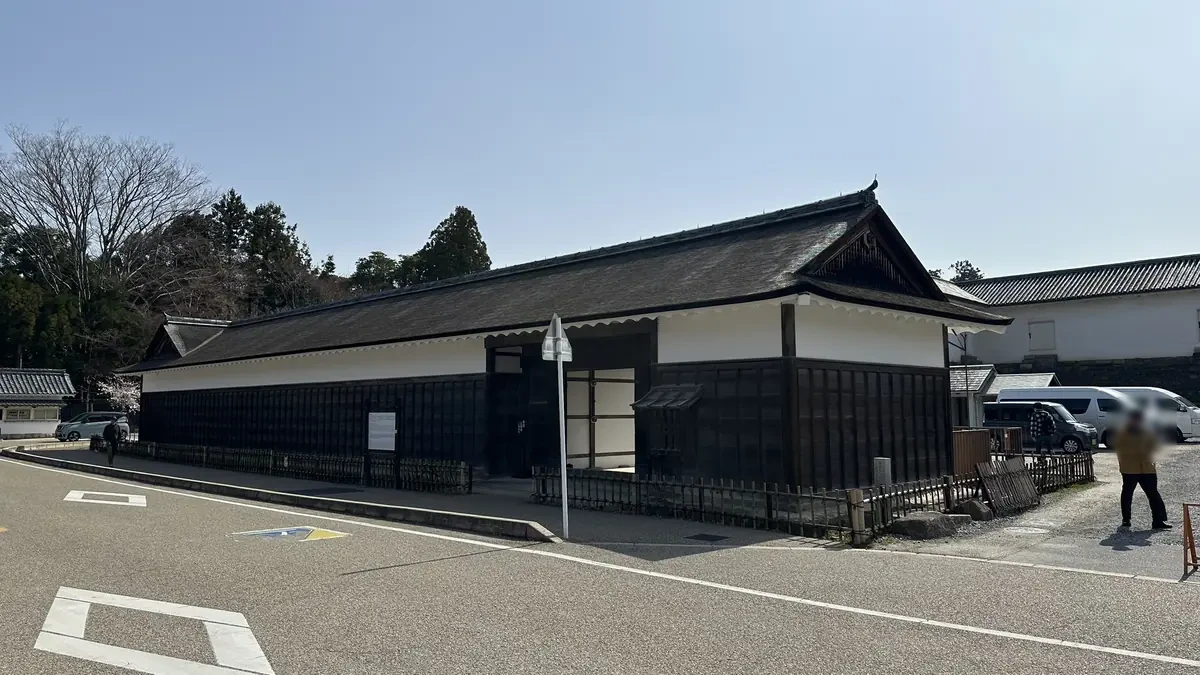
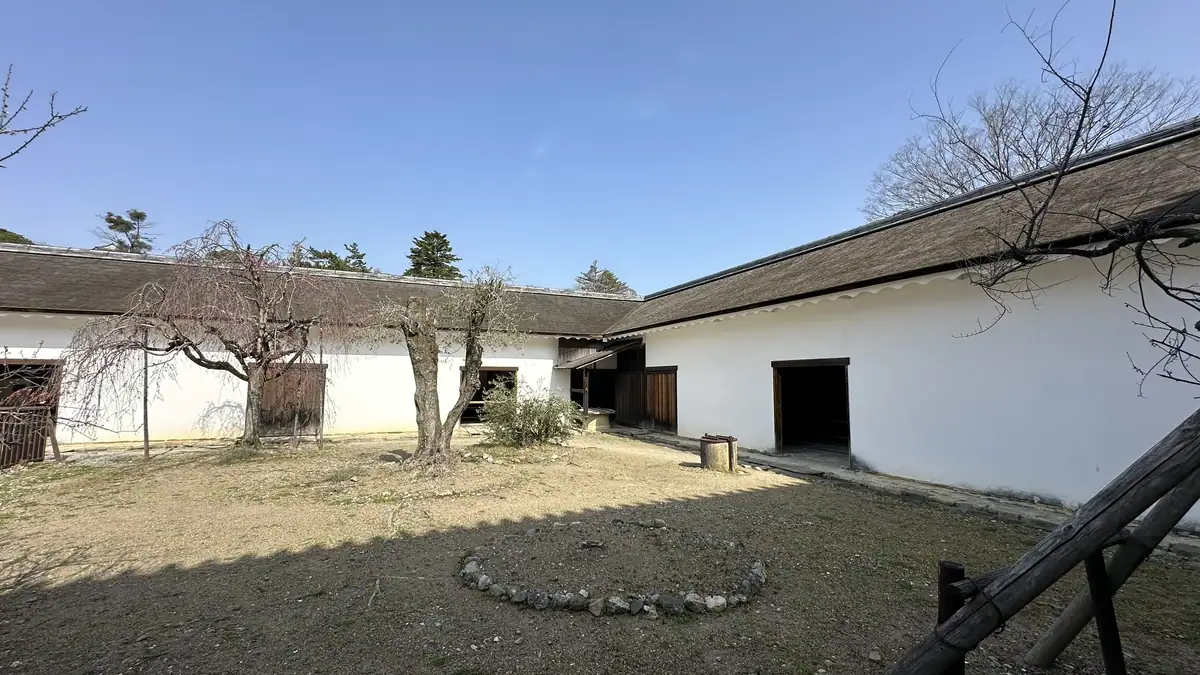
The stable stands on the road from the Sawaguchi gate to the front gate, and you don't need a ticket to see it. It is said to have held 21 horses belonging to the lord and his retainers, and seen from above it forms an L. According to the official information, Hikone is the only castle in Japan where a stable survives inside the grounds. It is right on the way to the front gate, so it fits easily into the route before you start the climb.
Tap a photo to enlarge it
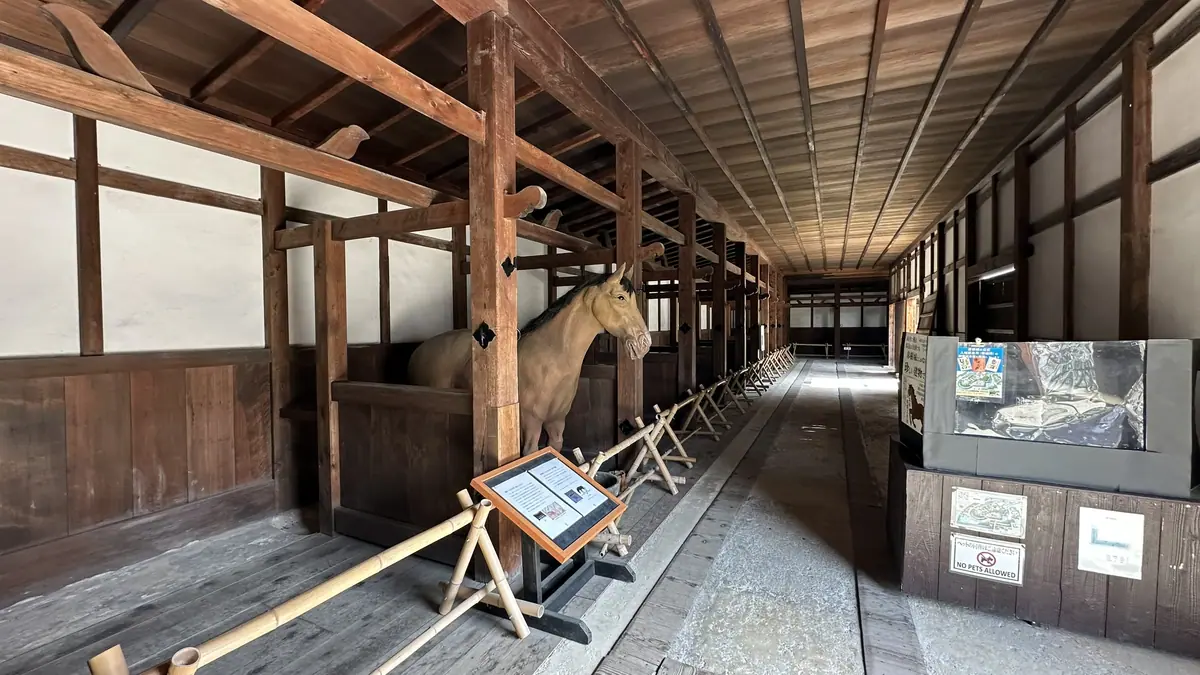
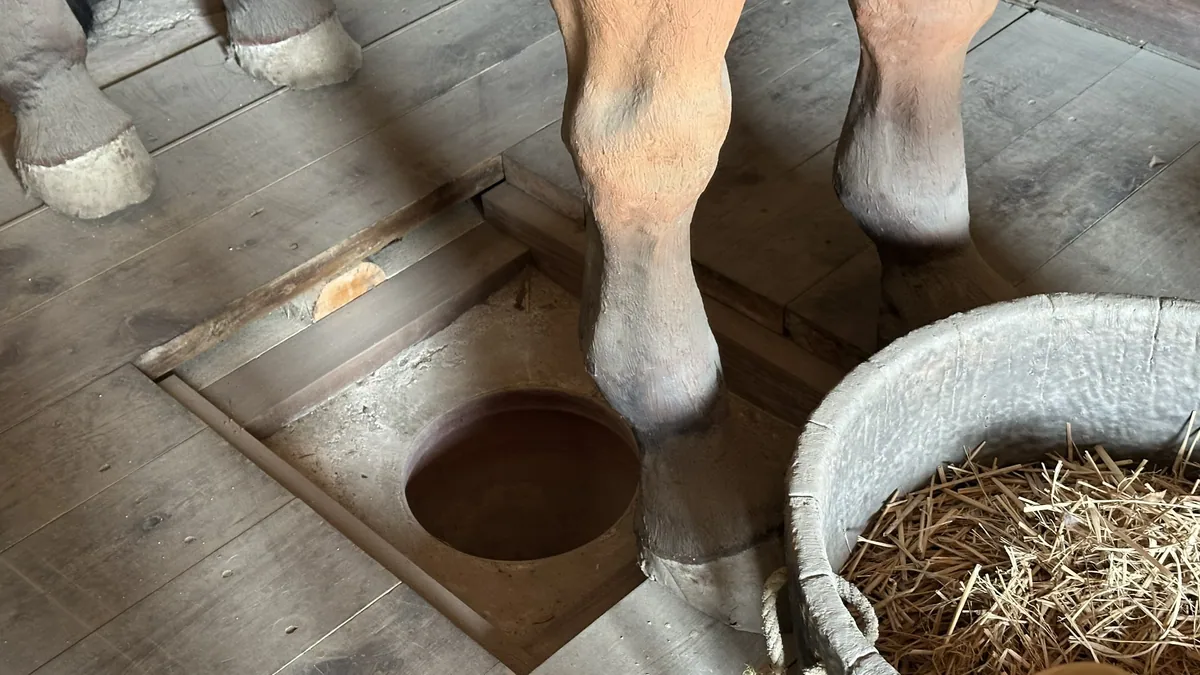
Inside, posts divide the space into stalls, and model horses show where the animals stood. Under the model, you can see an opening in the floorboards.
The front gate and the stone steps
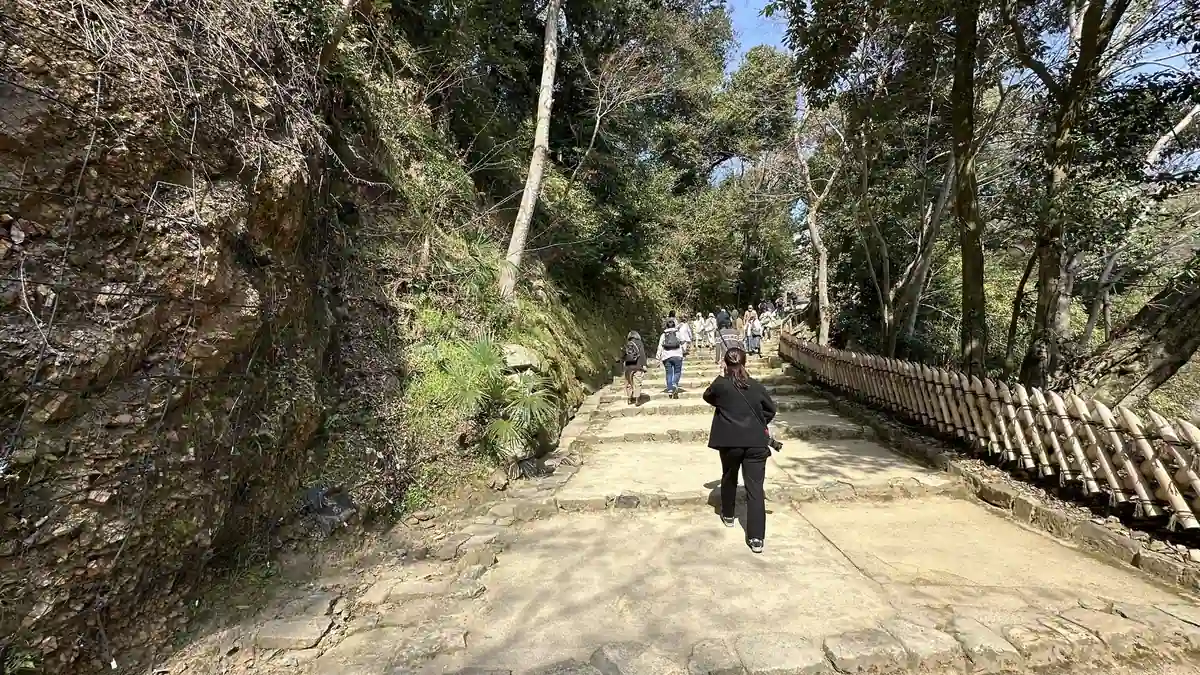
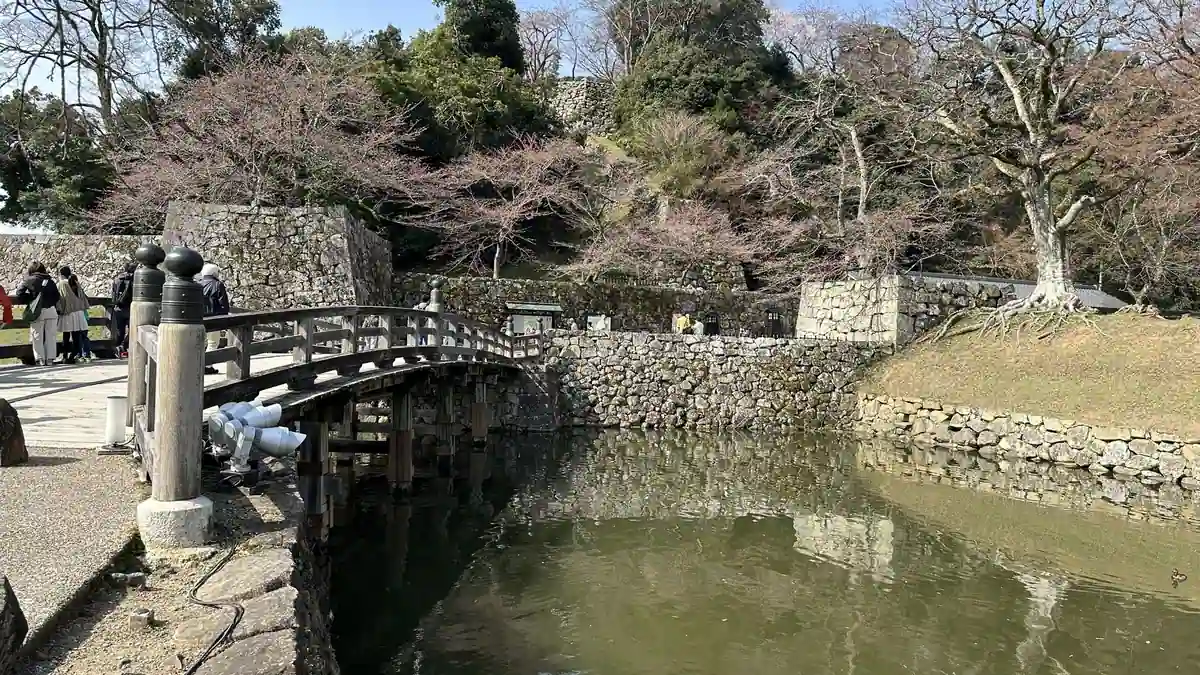
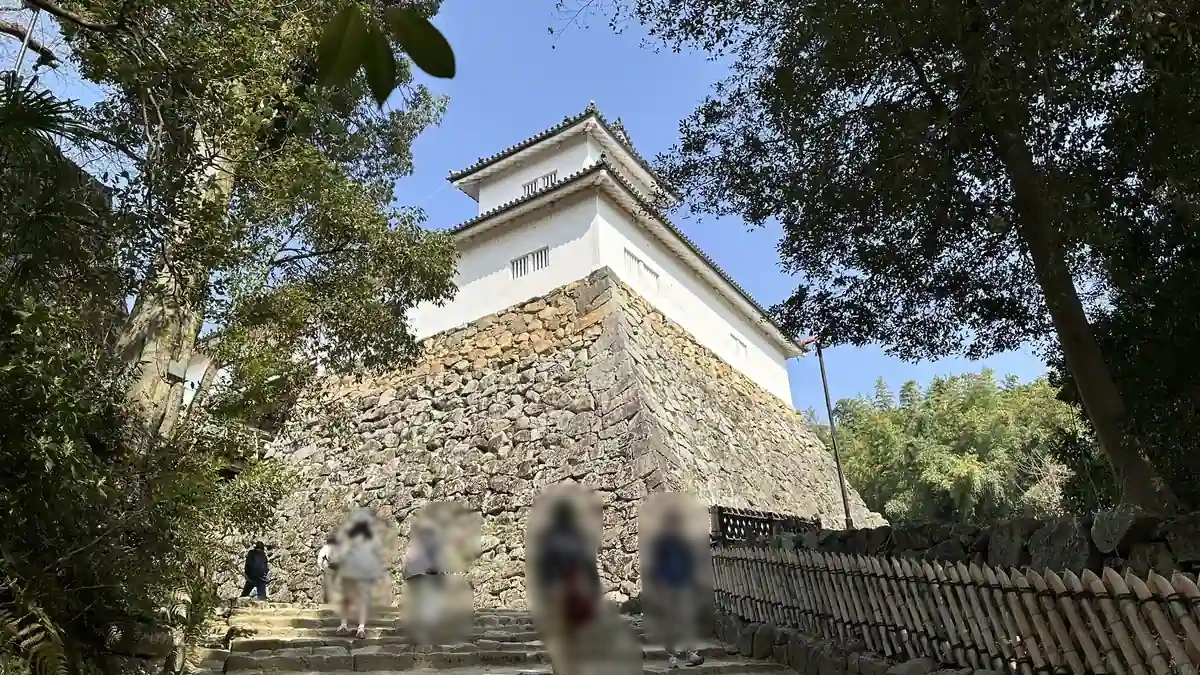
Cross the Omotemon Bridge over the inner moat to reach the front gate. The path up the hill begins just past the ticket booth. It is stone steps most of the way, so go at your own pace. I didn't find it hard, but there's no need to hurry. At the top, it joins the path coming up from the Otemon gate and brings you out in front of Tenbin-yagura.
Tap a photo to enlarge it
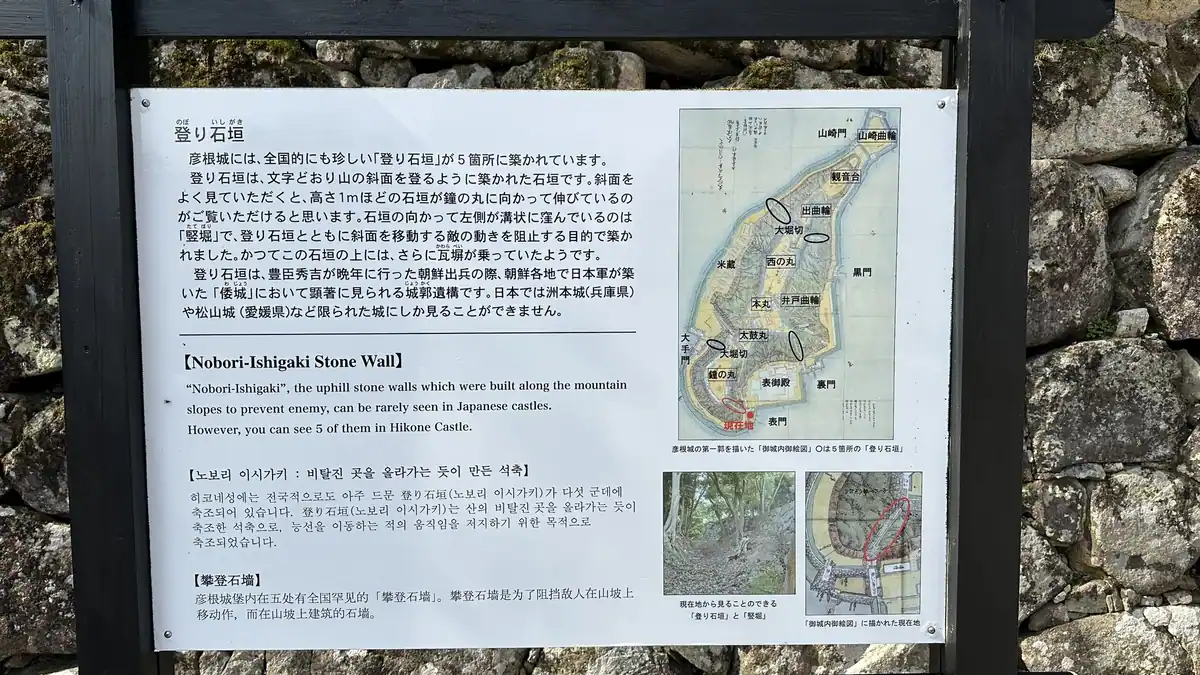
A signboard near the front gate explains Hikone's nobori-ishigaki, or climbing stone walls. These walls run up the slope of the hill to stop attackers from moving sideways across it, and the board shows the five places in the castle where they were built.
The corridor bridge and Tenbin-yagura
Tap a photo to enlarge it
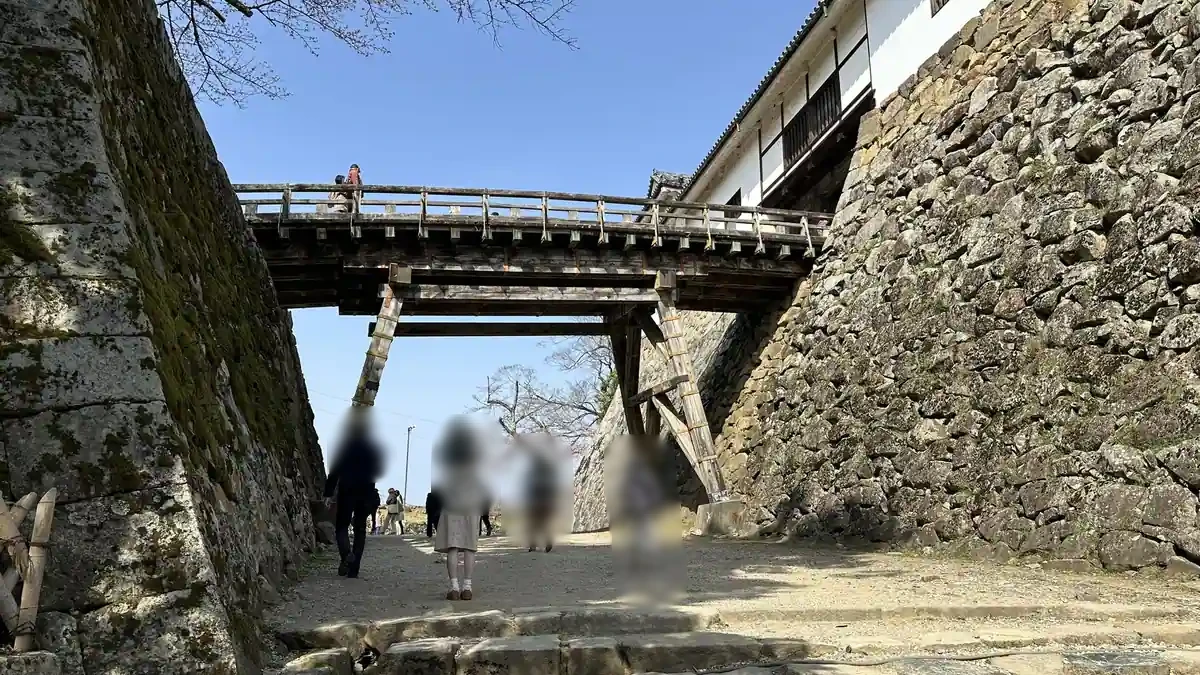
At the top of the steps you come to the Ohorikiri, a deep cut made through the ridge. The wooden bridge overhead is the corridor bridge (rokabashi). It is said that in wartime it could be dropped to stop attackers getting across. Standing under it, you can see clearly how the path along the bottom of the cut passes beneath the upper path that crosses the bridge. It was one of the places at Hikone that stayed with me most.
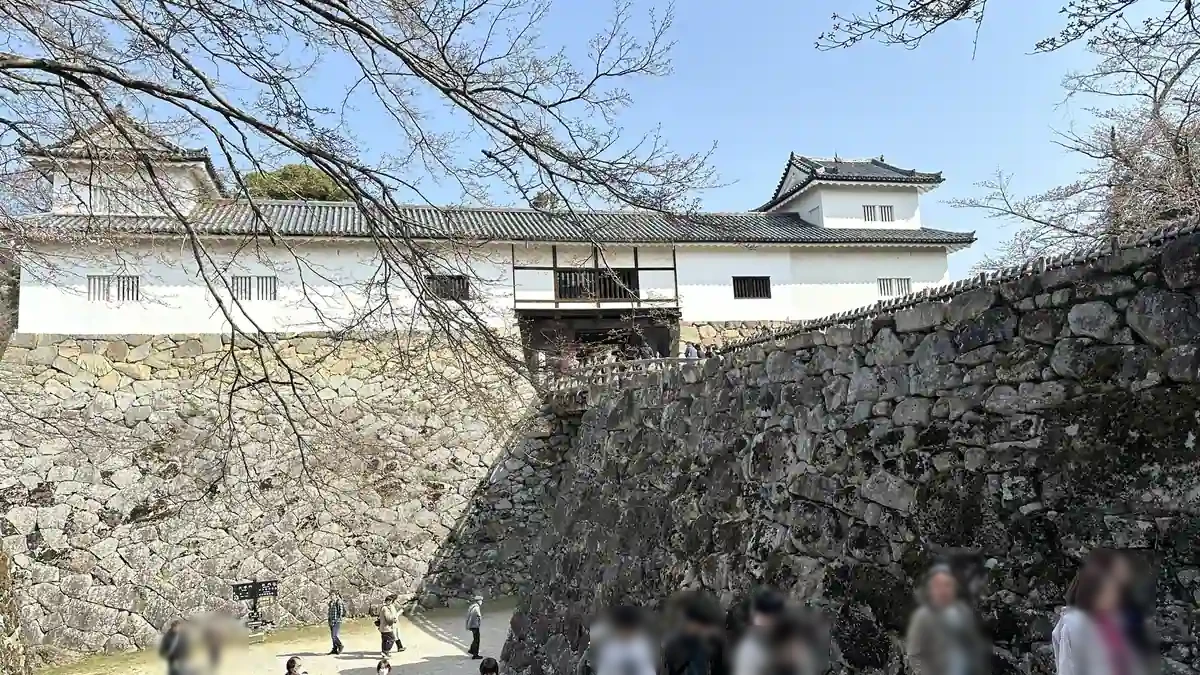
Across the bridge is Tenbin-yagura, a gatehouse with a turret on each side of the central gate. The name comes from its shape, which resembles a tenbin, a balance scale. It is an Important Cultural Property and is thought to have been moved here from another castle. Inside, you can look down through the lattice windows at the corridor bridge and the town.
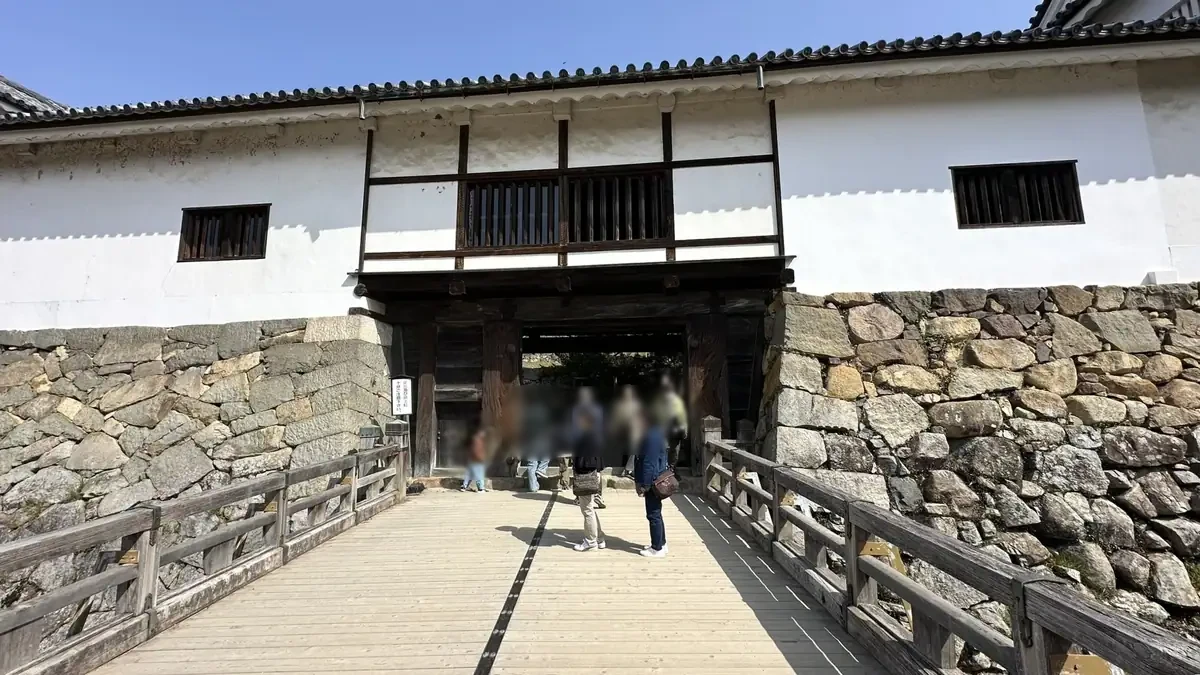
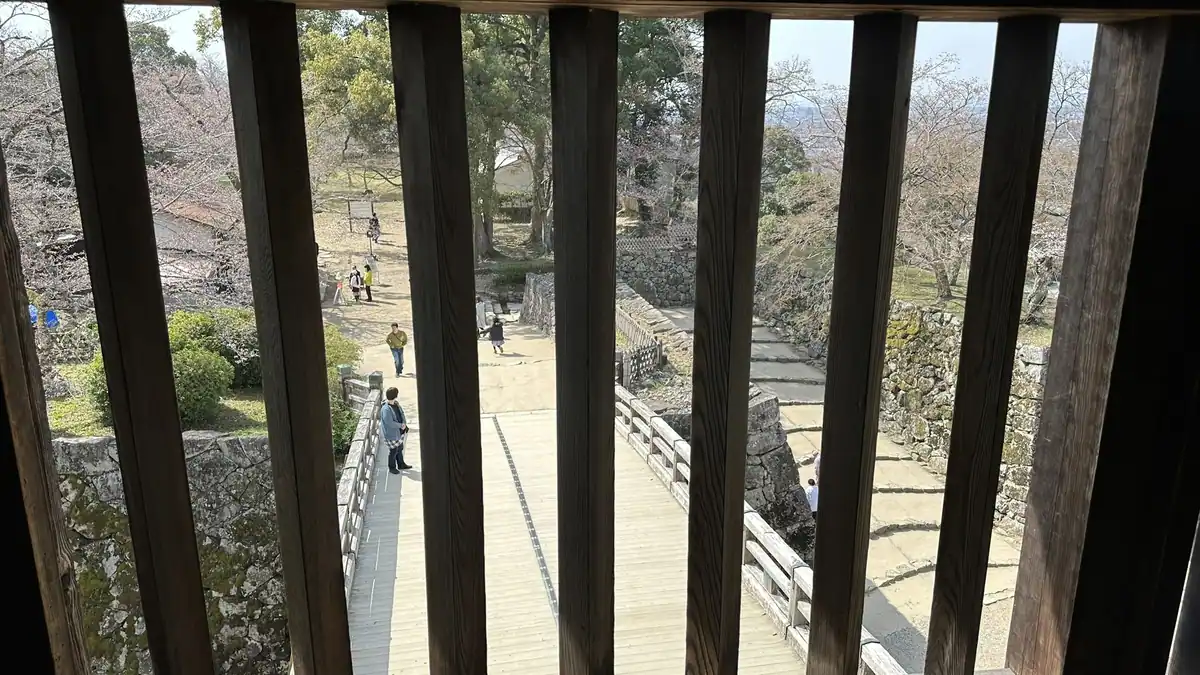
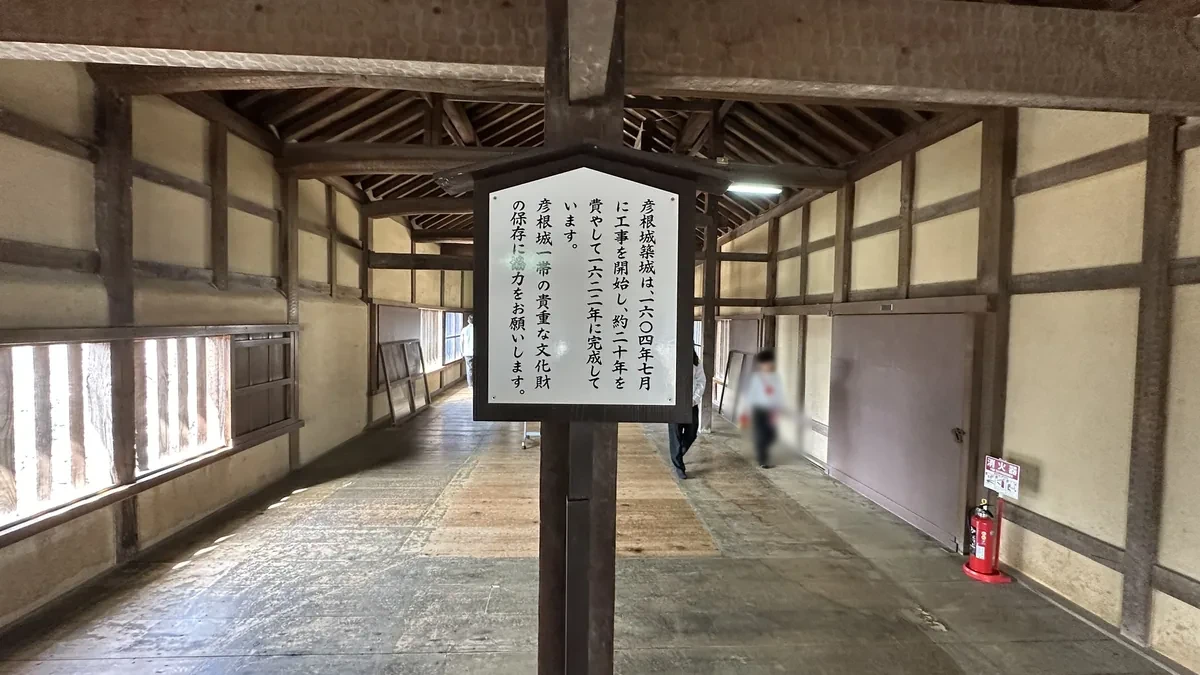
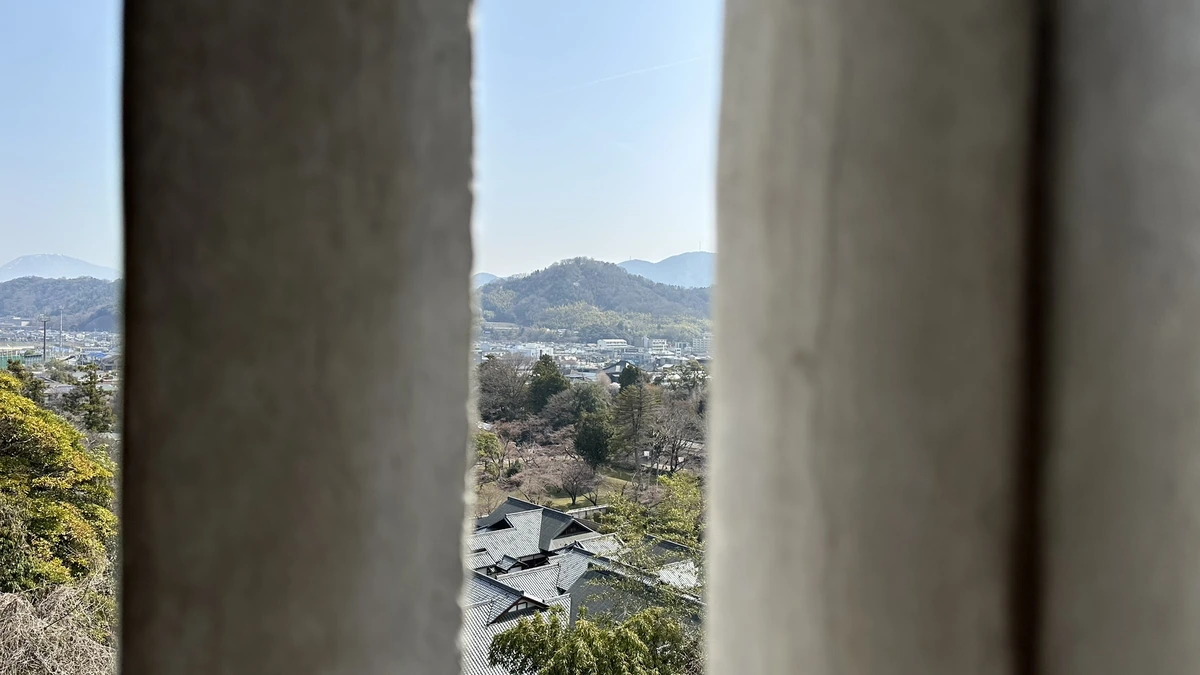
Tap a photo to enlarge it
You take off your shoes to go inside Tenbin-yagura. The wooden-floored rooms are lined with thick posts, and you can see right up to the roof beams.
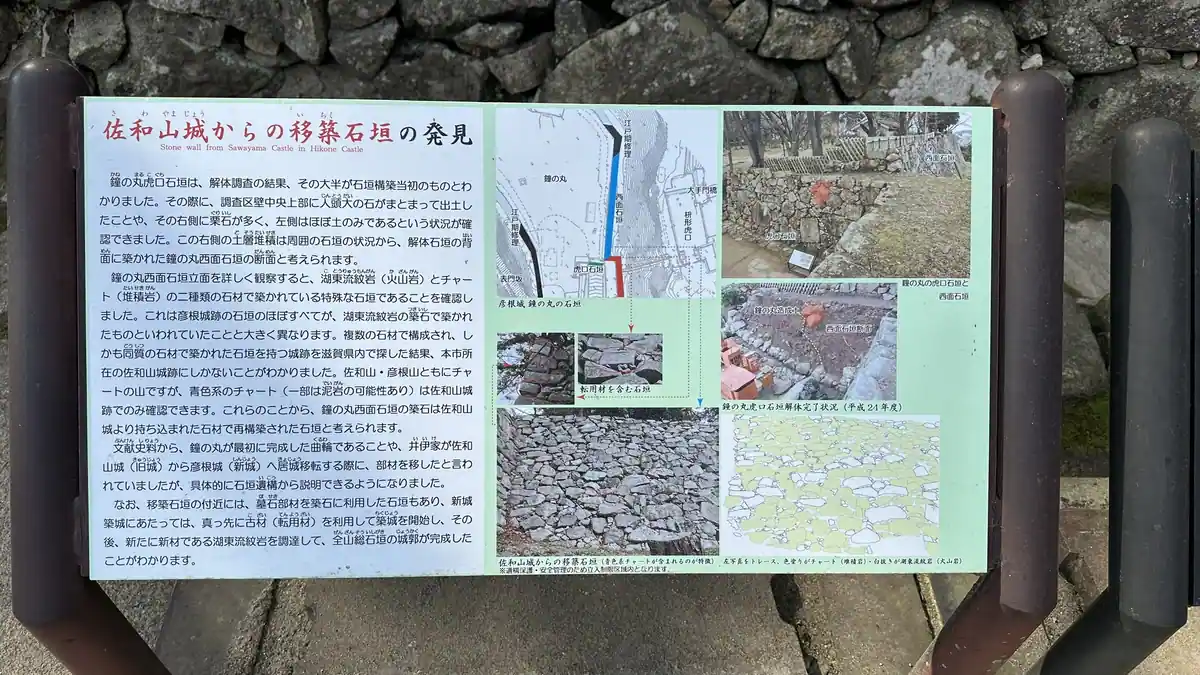
On the Kanenomaru, the enclosure facing the bridge, a survey of its west stone wall was carried out after the wall at its entrance was taken apart for study. According to the signboard on site, the stones of this west wall are thought to have been brought from the Sawayama Castle ruins. That doesn't mean all the walls around it came from Sawayama.
The time bell and Chosho-an
Tap a photo to enlarge it
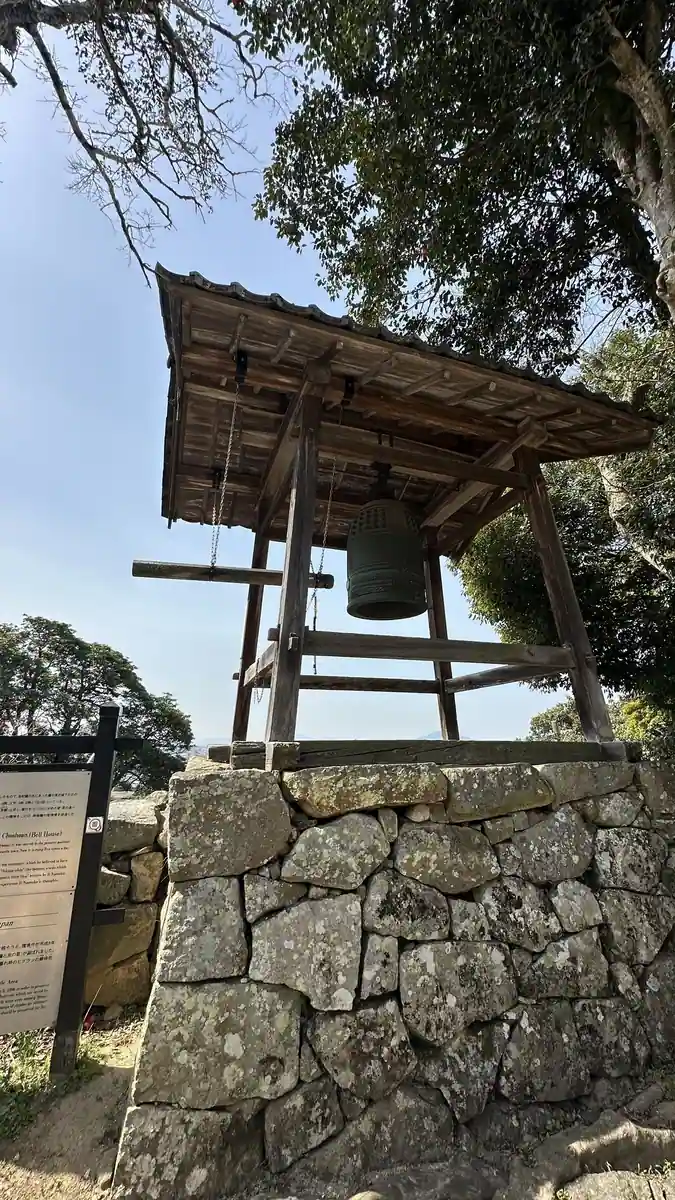
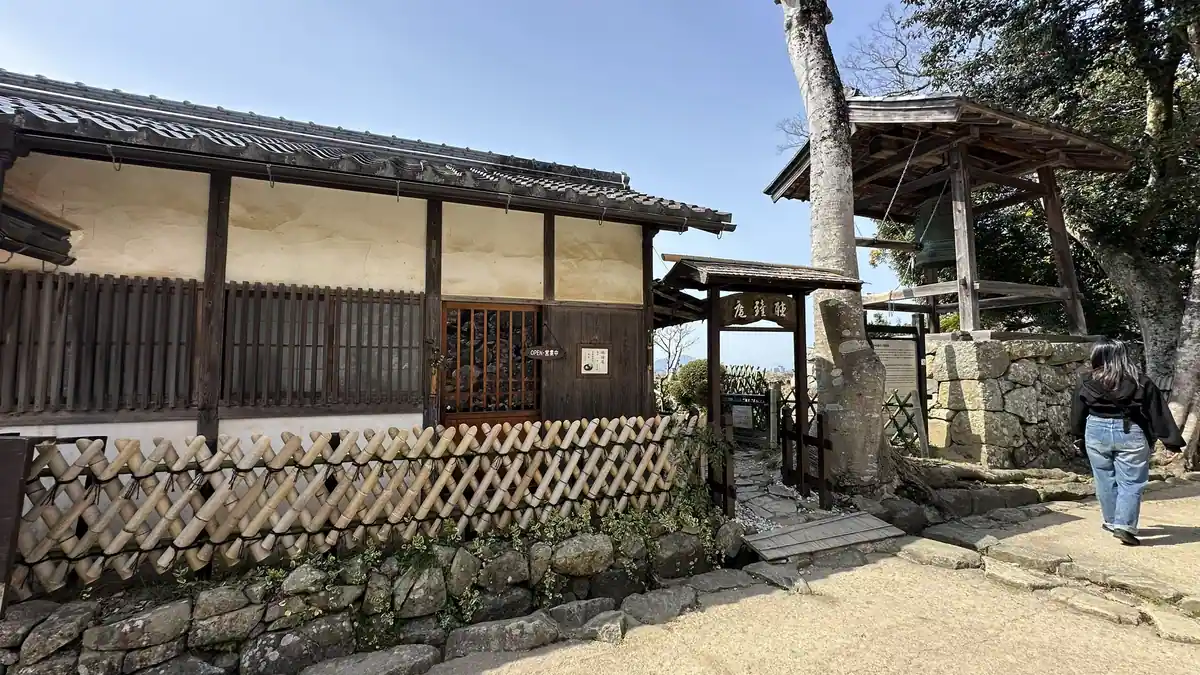
On the way from Tenbin-yagura to the main enclosure, just before Taikomon gate, a bell stands on a rise. It was rung to tell the time to the town below, and according to the information on site it was chosen as one of the 100 Soundscapes of Japan. Next to it is Chosho-an, a teahouse, open 9:00–16:00.
The National Treasure keep and the views from the top
The keep: an original National Treasure from the early 1600s
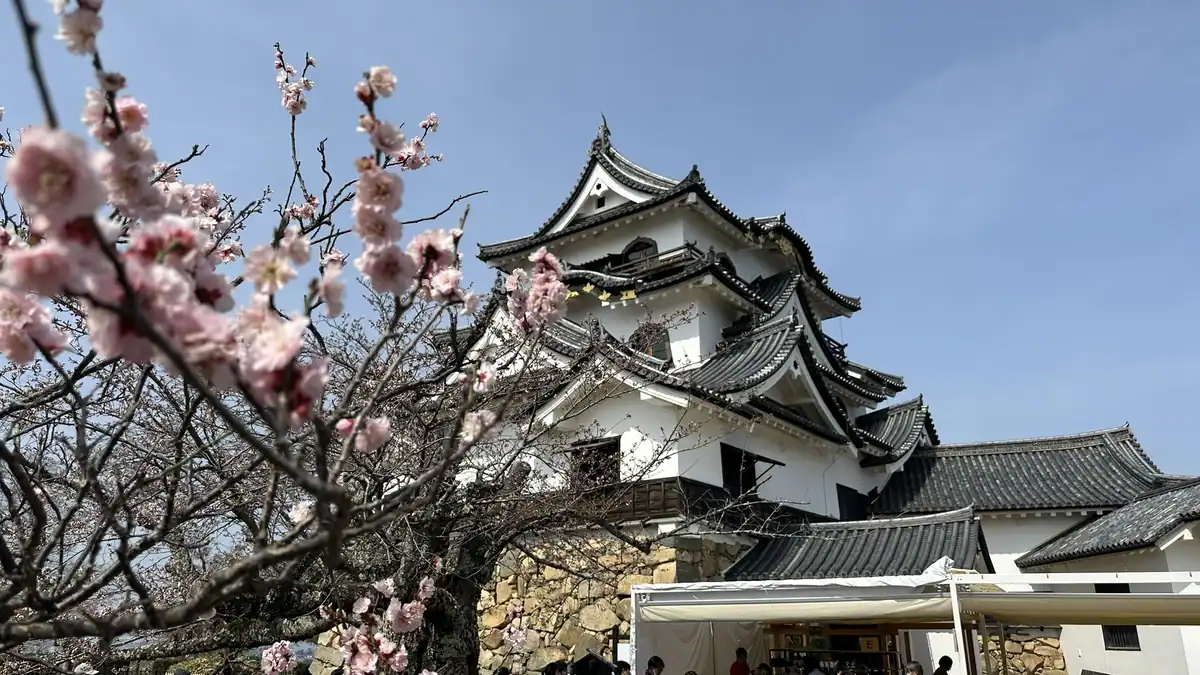
Step into the square of the main enclosure and the front of the keep is right in front of you. The three-story keep isn't large, but its roofs carry gables of several different shapes, from plain triangular gables to the curved karahafu, which give it a busy, ornate look. It is said to have been moved here from Otsu Castle, and it was designated a National Treasure in 1952.
You take off your shoes at the entrance. Steep, narrow stairs take you from floor to floor up to the top. I spent about 20 minutes inside. It was a Saturday in spring, and there was a line of people waiting outside to go in.
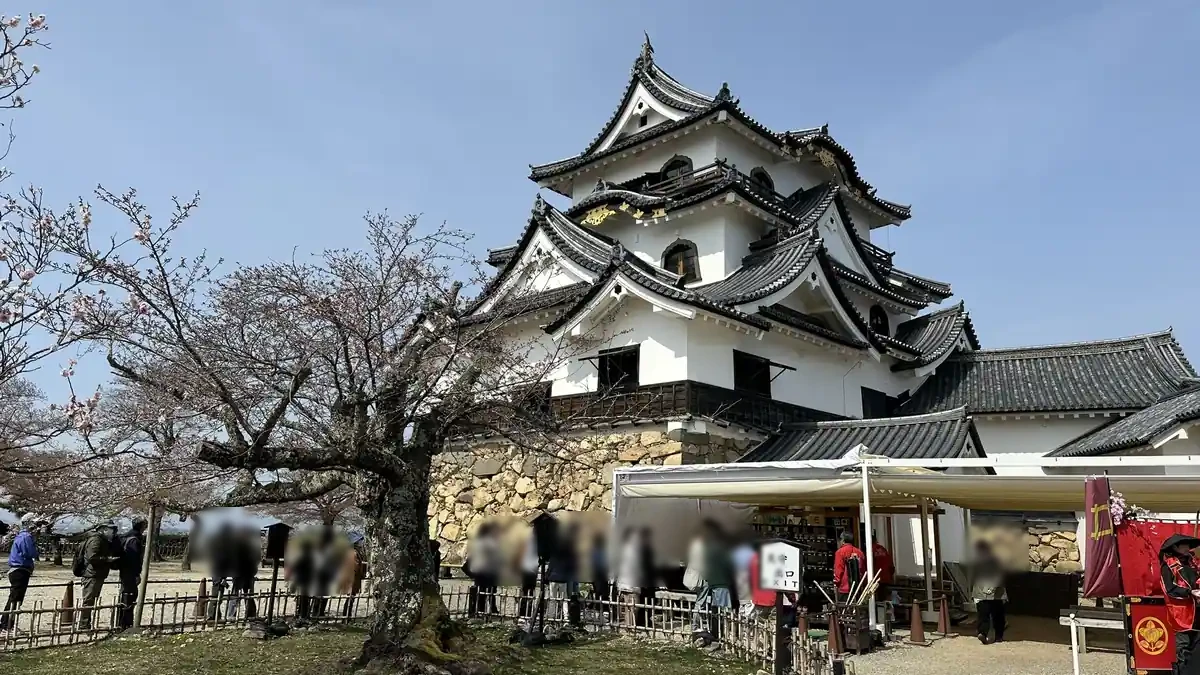
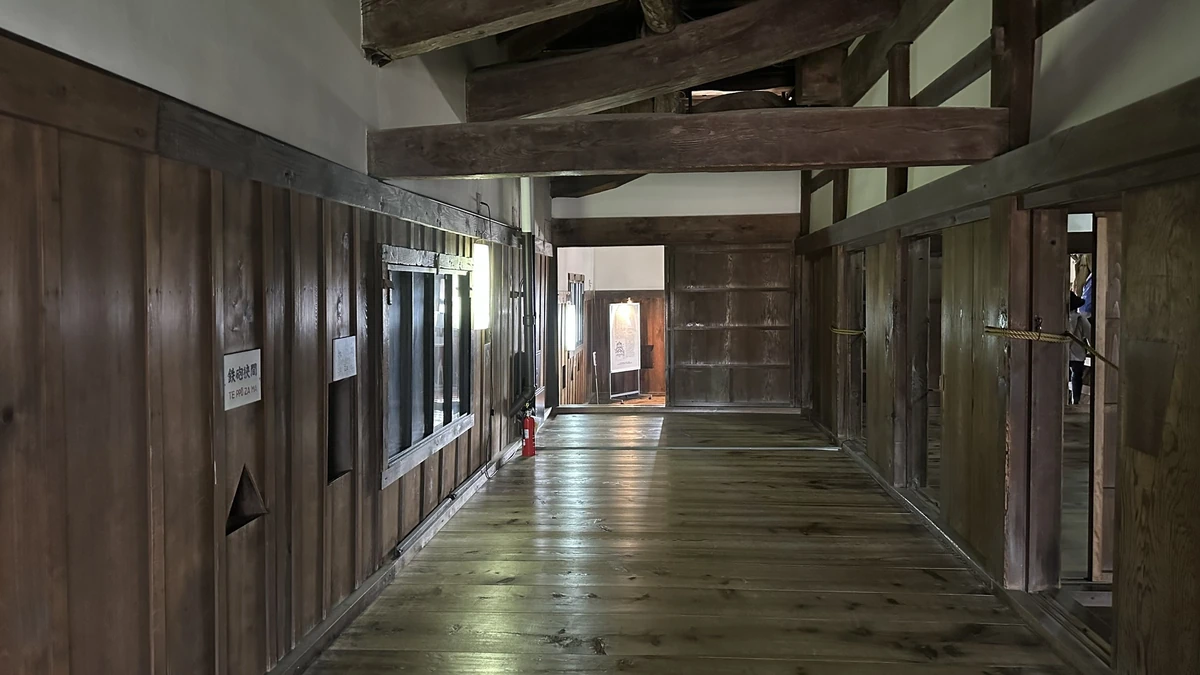
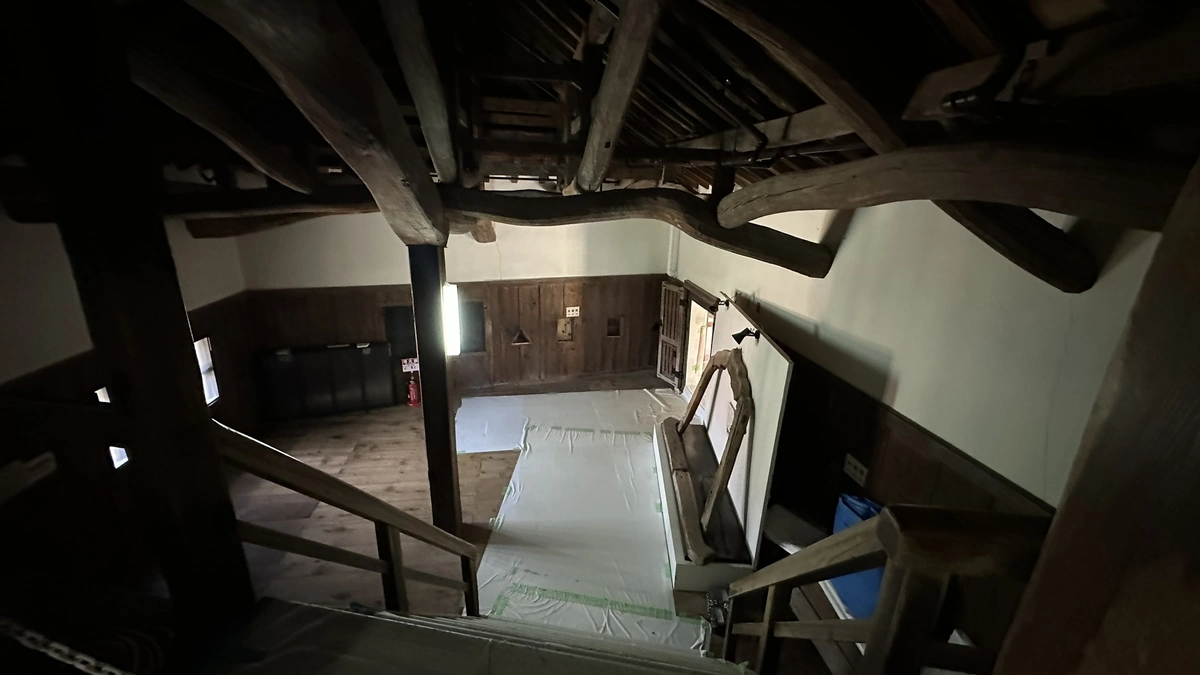
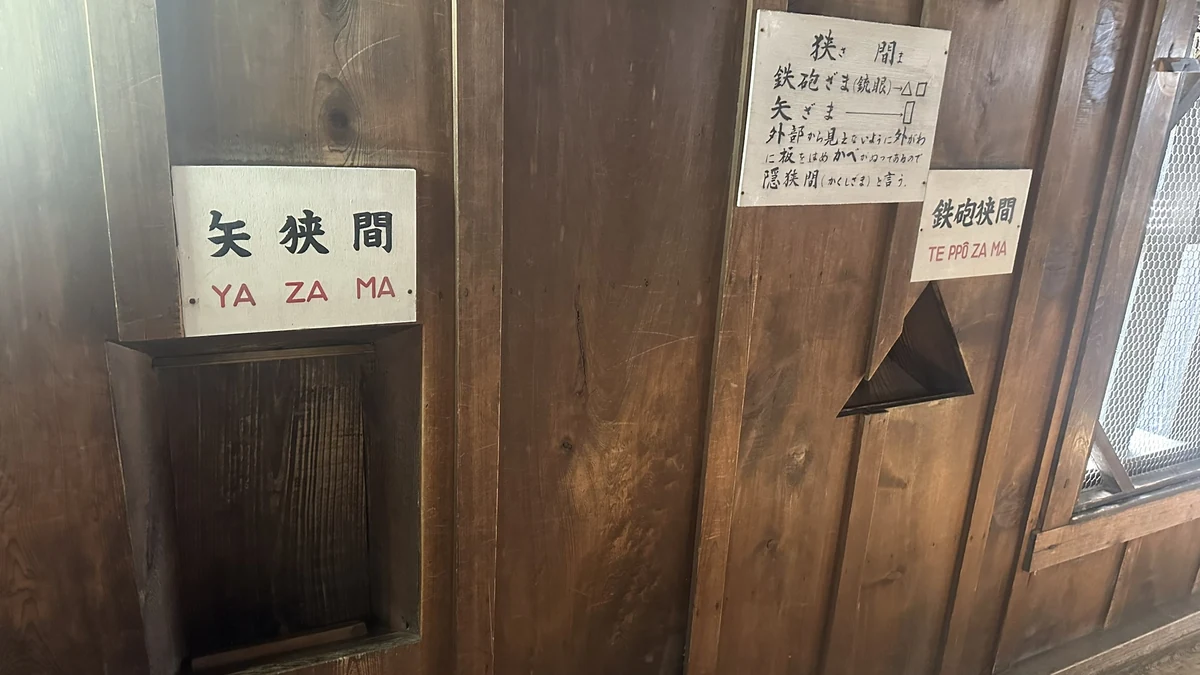
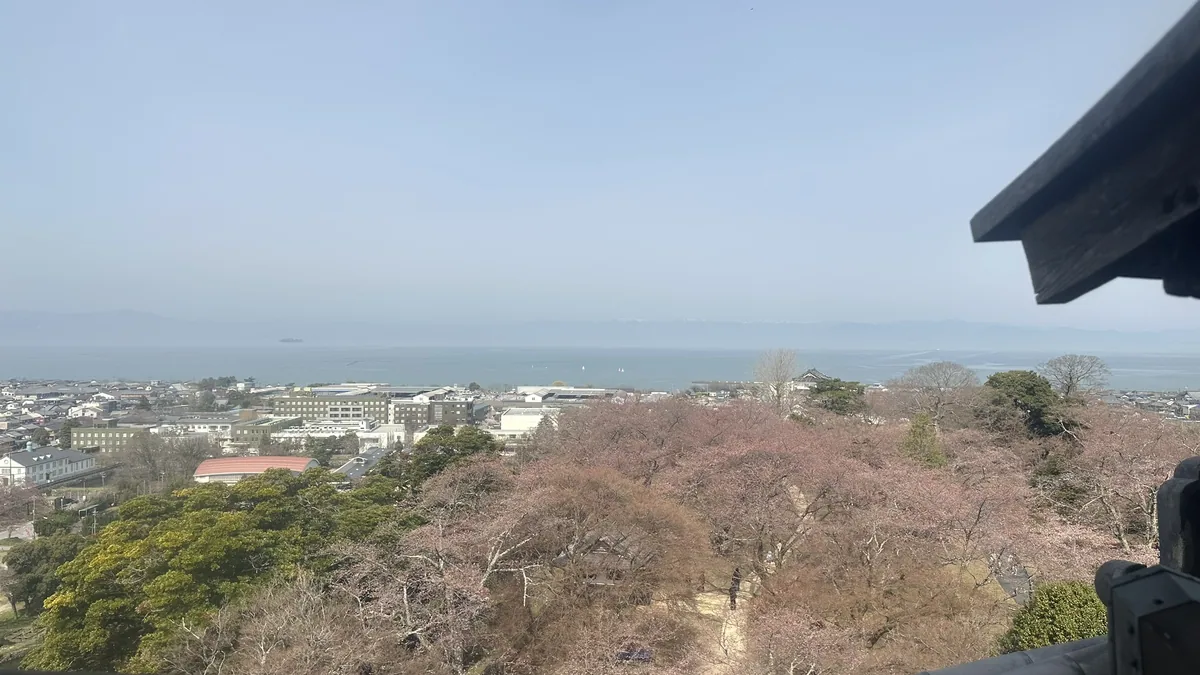
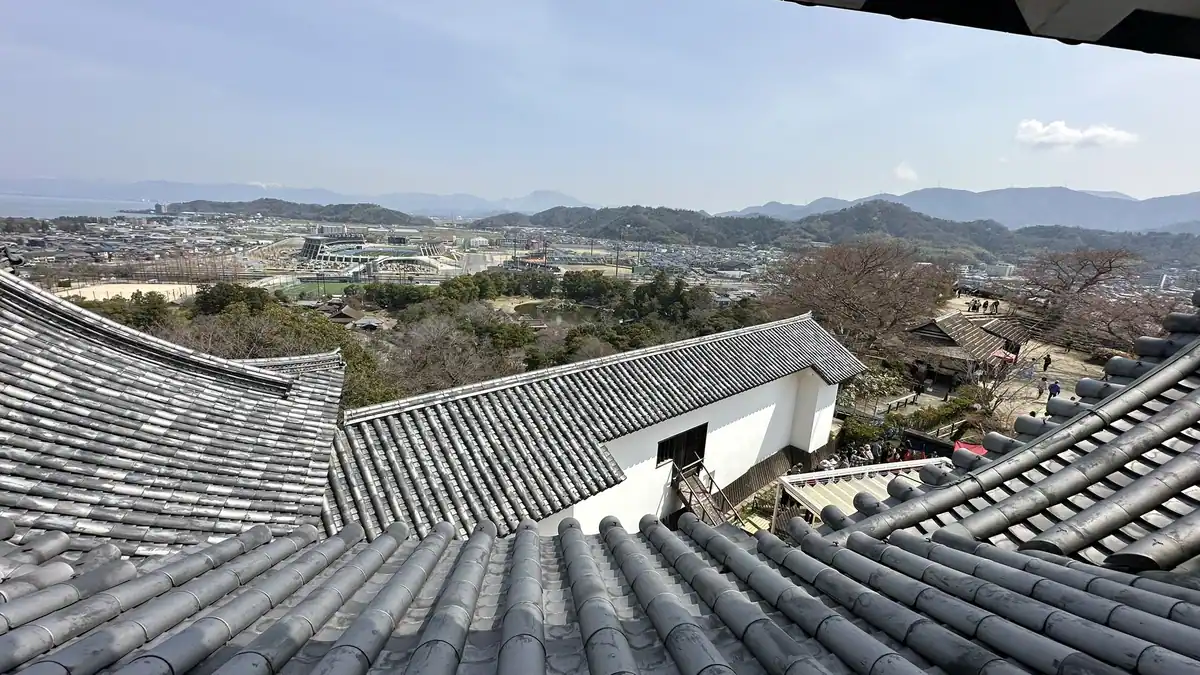
Tap a photo to enlarge it
The keep's wooden walls have openings called sama, for shooting arrows and guns. Check the explanation board inside to see the different shapes, then look for the real ones; they're easy to miss otherwise. From the windows you can see the town and, beyond it, the water of Lake Biwa.
Tsukimidai: Lake Biwa and the town below
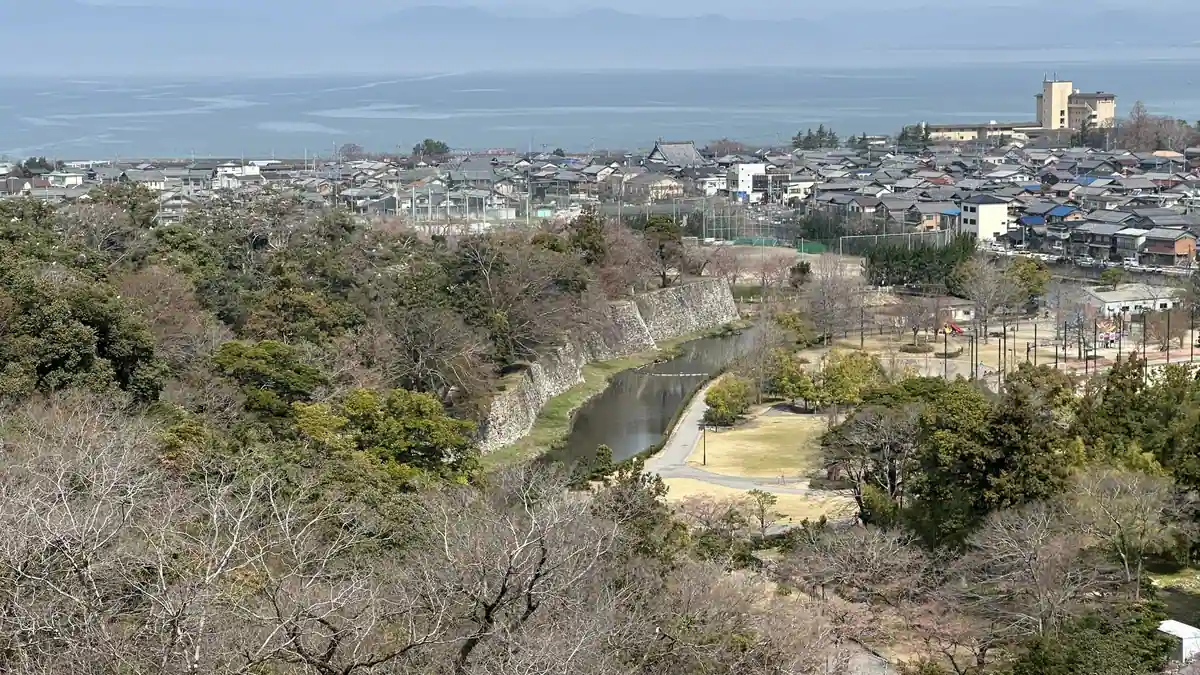
East of the keep, where the Tsukimi turret once stood, the Tsukimidai lookout gives a wide view over the moat and green spaces below and Lake Biwa beyond the town. Look straight down and you'll see a second tier of stone wall below the high wall you're standing on. Stop here after you come out of the keep.
17 April 2024: meeting Hikonyan in front of the keep
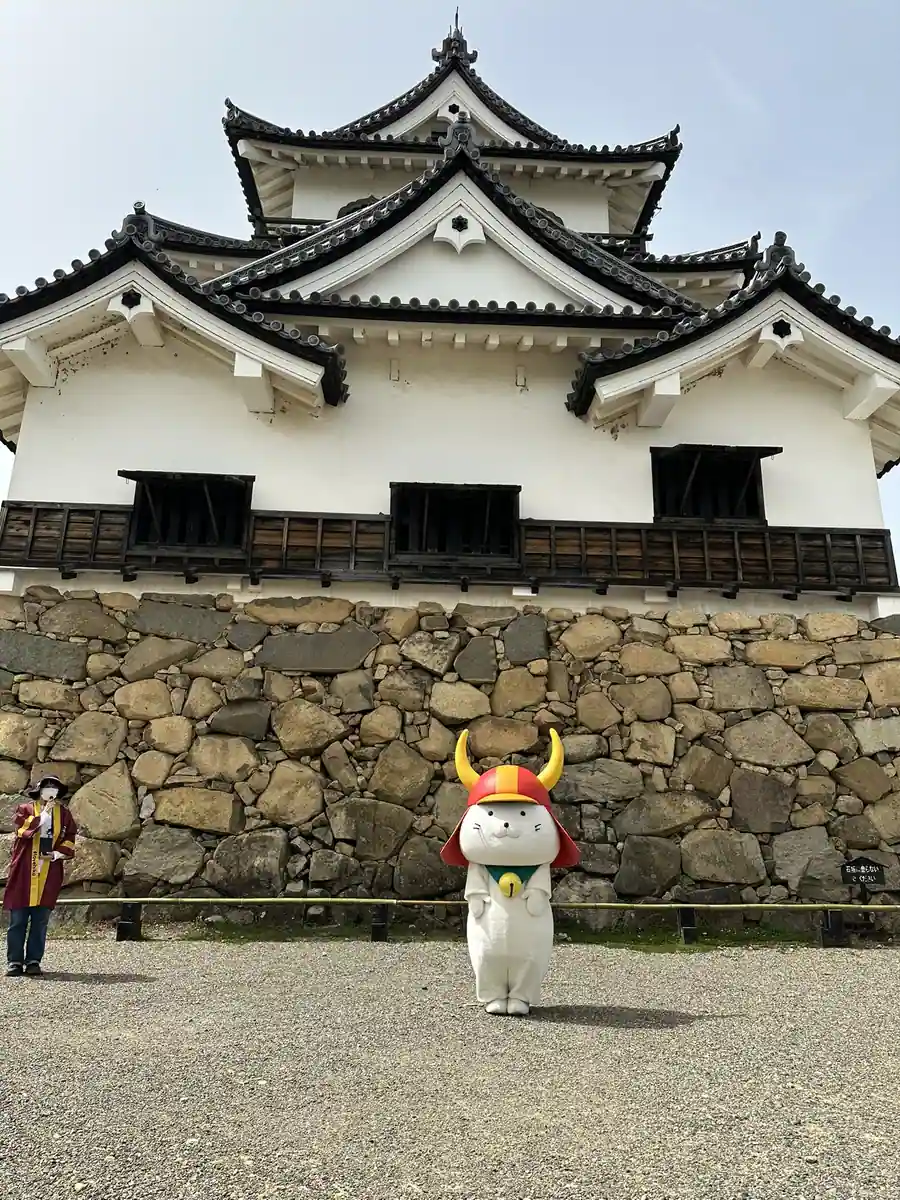
I took this photo on a different trip from my 2025 visit. On 17 April 2024 I saw Hikonyan in the square in front of the keep at around 13:30, and I didn't have to wait. Hikonyan is a white cat in a red samurai helmet and Hikone's official mascot. The times and places change with the weather and other factors, so check the official information on the day (the basic schedule is in the planning guide).
From Taikomon to the western enclosure: turrets and walls beyond the keep
Taikomon-yagura: the gate to the main enclosure
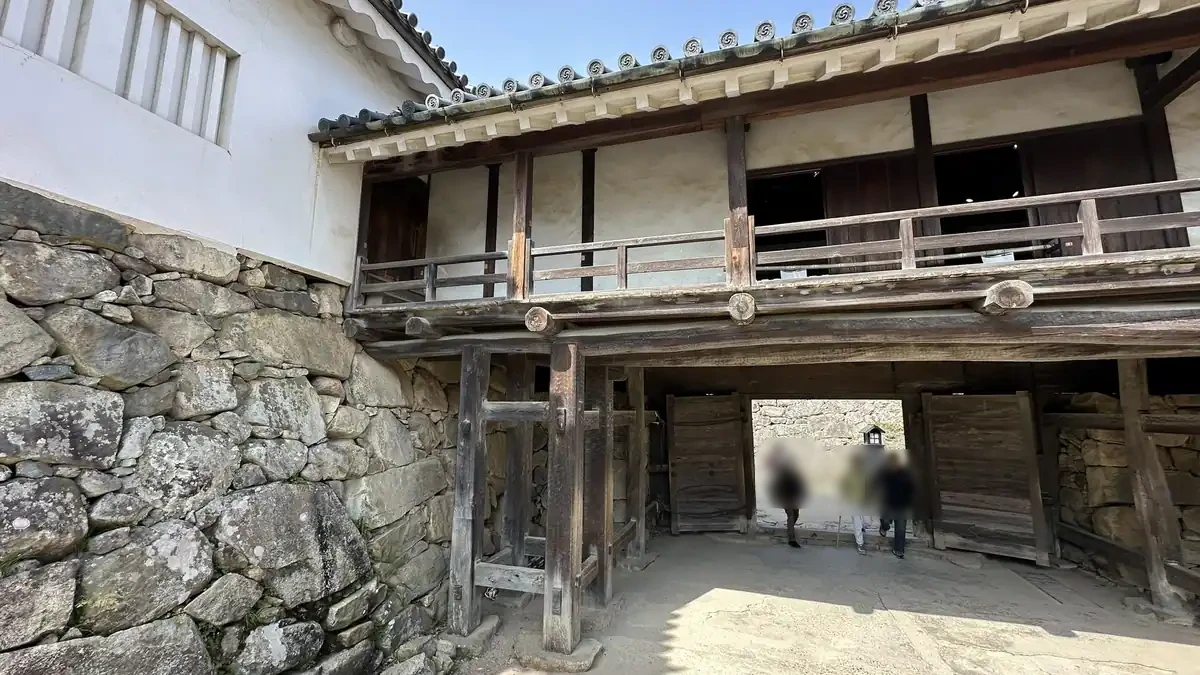
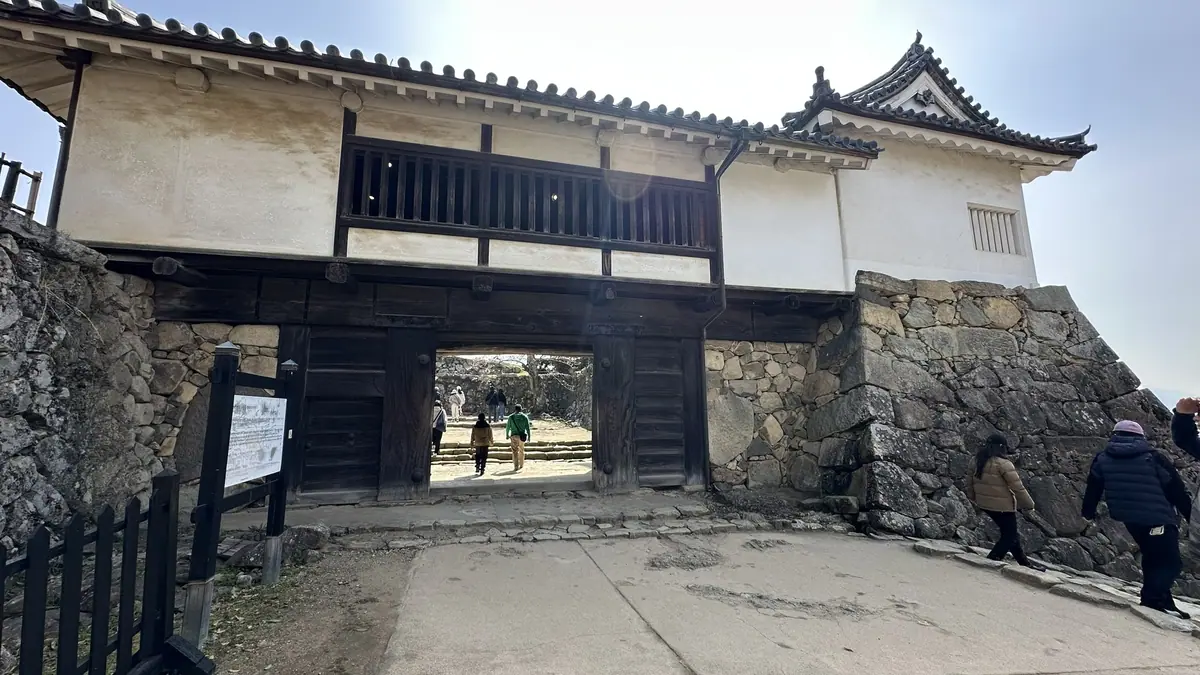
This gatehouse guards the main entrance to the main enclosure. Its name is said to come from a taiko drum kept here for signals within the castle. A survey during dismantling and repair showed that it was a gate moved here from another castle. The side facing the path is closed with white walls, but if you look back from inside the main enclosure, you can see that the upper floor is open behind a wooden railing. The interior was open to visitors on the day I went.
Tap a photo to enlarge it
The Nishinomaru three-story turret: the enclosure beyond the keep
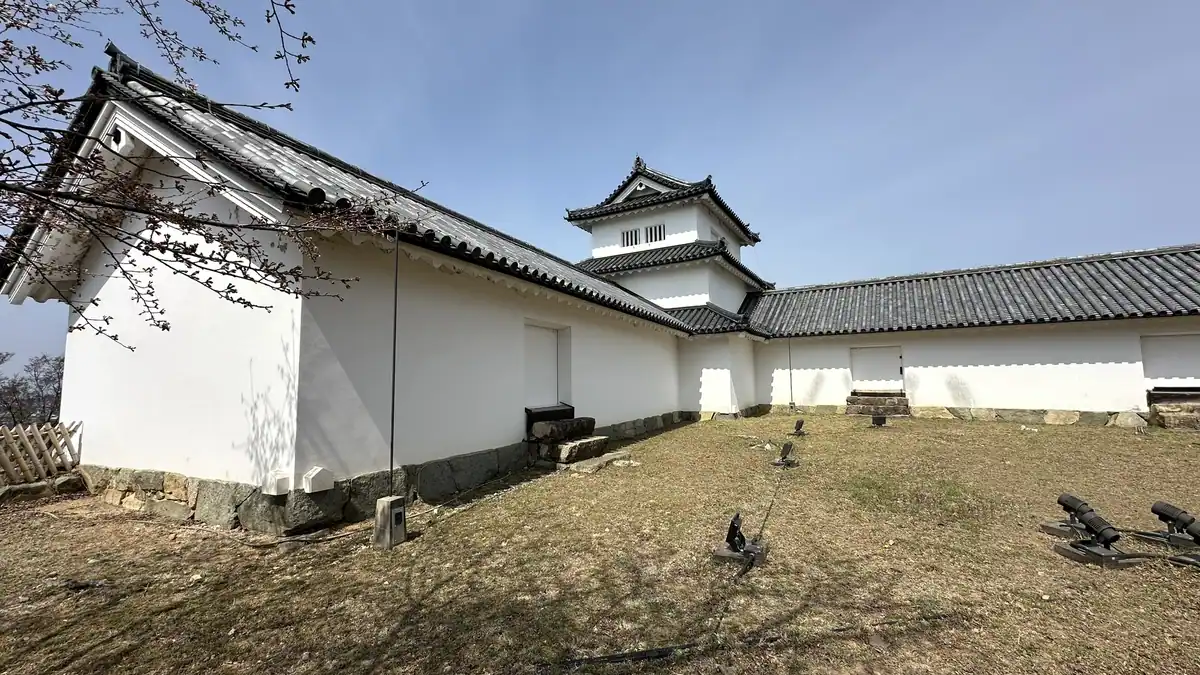
If you turn back after the keep, it's easy to miss, but beyond it the western enclosure (Nishinomaru) opens out with more turrets and stone walls. I hadn't read up on it much beforehand, and I was surprised how much there was beyond the keep. It was well worth the walk.
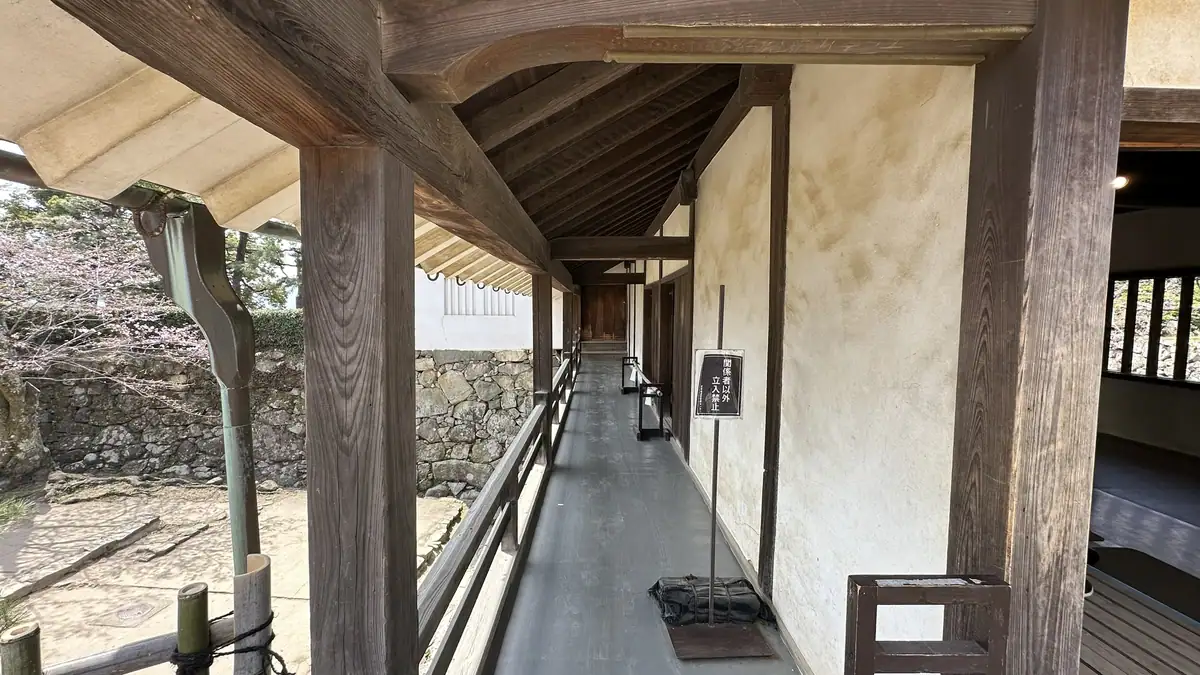
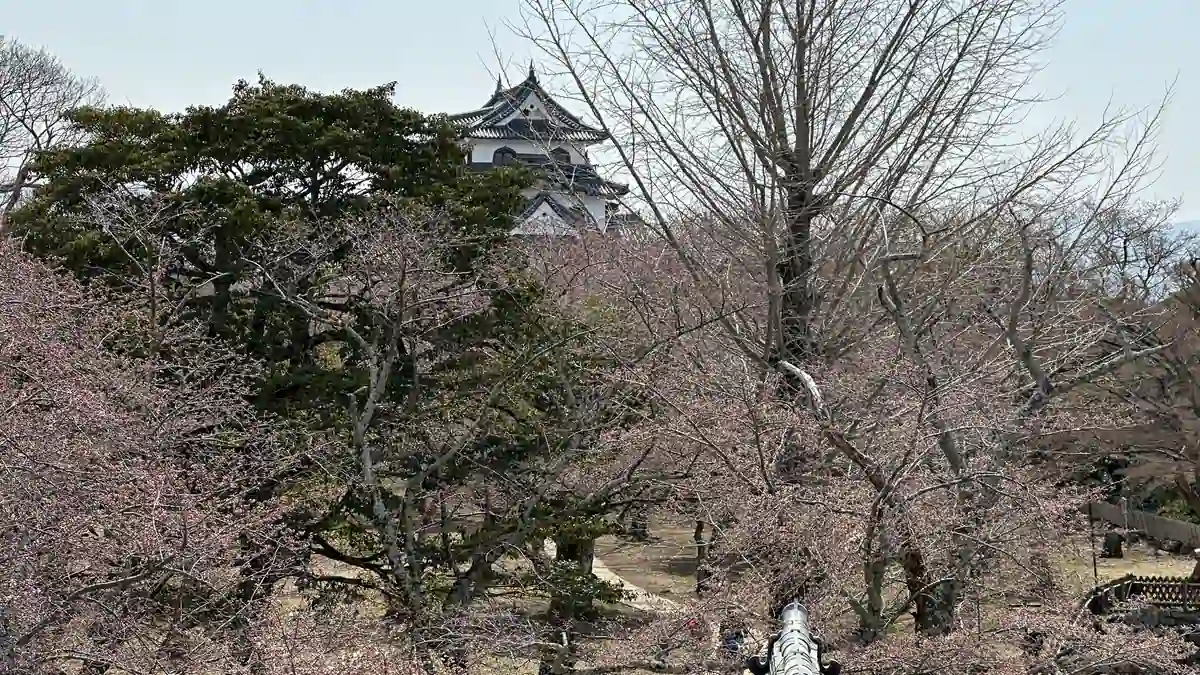
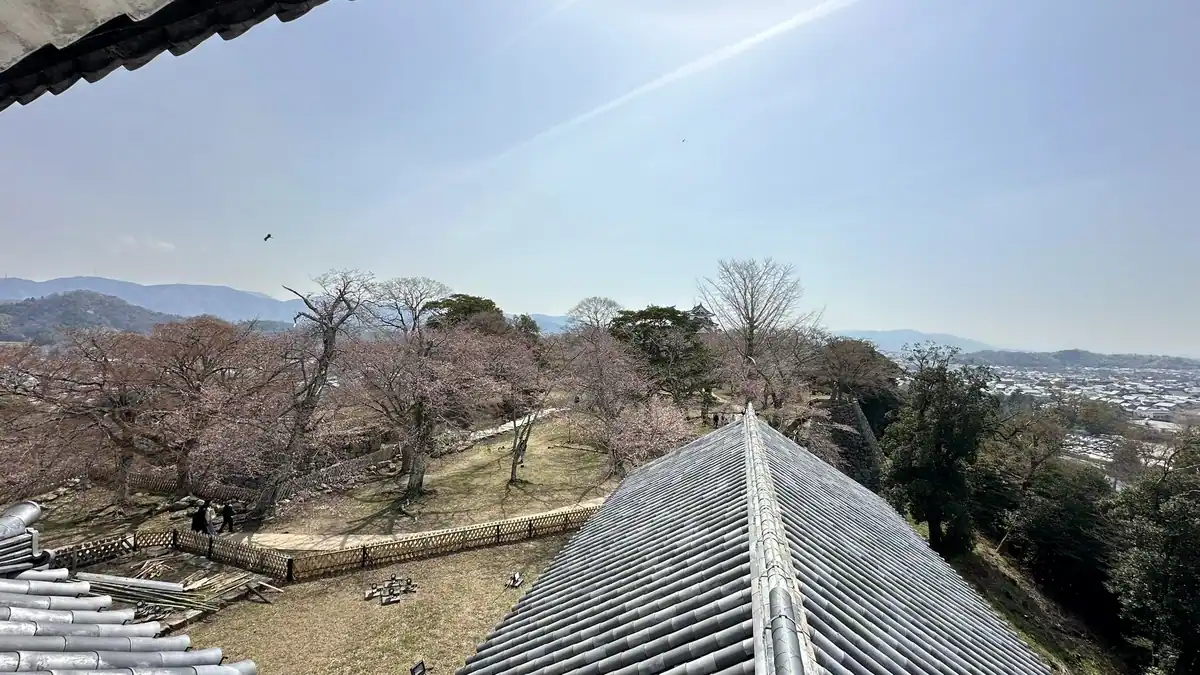
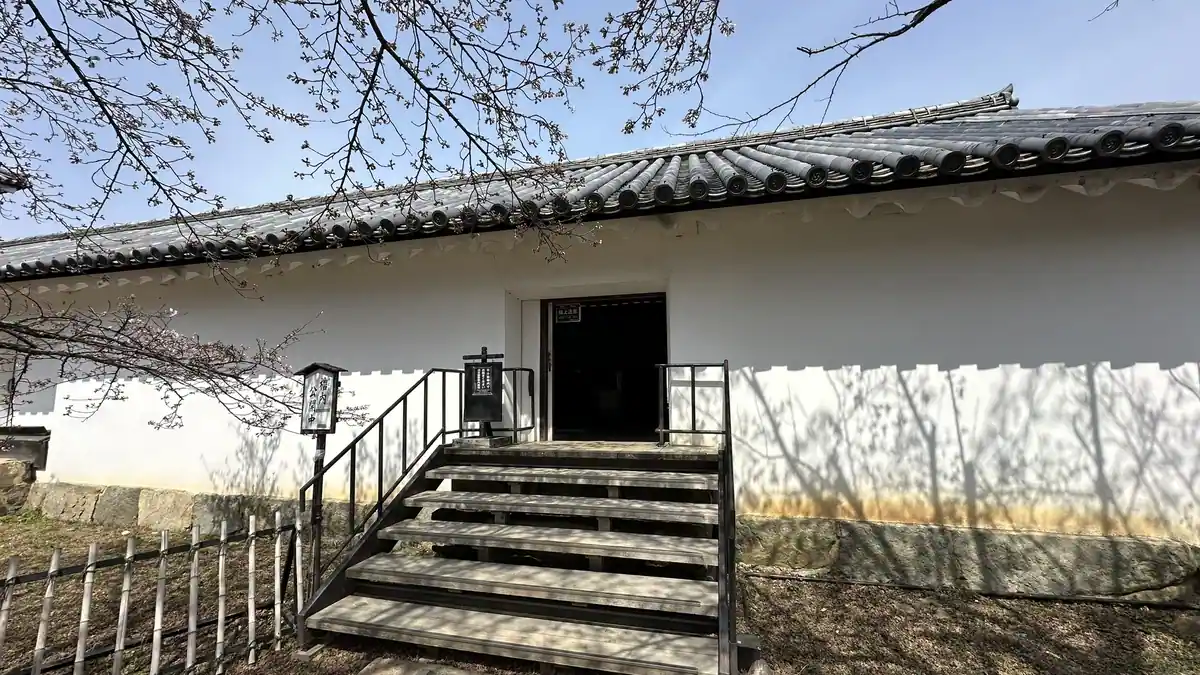
The three-story turret at the corner of the Nishinomaru guarded against attack from the rear of the castle, on the west side, and is thought to have been used to watch Lake Biwa in peacetime. Long wings extend from both sides, and inside you can walk through a long space of repeating beams and posts. Steep stairs lead up into the turret itself.
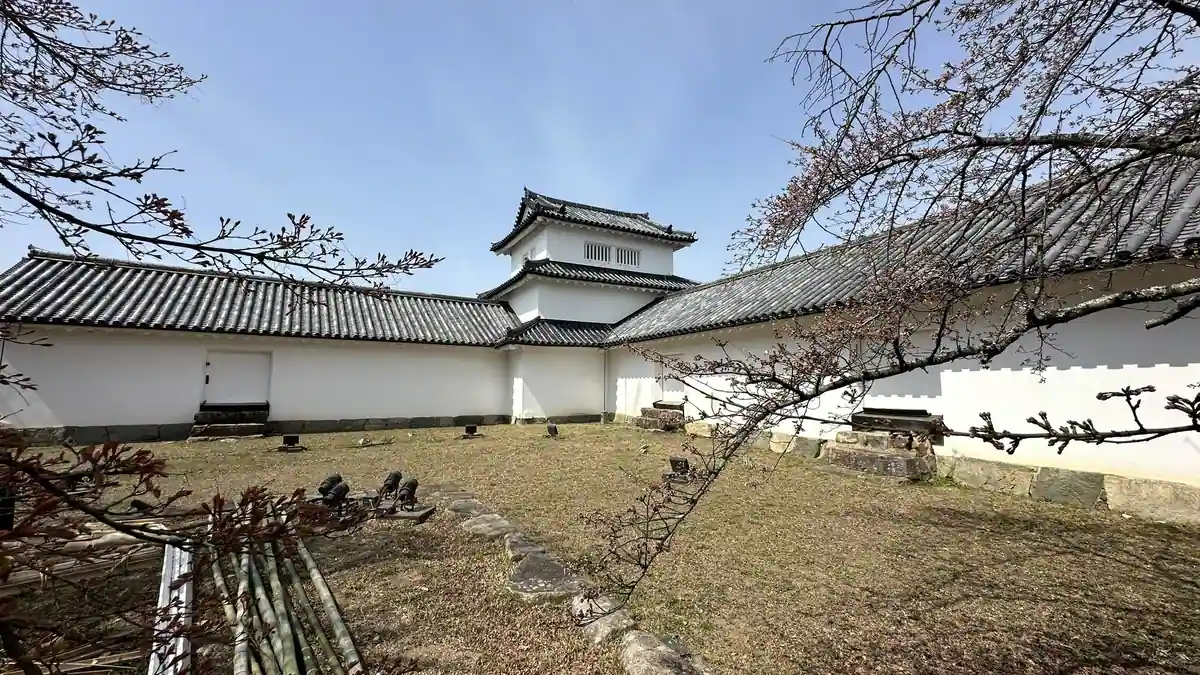
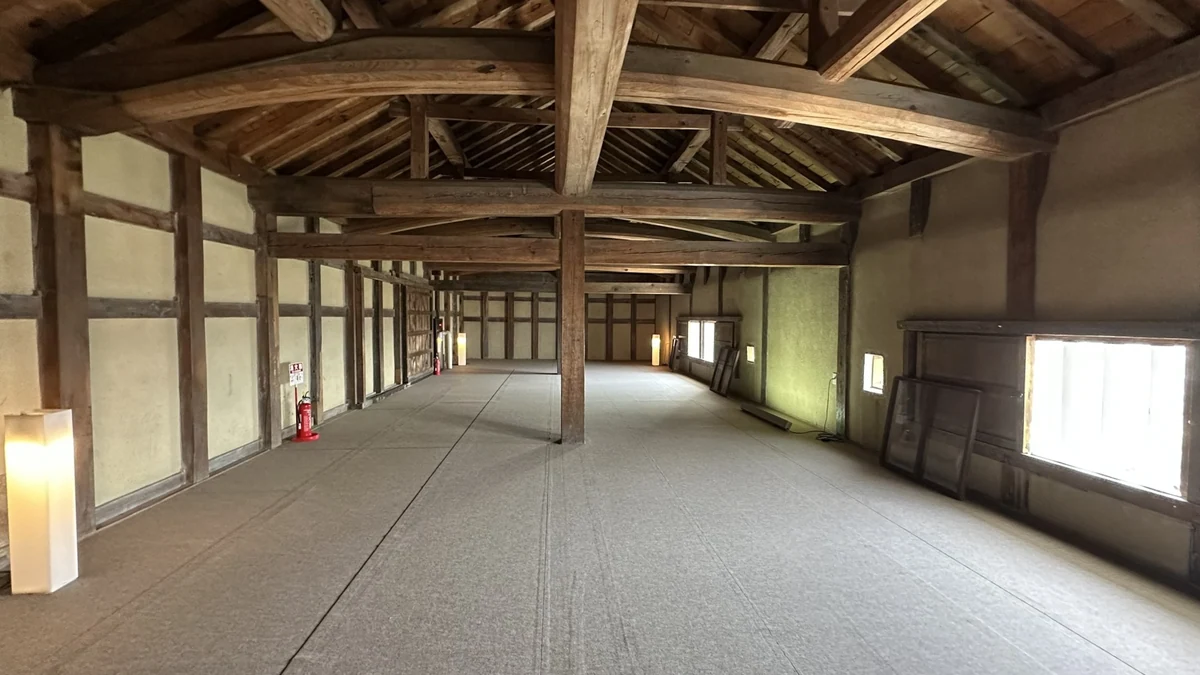
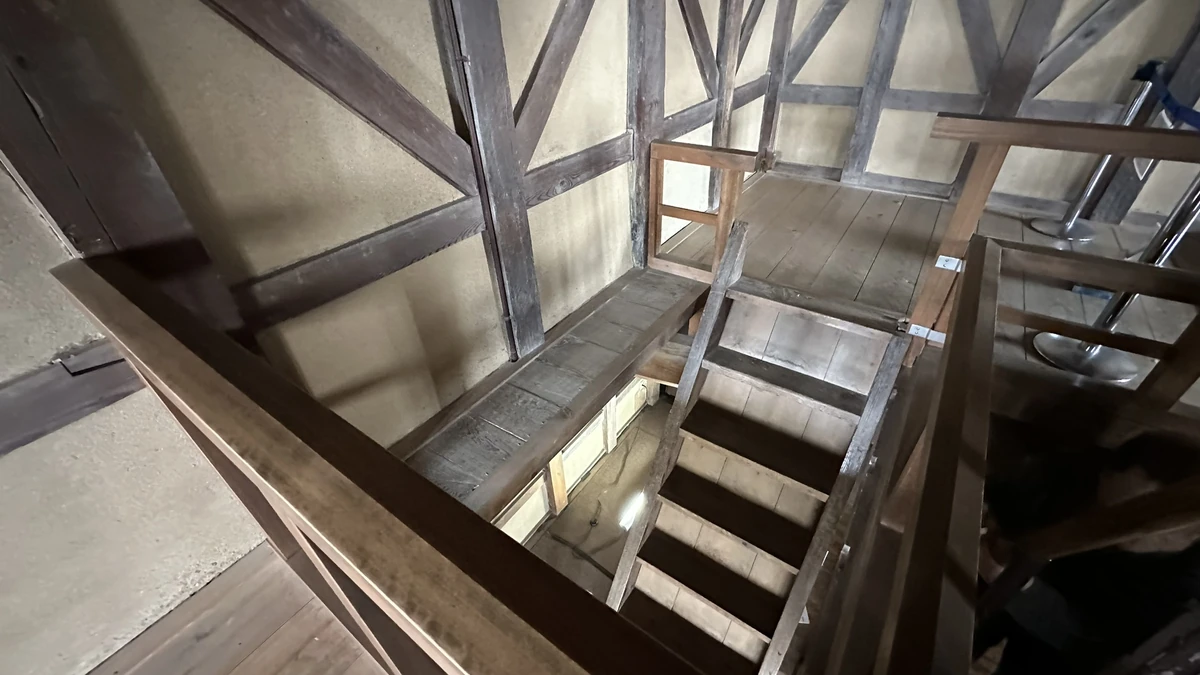
Tap a photo to enlarge it
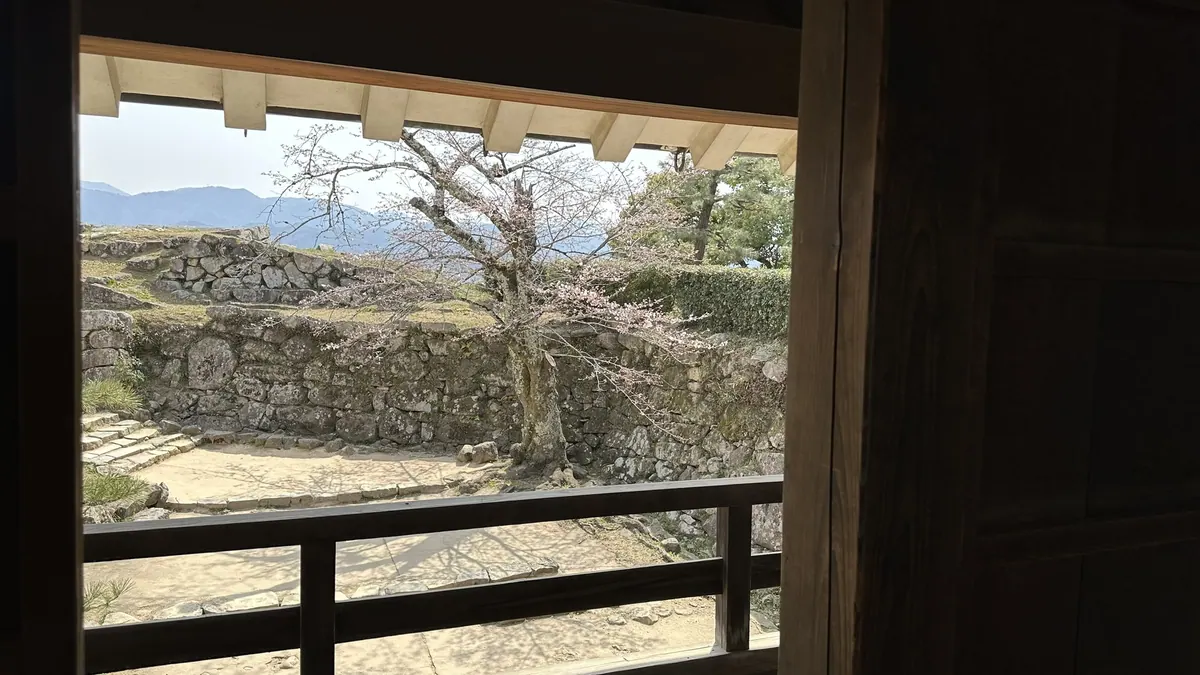
From the turret's windows you can see the top of the keep above the trees, which gives you a sense of how far the Nishinomaru is from the keep.
Down the Kuromon side to Rakurakuen and Genkyuen
Ido-kuruwa and the path down to Kuromon
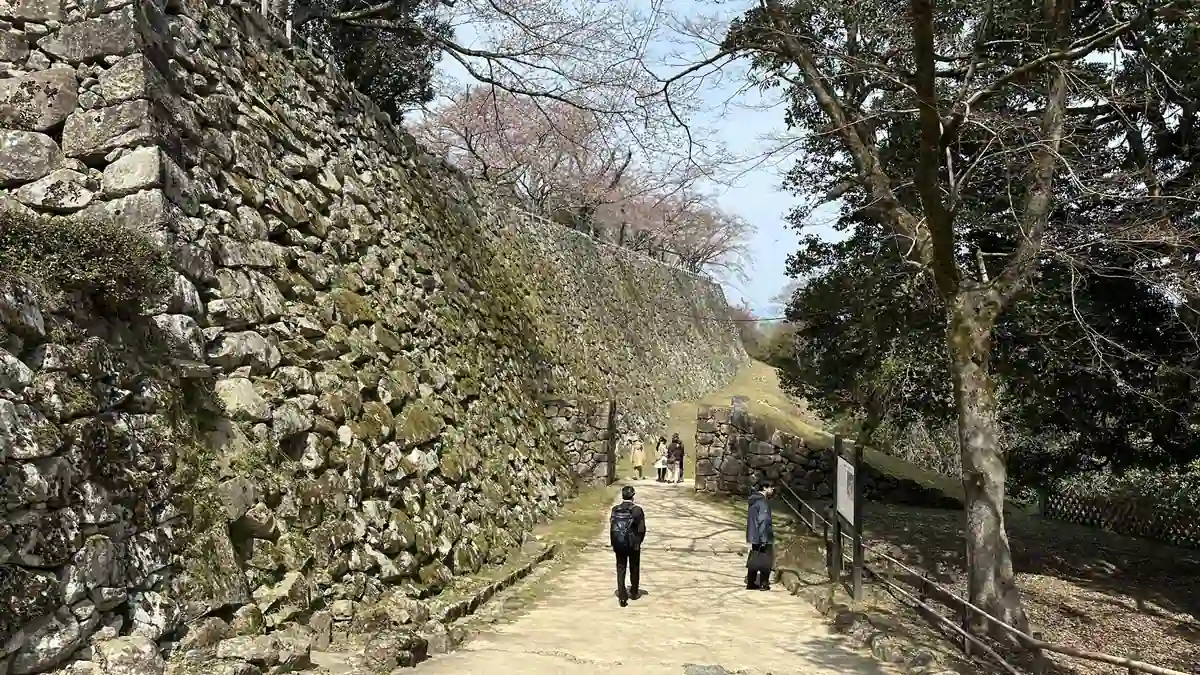
Near the Nishinomaru, a signpost points the way to the Kuromon gate and Genkyuen. The path down from there passes Ido-kuruwa, the "well enclosure," with tall stone walls running beside it, and you can see how the castle was built in terraces up the slope of the hill. It is downhill, so watch your step. At the bottom, pass between the stone walls of the former Kuromon gate and Rakurakuen and Genkyuen are close by.
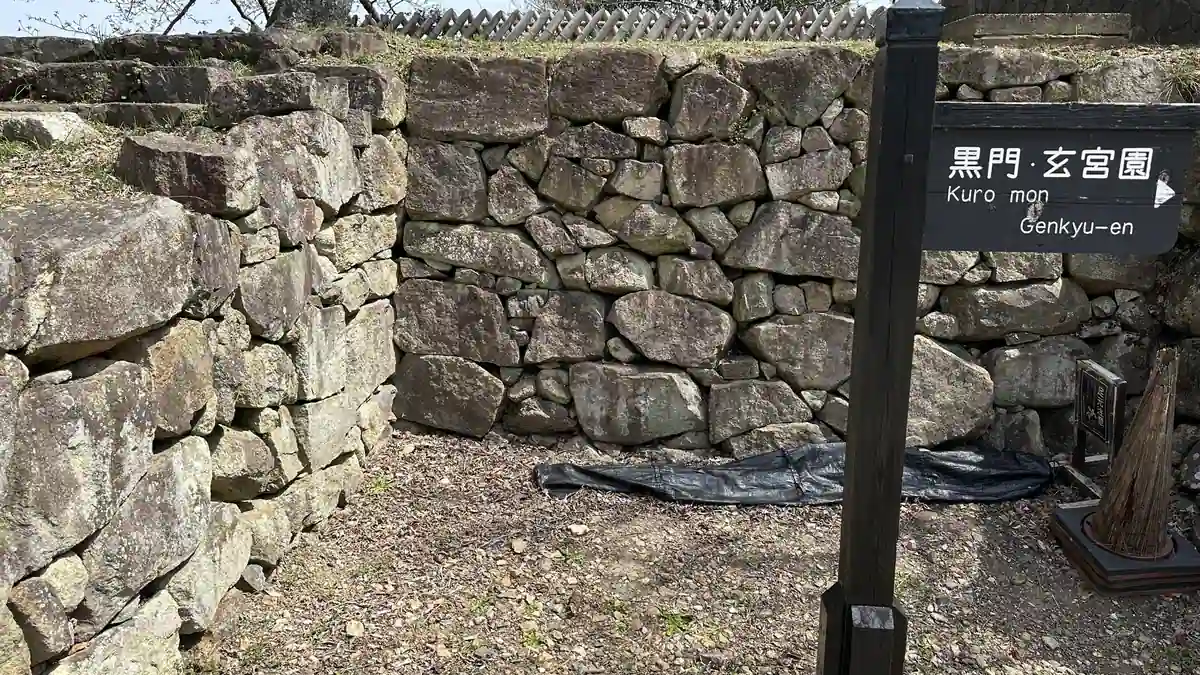
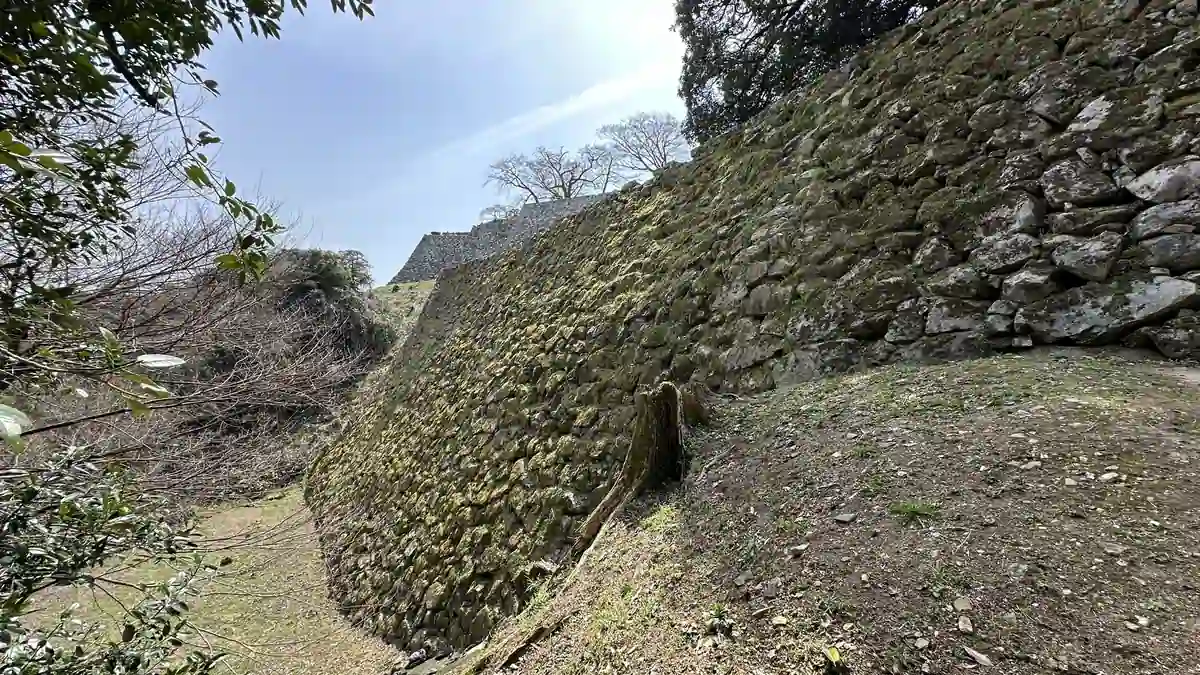
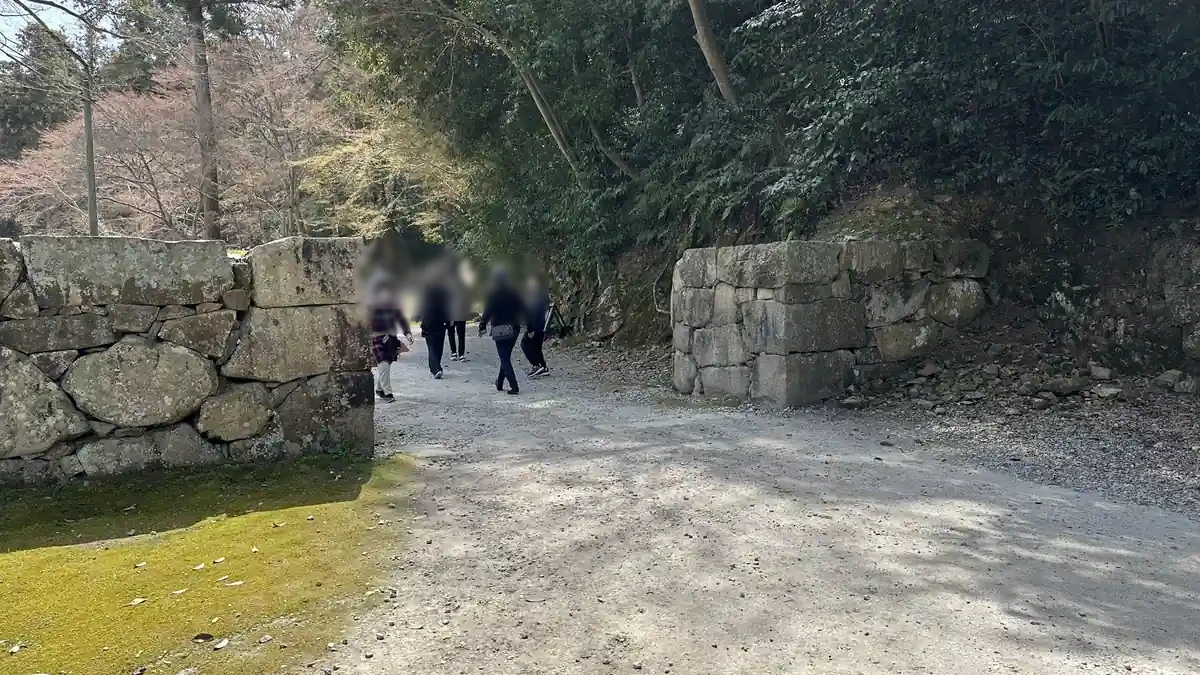
Tap a photo to enlarge it
Rakurakuen: the lord's secondary residence and Ii Naosuke's birthplace
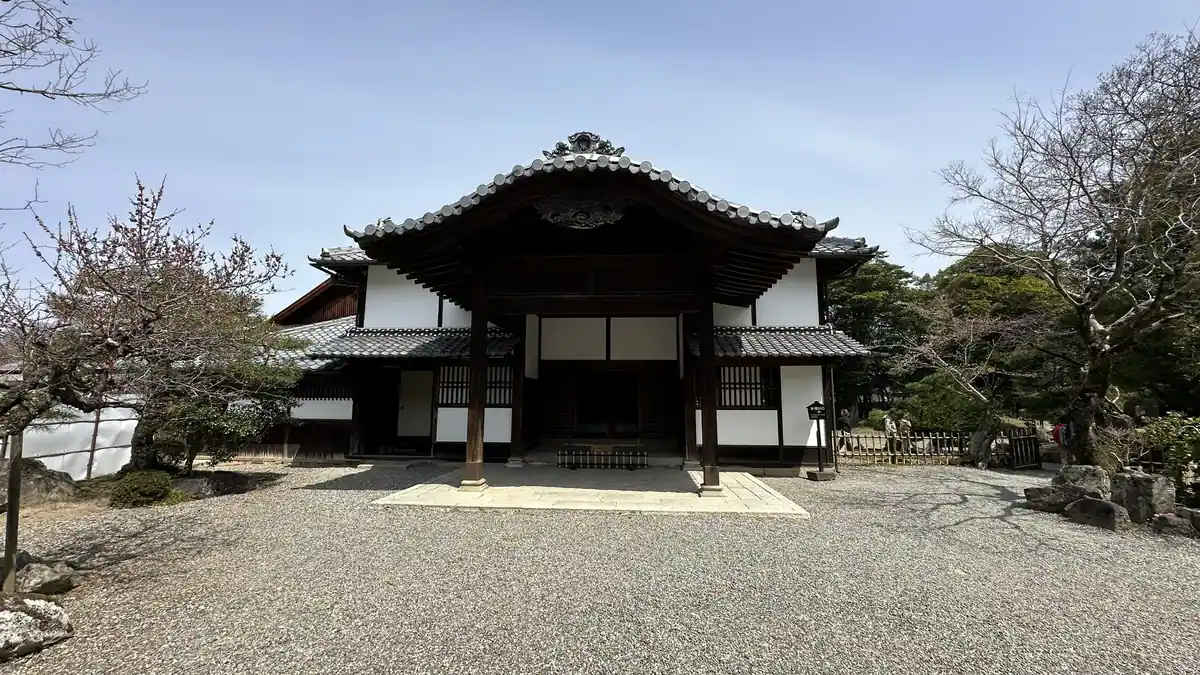
Rakurakuen is part of Keyaki Goten, a secondary residence said to have been built in 1677 by Ii Naooki, the fourth lord. Ii Naosuke, who later served as the shogunate's chief minister and signed the 1858 treaty that opened Japan to trade with the United States, was born here, and a stone marker in the grounds shows the spot. Conservation work on Keyaki Goten has been under way since fiscal 2005. Rakurakuen is free, and you view the buildings from the garden; the interiors are usually closed. I too looked at the rooms and garden from outside.
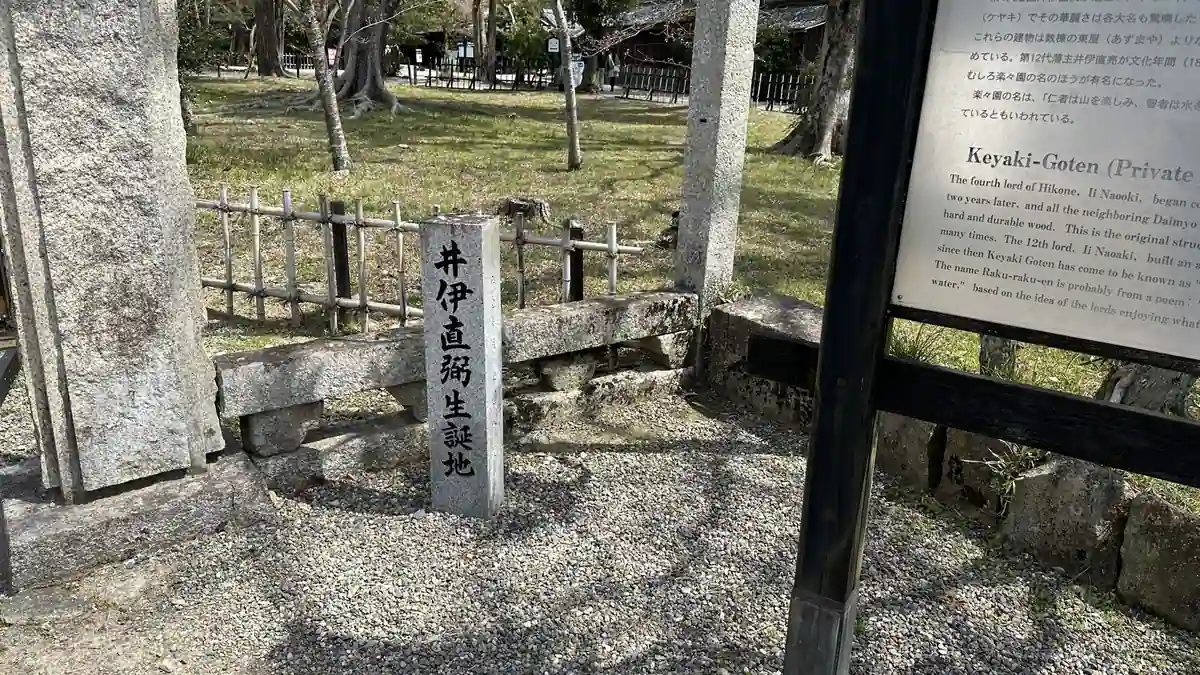
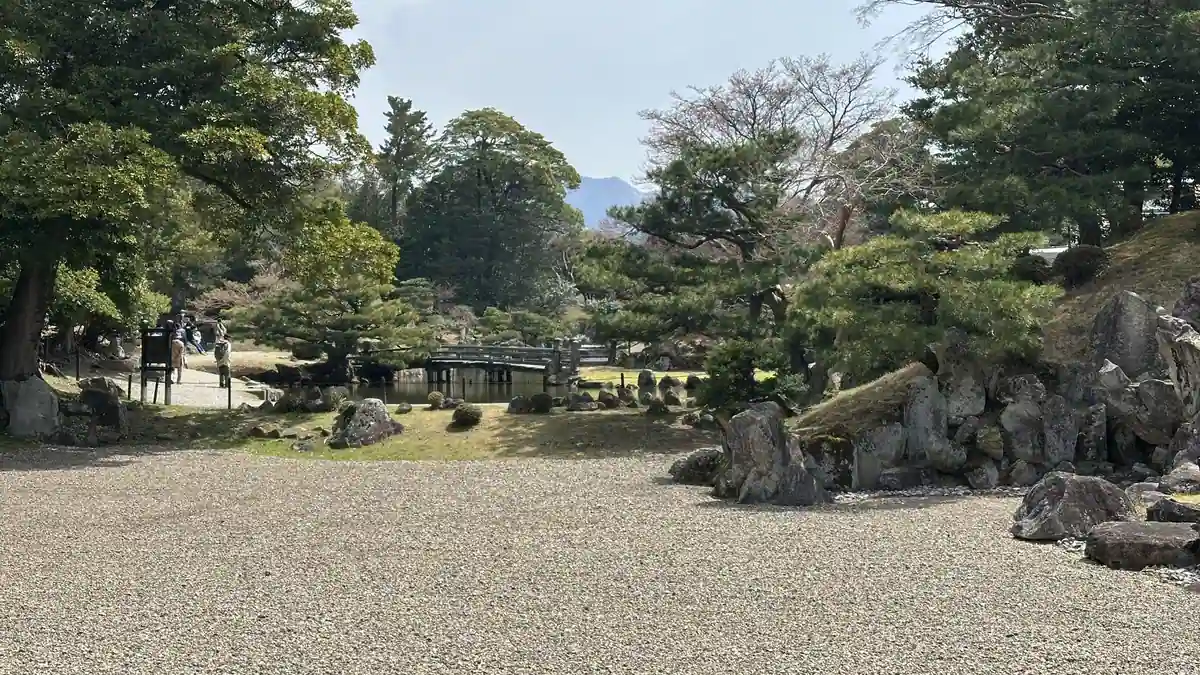
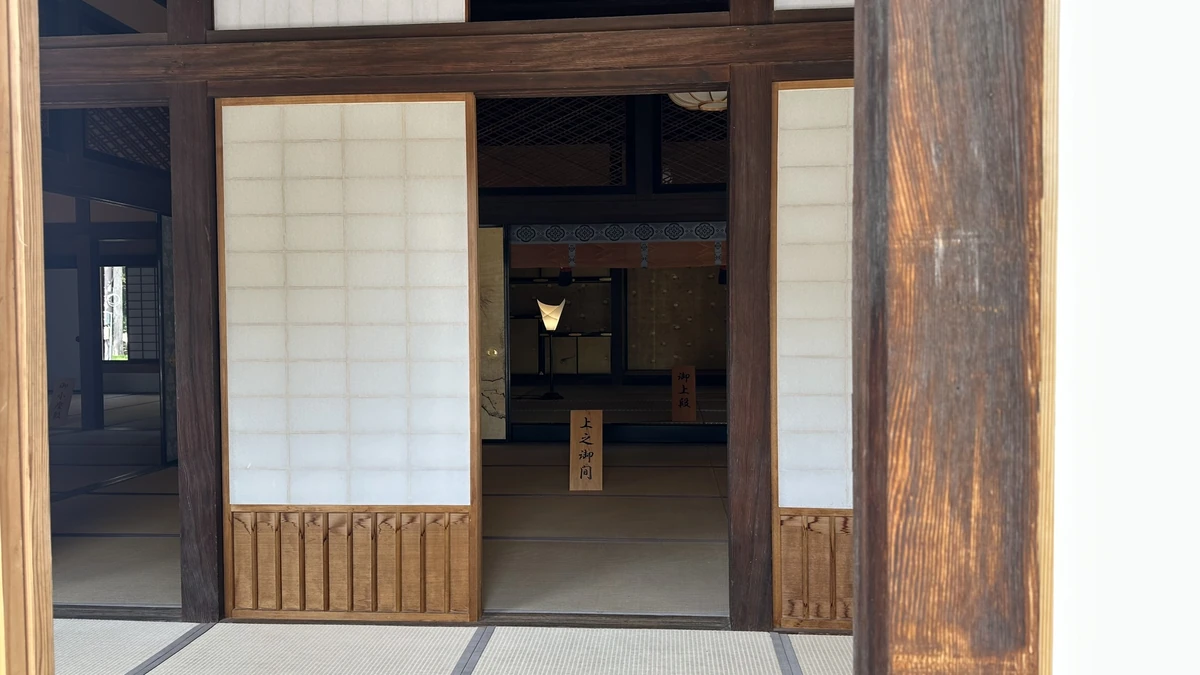
Tap a photo to enlarge it
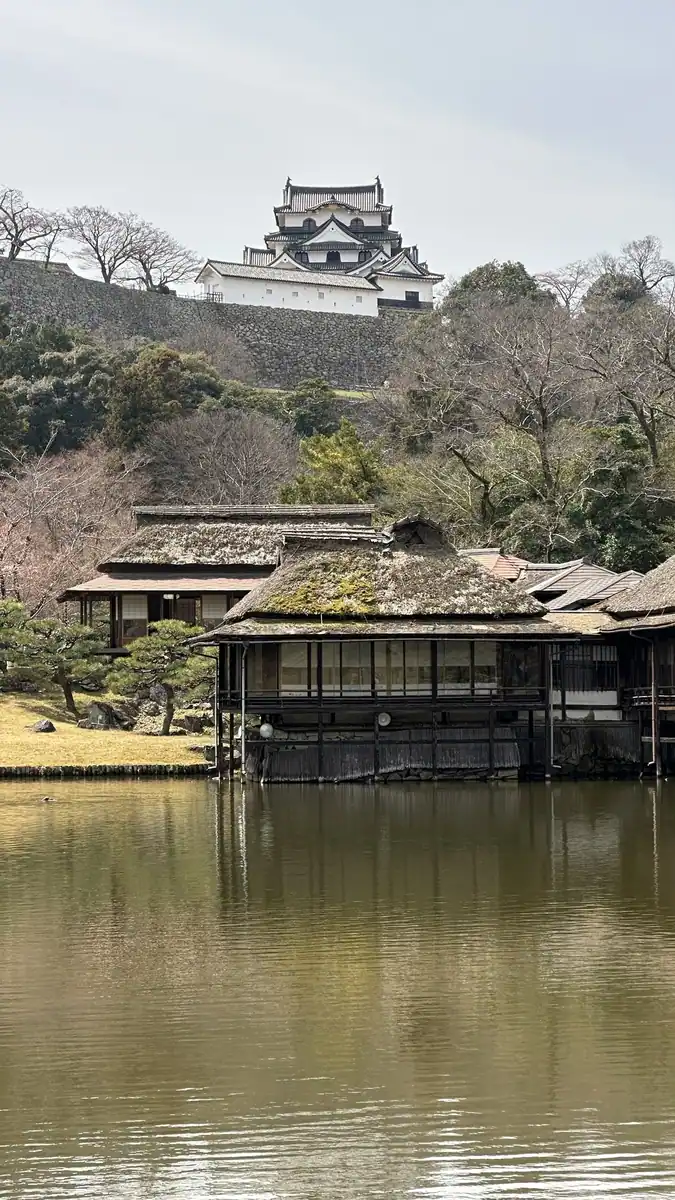
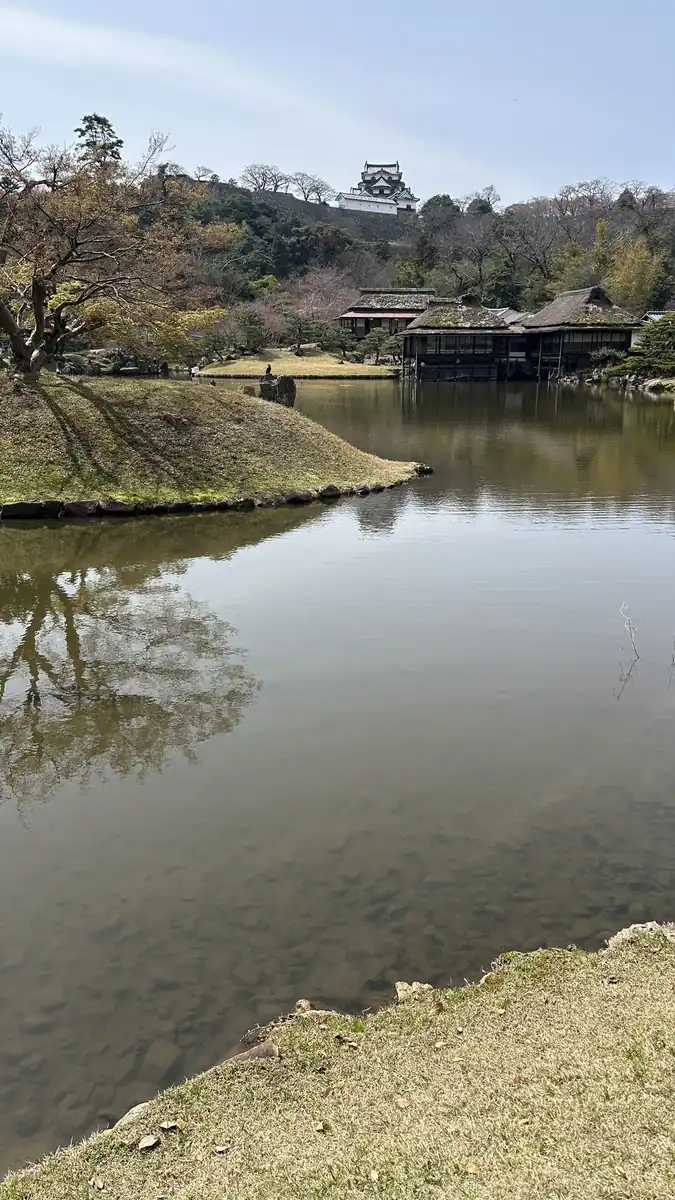
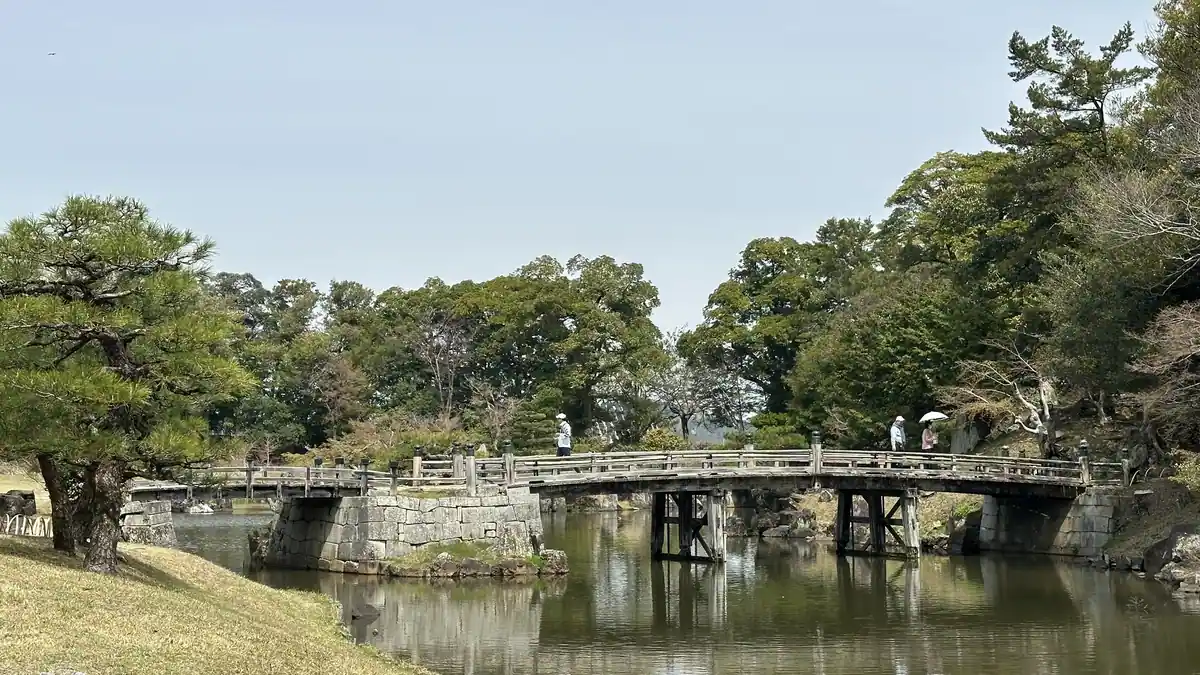
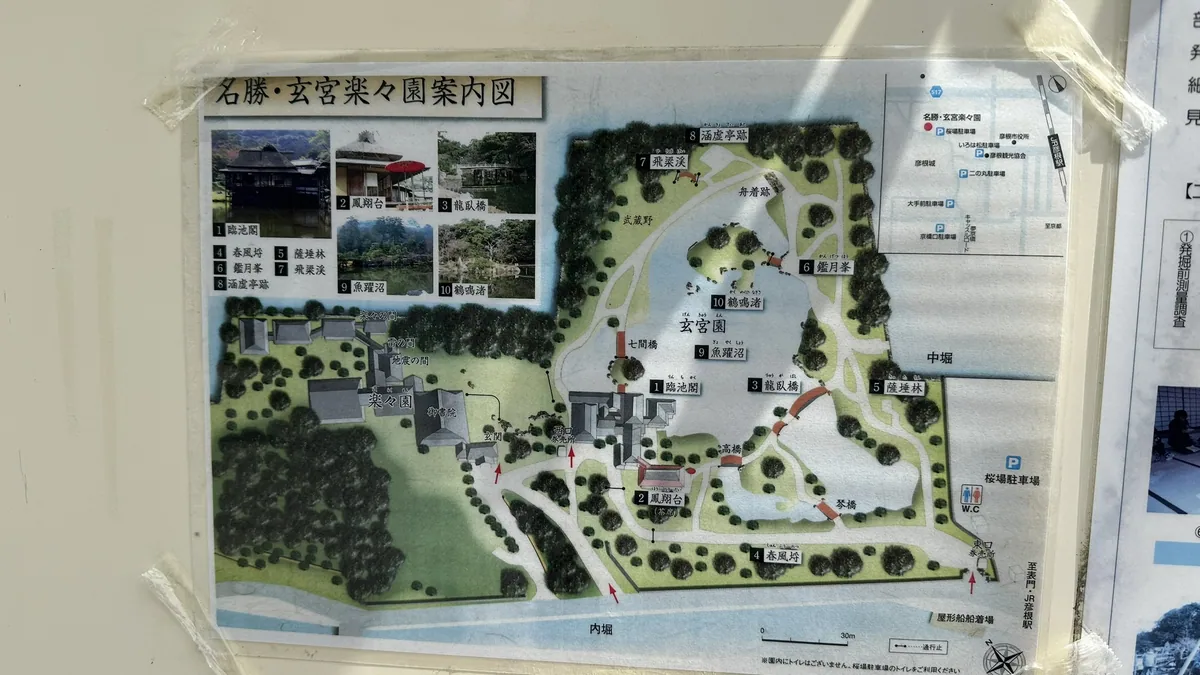
Genkyuen: a lord's garden with the keep across the pond
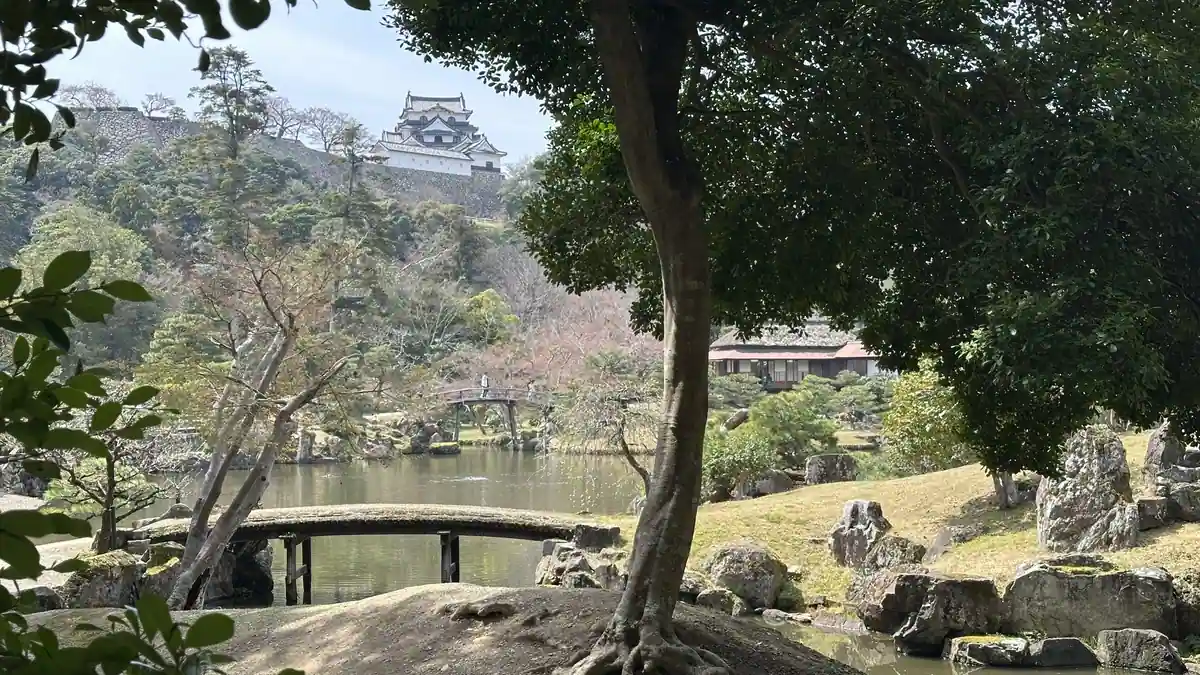
Genkyuen is a large stroll garden laid out around a pond in the early Edo period. As you walk around the pond, the keep appears beyond the bridges and islands. It turned out to be a bigger garden than I'd expected.
Tap a photo to enlarge it
Hoshodai: tea with a view of the keep
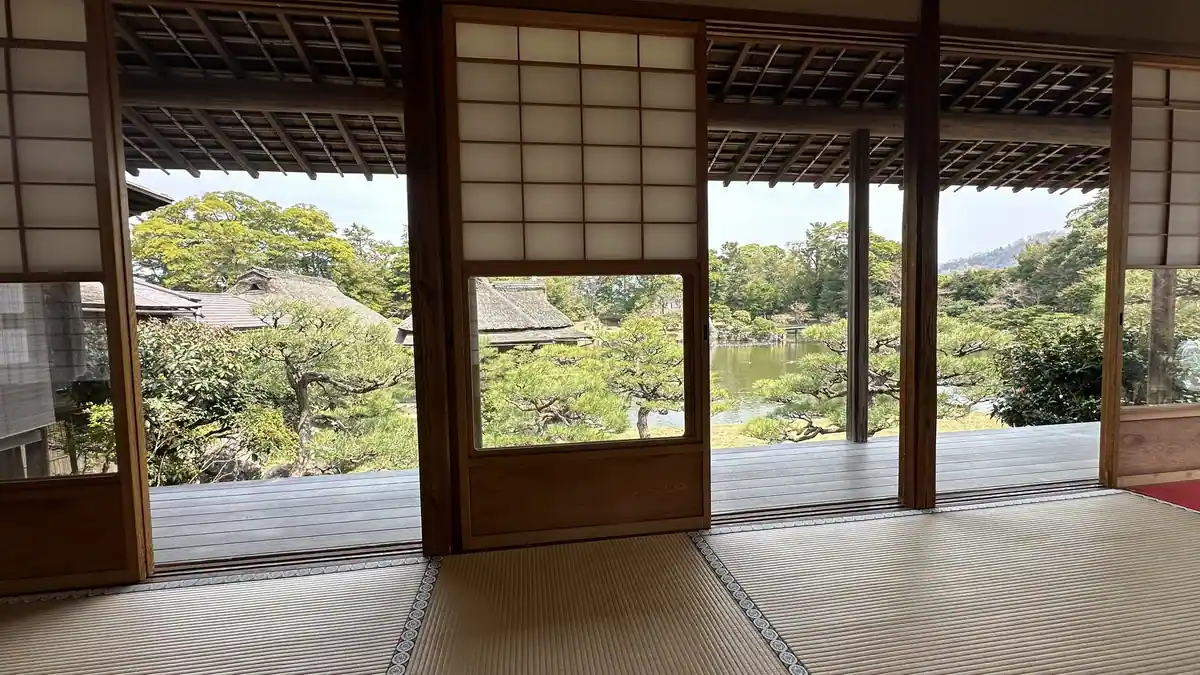
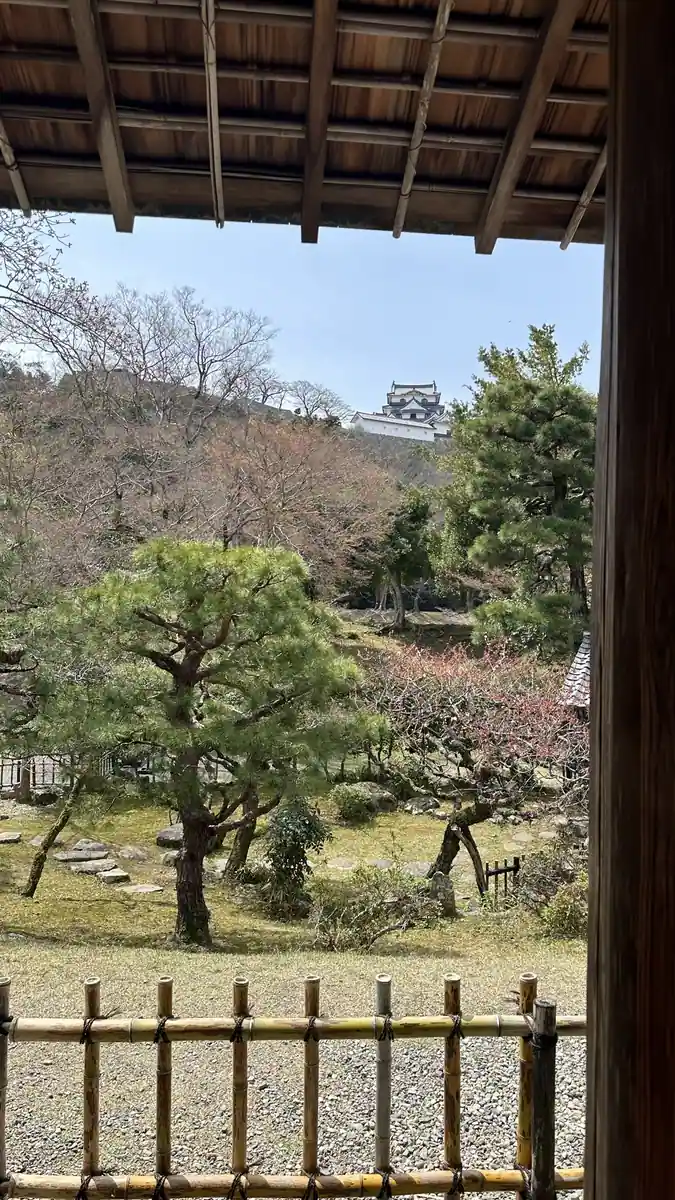
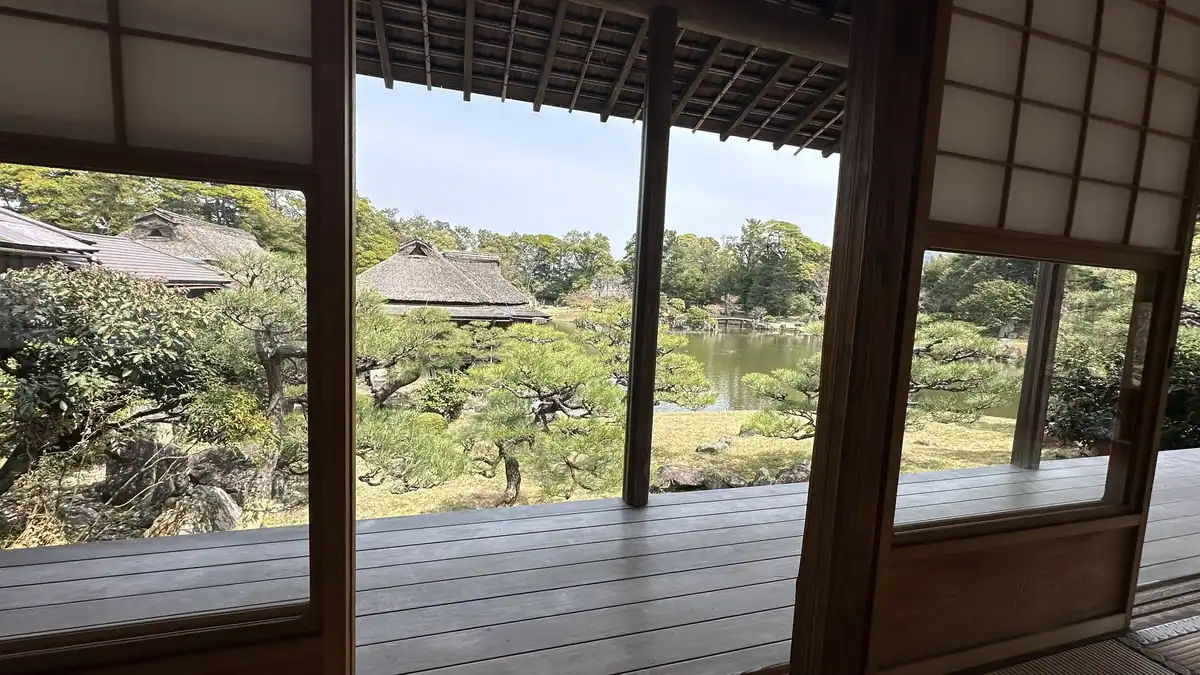
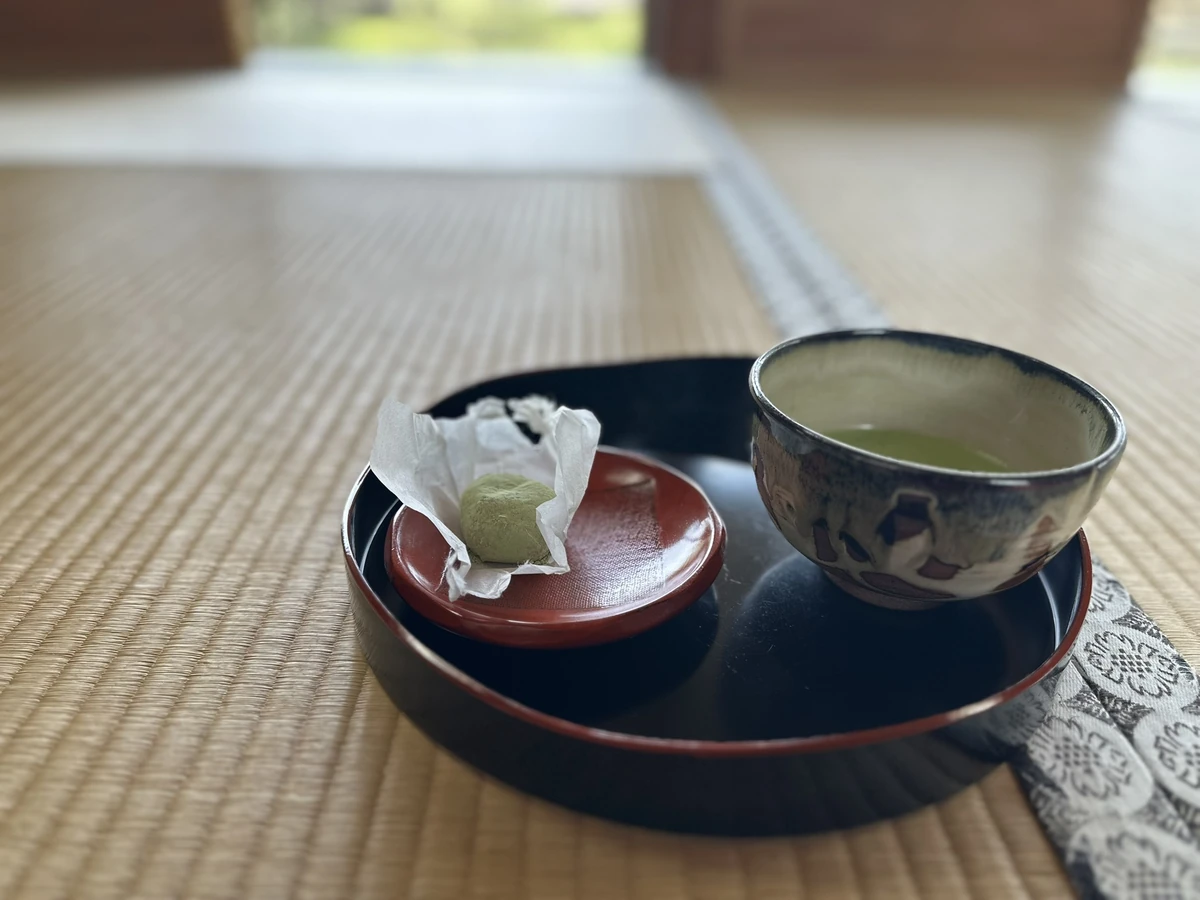
Hoshodai, about halfway around Genkyuen, was serving matcha in its tatami room when I visited in 2025. From the room you see the garden pines, the roofs by the pond, and the keep on the hill above them. To me it was one of the best views in the garden, and I stopped for tea here. Check opening and prices on the day.
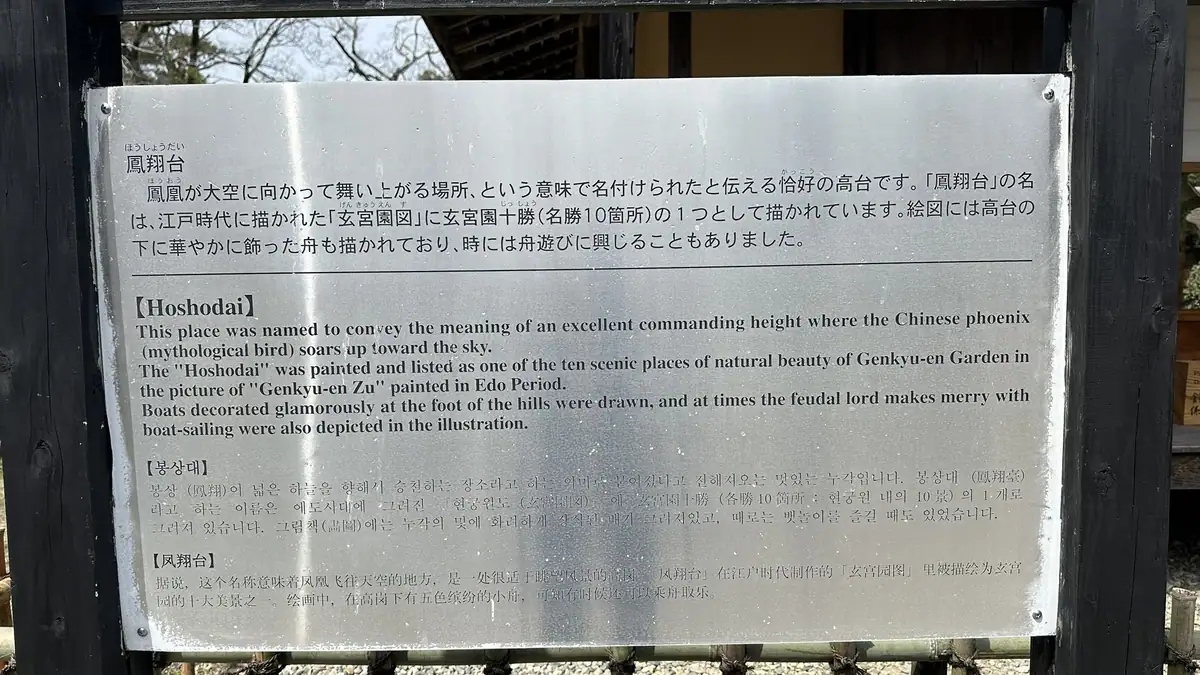
Tap a photo to enlarge it
Hikone Castle Museum: the reconstructed palace and an Edo-period Noh stage
Hikone Castle Museum: the Noh stage and the reconstructed palace
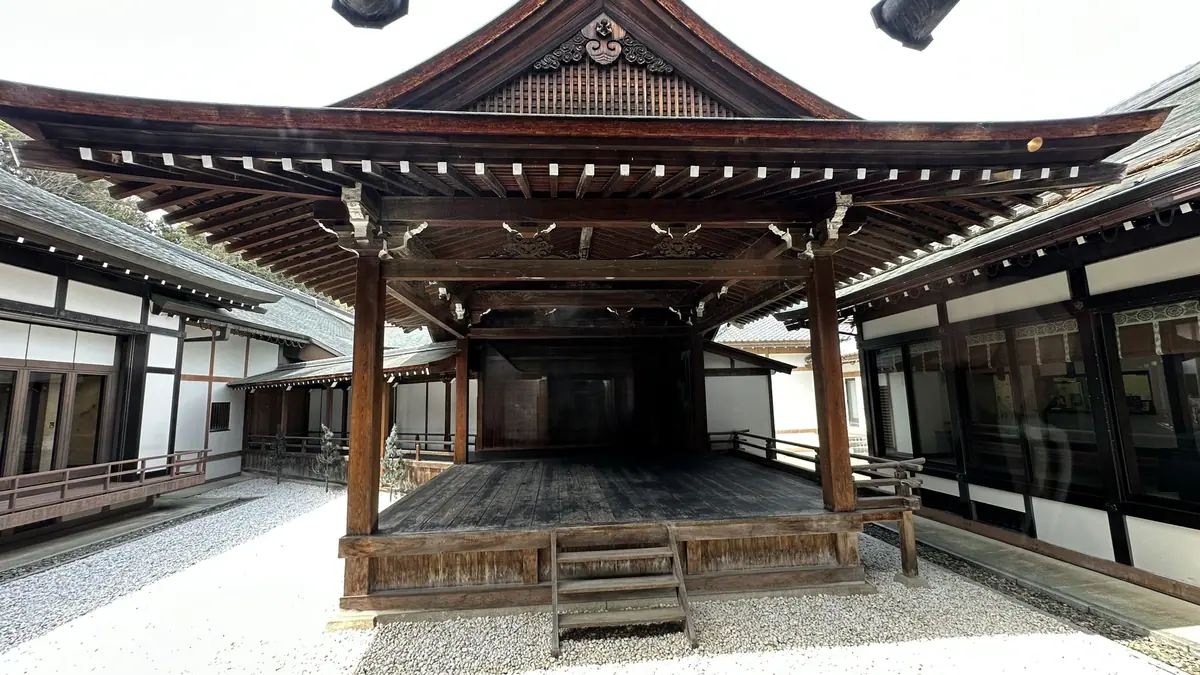
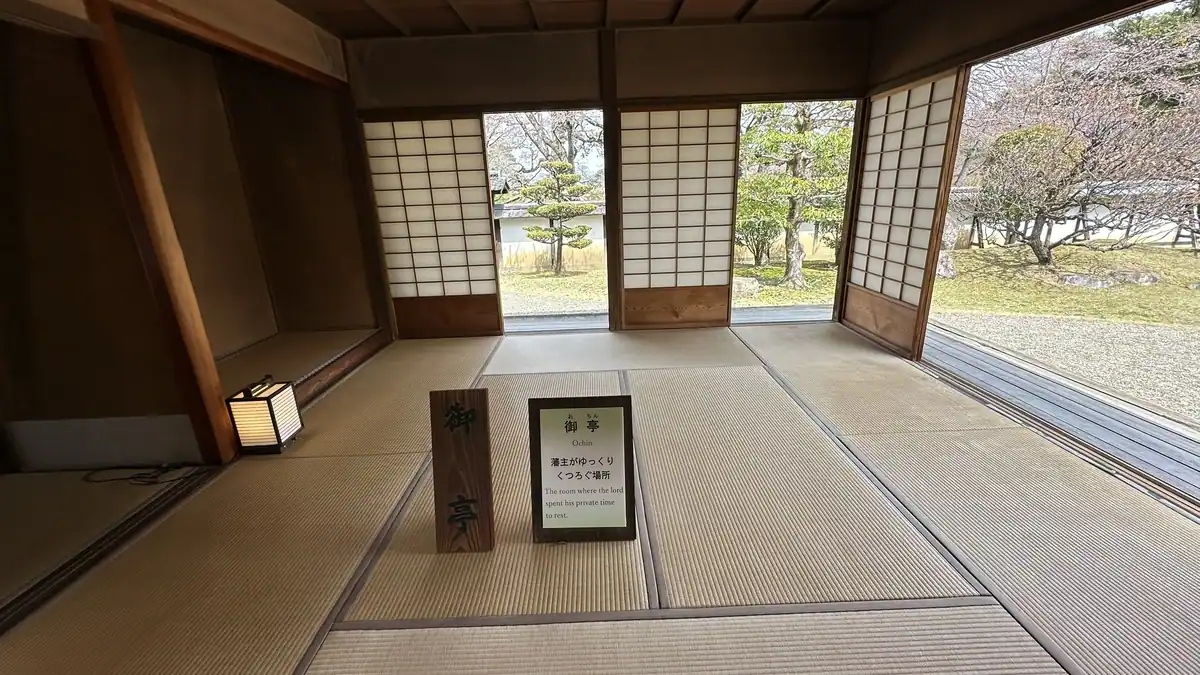
Tap a photo to enlarge it
Walk back along the inner moat from Genkyuen toward the front gate and you reach the Hikone Castle Museum. It opened in 1987 on the site of the Omote Goten, the palace that served as the government office of the Hikone domain. The palace was demolished in the early Meiji years. In the reconstruction, the lord's private living quarters were rebuilt in wood, while the exhibition and storage areas are reinforced concrete with a reconstructed exterior. The Noh stage at the center of the museum was built in 1800 and has been moved back to its original position and restored, so you can see an original Edo-period stage inside the reconstructed building. Noh is a classical masked drama that daimyo families patronized.
The castle ticket doesn't cover the museum; you need a separate ticket or the combination ticket. Since October 2026 the museum opens at 9:00 (prices and closing days are in the planning guide). I spent about 50 minutes here. The museum was bigger than I'd expected, and well kept.
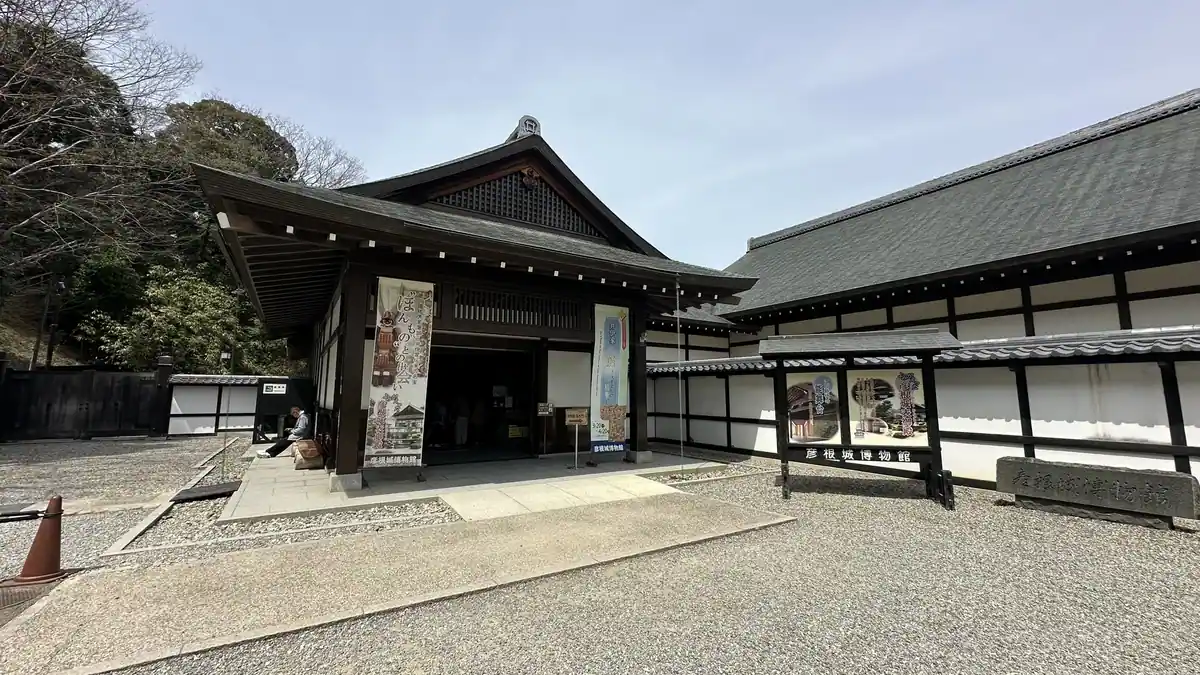
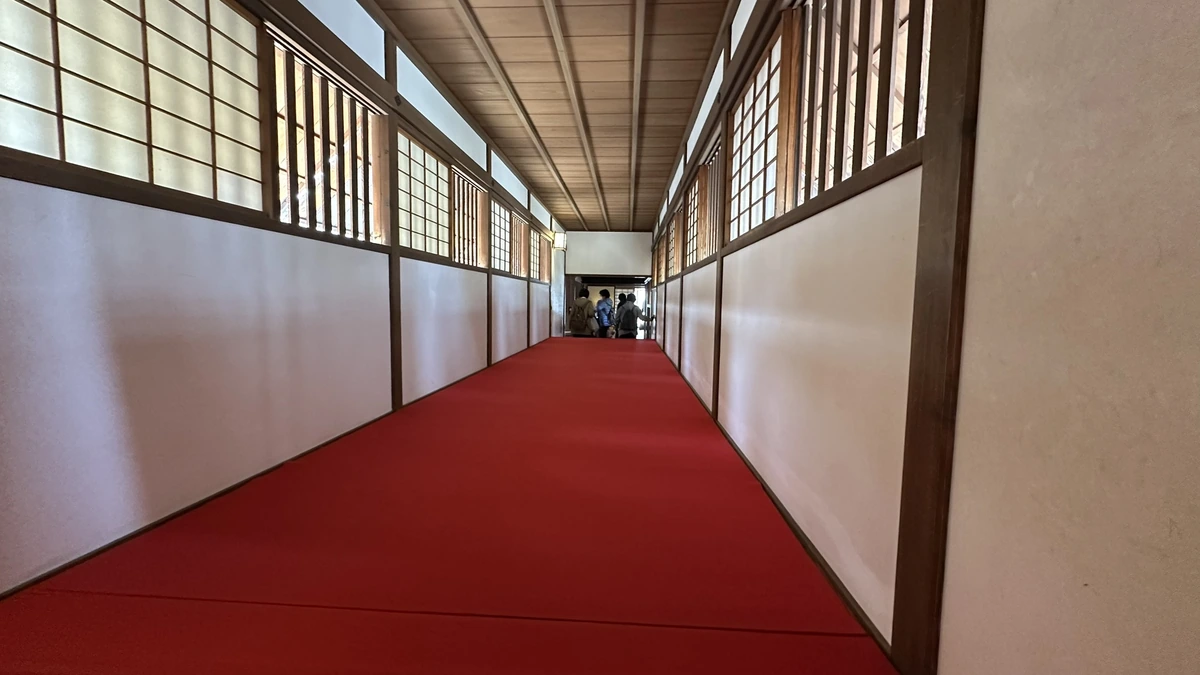
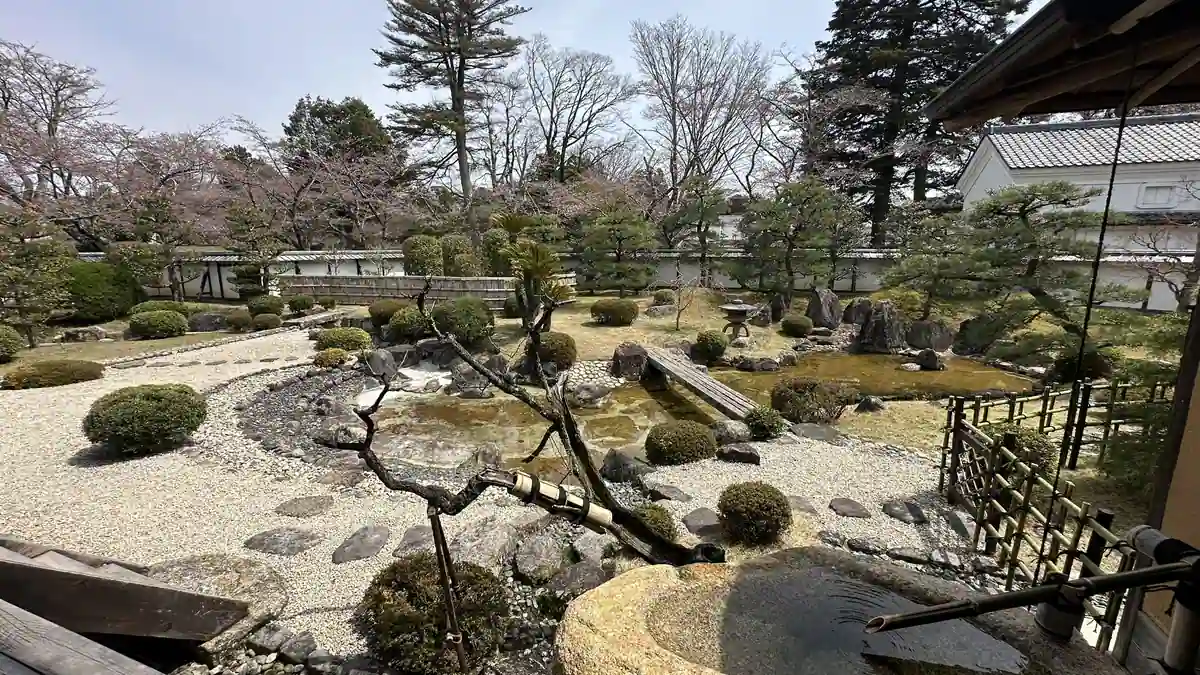
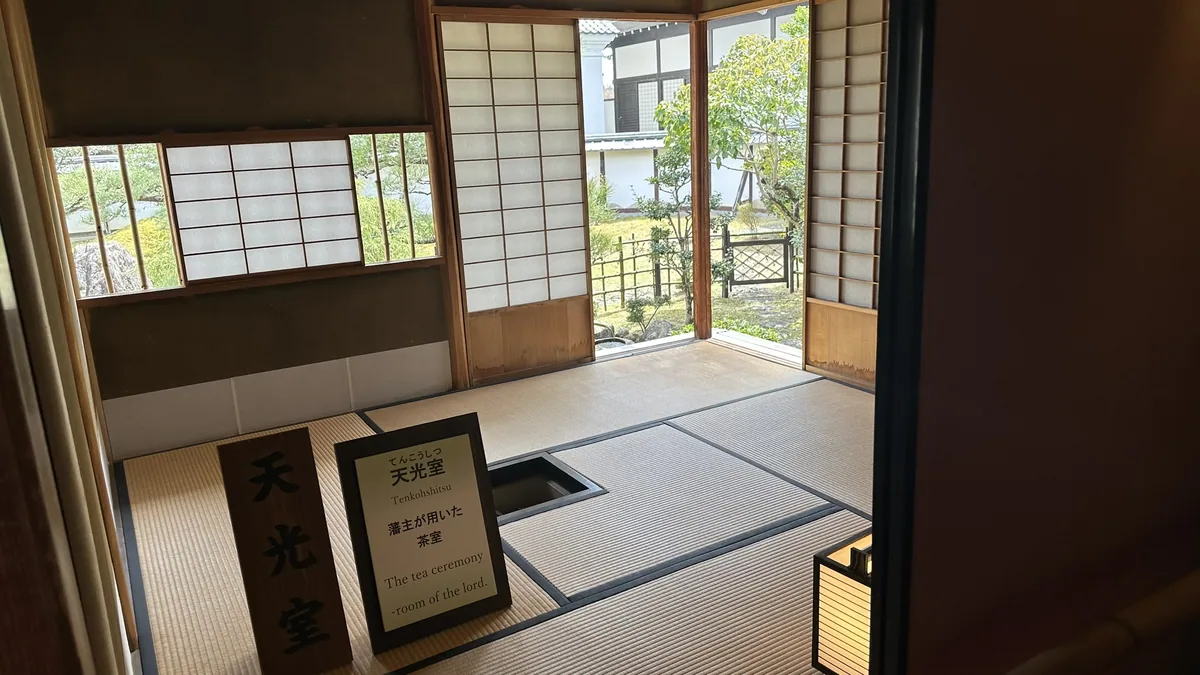
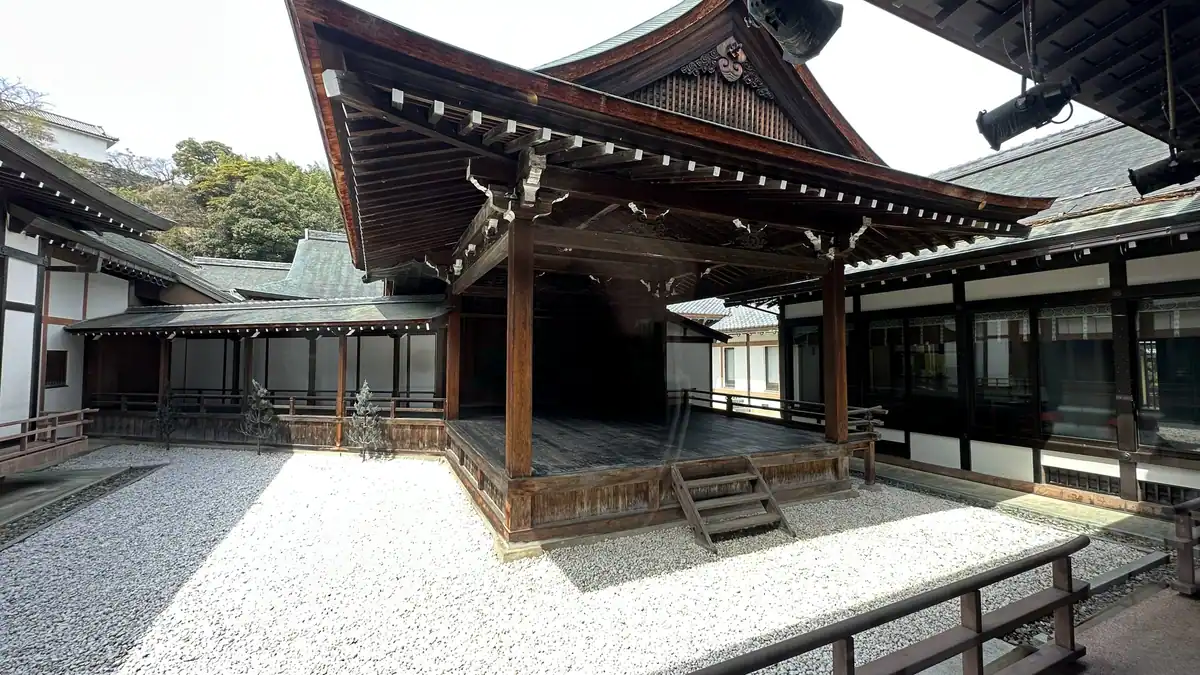
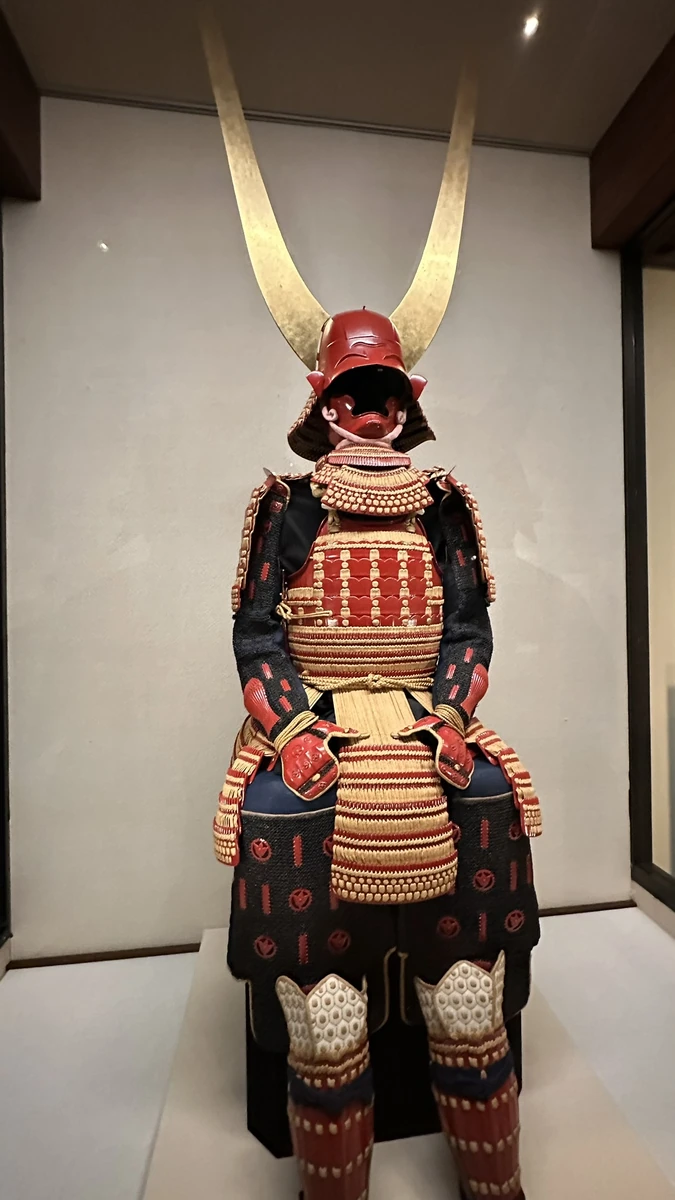
Tap a photo to enlarge it
When I visited in April 2025, the special exhibition "The Ii Family and Noh" (20 March to 20 April 2025) was on.
The red armor in the photo is said to have been used by Ii Naonaka, the 11th lord, not by Naomasa, the first. The museum doesn't keep this armor on permanent display, so if there is something specific you want to see, check the museum's exhibition schedule.
Choosing what to see at Hikone Castle
Seeing everything took me about four and a half hours. If you don't have that long, here is how to choose.
| If you… | See |
|---|---|
| are short on time | The keep, plus the corridor bridge and Tenbin-yagura on the way |
| want to see Japanese gardens | The keep and corridor bridge, plus Genkyuen and Rakurakuen (Rakurakuen is free). Leave time for tea at Hoshodai |
| are interested in the Ii family | The keep and corridor bridge, plus the Hikone Castle Museum (separate or combination ticket) |
If you have time to go on past the keep, see the Nishinomaru three-story turret as well. It shows you how large the castle is in a way you won't see if you turn back at the keep.
Where to stay before or after visiting Hikone Castle
PRThis section contains affiliate links to Agoda. If you book through them, this site earns a commission. I choose hotels for their location and how easy they are to travel from.
Walking from the front gate to the keep, the Nishinomaru, Genkyuen and the museum took me about four and a half hours. If you want to start at the 8:30 opening or move on to another city the next day, staying nearby lets you give the whole day to the castle. Here are four options by purpose. Prices vary a lot by date and room, so I haven't compared them.
CLOSE TO THE CASTLE
Around Hikone Station
About 15 minutes on foot from the west exit to the castle entrance
For starting at the 8:30 opening, or for staying the night after the evening garden illumination.
This opens Agoda's search for the Hikone Station area. Distances to the castle differ by hotel, so check the map.
Browse Hikone Station hotels on AgodaEASY TO MOVE ON
Maibara (city, including Maibara Station)
Maibara to Hikone: about 5 minutes on the JR line, plus waiting time
For travelers taking the Tokaido Shinkansen toward Nagoya or Tokyo the next day.
Not close to the castle. Agoda's Maibara search covers the whole city, so some results are far from the station.
Browse Maibara hotels on AgodaA SPECIAL STAY (BY THE CASTLE)
Hikone Castle Resort & Spa
On the middle moat. 8 minutes on foot from Hikone Station, 5 minutes to the front gate (hotel's figures)
The large public bath, Shiromi-no-yu, looks toward the keep, and some rooms face the castle. Restaurants include Omi beef teppanyaki and Japanese cuisine. Suits visitors who want to do everything on foot.
The keep is visible from the Castle View rooms. Check the room type before you book.
Check rates on AgodaA SPECIAL STAY (ON LAKE BIWA)
Kamenoi Hotel Hikone
On the Lake Biwa shore in Matsubara. About 10 minutes by car from Hikone Station (hotel's figure)
Every room looks out over Lake Biwa, and there is a hot-spring bath on the top floor. For a quiet evening by the lake after a day at the castle.
Too far to walk to the castle or the station. The free shuttle bus from Hikone and Maibara stations needs a reservation, so ask the hotel for times.
Check rates on AgodaThe links open with Agoda’s default dates and guest count. Check the dates, price, and cancellation terms on the booking page before you reserve.
Hikone Castle walking FAQ
Stone steps continue from the front gate to the keep. I didn't find them hard, but rest as often as you need. The stairs inside the keep are steep and narrow, so take care going up and down.
Yes. In the keep, Tenbin-yagura and the Nishinomaru three-story turret you take off your shoes at the entrance. There are shoe racks; if you're worried about mix-ups, bring a bag for your shoes.
Follow the signpost near the Nishinomaru toward Kuromon and Genkyuen, and walk down past Ido-kuruwa on the Kuromon side. You come out near Rakurakuen and Genkyuen at the foot of the hill. The Yamazaki path from the Nishinomaru down to the Yamazaki enclosure is closed (checked November 2026).


comment