

100 Selected Tea Bowls at the Mitsui Memorial Museum, Tokyo: A Visitor’s Guide to Shumi, Unohana-gaki and Nue
A limited-time exhibition of 100 tea bowls handed down in the Mitsui merchant family, including a National Treasure. Here is what I saw, how long it took, and the practical details for a visit from abroad.
The Mitsui Memorial Museum is a small art museum on the 7th floor of the Mitsui Main Building in Nihonbashi, a short walk from Tokyo Station. Until November 23, 2026, it is showing 100 Selected Tea Bowls from the Mitsui Memorial Museum Collection: From National Treasure to Handmade. The museum holds more than 200 tea bowls handed down in the Mitsui family, and this exhibition picks 100 of them, including a National Treasure and several Important Cultural Properties.
I visited on Saturday, October 24, 2026, and saw three bowls I had wanted to see in person: Shumi, a Korean bowl said to have belonged to the samurai tea master Furuta Oribe; Unohana-gaki, a National Treasure; and Nue, a red Raku bowl. Viewing took me about an hour and twenty minutes. I think it suits travelers who want to get closer to the culture of Japan’s Warring States period (the Sengoku era), and readers who enjoyed Hyouge Mono, the manga and anime about Oribe.
This is a museum exhibition for looking at tea bowls. It is not a tea ceremony, and you do not drink tea here.
| Dates | Sep 12 – Nov 23, 2026 |
|---|---|
| Closed | Nov 9 and 16 (Mon). Open on the final day, Nov 23 |
| Booking | Not needed. Entry may be limited when crowded |
| Admission | Adults ¥1,200; high school and college students ¥700; junior high and younger free |
| Discount | ¥100 off with the museum’s online coupon |
| English | English list of works on the official site. Audio guide in Japanese only |
| Photos | Generally not allowed; some works or rooms may be open to photography |
| Station | Mitsukoshimae (Ginza Line), Exit A7, about 1 min on foot |
In this guide
If you only want my notes on the three bowls or the ticket details, jump straight there:
Tea bowls: the basics before you go
Japanese tea bowl exhibitions make more sense with a few terms in mind. The labels and the English list of works use them throughout.
- Chawan (tea bowl): the bowl in which powdered green tea (matcha) is whisked and drunk during chanoyu, the Japanese tea ceremony.
- Why warlords cared: in the 16th century, tea gatherings became part of samurai politics. Rulers such as Oda Nobunaga and Toyotomi Hideyoshi collected famous tea utensils, and a celebrated bowl could be a prized gift or reward.
- Mei (name): admired bowls are given poetic names. Shumi refers to Mount Sumeru, the mountain at the center of the world in Buddhist cosmology; Unohana-gaki means “hedge of deutzia flowers”; Nue is a legendary chimera from The Tale of the Heike.
- Where they were made: the list groups bowls made in China (karamono), on the Korean Peninsula (Kōrai bowls, long prized by Japanese tea masters), and in Japan (wamono), followed by Raku ware and later Kyoto potters.
- “Perhaps originally possessed by”: the museum’s English for den … shoji, meaning a bowl is traditionally said to have belonged to someone. It does not mean that person made it.
National Treasure and Important Cultural Property are Japan’s two main designations for cultural property. Of the two, National Treasure is the higher rank.
The Mitsui family has been one of Japan’s great merchant houses since the 17th century, and the museum’s building, the Mitsui Main Building (completed in 1929), is itself an Important Cultural Property.
100 Selected Tea Bowls: highlights and my notes on Shumi, Unohana-gaki and Nue
The exhibition runs through Rooms 1 to 7. According to the English list of works, Room 1 gathers the most important bowls, Room 2 holds the National Treasure Unohana-gaki on its own, Room 3 is an arrangement of tea utensils that includes pieces linked to Oda Uraku, and Room 4 covers Chinese, Korean and Japanese bowls. Rooms 5 to 7 continue with Raku bowls, bowls by the Kyoto potters Eiraku Hozen and Wazen, and finally bowls made by hand by members of the Mitsui family and others who were not professional potters.
Bowls linked to Sengoku warlords and tea masters
Several bowls carry the names of famous people from the Sengoku period and the decades around it.
| Bowl | Said to have belonged to | Room |
|---|---|---|
| Kanbayashi-ido (Ō-ido type) | Toyotomi Hideyoshi | 1 |
| Shumi / Jūmonji (Ō-ido type) | Furuta Oribe | 1 |
| Miyoshi-kohiki (Important Cultural Property) | Miyoshi Nagayoshi | 1 |
| Nitoku-mishima (Ko-Mishima type) | Sen no Rikyū | 1 |
| Uraku-chawan (Ō-ido type) | Oda Uraku | 3 |
| Ko-akae bowl with Eight Immortals | Sakuma Fukansai | 4 |
Hideyoshi unified Japan in the late 16th century, and Sen no Rikyū was his tea master, the figure most associated with the tea ceremony as it is practiced today. Oda Uraku was the younger brother of Oda Nobunaga.
Ō-ido Tea Bowl, named “Shumi” (also “Jūmonji”)
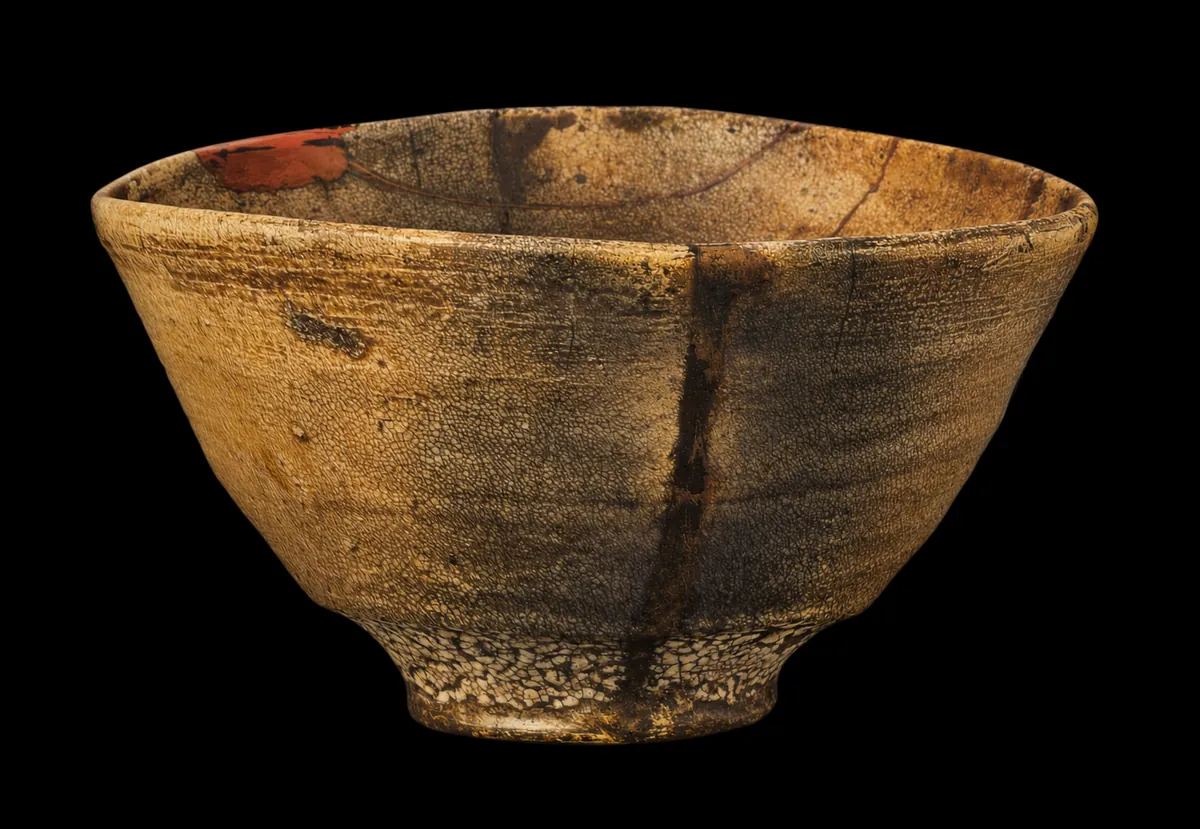
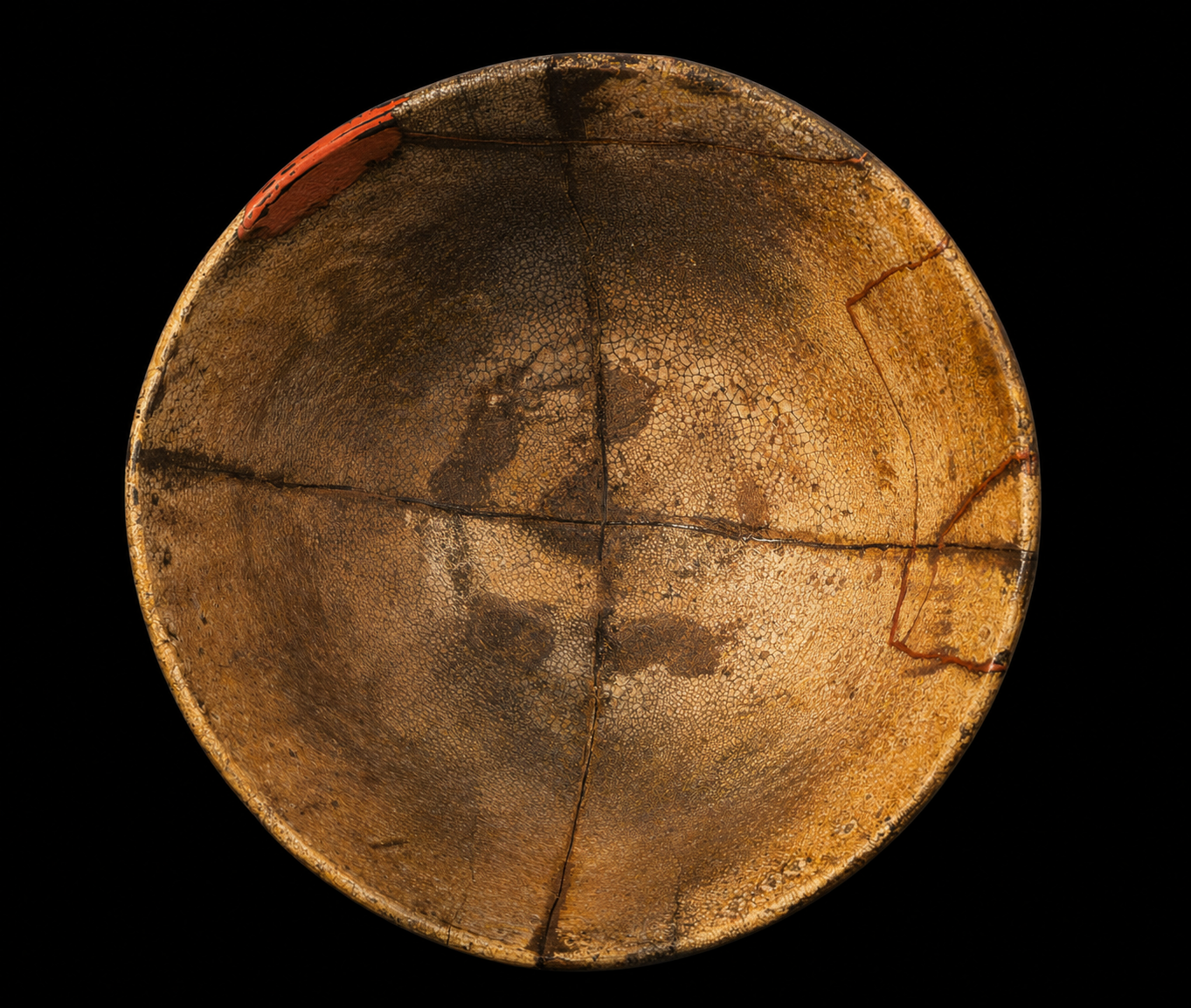
This large bowl was made on the Korean Peninsula in the 16th century and passed down in the Muromachi branch of the Mitsui family. It is traditionally said to have belonged to Furuta Oribe (1543–1615), a samurai who served Nobunaga and Hideyoshi and became the leading tea master after Sen no Rikyū. Oribe is known for a bold taste that favored distorted, irregular shapes.
A record written by a Daitokuji temple monk in 1727 is kept with the bowl. According to the museum, it says the bowl was originally badly warped and that Oribe cut it apart in the shape of a cross to make it smaller. Its other name, Jūmonji, means “cross.” A later abbot of Daitokuji is said to have renamed it Shumi.
This was a bowl I had been looking forward to. Oribe is the main character of Hyouge Mono, Yoshihiro Yamada’s manga, and I was glad to see a bowl connected to him in person. The cross-shaped joins are still clearly visible, and parts of the surface are touched with red. It is a bowl with real depth of character.
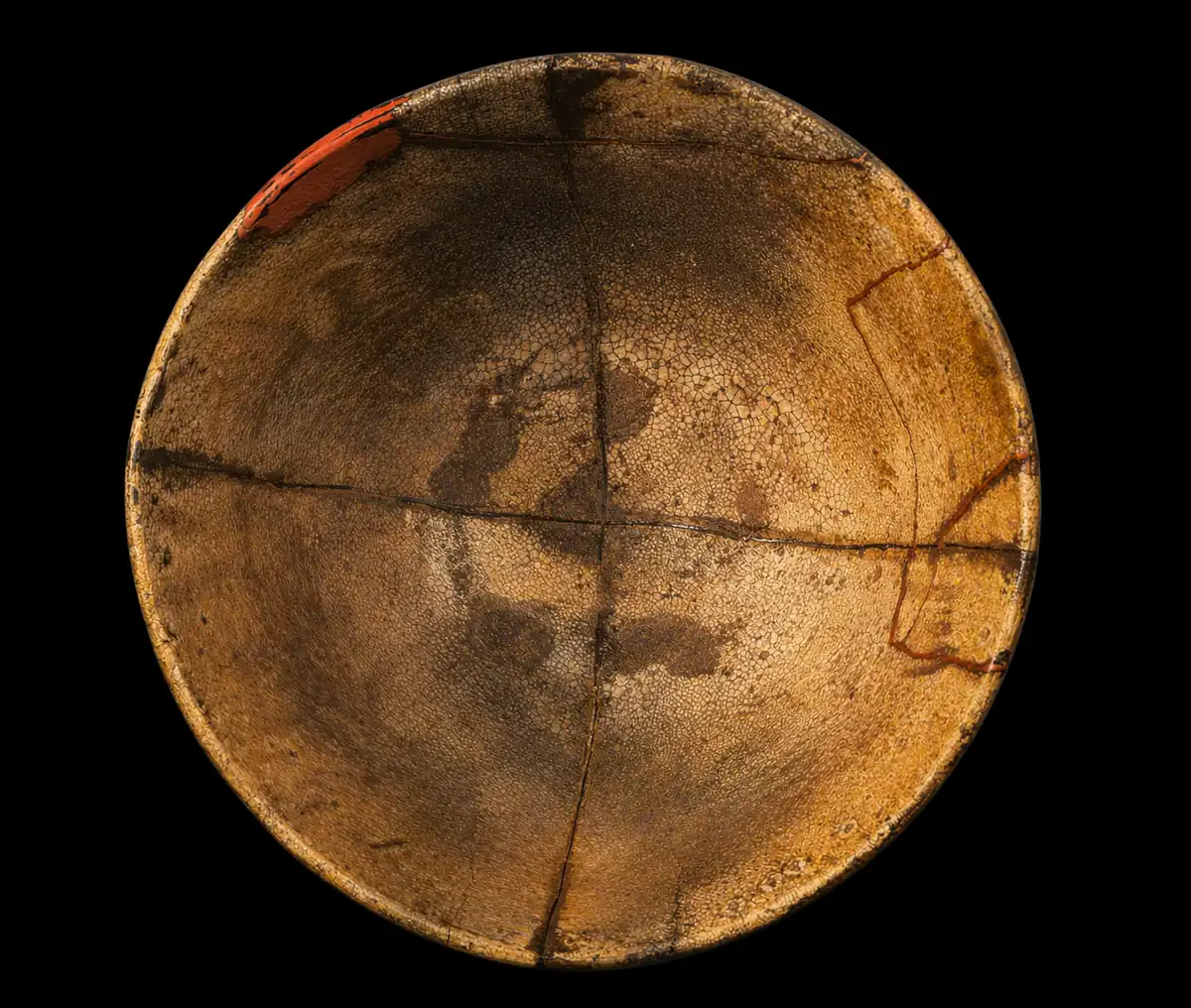
I did not photograph this bowl, so the images above are AI illustrations meant only to give a sense of it. You can see the real bowl on the museum’s exhibition page (Japanese).
National Treasure: Shino Tea Bowl, named “Unohana-gaki”
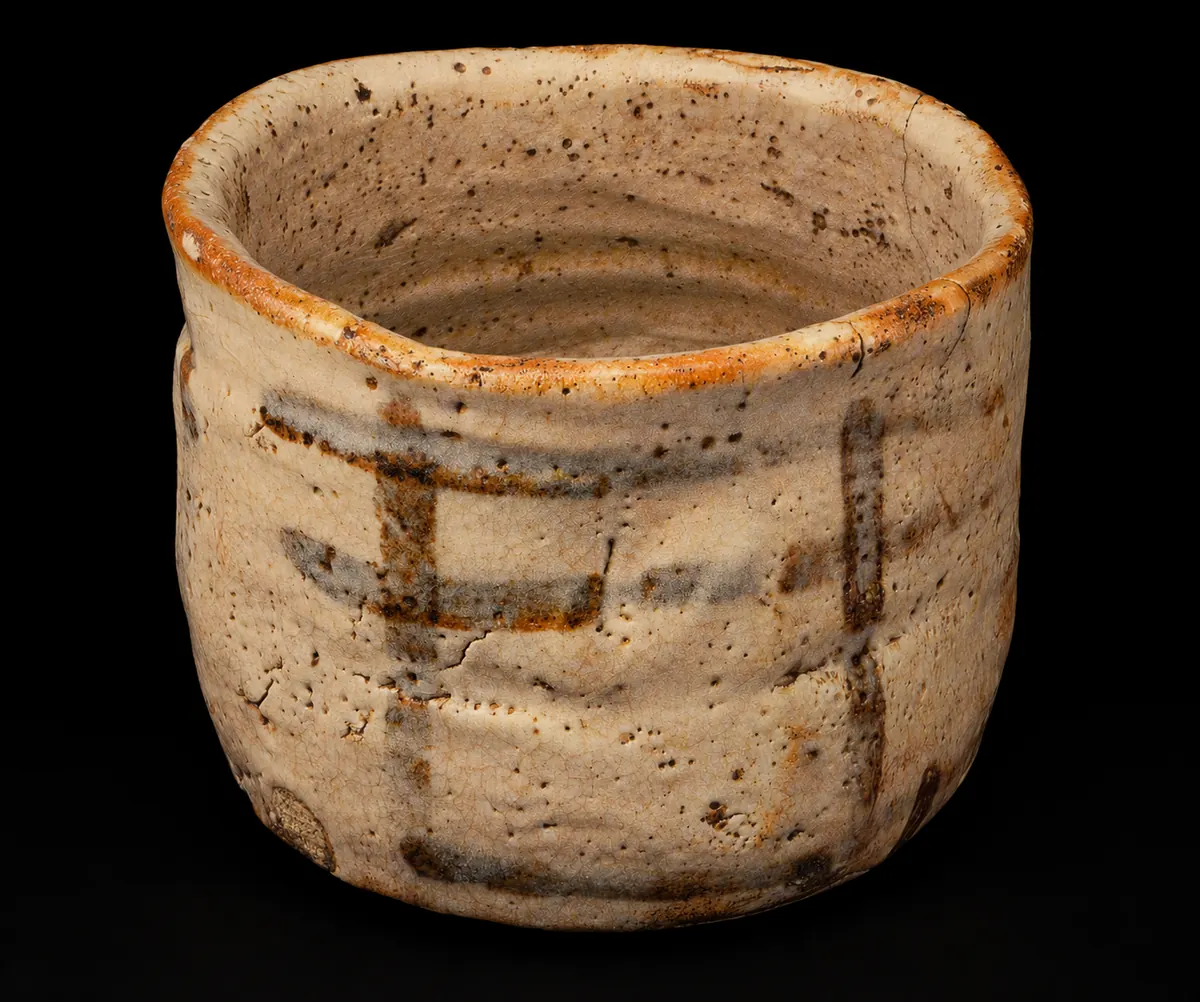
Shino is a white-glazed ware from the Mino region (today’s Gifu Prefecture) that flourished at the turn of the 17th century. This bowl, from the Momoyama period, was owned by the Muromachi branch of the Mitsui family. The museum describes it as fired at the Mutagahora kiln in Mino, with a slightly warped shape and iron-brown designs painted under the glaze. According to the museum, only two tea bowls made in Japan are designated National Treasures: this one and Fuji-san.
I saw the real bowl in Room 2. Its form is simple, yet the longer I looked at the details, the more there was to enjoy.
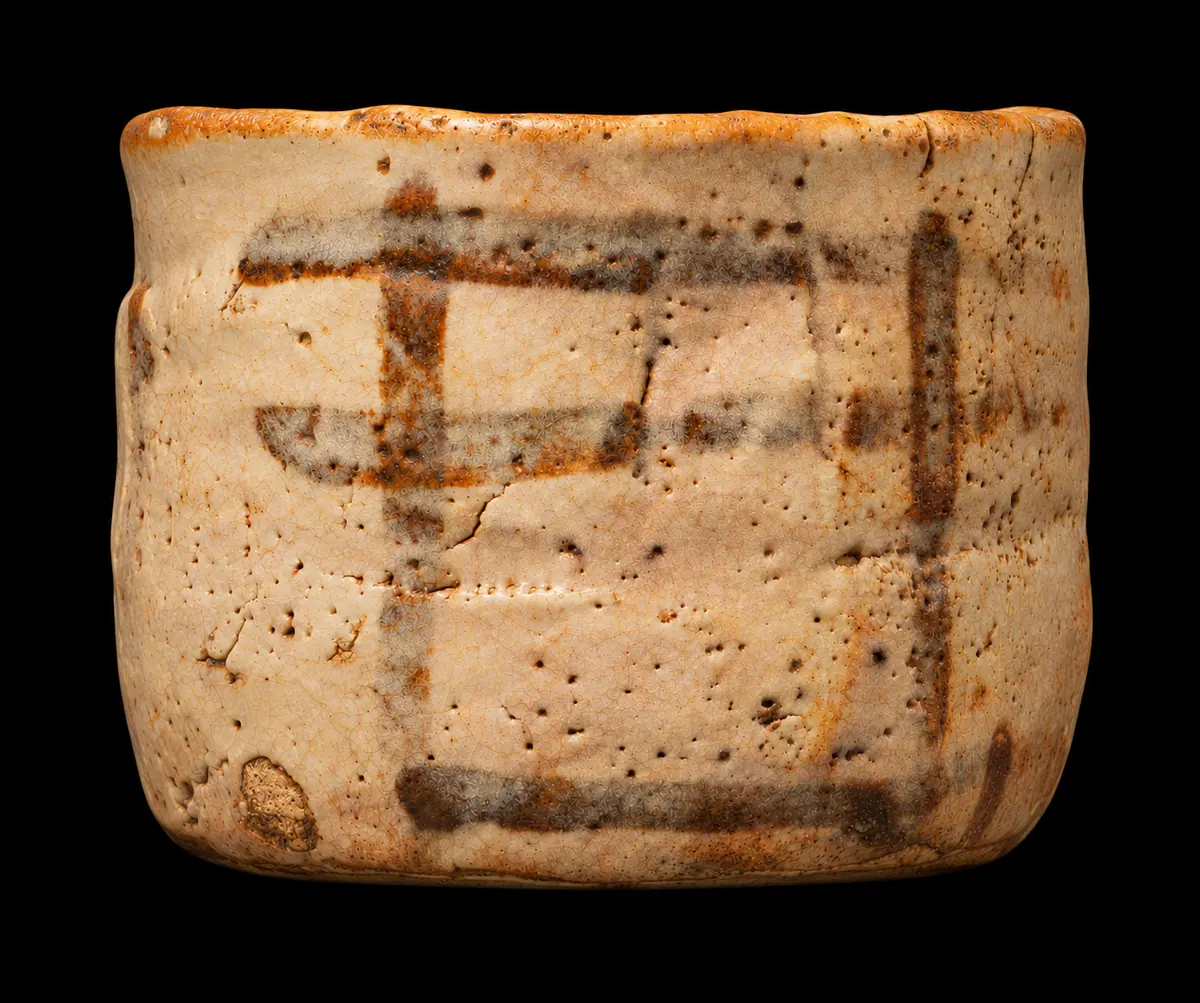
Photos of the real bowl and a description are in the museum’s collection database (Japanese).
Important Cultural Property: Red Raku Tea Bowl, named “Nue”
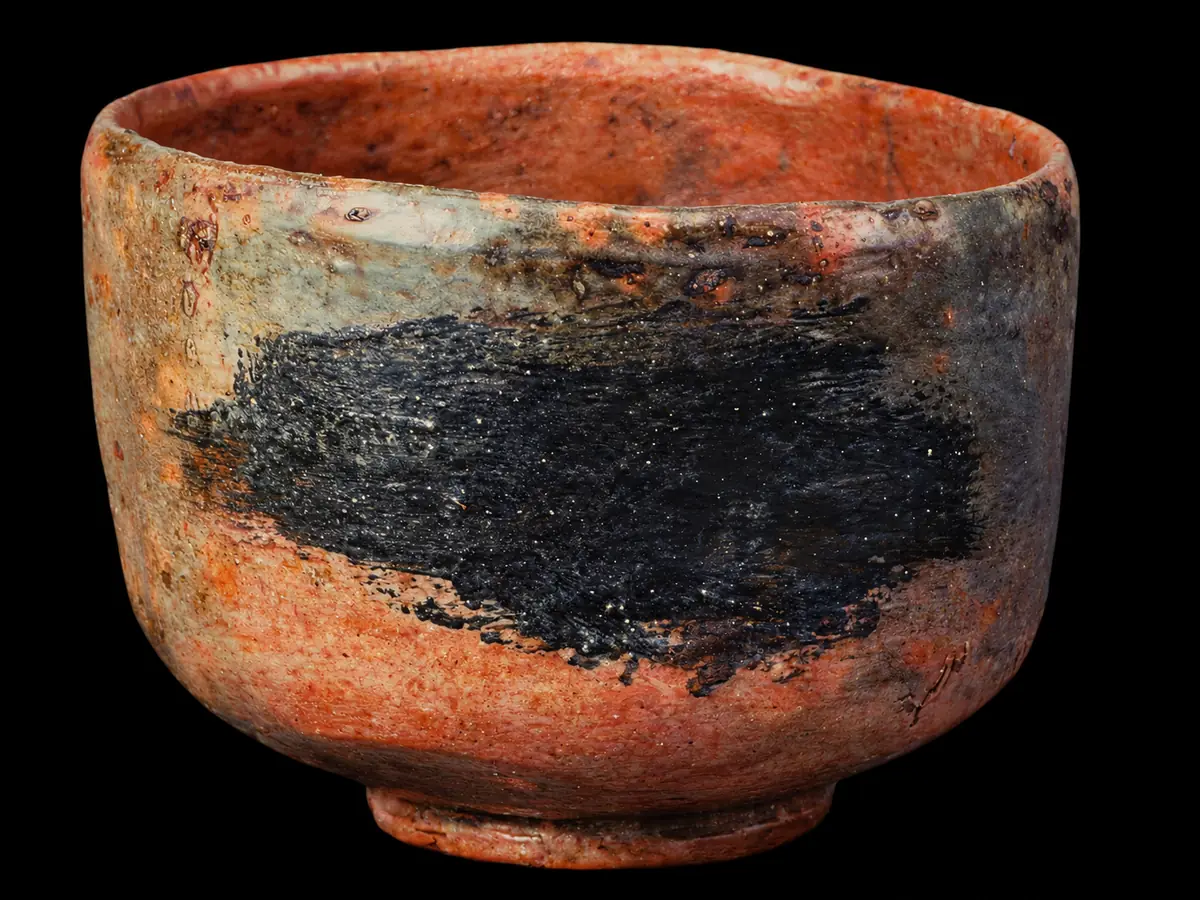
Raku ware is shaped by hand rather than on a wheel and fired at a low temperature. It comes from the Raku family of Kyoto, whose first potter, Chōjirō, worked with Sen no Rikyū in the late 16th century. This red Raku bowl is by Dōnyū, the third head of the family, and dates to the 17th century. According to the museum, its name comes from the dark patch on its body, which recalls the episode in The Tale of the Heike in which a warrior slays the nue monster.
Along with Shumi and Unohana-gaki, this was one of my favorites. A greenish tone sits over the red ground, and I found the contrast striking.
You can see the real bowl on the museum’s exhibition page (Japanese).
More to look for in Rooms 1, 3 and 5–7
Room 1 also shows the Southern Song Chinese bowl Ran-tenmoku (Important Cultural Property), the black Raku bowl Shunkan by Chōjirō, and the black Raku bowl Amagumo by Hon’ami Kōetsu, the artist and calligrapher. Room 3 brings together a letter and a tea scoop by Oda Uraku with the bowl Uraku-chawan.
In Room 5 you will find a line of Raku bowls by successive generations, including Sairai by Dōnyū, which belonged to Mitsui Takatoshi, the founder of the Mitsui business. The last section shows handmade bowls by Mitsui family heads and by Tokugawa Harutomi, lord of the Kishū (Kii) domain.
How to look at a tea bowl: interior, body and foot (Room 4)
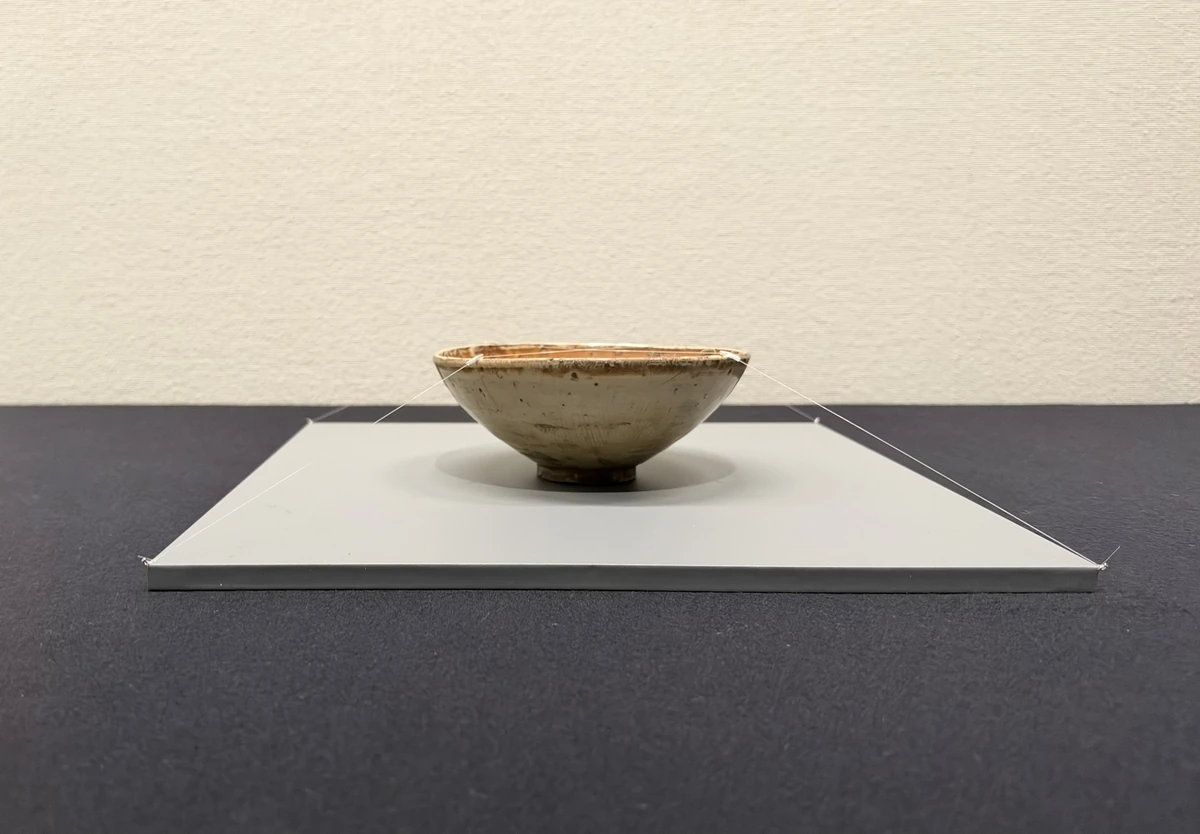
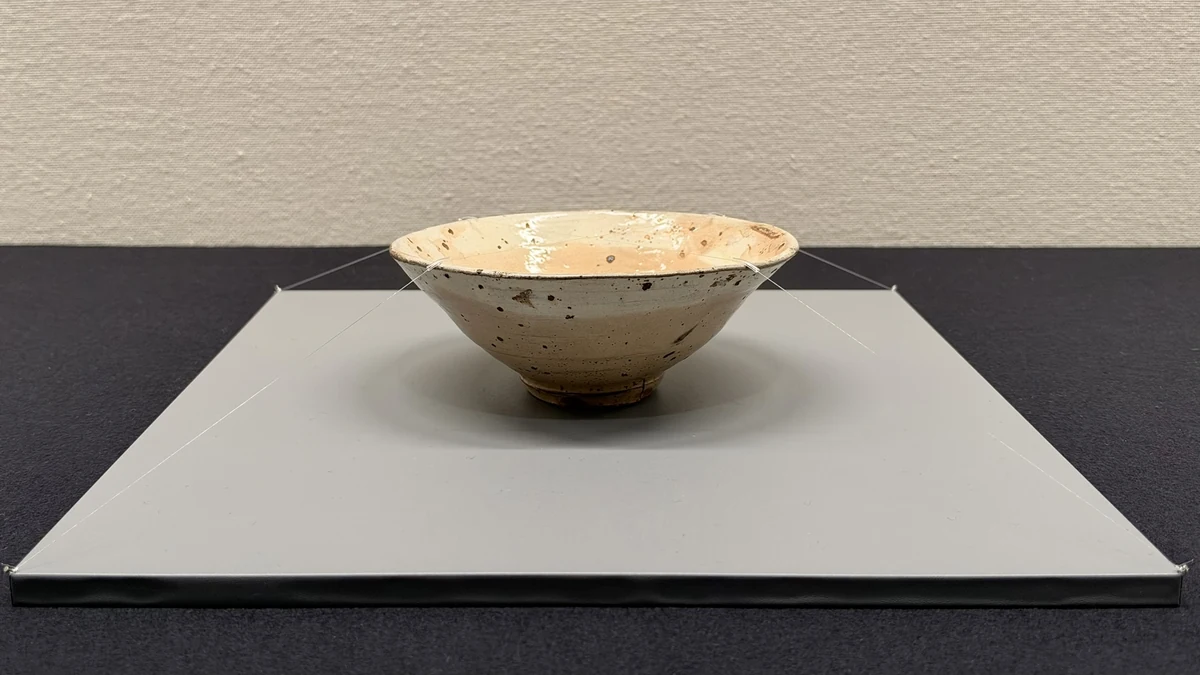
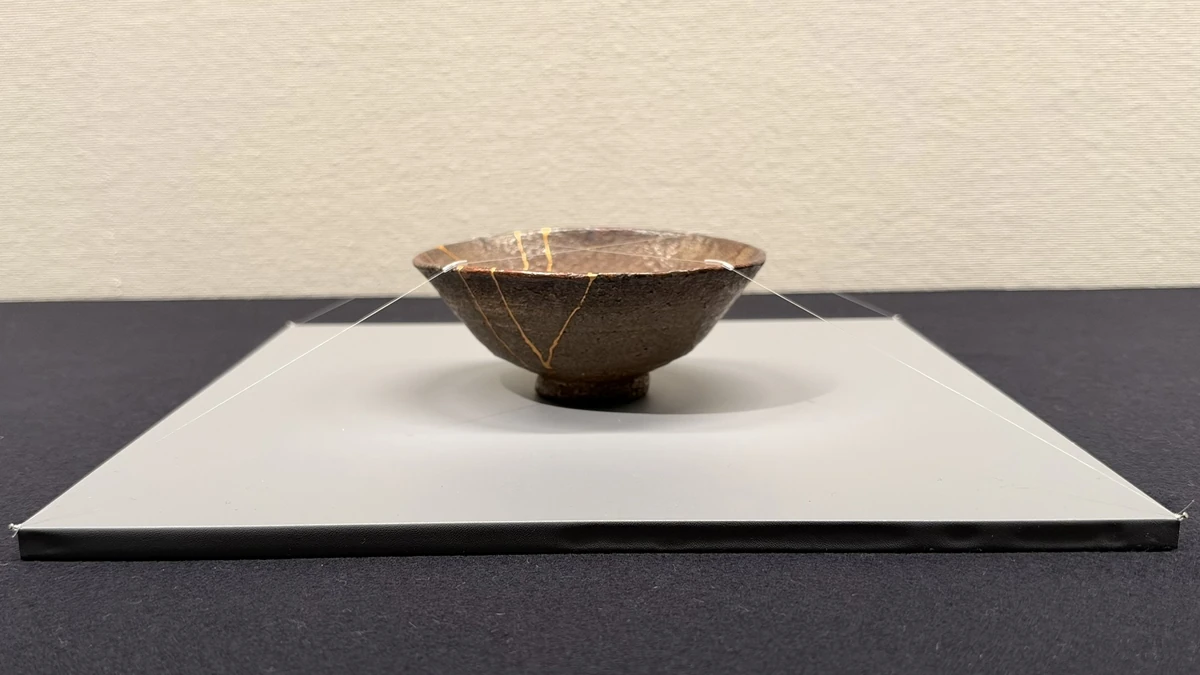
The bowls below are all listed in Room 4. For most of them I took two photos, one from above and one from a low angle. Tea people pay close attention to three areas: the interior (mikomi), where the tea is whisked; the body; and the foot ring (kōdai) underneath. Comparing the two views shows the shape of the rim, the height of the bowl and how the foot sits.
Tea Bowl, Shukō Celadon
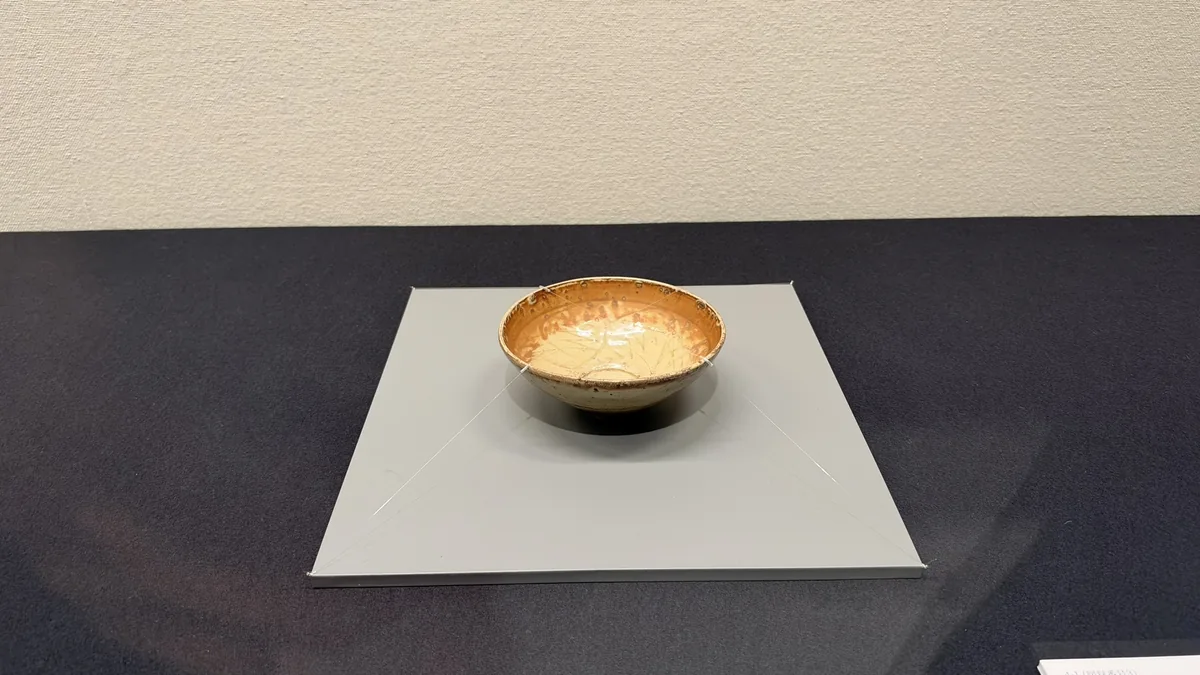
A celadon bowl made in China and handed down in the North Mitsui family. The inside looks yellowish-brown and the outside a pale grey-green. The rim spreads wide while the foot stays small. This is a different bowl from Haran, the Shukō celadon in Room 1.
Tea Bowl, named “Zansetsu,” Kohiki type
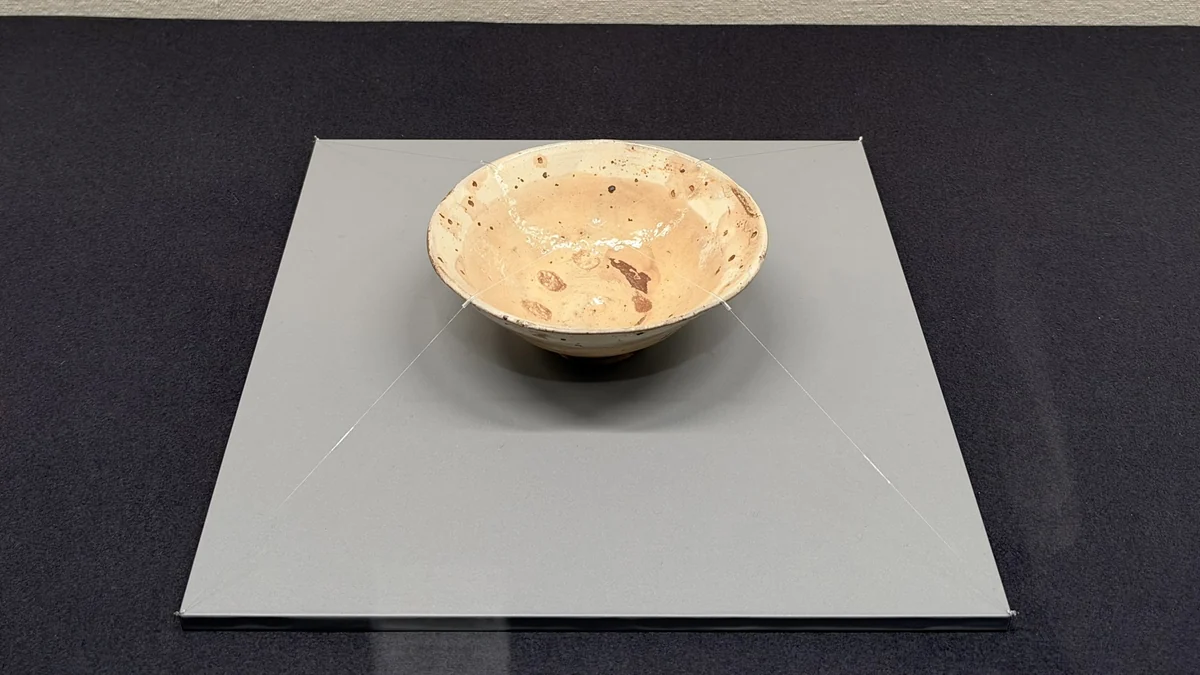
Kohiki bowls are coated with white slip, which the name compares to a dusting of flour. This one comes from the North Mitsui family. Brown spots are scattered across the whitish inside, and small brown specks show through the white slip outside. Its name means “lingering snow.” It is not the same bowl as the Miyoshi-kohiki in Room 1.
Tea Bowl, named “Takigawa,” Ao-ido type
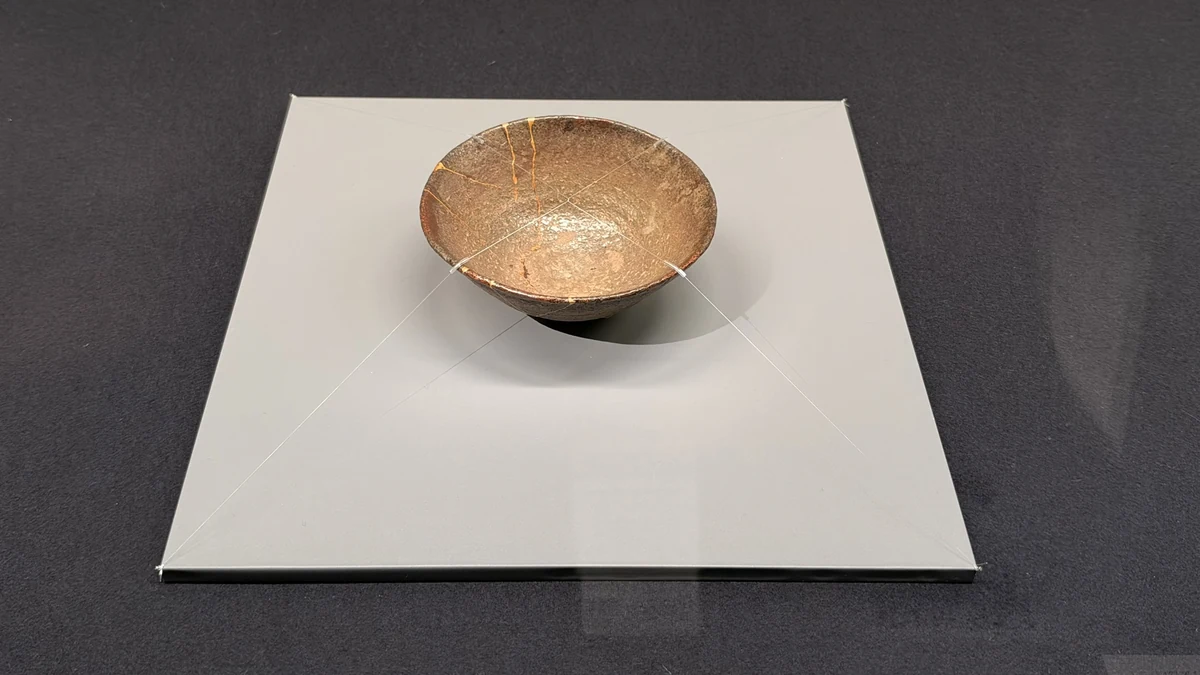
An Ao-ido bowl from Korea, formerly in the North Mitsui family. Gold-colored repair lines run across both the brown interior and the dark exterior. Tea collectors have long valued visible repairs like these rather than hiding them. The rim is warped, and the bowl is low and wide.
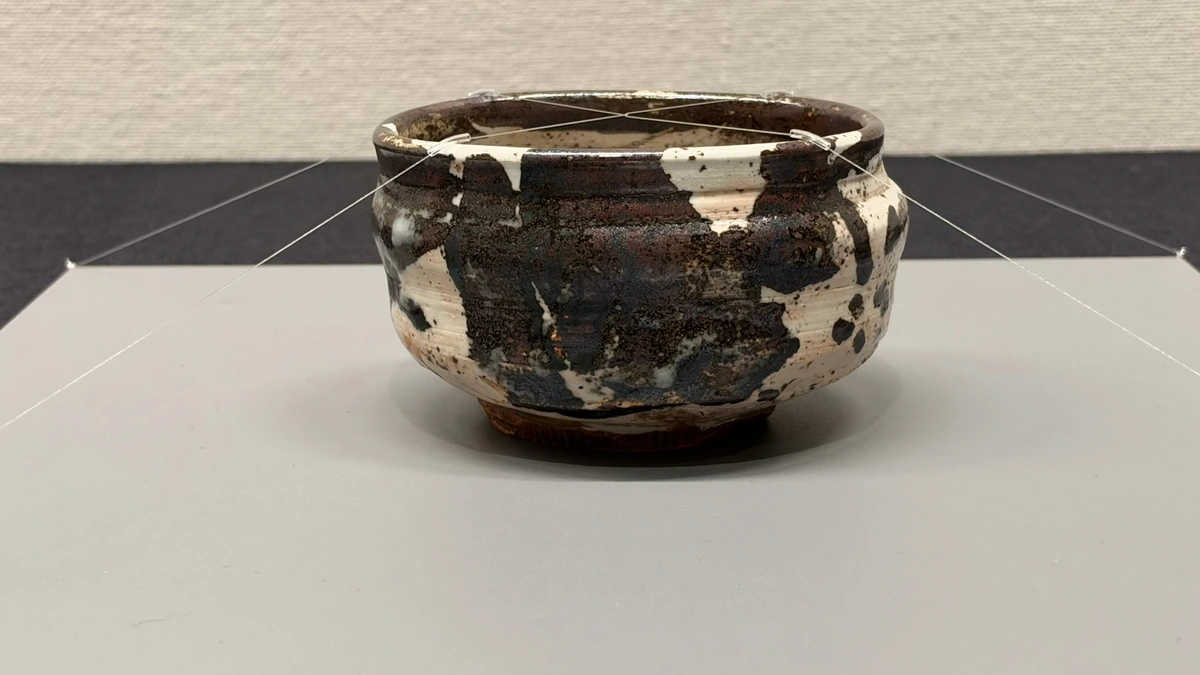
Tea Bowl, Gosho-maru type, known as “Kurobake”
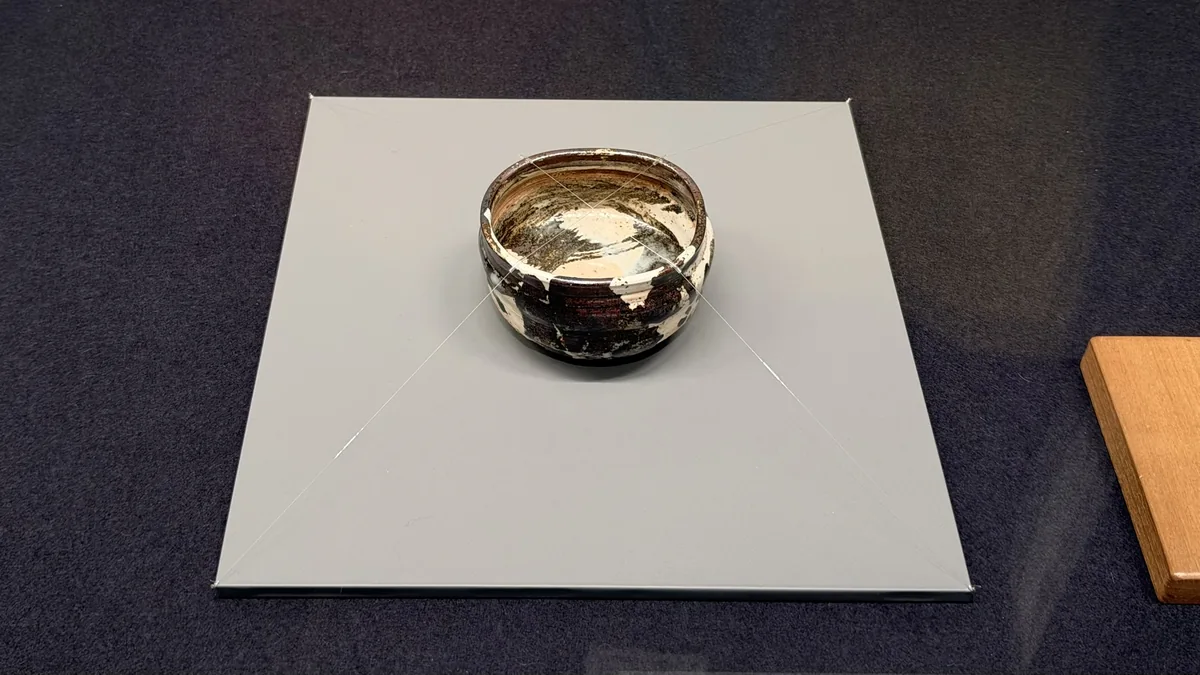
Large black-brown and white brush-like patterns wrap from the outside into the interior. The bowl, from the North Mitsui family, has a warped rim and a low body that swells outward.
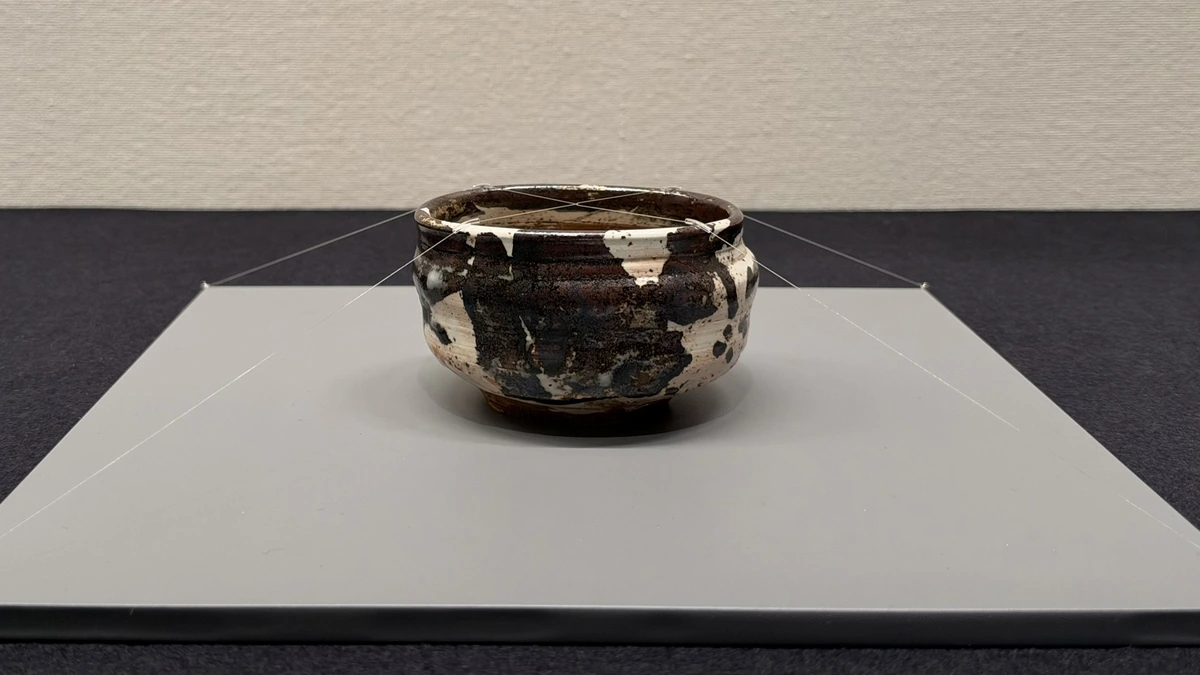
The same side, photographed closer. Besides the black-and-white pattern, you can see the swell of the lower body and the color of the clay near the foot.
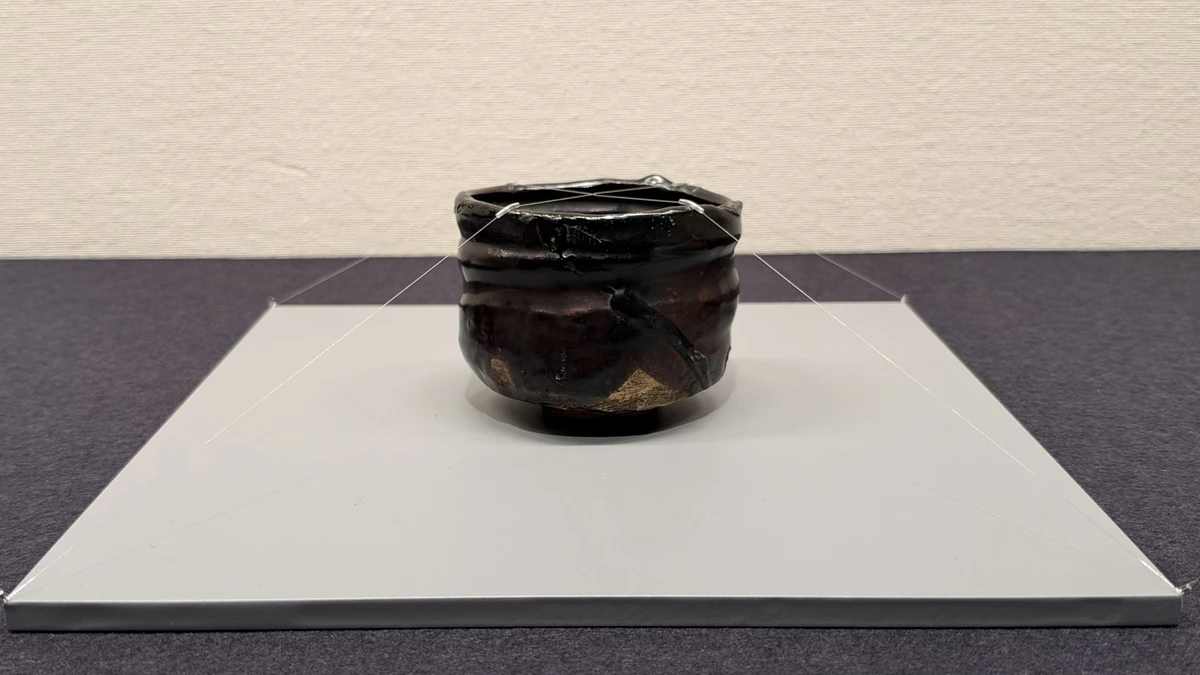
Tea Bowl, named “Utatane,” Black Seto ware
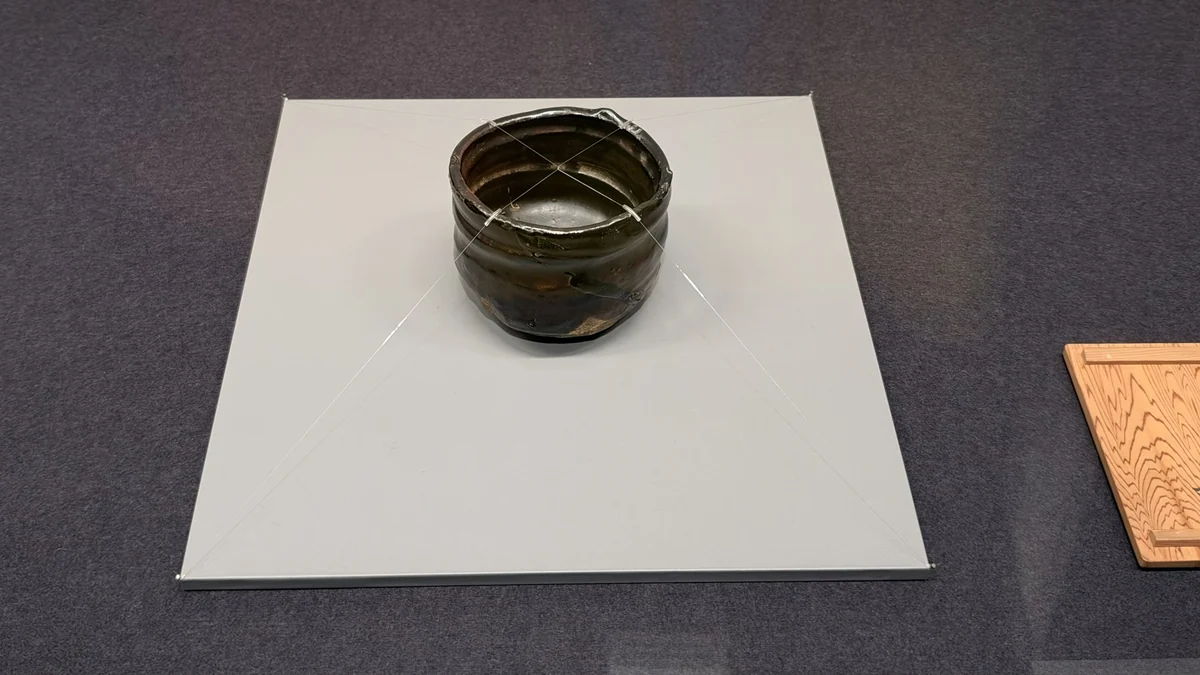
A black bowl made in Japan and handed down in the North Mitsui family. The inside is glossy black and the rim is warped. The black-brown body is uneven, with horizontal ridges, and bare clay shows near the bottom. The name means “a short nap.”
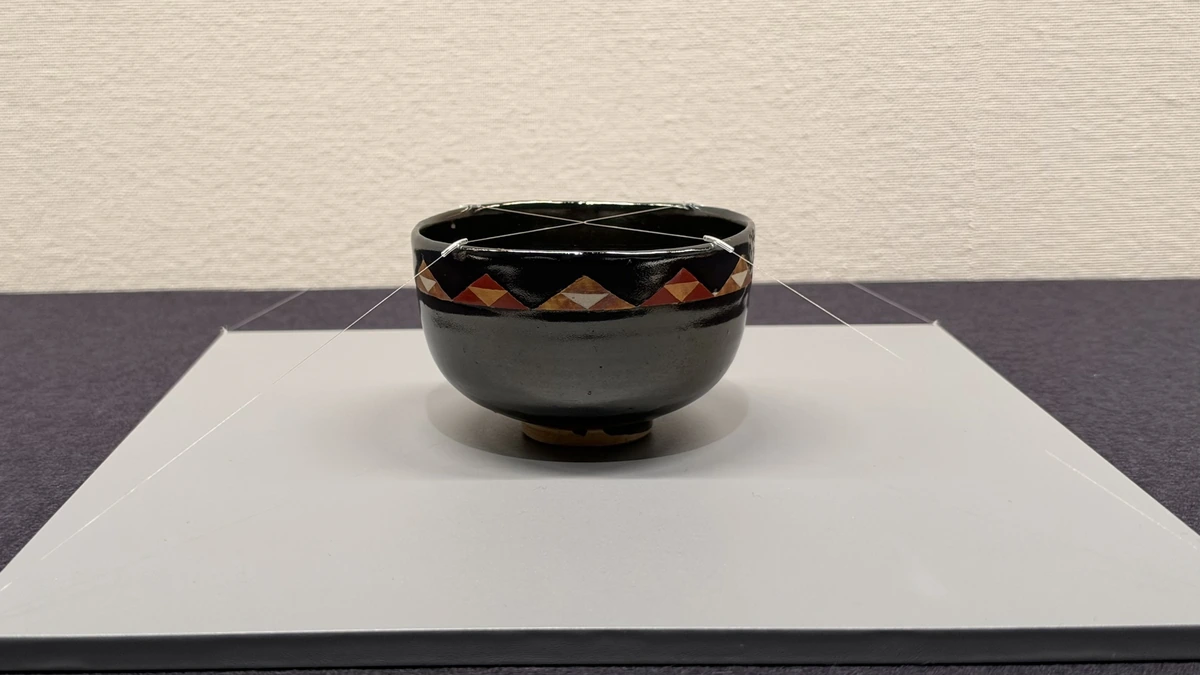
Tea Bowl with Scales Design in Overglaze Enamels (Nonomura Ninsei)
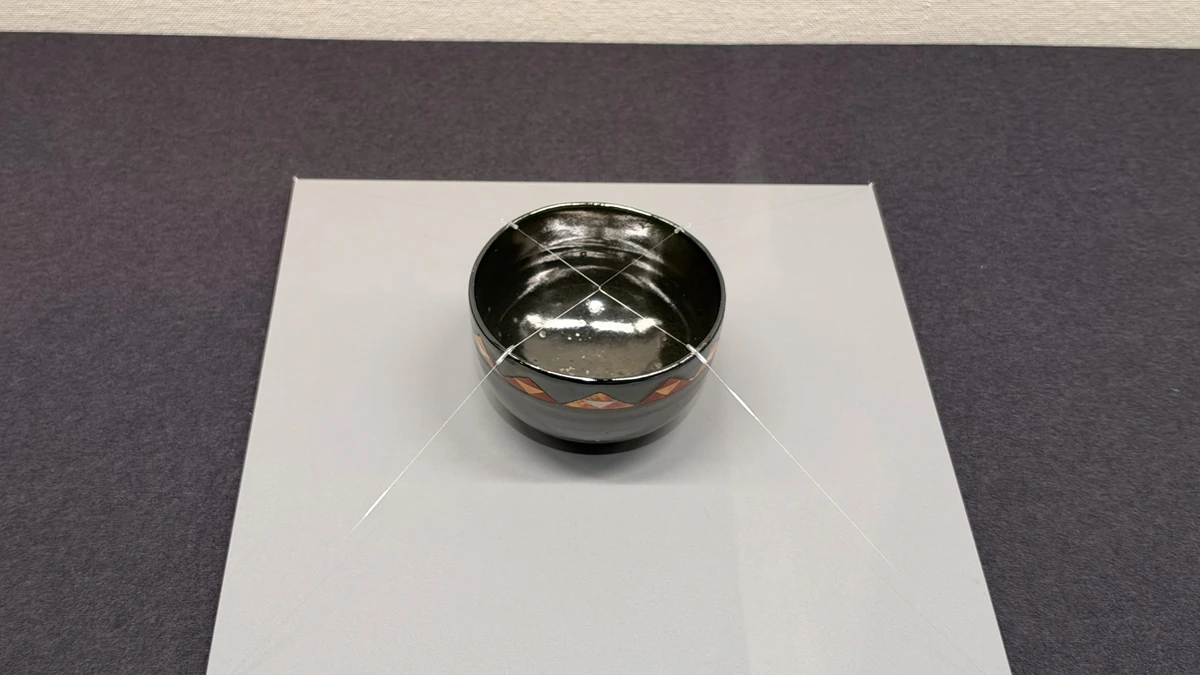
By Nonomura Ninsei, a 17th-century Kyoto potter famous for colorful enameled wares, and formerly in the Shinmachi Mitsui family. The inside is glossy black with a row of triangles under the rim. Around the upper body runs a band of red and gold-toned triangles forming a scale pattern.
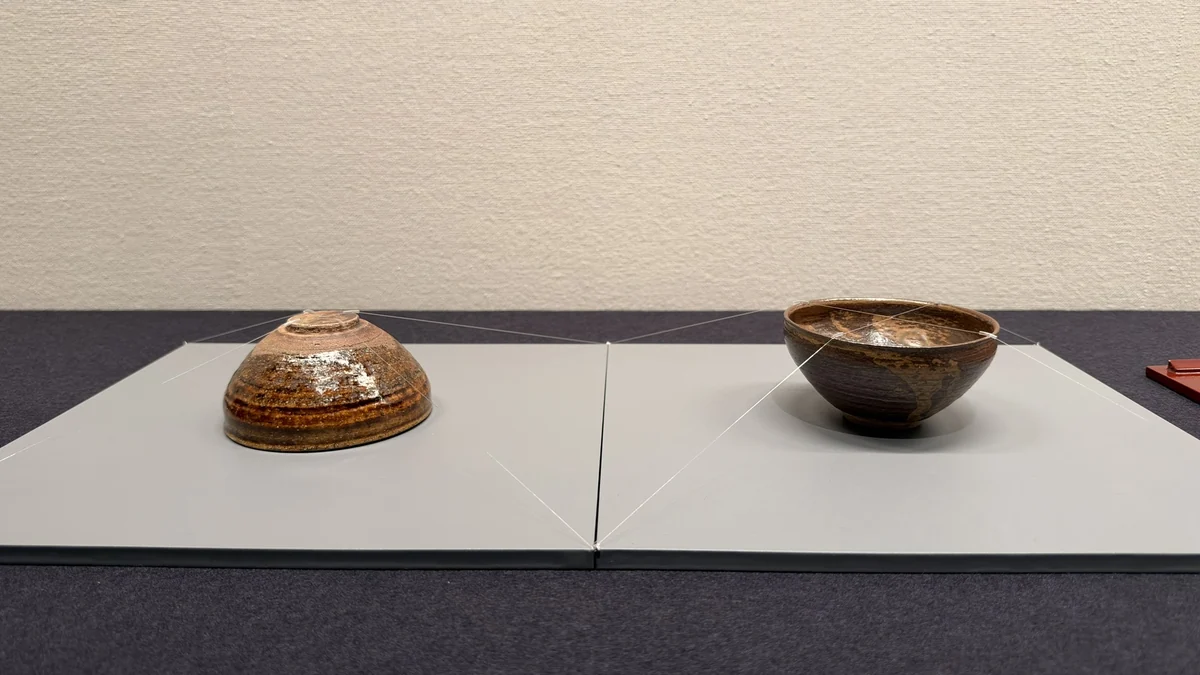
Tea Bowl, Tenmoku type, passed down from Sangen-in, Daitokuji
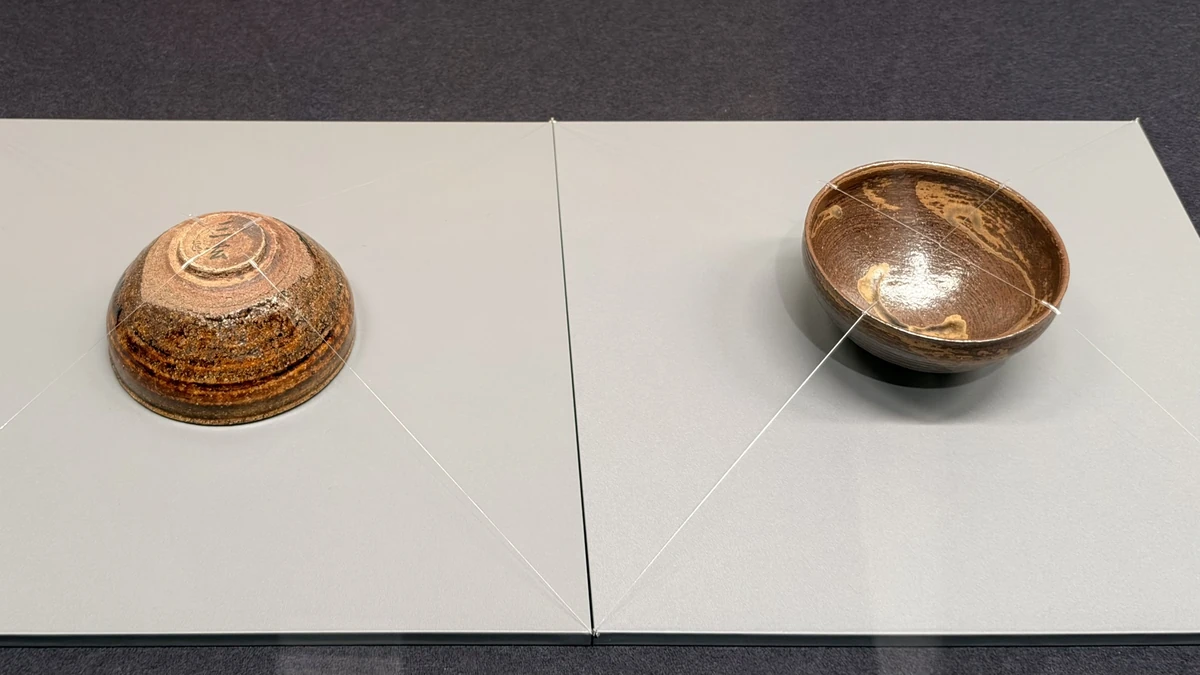
Part of a set of twenty bowls made by Ninsei and handed down at Sangen-in, a sub-temple of Daitokuji in Kyoto, later owned by the Muromachi Mitsui family. Two bowls were on display: one upside down to show the foot, the other upright to show the interior.
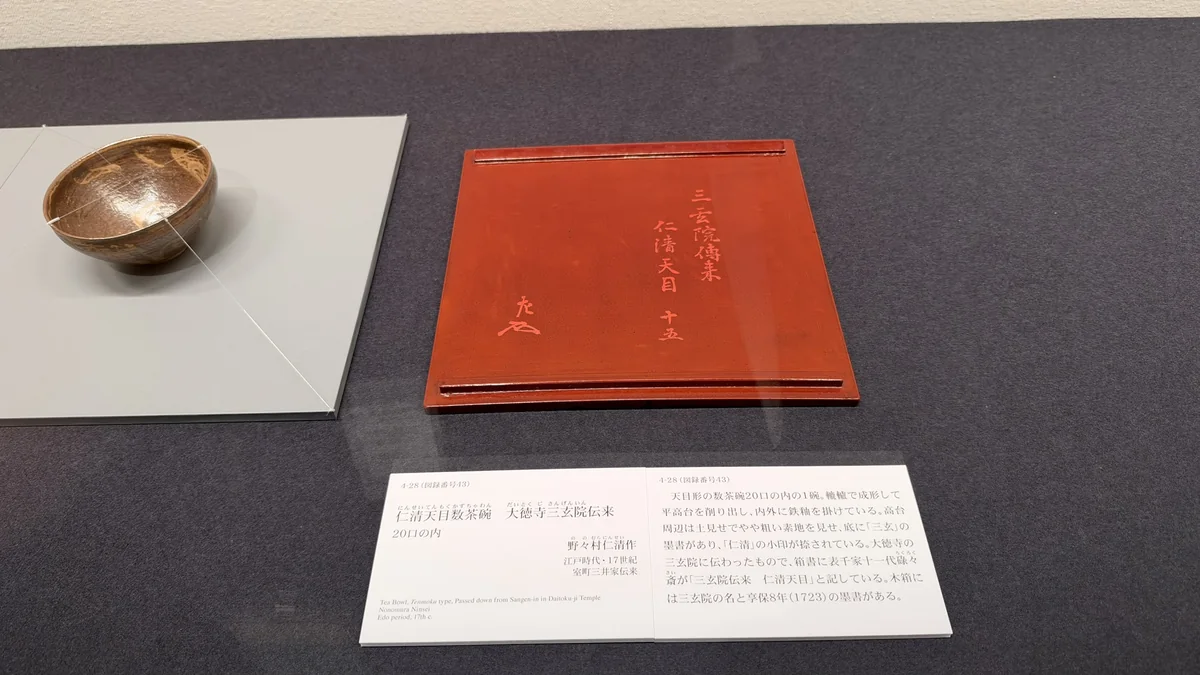
Next to the bowls was a red lacquer box lid inscribed with characters indicating that the set came from Sangen-in and was made by Ninsei.
Faceted Tea Bowl, Takatori ware
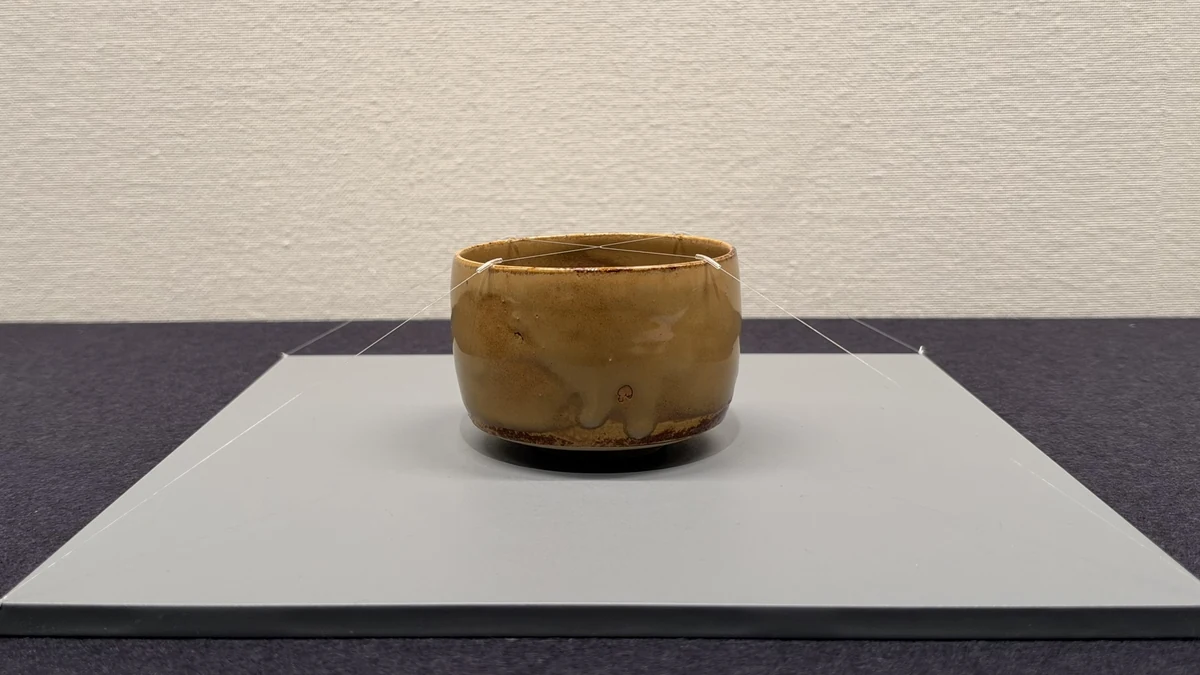
A 17th-century bowl from the Takatori kilns in Kyushu, formerly in the Muromachi Mitsui family. Yellowish-brown glaze runs down a body cut into soft facets, and the foot is low.
How much time to allow: about 1 hour 20 minutes on my visit
From the first room to the last, my visit took about an hour and twenty minutes. On Saturday, October 24, 2026, there were other visitors, but I never had to wait to see a bowl. The museum says it may limit entry when the galleries get crowded.
You walk through Rooms 1 to 7 in order. The most celebrated bowls are in Rooms 1 and 2, Chinese, Korean and Japanese bowls fill Room 4, and Raku, Eiraku and handmade bowls follow in Rooms 5 to 7.
Last entry is 16:30 and the museum closes at 17:00. To spend the same time I did, plan to go in by about 15:40.
Dates, admission and discounts: no booking needed
| Dates | Sep 12 (Sat) – Nov 23 (Mon, national holiday), 2026 |
|---|---|
| Hours | 10:00–17:00 (last entry 16:30) |
| Closed | Mondays (open Sep 21, Oct 12, Nov 2 and Nov 23) and Tue, Oct 13. Remaining closed days after Nov 6: Nov 9 and 16 |
| Adults | ¥1,200 |
| High school / college students | ¥700 with a valid student ID of the type that qualifies for a student commuter pass in Japan (no copies or expired IDs) |
| Junior high and younger | Free |
| Age 70 and over | ¥1,000 (proof of age required) |
| Disability certificate | Free for the holder and one caregiver (Mirairo ID accepted) |
| Second visit | Show your ticket stub from this exhibition: adults ¥1,000, students ¥600 |
| Booking | Not needed. Entry may be limited when crowded |
| Audio guide | Japanese only, ¥800 |
Buying a ticket
I bought my ticket at the museum’s reception desk on the day. No reservation is needed. When I checked on November 6, 2026, I could not find online tickets for this exhibition on Asoview, KKday or JTB.
Discounts: the online coupon and the three-museum offer
The museum publishes an English coupon that takes ¥100 off admission. I only learned about it after my visit, so do use it if you are going.
- ¥100 off the entrance fee: adults pay ¥1,100 and students ¥600 for this exhibition
- Show the coupon on your phone screen or bring a printout when you pay
- One coupon per person; it cannot be combined with other discounts
- Valid for both collection and special exhibitions. Check the museum’s site before you go in case it changes
If you also plan to visit the Nezu Museum or the Gotoh Museum, the autumn three-museum offer (Japanese page) also applies. It covers this exhibition, the Nezu Museum’s special exhibition of bugaku court-dance costumes (Oct 24 – Nov 23), and the Gotoh Museum’s special exhibition on Muromachi-period seasonal imagery and linked-verse poetry sheets (Oct 27 – Dec 6).
- Show a used ticket from one of the three exhibitions when paying at either of the other two, and you get ¥100 off
- Once per person per exhibition; it cannot be combined with other discounts
- Collect used tickets from all three and you can see one of the designated next exhibitions free, once per person. At the Mitsui Memorial Museum this is the next exhibition, “National Treasure: Pine Trees in Snow and the Four Seasons”
Photography
Photography, filming and audio recording are generally not allowed in the galleries, though some works or rooms may be open to photography depending on the exhibition. The tea bowl photos in this guide were taken on my visit, and all of them are works the list places in Room 4. Follow the signs in each room.
English support
The museum’s English page gives the dates and admission in English, and an English list of works is available as a PDF. The audio guide is in Japanese only. Download the English list before you go so you can match the names to the bowls in each room.
After the exhibition closes
This exhibition ends on November 23, 2026. The next exhibition, “National Treasure: Pine Trees in Snow and the Four Seasons” (国宝 雪松図と四季), runs from December 12, 2026 to January 30, 2027, and the museum is closed on Mondays (open Jan 4 and 11) and from December 28 to January 3. There is no guarantee that the bowls in this guide will be on display after November 23, so check the museum’s website before you visit.
Admission, hours and closing days were checked on the museum’s official website on November 6, 2026.
Getting there: Mitsukoshimae Exit A7 or Tokyo Station
Nihonbashi was the commercial heart of Edo, as Tokyo was called before 1868, and the Mitsui business grew up here. The museum is on the 7th floor of the Mitsui Main Building, but you enter through the 1st-floor atrium of the neighboring Nihonbashi Mitsui Tower. I came from Mitsukoshimae Station. The museum’s own directions give Exit A7 of the Tokyo Metro Ginza Line as about one minute away.
Access
| Address | Mitsui Main Building 7F, 2-1-1 Nihonbashi Muromachi, Chuo-ku, Tokyo |
|---|---|
| Entrance | 1st-floor atrium of Nihonbashi Mitsui Tower |
| Mitsukoshimae (Ginza Line) | Exit A7, about 1 min |
| Mitsukoshimae (Hanzomon Line) | About 3 min (1 min from Exit A7) |
| Nihombashi (Ginza / Tozai Lines) | Exit B9, about 4 min |
| Nihombashi (Toei Asakusa Line) | About 6 min (4 min from Exit B9) |
| JR Tokyo Station | Nihombashi Exit, about 7 min |
| JR Kanda Station | South Exit, about 6 min |
| JR Shin-Nihombashi (Sobu Rapid Line) | Underground connection; about 4 min toward Mitsukoshimae Station |
| Free bus | Metro Link Nihonbashi, “Mitsui Memorial Museum” stop, about 1 min |
| Parking | No museum parking |
| Phone | 050-5541-8600 (in Japan); 047-316-2772 from overseas (+81-47-316-2772) |
On my visit, a poster outside pointed to the entrance, and inside the atrium there was an exhibition sign and an “入口” (entrance) sign.
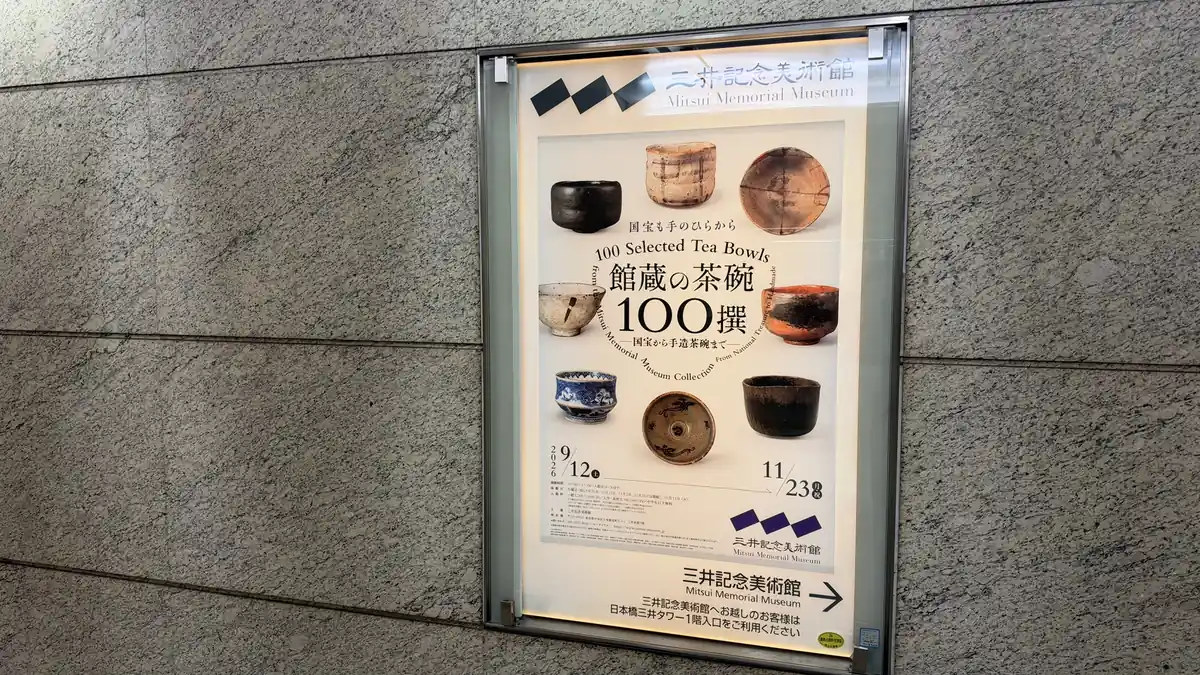
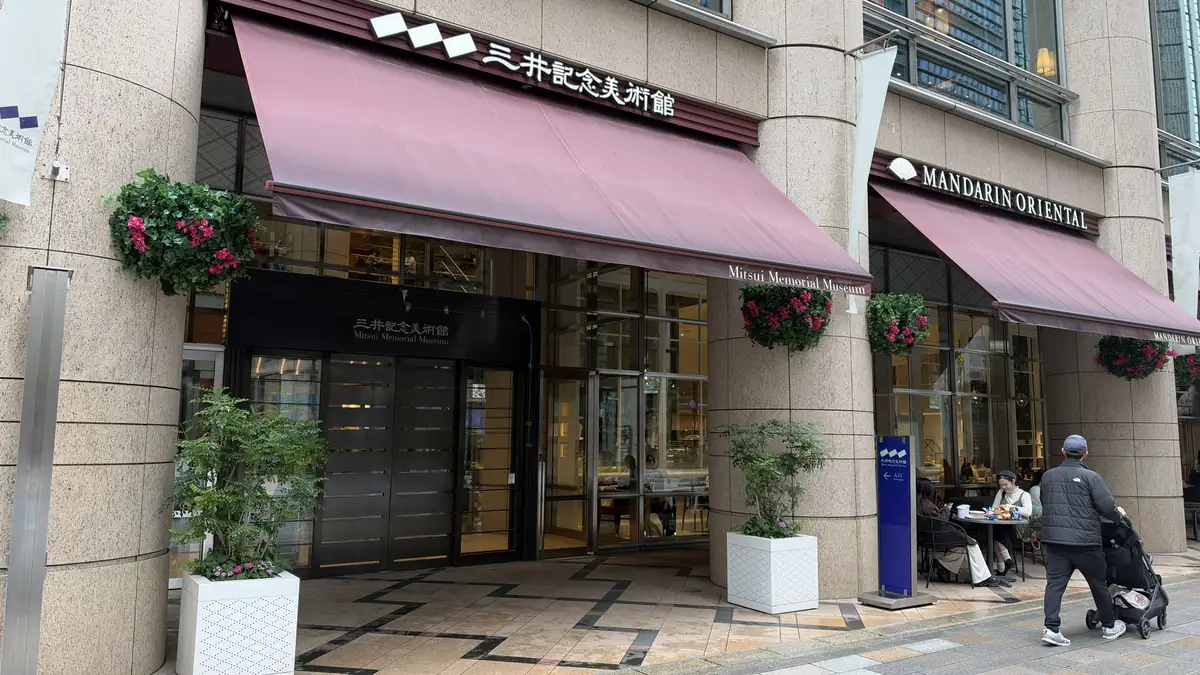
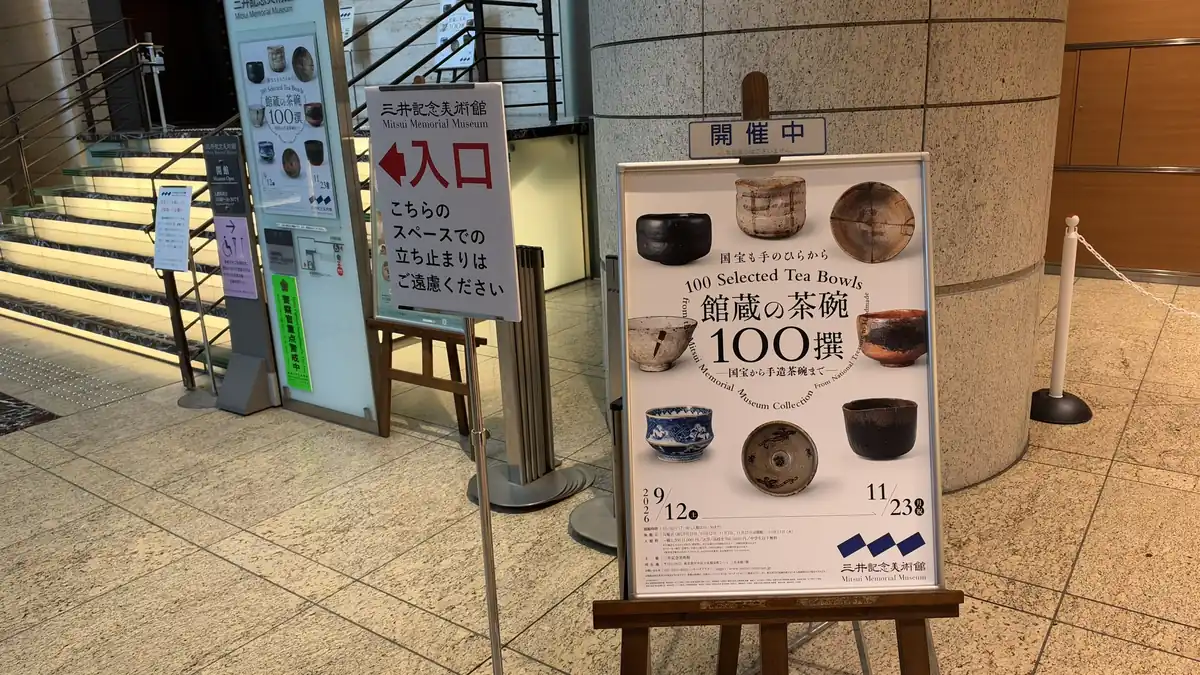
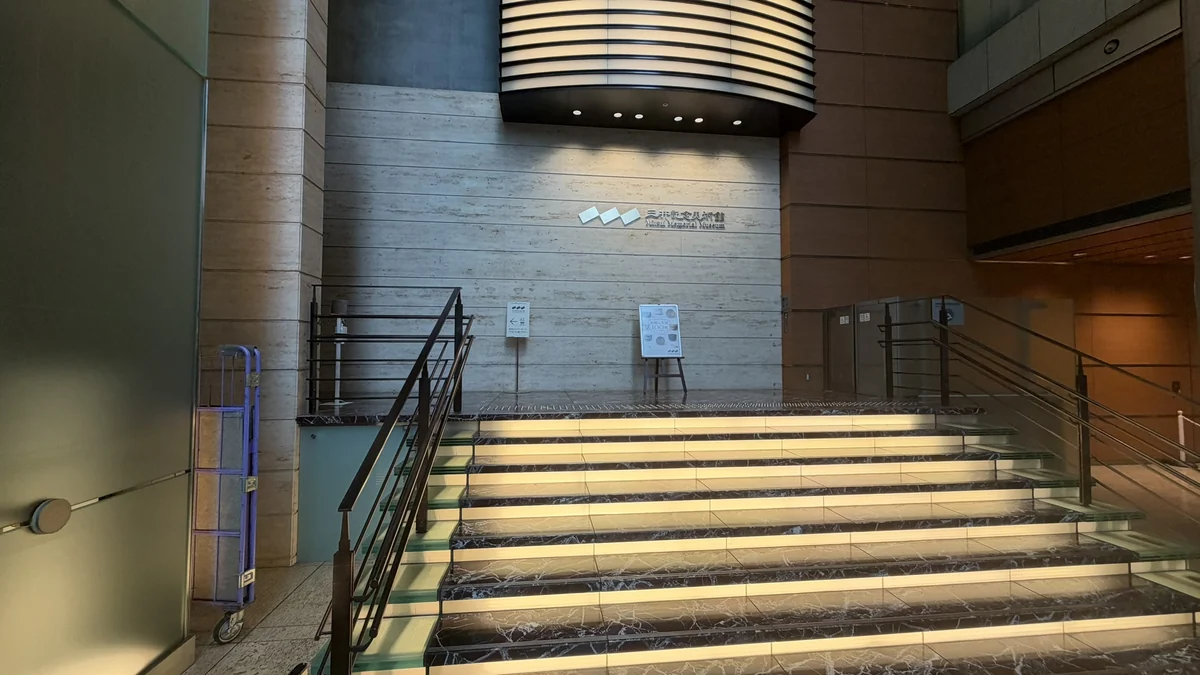
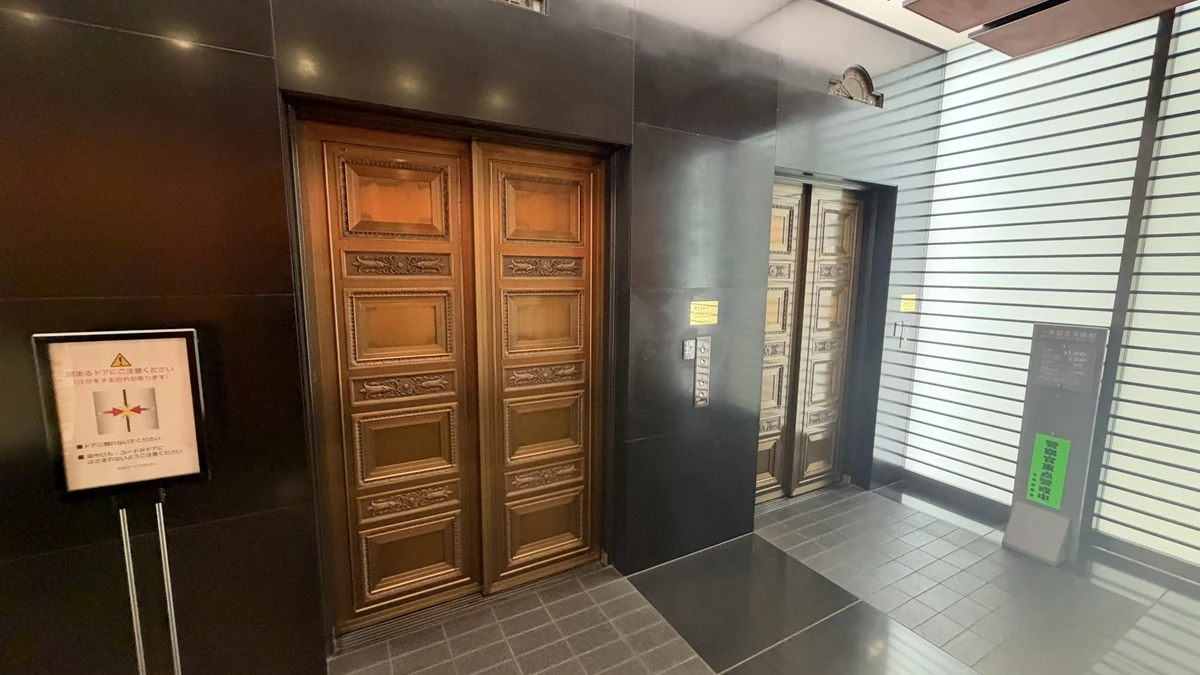
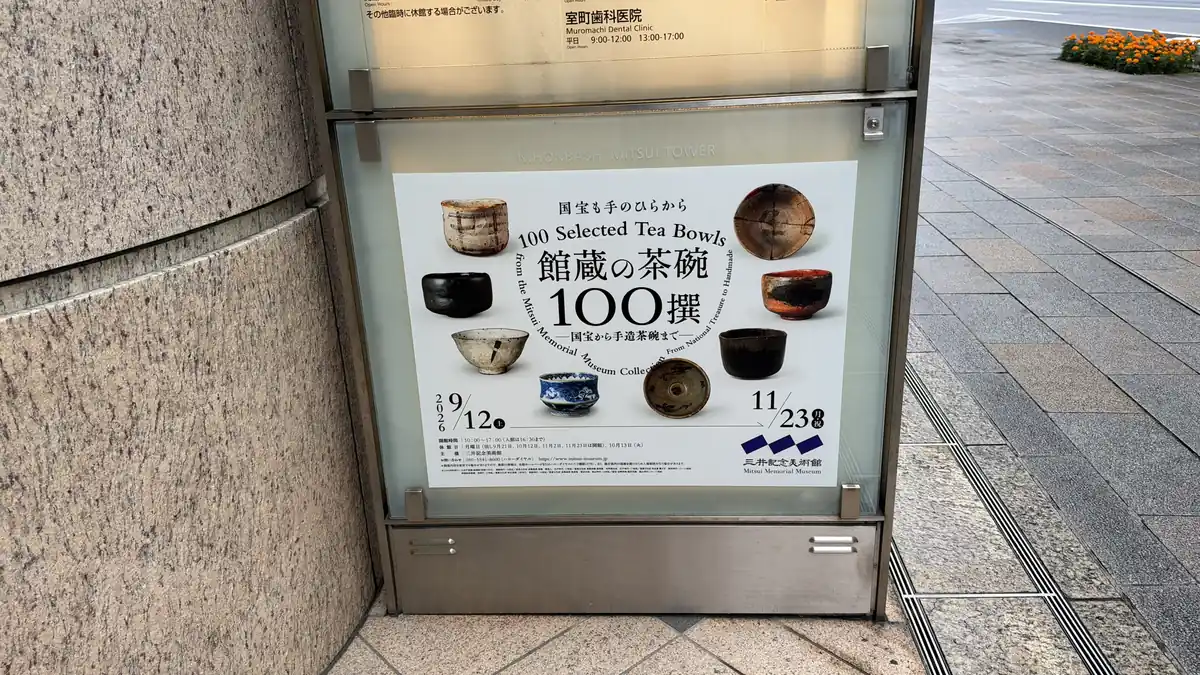
Tap a photo to enlarge it (taken October 24, 2026)
Related guides
Where to stay before or after the Mitsui Memorial Museum
PRThis section contains affiliate links to Agoda. If you book through them, this site earns a commission. I choose hotels for their location and how easy they are to travel from.
The museum is about seven minutes on foot from the Nihombashi Exit of Tokyo Station. If you want to explore Nihonbashi and the Imperial Palace area, stay around Tokyo Station; if your priority is catching a shinkansen or getting to Haneda Airport the next day, Shinagawa is a good base.
CLOSE TO THE MUSEUM
Tokyo Station area
About 7 min on foot from the Nihombashi Exit to the museum
Good if you also want to walk the Edo Castle remains in the Imperial Palace East Gardens on the Marunouchi side. There is a wide choice of hotels, and you can walk to the museum from the Nihombashi Exit.
The area includes hotels on both the Yaesu and Marunouchi sides, so the walk to the museum varies. Check the location on a map before you book.
Browse Tokyo Station hotels on AgodaEASY TO MOVE ON
Shinagawa area
Around Shinagawa Station, a Tokaido Shinkansen stop
Good if you are moving on by shinkansen or plane the next day. The Keikyu Line runs to Haneda Airport. To reach the museum, take a JR train to Tokyo Station and walk from the Nihombashi Exit.
Some hotels in this area are a fair distance from the station. Check the distance before you book.
Browse Shinagawa hotels on AgodaA SPECIAL STAY
The Tokyo Station Hotel
Inside the Marunouchi station building (Marunouchi South Exit)
A hotel that opened in 1915 inside Tokyo Station’s red-brick Marunouchi building, where you stay in the historic station itself.
The 7-minute walk to the museum is measured from the Nihombashi Exit, not from the hotel. Check prices for your dates.
Check rates on AgodaThe links open with Agoda’s default dates and guest count. Check the dates, price, and cancellation terms on the booking page before you reserve.
Frequently asked questions
No. You can buy a ticket at the reception desk on the day. Entry may be limited when the galleries are crowded.
No. It is a museum exhibition for viewing tea bowls used in the Japanese tea ceremony. You do not drink tea in the exhibition.
My visit took about an hour and twenty minutes from the first room to the last. Last entry is 16:30, so to allow the same time, go in by about 15:40.
The list of works places it in Room 2, and I saw it on October 24, 2026. The list notes that the program may change, so check the museum’s website or call 050-5541-8600 (047-316-2772 from overseas) for the latest information.
The museum’s website has an English page and an English list of works (PDF). The audio guide is Japanese only, so downloading the English list before your visit helps.
Photography is generally not allowed in the galleries, but some works or rooms may be open to photography depending on the exhibition. Follow the signs in each room.
Show the museum’s online coupon when you pay for ¥100 off (one per person, not combinable with other discounts). A used ticket from the Nezu Museum or Gotoh Museum’s participating exhibition also gives ¥100 off, and on a second visit during the exhibition your ticket stub brings adult admission down to ¥1,000.
The nearest is Mitsukoshimae Station on the Tokyo Metro Ginza Line, about one minute from Exit A7. From JR Tokyo Station it is about seven minutes on foot from the Nihombashi Exit. Enter through the 1st-floor atrium of Nihonbashi Mitsui Tower; the galleries are on the 7th floor of the Mitsui Main Building.


comment