


Seeing the Yohen Tenmoku at Seikado in Tokyo: Dates, Tickets and How to Get There
I went to the Seikado Bunko Art Museum in Marunouchi, central Tokyo, to see the National Treasure Yohen Tenmoku (Inaba Tenmoku) tea bowl. Here are the display dates, how to get there from Tokyo Station, ticket prices and discounts, and what my one-hour visit was like.
The Yohen Tenmoku is a black tea bowl made in China during the Southern Song dynasty (12th–13th centuries). Its dark glaze is covered with spots, each ringed with shimmering blue light. The Seikado Bunko Art Museum says only three complete examples survive, all handed down in Japan. One of them, known as the Inaba Tenmoku, belongs to Seikado, and it is a National Treasure of Japan.
The bowl is on view at Seikado at Marunouchi, the museum’s gallery in the Marunouchi business district between Tokyo Station and the Imperial Palace, until November 8, 2026. I visited on November 3 and spent about an hour inside. If you are interested in ceramics or Japanese history, I found it worth the ¥1,500 admission.
In this guide
Is the Yohen Tenmoku on view? Check the dates before you go
The tea bowl belongs to the Seikado Bunko Art Museum (静嘉堂文庫美術館). Its gallery moved in 2022 from Okamoto in Setagaya Ward to Marunouchi and now operates as “Seikado at Marunouchi.” The address is 2-1-1 Marunouchi, Chiyoda Ward, on the ground floor of the Meiji Life Building. Do not head to the old Setagaya site.
The bowl is not always on display. In the current exhibition, “Mingei SHOCK!! Seikado’s Kawai Kanjiro, 60 Years After His Death” (September 5 – November 8, 2026), the official exhibit list shows National Treasure No. 31, the Yohen Tenmoku, with no display-period mark. Under the list’s legend, an unmarked item is on view for the whole run. Some other works are swapped during the show, but not this bowl.
I could not confirm whether the bowl will be shown after November 8. The next exhibition is “THE MASKS: People Fascinated by Masks” (November 21, 2026 – January 17, 2027), but I could not confirm whether it includes the Yohen Tenmoku. Before you plan your trip, check the museum’s current exhibition page and exhibition schedule (both in Japanese), or contact the museum.
| Bowl | National Treasure Yohen Tenmoku (Inaba Tenmoku). Jian ware, Southern Song China, 12th–13th century |
|---|---|
| Exhibition | “Mingei SHOCK!!” September 5 – November 8, 2026 |
| Display schedule | Shown for the whole run, per the official exhibit list |
| Hours | 10:00–17:00 (last entry 30 minutes before closing). Open until 19:00 on November 6 and 7 |
| Closed | Mondays. If Monday is a public holiday, the museum opens and closes the next weekday. Temporary closures between exhibitions also happen, so check the official calendar |
What caught my eye in the bowl
Up close, each spot that looks like a black hole has a white rim. The rim is bluish in some places and white in others, and it stands out against the black glaze. Where small spots cluster around a large one, it reminded me of a cat’s paw pad.
The center of the interior was a plain dark navy with no pattern, and the contrast with the spotted area stayed with me. The bowl sits in a glass case you can walk around, so I could change position, and from the side I could see what looked like a small step in its profile.
As I looked at it, I wondered whether people are drawn to colors that shift gradually, the way we stop to watch a sunset. The bowl’s change from white to blue held my attention in the same way.
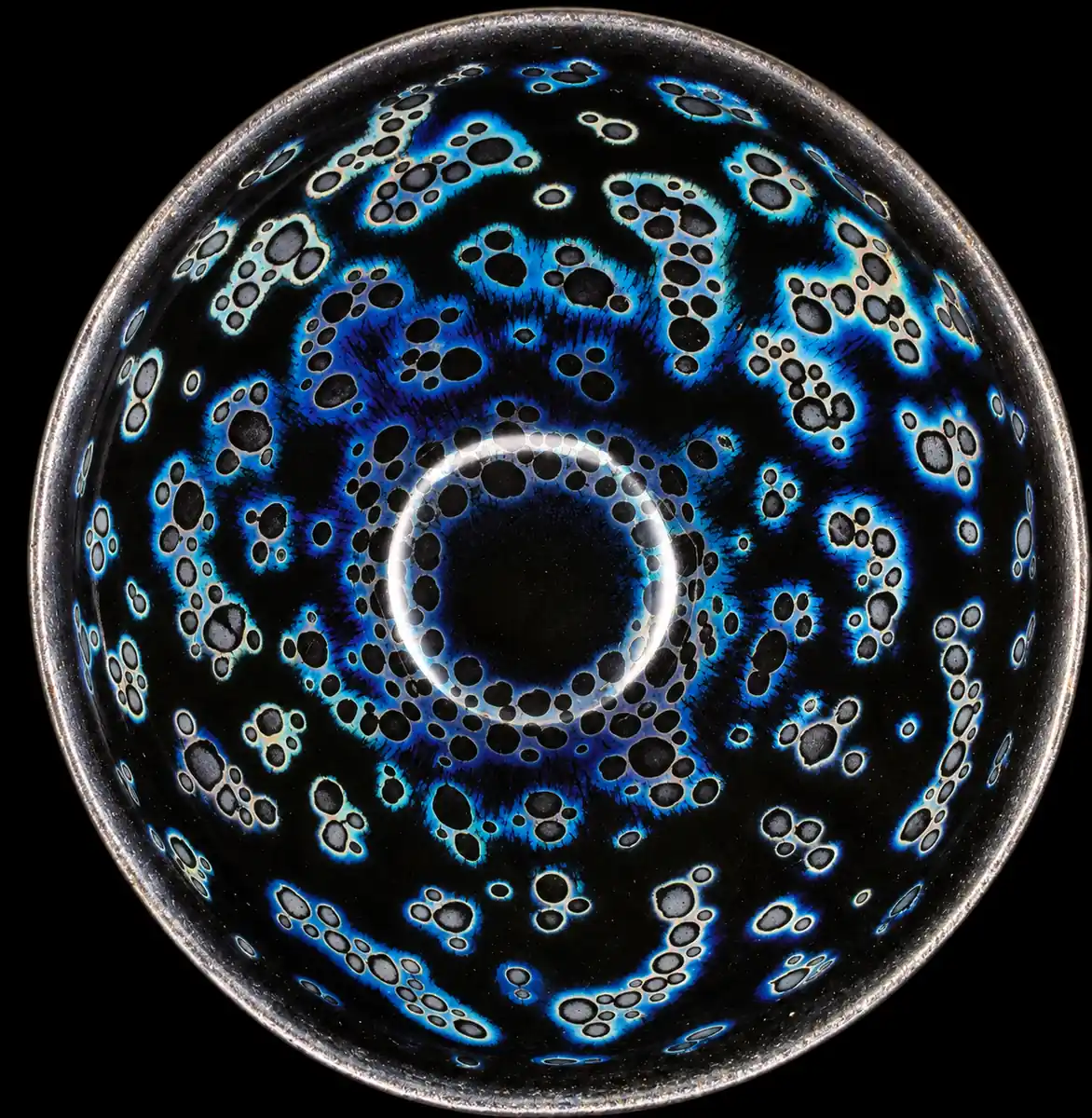
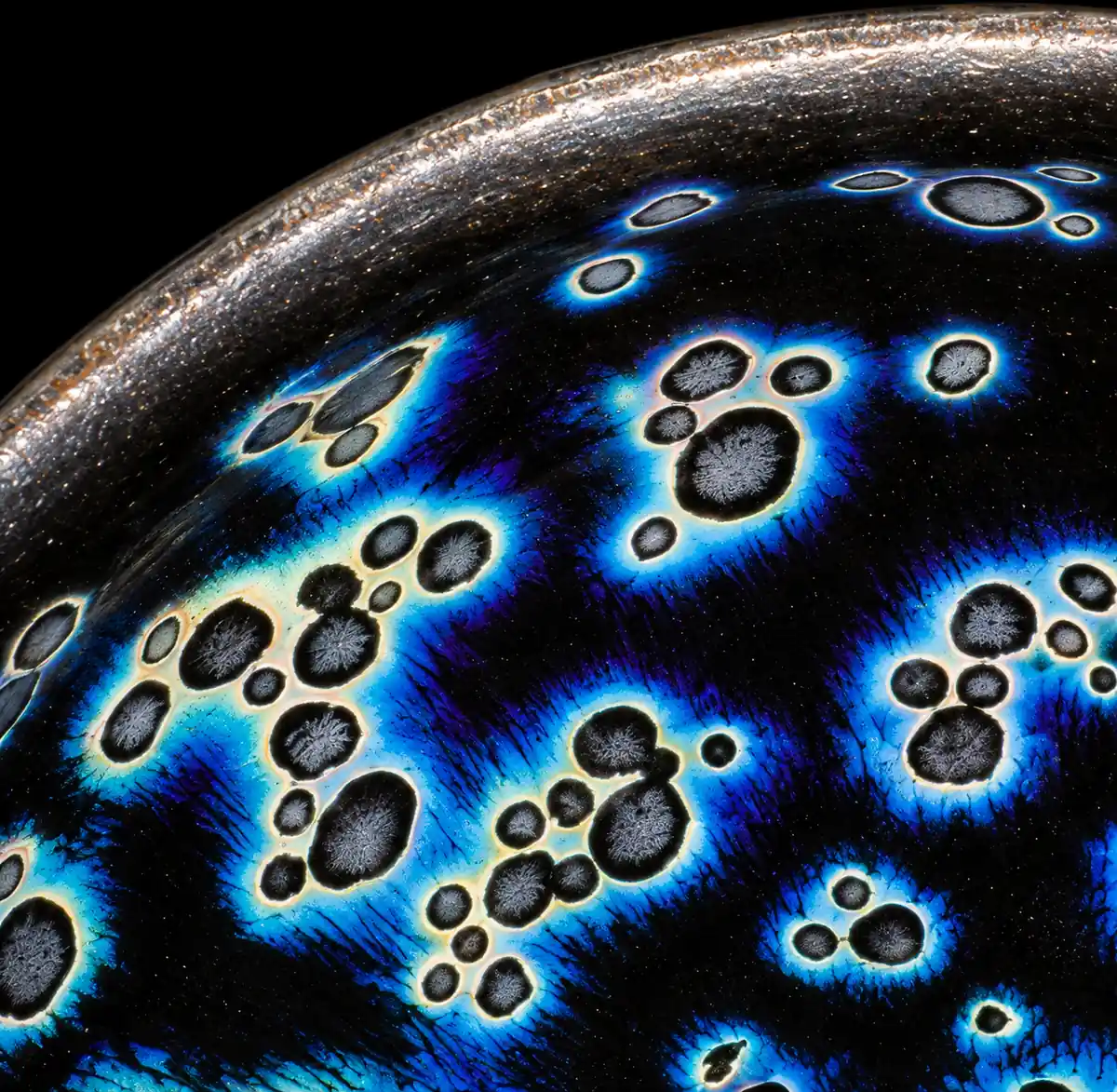
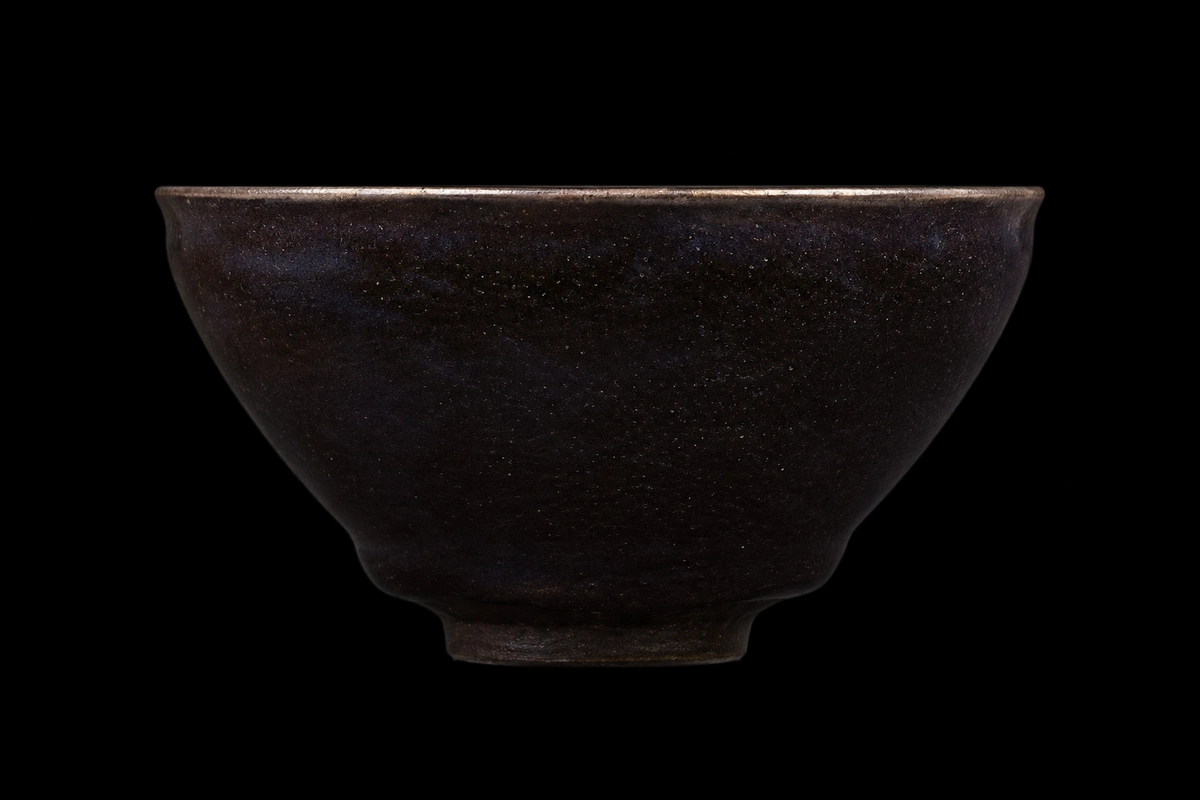
AI illustrationFrom left: the interior, a close-up of the spots and halos, and the bowl from the side. These are not photographs. Tap an image to enlarge.
I could not photograph the bowl on the day I visited, so the three images above are AI-generated impressions of its general look. They are not photographs of the real bowl or exact reproductions of its markings, colors or shape. To see the real bowl, visit the museum or its collection page (in Japanese).
Getting there from Tokyo Station
Marunouchi is the business district between Tokyo Station and the Imperial Palace grounds. The museum is on the ground floor of the Meiji Life Building (Meiji Seimei Kan), a short walk from the station.
According to the official guide, the museum connects directly to Exit 3 of Nijubashimae <Marunouchi> Station on the Tokyo Metro Chiyoda Line. (The station is named after Nijubashi, the famous bridge at the Imperial Palace.) From JR, it is about a 5-minute walk from the Marunouchi South Exit of Tokyo Station or from the Tokyo International Forum Exit of Yurakucho Station. The museum is on the ground floor, but from the station exit you still walk a little inside the building to reach the galleries.
Access
| Address | 2-1-1 Marunouchi, Chiyoda-ku, Tokyo (Meiji Life Building, 1F) |
|---|---|
| Subway | Chiyoda Line, Nijubashimae <Marunouchi> Station, Exit 3 (direct connection) |
| JR Tokyo Station | Marunouchi South Exit, about 5 min on foot |
| JR Yurakucho Station | Tokyo International Forum Exit, about 5 min on foot |
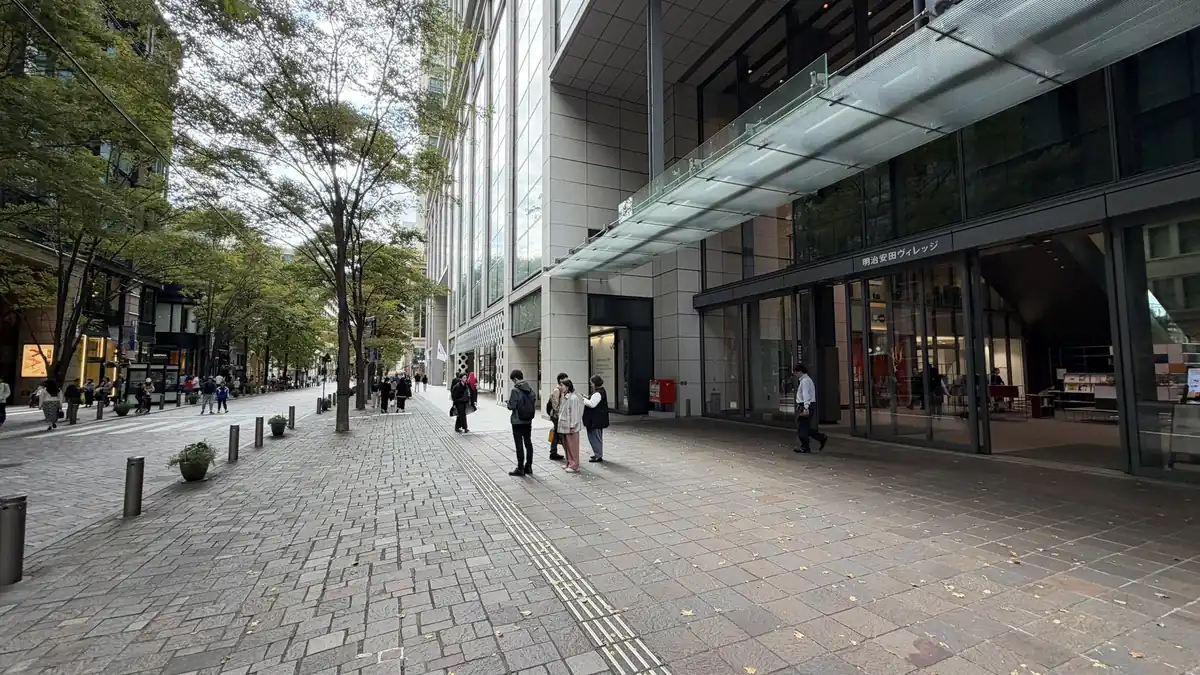
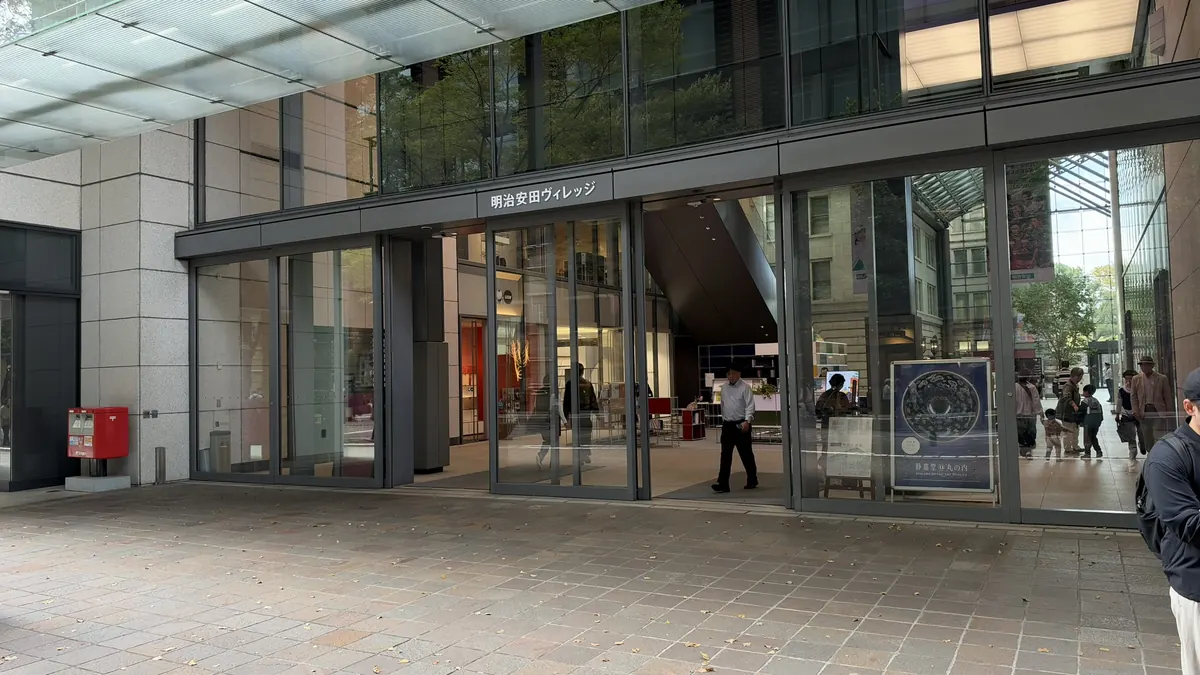
| Museum entrance | Through the Meiji Yasuda Village entrance on the Marunouchi Naka-dori side |
The maps below show Google Maps walking routes, one from Nijubashimae Station and one from the Marunouchi Central Gate of Tokyo Station. The official 5-minute figure is measured from the Marunouchi South Exit, so the time on the map may differ.
From Nijubashimae Station to the museum
From Tokyo Station Marunouchi Central Gate to the museum
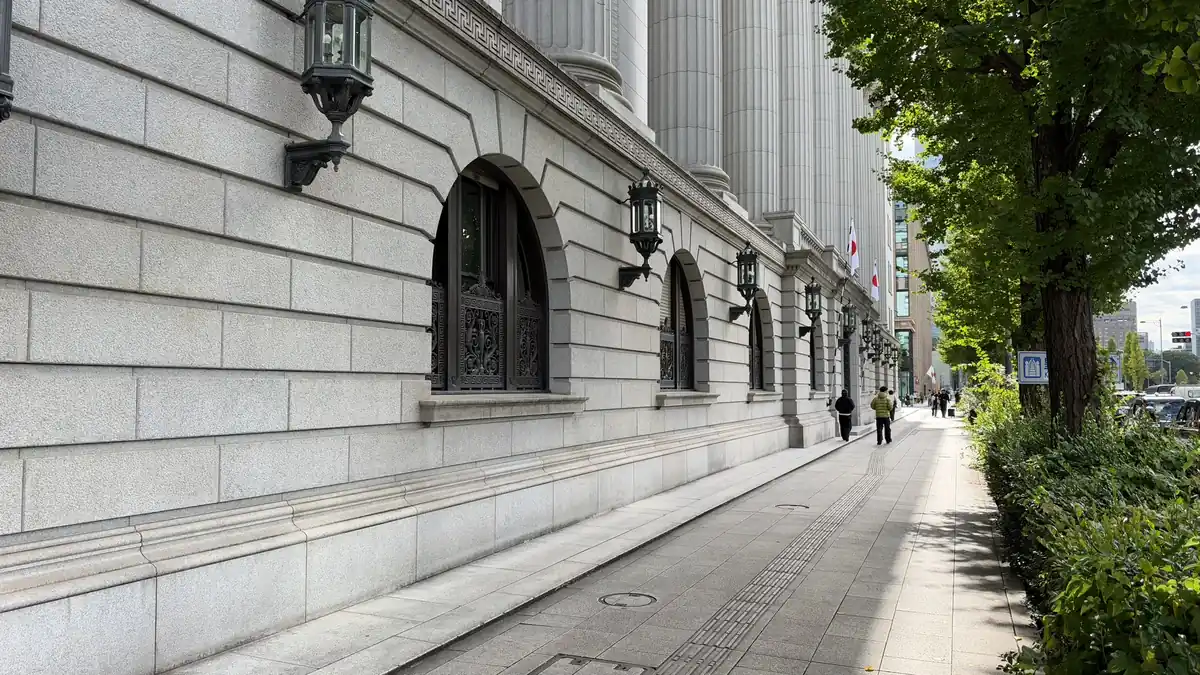
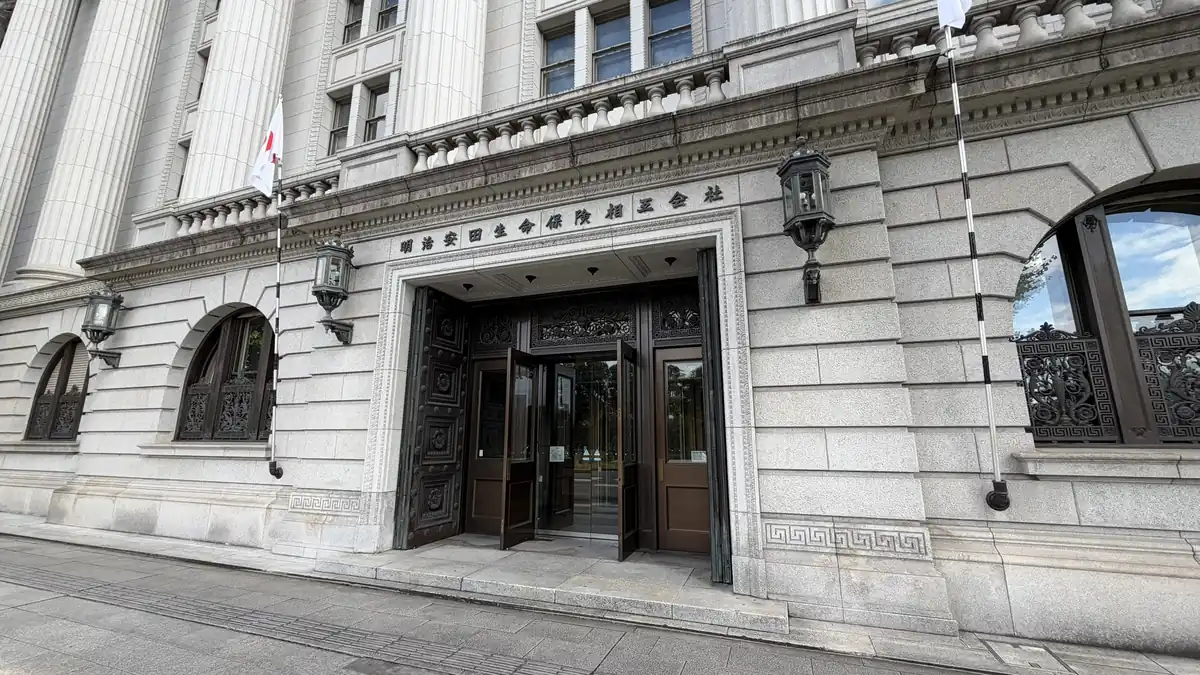
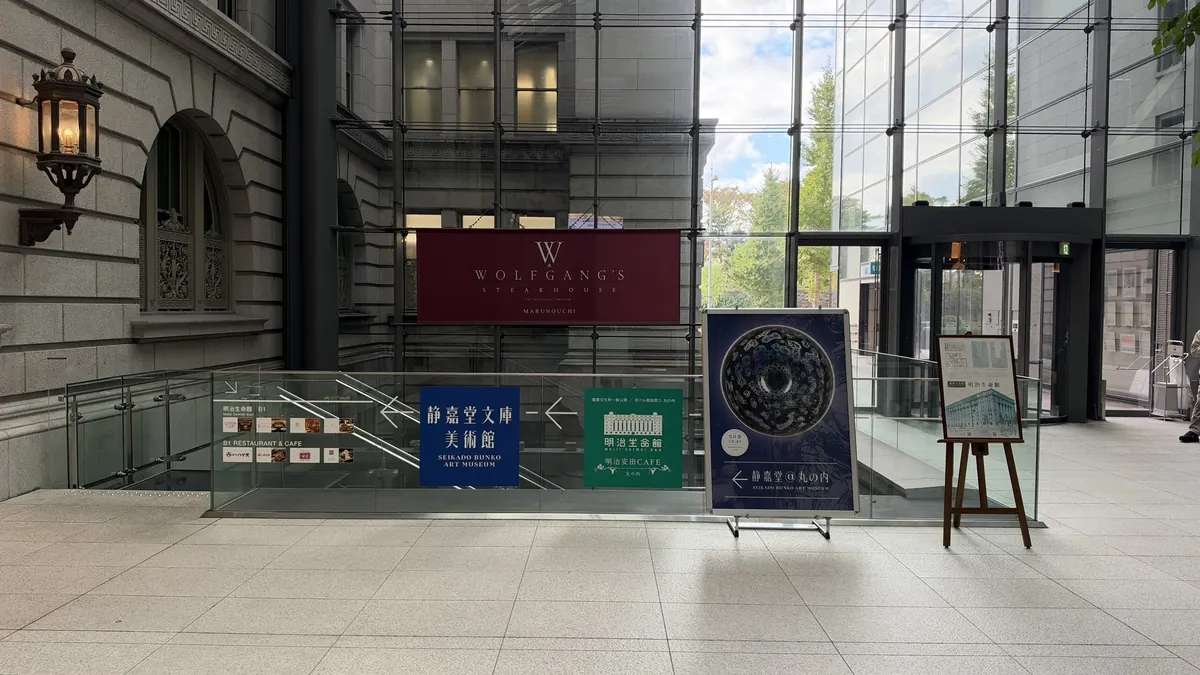
The last stretch was where I got lost. On November 3 I walked along the building from the wide avenue on the Imperial Palace side and could not find the museum entrance. In the end I entered through the Meiji Yasuda Village entrance on the Marunouchi Naka-dori side. The Meiji Life Building has an imposing main entrance with the company name above the doors, but that is not the door I used to reach the museum.
Tap a photo to enlarge
For the latest entrance information, see the Meiji Yasuda Village access page (in Japanese).
Tickets, reservations and discounts
Adult admission to “Mingei SHOCK!!” is ¥1,500. All prices are in Japanese yen. The museum’s official online ticket is for a set date and time, with no registration or fees. Walk-up tickets are also sold, but the museum prioritizes timed reservations, and entry may be limited when it is crowded.
| Adult | ¥1,500 |
|---|---|
| High school / university students | ¥1,000 (student ID required) |
| Disability certificate holders | ¥700 (one companion free) |
| Junior high school and younger | Free (no timed reservation needed) |
Official timed tickets can be cancelled free of charge until 23:59 on the day before your visit. Cancellation applies to the whole order, so if one order contains several tickets, all of them are cancelled. Combination tickets and event tickets cannot be cancelled or changed after purchase.
Discounts that bring adult admission to ¥1,300
Adults who meet any one of these conditions pay ¥1,300. Discounts cannot be combined.
- A paid ticket or stub for the special exhibition “Daitokuji” at the Tokyo National Museum, shown at the Seikado reception desk (the museum’s notice, in Japanese)
- The Tokyo Museum Grutto Pass 2026 shown at reception. It does not give free entry here; it takes ¥200 off
- Repeater discount: show the ticket from your previous visit
- Other discounts, such as reciprocal discounts with the Gotoh Museum and Monthly Mitsubishi coupons, are listed on the official ticket page
The Grutto Pass is a ¥2,500 ticket for 107 museums, zoos, an aquarium and gardens, mainly in Tokyo. It comes as a QR-code e-ticket or a card, is valid for two months from first use (final expiry March 31, 2027), and gives free entry or discounts at each venue. Because it takes only ¥200 off at Seikado, buying it just for this visit does not pay off. It makes sense if you already have one or plan to visit several of its venues. Sales run through January 31, 2027 (online only until March 31).
Official tickets are sold on the museum’s official online ticket page.
A ¥1,170 ticket through EX Tabisaki Yoyaku (members only)
EX Tabisaki Yoyaku is a travel-booking service run by JR Central, the company behind the Tokaido Shinkansen. On November 3, sitting on a bench near the museum, I bought a ticket on my phone through the service. The listed price was ¥1,300, and an autumn–winter sale coupon took ¥130 off, so I paid ¥1,170. That is ¥330, or about 22%, less than the ¥1,500 window price.
| Window price | ¥1,500 |
|---|---|
| Price on EX | ¥1,300 |
| Coupon (10%) | −¥130 |
| What I paid | ¥1,170 (November 3) |
At the entrance I did not show a QR code. Instead, I marked the e-ticket as used in Smart EX. I did not have to wait, but that was midday on November 3, and it does not mean EX tickets let you skip lines. Validation methods differ by product, so follow the instructions you receive when you buy.
This price comes with conditions. According to the sale page (in Japanese), bookings are accepted until December 24, 2026, and the usable period is November 1 – December 31. You must log in with a Smart EX or Express Reservation member ID (JR Central’s Shinkansen booking services), the discount is capped at ¥3,000 per booking, and some plans are excluded. December 24 is the end of the whole sale. “Mingei SHOCK!!” itself ends on November 8, so you can buy this ticket only during the exhibition.
If you are not an EX member, use the official online ticket or buy a walk-up ticket. With a Daitokuji ticket stub, a Grutto Pass or another eligible discount, the official ticket is also ¥1,300. Prices and discounts are based on the official information as of November 4, 2026.
How much time to allow
I spent about an hour inside, from 12:00 to 13:00 on November 3. That includes watching the video to the end and time in the museum shop. I stood in front of the Yohen Tenmoku for about 10 minutes, and the video introducing the bowl and the museum’s history ran about 20 minutes.
The museum was fairly busy that day. Still, the bowl sits in a glass case you can walk around, so I could always find a free spot and see it without waiting. That was midday on November 3, and it may differ on your visit.
| Photography | On the day I visited, I could not photograph the Yohen Tenmoku. For this exhibition the museum allows photography in Gallery 1 and the foyer |
|---|---|
| Talking | Please keep your voice down in the galleries. Every Thursday is a “talk-free day,” when conversation is allowed |
| Late opening | Open until 19:00 on November 6 and 7 |
In the official exhibit list, the Yohen Tenmoku appears in Chapter 3, “Source of Creation.” The order of the list may not match the route through the galleries, so follow the signs on site.
From Southern Song China to the Tokugawa connection
The bowl was made at the Jian kilns in China during the Southern Song dynasty (12th–13th centuries). On a black glaze, a blue-toned glow appears around the spots, and that is what defines a Yohen Tenmoku. According to the museum, only three complete examples survive, all handed down in Japan.
The name “tenmoku” is said to come from the temples of Mount Tianmu in China, where Japanese monks encountered such bowls and brought them home. Bowls of this type were treasured by tea practitioners in Japan. “Yohen” was originally written with characters meaning “kiln change,” and the museum explains that a character meaning “shining” was later substituted.
In 1934 the bowl came into the hands of Iwasaki Koyata. The Seikado collection was built by the father and son Iwasaki Yanosuke and Koyata, who led the Mitsubishi business group.
Kawai Kanjiro exhibition: my November 2026 visit
“Mingei SHOCK!! Seikado’s Kawai Kanjiro, 60 Years After His Death” brings together works by the potter Kawai Kanjiro (who died in 1966) and the old ceramics of Japan, China, Korea and Britain that he studied. “Mingei” means folk craft, a movement in early 20th-century Japan that valued everyday handmade objects. The exhibit list runs to No. 109, and the Yohen Tenmoku is in Chapter 3. Chapter 3 also includes two of Kawai’s own works that he named “Yohen”: a jar (曜変壺) and a lidded container with comb marks (曜変櫛目盒子). They are different works from the National Treasure bowl, and they are not made the same way.
What stayed with me was the British pottery. I did not know that such wares were also made in Britain until this exhibition. The exhibit list includes slipware owned by the Japan Folk Crafts Museum.
The patterns drew my eye too. Some looked as if color had been dripped on, and others were fine and regular, and I wondered how they were made.
Top row: old Chinese ceramics. Bottom row: works by Kawai Kanjiro. None of these is the Yohen Tenmoku.
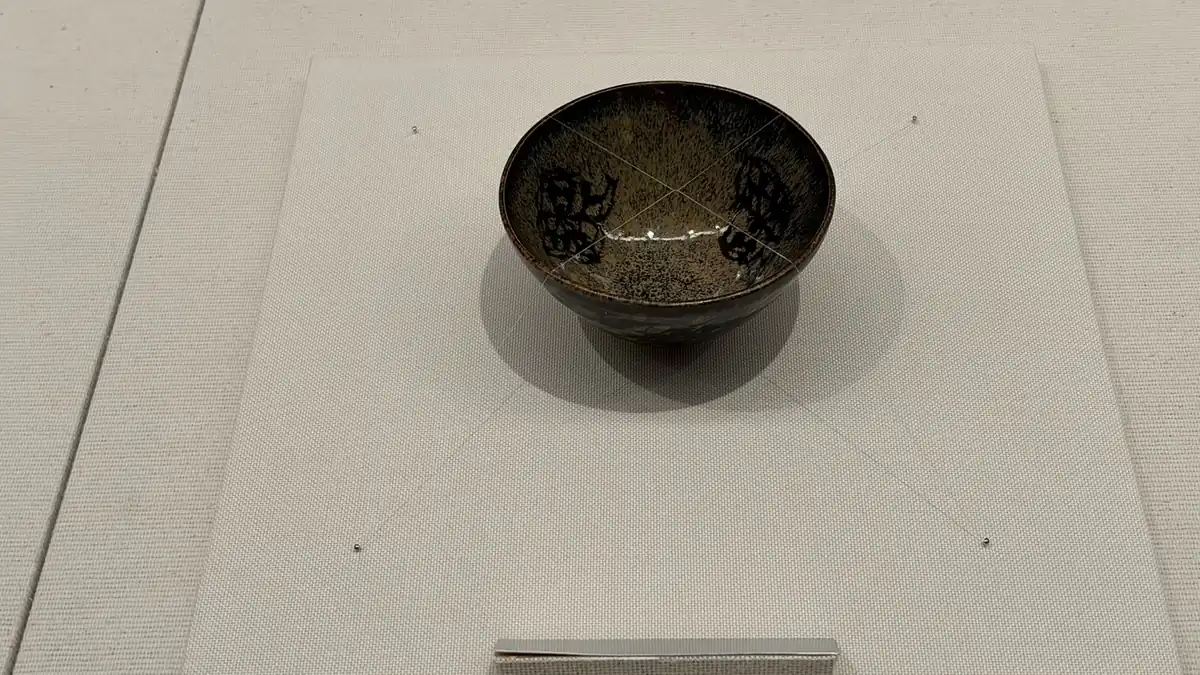
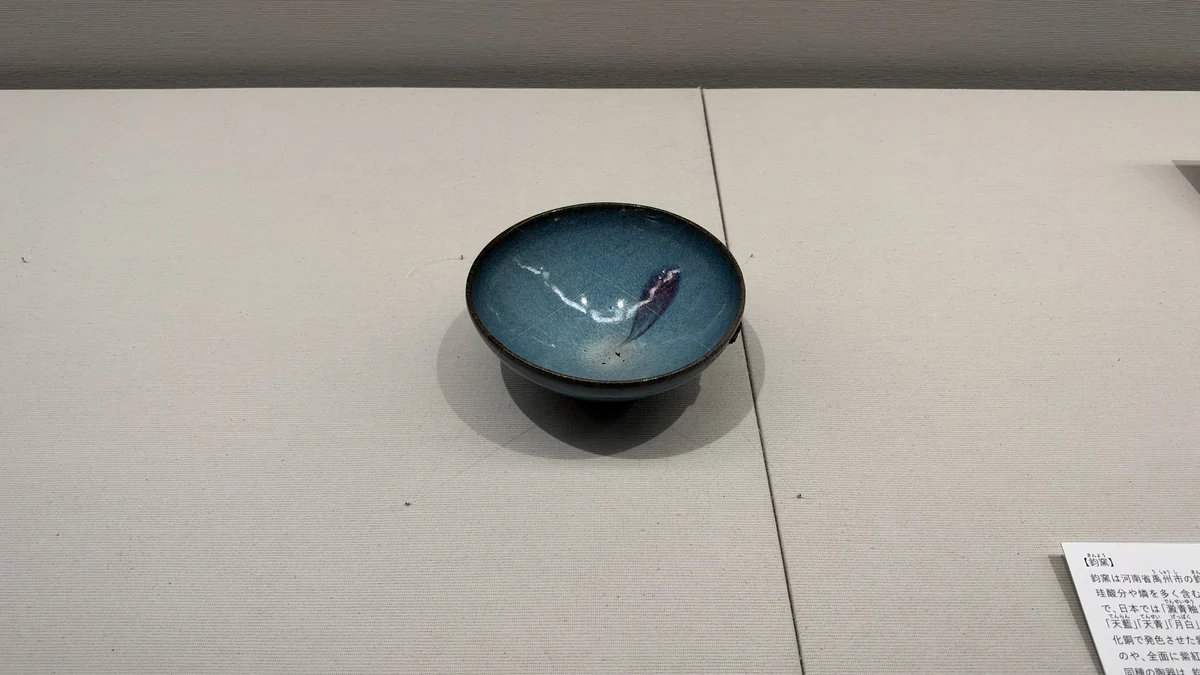
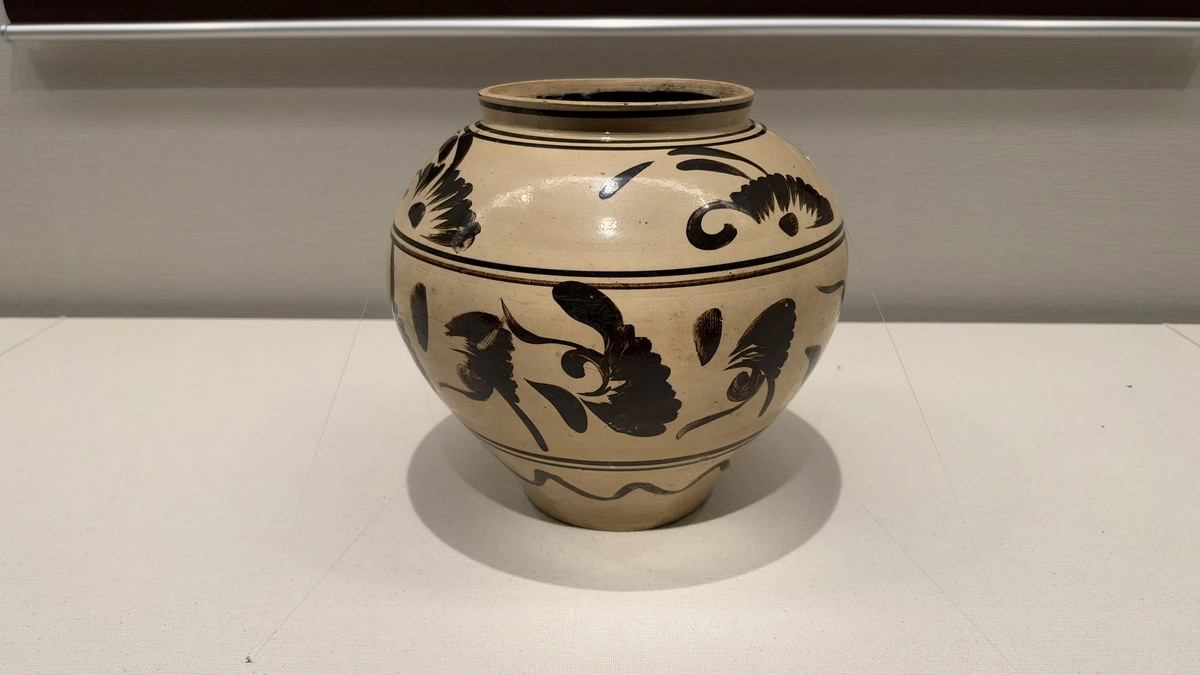
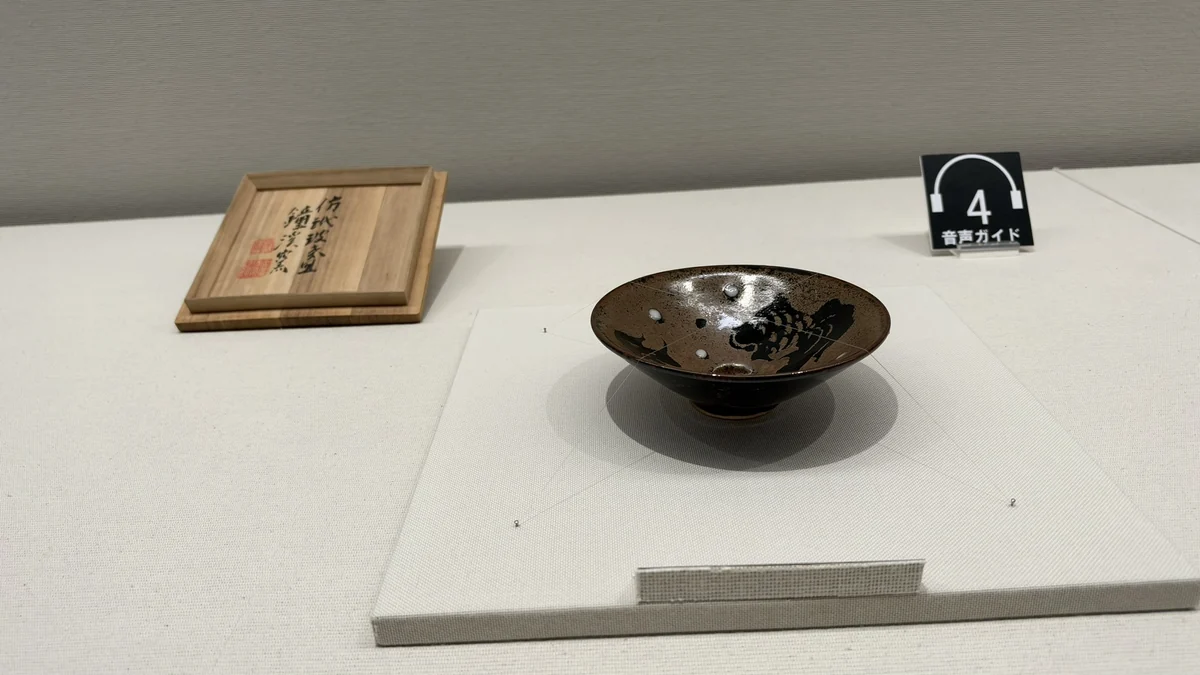
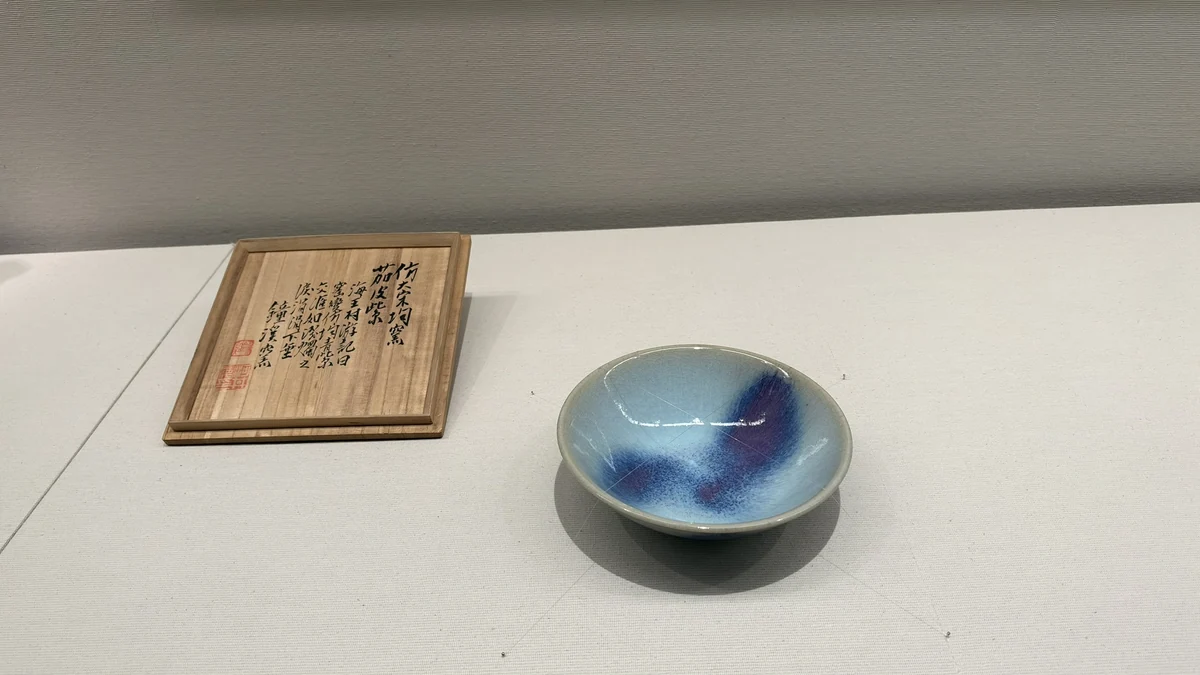
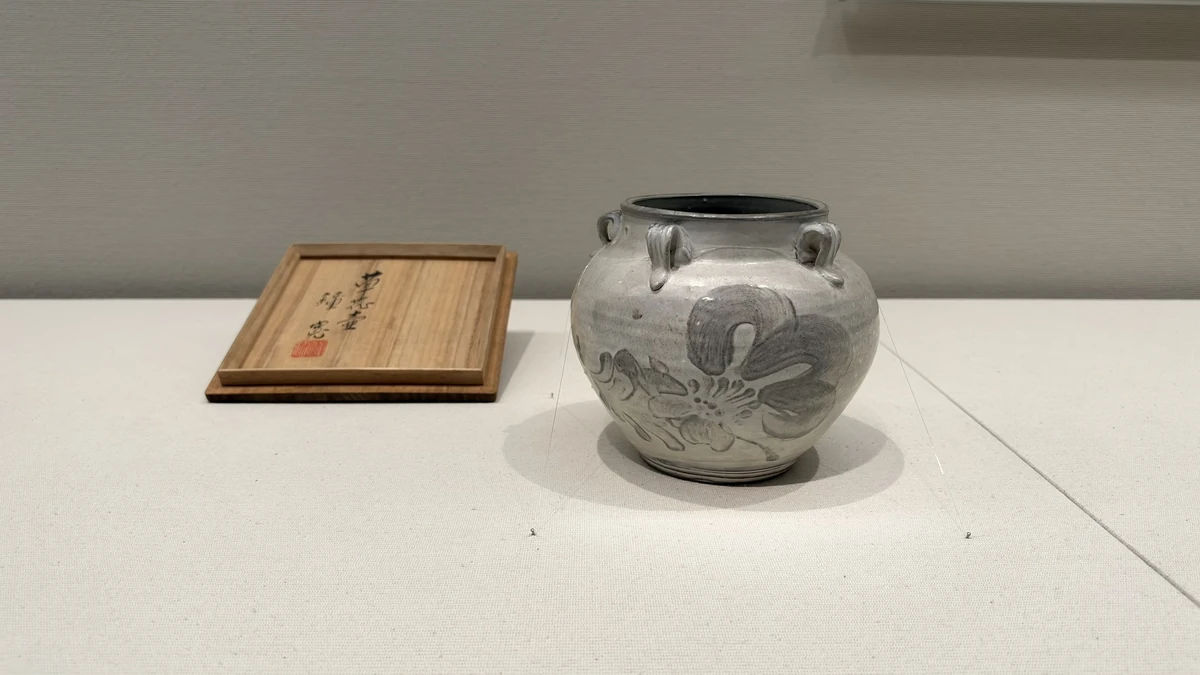
Tap a photo to enlarge. The fixtures in the display cases are not flaws or patterns on the objects.
“Mingei SHOCK!!” ends on November 8, 2026. Some items are swapped during the show, so if you want to see a specific piece, check its display dates in the official exhibit list.
The historic building and nearby places
The museum is in the Meiji Life Building (Meiji Seimei Kan), completed in 1934 and designated an Important Cultural Property in 1997. (That is a national designation for significant buildings and objects in Japan.) Around the entrance you can see the decorative grilles on the arched windows and the glass-roofed atrium, so you can look at the exterior before or after the exhibition.
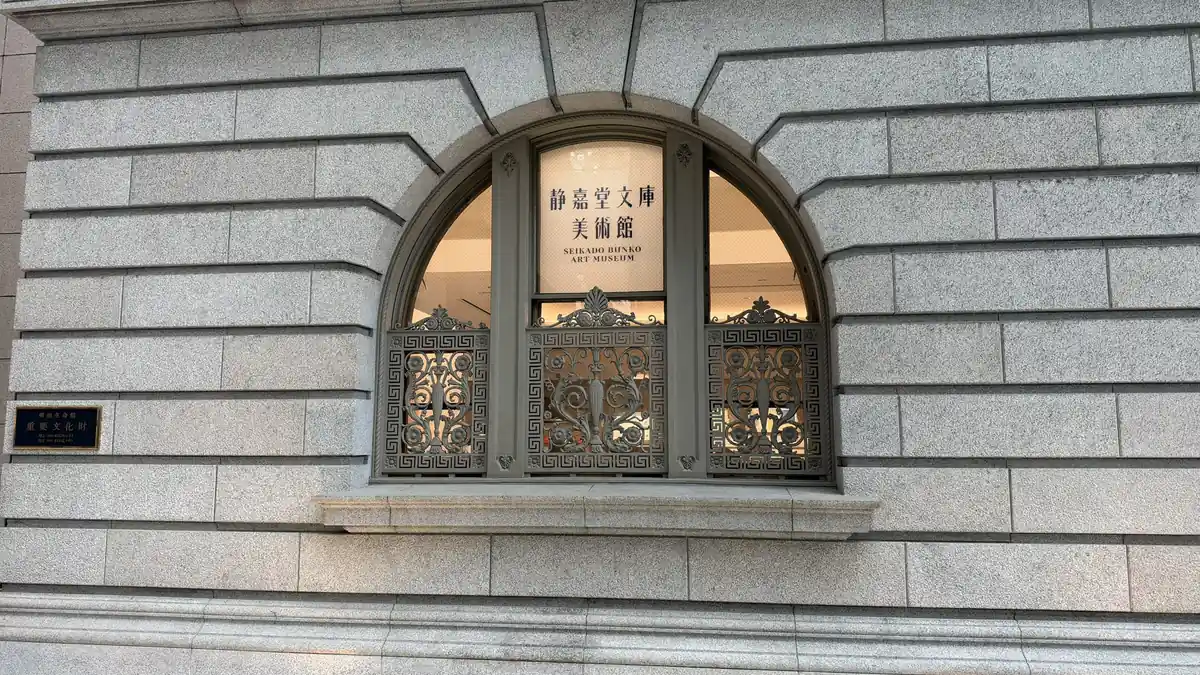
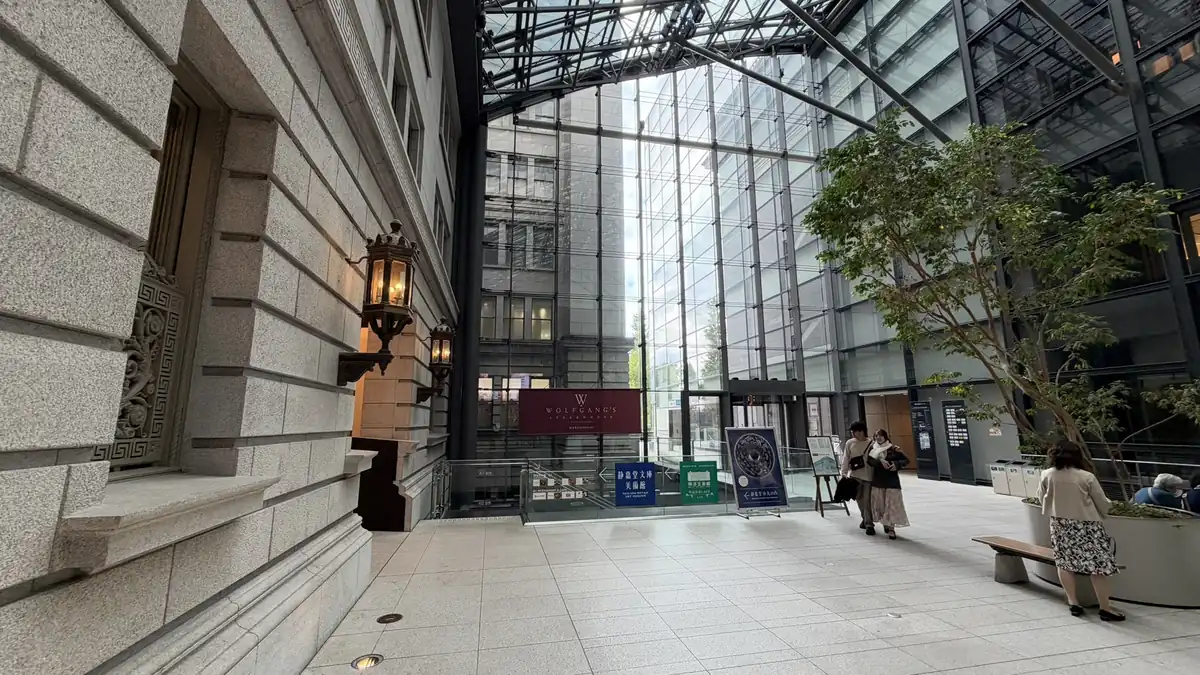
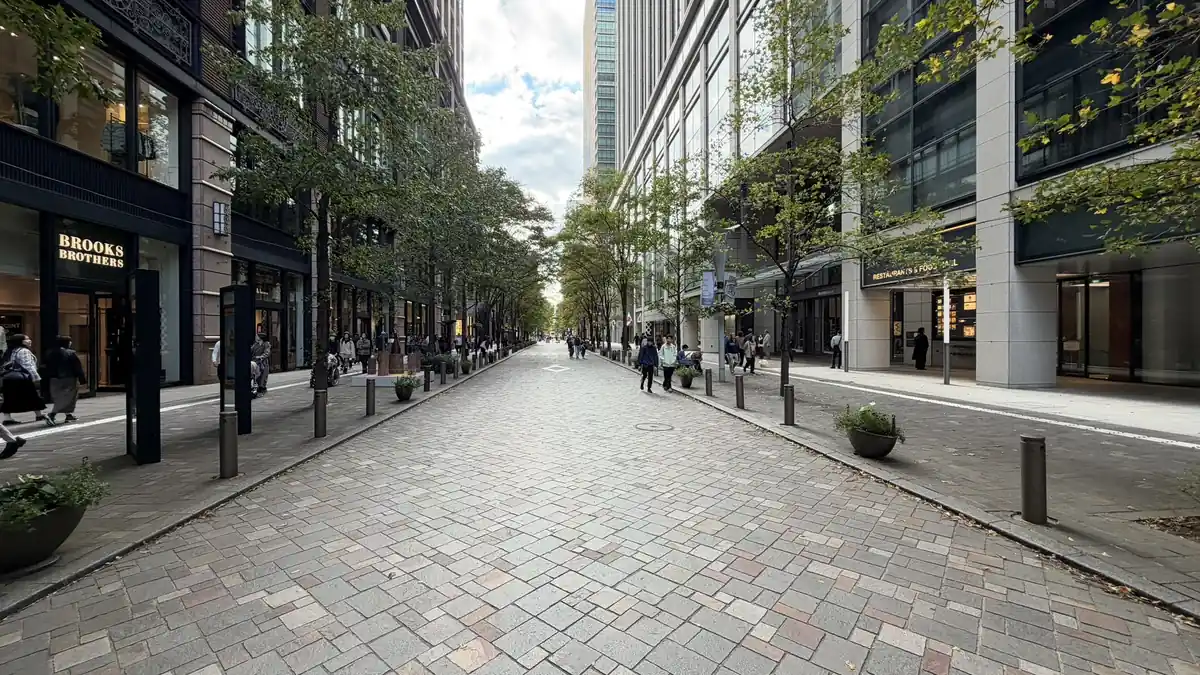
Tap a photo to enlarge
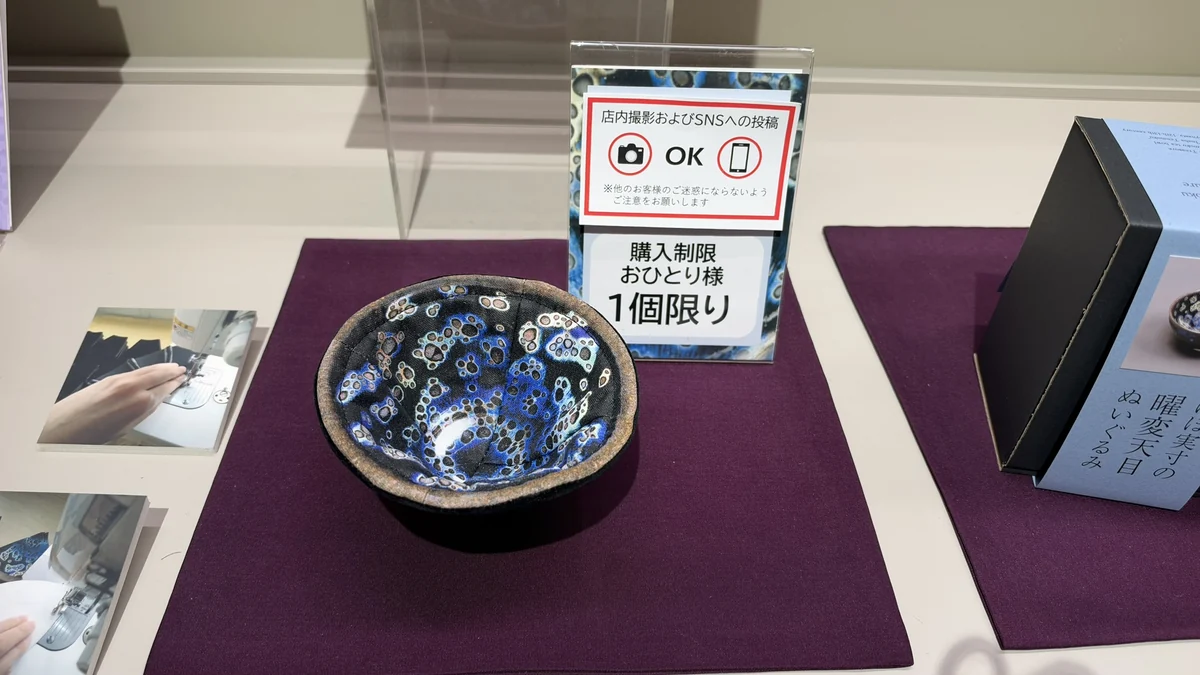
In the museum shop I saw plush toys shaped like the Yohen Tenmoku. On November 3, the signs listed a nearly life-size plush bowl at ¥8,800 including tax, and key rings and bag charms at ¥3,600 each. A purchase limit was posted for the plush. Prices and stock change, so check in the shop.
The Imperial Palace Outer Garden, the Imperial Palace East Gardens and the Museum of the Imperial Collections, Sannomaru Shozokan, are all nearby. Each has its own admission rules, opening days and time needed. Even if they look close on the map, check each facility’s official guide before you plan a full day. For the Edo Castle site inside the East Gardens, see our Edo Castle guide.
Where to stay before or after Seikado at Marunouchi
PRThis section contains affiliate links to Agoda. If you book through them, this site earns a commission. I choose hotels for their location and how easy they are to travel from.
The museum is about a 5-minute walk from the Marunouchi South Exit of Tokyo Station. Here are three options by purpose. Prices vary widely by date and room, so I have not compared them.
CLOSE TO THE MUSEUM
Tokyo Station area
About a 5-minute walk from Tokyo Station’s Marunouchi South Exit to the museum
Best if you want to explore Marunouchi on foot before or after your visit. Staying near Tokyo Station also keeps trips to and from the Shinkansen short.
Agoda’s “Tokyo Station” area covers a wide range of hotels around the station. Check each hotel’s distance on the map before booking.
Browse Tokyo Station hotels on AgodaEASY TO MOVE ON
Shinagawa area
JR trains connect Shinagawa and Tokyo Station
Good if you are leaving on the Shinkansen the next day or want more hotel choices than around Tokyo Station. Shinagawa is a Shinkansen stop.
Agoda’s Shinagawa area includes hotels away from the station. You would travel to the museum via Tokyo Station.
Browse Shinagawa hotels on AgodaA SPECIAL STAY
The Tokyo Station Hotel
Inside the Marunouchi station building of Tokyo Station
A hotel inside the historic station building, in the same Marunouchi area as the museum. It suits visitors who want Marunouchi to be part of the stay.
Check rates on AgodaThe links open with Agoda’s default dates and guest count. Check the dates, price, and cancellation terms on the booking page before you reserve.
Visitor questions
Until November 8, 2026, the last day of “Mingei SHOCK!!”. I could not confirm whether it will be shown after that, so check the museum’s official exhibition information or contact the museum.
No. Seikado shows the Inaba Tenmoku. The Daitokuji exhibition at the Tokyo National Museum shows a different Yohen Tenmoku, owned by Ryukoin.
Adults pay ¥1,500. With a Daitokuji exhibition ticket stub, a Grutto Pass, a ticket from a previous visit or another eligible discount, adults pay ¥1,300. Discounts cannot be combined.
The museum prioritizes timed online reservations. Walk-up tickets are available, but entry may be limited when it is crowded. Junior high school students and younger do not need a timed reservation.
I spent about an hour, from 12:00 to 13:00 on November 3, including the video and the shop, with about 10 minutes in front of the bowl. Your time will depend on how many works you look at and whether you watch the video.
I could not photograph it on November 3. For this exhibition the museum allows photography in Gallery 1 and the foyer. Follow the signs on site.
I entered through the Meiji Yasuda Village entrance on the Marunouchi Naka-dori side. Exit 3 of Nijubashimae <Marunouchi> Station on the Chiyoda Line connects directly, and from the Marunouchi South Exit of JR Tokyo Station or the Tokyo International Forum Exit of Yurakucho Station it is about a 5-minute walk.
Dates, prices and hours are based on official information as of November 4, 2026. They may change, so check the official website before your visit.


comment