Otemon Gate & Tamon Yagura: Osaka Castle’s Historic Main Entrance
Personally visited · 5 spots · Free entry · Important Cultural Properties · Tamon Yagura (first built c.1628; rebuilt 1848) · Giant stones · On-site photos
The Otemon Gate area is the grand main entrance to Osaka Castle and one of the most historically layered corners of the grounds. Highlights include the Otemon Gate and its masugata defensive courtyard; the famous giant stones of the Otemon approach; the south and north walls covered in kokuinseki — engraved crests and marks left by the domains involved in construction; and the centrepiece Tamon Yagura, an Important Cultural Property first built around 1628 and rebuilt in 1848. Everything in this area is free to visit.
The 5 Spots
1. Tamon Yagura Northern Moat
Dramatic white plaster wall extending north from Tamon Yagura along the outer moat
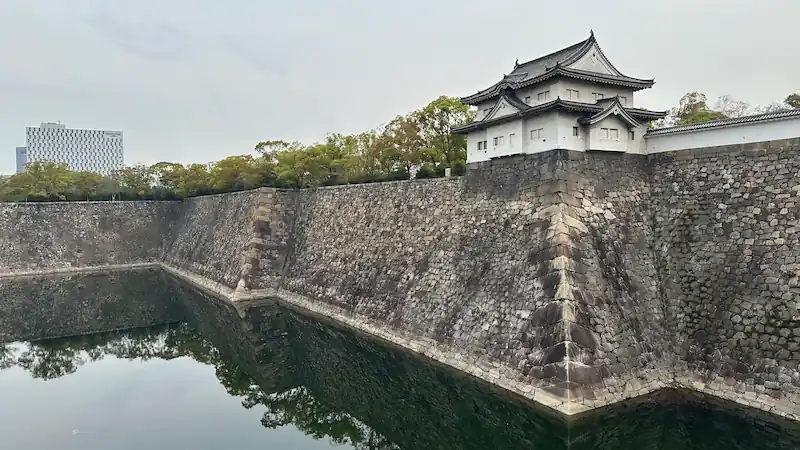
The Northern Wall of Tamon Yagura extends from the north side of the turret along the outer moat. Together with Tamon Yagura, it formed part of the defensive line protecting Osaka Castle’s front gate. The present structure dates to the Tokugawa reconstruction around 1628.
The contrast between the massive stone base and the white plaster upper section creates one of the most photogenic compositions in the castle grounds — especially striking against cherry blossoms in spring and autumn foliage.
| Year Built | First built around 1628; present form maintained through later repairs |
|---|---|
| Cultural Property | Important Cultural Property (Tamon Yagura complex) |
| Admission | Free |
| Access | Approx. 15–18 min from Tanimachi 4-chome Station |
| Visit Duration | ~5–15 min |
- Structural junction: Where Tamon Yagura connects to the northern wall — an architectural detail that shows how the gate and moat approaches were defended as one system.
- Massive stone base: The wall’s lower courses emphasise the scale and durability of Osaka Castle’s Tokugawa-period reconstruction.
- Defensive continuity: The long plastered wall and turret together created a continuous line of defence above the moat.
- Dynamic lighting: White plaster subtly shifts colour throughout the day — dawn and dusk are especially photogenic.
2. Otemon Gate
The symbolic front gate — masugata courtyard, massive stone walls, and famous giant stones
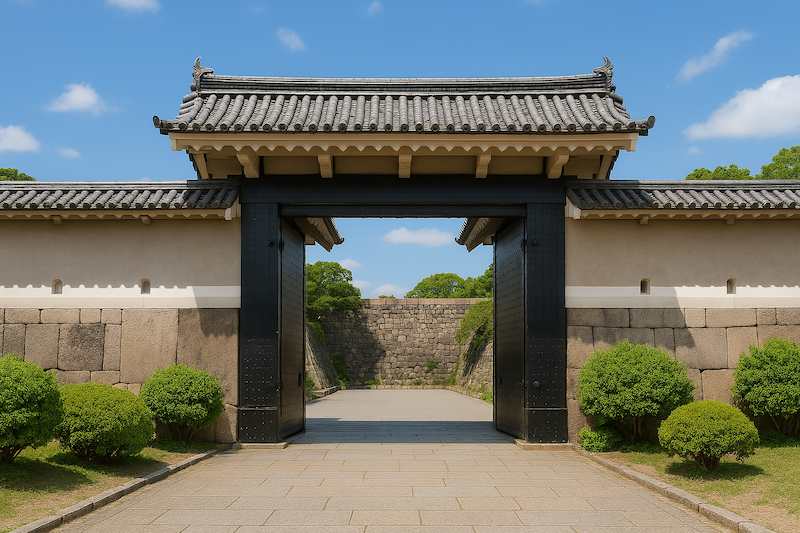
The Otemon Gate is Osaka Castle’s front gate. Built in koraimon style in 1629, restored in 1848, and repaired in 1967, it features a strategic masugata layout — a box-shaped enclosure that forced intruders to turn at right angles, exposing them to attack from above and the sides.
Inside the masugata are several famous giant stones, including the Ote-mitsuke-ishi and Ote-niban-ishi. On the surrounding walls, look for kokuinseki bearing clan crests or stonemason marks, acting like historical signatures carved into the stone.
| Year Built | Built 1629; restored 1848; repaired 1967 |
|---|---|
| Cultural Property | Important Cultural Property (Otemon Gate) |
| Admission | Free |
| Address | 1-1 Osakajo, Chuo-ku, Osaka |
| Visit Duration | Quick: ~5 min · Thorough: ~15 min |
- Masugata layout: Standing inside gives a tangible sense of historical defensive strategy — enemies faced fire from three sides.
- Giant stones: The Ote-mitsuke-ishi and Ote-niban-ishi are among the best-known megaliths in this part of Osaka Castle.
- Tokugawa front gate: The current gate belongs to the Tokugawa rebuilding of the castle and preserves the form of the Edo-period front entrance.
- Kokuinseki: Engraved marks on the surrounding stones record the domains mobilized for construction.
- Cherry blossoms: Spring blooms around the gate create one of Osaka Castle’s most photographed seasonal scenes.
3. South Wall of Otemon Gate
Long defensive wall rich in kokuinseki — clan crests and stonemason marks from many domains
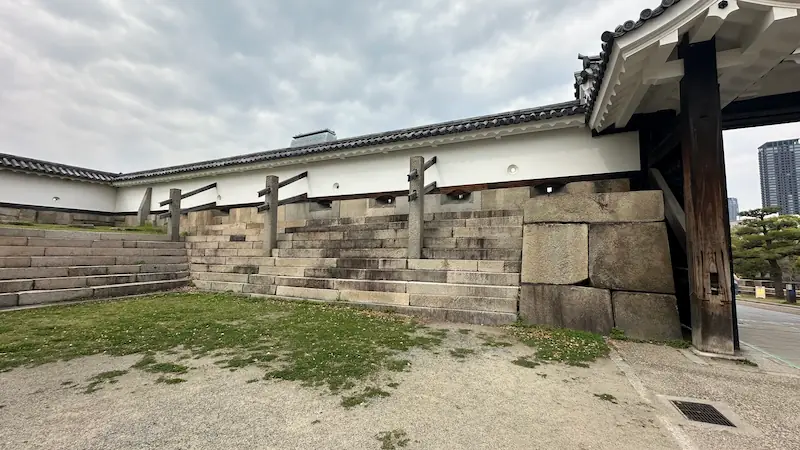
The Otemon Southern Wall runs just south of the Otemon Gate and formed part of the castle’s outer fortifications during the Tokugawa reconstruction of the 1620s. Many of its stones are kokuinseki — engraved with clan symbols or stonemason marks — making this wall a valuable record of Japan’s stonework culture and the large-scale mobilization behind the castle’s construction.
| Year Built | Circa 1620s (Edo period) |
|---|---|
| Cultural Property | Important Cultural Property |
| Admission | Free |
| Address | South Wall of Otemon Gate, Osaka Castle |
| Visit Duration | ~5–15 min |
- Kokuinseki hunting: Each stone bears a unique mark — clan symbols and personal seals from many of the domains involved in construction.
- Gentle curve: The wall’s slight curve creates shifting shadow patterns throughout the day — fascinating for photographers.
- Political symbol: The Tokugawa Shogunate used castle reconstruction to demonstrate its control over the feudal domains mobilized for the work.
- Stone logistics: The masonry here reflects the scale of planning and transport required for Osaka Castle’s rebuilding.
4. North Wall of Otemon Gate
Symmetrical defensive counterpart — a quieter place to study the stonework up close
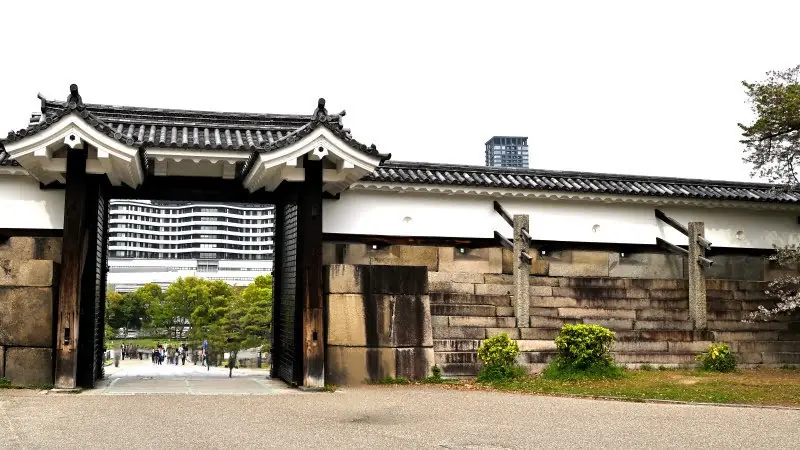
The Otemon Northern Wall forms a symmetrical defensive pair with the Southern Wall. Constructed during the Tokugawa reconstruction in the 1620s, it controlled the movement and sightlines of intruders approaching the main gate. Its bold stone base and white plaster upper section blend functional beauty with imposing authority. Many stones still bear kokuinseki identifying the feudal lords and stonemasons involved.
| Year Built | Circa 1620s (Edo period) |
|---|---|
| Cultural Property | Important Cultural Property |
| Admission | Free |
| Address | North Wall of Otemon Gate, Osaka Castle |
| Visit Duration | ~5–15 min |
- Kokuinseki: Like the south wall, this side preserves engraved marks left by domains and stonemasons involved in construction.
- Stone-and-plaster contrast: The rough stone base and white plaster upper wall show the functional beauty of Edo-period castle defences.
- Tenka-fushin project: The wall belongs to the Tokugawa nationwide reconstruction campaign carried out in the 1620s.
- Quiet viewing spot: Because fewer visitors linger here, it is a good place to study the masonry details at close range.
5. Tamon Yagura
Large corridor-type turret — L-shaped, ~710㎡, first built around 1628
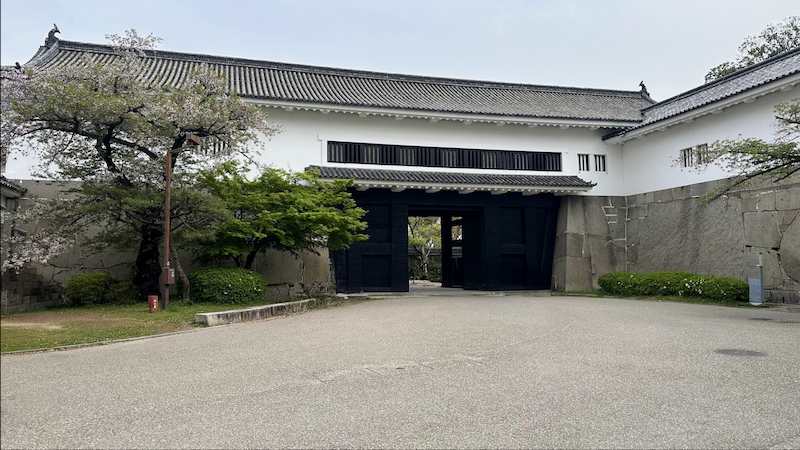
The Tamon Yagura is a long, barrack-style turret designated an Important Cultural Property. First built around 1628, it was destroyed by lightning in 1783 and rebuilt in 1848. At approximately 710㎡, it is widely described as the largest surviving corridor-type turret in Japan. Its unique L-shaped layout — the only such configuration in Osaka Castle — maximises visibility and overlapping fields of defensive fire across two directions.
Interior features include yari-otoshi (spear drop openings) and musha-bashiri (warrior corridors). The combination of horizontal form, massive stone foundation, and elegant white plasterwork makes it one of the most architecturally impressive structures in the castle grounds.
| Year Built | First built around 1628; destroyed by lightning in 1783; rebuilt 1848 |
|---|---|
| Cultural Property | Important Cultural Property |
| Floor Area | Approx. 710.25㎡ — corridor-type turret |
| Interior Access | Occasionally open during special exhibitions |
| Visit Duration | Exterior: ~15 min · Interior (when open): ~30 min |
- Unique L-shape: The only L-shaped turret in Osaka Castle — maximises visibility and overlapping defensive fire in two directions simultaneously.
- Final line of defence: Features yari-otoshi (spear drop openings) and musha-bashiri (warrior corridors) for last-resort defence.
- Rebuilt after lightning: First built around 1628, it was destroyed by lightning in 1783 and rebuilt in 1848.
- Defending Otemon Gate: Its position above the front-gate approach made it central to repelling attackers who breached the entrance.
- Dawn photography: The white plaster walls catch early morning light beautifully — one of the best dawn photo spots in the castle grounds.


comment