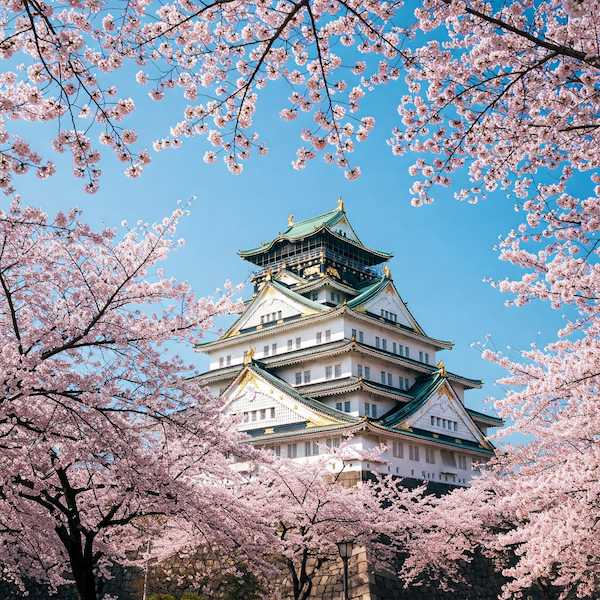

Osaka Castle Walking Tour: 7 Must-See Spots in One Morning
Personally walked & documented · ~2 hours · Start: Tanimachi 4-chome · End: Osaka Business Park Stn · On-site photos included
This curated walking tour covers the 7 most visually striking and historically significant spots at Osaka Castle — all in a single morning, with no backtracking. The route runs from the grand Otemon Gate entrance to the serene Gokurakubashi Bridge, passing through Nishinomaru Garden, Hokoku Shrine (Toyokuni Shrine), Sakuramon Gate, the underground Toyotomi stone walls, and the Main Tower. Each stop reveals a different layer of Japan’s samurai legacy.
Start at Tanimachi 4-chome Station and finish at Osaka Business Park Station for the smoothest, most efficient route through the castle grounds.
Route Map
The 7 Spots
1Otemon Gate & Tamon Yagura
The grand main entrance — where samurai once passed beneath one of Osaka Castle’s great defensive turrets
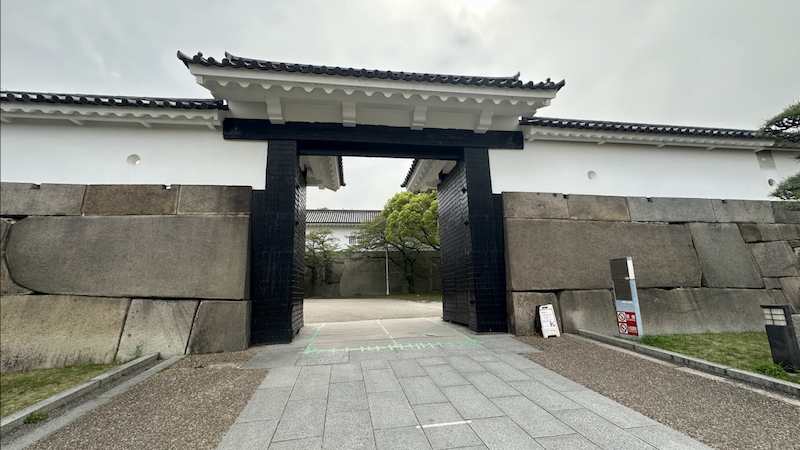
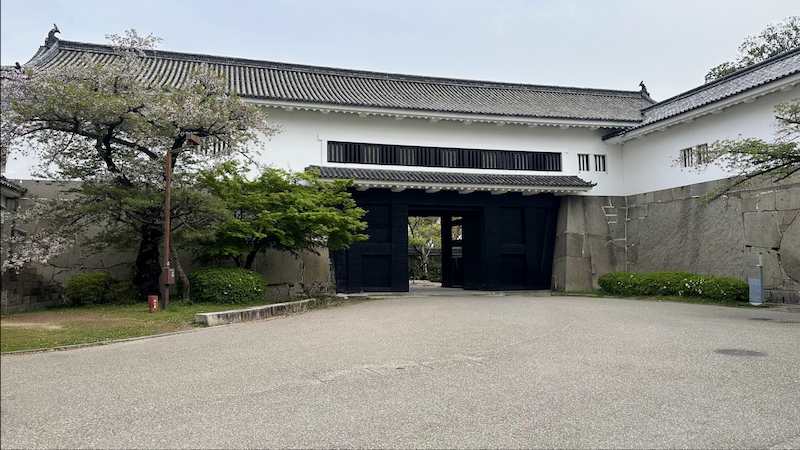
The Otemon Gate, together with the Tamon Yagura turret, forms the grand entrance to Osaka Castle and immediately sets the tone for the historical journey inside. The current gate complex belongs to the Tokugawa-period reconstruction that followed the fall of the Toyotomi clan in 1615. The gate features a masugata — a square defensive courtyard designed to trap and disorient intruders.
Tamon Yagura is an imposing corridor-type turret designated an Important Cultural Property. Its distinctive L-shaped layout was optimized for defensive fire. Just inside the gate, you will also encounter the huge stones of the Oteguchi masugata square, including Ote-mitsuke-ishi and Ote-niban-ishi.
| Year Built | First built in 1628; current Tamon Yagura rebuilt in 1848 |
|---|---|
| Cultural Property | Important Cultural Property (Tamon Yagura) |
| Admission | Free |
| Access | ~10 min walk from Tanimachi 4-chome Station (Exit 1-B) |
| Visit Duration | Quick: ~10 min · In-depth: ~20 min |
- Tamon Yagura: First built in 1628, destroyed by lightning in 1783, and rebuilt in 1848.
- Masugata Courtyard: A square-shaped defensive zone designed to trap invaders between walls.
- Huge stones at Oteguchi: Ote-mitsuke-ishi and Ote-niban-ishi are among the best-known megaliths in this area.
- Kokuinseki: Look for engraved clan crests and stonemason marks on nearby walls — traces of the domains mobilized for the Tokugawa reconstruction.
- Seasonal: Cherry blossoms in spring frame the gate dramatically; autumn foliage creates vivid contrasts with the white plaster walls.
2Nishinomaru Garden
Historic western bailey garden — one of Osaka’s finest cherry blossom views, framed by the castle tower
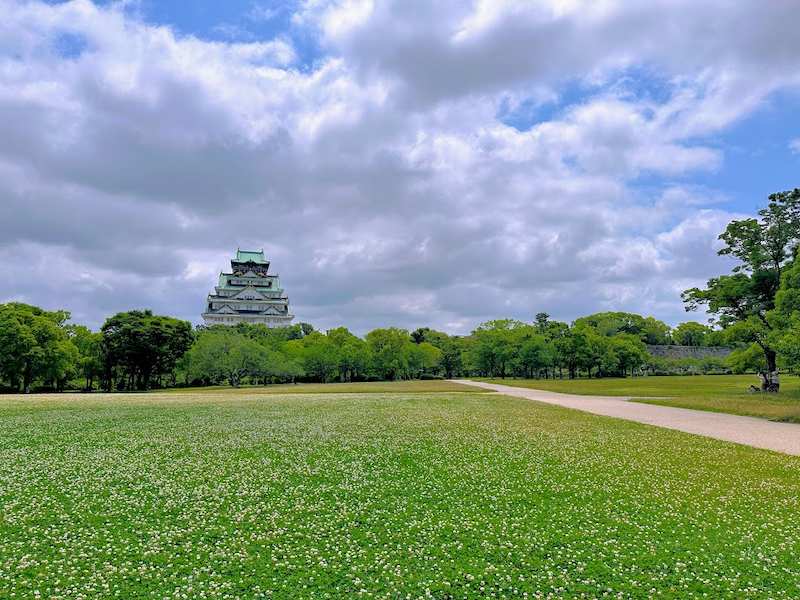
Nishinomaru Garden occupies the western part of the inner castle area and is now a 6.5-hectare landscape garden famous for its seasonal views. In spring, its cherry blossoms and castle-tower backdrop make it one of Osaka’s best-known hanami locations.
Within the garden stand two Important Cultural Properties — Sengan Yagura and Inui Yagura (both 1620) — along with the Enshōgura, Japan’s only surviving stone gunpowder storehouse (1685). Note: a separate admission fee applies.
| Admission | Separate admission fee applies · ¥350 from Mar 20 to Apr 12, 2026 / ¥300 from Apr 13, 2026 · Closed Mondays (Tuesday if holiday) and Dec 28–Jan 4 |
|---|---|
| Hours | Mar–Oct: 9:00–17:00 · Nov–Feb: 9:00–16:30 |
| Cultural Properties | Sengan Yagura, Inui Yagura, Enshōgura (all Important Cultural Properties) |
| Access | 2 Osakajo, Chuo Ward, Osaka |
| Visit Duration | Quick: ~20 min · Full stroll: ~40 min |
- Cherry blossoms: The garden is one of Osaka Castle’s classic hanami spots.
- Sengan Yagura (1620): One of the oldest surviving structures at Osaka Castle.
- Inui Yagura (1620): A rare L-shaped turret guarding the northwest side.
- Enshōgura (1685): Japan’s only surviving stone gunpowder storehouse.
- Former Osaka Guest House: A modern historic building within the garden area, occasionally opened for special events.
3Hokoku Shrine (Toyokuni Shrine)
Honoring Hideyoshi, Hideyori, and Hidenaga — a spiritual stop for career success and good fortune
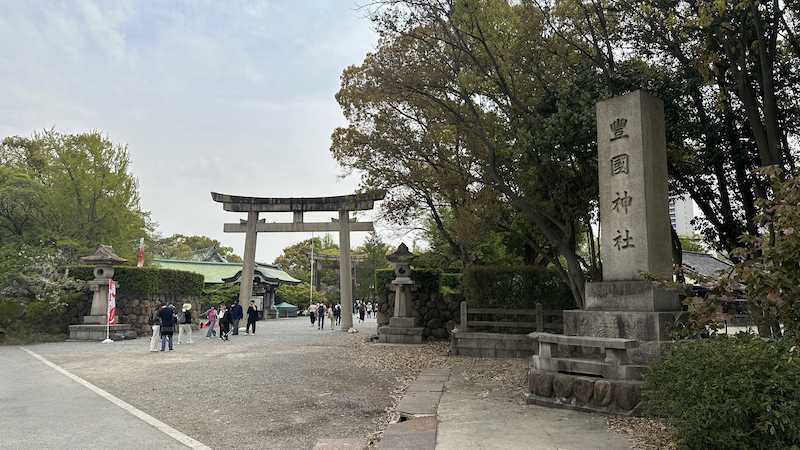
Hokoku Shrine (often called Toyokuni Shrine in English) enshrines Toyotomi Hideyoshi, Toyotomi Hideyori, and Toyotomi Hidenaga. It was originally established in 1879 by imperial decree as a branch shrine of Kyoto’s Toyokuni Shrine at Yamazaki-no-hana in Nakanoshima, and was moved to its present location inside Osaka Castle Park in 1961.
The shrine features a striking bronze torii gate, a stone approach, a bronze statue of Hideyoshi, and a serene worship hall. Goshuin (calligraphic shrine stamps) and omamori (amulets) are available, making it a meaningful cultural stop. It is especially popular as a place to pray for career advancement and good fortune.
| Year Built | Established 1879; moved to current site in 1961 |
|---|---|
| Admission | Free (goshuin stamp fee may vary) |
| Address | 2-1 Osakajo, Chuo Ward, Osaka |
| Official Website | osakacastlepark.jp |
| Visit Duration | Quick: ~10 min · With cultural experience: ~20 min |
- Enshrined deities: Hideyoshi, Hideyori, and Hidenaga are all honored here.
- Bronze torii gate: A memorable entrance feature within the castle grounds.
- Modern shrine history: Established in 1879 and relocated here in 1961.
- Career-success shrine: Many visitors come to pray for advancement and good fortune.
- Stone garden: The precinct also includes the modern stone garden known as Shusekitei.
4Sakuramon Gate
Home of the 108-ton Takoishi — the largest stone in Osaka Castle
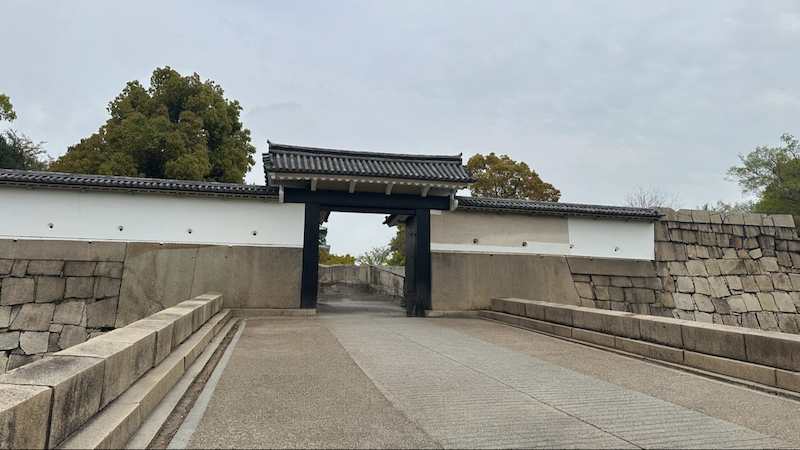
Sakuramon Gate is the grand southern entrance to Osaka Castle’s inner bailey (honmaru). Its defining feature is the massive masugata (square courtyard) constructed with colossal granite blocks. Inside stands the Takoishi (Octopus Stone) — the largest stone in the castle at approximately 108 tons and 59㎡.
Many of the surrounding stones are engraved with the crests of feudal lords who contributed to the Tokugawa reconstruction — look for the Dragon Stone (Ryū-ishi) and Tiger Stone (Tora-ishi) on either side of the gate.
| Year Built | Original gate 1626; restored to its original form in 1887 |
|---|---|
| Cultural Property | Important Cultural Property |
| Admission | Free |
| Address | 1 Osakajo, Chuo Ward, Osaka |
| Visit Duration | Quick: ~10 min · With stone inspection: ~20 min |
- Takoishi (108 tons, ~59㎡): The largest stone in Osaka Castle.
- Furisode-ishi: Another of the best-known giant stones in the masugata.
- Dragon & Tiger Stones: Well-known named stones flanking the gate area.
- Engraved crests: Clan symbols from domains involved in the Tokugawa reconstruction can be found on nearby walls.
- Cherry blossoms: Trees around the gate bloom beautifully each spring.
5Osaka Castle Toyotomi Stone Wall Museum
The buried castle revealed — Toyotomi-period stone walls uncovered in 1984
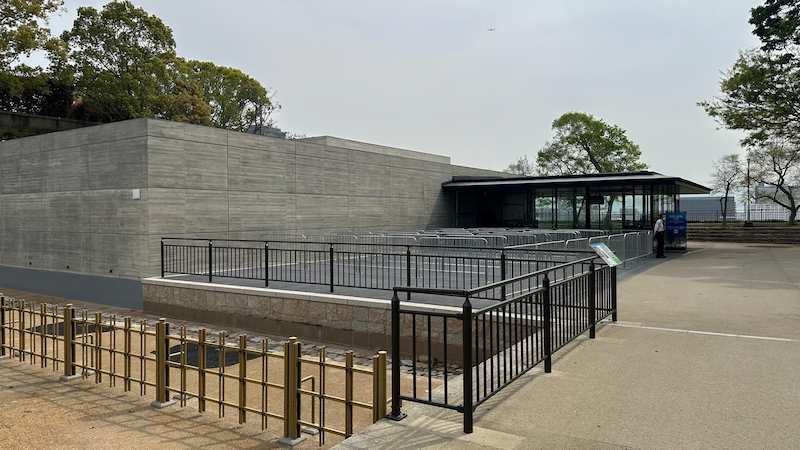
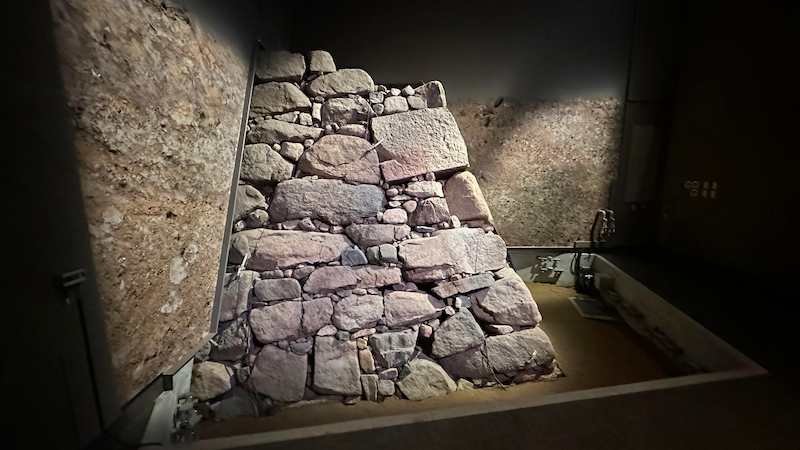
This underground exhibition hall displays Toyotomi-period stone walls uncovered during excavations in 1984. When the Tokugawa shogunate rebuilt Osaka Castle beginning in 1620, it piled up about six metres of earth, burying the earlier Toyotomi layers. The walls on display belong to the tsumenomaru, the upper tier that protected the most private space of Toyotomi Osaka Castle.
Through glass flooring and multilingual displays, visitors can examine nozurazumi masonry, repurposed foundation stones, and the relationship between the buried Toyotomi layers and the later Tokugawa reconstruction. It is one of the rarest direct physical links to the Toyotomi castle.
| Admission | Included with Main Tower ticket (Adults ¥1,200 / University & high school students ¥600 / Junior high school students and younger free with proof) |
|---|---|
| Hours | 9:00 AM – 6:00 PM (last entry 5:30 PM) · Closed Dec 28 – Jan 1 |
| Note | May close temporarily for maintenance or depending on conditions. No restrooms inside. |
| Official Website | osakacastle.net |
| Visit Duration | Quick: ~10 min · Full experience: ~20–30 min |
- The buried castle: What is visible above ground is largely Tokugawa Osaka Castle; the museum reveals a surviving Toyotomi layer below.
- 1984 discovery: The stone walls of the Toyotomi-era tsumenomaru were uncovered during excavations.
- Nozurazumi technique: The walls use rough, minimally processed natural stones stacked with little shaping.
- Repurposed stones: Some stones on display came from reused foundations.
- About six metres of earth: Tokugawa reconstruction buried the earlier Toyotomi phase beneath the new castle platform.
6Osaka Castle Main Tower (Museum)
The iconic symbol of Osaka — 8-floor museum with panoramic views from the observation area
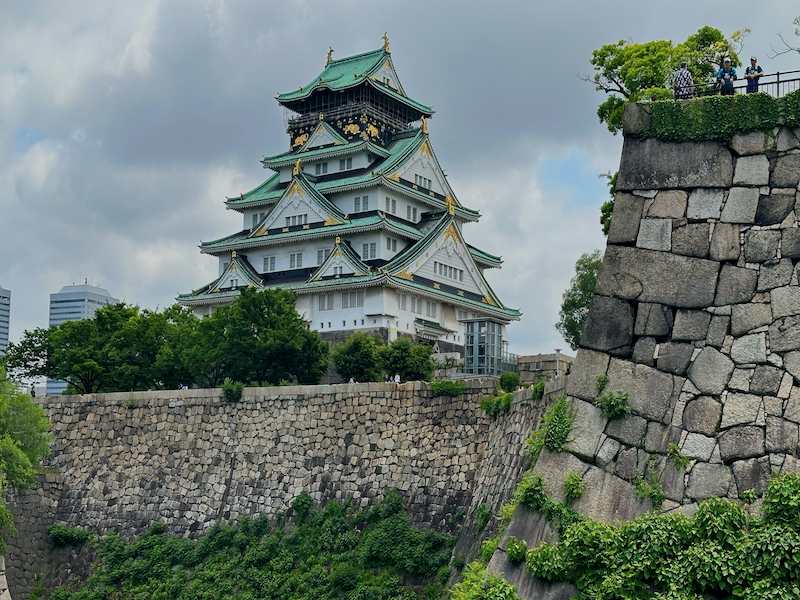
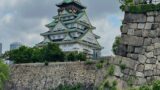
The Osaka Castle Main Tower is the iconic centrepiece of the complex. The present structure was reconstructed in 1931 using public donations from Osaka citizens and now functions as an 8-floor museum covering the life of Hideyoshi, the history of the castle, and Osaka’s role in the unification of Japan.
Highlights include samurai armour, roof ornaments and gold-leaf materials, the famous Osaka Summer Campaign Folding Screen, and panoramic views over Osaka from the upper observation area.
| Admission | Adults ¥1,200 · University & high school students ¥600 (proof required) · Junior high school students and younger free (proof required) |
|---|---|
| Hours | 9:00 AM – 6:00 PM (last entry 5:30 PM) · Closed Dec 28 – Jan 1 |
| Accessibility | Elevator access is available; some observation areas may require short stair use |
| Official Website | osakacastle.net |
| Visit Duration | Quick tour: ~30 min · Full museum visit: ~60–75 min |
- Osaka Summer Campaign Folding Screen: One of the museum’s most impressive history exhibits.
- Rebuilt by citizens: The 1931 reconstruction was funded by public donations.
- Modelled after Toyotomi imagery: The exterior evokes the golden Toyotomi-era castle, while the interior is modern museum space.
- Registered Tangible Cultural Property: The present Main Tower was registered in 1997.
- Panoramic views: The upper level offers one of the best outlooks across central Osaka.
7Gokurakubashi Bridge
“Bridge to Paradise” — one of the best views of the Main Tower reflected in the inner moat
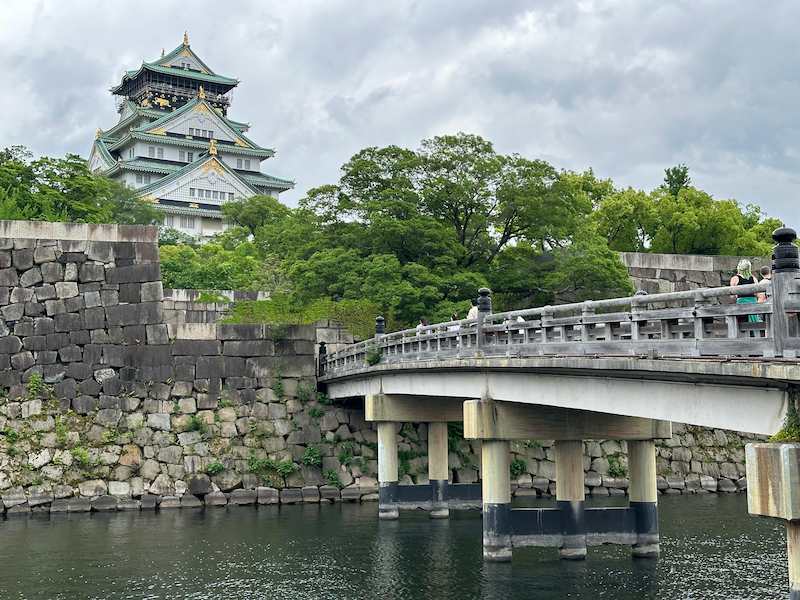
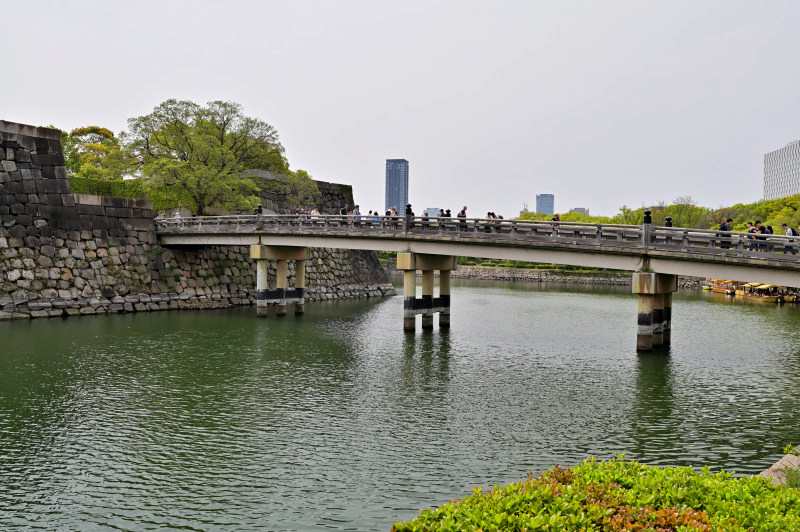
Gokurakubashi (“Bridge to Paradise”) spans the northern side of the inner moat and offers one of the most striking views in the complex — the Main Tower reflected in the water. The current bridge is modern, but the crossing preserves the historic route linking the Honmaru with the northern side of Osaka Castle.
This is a fitting place to end the tour. From here, follow the path toward Aoyamon Gate, then continue to Osaka Business Park Station on the Osaka Metro Nagahori Tsurumi-ryokuchi Line, roughly 9 minutes away on foot.
| Status | Historic castle crossing; current bridge is modern |
|---|---|
| Admission | Free |
| Address | Osakajo, Chuo Ward, Osaka |
| Access | ~9 min walk to Osaka Business Park Station (Osaka Metro Nagahori Tsurumi-ryokuchi Line) |
| Visit Duration | Quick: ~5 min · With photography: ~15 min |
- Classic reflection view: On a calm day, the moat gives one of the castle’s best mirrored views.
- Northern perspective: This angle feels quieter than the main Honmaru photo zones.
- Historic route: The bridge marks an important crossing between the castle core and the northern side.
- Aoyamon Gate route: It is a natural exit point if you are heading toward Osaka Business Park.
- Morning light: Early light often gives the cleanest castle reflection.
Frequently Asked Questions
Want to Explore Further?
This walking tour covers the highlights. For the full story of each area — including rarely visited spots, detailed historical background, and Important Cultural Properties — explore the complete area guides below.

comment