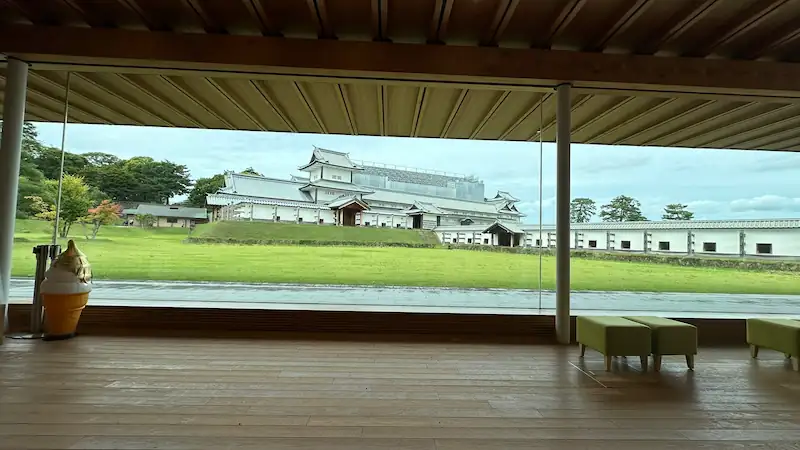
Kanazawa Castle Park is one of Japan’s most rewarding free-entry castle sites — and one of the most misunderstood. Most visitors spend 45 minutes walking between the obvious photo spots. This guide, based on a personal visit covering all six areas, gives you what other guides skip: which structures are genuinely from the Edo period and which were rebuilt in the 2000s, which paid areas are worth the ¥320 fee, and the stonework details that make Kanazawa Castle architecturally unique among Japanese castles.
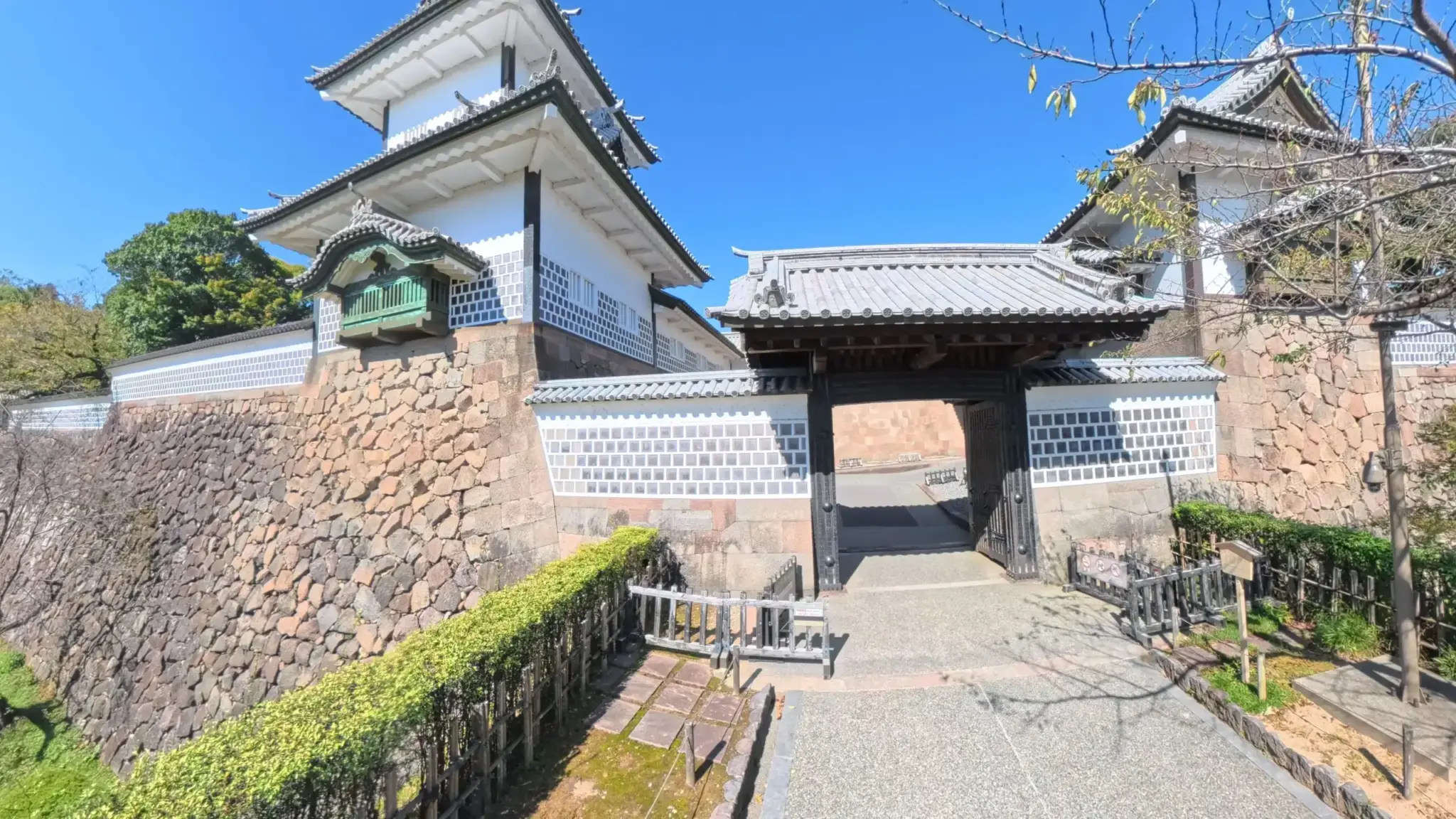
Kanazawa Castle is a magnificent fortress and a symbol of the prosperous Kaga Domain, once ruled by the powerful Maeda clan for nearly 300 years — from the late Sengoku period through the Meiji Restoration. Along with Kenrokuen Garden, it stands as one of Kanazawa’s most iconic attractions. Its gleaming white plaster walls and lead-tiled roofs have earned it the nickname “The White Castle.”
🏰 At a Glance — Kanazawa Castle Park
| Admission | Grounds: Free / Inner buildings (Hishi Yagura, Nagaya): ¥320 adults / Gyokusen’inmaru Garden: ¥320 adults |
| Hours | Grounds: 7:00–18:00 (Mar–Oct) / 8:00–17:00 (Nov–Feb) Inner buildings: 9:00–16:30 (last entry 16:00) |
| Recommended time | 90–120 minutes (full 6-area route) / 45–60 minutes (highlights only) |
| Nearest stop | Kanazawa Castle / Kenrokuen-shita (bus, approx. 20 min from Kanazawa Station) |
| Best entry point | Ishikawa-mon Gate side (from Kenrokuen Garden) — classic karame-te approach |
⚠️ Hours and fees are subject to change. Check the official Kanazawa tourism site before visiting.
What Makes Kanazawa Castle Different from Other Japanese Castles
Most visitors to Japan’s famous castles — Himeji, Matsumoto, Osaka — encounter a single dominant keep rising above the grounds. Kanazawa Castle has no surviving keep. What it offers instead is something rarer: a castle site where three distinct historical layers — Edo-period originals, Meiji military architecture, and modern reconstructions — exist side by side on a single walkable loop.
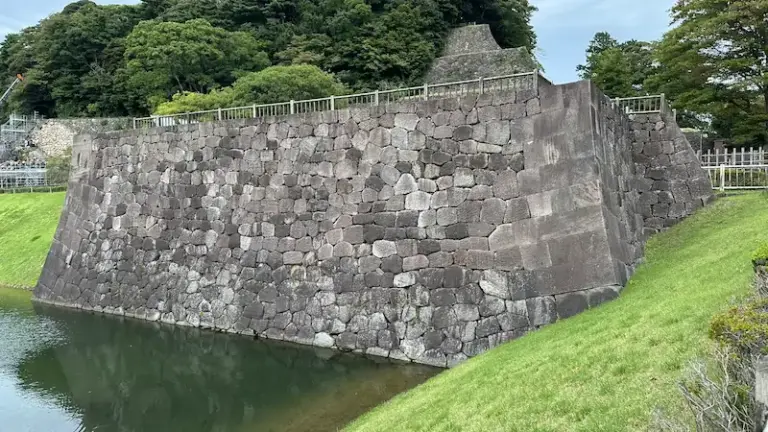
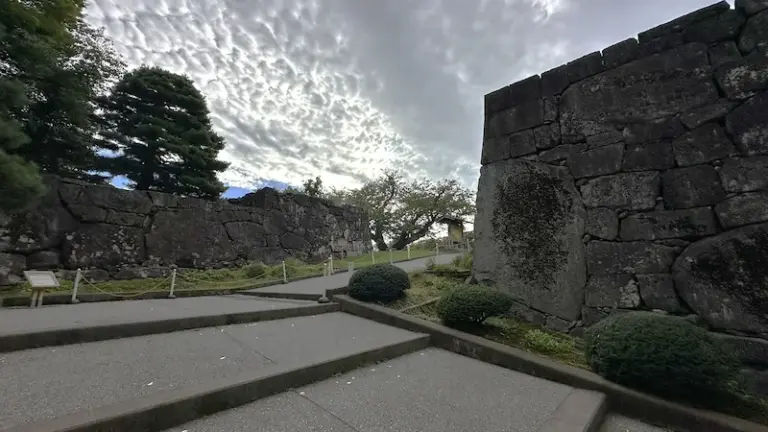
Three features set Kanazawa Castle apart architecturally. First, the stone masonry diversity: on the same walking route, you will encounter rough Nozurazumi stacking (near Ishikawa-mon), precision-fit Kirikomi-hagi (along the Kahoku-mon approach), and hexagonal Kikko-ishi (at the Ninomaru walls). No other castle in Japan displays all three techniques in such close proximity, and the contrast between them is visible to the naked eye once you know to look. Second, the lead-tiled roofs — a signature of the Maeda clan’s wealth and the reason the castle complex appears white rather than grey from a distance. Third, the free entry to the grounds: unlike most reconstructed Japanese castles, the majority of Kanazawa Castle Park is open at no charge, with optional paid access only for the inner buildings and garden.
Historical Overview of Kanazawa Castle
The origins of Kanazawa Castle trace back to the 1480s during Japan’s Warring States period, when the followers of Honganji Temple built a fortified religious complex known as Kanazawa Mido. The city flourished as a center of the Kaga Ikko-ikki uprising, a self-governed religious community. However, in 1580, it fell to Sakuma Morimasa, a general serving under Oda Nobunaga. Three years later, in 1583, Maeda Toshiie took control of the castle and began ruling over the provinces of Kaga, Noto, and Etchu.
Under the Maeda clan, Kanazawa Castle evolved into both a political center and a family residence. The Maeda were the wealthiest domain outside the Tokugawa shogunate — with a nominal income of one million koku — yet they avoided conflict with Edo for nearly 270 years through careful diplomacy, cultural patronage, and strategic marriages. This political survival explains why Kanazawa developed such a rich artistic and architectural tradition while remaining relatively untouched by war. Extensive improvements were made over time: moats, stone walls, and long storehouses were expanded, and by the early Edo period, the Ninomaru, Honmaru, and Gyokusen’inmaru areas were completed. At its height, the castle complex covered roughly 250,000 square meters and boasted over 30 towers and gates.
After the Meiji Restoration, the castle grounds were repurposed for military use, housing the Kanazawa Garrison and later the headquarters of the 6th Brigade of the Imperial Japanese Army. Following World War II, the site became the campus of Kanazawa University. When the university relocated in the 1990s, Ishikawa Prefecture launched an ambitious restoration project, reconstructing structures such as the Kahoku-mon Gate (2010), Hishi Yagura and Gojikken Nagaya (2001), and the Nezumitamon Bridge (2020). Today, Kanazawa Castle is open to the public as a nationally designated historic site.
Beyond its gates and turrets, the castle’s charm lies in its diverse stone masonry techniques — including the precision-cut “Kirikomi-hagi,” hexagonal “Kikko-ishi,” and the elegant “Shikishi-tanzaku-zumi.” Visitors can also enjoy the serene waterscape of Gyokusen’inmaru Garden and the enchanting nighttime illumination that highlights the castle’s architectural beauty.
Original vs. Reconstructed: What Survives from the Edo Period
One question most guides skip over: which structures at Kanazawa Castle are genuinely from the Edo period, and which were rebuilt in modern times? Here is a straightforward summary based on a personal visit and on the historical records displayed on site.
| Structure | Status | Notes |
|---|---|---|
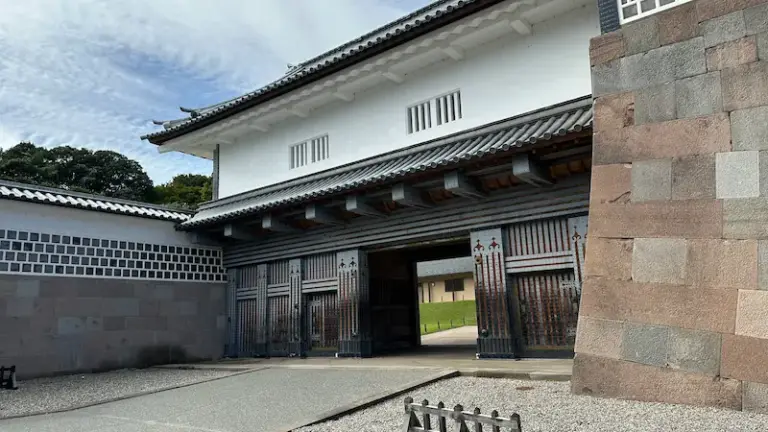
| Ishikawa-mon Gate | Original — rebuilt 1788, survives intact | National Important Cultural Property. One of the few Edo-period structures still standing in the castle park. |
| Tsurumaru Warehouse | Original — 19th century, survives intact | Designated cultural property. A rare surviving example of castle storage architecture. |
| Former 6th Brigade Headquarters | Original — Meiji era, survives intact | Designated cultural property. A visible record of the castle’s military-era repurposing. |
| Hishi Yagura + Gojikken Nagaya | Reconstructed 2001 | Built based on historical records and surviving architectural drawings. Interiors open to visitors (fee). |
| Sanjikken Nagaya | Reconstructed 2001 | Part of the same restoration project as Hishi Yagura. |
| Kahoku-mon Gate | Reconstructed 2010 | Reconstructed as the main front gateway. Connects Sannomaru to the inner castle. |
| Nezumita-mon Gate & Bridge | Reconstructed 2020 | The most recent reconstruction. Re-establishes the western pedestrian link toward Oyama Shrine. |
| Gyokusen’inmaru Garden | Restored 2015 | Restored based on historical records of the Maeda lords’ garden. Admission fee applies. |
Key takeaway: Of the structures you’ll walk past on the standard route, only Ishikawa-mon Gate and the Tsurumaru Warehouse are genuine Edo-period survivors. The dramatic Hishi Yagura and Kahoku-mon — while impressive — are both modern reconstructions. If seeing authentic Edo architecture is your priority, Ishikawa-mon and the Tsurumaru Warehouse are the structures to linger at.
Planning Your Visit: How Long, Which Areas, and What to Skip
Based on a personal visit covering all six areas, here is an honest time and priority breakdown — the kind of practical detail that tends to be missing from official sources. Tap each topic to expand.
Start at Ishikawa-mon Gate → Sannomaru / Kahoku-mon → Kita-no-maru → Ninomaru (Hishi Yagura) → Honmaru → Gyokusen’inmaru Garden → exit via Nezumita-mon. This is the complete clockwise loop and covers every significant structure in the park.
Ishikawa-mon Gate → Kahoku-mon approach → Hishi Yagura & Gojikken Nagaya → exit. You will miss the Honmaru plateau views and the garden, but you will see the architectural centerpieces. Skip the Kita-no-maru area if pressed for time — it is the most commonly skipped section by first-time visitors.
The stone walls are worth seeing in rain — the colours deepen and contrast improves significantly for photography. The Nagaya interior (¥320) provides covered shelter while still delivering architectural interest. Gyokusen’inmaru Garden in rain is atmospheric rather than inconvenient.
Spring (late March–early May): Cherry blossoms along the Sannomaru plaza approach — one of Kanazawa’s most photographed scenes.
Autumn (mid-October–mid-November): Foliage around Gyokusen’inmaru Garden. Crowds are manageable on weekday mornings.
Winter: Illumination events run seasonally; the white castle walls photograph particularly well under artificial light against a dark sky.
Summer mornings (before 9 AM): The least crowded time for architectural photography throughout the year.
Kanazawa Castle and Kenrokuen Garden are directly adjacent, connected via Ishikawa-mon Gate. A combined visit takes 3–4 hours. The recommended sequence from personal experience: start at Kanazawa Castle (grounds open 7:00 AM, before Kenrokuen crowds arrive), complete the 6-area loop, then cross through Ishikawa-mon into Kenrokuen mid-morning. This avoids the worst of the tour group congestion in Kenrokuen between 10 AM and noon.
The Nagaya interior is worth the fee for architecture enthusiasts. The timber framing inside is impressive, and the upper-level view toward the Ninomaru plaza is the best elevated viewpoint available in the park. The Gyokusen’inmaru Garden (separate ¥320) is exceptional for visitors who enjoy Japanese strolling gardens — it is also the least crowded part of the entire park, even on busy days. Budget an additional 30 minutes for each paid area.
Access to Kanazawa Castle Park
From JR Tokyo Station, take the Hokuriku Shinkansen to JR Kanazawa Station (approx. 2 hours 30 minutes). From Kanazawa Station, several buses reach the castle area in about 20 minutes.
Recommended bus stop: Kanazawa Castle / Kenrokuen-shita — a short walk to Ishikawa-mon Gate, the classic starting point for the castle walk. From the East Exit of Kanazawa Station, take the Kanazawa Loop Bus (clockwise or counterclockwise) or the Kenrokuen Shuttle. IC cards (Suica, ICOCA) are accepted on most routes.
By car: Parking is available at the Kenrokuen parking areas nearby. Driving is practical if arriving from outside Kanazawa, but buses are more convenient from Kanazawa Station.
Entry & hours at a glance:
・Grounds (free): Open 7:00–18:00 (Mar–Oct) / 8:00–17:00 (Nov–Feb)
・Inner buildings (Hishi Yagura, Nagaya, Gyokusen’inmaru Garden): ¥320 adults / 9:00–16:30 (last entry 16:00)
・Closed: December 29–31
* Confirm current hours at the Ishikawa Prefecture official page before visiting.
Quick Guide: Top 7 Must-See Spots
Perfect for travelers short on time — this curated guide highlights the seven essential spots to experience the essence of Kanazawa Castle.

Complete Guide: Explore Kanazawa Castle Through Six Distinct Areas
Kanazawa Castle combines history, architecture, and scenic beauty, making it one of Japan’s most comprehensive and captivating castle sites. In the following sections, we’ll explore the castle grounds divided into six key areas, based on their geography and walking routes.
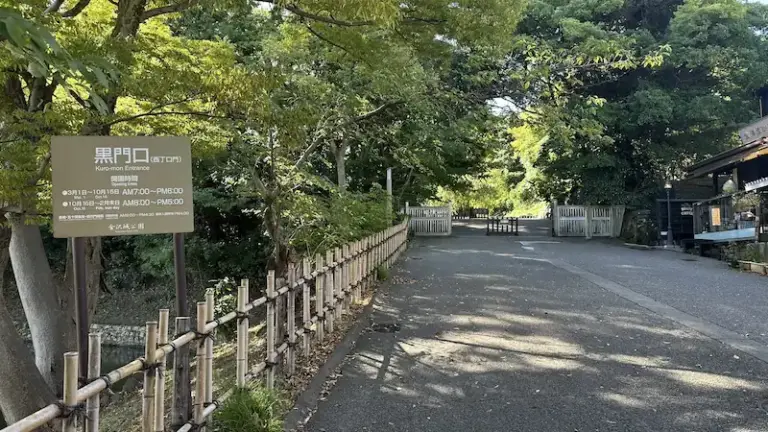
The classic walking route starts at the Ishikawa-mon Gate, moves through the Sannomaru, Ninomaru, and Honmaru, then exits via the Gyokusen’inmaru Garden. In the six area guides below, we highlight the best sights in the order you’ll encounter them.
Area 1 — Rear Approach / Ishikawa-mon Gate (Karame-te)
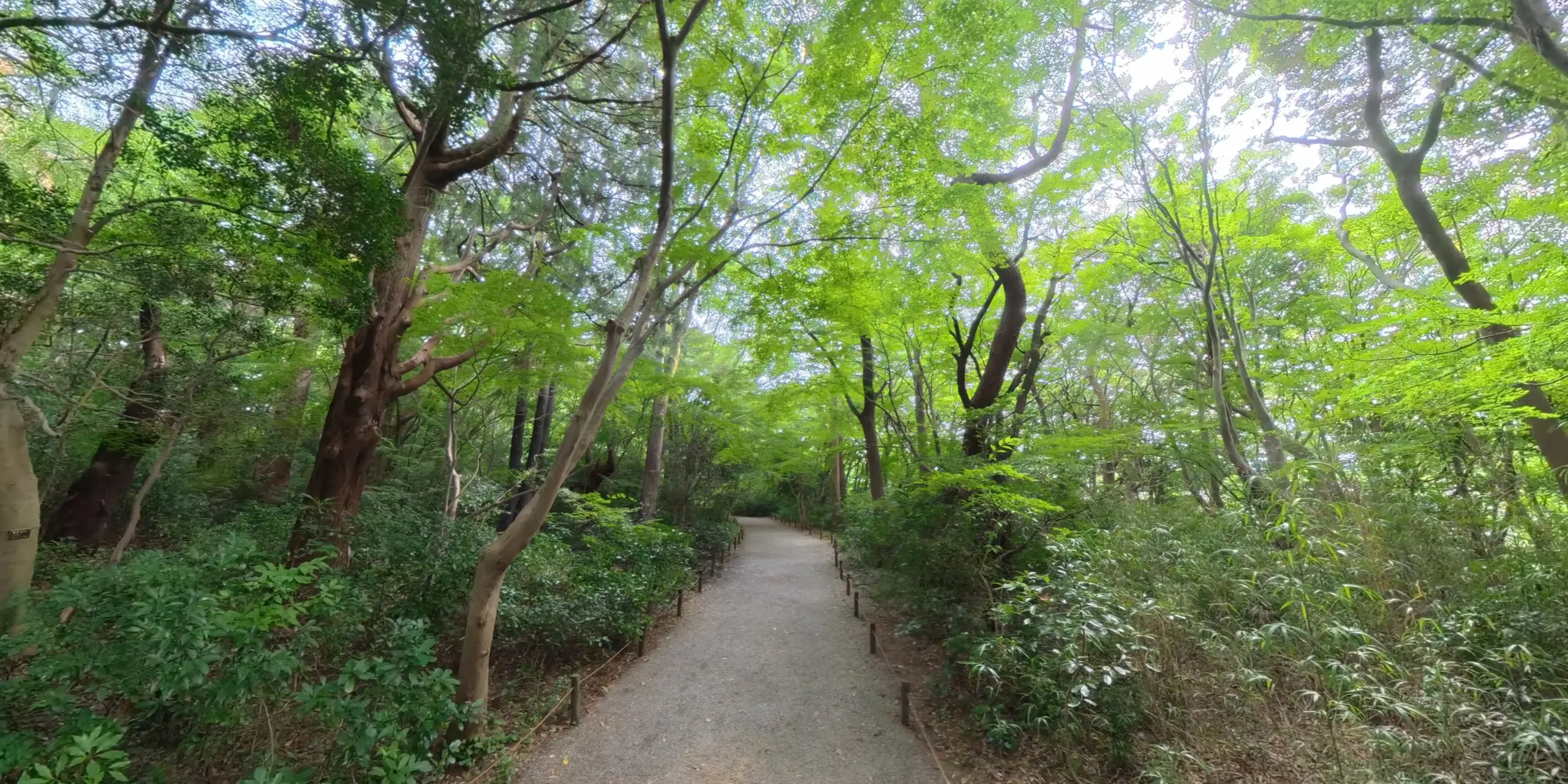
Enter from the Kenrokuen side via the castle’s rear karame-te (back gate) approach. Don’t miss the Important Cultural Property Ishikawa-mon Gate with its masugata (box-shaped) defensive layout, and the open expanse of Sannomaru Kita Enchi (North Garden).
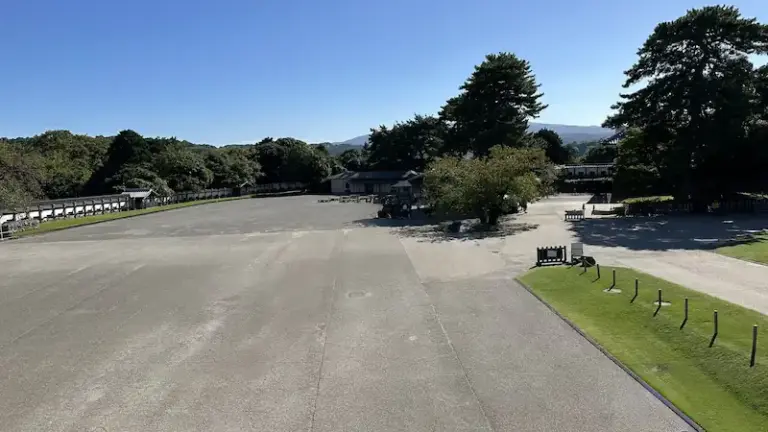
Area 2 — Sannomaru & Main Entrance (Kahoku-mon, Hashizume-mon & Plaza)
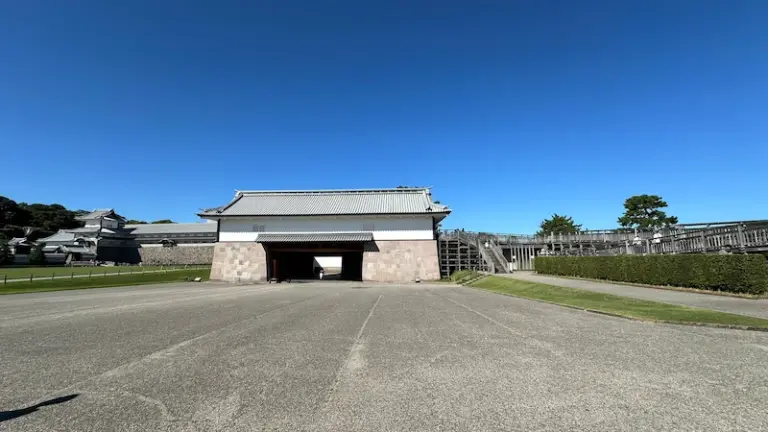
This is the castle’s front gateway. The line from Kahoku-mon to Hashizume-mon concentrates major reconstructions, giving you a vivid sense of Kanazawa Castle’s scale and defensive structure.
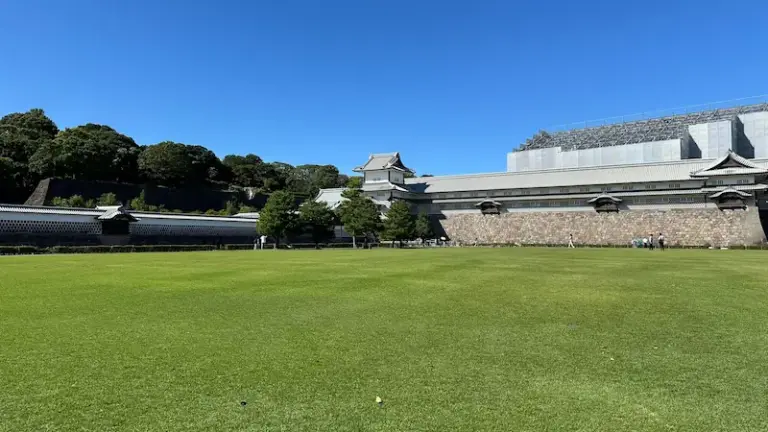
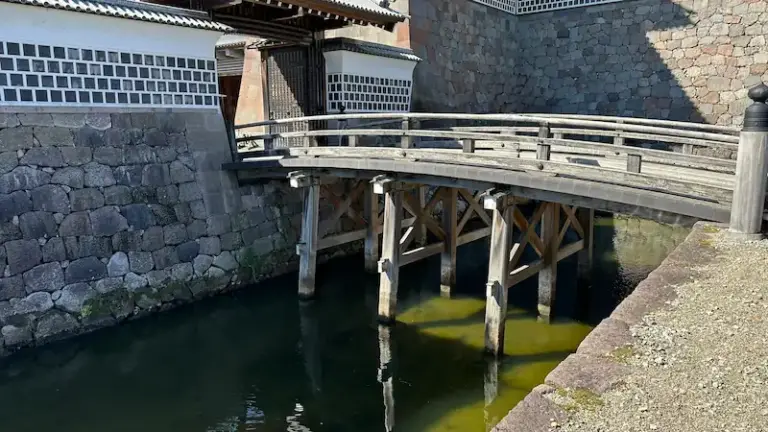
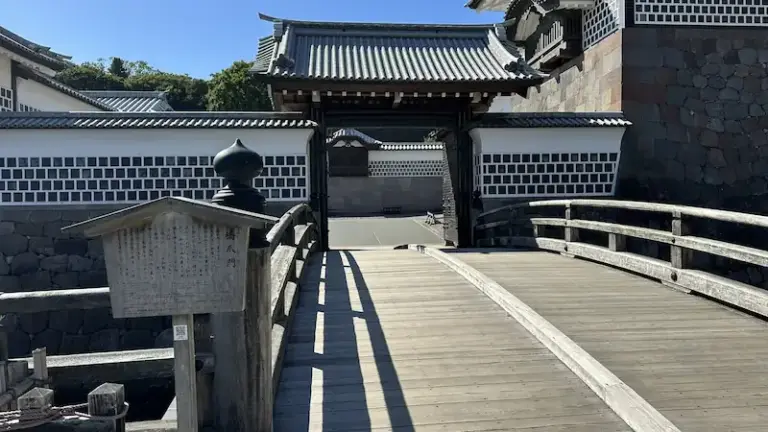
Area 3 — Kita-no-maru & West Ninomaru (Dobashi Gate Ruins, Kitte-mon, Former 6th Brigade HQ)
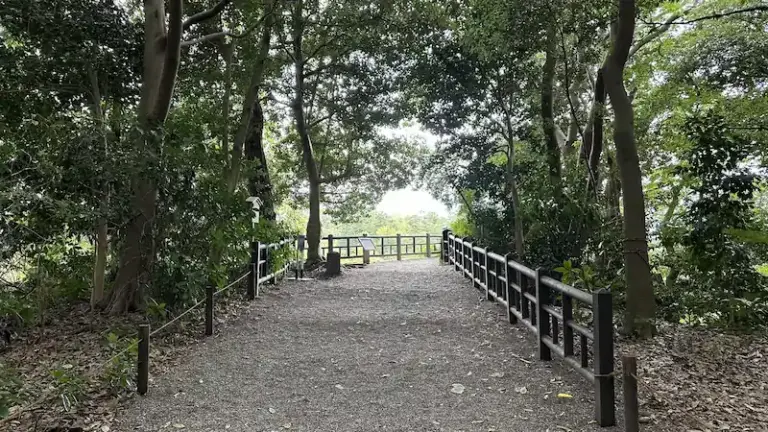
A quieter northwestern zone. Here you’ll find gate remains and military-era buildings that span the transition from Edo to Meiji, along with excellent examples of diverse stonework techniques in the ramparts.
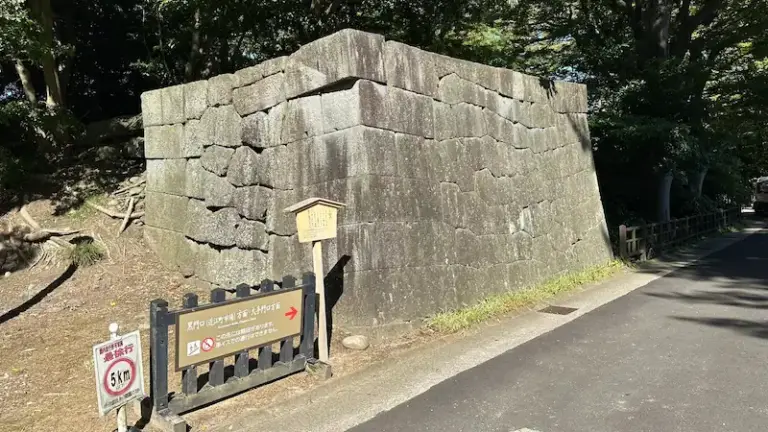
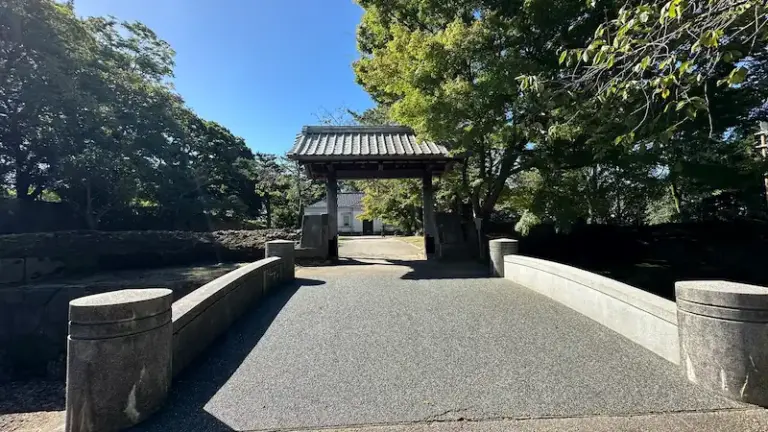
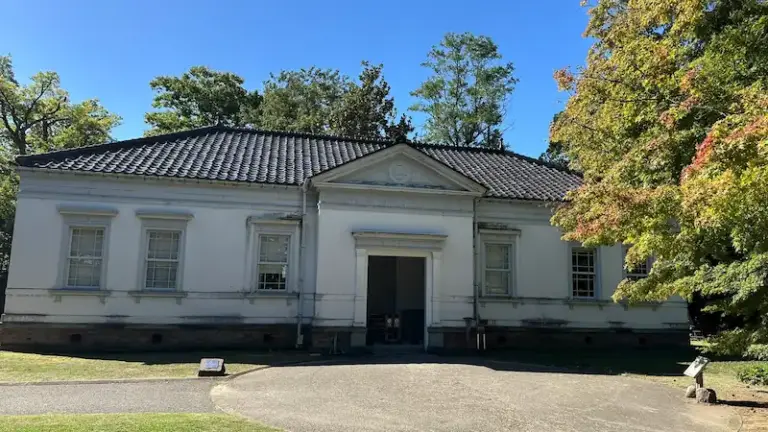
Area 4 — Ninomaru Core (Palace Site, Gokuraku Bridge, Long Storehouses)
The political heart where the lord’s palace once stood. This is the aesthetic center of Kanazawa Castle, home to signature reconstructions such as the Hishi Yagura, Gojikken Nagaya, Sanjikken Nagaya, and the graceful Gokuraku-bashi bridge.
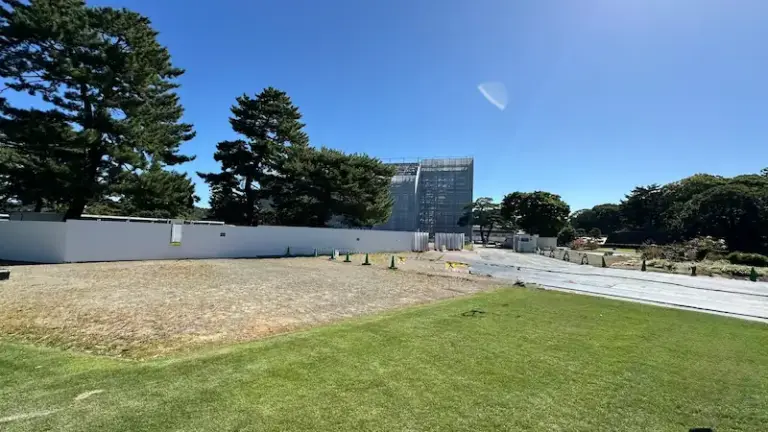
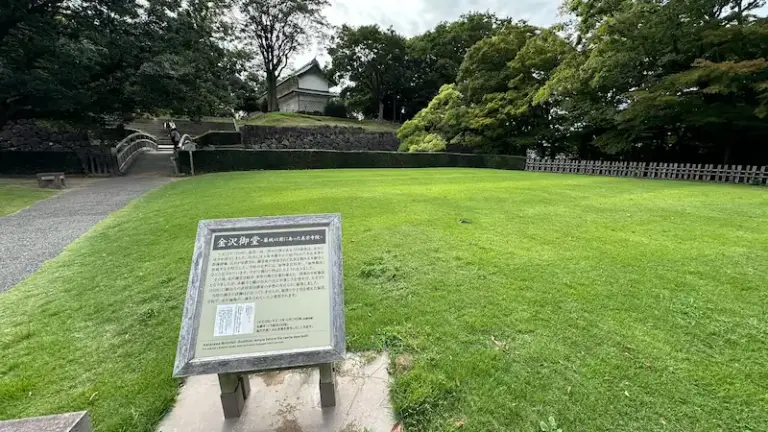
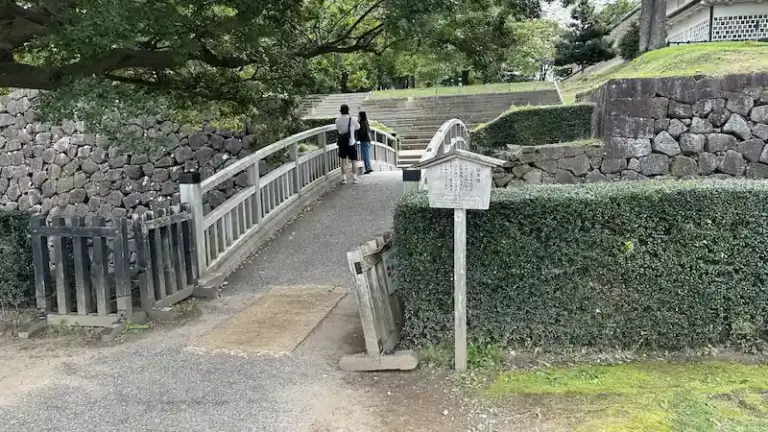
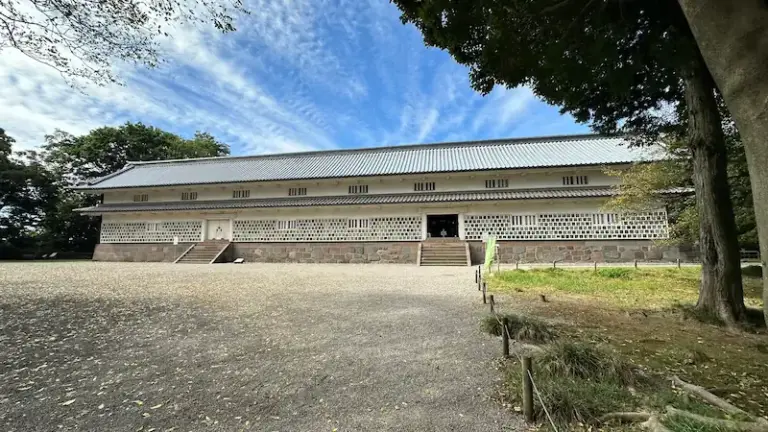
Area 5 — Honmaru & Higashi-no-maru (Honmaru Grounds, Turret Sites, Tsurumaru Warehouse)
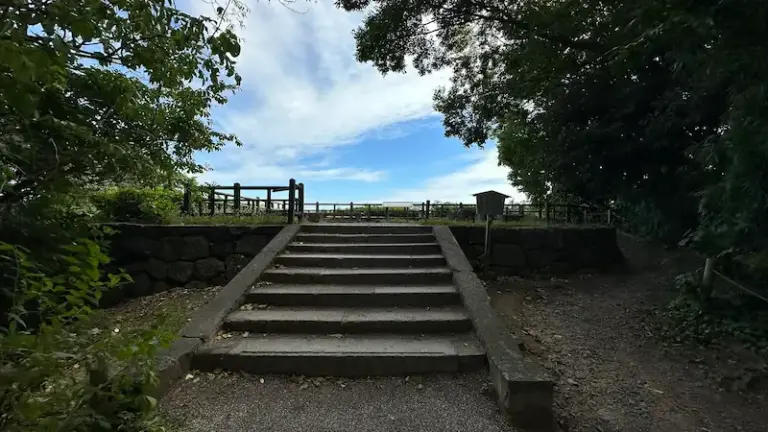
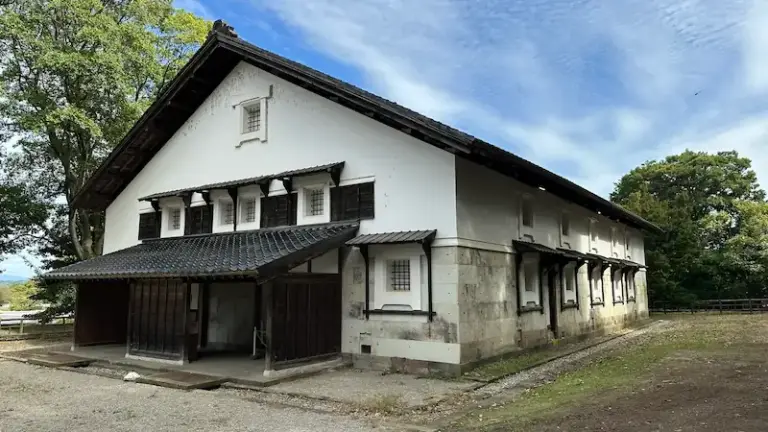
The topmost defensive core of the castle. Here you’ll find the Inui, Tatsumi, and Ushitora turret sites, plus cultural properties like the Tsurumaru Warehouse. Views over the old castle town are superb.
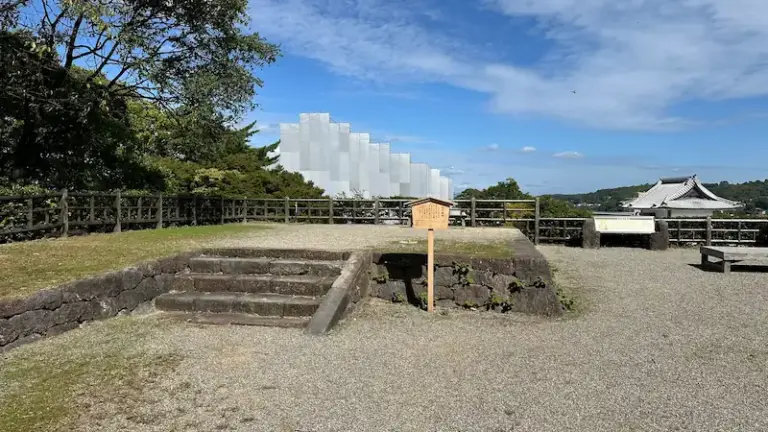
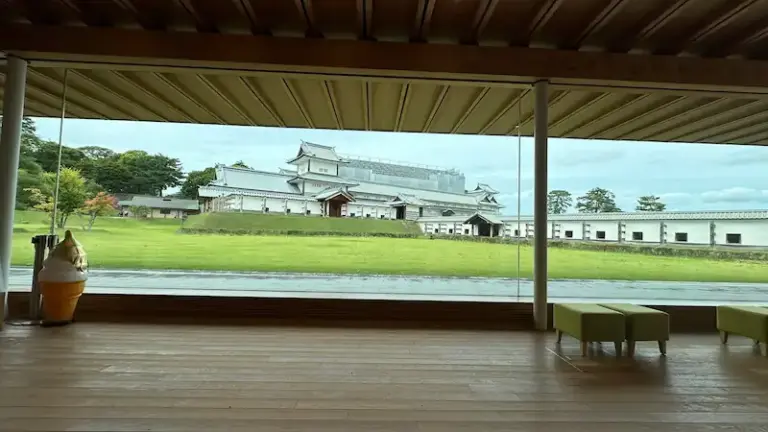
Area 6 — Western Bailey & Outer Enclosure (Gyokusen’inmaru Garden & Nezumita-mon)
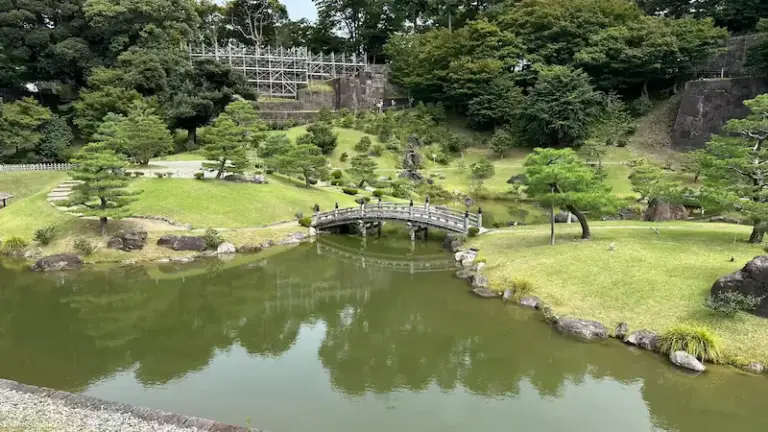
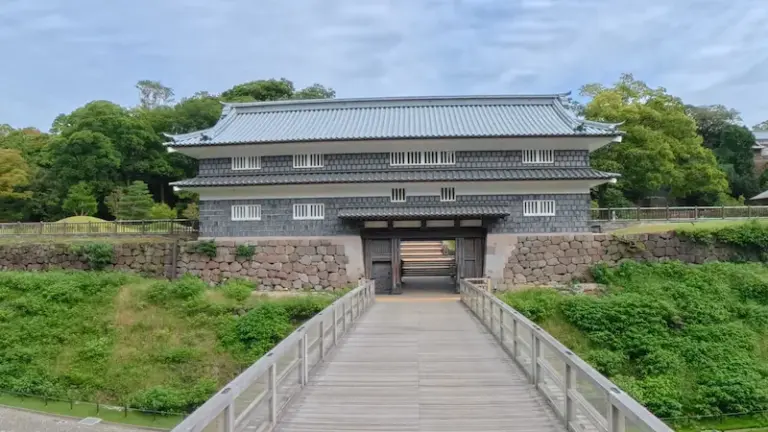
A culturally rich zone spreading west of the castle. The Gyokusen’inmaru Garden, associated with the Maeda lords, is a multi-layered pond-stroll garden where stonework and flowing water create depth and drama — the careful restoration revives its historic elegance. The adjacent Nezumita-mon Gate & Bridge re-establish a pedestrian link to the Oyama Shrine side, showcasing striking black namako (sea-cucumber) plaster walls and a timber bridge.
Frequently Asked Questions about Kanazawa Castle Park
The grounds are free to enter. The inner buildings (Hishi Yagura and Gojikken Nagaya) and Gyokusen’inmaru Garden each cost ¥320 for adults. Based on a personal visit, both paid areas are worth the fee: the Nagaya interior shows the timber construction in detail, and Gyokusen’inmaru is consistently the quietest part of the entire park — even on busy days.
Allow 90–120 minutes for the full 6-area route at a comfortable pace. If you have 45–60 minutes, focus on Ishikawa-mon Gate, the Ninomaru area (Hishi Yagura), and the Kahoku-mon approach. The Honmaru and Western Bailey can be skipped if time is short, though the Honmaru plateau view is worth the detour if possible.
Only two: Ishikawa-mon Gate (rebuilt 1788, survives intact as a National Important Cultural Property) and the Tsurumaru Warehouse. The dramatic Hishi Yagura and Kahoku-mon Gate — while architecturally impressive — are modern reconstructions completed in 2001 and 2010 respectively. See the full comparison table above for all structures.
Yes — the two sites are directly adjacent, connected via Ishikawa-mon Gate. A combined visit takes 3–4 hours. The recommended approach from personal experience: start at Kanazawa Castle (grounds open 7:00 AM) before Kenrokuen crowds arrive, complete the 6-area castle loop, then cross into Kenrokuen mid-morning to avoid the worst of the tour group congestion between 10 AM and noon.
Kanazawa Castle displays three distinct stone-stacking techniques on the same walking route: rough Nozurazumi near Ishikawa-mon Gate, precision-fit Kirikomi-hagi along the Kahoku-mon approach, and hexagonal Kikko-ishi at the Ninomaru walls. No other Japanese castle site shows all three techniques in such close proximity — and the differences are visible to the naked eye once you know to look for them.
Yes, for architecture and history enthusiasts. The Gojikken Nagaya interior (¥320) shows the timber construction methods in detail, and the upper-level view toward the Ninomaru plaza is the best elevated viewpoint in the park. Gyokusen’inmaru Garden (¥320, separate admission) is the most tranquil section of the site — consistently quiet even on busy days — and the multi-level pond-stroll layout is unlike anything else on the castle grounds. Allow 30–40 minutes for each paid area.
Spring (late March to early May) brings cherry blossoms along the Sannomaru plaza — one of Kanazawa’s most photographed seasonal scenes. Autumn (mid-October to mid-November) offers foliage around Gyokusen’inmaru Garden at manageable crowd levels on weekday mornings. Winter illumination events run seasonally, and the white castle walls photograph particularly well under artificial light. Summer mornings before 9 AM are the least crowded time year-round for architectural photography.


comment