


Nagahama Toyotomi Brothers! Sacred Sites Guide: How to Visit the Taiga Drama Museum, Nagahama Castle & Chikubushima
This page brings together admission, estimated visit times, and access information for five places I visited in person in Nagahama, Shiga—the setting of the 2026 NHK Taiga Drama Toyotomi Brothers!: the Taiga Drama Museum, Daitsu-ji Temple, Nagahama Castle, Toyokuni Shrine, and Chikubushima Island. The main sites are clustered within a 3- to 11-minute walk from JR Nagahama Station (JR-A09), making it easy to add city-center stops before or after the Taiga Drama Museum. Because the final ferry from Nagahama Port to Chikubushima is around 2:30 PM, I recommend planning the island as a separate outing from the city-center route.
Nagahama is a town where the story shifts from display case to real world the moment you step out of the Drama Museum and into its gates, temples, and lakeside castle ruins. Because this was the “launchpad” of Hideyoshi’s rise—the place where he was entrusted with northern Ōmi, renamed Imahama as Nagahama, and began building both a castle and castle town—the presence of his younger brother Hidenaga, who kept the machinery of the town moving behind the glittering military achievements, quietly grows stronger as you walk. Nagahama’s greatest strength is that so many of its highlights are concentrated within walking distance of the station; the more you add “while you’re there,” the more rewarding the trip becomes.
| Site | From Station | Suggested Time | Admission | Recommendation |
|---|---|---|---|---|
| Nagahama Toyokuni Shrine | 3 min walk | 20–60 min | Free | ★★ |
| Nagahama Castle Historical Museum | 5 min walk | 20–60 min | Paid | ★★★ |
| Daitsu-ji Temple + Taiga Drama Museum | 11 min walk | Daitsu-ji: 20–60 min / Drama Museum: 15–30 min | Grounds free; interior paid / Adults ¥600 | Daitsu-ji ★★★ / Drama Museum ★★★ |
| Gi to Kizuna-kan | Approx. 50 min by local bus | 60–90 min | ¥200 | ★★ for history lovers with extra time |
| Chikubushima Island | 9 min walk to port → 35 min ferry | 3–4 hr including round trip | Ferry ¥3,200 RT + ¥600 island admission | ★★★ |
This guide first introduces the must-see city-center sites: Nagahama Betsuin Daitsu-ji Temple (Kitchen Gate, Main Hall, and gardens), Nagahama Castle (Nagahama Castle Historical Museum and Hōkō Park), and Nagahama Toyokuni Shrine. If time allows, it also presents an extended route to Chikubushima Island (Hogon-ji Temple and Tsukubu-sushima Shrine), where Momoyama-period architecture concentrates Toyotomi prayer and authority into one unforgettable finale. This page is designed to help you decide, in one place, what Nagahama offers and where you should go.
Recommended Routes
- Morning (from 9:00 AM): Arrive at Nagahama Station (JR-A09) → Nagahama Castle (Historical Museum; 5 min walk; 30–60 min) → Toyokuni Shrine (15 min walk; 20–30 min)
- Lunch: Around Kurokabe Square and the shopping streets
- Afternoon: Daitsu-ji Temple + Taiga Drama Museum (11 min walk). The Taiga Drama Museum is held within the grounds of Daitsu-ji Temple, so you can combine Daitsu-ji’s interior visit (30–60 min) with the Drama Museum (15–30 min)
- Evening: Return to Nagahama Station (JR-A09)
Note: Gi to Kizuna-kan takes about 50 minutes by local bus from Nagahama Station (JR-A09), so combining it with the city-center sites on the same day can be physically demanding. It is better planned as a separate day or a dedicated outing.
- Important: Because the final ferry from Nagahama Port is around 2:30 PM, combining the island with city sightseeing on the same day is realistically difficult
- Morning (9–10 AM range): Depart from Nagahama Port → Chikubushima (80–90 min on the island) → return to port
- Afternoon: After returning, add one or two city-center sites only if you still have enough time and energy
- Always check the Biwako Kisen official website in advance for ferry schedules and service status
Taiga Drama Facilities
Toyotomi Brothers! Kita-Ōmi Nagahama Taiga Drama Museum
The on-site visit report is introduced below.
The Taiga Drama Museum is held within the grounds of Daitsu-ji Temple. Because you can stop there naturally when visiting Daitsu-ji, there is no need to treat the two as separate destinations. The most efficient route is to walk about 11 minutes from the station to Daitsu-ji and combine the museum with the temple’s interior visit.
The exhibition period is listed as February 1 to December 20, 2026, with opening hours from 9:00 AM to 5:00 PM (last admission 4:30 PM). Details may change, so check the official information before visiting. The actual exhibition is compact and can usually be seen in about 15 to 30 minutes.
Official URL: https://www.nagahama-sengoku.jp/exhibition/
| Type | Category | Price |
|---|---|---|
| Individual | Adult | ¥600 |
| Elementary / Junior High School Student | ¥300 | |
| Group (20 or more) | Adult | ¥500 |
| Elementary / Junior High School Student | ¥250 |
In 2026, a 3-facility pass covering the Taiga Drama Museum, Gi to Kizuna-kan, and Daitsu-ji Temple costs ¥1,000 for adults (no discounted price for children). Separately, a 3-museum pass linking the Nagoya Nakamura, Kitaomi Nagahama, and Yamatokōriyama Taiga Drama Museums costs ¥1,500 for adults and ¥750 for children, on sale through November 30, 2026. A 2-facility pass combining the Taiga Drama Museum and the Nagahama Bonbai (plum blossom) exhibition, priced at ¥1,300 for adults, ended sales on March 10, 2026.
Gi to Kizuna-kan
The exhibition period is listed as February 1 to December 20, 2026, with opening hours from 10:00 AM to 5:00 PM (last admission 4:30 PM). Details may change, so check the official information before visiting. Admission is ¥200 for adults, and free for high school students and younger (¥150 for adults in groups of 20 or more). Since it takes about 50 minutes by local bus from Nagahama Station (JR-A09), combining it with the city-center sites on the same day requires enough stamina and time. It is recommended (★★) for history lovers with room in the schedule, but it is safer to make it a separate outing or plan a dedicated half-day route centered on Gi to Kizuna-kan.
https://www.nagahama-sengoku.jp/kizuna
How to Avoid Crowds
During the Taiga drama broadcast period, crowds are expected especially on weekends, national holidays, long weekends, and days with related events. If you plan to visit the Taiga Drama Museum and city-center sites on the same day, one good approach is to see Daitsu-ji and the Taiga Drama Museum together in the morning (the museum is within the Daitsu-ji grounds), then visit Nagahama Castle and Toyokuni Shrine in the afternoon. If you plan to cross to Chikubushima, check ferry frequency and online reservation availability before building it into your itinerary.
Site Guide
Map of All Spots
Nagahama Betsuin Daitsu-ji Temple (Nagahama Gobō)
The castle town’s spiritual heart, carrying memories of Fushimi Castle and a gate from Nagahama Castle
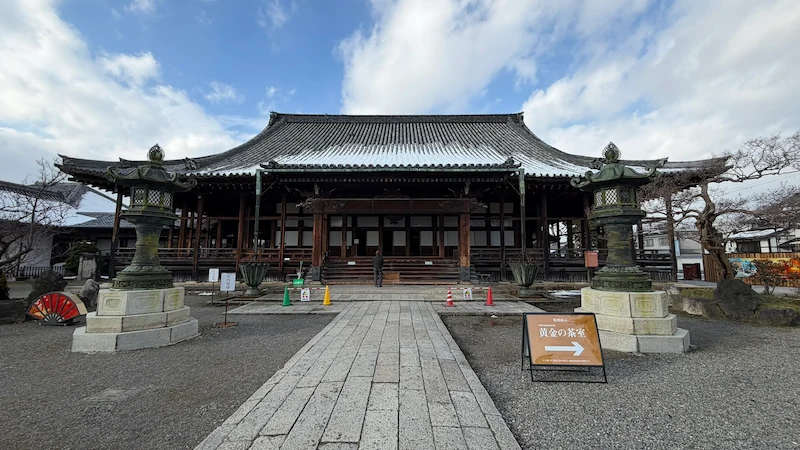
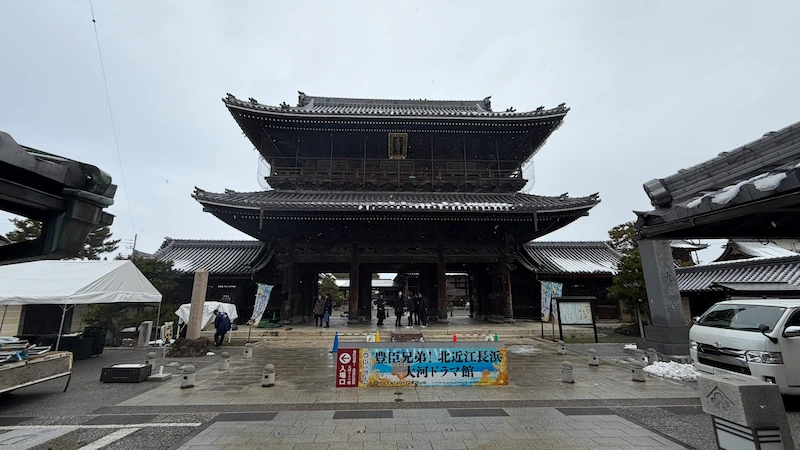
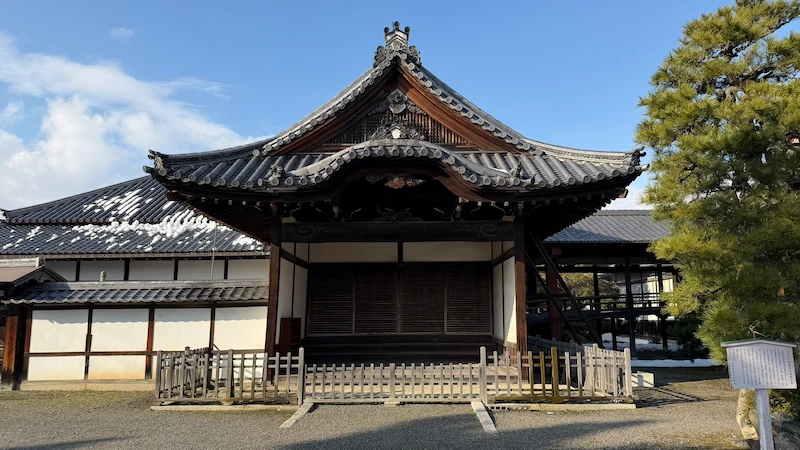
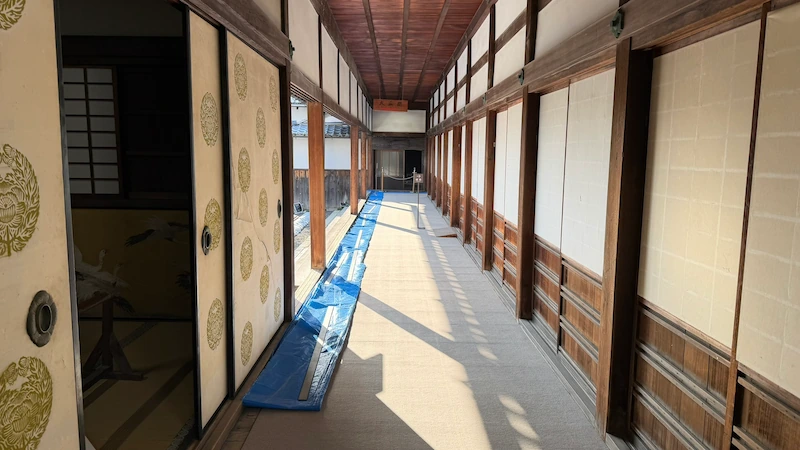
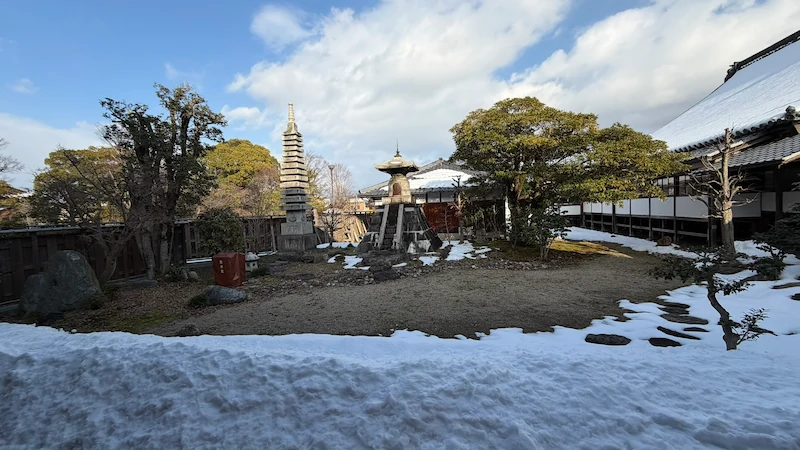
Daitsu-ji, also known as Nagahama Gobō, is a place of faith closely tied to daily life in the castle town. At the same time, it offers a distinctly Nagahama historical experience: a Main Hall traditionally said to have been relocated from Fushimi Castle, the Kitchen Gate associated with Nagahama Castle’s former main gate, and gardens designated as National Places of Scenic Beauty. During the interior visit, the time spent inside the architecture’s “ma”—its charged spatial intervals—is especially memorable; walking through it, I felt an atmosphere akin to the palace spaces of Nijō Castle.
🖼 Photo Gallery
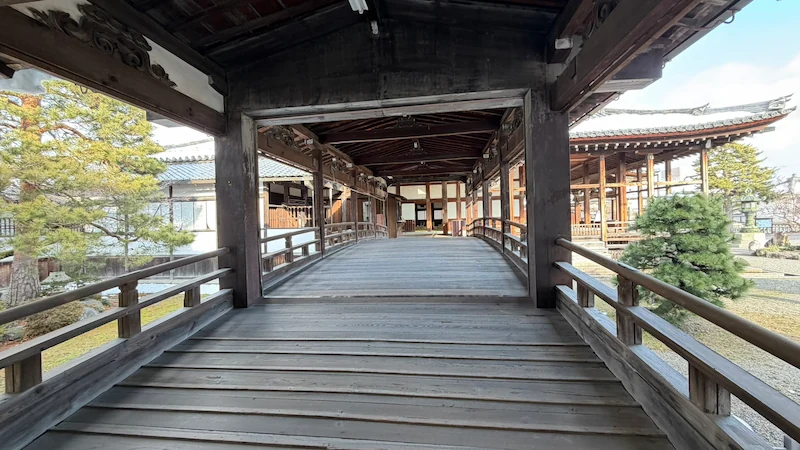
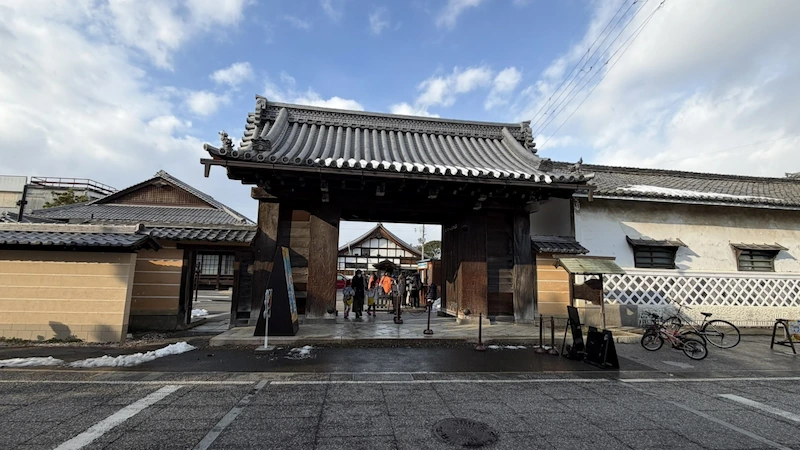 Kitchen Gate (side gate), traditionally associated with Nagahama Castle’s former main gate
Tap to enlarge
📝 Details
Nagahama, the gateway to northern Lake Biwa, came alive as a town when Toyotomi Hideyoshi built Nagahama Castle and laid out the castle town. Daitsu-ji is also called “Nagahama Gobō,” and rather than feeling like a temple built only for sightseeing, it has the presence of a spiritual headquarters that has stood beside the daily life of the castle town. The Kitchen Gate, or side gate, is introduced as a gate traditionally said to have been the front main gate (ōtemon) of the Nagahama Castle built by Hideyoshi.
What makes this temple special is that, while it remains a place of faith, it also shelters memories of the shifting power from the Sengoku period into the Edo period under the same roof. The Main Hall in particular is traditionally described as a relocated structure from Fushimi Castle. Nagahama City’s cultural-property explanations also introduce the tradition that it was once a palace building of Fushimi Castle and may have been the place where Hideyoshi held war councils before the Korean campaigns.
When I stepped inside, the place that came most strongly to mind was Nijō Castle. The shifts from room to room, the changing tension of the air as I moved down the corridors, and the way the sightlines stretch cleanly through the layout all created a quiet pressure. The building itself is the main character, and there is a stillness that seems to regulate your breathing. Rather than chasing exhibits, the experience is about dwelling in the architecture’s “ma.” For history lovers, I felt the interior visit is worth paying for.
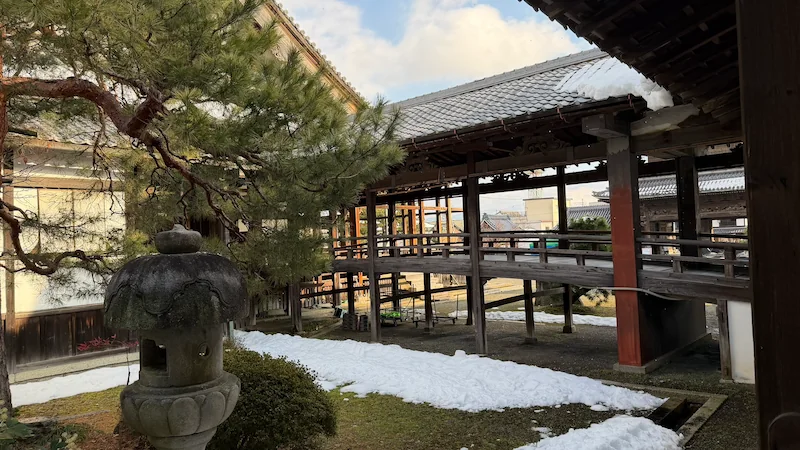
Daitsu-ji is also exceptional because architecture, art, and garden design can be experienced together. The sliding-door paintings in Ganzan-ken and Rantei are associated with names from the Kanō school and Maruyama Ōkyo, and the gardens are designated National Places of Scenic Beauty. A dry landscape garden borrowing the view of Mount Ibuki, and a pond garden with an arched bridge—within just a few minutes of the old castle town’s bustle, you are carried into another kind of quiet. The castle town raised by Hideyoshi, memories of Fushimi Castle, and early Edo-period patrons all meet here. The farther you walk from gate to hall to garden, the more the “seams” of Nagahama’s history rise up not as lines, but as three-dimensional space.
📜 Historic Data
| Founded / Built | As a temple, said to have taken the name “Daitsu-ji” during the Keichō era and later moved to its present location; the Main Hall is believed to date to around Meireki 3 (1657), based on gibōshi inscriptions. |
|---|---|
| Builder | Unknown; Ii Naotaka is cited as a patron of relocation and establishment. |
| Structure / Features | Main Hall: a large-scale Jōdo Shinshū hall, single-story, hip-and-gable roof, tiled in traditional style; traditionally associated with Fushimi Castle. Structures connected with castle origins remain, including the Grand Hall and the Kitchen Gate, traditionally linked to Nagahama Castle’s former main gate. |
| Repairs / Restoration | The Main Hall is said to have undergone major repairs and roof retiling in the Genbun era. The main gate underwent major roof repairs between 2013 and 2015. The Kitchen Gate was dismantled and repaired in 1913 and again in 2010–2011. |
| Current Status | Major buildings and gardens survive. |
| Loss / Damage | No reliable primary information confirming major loss or catastrophic damage was found. |
| Cultural Property | Main Hall and Grand Hall: National Important Cultural Properties, said to have been designated on March 26, 1915. Ganzan-ken and Rantei gardens: National Places of Scenic Beauty, designated December 28, 1934, among others. |
| Notes | The Main Hall is introduced with the tradition that Hideyoshi held war councils there before the Korean campaigns. |
👀 Highlights
- Main Hall, traditionally associated with Fushimi Castle: The sheer scale of this large Jōdo Shinshū hall is a highlight in itself. Together with the Fushimi Castle tradition, the building is discussed in connection with Nagahama’s castle-town history.
- Ganzan-ken, Rantei, and the gardens (National Places of Scenic Beauty): A dry landscape garden using Mount Ibuki as borrowed scenery and a pond garden with an arched bridge. Architecture, painting, and garden design can be experienced as one.
- Seasonal note: The summer memorial-service period is said to occur around July 2–10, with explanations mentioning special access to the inside of the main gate. Details may vary by year, so confirm locally or through official information.
📌 Trivia
- Unexpected historical background: The Main Hall is traditionally said to be a remnant of Fushimi Castle, and its construction date is believed to be around Meireki 3 (1657), based on gibōshi inscriptions. It is an unusual example of castle memory surviving as temple architecture.
- Insider note: The Kitchen Gate is traditionally identified as Nagahama Castle’s former front main gate, and explanations suggest it may date to Tenshō 16 (1588) based on inscriptions on its door fittings. It allows visitors to trace the “memory of an entrance” to the castle town within the temple precincts.
- Connection with notable figures: Daitsu-ji is discussed against the history of Nagahama as a castle town shaped by Hideyoshi, and the Main Hall is introduced with the tradition that Hideyoshi may have held war councils there.
🗺 Address
32-9 Motohamacho, Nagahama, Shiga
🚶 Access
About 11 minutes on foot from JR Nagahama Station (JR-A09) (approx. 780m). Walk through the shopping street toward the approach. The route is flat and easy to walk.
🚗 Parking
Dedicated parking is available; confirm capacity and fees. Public transportation is recommended during the Taiga drama broadcast period, when crowds are expected.
⏳ Suggested Time
Quick visit: about 20 min / Full visit: about 1 hr including the interior
⏰ Visiting Hours
Interior visit to the Main Hall and gardens: 9:00 AM–4:30 PM, last entry 4:00 PM (February 1–December 20, 2026, per Daitsu-ji’s official site). Hours and visiting days may change during the winter off-season, so check Daitsu-ji’s official site before visiting.
💴 Admission
Grounds: free / Interior visit to the Main Hall and gardens: paid. Daitsu-ji’s official site lists ¥500 for high school students and older, ¥100 for junior high school students, and free for elementary school students and younger. Confirm current fees before visiting.
Open the map to see the relationship between Nagahama Station (JR-A09) and Daitsu-ji Temple.
Nagahama Castle (Nagahama Castle Historical Museum / Hōkō Park)
The remains of a “water castle” shining beside Lake Biwa, where the division of labor between Hideyoshi and Hidenaga comes into view
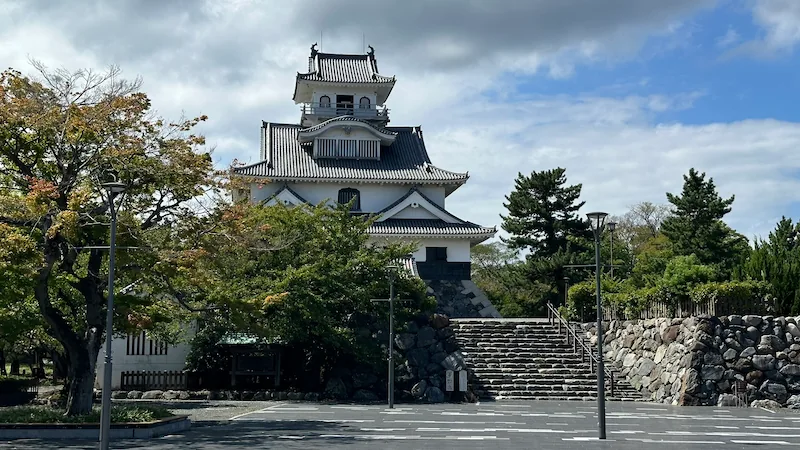
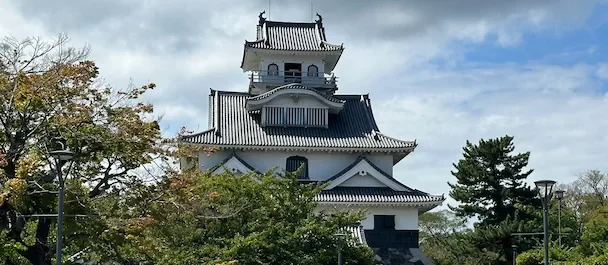
After the fall of the Azai clan, Hashiba Hideyoshi was entrusted with northern Ōmi by Oda Nobunaga. He renamed Imahama “Nagahama” and built a lakeside water castle that became the stage for his rise. His younger brother Hidenaga handled the practical work of castle construction and domain administration, and the brothers’ partnership became the driving force behind Nagahama. The present keep is a castle-style historical museum completed in 1983.
🖼 Photo
📝 Details
When the castle was largely complete around the autumn of Tenshō 3 (1575), Hideyoshi moved from Odani Castle to this water castle and used it as a base for campaigns toward Hokuriku and the Chūgoku region. The design, which incorporated lake water and even anticipated the movement of boats, shows Hideyoshi’s instinct for treating Sengoku logistics and military affairs as one system. The person who supported the daily operations of this castle and castle town was his younger brother, Toyotomi Hidenaga. During periods when Hideyoshi was often away on campaign, Hidenaga is thought to have handled construction progress, domain governance, and other practical work, underpinning rule in northern Ōmi. Behind the glittering battlefield achievements, steady administration accumulated step by step—making Nagahama one of the clearest places to see the division of labor between Hideyoshi and Hidenaga.
After the fall of the Toyotomi clan, Nagahama Castle was dismantled, and many of its stones and other materials are said to have been reused in the construction of Hikone Castle. The keep standing on the site today was completed in 1983 as a castle-style historical museum, following a reconstruction project that began in 1981 and was supported by civic donations and enthusiasm. Its greatest appeal lies in re-experiencing, through exhibits and views, the memory of a castle town that once formed a political and economic hub.
📜 Historic Data
| Founded / Built | Construction is said to have begun around Tenshō 2 (1574), with the castle largely completed around Tenshō 3 (1575), though sources vary in wording. |
|---|---|
| Builder | Hashiba Hideyoshi (Toyotomi Hideyoshi) |
| Structure / Features | Flatland castle on the shore of Lake Biwa; a water castle using the lake as part of the fortification. |
| Repairs / Reconstruction | Hōkō Park opened in 1909; reconstruction began in 1981, and the castle-style museum opened in 1983. |
| Current Status | The original keep does not survive. The site is now open as a reconstructed-style keep and historical museum. |
| Loss / Damage | After the fall of the Toyotomi clan, the castle was dismantled, and many materials are said to have been reused in Hikone Castle. |
| Cultural Property | Nagahama Castle Site: Nagahama City Historic Site. |
| Notes | Hidenaga is said to have supported Hideyoshi in practical matters such as construction progress and domain governance. |
👀 Highlights
- The lakeside “water castle” setting: The castle’s placement beside Lake Biwa is Nagahama’s defining feature. Feeling the lake breeze helps you understand the Sengoku-period idea of a water-transport hub.
- Castle-style museum exhibits: The museum is useful for learning about Nagahama and Hideyoshi’s history. The story of its modern reconstruction is itself part of the site’s history.
- Seasonal note: In spring, cherry blossoms bloom around the castle, making the park especially beautiful. About 600 cherry trees are often cited as a reference.
📌 Trivia
- Unexpected historical background: Once the castle was established, Hideyoshi changed the place name from Imahama to Nagahama, turning even the town’s name into a trace of Sengoku policy.
- Insider note: When the castle was dismantled after the fall of the Toyotomi clan, its stone walls and other materials are said to have been used in the construction of Hikone Castle, giving the components a kind of “rebirth” in a regional masterpiece.
- Connection with notable figures: While Hideyoshi advanced outward, Hidenaga is said to have handled practical work such as castle construction and domain governance; the brothers’ partnership powered Nagahama.
🗺 Address
10-10 Kōencho, Nagahama, Shiga
🚶 Access
About 5 minutes on foot from JR Hokuriku Main Line Nagahama Station (JR-A09) (approx. 350m). Walk straight toward the lake to reach the entrance of Hōkō Park.
🚗 Parking
Paid parking is available around Hōkō Park. Confirm capacity and fees. Early visits are recommended during the Taiga drama broadcast period, when crowds are expected.
⏳ Suggested Time
Quick visit: about 20 min / Full visit: about 1 hr including museum
💴 Admission
Hōkō Park / castle site: free; Nagahama Castle Historical Museum: paid (general admission ¥500; elementary and junior high school students ¥200)
📅 Closed
Mondays (open if a national holiday, closed the following weekday instead); year-end and New Year (December 27–January 1)
Open the map to check the route from Nagahama Station (JR-A09) to Nagahama Castle / Hōkō Park.
🏰 Related Sites Within Nagahama Castle Grounds
Bronze Statue of Toyotomi Hideyoshi
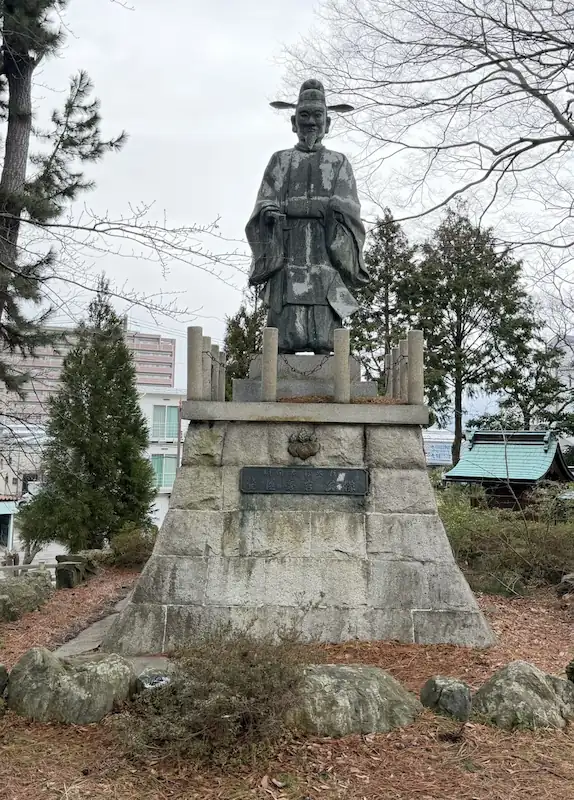
Inside Hōkō Park, where Nagahama Castle stands, there is a bronze statue of Toyotomi Hideyoshi. It symbolizes the history of Nagahama’s beginnings as a castle town and is an easy photo stop during a walk. The statue was donated and installed in 1971 in honor of Hideyoshi’s achievements.
Taikō-i Well Site
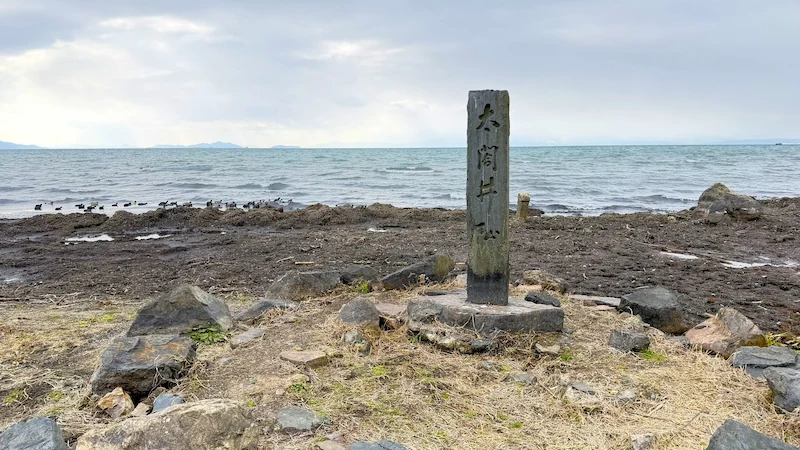
The “Taikō-i Well Site” on the lakeside of Nagahama Castle is traditionally said to have been a well used during Hideyoshi’s residence at the castle. In 1939, when Lake Biwa’s water level fell, the well site is said to have been found, and a wooden well frame was reportedly confirmed at the time. Today a stone marker reading “Taikō-i Site” stands on the shore, with the surrounding area preserved by stones. It can be hard to approach when the lake level is high, and the remains are easier to appreciate during low water.
Keep Ruins
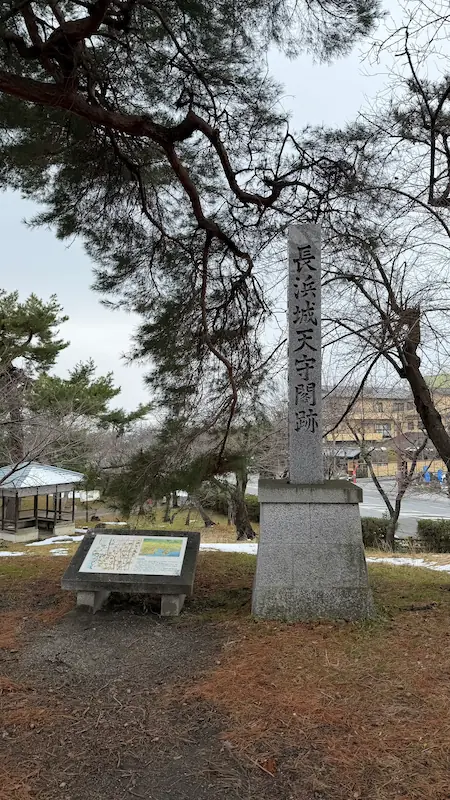
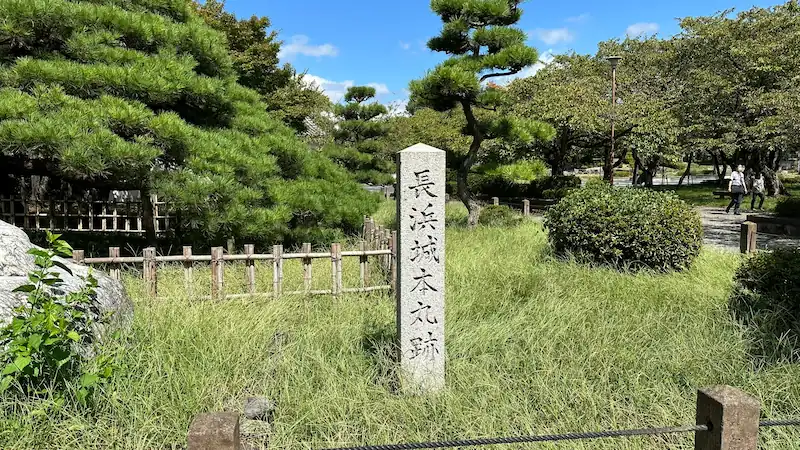
The “Keep Ruins” mark the area in the castle’s center, or honmaru, where the keep is thought to have stood. The keep-style building now inside the park, Nagahama Castle Historical Museum, is a later construction and does not reproduce the original location or appearance exactly. Stone markers stand at the site, and excavations have confirmed some stone walls and building remains, but aspects of the castle’s overall structure remain unresolved.
🏰 Related Sites Outside Nagahama Castle Grounds
Nagahama Castle Stable Ruins
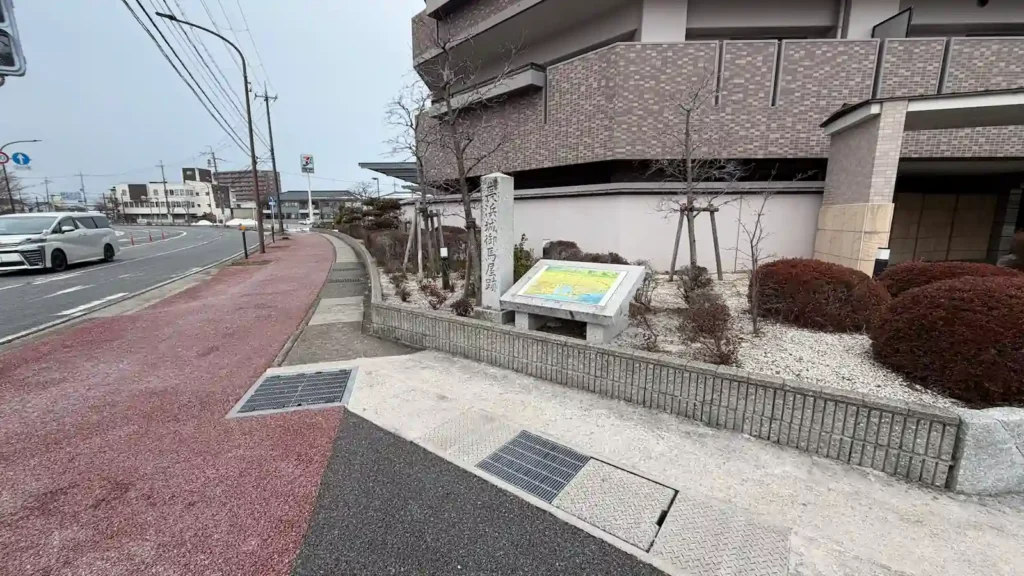
Only a stone marker remains in front of a condominium building. This place is traditionally said to have been the site of the castle’s riding ground or stable area.
Nagahama Castle Main Gate Ruins
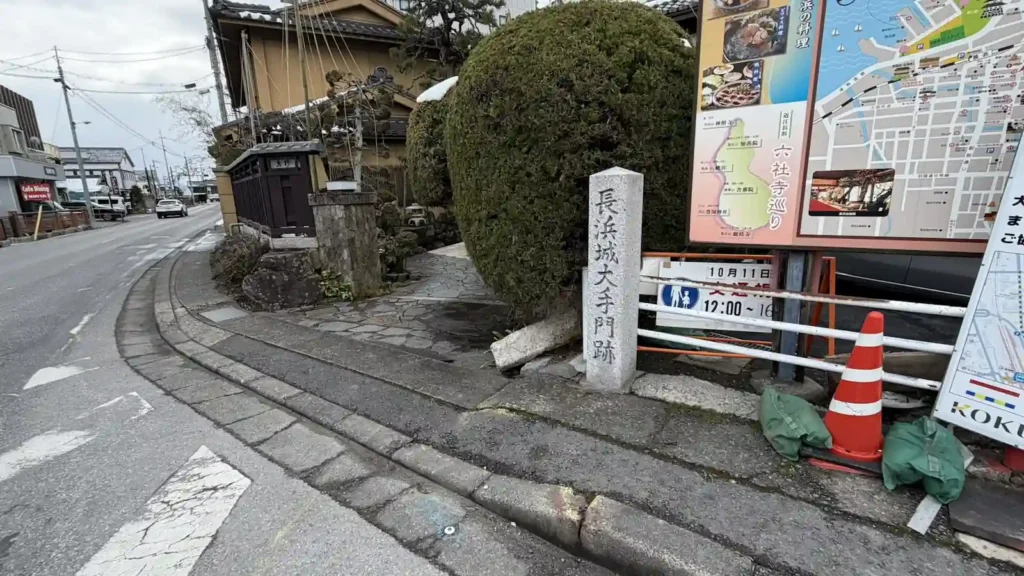
This spot lies along the route from Toyokuni Shrine toward Daitsu-ji Temple. Today only the stone marker remains, but imagining that the main gate now associated with Daitsu-ji once stood here is one way to enjoy the site.
Nagahama Castle Main Gate (Daitsu-ji Kitchen Gate)
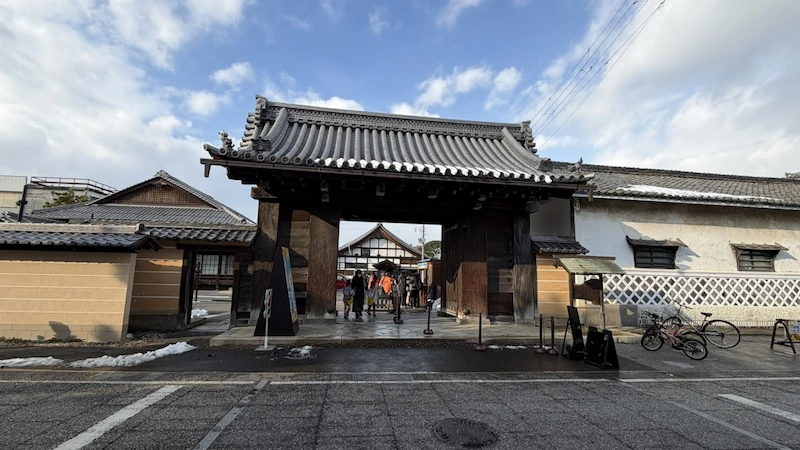
To the left of Daitsu-ji’s main gate stands a gate traditionally identified as the castle’s main gate. Because Daitsu-ji’s main gate is so imposing, the gate can look small by comparison, but seen on its own, it is substantial and dignified. Since the larger gate tends to draw the eye, be careful not to miss it.
Nagahama Castle Outer Moat Ruins
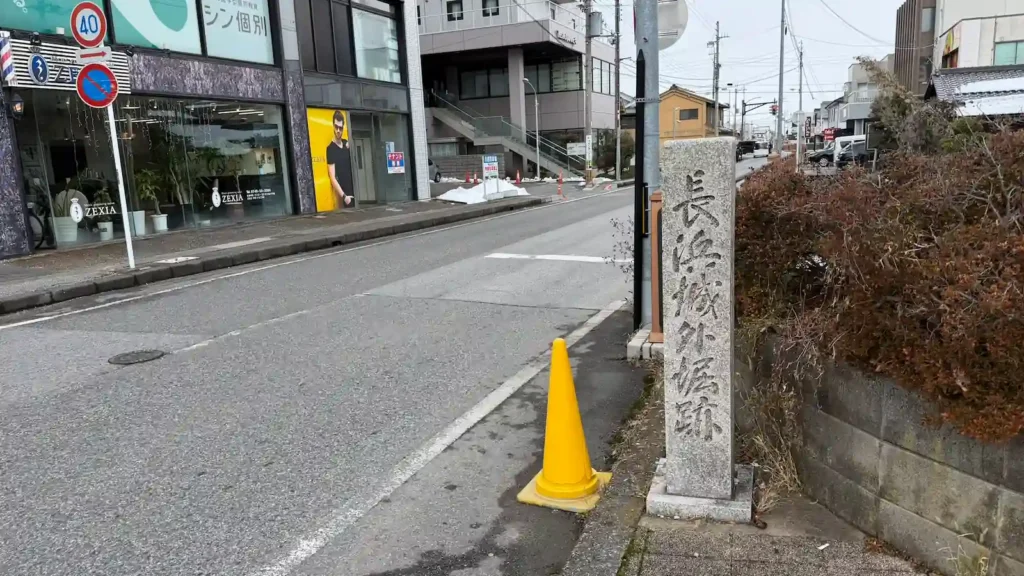
A stone marker stands a short walk from the station. The surrounding streetscape is completely ordinary today, but imagining that the outer moat once ran here is part of the pleasure of visiting historic sites.
Rear Gate (Chizen-in Front Gate)
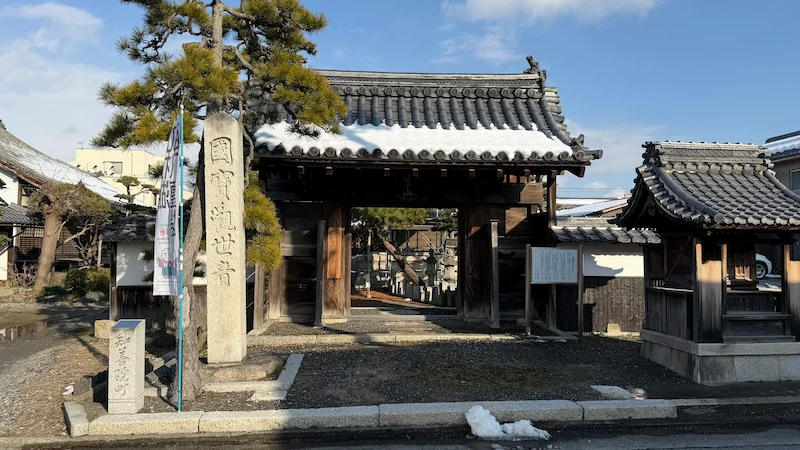
The front gate of Chizen-in Temple is traditionally said to be the relocated rear gate of Nagahama Castle. In person, it is a modest temple gate, but if you view it as a gate connected to Nagahama Castle, you can feel the lingering traces of the castle town’s history. It is located slightly beyond Daitsu-ji when walking from the station. Check the map for the exact location.
Nagahama Toyokuni Shrine
Four centuries of prayer for Hideyoshi, preserved by the townspeople and kept quietly alive even in the Edo period
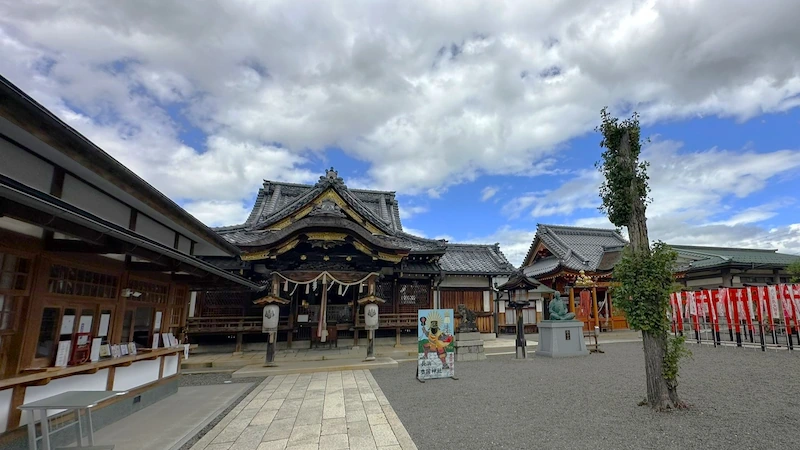
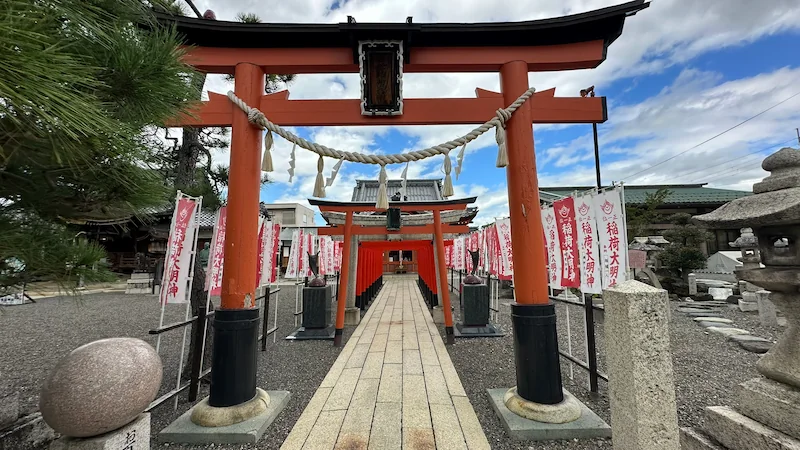
After Hideyoshi’s death, the townspeople built a shrine. Even after it was destroyed under Tokugawa rule, the townspeople protected his sacred image, and in 1793 they placed an “Ebisu shrine” at the front while continuing to enshrine Hideyoshi quietly in the inner sanctuary. That four-hundred-year devotion still lives in the shrine grounds today.
🖼 Photo Gallery
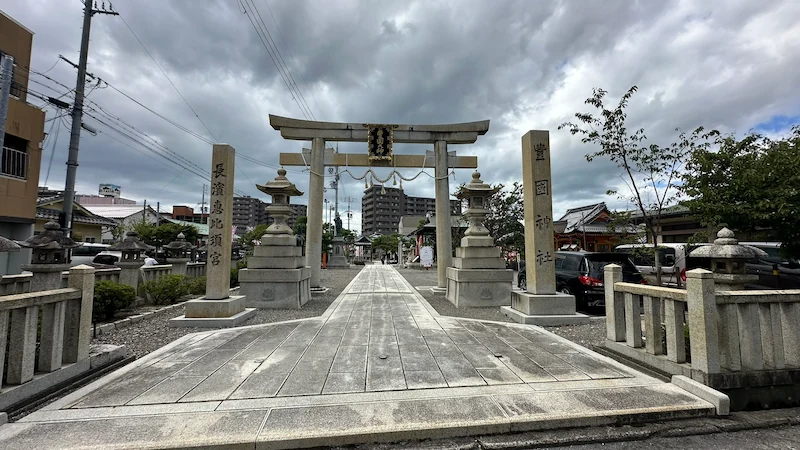
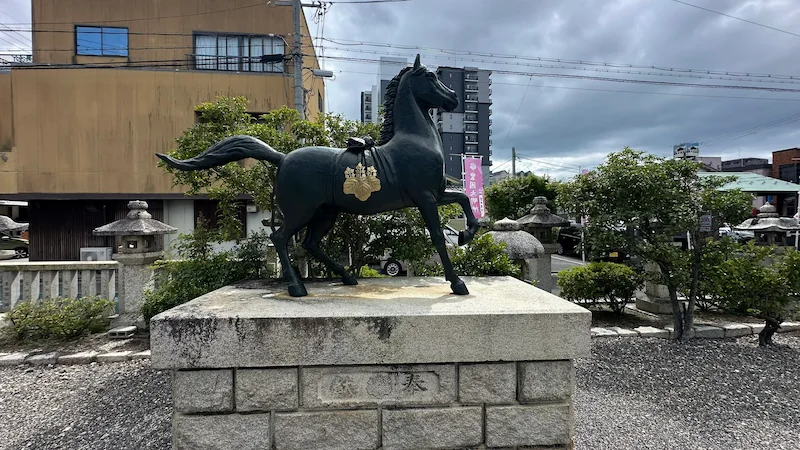
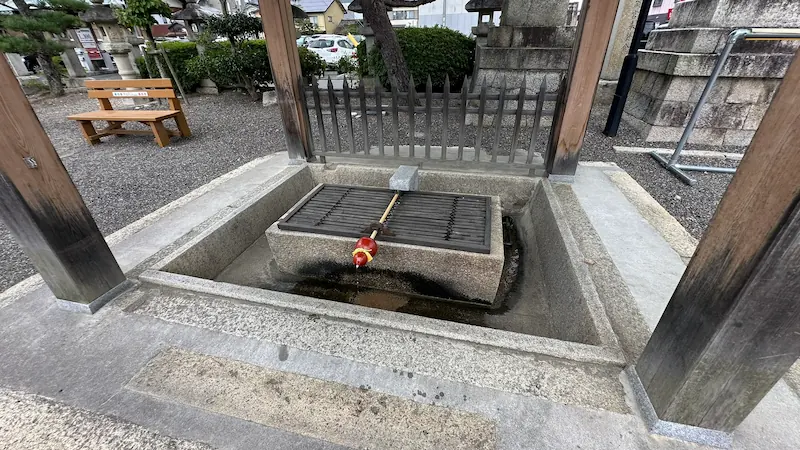
Tap to enlarge
📝 Details
In the spring of Tenshō 2 (1574), Hashiba Hideyoshi began building Nagahama Castle and shaping the townscape, and for about ten years he is remembered as having governed well. His connection with the townspeople was deep; a vermilion-sealed document exempting them from taxes remained a privilege until the end of the Edo period. That memory became the driving force behind the townspeople’s decision, after Hideyoshi’s death, to build a shrine “modeled on Kyoto’s Toyokuni Mausoleum.” Under Tokugawa rule, “enshrining Hideyoshi as a deity” was not permitted, and the shrine was once dismantled. But the townspeople protected the sacred image in the homes of the jūninshū, and in Kansei 5 (1793) they placed an “Ebisu shrine” at the front while quietly continuing to worship him in the inner sanctuary. The longing the people of Nagahama carried for four centuries still breathes in the shrine grounds today.
Praying here naturally brings to mind Toyotomi Hidenaga, the younger brother who supported the administration behind Hideyoshi’s boldness. Only because of the brothers’ duet did the road toward “rule of the realm,” which first sprouted in Nagahama, begin to feel realistic. That story rises in the quiet of the shrine buildings. Architecturally, the site is rich in highlights: the main shrine has a cypress-bark-covered karahafu over the entrance, the worship hall has a tiled roof with a chidori-hafu gable, and the shrine building is a Shinmei-zukuri structure with chigi and katsuogi, roofed in copper plate and dating to the middle Edo period. The Inari shrine’s coffered ceiling painted with seasonal birds and flowers, the gourd pond, and other details allow visitors to trace the presence of “Taikō-san.”
📜 Historic Data
| Founded | Founded in Keichō 5 (1600) |
|---|---|
| Founder | The townspeople of Nagahama |
| Structure / Features | Main shrine: karahafu entrance with cypress-bark roofing; worship hall with chidori-hafu gable and tiled roofing; shrine building in Shinmei-zukuri with chigi and katsuogi, copper-plate roof (the shrine building dates to the middle Edo period). |
| Repairs / Reconstruction | Dismantled under Tokugawa rule → in Kansei 5 (1793), an “Ebisu shrine” was built and Hideyoshi was enshrined in the inner sanctuary → in Kōka 3 (1846), it was called Minori Shrine → in 1898, a shrine building was constructed for the 300th anniversary of Hideyoshi’s death → in 1920, it became possible to use the name Toyokuni Shrine. |
| Current Status | Shrine buildings survive (the shrine building dates to the middle Edo period; the worship hall reflects modern style, among other features). |
| Loss / Damage | Under Tokugawa rule, the shrine was dismantled because deifying Hideyoshi was not permitted. |
| Cultural Property | No listing as a designated cultural property could be confirmed. |
| Notes | Tōka Ebisu is said to have begun with the establishment of the Ebisu shrine in 1793. Enshrined deities include Toyotomi Hideyoshi, Katō Kiyomasa, Yaekotoshironushi-no-Mikoto (Ebisu), and Kimura Nagato-no-Kami Shigenari. |
👀 Highlights
- The design of the main shrine buildings: The cypress-bark karahafu entrance, chidori-hafu worship hall, and Shinmei-zukuri shrine building with chigi and katsuogi let you experience several attractive architectural styles at once.
- Inari shrine coffered ceiling and corridor: The seasonal birds and flowers painted on the coffered ceiling become more impressive the longer you look up. The stone-paved corridor is built for the “ohyakudo” style of repeated prayer, making walking itself part of worship.
- Seasonal note: In January, Tōka Ebisu, and in October, the Hōkō Festival warrior procession fill the otherwise quiet shrine with the energy of success and good fortune.
📌 Trivia
- Unexpected historical background: During the Edo period, when worship of Hideyoshi was not permitted, the townspeople placed an Ebisu shrine at the front and continued quietly worshiping Hideyoshi in the inner sanctuary.
- Insider note: The “Tiger Stone” near the gourd pond is said to have been moved when Nagahama Castle was abandoned in 1615, then returned to Toyokuni Shrine after it cried out night after night. It is in the back of the grounds, so it is easy to miss.
- Connection with notable figures: Katō Kiyomasa, one of Taikō-san’s close retainers, is also enshrined here, and there is a bronze statue of Kiyomasa in the precincts. Together with the main deity Hideyoshi, the shrine lets visitors trace Toyotomi memory in three dimensions.
🗺 Address
6-37 Minamigofukucho, Nagahama, Shiga
🚶 Access
About 3 minutes on foot from JR Hokuriku Main Line Nagahama Station (JR-A09) (approx. 240m). After exiting the ticket gate, head toward the shopping street. It is an easy first stop for Nagahama sightseeing.
🚗 Parking
No dedicated shrine parking (confirm locally). Use nearby city-run or paid parking.
⏳ Suggested Time
Quick visit: about 20 min / Full visit: about 1 hr
💴 Admission
Free for shrine-ground worship
Open the map to check the route from Nagahama Station (JR-A09) to Toyokuni Shrine.
Chikubushima Island (Hogon-ji Temple & Tsukubu-sushima Shrine)
A sacred island where “crossing over” is the beginning of worship, and National Treasure Momoyama architecture is concentrated beside Lake Biwa
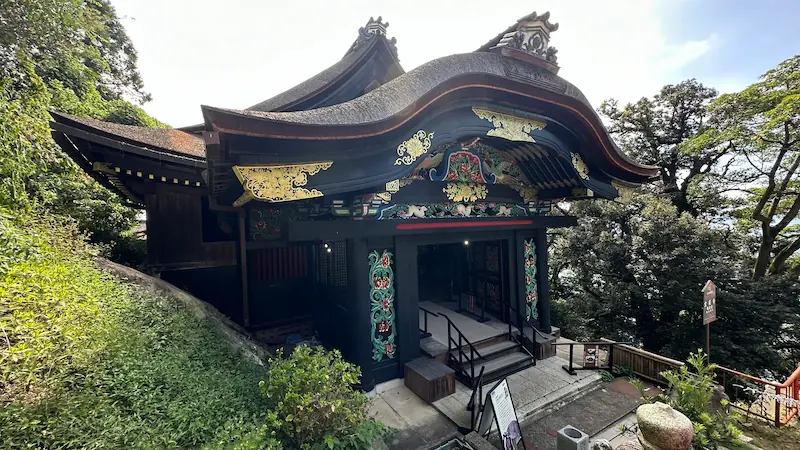
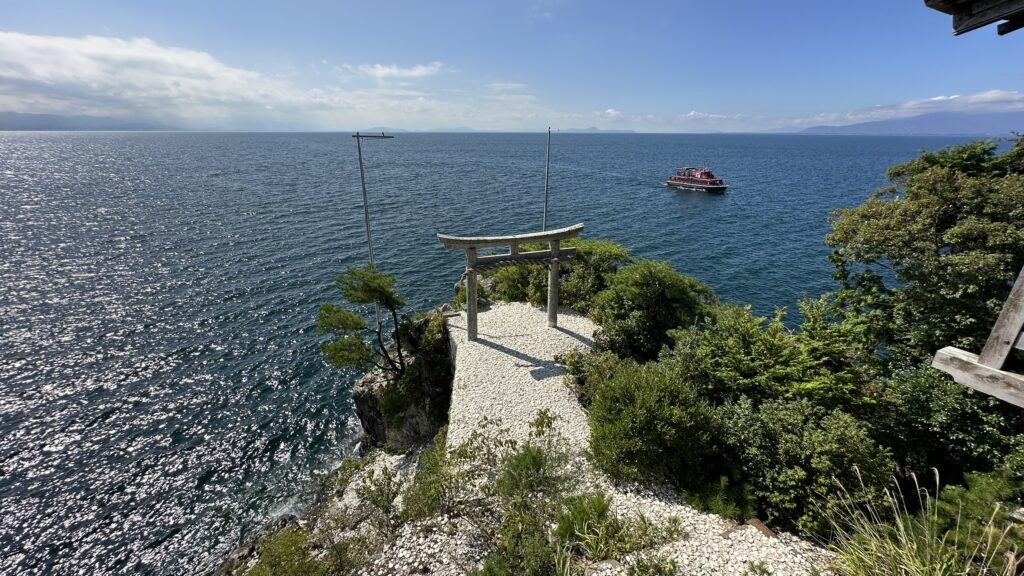
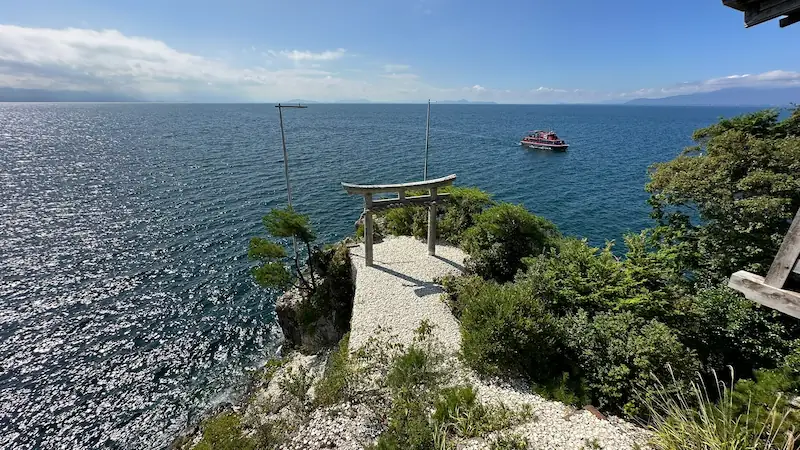
About 6 km offshore from Nagahama’s lakeside, Chikubushima floats as a small sacred island in the blue of Lake Biwa. The act of “crossing” itself becomes the beginning of worship. With Toyotomi prayer and authority embodied in National Treasure Momoyama architecture such as Hogon-ji Temple’s Karamon Gate and Tsukubu-sushima Shrine’s Main Hall, it is a fitting finale to a Nagahama visit. Because the final ferry from Nagahama Port is around 2:30 PM, I recommend setting aside a separate itinerary from city-center sightseeing.
🖼 Photo Gallery

Tap to enlarge
📝 Details
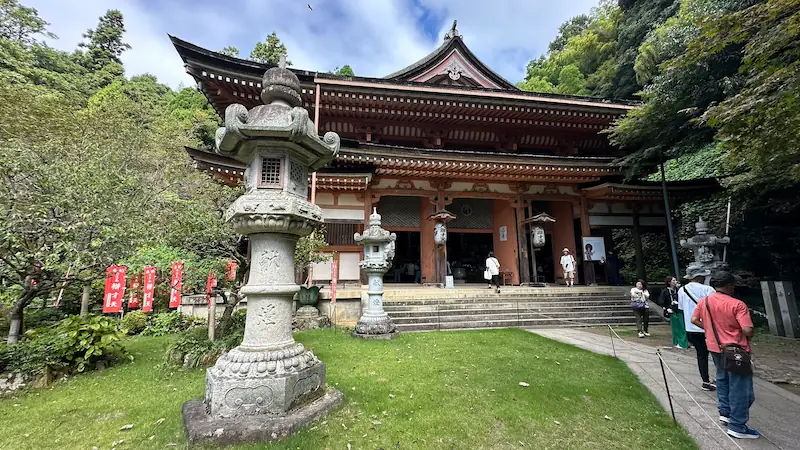
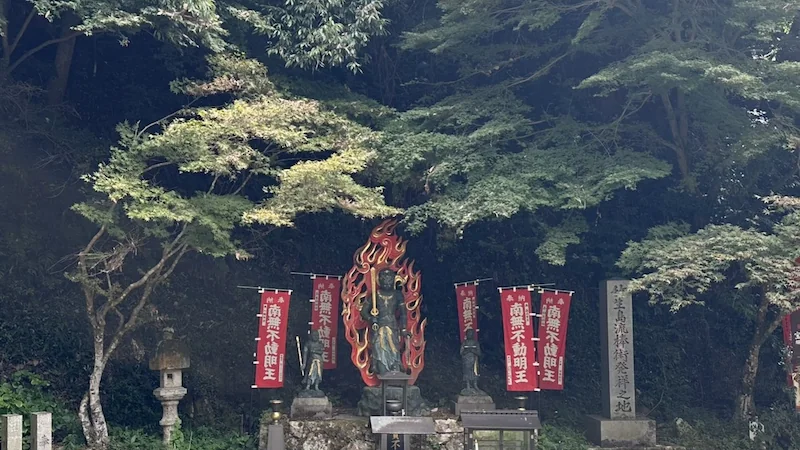
According to tradition, in Jinki 1 (724), the monk Gyōki founded Hogon-ji Temple by imperial order of Emperor Shōmu. The atmosphere of shinbutsu-shūgō—the blending of Buddhism and Shinto—still remains strongly on the stone steps of the approach, where Benzaiten faith, Kannon worship, and the shrine presence of Tsukubu-sushima Shrine coexist on the same island.
The National Treasure Karamon Gate of Hogon-ji Temple is said to have been relocated in Keichō 8 (1603) by Toyotomi Hideyori, with Katagiri Katsumoto serving as construction magistrate. Its black lacquer, metal fittings, and vividly colored carvings condense the aesthetic of the Momoyama period. The National Treasure Main Hall of Tsukubu-sushima Shrine also centers on a building donated and relocated by Hideyori in Keichō 7 (1602).
For Hideyoshi, Nagahama was the first place where he truly took root as a castle lord. Historical records suggest that during preparations for Nagahama Castle, timber stored on Chikubushima was transported to the mainland, showing that the island was also connected to practical governance.
⚠ Check Before Visiting Chikubushima
The final ferry from Nagahama Port is around 2:30 PM, varying by season and schedule. Combining Chikubushima with the Taiga Drama Museum or city-center sites on the same day is realistically difficult. I strongly recommend planning Chikubushima as a separate itinerary. Always check ferry times and reservation status in advance on the Biwako Kisen official website.
📜 Historic Data
| Founded / Built | Jinki 1 (724): founding of Hogon-ji Temple; Keichō 7–8 (1602–1603): major structures relocated and donated through Hideyori’s patronage. |
|---|---|
| Builder / Patron | Gyōki, by imperial order of Emperor Shōmu; Momoyama-period patronage by Toyotomi Hideyori, traditionally in accordance with Toyotomi Hideyoshi’s wishes. |
| Structure / Features | A sacred island in Lake Biwa, about 2 km in circumference, gathering temple and shrine buildings. Momoyama-period architecture including National Treasures—the Hogon-ji Karamon Gate and Tsukubu-sushima Shrine Main Hall—is concentrated here. |
| Repairs / Reconstruction | The three-story pagoda was reconstructed in 2000 after roughly 350 years. |
| Current Status | Major temple and shrine buildings survive and can be visited. |
| Loss / Damage | The Tsukubu-sushima Shrine Main Hall burned in 1558 and includes elements rebuilt during the Sengoku period. |
| Cultural Property | National Treasures: Hogon-ji Karamon Gate and Tsukubu-sushima Shrine Main Hall. Important Cultural Property: Funa-rōka Boat Corridor. Chikubushima is also a National Place of Scenic Beauty and Historic Site, and is registered as Japan Heritage. |
| Notes | About 35 minutes by cruise from Nagahama Port. Final ferry around 2:30 PM, varying by season. |
👀 Highlights
- Hogon-ji Karamon Gate (National Treasure): Black lacquer, metal fittings, and vividly colored carving concentrate Momoyama “authority made visible” within a single bay of the gate.
- Tsukubu-sushima Shrine Main Hall (National Treasure) and kawarake-nage: With the lingering impression of lavish Momoyama decoration behind you, throwing small unglazed clay saucers toward the lake lets prayer dissolve into the scenery.
- Seasonal note: The Chikubushima Festival from June 10 to 15 is the island’s liveliest period.
📌 Trivia
- Unexpected historical background: During preparations for Nagahama Castle, timber stored on Chikubushima was transported to the mainland, connecting the island to the actual work of castle construction.
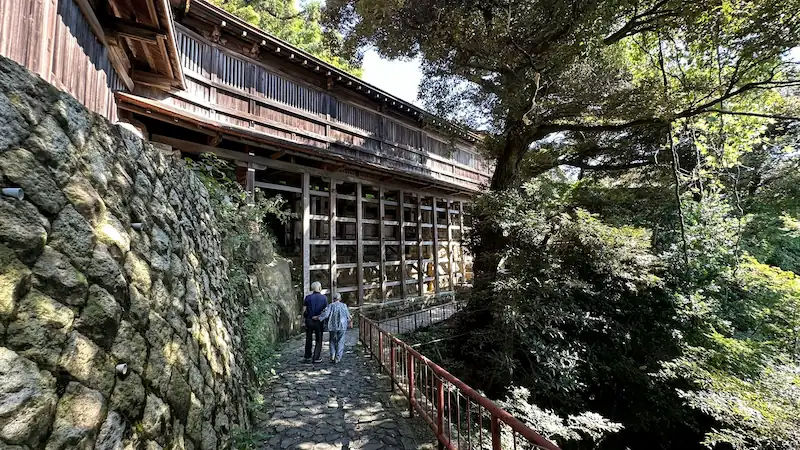
- Insider note: The Funa-rōka Boat Corridor connecting Hogon-ji Temple and the shrine is an Important Cultural Property. Its name derives from the tradition that its timber came from Hideyoshi’s personal flagship, the Nihon-maru.
- Connection with notable figures: The National Treasure Karamon Gate and Main Hall symbolize the island’s Toyotomi connections. After Hideyoshi’s death, Hideyori’s relocation and donations gave shape to the island’s Momoyama architecture.
🗺 Address
1664-1 Hayasakicho, Nagahama, Shiga (Chikubushima Island)
🚶 Access
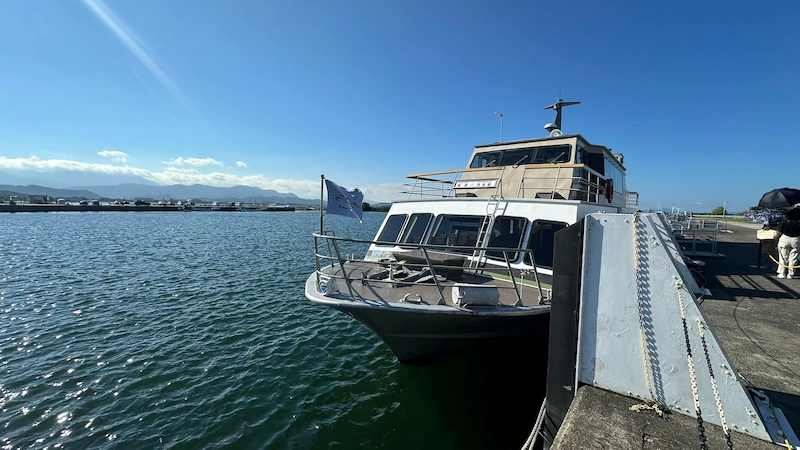
Walk about 9 minutes (approx. 700m) from JR Hokuriku Main Line Nagahama Station (JR-A09) to Nagahama Port, then take a Biwako Kisen ferry for about 35 minutes. Because the final departure is around 2:30 PM and varies by season, advance confirmation is essential.
🚗 Parking
Paid parking is available around Nagahama Port; confirm capacity and fees. There is no parking on Chikubushima itself.
⏳ Suggested Time
The ferry from Nagahama Port to Chikubushima Port takes about 35 minutes each way. Island stay is typically about 85–90 minutes. Allow about 3–4 hours including round trip and island time.
💴 Fees
The Biwako Kisen Nagahama route round-trip ferry fare is ¥3,200 for adults (junior high school and older) and ¥1,600 for elementary school students. Chikubushima island admission is required separately: ¥600 for adults and ¥300 for elementary school students (preschoolers free). Combined, budget about ¥3,800 per adult and ¥1,900 per elementary-age child. Separately, Hōgon-ji Temple’s treasure hall on the island charges its own admission of ¥300 for adults and ¥250 for children (viewing hours follow the sightseeing-boat schedule, approximately 9:30 AM–4:30 PM). Check official information for the latest operating days, schedules, and fees before visiting.
Open the map to check the route from Nagahama Station (JR-A09) to Nagahama Port, the Chikubushima cruise boarding point.
Based on time I actually spent walking each site in person. These rankings are my own—not an official recommendation from Nagahama City or any of the sites listed.
The Taiga Drama Museum is held on Daitsu-ji’s own grounds, so a single stop covers both. The Main Hall and Kitchen Gate are National Important Cultural Properties, and the garden is a National Place of Scenic Beauty.
The site where Hideyoshi renamed Imahama as Nagahama—his launchpad to power. The lakeside water-castle setting and 8 related sub-spots, including the Taikō-i Well Site and Main Gate Ruins, can all be covered from here.
Home to 2 National Treasures and Japan Heritage-designated Momoyama architecture, but the last ferry from Nagahama Port is around 2:30 PM, so it needs to be planned as a separate day from the city-center route.
Free admission and just 3 minutes on foot from the station, making it easy to fit in along the way. Its overall rating (★★) is the lightest of the four main spots, so prioritize the others first and add this on if you have extra time.
Access to Nagahama
- Tokyo → Maibara: About 2 hr 20 min by Tokaido Shinkansen Hikari. Nozomi trains do not stop at Maibara, so choose a Hikari or Kodama service that stops there.
- Nagoya → Maibara: About 20–25 min by Tokaido Shinkansen Hikari or Kodama.
- Maibara → Nagahama: About 9 min and ¥200 on the JR Biwako Line / Hokuriku Main Line. Only one transfer is needed, making the route convenient.
- Osaka → Nagahama: About 100 minutes with no transfer by JR Special Rapid service on the Kobe, Kyoto, and Biwako lines. During the day, direct services operate roughly once per hour.
- Kyoto → Nagahama: About 70 minutes with no transfer by JR Biwako Line Special Rapid service.
- The Special Rapid requires no limited-express surcharge—only a regular ticket—and offers speed comparable to limited express trains.
- From Nagahama IC on the Hokuriku Expressway, the city center is about 15 minutes by car.
- Paid parking is available around Hōkō Park and Nagahama Castle. Some information lists up to 3 hours free for standard cars; confirm current details locally.
- During the Taiga drama broadcast period, weekends and holidays are expected to be crowded, so visiting by train is recommended where possible.
- Chikubushima cannot be reached directly by car. Use the ferry from Nagahama Port.
Frequently Asked Questions
Opening hours are 9:00 AM to 5:00 PM (last admission 4:30 PM), and the exhibition runs from February 1 to December 20, 2026. No advance-reservation notice was found on the official site, but waiting times may occur during busy periods. Check the official site (https://www.nagahama-sengoku.jp/exhibition/) for the latest information before visiting.
Individual admission is ¥600 for adults and ¥300 for elementary and junior high school students. Group admission for 20 or more people is ¥500 for adults and ¥250 for elementary and junior high school students. Admission to Gi to Kizuna-kan is ¥200 for adults and free for high school students and younger (¥150 for adults in groups of 20 or more). See the official site for details (https://www.nagahama-sengoku.jp/kizuna).
Because the final ferry to Chikubushima from Nagahama Port is around 2:30 PM, combining Chikubushima with the Taiga Drama Museum or city-center sites on the same day is realistically difficult. I recommend planning Chikubushima as a separate itinerary. The city-center sites—the Taiga Drama Museum, Nagahama Castle, Toyokuni Shrine, and Daitsu-ji Temple—are clustered within walking distance and can be covered comfortably in one day.
Nagahama Toyokuni Shrine is about 3 minutes on foot from JR Nagahama Station (JR-A09) (approx. 240m), Nagahama Castle Historical Museum is about 5 minutes on foot (approx. 350m), and Daitsu-ji Temple is about 11 minutes on foot (approx. 780m). To visit Chikubushima, walk about 9 minutes to Nagahama Port (approx. 700m), then take a ferry for about 35 minutes. Because the main sites are within walking distance, the city-center spots can be visited efficiently in one day.
The current keep is not an original building. It is a castle-style historical museum completed in 1983 through civic donations and enthusiasm. It stands on the site of Nagahama Castle, where Toyotomi Hideyoshi is said to have begun construction around Tenshō 2 (1574) and largely completed the castle around Tenshō 3 (1575). Highlights include the water-castle setting backed by Lake Biwa, lakeside views, and exhibits related to Nagahama and Hideyoshi. In spring, about 600 cherry trees bloom in the area.
From JR Nagahama Station (JR-A09), walk about 9 minutes (approx. 700m) to Nagahama Port, then take a Biwako Kisen ferry for about 35 minutes to Chikubushima. The round-trip ferry fare is ¥3,200 for adults and ¥1,600 for elementary school students. Island admission is required separately: ¥600 for adults and ¥300 for elementary school students. Budget about ¥3,800 per adult and ¥1,900 per child in total. A typical island stay is about 85–90 minutes. Because the final ferry from Nagahama Port is around 2:30 PM, check the Biwako Kisen official site before visiting. Main highlights include the National Treasure Karamon Gate of Hogon-ji Temple, the National Treasure Main Hall of Tsukubu-sushima Shrine, and the Important Cultural Property Funa-rōka Boat Corridor.
The grounds are free to enter. Interior admission to the Main Hall, Ganzan-ken, Rantei, and other areas is paid; Daitsu-ji’s official site lists fees of ¥500 for high school students and older, ¥100 for junior high school students, and free for elementary school students and younger. Visiting hours are 9:00 AM–4:30 PM (last entry 4:00 PM) from February 1 to December 20, 2026; hours may change during the winter off-season, so check Daitsu-ji’s official site before visiting. A quick visit takes about 20 minutes; a fuller visit including the interior takes about one hour.
Paid parking is available around Hōkō Park and Nagahama Castle. Street parking around Daitsu-ji Temple and Toyokuni Shrine is difficult, so use Nagahama city-run parking or nearby paid parking. Crowds are expected during the 2026 Taiga drama broadcast period. Access by train via JR Nagahama Station (JR-A09) is the smoothest option, since the main sites are clustered within walking distance. Chikubushima cannot be reached directly by car; use the ferry from Nagahama Port.
Related Warlord Pages
* The information on this page is current as of writing in 2026. Opening hours, admission fees, ferry schedules, and other details may change. Please check each facility’s official website or local information before visiting.
* Information about historic-site traditions and provenances is based on on-site explanatory boards and Nagahama City cultural-property explanations. Historically confirmable facts and traditions passed down as local lore are both included.
☕ Support This Site
Following the Shogun is built on original fieldwork and on-site research.
If you found this guide useful, your support helps keep it going.

You can also support via QR code


comment