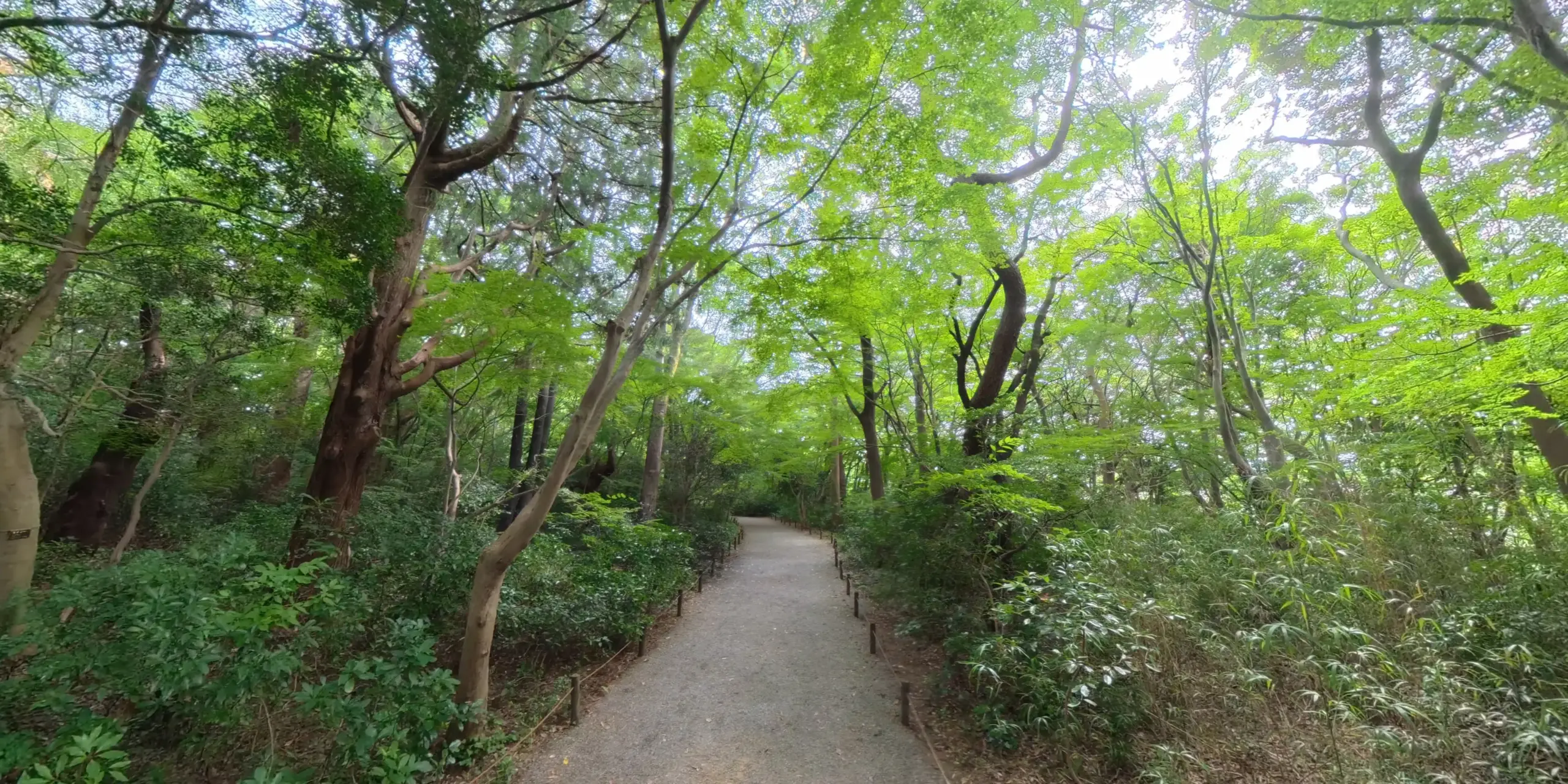
From a castle you “look at” to a castle you can truly feel. Survey the stonewall line running from the elevated Honmaru to the Higashi-no-maru with immersive 360° panoramas. Explore some of Kanazawa Castle’s oldest nozura-zumi (undressed fieldstone) masonry at the Inui, Tatsumi, and Ushitora Turret Remains; stroll the core of the stronghold at Honmaru Enchi; step up to the Important Cultural Property Tsurumaru Storehouse; and unwind at the glass-fronted Tsurunomaru Rest House.
Honmaru & Higashi-no-maru
Inui Turret Remains (戌亥櫻跡)
1590s nozura-zumi fieldstone — the castle’s oldest surviving masonry with sweeping city views
Set on the castle’s northwestern corner — the “Inui” direction in the traditional zodiac compass — the Inui Turret Remains mark where a corner watchtower once stood atop the Honmaru stonewalls. Overlooking the Asano River side, this turret guarded approaches from the northwest. Repeated fires destroyed the structure, and after the great blaze of 1759 it was never rebuilt. Today, the surviving stone base has been adapted as a viewing terrace.
- Early nozura-zumi stonewalls: Late 16th-century fieldstone masonry with a powerful, uncut aesthetic
- Lookout views: Wide panoramas toward Utatsu-yama, the Asano River, and central Kanazawa
- Read the whole fortress: Sightlines across Honmaru, Ninomaru, and toward Tsurumaru Storehouse
- Seasonal scenery: Cherry blossoms, fiery autumn foliage, striking winter contrast
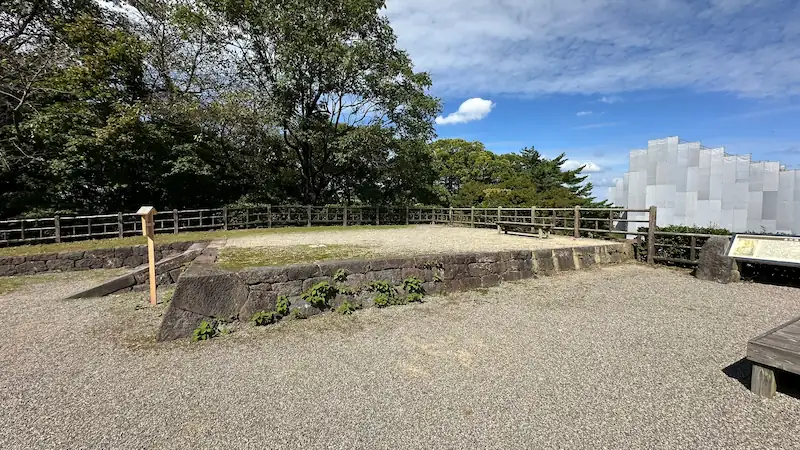
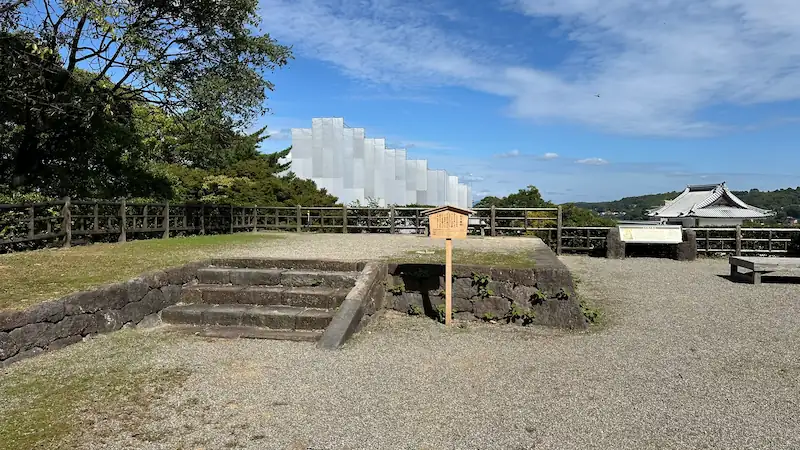
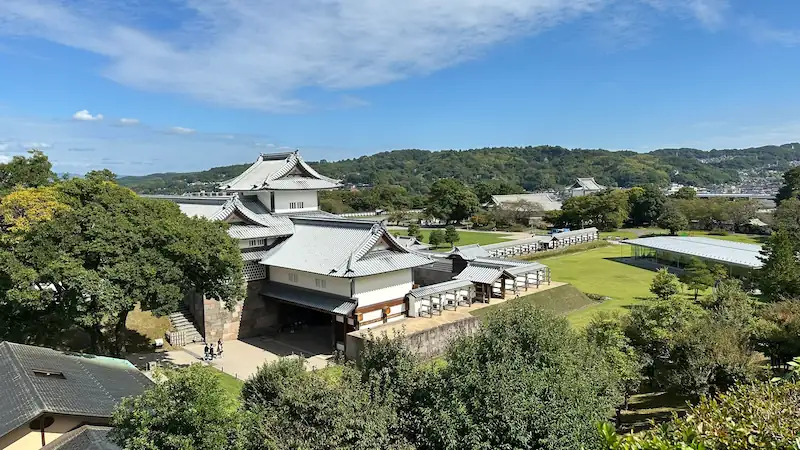
Panorama Photo
Quick look: ~5 min / In-depth: ~15 min
🗺 Address: 1-1 Marunouchi, Kanazawa (inside Kanazawa Castle Park)
🚶 Access: About 2 minutes (≈150 m) from Sanjikken Nagaya.
Next: Honmaru Enchi → 2 min walk
| Estimated Construction | Around 1592 (Bunroku 1) |
|---|---|
| Builder | Maeda Toshiie (1st lord of Kaga) |
| Form & Features | Corner turret base on nozura-zumi stonework; northwest corner of Honmaru |
| Current Status | Turret lost; stone base conserved and fitted with an overlook |
| Heritage | Part of the nationally designated Historic Site “Kanazawa Castle Ruins” |
- Name origin: “Inui” denotes the northwest in the 12-sign compass used in Japan.
- Defending the core: The northwest flank guarded approaches from the Hokuriku Road.
- Among the oldest stonework: Together with Ushitora, this area preserves some of the castle’s earliest masonry.
Honmaru Enchi (本丸園地)
The castle’s highest point — where Toshiie ruled and the palace once stood
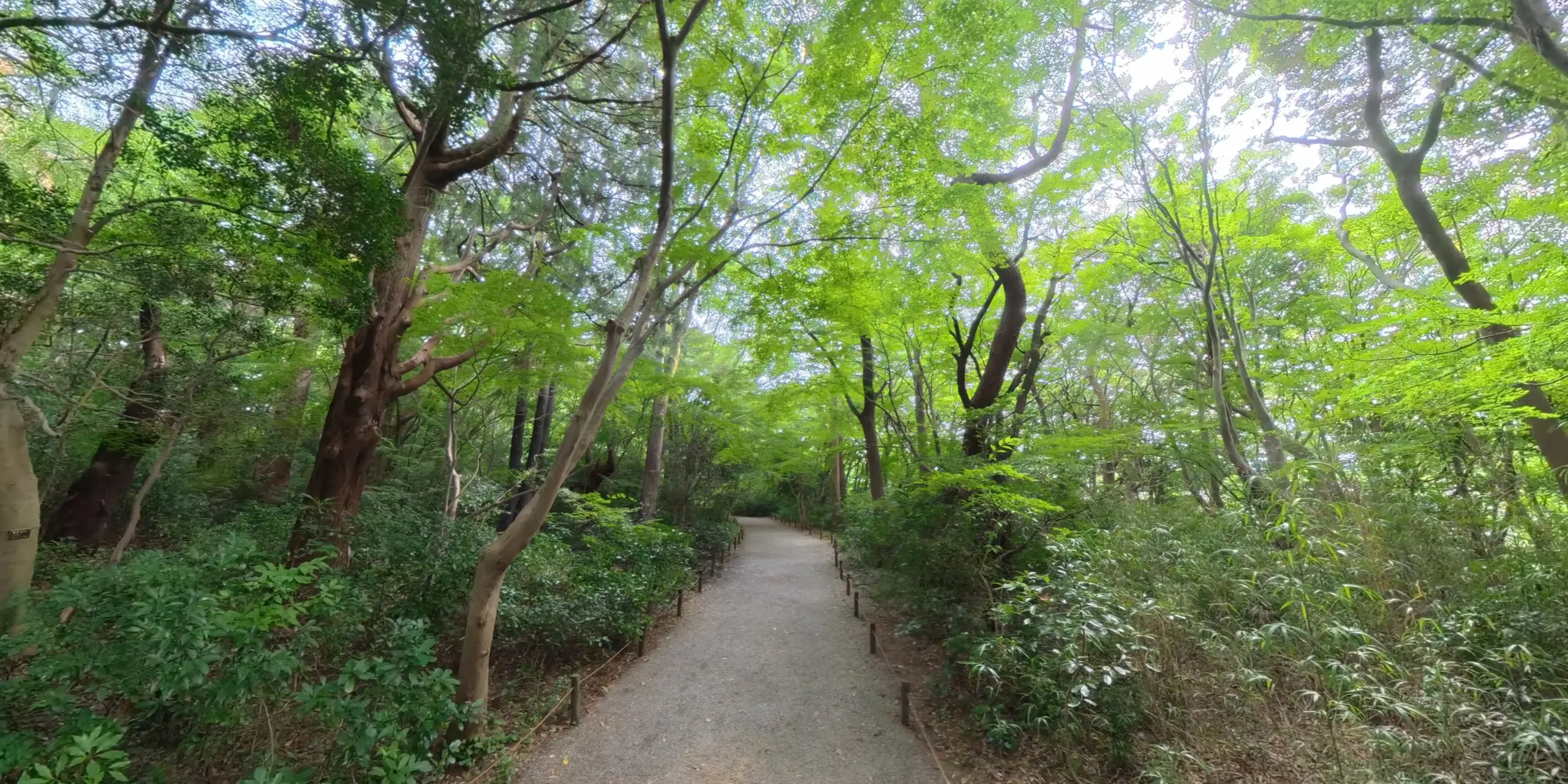
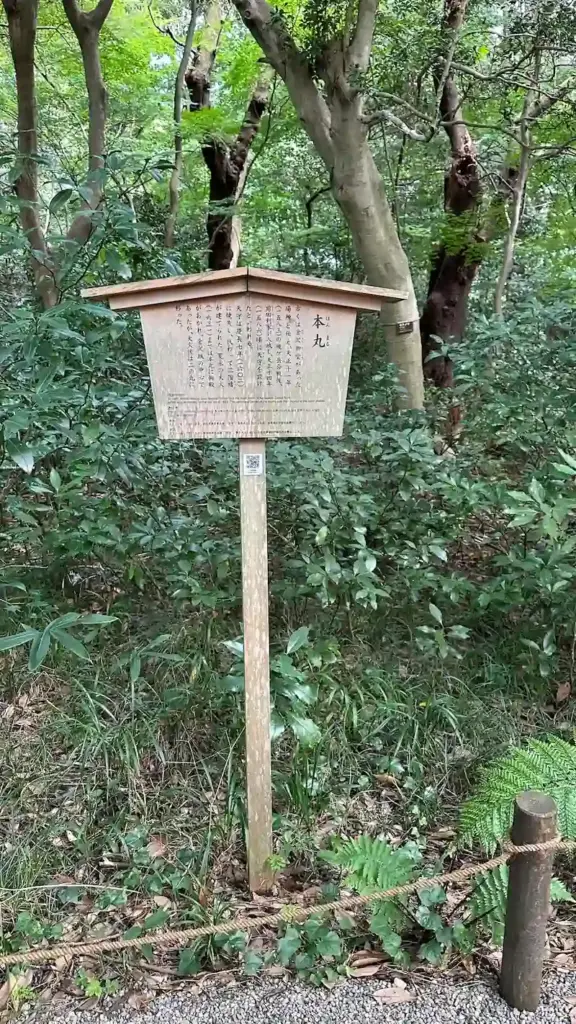
Spread across the highest ground of the castle, Honmaru Enchi was the nucleus of Kanazawa after Maeda Toshiie established his seat here in 1583. The Honmaru Palace once stood at the center of power. Though the buildings are gone, the lawned terrace preserves the footprint and the ring of stonewalls affords commanding views over the old castle town and toward Utatsu-yama.
- The castle’s heart: Site of the Honmaru Palace where Toshiie centered his rule
- Stonework timeline: Multiple eras of masonry show the evolution of Kaga construction
- Big-picture views: Read the city’s terrain with Utatsu-yama, Asano River, and old town below
- Spring blossoms: Cherry trees around the rim make this a favorite hanami spot
Panorama Photo
Quick look: ~10 min / In-depth: ~30 min
🗺 Address: 1-1 Marunouchi, Kanazawa (inside Kanazawa Castle Park)
🚶 Access: About 2 minutes (≈130 m) from the Inui Turret Remains.
Next: Tatsumi Turret Remains → 2 min walk
| Formation | From 1583 onward, under Maeda Toshiie |
|---|---|
| Form & Features | Level platform on hilltop for palace, turrets, and gardens; encircled by stonewalls |
| Current Status | Palace lost; terrace, topography, and stoneworks conserved and open |
| Heritage | Part of the Historic Site “Kanazawa Castle Ruins” |
- Palatial scale: The Honmaru Palace covered roughly 3,000 tsubo (≈9,900 m²).
- The last redoubt: As the highest and strongest line, Honmaru functioned as the final holdout in a siege.
- Archaeology: Excavations revealed foundation rows, drains, and burn layers from the 1759 conflagration.
Tatsumi Turret Remains (辰巳櫻跡)
Stepped stone tiers rising 30m — the castle’s sculptural eastern bastion
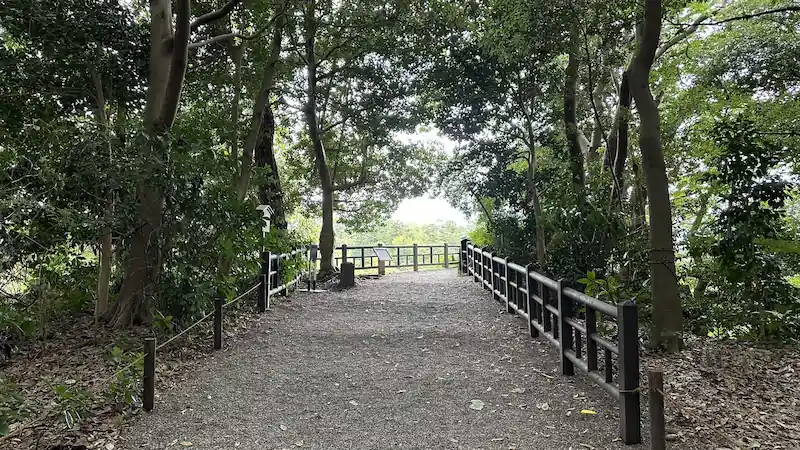
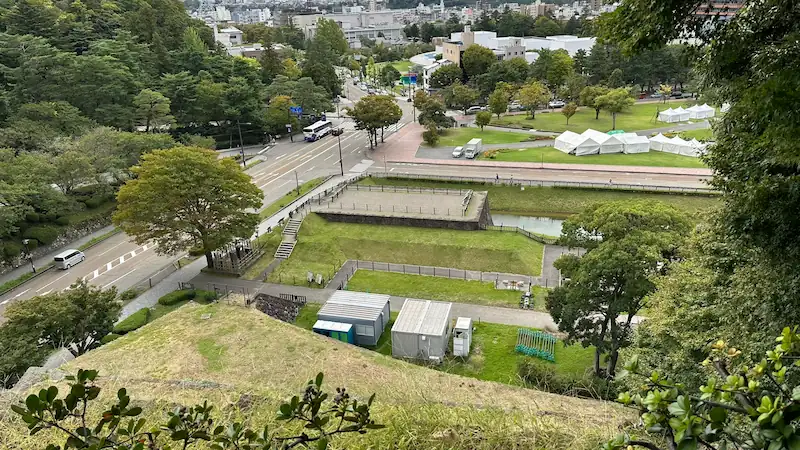
These remains occupy the high stone platforms linking Honmaru to Higashi-no-maru on the “Tatsumi” (southeast) corner. Together with the Middle Turret and Ushitora Turret, the triple-turret line once towered over the Hyakken-bori moat, forming the eastern bastion facing Kenrokuen. The four-tiered arrangement of the stone base is especially striking — architecture as fortification sculpture.
- Sculptural tiers: Four stepped courses read like a stone pyramid — both beautiful and defensive
- Vantage point: Broad views toward Kenrokuen and downtown; seasonal colors shine
- Reading the line: Consider the placement against Ushitora and the Middle Turret to grasp the eastern defense
- Height & impact: From street level, stonefaces rise over 30 m in places
Panorama Photo
Quick look: ~5 min / In-depth: ~15 min
🗺 Address: Near the east side of Kanazawa Castle
🚶 Access: Roughly 2 minutes on foot from Honmaru Enchi.
Next: Ushitora Turret Remains → 2 min walk
| Period | Edo period (exact year unknown) |
|---|---|
| Form & Features | Corner turret site; surviving multi-level stone platforms |
| Current Status | Turret lost; stone base conserved and open |
- Why “Tatsumi”? It labels the southeast in the traditional compass.
- The triple-turret front: Tatsumi, Middle, and Ushitora once formed a powerful trio across Hyakken-bori.
Ushitora Turret Remains (丑寅櫻跡)
1592 nozura-zumi masonry — among the castle’s oldest stonework with Kenrokuen views
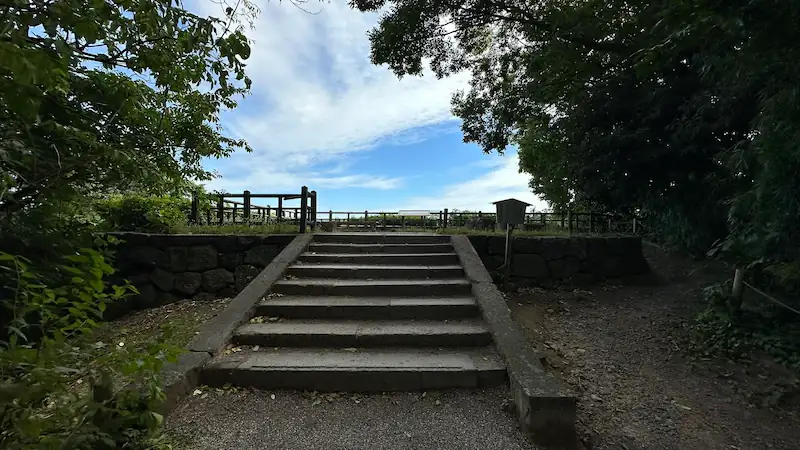
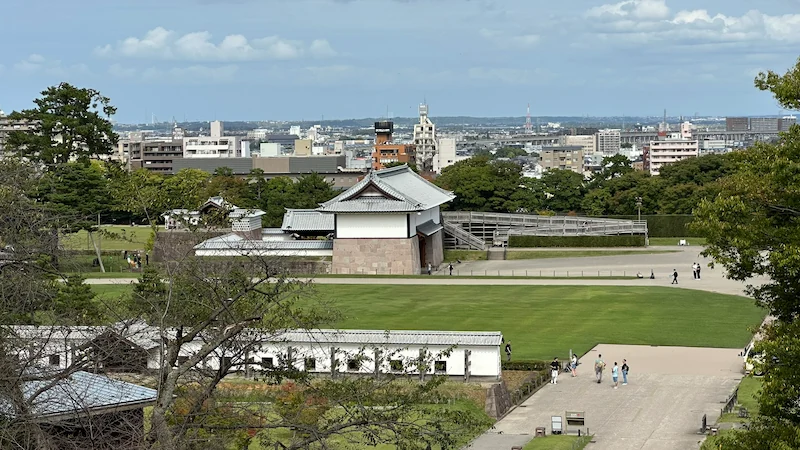
On the Higashi-no-maru and the northeast corner of Honmaru (“Ushitora” on the zodiac), this site marks another corner watchtower. The stone base is believed to date to 1592, making it among the castle’s oldest. The masonry is classic nozura-zumi fieldstone work. The turret burned in the 1759 blaze and was never rebuilt.
- Earliest masonry: Nozura-zumi stonework attributed to the Bunroku era — deep time in plain view
- Broad outlook: Kenrokuen, the city, and the surrounding ranges
- Read the perimeter: From here, relate Honmaru and Higashi-no-maru edges and other turret sites
Panorama Photo
Quick look: ~5 min / In-depth: ~15 min
🗺 Address: East side of Kanazawa Castle (Higashi-no-maru)
🚶 Access: About 2 minutes (≈170 m) from the Tatsumi Turret Remains.
Next: Tsurumaru Storehouse → 2 min walk
| Construction | 1592 (Bunroku 1, estimated) |
|---|---|
| Form & Features | Corner watchtower foundation; nozura-zumi base |
| Aftermath | Destroyed in 1759; not rebuilt |
| Current Status | Turret lost; stone base and traces remain |
- Why “Ushitora”? It labels the northeast in the 12-sign compass.
- No rebuild after 1759: The turret was not reconstructed after the great fire.
- Corner strategy: Placed to anchor the northeastern angle of Higashi-no-maru.
Tsurumaru Storehouse (鶴丸倉庫)
An 1848 earthen-walled arms depot — one of only three Edo survivors at Kanazawa Castle
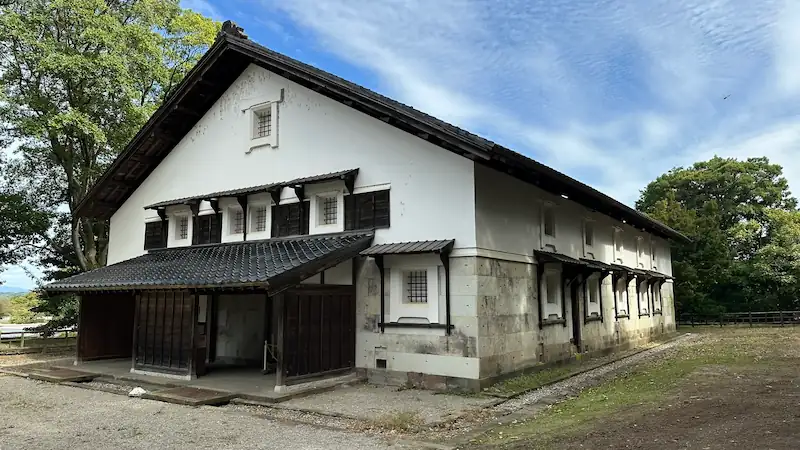
The Tsurumaru Storehouse is a representative surviving dozo (earthen-walled) warehouse in the castle precincts, originally built to hold arms. The present building dates to 1848 (Kaei 1). Beyond storage, its design reflects fire prevention and preservation priorities — making it valuable to both castle and architectural history.
- Stone-clad base & refined exterior: Dressed-stone plinth and plastered walls give a distinctive presence
- Grand internal volume: One-room plans on both floors preserve the feel of a large arms depot
- Timber & roof craft: Gable roof with tilework complements surrounding castle architecture
- Occasional interior access: Select dates between April–November offer special openings
Panorama Photo
Quick look: ~5 min / In-depth: ~15 min
🗺 Address: Around 71-18 Marunouchi, Kanazawa (Higashi-no-maru terrace)
🚶 Access: Roughly 2 minutes (≈170 m) from the Ushitora Turret Remains.
Next: Tsurunomaru Rest House → 1 min walk
| Rebuilt | 1848 (Kaei 1) |
|---|---|
| Form & Features | Two-story earthen storehouse; gabled roof with ceramic tiles; plastered walls with stone-clad base |
| Heritage | National Important Cultural Property (designated 2008) |
| Notes | Approx. 636 m² floor area; among the largest castle storehouses still standing in Japan |
- About the name: Likely related to the adjacent “Tsurunomaru” bailey, named for a white crane said to have alighted there.
- Fire & rebuilding: After the 1759 fire, two earlier warehouses were consolidated into one; current dates to 1848.
- One of few survivors: Along with Ishikawa Gate and Sanjikken Nagaya, it’s among the scarce Edo-period structures remaining.
Tsurunomaru Rest House (鶴の丸休憩館)
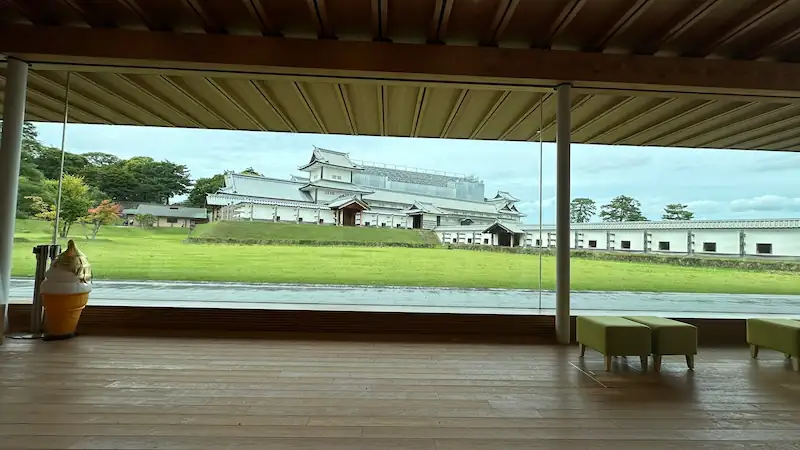
Panoramic glass views of Gojikken Nagaya — cafe, VR, and the best photo angle
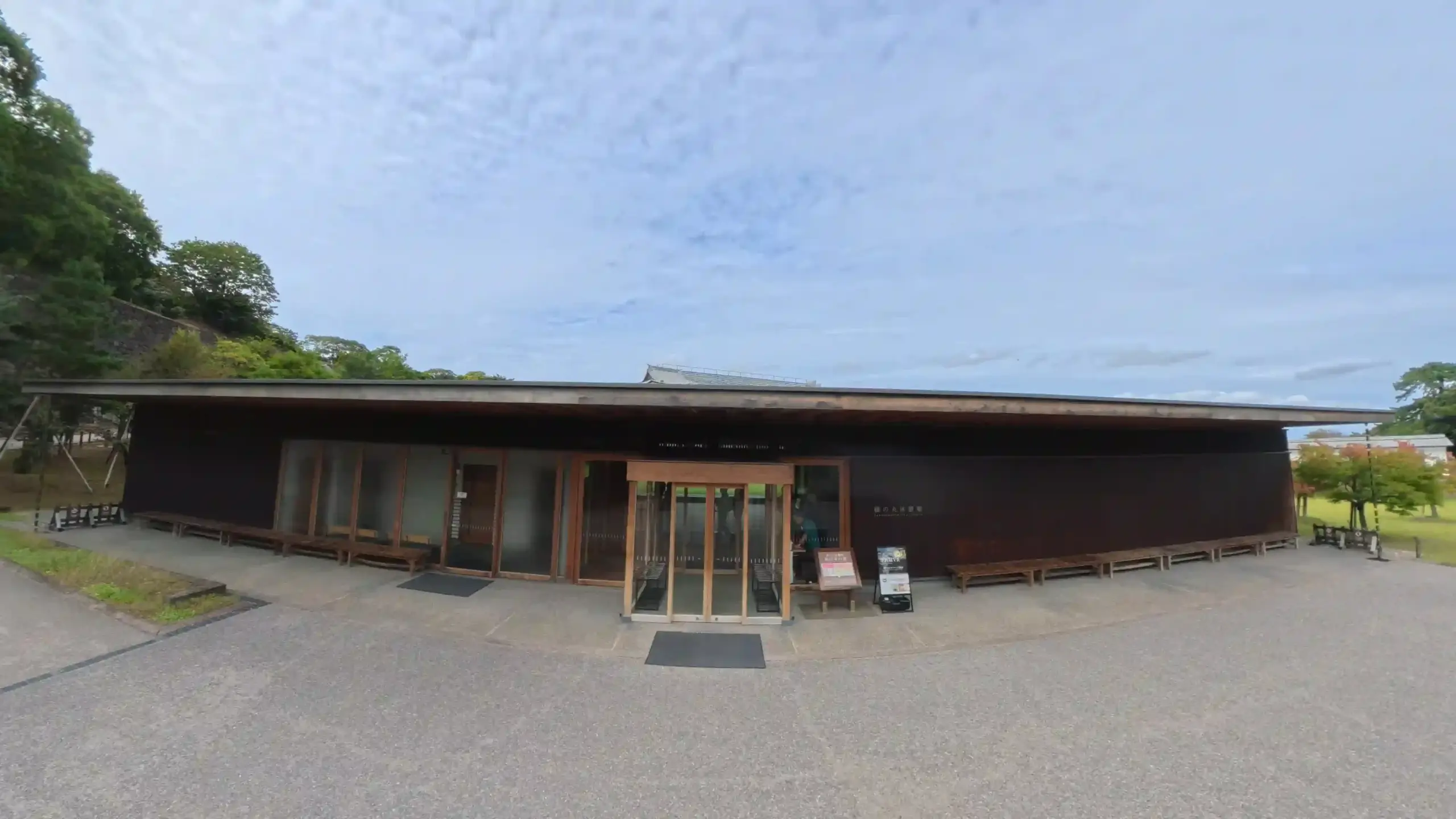
Opened in 2017, the glass-fronted Tsurunomaru Rest House stands where you can gaze across to Hashizume-mon, Gojikken Nagaya, and Hishi Yagura. The warm, timber-accented interior frames the castle panorama like a living scroll. Inside you’ll find exhibits on restoration and excavations, plus “Mamezara Chaya” for wagashi and tea. A VR film, “Bringing Back the Ninomaru Palace,” lets you experience the lordly quarters in digital form.
- Picture-window panoramas: One of the best angles on Gojikken Nagaya, Hishi Yagura, and Hashizume-mon
- Mamezara Chaya: Sweets and bites served on Kutani ware and Yamanaka lacquer
- VR theater: CG reconstruction of the Ninomaru Palace
- Seasonal drama: Blossoms, summer skies, autumn reds, winter snow — framed in glass
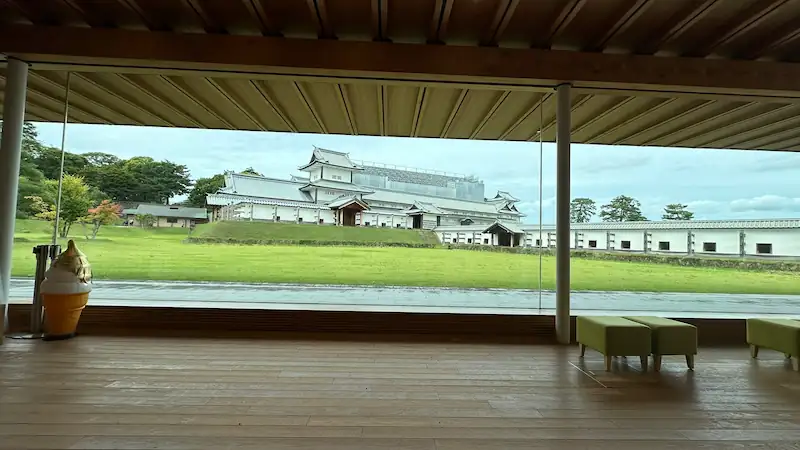
Panorama Photo
Quick look: ~5 min / In-depth: ~30 min (cafe + VR)
🗺 Address: 1-1 Marunouchi, Kanazawa (inside Kanazawa Castle Park)
🚶 Access: About 1 minute (≈30 m) from Tsurumaru Storehouse.
| Opened | 2017 |
|---|---|
| Design | Ishikawa Prefectural Construction Dept. / Goi Architects |
| Structure | Steel frame with partial timber; single story; approx. 422 m² |
| Facilities | Exhibit area, lounge, café (Mamezara Chaya), video corner |
| Status | Open to the public (free) |
- Designed for the view: Low profile and whitewall tones blend with the historic setting.
- Name origin: “Tsurunomaru” recalls a bailey named for cranes in Maeda-era lore.
- More than a rest stop: A hub for culture, learning, and orientation.
Next Page
Previous Page
Back to the Table of Contents
Information on this page is based on on-site research, official publications from Ishikawa Prefecture, and publicly available historical sources. Opening hours, fees, and access conditions are subject to change. We recommend checking the official website before your visit. 360° panorama photos were captured on-site by the author.


comment