


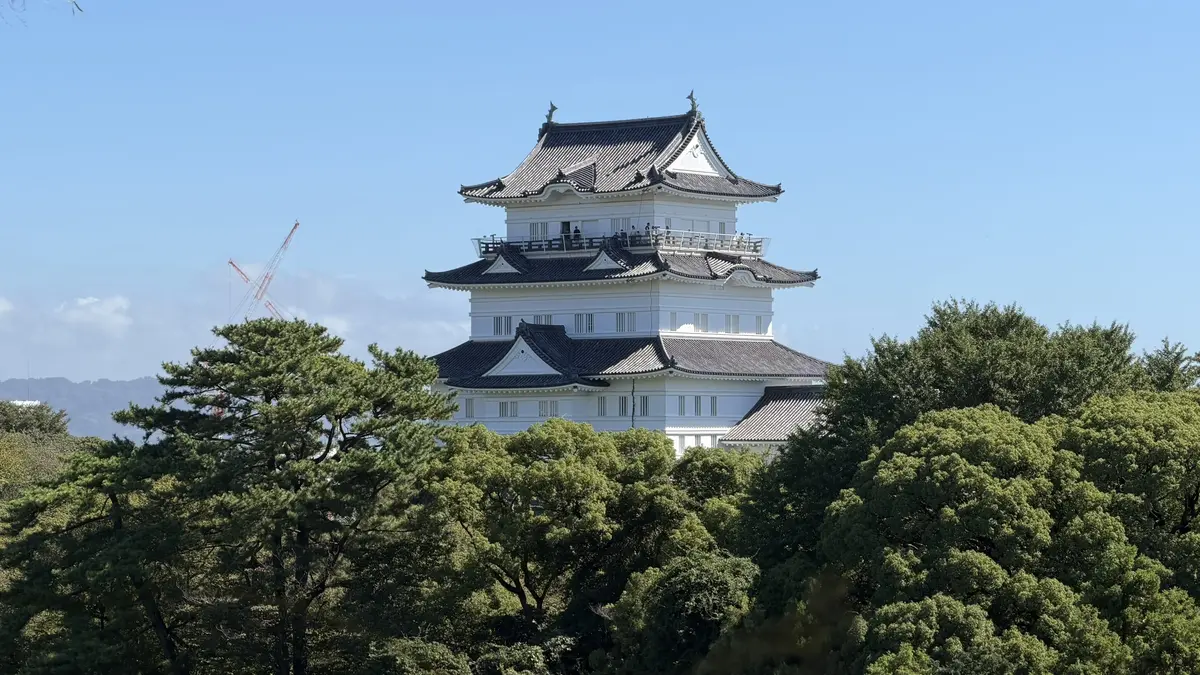
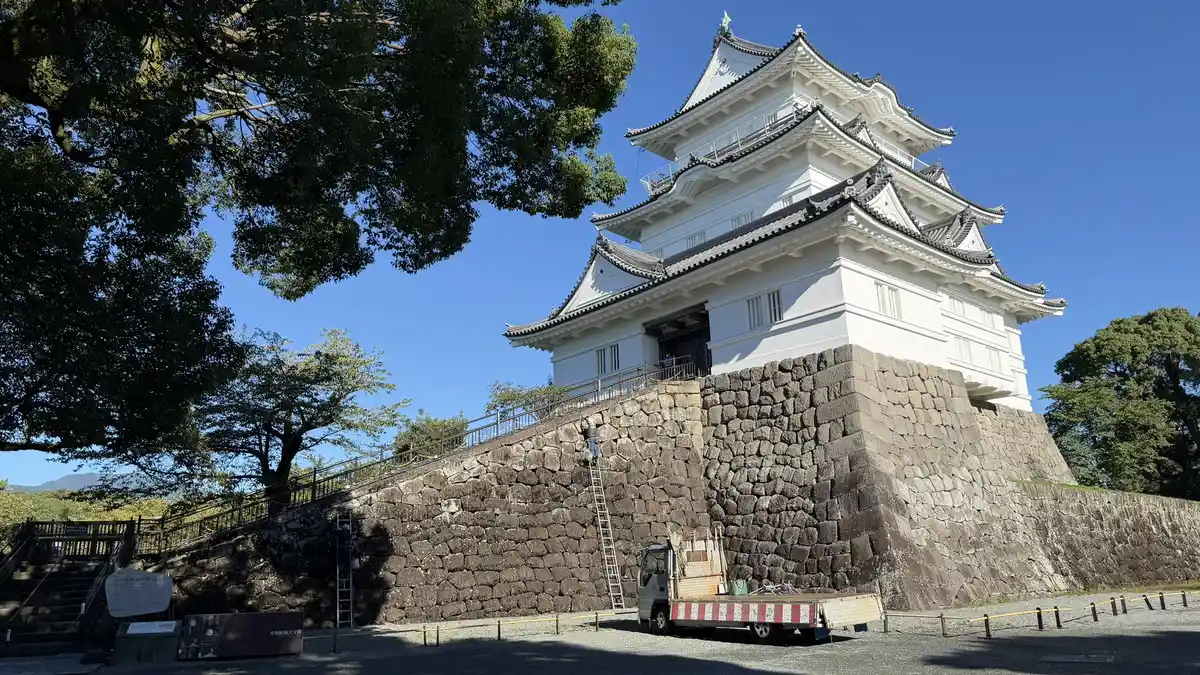
Odawara Castle Guide: Tickets, Time Needed and Lunch at Seikantei
A 1960 reconstruction of the castle keep, three rebuilt gates, and a Meiji-era villa built for a descendant of Kuroda Kanbei where you can stop for lunch. This guide is based on a full day of walking the castle in September 2026. The castle is an easy day trip from Tokyo and a natural stop on the way to Hakone.
On this page
- Is Odawara Castle worth visiting? What you can see
- Getting there, tickets and opening hours
- From Hojo stronghold to Edo-period castle to reconstruction
- 1. Reconstructed buildings: the keep and three gates
- 2. Surviving remains: enclosures and a well
- 3. A surviving historic villa: Seikantei and lunch
- Castle stamps (goshuin) and the 100 Castles stamp
- The Hojo castle beyond the park
- FAQ
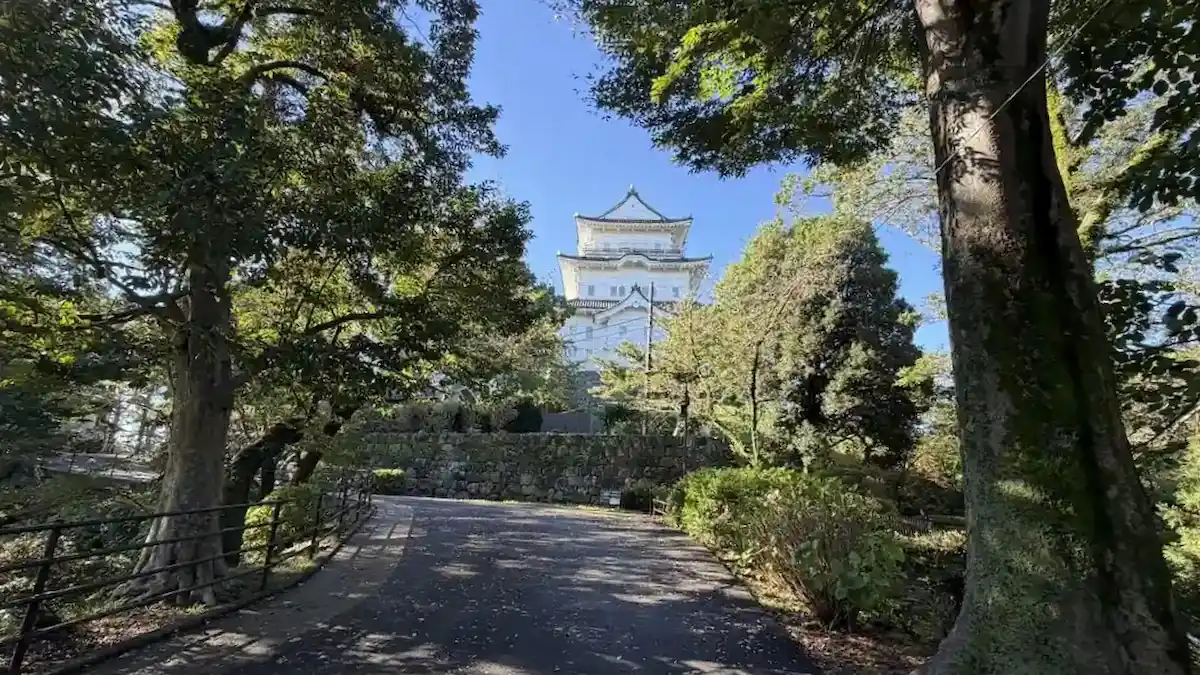
The keep alone stands 27.2m tall (38.7m including its stone base) — the tallest castle keep in eastern Japan. Even a brief stop on the way to or from Hakone or Atami is worth it just to see it from outside.
Tap an image to enlarge
Is Odawara Castle worth visiting? What you can see
Odawara (小田原) is a city in Kanagawa Prefecture, southwest of Tokyo, and the usual gateway to the hot-spring area of Hakone. Its castle sits a short walk from Odawara Station, so it is easy to fit into a day trip from Tokyo or a stopover on the way to or from Hakone.
The most important thing to know before you go: the white keep you see today is not an original building. The tenshu, or main castle tower, was rebuilt in reinforced concrete in 1960, and the gates were reconstructed between 1971 and 2009. What you can see falls into three groups.
Reconstructed
The keep and three gates
The keep (1960) recreates the exterior of the Edo-period tower and houses a five-floor history museum with an observation deck. The Umadashi, Akagane and Tokiwagi gates were rebuilt between 1971 and 2009.
Surviving remains
An old well and an excavated enclosure
A stone-paved well on the approach path, and the Goyomai-kuruwa enclosure north of the keep, where Hojo-period building foundations and a garden were found.
Surviving historic building
Seikantei villa
A registered cultural property built for Kuroda Nagashige, head of the family descended from Kuroda Kanbei. It stands on an old castle earthwork and now serves lunch.
This guide focuses on the reconstructed keep and gates inside the castle park. For the route, opening hours and directions to walk the Hojo-era sogamae (dry moats and ramparts) visible from the keep and beyond, see our companion guide, Odawara Castle Earthworks: Walking the Hojo Dry Moats, Ramparts and Hachimanyama.
On our visit we spent about 1.5 hours in the keep, about 10 minutes in the SAMURAI Museum and about 5 minutes inside the Akagane Gate during its special opening. We skipped the NINJA Museum: at around 11:50 the line looked like a wait of more than 30 minutes. Choose the combination that fits your day.
| Keep only | Walk through the three gates to the keep. Exhibits and the top-floor view took about 1.5 hours on our visit. Your keep ticket also covers the SAMURAI Museum. |
|---|---|
| Keep + SAMURAI Museum + Akagane Gate | The SAMURAI Museum is on the upper floor of the Tokiwagi Gate and takes about 10 minutes. The inside of the Akagane Gate opens on weekends and holidays, 10:00–15:00. Allow around two hours in total. |
| Adding the NINJA Museum | Separate ticket (¥500 for adults). On September 22, 2026 (a national holiday), families with children had formed a long line by around 11:50am. If it's on your list, allow some flexibility in your schedule. |
| Adding lunch at Seikantei | A walk south from the castle park, up a low hill. Lunch service runs 11:00–15:00 (last order 14:00). Lunch comes with a house tour (about 15 minutes). |
You do not need to read Japanese to enjoy the keep. In both the keep and the SAMURAI Museum, the main exhibits have captions in English, Chinese and Korean, although not every item does.
Getting there, tickets and opening hours
Odawara Station (小田原駅) is served by JR, including the Tokaido Shinkansen bullet train, and by the private Odakyu Line from Shinjuku. It is also where the Hakone Tozan Railway toward Hakone begins. From Shinagawa Station in Tokyo, the Shinkansen reaches Odawara in about 30 minutes. The castle park is a 10-minute walk from the station, according to the castle's official site. Journey times and fares vary by train, so check a route planner for your travel date.
Coming from the Kansai region (Osaka, Kyoto, Kobe), the simplest option is a direct Hikari Shinkansen from Shin-Osaka or Kyoto Station straight through to Odawara, with no train change required. The fastest Nozomi trains do not stop at Odawara, so Hikari (and the all-stops Kodama) are the services to look for. A direct Hikari takes roughly 2 hours 15 minutes from Shin-Osaka and about 1 hour 50 minutes to 2 hours from Kyoto. The train passes through Nagoya along the way, but that is just a stop on the same through-service, not a place you need to get off. Riding the faster Nozomi to Tokyo or Shin-Yokohama and then switching to a local train back to Odawara does not save time over a direct Hikari, so booking straight through is the easiest choice.
Odawara Castle Park and Keep
| Address | 6-1 Jonai, Odawara, Kanagawa (小田原市城内6-1) |
|---|---|
| Nearest station | Odawara Station (JR Tokaido Line JT16 / Odakyu Odawara Line OH47), 10 minutes on foot |
| From Tokyo | About 30 minutes by Tokaido Shinkansen from Shinagawa Station |
| From Kansai | About 2h15 by direct Hikari Shinkansen from Shin-Osaka (about 1h50–2h from Kyoto); no transfer needed |
| Parking | No general parking at the castle park; use nearby paid parking |
| Keep (天守閣) | Adults ¥1,000, elementary and junior high students ¥300 (includes the SAMURAI Museum). 9:00–17:00, last entry 16:30. Closed on the second Wednesday of December and December 31–January 1 |
| SAMURAI Museum | ¥300 adults / ¥100 students if bought on its own. 9:00–17:00, last entry 16:45. Closed December 31–January 1 |
| NINJA Museum | Adults ¥500, students ¥200. 9:00–17:00, last entry 16:30. Closed December 31–January 1 |
| Akagane Gate interior | Special opening on Saturdays, Sundays and national holidays, 10:00–15:00 |
Entry to the castle park itself is free; admission is charged for the keep, the SAMURAI Museum and the NINJA Museum (there are also separately priced experiences, such as the armor-wearing experience on the ground floor of the Tokiwagi Gate). If you want to see all three museums, an adult pays ¥1,500 in total: ¥1,000 for the keep (which includes the SAMURAI Museum) and ¥500 for the NINJA Museum. These are the standard prices that took effect on March 1, 2026. Odawara residents and groups pay different rates.
Tickets for the keep and SAMURAI Museum can be bought at the ticket window on the day, or in advance online. With an e-ticket bought in advance, you can skip the ticket-window line and go straight in through a separate entry lane. Buying ahead is worth it on busy days (advance e-tickets for the NINJA Museum are currently suspended, according to the official site). You can buy tickets online via Odawara Castle tickets online via Asoview. The booking site is in Japanese only, so you may want to use your browser's translation feature to check out. This is an affiliate link.
Short on time? The most direct walk to the keep
If you're fitting Odawara Castle into a stop on the way to or from Hakone or Atami and only want to see the keep itself, walking along the street beside the railway tracks from the station is more direct than the official approach through Megane-bashi, the Umadashi Gate, the Akagane Gate and the Tokiwagi Gate. If you have more time, the official route shows off the gates and moats along the way.
Most direct route (straight to the keep)
Official approach route (Megane-bashi → Umadashi Gate → Akagane Gate → Tokiwagi Gate → keep)
Paid coin lockers are available at Odawara Station, including inside Lusca Odawara and near the ticket gates; the City of Odawara publishes a locator map (in Japanese and English). If you're travelling on a Hakone Freepass, the Odakyu-line portion of the pass (between your boarding station and Odawara Station) allows stopovers, so you can get off at Odawara with your pass still valid, visit the castle, and continue on to Hakone afterward (per Odakyu Electric Railway's conditions of carriage). Showing a Hakone Freepass also gets you a discount on tickets for the keep, the SAMURAI Museum and the NINJA Museum (see the table below, per the official Hakone Navi benefits listing).
| Keep | ¥50 off adults, ¥20 off elementary/junior high students (regular ¥1,000 → ¥950) |
|---|---|
| Tokiwagimon SAMURAI Museum | ¥20 off adults, ¥10 off students (¥300 → ¥280 on its own) |
| NINJA Museum | ¥30 off adults, ¥10 off students (¥500 → ¥470) |
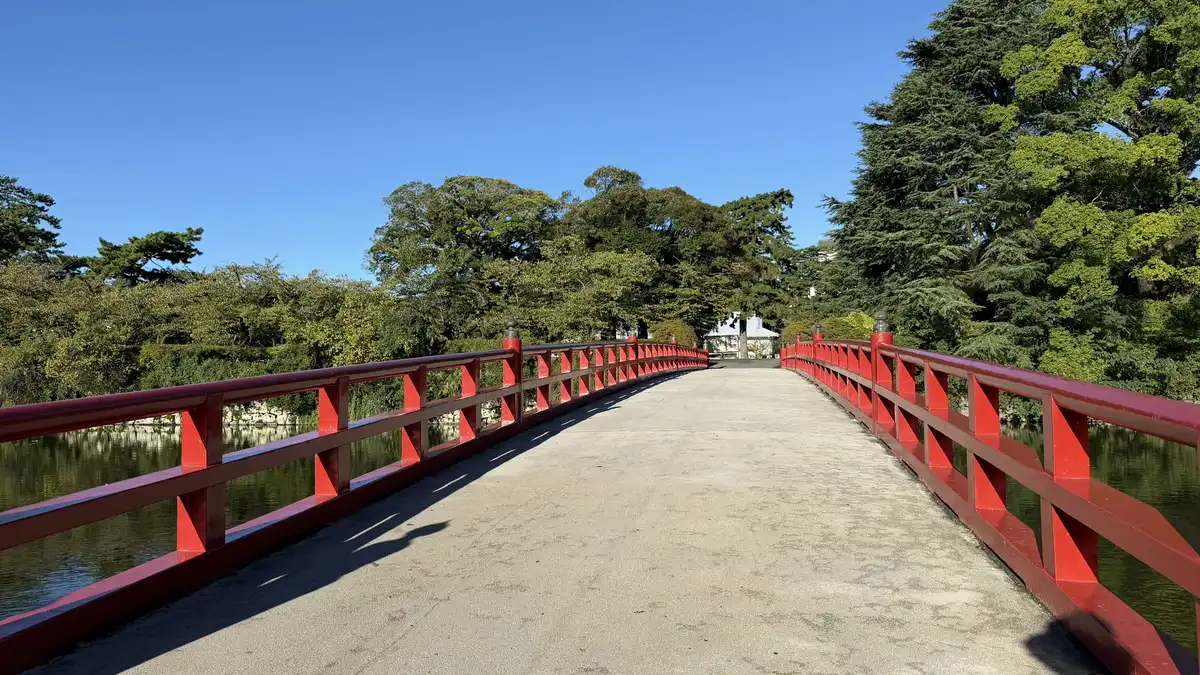
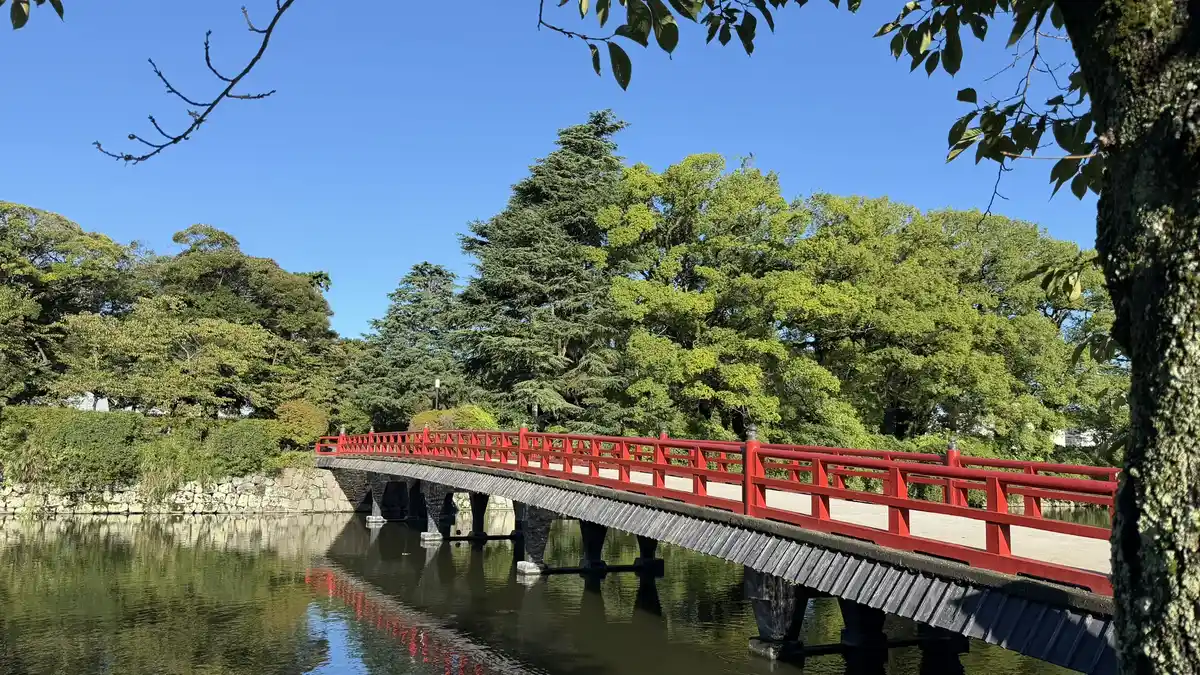
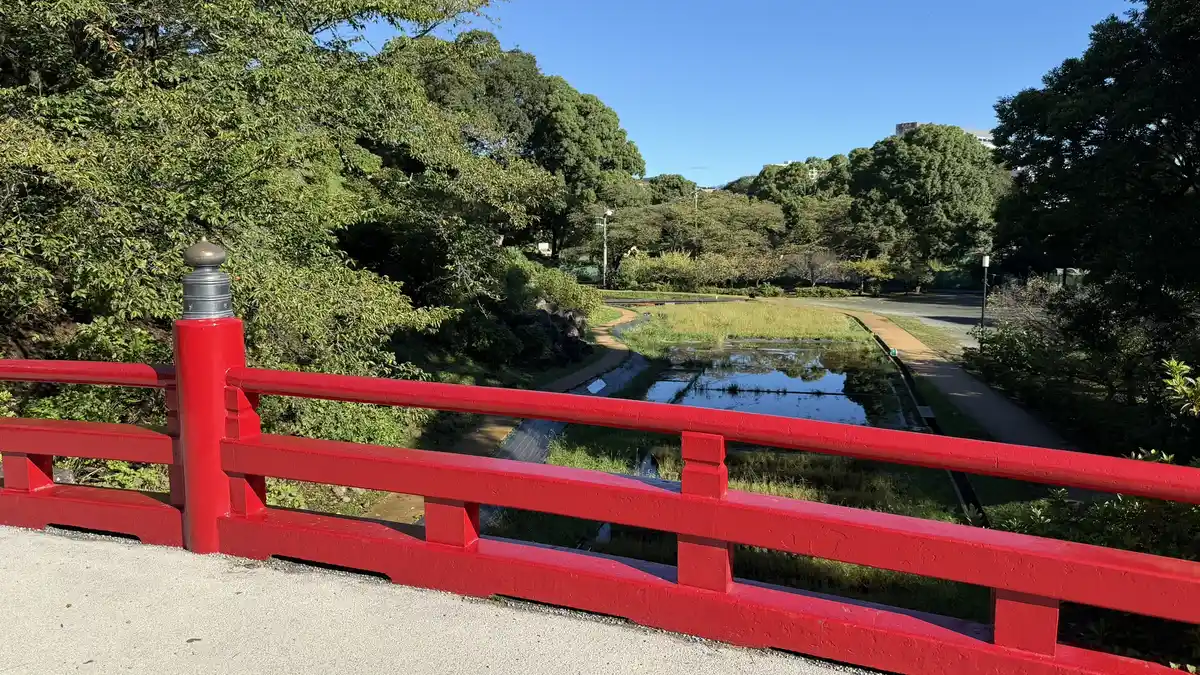
The castle park also has a second entrance from the moat-side avenue: Manabi-bashi ("Learning Bridge"), a red-lacquered bridge over the Ninomaru's water moat. It's a striking photo spot, but it isn't an Edo-period structure — it was built later as a path for an elementary school that once stood inside the park. It is a different bridge from Megane-bashi, the earthen causeway near the Umadashi Gate, which does not have a red railing.
Tap an image to enlarge
From Hojo stronghold to Edo-period castle to reconstruction
A castle is thought to have stood here from the mid-15th century, built by the Omori family, although the exact date is unknown. It became famous as the base of the Odawara Hojo clan, a family of warlords who ruled much of the Kanto region around present-day Tokyo for five generations. The Hojo expanded the castle and enclosed the whole town in earthen walls and moats. This outer defensive ring, called the sogamae, ran for about 9 km.
In 1590, Toyotomi Hideyoshi, the warlord who was completing the reunification of Japan, besieged Odawara with a huge army and built a castle of his own, Ishigakiyama Castle, on a hill to the west. After about three months, the Hojo surrendered. Kuroda Kanbei, one of Hideyoshi's leading strategists, is said to have played a part in the negotiations that led to the surrender. Afterward, the Okubo family, retainers of Tokugawa Ieyasu, took over the castle, and it was later rebuilt as an Edo-period castle under the Okubo and Inaba families. Exhibits in the keep note that the third shogun, Tokugawa Iemitsu, stayed here in 1634.
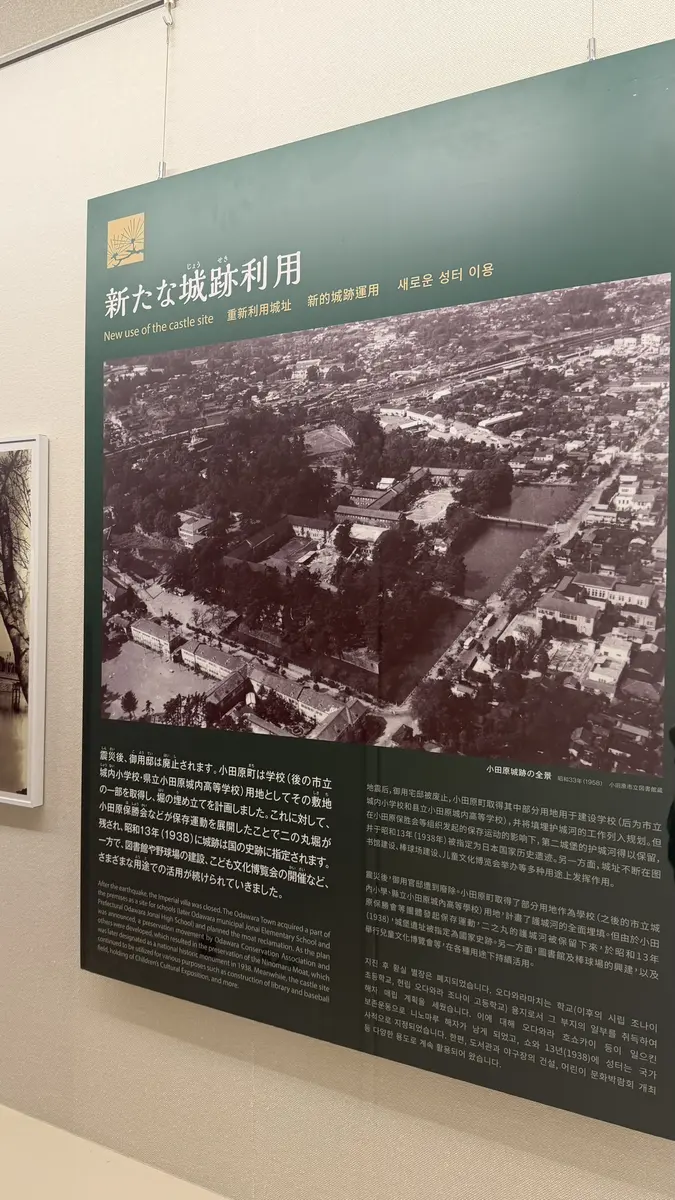
The castle was abandoned in 1870 and most of its buildings were torn down. The Great Kanto Earthquake of 1923 brought down sections of the stone walls. The Ninomaru corner turret was rebuilt in 1934 and the keep in 1960. Reconstruction of the gates followed: the Tokiwagi Gate in 1971, the Akagane Gate in 1997 and the Umadashi Gate in 2009. A major renovation of the keep in 2016 renewed its exhibitions.
1. Reconstructed buildings: the keep and three gates
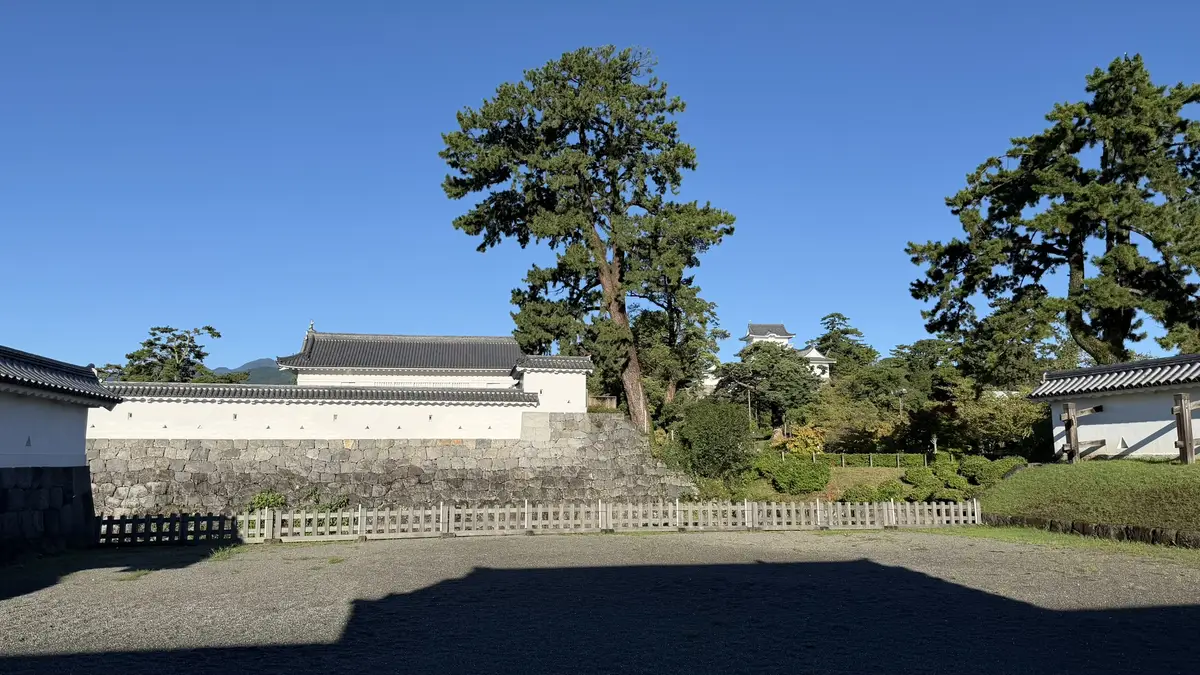
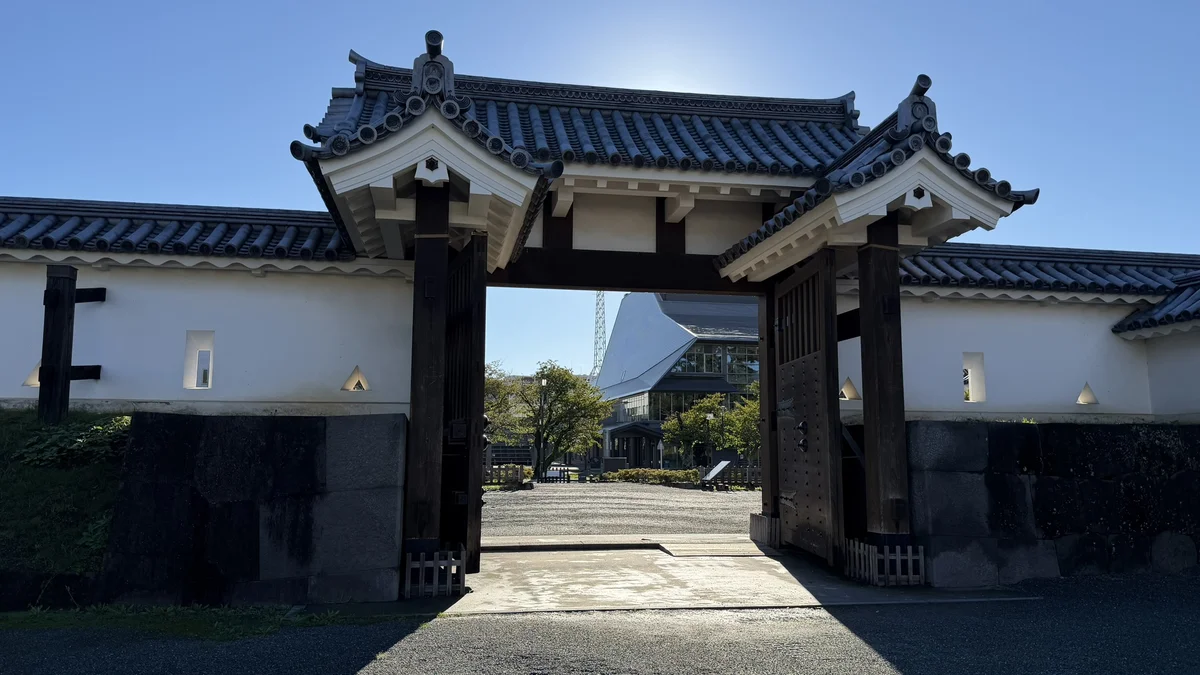
The official approach to the keep leads from the moat-side avenue through the Umadashi Gate, across the Umaya-kuruwa enclosure, then through the Akagane Gate and the Tokiwagi Gate to the honmaru, the castle's central enclosure. The Umadashi and Akagane gates are built as masugata: a square courtyard enclosed by walls that forces anyone entering to make a sharp right-angle turn, which slowed attackers down.
Umadashi Gate (馬出門)
The first gate on the way in, its walled courtyard reconstructed to its Edo-period form
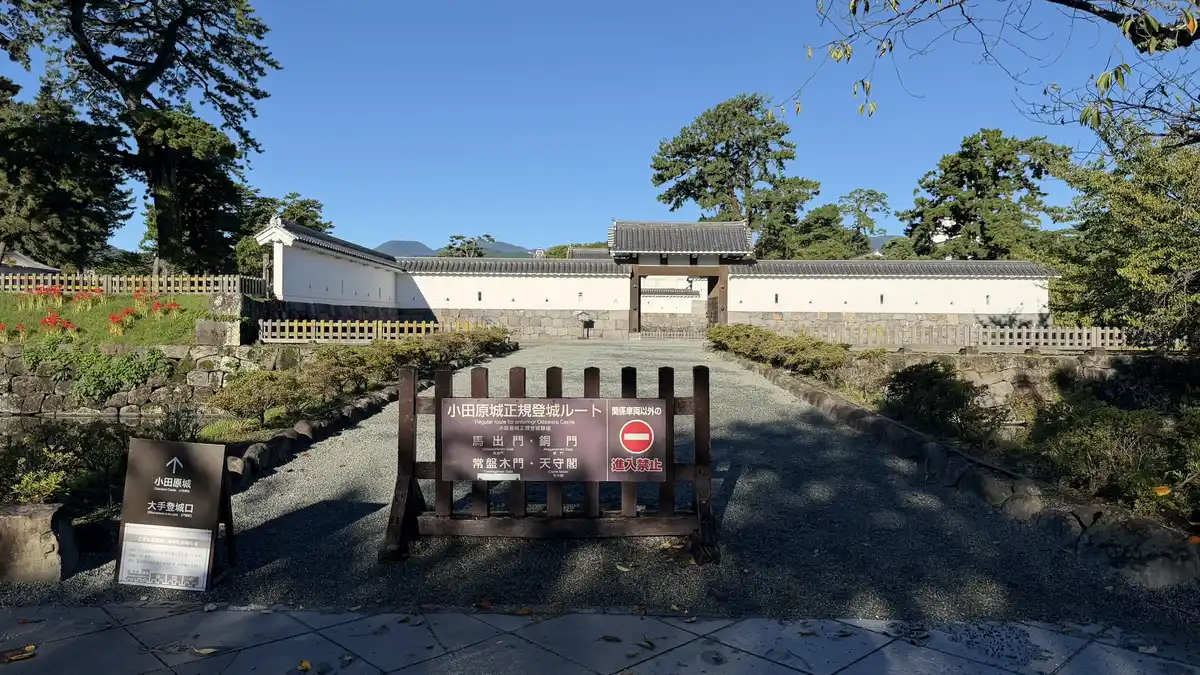
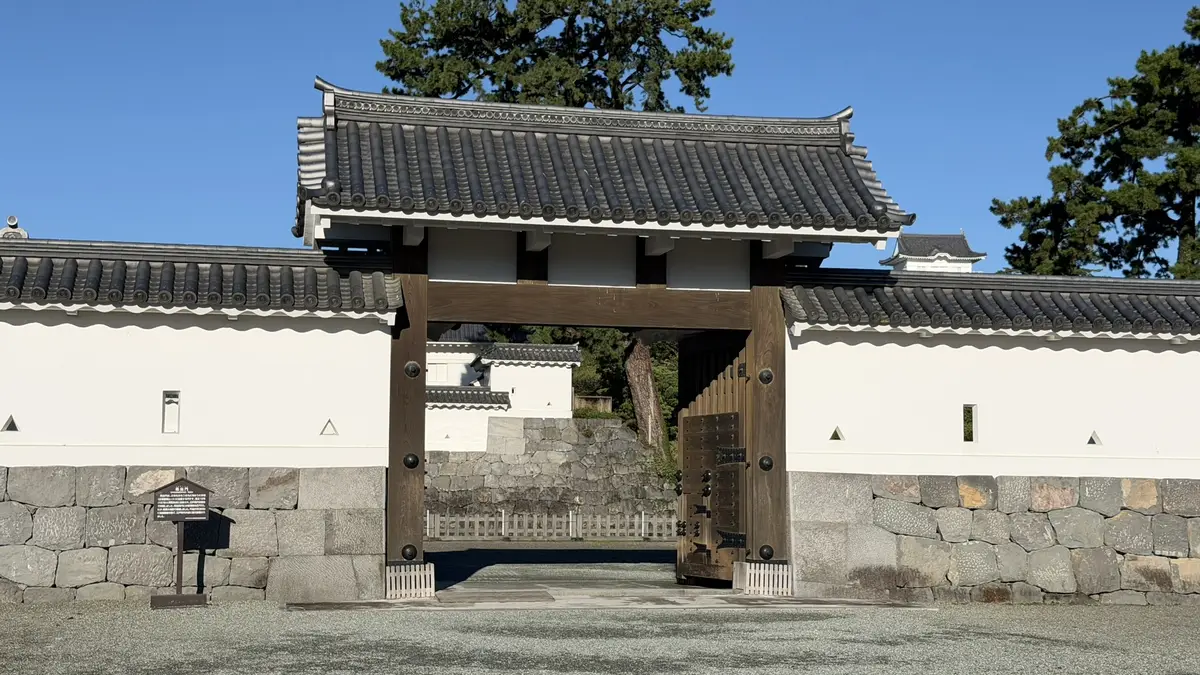
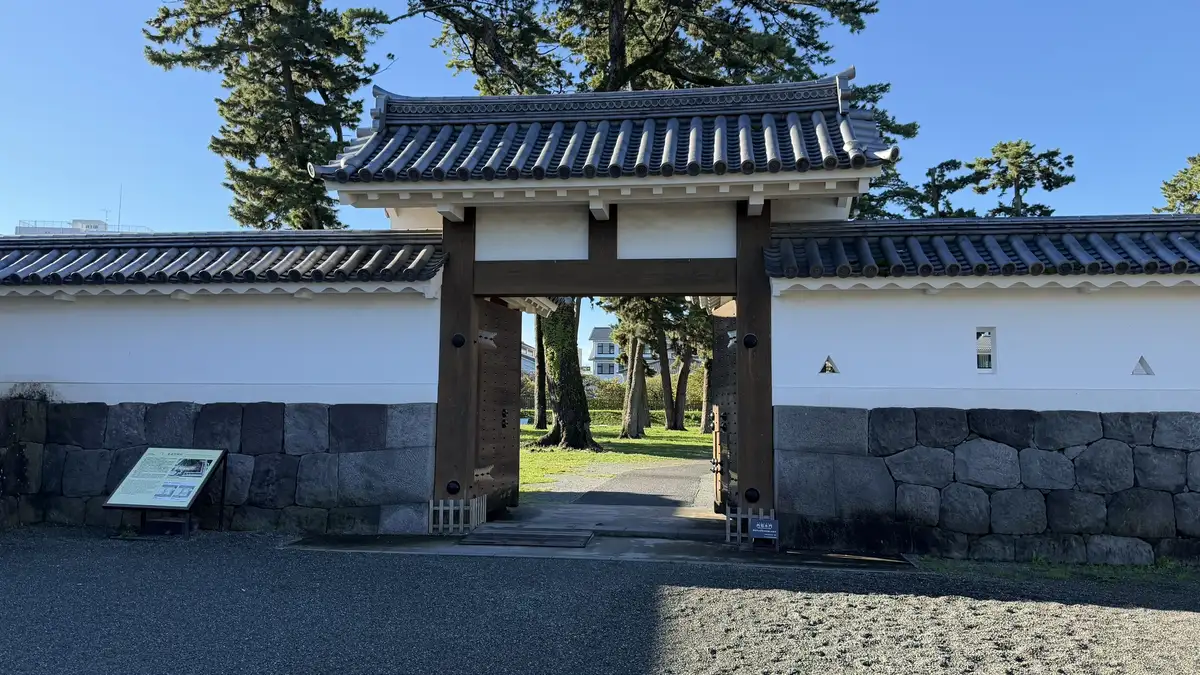
Cross the arched bridge known as Megane-bashi and you enter the square, white-walled courtyard of the Umadashi Gate. It stood on the main approach from the Sannomaru, the outer enclosure, into the Ninomaru, the second enclosure, and was remodeled into this courtyard form in 1672. In the Meiji era it served as the main gate of an imperial villa on the castle site, until the 1923 Great Kanto Earthquake brought it down. After excavation, it was rebuilt in 2009 to its Edo-period appearance.
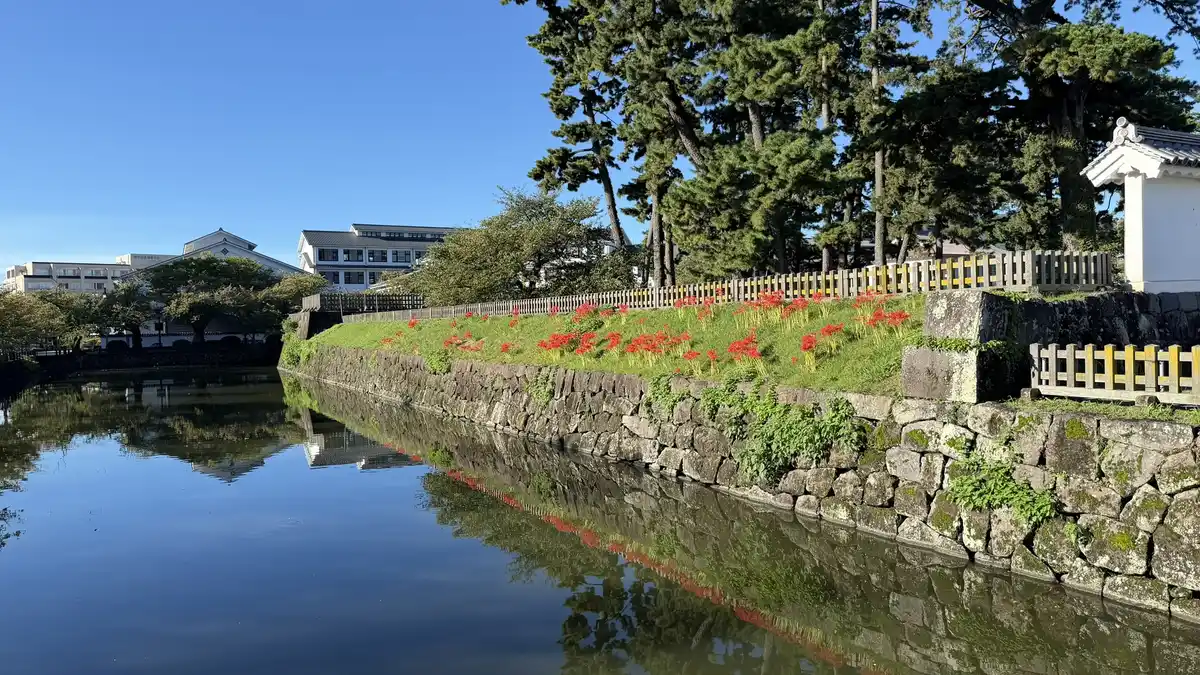
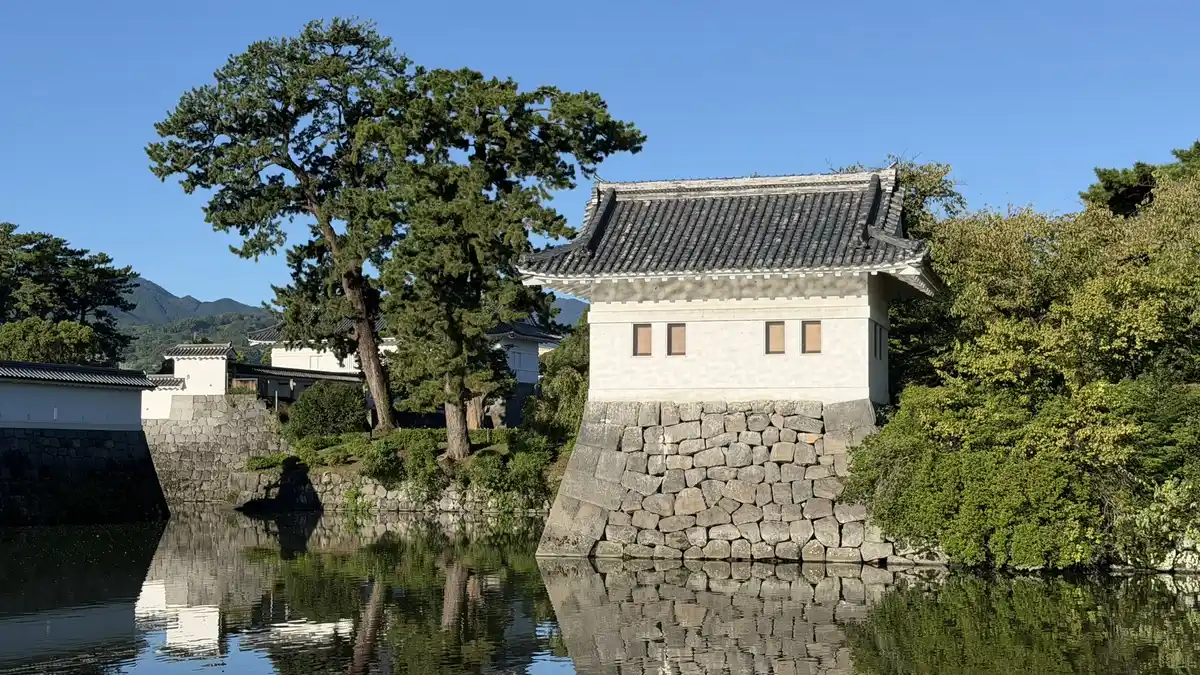
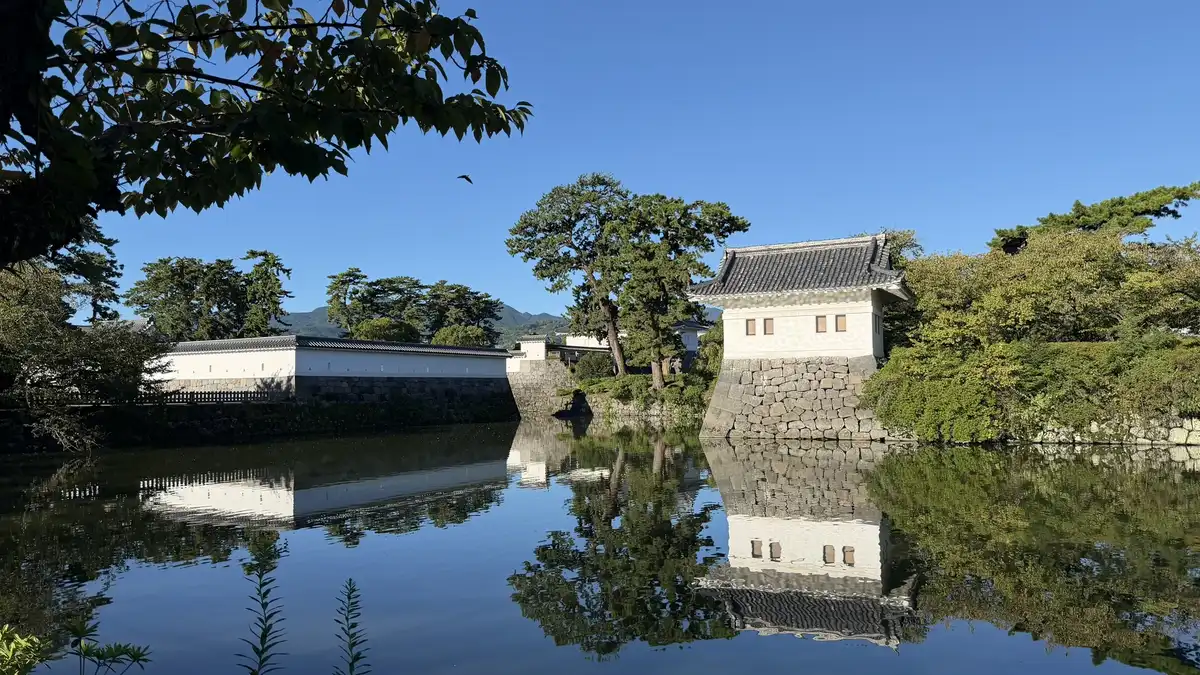
We came through a little after 7 a.m. on September 22, 2026. The castle park is open before the museums, so you can walk the gates and moats first and head to the keep when it opens at 9:00. That morning, the corner turret and white walls were reflected in the moat.
Highlights
- The Megane-bashi arched bridge, with a view of the moat (spider lilies were in bloom here on our September 22, 2026 visit)
- The inner gate inside the courtyard, and the right-angle turn between the two gates
- The Ninomaru corner turret across the east moat (rebuilt in 1934)
Photos
Tap an image to enlarge
Ninomaru Corner Turret (二の丸隅櫓)
A turret over the east moat, rebuilt decades before the keep
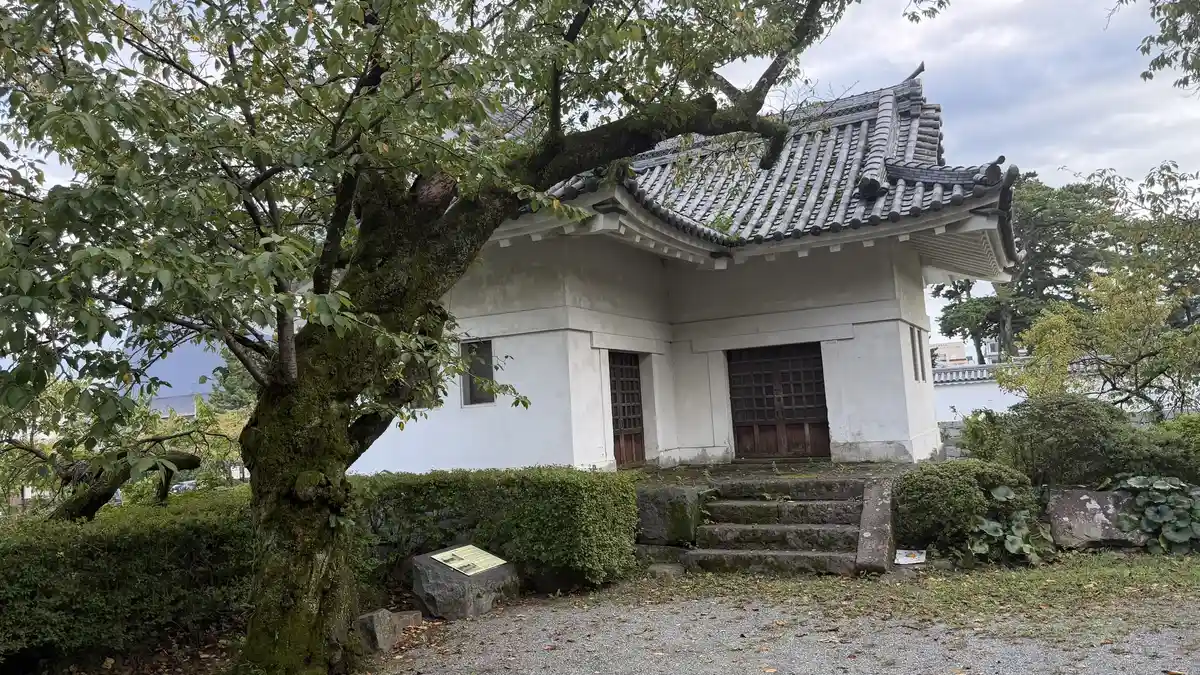
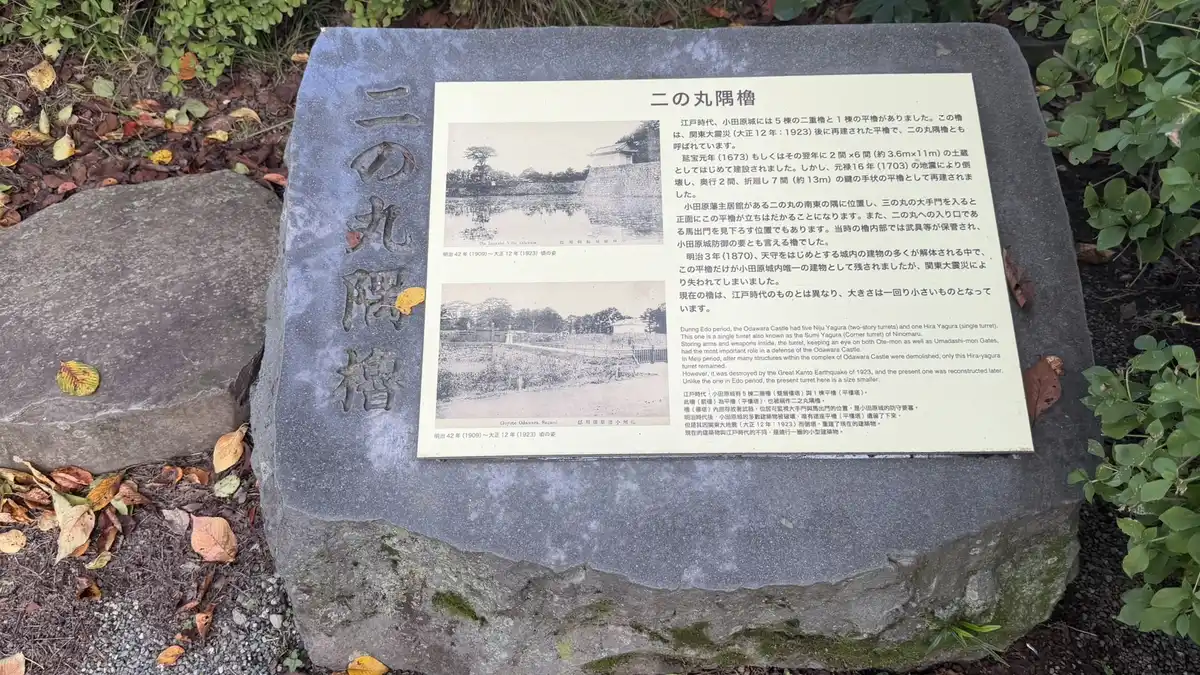
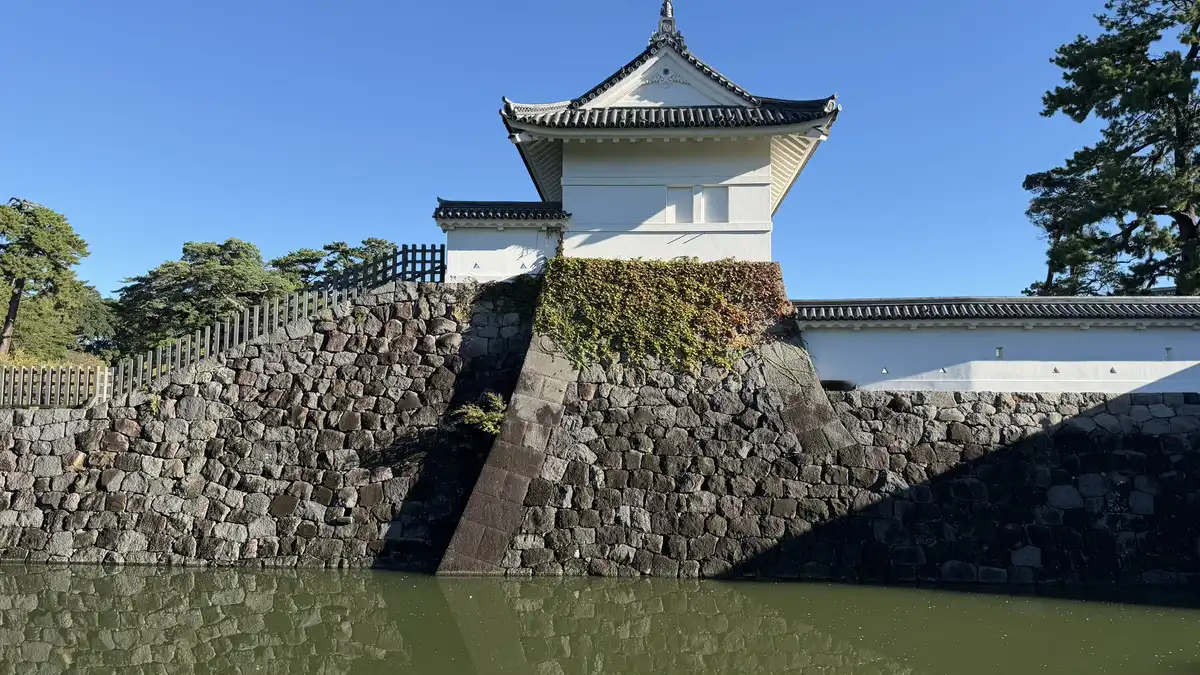
Between the Umadashi and Akagane gates, the Ninomaru corner turret rises across the east moat. It collapsed in the 1923 Great Kanto Earthquake and was rebuilt in reinforced concrete in 1934, decades before the keep (1960). The interior is not open to the public, but the white-walled turret over the water is visible from several points along the approach path.
Tap an image to enlarge
Akagane Gate (銅門)
The main gate of the Ninomaru, named for its copper fittings
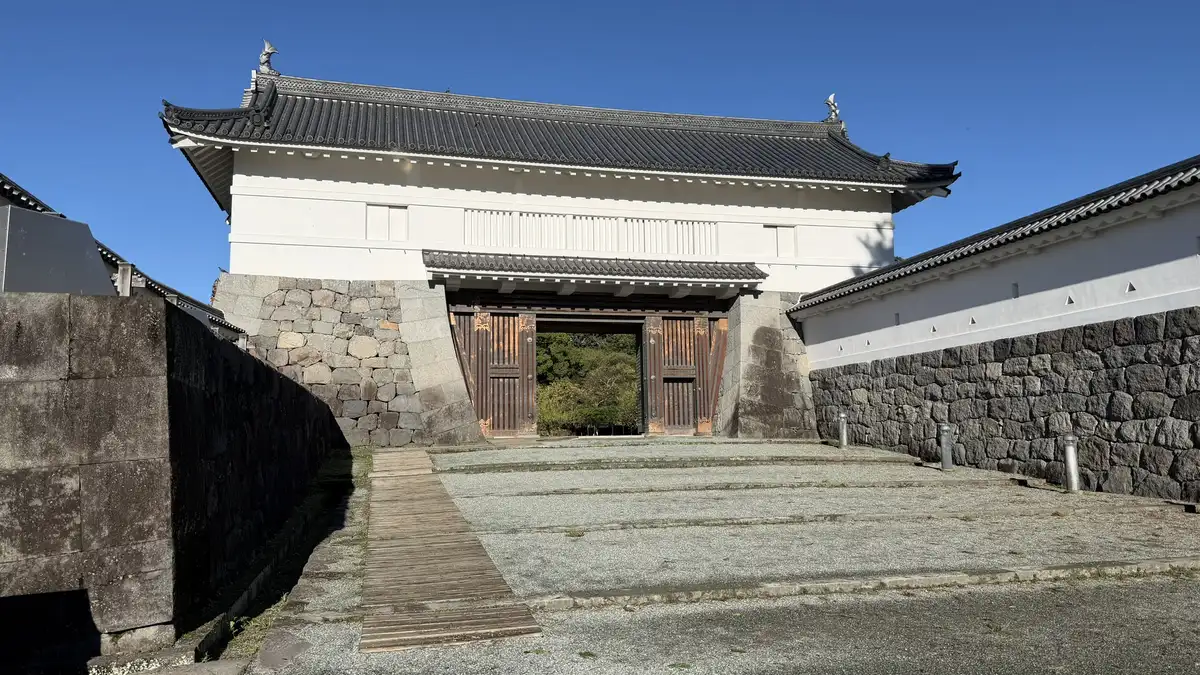
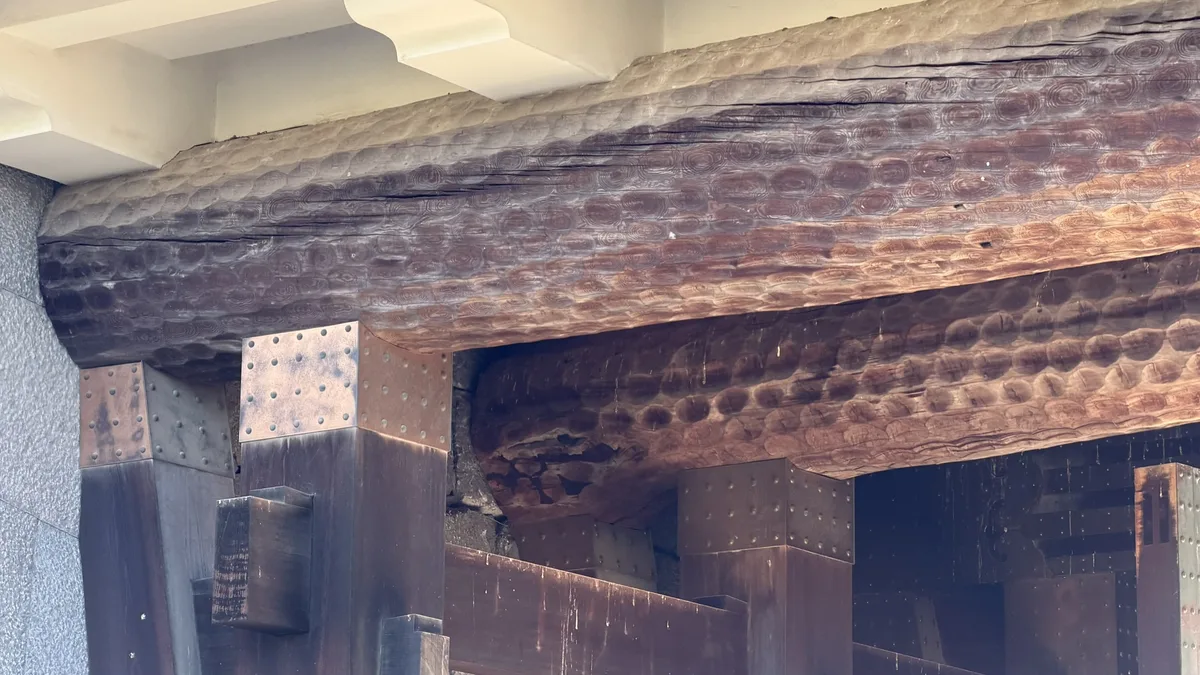
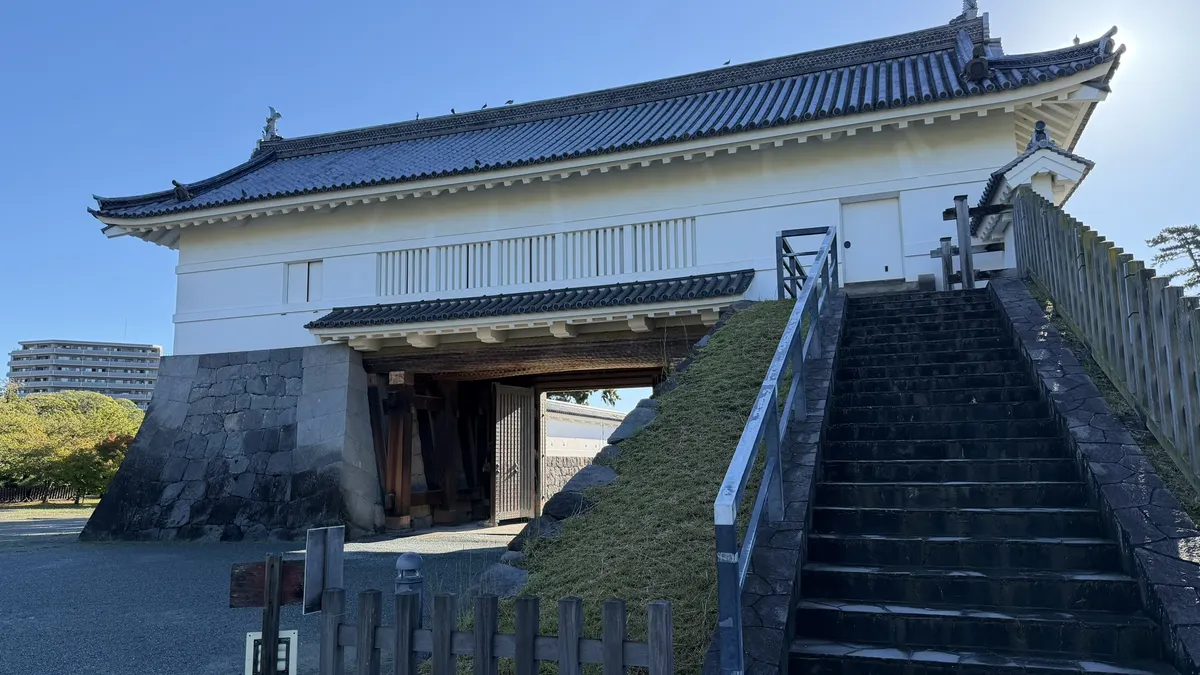
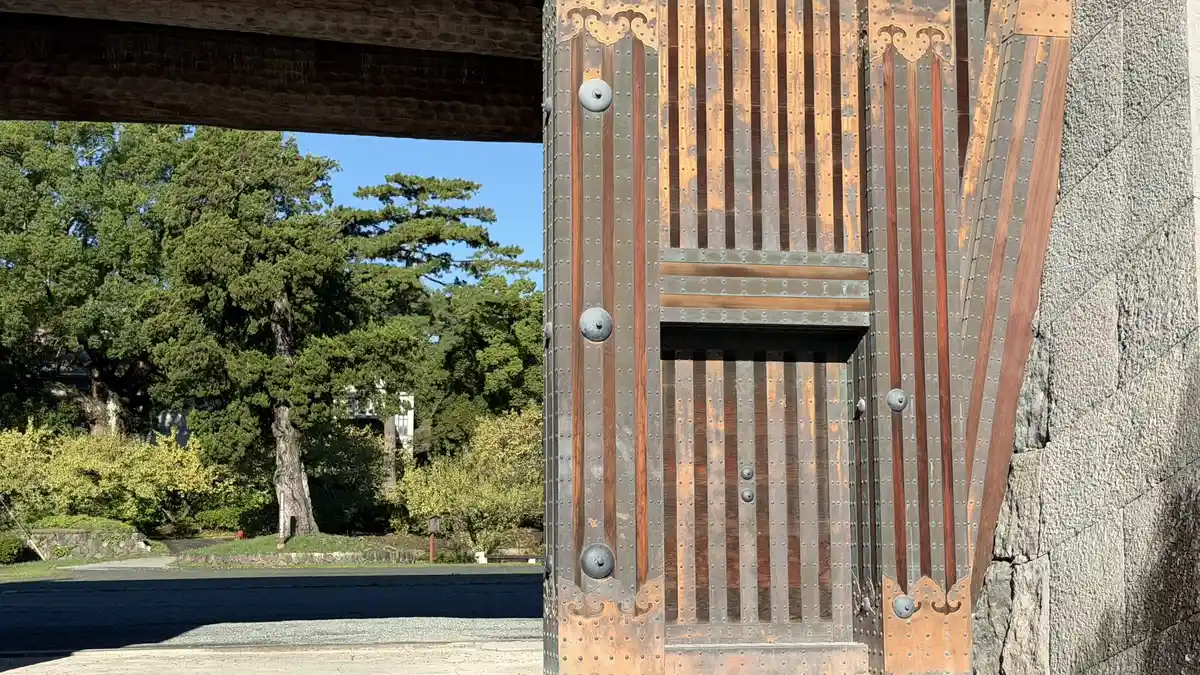
Past the Umaya-kuruwa enclosure, the Akagane Gate rises on stone walls. It was the front gate of the Ninomaru, and its name, meaning "copper gate," comes from the copper fittings on its great doors. The present gate was rebuilt in 1997.
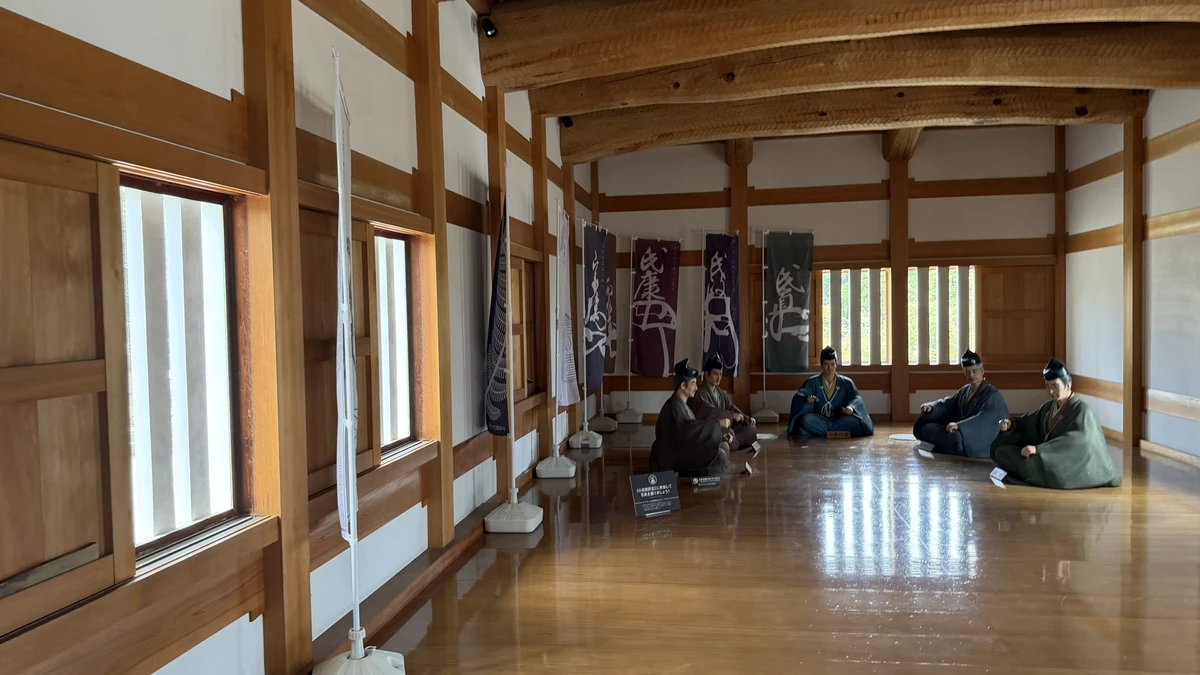
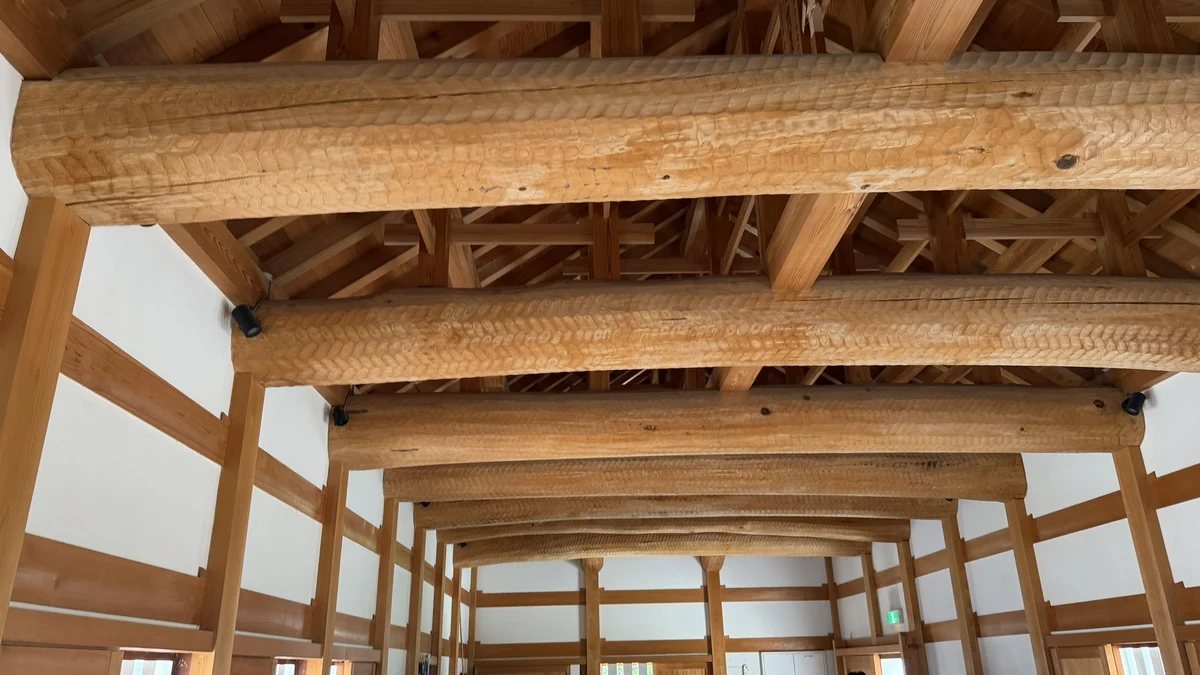
Most visitors simply walk through it, but on Saturdays, Sundays and national holidays from 10:00 to 15:00, the room above the gate is open to the public. We visited on a national holiday and could go inside. The timber-framed room holds seated samurai figures and a model showing how the gate was built. It takes about five minutes.
Highlights
- The copper fittings on the great doors that gave the gate its name
- The masugata courtyard enclosed by the gatehouse and stone walls
- The room above the gate, open on weekends and holidays
Photos
Tap an image to enlarge
Visitor information
| Interior opening | Saturdays, Sundays and national holidays, 10:00–15:00 |
|---|---|
| Time needed | About 5 minutes inside (our visit) |
Tokiwagi Gate (常盤木門) and SAMURAI Museum
The main gate of the honmaru, with armor and swords on the upper floor
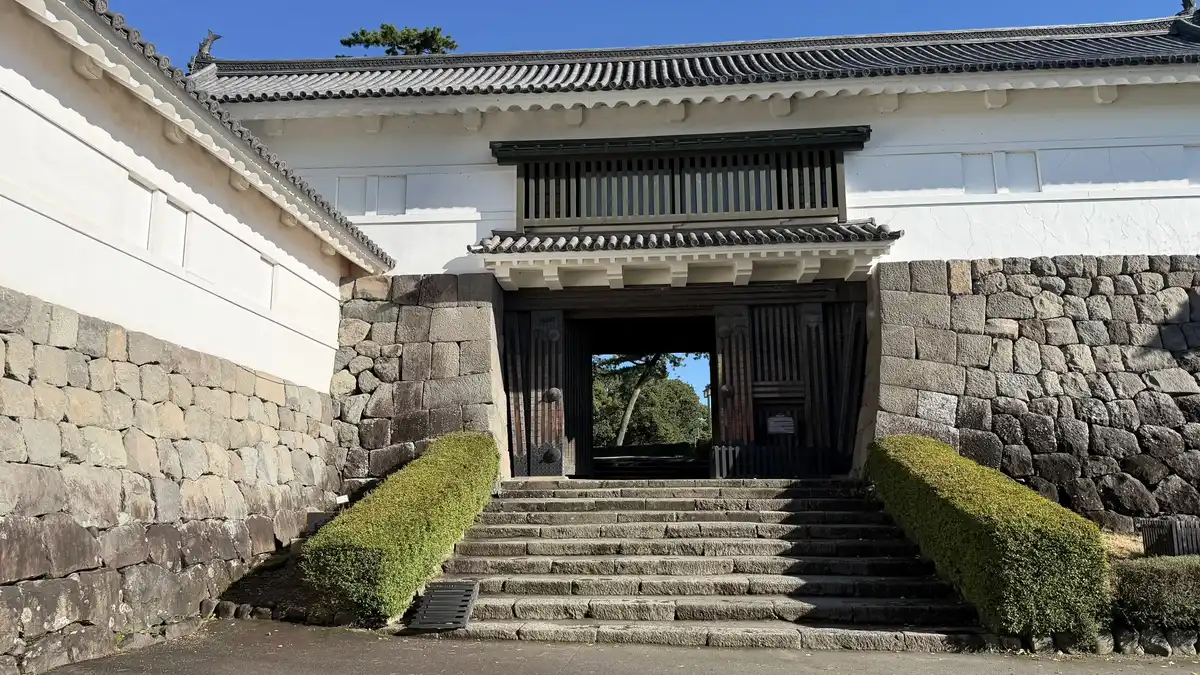
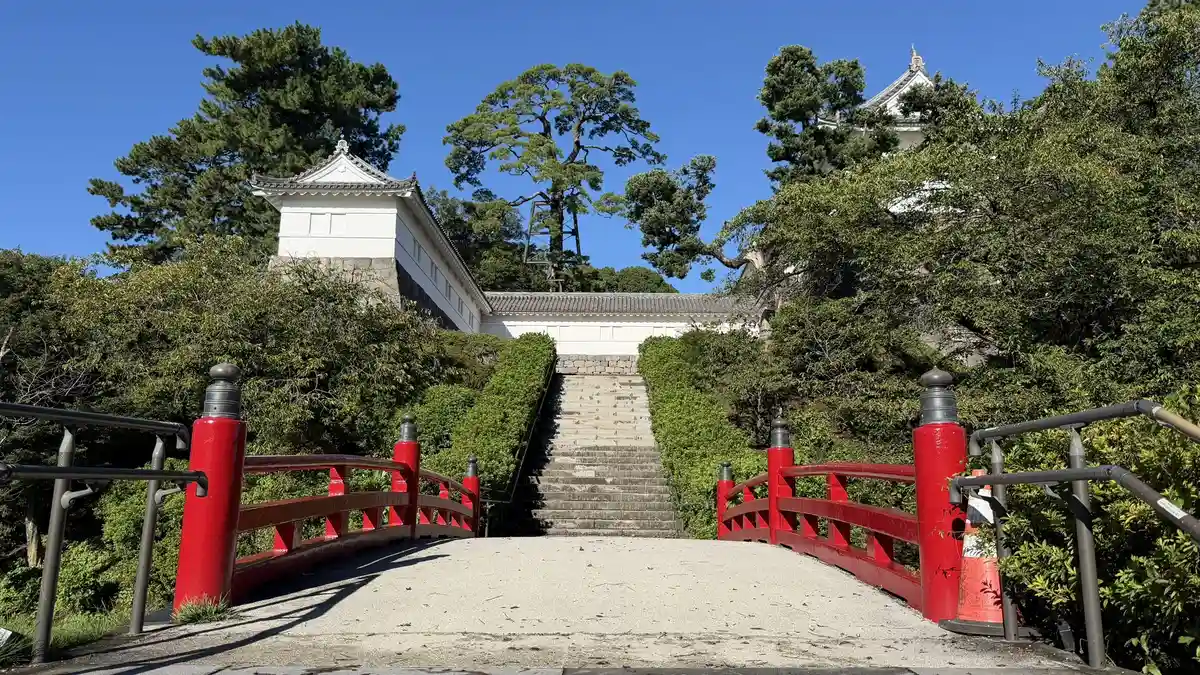
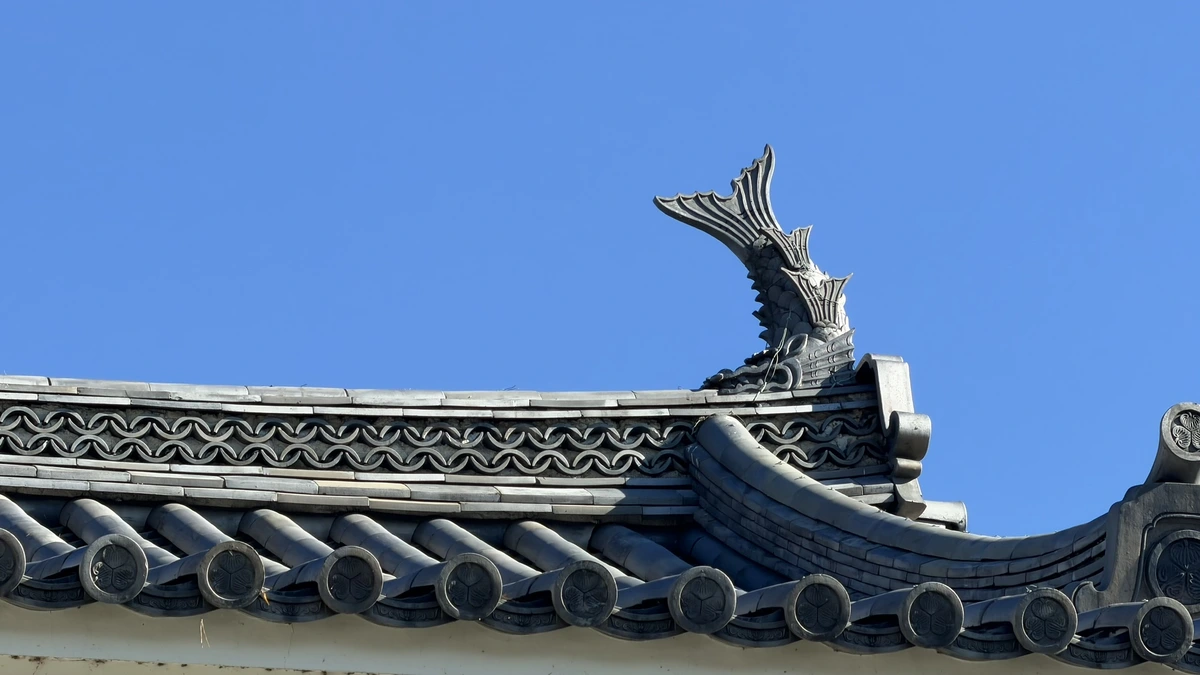
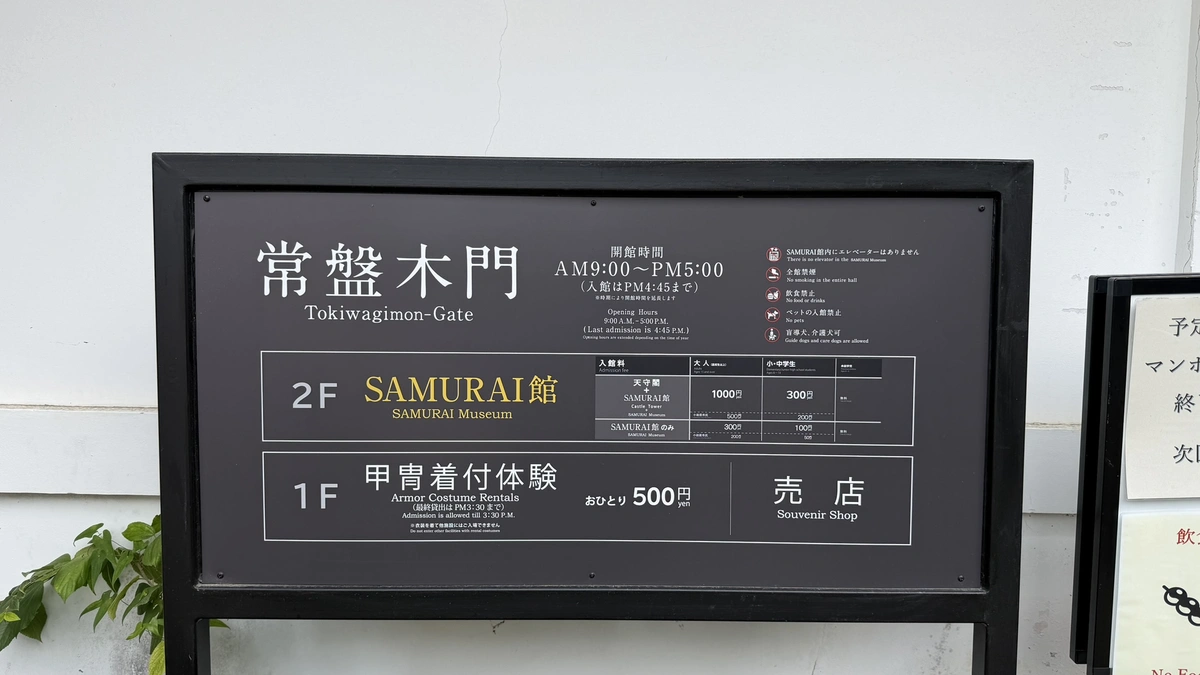
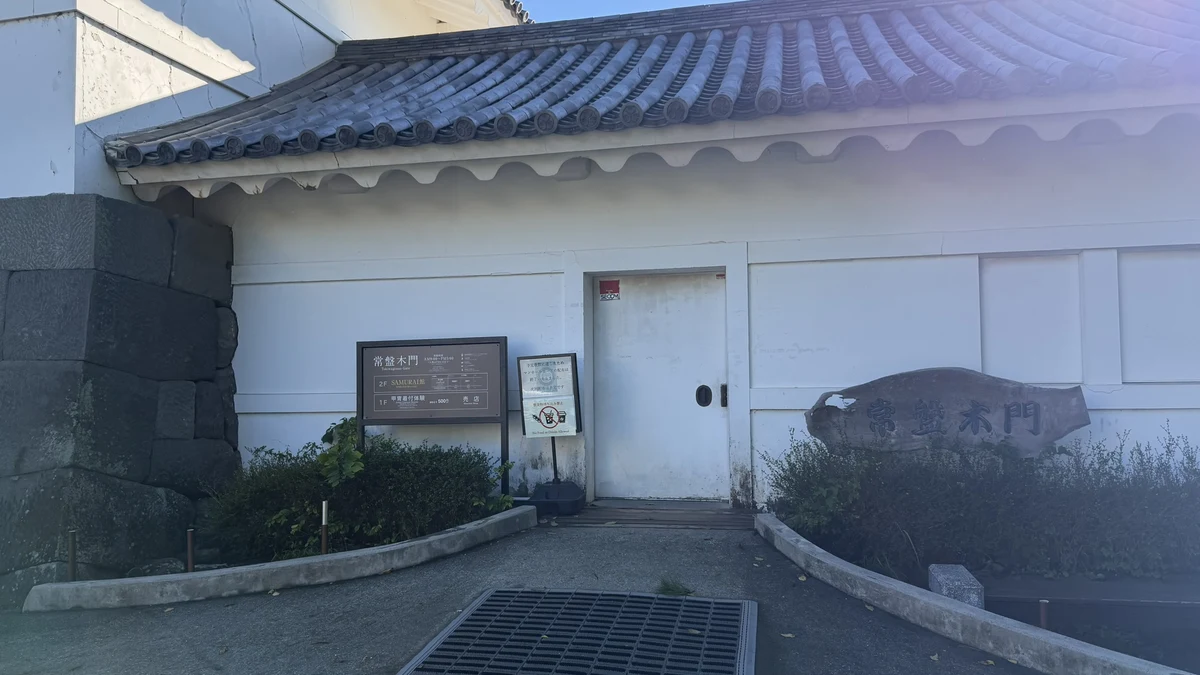
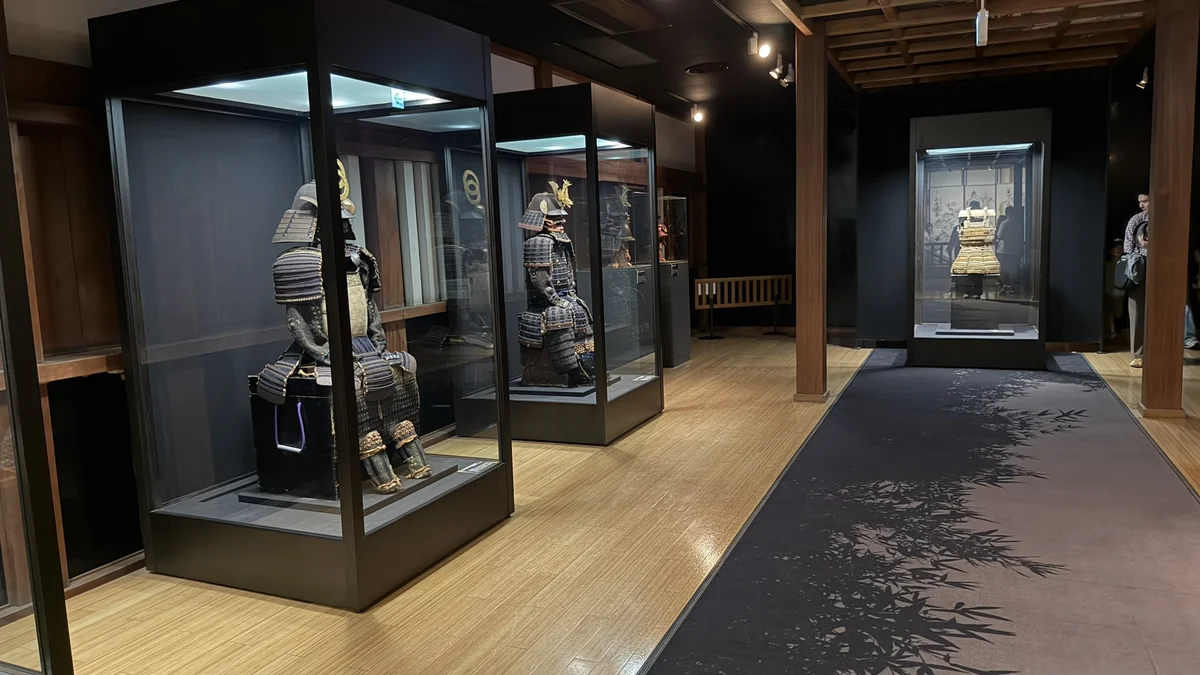
A red-railed bridge crosses the former east moat of the honmaru, and stone steps climb to the Tokiwagi Gate, the main entrance to the central enclosure. It was rebuilt in 1971. The upper floor of the gate houses the Tokiwagimon SAMURAI Museum, which displays armor and swords alongside video projections.
Because your keep ticket covers it, the easiest plan is to drop in after the keep. The exhibition fits into one room, and we spent about 10 minutes there. Look for the sign 「SAMURAI館」 at the gate.
Highlights
- The climb to the honmaru, from the red bridge up the stone steps
- The armor and swords in the SAMURAI Museum, including an Azuchi-Momoyama-period helmet
- A projection-mapping display inside the exhibition room
- An armor-wearing experience advertised on the ground floor of the gate (sign seen on our visit)
Photos
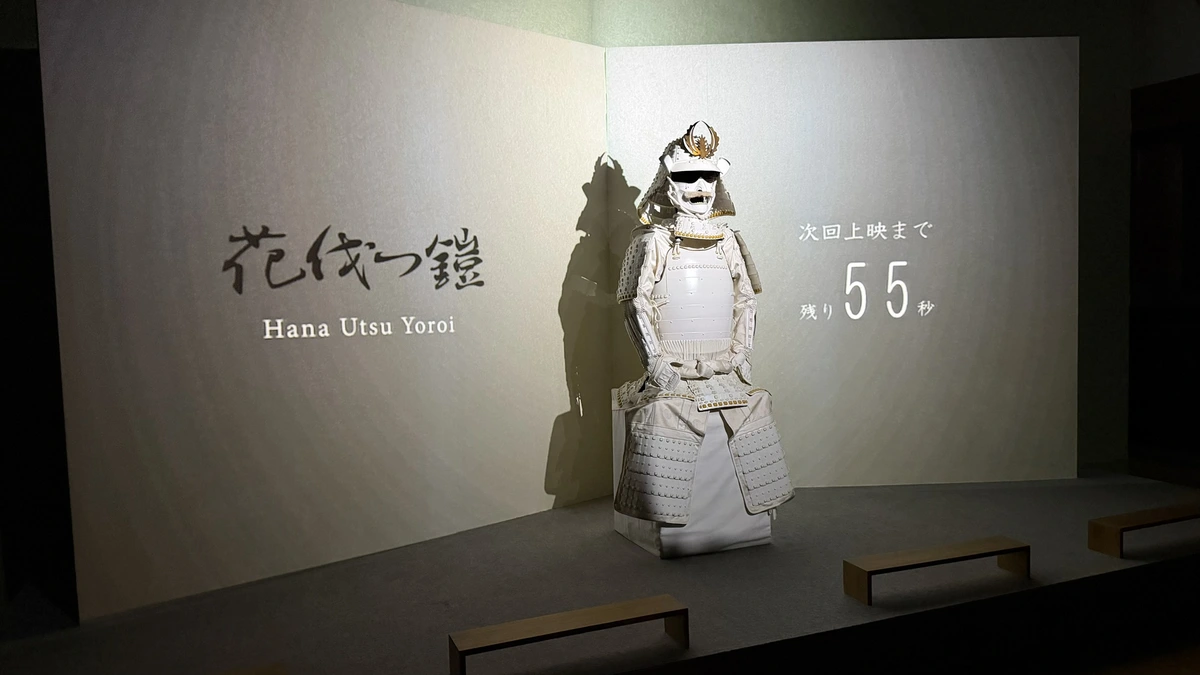
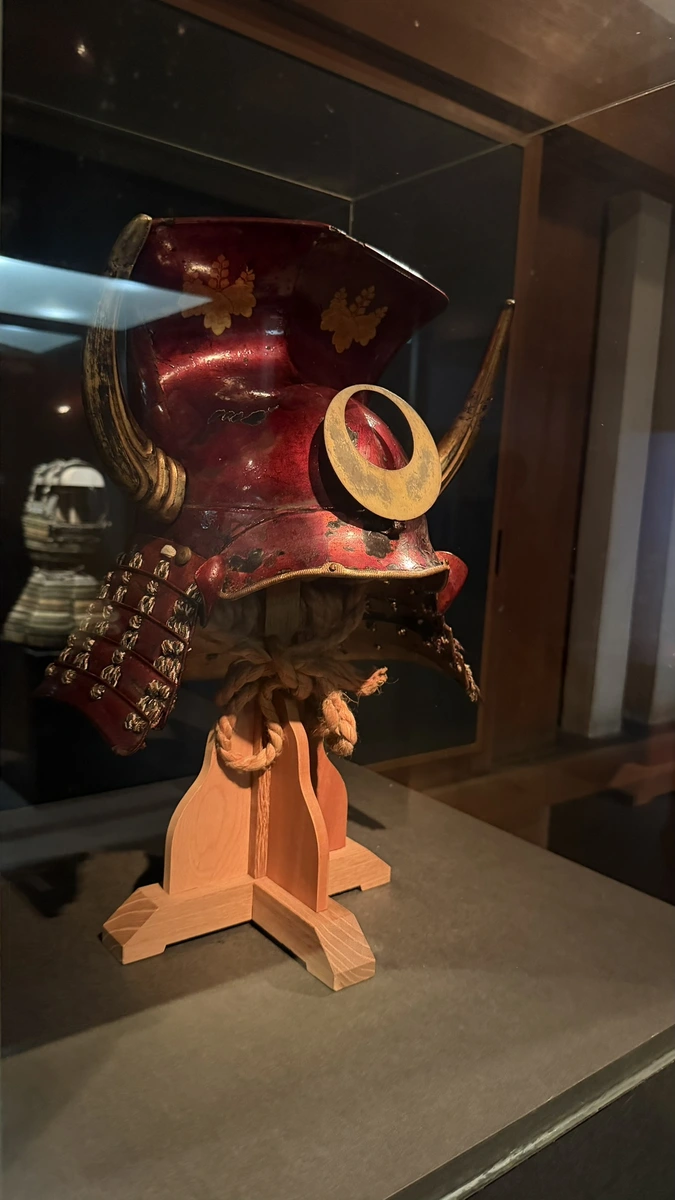
Tap an image to enlarge
Visitor information
| Admission | Included with the keep ticket, or ¥300 adults / ¥100 students on its own |
|---|---|
| Hours | 9:00–17:00, last entry 16:45 |
| Time needed | About 10 minutes (our visit) |
Odawara Castle Keep (小田原城天守閣)
A five-floor history museum inside a reconstruction of the Edo-period tower
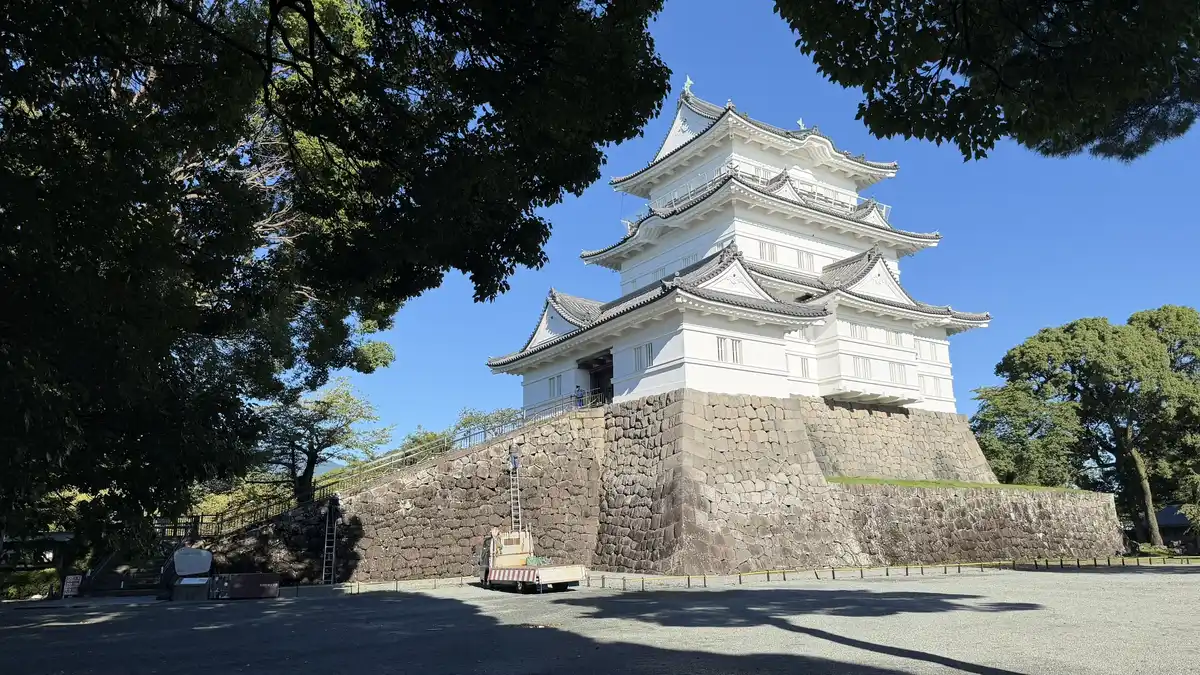
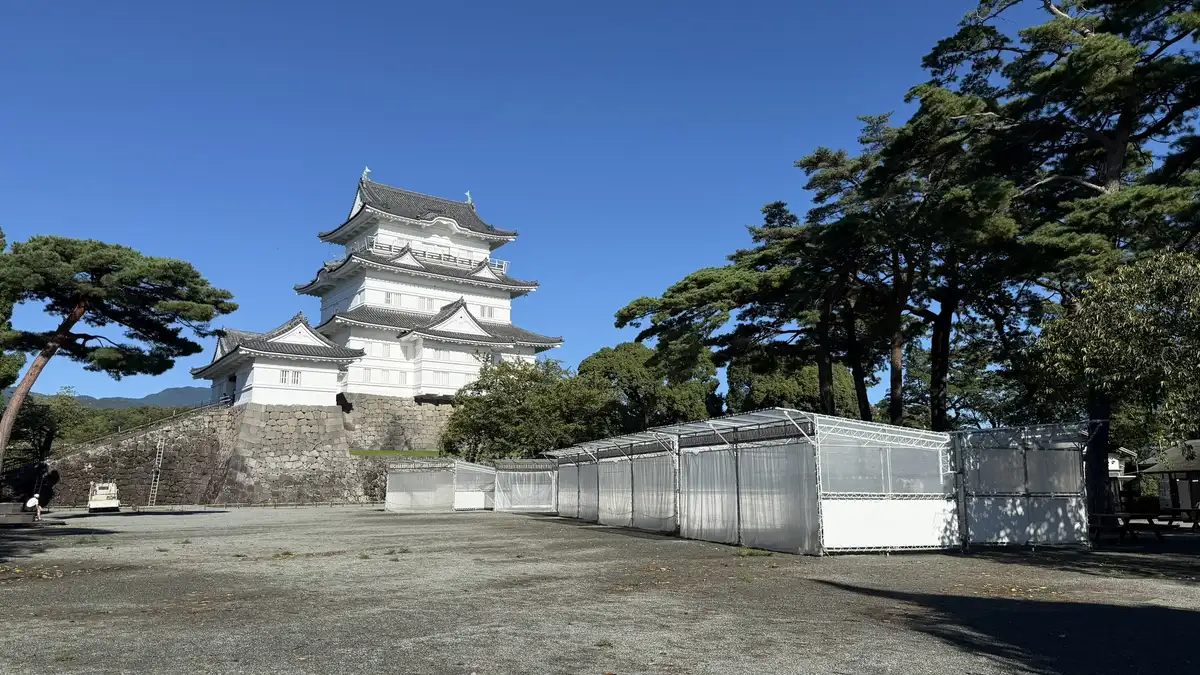
The keep stands on a tall stone base at the edge of the Honmaru square. It was rebuilt in reinforced concrete in 1960 to recreate the look of the Edo-period tower, and the inside is a history museum. The first floor covers the Edo period, the second the Hojo clan in the age of warring states, the third temporary exhibitions and the fourth the castle's modern history. The fifth floor recreates the interior of a castle tower and opens onto an observation deck.
Reading the exhibits, watching the films and taking in the view took us about 1.5 hours. From the top you look straight down on the roofs of the Tokiwagi Gate. To the west is the hill of Hachimanyama, once one of the centers of the Hojo-era castle. If you plan to explore the earthworks outside the park, this is a good place to get your bearings.
Highlights
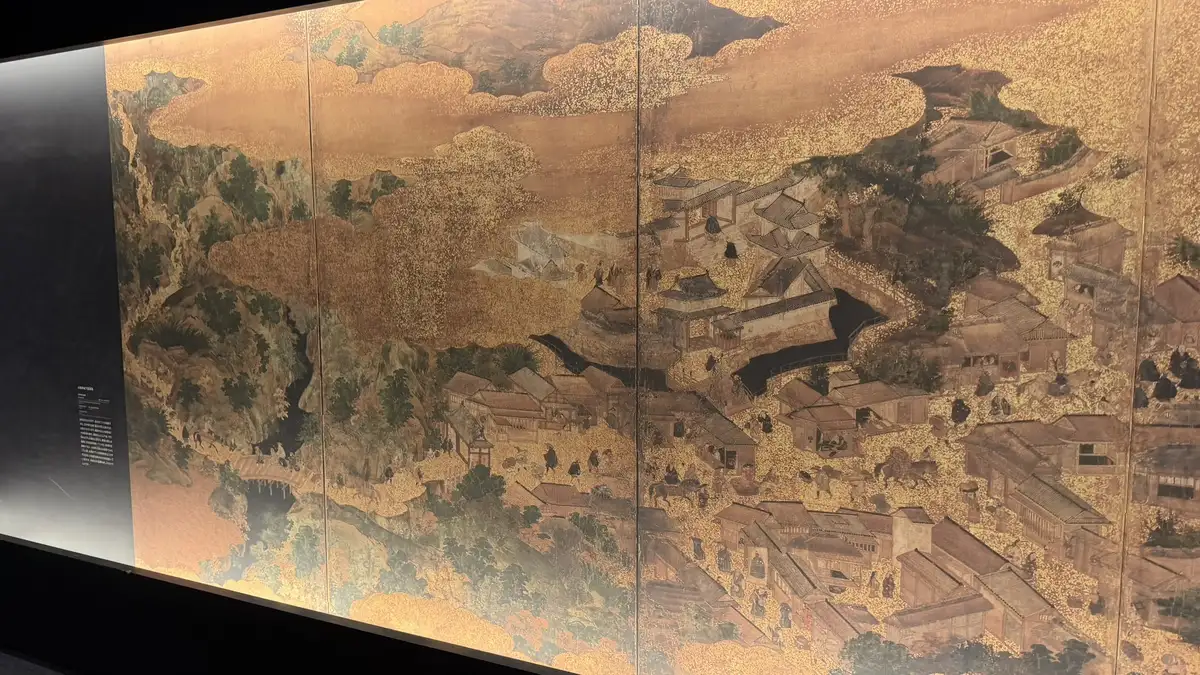
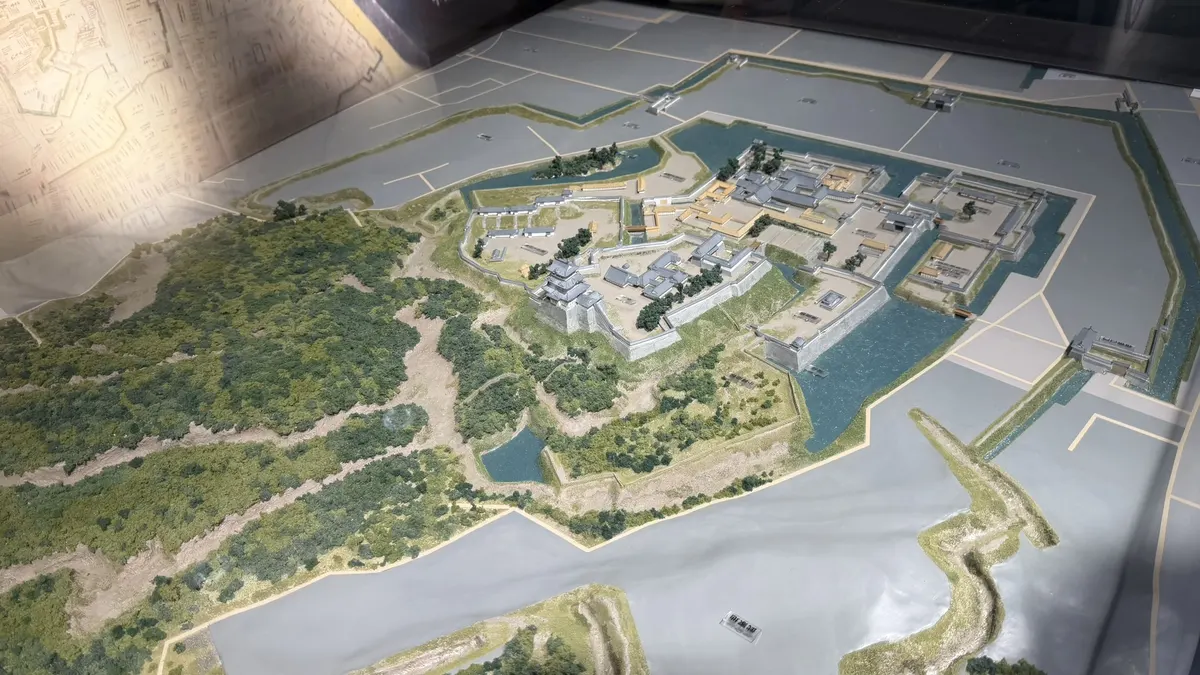
- A folding screen depicting Edo-period Odawara, and a scale model of the castle
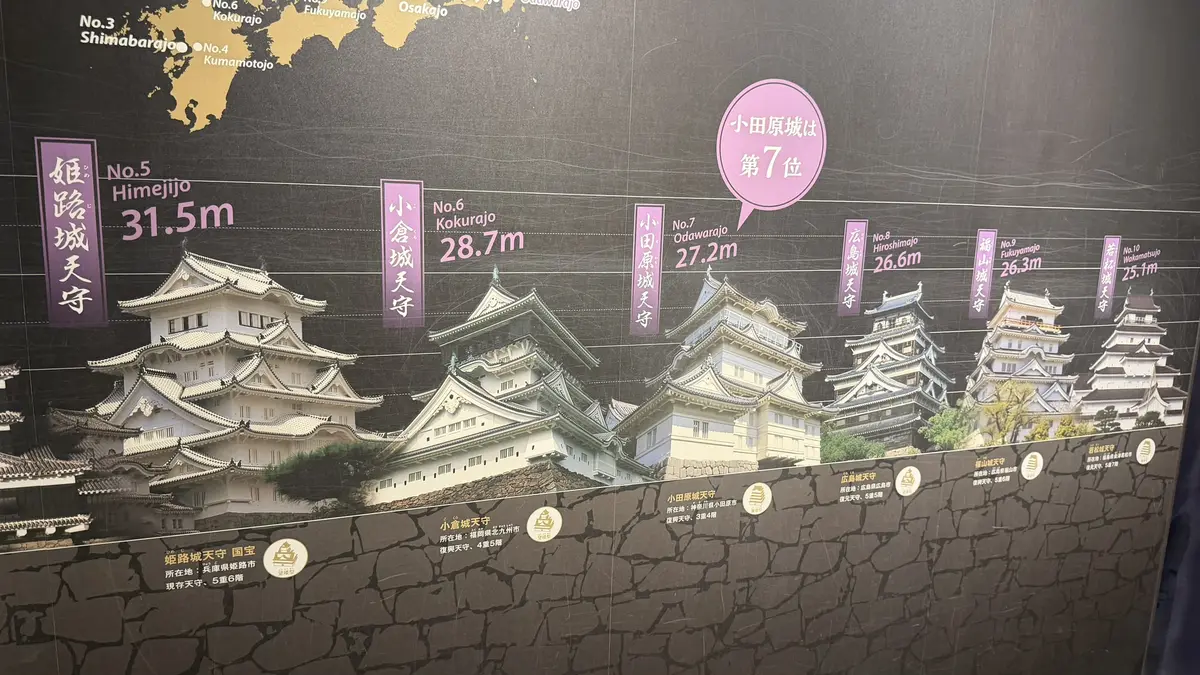
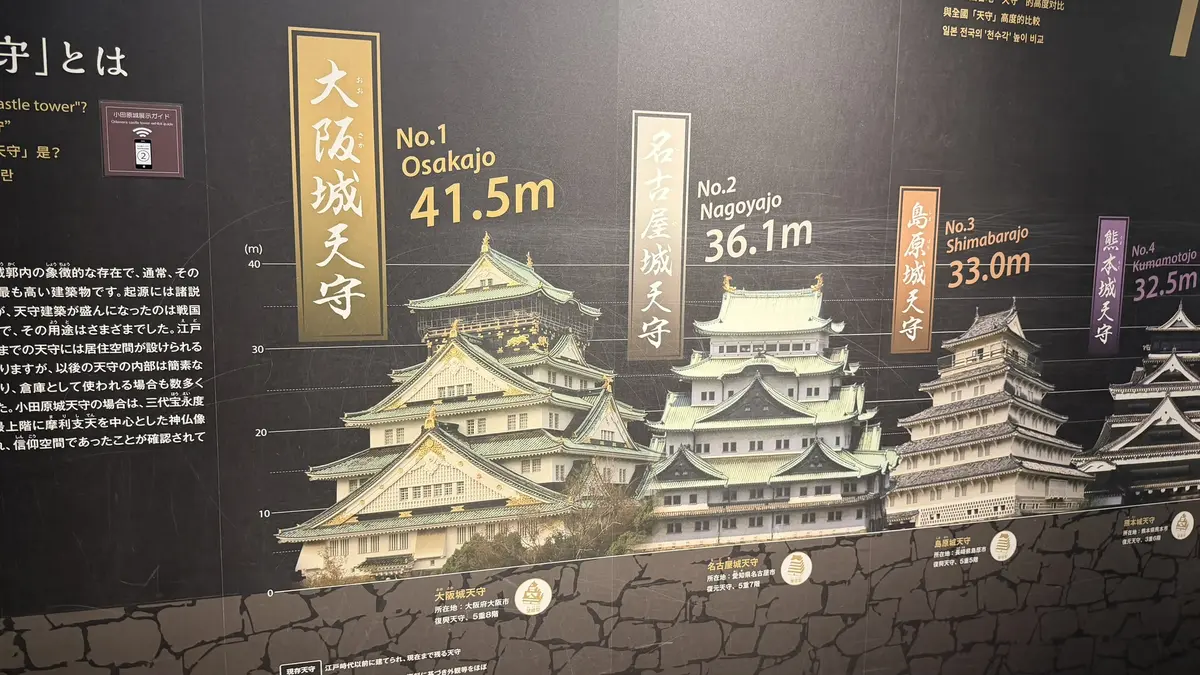
- A display comparing the heights of castle keeps across Japan, which ranks Odawara 7th nationally
- The keep alone stands 27.2m tall (38.7m including its stone base) — the tallest keep in eastern Japan, according to travel outlet nippon.com
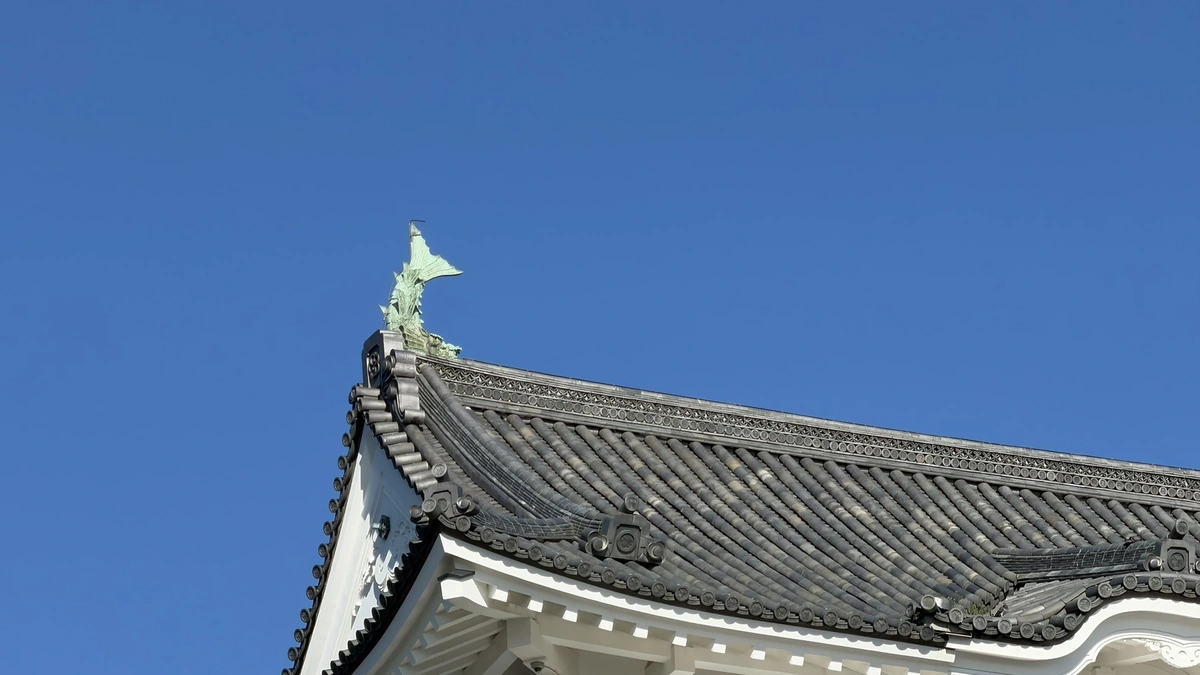
- Excavated roof tiles bearing the triple-hollyhock crest, matched by the same crest on the reconstructed keep's own roof
- Armor from the Azuchi-Momoyama period
- The modern history section, covering the 1923 earthquake and the rebuilding
- A wooden model of the Edo-period keep based on historical research
- The theater showing two short films in turn
- The observation deck, with views over the honmaru, the city and toward Hakone
Inside the keep and the view
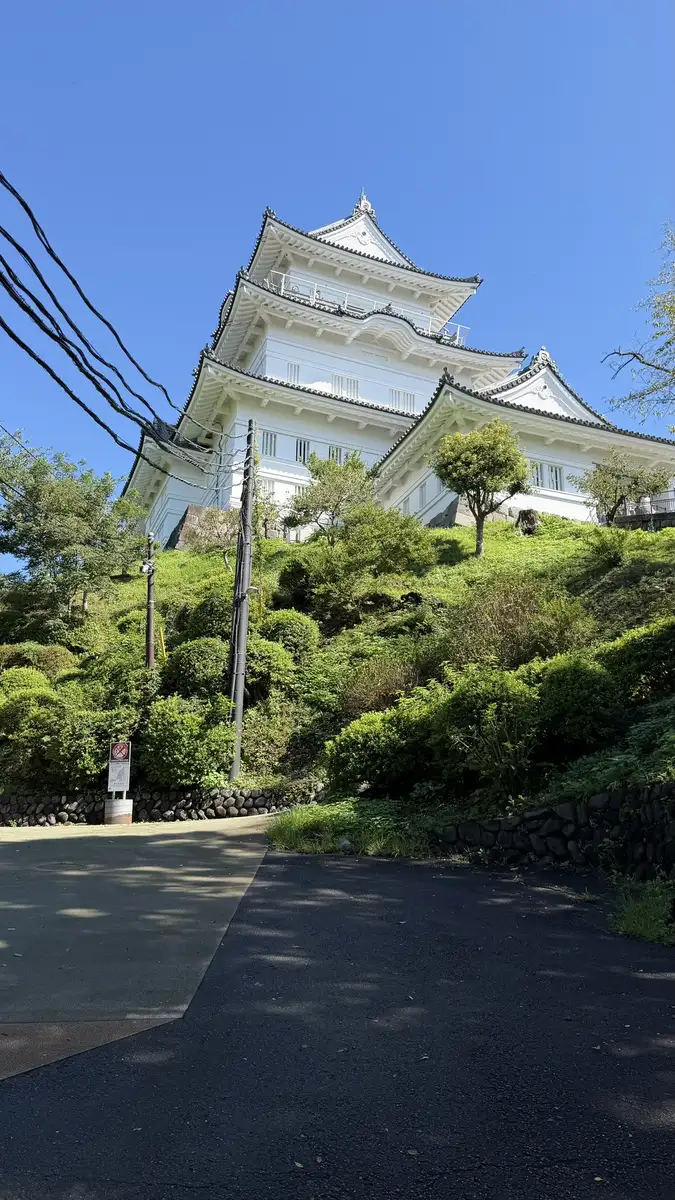
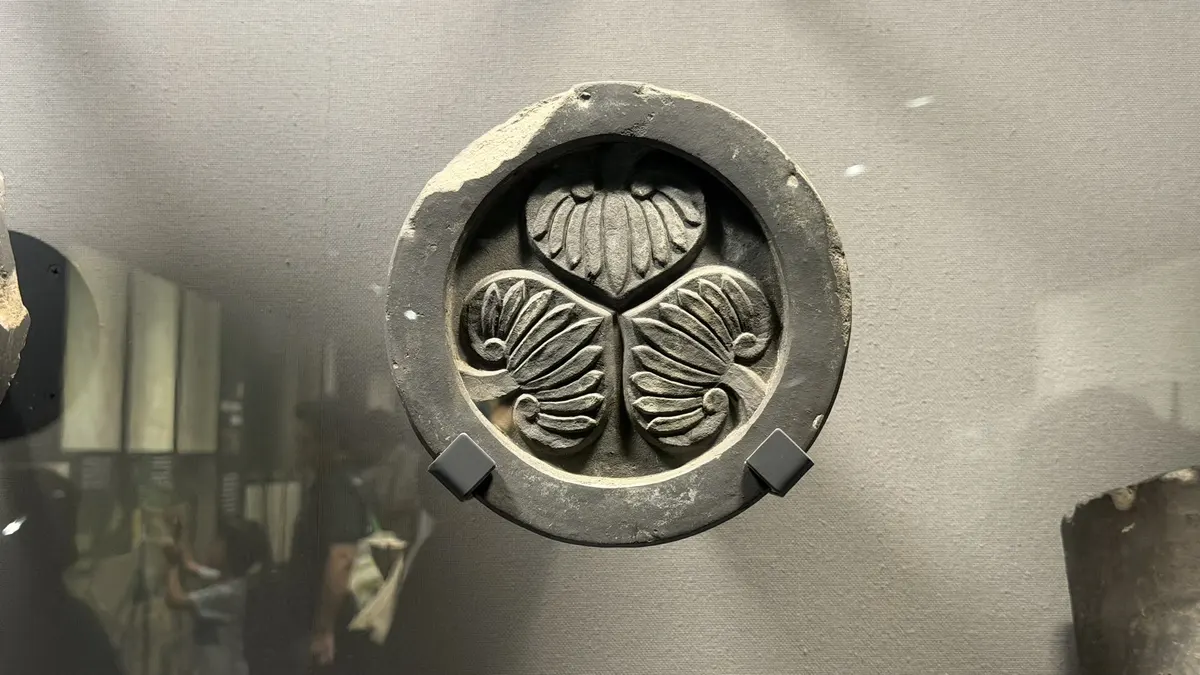
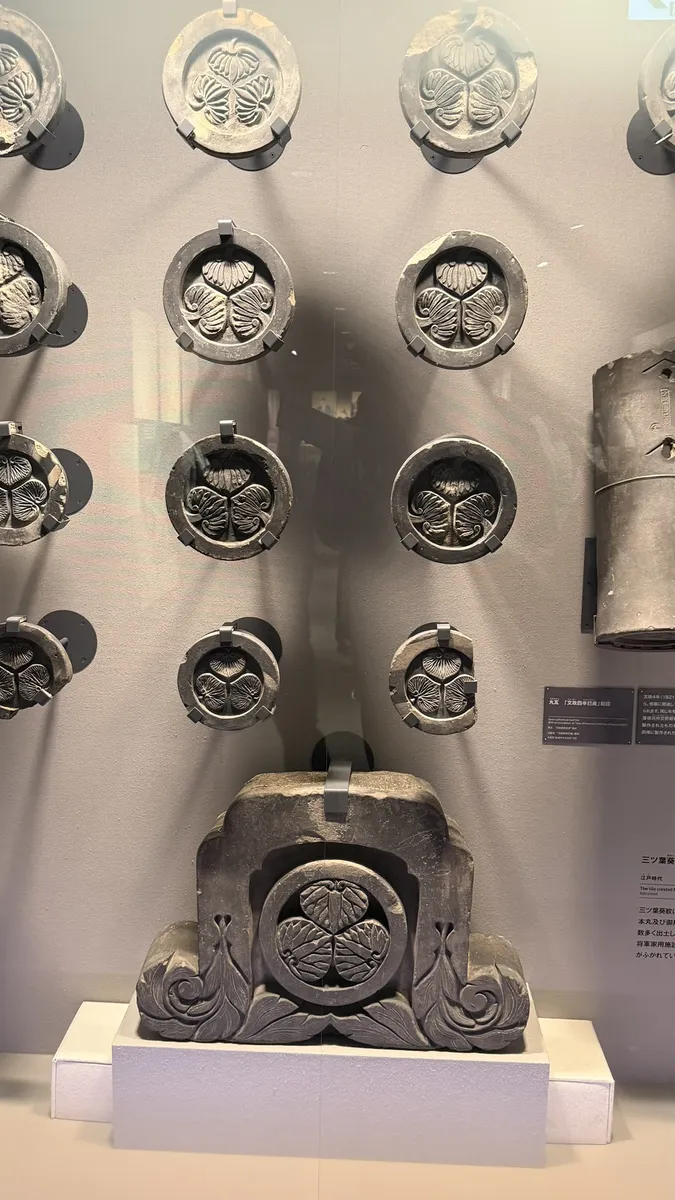
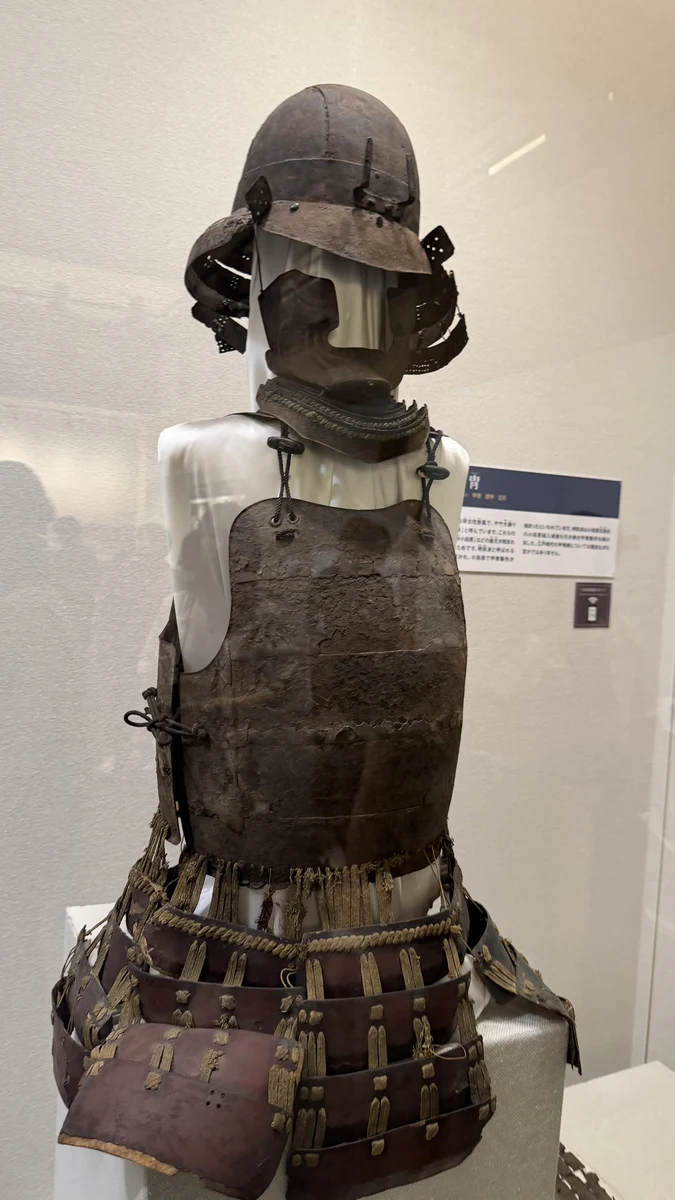
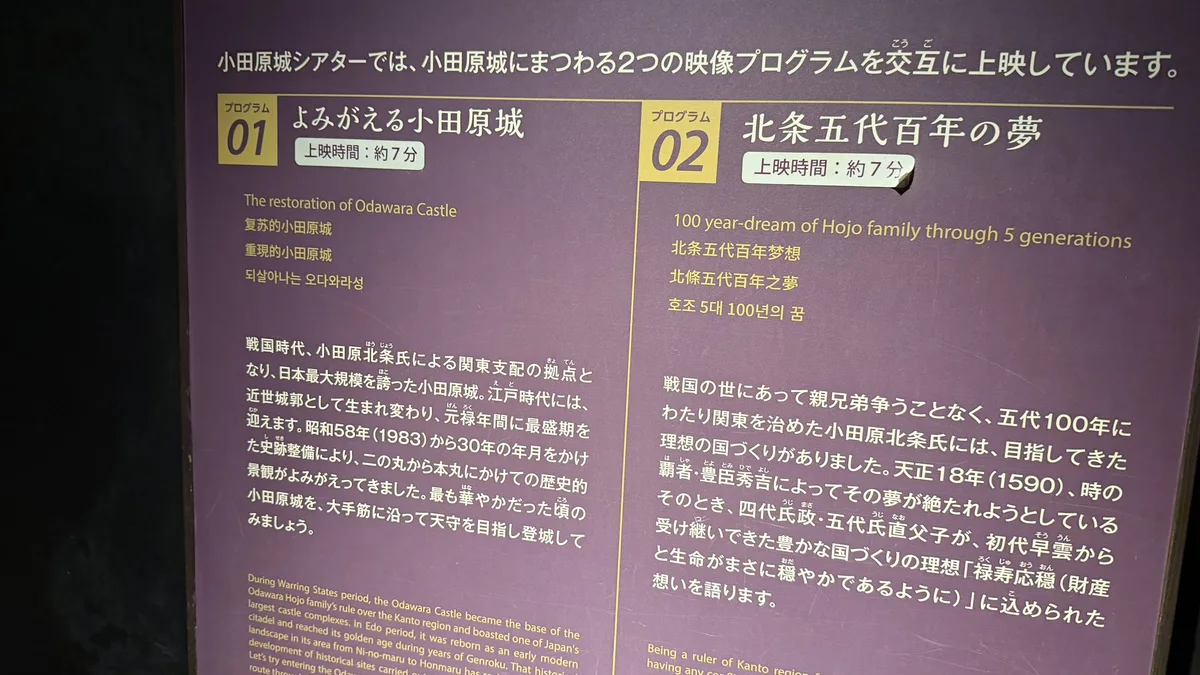
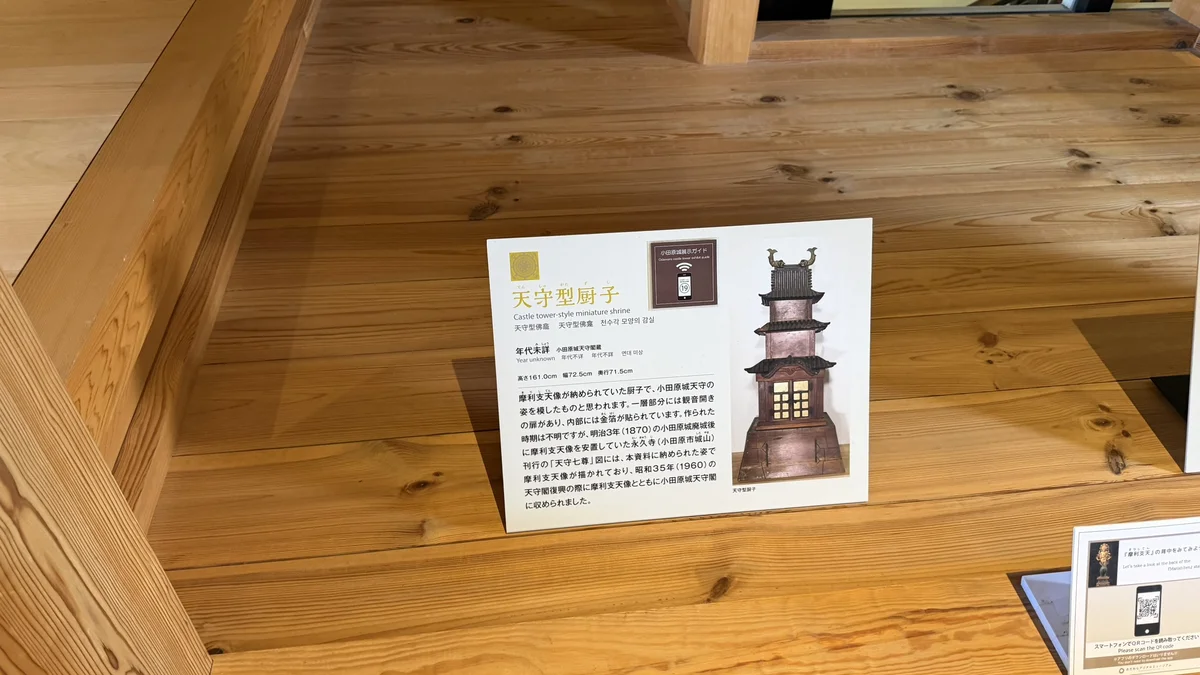
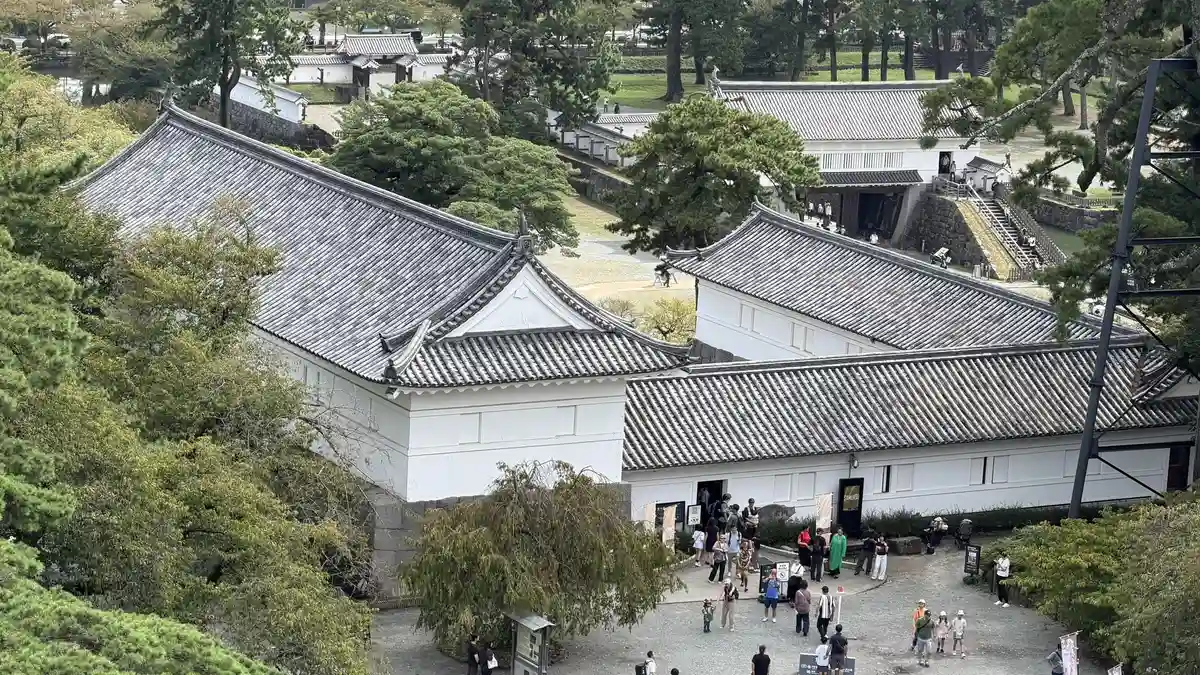
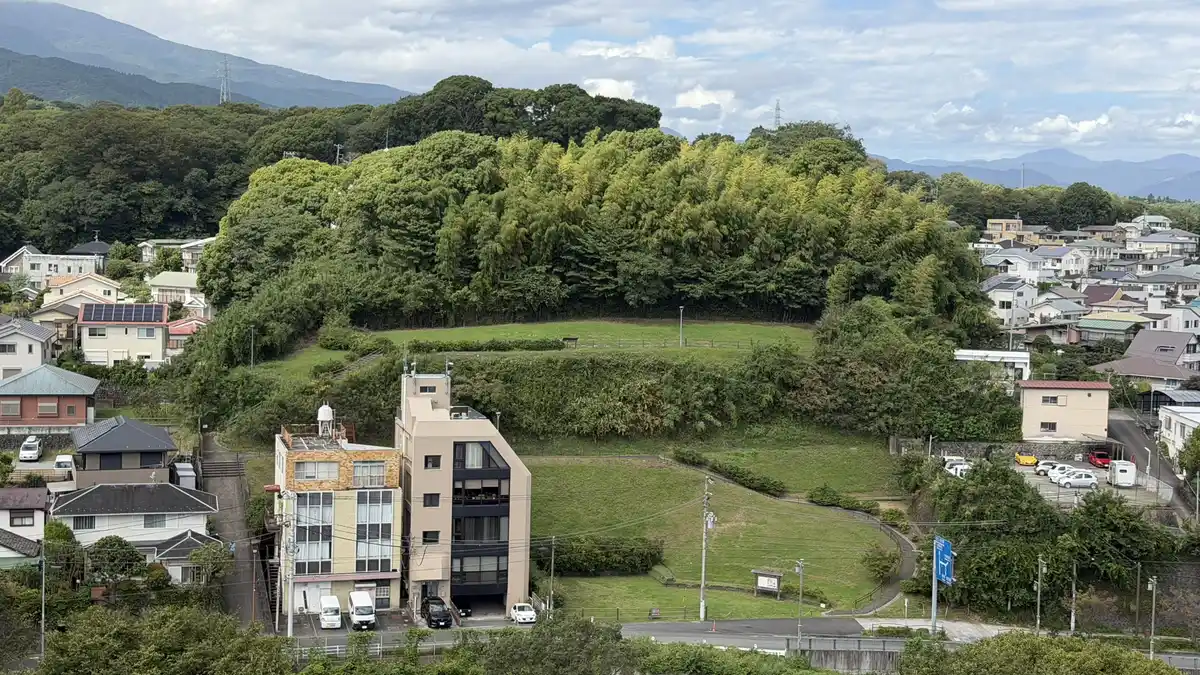
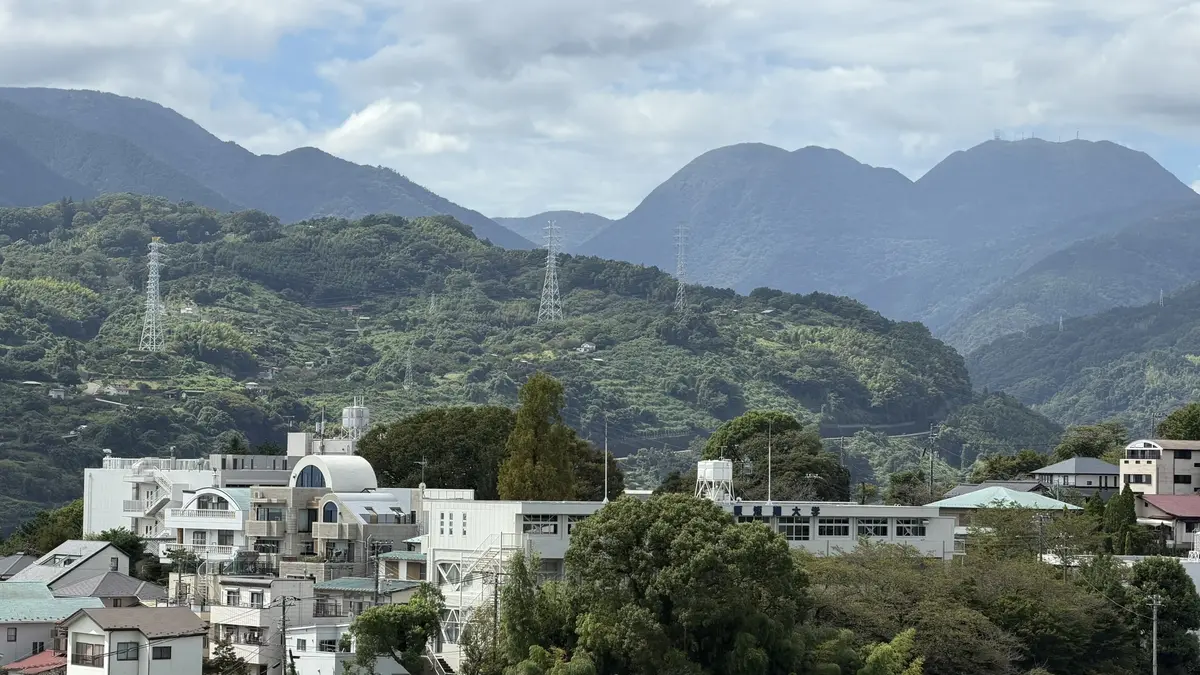
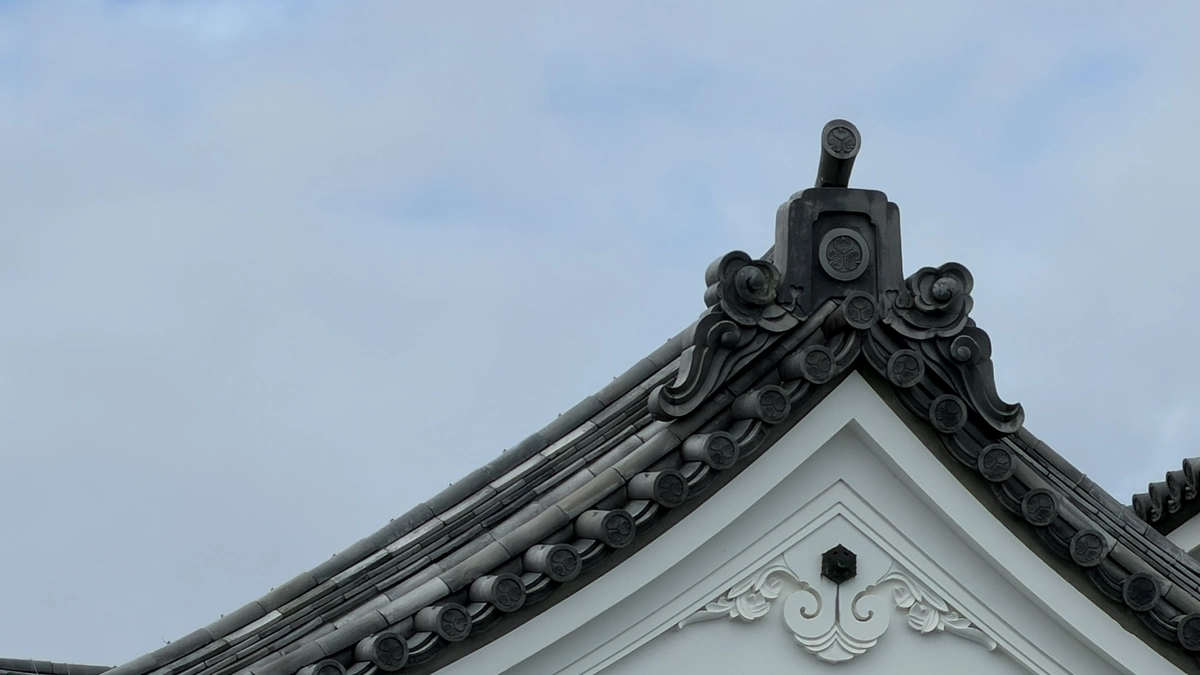
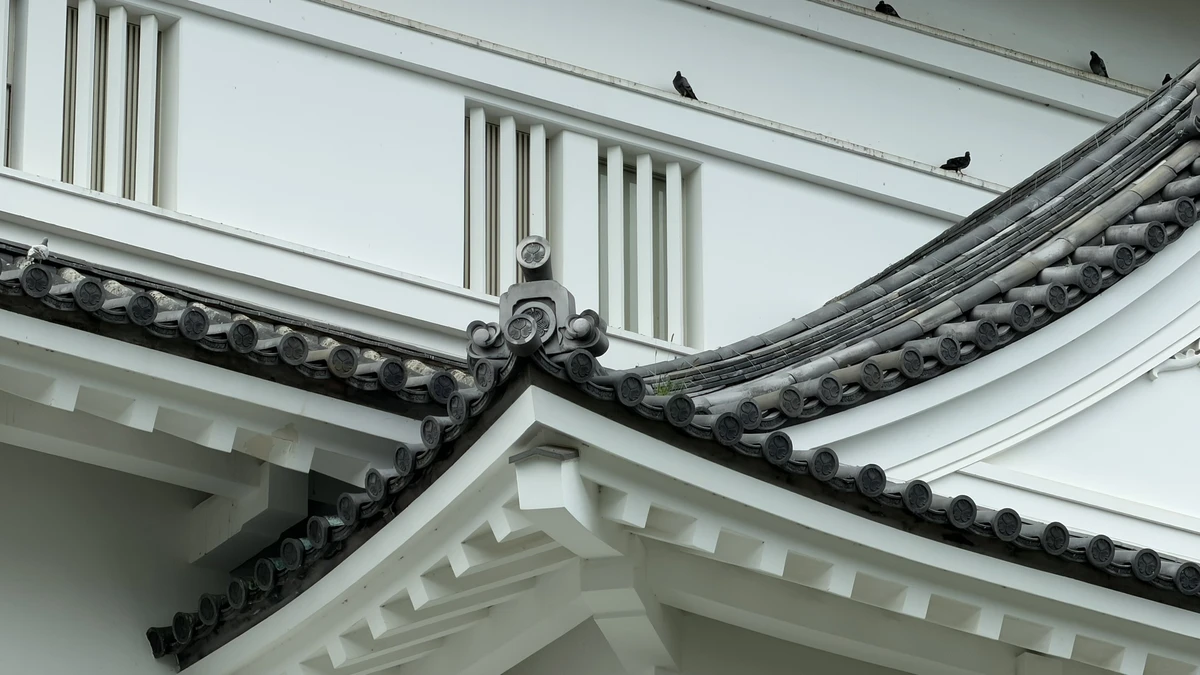
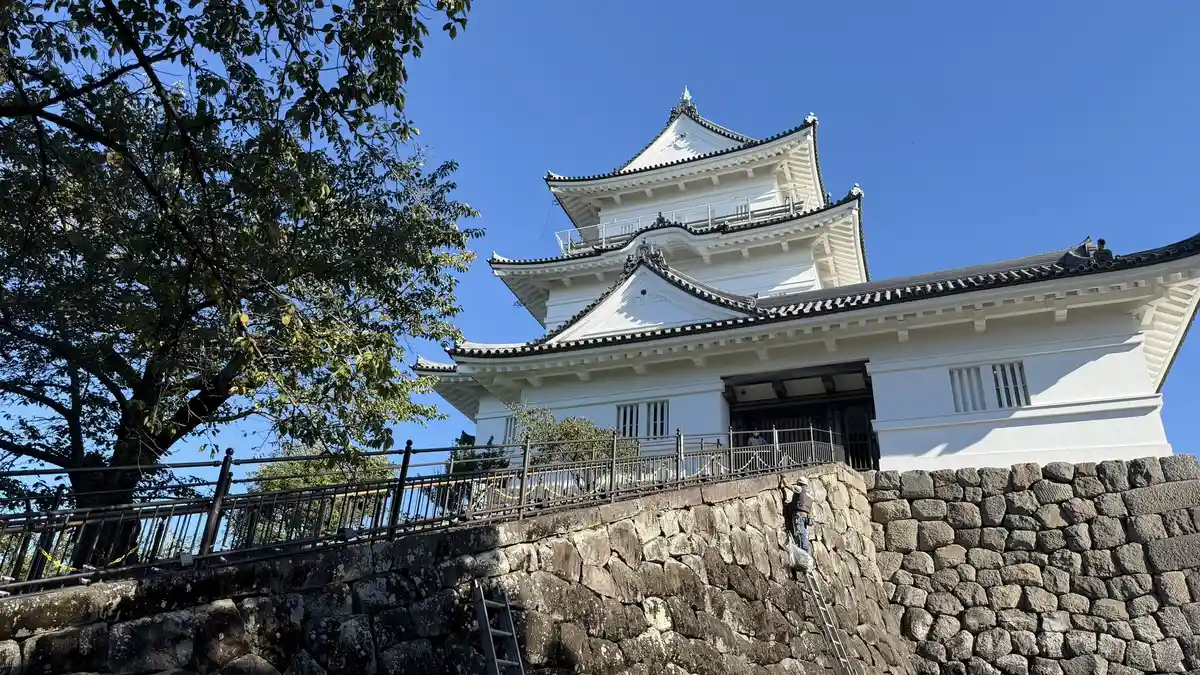
Tap an image to enlarge
Visitor information
| Admission | Adults ¥1,000, students ¥300 (includes the SAMURAI Museum) |
|---|---|
| Hours | 9:00–17:00, last entry 16:30 |
| Closed | Second Wednesday of December; December 31–January 1 |
| Time needed | About 1.5 hours (our visit) |
| Languages | Main exhibits have English, Chinese and Korean captions (not every item) |
Odawara Castle NINJA Museum
An interactive museum themed on the Fuma ninja said to have served the Hojo
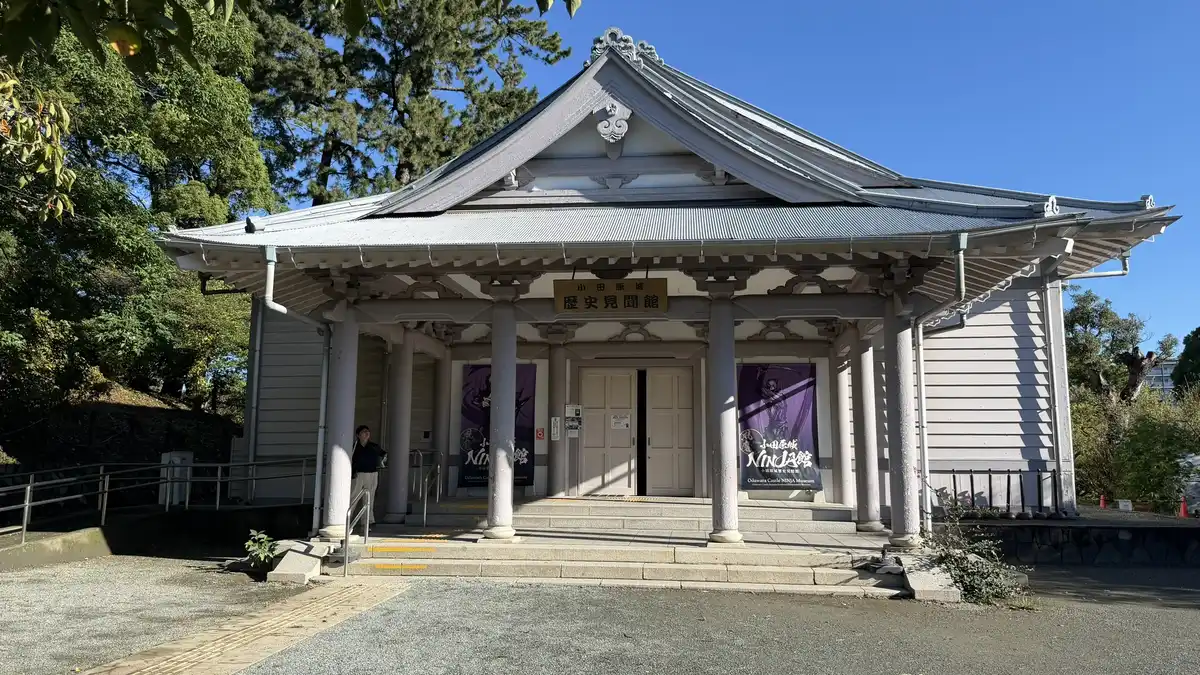
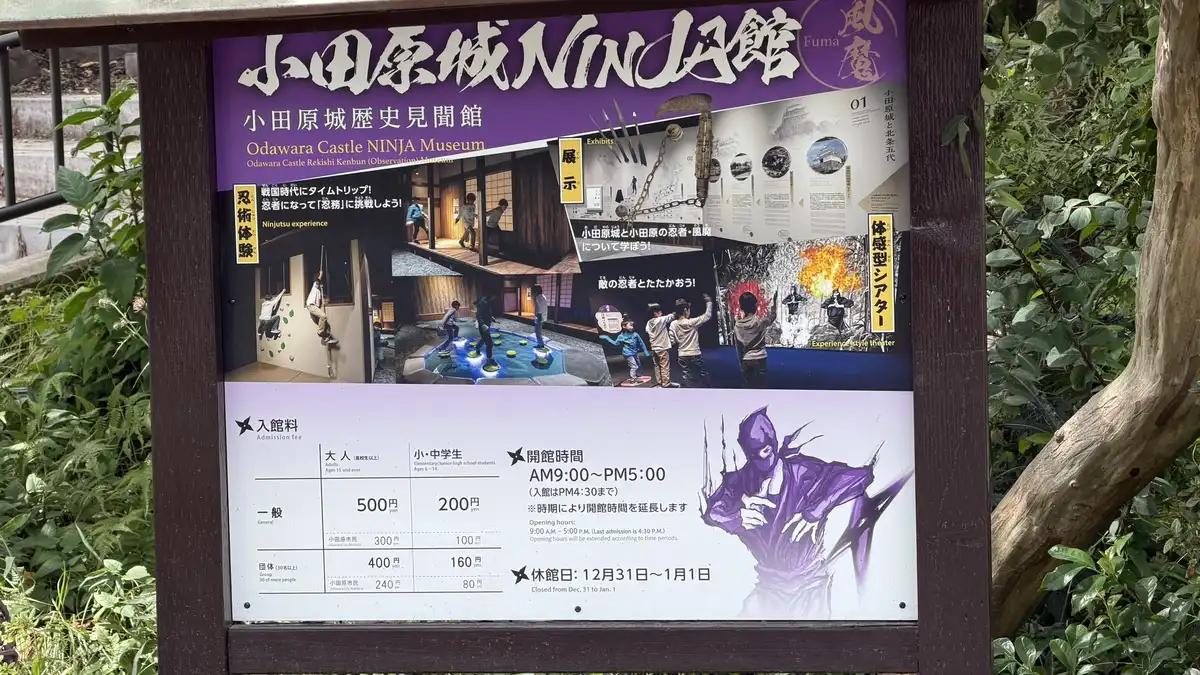
Near the Umaya-kuruwa enclosure, the NINJA Museum uses hands-on displays to tell the story of the Hojo clan and the Fuma ninja. It is ticketed separately from the keep (¥500 for adults). At around 11:50 on the holiday we visited, a long line of mostly families with children had formed at the entrance. With a wait of more than 30 minutes likely, we did not go in.
We cannot vouch for the exhibits themselves. Judging from the museum's leaflet, it seems aimed at families and at overseas visitors curious about ninja and Japanese culture. If it is on your list, keep in mind that on the September 22, 2026 holiday a line had formed by around 11:50am, so allow some flexibility in your schedule.
Tap an image to enlarge
| Admission | Adults ¥500, students ¥200 |
|---|---|
| Hours | 9:00–17:00, last entry 16:30 |
| Closed | December 31–January 1. Closed for maintenance on Friday, October 2, 2026 |
| Crowds (our visit) | A line with an expected wait of over 30 minutes at about 11:50 on a national holiday |
2. Surviving remains: enclosures and a well
Beyond the rebuilt keep and gates, the park also shows traces of the castle uncovered by excavation. A kuruwa is a fortified enclosure within a castle, and two of them are worth a few minutes: one on your way to the keep, and one just north of it.
Stone-Paved Well in the Umaya-kuruwa
An excavated well between the Umadashi and Akagane gates
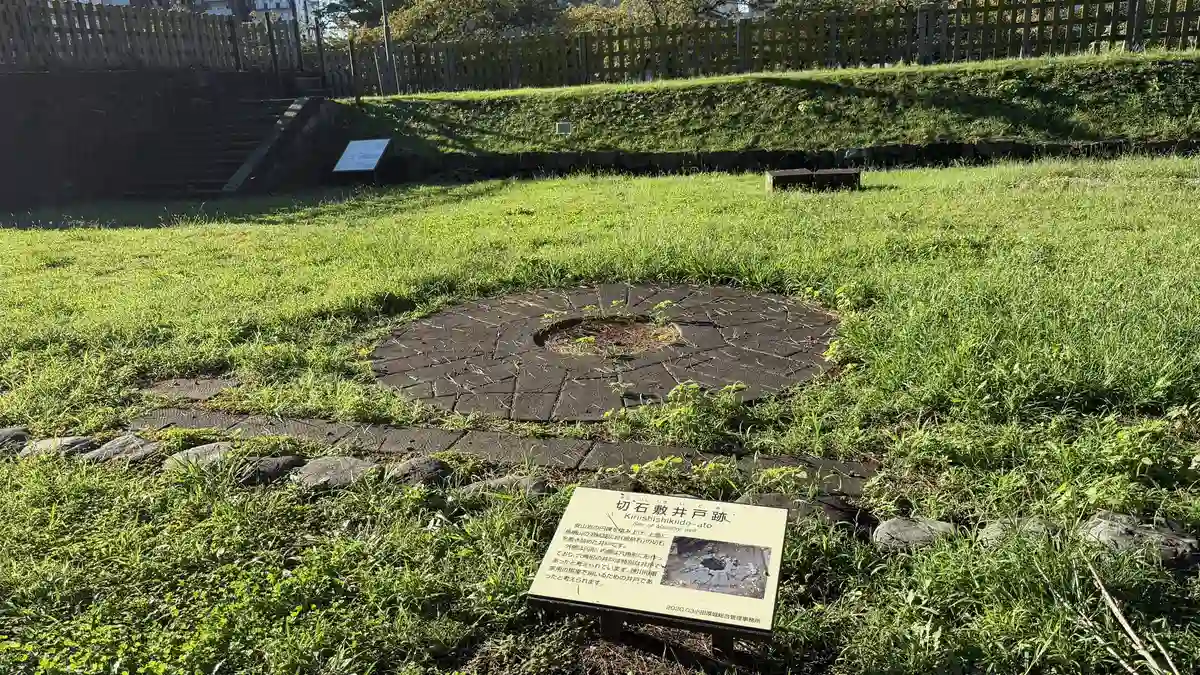
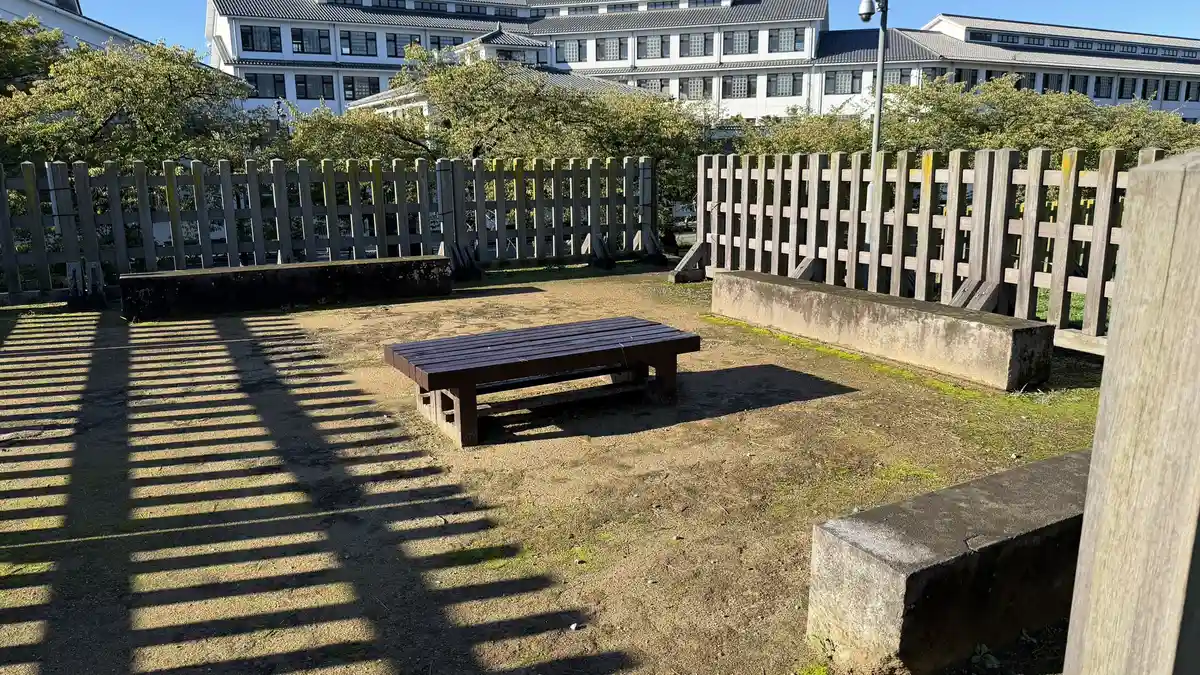
Inside the Umaya-kuruwa, just past the Umadashi Gate, a circle of cut stones in the lawn marks a well that was paved with dressed stone. It is easy to miss because it lies at your feet, but it sits right on the path to the Akagane Gate, with an information board beside it.
Twin-Turret Ruins in the Umaya-kuruwa
The base of a two-story turret, in the same enclosure as the well
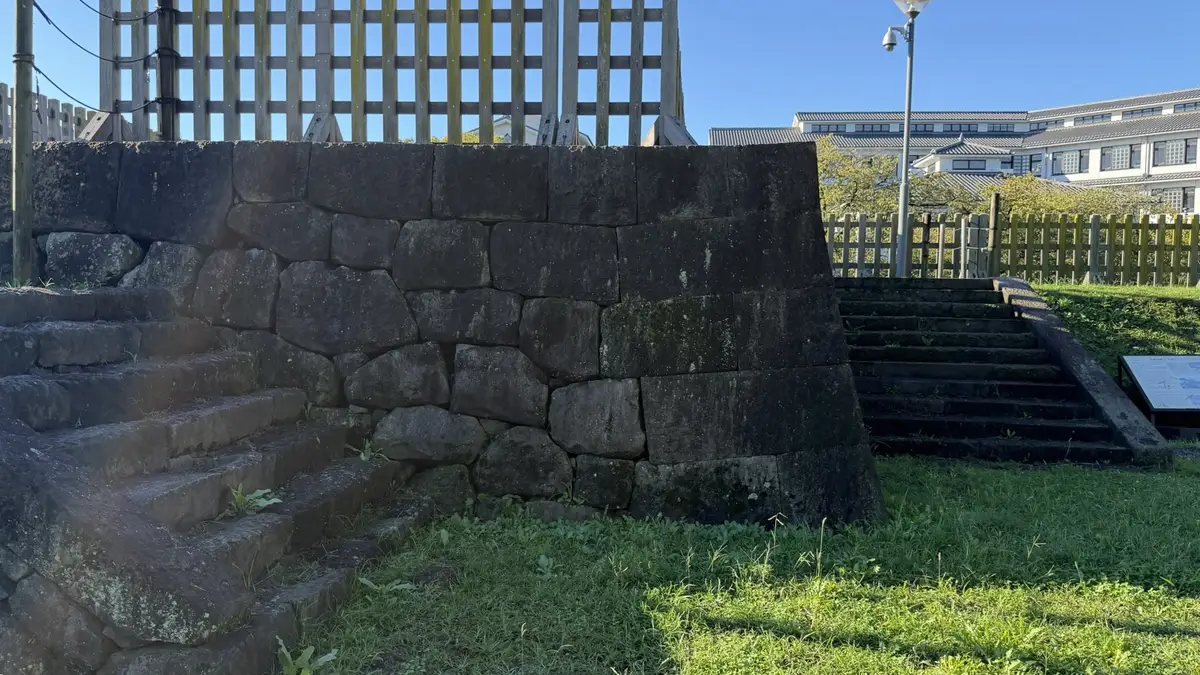
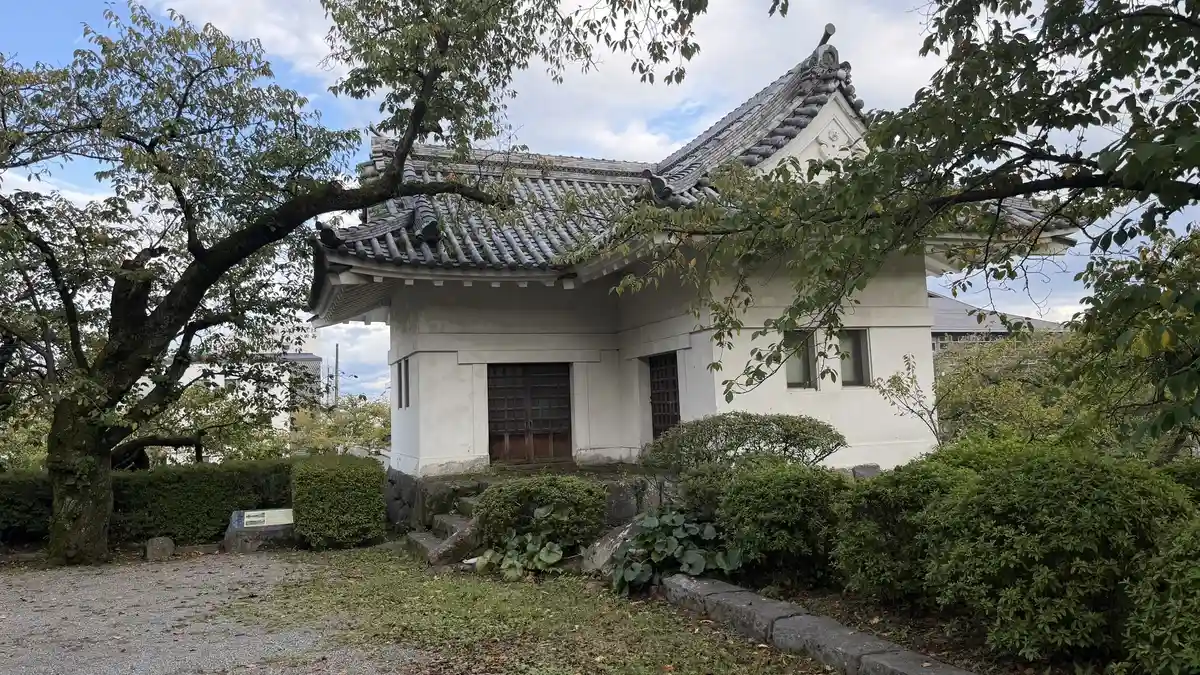
The Umaya-kuruwa holds more than the stone-paved well: it also has the remains of a two-story (nijū) turret. According to the on-site information, a turret of this kind once stood here in the Edo period; today only the stone base and the level ground above it remain. Like the well, it sits right on the approach path, so it is an easy stop on the way through.
Goyomai-kuruwa and the Honmaru Stone Walls
An enclosure where Hojo-era buildings and a garden are being excavated
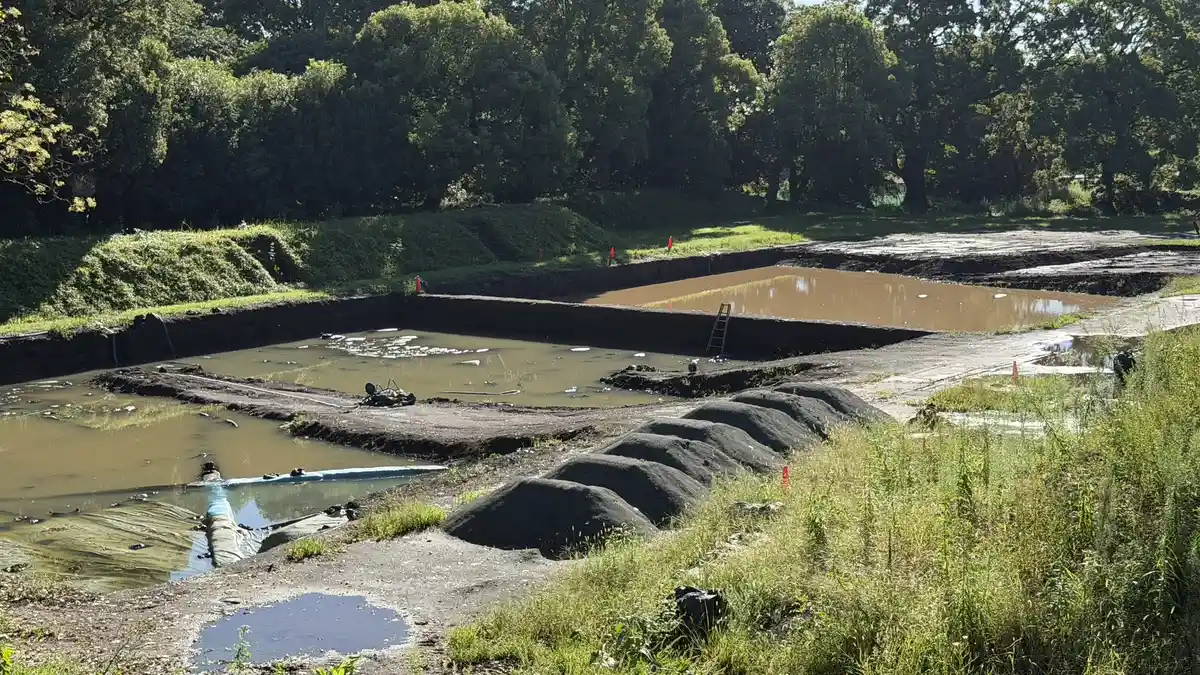
North of the keep, excavations in the Goyomai-kuruwa uncovered groups of buildings on stone foundations together with a garden from the age of warring states. The City of Odawara believes they are linked to the Hojo and describes them as a rare find with few parallels in Japan. After World War II the area was used as a baseball field and a parking lot, and restoration work has been under way since 2010. It was still in progress on our visit. You can look down on the excavated features from the edge of the enclosure, and see the whole area from the top of the keep.
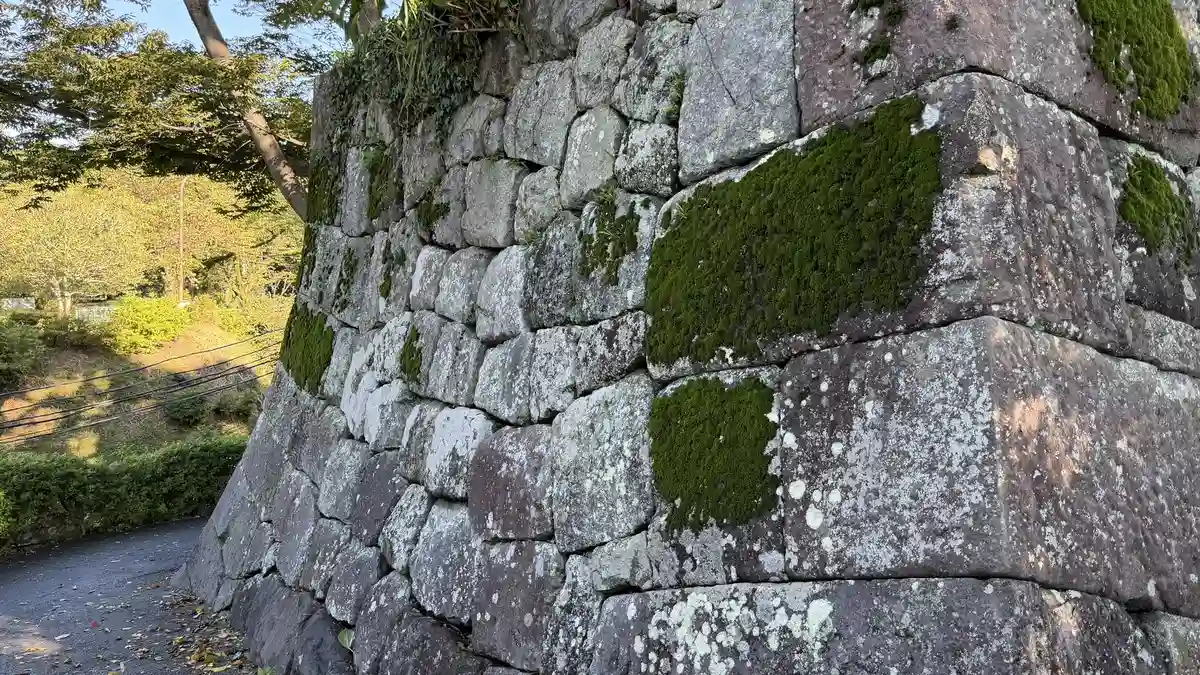
3. A surviving historic villa: Seikantei and lunch
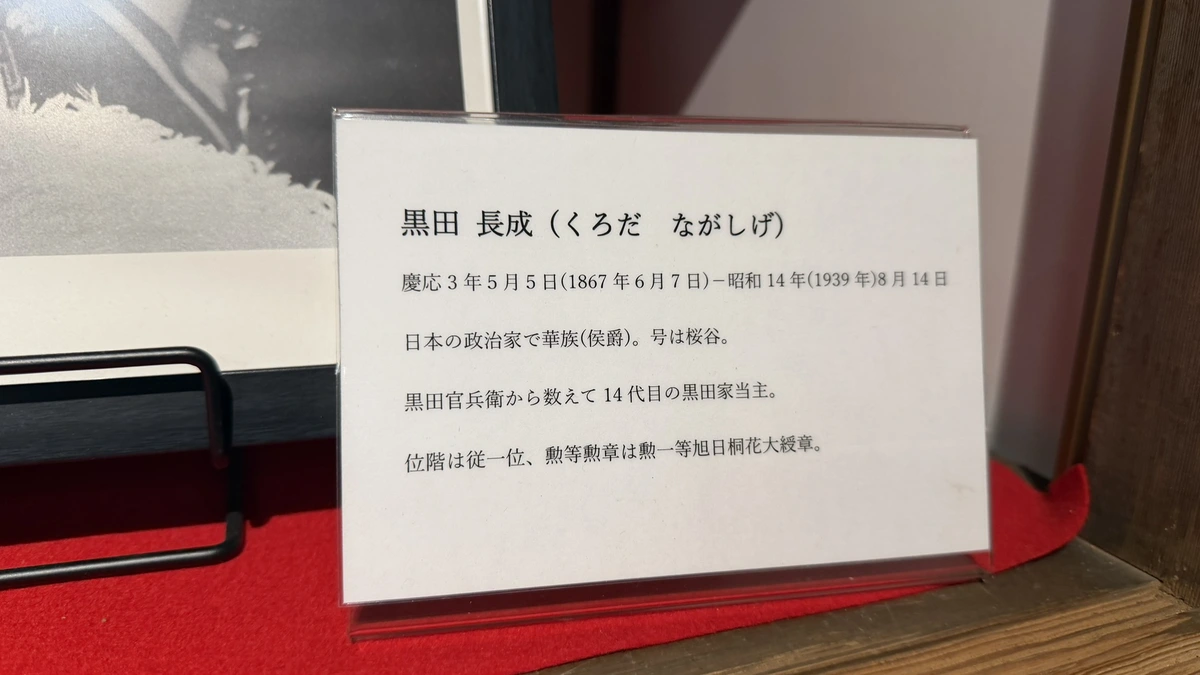
A walk south from the castle park and up a low hill brings you to Seikantei (清閑亭), a Japanese-style villa from the end of the Meiji period (1868–1912). It was built for Kuroda Nagashige, head of the Kuroda family. The family's most famous member is Kuroda Kanbei, the strategist who served Hideyoshi, and a label inside the villa describes Nagashige as the 14th head of the family counting from Kanbei (17th when counted from the family's earliest ancestors).
Seikantei (清閑亭), the former Kuroda Nagashige villa
Lunch in a Kuroda family villa built on one of the castle's earthen walls
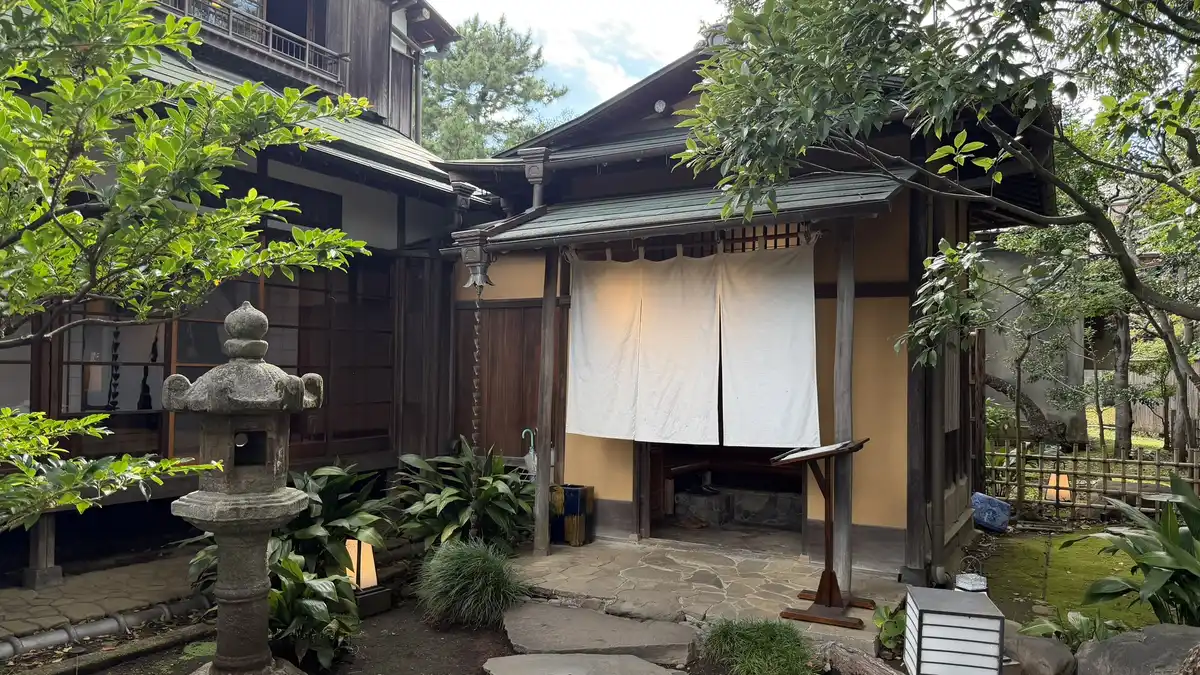
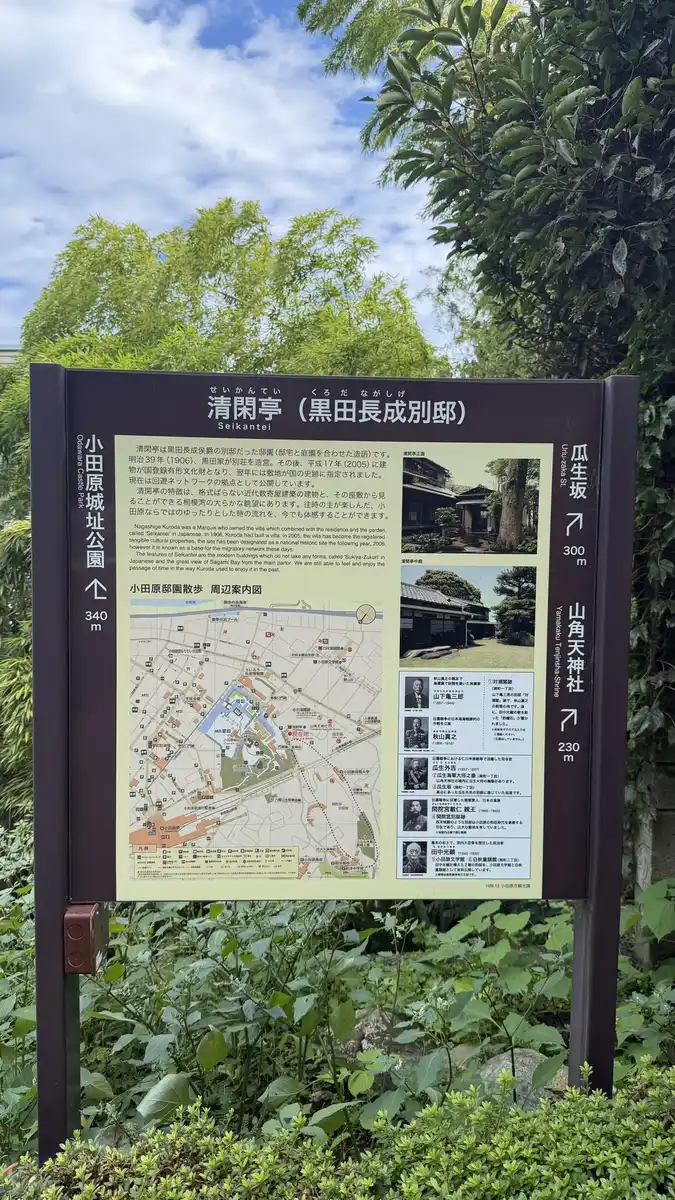
According to the sign outside, Seikantei was built in 1906 as a villa for Kuroda Nagashige (1867–1939); the City of Odawara dates it more broadly to the late Meiji or early Taisho period. The building was registered as a Tangible Cultural Property in 2005. Because it stands on part of the earthen rampart of the castle's outer Sannomaru enclosure, the grounds were designated a National Historic Site the following year. The villa later passed through the Asano family and a life insurance company, and the City of Odawara has owned it since 2008.
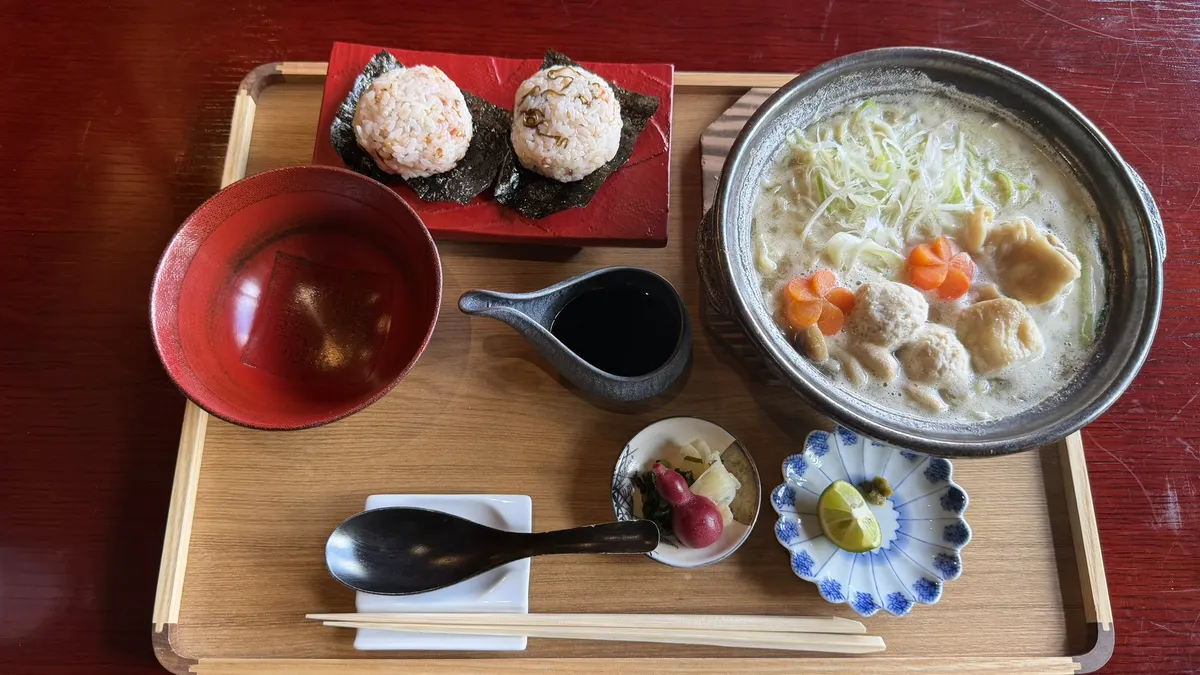
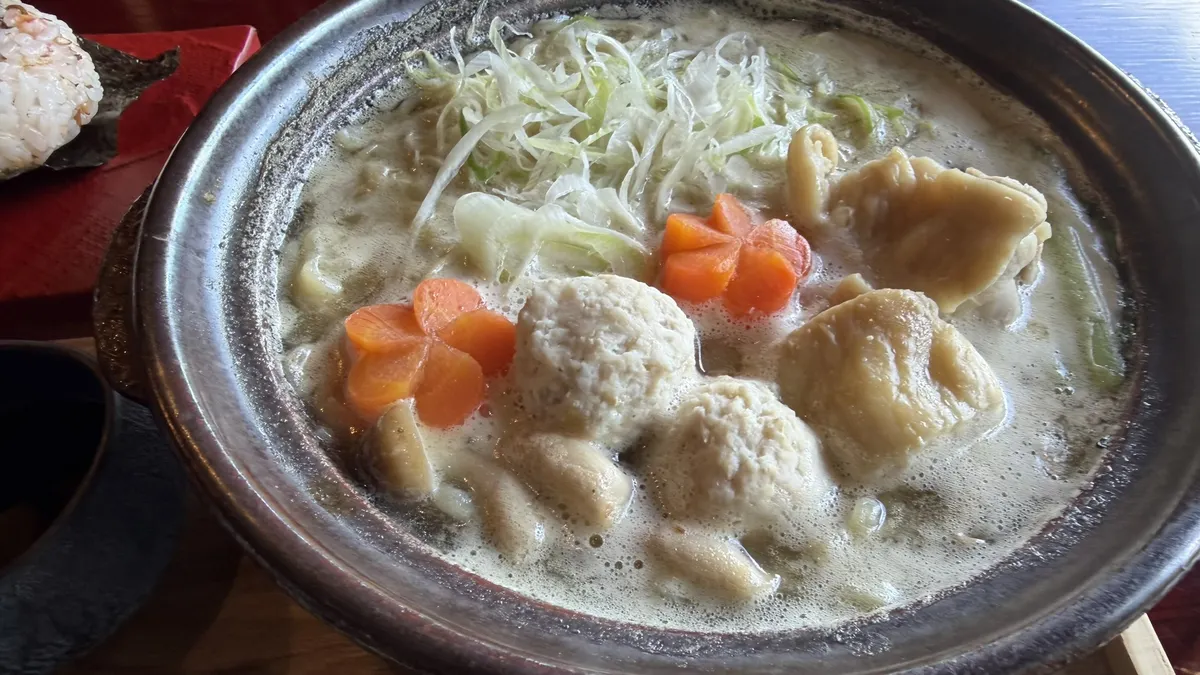
For lunch we ordered the mizutaki ramen (¥3,630). It comes in a clay pot with a milky chicken broth, chicken dumplings and vegetables, plus two rice balls and pickles. With a service charge and the ¥550 per-person building maintenance fee charged to diners, the bill came to about ¥4,500. We got a table without a reservation, but that was luck; if lunch here matters to you, book ahead.
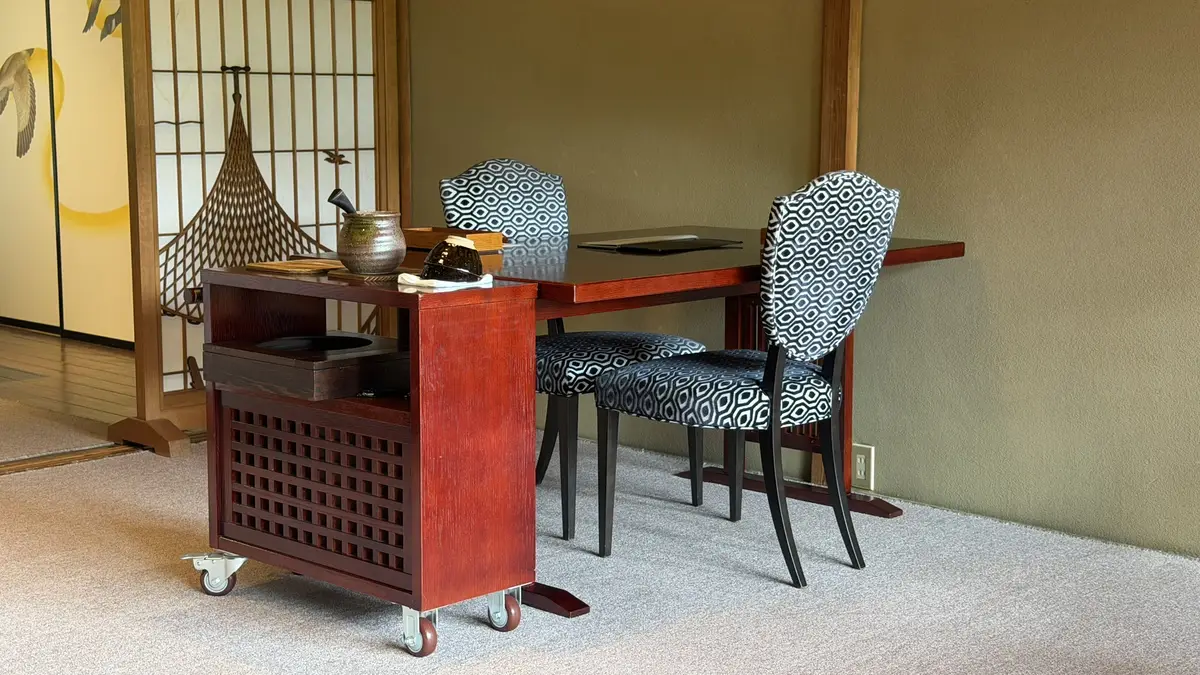
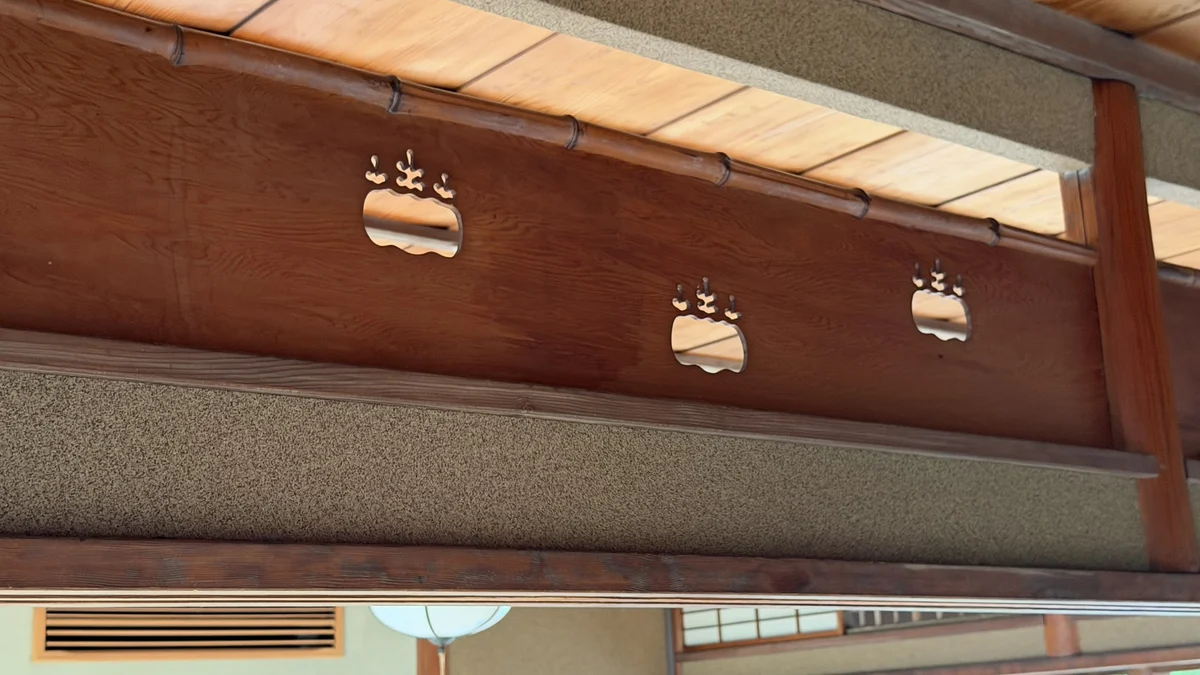
The short tour of the house after lunch was the highlight. According to the guide, the upper floor was added as the owner's private room during repairs after the 1923 earthquake badly damaged the house, and its decorative alcove faces west, toward Ishigakiyama, where Hideyoshi built his siege castle in 1590. The guide's explanation is that a descendant of Kanbei, who is said to have helped negotiate the surrender, built a room looking toward that hill. The transoms between the rooms are carved with the paulownia crest associated with Hideyoshi.
Highlights
- The paulownia crests carved in the upstairs transoms and the west-facing alcove
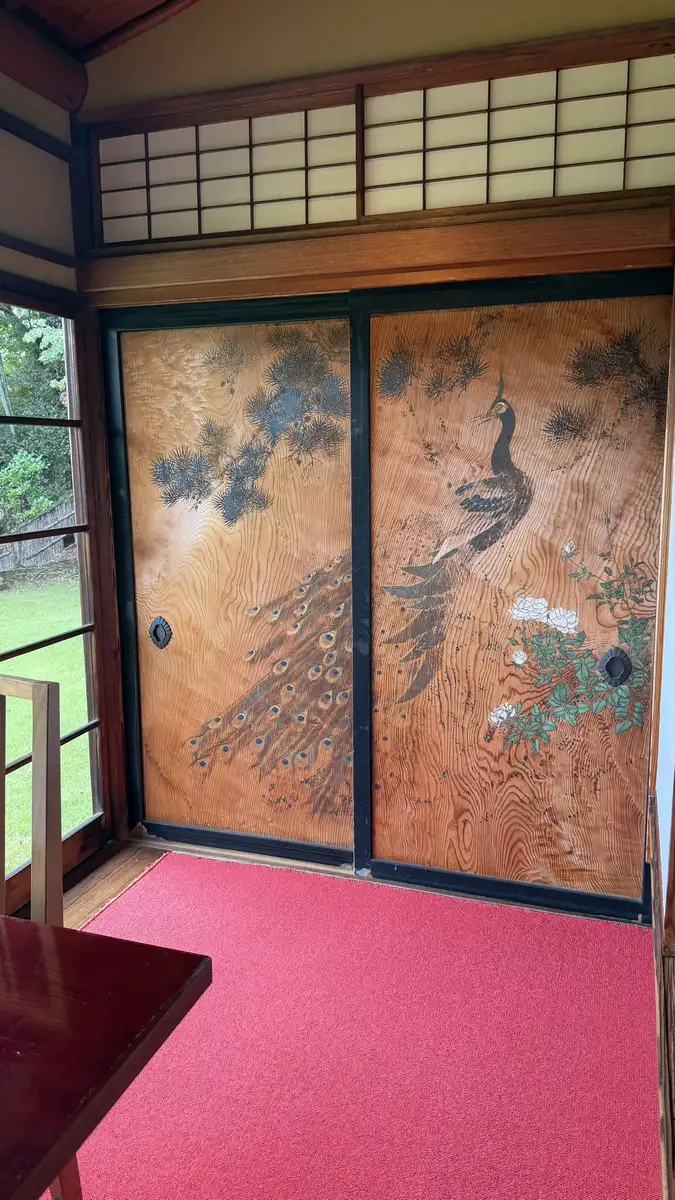
- Painted sliding doors, including one with peacocks
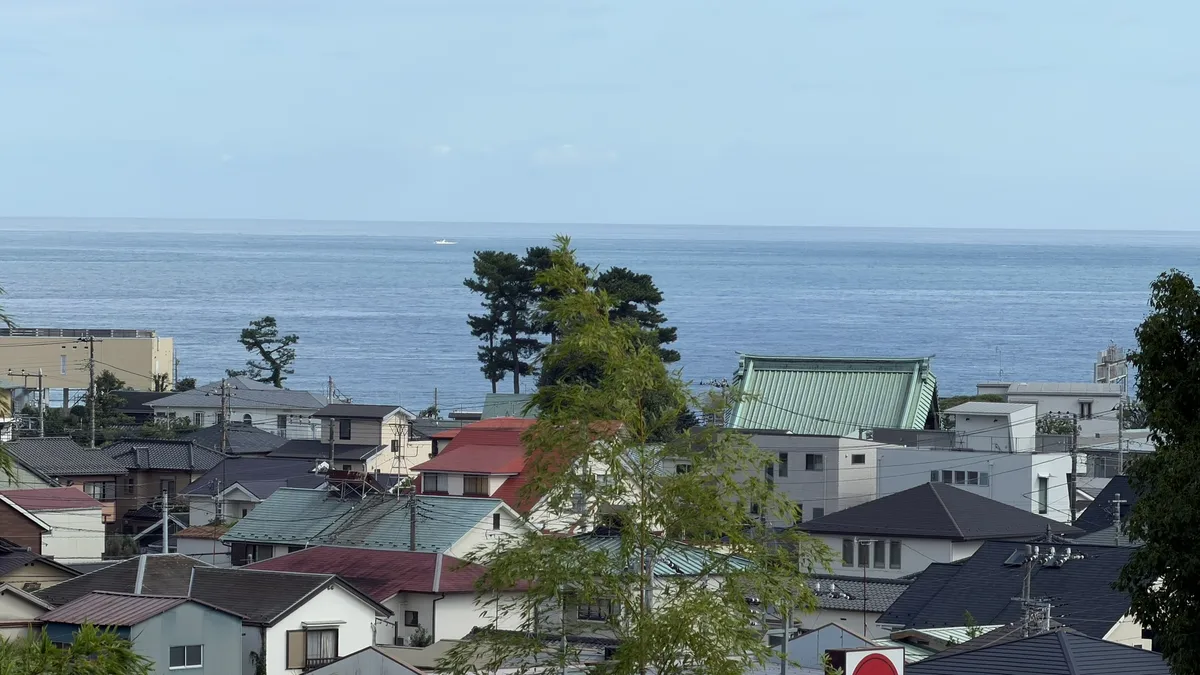
- Views of Sagami Bay from the windows
- The storehouse café, in a storehouse built when the Asano family owned the villa
Food and interior
Tap an image to enlarge
Visitor information
| Address | 1-5-73 Minamicho, Odawara (小田原市南町1-5-73) |
|---|---|
| Access | About 15 minutes on foot from Odawara Station (City of Odawara) |
| Lunch | 11:00–15:00 (last order 14:00) |
| Dinner | 17:00–21:00 (last order 19:00), reservation only. Lunch only on Sundays |
| Storehouse café | 11:00–17:00 |
| Closed | Check the calendar on the official website for current opening days |
| Sample price | Our visit (September 22, 2026): mizutaki ramen ¥3,630 (tax included), plus service charge and a ¥550 maintenance fee for diners |
| House tour | About 15 minutes, offered 11:00–16:00 (in Japanese on our visit) |
Map of Seikantei
Castle stamps (goshuin) and the 100 Castles stamp
A goshuin (御城印) is a paper castle stamp sold as a visit souvenir, much like the temple seals collected across Japan. At Odawara Castle they are sold at the ticket counter by the keep entrance. The one we bought is a paper-cut edition marking ten years since the keep's major 2016 renovation. Called "Autumn Colors Layered," it is the fourth in the anniversary series, and it was on sale when we visited on September 22, 2026. According to the official announcement, it went on sale September 1, 2026, limited to 1,000 copies at ¥1,000 (tax included), while supplies last. The two-layer design shows the keep framed by autumn leaves.
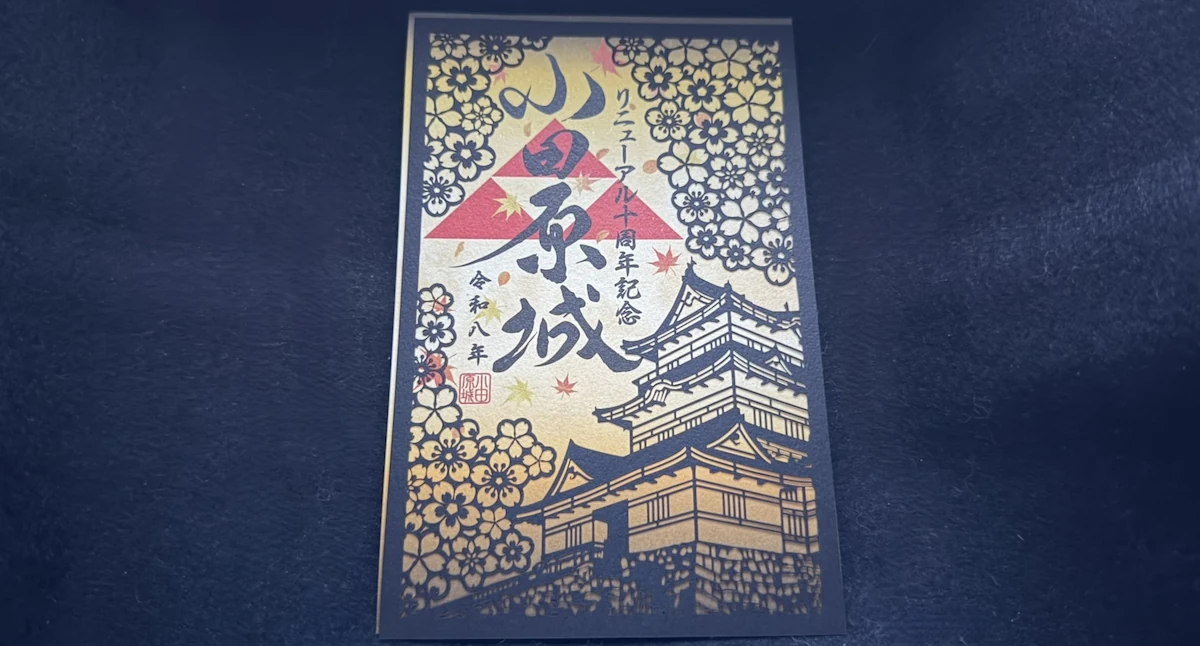
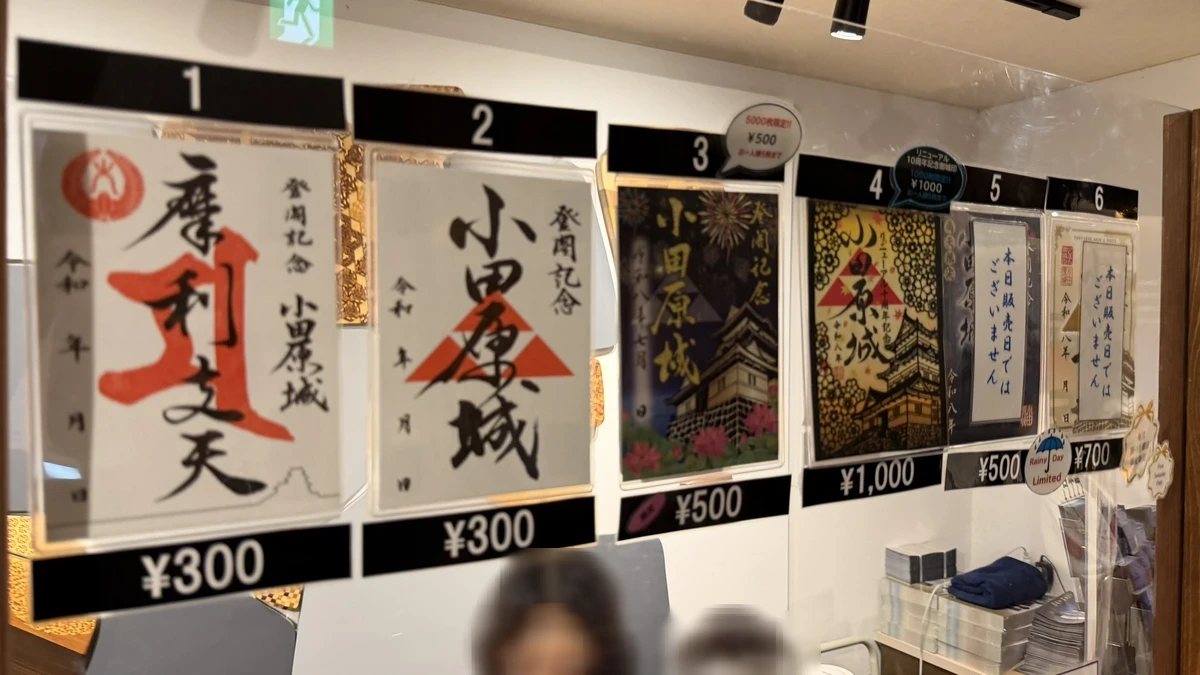
Six designs were on display at the counter on our visit: two standard stamps at ¥300 each, a stamp limited to 5,000 copies at ¥500, and this anniversary edition at ¥1,000. Two others (¥500, and a ¥700 "Rainy Day Limited" edition) were not on sale that day. Designs and prices change over time.
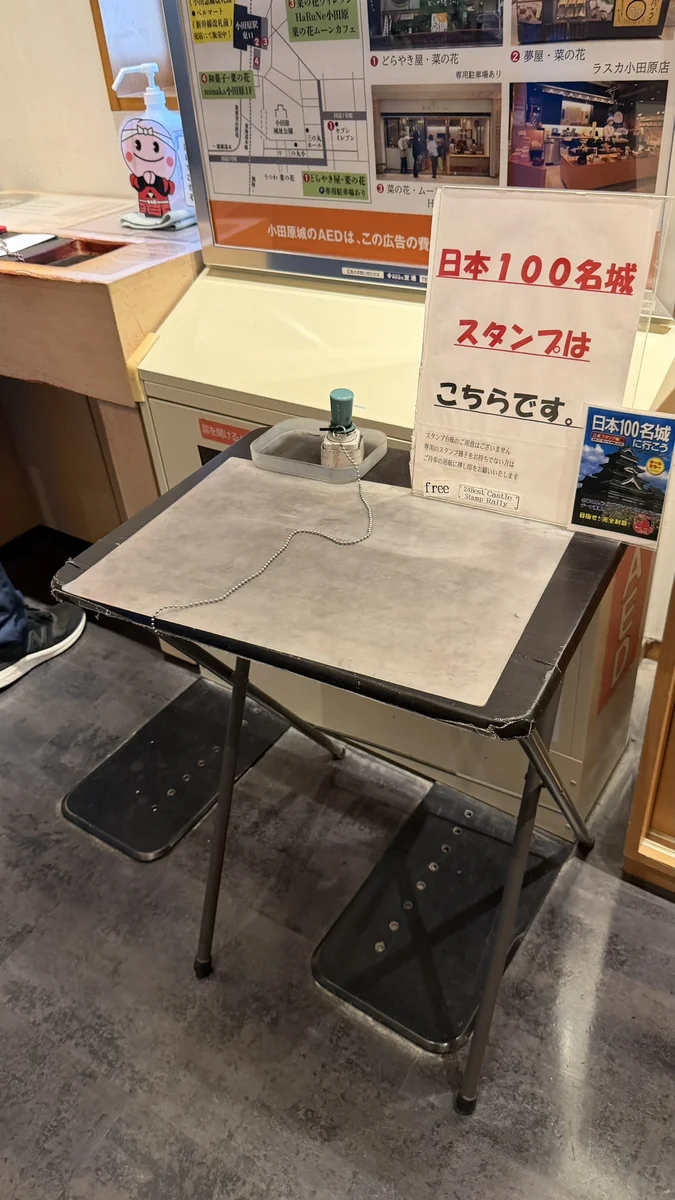
Odawara Castle is one of the "100 Fine Castles of Japan," and collectors can use the stamp for the official stamp book. It is on the left as you enter the keep, in the corner with leaflets. Look for the sign 「日本100名城スタンプ」.
Tap an image to enlarge
The Hojo castle beyond the park
Almost everything you see in the castle park recreates the Edo-period castle. The Hojo castle that Hideyoshi besieged survives mostly outside the park, as earthworks rather than stone. On Hachimanyama, the hill you can see from the top of the keep, the enclosures and earthen walls of the Hojo era remain, and farther along the hills run the huge dry moats of the sogamae that once encircled the town.
Walking both the park and the earthworks, what struck us most was how far the defenses reached. Today the area is quiet housing, and it is hard to imagine the effort that went into preparing it for war. The dry moats are also much deeper in person than photos suggest. Be ready for hills and heat: on our visit on September 22, 2026, daytime temperatures near 30°C made the walk tiring, so carry water and go early in the day.
For the route, opening hours and directions to walk the great trench and ramparts yourself, see our companion guide, Odawara Castle Earthworks: Walking the Hojo Dry Moats, Ramparts and Hachimanyama.
FAQ
No. The castle was abandoned in 1870 and most buildings were torn down. The present keep was rebuilt in reinforced concrete in 1960. Its exterior recreates the Edo-period tower, and the inside is a history museum. The three gates on the approach are also reconstructions.
Since March 1, 2026, standard adult prices are ¥1,000 for the keep (which includes the SAMURAI Museum), ¥300 for the SAMURAI Museum on its own and ¥500 for the NINJA Museum. Seeing all three costs ¥1,500 in total. Students and Odawara residents pay less.
On our visit we spent about 1.5 hours in the keep, 10 minutes in the SAMURAI Museum and 5 minutes inside the Akagane Gate. Allow around two hours to walk through the gates and see the keep and the SAMURAI Museum. If you plan to have lunch at Seikantei, budget time for the meal plus about a 15-minute house tour.
Yes. In the keep and the SAMURAI Museum, the main exhibits have captions in English, Chinese and Korean, although not every item is translated. The view from the observation deck needs no translation.
On the national holiday we visited (September 22, 2026), there was a long line of mostly families with children at around 11:50, with a likely wait of more than 30 minutes. Crowd levels vary by day, so it's a good idea to allow some flexibility in your schedule. The museum is closed for maintenance on Friday, October 2, 2026.
Dinner is by reservation only. We got a lunch table without booking, but to be sure of a seat, reserve in advance. Check the calendar on the official website for current opening days.
Goshuin, the paper castle stamps, are sold at the ticket counter by the keep entrance. On our visit on September 22, 2026, several designs were on sale, including a limited paper-cut edition at ¥1,000. The 100 Fine Castles of Japan stamp is on the left as you enter the keep, in the corner with leaflets.
An exhibit inside the keep ranks it 7th tallest in Japan. The keep alone is 27.2m tall (38.7m including its stone base and attached turrets), and according to travel outlet nippon.com, that makes it the tallest castle keep in eastern Japan.
If you're carrying a Hakone Freepass, you get ¥50 off the keep (¥20 off for elementary and junior high students), ¥20 off the Tokiwagimon SAMURAI Museum (¥10 off for students), and ¥30 off the NINJA Museum (¥10 off for students), according to the official Hakone Navi benefits listing. Check the official page for how to redeem it.
Yes, it is a practical pairing. Odawara Station is where the Hakone Tozan Railway toward Hakone begins, and the castle park is a 10-minute walk from the station. On our visit the keep took about 1.5 hours and the SAMURAI Museum about 10 minutes, so allow around two hours if you also walk through the gates. If you're using a Hakone Freepass, the Odakyu-line portion of the pass allows stopovers between your boarding station and Odawara, so you can get off, visit the castle, and continue to Hakone on the same pass. Paid coin lockers are available at the station if you'd rather not carry luggage around the castle grounds. If you only have time for the keep itself, walking along the street beside the railway tracks from the station is more direct than the official gate route.
Related Pages
☕ Support This Site
Following the Shogun is built on original fieldwork and on-site research.
If you found this guide useful, your support helps keep it going.

You can also support via QR code

comment