


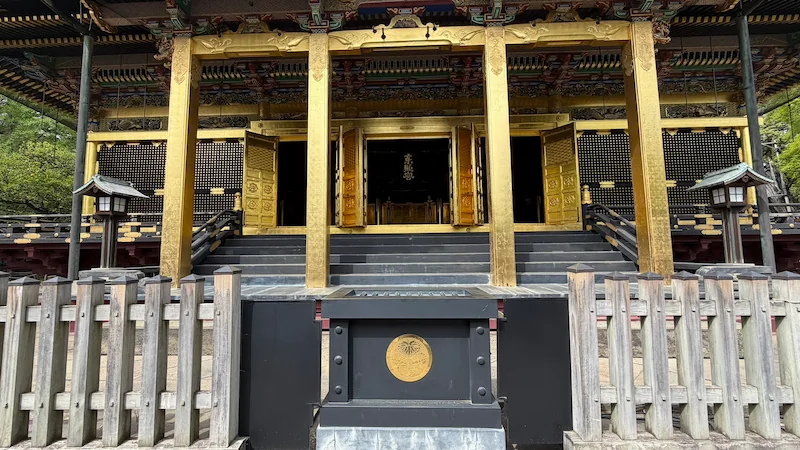
Ueno Toshogu Shrine “Kinshikiden” Special Door Opening
Beyond the Doors Usually Kept Closed
Ueno Toshogu Shrine's Kinshikiden, or Golden Hall, is usually displayed with its doors closed.
On This Page
Ueno Toshogu Shrine's Kinshikiden, or Golden Hall, is usually displayed with its doors closed. The exterior alone is impressive, but what lies inside can only be seen during the annual "Special Door Opening."
This page is a first-hand record of my visit to the Special Door Opening in April 2026. For those who could not attend, or for anyone wondering what can be seen beyond the doors, I have compiled as much detail as possible about the view inside, the sculptural details, and the practical things I noticed on site.
You will also find information that is hard to know without actually visiting, including admission fees, crowd conditions, and the best order for receiving a goshuin shrine seal — a hand-stamped and hand-written seal that many shrines and temples in Japan offer to visitors as a record of their visit.
Where Ueno Toshogu Is, and How to Get There
Ueno Toshogu Shrine (上野東照宮) stands inside Ueno Park (上野恩賗公園) in Taito City, in the eastern part of central Tokyo — the same park that is home to Ueno Zoo, the Tokyo National Museum, and Shinobazu Pond. If you are already planning to spend time in Ueno Park, the shrine is only a short walk from all of them, so there is no need to build a separate trip around it.
Three different stations serve the area, and it is worth knowing which is which before you arrive. JR Ueno Station (serving the Yamanote Line, Keihin-Tohoku Line, and other JR lines) and Tokyo Metro Ueno Station (Ginza Line, station number G16, and Hibiya Line, station number H18) sit in the same station complex, linked by underground passageways. Keisei Ueno Station — the terminal for the Keisei Skyliner express train from Narita Airport, a journey of about 41 minutes — is a separate station about a 4-minute walk away, not the same building as JR Ueno Station. From any of these three stations, the shrine itself is roughly a 10-minute walk through the park.
| Dates | Thursday, April 16 – Sunday, April 19, 2026 |
|---|---|
| Hours | 9:30 a.m. – 5:30 p.m. |
| Admission | Adults (junior high school age and above) ¥1,000 / Elementary school students ¥500 |
| Reservation | Not required (same-day admission only) |
| Interior entry | Not permitted (viewing from outside only) |
| Photography | Photos and videos are both allowed |
| Time needed | Kinshikiden only: 10–20 minutes / Entire shrine grounds: around 30 minutes |
| From Ueno Station | 10-minute walk from JR Ueno Station, Tokyo Metro Ueno Station (Ginza/Hibiya lines), or Keisei Ueno Station / inside Ueno Park |
| Nearest Shinkansen station | Tokyo Station, one JR stop away (see below). Ueno Station itself is served by the Tohoku, Joetsu, and Hokuriku Shinkansen, useful if you are arriving from Sendai, Niigata, or Nagano — but the Tokaido Shinkansen from Kyoto and Osaka stops only at Tokyo Station, not Ueno. |
| From Tokyo Station | About 15–20 minutes by JR line (Yamanote or Keihin-Tohoku), plus the 10-minute walk from Ueno Station. |
| From Kyoto Station | About 2 hours 10–15 minutes by Nozomi Shinkansen to Tokyo Station, then the JR line to Ueno. |
| From Shin-Osaka Station | About 2 hours 25–30 minutes by Nozomi Shinkansen to Tokyo Station, then the JR line to Ueno. |
| Difference from normal visits | Normally, the doors are closed and only the exterior can be viewed. During the Special Door Opening, the inner sanctuary, plaque, and carvings become visible. A separate admission fee is required. |
Shinkansen travel times are approximate ranges based on standard Nozomi timetables and will vary by train and time of day.
Who Was Enshrined Here, and Why Ueno Toshogu Exists
"Toshogu" (東照宮) is the name given to shrines that enshrine Tokugawa Ieyasu (1543–1616), the warlord who unified Japan after decades of civil war and founded the Tokugawa shogunate, the military government that ruled the country for the next two and a half centuries. After his death in 1616, Ieyasu was deified as a guardian deity, and Toshogu shrines dedicated to him were built across Japan. The most famous is Nikko Toshogu, about two hours north of Tokyo, but Ueno Toshogu was built much closer to Edo Castle, the shogunate's seat of power in what is now central Tokyo.
According to the shrine's own history and Taito City's cultural affairs records, Ueno Toshogu was founded in 1627 by the Buddhist priest Tenkai and the daimyo Todo Takatora, carrying out a request Ieyasu is said to have made shortly before his death. The building you see today dates from 1651, when the third shogun, Tokugawa Iemitsu, rebuilt it as a lavish shrine modeled on Nikko Toshogu. Kinshikiden, the Karamon Gate, and the sukibei fence wall surrounding the hall all date from this 1651 rebuilding and are designated Important Cultural Properties — Japan's tier of protected heritage just below National Treasure status. Kinshikiden itself is built in the gongen-zukuri style, in which the worship hall, an offering hall, and the inner sanctuary are connected under one continuous roof, a layout also used at Nikko Toshogu.
The Karamon Gate's dragon carvings are attributed to Hidari Jingoro, a semi-legendary Edo-period sculptor, and according to local legend, the dragons leave the gate every night to drink from nearby Shinobazu Pond.
What You Can See Only When the Doors Are Open
During a regular shrine visit, the doors of Kinshikiden remain closed. The view of the shrine building from the approach is already lavish, but no matter how close you get, you cannot tell what the interior looks like. The Special Door Opening is the one opportunity each year when that sense of "not knowing" is lifted.
I visited at 9:00 a.m. on a Saturday. Even before opening time, a line had already formed. The line moved more smoothly than expected, but the length of the goshuin shrine seal line was a surprise (see the on-site tips below).
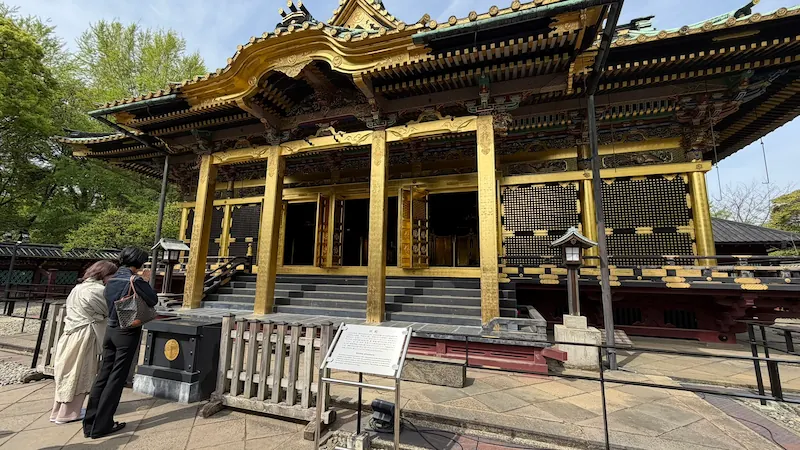
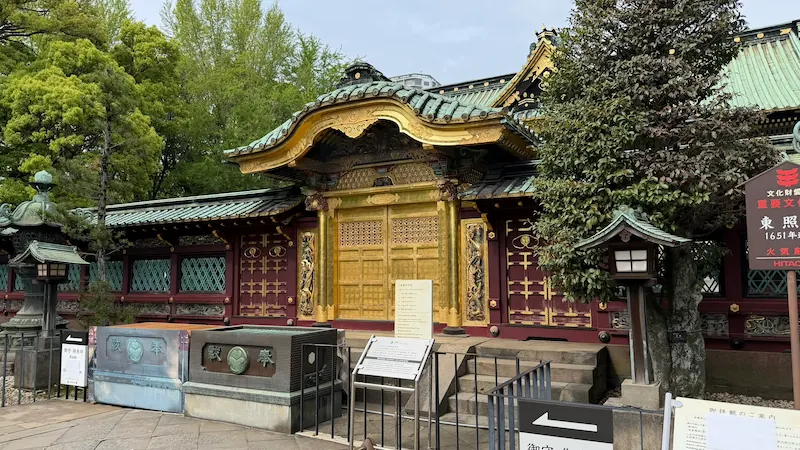
— From the visit notes, morning of Saturday, April 18, 2026
How the Interior Appears—A Sacred Distance You Cannot Cross
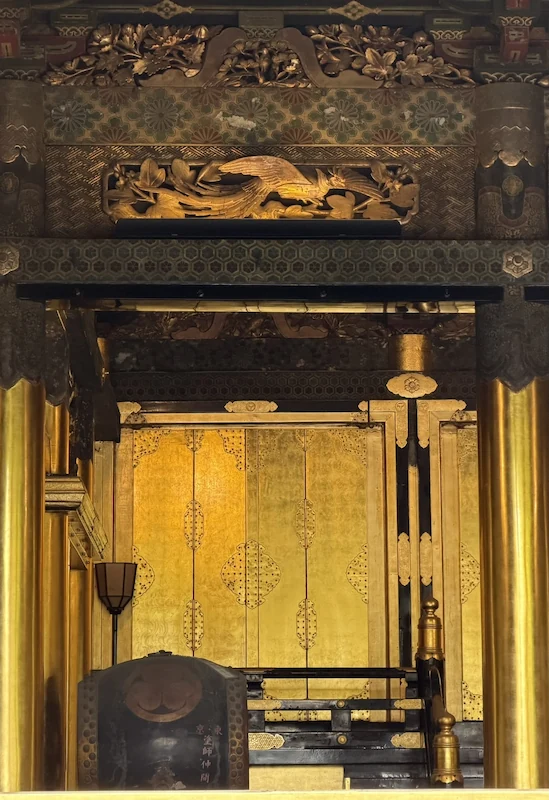
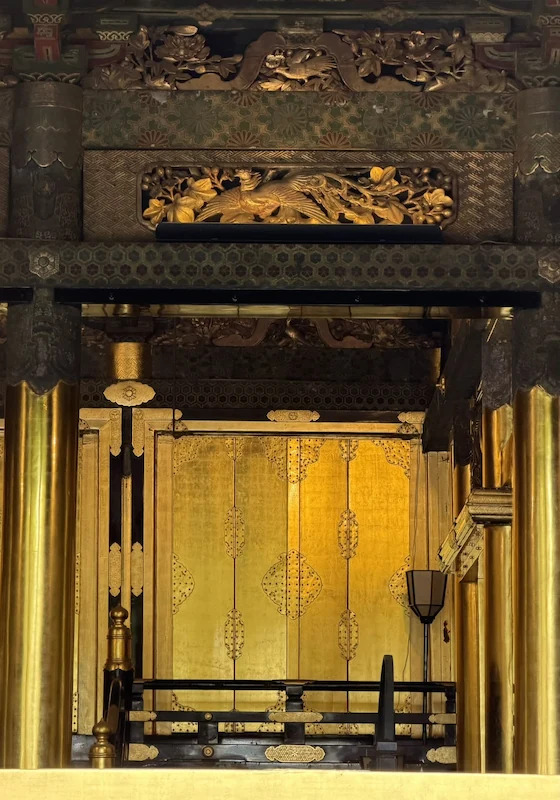
You cannot enter the interior. Instead, you look into the space through the opened doors. Rather than seeing everything at once, the experience involves shifting your position little by little and checking what angles and details become visible. The distance between you and the interior creates a feeling of sanctity, as if the space is not meant to reveal itself too easily.
The expression of the gold changes depending on how the light enters. The contrast between the bright gold outside and the quieter gold existing within the dim interior is especially striking on a sunny morning.
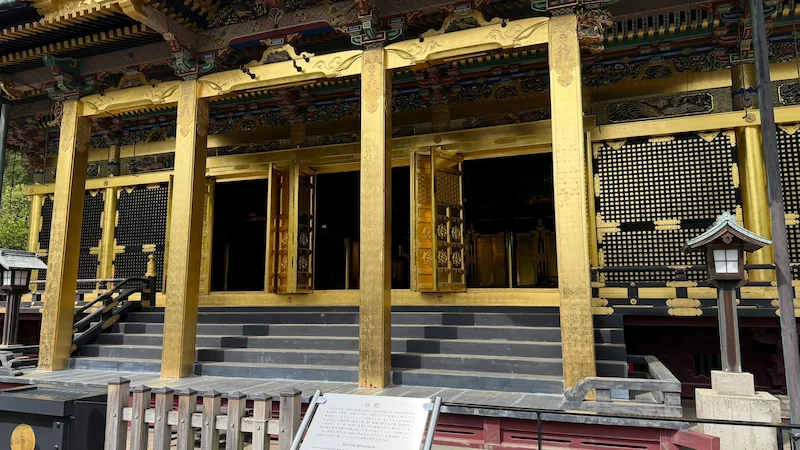
The Detail That Held My Gaze the Longest—The “Toshogu” Plaque
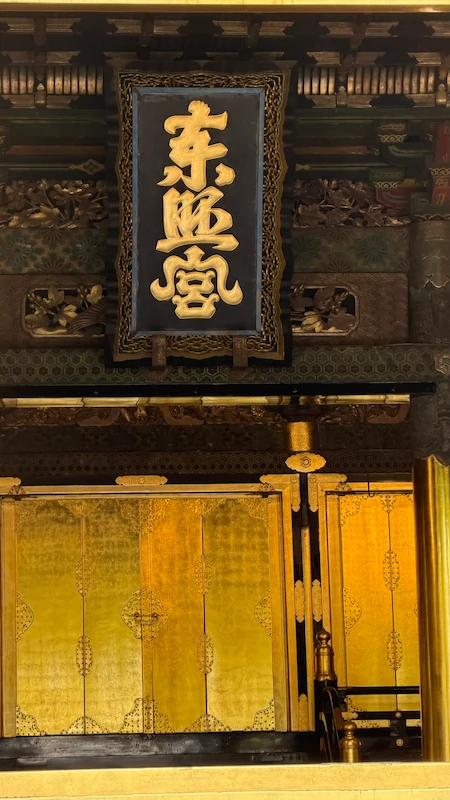
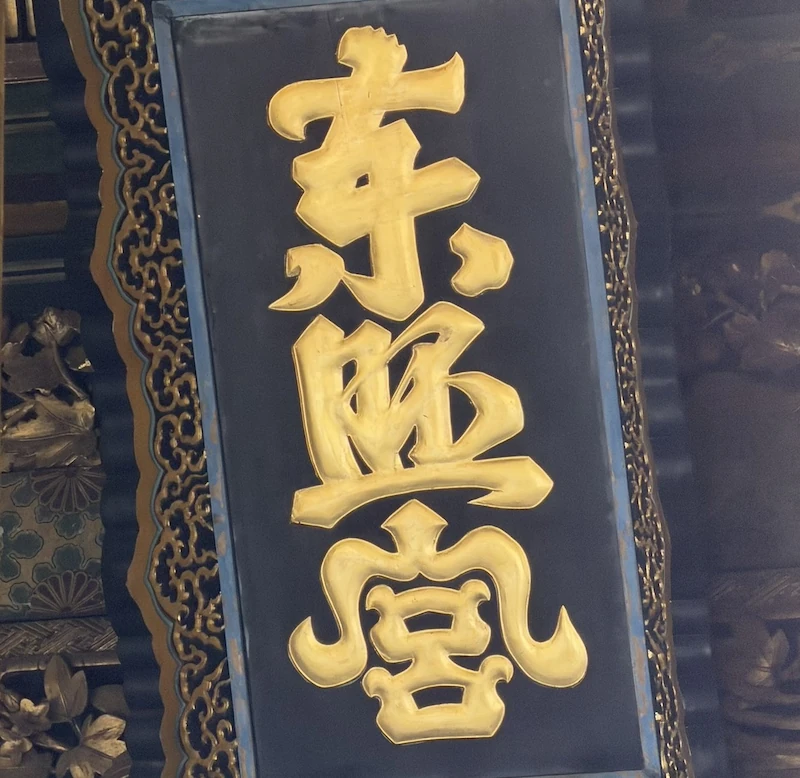
The most memorable element was the large plaque hanging from the ceiling in the center of the interior, with the characters "Toshogu" (東照宮) written in gold on a black background. It did not feel like a simple nameplate. It felt as if the name of the place itself had been engraved into the space. The size of the lettering, its central position, and the strength of the gold characters all combine to reach you clearly, even though you are not allowed to enter the interior.
Easy-to-Miss Sculptural Details—Dragons, Lions, and Phoenixes
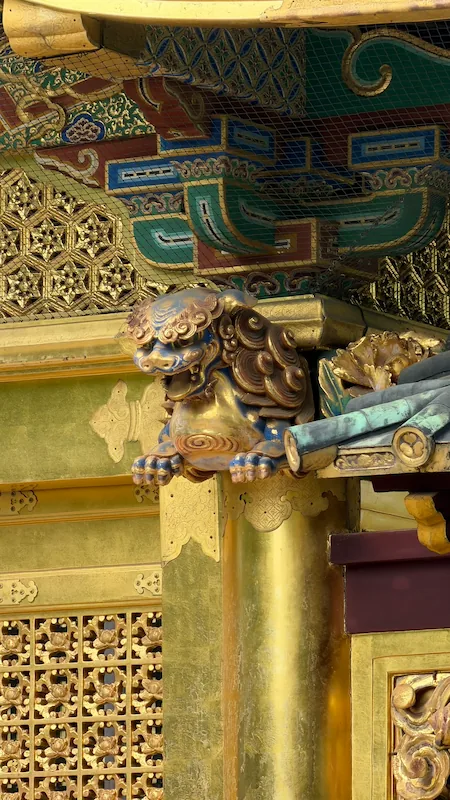
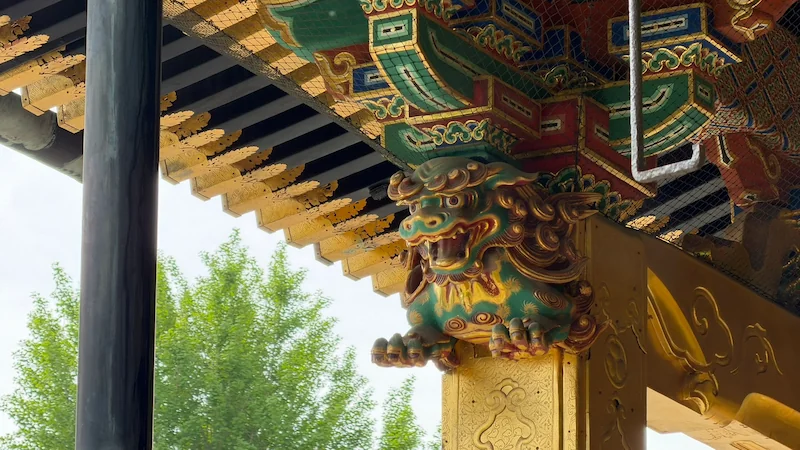
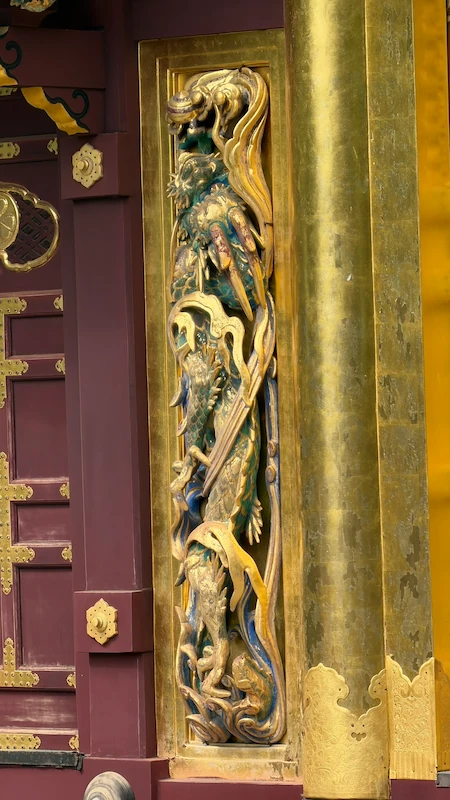
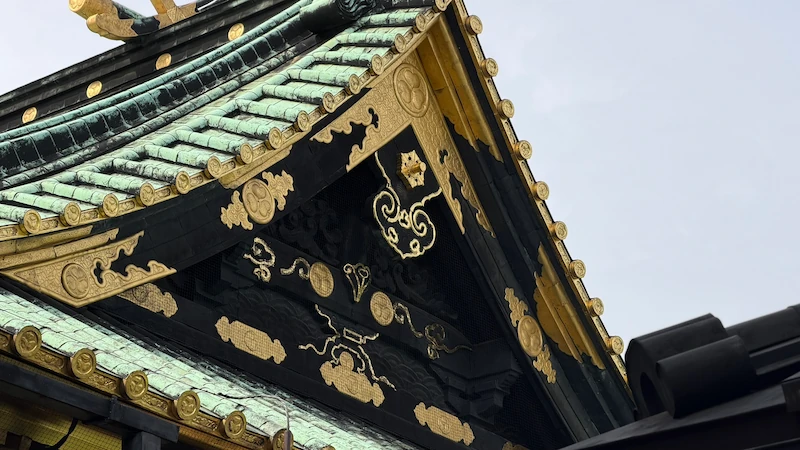
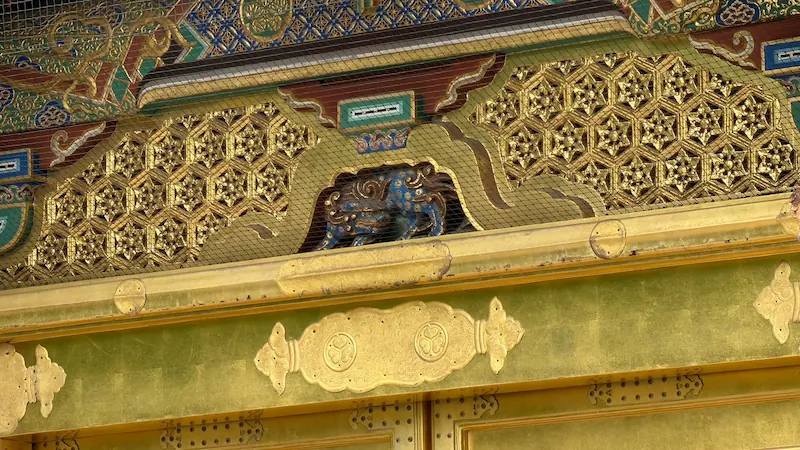
The appeal of Kinshikiden is not limited to its overall impression. Details that you only begin to notice up close are found throughout the building, including the shigami lion carvings above the pillars, the dragons flanking the Karamon Gate, and the phoenixes visible inside. These can be easy to miss with the naked eye, so a smartphone zoom or a pair of binoculars will help you appreciate them more deeply.
Tap to enlarge
Tap to enlarge
On the “Quietness” of the Gold
Because the name Kinshikiden means "Golden Hall," you might imagine the bright, showy gold of Kyoto's Kinkakuji. But the impression here is somewhat different. The gold at Ueno Toshogu emerges through its contrast with black, giving it weight, calm, and restraint. Rather than dazzling flamboyance, the color evokes sanctity, dignity, and stillness.
If anything, its atmosphere feels closer to Taiyuin, the mausoleum at Nikko. The expression of the gold changes significantly with the angle of light and the weather. On my visit, a sunny morning was when the gold stood out most clearly.
— Visitor impression (April 18, 2026)
Highlights Around the Shrine Grounds—The Sacred Tree and Stone Lantern Approach
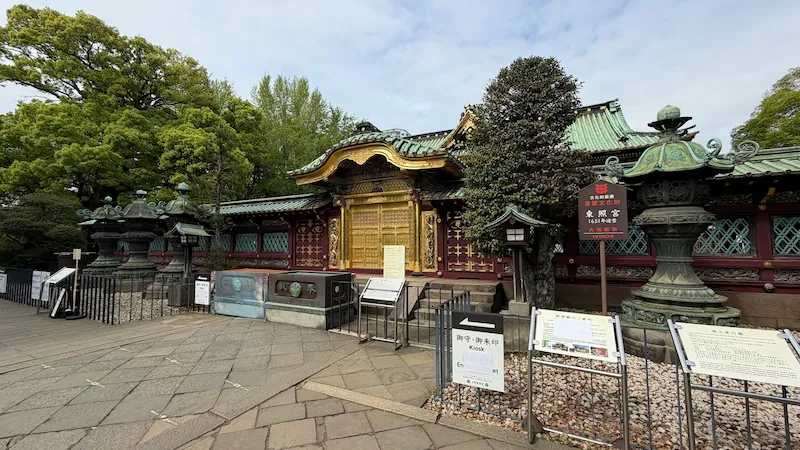
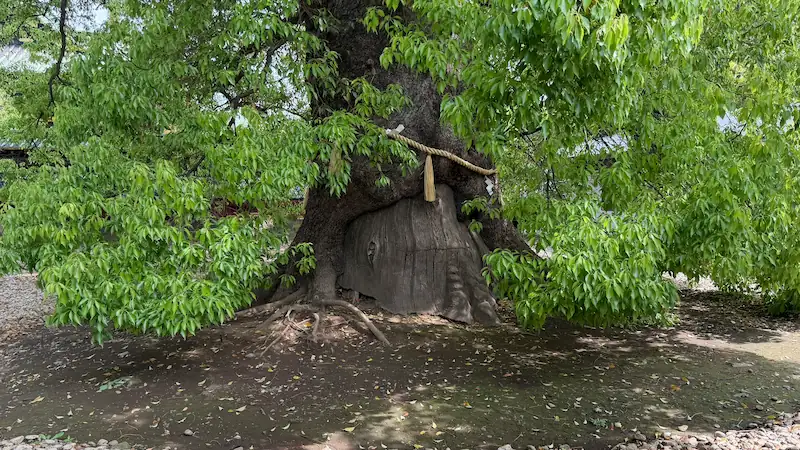
Kinshikiden is not the only highlight. Within the shrine grounds stands a sacred camphor tree that, according to the shrine's own account, predates the shrine's 1627 founding and is more than 600 years old, with a trunk over 8 meters around — reportedly the largest tree in Ueno Park. Wrapped with a shimenawa sacred rope (a braided straw rope used in Shinto tradition to mark sacred spaces or objects), this massive tree brings a sense of calm that contrasts beautifully with the golden shrine building. The stone lanterns and bronze lanterns lining the approach, and the sukibei fence wall's more than 250 carvings surrounding Kinshikiden, are also well worth seeing.
Tap to enlarge
Based on my visit on April 18, 2026. This is my own personal ranking, not an official recommendation from Ueno Toshogu Shrine.
The detail that held my gaze the longest in this entire visit. The size, central position, and gold lettering are only clearly visible while the doors are open.
Easy to miss with the naked eye, but a smartphone zoom or binoculars let you appreciate them fully without needing to get closer.
These are part of the regular shrine grounds and can be seen on any visit, not only during the Special Door Opening, so they can wait if your time is limited.
On-Site Information Sign for the Special Door Opening
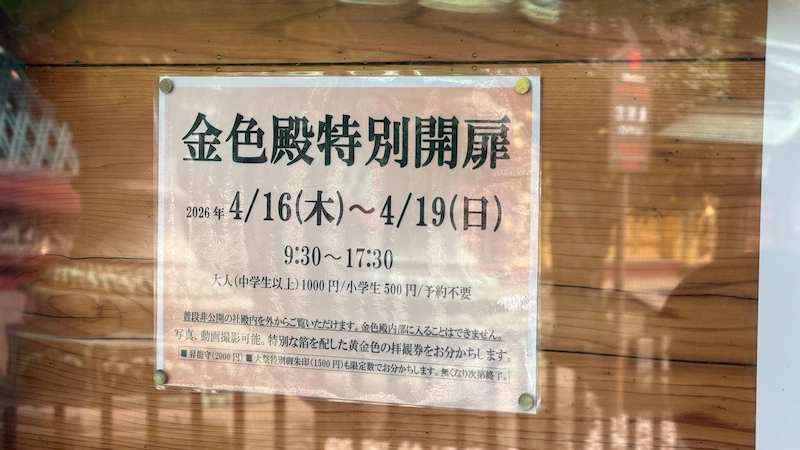
The information sign posted on site. It lists the admission fee, dates, and important notes
Useful Tips from the Visit
Facing the entrance, the goshuin shrine seal line is on the left and the admission line is on the right. The goshuin line is longer, and even experienced visitors can easily mistake one for the other. If you are unsure, asking a staff member is the safest option.
The admission line is short and moves quickly. If you enter first and then line up for a goshuin shrine seal afterward, the goshuin line may have grown longer in the meantime. In the morning, the most efficient order is "goshuin shrine seal → admission."
Because the interior carvings are some distance away, the details are hard to confirm with the naked eye. With a smartphone zoom or binoculars, you can see the phoenix carvings in the inner sanctuary and the lettering on the plaque much more clearly.
During the Special Door Opening, the locations for purchasing omamori charms and goshuin shrine seals, as well as the exit route, differ from normal. Please follow the guidance of staff on site.
Especially Recommended For
- Repeat visitors who have been to Ueno Toshogu Shrine before — the chance to see what is usually hidden becomes the main purpose of the visit
- Anyone interested in Tokugawa Ieyasu or Edo-period history
- Fans of Japanese architecture, including gongen-zukuri shrine architecture (the connected worship-hall-and-sanctuary style used here and at Nikko Toshogu) and Momoyama-style decorative design
- Travelers who value limited openings and special temple or shrine viewings
- International visitors interested in Japan's golden architecture and gold-covered shrine buildings
- Anyone visiting Ueno Park who wants to add an experience that feels different from an ordinary day out
First-time visitors will find it worthwhile as well. But for those who already know the exterior of Ueno Toshogu Shrine, the experience of seeing "those doors open" becomes a destination in itself.
Frequently Asked Questions
In 2026, it was held for four days from Thursday, April 16 to Sunday, April 19, from 9:30 a.m. to 5:30 p.m. It tends to be held around the same time each year, but please check the official website for details.
Admission is 1,000 yen for adults and junior high school students and above, and 500 yen for elementary school students. No reservation is required; tickets are available on the day.
Visitors cannot enter the interior. Instead, the doors are opened so that guests can view the inner sanctuary, plaque, and decorative details from outside. Even so, you can clearly see the golden interior space and the “Toshogu” plaque that are normally hidden from view.
If you arrive first thing in the morning, it is best to receive your goshuin shrine seal first. The admission line is shorter and moves quickly, while the goshuin line tends to get longer as the day goes on. Facing the entrance, the goshuin line is on the left and the admission line is on the right.
For Kinshikiden alone, allow about 10 to 20 minutes. If you also want to see the shrine grounds, including the Karamon Gate, stone lanterns, and sacred tree, setting aside around 30 minutes will give you enough time.
During regular visits, the shrine building's doors are closed and only the exterior can be viewed. During the Special Door Opening, the doors are opened, allowing visitors to see areas normally hidden from view, including the inner sanctuary, phoenix carvings, and the “Toshogu” plaque. However, visitors cannot enter the interior. A separate admission fee of 1,000 yen for adults is required.
Yes. Both shrines enshrine Tokugawa Ieyasu, the founder of the Tokugawa shogunate, and “Toshogu” is the name given to any shrine dedicated to him. Nikko Toshogu, about two hours north of Tokyo, is the most famous and elaborate. Ueno Toshogu was built closer to Edo Castle so that the shogunate's court in what is now Tokyo would have its own Toshogu shrine, and its current buildings date from 1651, modeled on Nikko's.
☕ Support This Site
Following the Shogun is built on original fieldwork and on-site research.
If you found this guide useful, your support helps keep it going.

You can also support via QR code


comment