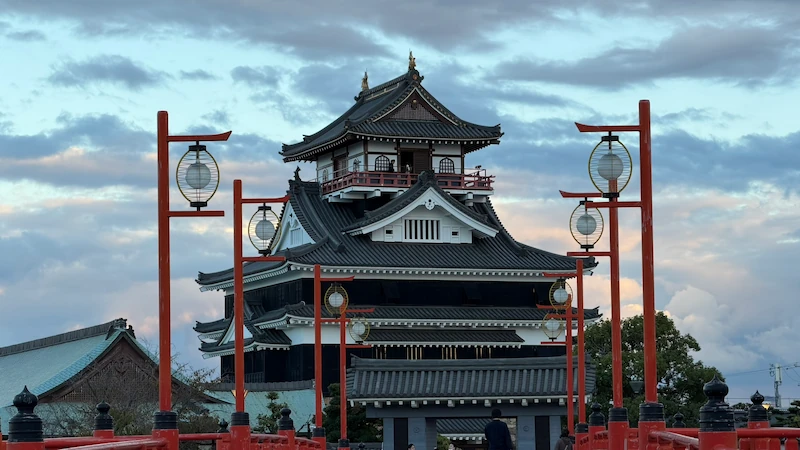
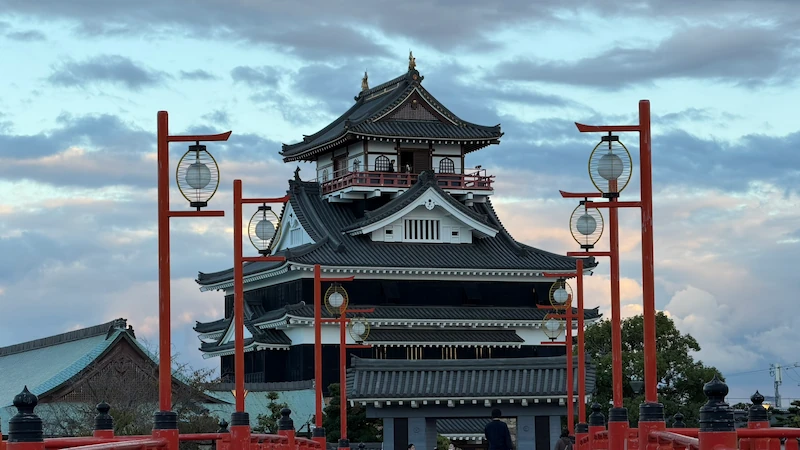
I visited Kiyosu on a cold winter morning, crossing the vermilion Ōte Bridge as mist lifted from the Gojō River. What struck me first was how small and walkable everything is — Kiyosu’s entire Sengoku circuit fits into 60 minutes on foot, yet this compact town was Oda Nobunaga’s base for the most consequential years of his rise.
Nobunaga moved here from Nagano Castle in 1555, unified Owari, and launched the Okehazama campaign from this ground. After his death at Honnō-ji, the Kiyosu Conference — held right here — decided Japan’s political future. Then in 1610, the entire town was relocated to Nagoya. What remains is layered, quiet, and far more interesting than a “half-day side trip” makes it sound.
This guide is based on a personal visit. It covers what’s worth your time, what to skip if you’re short on time, how to get here from Nagoya, and what each site actually looked like on the ground.
What you’ll get on this page:
- A 60–150 minute walking route linking Kiyosu Castle, the old castle-town riverbanks, Nobunaga Shrine, and Sōken-in — with time options for every schedule
- Two access options from Nagoya (JR fastest / Meitetsu scenic), plus station-to-site landmarks so you don’t lose time
- What’s actually on-site today (reconstructed facilities vs. surviving remains), and what each spot meant historically — based on a firsthand visit
- An explanation of the Kiyosu Conference: what happened here after Honnō-ji and why it shaped Japanese history
- A rain plan and a “short on time” plan
- FAQ: opening hours, admission fees, last entry, reservations, armor try-on, and family-friendly notes
【Two Ways to Write “Kiyosu(清須 or 清洲)” That Deepen the Story】
In this guide you will encounter two different Kanji spellings for “Kiyosu”: 清須 and 清洲. Historians typically use “清須” for the medieval and Sengoku periods, and “清洲” for the Edo period onward — after the Kiyosu Transfer (Kiyosu-goshi) relocated the entire town to Nagoya. These two spellings are quiet witnesses to the long history this land has walked through.
- Quick Overview: Why Kiyosu Matters in Nobunaga’s Story
- My Visit: On the Ground Notes (January 2026)
- How to Get to Kiyosu from Nagoya (JR vs Meitetsu)
- Walking Route: Choose Your Time Budget
- Spot Guide: What to See and What to Skip
- Koshōzan Sōken-in (Soken-in Temple) — The Charred Helmet
- Oda Nobunaga Shrine (within Old Kiyosu Castle Site Park)
- Kiyosu Furusato-no-Yakata (Local Heritage House) — Free Rest Stop with Castle Views
- Old Kiyosu Castle Stone Walls (Reconstructed Stonework at the Old Castle Site Park)
- Kiyosu Castle — The Visual Centerpiece (Reconstructed Main Keep)
- Kiyosu Park — Nobunaga & Nōhime Statues, and “Okehazama Hill”
- The Kiyosu Conference: What Happened Here After Honnō-ji
- Practical Info: Hours, Fees, and Seasonal Notes
- FAQ
- Warlord Profiles: Learn More About the People Behind Kiyosu
- Back to the Main Page
Quick Overview: Why Kiyosu Matters in Nobunaga’s Story
⭐ Overall Recommendation
Historical Value:[☆☆☆]
Visual Appeal:[☆☆☆]
Experience Value:[☆☆☆]
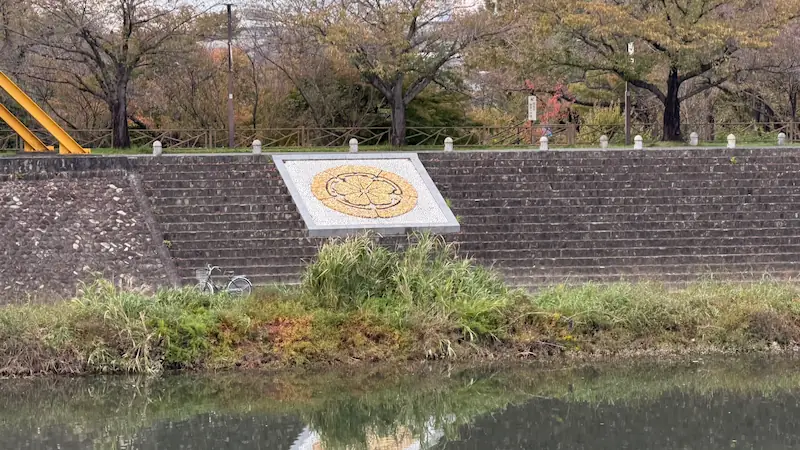
Though it lies right beside Nagoya, Kiyosu’s atmosphere still holds the stillness of a place after its “capital” has moved on. The lowland landscape shaped by the Gojō River, the Shinkawa, and the Shōnai River now feels like an easy stroll. In the Sengoku period, however, those same waters and roads were the town’s strength: a strategic node where people, goods, and information converged across the Owari Plain.

That is precisely why Oda Nobunaga’s move from Nagano Castle to Kiyosu — and his consolidation of Owari from this base (1555) — mattered so much. Kiyosu was never merely “a place with a castle.” It was a functioning town where highways, markets, and river transport interlocked. The Mino Road, positioned as a vital route linking Nagoya with the Nakasendō, made Kiyosu’s land-and-water advantages a critical engine for Nobunaga’s rise.
After the Honnō-ji Incident, the “Kiyosu Conference” to negotiate succession and territorial division fixed Kiyosu in memory as a place where the nation’s direction was debated and decided. Then, in the early Edo period, the “Kiyosu Transfer” moved the very heart of Owari from Kiyosu to Nagoya — temples, neighborhoods, and civic life shifting away. Kiyosu was left with the outline of its former prosperity. Stand in the breeze along the Gojō River today and you can feel how Sengoku clamor and post-relocation quietness overlap within the same view.
Panorama
| Origins / Founding | Early 15th century (Kiyosu Castle built in 1405; a castle town takes shape) |
|---|---|
| Founder | Traditionally attributed to Shiba Yoshishige (Owari’s military governor) |
| Structure / Character | A castle town and later post-town sustained by river systems (Gojō River, Shinkawa, etc.) and an overland highway network |
| Major Changes / Preservation | Early 17th century: urban functions transferred to Nagoya through the “Kiyosu Transfer” / Kiyosu Park opened in 1922 and renewed in 1999 |
| What Remains Today | Riverside walking routes and historic parks preserve the town’s memory |
| Decline / Loss | Through the “Kiyosu Transfer,” the central districts, temples and shrines, and merchant quarters moved to Nagoya |
| Heritage Designations | Kaigarayama Shell Midden (National Historic Site) / Asahi Site artifacts (Important Cultural Property of Japan) |
| Notes | In spring, cherry blossoms along the Gojō River form a celebrated “corridor.” Few areas let you touch both Sengoku history and ancient history (the Asahi Site) in a single walk |
🗺 Address: Around Kiyosu, Kiyosu City, Aichi Prefecture, Japan
Kiyosu Castle hours (typical)
- Keep: 9:00–16:30 (last entry 16:00)
- Adjacent culture hall: usually open until 17:00
- Closed: typically Mondays (or the following weekday when Monday is a holiday). During cherry-blossom season and Golden Week, special opening patterns may apply
- Admission fee: The reconstructed keep charges an entry fee. Kiyosu Park and the old castle site park are free. Check the official Kiyosu City tourism site for current pricing before visiting.
⏳ Suggested Time
- 60 minutes: Kiyosu Castle + riverside photo stop + quick pass through Kiyosu Park
- 90 minutes: add Old Kiyosu Castle Site Park (stonework + Nobunaga shrine area)
- 120–150 minutes: add a longer riverside walk and a rest stop at Kiyosu Furusato-no-Yakata
📍 Highlights
- Riverside scenery along the Gojō River: Walk the bank and the “skeleton” of the old castle town gradually reveals itself.
- The old highway (Mino Road) and the feel of a post town: Following the route that connected Nagoya and the Nakasendō makes it clear why Kiyosu was once a destination, not merely a pass-through.
- Seasonal tip: During cherry blossom season, events such as the “Kiyosu Castle Sakura Festival” are held across the river, with lantern-lit night blossoms reflected on the water.
Weather and seasonal notes
- Rain: riverside paths can be slick; prioritize indoor time at Kiyosu Castle first, then short outdoor hops between parks
- Winter/early sunset: do outdoor photos earlier and keep the museum portion for the coldest hour
- Event days: cherry-blossom periods and festival days can change opening patterns and crowd flow — arrive earlier than usual
📌 Trivia
- A surprising historical layer: Kiyosu’s story isn’t only Sengoku drama. It also embraces the Asahi Site — an ancient counterpart to an “old capital,” with nationally protected remains reaching back to the Yayoi period.
- What locals know: The “Kiyosu Transfer” was carried out together with the planned, grid-like construction of Nagoya’s castle town — meaning Kiyosu helped give birth to the urban DNA of Nagoya itself.
- Famous names, one place: Nobunaga’s move here (1555) made Kiyosu the starting line of his national rise, and after Honnō-ji the “Kiyosu Conference” debated succession and territorial division.
My Visit: On the Ground Notes (January 2026)
I arrived at Kiyosu Station on the JR Tokaido Line on a weekday morning in January. The walk from the station to Sōken-in took about 6 minutes — straightforward and well-signed in English. The temple grounds were quiet, almost meditative; I was the only non-local visitor that morning.
The most disorienting thing about Kiyosu: the castle you see from the Ōte Bridge is not the Sengoku original. It’s a 1989 reconstruction, and the original site isn’t directly beneath it. On the ground, this reads as slightly confusing until you visit the Old Castle Site Park and the reconstructed stone walls — those are positioned closer to where the honmaru actually stood. The explanatory boards at the park do a reasonable job of bridging the gap, but having this guide in hand first will save you confusion.
Navigational note: if you’re coming from Shin-Kiyosu Station (Meitetsu), head toward the river first — the Gojō River approach is actually the more scenic entry into the site, and you’ll hit the Nobunaga/Nōhime statues at Kiyosu Park before reaching the castle. The JR approach from Kiyosu Station puts you near Sōken-in first, which makes logical sense for the route described below.
Crowds: very manageable on weekdays in winter. Cherry-blossom season (late March to early April) and June 2 (Nobunaga memorial festival) will be significantly busier. The castle interior was uncrowded enough that I could spend 30 minutes on each floor without feeling rushed.
One practical tip almost no guide mentions: the panorama view from the castle’s fourth floor is better in the morning, when the sun is behind you to the east. By afternoon, you’re shooting into the light toward Nagoya Station’s towers.
How to Get to Kiyosu from Nagoya (JR vs Meitetsu)
Option A — JR Tokaido Main Line to Kiyosu Station (Fastest)
From Nagoya Station, take the JR Tokaido Main Line toward Ogaki. Kiyosu Station is two stops away (approx. 4–6 minutes). From Kiyosu Station, Sōken-in is about a 6-minute walk (0.45 km), and the castle area is roughly 20–25 minutes on foot.
Best for: Visitors who want to start at Sōken-in and walk the route in order (Sōken-in → Nobunaga Shrine → Furusato-no-Yakata → Stone Walls → Kiyosu Castle → Kiyosu Park).
Option B — Meitetsu Nagoya Main Line to Shin-Kiyosu Station (Scenic)
From Meitetsu Nagoya Station, take the Nagoya Main Line to Shin-Kiyosu Station (approx. 10 minutes). From Shin-Kiyosu Station, head toward the Gojō River — you’ll arrive near Kiyosu Park and the Nobunaga/Nōhime statues first.
Best for: Visitors who prefer to see the castle from the river approach first, crossing the vermilion Ōte Bridge with the keep in view.
Walking approach (pick one)
- Fastest: Station → Ōte Bridge / castle first, parks afterward
- Scenic: Start at the Gojō River bank, then cross the vermilion Ōte Bridge into the castle complex
Walking Route: Choose Your Time Budget
60-Minute Core Route (From JR Kiyosu Station)
Kiyosu Castle → Ōte Bridge photo stop → Kiyosu Park (statues + short riverside walk)
- Start at Kiyosu Castle (enter via the Ōte Bridge from the park side)
- Spend 30–40 minutes inside the reconstructed keep (floors 1–4)
- Cross back over the Ōte Bridge and walk 5 minutes to Kiyosu Park
- See the Nobunaga and Nōhime statues, then head back to the station
90-Minute Route (Adds the Old Castle Site Feel)
Add: Old Kiyosu Castle Site Park (reconstructed stonework display + Nobunaga Shrine area)
- Follow the 60-minute route above
- After the castle, walk 2 minutes to the Old Kiyosu Castle Stone Walls display
- Continue 1 minute to Kiyosu Furusato-no-Yakata (rest stop, castle views from the bridge)
- Then walk through Old Kiyosu Castle Site Park to the Oda Nobunaga Shrine
120–150 Minute Full Route (Comfortable Pace)
Add: Kiyosu Furusato-no-Yakata for a break, extended riverside walk, and Sōken-in (if confirmed in advance)
- If adding Sōken-in: start there first (6 min from JR Kiyosu Station), then follow the route toward the castle area
- Sōken-in → Nobunaga Shrine (20-min walk / 1.5 km) → Furusato-no-Yakata (1 min) → Stone Walls (1 min) → Kiyosu Castle → Kiyosu Park
- Take breaks at Furusato-no-Yakata and the park riverside benches
- Note: Sōken-in visits may require advance contact with the temple. Treat it as optional unless confirmed.
Spot Guide: What to See and What to Skip
Koshōzan Sōken-in (Soken-in Temple) — The Charred Helmet
⭐ Overall Recommendation
Historical Value:[☆☆☆]
Visual Appeal:[☆☆]
Experience Value:[☆☆]

Oda Nobunaga is the warlord whose body was never found at Honnō-ji — and it is that unsettling blank space the temple of Koshōzan Sōken-in tries to turn into a form of prayer. The story begins with Nobunaga’s son, Oda Nobukatsu, who — according to the temple’s official tradition — brought in the temple Ankoku-ji from the Kuwana District of Ise Province and, in Tenshō 11 (1583), founded Keiyōzan Sōken-ji to mourn his father.
But Kiyosu’s history never moves in straight lines. Temples in the castle town were also swept up in the Kiyosu Transfer: in Keichō 15 (1610), the town moved to Nagoya, and the old site became a trace on the landscape. Later, as if returning the ground itself to devotion, the temple was re-established here as Sōken-in (founded in 1644). Tradition also holds that Tokugawa Yoshinao, the first lord of Owari Domain, bestowed the name “Koshōzan Sōken-in” — a uniquely Owari handoff in which the Tokugawa came to steward the memory of the Oda.


What most strongly grips travelers is the temple treasure known as the “Charred Helmet.” It is said that Nobukatsu ordered a search of the burned ruins immediately after Honnō-ji and recovered this helm; the pain of its scorched, stripped bowl carries a “temperature of reality” no document can replicate. Viewing requires advance reservation — contact the temple before visiting if this is your main reason for coming.
| Founded | 1644 (Shōhō 1) — re-established on the former site of Sōken-ji |
|---|---|
| Re-founder | Priest Eikitsu, associated with Sōken-ji as its third-generation abbot |
| Tradition / Features | Rinzai Zen temple (Myōshin-ji branch); main gate, main hall, bell tower; treasures include the “traditionally transmitted Charred Helmet of Oda Nobunaga” |
| Major Changes | 1585: damaged by earthquake and rebuilt / 1610: moved to Nagoya via Kiyosu Transfer / 1644: re-established as Sōken-in |
| What Remains Today | Main hall and gate remain. Treat as an advance-arrangement stop — visiting hours and treasure viewing can be limited. |
| Protected Cultural Properties | Aichi Prefecture–designated: Wooden Standing Kannon Bosatsu (sculpture) and a purple silk ceremonial robe, traditionally linked to Oda Nobukatsu |
| Notes | Pairs beautifully with a walk along the historic Mino Route |
🗺 Address: 1-5-2 Oshima, Kiyosu, Aichi 452-0934, Japan
🚶 Access: 6 minutes on foot from Kiyosu Station (JR Tokaido Main Line), approx. 0.45 km
⏳ Suggested Time
Quick highlights: about 15 minutes
Unhurried visit: about 30 minutes
📍 Highlights
- Temple treasure: the “Charred Helmet”: A helm said to have been recovered on Nobukatsu’s orders immediately after Honnō-ji. Advance reservation required.
- The main gate and bell tower pairing: A dignified stance along the old road, photographing beautifully as a “front face” of a temple in a former castle town.
- Seasonal tip: In spring, combine with the Gojō River’s cherry-lined banks for a full Kiyosu waterside experience.
📌 Trivia
- Three “Sōken” sites — three ways of mourning Nobunaga:
- Azuchi (Sōken-ji): The root temple founded by Nobunaga himself within Azuchi Castle; Myōshin-ji branch of Rinzai Zen.
- Kyoto (Sōken-in at Daitoku-ji): Established by Toyotomi Hideyoshi to publicly position himself as Nobunaga’s political successor.
- Kiyosu (Sōken-in): Founded by Nobunaga’s son Nobukatsu in filial mourning — the deepest imprint of bloodline devotion.
- What locals know: Visits are not always open; advance contact and reservation are required. Reach out early if your schedule is set.
Oda Nobunaga Shrine (within Old Kiyosu Castle Site Park)
⭐ Overall Recommendation
Historical Value:[☆☆]
Visual Appeal:[☆]
Experience Value:[☆☆]

The heart of walking Kiyosu is not always found in grand architecture — sometimes it lives in the smallness of devotion. Tucked quietly near what was once the main enclosure (honmaru) of Old Kiyosu Castle Site Park, the Oda Nobunaga Shrine enshrines Nobunaga as a local guardian spirit. Each year on June 2 — his death anniversary — the “Oda Nobunaga Memorial Festival” is held here, with Shinto rites, ceremonies, and offerings.


Because the shrine does not demand attention, the act of visiting becomes a quiet conversation. Set on a slight rise, the approach through the trees functions like a small ritual that steadies the mind. With no theatrical staging, you can turn Nobunaga’s story over at your own pace — an understated, resilient form of remembrance that suits Kiyosu perfectly.
Panorama
| Date Established | Unknown (likely connected to Meiji-era park development) |
|---|---|
| Structure / Features | Small shrine dedicated to Oda Nobunaga (within Old Kiyosu Castle Site Park). Annual memorial festival on his death anniversary. |
| Current Status | Extant (listed as a worship spot within the park) |
| Heritage Designation | None confirmed |
| Notes | “Oda Nobunaga Memorial Festival” held annually on June 2 (Shinto rites, ceremonies) |
🗺 Address: 452-0942 448 Furushiro, Kiyosu, Aichi, Japan (within Old Kiyosu Castle Site Park)
🚶 Access: About a 20-minute walk (approx. 1.5 km) from Sōken-in
⏳ Suggested Time: Quick highlights about 5 minutes / Unhurried visit about 20 minutes
📍 Highlights
- The shrine itself: Not a grand sanctuary, but a place that welcomes Nobunaga through a small act of devotion. The visit may be brief, but the aftertaste lingers.
- Festival stage (in front of the shrine): Each year on June 2, rites are held. In some years, taiko drumming or folk dance is performed, and the quiet park transforms into a space that celebrates a hometown hero.
📌 Trivia
- A surprising historical backdrop: The area where this shrine stands corresponds to the former honmaru of Kiyosu Castle. From the Taishō to Shōwa era, local commemorative efforts shaped a small shrine and garden here.
- What locals know: The shrine is easy to miss — it appears after you slip deeper among the trees. Knowing roughly where it is beforehand makes the visit smoother.
Kiyosu Furusato-no-Yakata (Local Heritage House) — Free Rest Stop with Castle Views
⭐ Overall Recommendation
Historical Value:[—]
Visual Appeal:[☆☆]
Experience Value:[☆☆]
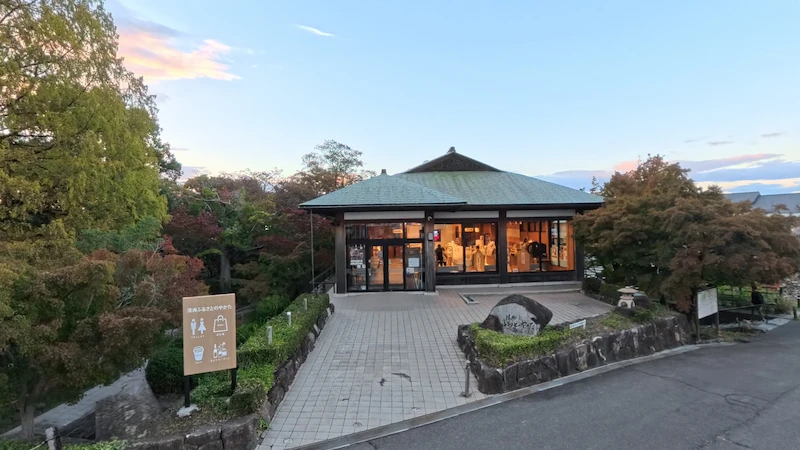
After walking the old stage of the Sengoku era, you need a place to catch your breath. That place is the free rest facility known as Kiyosu Furusato-no-Yakata, set just across from Kiyosu Castle and opposite the vermilion Ōte Bridge. Adjacent to Old Kiyosu Castle Site Park, its location is a true “story overlook,” with a front-row view of the castle’s full silhouette from the bridge.
There’s also a mechanism here that brings you one step closer to the material culture of war. In the basement is the Kiyosu Armor Workshop, where craftsmen produce aluminum armor modeled after tōsei-gusoku (early modern armor), including the okegawa-dō (tub-sided cuirass) sometimes associated in tradition with Nobunaga. You can observe the workshop up close, and the finished armor can be tried on inside Kiyosu Castle.
| Operator | Kiyosu City (run as a tourism facility) |
|---|---|
| Structure / Features | Free rest area + local products and souvenir sales / adjacent to Old Kiyosu Castle Site Park, with full view of Kiyosu Castle from the Ōte Bridge |
| Current Status | Extant (open 9:00–17:00; closed Mondays. Closures may be waived during cherry-blossom season) |
| Heritage Designation | None |
| Notes | Basement houses the Kiyosu Armor Workshop / volunteer guide reception also available |
🗺 Address: 452-0942 479-1 Furushiro, Kiyosu, Aichi, Japan
🚶 Access: 1 minute on foot (approx. 100 m) from the Oda Nobunaga Shrine / Old Kiyosu Castle Site Park
⏳ Suggested Time: Quick highlights about 10 minutes / Unhurried visit about 30 minutes
📍 Highlights
- The Kiyosu Castle view from the Ōte Bridge: A “premium seat” for the full castle silhouette after your walk.
- Souvenirs and local products corner: Items tied to Nobunaga let you turn the day’s memory into something you can physically take home.
- Seasonal tip: During cherry-blossom viewing season, Monday closures may be waived.
📌 Trivia
- What locals know: In the basement, the Kiyosu Armor Workshop produces aluminum armor modeled on okegawa-dō–style tōsei-gusoku. You can observe the craft process at close range — and the finished armor can be tried on inside the castle.
Old Kiyosu Castle Stone Walls (Reconstructed Stonework at the Old Castle Site Park)
⭐ Overall Recommendation
Historical Value:[☆☆☆]
Visual Appeal:[☆☆]
Experience Value:[☆☆]
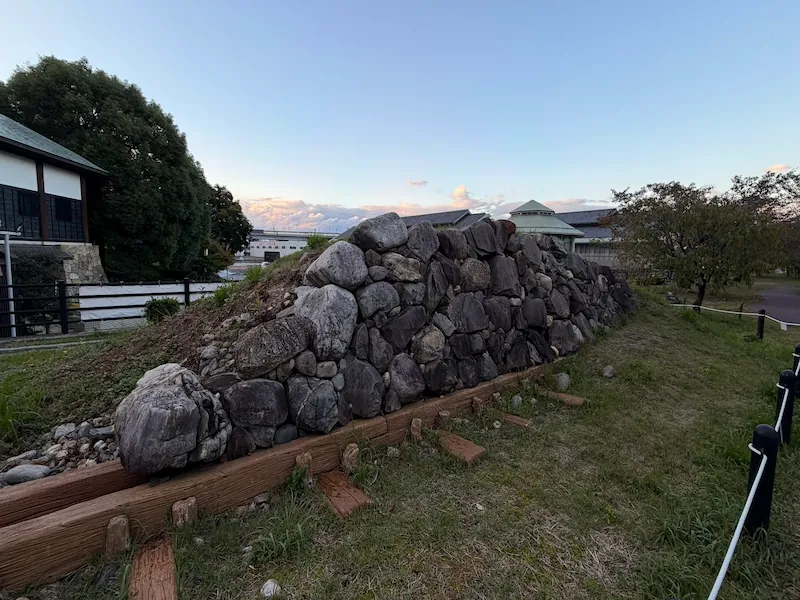
What you see today: a reconstructed display of fieldstone-style masonry in Old Kiyosu Castle Site Park, presented to help visitors imagine the former castle core. The stones look rougher than later, cut-stone castles — part of why this stop feels so “Sengoku” on the ground.

What it meant then: the stonework is associated with major upgrade phases of Kiyosu Castle after Nobunaga’s era, when larger-scale defenses were pursued. The key takeaway is less “perfect geometry” and more the sense of an evolving fortress on lowland terrain.
Tip: Read the on-site boards carefully — the display is a modern reconstruction based on excavations and interpretation, not a standing Sengoku wall in its original position.

| Date Built | Estimated around Tenshō 14 (1586), during the major renovation phase |
|---|---|
| Builder | Oda Nobukatsu (Nobunaga’s second son) |
| Structure / Features | Nozurazumi (fieldstone masonry). Reconstructed for viewing within the park based on modern investigations. |
| Current Status | Displayed (relocated and reconstructed) within Old Kiyosu Castle Site Park |
| Loss / Damage | After the Kiyosu Transfer (1610), Kiyosu Castle was abandoned; materials were reused at Nagoya Castle |
| Notes | Associated with the defense of the honmaru (eastern face) of Kiyosu Castle |
🗺 Address: 452-0942 448 Furushiro, Kiyosu, Aichi, Japan (Old Kiyosu Castle Site Park)
🚶 Access: 1 minute on foot (approx. 21 m) from Kiyosu Furusato-no-Yakata
⏳ Suggested Time: Quick highlights about 10 minutes / Unhurried visit about 30 minutes
📍 Highlights
- The Sengoku “feel” of nozurazumi fieldstone: Unlike the orderly beauty of cut-stone walls, the natural contours here preserve Kiyosu’s Sengoku atmosphere in the most direct way.
- Foundation engineering on weak ground: The ingenuity underfoot — piles and base timbers used to make stone walls possible on soft alluvial terrain — is worth reading the explanation boards for.
📌 Trivia
- A surprising historical backdrop: During the Kiyosu Transfer, the stonework is said to have been carried off for reuse at Nagoya Castle. What you see here are “the stones that never made it to Nagoya,” accidentally revealed by modern construction.
- Famous names, reassessed: The builder was Oda Nobukatsu, Nobunaga’s second son — sometimes labeled “mediocre,” yet this stonework quietly argues otherwise.
Kiyosu Castle — The Visual Centerpiece (Reconstructed Main Keep)
⭐ Overall Recommendation
Historical Value:[☆☆]
Visual Appeal:[☆☆☆]
Experience Value:[☆☆☆]

A vermilion Ōte Bridge spans the Gojō River, and a main keep crowned with golden shachihoko reflects in the water — what we meet as “Kiyosu Castle” today is not a preserved Sengoku original, but a reconstructed castle (rebuilt in 1989) that brings Kiyosu’s past to life through exhibits and hands-on experiences. And yet, standing here makes one thing immediately clear: when Oda Nobunaga moved from Nagano Castle to Kiyosu and sprinted toward Okehazama, that “run-up” to national ambition was grounded in this town’s strategic geography.

The castle in Nobunaga’s day likely differed from the later early-modern image of a towering fortress: historians often interpret it as closer in character to a fortified residence centered on the provincial governor’s headquarters. After the Honnō-ji Incident, and after the Kiyosu Conference set the political rearrangement in motion, Nobunaga’s second son Oda Nobukatsu expanded Kiyosu into a large-scale castle complex, and the town reached its peak as a vast fortified urban center.
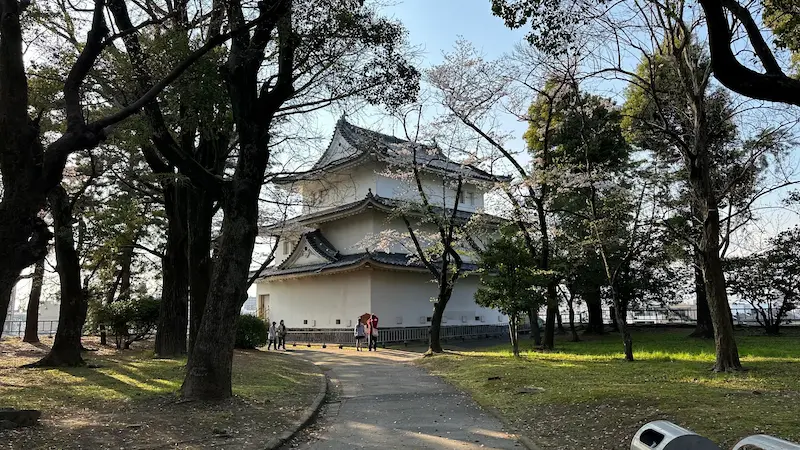
But with the Kiyosu Transfer in Keichō 15 (1610), the castle and the town’s core functions moved to Nagoya. The castle was dismantled, and its materials were carried forward into the construction of Nagoya Castle. Tradition holds that the northwest corner turret of Nagoya Castle is called the “Kiyosu Turret” because timbers from Kiyosu were reused in that structure.

In 1989, the current main keep was rebuilt as Kiyosu’s symbol on a stage that had once slipped from history’s center. The best way to enjoy it is not as a single “must-see building,” but as a strolling, immersive history museum that includes the riverside scenery itself.


Enter from the vermilion Ōte Bridge, pass through the named Ōte Gate, and catch the “Nobunaga Wall” beside the gate — a reconstructed feature modeled on the famous Nobunaga Wall at Atsuta Shrine — before stepping into the dry-landscape Japanese garden, where the clear notes of a suikinkutsu (water-harp) reset the rhythm of your day. Inside the main keep, floors one through four unfold as a continuous series of ways to absorb the Sengoku era: Kiyosu’s origins and rise, a virtual walk that lets you “move through” the bustle of a castle town, a video theater on the Kiyosu Conference, an Okehazama immersion theater, a matchlock firearm experience corner, and finally the top-floor panorama (with binoculars and a novelty viewing scope) that lets you read the landscape all the way from the Gojō River to the distant skyline around Nagoya Station. Next door, the Performing Arts & Culture Hall offers another angle: you can tour the “Kuroki Shoin,” said to have inspired the set design for the film “The Kiyosu Conference,” and on weekends and holidays there are paid try-on experiences for armor and formal kimono outer robes.
Panorama
Ōte Bridge
Inside the Ōte Gate 1
Inside the Ōte Gate 2
Inside the Ōte Gate 3
| Date Built | (Origins) Ōei 12 (1405) / (Current reconstructed keep) rebuilt in 1989 |
|---|---|
| Builder | (Original) Shiba Yoshishige / (Current) rebuilt by Kiyosu City |
| Structure / Features | Reconstructed main keep (four-story exhibition facility) + Performing Arts & Culture Hall (Kuroki Shoin) + dry-landscape garden (suikinkutsu) + vermilion Ōte Bridge, Ōte Gate, and reconstructed “Nobunaga Wall” |
| Major Changes | Dismantled with the Kiyosu Transfer (1610) / rebuilt at the present location in 1989 |
| What Remains Today | No Sengoku-period buildings remain. The site is open as a reconstructed keep and museum-style experience facility. |
| Heritage Designation | None (1989 reconstruction) |
| Notes | Experiences include video theaters, matchlock demonstration, armor/kimono try-on (weekends, fee required), commemorative medals, and seasonal events |
🗺 Address: 1-1 Shiroyashiki, Asahi, Kiyosu, Aichi 452-0932, Japan
🚶 Access: 2 minutes on foot (approx. 120 m) from the Old Kiyosu Castle Stone Walls
⏳ Suggested Time: Quick highlights about 60 minutes / Unhurried visit about 2 hours
📍 Highlights
- An approach that flips the “Sengoku switch” (Ōte Bridge, Ōte Gate, Nobunaga Wall): The vermilion bridge lifts your mood, the gate frames your entry, and the reconstructed Nobunaga Wall snaps you straight into the Nobunaga-and-Okehazama storyline.
- Four floors that move from “see” to “feel” to “look out”: Start with Kiyosu’s timeline on the first floor, walk the lively castle town in the virtual experience on the second, and don’t miss the third-floor interactive zone — especially the matchlock experience and the Kiyosu Conference theater. From the fourth-floor observation deck, you can scan from the Gojō River to the high-rises near Nagoya Station and grasp the scale of the realm Nobunaga reached for.
- Seasonal tip: Spring cherry blossoms along the Gojō River paired with the castle are a classic. From winter into early spring, hina displays appear in the Performing Arts Hall.
📌 Trivia
- A surprising historical backdrop: In Nobunaga’s time, Kiyosu Castle may have been closer to a fortified residence than to the classic early-modern silhouette of a towering tenshu. The reconstructed keep is a stage designed to teach “Kiyosu’s history,” including that gap in our mental images.
- Famous names, one stage: Nobunaga marched from Kiyosu to Okehazama, taking his first step toward unification. After his death, the Kiyosu Conference debated succession, and Nobukatsu’s renovations enlarged the fortress — making Kiyosu Castle a rare place where you can trace both Nobunaga’s starting line and the political reshuffle that followed him.
Kiyosu Park — Nobunaga & Nōhime Statues, and “Okehazama Hill”
⭐ Overall Recommendation
Historical Value:[☆]
Visual Appeal:[☆☆☆]
Experience Value:[☆☆]
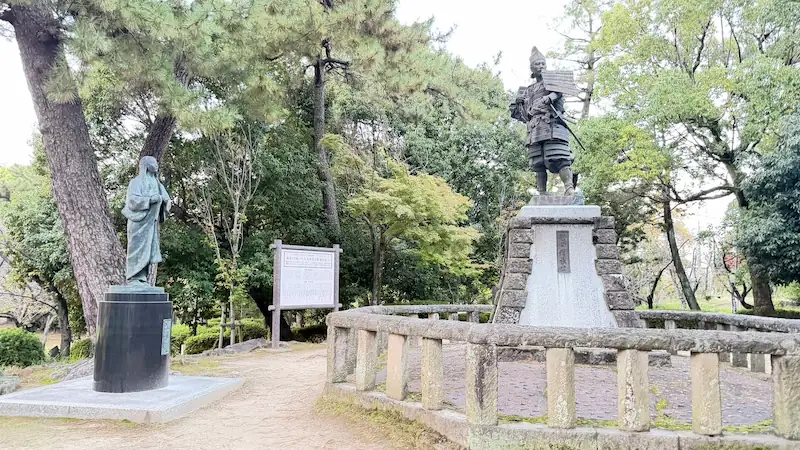
Spread along this bank of the Gojō River, Kiyosu Park turns Kiyosu’s history into something you can feel while walking — almost like a bench set at the “starting line” of Nobunaga’s rise. The park opened in 1922 and was renewed in 1999.
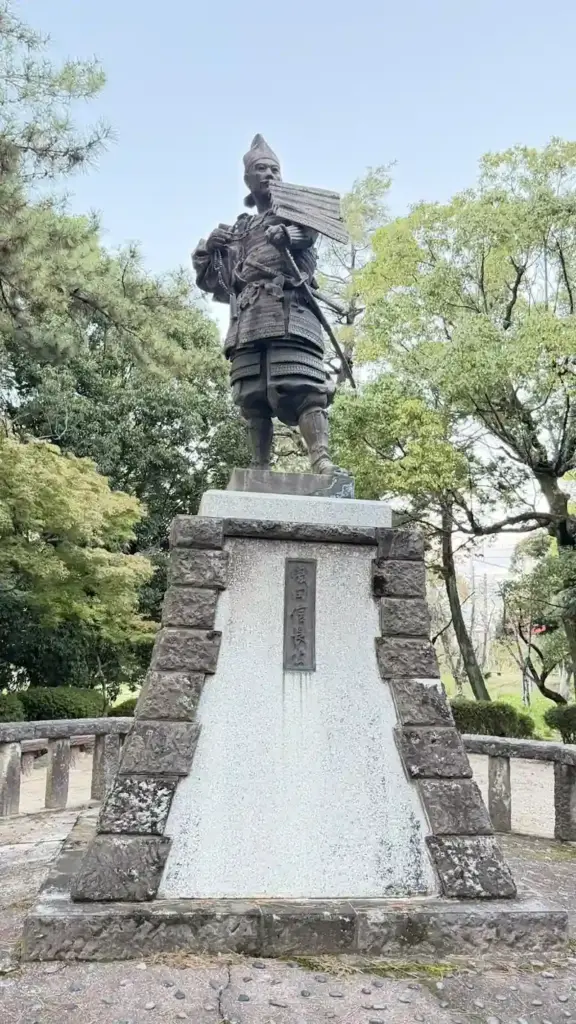
On a slightly elevated spot stands a bronze statue of Oda Nobunaga, depicted as the 26-year-old commander setting out in Eiroku 3 (1560) for the Battle of Okehazama. Cloak swirling, gaze sharpened toward the south, the statue makes the message unmistakable: Kiyosu was the departure point for a bid to seize the nation. Stand where the statue stands and you can physically rehearse that moment of stepping “south” with an army behind you.

Beside that gaze is a second narrative: the statue of Nōhime. In the summer of 2012 the statue was relocated to stand near Nobunaga, and the park has been introduced as a kind of “hill of love and hope for two, from the land of beginnings.” Nobunaga about to march, Nōhime close at his side: Kiyosu Park invites you to reread epoch-making Sengoku events through the intimate distance between a couple.
Panorama
Nobunaga and Nōhime
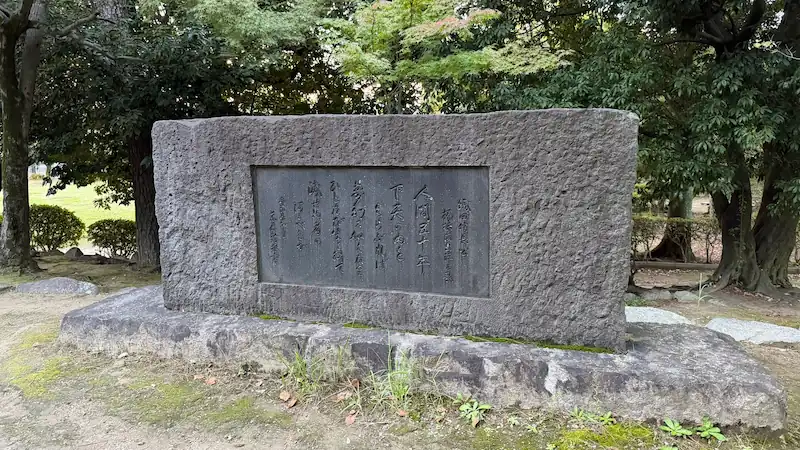
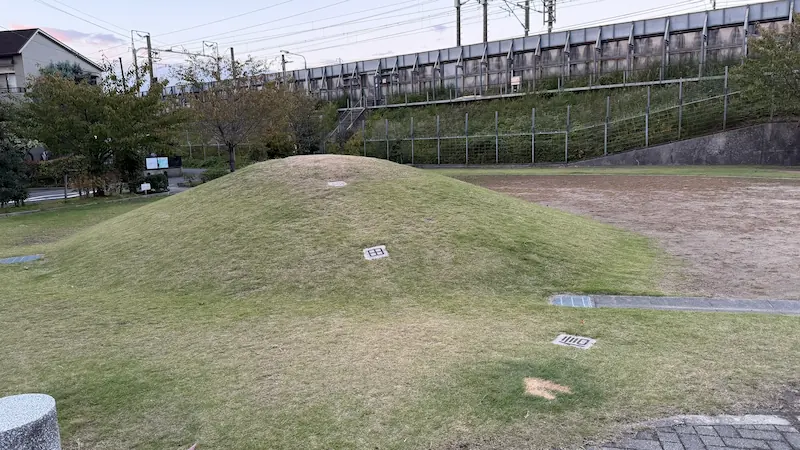

Within the park, a footpath leads up to a small raised mound labeled “Okehazama Hill.” It is not the historical battlefield itself, but as a piece of staging it works surprisingly well: by following the signs and ascending the little rise, you trace — physically, in miniature — the story of leaving Kiyosu and heading toward Okehazama.
Panorama
At the top of Okehazama Hill
| Date Established | Park opened in 1922 / renewed March 1999 |
|---|---|
| Structure / Features | Riverside park along the Gojō River; bronze statues of Nobunaga (departing for Okehazama) and Nōhime; “Okehazama Hill” as an in-park narrative feature |
| Major Changes | Nōhime statue relocated beside Nobunaga in summer 2012 |
| Current Status | Extant (open for walks at all times as a public park) |
| Notes | Nobunaga statue faces toward Okehazama / introduced as a place of “love and hope for two, from the land of beginnings” |
🗺 Address: 3-7-1 Kiyosu, Kiyosu, Aichi, Japan
🚶 Access: 5 minutes on foot (approx. 350 m) from Kiyosu Castle
⏳ Suggested Time: Quick highlights about 15 minutes / Unhurried visit about 45 minutes
📍 Highlights
- Bronze statue of Oda Nobunaga (setting out): Nobunaga at age 26, departing for Okehazama in 1560. His gaze is aimed toward Okehazama — the narrative device works beautifully on-site.
- Nōhime statue (relocated in 2012): Now standing beside Nobunaga, the two statues together reframe the tension of departure as a story of shared time and companionship.
- Seasonal tip: The park is a cherry-blossom spot. In spring, the riverside setting and the paired statues become especially photogenic.
📌 Trivia
- What locals know: Near the base of the Nobunaga statue, plates and markers outline the campaign route associated with Okehazama, adding a sense of on-the-ground reality. A classic fan photo: stand where the statue stands and point toward the southeast — the direction associated with Okehazama.
The Kiyosu Conference: What Happened Here After Honnō-ji
For visitors who want to understand why Kiyosu mattered beyond “Nobunaga’s castle,” the Kiyosu Conference is the key event to know. It took place in 1582, shortly after Oda Nobunaga was killed in the Honnō-ji Incident — assassinated by his own general, Akechi Mitsuhide.
With Nobunaga gone and no designated successor, his top generals gathered at Kiyosu to decide who would lead the Oda clan and how their vast territories would be divided. The major figures involved included Toyotomi Hideyoshi (who had just defeated Mitsuhide at the Battle of Yamazaki), Shibata Katsuie, Niwa Nagahide, and Ikeda Tsuneoki — with Oda Nobukatsu and Oda Nobutaka representing the Oda bloodline.
The outcome of the conference effectively handed political momentum to Hideyoshi. By arguing for Nobunaga’s infant grandson (Samboshi) as the nominal successor — a choice that positioned himself as protector — Hideyoshi outmaneuvered the other generals and set the course for his eventual unification of Japan. Shibata Katsuie, who backed Nobutaka, was the principal loser; the confrontation between Hideyoshi and Katsuie would eventually lead to the Battle of Shizugatake (1583).
Today, the reconstructed Kiyosu Castle features a dedicated video theater recreating the Kiyosu Conference, with life-size displays of the major participants. If you’re visiting primarily because of interest in the Sengoku succession drama — or following the story through historical dramas — this is the floor to spend the most time on.
The 2013 film The Kiyosu Conference (清洲会議, dir. Mitani Kōki) dramatizes the events with a comedic tone. The “Kuroki Shoin” in the Performing Arts Hall adjacent to the castle is said to have inspired elements of the film’s set design.
Practical Info: Hours, Fees, and Seasonal Notes
| Kiyosu Castle (Keep) | 9:00–16:30 (last entry 16:00). Closed Mondays (or following weekday if Monday is a holiday). Check official site for holiday exceptions. |
|---|---|
| Admission (Castle Keep) | Fee required. Check the official Kiyosu City tourism site for current pricing — fees are subject to change. |
| Performing Arts & Culture Hall | Usually open until 17:00. Armor/kimono try-on experiences available on weekends and holidays (paid). |
| Kiyosu Park | Free / open at all times |
| Old Kiyosu Castle Site Park | Free / open at all times |
| Kiyosu Furusato-no-Yakata | 9:00–17:00 / Closed Mondays (closures may be waived during cherry-blossom season) |
| Koshōzan Sōken-in | Advance contact and reservation required for most visits. Contact the temple directly before planning your trip. |
| Best Seasons | Cherry blossom season (late March–early April): most scenic, but busier. June 2: Nobunaga Memorial Festival at Old Castle Site Park. Autumn: occasional Nobunaga-themed festival events. |
| Rain Plan | Focus on indoor time at Kiyosu Castle first; treat riverside and parks as short photo stops between sheltered spots. |
FAQ
Q: Is Kiyosu easy to do as a half-day trip from Nagoya?
A: Yes. It’s close enough to visit for 60–120 minutes on foot once you arrive. JR Tokaido Line from Nagoya Station gets you to Kiyosu Station in about 4–6 minutes.
Q: Is Kiyosu Castle the original historic castle?
A: No. The current building is a 1989 reconstruction built as a symbol and museum facility. The original Sengoku-period castle was dismantled in 1610 during the Kiyosu Transfer to Nagoya. The reconstructed keep sits near — but not exactly on — the original site. The Old Kiyosu Castle Site Park and its reconstructed stone walls are closer to the original honmaru position.
Q: What is the “Kiyosu Conference”?
A: A 1582 council held at Kiyosu after Nobunaga’s assassination at Honnō-ji, where his top generals — including Toyotomi Hideyoshi — debated succession and divided the Oda territories. It effectively handed political momentum to Hideyoshi. The castle’s third floor has a dedicated theater recreating the event.
Q: Can I try on samurai armor at Kiyosu Castle?
A: Yes. Armor (and formal kimono) try-on experiences are available on weekends and holidays in the Performing Arts & Culture Hall adjacent to the main keep. A fee is required. The armor is produced in the Kiyosu Armor Workshop in the basement of Kiyosu Furusato-no-Yakata.
Q: What’s the difference between Kiyosu Castle and the old castle site?
A: Kiyosu Castle today is a reconstructed museum facility built in 1989. The old castle site park is where you’ll find reconstructed stone wall displays and the Nobunaga Shrine — closer to where the original honmaru stood.
Q: Is there a charge to enter Kiyosu Castle?
A: Yes. The reconstructed keep has an admission fee. Kiyosu Park and the Old Castle Site Park are free to enter.
Q: How long should I plan at Kiyosu Castle itself?
A: A quick visit is about an hour; add more time if you want to go through all four floors of exhibits, watch the conference theater, and take in the top-floor view.
Q: Is it worth going in the rain?
A: Yes, if you focus on indoor time at the castle museum first and treat the riverside and parks as short photo stops. The Kiyosu Furusato-no-Yakata rest facility also makes a good dry rest point.
Q: Can I visit Sōken-in casually?
A: Not reliably. The temple may require advance arrangements depending on what you want to see and the temple’s schedule. If the “Charred Helmet” is your goal, contact the temple directly before your trip and treat Sōken-in as optional unless confirmed.
Q: Is the walk stroller-friendly / okay for older travelers?
A: The core castle-and-park area is generally manageable, but weather can make riverbank paths slippery. Plan fewer outdoor segments in rain and take breaks at the Furusato-no-Yakata rest facility.
Q: Are there special event days I should know?
A: June 2 has the Nobunaga commemorative festival at the old castle-site park area. Late March to early April is cherry-blossom season along the Gojō River (busier, but very scenic). Autumn can include a large Nobunaga-themed festival around Kiyosu Castle. Event days can change crowd flow and opening patterns — check local tourism information close to your visit.
Q: Does the 2026 NHK drama Toyotomi Kyodai connect to Kiyosu?
A: The drama covers the period following Nobunaga’s death and the rise of the Toyotomi — with the Kiyosu Conference as a central turning point. Several of the sites on this walking route, including the Kiyosu Castle conference theater and Sōken-in, have direct connections to that story.
Warlord Profiles: Learn More About the People Behind Kiyosu
Kiyosu’s story runs through several of Japan’s most famous historical figures. To go deeper on the people whose ambitions shaped this town, see these pages:



comment