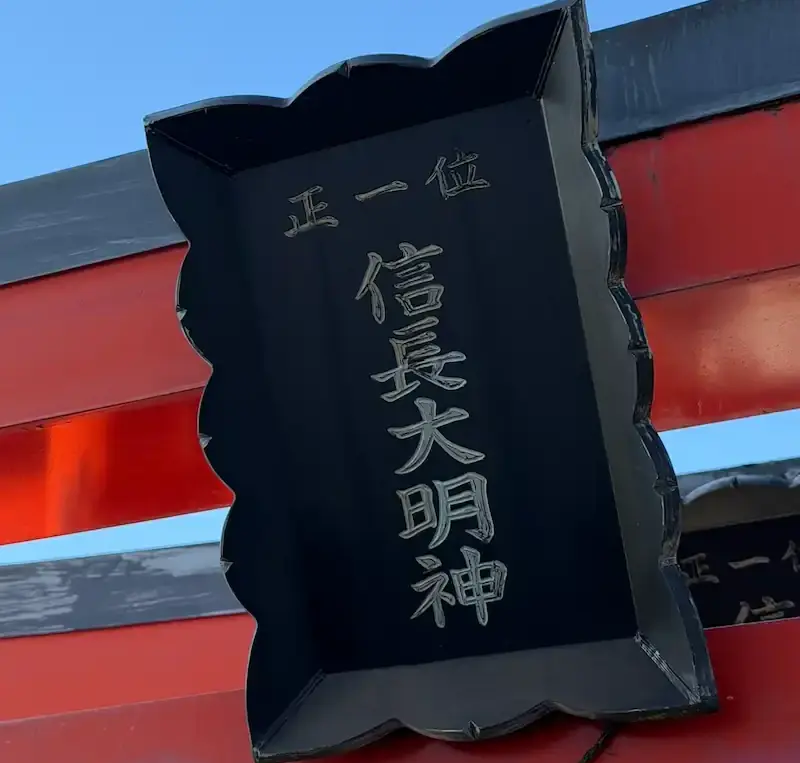
In Nara Prefecture, three small shrines preserve the memory of Oda Nobunaga in unexpected ways: Nobunaga Daimyōjin in Kashihara — a mysterious Inari shrine bearing the warlord’s name without any proven historical link; Kenkun Shrine in Sakurai — where a seated Nobunaga statue shares space with a children’s seesaw; and Kenkun Shrine in Tenri — a vermilion shrine built beside an ancient kofun-era burial mound by the Oda clan lords of Yanagimoto Domain.
This guide covers all three sites with immersive 360° panoramic photos, visitor access information, and the historical mysteries behind each shrine. All locations were personally visited and photographed by the author in November 2025.
- Why Are There Nobunaga Shrines in Nara?
- 1. Nobunaga Daimyojin — The Shrine with Only a Name (Kashihara City)
- 2. Kenkun Shrine — Where a Seesaw Meets a Warlord (Sakurai City)
- 3. Kenkun Shrine — Ancient Tombs and Samurai Authority (Tenri City)
- How These 3 Shrines Reveal “Patterns of Faith” Around Nobunaga
- Practical Tips: Visiting All Three in One Day
- Frequently Asked Questions
Why Are There Nobunaga Shrines in Nara?
Oda Nobunaga himself had relatively limited direct involvement with Yamato Province — the ancient name for modern Nara Prefecture. So why would shrines dedicated to him exist here? The answer lies in his descendants.
After Nobunaga’s death in the Honnō-ji Incident of 1582, branches of the Oda clan were assigned domains across Japan during the Edo period. One such domain was Yanagimoto Domain in what is now Tenri City, Nara — governed by a branch of the Oda family for generations. As lords of the domain, the Oda clan established a Kenkun Shrine within the grounds of the ancient Isanagi Shrine, enshrining their famous ancestor as a symbol of legitimacy and authority.
A similar pattern occurred in Sakurai City, where the former village of Shiba was also part of Oda clan territory. A branch shrine of the main Kenkun Shrine in Kyoto was built there, and it continues to be maintained by the local community today.
The third shrine — Nobunaga Daimyōjin in Kashihara — is the most mysterious of all. Unlike the other two, there are no clear records linking it to the Oda clan or to Nobunaga himself. How and why the name “Nobunaga” became attached to a small Inari shrine in a residential neighborhood remains an open question — one that makes visiting this spot all the more compelling.
Together, these three shrines reveal how later generations chose to remember, enshrine, and make use of Nobunaga’s legacy — each in a different way, each reflecting a different facet of local faith, political strategy, and community identity.
1. Nobunaga Daimyojin — The Shrine with Only a Name (Kashihara City)
⭐ Recommended Rating
Historical Value: ☆
Uniqueness of Local Faith: ☆☆☆
Mystery Factor: ☆☆☆
Overview & Mystery
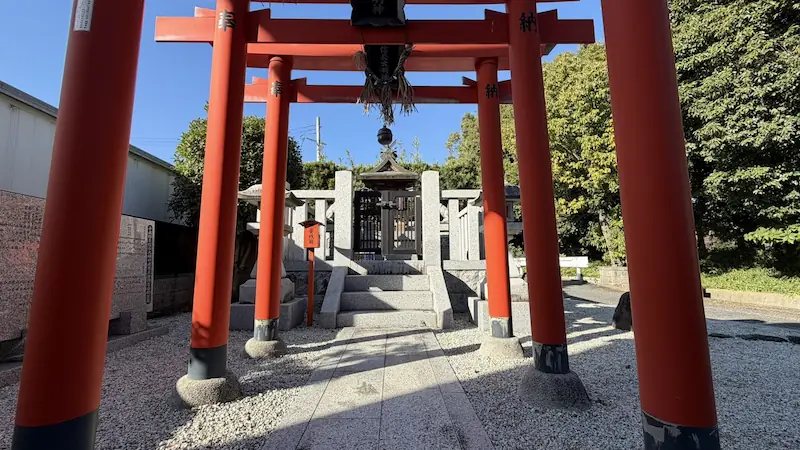
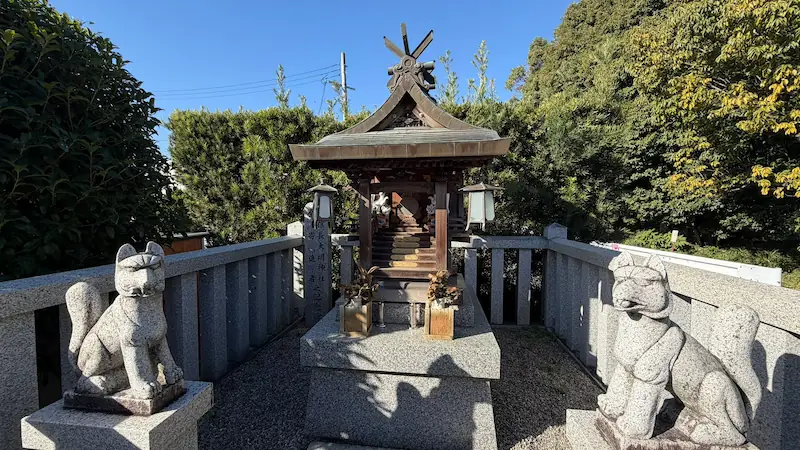
Tucked quietly within a residential neighborhood in Shinguchi-chō, Kashihara City, “Nobunaga Daimyōjin” (a commonly used name rather than an official one) is a tiny shrine known only to those who seek out the deeper layers of local history. With virtually no formal records documenting its origins and completely untouched by tourism, it stands as a micro–local heritage site. The shrine is located at address “488-4,” and together with the adjacent Suga Shrine, it forms the spiritual core of the Shinguchi-chō community.
The shrine’s highly unusual name — “Nobunaga Daimyōjin” — naturally evokes an association with Oda Nobunaga, the famed warlord of the Sengoku era. However, no conclusive historical sources confirm any direct connection. The structure itself resembles an Inari-style shrine, marked by a series of bright vermilion torii gates. This makes the question all the more intriguing: why and how did the name “Nobunaga” become attached to a local Inari deity in the course of the community’s religious history? The shrine stands today as a living reminder of that unresolved mystery.
The grounds are extremely small, with no elaborate decorations or large structures. Yet this modest scale is precisely what conveys its role as a deeply rooted “ujigami” — a neighborhood guardian deity intimately woven into everyday life in Shinguchi-chō.
Author’s Note: When I visited in November 2025, the shrine was so well hidden within the residential streets that even Google Maps struggled to pinpoint it. There were no tourist signs whatsoever — just the small vermilion torii gates emerging between ordinary houses. The quiet of the neighborhood, broken only by the occasional bicycle bell, made the encounter with the stone marker reading “Nobunaga Daimyōjin” all the more striking.
When you visit, be sure to explore it together with the neighboring Suga Shrine. Immersing yourself in the calm, everyday scenery shared by these two shrines will help you sense the quiet spiritual rhythms of Shinguchi-chō. Located just a short walk from Shin-Nokuchi Station on the Kintetsu Kashihara Line, the site is an ideal stop during a stroll through the historic Yamato region — perfect for letting your imagination fill the gaps left by the historical record.
360° Panoramic View
Historical Details
| Construction Date / Builder | Unknown (maintained through long-standing local faith) |
|---|---|
| Structure & Features | A small Inari-style shrine with vermilion torii gates and a stone marker; positioned directly along a local residential road. |
| Renovation / Restoration History | No recorded information (details unknown) |
| Current Condition | Standing; open to visitors in Shinguchi-chō, Kashihara City. |
| Damage or Loss | No known incidents |
| Cultural Property Status | Not confirmed |
| Notes | The shrine’s very name, “Nobunaga Daimyōjin,” is the greatest mystery. No confirmed connection to Oda Nobunaga has been established, and the site remains a topic of debate among local historians. |
Visitor Information
🗺 Address: 奈良県橿原市新口町488-4
🚶 Access:
Nearest station: Shin-Nokuchi Station (Kintetsu Kashihara Line), approx. 5 minutes on foot (about 0.3 km)
⏳ Estimated Time for Your Visit
Time to appreciate its uniqueness: approx. 10 minutes
If you also explore the surrounding streets and Suga Shrine: approx. 20 minutes
What to See
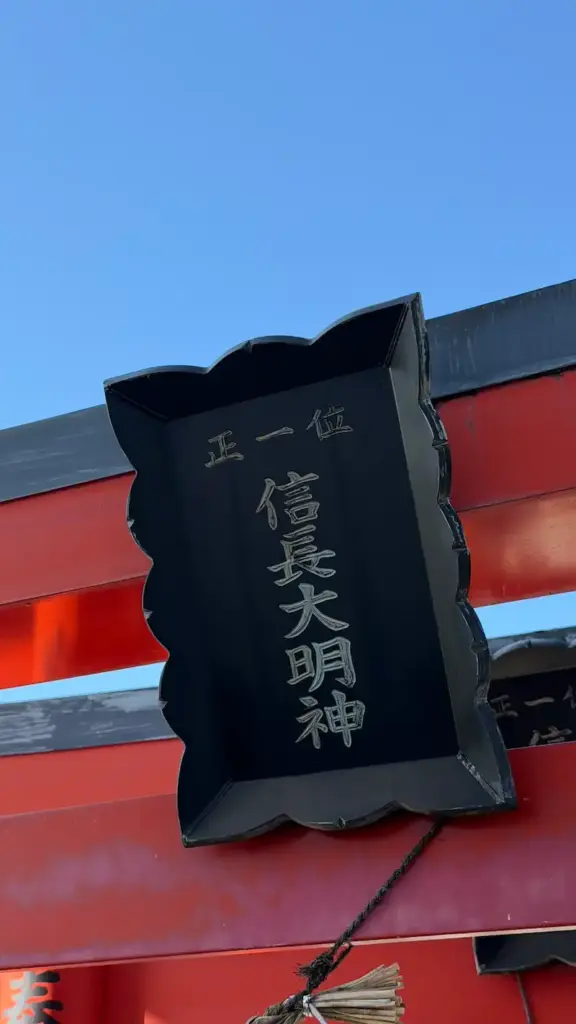
- The enigmatic stone marker and name plaque: The stone marker carved with “Nobunaga Daimyōjin” defines the very identity of this shrine. Why has the name of Nobunaga — who is believed to have had little direct connection to this area — been preserved here? Standing before this marker is one of the most fascinating moments of the visit, inviting you to consider the mysteries of local religious tradition.
- A humble, everyday Inari-style presence: Instead of a large worship hall or impressive gate, the short, natural approach leading through vermilion torii to the main sanctuary reveals the shrine’s character as a “deity of everyday life,” rather than a monumental sacred site.
- Contrast with Suga Shrine: Visiting together with the neighboring Suga Shrine — dedicated to Gozu Tennō — highlights the unique role and peculiarity of this tiny shrine. The close coexistence of two shrines venerating different deities captures the historical depth of Shinguchi-chō.
📌 Trivia (for the curious visitor)
- The debate over the shrine’s name: Despite its name, no clear historical evidence links the shrine directly to Oda Nobunaga. A prevailing local theory suggests that the original name of the Inari deity may have shifted phonetically over time, eventually becoming “Nobunaga” by coincidence. The very presence of this historical “blank space” is what makes the shrine so compelling.
- Best approach route: Located just south of Suga Shrine and with no confirmed parking, the most immersive way to visit is to walk from Shin-Nokuchi Station, strolling through the streets of Shinguchi-chō to experience the surrounding atmosphere.
- The Nobunaga–Yamato connection: Many regional guides and historians point out that Nobunaga had relatively limited direct involvement with Yamato Province (modern Nara Prefecture). As a result, the shrine is best appreciated not as a conventional “hero shrine,” but as a local mystery rooted in community memory.
2. Kenkun Shrine — Where a Seesaw Meets a Warlord (Sakurai City)
⭐ Recommended Rating
Historical Value: ☆☆
Sense of Otherness: ☆☆☆
Degree of Clash with Everyday Life: ☆☆☆
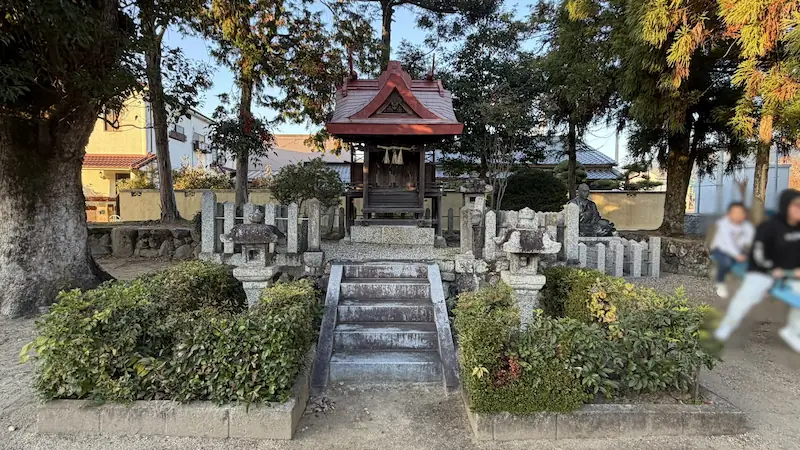
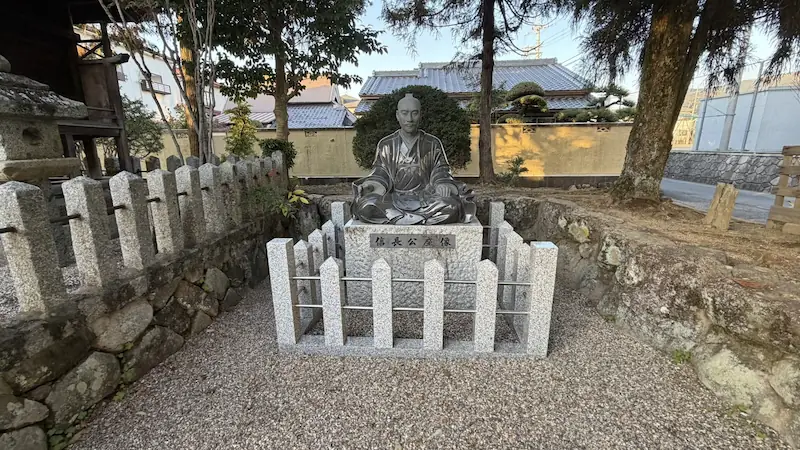
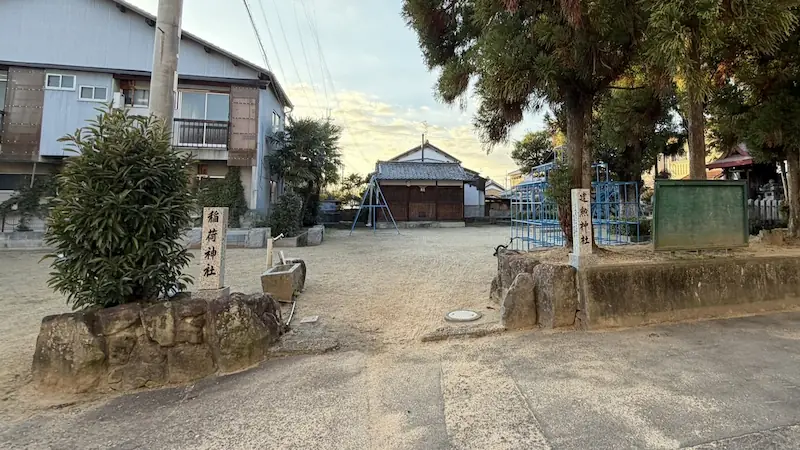
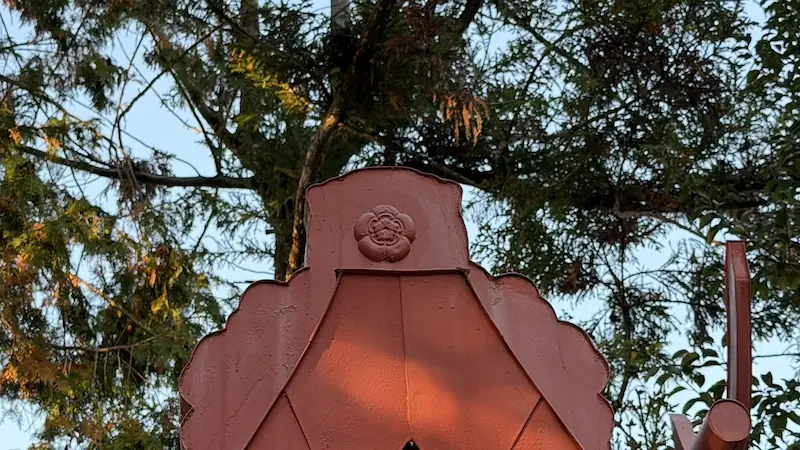
Overview & Highlights
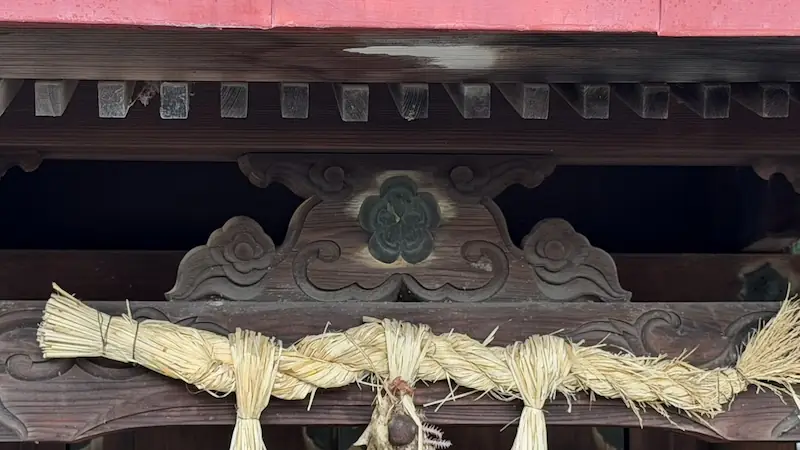
Located in Shiba, Sakurai City, Nara Prefecture (the former village of Shiba), Kenkun Shrine enshrines the Sengoku warlord Oda Nobunaga as its deity and is affectionately known by locals as “Shinchoko-san” (a nickname for Lord Nobunaga). The greatest appeal of this place lies in how the overwhelming historical presence of a “unifier of the realm” sits side by side with the everyday routines of the neighborhood. On the adjacent land once stood the domain’s former jin’ya (administrative headquarters), now the site of Oda Elementary School. The school crest incorporates the Oda family crest, a clear reminder that this area was once part of the Oda clan’s domain.
Within the shrine grounds you’ll find a seated statue of Nobunaga, but at his feet is a space that functions as part of a children’s playground. This bizarre yet charming scene — a seesaw set right in front of Nobunaga’s statue — is vivid proof that this shrine, as a “fragment of history,” has taken root in a unique way in the everyday lives of local residents.
Believed to be a branch shrine of the main Kenkun Shrine in Kyoto, this compact neighborhood shrine is an easy place to drop by, yet the more you learn about it, the more clearly you feel the unusual bonds between the Oda clan’s history and the local community. It’s a micro-destination well worth visiting with a bit of strategic planning for anyone tracing Nobunaga-related sites in Nara.
Author’s Note: The moment I turned the corner and saw the seesaw directly in front of Nobunaga’s stone statue, I burst out laughing — and then immediately felt moved. There is something deeply human about the way this community has absorbed a towering historical figure into the fabric of daily life. Children play here after school, completely unfazed by the warlord watching over them. It’s the kind of scene you simply cannot grasp from photographs alone, which is exactly why the 360° panoramic view below is worth spending time with.
360° Panoramic View
Historical Details
| Foundation / Relocation | Believed to have been relocated and developed by at least the Meiji era (within the former village of Shiba). |
|---|---|
| Founder | Thought to have been established and enshrined by local residents with ties to the former Oda domain; no detailed records of specific founders survive. |
| Structure & Features | A small shrine precinct adjoining an Inari shrine, featuring a seated statue of Oda Nobunaga and playground equipment. |
| Renovation / Restoration History | The grounds were relocated and improved over time; some sources suggest relocation around 1896 (Meiji 29). |
| Current Condition | Still standing and open to worship. Located around the Tama-zuka area of Shiba, Sakurai City. |
| Damage or Loss | No notable incidents reported. |
| Cultural Property Status | None confirmed (considered a local community shrine). |
| Notes | The name “Kenkun Shrine” indicates that it is regarded as a branch of the main Kenkun Shrine in Kyoto’s Kita Ward. Also known locally as “Takeisao Shrine” (建勲神社, an alternate reading of the same kanji). |
Visitor Information
🗺 Address: 奈良県桜井市芝 字玉塚 他
🚶 Access:
Nearest station: around 20 minutes on foot from Miwa Station (JR Sakurai Line)
⏳ Suggested Time on Site
Quick highlights (Nobunaga statue and playground): approx. 10 minutes
For a deeper visit (former jin’ya site and neighborhood stroll): approx. 20 minutes
What to See
- The surreal pairing of Nobunaga’s statue and a seesaw (top highlight): In front of the seated statue of Lord Oda Nobunaga, you’ll find a seesaw and other playground equipment that local children actually use. This overwhelmingly unique sight — where a once all-powerful warlord shares space with a neighborhood play area — is the shrine’s most striking visual feature, and something you’re unlikely to encounter anywhere else.
- Traces of the old jin’ya at Oda Elementary School: The adjacent Oda Elementary School stands on the former site of the Shiba domain’s jin’ya. Look closely at the school gate and crest to see the Oda clan’s family crest (Oda mokkō). Spotting it for yourself is a concrete way to feel the enduring historical connection between the Oda family and the local area.
- The atmosphere of “Shinchoko-san,” a beloved local deity: Though the shrine is not grand, the quiet grounds blend seamlessly into the surrounding residential streets. Here you can sense how “Lord Nobunaga” continues to be revered and affectionately known as “Shinchoko-san,” both respected and familiar as a local protective presence.
📌 Trivia (for curious explorers)
- The meaning of the divine title “Kenkun”: “Kenkun” is the divine name granted to Oda Nobunaga by Emperor Meiji in recognition of his great achievements in moving Japan toward unification and restoring imperial court ceremonies. The fact that Nobunaga is enshrined here reflects not only local ties but also a broader history of his veneration that took shape from the Meiji period onward.
- Local connections: Nobunaga is enshrined as the main deity, and historians have pointed out links to descendants of the Oda clan and to the former domain itself. In this sense, the shrine represents a form of worship and commemoration consciously chosen by the local community.
- Access and strolling: As there is no dedicated parking, the best strategy is to visit by public transportation (via the Sakurai area) and plan your trip as a walking tour. That way, you can enjoy both the residential scenery and the scattered fragments of local history that surround this unique shrine.
3. Kenkun Shrine — Ancient Tombs and Samurai Authority (Tenri City)
⭐ Recommended Rating
Historical Value: ☆☆
Depth of Overlapping Historical Layers: ☆☆☆
Contrast with Ancient Belief Systems: ☆☆☆
Overview & Historical Layers
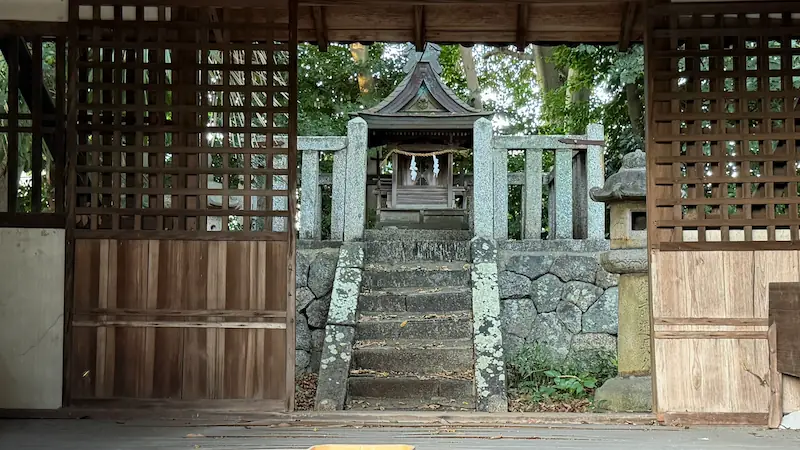
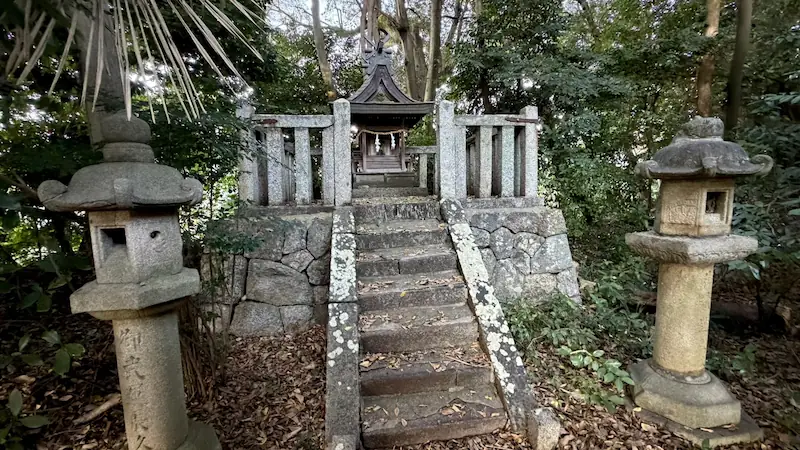
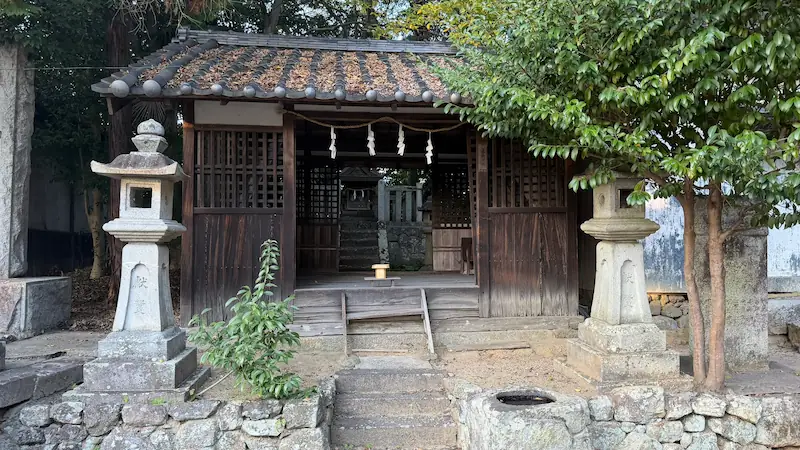
Kenkun Shrine, located in Yanagimotochō, Tenri City, Nara Prefecture, is a subsidiary shrine (massha) within the grounds of Isanagi Shrine, a major sacred site whose origins date back to the Kofun period. Here, you can literally see layers of history stacked on top of one another: the immense authority of ancient burial mounds (the Yanagimoto Kofun Group) overlaid with the power and prestige of a samurai clan from the early modern era (the Oda lords of Yanagimoto Domain).
The enshrined deity is Oda Nobunaga. The shrine is said to have been established as a subsidiary shrine because the lords of the Yanagimoto Domain during the Edo period were members of the Oda clan. The quiet surroundings — a blend of houses and rice fields — open up toward a keyhole-shaped tumulus (zenpō-kōen-fun) rising in the background, creating a striking visual contrast that lets visitors feel the long arc of Japanese history in a single view. Despite being a small subsidiary shrine, it is affectionately called “Shinchoko-san” by locals, hinting at the depth of the bond between the warlord Nobunaga and this community.
Author’s Note: Standing in front of this small vermilion shrine and looking up to see the outline of a massive ancient burial mound rising behind it — that was the single most powerful moment of my entire visit to Nara’s Nobunaga shrines. The contrast between the 4th-century kofun and the Edo-period shrine to a Sengoku warlord, all within the same quiet precinct, made the weight of Japanese history feel almost physical. The rice paddies surrounding the area were golden in late November light, adding to the sense of timelessness.
360° Panoramic View
Historical Details
| Foundation | Exact year unknown. The timing of its establishment as a subsidiary shrine is believed to be connected with the Oda clan’s rule over Yanagimoto Domain. |
|---|---|
| Enshrined Deity | Lord Oda Nobunaga |
| Structure & Features | Located within the grounds of the main Isanagi Shrine, facing south. The hall is painted vermilion and the main sanctuary stands atop a stone base. |
| Renovation / Restoration History | No clear records (the timing of improvements as a subsidiary shrine is also uncertain). |
| Current Condition | Still standing and open to worship. |
| Cultural Property Status | No official designation confirmed. |
| Notes | While the name “Kenkun Shrine” and the enshrinement of Nobunaga recall the main Kenkun Shrine in Kyoto’s Kita Ward, here he is worshipped in the style of a modest subsidiary shrine tied directly to the former domain lords. Also known as “Takeisao Shrine.” |
Visitor Information
🗺 Address: 奈良県天理市柳本町1899
🚶 Access:
About 10 minutes on foot from Yanagimoto Station on the JR Sakurai Line.
⏳ Suggested Time on Site
Quick highlights (checking the shrine and the position of the kofun): approx. 10 minutes
For a deeper visit (reflecting on layers of history from ancient times to the early modern era): approx. 20 minutes
What to See
- A vivid contrast between ancient and early modern history: From within the grounds of Isanagi Shrine, where Kenkun Shrine stands, you can look out toward the keyhole-shaped Tenjinyama Kofun behind it. The shrine of a Sengoku warlord, enshrined by early modern domain lords, stands in front of the tomb of an ancient local ruler — a rare composition that lets you feel Japan’s shifting centers of power across the centuries in one glance.
- The placement of authority as a subsidiary shrine: The vermilion shrine hall stands on a stone terrace, maintaining a dignified status alongside the main Isanagi Shrine as one of its subsidiary shrines. From this layout and structure, visitors can ponder how the Oda lords of Yanagimoto Domain in the Edo period chose to situate and honor Nobunaga within the local religious landscape — a chance to engage with the political and spiritual strategies at play.
- The quiet presence of a former domain seat: The approach to the shrine and the surrounding rice fields are wrapped in stillness, making this an ideal place for a contemplative walk where you can quietly sense both the ancient sacred site and the later history of the Oda clan as domain lords.
📌 Trivia (for curious explorers)
- A solid link between Yanagimoto Domain and the Oda clan: Yanagimotochō was once the seat of Yanagimoto Domain in the Edo period, whose ruling family was the Oda clan. This firm territorial connection is the strongest grounding for the existence of a Kenkun Shrine here that enshrines Oda Nobunaga.
- A local nickname rooted in daily life: Although modestly positioned as a subsidiary shrine within the grounds of the main Isanagi Shrine, it is affectionately known as “Shinchoko-san” among locals. This suggests that the towering historical figure of Oda Nobunaga has been gently absorbed into, and anchored within, the community’s everyday faith and way of life.
- Making use of ambiguous official records: While it is clear that Oda Nobunaga is enshrined here, documentary evidence of Nobunaga himself being active in this area is limited. For that reason, it is best to see this shrine not primarily as a “site of historical events,” but as a cultural node where local faith, regional history, and the imagined figure of the warlord all intersect.
How These 3 Shrines Reveal “Patterns of Faith” Around Nobunaga
The deeper value of visiting all three shrines together lies in what they reveal collectively: strategic patterns of faith — how later generations remembered and made use of Nobunaga’s name and legacy.
- Nobunaga Daimyōjin (Kashihara City): A local mystery where only the “name” remains. With no solid historical records to explain it, the survival of Nobunaga’s name within an Inari shrine symbolizes gaps in the historical record and the shifting nature of religious belief.
- Kenkun Shrine (Sakurai City – Shiba): A strange scene where the memory of a great historical figure fades into everyday life. A seesaw sits at the feet of a statue of Nobunaga, creating a surreal blend of the ordinary and the extraordinary, where the ruler of the realm coexists with a local playground.
- Kenkun Shrine (Tenri City – Yanagimoto): A place that reveals layers of history, where the authority of the ancient world overlaps with that of the samurai class. Backed by a massive kofun-era burial mound, the Oda clan — lords of the early modern period — enshrined Nobunaga here as a strategic statement of legitimate rule.
More than any written history, these three locations are defined by an atmosphere you can only grasp by being there. Thanks to the 360-degree panoramas, you can feel the quiet of the grounds, sense the rhythms of daily life, and experience the layered presence of different historical eras — almost as if you were visiting in person.
These shrines may not be places where Nobunaga himself once stood. Even so, they vividly show how later generations chose to enshrine him, remember him, and weave his memory into their everyday world. The greatest value of this guide is the ability to relive that “story found in the margins of history” through immersive panoramic imagery.
Practical Tips: Visiting All Three in One Day
Suggested Route & Transportation
All three shrines are located along the rail lines in the southern Nara area (Kintetsu Kashihara Line and JR Sakurai Line). The most efficient route for a half-day visit is:
- Start at Shin-Nokuchi Station (Kintetsu Kashihara Line) → Walk to Nobunaga Daimyōjin in Kashihara (5 min walk, 10–20 min visit)
- Transfer to JR Sakurai Line (from Kashiharajingu-mae to Miwa Station) → Walk to Kenkun Shrine in Sakurai (20 min walk, 10–20 min visit)
- Take JR Sakurai Line to Yanagimoto Station → Walk to Kenkun Shrine in Tenri (10 min walk, 10–20 min visit)
Combined Visit Time
Total estimated time: 3–4 hours (including transit)
Best paired with: A visit to the Yamanobe-no-Michi hiking trail (which passes near the Tenri and Sakurai shrines), or a stop at Kashihara Jingu Shrine.
Tip: None of the three shrines have dedicated parking. Public transport + walking is the recommended approach. Wear comfortable shoes.
Frequently Asked Questions
Is there a connection between Oda Nobunaga and Nara?
While Nobunaga himself had limited direct involvement with Nara (Yamato Province), his descendants ruled the Yanagimoto Domain in the Edo period, and local communities preserved his memory through shrines in Kashihara, Sakurai, and Tenri. The shrines reflect how later generations chose to honor and remember the warlord.
Can I visit all three Nobunaga shrines in one day?
Yes. All three are within Nara Prefecture and can be visited in a half-day trip (3–4 hours total) using the Kintetsu Kashihara Line and JR Sakurai Line. See the “Practical Tips” section above for a suggested route.
What is Kenkun Shrine?
Kenkun Shrine (also read as “Takeisao Shrine”) is a Shinto shrine that enshrines Oda Nobunaga. The most famous one is located on Mount Funaoka in Kyoto, established by decree of Emperor Meiji in 1869. Smaller branch shrines exist in Sakurai and Tenri in Nara Prefecture, built by Oda clan descendants who ruled the local domains.
What is Nobunaga Daimyojin?
A tiny Inari-style shrine in Kashihara City bearing the name “Nobunaga Daimyōjin” — despite having no confirmed historical connection to the warlord Oda Nobunaga. The origin of the name remains a mystery debated by local historians. One theory suggests a phonetic shift over time turned an unrelated deity name into “Nobunaga.”
How are these shrines different from the Kenkun Shrine in Kyoto?
The Kenkun Shrine in Kyoto is the main shrine, located on Mount Funaoka and designated as a special government-sponsored shrine in 1875. It features grand architecture and significant cultural properties. The Nara shrines, by contrast, are small community shrines — each reflecting a different local relationship with Nobunaga’s memory. The Nara sites are completely off the tourist radar, offering a more intimate and raw encounter with history.



comment