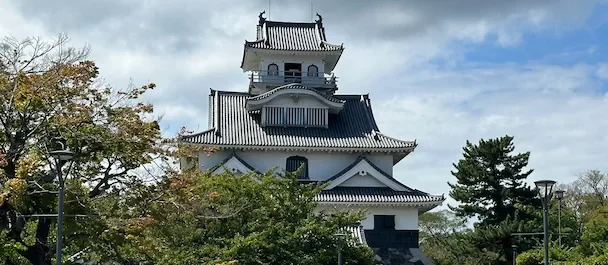
Nagahama is not just a town where the world of the NHK Taiga Drama Toyotomi Brothers! is presented through museum displays — it’s a town where the brothers’ story grows more vivid with every step you take. Toyotomi Hideyoshi was entrusted with northern Ōmi (present-day northern Shiga Prefecture) and renamed the fishing village of Imahama to “Nagahama,” embarking on the construction of both a castle and a castle town. The “Naga” in the new name is said to have been taken from his lord, Oda Nobunaga — a deliberate act of tribute. Because this was the very launchpad of Hideyoshi’s meteoric rise to power, the more you walk these streets, the more you sense the quiet but indispensable presence of his younger brother Hidenaga — the man who kept things running while his brother chased glory on the battlefield. Step out of the Drama Museum still buzzing with props and costumes, and head straight to a gate, a temple, or the ruins by the lake: the story shifts from screen to reality in an instant. Best of all, Nagahama’s highlights are tightly clustered within walking distance of the station — the more you tack on, the richer the experience becomes.
This page covers the three must-see sites: Nagahama Betsuin Daitsu-ji Temple (Kitchen Gate, Main Hall, and Gardens) / Nagahama Castle (Nagahama Castle History Museum and Hōkō Park) / Nagahama Toyokuni Shrine. If time allows, we also outline an extended route to Chikubushima Island (Hogon-ji Temple and Tsukubu-sushima Shrine), where Momoyama-period architecture distills the prayers and authority of the Toyotomi clan into one breathtaking site. Everything you need to decide what to see and where to go in Nagahama is right here.
Toyotomi Brothers! Kita-Ōmi Nagahama Taiga Drama Museum
Read our full on-site visit report below.

The exhibition runs February 1 – December 20, 2026, with opening hours of 9:00 AM – 5:00 PM (last admission 4:30 PM). Details are subject to change, so check the official website before your visit.
Official URL: https://www.nagahama-sengoku.jp/exhibition/
| Type | Category | Price |
|---|---|---|
| Individual | Adult | ¥600 |
| Elementary / Middle School Student | ¥300 | |
| Group (20 or more) | Adult | ¥500 |
| Elementary / Middle School Student | ¥250 |
Gi to Kizuna-kan (Ceremony and Bond Hall)
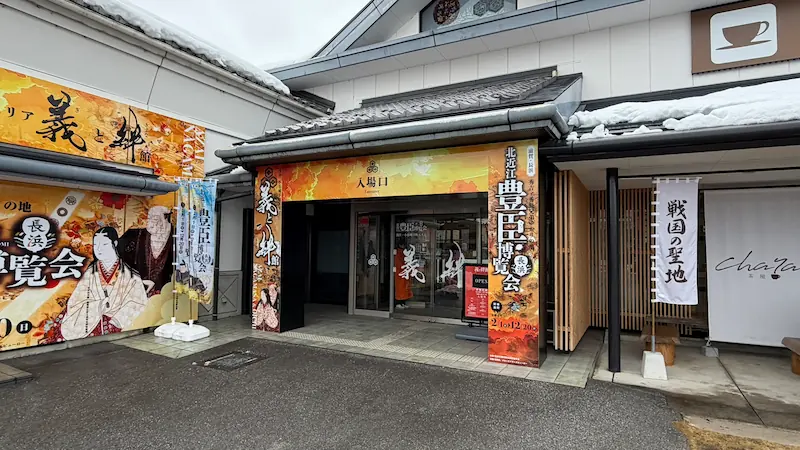
The exhibition runs February 1 – December 20, 2026, with opening hours of 10:00 AM – 5:00 PM (last admission 4:30 PM). Details are subject to change, so check the official website before your visit.
https://www.nagahama-sengoku.jp/kizuna
Site Guide
Nagahama Betsuin Daitsu-ji Temple (Nagahama Gobō)
⭐ Recommended Rating
Historical Significance:☆☆☆
Visual Appeal:☆☆☆
Experiential Value:☆☆
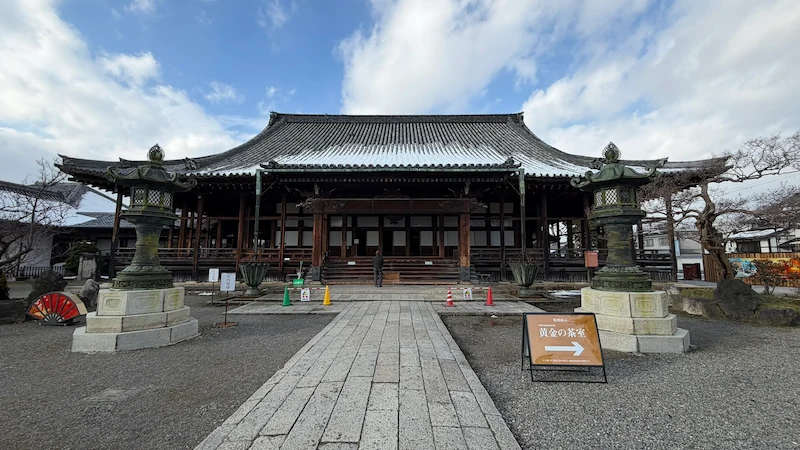
Nagahama, the gateway to northern Lake Biwa, is a city that truly came alive when Toyotomi Hideyoshi built his castle here and shaped it into a thriving castle town. My visit began with a simple goal: the Taiga Drama Museum. But the moment I arrived and started walking, something shifted — the air carried a rawness of history that hit harder than any staged exhibition.
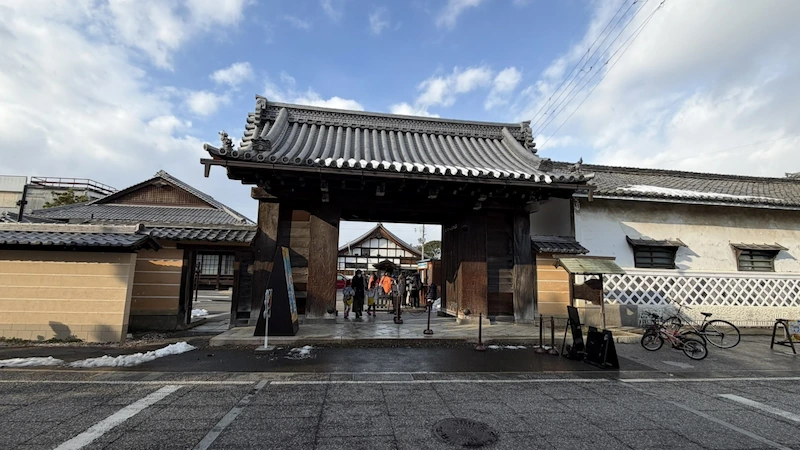
The source of that feeling was the “Kitchen Gate” (Daidokoro-mon) of Nagahama Betsuin Daitsu-ji Temple. This gate is traditionally identified as the former main front gate (ōtemon) of Hideyoshi’s Nagahama Castle — though, as with many such attributions, it’s wise to treat it as received tradition rather than confirmed historical fact. Even so, knowing that the memory of a castle town’s entrance has been preserved through the centuries in the form of a temple gate is enough to pull any history lover one layer deeper into the story.
Daitsu-ji is also known as “Nagahama Gobō” — less a tourist attraction than a living center of faith that has been woven into the daily life of this castle town for centuries. The moment the great roof comes into view at the end of the approach, you feel a weight and presence that no photograph can fully capture. It has to be experienced in person.
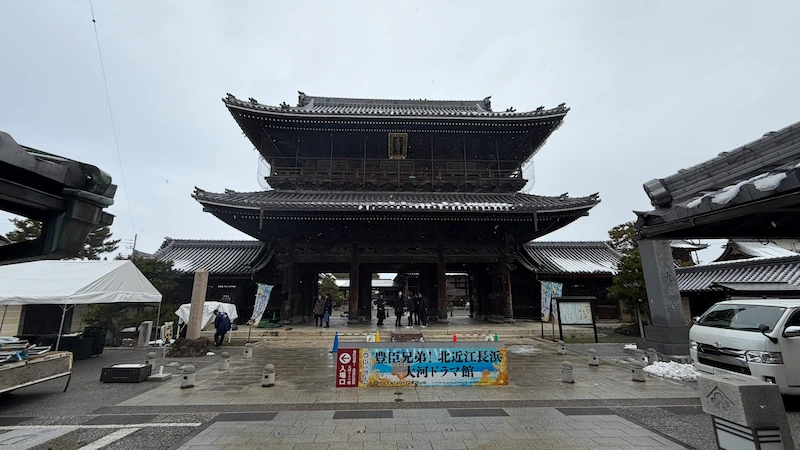
What makes this temple truly extraordinary is that it holds the memory of faith and political power under the same roof — a span reaching from the Warring States period (Sengoku era, roughly the mid-15th to early 17th century) through the early Edo period. The main hall in particular is traditionally described as having been relocated from Fushimi Castle — the magnificent fortress Hideyoshi built south of Kyoto in the 1590s. The official cultural heritage description for Nagahama City notes that it was “originally a palace structure from Fushimi Castle, and is said to be the very room where Hideyoshi convened his war councils before launching the Korean campaigns.” As always, legend and verifiable history are intertwined here. But the uncertainty doesn’t diminish the value — standing inside, you feel the weight of a building that earned the stories told about it.
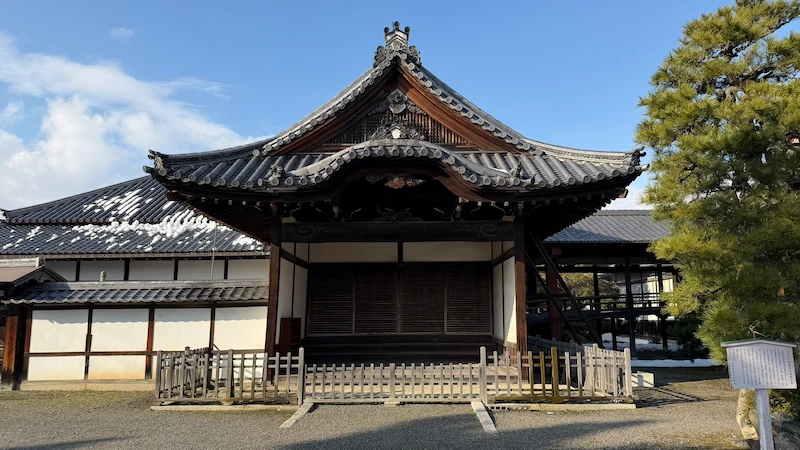
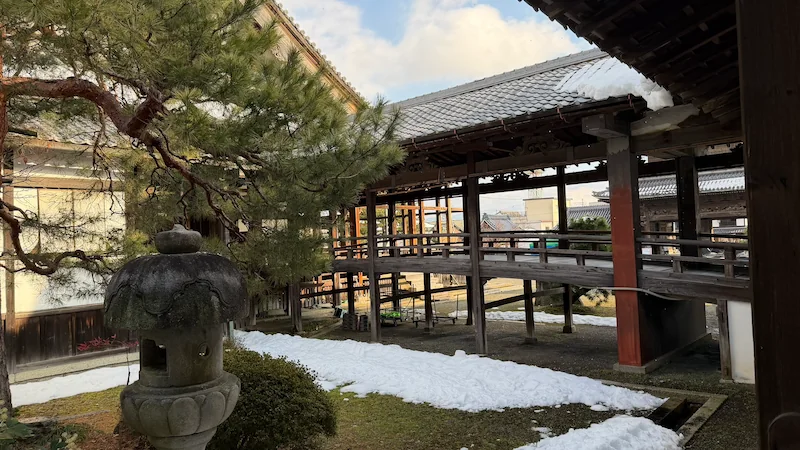
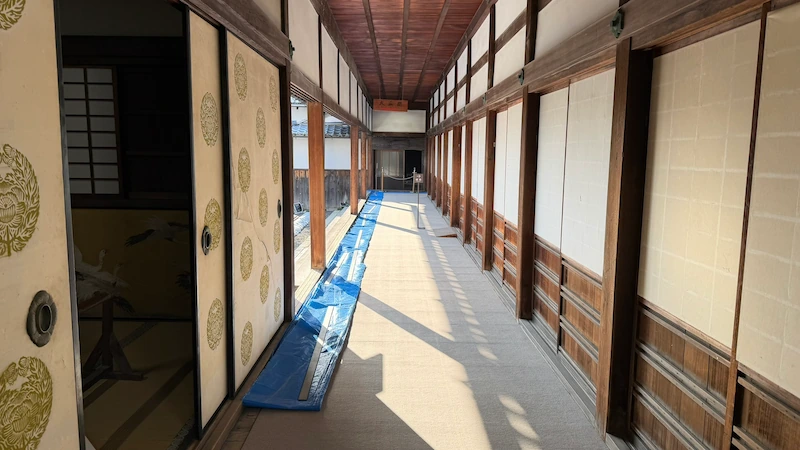
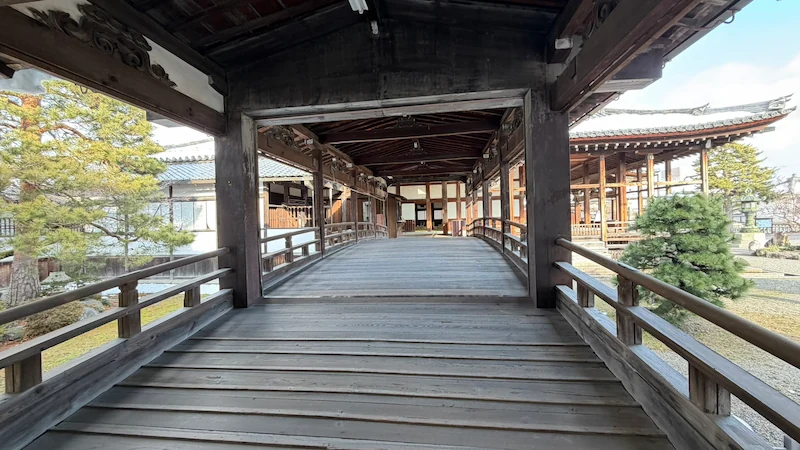
Walking through the interior, I found myself thinking of Nijō Castle in Kyoto — not because of comparable grandeur, but because of the same quality of spatial tension: the way each room transitions into the next, how the atmosphere shifts as you move along the corridors, the way sightlines are composed to keep you slightly on edge. The building is the exhibit. There’s a stillness that seems to regulate your breathing. Rather than following display cases, you immerse yourself in the ma — the charged negative space — of the architecture itself. For any history enthusiast, the interior admission fee is absolutely worth paying. The more you know going in, the more you’ll get out of it. But even without that knowledge, the sense that something significant once happened here lingers clearly in every room.
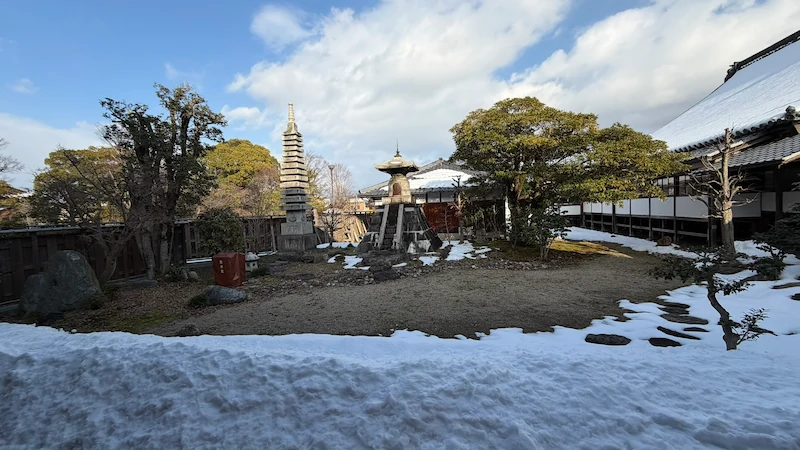
Daitsu-ji also offers something rare: architecture, painting, and garden design experienced as a unified whole. The sliding door paintings in the Ganzan-ken and Rantei reception halls are attributed to masters of the Kanō school and Maruyama Ōkyo — both giants of Japanese art history. The gardens are designated a National Place of Scenic Beauty, featuring a dry landscape garden (karesansui) that borrows Mt. Ibuki as its backdrop, and a pond garden crossed by an arching bridge. Just minutes from the bustle of the castle town, you’re transported into an entirely different kind of stillness.
The arc of this place is remarkable: the castle town Hideyoshi built, the memory of Fushimi Castle carried here in the form of its architecture, and the patronage of early Edo-period power brokers who ensured it all endured. Walking from the gate to the main hall to the garden, the history of Nagahama doesn’t unfold as a flat timeline — it rises around you in three dimensions. I came to Nagahama for the Taiga Drama Museum, and left having touched something far older and denser. Daitsu-ji is that kind of place — the one that quietly upends your expectations.
| Founded / Built | (As a temple) Said to have taken the name “Daitsu-ji” during the Keichō era (1596–1615), later relocated to its present site / (Main Hall) Believed to date to around Meireki 3 (1657), based on inscriptions on the gilt bronze ornaments (giboshi) |
|---|---|
| Builder / Patron | Unknown (Ii Naotaka is cited as a key patron of its reconstruction and establishment) |
| Structure & Features | Main Hall: a large single-story, hip-and-gable (irimoya-zukuri) Jōdo Shinshū main hall with traditional roof tiles / said to be a relocated structure from Fushimi Castle. Other structures with reputed castle origins include the Grand Hall (ōhiroma) and the Kitchen Gate (said to be the former main gate of Nagahama Castle) |
| Renovations | Main Hall: major repairs and retiling during the Genbun era (1736–41) / Main Gate: major repairs including retiling, 2013–2015 / Kitchen Gate: dismantled and repaired in 1913, and again in 2010–2011 |
| Current Status | Major structures and gardens survive |
| Destruction / Damage | No records of major destruction or catastrophic damage found in reliable primary sources |
| Cultural Property Designation | Main Hall and Grand Hall: National Important Cultural Property (designated March 26, 1915) / Ganzan-ken and Rantei Gardens: National Place of Scenic Beauty (designated December 28, 1934), among others |
| Notes | A tradition holds that the Main Hall was “the very room where Hideyoshi held his war councils before the Korean campaigns” |
🗺 Address: 32-9 Motohamacho, Nagahama, Shiga
🚶 Access
Nearest station: 11-minute walk from JR Nagahama Station (approx. 780m)
⏳ Time Estimate
Quick visit: approx. 20 minutes
Thorough exploration: approx. 1 hour
📍 Highlights
- Main Hall (said to be relocated from Fushimi Castle): The sheer scale of this great Jōdo Shinshū main hall is a sight in itself. Together with the tradition of its Fushimi Castle origins, the building is deeply embedded in the story of Nagahama and its castle-town history.
- Ganzan-ken, Rantei and the Gardens (National Place of Scenic Beauty): A dry rock garden (karesansui) at Ganzan-ken frames Mt. Ibuki in the distance; the Rantei pond garden features a graceful arching bridge. Architecture, painting, and garden design are experienced here as one.
- Seasonal highlights: A summer memorial service period is held around July 2–10, during which the interior of the main gate is reportedly opened to visitors. As schedules can vary by year, confirm with the temple or official sources before your visit.
📌 Trivia
- Unexpected historical footnote: The Main Hall is traditionally described as a structure relocated from Fushimi Castle, with a construction date of around Meireki 3 (1657) suggested by inscriptions on the gilt ornaments. It’s a rare example of castle memory preserved through temple architecture — history transplanted rather than erased.
- Something few visitors know: The Kitchen Gate is traditionally identified as the former main gate of Nagahama Castle. Its metal fittings and other evidence reportedly point to a construction date of Tenshō 16 (1588). Standing here, you’re tracing the memory of the entrance to an entire castle town.
- Connection to historical figures: Daitsu-ji’s story is inseparable from Nagahama’s founding as a castle town under Hideyoshi. The tradition that the Main Hall was the room where Hideyoshi held his war councils before the Korean campaigns gives the building a weight that goes beyond its architecture alone.
Nagahama Castle (Nagahama Castle History Museum / Hōkō Park)
⭐ Recommended Rating
Historical Significance:[☆☆☆]
Visual Appeal:[☆☆]
Experiential Value:[☆☆]
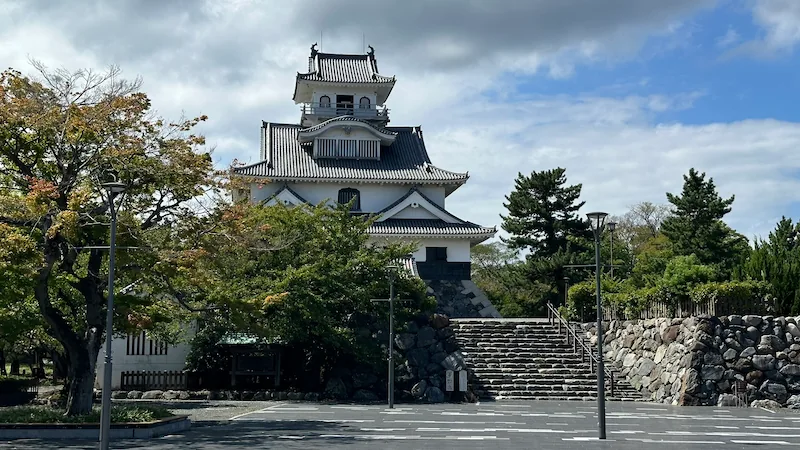
A white-walled keep rises cleanly against the shimmering surface of Lake Biwa. This is the site of Nagahama Castle — the stage on which Hashiba Hideyoshi (later Toyotomi Hideyoshi), entrusted with northern Ōmi by Oda Nobunaga after the fall of the Azai clan, renamed the village of Imahama to “Nagahama” and built an entirely new castle and castle town from the ground up. His story-arc begins here. By around the autumn of Tenshō 3 (1574), the castle was ready, and Hideyoshi moved in from neighboring Odani Castle, using this lakeside fortress as his base for campaigns north and west. The castle was designed to incorporate Lake Biwa — drawing on the water, accommodating boat traffic — a concept that captured Hideyoshi’s instinct for integrating logistics and military strategy into a single, elegant solution.
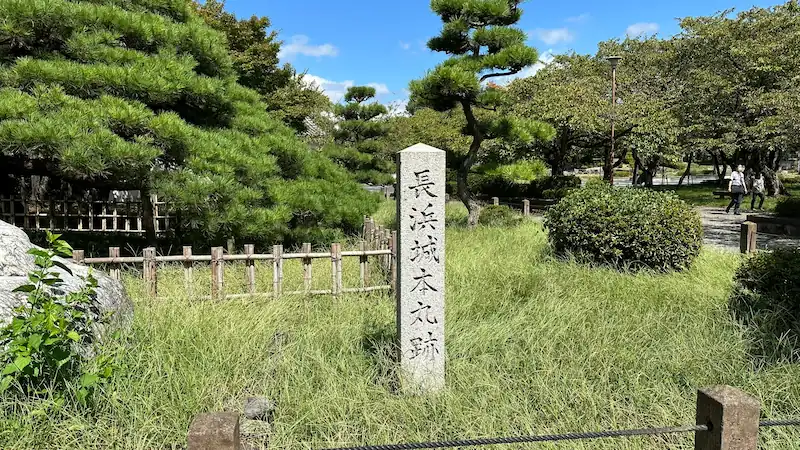
Keeping all of this running — the castle town, the domain, the daily administration — fell largely to his younger brother, Toyotomi Hidenaga. During the many periods when Hideyoshi was away on campaign, Hidenaga is believed to have managed the construction progress, administered the territory, and held the domain together. Where Hideyoshi chased battlefield glory, Hidenaga grounded everything in patient, steady governance. Nagahama is one of the clearest places in Japan to see the division of labor between these two brothers in action.
After the fall of the Toyotomi clan in the early 17th century, Nagahama Castle was dismantled, and much of its stonework and materials were reportedly repurposed in the construction of nearby Hikone Castle — itself now a UNESCO World Heritage Site. The castle-shaped building that stands on the site today is a modern reconstruction, completed in 1983 through a civic fundraising effort, and serves as a history museum. It’s the best place in Nagahama to trace the political and economic life of the castle town through exhibits — and the lake views from the upper floors are not to be missed.
| Founded / Built | Construction began around Tenshō 1 (1573); completed around autumn of Tenshō 3 (1574) |
|---|---|
| Builder | Hashiba Hideyoshi (Toyotomi Hideyoshi) |
| Structure & Features | Flatland castle on the shores of Lake Biwa / water castle (mizujiro) — a fortress designed to incorporate the lake |
| Renovations / Reconstruction | Hōkō Park opened in 1909 (Meiji 42) / Reconstruction project began in 1981 (Shōwa 56) → Museum opened 1983 (Shōwa 58) as a castle-style history museum |
| Current Status | Original keep no longer survives (castle ruins). Site is now open to the public as a replica castle housing a history museum |
| Destruction / Damage | Dismantled after the fall of the Toyotomi; materials including stonework are said to have been reused in the construction of Hikone Castle |
| Cultural Property Designation | Nagahama Castle Site: Designated Historic Site by Nagahama City |
| Notes | Hidenaga is believed to have supported his brother by overseeing construction progress and managing domain administration |
🗺 Address: 10-10 Kōencho, Nagahama, Shiga
🚶 Access
Nearest station: 5-minute walk from JR Hokuriku Main Line Nagahama Station (approx. 350m)
⏳ Time Estimate
Quick visit: approx. 20 minutes
Thorough exploration: approx. 1 hour
📍 Highlights
- The “water castle” setting and lakeside views: The castle’s placement with Lake Biwa at its back is the defining feature of Nagahama. Standing here, with the lake wind on your face, you grasp why a Warring States commander would think to build a fortress that works with the water rather than against it.
- Castle-style history museum exhibits: Built on the castle ruins and dedicated to the history of Nagahama and its connection to Hideyoshi, this museum makes an excellent introduction to the broader story. The reconstruction effort itself is also worth knowing about — a piece of modern civic history.
- Seasonal highlights: In spring, the grounds burst into bloom with roughly 600 cherry trees — making a stroll here one of the finest hanami (cherry blossom viewing) experiences in the region.
📌 Trivia
- Unexpected historical footnote: Once the castle was complete, Hideyoshi renamed the town from “Imahama” to “Nagahama” — the very name of the town is a relic of Warring States-era political strategy.
- Something few visitors know: After the Toyotomi fall, the castle was dismantled and its stonework reportedly reused at Hikone Castle — meaning pieces of Nagahama Castle may still be standing a short distance away.
- Connection to historical figures: While Hideyoshi pushed outward on campaign after campaign, Hidenaga is thought to have held the domain together from within — managing construction and administration. Their partnership was the engine that drove Nagahama forward.
Related Sites Within the Castle Grounds
Bronze Statue of Toyotomi Hideyoshi
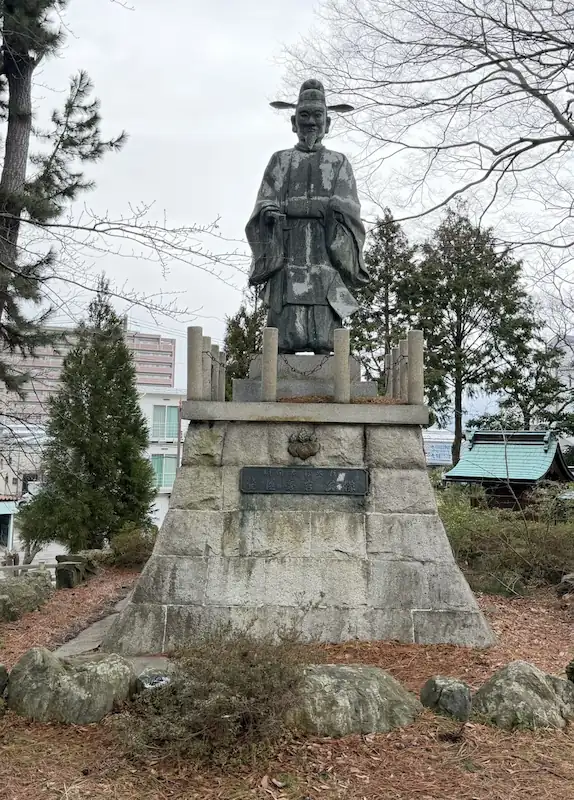
Inside Hōkō Park, where Nagahama Castle stands, you’ll find a bronze statue of Toyotomi Hideyoshi — a fitting symbol of the city’s origins as a castle town. It’s an easy photo stop during a leisurely walk through the grounds.
The statue was donated and installed in 1971 (Shōwa 46) in honor of Hideyoshi’s legacy and enduring connection to Nagahama.
Taikō-i Well Site
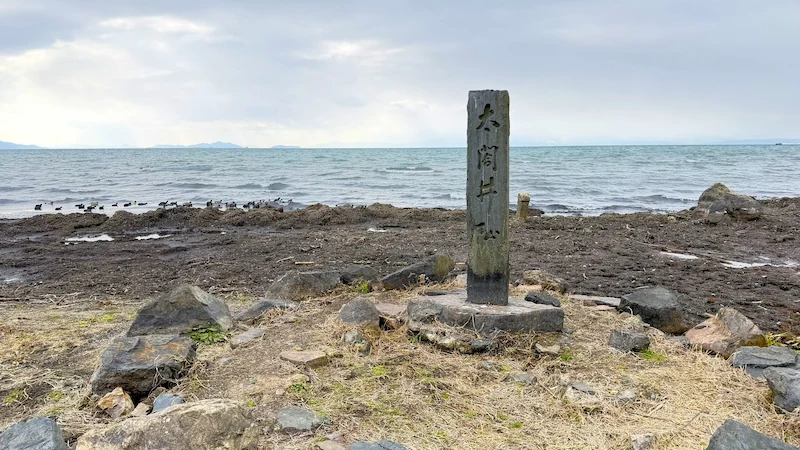
On the lakeshore side of the former castle grounds stands the “Taikō-i Well Site” — traditionally said to be a well that served Nagahama Castle during Hideyoshi’s tenure. (Taikō, literally “retired regent,” is the honorific title commonly used for Hideyoshi in popular culture.) In 1939 (Shōwa 14), a severe drought lowered Lake Biwa’s water level enough to expose the well remains, including what is said to have been a wooden frame surrounding the opening. Today, a stone marker reading “Taikō-i Site” stands on the lakeshore, surrounded by a protective stone enclosure. When lake levels are high the site can be hard to reach; during dry periods, the traces become more visible.
Keep (Tenshu) Ruins
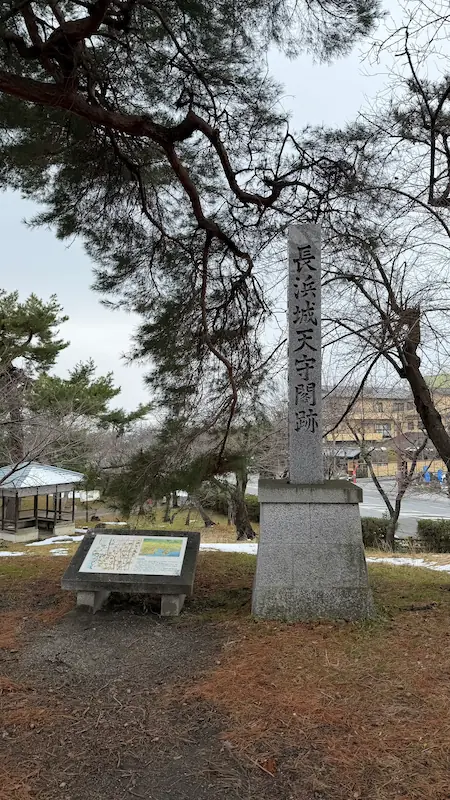
The “Keep Ruins” mark the central area of Nagahama Castle (the main bailey, or honmaru) where the original tower keep is believed to have stood. The castle-shaped building visible in the park today — the Nagahama Castle History Museum — is a postwar reconstruction, and its location and appearance do not replicate the original keep precisely. A stone marker stands at the ruins site, and excavations have uncovered partial stone foundation remains and structural traces, though many aspects of the castle’s original layout remain unclear.
Related Sites Outside the Castle Grounds
Nagahama Castle Stable Ruins
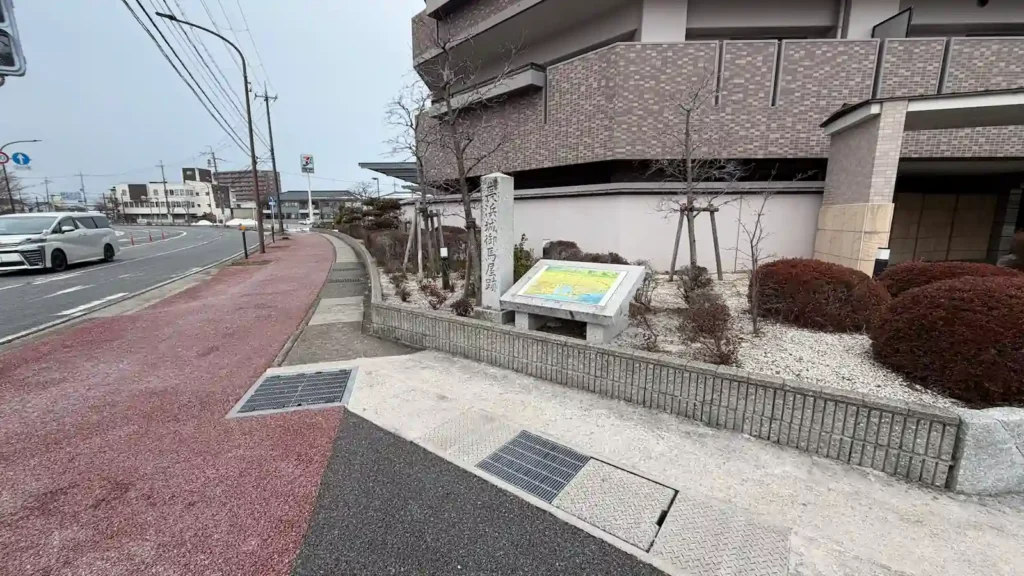
Only a stone marker remains in front of a condominium building. This spot is traditionally said to have been the site of the castle’s stables and training ground.
Nagahama Castle Main Gate Ruins (Ōtemon)
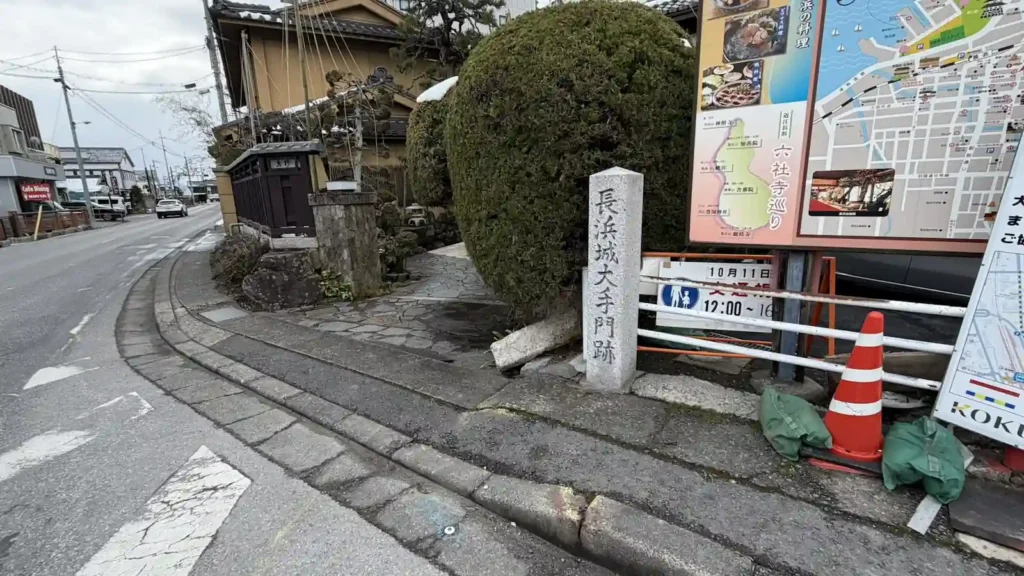
Found along the route between Toyokuni Shrine and Daitsu-ji Temple. Nothing remains but a stone marker today, but it’s worth pausing here to imagine the grand main gate that once stood on this very spot — the same gate now said to stand at Daitsu-ji, relocated and preserved through the centuries.
Nagahama Castle Main Gate (Ōtemon) — Now at Daitsu-ji
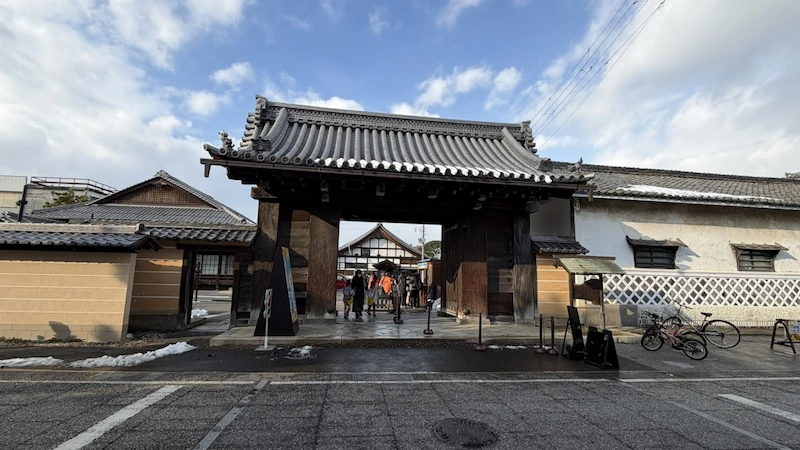
The gate traditionally identified as Nagahama Castle’s main gate stands to the left of Daitsu-ji’s imposing main temple gate (sanmon). The sanmon is so grand that the castle gate can seem small by comparison — but viewed on its own terms, it has genuine presence and scale. It’s easy to walk straight past it, distracted by the main gate’s grandeur, so make a point of looking to the left as you enter.
Nagahama Castle Outer Moat Ruins
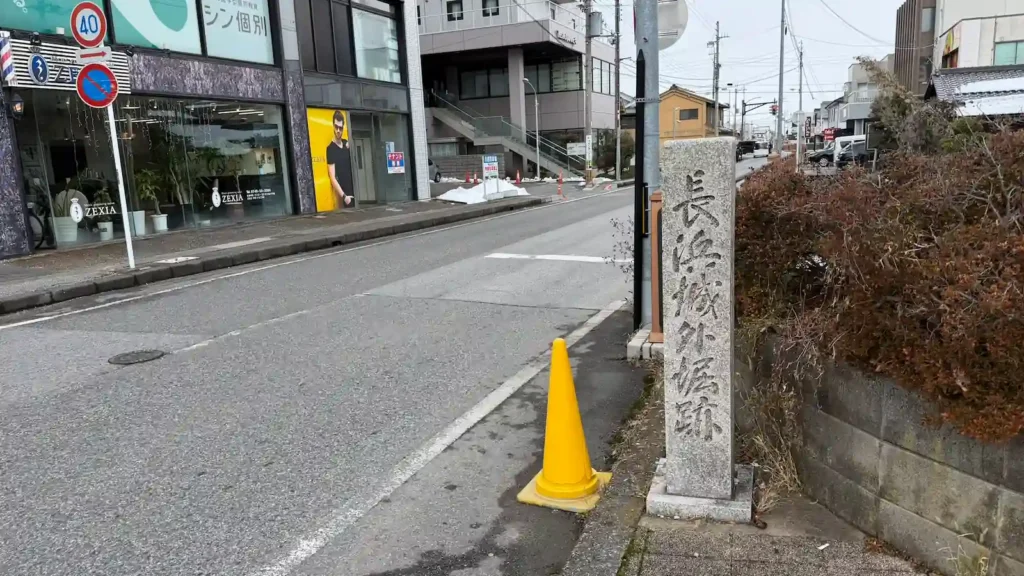
A stone marker stands a short walk from the station, embedded in what is now a thoroughly ordinary street scene. There’s nothing dramatic here — but that’s exactly the point. Knowing that a defensive moat once ran through this now-unremarkable stretch of pavement is part of the pleasure of tracing a historical site through a living city.
Rear Castle Gate (Karamete-mon) — Now at Chizen-in Temple
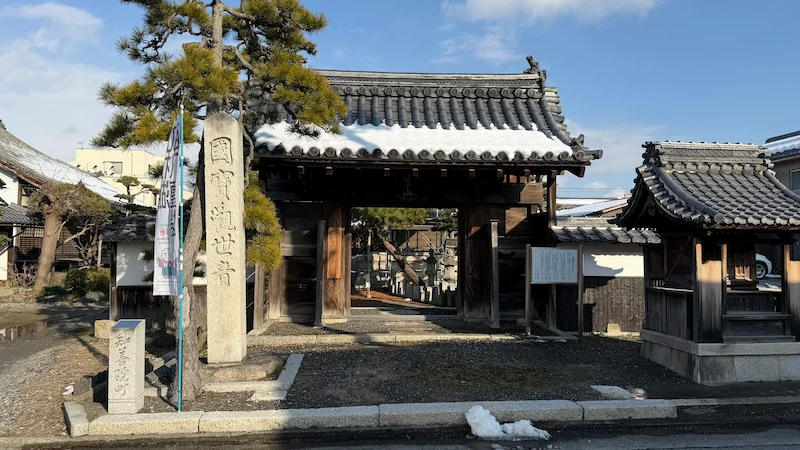
Nagahama Castle’s rear gate (karamete-mon — the secondary, less formal entrance used for troop movements and deliveries) has been relocated and now serves as the front gate of Chizen-in Temple. Arriving to find a modest, unpretentious temple gate, it’s easy to overlook its origins — but knowing that this quiet wooden structure is a surviving fragment of an actual Warring States castle gives it a quiet dignity that grows on you.
Nagahama Toyokuni Shrine
⭐ Recommended Rating
Historical Significance:☆☆
Visual Appeal:☆☆
Experiential Value:☆☆
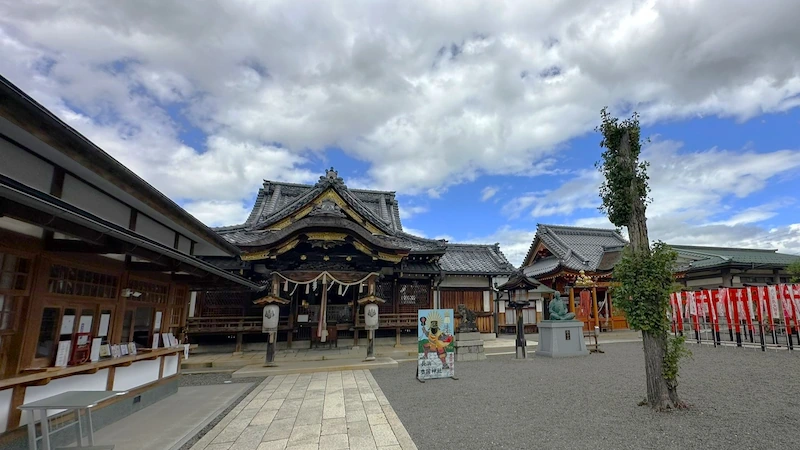
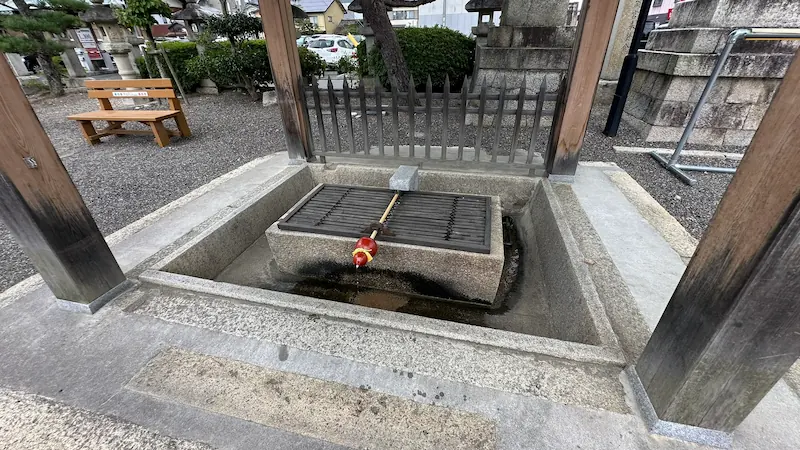
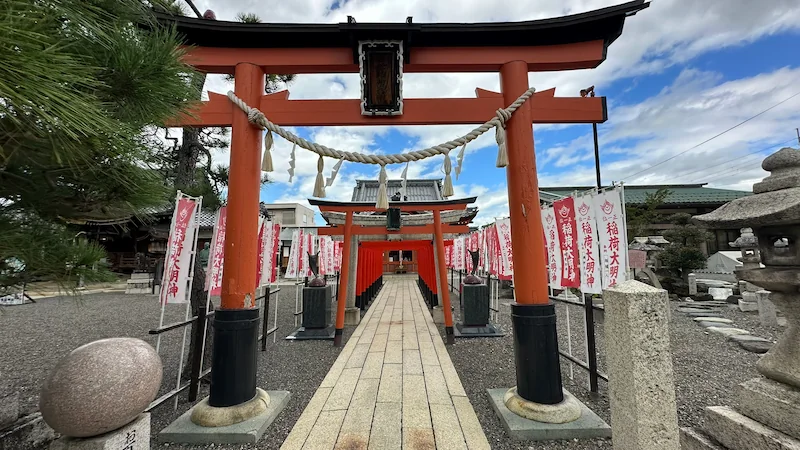
The moment you step into Nagahama, it’s clear you’re in “Taikō-san’s town” — the town of Hideyoshi, the man the locals still call by his affectionate honorific. In the spring of Tenshō 2 (1574), Hashiba Hideyoshi broke ground on both the castle and the townscape, governing the region with a light touch for roughly a decade. His bond with the townspeople ran deep: a vermilion-sealed document exempting them from certain taxes reportedly remained in effect as a privilege all the way into the late Edo period, more than two centuries after his death. That deep-rooted affection among the townspeople was the driving force behind the shrine built in Hideyoshi’s honor after his death in 1598, modeled on the grand Toyokuni Mausoleum established for him in the hills east of Kyoto. The shrine was demolished under the Tokugawa shogunate, which prohibited the deification of Hideyoshi — a reminder of how thoroughly the new regime sought to suppress the Toyotomi legacy. But the townspeople refused to let him go. Ten appointed families took turns sheltering the sacred effigy in their own homes, and in 1793 (Kansei 5), they erected an Ebisu shrine (a deity of commerce and good fortune) as a public front, while quietly continuing to enshrine Hideyoshi in the inner sanctuary. For four hundred years, that devotion has been the heartbeat of this neighborhood. Standing before the altar, it’s impossible not to think of Toyotomi Hidenaga — the brother who quietly held the political machinery together while Hideyoshi commanded the spotlight. The brothers’ duet was what gave Nagahama’s path to national power its real momentum. Architecturally, the shrine repays a close look: the main sanctuary features a cypress-bark-thatched karahafu (a dramatic, wave-shaped ornamental gable), the haiden worship hall has a chidorihafu gabled roof, and the inner shrine is built in the shinmei-zukuri style with forked roof finials (chigi) and log purlins (katsuogi) characteristic of ancient Shinto architecture. The Inari sub-shrine’s coffered ceiling is painted with a cycle of seasonal birds and flowers; the small gourd-shaped pond echoes Hideyoshi’s famous personal symbol. Small details carrying the weight of centuries are scattered throughout.
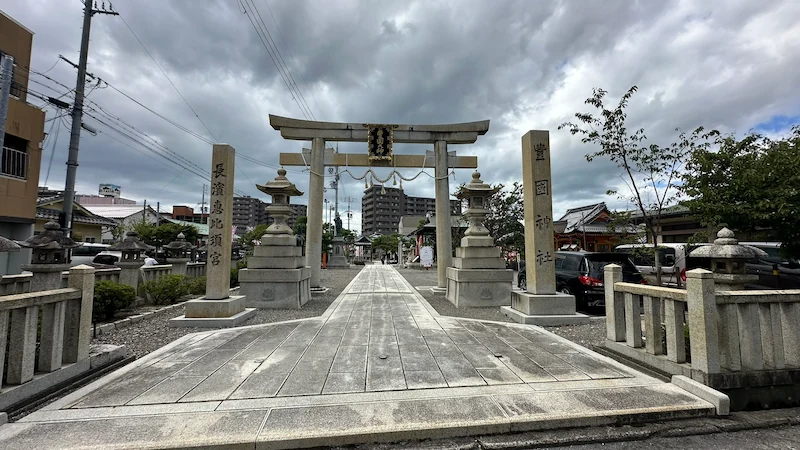
| Founded / Built | Established in Keichō 5 (1600) |
|---|---|
| Founder | The townspeople (machishū) of Nagahama |
| Structure & Features | Main sanctuary: cypress-bark-thatched karahafu (wave-shaped gable) on the front porch / haiden worship hall with chidorihafu gabled roof / inner shrine (shinden) in shinmei-zukuri style with chigi finials, katsuogi log purlins, and copper-sheet roofing (built mid-Edo period) |
| Renovations / History | Demolished under the Tokugawa shogunate → 1793 (Kansei 5): Ebisu shrine erected as public front, Hideyoshi enshrined secretly in inner sanctuary → 1846 (Kōka 3): renamed “Toyō Shrine (Minori Shrine)” → 1898 (Meiji 31): new shrine buildings constructed for the 300th anniversary of Hideyoshi’s death → 1920 (Taishō 9): officially permitted to use the name “Toyokuni Shrine” |
| Current Status | Shrine buildings survive (inner shrine = mid-Edo period; haiden = modern style, etc.) |
| Destruction / Damage | Demolished under the Tokugawa shogunate, which forbade the deification of Hideyoshi |
| Cultural Property Designation | Not confirmed as a designated cultural property (not listed in the Nagahama City Register of Designated Cultural Properties as of August 6, 2025) |
| Notes | The Tōka Ebisu festival traces its origins to the construction of the Ebisu shrine in 1793 / Enshrined deities: Toyotomi Hideyoshi, Katō Kiyomasa, Yaekotoshironushi no Mikoto (Ebisu), Kimura Nagato-no-kami Shigenari |
🗺 Address: 6-37 Minami-Gofukumachi, Nagahama, Shiga
🚶 Access
Nearest station: 3-minute walk from JR Hokuriku Main Line Nagahama Station (approx. 240m)
⏳ Time Estimate
Quick visit: approx. 20 minutes
Thorough exploration: approx. 1 hour
📍 Highlights
- The shrine’s architectural vocabulary: Cypress-bark-thatched karahafu, chidorihafu gable, shinmei-zukuri inner shrine with chigi and katsuogi — a single compact compound packs in a showcase of traditional Shinto architectural styles.
- The Inari sub-shrine’s coffered ceiling and encircling walkway: The haiden’s ceiling is painted with seasonal birds and flowers across every panel — look up and you’ll find it unexpectedly vivid. The surrounding stone-paved walkway is structured for the okage-mairi — a traditional form of repeated circular prayer that turns the act of walking itself into worship.
- Seasonal highlights: January’s Tōka Ebisu (a popular festival of good fortune for the new business year) and October’s Taikō Festival (featuring a samurai procession) bring an energy to the normally quiet grounds that has to be experienced firsthand.
📌 Trivia
- Unexpected historical footnote: During the Edo period, when the shogunate forbade the veneration of Hideyoshi as a god, the townspeople kept his effigy alive by passing it between ten designated households — quietly defying the official ban for generations.
- Something few visitors know: The “Reiseki Toraishi” (Spirit Stone Tiger Stone) beside the gourd-shaped pond carries a remarkable legend — said to have been moved here when Nagahama Castle was dismantled in 1615, the stone reportedly cried out at night wherever it was placed, until it was finally returned to Toyokuni Shrine, whereupon it fell silent.
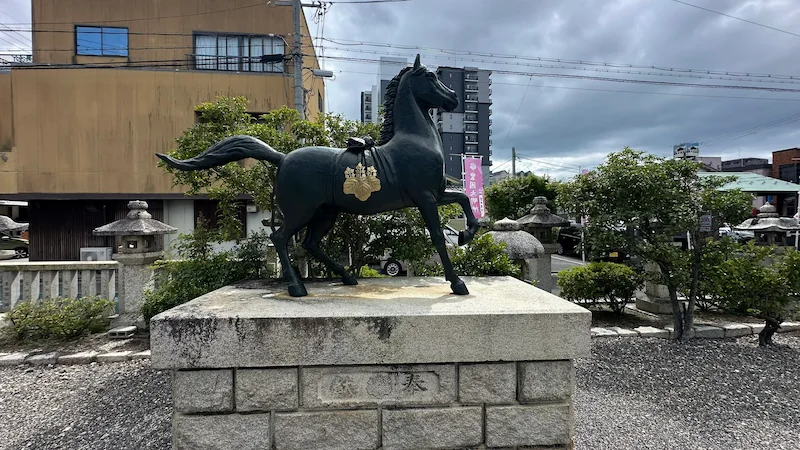
- Connection to historical figures: Katō Kiyomasa — one of Hideyoshi’s most celebrated generals, revered as a loyal retainer raised in the Taikō’s own household — is enshrined here alongside Hideyoshi, and a bronze statue of Kiyomasa stands within the grounds. Together, their presence lets you trace the Toyotomi story from multiple angles within a single visit.
Chikubushima Island (Hogon-ji Temple & Tsukubu-sushima Shrine)
⭐ Recommended Rating
Historical Significance:☆☆☆
Visual Appeal:☆☆☆
Experiential Value:☆☆☆
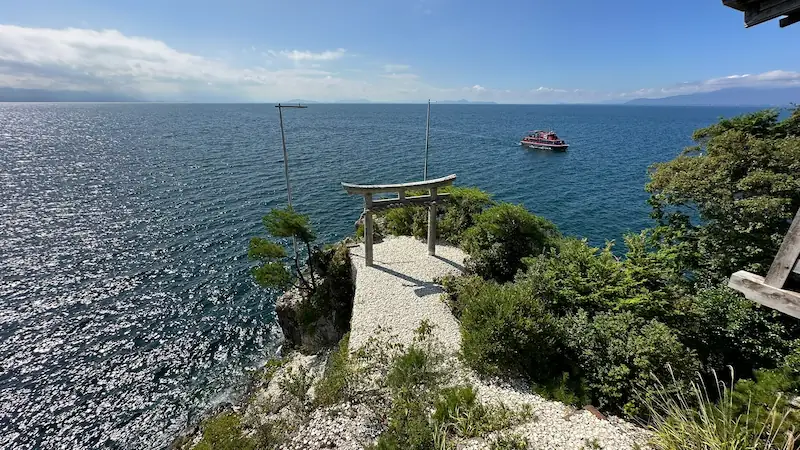
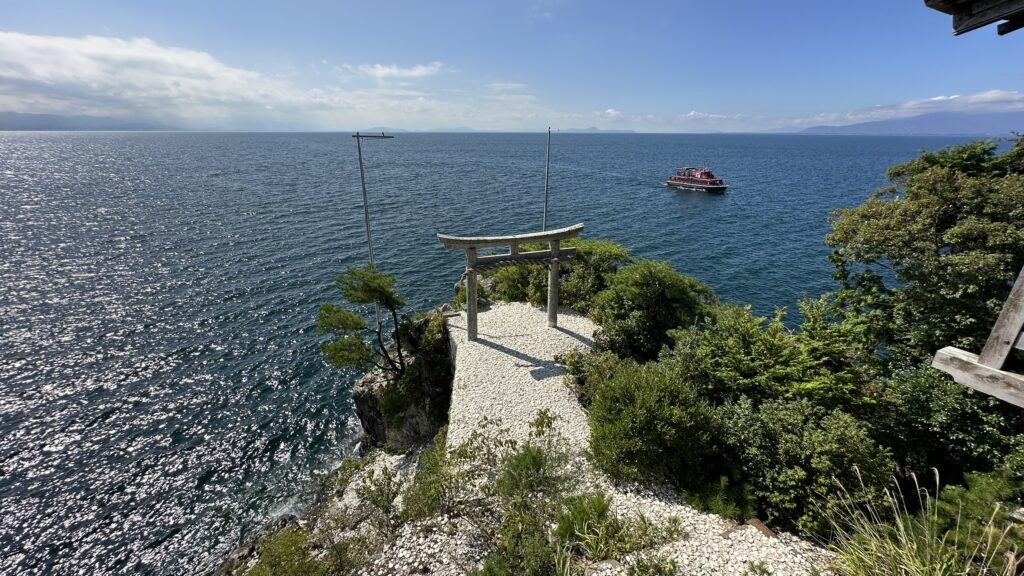
About six kilometers offshore from Nagahama, Chikubushima rises as a small green silhouette from the blue of Lake Biwa. Getting there — crossing the water — is itself the beginning of the pilgrimage. According to tradition, Hogon-ji Temple was founded in 724 (Jinki 1) by the monk Gyōki on imperial orders from Emperor Shōmu. The island has since become a sacred site where Benzaiten (the goddess of water, music, and eloquence), Kannon (the bodhisattva of compassion), and the Shinto deities of Tsukubu-sushima Shrine coexist in an atmosphere of syncretic faith — the blending of Buddhism and Shinto that shaped Japanese spiritual life for over a thousand years before the Meiji-era separation of the two traditions. That atmosphere still permeates the stone steps of the approach.
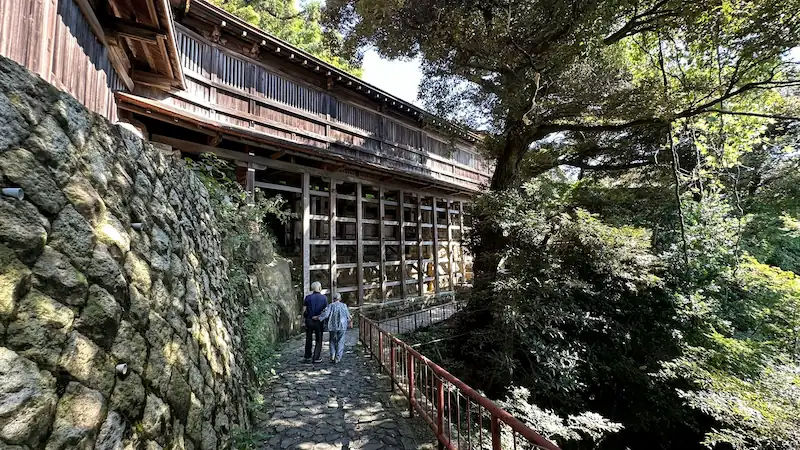
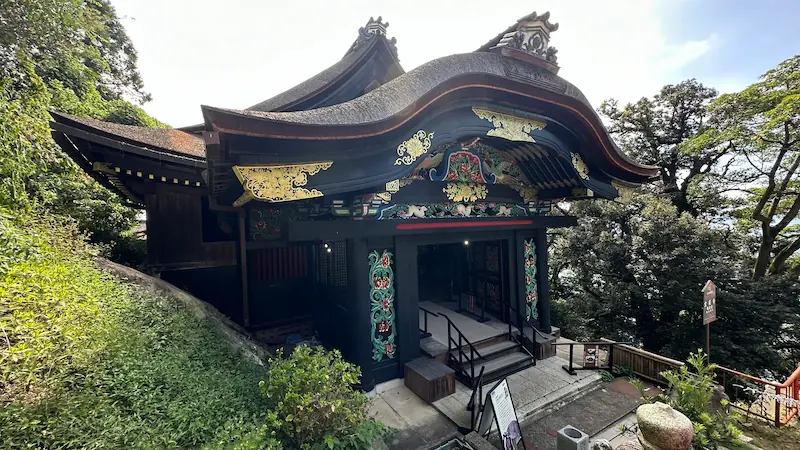
What makes this island inseparable from the Toyotomi story is its architecture — buildings that carry history in their very structure. Hogon-ji’s National Treasure gate, the Karamon, is said to have been relocated here in Keichō 8 (1603) by Toyotomi Hideyori (Hideyoshi’s son), under the supervision of chief administrator Katagiri Katsumoto, along with the Kannon Hall. Its black lacquer, ornate metal fittings, and blazing polychrome carvings are pure Momoyama — an aesthetic that equated visual splendor with political authority. The gate’s lineage goes deeper still: it is traditionally said to have been the “Gokurakumon” (Gate of Paradise) of Hideyoshi’s mausoleum at Toyokuni Shrine in Kyoto’s Higashiyama, which was itself said to have incorporated the ornamental karahafu facade of the “Gokuraku-bashi,” the spectacular bridge-corridor connecting the northern and second baileys of Osaka Castle. Recent research comparing the gate’s features with period screen paintings of Osaka Castle suggests the resemblance is too close to dismiss as coincidence — lending the tradition a weight that transcends mere legend. The National Treasure main hall of Tsukubu-sushima Shrine is similarly layered: its core structure is the building donated and relocated by Hideyori in Keichō 7 (1602), combined with sections rebuilt during the Warring States period — a compound history that reflects the Toyotomi family’s continuing devotion to the island as a guardian deity long after Hideyoshi’s death.
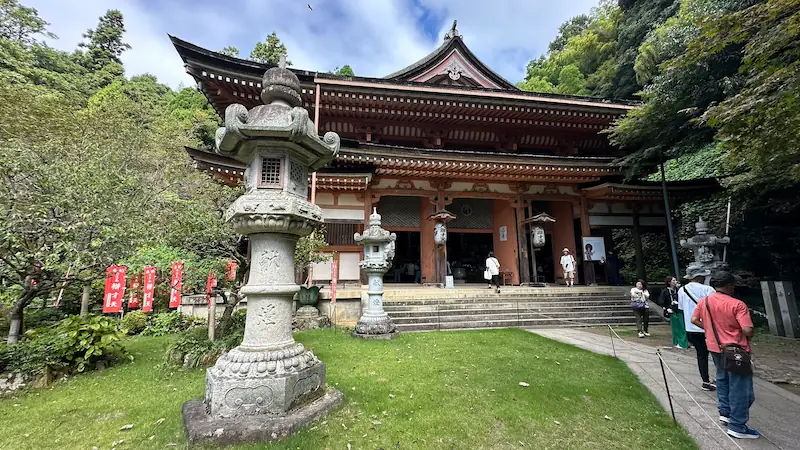
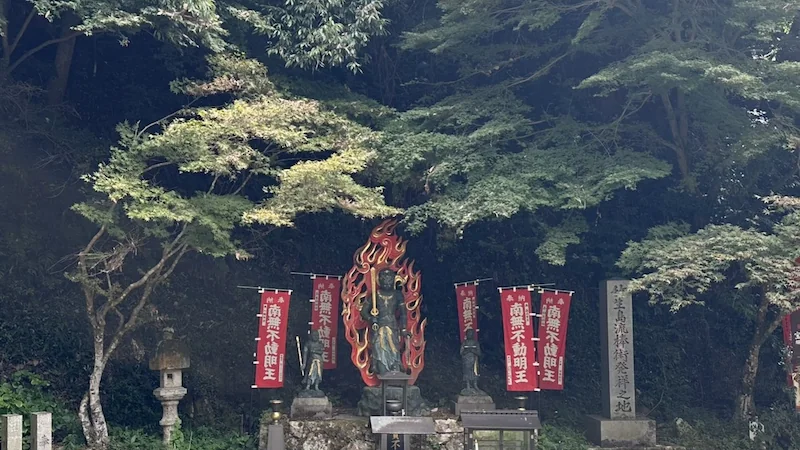
For Hideyoshi, Nagahama was where he first truly put down roots as a castle lord. Historical records suggest that timber stored on Chikubushima was actually transported to the mainland for use in building Nagahama Castle — the island was not merely a place of prayer but a practical node in the logistics of construction. Hidenaga, who was central to managing the domain during those Nagahama years, left little direct evidence of personal involvement with the island; contemporary sources linking him specifically to Chikubushima are scarce. And perhaps that’s exactly what makes the island so evocative for thinking about him. Where Hideyoshi’s prayers and offerings are inscribed in stone and lacquer, Hidenaga remains the unseen administrator — the man who kept everything functioning while his brother’s name was carved into history. That sense of a quiet, essential presence just beyond the frame is something you feel the moment you step off the ferry.
| Founded / Built | Hogon-ji Temple founded in 724 (Jinki 1) / Major structures completed 1602–1603 (Keichō 7–8), through relocations and donations by Toyotomi Hideyori |
|---|---|
| Builder / Patron | Gyōki (on imperial order from Emperor Shōmu) / (Momoyama-period construction) Toyotomi Hideyori (said to be fulfilling Hideyoshi’s dying wishes) |
| Structure & Features | A sacred island in Lake Biwa (approx. 2km in circumference) housing both Buddhist temple and Shinto shrine. National Treasure-designated Momoyama-period architecture (Hogon-ji Karamon gate and Tsukubu-sushima Shrine main hall) are concentrated here |
| Renovations | Three-story pagoda reconstructed in 2000, after approximately 350 years |
| Current Status | Principal temple and shrine buildings survive and are open for worship |
| Destruction / Damage | Tsukubu-sushima Shrine main hall destroyed by fire in 1558; rebuilt during the Warring States period |
| Cultural Property Designation | National Treasures: Hogon-ji Karamon gate / Tsukubu-sushima Shrine main hall; Important Cultural Property: Funa-rōka (Boat Corridor); National Place of Scenic Beauty and Historic Site: Chikubushima (also registered as Japan Heritage) |
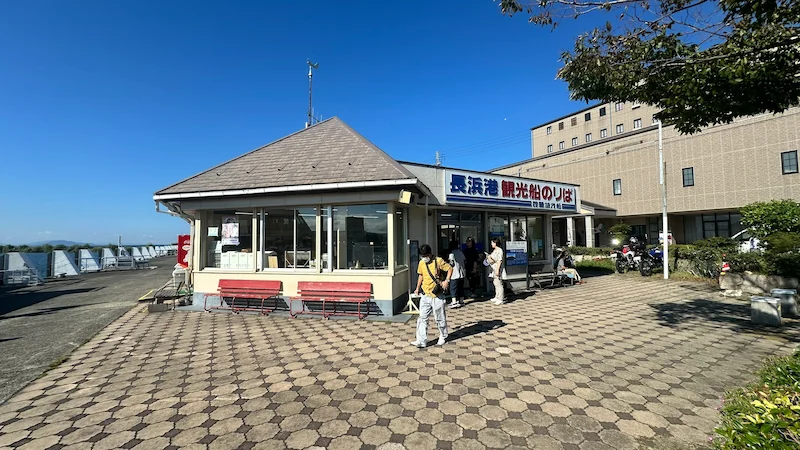
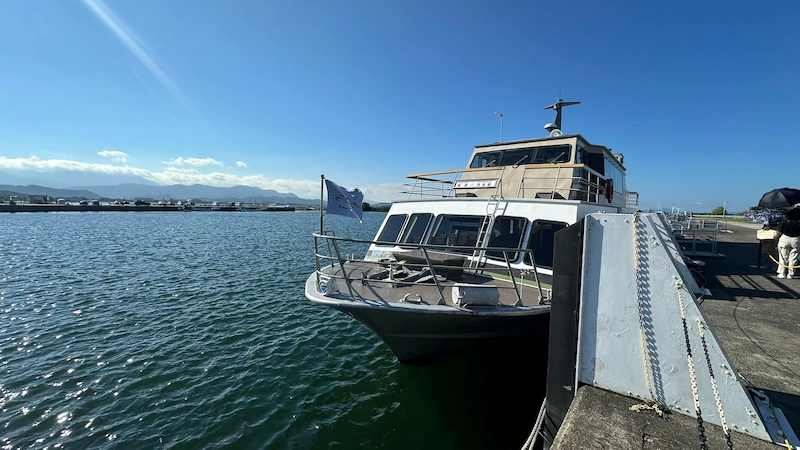
| Notes | Approx. 30-minute cruise from Nagahama Port. The crossing itself is the core of the pilgrimage experience |
🗺 Address: 1664-1 Hayasakicho (Chikubushima), Nagahama, Shiga
🚶 Access
Nearest station: 9-minute walk from JR Hokuriku Main Line Nagahama Station (approx. 700m), then approx. 35 minutes by ferry
⏳ Time Estimate
Quick visit: approx. 150 minutes
Thorough exploration: approx. 4 hours
📍 Highlights
- Hogon-ji “Karamon” Gate (National Treasure): Black lacquer, gold fittings, blazing polychrome carvings. The Momoyama aesthetic of “authority made visible” is compressed into a single gateway bay.
- Tsukubu-sushima Shrine “Main Hall” (National Treasure) and Kawarake-nage: After taking in the opulence of the Momoyama interior, step outside for kawarake-nage — the tradition of hurling small unglazed clay saucers off the cliff toward a torii gate standing in the lake, as an act of prayer. The saucer dissolves into the landscape, and the wish dissolves into the water.
- Seasonal highlights: The Chikubushima Festival (June 10–15) is the liveliest time on the island.
📌 Trivia
- Unexpected historical footnote: During the preparations for building Nagahama Castle, timber stored on Chikubushima was transported to the mainland for use in construction — the island was woven into the fabric of the castle town’s founding from the very beginning.
- Something few visitors know: The “Funa-rōka” (Boat Corridor) — a covered walkway connecting the temple and shrine — is a designated Important Cultural Property. Its name derives from the tradition that its timber came from Hideyoshi’s personal flagship, the “Nihon-maru.”
- Connection to historical figures: The island’s two National Treasures — the Karamon gate and the shrine’s main hall — are both products of Toyotomi Hideyori’s donations after his father’s death, giving physical form to the family’s gratitude and ambition. Chikubushima is, in that sense, the Toyotomi legacy made stone and lacquer.



comment