


Nagoya Nakamura: A Walking Guide to Toyotomi Hideyoshi & Hidenaga's Birthplace
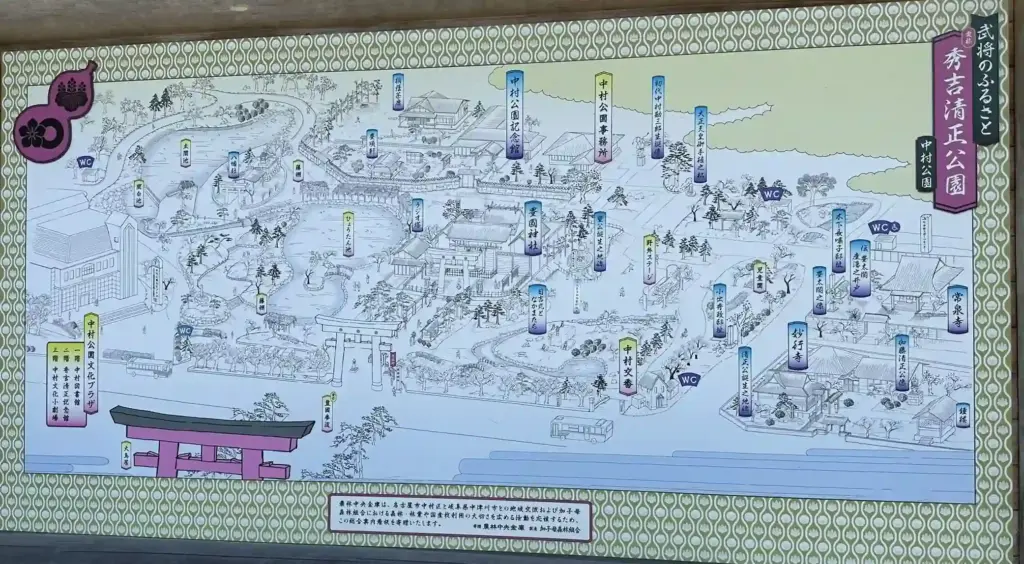
Nakamura Ward in Nagoya is traditionally remembered as the place where Toyotomi Hideyoshi and his younger brother Hidenaga spent their early childhood. From the grand torii at Toyokuni Shrine near the station to the birthplace monument, Josenji Temple's birth-well, and the free Hideyoshi & Kiyomasa Memorial Museum, the highlights are all packed within walking distance.
On This Page
For those planning a visit inspired by the 2026 Taiga drama "Toyotomi Brothers!" — the story of Hideyoshi and his brother Hidenaga — this guide is for you.
Nakamura Ward in Nagoya is remembered as the starting point of that story, where the Toyotomi brothers are said to have spent their early childhood.
From the grand torii at Toyokuni Shrine near the station, to the birthplace monument, Josenji Temple's birth-well, the holly tree associated with Hideyoshi, and the Hideyoshi & Kiyomasa Memorial Museum — these pilgrimage-worthy locations are packed tightly within walking distance.
In this guide, we summarize the highlights, access, and estimated visit times from the perspective of sites connected to the brothers — a Nakamura walking guide you'll want to follow the moment the Taiga drama begins.
Limited-time exhibition: the Toyotomi Museum / "Toyotomi Brothers!" Nagoya Nakamura Taiga Drama Exhibition Hall (inside Nakamura Park)
Overview
Inside Nakamura Park, the complex known as the "Toyotomi Museum" is open for a limited time to coincide with the 2026 NHK Taiga drama "Toyotomi Brothers!" In the paid exhibition hall, you can see costumes, props, and feature panels from the drama, offering a deeper look at the Toyotomi brothers' story.
Dates & hours
Dates: Saturday, January 24, 2026 to Monday, January 11, 2027
Hours: 9:00 a.m. to 5:00 p.m. (last admission at 4:30 p.m.)
Access: about a 10-minute walk north from Exit 3 of Nakamura-koen Station on the Higashiyama Line
Website: https://j-lppf3.jp/nagoya-nakamura-toyotomi/index.html
Admission fees
Generally open daily, but temporary closures or hour changes are possible. Please check the official website for the latest information before visiting.
| Main spots | 10 locations (Toyokuni Shrine's grand torii, Toyokuni Shrine, the birthplace monument, Hiyoshimaru and Friends, Josenji Temple, the birth-well, the holly tree, the Hideyoshi statue, the memorial museum, and Hachiman Shrine) |
|---|---|
| Cost | Most spots are free. The only paid attraction is the limited-time Toyotomi Museum / Taiga Drama Exhibition Hall (adults ¥800, children ¥400) |
| Time needed | A walk through the main spots: about 2–3 hours including walking time. Add the museum and exhibition hall for a leisurely half-day. |
| Nearest station | Nakamura-koen Station on the Higashiyama Line (Exits 2 and 3) |
| Limited-time event | Toyotomi Museum / Taiga Drama Exhibition Hall: January 24, 2026 – January 11, 2027 |
About places connected to the brothers
Nakamura Ward, Nagoya, is widely remembered as the origin point of the Toyotomi brothers, where Toyotomi Hideyoshi and his younger brother Hidenaga are said to have been born.
That said, most of the shrines, historic sites, and monuments that survive today were developed primarily to honor Hideyoshi, whose name is famous nationwide. Among the sites reviewed for this guide, very few were connected specifically to Hidenaga alone.For that reason, this guide focuses mainly on historic spots clearly associated with Hideyoshi that still exist on-site, while weaving in the context of Nakamura as the brothers' shared birthplace and guiding you through Hidenaga's footprint where possible.
Access at a glance
| Nearest station | Nakamura-koen Station on the Higashiyama Line (subway), Exits 2 and 3 |
|---|---|
| Practical Shinkansen station | Nagoya Station (Tokaido Shinkansen). A few stops from Nakamura-koen Station on the Higashiyama subway line (to be confirmed). |
| Travel time from major hub cities to Nagoya Station | From Tokyo: about 1 hour 40 minutes by Nozomi Shinkansen. From Shin-Osaka: about 50 minutes. From Kyoto: about 35–40 minutes. (Times vary by train type and time of day.) |
| Local mobility difficulty | Mostly flat roads through the park and residential streets, with almost no steep slopes or stairs — an easy area to explore on foot. |
| Recommended transport | Higashiyama subway line plus walking. All the main spots are within walking distance of Nakamura-koen Station. |
| Parking | Toyokuni Shrine and most other spots have no dedicated parking. A shared paid parking lot is available at the Nakamura Park Culture Plaza (26 spaces, including 1 for visitors with disabilities; open 9:00 a.m.–7:00 p.m.), but spaces are limited, so public transport is recommended. |
| Hours | Varies by spot. Hideyoshi & Kiyomasa Memorial Museum: 9:30 a.m.–5:00 p.m. Toyotomi Museum / Taiga Drama Exhibition Hall: 9:00 a.m.–5:00 p.m. (last admission 4:30 p.m.). Shrines, temple grounds, and monuments are generally viewable all day. |
| Cautions | Only the Toyotomi Museum / Taiga Drama Exhibition Hall charges admission (adults ¥800, children ¥400). It runs from January 24, 2026 to January 11, 2027, and is not accessible outside that period. |
Spot guide
The Grand Torii Gate of Toyokuni Shrine (Nagoya Nakamura)
A 24-meter gateway by the station — the entrance to a nation-builder's hometown
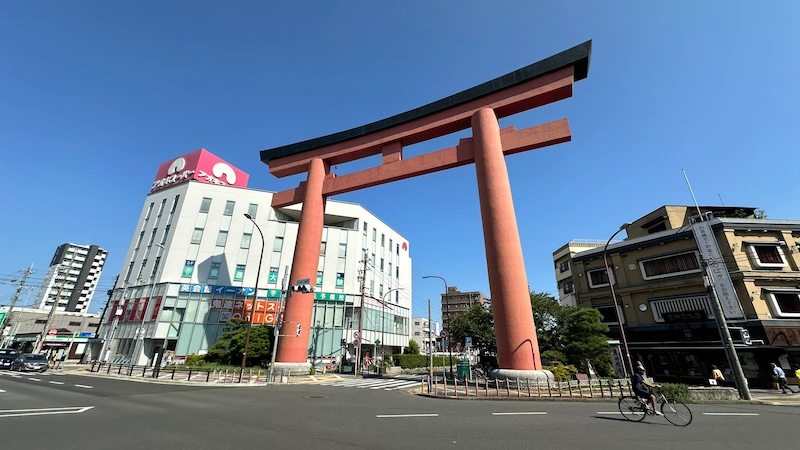
Toyokuni Shrine stands in Nakamura Ward, Nagoya, and the enormous torii gate rising at the entrance to its approach is both a neighborhood landmark and a symbolic gateway to sites connected to Toyotomi Hideyoshi. This grand torii marks the beginning of the shrine's approach and draws visitors into the atmosphere of a place remembered as Hideyoshi's birthplace. Its sheer height and presence give an unmistakable sense that you're standing near the starting point of the man who would one day unify Japan. Even today it's loved by locals and travelers alike, as the starting point for shrine visits, neighborhood strolls, and a powerful symbol linking Nagoya's present-day city life with its deep history.
Highlights
- Overwhelming scale: at over 24 meters tall, the grand torii commands attention even from a distance, evoking the idea of a nation's history in a single glance.
- The atmosphere of the approach: walk straight down the shrine's approach from the station and you'll feel everyday neighborhood life blending into history. On market days (held on dates ending in 9), the added bustle makes the connection between past and present even easier to sense.
- A crossroads of community and history: more than just a shrine entrance, this torii functions as a regional monument linking the Sengoku era and modern times, with pride in the neighborhood and memories of Hideyoshi still very much alive.
Access & visiting information
| Address | 453-0053 Kinoshita-Yashiki, Nakamura-cho, Nakamura-ku, Nagoya, Aichi (south side of Nakamura Park, near the entrance to Toyokuni Shrine's approach) |
|---|---|
| Access | Right outside Exits 2 and 3 of the Nagoya Municipal Subway Higashiyama Line's Nakamura-koen Station — the torii is close enough that it's usually the first landmark visitors notice. |
| Parking | There is no dedicated parking at Toyokuni Shrine. A paid shared parking lot is available at the Nakamura Park Culture Plaza, but spaces are limited, so using the subway is recommended. |
| Suggested time | Viewing the torii: about 5–10 minutes. Strolling from the approach to the main shrine buildings: about 20–30 minutes. |
| Admission | Free |
Open the map to check the location of The Grand Torii Gate of Toyokuni Shrine (Nagoya Nakamura).
Recommendation
Historical value: ☆☆ Visual appeal: ☆☆☆ Experiential value: ☆☆
Site data
| Year built | Completed in 1929; inauguration ceremony held on New Year's Day 1930. |
|---|---|
| Background | Built to commemorate the incorporation of the former Nakamura area into Nagoya City, proposed and funded by local supporters as a regional symbol. |
| Structure & features | A reinforced-concrete grand torii, approximately 24–24.5 m tall with pillars roughly 2.4–2.5 m in diameter, long cherished locally as the "Red Torii." |
| Repairs & upkeep | Repaired in 1970 and 1993. In recent years a "golden makeover" repainting concept has also been discussed as a way to draw renewed attention for local revitalization. |
| Current status | Still standing, maintained as the entrance to Toyokuni Shrine's approach and welcoming many worshippers and visitors. |
| Cultural property designation | No official cultural-property designation confirmed; managed as a local landmark. |
| Notes | The approach is lined with many stalls, and a market called "Ku-no-Ichi" is often held on days ending in 9, making the torii part of the area's living culture as well as its history. |
Trivia
- The first landmark you'll see: step out of Nakamura-koen Station and this torii is usually the first thing that catches your eye — an easy way to orient yourself toward Toyokuni Shrine and Nakamura Park.
- A modern rather than Sengoku-era structure: this isn't a surviving Sengoku-period ruin, but a 20th-century landmark built to honor Hideyoshi's memory — worth knowing so you don't mistake its age.
- Tied to a living local market: along the approach leading from the torii, a market called "Ku-no-Ichi" is held on days ending in 9, connecting this history walk to everyday neighborhood life.
Toyokuni Shrine (Nakamura Ward, Nagoya)
A Meiji-era shrine honoring Toyotomi Hideyoshi
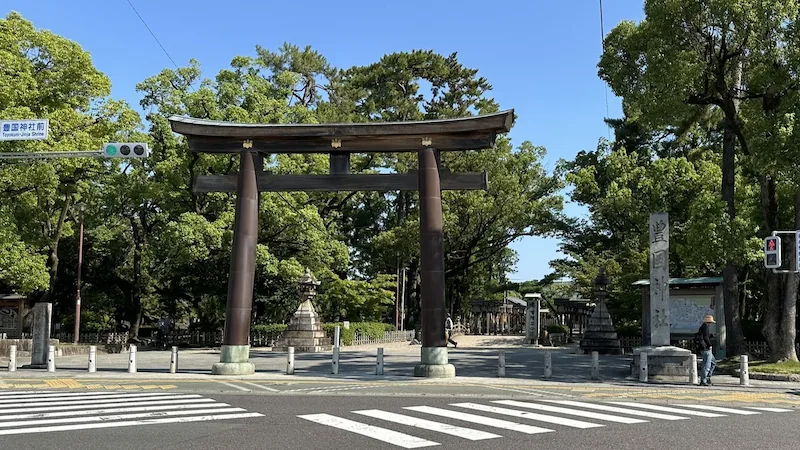
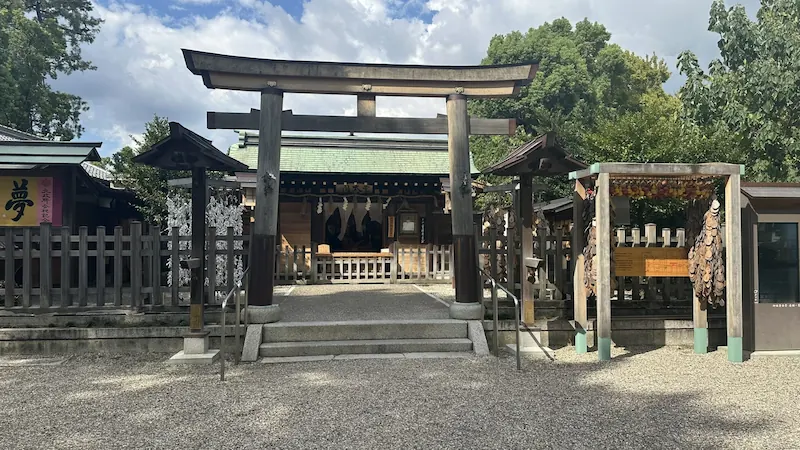
Toyokuni Shrine stands on ground associated with Toyotomi Hideyoshi, in what was once Owari Province's Nakamura — today's Nakamura Ward in Nagoya. Founded in 1885 through the devotion of local residents, it has been carefully preserved as a place symbolizing the origin point of a nation-builder. Visiting here invites you to imagine Hideyoshi's youth while standing in the very neighborhood tied to his beginnings. Nakamura is also introduced as the traditional birthplace of Hideyoshi's younger brother Hidenaga, so this shrine can be read as a starting point for both brothers' story.
Highlights
- The grand torii and approach: the roughly 24.5 m torii is an unmistakable landmark, and walking the approach alone sets the mood for a history walk.
- Worship hall and main sanctuary: sacred buildings dedicated to Toyotomi Hideyoshi, set in grounds quiet enough for a moment of reflection.
- Seasonal charm inside the park: because the shrine sits inside Nakamura Park, you can visit alongside cherry blossoms, fresh green leaves, or autumn color depending on the season.
- Goshuin and blessings: many visitors pray here for career success, good fortune, and craftsmanship, drawing worshippers and travelers from across Japan.
On-site photos
Access & visiting information
| Address | 453-0053 Kinoshita-Yashiki, Nakamura-cho, Nakamura-ku, Nagoya, Aichi (inside Nakamura Park) |
|---|---|
| Access | About a 10-minute walk from Exit 3 of Nakamura-koen Station on the Higashiyama Line. |
| Parking | No dedicated parking is listed for the shrine itself. A paid shared parking lot is available at the Nakamura Park Culture Plaza, but spaces are limited, so using the subway is recommended. |
| Suggested time | Shrine visit only: about 15–30 minutes. A relaxed stroll including the park: about 1–1.5 hours. |
| Admission | Free |
Open the map to check the location of Toyokuni Shrine (Nakamura Ward, Nagoya).
Recommendation
Historical value: ☆☆☆ Visual appeal: ☆☆ Experiential value: ☆☆
Site data
| Founded | 1885 (Meiji 18) |
|---|---|
| Enshrined deity | Toyotomi Hideyoshi (with Kato Kiyomasa enshrined at an auxiliary shrine) |
| Structure & features | Main shrine buildings and a formal approach, including the grand torii (approx. 24.5 m tall) and worship hall. |
| Significance of the site | Built in the area traditionally regarded as Hideyoshi's birthplace in Owari-Nakamura, functioning as a landmark honoring Hideyoshi and the Toyotomi legacy. |
| Current status | Still standing and maintained within Nakamura Park, Nakamura Ward, Nagoya. |
| Cultural property designation | No specific designation confirmed; primarily a locally commemorative shrine. |
| Notes | As an auxiliary shrine it also enshrines Kato Kiyomasa, who has deep ties to this area. |
Trivia
- Why it was founded: openly honoring the Toyotomi family was politically difficult during the Edo period. It was only in the Meiji era that local supporters established this shrine as a tribute to their "hometown hero."
- A dense cluster of Toyotomi-related sites: nearby are the birthplace monument, sites connected to Kiyomasa, and more, making this one of the best areas in Japan for a Hideyoshi-themed history walk.
- More than a tourist spot: it remains a living "face of local history," cared for by residents and history fans alike to the present day.
Birthplace Monument of Toyotomi Hideyoshi (Nagoya Nakamura)
A Meiji-era stone marking the traditional starting point of both Toyotomi brothers
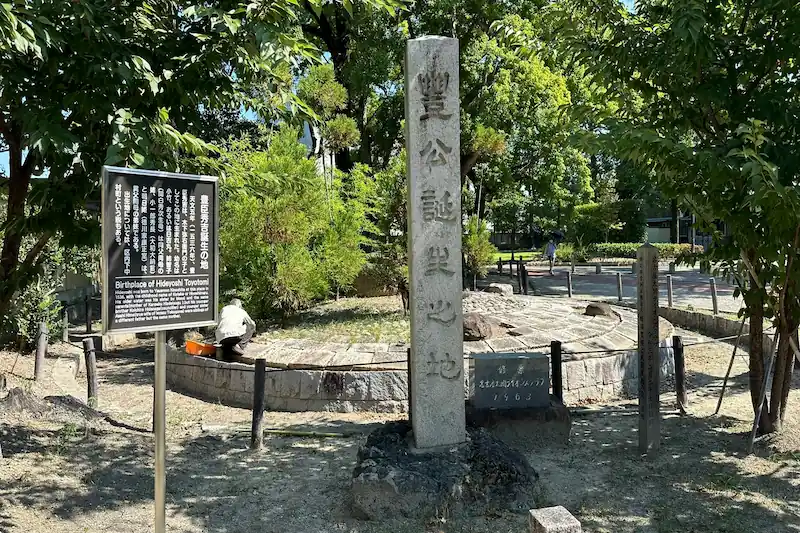
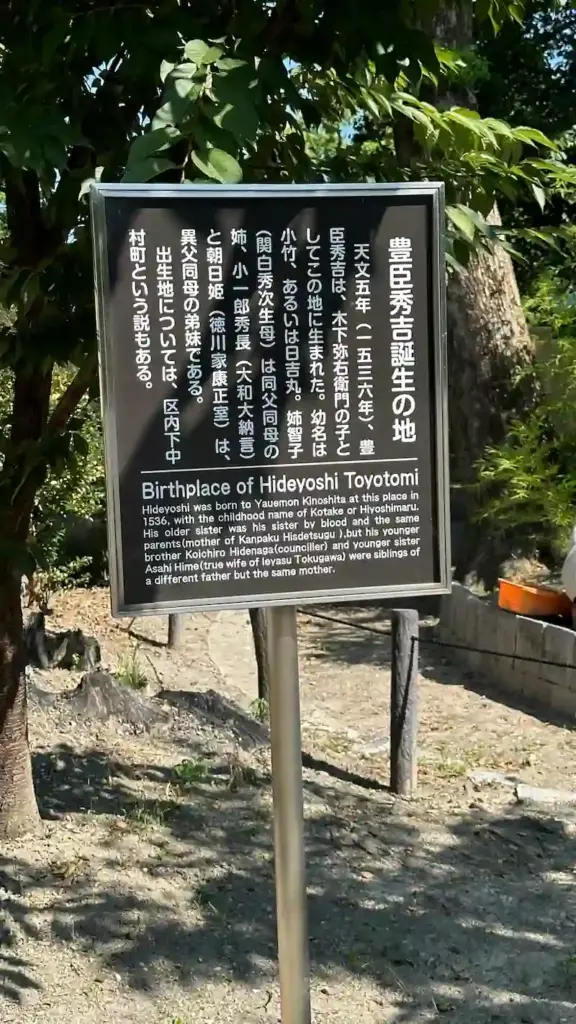
Owari Province's Nakamura, today's Nakamura Ward in Nagoya, is traditionally associated with the birthplace of Toyotomi Hideyoshi. The stone monument known as the "birthplace monument" stands as a symbolic marker of that tradition. In 1883, local supporters and the prefectural governor erected an initial wooden marker identifying the site; it was later rebuilt in 1911 as the stone monument seen today. This area is positioned not only as the place connected to Hideyoshi, but also as the origin point of the Toyotomi brothers, where Hideyoshi and his younger brother Hidenaga are said to have spent their childhood together.
Highlights
- The monument itself: the 1911 stone monument, whose carved characters quietly speak of history — a fitting starting point for your walk.
- A place that reveals layers of time: imagine this area as the former village of Nakamura-go, and feel the gap in time linking the Sengoku era to modern Nagoya.
- Seasonal scenery and a gentle stroll: the monument sits within the park, so cherry blossoms, autumn leaves, and fresh green each offer a different mood for a calm walk.
On-site photos
Access & visiting information
| Address | Around Kinoshita-Yashiki, Nakamura-cho, Nakamura-ku, Nagoya (inside Nakamura Park) |
|---|---|
| Access | Right beside Toyokuni Shrine. |
| Parking | No dedicated parking confirmed. A paid shared parking lot is available at the Nakamura Park Culture Plaza, but spaces are limited, so using the subway is recommended. |
| Suggested time | Just the monument: about 5–10 minutes. Combined with nearby historic sites: about 30–60 minutes. |
| Admission | Free |
Open the map to check the location of Birthplace Monument of Toyotomi Hideyoshi (Nagoya Nakamura).
Recommendation
Historical value: ☆☆ Visual appeal: ☆ Experiential value: ☆
Site data
| Built | 1911 (as a stone monument) |
|---|---|
| Commissioned by | Erected under Governor Fukano Ichizo; originally a wooden marker installed in 1883 |
| Structure & features | Stone monument with inscriptions identifying it as Hideyoshi's birthplace. |
| Repairs / restoration | 1883: wooden marker installed → 1911: rebuilt as a stone monument. |
| Current status | Still standing, installed within Nakamura Park. |
| Loss / damage | No record of loss or damage has been found; still standing as a stone monument. |
| Cultural property designation | No specific designation confirmed. |
| Notes | A monument preserving the tradition of Hideyoshi's birthplace. Among several birthplace-candidate theories, this is one of the most commonly introduced locations. |
Trivia
- It began as a local preservation effort: in 1883 local supporters first erected a wooden marker, later rebuilt as the stone monument seen today.
- The monument's symbolism: it preserves the tradition that a nation-builder may have been born here, serving as a monument to local history and pride.
- How it relates to other birthplace theories: this site, inside Nakamura Park, is one of the most widely introduced traditional birthplace locations, though other candidate theories exist in nearby former village areas — an added spark for history enthusiasts.
Hiyoshimaru and Friends (Nakamura Park)
A group statue of young Hideyoshi — a glimpse of the brothers' shared origin story
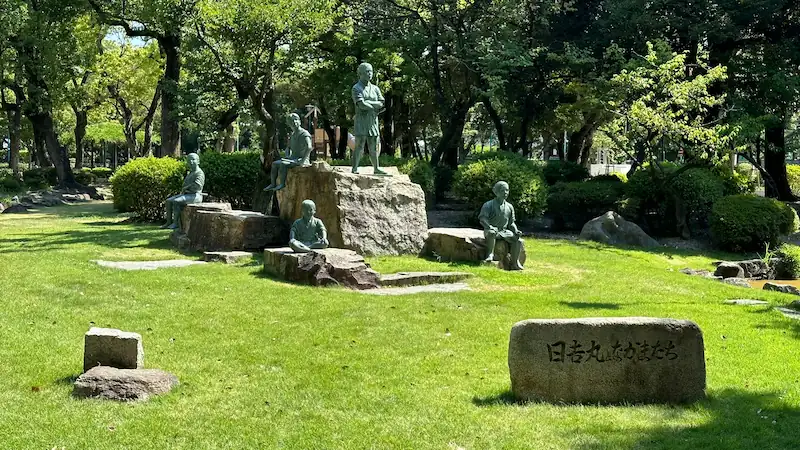
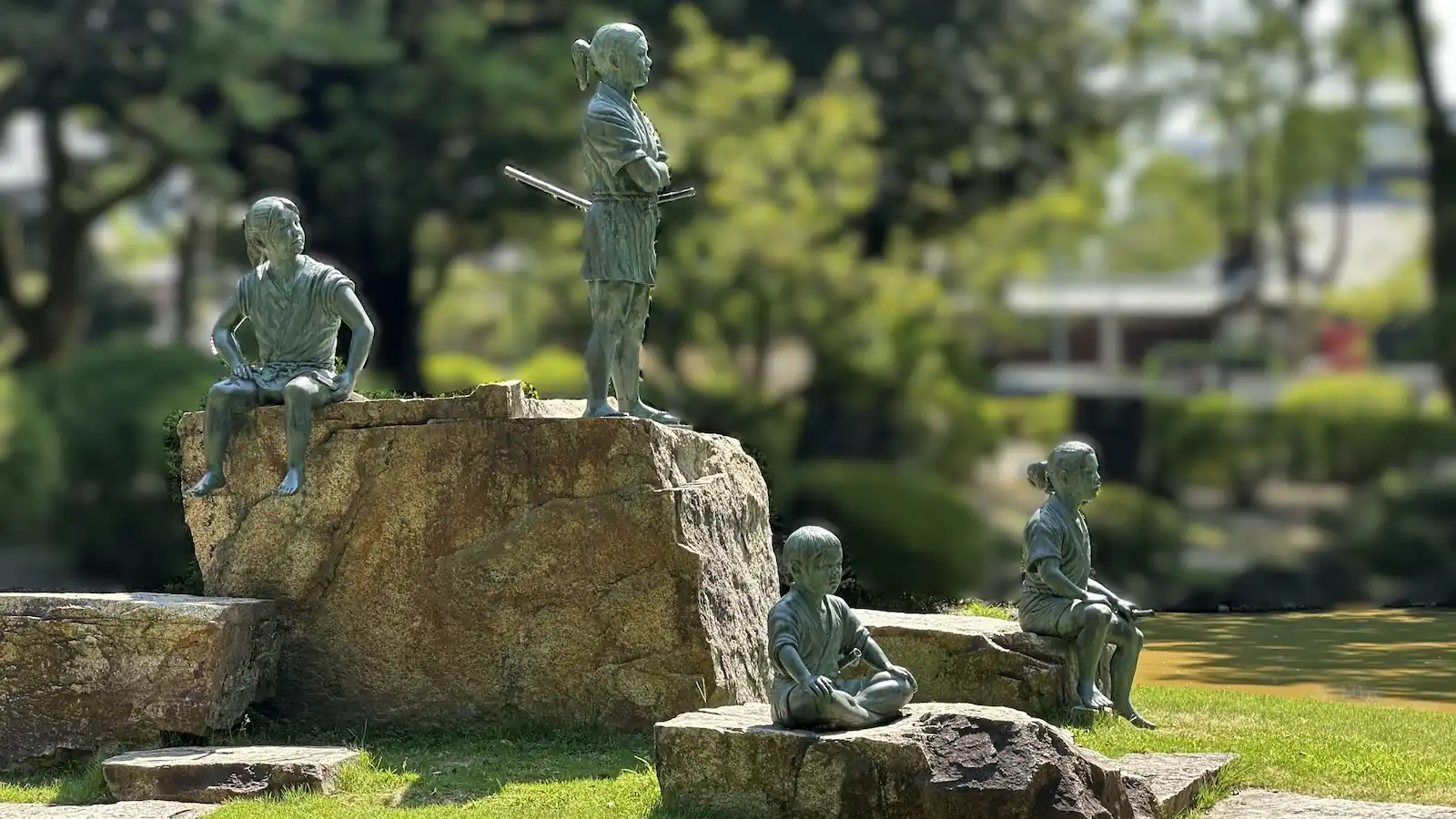
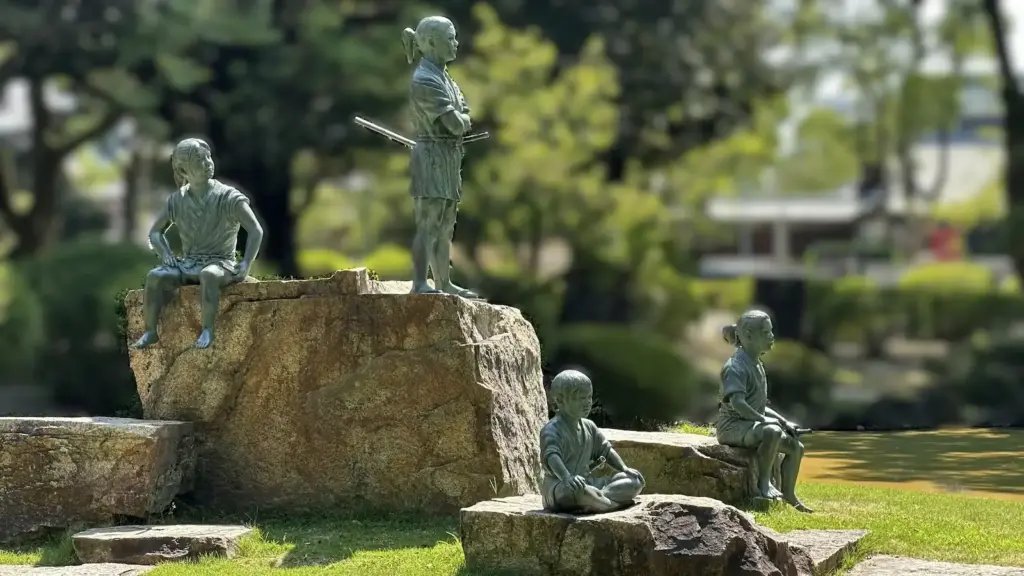
This group statue is inspired by Hideyoshi's childhood name, Hiyoshimaru, and was installed in 1983. It depicts his early years as an energetic child surrounded by friends, and is loved as a place that sparks imagination about the origin of a future nation-builder. Many visitors also enjoy looking at the children around Hiyoshimaru and imagining traces of his younger brother Hidenaga among them.
Highlights
- The image of young Hideyoshi: the Hiyoshimaru figure at the center captures a sense of innocence and possibility, well before history turned him into a legend.
- Historic romance and local pride: a symbol of how this area has long honored Hideyoshi's hometown, shaped into tangible form by local people and institutions.
- Set within the park's greenery: the surrounding paths and trees create different moods depending on season and time of day, easy to stop by with kids or during a casual walk.
On-site photos
Access & visiting information
| Address | Nakamura-cho, Nakamura-ku, Nagoya, Aichi (inside Nakamura Park) |
|---|---|
| Access | Just inside the entrance to Nakamura Park. |
| Parking | No dedicated parking confirmed. A paid shared parking lot is available at the Nakamura Park Culture Plaza, but spaces are limited, so using the subway is recommended. |
| Suggested time | Just the statue: about 5 minutes. Combined with a park stroll: about 10 minutes. |
| Admission | Free |
Open the map to check the location of Hiyoshimaru and Friends (Nakamura Park).
Recommendation
Historical value: ☆☆ Visual appeal: ☆☆ Experiential value: ☆☆
Site data
| Installed | 1983 |
|---|---|
| Creators | Produced by a local sculptor group including Ishiguro Kyoji and others. |
| Structure & features | A bronze group statue composed of five children, with Hiyoshimaru (young Hideyoshi) placed at the center. |
| Current status | Still standing, publicly displayed in Nakamura Park and free to view. |
| Cultural property designation | No special designation recorded; managed as a local commemorative sculpture. |
| Notes | Included on the historic walking map for Nakamura Park and the Hideyoshi & Kiyomasa Memorial Museum. |
Trivia
- Why it was installed: erected in 1983 as part of a local effort to make Nakamura Park a symbolic park connected to Hideyoshi.
- Design intent: the central boy (Hiyoshimaru) stands facing the future, while the friends around him represent the everyday life and friendships that supported him — a story of growth hinted at in bronze.
- Best paired with nearby sites: Nakamura Park also includes Toyokuni Shrine, the birthplace monument, and the museum, making this a popular anchor point for a walkable Hideyoshi-themed route.
Josenji Temple (Nagoya Nakamura)
A quiet old temple preserving Hideyoshi's birthplace traditions
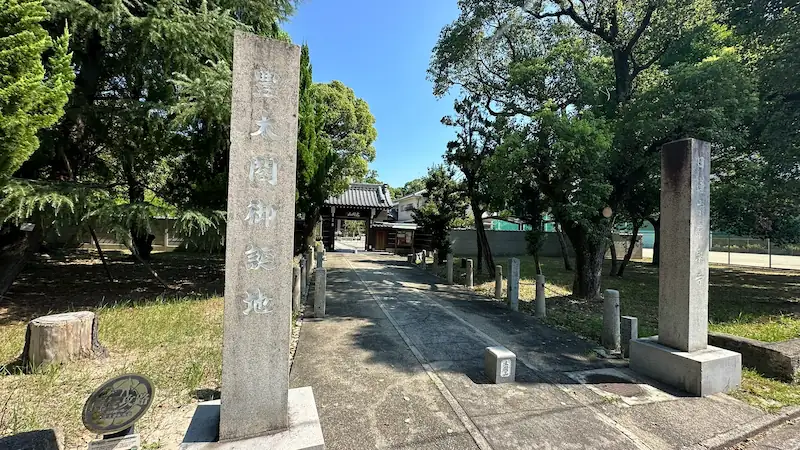
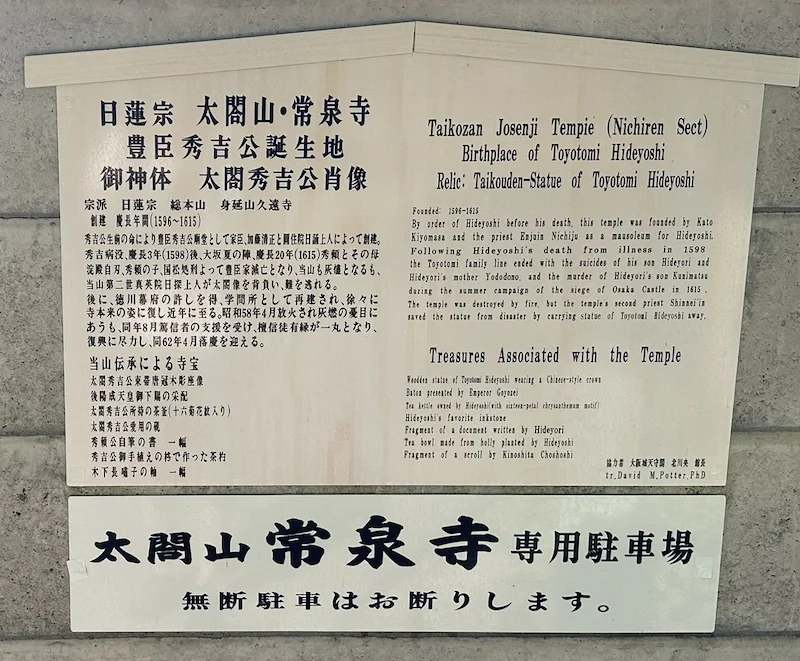
Josenji is a Nichiren Buddhist temple in Nakamura Ward, Nagoya, an area once known as Nakamura-go in Owari Province. Quietly nestled in a calm residential neighborhood on the south side of Nakamura Park, it has long been cherished as a spiritual anchor for the community. The temple name Josen is said to come from a place where clear water once sprang up continuously, symbolizing Nakamura's history as a land blessed by water. Step onto the grounds and you'll find a stillness that feels surprisingly far from the city — an old Nakamura temple that has quietly supported local prayers for generations, and an easy place to feel grounded during your walk.
Highlights
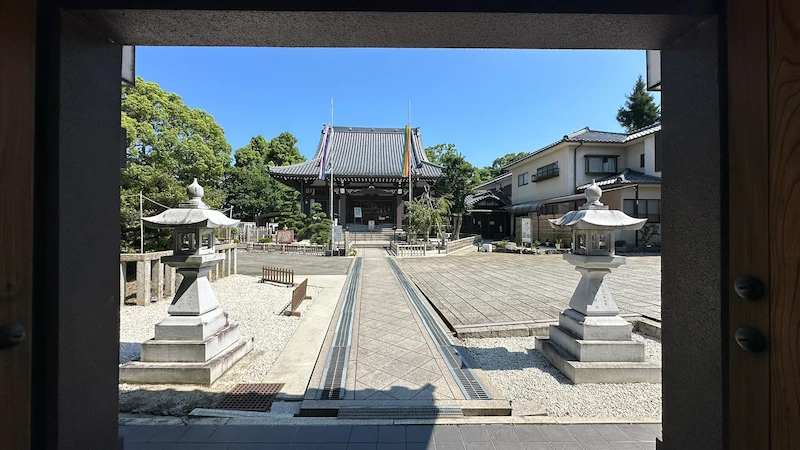
- A calm gate and approach: even close to the city, the temple's historic atmosphere feels distinct, and the approach leading into the grounds is quietly inviting.
- A main hall wrapped in stillness: the hall that has supported local faith for generations is simple yet warmly present.
- Seasonal flowers and temple scenery: with plenty of greenery around, you'll feel the seasons through fresh spring growth, cool summer shade, and autumn leaves underfoot.
On-site photos
Tap to enlarge
Access & visiting information
| Address | 47 Kinoshita-Yashiki, Nakamura-cho, Nakamura-ku, Nagoya, Aichi |
|---|---|
| Access | About a 2-minute walk (roughly 100 m) from Toyokuni Shrine. |
| Parking | Please check the latest information before visiting; no dedicated parking has been confirmed. |
| Suggested time | Quick highlights: about 10–15 minutes. To soak in the atmosphere: about 20–30 minutes. |
| Admission | Free to enter the grounds |
Open the map to check the location of Josenji Temple (Nagoya Nakamura).
Recommendation
Historical value: ☆☆ Visual appeal: ☆☆ Experiential value: ☆
Site data
| Founded | Around the Keicho era (1596–1615). Said to have been established by Kato Kiyomasa and the priest Enjuin Nissho as a mausoleum hall for Hideyoshi. |
|---|---|
| School | Nichiren Buddhism |
| Structure & features | A traditional layout with gate, main hall, and residential quarters, set among abundant greenery. |
| Repairs / restoration | The grounds were maintained through the 20th century and continue to be preserved as a community temple. |
| Current status | Still active as a functioning temple. |
| Loss / damage | No record of significant destruction to the temple complex has been found. |
| Cultural property designation | No specific designation confirmed for the temple itself. |
| Notes | Often introduced as part of Nakamura's historical walking routes. |
Trivia
- The name "Josen": said to come from the fact that clear spring water once continuously bubbled up on the grounds.
- The temple's role in Nakamura: surrounded by many history-related spots, the temple is loved as a quiet pause along the area's walking routes.
- The main hall's understated charm: there's no flashy decoration — its simplicity is precisely what makes it feel authentic, and a perfect rest point during your stroll.
The Birth-Well of Toyotomi Hideyoshi (Josenji Temple)
A well said to have provided Hideyoshi's first bathwater
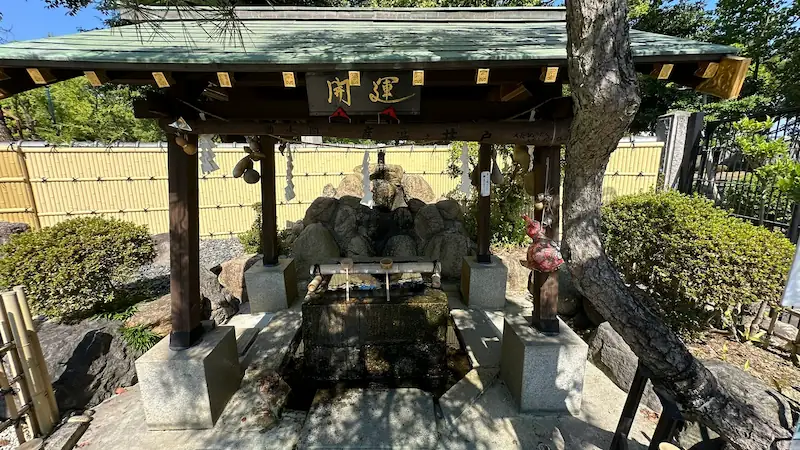
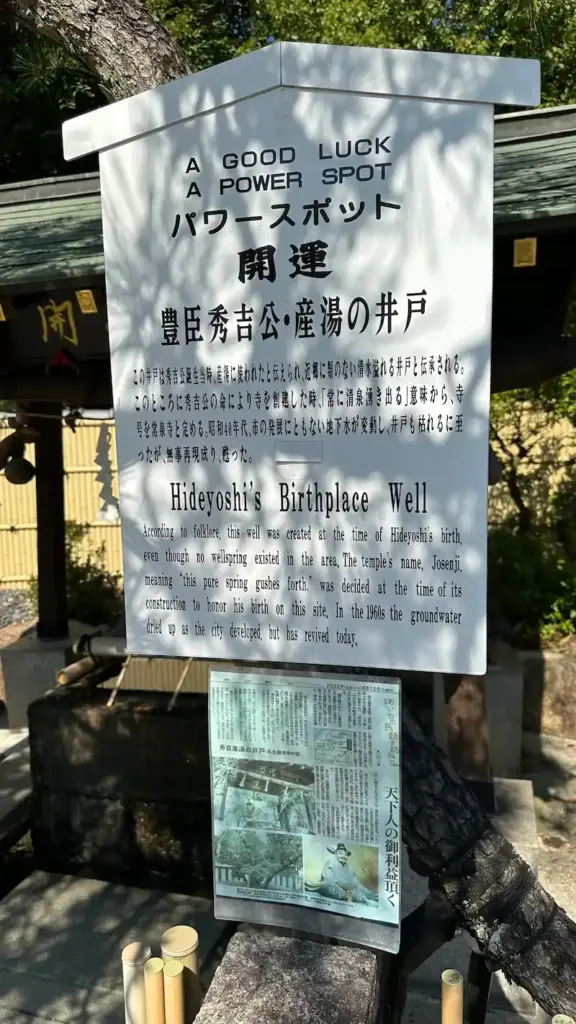
Within the grounds of Josenji, a Nichiren Buddhist temple in Nakamura Ward, there is a well traditionally known as Hideyoshi's birth-well. According to local tradition, it was used as the first bathwater (ubuyu) at the time of Toyotomi Hideyoshi's birth. As a landmark preserving the area's birthplace traditions, it's an especially stirring stop for history fans — an easy place to picture Hideyoshi long before he became a legend, back when his life was still bound to the rhythms of the Sengoku era.
Highlights
- The birth-well: a well traditionally said to have been used for Hideyoshi's first bathwater — a memorable entry point into imagining the era.
- The temple grounds and atmosphere: the quiet of a historic temple evokes echoes of the Sengoku-to-Edo transition.
- Four seasons and gentle walking: the grounds and surrounding area are calm, with seasonal changes adding a sense of time passing through history.
On-site photos
Access & visiting information
| Address | 47 Kinoshita-Yashiki, Nakamura-cho, Nakamura-ku, Nagoya (inside Josenji Temple) |
|---|---|
| Access | Within the Josenji temple grounds. |
| Parking | Please check the latest information before visiting. |
| Suggested time | Focusing on the well: about 5 minutes. |
| Admission | Free |
Open the map to check the location of The Birth-Well of Toyotomi Hideyoshi (Josenji Temple).
Recommendation
Historical value: ☆☆ Visual appeal: ☆ Experiential value: ☆
Site data
| Built | Unknown; the well's origin is based on tradition. |
|---|---|
| Builder | Unknown |
| Structure & features | A well said to have once been fed by clear spring water, still introduced today as the birth-well. |
| Repairs / restoration | Tradition says it once dried up, then the clear spring returned later. |
| Current status | Still standing and viewable on Josenji's grounds. |
| Loss / damage | No record of loss or damage has been found; preserved as a well and tradition site. |
| Cultural property designation | Not confirmed; a local tradition site attached to a temple. |
| Notes | Carefully preserved by the temple and community as a tradition site evoking Hideyoshi's birth. |
Trivia
- Where the temple name comes from: Josenji is said to have been named after this well, where clear water "constantly" (jo) sprang up (sen) — hence "Josen."
- The return of the spring: the well is said to have dried up once due to groundwater changes in the mid-20th century, but the flow was later believed to have revived, continuing the birth-well tradition.
- No confirmed connection to Hidenaga: in the temple's origin story and on-site explanations, only Hideyoshi is named — no reliable sources link Hidenaga to this well or to a birth-well tradition here.
The Holly Tree Said to Have Been Planted by Hideyoshi (Josenji Temple)
A protective old tree tied to Hideyoshi's childhood
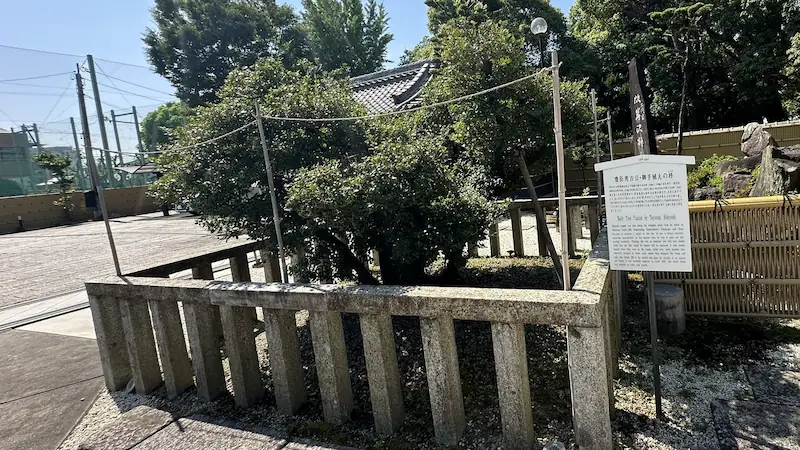
Inside Josenji, one spot is especially well known: the holly tree traditionally said to have been planted by Hideyoshi. Rather than insisting on strict historical proof, this is a place to enjoy history through tradition — to feel it, imagine it, and let your mind connect the dots. When you visit, the quiet of today's neighborhood overlaps with the childhood memories of a man who lived through one of Japan's most turbulent eras, and you can almost sense a connection that crosses centuries.
Highlights
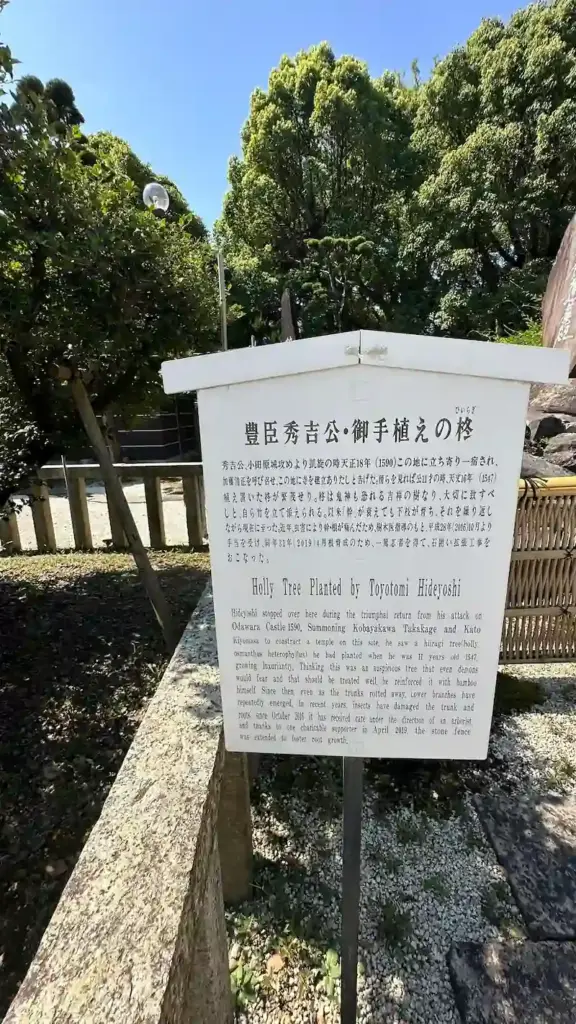
- The holly tree itself: traditionally said to have been planted in 1547, when Hideyoshi was around 11. Holly is associated with warding off evil and inviting good fortune, and it's introduced on-site as a symbolic tree connected to him.
- Historic context and atmosphere: alongside the birth-well and other traditions, this is a place where traces of the Sengoku era, modernizing Japan, and today overlap.
- Quiet grounds and nearby strolling: easy access near Nakamura Park, with a chance to step away from city noise among seasonal trees and calm surroundings.
On-site photos
Access & visiting information
| Address | 47 Kinoshita-Yashiki, Nakamura-cho, Nakamura-ku, Nagoya, Aichi (Josenji Temple) |
|---|---|
| Access | About a 10-minute walk from Nakamura-koen Station on the Higashiyama Line. |
| Parking | No dedicated parking confirmed. A paid shared parking lot is available at the Nakamura Park Culture Plaza, but spaces are limited, so using the subway is recommended. |
| Suggested time | Focusing on the holly tree: about 5–15 minutes. Including the full temple grounds: about 20–40 minutes. |
| Admission | Free |
Recommendation
Historical value: ☆☆ Visual appeal: ☆☆ Experiential value: ☆
Site data
| Built | Not a structure; it's a planted tree. |
|---|---|
| Planted by | Tradition attributes it to Toyotomi Hideyoshi. |
| Structure & features | A holly tree rooted on the temple grounds, an old tree or its descendant with wide-spreading branches and leaves. |
| Repairs / restoration | Grown and maintained over time. |
| Current status | Still standing, marked on-site as Hideyoshi's holly tree. |
| Loss / damage | No reports of damage have been found; as a living old tree, maintenance depends on publicly available information. |
| Cultural property designation | Does not appear to be an officially designated cultural property. |
| Notes | Introduced on-site together with the birth-well and other Hideyoshi-related spots in the temple grounds. |
Trivia
- Holly as a protective tree: long seen as warding off evil, one story says young Hideyoshi tried to protect the tree by supporting it with bamboo — another says that even as the trunk weakens, new lower branches keep sprouting, and the leaves still thrive today.
- Coexisting with the birth-well: Josenji also preserves the birth-well tradition, so you can see symbolic sites of birth and growth together in one place.
- A temple known locally for its Hideyoshi ties: local guides and ward-level websites also introduce Josenji as a place connected to Hideyoshi.
Statue of Toyotomi Hideyoshi (Josenji Temple)
A bronze tribute rebuilt after wartime metal requisition
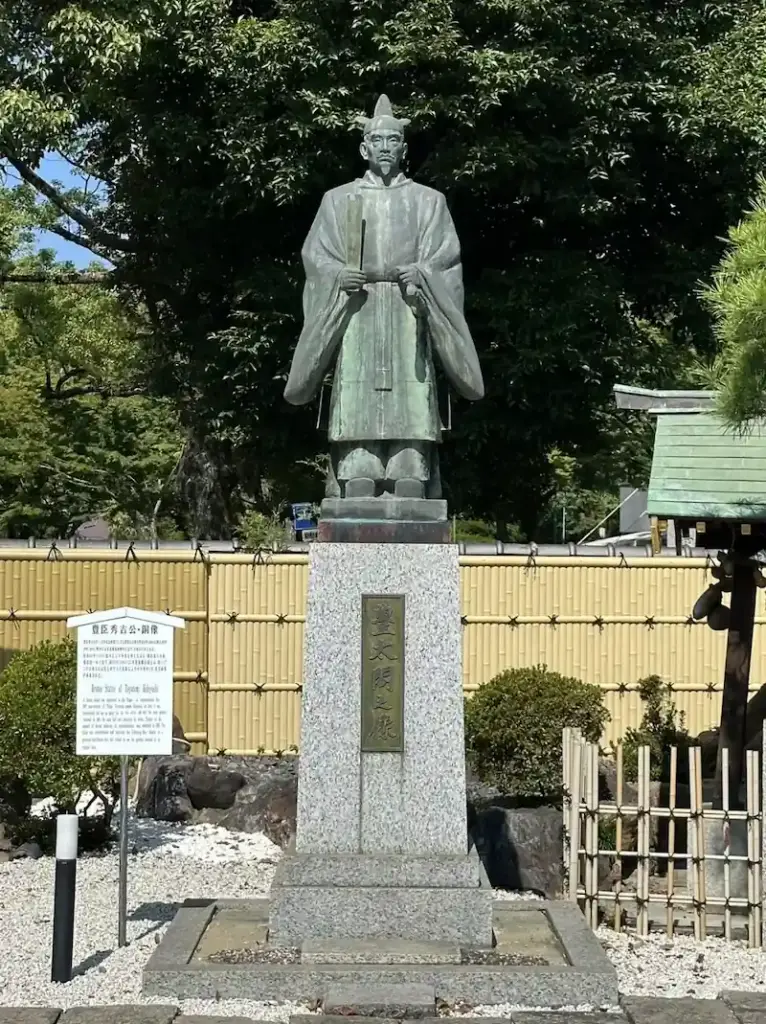
On Josenji's grounds stands a bronze statue of Toyotomi Hideyoshi. It is cherished as a symbol honoring his journey from childhood to becoming a ruler. Visiting the statue helps you feel the connection between Hideyoshi's rise — from an ordinary soldier to a nation-builder — and Nakamura, the land traditionally tied to his origins and now part of modern Nagoya. It's an experience like stepping onto a bridge of time, where a living monument, not only old texts and traditions, links the present with the past.
Highlights
- The statue itself: a bronze statue honoring Toyotomi Hideyoshi stands on the grounds. Inside the main hall there is also a wooden Hideyoshi statue said to have once been enshrined at Osaka Castle, making this an especially meaningful site for Hideyoshi fans.
- Paired with the birth-well and holly tree: visiting the statue alongside multiple tradition sites that support the birthplace narrative adds far more depth than a simple statue stop.
- Quiet air and the weight of time: though close to Nakamura Park and the urban environment, the grounds remain tranquil — a true crossroads of past and present.
Access & visiting information
| Address | 47 Kinoshita-Yashiki, Nakamura-cho, Nakamura-ku, Nagoya, Aichi (Josenji Temple) |
|---|---|
| Access | About an 8–10 minute walk from Nakamura-koen Station or Nakamura-Nisseki Station on the Higashiyama Line. |
| Parking | No dedicated parking confirmed. A paid shared parking lot is available at the Nakamura Park Culture Plaza, but spaces are limited, so using the subway is recommended. |
| Suggested time | Just the statue: about 10–15 minutes. Temple grounds plus the well and holly tree: about 30–45 minutes. |
| Admission | Free |
Recommendation
Historical value: ☆☆ Visual appeal: ☆☆ Experiential value: ☆
Site data
| Established | A bronze statue of Toyotomi Hideyoshi was erected on the grounds in 1898. It was removed in 1944 due to wartime metal requisition, and was rebuilt as the current bronze statue in 1988. |
|---|---|
| Creator / origin | A commemorative statue honoring Toyotomi Hideyoshi; rebuilt in 1988 in response to local requests after the original was lost to wartime requisition. |
| Structure & features | A standing bronze statue of Hideyoshi on the temple grounds, installed outdoors atop a pedestal. |
| Repairs / rebuilding | Removed in 1944 due to wartime requisition, then rebuilt as a bronze statue in 1988. |
| Current status | Still standing and open for viewing. |
| Cultural property designation | Not confirmed; managed as a statue at a locally significant temple. |
| Notes | Along with the statue, the grounds include multiple Hideyoshi-related spots such as the birth-well and the holly tree. |
Trivia
- The statue then and now: Josenji is said to house a wooden Hideyoshi figure in formal court attire that was once enshrined at Osaka Castle. Tradition holds that Kato Kiyomasa asked Hideyoshi's son Hideyori for it after Hideyoshi's death and brought it to this temple, together forming the core of the temple's Hideyoshi commemoration.
- War and rebuilding: the outdoor statue was removed once due to wartime metal requisition, then rebuilt in 1988 — its history is as dramatic as the era it commemorates.
- The heart of a Hideyoshi-themed route: not only the statue but also the well, holly tree, and other nearby tradition sites cluster here, making this a must-visit hub when reflecting on Hideyoshi in Nakamura.
Nagoya City Hideyoshi & Kiyomasa Memorial Museum
Armor, documents, and models telling the story of the Toyotomi era — and it's free
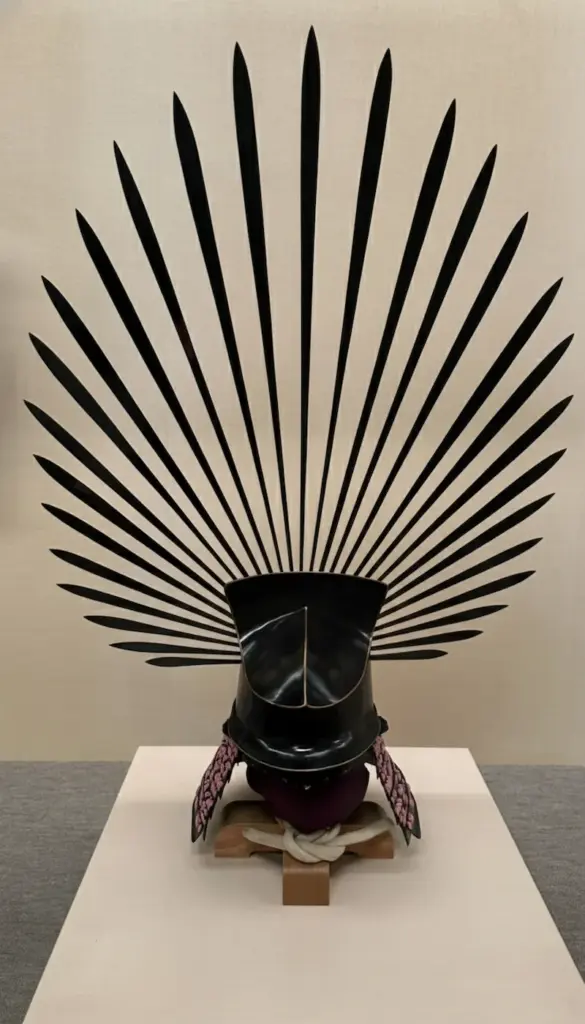
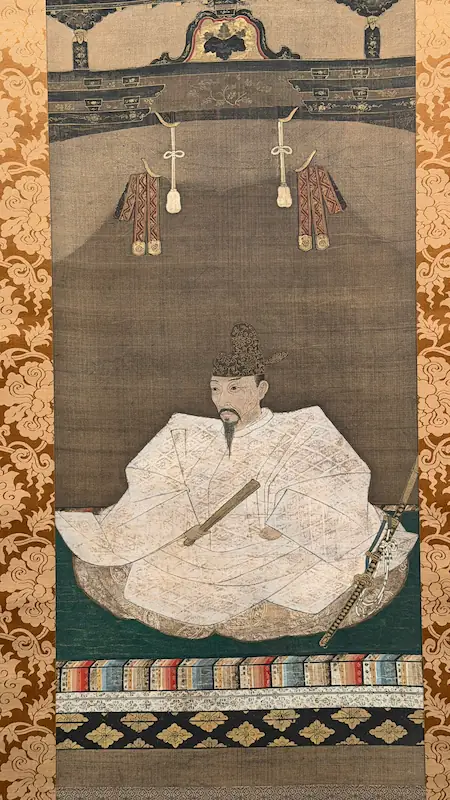
Located inside Nakamura Park, the Nagoya City Hideyoshi & Kiyomasa Memorial Museum is a valuable vault of memory tied to the area traditionally regarded as Hideyoshi's birthplace. Inside, you'll find preserved and exhibited materials connected to Hideyoshi and to the locally-born warlord Kato Kiyomasa, letting you learn about their lives and era through armor, documents, and models. The exhibition traces the Sengoku period, the turmoil that followed, and the rise and fall of the Toyotomi regime — a broader historical experience than you might expect from a local history museum. Another reason it's highly recommended: admission is free.
Highlights
- Armor and primary materials connected to Hideyoshi: armor, helmets, documents, portraits, and maps — real historical materials that communicate the Toyotomi era's background.
- An exhibition that traces the timeline: from the Oda regime through Toyotomi rule to the Toyotomi clan's downfall, you can follow the story of Japan's unification step by step.
- A hub for the area's Hideyoshi sites: because it's inside Nakamura Park, the museum is surrounded by monuments, shrines, and temples, making it an ideal anchor point for your history walk.
On-site photos
Access & visiting information
| Address | 453-0053 25 Chanoki, Nakamura-cho, Nakamura-ku, Nagoya, Aichi (2F, Nakamura Park Culture Plaza) |
|---|---|
| Access | About a 10-minute walk from Exit 3 of Nakamura-koen Station on the Higashiyama Line. |
| Parking | A paid shared parking lot is available at the Nakamura Park Culture Plaza (26 spaces, including 1 for visitors with disabilities; open 9:00 a.m.–7:00 p.m.). Spaces are limited, so consider public transport. |
| Suggested time | General visit: about 20–40 minutes. To read everything carefully: 1 hour or more. |
| Admission | Free |
| Hours | 9:30 a.m. to 5:00 p.m. |
| Closed | Mondays (or the following weekday if Monday is a holiday), the 4th Tuesday of the month (open if that falls on a holiday), New Year's holidays, and facility inspection days. Please check official information before visiting. |
| Phone | +81-52-411-0035 |
Open the map to check the location of Nagoya City Hideyoshi & Kiyomasa Memorial Museum.
Recommendation
Historical value: ☆☆ Visual appeal: ☆ Experiential value: ☆☆
Site data
| Opened | Established in 1967 as the "Toyosei Nikō Kenshōkan"; rebuilt in 1991 under its current name. |
|---|---|
| Structure & features | A municipal branch museum on the 2nd floor of the Nakamura Park Culture Plaza, with permanent and special exhibition rooms. Free admission. |
| Collection | Armor, documents, paintings, models, and explanatory panels connected to Hideyoshi and Kiyomasa, covering the Sengoku era through the Toyotomi clan's downfall. |
| Current status | Still operating, with regular exhibition rotations and special exhibitions. |
| Admission | Free |
| Notes | Nakamura Park also contains many related sites — the birthplace monument, commemorative statues, shrines, temples, and more — making it especially rewarding to tour everything together. |
Trivia
- Easy to pop in, because it's free: with no admission fee, it's friendly for travelers on tight schedules and locals alike.
- Wide-ranging content: not just weapons and armor but also paintings, documents, and models, explaining the Sengoku-to-Toyotomi era from multiple angles in a beginner-friendly way.
- Great for a half-day to full-day route: with so many sites within walking distance — park, temples, shrines, monuments — you can build a rich history walk in half a day or even a full day.
Hachiman Shrine (Nakamura Hachiman Shrine)
A quiet local guardian shrine, said to be linked to Kato Kiyomasa's prayer for victory
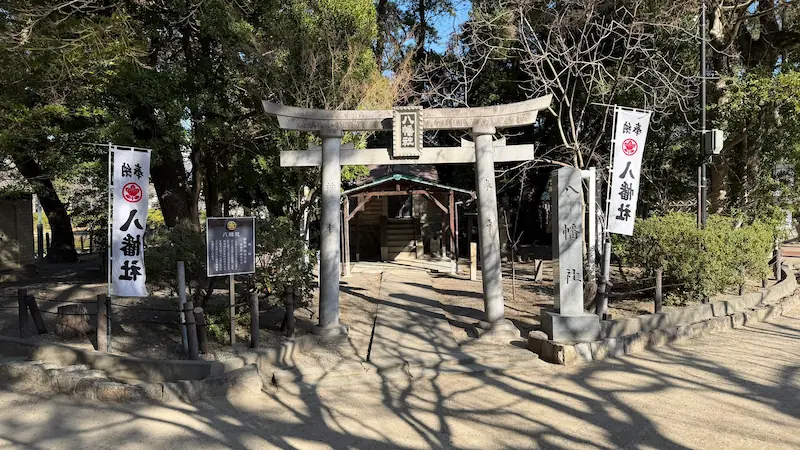
Standing in a corner of Nakamura Park, Hachiman Shrine (Nakamura Hachiman Shrine) has long served as the guardian shrine for the local Nakamura community. It sits in the same area where Hideyoshi, who would go on to become a nation-builder, is said to have been born and raised, and it's thought to have been a place of everyday devotion during his childhood. No historical record confirms that Hideyoshi himself built or protected the shrine directly, but Nagoya's local heritage guides introduce it as the site where Kato Kiyomasa is traditionally said to have prayed for victory before battle — a tradition worth treating with appropriate caution, since Kiyomasa is not recorded as having actually departed for battle from this specific site.
Highlights
- Calm shrine grounds: tucked inside the park yet set apart from the crowds, offering a quiet space to pause.
- A working local guardian shrine: with little touristic polish, it reflects genuine, ongoing local devotion.
- A seasonal, low-key charm: around New Year's or festival days you may catch a small, neighborhood-scale gathering.
Access & visiting information
| Address | Nakamura-cho, Nakamura-ku, Nagoya, Aichi |
|---|---|
| Access | About a 5-minute walk to the left and behind Toyokuni Shrine. |
| Parking | No dedicated parking confirmed. A paid shared parking lot is available at the Nakamura Park Culture Plaza, but spaces are limited, so using the subway is recommended. |
| Suggested time | Quick visit: about 5 minutes. A more thorough look: about 20 minutes. |
| Admission | Free |
Open the map to check the location of Hachiman Shrine (Nakamura Hachiman Shrine).
Recommendation
Historical value: ☆☆ Visual appeal: ☆☆ Experiential value: ☆☆
Site data
| Built | Unknown |
|---|---|
| Builder | Unknown |
| Structure & features | A Hachiman-faith shrine with the character of a local guardian shrine. |
| Repairs / restoration | Shrine buildings maintained in the modern era; details unknown. |
| Current status | Still standing |
| Loss / damage | No record of large-scale destruction has been found. |
| Cultural property designation | Unknown |
| Notes | One component of the wider Nakamura Park precinct. Hachiman worship has been widely observed since the medieval period as a faith connected to military fortune, career success, and warding off misfortune, and served a spiritual role in Sengoku-era villages as well. |
Trivia
- An older presence than the park itself: the shrine existed as a center of local faith before Nakamura Park was developed around it.
- A quieter, lesser-visited spot: at the time of our January 2026 visit, relatively few visitors were stopping here compared to the park's main attractions. This can vary by season and time of day.
- Part of Nakamura's story: it's one of the local faith sites that's hard to leave out when telling the history of this land.
— Toyotomi Hidenaga and the Land of Nakamura —
Toyotomi Hidenaga (also known as Koichiro or Nagahide) was the brilliant right-hand man who supported his brother Hideyoshi throughout his life, and is highly regarded historically as the figure who handled much of the Toyotomi government's practical administration.
Like his brother Hideyoshi, tradition places Hidenaga's birthplace in Nakamura, and the brothers are said to have spent their childhood in this area together. However, most of the surviving historic sites and monuments were developed to honor Hideyoshi, whose fame spread nationwide — and among the Nakamura sites reviewed for this guide, almost none identify Hidenaga alone.
For that reason, Nakamura can be understood not only as "Hideyoshi's land," but also as "the origin point where the Toyotomi brothers' story began together" — arguably the most accurate way to read what remains today. To learn more about Hidenaga's own footsteps, see our guide to Hidenaga in Yamato Koriyama as well.
Based on the author's own visit in January 2026, this is a personal set of priorities — not an official recommendation from Toyokuni Shrine, Josenji Temple, the memorial museum, or any other site.
The landmark you'll see right outside Nakamura-koen Station, and the approach's atmosphere makes it the symbol of the Nakamura area. Even on a tight schedule, this is the one spot not to skip.
Free admission, with real armor and documents that let you systematically learn the historical background of Hideyoshi and Kiyomasa's era. Since most other spots on this list are monuments or legend sites, this museum offers the most historical context in one place.
A cluster of sites where you can experience Hideyoshi's birthplace traditions together. That said, the content here rests mainly on tradition rather than firm historical documentation, so treat it as a worthwhile stop when time allows rather than a must-see.
Good photo stops, but each takes only about 5 minutes on its own. The grand torii and museum alone already give you a solid feel for the Nakamura area.
No solid record confirms a direct connection to Hideyoshi; it's quietly cherished as a local guardian shrine. If you're pressed for time, it's fine to leave this one for later.
Frequently asked questions
Toyokuni Shrine, the birthplace monument, the Hiyoshimaru and Friends statue, Josenji Temple's grounds (including the birth-well, the holly tree, and the Hideyoshi statue), and Hachiman Shrine can all be visited for free. The Nagoya City Hideyoshi & Kiyomasa Memorial Museum is also free to enter. The limited-time "Toyotomi Museum" (Taiga Drama Exhibition Hall) is the exception, charging ¥800 for adults and ¥400 for children.
Walking through the main spots — the grand torii, Toyokuni Shrine, the birthplace monument, the Hiyoshimaru statue, Josenji Temple, the birth-well, the holly tree, the Hideyoshi statue, the memorial museum, and Hachiman Shrine — takes about 2–3 hours including walking time. If you want to read the museum's exhibits carefully or add the limited-time Taiga Drama Exhibition Hall, plan on about half a day to enjoy everything at a relaxed pace.
Among the Nakamura sites reviewed for this guide, almost none identify Hidenaga alone. Most of the historic sites and monuments that remain were developed to honor his older brother Hideyoshi, whose fame is far more widespread nationally. That said, this area is remembered as the origin point where the Toyotomi brothers' story together began, so visiting as "Hideyoshi's land" is also, in effect, visiting the place where the brothers' story started.
It is held inside Nakamura Park. The exhibition runs from Saturday, January 24, 2026 to Monday, January 11, 2027, open 9:00 a.m. to 5:00 p.m. (last admission 4:30 p.m.). For details, check the official website (https://j-lppf3.jp/nagoya-nakamura-toyotomi/index.html).
The nearest station is Nakamura-koen Station on the Nagoya Municipal Subway Higashiyama Line. Walking north from Exit 3 brings you toward Nakamura Park, Toyokuni Shrine, and the memorial museum. Toyokuni Shrine and the Toyotomi Museum are both about a 10-minute walk from the station. Toyokuni Shrine has no dedicated parking; the Nakamura Park Culture Plaza (home to the memorial museum) has a shared paid parking lot, but spaces are limited, so using the subway is recommended.
The "birth-well" is a well tied to a local tradition that it was used as Hideyoshi's first bathwater at the time of his birth. It is not established as historical fact, and carries the character of a tradition site passed down through the community. That said, the temple's own name, Josenji, is said to come from a place where clear water once continuously sprang up, so the association with abundant water in this land is well attested.
You can visit year-round. Spring (March–April) brings beautiful cherry blossoms along the approach and through the park, making it an especially pleasant season for strolling. Autumn (October–November) offers fall foliage. Summer sun can be strong, so bring a hat and stay hydrated. Between 2026 and 2027 the Taiga Drama Exhibition Hall will also be running, so expect more visitors than usual — weekday mornings are your best bet for avoiding crowds.
More places worth visiting
Return to the main page
Historic site data, access information, opening hours, and admission fees listed here reflect information available at the time this article was written. Please check official sources or on-site information before visiting.
Regarding sites connected to Toyotomi Hidenaga, we note that among the sites reviewed for this guide, almost none identify Hidenaga alone. We try to clearly distinguish between content passed down as tradition and content that can be confirmed as historical fact.
Information about the Toyotomi Museum and Taiga Drama Exhibition Hall is subject to change. Please check the official website for the latest details.
☕ Support this site
Following the Shogun is built on first-hand, on-the-ground research.
If this article was useful, your support is a big encouragement.

You can also scan this QR code to support the site


comment