


How to Visit Inuyama Castle: A National Treasure Keep, Urakuen Garden & the Walk from Nagoya
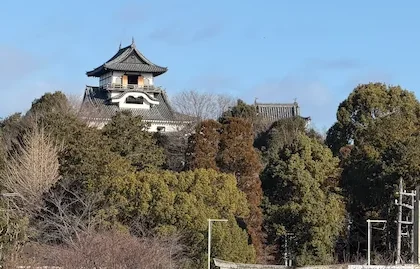
Inuyama sits about 25 minutes north of Nagoya, and its castle keeps one of only twelve original castle towers left in Japan. This guide walks the whole visit in order: from Inuyama Station along the old merchant street of Honmachi-dori, up to the National Treasure keep, on to Urakuen Garden and the Joan tea house, and out to the castle gates that were carried away and rebuilt at nearby temples.
On this page
Inuyama (犬山) is a small city on the Kiso River at the northern edge of Aichi Prefecture, on the border with Gifu. From Nagoya it is a straightforward day trip: trains run from Meitetsu Nagoya Station (NH36) to Inuyama Station (IY15) in about 25 minutes. Meitetsu, the Nagoya Railroad, is a private operator and is separate from the JR network, so this is not a JR line and Meitetsu trains leave from their own station beneath the Meitetsu department store, not from JR Nagoya Station.
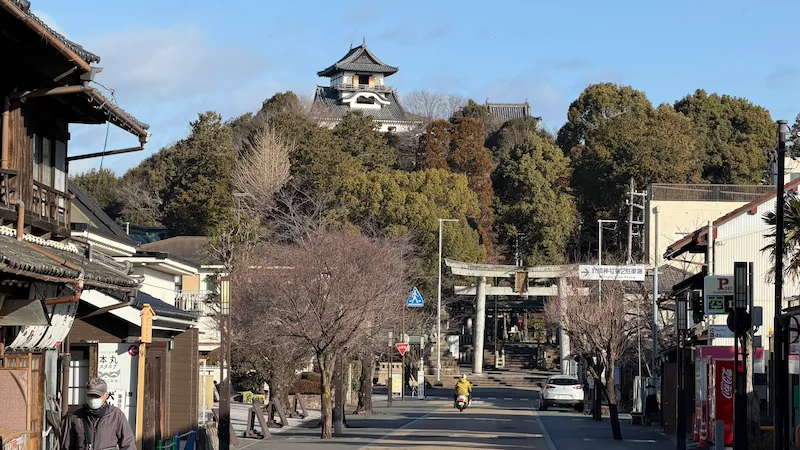
The walk from Inuyama Station to the castle takes about 20 minutes. There is only one point where visitors hesitate: where to turn onto Honmachi-dori (本町通), the old castle-town street. Remember the sequence and the rest is easy — Inuyama Station West Exit → Honmachi intersection → turn right, heading north, onto Honmachi-dori. From there the street runs straight to the foot of the castle hill.
The 2026 NHK Taiga drama “Toyotomi Brothers!” covers the Battle of Komaki and Nagakute of 1584, and the prize Toyotomi Hideyoshi was determined to take in that campaign was Inuyama Castle. Stand on the top floor of the keep and look out over the Kiso River toward the Owari plain — roughly the western half of today's Aichi Prefecture — and the reason becomes obvious in a way no map conveys.
What makes Inuyama worth more than a quick photo is that it stayed strategically useful while its role kept changing, from a Warring States frontier fort to the seat of a hereditary Edo-period lord. Walking the route with that in mind changes what you notice. As one of Japan's 12 original surviving keeps and one of only 5 castles whose keep is designated a National Treasure, it also rewards the slower approach: follow Honmachi-dori through the merchant houses and the keep reveals itself gradually, until it fills the view at the top of the hill. (Historical interpretations vary; where sources disagree, this page says so.)
- Admission, Access, and Estimated Time at a Glance
- Exploring Inuyama Castle by the Honmachi-dori Route — All 12 Stops
- Relocated Inuyama Castle Matsunomaru Rear Gate — Jomanji Temple Gate
- Otemon Masugata Gate Site
- Castle and Town Museum — Inuyama Cultural History Museum Main Building
- Ote Second Gate Site — Yarai Gate
- Matsunomaru Gate Site
- Kozutsu Yagura — Reconstructed Turret
- Honmaru Kurogane Gate — Reconstructed Gate and Management Office
- Osugi-sama
- Castle Keep
- Inuyama Castle Shimizu Gate Site
- Urakuen Garden
- Relocated Inuyama Castle Uchida Gate — Zuisenji Temple Gate
- Gates Relocated from Inuyama Castle — 7 Surviving Nearby Sites
- Frequently Asked Questions
- Related Pages
Admission, Access, and Estimated Time at a Glance
| Admission (current, from March 1, 2026) | Adults 1,000 yen / elementary and junior high school students 200 yen |
|---|---|
| Admission (before the revision, until February 28, 2026) | Adults 550 yen / elementary and junior high school students 110 yen |
| Opening hours | 9:00-17:00, final admission 16:30 |
| Closed | December 29-31, subject to operational changes |
| Meitetsu Nagoya Station (NH36) to Inuyama Station (IY15) | About 25 minutes or more, depending on train type and time of day |
| Inuyama Station (IY15) to Inuyama Castle | About 20 minutes on foot via West Exit, Honmachi-dori and the castle hill. Add 10-40 minutes for detours and street-food stops |
| How long to allow | Keep only about 2 hours / keep plus Urakuen Garden about 3-4 hours / all 12 stops on this page about 5-6 hours |
| Parking | A large car park sits at the foot of the castle hill; our on-site notes suggest roughly 20-30 spaces are usable |
| Urakuen Garden admission | Adults 1,500 yen / children 800 yen. Combined Inuyama Castle + Urakuen ticket 2,000 yen (2,500 yen if bought separately) |
- Shoes off inside the keep: you remove your shoes at the entrance. Shoe bags may be provided, but bringing your own is safer.
- Luggage: large bags cannot be taken into the keep. Check coin lockers or other storage before you climb.
- Crowds: entry may be restricted when the keep is busy. Leave extra time, especially close to final admission at 16:30.
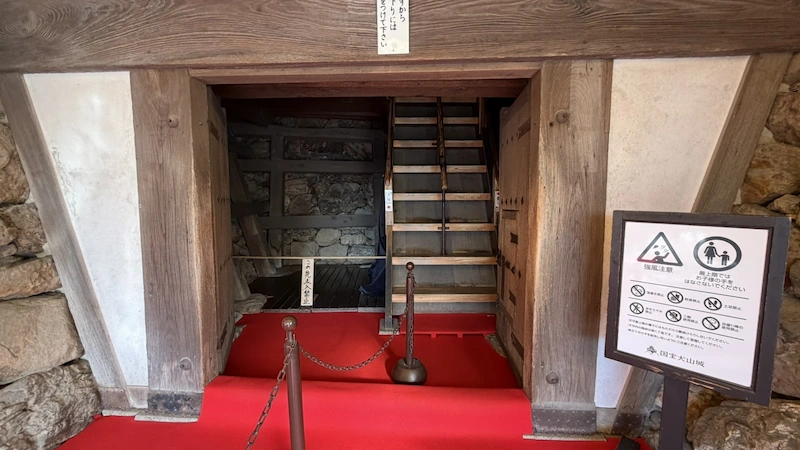
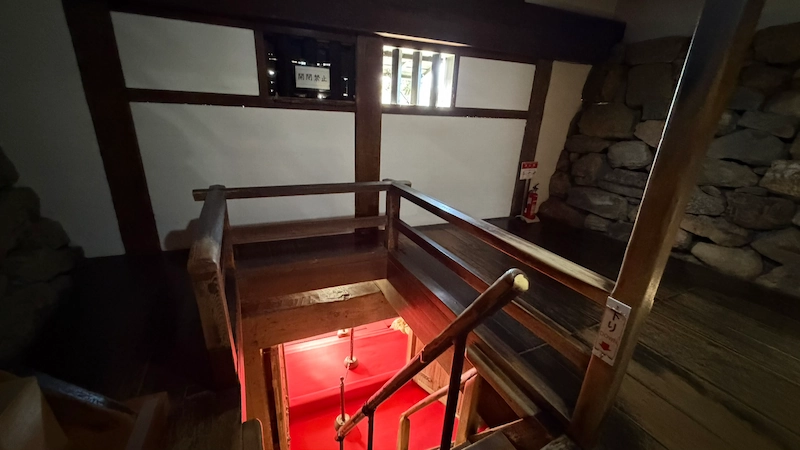
- Steep stairs: the original wooden stairs inside are steep and narrow. Use the handrails and take your time.
- Footing: the castle hill has stone steps and slopes that get slippery in rain. Wear shoes with grip.
- Photography: personal photography is allowed. Livestreaming video is discouraged.
- Japan 100 Famous Castles stamp: at the management office on the second floor of the entrance gate, inside the paid area. The location may change.
The admission fee applies beyond the ticket office at the Honmaru Kurogane Gate — the reconstructed gate that also houses the management office — and for the climb into the keep itself. Everything before that point, including the castle hill, Haritsuna Shrine and the area around Matsunomaru, can be walked free of charge.
Route from Meitetsu Nagoya Station (NH36) to Inuyama Station (IY15) by Meitetsu
Walking route from Inuyama Station (IY15) to Inuyama Castle via Honmachi-dori
Exploring Inuyama Castle by the Honmachi-dori Route — All 12 Stops
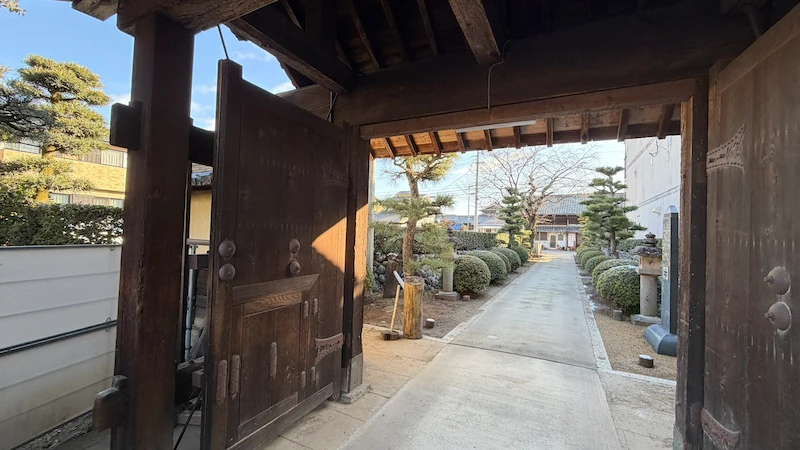
Relocated Inuyama Castle Matsunomaru Rear Gate — Jomanji Temple Gate
Sold off for 73 yen after the castle was abandoned, this gate still stands as a temple gate and a memory of the castle.
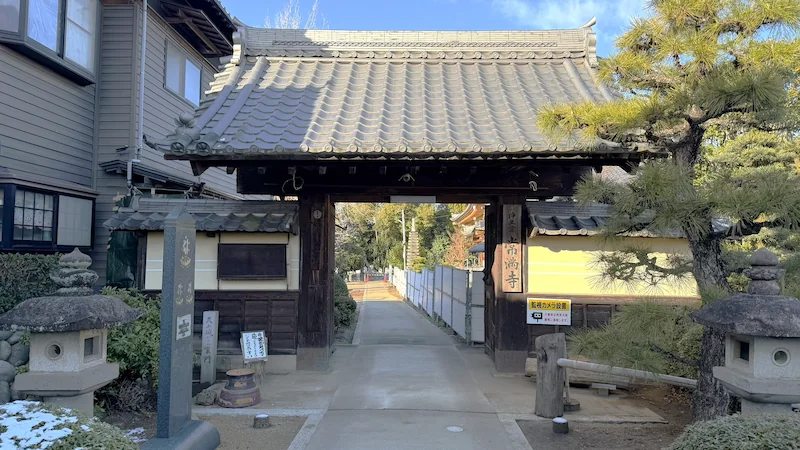
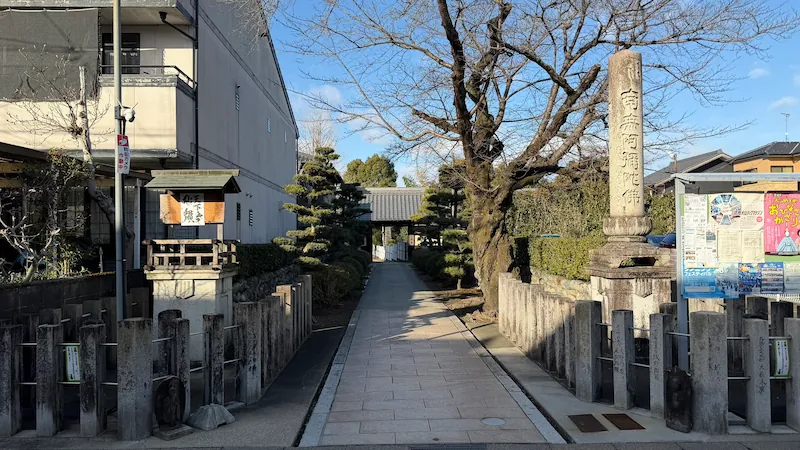
The rear gate of the Ninomaru and Matsunomaru area — the second and “pine” enclosures of Inuyama Castle — was built as an escape route in an emergency. After the Meiji Restoration, when castles across Japan were abandoned and sold, this gate was auctioned off and moved to Jomanji Temple (常満寺) in 1877. Built in the late Edo period, roughly 1830-1867, it is a yakui-mon: simple and restrained, yet powerful, and still carrying the dignity of its former role as a castle gate.
Ratings
Additional photos
Historic data
| Built | 1830-1867, late Edo period |
|---|---|
| Builder | Probably the Naruse family, lords of Inuyama (attributed) |
| Structure | Gabled, tiled, one-bay yakui-mon gate with side walls |
| Relocation and repairs | Moved to Jomanji Temple in 1877; registered as a Tangible Cultural Property in 2007 |
| Condition | Extant, in use as the Jomanji Temple gate |
| Designation | National Registered Tangible Cultural Property (Jomanji Temple Gate) |
| Notes | Repurposed from the Matsunomaru rear gate of Inuyama Castle. Jomanji Temple is at Inuyama Nishikoken 281 |
Highlights
Trivia
| Address | Inuyama Nishikoken 281, Inuyama, Aichi (犬山市犬山西古券281) |
|---|---|
| Getting there | 16 minutes on foot (about 1.2 km) from Meitetsu Inuyama Station (IY15) |
| Parking | To be confirmed (temple grounds) |
| Time needed | Quick look about 5 minutes / unhurried about 15 minutes |
| Admission | Free |
Walking route from Inuyama Station (IY15) to Jomanji Temple and the relocated Matsunomaru rear gate.
Otemon Masugata Gate Site
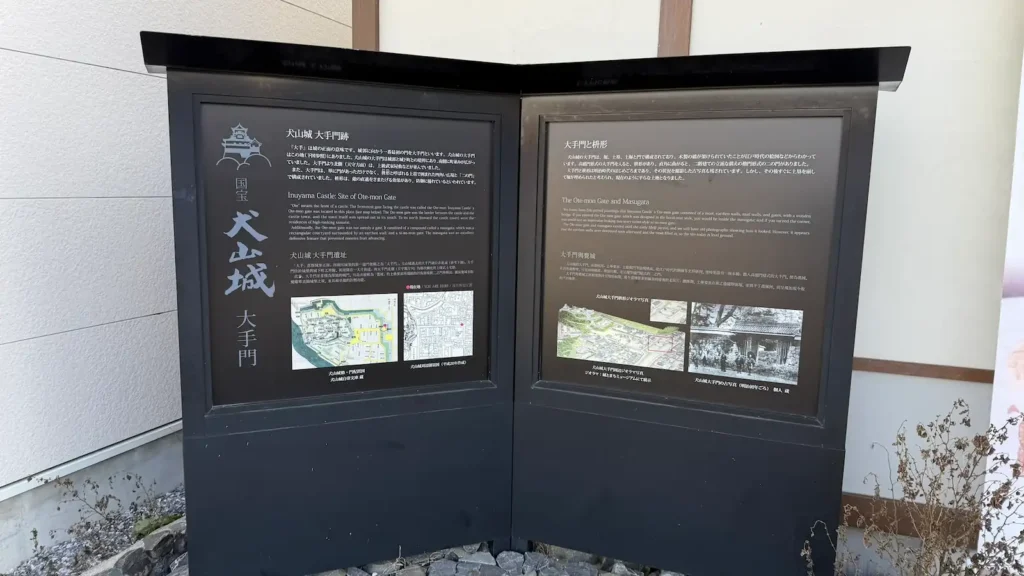
The imposing traces of Inuyama Castle's front entrance, brought back to light by the 2021 excavation.
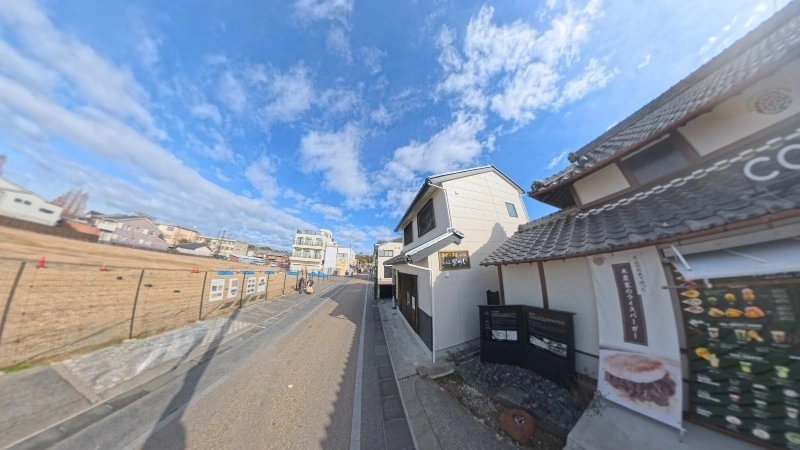
This is the site of the castle's main gate and its masugata — a boxed, right-angled entrance courtyard designed so that attackers who broke through the outer gate were funnelled into a killing ground and shot from the sides. After the city's former welfare hall was demolished in 2021, excavation confirmed that the dry moat and earthworks forming the masugata survive in good condition underground. The area is now being laid out for visitors, with stone markers and information boards. It was added to the National Historic Site “Inuyama Castle Site” in an official gazette notice dated September 18, 2025.
Ratings
Additional photo
Historic data
| Built | Unknown; likely early Edo period |
|---|---|
| Builder | The Naruse family, through Edo-period remodelling. Oda Nobuyasu's original castle was a small fort; the great masugata front gate came later |
| Structure | Flat masugata entrance: enclosures and stone walls on both sides, with an L-shaped approach |
| Demolition and research | Dismantled by 1876; excavated in 2021 after the former welfare hall was removed, confirming the remains |
| Condition | Buried remains only (outer moat and earthworks); the gate and masugata structures do not survive |
| Designation | Added to the National Historic Site “Inuyama Castle Site” in September 2025 |
| Notes | Now laid out as an open plaza on the site of the former Inuyama city welfare hall |
Highlights
Trivia
| Address | Inuyama Kitakoken 2, Inuyama, Aichi (犬山市犬山北古券2) |
|---|---|
| Getting there | 4 minutes on foot (about 0.3 km) from the previous stop, the Matsunomaru rear gate at Jomanji Temple |
| Parking | Use nearby paid car parks |
| Time needed | Quick look about 10 minutes / unhurried about 20-30 minutes |
| Admission | Free |
Walking route from Jomanji Temple to the Otemon Masugata Gate Site.
Castle and Town Museum — Inuyama Cultural History Museum Main Building
The castle town's memory bank, ideal for preparation before the climb or reflection afterward.
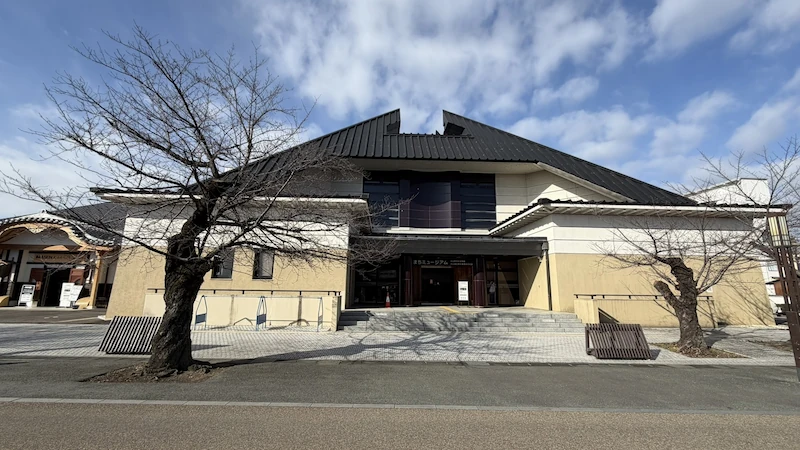
This museum sets out the history and culture of Inuyama Castle and its castle town in one place. It is open 9:00-17:00, final admission 16:30, closed December 29-31. It fits either side of the castle visit: use it as a primer before you climb to the keep, or to connect what you have just seen. The displays, models and material on the town's karakuri mechanical-puppet tradition make it easy to grasp what kind of town Inuyama grew into.
Ratings
Facility data
| Opened | 1987 |
|---|---|
| Operator | Inuyama City |
| Structure | Two-storey reinforced-concrete building with permanent and special exhibition rooms |
| Refurbishment | Renovated in 2012, with updated displays |
| Condition | Open and operating as a museum |
| Collection | Holds Inuyama City-designated cultural properties, including Naruse family material |
| Notes | Also known as the Castle and Town Museum. The south building houses the IMASEN Inuyama Karakuri Museum |
Highlights
Trivia
| Address | Inuyama Kitakoken 8, Inuyama, Aichi (犬山市犬山北古券8) |
|---|---|
| Getting there | 2 minutes on foot (about 0.2 km) from the Otemon Masugata Gate Site |
| Parking | To be confirmed (nearby car parks) |
| Time needed | Quick look about 20 minutes / unhurried about 50 minutes |
| Admission | Paid; a combined ticket with Inuyama Castle is available |
Walking route from the Otemon Masugata Gate Site to the Castle and Town Museum.
Ote Second Gate Site — Yarai Gate
A single foundation stone quietly tells the story of the second checkpoint on the main approach.
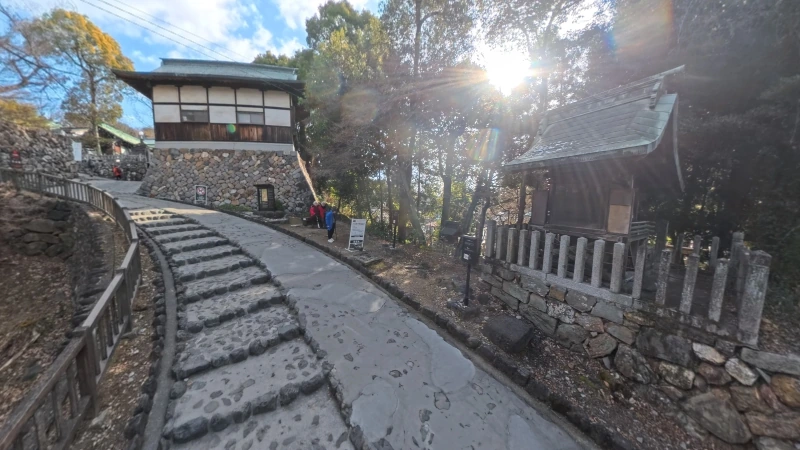
The Yarai Gate was the second checkpoint on the ote, the main approach climbing toward the honmaru — the innermost enclosure of the castle. It stood where the path from the main gate runs straight, meets the dry moat and turns right. Today one foundation stone remains beside the stone-paved path, with an information board to explain it. After the Meiji Restoration the gate itself was sold off and moved to Senshuin Temple in the town of Fuso, where it still stands.
Ratings
Historic data
| Built | Unknown; likely early Edo period |
|---|---|
| Builder | Naruse Masanari, first Naruse lord of Inuyama, who remodelled the castle |
| Structure | Yakui-mon gate: gabled, with heavy ridge timbers and sturdy rear posts |
| Relocation | Sold off in 1876 and moved to Senshuin Temple in Fuso |
| Condition | Gate no longer on site; one foundation stone remains |
| Designation | The Senshuin Temple gate (the former Yarai Gate) is a Fuso Town-designated Cultural Property |
| Notes | An information board stands beside the ote approach. Also called the Yarai-mon Site |
Highlights
Trivia
| Address | Inuyama Nishikoken, Inuyama, Aichi (犬山市犬山字西古券) |
|---|---|
| Getting there | 3 minutes on foot (about 0.2 km) from the Castle and Town Museum |
| Parking | Use nearby paid car parks |
| Time needed | Quick look about 5 minutes / unhurried about 10 minutes |
| Admission | Free |
Walking route from the Castle and Town Museum to the Yarai Gate Site.
Matsunomaru Gate Site
The entrance to the Matsunomaru Palace, where castle lords and Owari-domain lords once stayed.
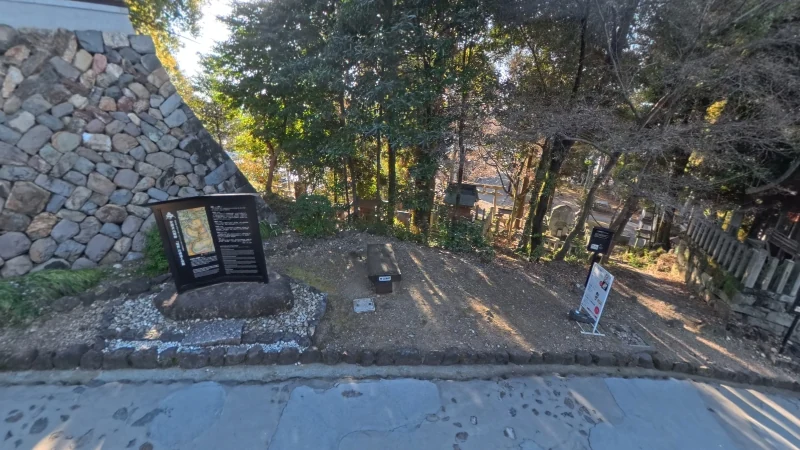
This was the front gate of the Matsunomaru, part of the ninomaru or second enclosure. The Matsunomaru once held a palace where the lord of the castle and the lord of the Owari domain — the great Tokugawa branch domain based at Nagoya, covering roughly western Aichi Prefecture — stayed when they were here. The gate was pulled down after the Meiji period and some of its timbers were reused at Jorenji Temple in Ichinomiya, where they survive. On site there is only an information board and a change in ground level, but the buried remains are in good condition and further work is hoped for.
Ratings
Historic data
| Built | Unknown; possibly late Sengoku to early Edo period |
|---|---|
| Builder | Unknown; possibly built when the Matsunomaru palace was put up |
| Structure | Yakui-mon gate: one bay, one entrance, with double doors and a wicket door |
| Demolition | Pulled down in the 1870s; some timbers reused in the Jorenji Temple gate |
| Condition | Site only: a step in the ground and an information board |
| Designation | The Jorenji Temple gate (the former Matsunomaru front gate) is an Ichinomiya City-designated Cultural Property |
| Notes | Near the lower car park of Haritsuna Shrine (針綱神社), on the boundary with the ote approach |
Highlights
Trivia
| Address | Near Inuyama Kitakoken, Inuyama, Aichi (犬山市犬山北古券先) |
|---|---|
| Getting there | 4 minutes on foot (about 0.3 km) from the Yarai Gate Site |
| Parking | Lower car park at Haritsuna Shrine (to be confirmed) |
| Time needed | Quick look about 5 minutes / unhurried about 10 minutes |
| Admission | Free |
Walking route from the Yarai Gate Site to the Matsunomaru Gate Site.
Kozutsu Yagura — Reconstructed Turret
A small reconstructed turret at the entrance to the Honmaru, striking in its black-and-white contrast.
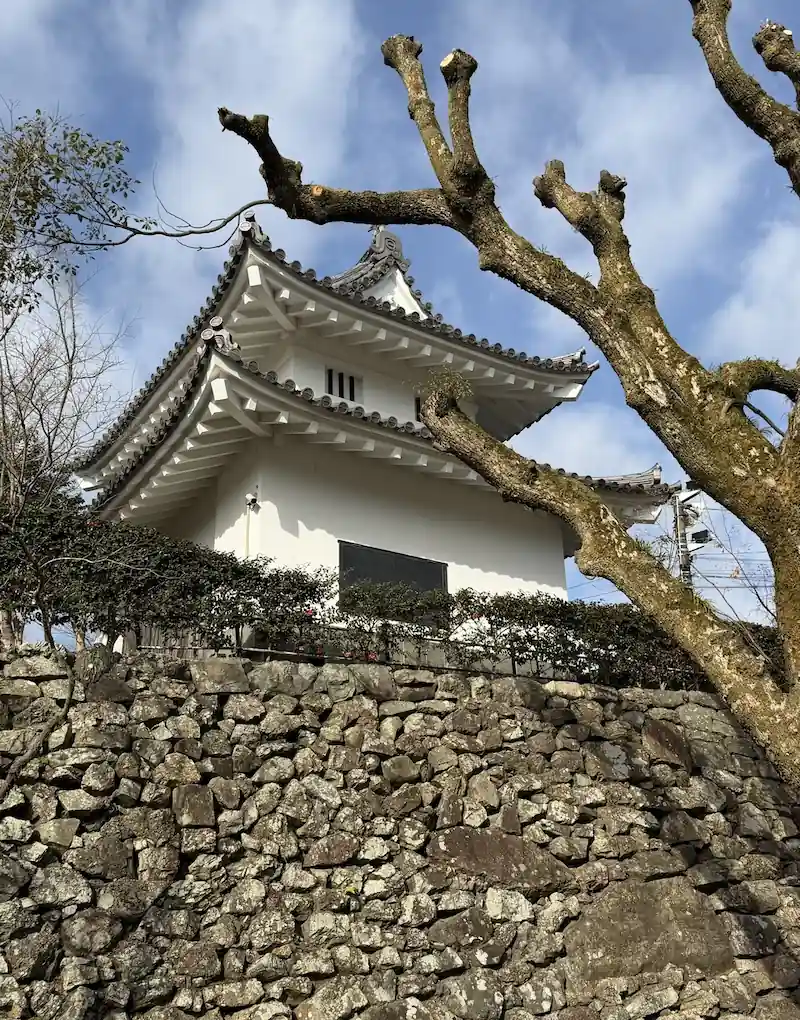
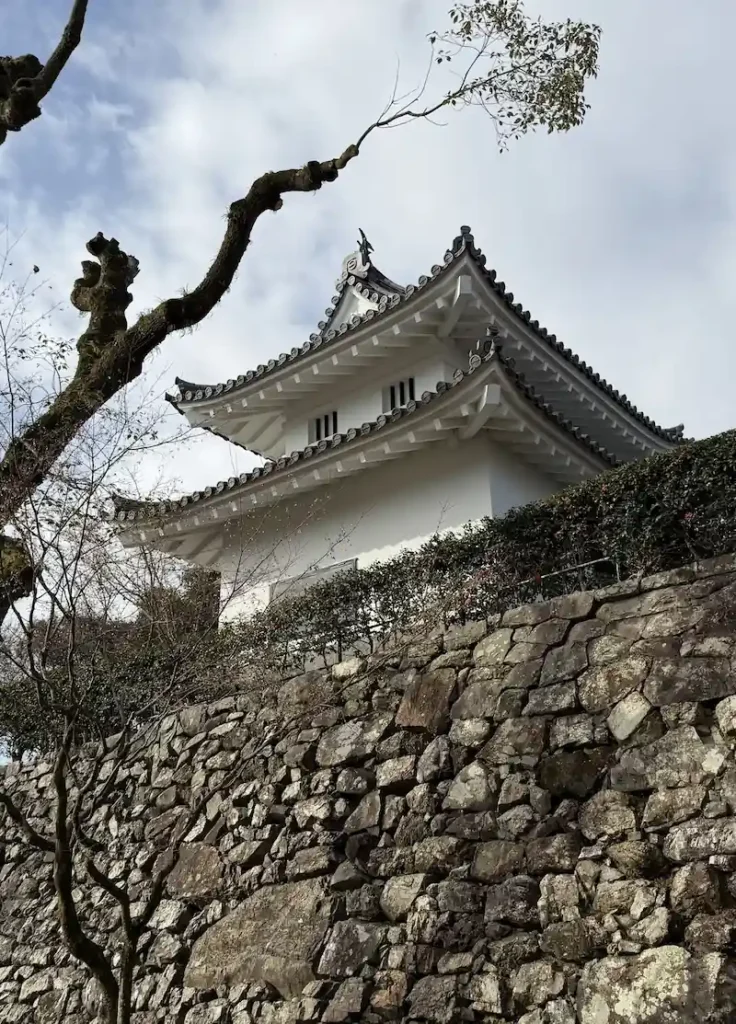
A small yagura, or turret, rebuilt near the entrance to the honmaru. During Showa-era work on the castle it was reconstructed as an interpretation of the former Teppo Yagura, the matchlock turret that once stood on the south side of the honmaru. It is reinforced concrete, but the black plaster walls and lattice windows read as timber from a few paces away and give the climb to the keep a sense of arrival.
Ratings
Additional photo
Historic data
| Rebuilt | Around 1965 (estimated date of reconstruction) |
|---|---|
| Built by | Inuyama City, as an interpretive reconstruction |
| Structure | Two-storey reinforced-concrete turret finished to look like timber, with black plaster and loophole windows |
| Reconstruction history | Rebuilt in the 1960s together with the Kurogane Gate |
| Condition | Reconstruction in good condition; the original was demolished |
| Designation | None |
| Notes | Attached to the left side of the honmaru gate (the Kurogane Gate). Interior closed to the public |
Highlights
Trivia
| Address | Inuyama Kitakoken 65-2, Inuyama, Aichi (犬山城本丸内) |
|---|---|
| Getting there | 5 minutes on foot (about 0.1 km) from the Matsunomaru Gate Site |
| Parking | Car park at the foot of the castle hill (paid; roughly 20-30 spaces) |
| Time needed | Quick look about 5 minutes / unhurried about 10 minutes |
| Admission | Free to view from outside (before the paid area begins) |
Walking route from the Matsunomaru Gate Site to the Kozutsu Yagura at the honmaru entrance.
Honmaru Kurogane Gate — Reconstructed Gate and Management Office
The imposing turret gate that recreates the Honmaru's final defensive line.
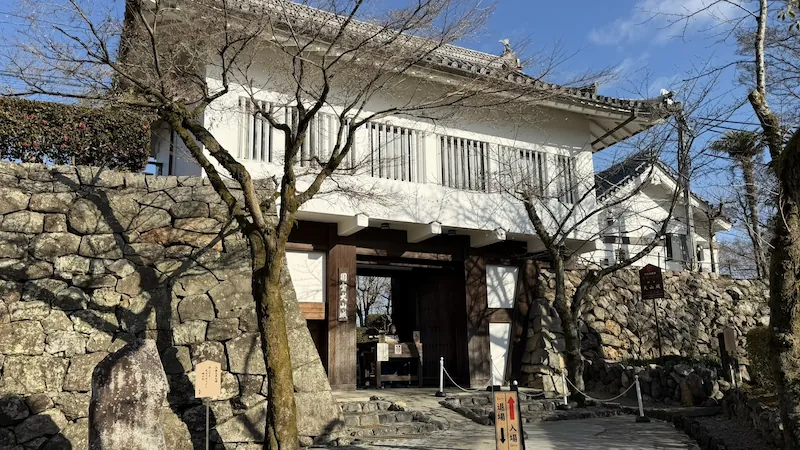
The Kurogane Gate (鉄門, “iron gate”) is the main gate of the honmaru, and this is where you buy your castle admission ticket: 1,000 yen for adults and 200 yen for elementary and junior high school students. It is a reinforced-concrete reconstruction, interpreted in the Showa era from old photographs and castle drawings, but the two-storey turret riding on top of the gate gives the entrance to the honmaru real presence.
Ratings
Historic data
| Rebuilt | Around 1965 |
|---|---|
| Built by | Inuyama City, with the former Naruse family taking the lead |
| Structure | Reinforced-concrete turret gate: two tiers, two storeys, black plaster walls, hipped-and-gabled roof |
| Reconstruction history | Gate and turret interpreted and rebuilt in the late 1950s to mid-1960s |
| Condition | In use as the reconstructed gate; the castle management office adjoins it. The original was demolished in the Meiji period |
| Designation | None |
| Notes | Houses the management office and ticket window. Reinforced concrete with a timber-like exterior |
Highlights
Trivia
| Address | Inuyama Kitakoken 65-2, Inuyama, Aichi (犬山城本丸内) |
|---|---|
| Getting there | 1 minute on foot (about 50 m) from the Kozutsu Yagura |
| Parking | Car park at the foot of the castle hill (roughly 20-30 spaces) |
| Time needed | Quick look about 5 minutes / unhurried about 10 minutes |
| Admission | Adults 1,000 yen / elementary and junior high school students 200 yen (until February 28, 2026 it was 550 yen) |
Walking route from the Kozutsu Yagura to the Kurogane Gate and its ticket office.
Osugi-sama
A sacred tree stump, said to be 650 years old, that continues to protect the castle even after withering.
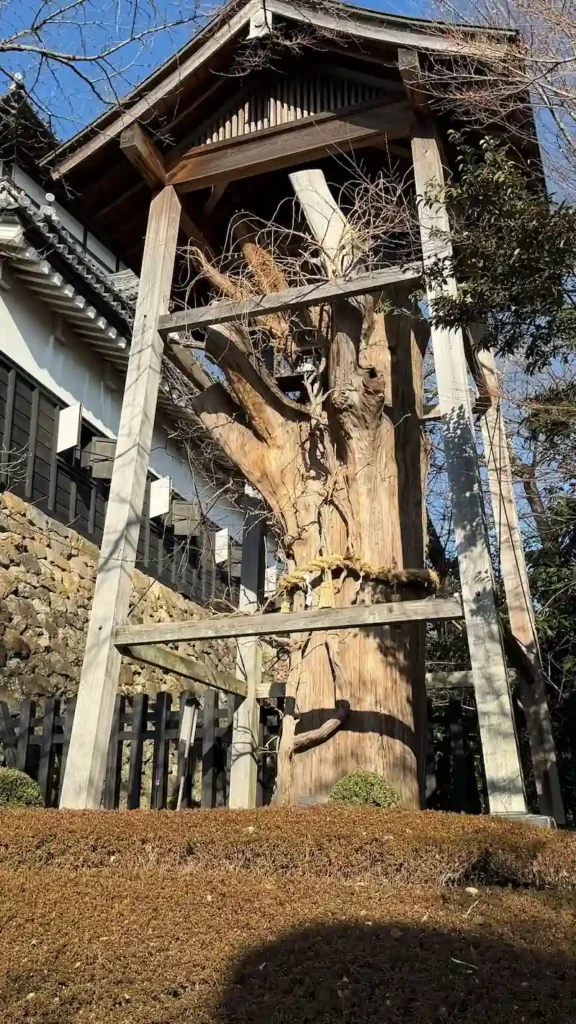
Osugi-sama, the sacred tree of Inuyama Castle, stands east of the keep inside the stone walls. The giant cedar is said to have been rooted here before the castle was built, and its age is traditionally given as about 650 years. It died around 1965, after a lightning strike and the effects of the Ise Bay typhoon. A shimenawa is now wrapped around the surviving stump, which is revered as a spiritual spot within the castle grounds.
Ratings
Data
| Age | Unknown; the tree is thought to date from the Kamakura to Nanbokucho period, and is traditionally described as about 650 years old |
|---|---|
| Origin | Grew naturally; already present before Inuyama Castle was built |
| Species | Japanese cedar (sugi), a tall conifer |
| Known for | Said to have shielded the castle from lightning, and to have died as a result |
| Condition | Stump only, enclosed by a low sacred fence |
| Died | Around 1965 |
| Designation | None; revered as a guardian of the castle |
Highlights
Trivia
| Address | Inuyama Kitakoken 65-2, Inuyama, Aichi (犬山城本丸内) |
|---|---|
| Getting there | 1 minute on foot (about 50 m) from the Kurogane Gate |
| Time needed | Quick look about 1 minute / unhurried about 5 minutes |
| Admission | Castle ticket required (bought at the Kurogane Gate) |
Where Osugi-sama sits in relation to the Kurogane Gate.
Inuyama Castle was built on a strategic point along the Kiso River at the northern edge of Owari Province, roughly the western half of today's Aichi Prefecture. It was founded by Oda Nobuyasu, an uncle of Oda Nobunaga, and it was fought over repeatedly by Nobunaga, Toyotomi Hideyoshi and Tokugawa Ieyasu.
In the Battle of Komaki and Nagakute of 1584, Hideyoshi used Inuyama Castle as a base. Stand on the top floor of the keep, look across the Kiso River toward the Owari plain, and the reason this site mattered to warlords becomes immediately clear.
In the Edo period the castle passed to the Naruse family, senior retainers attached to the Tokugawa lords of the Owari domain, who governed it through eight generations until the end of the shogunate. Among Japan's 12 original surviving keeps, Inuyama was also the only castle to remain in private ownership into the modern era. (Historical interpretations vary.)
Castle Keep
One of Japan's oldest surviving National Treasure keeps — feel the Sengoku view from the railed top-floor gallery.
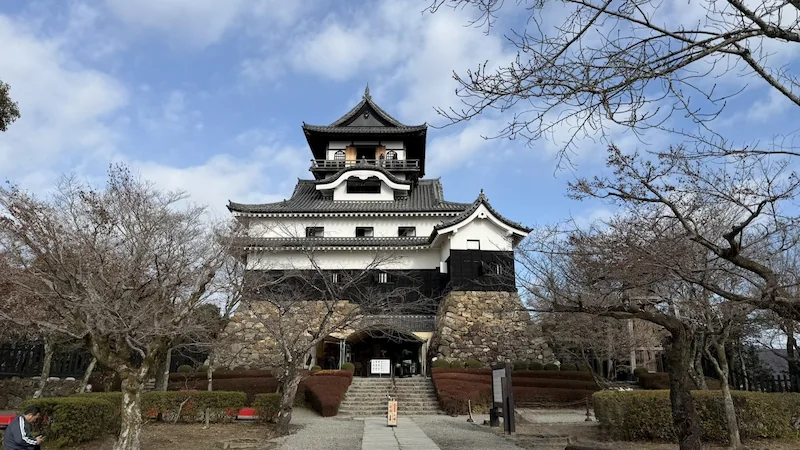
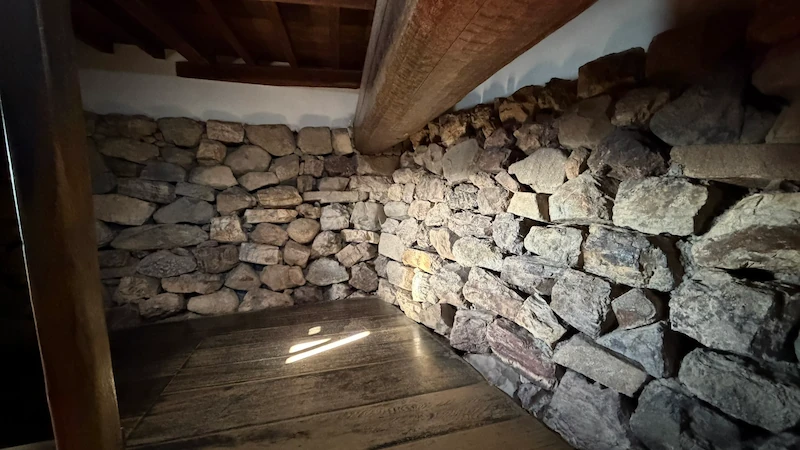
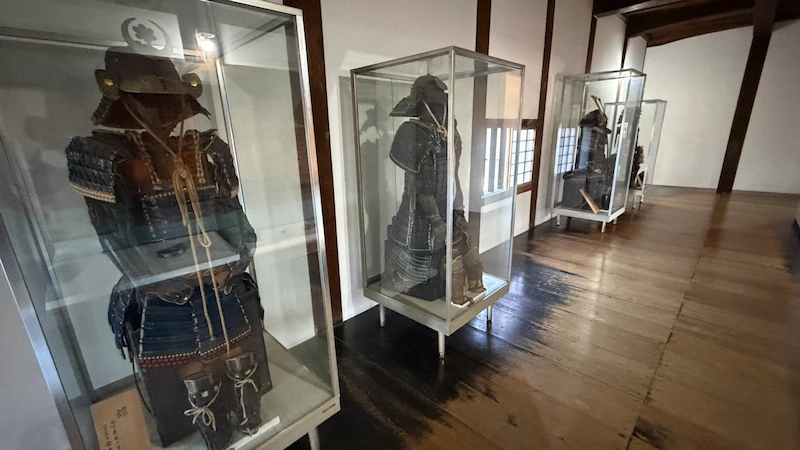
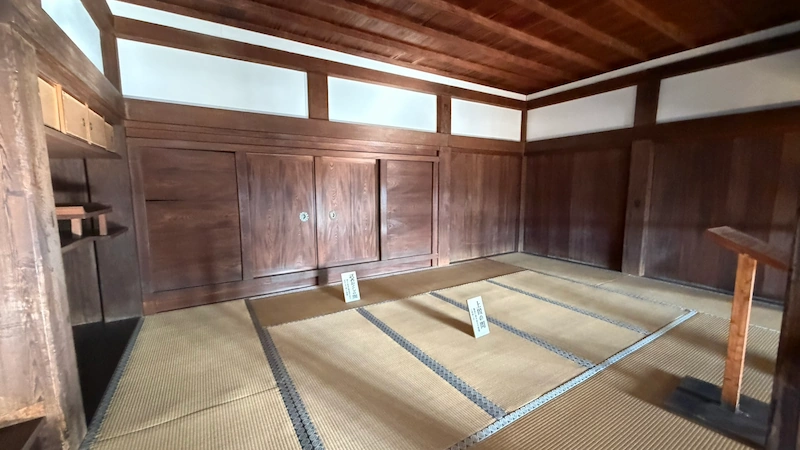
Inuyama's tenshu, the main tower of a Japanese castle, is a three-tier, four-floor wooden keep with two basement levels, and it is among the oldest of Japan's 12 surviving original keeps. White plaster walls combine with dark timber weatherboarding, and the top floor is ringed by a railed gallery you can walk right around. Inside, thick beams and pillars, steep wooden stairs, weapon-rack rooms and defensive details preserve the functional beauty of a Sengoku-period fortress. From the top floor, the view sweeps over the Kiso River and, in clear weather, as far as Mount Ontake.
Ratings
Additional photos (interior)
Historic data
| Completion | The date of the keep is debated. Recent work sets out two main theories: 1537 and 1601 |
|---|---|
| Form | Composite watchtower-style keep: 3 tiers, 4 floors and 2 basement levels, with two attached turrets |
| Height | About 19 metres above the stone base |
| Design | Gabled and cusped gables, with a railed gallery around the top floor |
| Major works | Extensively remodelled by the Naruse family around 1620; dismantled and repaired 1961-65 |
| Designation | National Treasure (the keep), designated in 1952 |
| Notes | Open to climb with a ticket. Personal photography is allowed; livestreaming is discouraged and consideration for other visitors is expected |
Highlights
Trivia
| Address | Inuyama Kitakoken 65-2, Inuyama, Aichi (犬山市犬山北古券65-2) |
|---|---|
| Getting there | 1 minute on foot (about 50 m) from Osugi-sama |
| Parking | Car park at the foot of the castle hill (roughly 20-30 spaces) |
| Time needed | Quick look about 20 minutes / unhurried about 40 minutes |
| Admission | Adults 1,000 yen / elementary and junior high school students 200 yen. Final admission 16:30 |
Where the keep sits in relation to Osugi-sama.
Inuyama Castle Shimizu Gate Site
Trace the remains of the eastern rear entrance, also known as the Sakaki Gate.
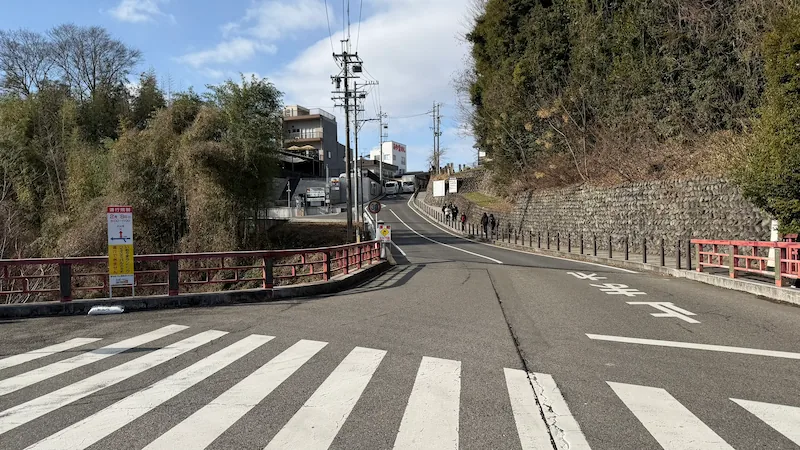
The Shimizu Gate stood between the sannomaru, the third enclosure, and the Higashidani bailey on the eastern side of the castle. It was the link between the rear entrance and the Uchida Gate side of the grounds. It was dismantled after the Meiji Restoration, and its timbers survive as the gate of Unzenji Temple in Ichinomiya. On site there is only an information board, although recent excavation has begun to confirm foundation stones as well.
Ratings
Historic data
| Built | Unknown; early Edo period |
|---|---|
| Builder | Unknown; built when the eastern bailey was laid out |
| Structure | Koraimon-style gate: single storey, gabled, with heavy tiles |
| Demolition | Pulled down in the 1870s; the timbers were reused for the Unzenji Temple gate |
| Condition | Site marked only; the gate survives at Unzenji Temple |
| Designation | The Unzenji Temple gate (the former Shimizu Gate) is an Ichinomiya City-designated Cultural Property |
| Notes | In a residential area at the eastern foot of the castle hill, marked by a “Shimizu Gate Site” board |
Highlights
Trivia
| Address | Near Inuyama Higashikoken, Inuyama, Aichi (犬山市犬山東古券付近) |
|---|---|
| Getting there | 5 minutes on foot (about 350 m) from the keep |
| Parking | To be confirmed (nearby car parks) |
| Time needed | Quick look about 3 minutes / unhurried about 5 minutes |
| Admission | Free |
Walking route from the keep to the Shimizu Gate Site.
Urakuen Garden
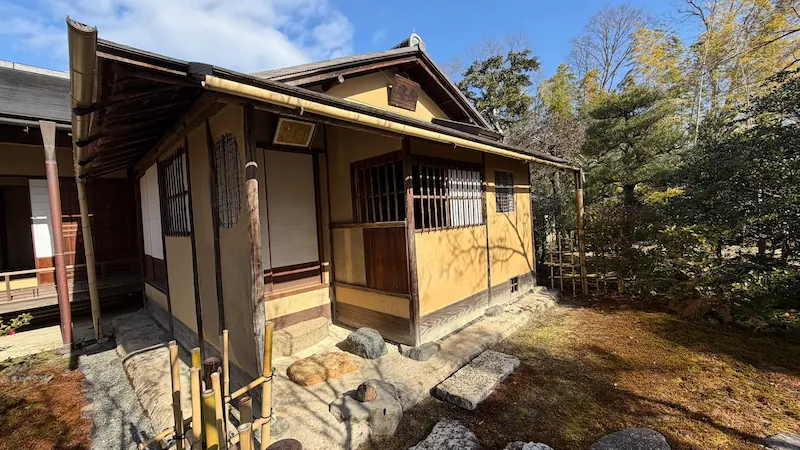
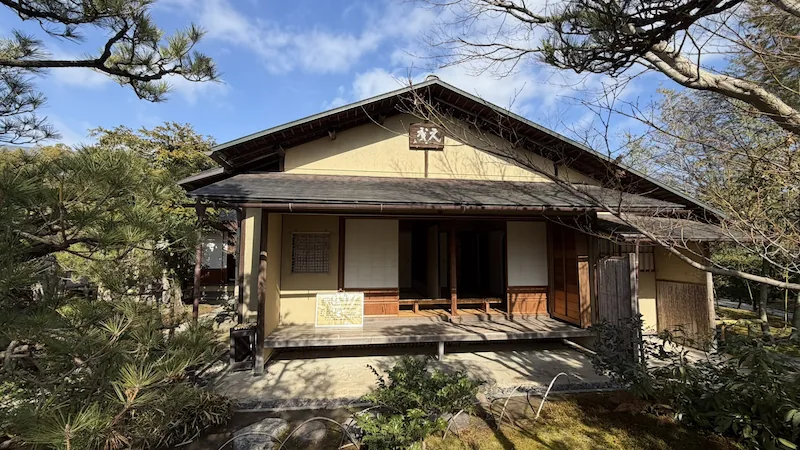
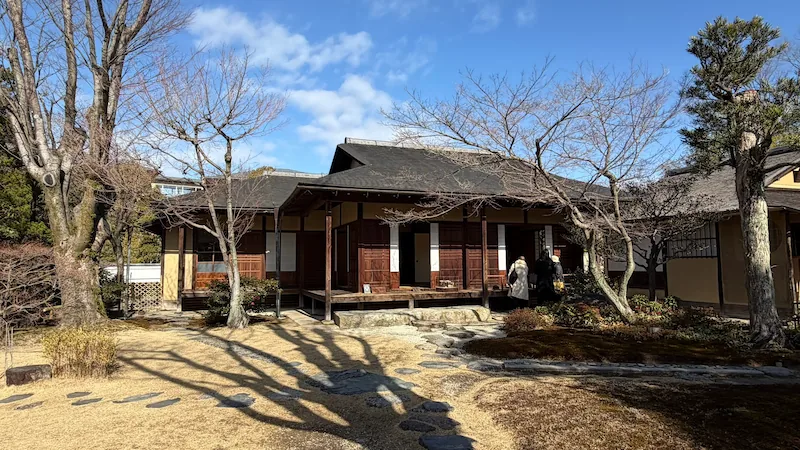
The only garden where you can regularly view the National Treasure Joan tea house, built by Oda Urakusai.
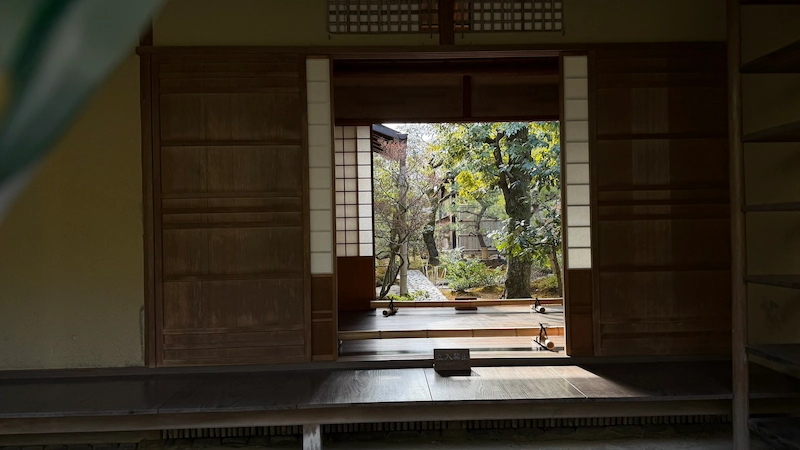
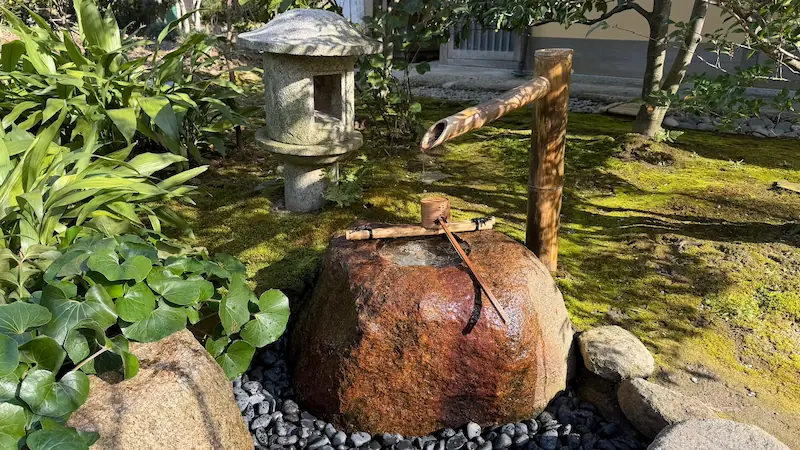
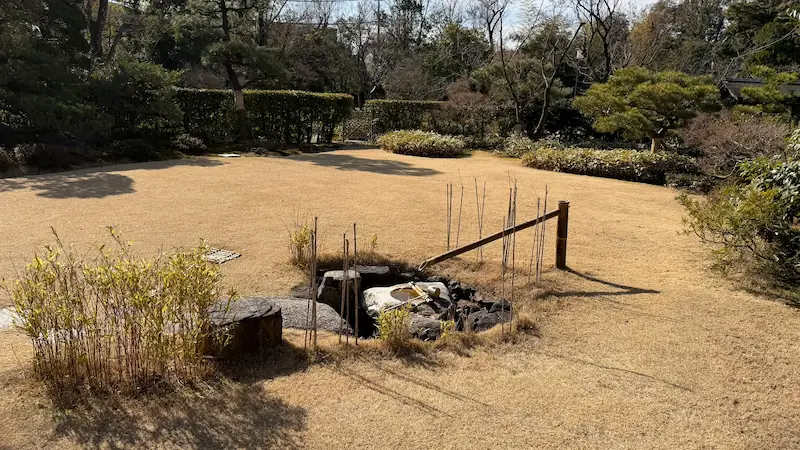
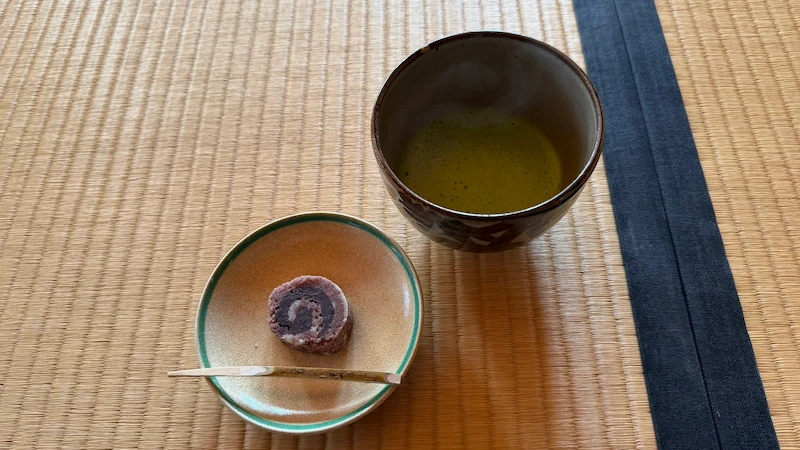
Urakuen is a Japanese garden at the foot of the castle hill, opened in 1972. It contains Joan (如庵), the National Treasure tea house associated with Oda Urakusai, the younger brother of Oda Nobunaga, and it is the only garden where one of Japan's three most celebrated tea rooms can be viewed on a regular basis. Open 9:30-17:00, admission until 16:30; closed on Wednesdays, December 29 to January 1, and on maintenance days. Admission: adults 1,500 yen, children 800 yen; the combined Inuyama Castle and Urakuen ticket is 2,000 yen. Cherry-blossom and autumn-leaf seasons are the busiest times of the year here.
Ratings
Additional photos
Facility data
| Opened | Garden opened 1972; the Joan tea house was originally built in 1618 |
|---|---|
| Created by | Meitetsu (Nagoya Railroad) laid out the garden; Joan was built by Oda Urakusai |
| Structure | Stroll garden around a pond, with a group of tea houses including Joan, a thatched single-storey room of three and three-quarter mats |
| Relocation history | Joan and the Former Shoden-in Shoin were moved here in 1972; the garden opened to the public in 1983 |
| Condition | In active use; garden and tea houses well maintained |
| Designations | National Treasure: the Joan tea house / Important Cultural Property: the Former Shoden-in Shoin |
| Notes | The only garden where Joan, one of Japan's three celebrated tea rooms, can be seen on a regular basis |
Highlights
Trivia
| Address | Mikadosaki 1, Inuyama, Aichi (犬山市御門先1) |
|---|---|
| Getting there | 4 minutes on foot (about 350 m) from the Shimizu Gate Site |
| Parking | To be confirmed (paid car parks around Urakuen and the castle) |
| Time needed | Quick look about 30 minutes / unhurried about 1 to 1.5 hours |
| Admission | Adults 1,500 yen / children 800 yen. Combined Inuyama Castle and Urakuen ticket 2,000 yen |
Walking route from the Shimizu Gate Site to Urakuen Garden.
Relocated Inuyama Castle Uchida Gate — Zuisenji Temple Gate
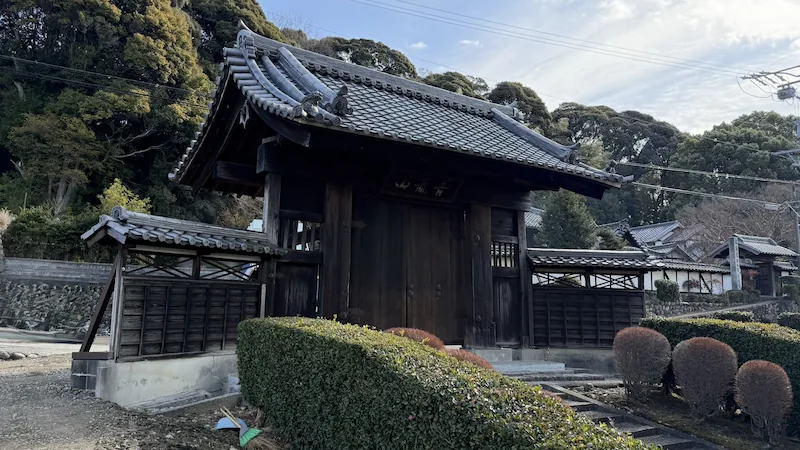
From Mino Kaneyama Castle to Inuyama Castle, then to Zuisenji — a rear gate with a double relocation history.
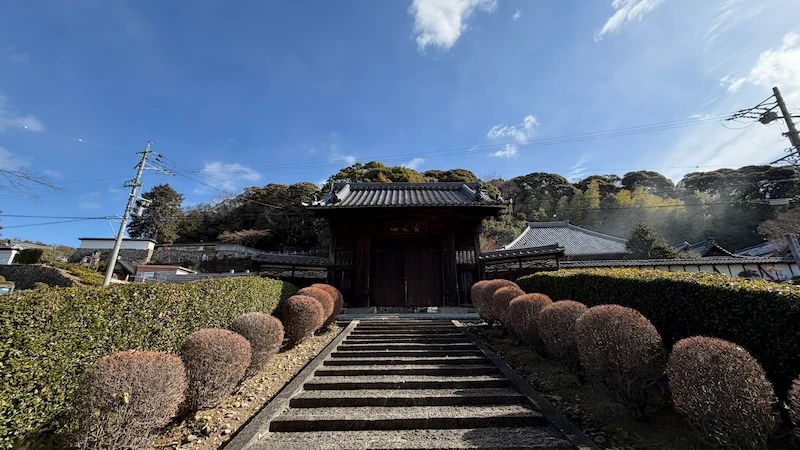
Behind the castle, along the Kiso River, Zuisenji Temple preserves a gate that few visitors know about. This is the Uchida Gate, believed to have been the castle's rear gate. It was moved here in 1876 to serve as the temple gate. Tradition holds that it had earlier been the main gate of Kaneyama Castle in Mino Province, roughly the southern part of today's Gifu Prefecture — which would make it a relocated gate twice over, and an unusually valuable survival in castle history. The temple grounds are freely open.
Ratings
Additional photo
Historic data
| Built | Unknown; traditionally linked to the Tenbun era (1532-1555) |
|---|---|
| Builder | Unknown; traditionally attributed to the Mori family, lords of Kaneyama Castle |
| Structure | Gabled, tiled, one-bay yakui-mon gate with side walls; thick posts, plain but robust |
| Relocation and repairs | Moved to Zuisenji Temple in 1876; repaired after the 1891 Nobi earthquake and again in the Heisei period |
| Condition | Extant and open to view as the Zuisenji Temple gate |
| Designation | Inuyama City-designated Cultural Property (Zuisenji Temple Gate) |
| Notes | The former Uchida Gate, the rear gate of Inuyama Castle. Said to have been the main gate of Kaneyama Castle in Mino before that |
Highlights
Trivia
| Address | Zuisenji 4, Inuyama, Aichi (犬山市犬山瑞泉寺4) |
|---|---|
| Getting there | 12 minutes on foot (about 0.8 km) from Urakuen Garden |
| Parking | To be confirmed (temple grounds) |
| Time needed | Quick look about 5 minutes / unhurried about 15 minutes |
| Admission | Free; the grounds are open to visitors |
Walking route from Urakuen Garden to Zuisenji Temple and the Uchida Gate.
A personal ranking based on an on-site visit in February 2026. It is not an official recommendation from Inuyama Castle or Urakuen Garden.
A National Treasure and one of the oldest of Japan's 12 original surviving keeps, with a railed gallery around the top floor looking out over the Kiso River. Final admission is 16:30, so this is the one thing to secure time for early in the day. Allow 20 minutes for a quick climb, 40 minutes to take it properly.
Home to the National Treasure Joan tea house and the Important Cultural Property Former Shoden-in Shoin, and the only garden where one of Japan's three celebrated tea rooms can be seen on a regular basis. It closes every Wednesday and from December 29 to January 1, with extra maintenance closures, so if your visit falls on a Wednesday the whole day needs rearranging.
Of the relocated gates on this page, this is the one where the gate itself survives as a designated cultural property, with the added story of a possible earlier life as the main gate of Kaneyama Castle in Mino. It is 12 minutes on foot (about 0.8 km) from Urakuen, so treat it as the reward for finishing the keep and the garden with time to spare.
The castle-town diorama gives you Edo-period Inuyama in one view, and it works either as preparation before the climb or as a way to make sense of it afterward. A combined ticket with the castle is sold, and 20 to 50 minutes is enough. It is also the obvious fallback in rain or while waiting out a queue at the keep.
None of these gates survives on site: what remains is one foundation stone, a step in the ground and an information board (the gates themselves stand at Senshuin, Jorenji and Unzenji temples). Each is a 3 to 10 minute stop and they fall in order along the route on this page, so reading the boards as you pass is enough to get the point.
Gates Relocated from Inuyama Castle — 7 Surviving Nearby Sites
Inuyama Castle's buildings were sold off in the Meiji period, and 7 of its 18 gates were relocated to nearby temples, where they still survive. Three of them appear on the route above. If you want to track down the others, the map links below go to each site.
- Yarai Gate: Senshuin Temple Gate (Fuso Town-designated Cultural Property)
- Black Gate: Tokurinji Temple Gate
- Matsunomaru Gate: Jorenji Temple Gate (Ichinomiya City-designated Cultural Property)
- Matsunomaru Rear Gate: Jomanji Temple Gate (National Registered Tangible Cultural Property)
- Uchida Gate: Zuisenji Temple Gate (Inuyama City-designated Cultural Property)
- Sakaki Gate: Unzenji Temple Gate (Ichinomiya City-designated Cultural Property)
- Somon Yagura: Mori Family Storehouse (not open to the public)
Frequently Asked Questions
Plan about 2 hours for the keep alone, 3 to 4 hours including Urakuen Garden, and 5 to 6 hours for the full 12-stop route in this guide.
Take a Meitetsu train from Meitetsu Nagoya Station (NH36) to Inuyama Station (IY15), about 25 minutes or more depending on the train type and time of day. Meitetsu is a private railway separate from JR, so trains leave from the Meitetsu station, not JR Nagoya Station. From Inuyama Station it is about a 20-minute walk to the castle: take the West Exit, go to the Honmachi intersection, then turn right (north) onto Honmachi-dori.
Yes. It is one of Japan's 12 original surviving keeps and one of the 5 original keeps designated as National Treasures.
Admission is 1,000 yen for adults and 200 yen for elementary and junior high school students. That has been the price since March 1, 2026; until February 28, 2026 it was 550 yen and 110 yen respectively.
Exit from the west side of Inuyama Station (IY15), head to the Honmachi intersection, turn right / north onto Honmachi-dori, and continue toward the castle hill entrance. The walk takes about 20 minutes.
The castle is open 9:00-17:00, final admission 16:30, and closed December 29-31. Hours can change for crowd control or special operations, so check official updates on the day of your visit.
The castle closes December 29-31 and is otherwise open, so January 1 onward is normally possible; the keep is a local favourite for the first sunrise of the year and sometimes opens specially in the early hours of January 1. Urakuen Garden has a longer break, closing December 29 to January 1. Confirm both with official sources before planning a New Year visit.
Urakuen Garden is 1,500 yen for adults and 800 yen for children. The combined ticket with Inuyama Castle is 2,000 yen, which saves 500 yen against buying the castle (1,000 yen) and the garden (1,500 yen) separately.
It is closed every Wednesday and from December 29 to January 1, with additional maintenance closures possible. If your date is fixed, check the official schedule shortly before you travel.
Toyotomi Hideyoshi used Inuyama Castle as a base during the Battle of Komaki and Nagakute in 1584. Its position overlooking the Kiso River and the Owari Plain made it a strategically important stronghold, and that is why it appears in the 2026 Taiga drama.
Personal photography is allowed, but livestreaming video is discouraged. Be considerate during crowded periods and avoid stopping for long on the narrow stairs.
Large luggage cannot be brought inside the keep, so use coin lockers or other storage before entering. You also remove your shoes at the keep entrance, so easy footwear helps.
Related Pages





*The information in this article reflects an on-site visit in February 2026. Admission fees, opening hours, closed days and Urakuen Garden schedules may change. Always check official information before visiting.
*Admission fees and hours for Inuyama Castle, and the admission and combined-ticket prices for Urakuen Garden, follow the official National Treasure Inuyama Castle visitor information and the official Inuyama tourism association listing. Photographs and on-site descriptions are from the February 2026 visit.
*Historical descriptions may vary by interpretation. Cultural-property designations, names and counts may differ depending on the source. Consult the latest official and public materials as well.
*In the historic-data sections, “unknown” and “to be confirmed” indicate points where no conclusive information has been confirmed. Parking capacity at the foot of the castle hill (roughly 20-30 spaces) is an on-site estimate, not an official figure.
☕ Support This Site
Following the Shogun is built on original fieldwork and on-site research.
If you found this guide useful, your support helps keep it going.

You can also support via QR code


comment