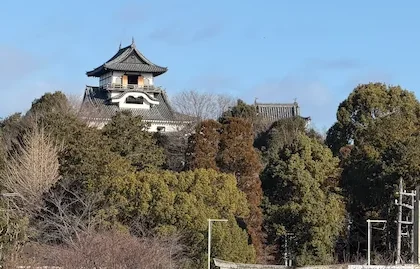
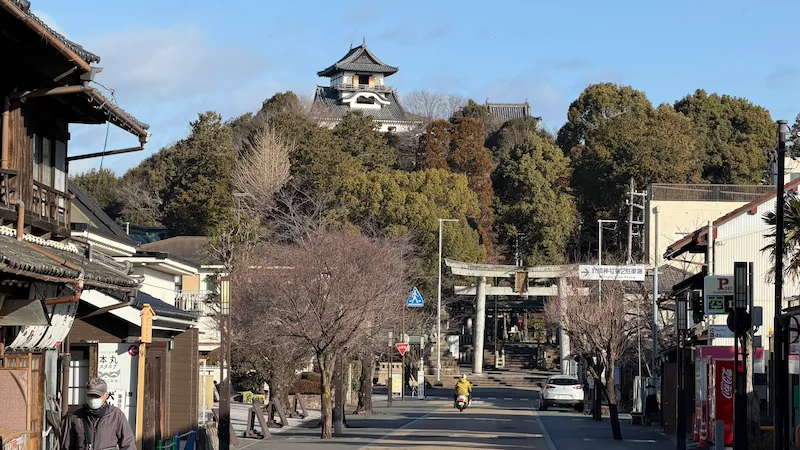
Inuyama Castle is a classic one-day route where you can cover “National Treasure Keep + Castle Town (Honmachi-dori) + Urakuen Garden (Jo-an)” in a single day.
This route is ideal for travelers who want to come by public transportation, stroll through the castle town on foot, and—after admiring National Treasure architecture—continue straight on to Urakuen Garden (Jo-an) as a single, seamless itinerary. Quick facts (official): Inuyama Castle is generally open 9:00–17:00 (last admission 16:30) and is closed Dec 29–31. The walk from Meitetsu Inuyama Station is about 20 minutes (route-dependent). The spot where people most often get turned around is the exact moment you “enter Honmachi-dori,” so it helps to remember this in advance: exit Inuyama Station from the West Exit, and at Honmachi Intersection, turn right (north).
In this article, we’ll first lock in the turn-by-turn point that gets you from Inuyama Station into Honmachi-dori without hesitation, plus a practical way to think about total time when you add food stops and detours. Then we’ll summarize the “day-of essentials” that tend to trip people up before they enter the castle: shoes-off rules, how bags are handled, cautions about photography and livestreaming, and key dates such as when admission fees change. Finally, we’ll organize the same flow for Urakuen Garden (Jo-an)—including opening hours and closed days—and add a few nearby spots that pair easily with the visit.
This castle is more than simply a beautiful National Treasure keep. While Komakiyama Castle was Nobunaga’s “new base,” this place was, for Nobunaga, a “family wall” he had to overcome. From a Sengoku front line where the Oda clan kept a watchful eye, to a strategic prize Toyotomi Hideyoshi set his sights on, and then—under Tokugawa rule—a formidable stronghold guarding Owari: it is a “crossroads of history” that survived three eras.
Its greatest value is that it remains an “authentic space that survived.” Of the tens of thousands of castles that once existed in Japan, only 12 still retain an original keep from before the Edo period, standing on its original site—the group known as the “12 Original Keeps.” Among those, only five castles (including Inuyama) are designated as National Treasures.
If you’re going to visit Inuyama Castle, heading straight there by the shortest possible route would be far too much of a waste.
The Honmachi-dori route is simple: leave from Inuyama Station’s West Exit, walk straight through the station-front area, then turn right (north) at Honmachi Intersection to enter Honmachi-dori. From there, just keep following the street until you reach the uphill approach to Shiroyama (Castle Hill).
That walk—passing a row of old merchant buildings—feels like stepping into the castle town’s living memory, a path where people and goods have flowed since Nobunaga’s time. With each step, the keep gradually reveals itself on the hill ahead, until the National Treasure suddenly fills your view. The experience of a castle you truly “look up at” is far more stirring than any photo.
On this page, we’ll follow that Honmachi-dori route to Inuyama Castle, experience the strategic “linchpin” Hideyoshi aimed to control, then continue to Urakuen—the Japanese garden that became a cultural jewel under the peaceful Tokugawa era—and finally to the relocated gate, “Inuyama Castle Relocated Uchida Gomon,” which still carries the castle’s memory even after the age of castles faded. We’ll walk it in one continuous flow, aligned with the timeline of the eras.
Sengoku-era tension, a view toward unifying the realm, and the stillness of peace. The castle’s power, the castle town’s atmosphere, and the stories preserved in a single gate layer together—turning your day into a journey that will stay with you as “the memory of walking through history.”
Inuyama Castle Admission Fees
At Inuyama Castle, the admission/climb fee applies to the area you enter after buying a ticket at the booth by the “Honmaru Kurogane Gate (reconstructed / Management Office).” In the sequence used in this article, tickets are required for the Honmaru (the main enclosure around Osugi-sama) beyond the gate, and for the section from there where you climb up into the keep.
Admission (official notice): Fees change effective March 1, 2026.
• Until Feb 28, 2026: Adults ¥550 / Elementary & junior high ¥110
• From Mar 1, 2026: Adults ¥1,000 / Elementary & junior high ¥200
Notes for Visiting the Castle
- Shoes are not allowed inside the keep. You’ll remove your shoes at the entrance before touring. When I visited, shoe bags (for your removed shoes) were handed out at the keep entrance, and using your own bag was also fine.
- Large luggage is not allowed inside the keep. Locker guidance is available.
- Depending on crowd levels, entry restrictions may be implemented, so leave extra time if you’re going later in the day.
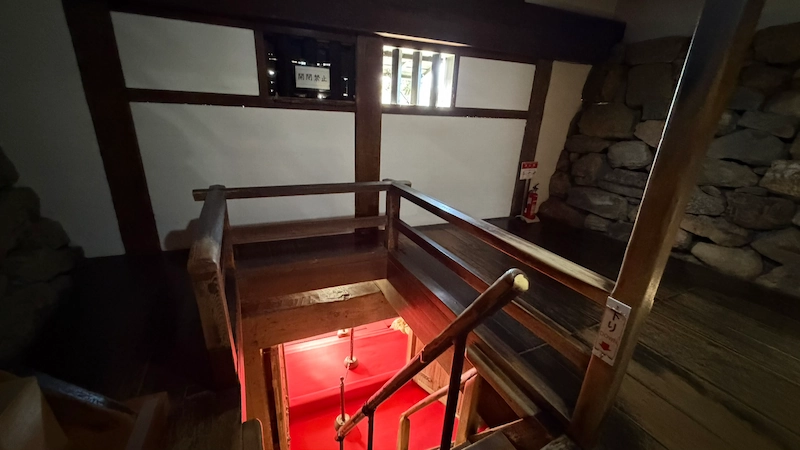
- The stairs inside the keep are steep, so if you’re not confident about knees/legs, don’t push yourself—take it slowly and carefully.
- Castle Hill includes stone steps and slopes, so on rainy days non-slip shoes are recommended【Please confirm: strollers may be difficult on certain sections】
Japan’s Top 100 Castles Stamp: Installed in the Management Office on the 2nd floor of the entrance gate (paid area).
※ Operations may change around year-end (e.g., castle closure 12/29–31), so also check the day-of notices.
Access
Meitetsu Nagoya Station → Inuyama Station: about 25 minutes or more (varies by train type and time of day)
Inuyama Station → Inuyama Castle: about a 20-minute walk (Inuyama Station West Exit → Honmachi Intersection → Honmachi-dori → Castle Hill)
※ If you’re factoring in crowds and detours (street food “tasting as you go”), it’s safest to plan for 【Please confirm: +10–30 minutes】
- Spot Guide
- Matsunomaru Rear Gate (Relocated from Inuyama Castle)
- Ōtemon Gate and Masugata Remains
- Castle & Town Museum (Inuyama Cultural History Museum – Main Building)
- Second Ōtemon Gate Site (Yarai Gate)
- Matsunomaru Gate Site
- Matchlock Turret (Reconstruction)
- Kurogane Gate of the Honmaru (Reconstructed; Castle Management Office)
- Osugi-sama
- Main Tower
- Site of Inuyama Castle’s Shimizu Gate
- Urakuen Garden
- Relocated Uchida Gate of Inuyama Castle
- Relocated Buildings from Inuyama Castle That Still Survive
- FAQ
- Related Pages
Spot Guide
Matsunomaru Rear Gate (Relocated from Inuyama Castle)
⭐Recommended
Historical value: ☆☆ (Built in the late Edo period; a surviving relocated gate)
Visual appeal: ☆☆ (A temple gate with a dignified, atmospheric presence)
Experience: ☆ (Easy to visit in a short time)
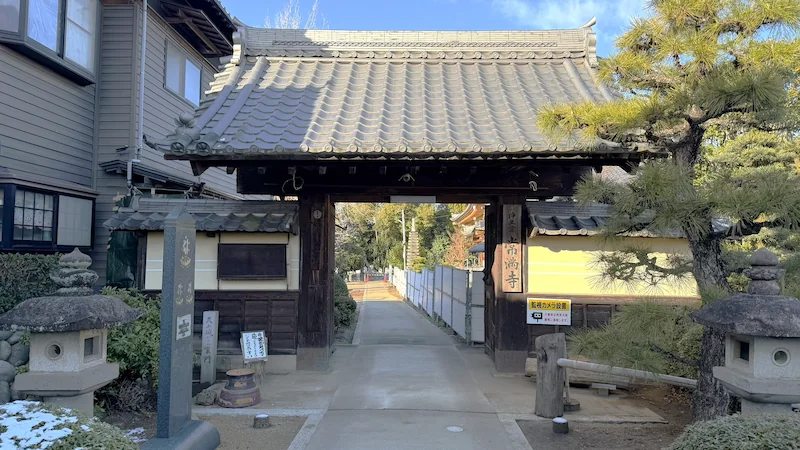
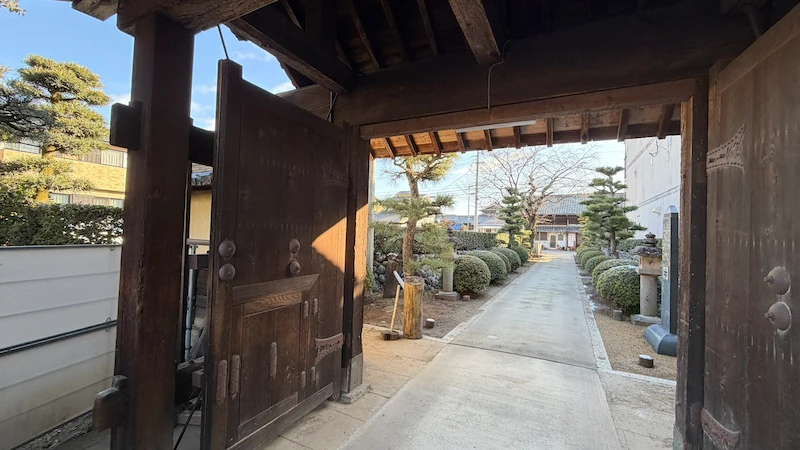
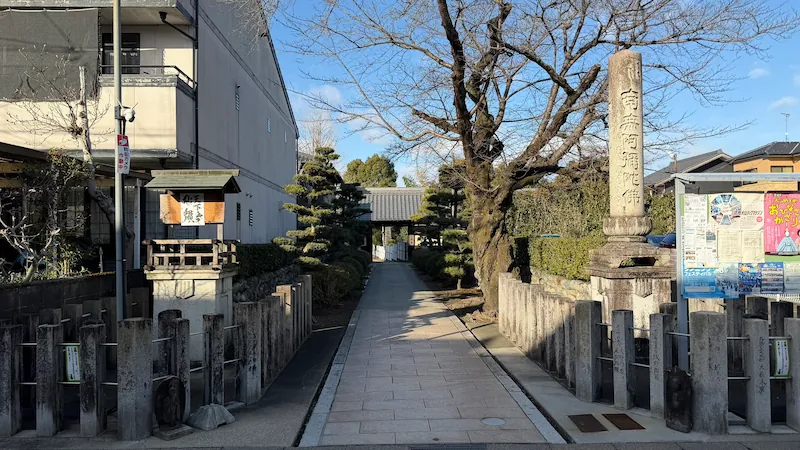
The rear gate of the Ninomaru’s Matsunomaru was designed as an escape route in case of emergency—an exit built into the castle’s logic of survival. After the Meiji Restoration, when the castle was abolished, the gate was put up for auction and relocated in 1877 to a nearby temple. Today it stands quietly as the main gate of Jōman-ji, just a short distance from Inuyama Castle, preserving the atmosphere of an earlier age. Built in the yakuimon style, its design is spare and unadorned—yet it carries a muscular authority that still feels unmistakably “castle.” The timbers, believed to date to the late Edo period (roughly 1830–1867), bear the marks of long weather and time. In its restrained strength, the gate whispers two stories at once: the importance of Matsunomaru, once home to the Matsunomaru Palace, and the quiet realism of a back exit prepared for the moment everything went wrong.
| Construction period | 1830–1867 (late Edo period) |
|---|---|
| Builder | Naruse clan, lords of Inuyama Domain (estimated) |
| Structure / features | Gabled roof, tiled with sangawara; one-bay yakuimon gate with side fences. |
| Repairs / relocation history | Relocated to Jōman-ji in 1877. |
| Current status | Extant as Jōman-ji’s temple gate |
| Loss / damage | None (survives after relocation) |
| Designation | Registered as a Tangible Cultural Property (building) with registration date 2007-12-05. |
| Notes | A gate repurposed from Inuyama Castle’s Matsunomaru rear gate. Jōman-ji location: 281 Nishikoken, Inuyama, Aichi |
🗺 Address:281 Nishikoken, Inuyama, Aichi
🚶 Access
Nearest station: 16 minutes on foot from Meitetsu Inuyama Station (about 1.2 km)
⏳ Suggested visit time
Highlights in a hurry: about 5 minutes
For a closer look: about 15 minutes (read the signage and study the structure)
📍 Highlights
- Jōman-ji Temple Gate: A former Inuyama Castle gate relocated and reused as the temple gate. The registered cultural-property description highlights its simple, robust yakuimon form and “castle-gate” dignity—details that reward a slow look at the roofline and joinery.
- Design details: A yakuimon gate with thick beams and supporting posts—unshowy but imposing. It blends into the townscape while still holding the eye.
- Seasonal enjoyment: In early summer, fresh greenery and temple flowers make a beautiful contrast with the gate, creating quietly atmospheric photo opportunities.
📌 Trivia
- An unexpected historical detail: After the Meiji Restoration, many former castle structures were auctioned and relocated, and this gate was moved to Jōman-ji in 1877.
- For those who look closely: Watch for small variations in tile faces and aging patterns—details that make it easier to picture this as a working gate rather than a decorative one.
- Connection to a notable figure: Naruse Masanari, chief retainer to Tokugawa Yoshinao, received Inuyama Castle from Tokugawa Hidetada in 1617. The Naruse clan then served as lords of the castle until the end of the shogunate.
Ōtemon Gate and Masugata Remains
⭐Recommended
Historical value: ☆ (Site of the castle’s main gate)
Visual appeal: ☆ (Primarily markings and signage)
Experience: ☆ (A simple, easy stop on a walk)
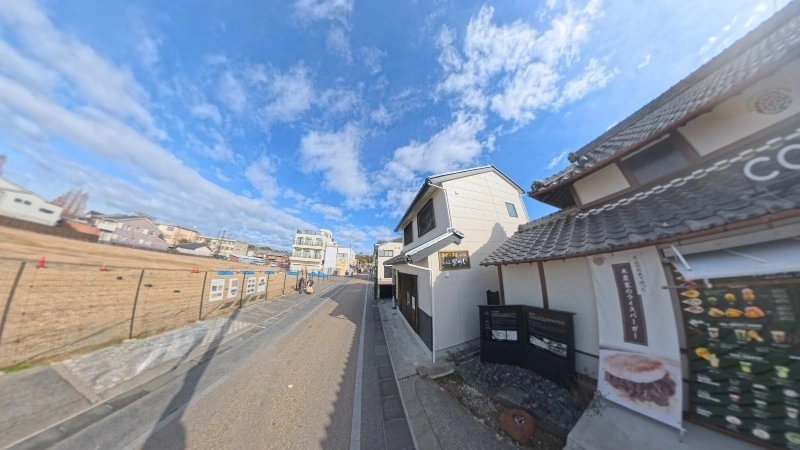
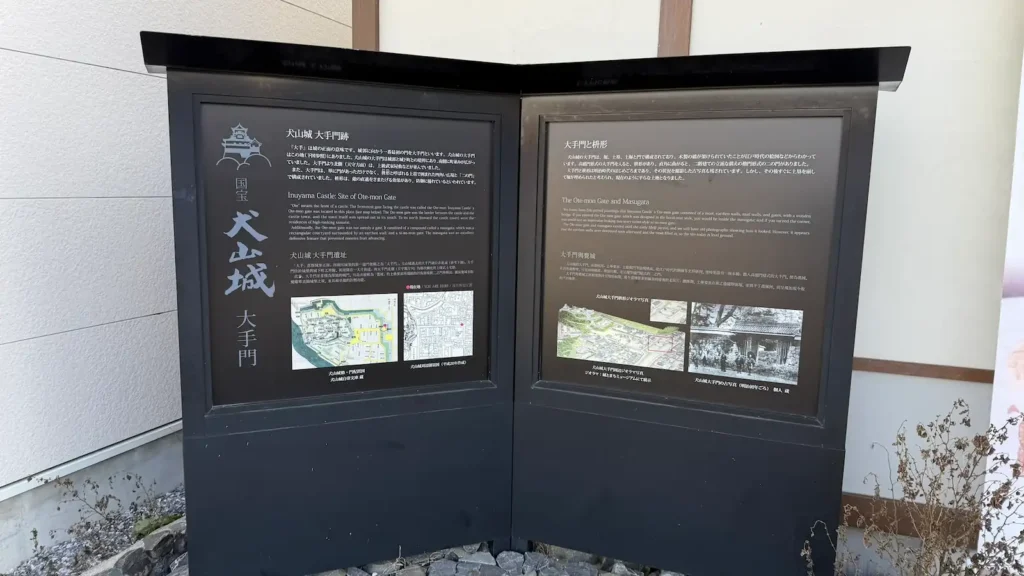
This is the site of Inuyama Castle’s former front entrance: the Ōtemon gate and its masugata (box-shaped gate complex). In the Edo period, a wide outer moat and an imposing main gate stood on the castle’s southern face. Records indicate that the structures were dismantled by 1876 following the abolition of the castle. Later, as the castle town developed, the area was used for public facilities. In 2021, however, the former welfare hall was demolished and an archaeological excavation was conducted. The 2021 excavation reported that large-scale Edo-period features—such as the moat and earthen ramparts that defined the boundary between inside and outside—survived within the site, helping clarify the outline of the former masugata gate complex for visitors and future presentation. Today, the site is being landscaped, with monuments and information boards installed so visitors can imagine the former scene. Standing in the open space, you can picture the formidable front gate that once divided “inside” from “outside,” and the ingenious masugata design meant to disorient an attacker.
| Construction period | Unknown (possibly early Edo period) |
|---|---|
| Builder | Naruse clan (developed during Edo-period renovations). The original fortification, associated with Oda Nobuyasu, is said to have been smaller; the Naruse later expanded it into a major main gate with a large masugata. |
| Structure / features | Flat masugata gate complex (tiger-mouth entrance), with an L-shaped bend and defensive embankments and stonework arranged to the sides. |
| Repairs / excavation history | Dismantled by 1876. Excavated in 2021; large-scale moat and earthen-rampart features were documented within the site. |
| Current status | Archaeological remains only (outer moat traces, earthwork traces, etc.) |
| Loss / damage | The gate and masugata structures no longer survive |
| Designation | the former welfare-hall site within this Ōtemon masugata area was additionally designated by government notice on 2025-09-18 (following excavation work carried out in 2021) |
| Notes | Now being developed as a plaza; former site of Inuyama City’s welfare hall. |
🗺 Address:Kitakoken 2, Inuyama, Aichi
🚶 Access
4 minutes on foot from the previous spot “Matsunomaru Rear Gate (Relocated from Inuyama Castle)” (about 0.3 km)
⏳ Suggested visit time
Highlights in a hurry: about 10 minutes
For a deeper look: about 20–30 minutes (including careful reading of the excavation information)
📍 Highlights
- Dry moat and rampart traces: The area has been backfilled and turned into a plaza, but ground markings showing the layout of the remains are planned. With the on-site diagrams, you can “walk” the scale of what once stood here.
- Masugata explanation boards: Clear diagrams show the L-shaped entrance and how defenders could attack from the side as intruders turned the corner.
- Seasonal enjoyment: The excavation zone is now a grassy open area; in spring, cherry blossoms and flowers brighten the space. The contrast between blossoms and imagined fortifications is unexpectedly moving.
📌 Trivia
- An unexpected historical detail: In the Meiji era, Inuyama’s city offices and the welfare hall were built right on this former main-gate site—an emblem of how the land’s purpose shifted from “castle” to “government.”
- For those tracking designations: The former welfare-hall site (part of the Ōtemon masugata area) was additionally designated as part of the Historic Site “Inuyama Castle Ruins” by government notice on 2025-09-18, following excavation work carried out in 2021.
- Connection to a notable figure: Tradition holds that when Oda Nobuyasu built Inuyama Castle, the prototype of this “front gate” was established here. It is, in that sense, the face of the castle—one that survived the rough tides of history.
Castle & Town Museum (Inuyama Cultural History Museum – Main Building)
⭐Recommended
Historical value: ☆ (A museum opened in the Shōwa era)
Visual appeal: ☆ (Exhibition-focused facility)
Experience: ☆☆ (A solid place to learn Inuyama’s history)
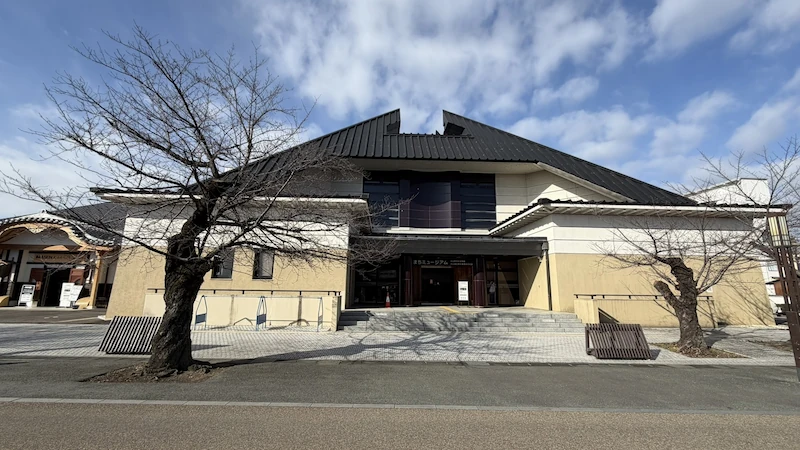
This city-run museum introduces the history and culture of Inuyama Castle and its castle town. It opened in 1987 as a “hub connecting the castle and the town,” and reopened after a major renewal in 2012. Inside, you’ll find a large diorama recreating daily life in the Edo-period castle town, as well as real examples and models of karakuri mechanical dolls—an art that flourished in Inuyama. The museum also functions as a cultural repository (the “Hakutei Library Historical & Cultural Museum”), preserving and exhibiting valuable Naruse family materials such as arms, maps, and old documents. Special exhibitions can include nationally designated Important Cultural Property daggers and celebrated folding screens depicting battles such as Nagashino or Komaki–Nagakute. The building itself is modern, but the explanations are substantial and rooted in local history. Stop in before or after your castle visit, and your understanding of Inuyama deepens dramatically.
| Opened | 1987 (Shōwa 62) |
|---|---|
| Established by | Inuyama City |
| Structure / features | Two-story reinforced concrete building; permanent and special exhibition rooms. |
| Renovation history | Renovated in 2012 (exhibits updated) |
| Current status | Open to the public as an active museum |
| Loss / damage | None |
| Designation | Houses Inuyama City–designated cultural properties (including Naruse family materials) |
| Notes | Also known as the “Castle & Town Museum.” A separate building includes the Karakuri Museum. |
🗺 Address:Kitakoken 8, Inuyama, Aichi
🚶 Access
2 minutes on foot from the previous spot “Ōtemon Gate and Masugata Remains” (about 0.2 km)
⏳ Suggested visit time
Highlights in a hurry: about 20 minutes
For a fuller visit: about 50 minutes
📍 Highlights
- Castle town diorama: A large-scale model recreating Edo-period Inuyama in fine detail. Samurai residences, merchant houses, and town bustle come alive in miniature.
- Inuyama Festival corner: Exhibits related to the Inuyama Festival, recognized by UNESCO as Intangible Cultural Heritage. Real float wheels and karakuri dolls convey the festival’s energy.
- Seasonal enjoyment: During summer vacation and other periods, family-friendly history events may be held—armor try-ons and matchlock-rifle model demonstrations are especially popular.
📌 Trivia
- An unexpected historical detail: The southern annex, the “IMASEN Inuyama Karakuri Museum,” opened in 2015 and presents Inuyama’s mechanical-doll culture in a systematic way.
- For value seekers: A discounted combined ticket is sold that covers both Inuyama Castle admission and entry to this museum—ideal if you plan to visit both.
- Connection to a notable figure: The collection includes Naruse family tea utensils and letters; items associated with Oda Urakusai sometimes appear in exhibitions, hinting at ties between the castle lords and tea culture.
Second Ōtemon Gate Site (Yarai Gate)
⭐Recommended
Historical value: ☆ (A modest gate site within the castle grounds)
Visual appeal: ☆ (Only a foundation stone and signage)
Experience: ☆ (A very quick stop)
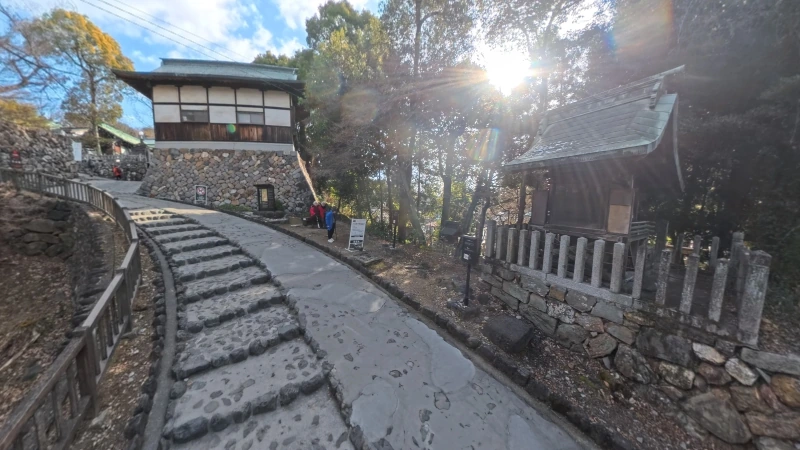
This is the site of the Yarai Gate, the “second checkpoint” on the main approach leading toward the Honmaru. From the former main gate area, you would have proceeded straight until meeting a dry moat, then turned right—where this gate once stood. Today, a single foundation stone remains beside the stone-paved path, with an information board that explains what used to be here. Though the Yarai Gate itself was a simple kōraimon-type gate, it was designed for function, enabling defenders to see inward and control the final defensive line. After the Meiji Restoration it was sold off and relocated; it survives today as a temple gate at Senshū-in in Fusō. The gate itself is gone from the castle site, but if you place your hand on the remaining stone, it’s easy to imagine heavy doors and a roofline once looming above this slope. Pause here and let the quiet of the hillside conjure the tension of a place built to stop an intruder.
| Construction period | Unknown (early Edo period) |
|---|---|
| Builder | Naruse Masanari (first lord of Inuyama Domain; key renovator of the castle) |
| Structure / features | Yakuimon gate (gabled roof; thick beams and supporting posts; robust construction). |
| Relocation history | Sold off in 1876 and relocated to Senshū-in in Fusō |
| Current status | The gate does not survive here; one foundation stone remains |
| Loss / damage | Gate doors and structural elements removed from the site |
| Designation | Senshū-in Temple Gate (the former Yarai Gate) is designated by Fusō Town |
| Notes | Signage on the main approach; also referred to as the “Yarai Gate Site.” |
🗺 Address:Inuyama (Nishikoken area), Inuyama, Aichi
🚶 Access
3 minutes on foot from the previous spot “Castle & Town Museum” (about 0.2 km)
⏳ Suggested visit time
Highlights in a hurry: about 5 minutes
For a closer look: about 10 minutes
📍 Highlights
- Yarai Gate foundation stone: A mossy, oversized foundation stone marks the gate’s position and scale. The weight of the past feels physical underfoot.
- Information board: Explains the gate’s structure and the story of its relocation—useful for imagining what once stood here.
- Seasonal enjoyment: In early summer, dense green foliage frames the stone. The quiet makes it a perfect spot for slow, reflective castle-walking.
📌 Trivia
- An unexpected historical detail: The name “Yarai” evokes the idea of a barrier or palisade; some explanations connect it to anti-rush defenses, but the exact form and placement should be confirmed against on-site signage or official documentation.
- For those in the know: The relocated gate at Senshū-in in Fusō still preserves features such as black-lacquered doors and a small “crawl door,” keeping a strong Inuyama Castle atmosphere.
- Connection to a notable figure: The area around Kashiwamori in Fusō, where Senshū-in stands, is also associated with a fort once defended by the Sengoku warrior Kanematsu Masayoshi—an intriguing local tie for history fans.
Matsunomaru Gate Site
⭐Recommended
Historical value: ☆ (Only the site remains; a marker is present)
Visual appeal: ☆ (A step in the terrain and signage)
Experience: ☆ (Quick to confirm on site)
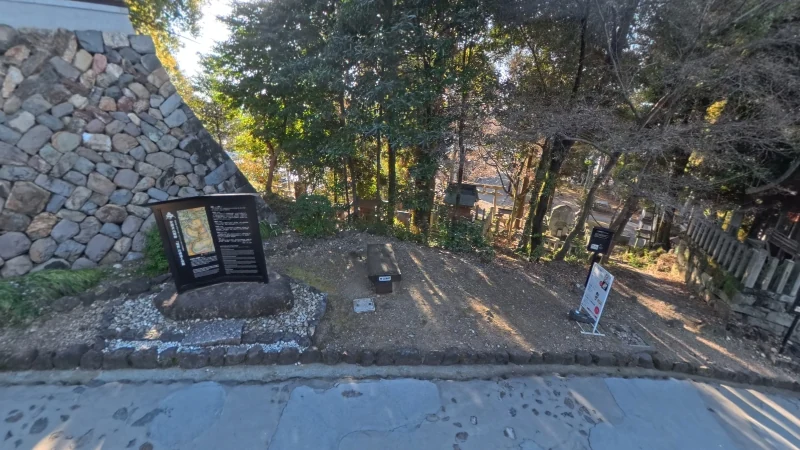
This is the site of the front gate that once served Matsunomaru, a corner of the Ninomaru. Matsunomaru once contained a palace where the castle lord—and even the Owari domain lord—could stay, making it an important facility. After the Meiji era, the gate was dismantled and materials dispersed, but it is said that parts were reused in a gate at Jōren-ji in Ichinomiya, where a relocated form still survives. At the castle site today, you’ll find an information board near the lower parking area of Haritsuna Shrine; beyond that, only a slight change in elevation remains. Yet the signage makes the former circulation clear, showing how the Matsunomaru gate sat at the boundary between the main approach and the shrine precincts. The site has not been reconstructed, but the terrain and remains are well preserved. With further excavation and research, it may even be possible to present this as a masugata-style entrance again. Stand quietly on the edge of the shrine path and picture the gate that once dominated this threshold—and the Matsunomaru Palace that opened beyond it.
| Construction period | Unknown (late Sengoku to early Edo period?) |
|---|---|
| Builder | Unknown (possibly installed when the Matsunomaru Palace was built) |
| Structure / features | Yakuimon gate (one-bay, double doors, with a side door) |
| Loss / reuse history | Dismantled in the 1870s; some materials reused for Jōren-ji’s gate. |
| Current status | Site only (terrain step and information board) |
| Loss / damage | The gate structure does not survive on site |
| Designation | Jōren-ji Temple Gate (former Matsunomaru front gate) is designated by Ichinomiya City |
| Notes | Near Haritsuna Shrine’s lower parking area; boundary with the main approach. |
🗺 Address:Near Kitakoken, Inuyama, Aichi
🚶 Access
4 minutes on foot from the previous spot “Second Ōtemon Gate Site (Yarai Gate)” (about 0.3 km)
⏳ Suggested visit time
Highlights in a hurry: about 5 minutes
For a closer look: about 10 minutes
📍 Highlights
- The terrain “step” at the boundary: A subtle drop in the ground marks where the entrance once was, hinting at the threshold into Matsunomaru.
- Information board: Explains the gate’s role and location, making it easier to visualize the former layout.
- Seasonal enjoyment: During spring festival season, Haritsuna Shrine becomes lively with stalls and visitors; the contrast with the site’s usual quiet is part of the charm.
📌 Trivia
- An unexpected historical detail: Among the castle’s many gates, this is the only one in the Ninomaru (Matsunomaru) whose existence is firmly confirmed—evidence of how important Matsunomaru was.
- For those who look closely: The relocated gate at Jōren-ji still preserves the yakuimon form, along with roof tiles bearing the Naruse family crest.
- Connection to Hideyoshi: Some traditions say that when Hashiba (Toyotomi) Hideyoshi planned to enter Inuyama Castle as a prelude to the Komaki–Nagakute campaign, he intended to use the Matsunomaru Palace as his headquarters (there are differing views). Either way, this was effectively the castle’s “heart.”
Matchlock Turret (Reconstruction)
⭐Recommended
Historical value: ☆ (Replica reconstruction)
Visual appeal: ☆☆ (A turret that enhances the atmosphere)
Experience: ☆☆ (Helps recreate the feel of a fortified castle interior)
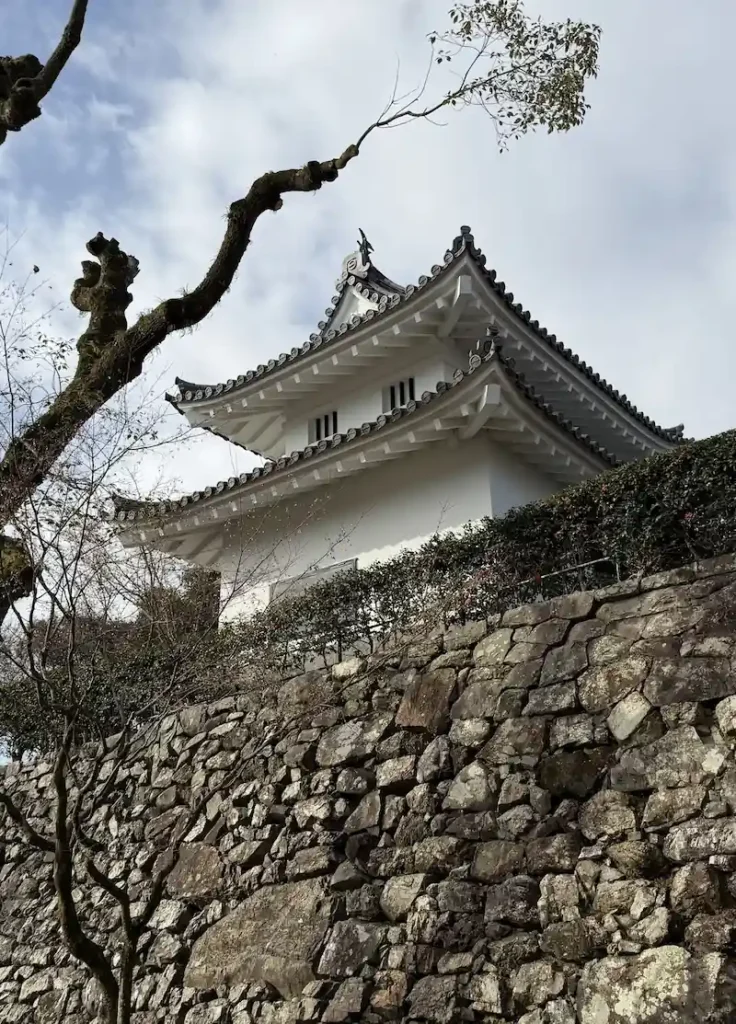
This small turret (yagura) was rebuilt near the Honmaru entrance during Shōwa-era castle landscaping, as a reconstruction inspired by the “Teppō Yagura” (often referred to as a matchlock turret) that once stood on the southern side of the Honmaru. With its black plaster finish and lattice windows, the two-story structure adds character to the route up to the keep, evoking the feel of a guarded stronghold. The original Edo-period turret is said to have occupied the Honmaru’s southern corner, but it was dismantled after the Meiji Restoration. Although this reconstruction is reinforced concrete, its exterior is finished to resemble wood, and it now serves as a symbolic element welcoming visitors. The interior is not open, but paired with the nearby gate area, it creates a convincingly “castle-like” scene. It may be modern, but as staging that heightens the castle’s sense of presence, it plays an important role in the visitor experience.
| Rebuilt | Circa 1965 (estimated) |
|---|---|
| Builder | Inuyama City (as a replica turret) |
| Structure / features | Two-story RC structure finished to resemble wood; black plaster; loophole-style windows. |
| Reconstruction history | Rebuilt and landscaped along with the gate area in the 1960s. |
| Current status | Well maintained as a replica structure |
| Loss / damage | None (original structure dismantled in the Meiji era) |
| Designation | None |
| Notes | Connected to the left side of the Honmaru gate area; interior not open. |
🗺 Address:65-2 Kitakoken, Inuyama, Aichi (inside the Inuyama Castle Honmaru)
🚶 Access
5 minutes on foot from the previous spot “Matsunomaru Gate Site” (about 0.1 km)
⏳ Suggested visit time
Highlights in a hurry: about 5 minutes
For a closer look: about 10 minutes
📍 Highlights
- Exterior of the reconstructed turret: The contrast between white plaster and dark boarding is highly photogenic. Capture it together with the keep for a dramatic “castle” composition.
- Harmony with the stone walls: The stone base below is original Edo-period work. The mix of old and new makes the continuity of the castle’s history feel tangible.
- Seasonal enjoyment: On winter mornings, a light dusting of snow on the roof can create an ink-painting mood—an excellent moment for photos in crisp air.
📌 Trivia
- An unexpected historical detail: In the early Heisei period, there were discussions about rebuilding this replica turret in true wood, but costs ultimately prevented it. The current structure is reinforced concrete.
- For those in the know: There is a small space atop the stonework to the turret’s east; tradition says a small turret once stood there, though it has not been reconstructed. Future site improvements may be worth watching.
- Connection to conservation history: After the Isewan Typhoon (1959), efforts by the then head of the Naruse family and local supporters helped drive reconstruction plans, leading to the rebuilding of this turret and the gate area. It reflects the determination to protect the castle during its era of private ownership.
Kurogane Gate of the Honmaru (Reconstructed; Castle Management Office)
⭐ Recommended
Historical value: ☆ (replica gate)
Visual appeal: ☆☆ (atmospheric turret-gate reconstruction)
Experience: ☆☆ (pass through the gate on the way to the Main Tower)
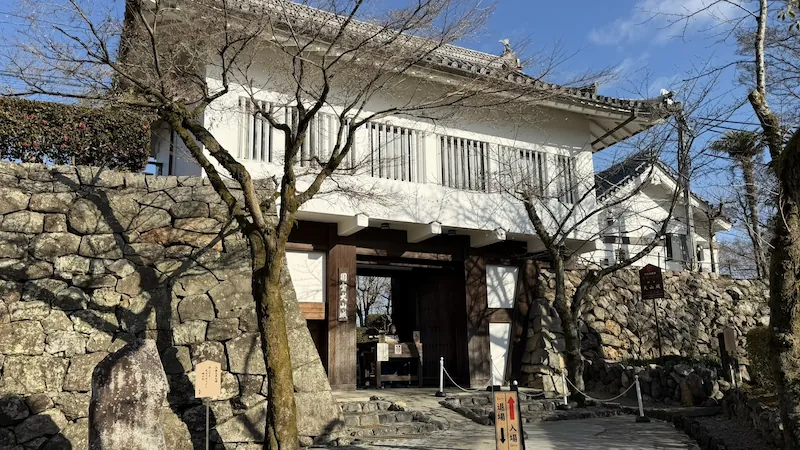
Kurogane Gate (Kurogane-mon), the main entrance to Inuyama Castle’s Honmaru, is today represented by a replica gate reconstructed in the Shōwa era. In its original form, Kurogane Gate is said to have been a formidable yagura-mon—a turret gate built to withstand attack—its doors reinforced with iron plating, forming the final defensive barrier of the Honmaru. After the Meiji Restoration, however, the surviving documentation became too scarce to confirm the original gate’s details with certainty.
The present gate was therefore rebuilt as an interpretive reconstruction based on old photographs and castle plans. While it does not reproduce the iron-plated doors implied by the name “Kurogane” (iron), it does restore the commanding presence of a proper turret gate, complete with an upper-story watchtower-like structure. Although constructed in reinforced concrete, the exterior is finished to resemble timber, lending the entrance a convincing sense of authority as you step into the castle’s inner precincts.
To the right of the gate is the ticket office; to the left, the previously mentioned Matchlock Turret connects into the gate area, creating a cohesive “main-gate zone” that frames the approach. Once you pass through, the route climbs a steep slope toward the Main Tower—so even modern visitors experience something close to what samurai once did: crossing the threshold, then ascending into the heart of the fortress. The reconstruction is not historically exact, but its impact is unmistakable; with or without a gate, the atmosphere of the castle changes dramatically. In that sense, Kurogane Gate remains an important element in what makes Inuyama Castle feel like Inuyama Castle.
| Year built | Rebuilt around 1965 (Shōwa 40) |
|---|---|
| Built by | Inuyama City (with leadership/support from the former Naruse family) |
| Structure / features | Reinforced-concrete turret gate (replica). Two-tier, two-story form; black plaster walls; irimoya-style roof. |
| Restoration / reconstruction history | Interpretive reconstruction of the gate and turret in the late 1950s–early 1960s (Shōwa period) |
| Current status | In use as a reconstructed gate (with the castle management office on site) |
| Loss / damage | None (the original gate was dismantled in the Meiji era) |
| Cultural property designation | None |
| Notes | Includes the castle management office (ticketing). RC construction with a timber-like exterior finish. |
🗺 Address: 65-2 Kitakoken, Inuyama, Aichi (inside the Honmaru of Inuyama Castle)
🚶 Access
1 minute on foot (about 50 m) from the previous spot, “Matchlock Turret (Reconstructed)”
⏳ Suggested time
Quick highlights: ~5 minutes
If you take your time: ~10 minutes
📍 Highlights
- The presence of a turret gate: The two-story structure sitting above the gate creates a bold, photogenic silhouette. Frame it together with the Main Tower to get a sense of Inuyama’s layered defenses.
- Gate-door details: The thick double-leaf wooden doors have been recreated with studding details. There is no iron plating, but the design still evokes the “iron gate” image associated with the original.
- Seasonal moments: In autumn, maples around the gate turn vivid red, and the contrast against the dark gate is striking—especially alongside the mossy stonework underfoot.
📌 Trivia
- An unexpected historical backdrop: Among Japan’s twelve surviving original castle towers, Inuyama Castle alone remained in private ownership until the Heisei era. That local stewardship helped make Shōwa-period reconstruction projects like this gate possible.
- For those who like the details: The reconstruction is said to have drawn on early Shōwa-era photographs and prewar architectural reports, applying specialist knowledge to an interpretive “best-fit” design.
- A famous-name connection: In the Edo period, Matsuo Bashō visited the Inuyama area and composed a verse that includes the line “Jōka ya hana ni kogi fukaki kaki no ato”. Some interpret the “kaki” (fence/hedge) as referring to the Honmaru’s gate environs—suggesting the scenery around this entrance may have left its trace in the poem.
Osugi-sama
⭐ Recommended
Historical value: ☆ (the stump of a sacred tree)
Visual appeal: ☆ (a weathered stump)
Experience: ☆ (a focus of worship; touch it and make a wish)
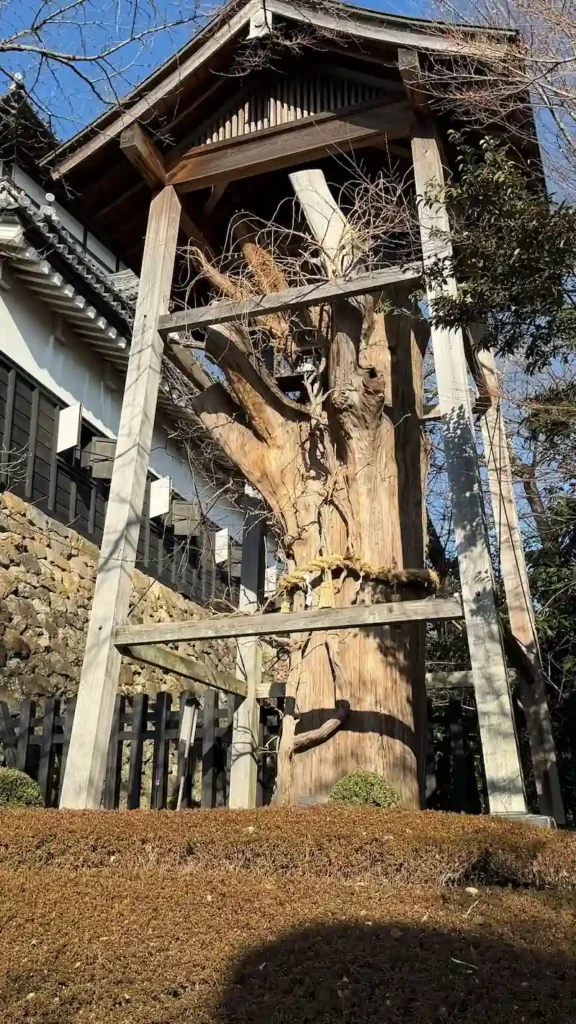
On the east side of the Main Tower, tucked within a stone-walled enclosure, you’ll find Osugi-sama—the sacred tree of Inuyama Castle. For centuries it was revered as a guardian presence, said to have watched over the fortress and shielded it from lightning strikes and violent storms—so tall, in its prime, that it even rivaled the height of the Main Tower.
Yet around 1965 (Shōwa 40), the tree finally died. Some visitor materials connect its decline to storm and lightning damage, but the exact causal chain is not always stated consistently in official summaries. Today, only the base remains as a great stump. It is respectfully enclosed with a sacred fence, wrapped with shimenawa rope, and treated as a living object of veneration even in death. Many visitors still place a hand on the stump and pray for safety and good fortune. Silent and unassuming, Osugi-sama continues to stand at the foot of the Main Tower—an enduring witness to the castle’s long history.
| Estimated planting period | Unknown (traditionally estimated from the Kamakura to Nanboku-chō period) |
|---|---|
| Origin | Naturally grown (said to have existed before the castle was built) |
| Species | Cedar (conifer; tall evergreen) |
| Notable episode | Revered as a protector against lightning; eventually died after storm damage |
| Current condition | Only the stump remains; enclosed with a sacred fence |
| Approx. year it died | Around 1965 (Shōwa 40) |
| Cultural property designation | None (venerated as a guardian presence of the castle) |
| Notes | Also known as “Inuyama Castle Sacred Cedar, Osugi-sama.” Often described as a “power spot” within the grounds. |
🗺 Address: 65-2 Kitakoken, Inuyama, Aichi (inside the Honmaru of Inuyama Castle)
🚶 Access
1 minute on foot (about 50 m) from the previous spot, “Kurogane Gate of the Honmaru (Reconstructed; Castle Management Office)”
⏳ Suggested time
Quick highlights: ~1 minute
If you take your time: ~5 minutes
📍 Highlights
- The Osugi-sama stump: A huge stump spanning several meters across. Its growth rings hint at the scale and slow life of the original tree.
- Shimenawa rope: The thick sacred rope is replaced periodically, reinforcing the site’s solemn, devotional atmosphere.
- Seasonal moments: At summer dusk, the Main Tower illumination and Osugi-sama’s dark silhouette can create a quietly mystical photo—an under-the-radar favorite for atmosphere shots.
📌 Trivia
- An unexpected background story: When the tree died around Shōwa 40, local lore warned of misfortune if Osugi-sama were fully removed—so the stump was left in place and enshrined in its current form.
- For those who like the details: The Naruse family, long associated with the castle, is said to have carefully protected Osugi-sama for generations. Some stories even claim lightning-damaged branches were treated as sacred and enshrined in small local shrines.
- A notable-person connection: When the Main Tower was re-designated a National Treasure in 1953 (Shōwa 28), the then head of the Naruse family reportedly remarked that the castle was protected “thanks to Osugi-sama”—a sign that even the owners believed in its spiritual role.
Main Tower
⭐ Recommended
Historical value: ☆☆☆ (one of the oldest surviving main towers; National Treasure)
Visual appeal: ☆☆☆ (commanding presence; refined details)
Experience: ☆☆☆ (open to visitors; superb views)
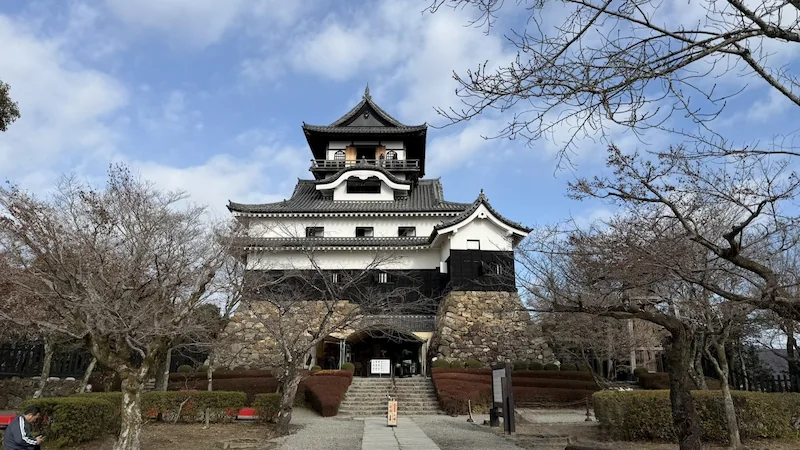
Inuyama Castle’s Main Tower is a wooden keep with three roof tiers and four above-ground floors, plus two basement levels—placing it among the oldest of Japan’s twelve surviving original castle towers. Its exterior pairs white plaster walls with wooden siding, striking a balance between strength and elegance. On the south and west sides, attached turrets project outward, and the top floor is wrapped by an open veranda with railings—one of the tower’s signature features.
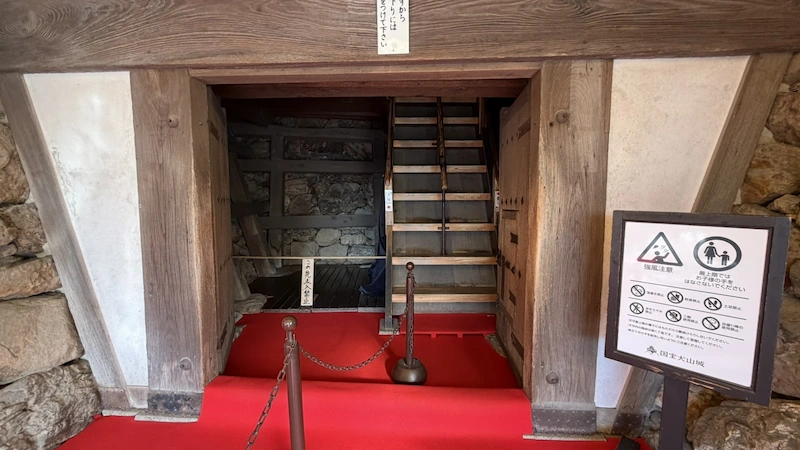
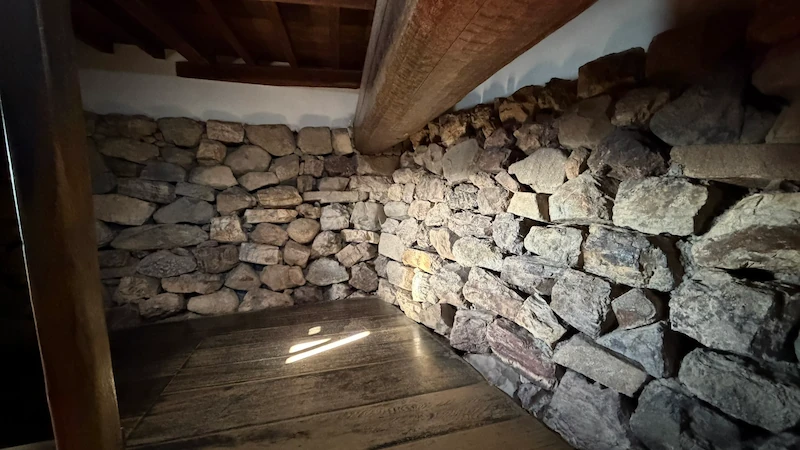
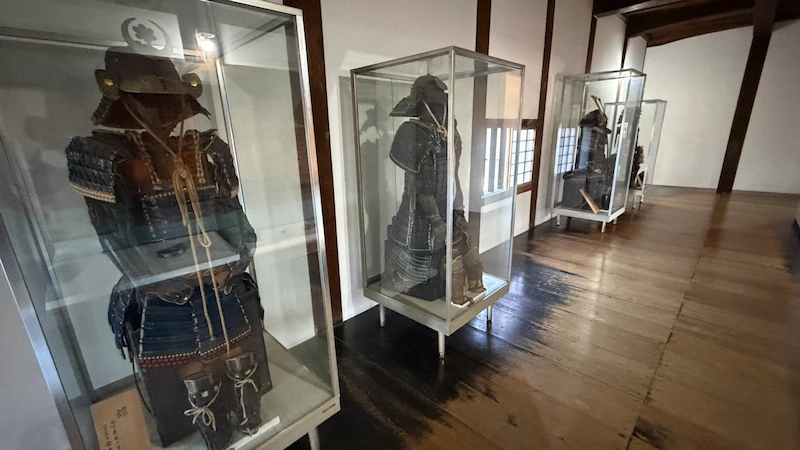
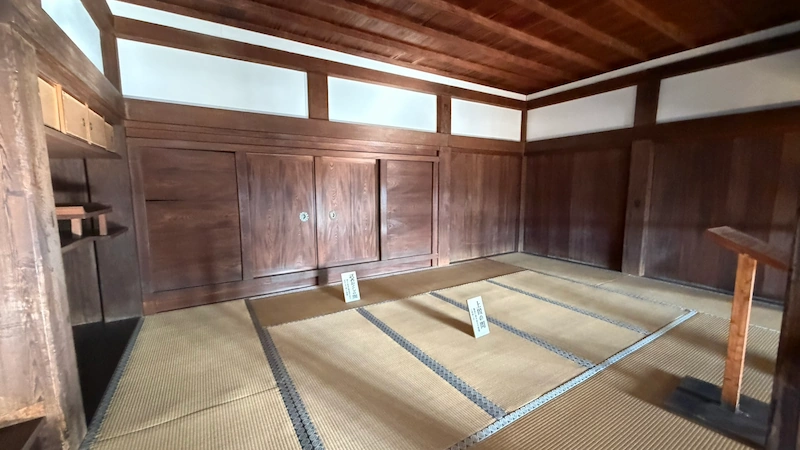
Inside, thick original beams and pillars remain in place, alongside steep wooden staircases and weapon display spaces that convey the functional beauty of a Sengoku-period fortress. Defensive details—store-rooms, observation openings, and carefully positioned windows—appear throughout. At the top, the reward is a sweeping panorama: the Kiso River below, the castle town spread out in miniature, and on clear days even the distant silhouette of Mount Ontake.
The tower suffered damage during the Isewan Typhoon in 1959 (Shōwa 34), but a major dismantling repair project from 1961 to 1965 restored it to an appearance closer to its early form. Today it is preserved and displayed as a National Treasure, inviting visitors straight into the lived texture of Japan’s warring-states era. Compact yet beautifully proportioned, the Main Tower is often counted among Japan’s most striking castles—an essential stop whether your interest is history, architecture, or pure atmosphere.
| Completion | Keichō 6 (1601) (as listed in the national cultural-property database) *Some theories place the original construction in 1537 |
|---|---|
| Architectural style | Composite watchtower-style main tower (3 roof tiers / 4 above-ground floors + 2 basement levels) |
| Height | 19 m (measured from the top of the stone base) |
| Design / features | Iri-moya and kara-hafu gables; top-floor veranda with railings; two attached turrets. |
| Major repairs | Around 1620: major renovations by the Naruse family 1961–1965: dismantling repair |
| Designation | National Treasure (designated 1952-03-29) |
| Notes | Open to visitors (admission ticket required). Personal photography is generally allowed; please follow posted rules and be considerate of other visitors. Official guidance asks visitors to refrain from livestreaming/video live broadcasts. |
🗺 Address: 65-2 Kitakoken, Inuyama, Aichi (Inuyama Castle grounds)
🚶 Access
1 minute on foot (about 50 m) from the previous spot, “Osugi-sama”
⏳ Suggested time
Quick highlights: ~20 minutes
If you take your time: ~40 minutes (views, photos, etc.)
📍 Highlights
- The view from the top floor: A wide, open panorama over the Kiso River and distant mountains. On clear days, Mount Ontake—and sometimes even the Norikura range—can be visible.
- Interior structure: Steep staircases, narrow circulation spaces, and defensive design features appear throughout. Look for period timber members and traces of historical markings that add weight to the experience.
- Seasonal moments: Locals cherish it as a sunrise spot. On some New Year’s mornings, special early opening events have been held, allowing visitors to greet the first sunrise from the tower.
📌 Trivia
- An unexpected historical backdrop: One theory suggests the design echoed Azuchi Castle’s tenshu, with a solid lower massing and a comparatively smaller watchtower portion above—an outline that feels stylistically related.
- For those who like the details: Beneath the first floor is a two-level basement space sometimes described as an “anagura” (underground store). Hidden within the stone base, it served as a discreet storage area for provisions and equipment.
- A notable-person connection: In the 1953 film Taikōki, Inuyama Castle’s Main Tower was used as the stand-in for “Kiyosu Castle,” reflecting its cinematic presence as well as its historical gravitas.
Site of Inuyama Castle’s Shimizu Gate
⭐ Recommended
Historical value: ☆ (former gate site leading toward the eastern enclosure)
Visual appeal: ☆ (only faint traces)
Experience: ☆ (information board on site)
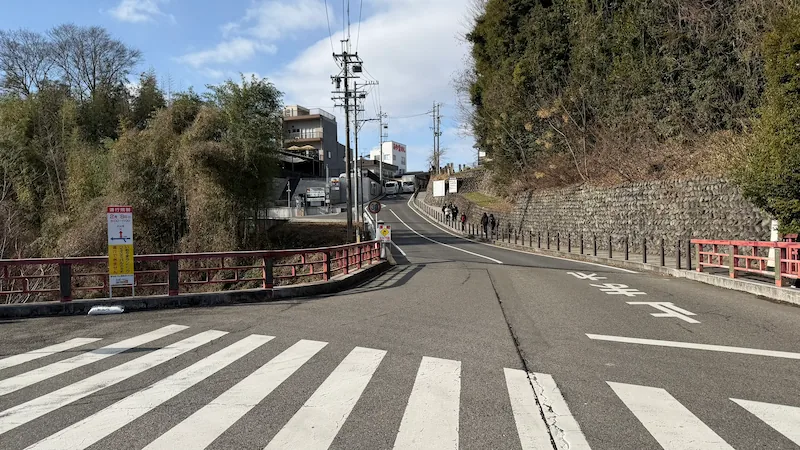
This is the former location of Shimizu Gate (Shimizu-mon), which once controlled the boundary between the Sannomaru and the Higashidani-kuruwa (the eastern valley enclosure). During the domain period, it stood on the castle’s east side and served as an important passage linking the rear-approach route with areas around the Uchida Gate. After the Meiji Restoration, the gate was dismantled, but its materials were relocated to Unzen-ji Temple in Ichinomiya, where they survive today as the temple’s main gate.
At Unzen-ji, the former Shimizu Gate remains as an imposing kōrai-mon (a roofed gate with strong upright proportions). Even now, features such as the roof tiles and the scale of the posts retain a distinctly “castle-gate” dignity. Back at the castle site, however, little is visible beyond a signboard marking the location. That said, the area is discussed in local cultural-heritage planning as part of the castle’s defensive layout, and future preservation or survey work may make the gate’s footprint easier to read on the ground.
It’s a quiet corner on the eastern slope today, but it rewards visitors who want to imagine the castle as a living system: not only the grand front entrance, but also the lesser-known gates that controlled movement on the back side of the fortress.
| Year built | Unknown (early Edo period) |
|---|---|
| Built by | Unknown (during development of the eastern enclosure) |
| Structure / features | Kōrai-mon (single-story roofed gate; gabled roof; tiled) |
| Restoration / reconstruction history | Dismantled in the 1870s; reused as the gate of Unzen-ji Temple |
| Current status | Only the site is marked at the castle; the gate itself survives at Unzen-ji |
| Loss / damage | The gate structure does not survive on site |
| Cultural property designation | Unzen-ji Temple gate (former Shimizu Gate): designated cultural property of Ichinomiya City |
| Notes | Located in a residential area on the castle’s eastern slope. Signboard labeled “Site of Shimizu Gate.” |
🗺 Address: Near Higashikoken, Inuyama, Aichi
🚶 Access
5 minutes on foot (about 350 m) from the previous spot, “Main Tower”
⏳ Suggested time
Quick highlights: ~3 minutes
If you take your time: ~5 minutes
📍 Highlights
- The Shimizu Gate marker: The signboard includes a diagram and orientation notes that help you picture how this gate controlled access toward the eastern enclosure.
- Topography: Subtle steps in the terrain still hint at where the earthworks, ditch, and gate infrastructure once shaped movement.
- Seasonal moments: After rain, moisture can sometimes make faint stone edges or buried outlines stand out—turning the search for an “invisible gate” into a small treasure hunt.
📌 Trivia
- An unexpected historical backdrop: Shimizu Gate is also said to have been called “Sakaki Gate,” a name associated with sacred evergreen branches—hinting at an older symbolic role tied to direction and spiritual protection.
- For those who like the details: At Unzen-ji in Ichinomiya (Chiaki-chō), the relocated gate remains one of the area’s most substantial temple gates. It reportedly collapsed in the 1891 Nōbi Earthquake and was later rebuilt, but the tradition of its origin remains part of local memory.
- A notable-person connection: Naruse family records are said to contain an anecdote that Tokugawa Iemitsu entered Inuyama Castle via this gate on a visit—an intriguing story, though it is not firmly verified.
Urakuen Garden
⭐ Recommended
Historical value: ☆☆☆
Visual appeal: ☆☆☆
Experience: ☆☆☆
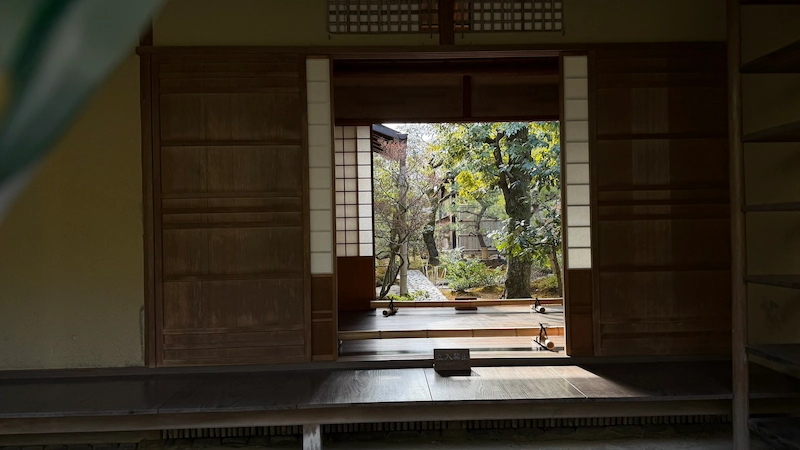
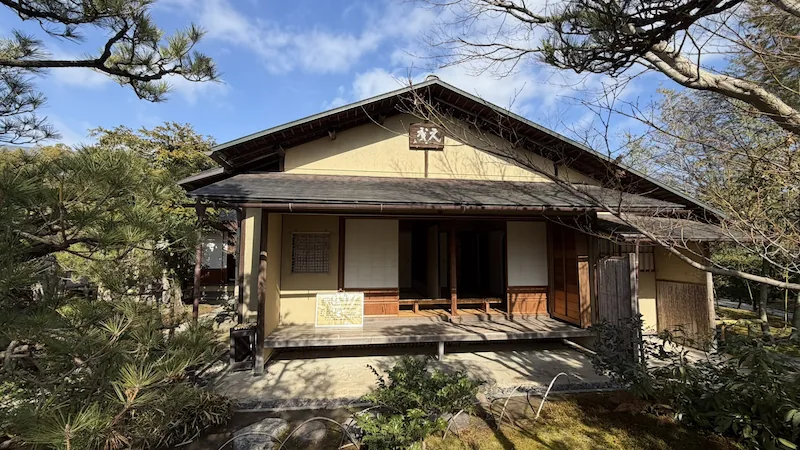
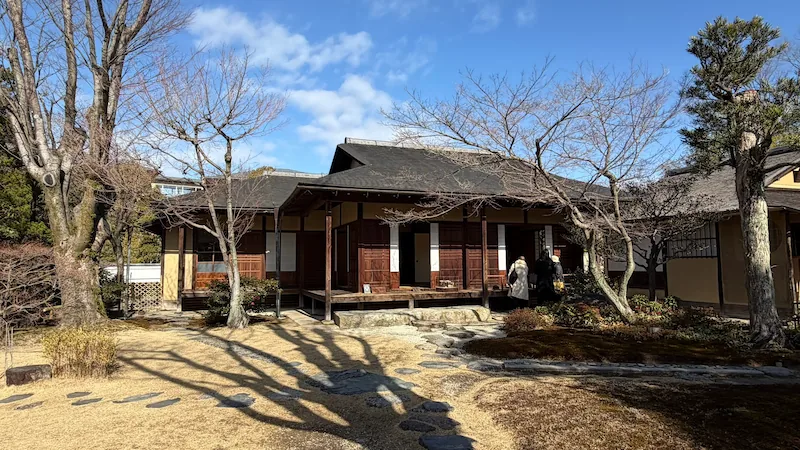
Spread out at the foot of Inuyama Castle is a Japanese garden that feels less like a “castle add-on” and more like a destination in its own right: Urakuen Garden, often described as a sanctuary of chanoyu (the tea tradition). Opened in 1972 (Shōwa 47) on a site with views of the castle, Urakuen is best known for housing Jo-an, a tea room associated with Oda Urakusai—the famed tea master who was also the younger brother of Oda Nobunaga.
Urakusai originally built Jo-an in 1618 at Kennin-ji Temple in Kyoto. The tea room was later designated a National Treasure in the early Shōwa period, and after a complex journey through different owners and locations, it was ultimately relocated and restored here in Inuyama. Within the mossy garden setting, the small thatched-roof structure—an intimate three-mat tea room—rests quietly, its simplicity offering a concentrated expression of wabi-sabi aesthetics.
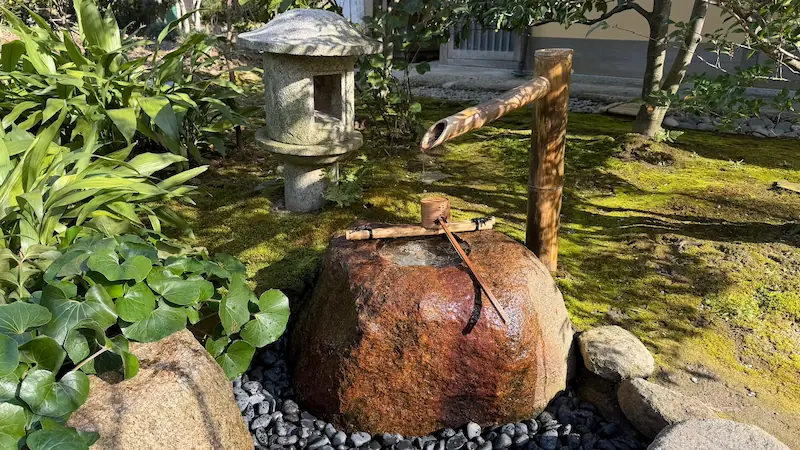
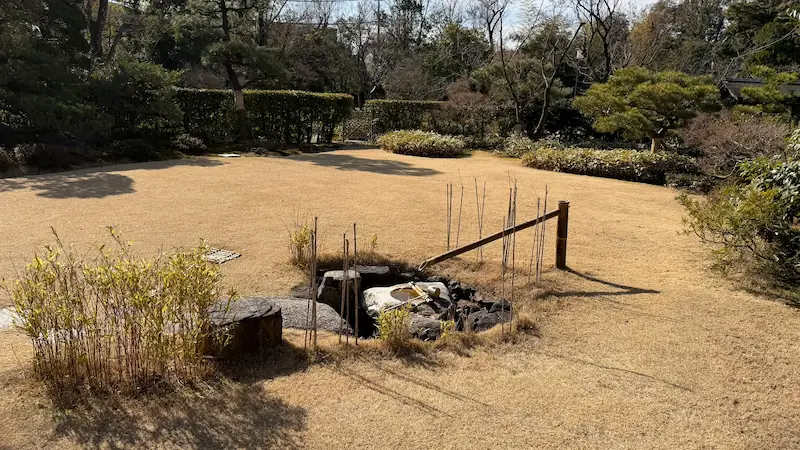
Urakuen includes several other tea buildings as well: the Important Cultural Property former Shōden-in Shoin, the reconstructed Gen-an based on historical drawings, and Kō-an, a newer tea room built specifically for Urakuen. As you stroll the pond-centered circuit garden, seasonal plantings and borrowed scenery from the surrounding hills create a level of calm that feels far removed from the castle town. In the autumn foliage season, the entire garden becomes a canvas of color—and seeing a National Treasure tea room framed by maples is, quite simply, breathtaking.
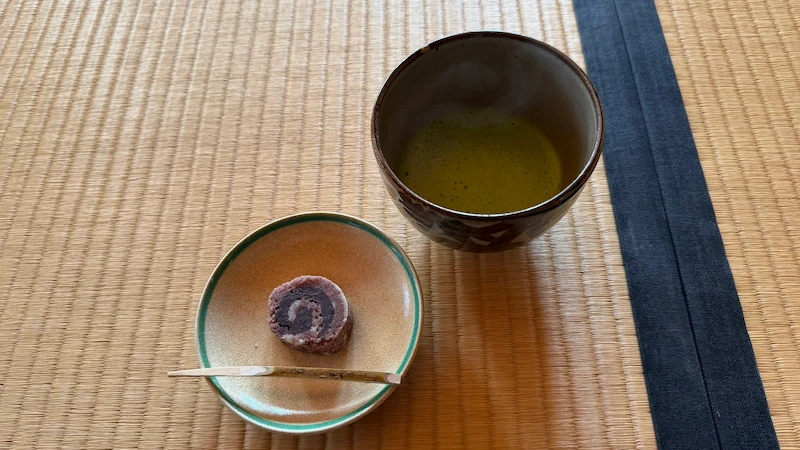
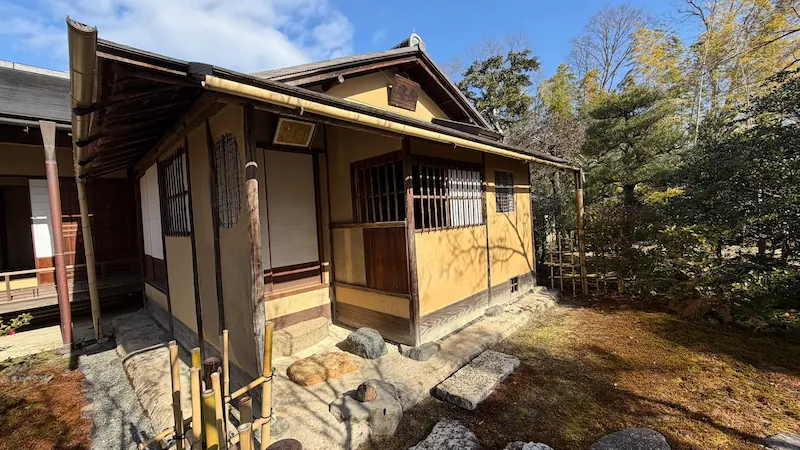
Urakuen hosts reservation-based special viewing events that allow visitors to step inside the National Treasure tea room Jo-an and see details up close (dates vary by schedule). Check the official calendar for the latest event days and conditions. Meanwhile, at Kō-an, you can enjoy matcha and wagashi at a casual tea service without a reservation, sitting with a garden view and letting time slow down. As a finale to your Inuyama Castle visit, it’s hard to imagine a better way to meet the spirit of Urakusai in a setting that feels both intimate and quietly profound.
| Year created | Garden opened in 1972 (Shōwa 47) ※Jo-an tea room: originally built in 1618 (Genna 4) |
|---|---|
| Created by | Meitetsu (Nagoya Railroad Co.) (garden development) ※Jo-an created by: Oda Urakusai |
| Structure / features | Pond-stroll garden. A cluster of tea buildings including the National Treasure tea room “Jo-an” (thatched, single-story; 3-mat daime layout). |
| Restoration / relocation history | 1972: Jo-an and the former Shōden-in Shoin relocated here. 1983: opened to the public as an affiliated garden of the Nagoya Railroad Inuyama Hotel. |
| Current status | In active use (garden and tea buildings well maintained) |
| Loss / damage | None. Jo-an underwent dismantling repair during the Shōwa-era relocation. |
| Cultural property designation | National Treasure: Jo-an tea room Important Cultural Property: former Shōden-in Shoin |
| Notes | Often introduced as the only garden where one of the “Three Great Tea Rooms” (Jo-an) can be viewed year-round. |
🗺 Address: 1 Gomon-saki, Inuyama
🚶 Access
4 minutes on foot (about 350 m) from the previous spot, “Site of Inuyama Castle’s Shimizu Gate”
⏳ Suggested time
Quick highlights: ~30 minutes (garden + exterior of Jo-an)
If you take your time: ~1–1.5 hours (including tea service and interior viewing, if available)
📍 Highlights
- Jo-an (National Treasure tea room): A small, understated tea room favored by Urakusai. Look for details such as the “calendar paper” wall finish (koyomi-bari) and the distinctive Uraku Window.
- Seasonal garden beauty: Fresh spring greens, blazing autumn foliage, and quiet winter scenes—Urakuen changes character with the seasons, offering a calm beauty that makes you forget you’re just steps from a major castle.
- Seasonal moments: Autumn illumination events have been held, creating a special evening viewing of the tea rooms and garden. Tea gatherings and night-time tea service add a unique atmosphere to the season.
📌 Trivia
- An unexpected historical backdrop: Urakuen began as the garden of the Meitetsu Inuyama Hotel. Even after the hotel closed, the garden remained and is now preserved and operated after being donated to Inuyama City.
- For those who like the details: Jo-an traveled remarkably far for a tea room—moving from Kyoto to Tokyo and Nagoya before settling in Inuyama. At one stage it was owned by the Mitsui family and stood in Nihonbashi, Tokyo, making its relocation history unusually dramatic.
- A notable-person connection: The name “Jo-an” is sometimes attributed to Urakusai’s grandson, Oda Nagayoshi (also known as “Sansai,” depending on tradition). Each year, Urakuen hosts memorial tea gatherings for Urakusai (“Uraku-ki”), drawing tea practitioners from across Japan.
Relocated Uchida Gate of Inuyama Castle
⭐ Recommended
Historical Value: ☆☆☆
Visual Appeal: ☆☆
Experiential Value: ☆
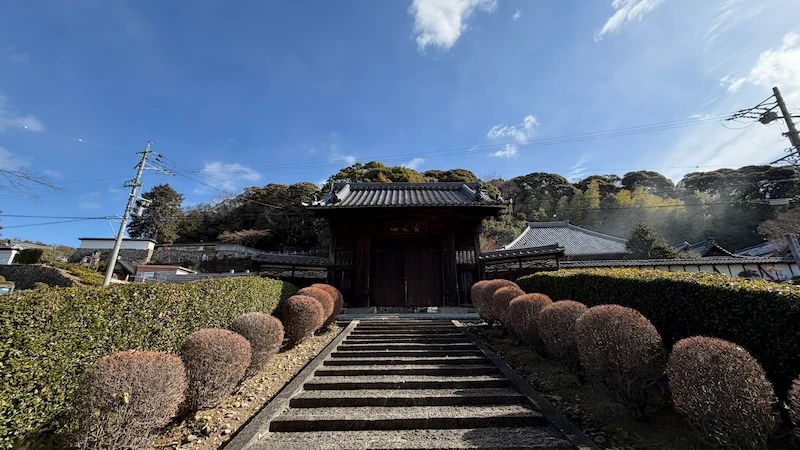
On the back side of Inuyama Castle, at a temple by the Kiso River called Zuisen-ji, there is a little-known gate with deep ties to the castle. This is the Uchida Gate, believed to have served as Inuyama Castle’s karamete—the rear gate used to secure the back approach. In the Edo period, the gate stood on the castle’s northeastern side, guarding the “back entrance.” Unlike many structures that were dismantled after the Meiji Restoration, this gate is traditionally understood to have survived and been relocated to Zuisen-ji in the Meiji period, where it has served as the temple’s main gate. (The exact relocation year should be confirmed against primary records.)
At first glance it looks like a modest yakuimon-style gate, but its thick beams and sturdy bracing posts give it a rugged, unmistakably “castle-like” presence—and a weighty sense of dignity.
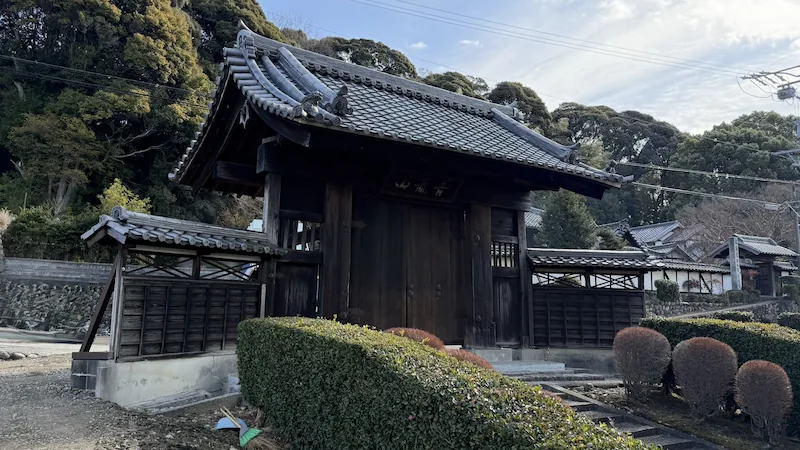
Local tradition goes a step further: it says the Uchida Gate was originally the main gate of Kanayama Castle (also written as Kaneyama Castle) in Mino Province, and was later moved to Inuyama Castle for reuse. In other words, it is a “relocated gate” in two different senses—making it a rare and fascinating artifact in castle architectural history. Walk through the gate and circle to the rear, and you can clearly see the powerful supporting posts that brace the main pillars, as well as the design’s restrained but practical craftsmanship. The old timbers are etched with the marks of countless seasons of wind and rain. Some elements were replaced during repairs, but much of the structure remains as it was. Up close, it feels as if you can catch the faint “scent” of the castle in the wood itself.
Today, Zuisen-ji’s gate (traditionally identified as the former Uchida Gate) is preserved as part of the temple grounds, and visitors may be able to view it during normal visiting hours, subject to temple rules and local conditions. It is about a 10-minute walk from the Inuyama Castle main tower, and it is well worth visiting as a set with the castle itself. Most days the temple gate is quiet and unhurried, but in spring, when the cherry blossoms bloom in the precincts, the contrast between pale pink petals and the timeworn gate is striking. Even if you are not a dedicated history fan, encountering a gate that “traveled” from a castle more than 130 years ago is an easy way to feel the romance—and the long passage of time—at the edge of Inuyama.
| Year Built | Unknown (traditionally dated to around the Tenbun era, c. 1532–1555) |
|---|---|
| Builder | Unknown (traditionally attributed to the Mori clan, lords of Kanayama Castle?) |
| Structure / Features | One-bay yakuimon gate with a gabled roof and tiled covering; side wing walls; thick pillars; simple yet robust construction |
| Repairs / Relocation History | Relocated to Zuisen-ji in the Meiji period【To verify the exact year】; later repairs were carried out as needed (some sources associate repairs with the 1891 Nōbi Earthquake and later maintenance). |
| Current Status | Extant (open to the public as Zuisen-ji’s main gate) |
| Loss / Damage | None (repaired at the relocation site as needed) |
| Cultural Property Designation | Designated Cultural Property of Inuyama City (Zuisen-ji Sanmon Gate) |
| Notes | Former Uchida Gate of Inuyama Castle (rear gate). Tradition says it was originally the main gate of Kanayama Castle in Mino. |
🗺 Address:4 Zuisen-ji, Inuyama, Inuyama City (Zuisen-ji Temple)
🚶 Access
About a 12-minute walk (approx. 0.8 km) from the previous spot, “Urakuen Garden”
⏳ Suggested Visit Time
Quick highlight: about 5 minutes (viewing from the front)
For a closer look: about 15 minutes (observe front and back, take photos)
📍 Highlights
- Historical plaque: At Zuisen-ji’s gate, an information board notes that it is a relocated structure from the Uchida Gate of Inuyama Castle, helping you understand its story.
- A distant view of Inuyama Castle: Look up from the gate, and you may spot the castle’s main tower peeking out from the hill behind—like a reunion between the relocated gate and the castle it once served.
- Best seasonal moment: In spring, Zuisen-ji’s cherry blossoms reach full bloom, and the contrast between the weathered old gate and the soft pink flowers is unforgettable—an instant when history feels unexpectedly vivid.
📌 Trivia
- An unexpected historical role: The name “Uchida Gate” comes from the nearby place name “Uchida,” but the gate stood at the rear of the castle and functioned as a karamete gate. In the event of a siege, it is said to have been designed as a discreet escape route for the lord—and for women and children—if evacuation became necessary.
- What most visitors don’t know: Zuisen-ji was once a subsidiary temple of Inuyama Jakko-in, one of the “Four Kannon Temples of Owari,” and it also had connections to the Owari Tokugawa family. That background may help explain why such an important castle gate was transferred here after the Meiji-era dismantling of the castle.
- Connection to a famous figure: In the early Shōwa period, the German architect Bruno Taut, who visited Inuyama Castle, is said to have also viewed the Uchida Gate at Zuisen-ji and marveled that authentic castle gate architecture had survived at temples and shrines.
Relocated Buildings from Inuyama Castle That Still Survive
Inuyama City’s cultural-heritage planning materials note several structures traditionally identified as relocated gates/turrets from Inuyama Castle, now found at nearby temples and private sites. If you’re interested in “what still survives,” these make an excellent add-on route alongside the castle itself.
Yarai Gate: Senshu-in Temple Gate
Kuro Gate: Tokurin-ji Temple Gate
Matsu-no-Maru Gate: Jōren-ji Temple Gate
Matsu-no-Maru Rear Gate: Jōman-ji Temple Gate
Uchida Gate: Zuisen-ji Temple Gate
Sakaki Gate: Unzen-ji Temple Gate
Sōmon Turret: Mori Family Storehouse (not open to visitors)
FAQ
Q. Can I get there from Inuyama Station without getting lost?
A. Exit Inuyama Station from the West Exit first, then head for Honmachi Intersection. If you turn right (north) at the intersection and enter Honmachi-dori, you can continue straight to the uphill approach to Castle Hill, so it’s hard to go wrong. A good walking estimate is about 20 minutes.
Q. What are the opening hours and closed days?
A. Inuyama Castle is open from 9:00 to 17:00, with last entry at 16:30. It is closed from 12/29 to 12/31, so keep that in mind if you’re visiting around New Year’s.
Q. Can I take photos inside the keep?
A. Personal photography is allowed, but visitors are asked to refrain from livestreaming (for example, video live broadcasts). If it’s crowded, it’s safest to be mindful of others—avoid stopping for too long and keep traffic moving.
Q. Can I bring large luggage into the keep?
A. Large bags are not allowed inside the keep, so it’s smoother to plan on using coin lockers or similar storage before entering the castle.
Q. When is Urakuen closed?
A. Urakuen is closed every Wednesday and during the year-end/New Year period (12/29–1/1). In addition, there may be extra closure days for maintenance. If your travel date is fixed, checking the official notice shortly before your visit is the most reliable approach.
Q. When does Inuyama Castle’s admission fee change?
A. The admission fee will be revised starting March 1, 2026. The amount differs between visits in February 2026 and visits from March onward, so it’s safest to estimate costs based on your actual visit date when planning your itinerary.



comment