


William Adams (Miura Anjin): The Real Man Behind SHŌGUN’s John Blackthorne
John Blackthorne is fiction. William Adams was not. This is what actually happened to the English pilot who washed up in Japan in 1600, became a retainer of Tokugawa Ieyasu, and never went home.
Quick answers
| Who he was | An English ship’s pilot (navigator), born in Gillingham, Kent, in 1564. |
|---|---|
| How he reached Japan | As pilot of the Liefde, the only ship of a five-ship Dutch fleet to complete the voyage. It came ashore in Bungo Province (modern Oita Prefecture) in April 1600. |
| His Japanese name | Miura Anjin. Anjin means “pilot”; Miura comes from the district containing the estate he was given. |
| Was he a samurai | He was made a hatamoto — a direct retainer of the shogun — with an estate at Hemi in present-day Yokosuka, and the right to wear two swords. |
| Did he go home | No. He was given permission to leave in 1613 and chose to stay. He died in Japan in 1620. |
| The SHŌGUN link | John Blackthorne is based on Adams. The show’s central romance has no basis in the historical record. |
Who was William Adams?
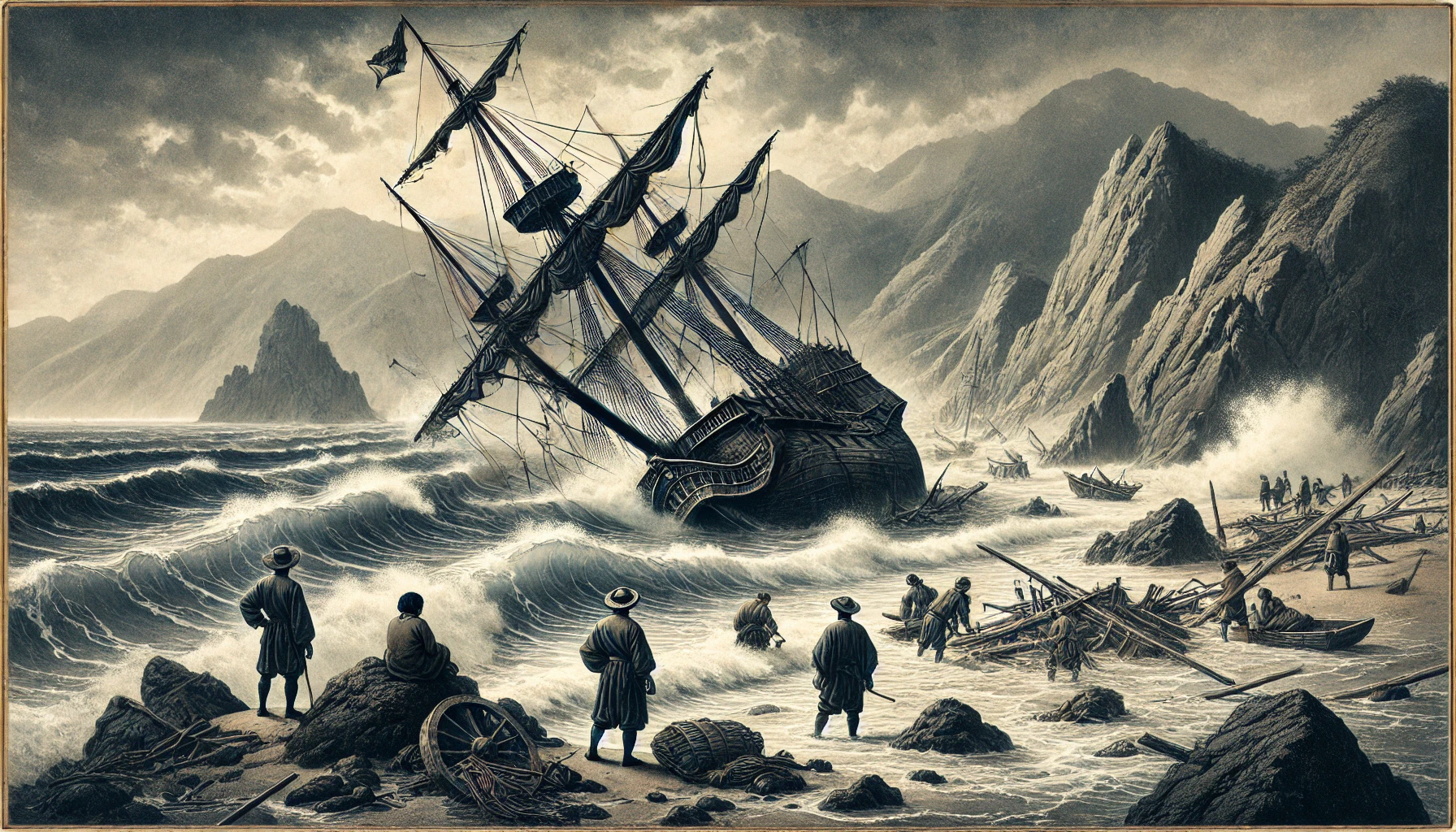
William Adams was born in 1564 in Gillingham, in Kent, and trained as a shipwright and navigator before joining a Dutch expedition to the Far East. Five ships left Rotterdam in 1598. Storms, scurvy, hunger and hostile coasts destroyed the rest; only the Liefde completed the crossing, and of a complement of around 110 men, roughly two dozen were still alive when the ship drifted ashore in Bungo Province — today’s Oita Prefecture — in April 1600.
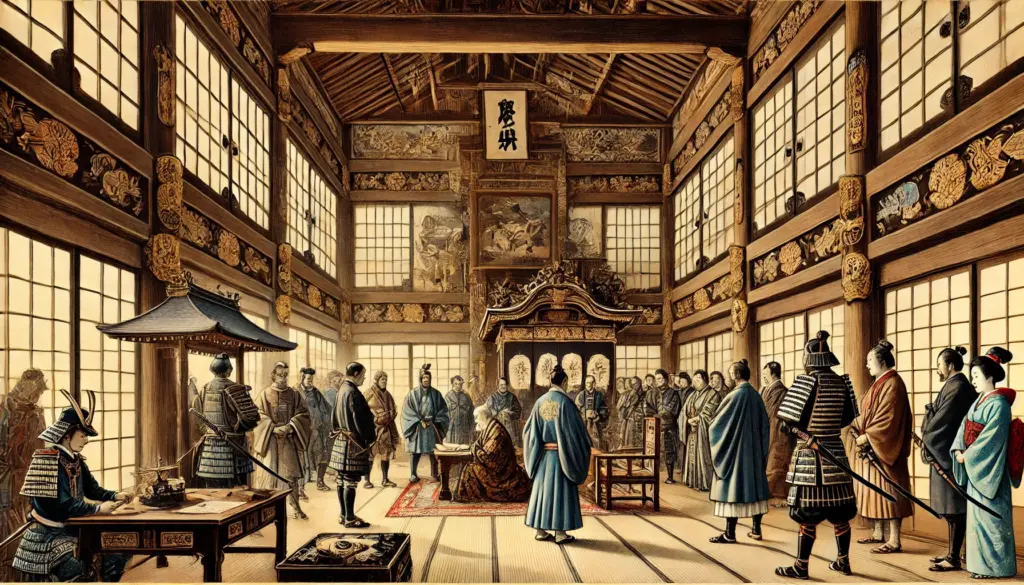
Portuguese and Spanish Jesuits already established in Japan told the local authorities that the newcomers were pirates and pressed for their execution. Instead, Tokugawa Ieyasu — not yet shogun, and months away from the battle that would make him the effective ruler of Japan — had Adams brought to him and questioned him at length about Europe, its wars, its religions and its sea routes. What Adams offered was something no Jesuit intermediary had given Ieyasu before: a description of the outside world from a man with no stake in the Catholic missions.
Adams never left. Over the next twenty years he built ships for the shogunate, advised on foreign trade, helped the Dutch and then the English open trading posts, sailed on trading voyages to Southeast Asia, raised a second family in Japan, and died there in 1620 without seeing England again.
What SHŌGUN changed about him
James Clavell’s novel and the FX series take Adams as a starting point and then build a drama on top of him. The table below covers only Blackthorne and Adams — for Toranaga, Mariko, Ishido and the rest of the cast, see the companion page below.
| Point | In SHŌGUN | In the historical record |
|---|---|---|
| The man | John Blackthorne, English pilot of the Erasmus. | William Adams, English pilot of the Liefde — a ship that had originally sailed under the name Erasmus. |
| The lord | Lord Yoshii Toranaga. | Tokugawa Ieyasu, who questioned Adams personally and later took him into his service. |
| The romance | A central love story with Lady Mariko. | No basis. Hosokawa Gracia, the historical figure Mariko is drawn from, is not recorded as ever having met Adams. |
| Violence | Blackthorne is repeatedly caught up in fighting, ambushes and political bloodshed. | There is no record of Adams taking part in combat in Japan. His value was as a navigator, shipwright, interpreter of Europe and trade adviser. |
| The ship’s guns | The cannon aboard the ship are a major plot lever. | The Liefde‘s cannon and firearms were taken by the authorities. Spanish accounts say the cannon were used at the battle of Sekigahara in October 1600. |
| Wanting to leave | Getting away from Japan drives much of Blackthorne’s story. | Adams did eventually obtain permission to sail for England in 1613 — and chose to stay. |
| What comes after | Season one closes around the events of 1600. | Adams lived another twenty years in Japan. Almost everything he is actually remembered for happened after the point where season one ends. |
The ship is the neatest link between the fiction and the record. Clavell called Blackthorne’s vessel the Erasmus, and the real Liefde had indeed carried that name earlier in her life. The carved wooden figure of Erasmus that once decorated her survives in Japan and is held by the Tokyo National Museum as a designated cultural property, although it is not on permanent display — check the museum’s current exhibits before making a special trip.
As of September 2026, FX has said that a second season will be set roughly ten years after the first, with Cosmo Jarvis returning as Blackthorne and filming under way since early 2026. That decade — the shipbuilding, the trading posts, the English factory at Hirado — is the part of Adams’s life the sections below deal with.

Timeline: 1564–1620
Apprenticed in the shipyards of Limehouse, and later served as a pilot and master in English ships.
Joins a Dutch fleet of five ships bound for the Far East by way of the Strait of Magellan.
The Liefde, alone of the fleet and with only about two dozen men still alive, comes ashore in Bungo Province, in what is now Oita Prefecture.
Jesuit rivals press for the crew to be executed as pirates. Ieyasu questions Adams instead, and keeps him.
Adams oversees the construction of Western-style ships on the Izu coast, including an 80-ton vessel and a larger ship of about 120 tons.
The larger ship is lent to the Spanish governor Rodrigo de Vivero for the voyage to New Spain. Aboard is a Japanese party led by Tanaka Shōsuke, recorded as the first Japanese to reach the Americas.
John Saris reaches Hirado in the Clove and opens an English trading post. Adams receives permission to return to England, and does not take it.
Aged 55. His will, dated the day of his death, divides his estate in two equal halves between his family in England and his children in Japan.
Was he really a samurai?
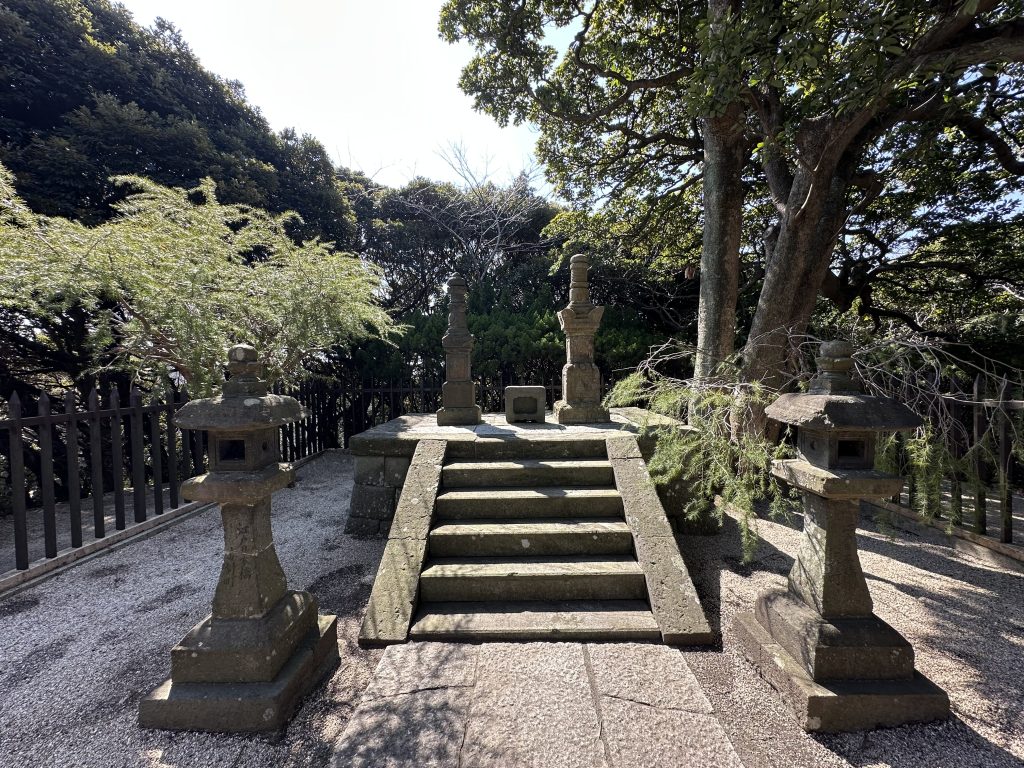
Adams was appointed hatamoto — a direct retainer of the shogun’s house — and was granted an estate at Hemi, in what is now Yokosuka, along with the right to wear the two swords that marked warrior status. He was also given the Japanese name by which Japan still knows him: Miura Anjin. Anjin is simply the word for a ship’s pilot, the trade he had practised all his life; Miura is taken from the name of the district his estate lay in. In effect, his job title became his surname.
Two honest qualifications belong with that. Sources differ on exactly which year the appointment came — accounts place it anywhere from the middle of the 1600s decade to around 1610. And popular accounts almost always describe the Hemi estate as being worth 250 koku; the estate itself is well attested, but some historians have questioned how firm the evidence for that particular figure is, and how far his standing went beyond the honorary. What is not in doubt is that a foreign sailor was given land, a name, a rank and a place at the centre of the shogunate’s dealings with Europe — which in the Japan of 1600 was extraordinary enough without the round numbers.
Adams was not the only man from the Liefde to be taken into the shogun’s service. The Dutch second mate, Jan Joosten van Lodensteijn, was also made a hatamoto and given a residence in Edo; his Japanese name, Yayōsu, is the origin of Yaesu, the district on the east side of Tokyo Station. Two survivors of one shipwreck ended up with two pieces of central Tokyo named after them. Joosten drowned in 1623 when his ship ran aground on the way back from Batavia — he, unlike Adams, had been trying to get home.
The ships he built at Ito
The most concrete thing Adams left behind was shipping. From 1604 he was set to work on the Izu coast at Ito, where he oversaw the building of Western-style vessels — first a ship of around 80 tons, then a larger one of about 120 tons. For a country whose shipwrights had never built to European lines, this was a transfer of technology as much as a commission.

The larger ship had the more remarkable career. In 1610 it was lent to Rodrigo de Vivero, the outgoing Spanish governor of the Philippines, who had been shipwrecked in Japan, so that he could reach New Spain. Travelling with him was a Japanese party led by Tanaka Shōsuke — recorded as the first Japanese to set foot in the Americas. The ship never came back: the viceroy in Mexico had it confiscated, reportedly out of concern that the Japanese were learning ocean navigation.
His two families, and his descendants
Adams had married Mary Hyn at Stepney in August 1589, and left a wife and children behind in England — a son, John, and a daughter, Deliverance. He was not a man who forgot them: letters went back and forth, and he arranged for money to be paid to Mary in London through the East India Company. Mary died in 1620, the same year he did, and probate was granted to her in London the following year. Deliverance, by then married, was still petitioning for money owed on her father’s investments in 1624.
In Japan he married again and had two children, Joseph and Susanna. His Japanese wife is a frustrating gap in the record: popular retellings give her name as Oyuki, but that name appears to come from twentieth-century fiction rather than from any contemporary document, and her identity is not securely established. This is worth knowing if you see her named confidently elsewhere.
So are there descendants today? On the documented record, no. Joseph inherited his father’s rank and the Hemi estate and carried the Miura Anjin name. But Japan closed itself to foreign contact in the 1630s, and both Joseph and Susanna disappear from the records around that time — there is a strong likelihood that, as people of mixed foreign parentage, they were among those expelled to Batavia. No line of descent from Adams has been documented since.
Why he never went home
For the first decade the answer was simple: Ieyasu would not release him. He was too useful, and he knew too much. But in 1613 the situation changed. John Saris arrived at Hirado in the Clove to open an English trading post, and Adams obtained permission to sail for home.
He did not go. The reasons were probably as ordinary as they were tangled. He had a wife and two young children in Japan, an estate, a rank and standing with the most powerful men in the country; in England he had been away for fifteen years. He also disliked Saris, and Saris disliked him — the English captain was contemptuous of how thoroughly Adams had taken on Japanese manners and dress. Adams took service with the English factory instead, on worse pay than the Dutch had given him, and stayed. Richard Cocks, who ran the factory at Hirado, worked alongside him for the next seven years and wrote of him warmly.
How he died, and what happened to his body
Adams died at Hirado on 16 May 1620, aged 55, having been ill for some time. His will was dated the day he died, and it says a good deal about him: the estate was cut into two equal halves, one for his “lovinge wyfe and children in England,” the other for Joseph and Susanna in Japan. He divided himself down the middle, exactly as he had lived.
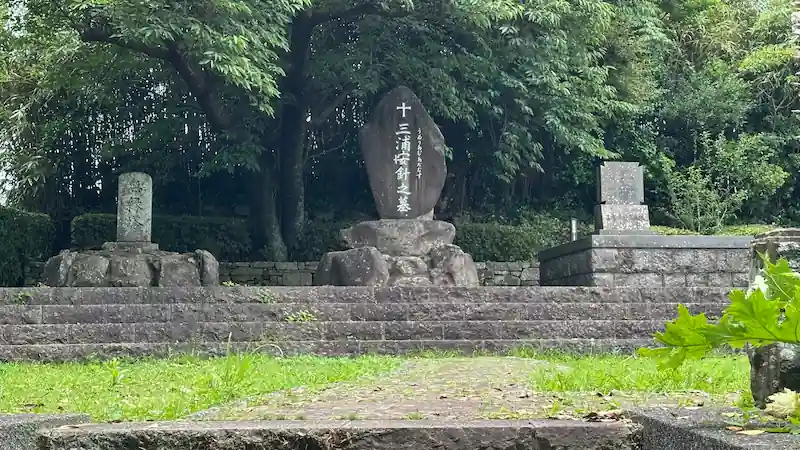
The grave traditionally identified as his stands on Sakigata hill at Hirado, looking out over the water. For a long time that identification rested on tradition alone. Then, in 2017, bone fragments were recovered from the site, and in 2020 a research team led from the University of Tokyo published an analysis of them in the journal Scientific Reports: mitochondrial DNA pointing to a European maternal lineage, radiocarbon dating consistent with a death around 1620, and stable-isotope values showing a person who had eaten a Japanese diet for years. The conclusion was that the remains are consistent with William Adams. Four centuries on, the science caught up with the story.
Where you can follow his story today
Adams left traces in five places, and all of them can still be visited. Each guide below has station-by-station access, walking times and terrain notes from visiting in person.
FAQ
Blackthorne himself is fictional, but he is based on a real man: William Adams, an English pilot who reached Japan in 1600 and became a retainer of Tokugawa Ieyasu. The broad arc — foreign sailor arrives, is taken up by a great lord, stays in Japan — is historical. The specific plot is not.
He was appointed a hatamoto, a direct retainer of the shogun, and was granted an estate at Hemi in present-day Yokosuka together with the right to wear two swords. Some historians regard his warrior standing as closer to honorary than to that of a landed fighting man, but his rank and estate are matters of record.
Anjin means “pilot” or “navigator” — the trade Adams had followed all his life. Miura comes from the name of the district where his estate lay, on the Miura peninsula south of Edo. His profession effectively became his Japanese surname.
He never returned to England. He did sail again — on trading voyages to Southeast Asia for the English factory — but when he received permission in 1613 to go home, he chose to remain. He had a family, an estate and a position in Japan, and had been away for fifteen years.
Yes, and two children with her, Joseph and Susanna. Her name, however, is not securely recorded. Many popular accounts call her Oyuki, but that name appears to trace back to twentieth-century fiction rather than to any contemporary source.
None are documented. His son Joseph inherited the Miura Anjin name and the Hemi estate, but both Joseph and Susanna vanish from the records in the 1630s, when Japan closed to foreign contact and people of mixed foreign parentage were expelled. His English children left descendants in the records of the period, but no continuous line from Adams has been established.
He died at Hirado in Nagasaki Prefecture on 16 May 1620, aged 55, after a period of illness. The grave traditionally identified as his stands on Sakigata hill above the town. In 2017 bone fragments were recovered there, and a 2020 study published in Scientific Reports found them consistent with Adams on DNA, radiocarbon and dietary-isotope evidence.
There is no record of it. The cannon and firearms from his ship were taken by the authorities, and Spanish accounts say the guns were used at Sekigahara in October 1600, but Adams himself is not recorded as having taken part in any fighting. His work was navigation, shipbuilding, trade and diplomacy.
Mariko is generally understood to be drawn from Hosokawa Gracia, a Christian noblewoman who died in Osaka in 1600. There is no record that she and Adams ever met, and the romance at the heart of the story has no historical basis.
Yes — his grave at Hirado, memorials at Ito where he built the ships, the park at Yokosuka near his old estate, a marker in the Nihonbashi area of Tokyo, and sites at Uraga. Access details for each are in the William Adams travel guide.
☕ Support This Site
Following the Shogun is built on original fieldwork and on-site research.
If you found this guide useful, your support helps keep it going.

You can also support via QR code

