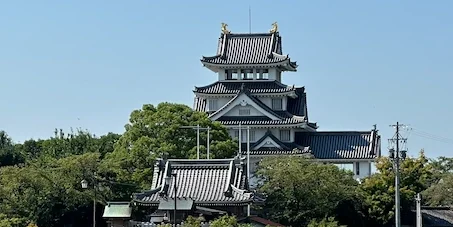
If the NHK Taiga drama Toyotomi Brothers! trailer made you curious about “Sunomata (the One-Night Castle),” this guide is for you. Below is a visitor-friendly, easy-to-follow breakdown of how to get to Sunomata Ichiya Castle (Ogaki City Sunomata Historical Museum), where to park, and what to see—organized in an order that helps you avoid getting turned around on-site.
If you’re driving, it’s reassuring to note the gate-locking hours for the “Sai River Sakura Park Parking Lot” first. For public transportation, using Taikō Shusse Bridge as your landmark after getting off the bus makes the walking route much clearer.
On the 4th floor event room, the special exhibition “Sunomata: Where the Taikō Rose to Power” runs from January 4 to December 28, Reiwa 8 (2026).
What you’ll learn in this article
・Opening hours / closing days / admission fee for Sunomata Ichiya Castle (museum)
・How to get there by public transit or car, common “where people get lost” points, plus rainy-day and late-afternoon cautions
・How to understand what you should see on-site—“exhibits,” “castle views,” and “the embankment cherry blossoms”—together with their historical role
・How to walk the nearby area (including Toyokuni Shrine) and an FAQ
Recommended for: visitors using public transit / visitors driving / anyone who wants cherry blossoms and riverside scenery photos / those following Hideyoshi & Hidenaga connections / anyone who wants the essentials in a short time
Time estimate: around 60 minutes for the museum + park stroll; add +10–20 minutes if you also visit the shrine (varies depending on how you view the exhibits and how crowded it is)
Quick “read-ahead” memo (common on-site stumbling points)
・Bus timetables can change due to schedule revisions or seasonal operation. Checking the operator’s timetable before departure helps a lot.
・During cherry blossom season (late March–early April), nearby roads can get busy and parking operations may differ from normal.
・On rainy days, the top of the embankment and some paths can get slippery. Comfortable walking shoes are the safe choice.
・Indoor photography follows rules. Flash and video are not allowed, and some exhibits may be non-photographable. There may also be notices asking visitors to avoid using tripods and selfie sticks.
When you’re walking along the waterways of Gifu and Ogaki, a white-walled keep suddenly seems to rise across the river. That’s “Sunomata Ichiya Castle (Ogaki City Sunomata Historical Museum).” It’s famous for the “one-night castle” legend, but there’s a best order to enjoy it. First, get the background in the museum; next, step outside and read the terrain—the river, the embankment, and the castle view—on foot. Do that, and what you’re looking at starts to change. Within walking distance, there’s also Toyokuni Shrine (a sub-shrine within Shirohige Shrine precincts), cherished locally for its Hideyoshi connection—an easy way to close out your visit with a quick prayer.
*The details of the “one-night castle” legend vary depending on who tells the story. In this article, we focus on the museum’s exhibits and on “checkable points you can verify on-site” that connect directly to the scenery of the river, embankment, and bridges.
- Spot Overview
- Sunomata Ichiya Castle (Ogaki City Sunomata Historical Museum)
- How the Taikōki Tells the Story of Sunomata Ichiya Castle—Why Did Tokichirō Succeed?
- 🏯 Are there castle stamps (Gojōin)? Where can you buy them?
- Highlights of the indoor exhibits
- 1st floor: Permanent Exhibit “History of Sunomata” — start with the land and the town
- 2nd floor: Permanent Exhibit “The Sunomata Castle-Building Chapter” — the heart of the “one-night castle” is logistics
- 3rd floor: Permanent Exhibit “The Rise to Power Chapter” — Hideyoshi’s network comes together as one line
- 4th floor: Event Room “Sunomata: Where the Taikō Rose to Power” (Jan 4–Dec 28, Reiwa 8 / 2026)
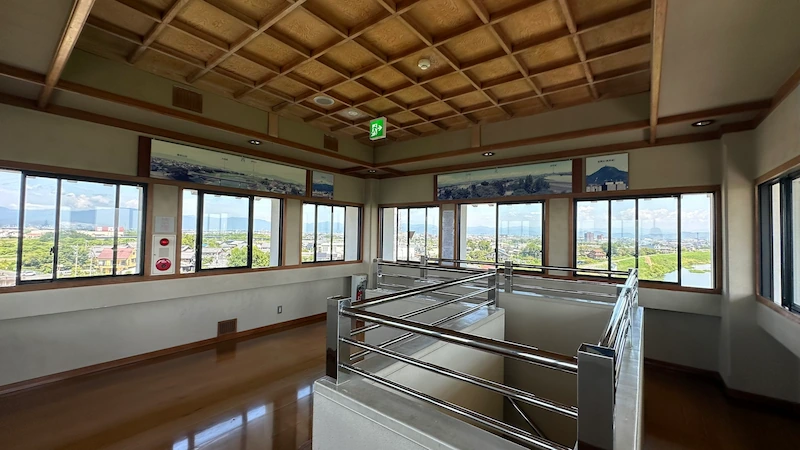
- 5th floor: Observation “Looking Out Over Sunomata” — go up after the exhibits and the view changes
- Sunomata Ichiya Castle (Ogaki City Sunomata Historical Museum)
- Toyokuni Shrine (within the Shirohige Shrine precincts, Sunomata)
Spot Overview
Sunomata Ichiya Castle (Ogaki City Sunomata Historical Museum)
⭐ Recommendation
Historical value:[☆☆☆]
Visual appeal:[☆☆]
Experiential value:[☆☆☆]
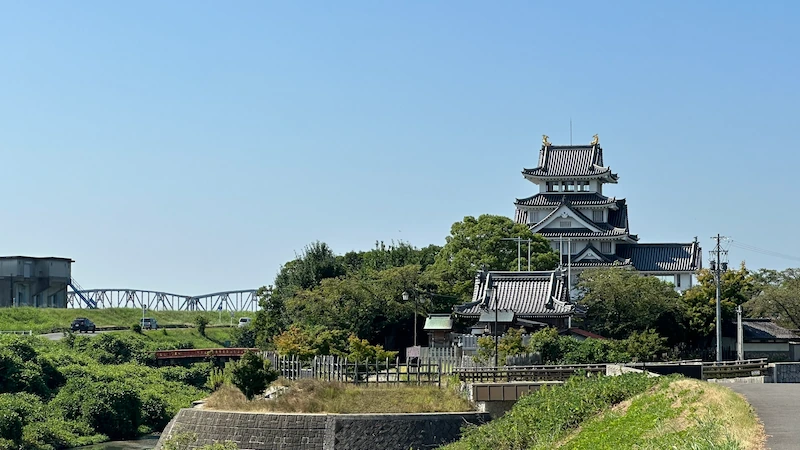
From here, we’ll pick up “what feels uniquely Sunomata” by pairing the exhibits with the landscape. Sunomata Ichiya Castle is well known for the “one-night castle” legend, but on-site, linking the museum exhibits → Taikō Shusse Bridge → riverside views makes it much easier to see—through the terrain itself—why this place has been described as a forward operating base.
(For details like the exact construction year, it’s safest to treat them as “tradition” and read them in line with the museum’s explanations.)
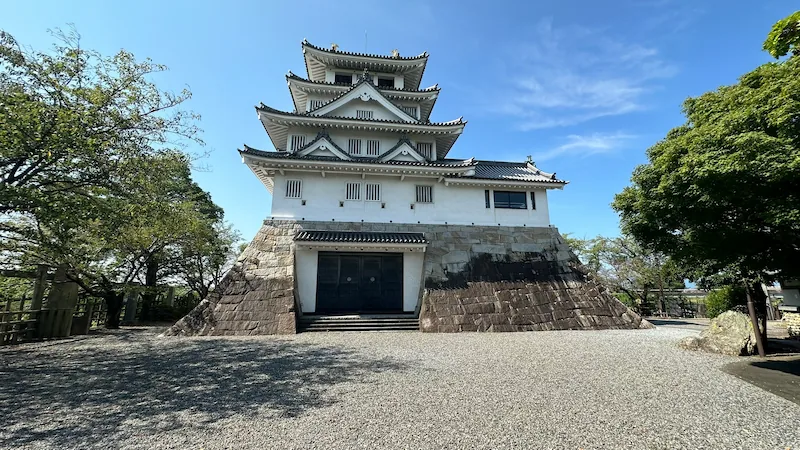
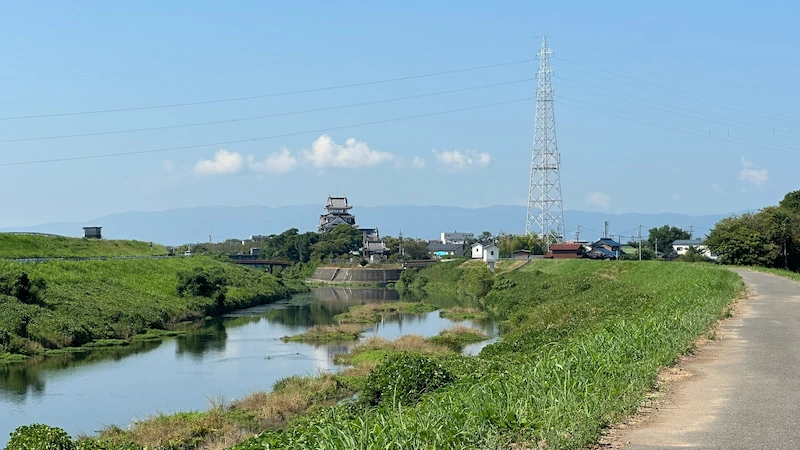
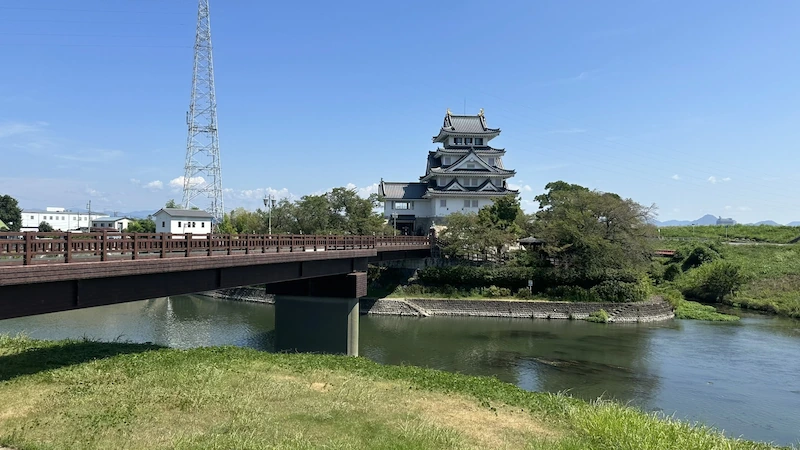
Sunomata Ichiya Castle is not a surviving Sengoku-period keep. Today, it is open to the public as the Ogaki City Sunomata Historical Museum. The castle-like building was developed as a museum facility and is also described (in the museum’s information) as being modeled on Ogaki Castle. Inside, the exhibits focus on the one-night castle story and on what makes Sunomata’s location unique.
Opening hours are 9:00–17:00 (last admission 16:30). The museum is closed on Mondays (or the following day if Monday is a holiday), the day after a national holiday, and during the year-end/New Year period (12/29–1/3). Admission is 200 yen for adults (with group discounts and categories for free admission).
During the cherry blossom festival period (late March–early April) and when the sakura are at full bloom, temporary extended opening may be announced. If your visit falls in cherry blossom season, it’s a good idea to check the latest official updates, including the opening calendar. (For the most current information, refer to official announcements.)
Inside, the museum uses documents handed down in the Maeno family as a starting point to follow the story of “building Sunomata” and Hideyoshi’s rise through the ranks.
One especially memorable highlight is the exhibit that shows the “construction process” with diagrams and models. It makes it easier to picture how materials moved via the river and what was assembled on-site, so the legend doesn’t end as “just a good story.” For the best flow, start by learning the background in the museum, then cross Taikō Shusse Bridge and head out to the riverbanks.
How the Taikōki Tells the Story of Sunomata Ichiya Castle—Why Did Tokichirō Succeed?
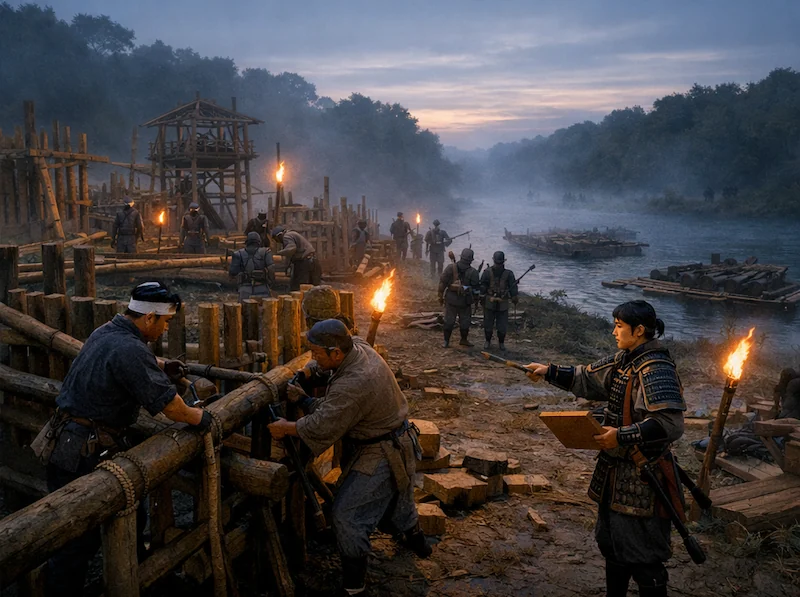
In the Edo-period war chronicle Taikōki, the building of Sunomata is portrayed as a defining scene that symbolizes Hideyoshi’s (then Kinoshita Tokichirō’s) sharp wits and bold nerve.
In the story, Oda Nobunaga orders a fort built at Sunomata as a forward base for his Mino campaign, but enemy interference is said to have made construction stall. Even when Nobunaga’s retainers tried, the work reportedly bogged down—until Tokichirō stepped forward.
According to Taikōki, Tokichirō flipped the problem on its head: he pre-assembled materials upstream, used the river routes to transport them, and then raised the fort in one concentrated push at Sunomata. With help from people skilled on the river—such as Hachisuka Koroku—the work progressed through the night, and the stronghold was completed in a short time.
Not brute force, but strategy—turning “terrain” and “water transport” into allies. That’s why later generations called it a “one-night castle.”
Beyond whether every detail is historically accurate, this image of Tokichirō as the man who breaks deadlocks with ingenuity helped shape the way later generations came to view Hideyoshi.
At today’s Sunomata Ichiya Castle (Ogaki City Sunomata Historical Museum), you’ll see not only how this story spread, but also the background and geographic conditions that made the tale resonate. After you cross Taikō Shusse Bridge and walk along the river, you can think with your own eyes about why this riverside setting became the stage for the legend.
🏯 Are there castle stamps (Gojōin)? Where can you buy them?
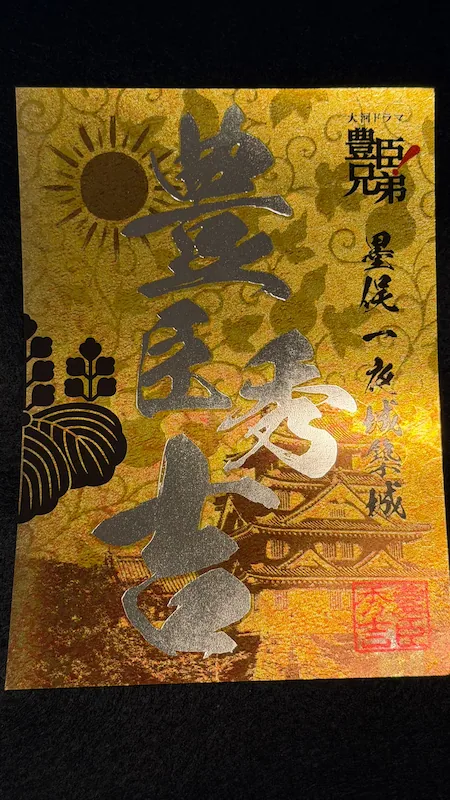
Sunomata Ichiya Castle’s gojōin (castle stamp) is also mentioned in an official Gifu tourism feature, and it’s sold at the 1st-floor reception desk of Sunomata Ichiya Castle. The price is 300 yen. Availability and designs may change depending on the season.
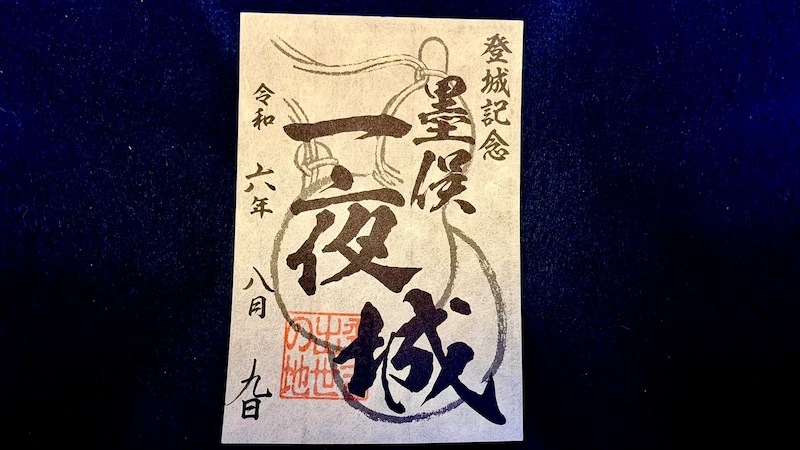
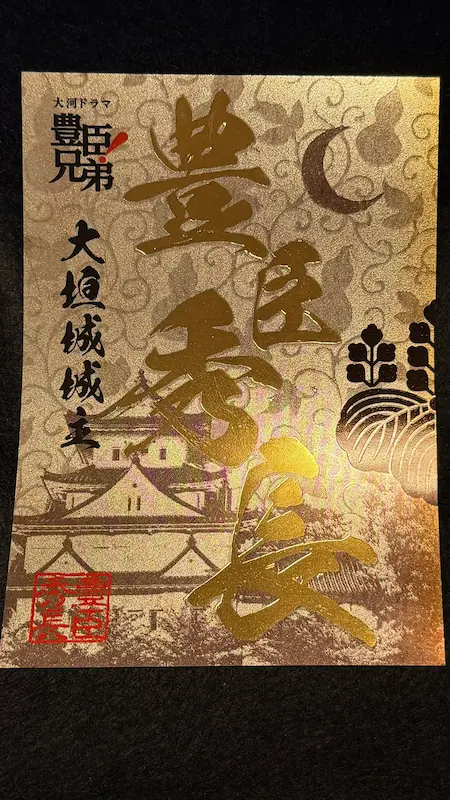
As of my visit in February 2026, in addition to the standard gojōin, a limited-edition design tied to Toyotomi Brothers! was also on sale (subject to sell-outs and changes). If you want one as a keepsake, it’s reassuring to check the reception desk soon after you enter.
| Year built | Traditionally said to have been built in Eiroku 9 (1566) / The historical museum (replica keep) opened in April, Heisei 3 (1991) |
|---|---|
| Builder | Kinoshita Tokichirō (later Toyotomi Hideyoshi; traditionally said to have built it as a forward base for Oda Nobunaga’s Mino campaign) |
| Structure | Today, a historical museum styled like a castle keep (exhibits focus on the Sunomata “castle-building” story and Hideyoshi’s career) / Maintained as Ichiya Castle Ruins Park |
| Renovation / restoration history | Opened as Ichiya Castle Ruins Park in 1974 / Opened as a historical museum in April 1991 |
| Current status | Extant (open as a historical museum; you can stroll around the park) |
| Loss / damage | Rather than a site where continuous stone walls and moats remain, this is a place to re-experience the story through exhibits and scenery. If you preview the background in the museum and then walk along the river, the meaning of the views changes. |
| Cultural property designation | Ichiya Castle Ruins Park is treated as a “city historic site (Ichiya Castle Ruins)” |
| Notes | Known as a cherry blossom spot; the combination of the Sai River embankment’s cherry-lined avenue and the castle scenery is especially popular |
🗺 Address:1742-1 Sunomata, Sunomata-cho, Ogaki, Gifu 503-0102
🚶 Access
🚗 By car (rough guide)
Gifu’s official tourism guidance lists the following as rough driving times: about 15 minutes from “Anpachi Smart IC” (Meishin Expressway) / about 20 minutes from “Gifu-Hashima IC” / about 30 minutes from “Ogaki IC.”
🅿 Parking (for visitors arriving by car)
If you’re driving, the recommended option is the “Sai River Sakura Park Parking Lot,” which is generally free of charge.
Because the lot is locked at set times, pay close attention on days you plan to stay into the evening.
・April–September: opens 9:00 / locked at 18:30
・October–March: opens 9:00 / locked at 17:30
In most years, during the Sunomata Sakura Festival and the peak bloom window (late March–early April), traffic restrictions may be implemented around the venue, and notices may indicate a cooperation fee for parking.
🚃 Access by public transportation (example routes from official guidance)
Official guidance from Gifu tourism and Ogaki City typically introduces the following sample routes. I used the bus myself after sightseeing at Gifu Castle, and depending on timing it can get you there faster than the train. (Timetables may be revised.)
・JR Ogaki Station (South Exit) (Meihan Kintetsu Bus: bound for Gifu Shotoku Gakuen University) → get off at “Sunomata” → 12-minute walk
・JR Gifu Station / Meitetsu Gifu Station (Gifu Bus: W65) → last stop “Sunomata” → 12-minute walk
・JR Hozumi Station (Meihan Kintetsu Bus: bound for Hozumi-ekimae (clockwise route)) → get off at “Sobue” → 9-minute walk
⏳ Suggested visit time
Quick highlights: if you focus mainly on the exhibits, you can cover it even in a short visit
Unhurried sightseeing: exhibits + park stroll + photos is typically around 1 hour (varies with crowds and season)
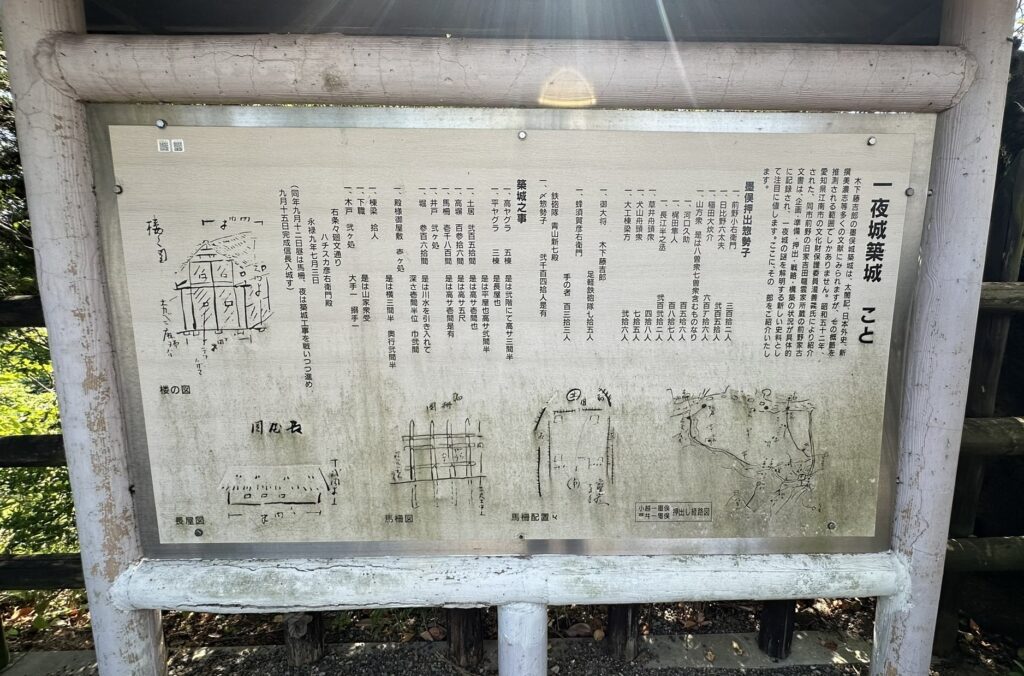
📍 Highlights
Key exhibits to catch first (the flow from “building Sunomata” to “rising through the ranks”)
・The permanent exhibition rooms are organized into sections such as “The Sunomata Castle-Building Chapter” and “The Rise to Power Chapter,” shifting the focus from the fort-building story to Hideyoshi’s “advancement.” One of this museum’s strengths is that it’s hard to get lost about what to look at.
・To grasp the construction story, the easiest entry points are the diagrams of terrain and defensive lines, plus the models of building materials and tools. Before you even get to “battle,” the “planning and preparation” comes into view.
・To understand the background of why the “one-night castle” story has been told and retold, read the related materials and panels first, then head outside. The way the river and embankment look on foot will feel different.
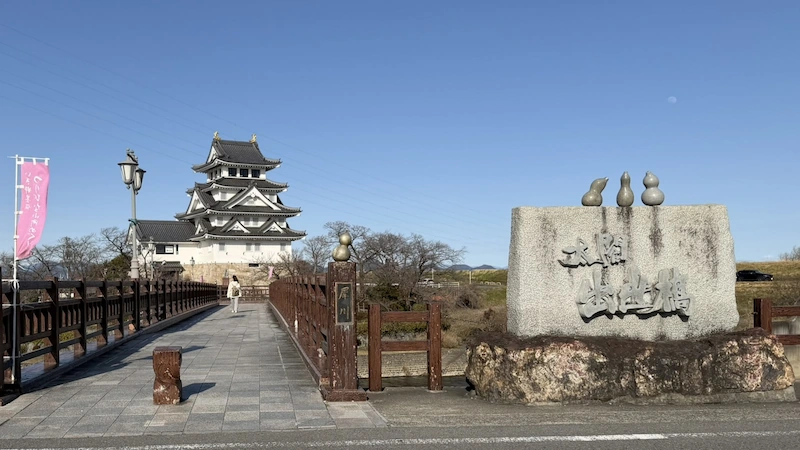
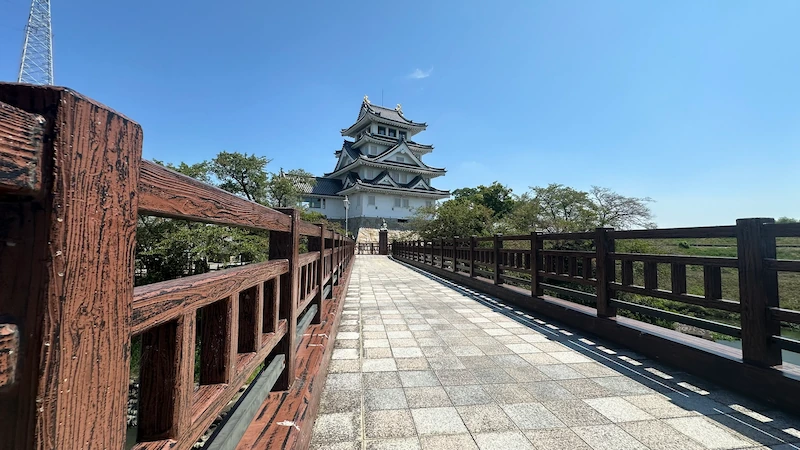
Castle views from Taikō Shusse Bridge
The approach itself—crossing the bridge and entering the park—helps reset your mood. The keep across the water is also incredibly photogenic.
Seasonal ways to enjoy it
In spring, the Sai River embankment is lined with about 800 cherry trees stretching roughly 3.7 km (typical best window: late March–early April). This is the classic season to frame Sunomata Ichiya Castle through a “tunnel” of blossoms.
Highlights of the indoor exhibits
Sunomata Ichiya Castle (Ogaki City Sunomata Historical Museum) is arranged by floor, so you’re less likely to wonder, “Where do I even start?”
The building is laid out as 4 floors of exhibits/events plus a 5th-floor observation room. In broad strokes: floor 1 gives you the base layer—Sunomata’s land and historical setting; floor 2 focuses on the “construction process”; floor 3 connects the story to Hideyoshi’s “rise”; floor 4 is the event room (content changes by period); and floor 5 is the view. Taken together, it becomes one continuous story.
1st floor: Permanent Exhibit “History of Sunomata” — start with the land and the town
The key takeaway at the entrance is that Sunomata is a town shaped by rivers and embankments. You’ll see exhibits touching on old maps, highways, and the honjin (official lodging used by high-ranking travelers), which helps build the context that this was more than “a castle site”—it was a place where people and goods naturally gathered. Instead of jumping straight into “the castle,” it’s worth getting a basic outline of Sunomata here first; the upper-floor exhibits will click into place much more smoothly.
2nd floor: Permanent Exhibit “The Sunomata Castle-Building Chapter” — the heart of the “one-night castle” is logistics
The second floor doesn’t let the “one-night castle” remain just a legend—it’s the place where you can trace how everything was actually set in motion. A terrain map showing the branching river system is overlaid with routes and key points along the Kiso River corridor, turning the sequence—timber harvesting → river transport → assembly → construction—into one continuous line. What’s especially compelling is how Tokichirō’s “plan” becomes visible: where manpower was gathered, where decisions were made, and where the next move was taken—all readable at a glance on the map.
You’ll also find “hard evidence in writing,” including a reproduced letter by Hachisuka Koroku, which makes the atmosphere of negotiation and cooperation feel strikingly real. Inside the cases are models of construction materials and tools—timber, stakes, palisades, and more—making it easy to feel how a build measured in days could only happen through a full-scale mobilization of both supplies and labor. And once you finish with the displays said to be “excavated from the Ichiya Castle site,” such as helmets and swords, the story shifts from something you understand at a desk to something you can almost feel on the ground.
3rd floor: Permanent Exhibit “The Rise to Power Chapter” — Hideyoshi’s network comes together as one line
The third floor reframes Sunomata’s construction not as an isolated “dot,” but as part of the wider arc of Hideyoshi’s life. A wall-length timeline runs from Tenshō through Keichō, letting you scan a continuous stretch from Komaki–Nagakute to the Jurakudai, the Sword Hunt, Nagoya Castle, the Bunroku–Keichō campaigns, and all the way to Sekigahara. With battle diagrams and byōbu screen visuals placed throughout, it also helps keep dates and events from slipping out of order in your head.
Another highlight is the set of panels introducing the people who supported Hideyoshi. Familiar names like Takenaka Hanbei, Kuroda Kanbei, and Katō Kiyomasa appear with clear notes on when they were active and what roles they played. If you’ve watched the drama, it answers “Wait—which phase was this person in?” on the spot. If you’re a history fan, picking two or three favorite commanders to read more closely makes the line from Sunomata to national unification feel suddenly bolder and more direct.
4th floor: Event Room “Sunomata: Where the Taikō Rose to Power” (Jan 4–Dec 28, Reiwa 8 / 2026)
The fourth floor hosts a special exhibition that pulls Sunomata Ichiya Castle back from being “just a Hideyoshi anecdote” and returns you to the deeper history of the land itself. It opens with “Sunomata as a transportation hub,” then connects the perspective through highways, river crossings, and post towns, before moving naturally into river shipping and logistics. Panels also organize topics like Nobunaga’s Mino offensive (Moribe, Jūshijō, Karumi) and Hidenaga’s persuasion of Hachisuka Koroku—revealing how the “castle-building” story was shaped less by brute valor than by the movement of people and goods.
In the latter half, the exhibition even picks up “what came after,” including Komaki–Nagakute and the Sunomata tea gathering, before landing on the “Sunomata-juku Honjin Sekifuda” (a city-designated Important Cultural Property) as the final anchor—Sunomata’s face as a post town. If you read this before stepping back outside, the river and roads you’re about to walk will feel one layer deeper.
5th floor: Observation “Looking Out Over Sunomata” — go up after the exhibits and the view changes
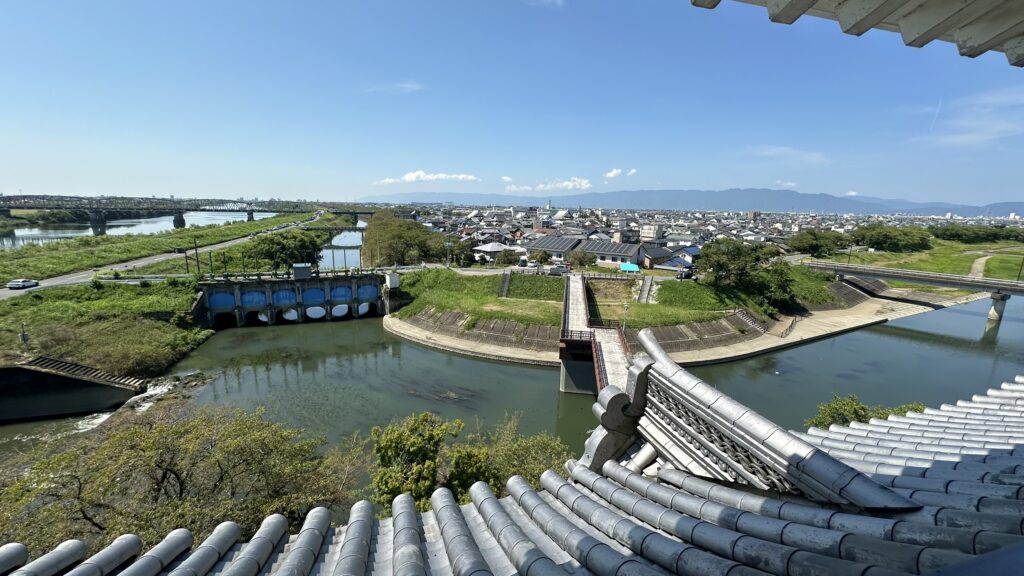
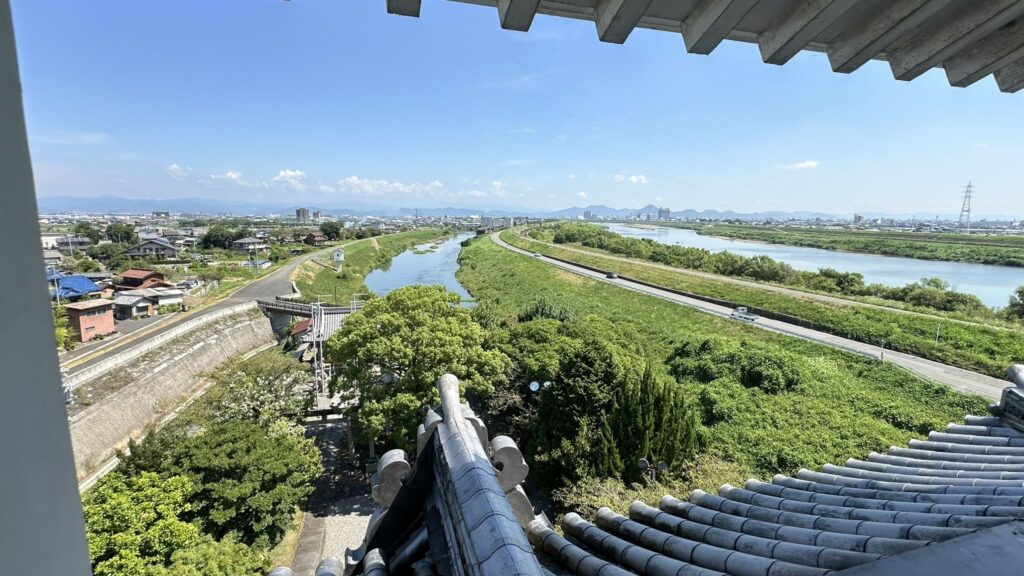
The observation room fills your view with the river, embankment, bridge, and townscape.
This is a spot that’s more rewarding “after you’ve seen the exhibits” than “first thing.” If you look out while recalling the terrain maps and route explanations from the 2nd floor, you’ll feel the embankment height and river width in a way that’s almost physical. It works both as a pre-walk preview and a post-walk reality check—a strong finishing move.
📌 Trivia
- Unexpected historical background: For a long time, the “one-night castle” story was told mainly through traditions such as the Taikōki, but it is said that in 1977 (Shōwa 52), the existence of old Maeno-family documents was introduced publicly and research progressed toward clarifying the full picture.
- Good-to-know detail: June is hydrangea season along the Sai River embankment. Hydrangeas planted by the local community have become a highlight, and in some years related events may be announced (whether it happens and the details vary by year).
- Connection to famous figures: Nobunaga used this area as a key base for taking Mino, and Tokichirō (Hideyoshi) had his achievements recognized here—“the starting line” of his rise. In a different direction from Okehazama, this is a place where Nobunaga’s strategic eye set off a chain that would later lead to unification.
Toyokuni Shrine (within the Shirohige Shrine precincts, Sunomata)
⭐ Recommendation
Historical value:☆☆
Visual appeal:☆☆
Experiential value:☆☆
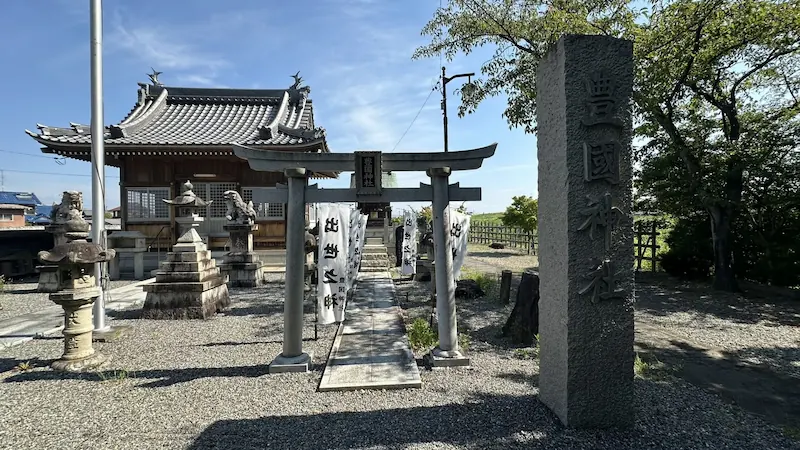
Sunomata, where rivers and roads intersect, is often described as the place where the young Kinoshita Tokichirō (later Toyotomi Hideyoshi) established the footing for his “rise to success.” Near the front-line base for Oda Nobunaga’s Mino campaign (Sunomata Castle—the “one-night castle” legend), you can offer a quiet prayer at Toyokuni Shrine, a sub-shrine within the grounds of Shirohige Shrine. The enshrined figure here is Hideyoshi himself—on the eve of his climb to become the man who would shape Japan.
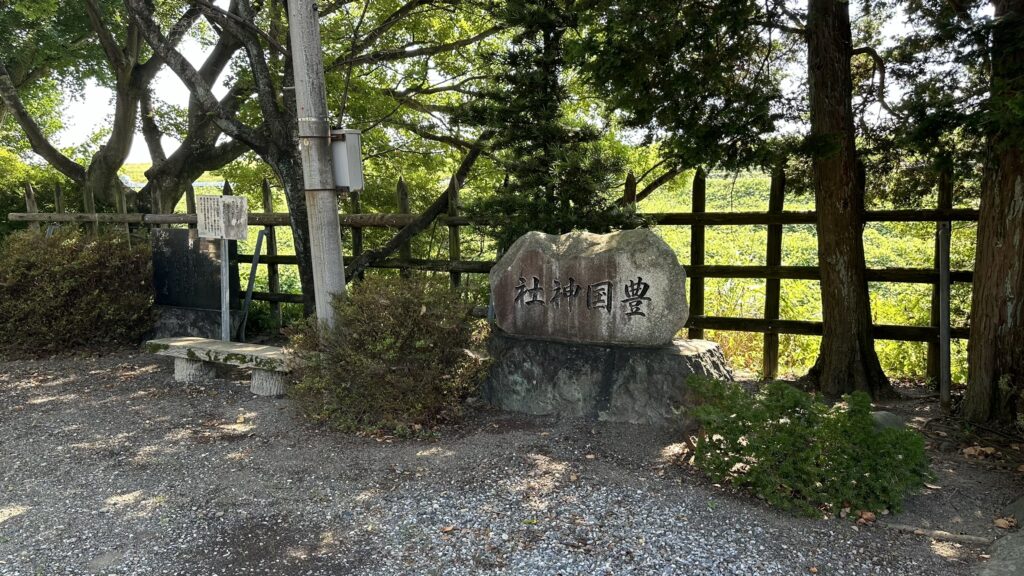
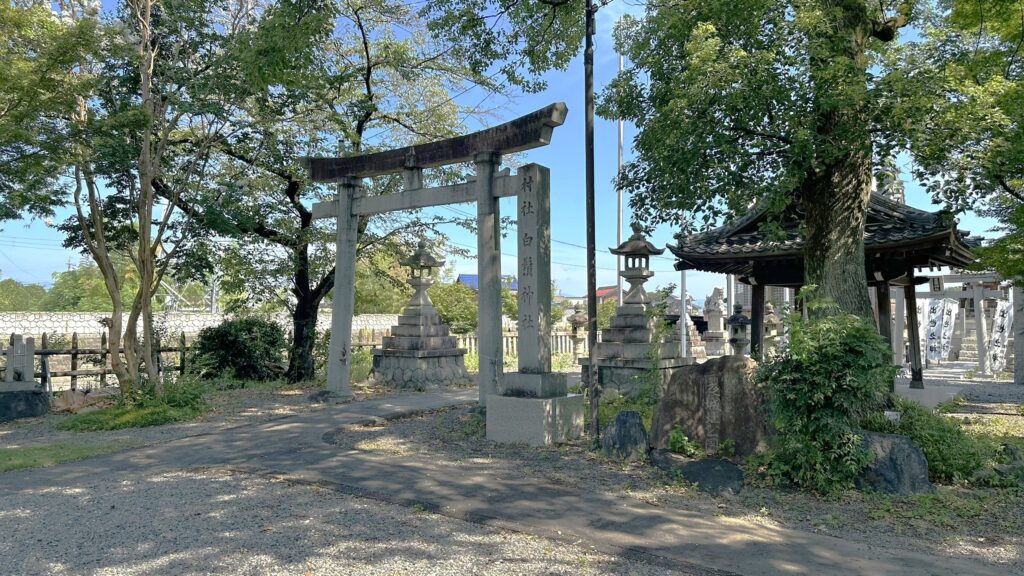
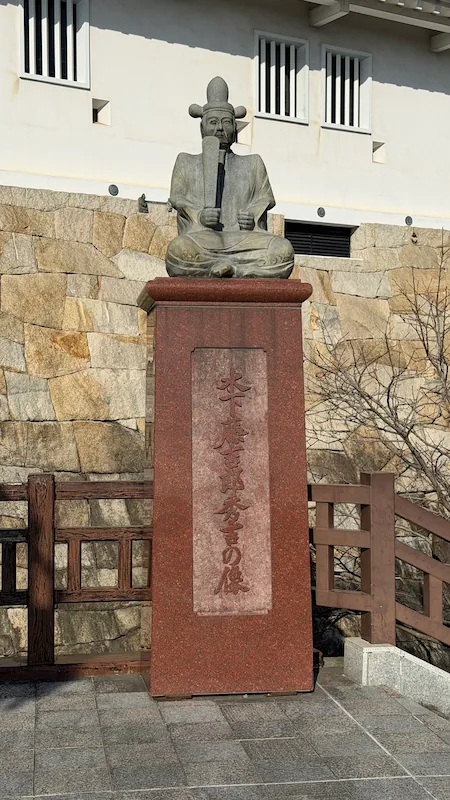
More than ancient ruins, this spot’s charm is its role as a “story focal point.” The words “Toyokuni Shrine” carved on the stone marker, the banners along the approach boldly declaring “shusse” (success/advancement), and the Ichiya Castle Ruins Park scenery spreading right next door—together, they pull Hideyoshi’s name out of legend and exhibits and into your own trip through the simple act of paying respects. That’s when Nobunaga’s strategy and Hideyoshi’s talent begin to feel anchored to this riverside terrain.
| Year built | 1992 (Heisei 4; established as a sub-shrine within Shirohige Shrine) |
|---|---|
| Builder | Shirohige Shrine (established as a precinct sub-shrine; divided/enshrined from Toyokuni Shrine in Osaka Castle Park) |
| Structure / Features | A small shrine within Shirohige Shrine’s grounds. The approach, torii gate, and shrine marker are in place; banners featuring “shusse” are a clear landmark |
| Renovation / restoration history | No notable items (established: 1992) |
| Current status | Extant (open for worship) |
| Loss / damage | No notable items |
| Cultural property designation | None (precinct sub-shrine) |
| Notes | The sole enshrined deity is Toyotomi Hideyoshi (Toyokuni Shrine in Osaka enshrines Hideyoshi, Hideyori, and Hidenaga, but this site enshrines Hideyoshi only) |
🗺 Address:1735-1 Sunomata, Sunomata-cho, Ogaki, Gifu 503-0102 (within Shirohige Shrine precincts)
🚶 Access
Within the grounds of the previous spot, “Sunomata Ichiya Castle (Ogaki City Sunomata Historical Museum)”
⏳ Suggested visit time
Quick highlights: about 10 minutes
Unhurried sightseeing: about 0.5 hour
📍 Highlights
- Banners declaring “shusse” and a quiet little shrine: A fitting scene for a Hideyoshi-related site—the message of your wish comes through directly on the approach. Even a short visit makes “Sunomata = a success story” feel intuitive.
- A “guided route” when paired with Shirohige Shrine: The layout is interesting because it’s positioned as a precinct sub-shrine. If you also worship at Shirohige Shrine—known for enshrining Sarutahiko, a kami associated with guidance and opening roads—the travel narrative deepens by another layer.
- Seasonal way to enjoy it: In some years, the “Sunomata Hideyoshi Shusse Festival” is held in autumn (dates and content vary by year). It can get lively around the area on the day, so if you’re mainly there for photos, an earlier time of day is reassuring.
📌 Trivia
- Unexpected historical background: Toyokuni Shrine is sometimes explained on-site as having been arranged in a relatively recent period as a precinct sub-shrine within Shirohige Shrine.
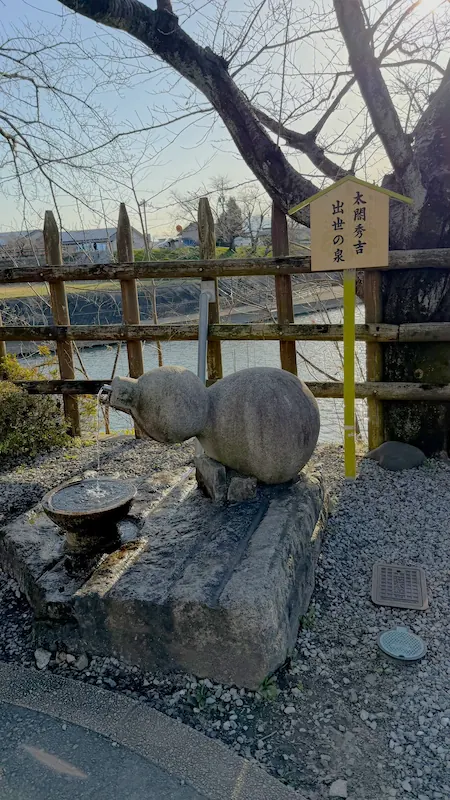
- Good-to-know detail: Around Sunomata Ichiya Castle, you’ll spot touches themed around the “sennari-byōtan” (the “thousand gourd” motif closely associated with Hideyoshi). Even just crossing Taikō Shusse Bridge is designed to draw you into a “rise to success” story, and it also makes a fun accent for photos.
- Connection to famous figures: While Toyokuni Shrine in Osaka enshrines Hideyoshi, Hideyori, and Hidenaga, the enshrined deity divided to Sunomata’s Toyokuni Shrine is Hideyoshi alone—compressing the “symbol of success” into a single, focused theme.
FAQ (Frequently Asked Questions)
Q1. Can I get there without getting lost from the nearest station?
A. Official Gifu tourism guidance also introduces bus-route examples starting from “JR Hozumi Station / JR Ogaki Station / JR Gifu Station.” Because timetables can change, it’s best to check the latest schedule before you go, and combine it with walking navigation on a map app after you get off the bus.
Gifu Tourism Federation guidance: https://visitgifu.com/see-do/sunomata-castle/
Q2. How long should I plan for?
A. If you focus mainly on the exhibits, around 30 minutes is typical. If you add the park stroll and photos, about 60 minutes is a good guide. In peak crowds or during cherry blossom season, it can run longer, so leaving extra buffer time is reassuring.
Q3. Can I visit on a rainy day?
A. You can tour the museum (indoor exhibits) even in the rain. However, the embankment and park paths can get slippery when wet, so wear stable walking shoes and watch your footing.
Q4. What are the opening hours, closing days, and admission fee?
A. It’s generally open 9:00–17:00 (last admission 16:30). Closing days are typically Monday (or the following day if Monday is a holiday), the day after a national holiday, and the year-end/New Year holidays. Admission is 200 yen for adults, with other categories (details follow official guidance).
Q5. Can I take photos inside? What about flash or video?
A. Indoor photography follows rules. Flash and video are not allowed, and some exhibits may not be photographable. There may also be notices asking visitors to avoid using tripods and selfie sticks.
Q6. Are there shrine stamps (Goshuin)? Where can I get them?
A. As of February 2026, we were not able to confirm goshuin offerings at Toyokuni Shrine or Shirohige Shrine. Because availability and procedures can change, please check the latest information on-site.
Q7. Are any original remains left? Is it a reconstruction?
A. The current keep-style building is a facility arranged as a historical museum. On-site, the main enjoyment is learning the “meaning of a forward base” through the exhibits and the landscape (river, bridge, embankment).
(For how Sengoku-period remains are treated, the most reliable approach is to follow the on-site signage and the museum’s explanations.)
Q8. Is it suitable for kids / older visitors?
A. If you’re mainly strolling the park, it’s generally an easy walk. However, be mindful of crowds during cherry blossom season and slippery footing on rainy days (routes with steps or stroller friendliness can vary depending on how you go around).
Q9. Is parking free? How late can I leave my car there?
A. The commonly recommended lot, “Sai River Sakura Park Parking Lot,” is generally free, and the locking time changes by season (18:30 from April–September / 17:30 from October–March). In addition, in most years during peak bloom (late March–early April), notices may indicate a cooperation fee.
Q10. Are there castle stamps (Gojōin)? Where can I buy them?
A. Sunomata Ichiya Castle (Ogaki City Sunomata Historical Museum) offers gojōin. The price is 300 yen, and you can buy it at the museum reception desk. Because designs, distribution periods, and prices may change, please confirm the latest details on-site.
*Goshuin offerings were not confirmed (as of February 2026).
Q11. Is there a limited-edition Toyotomi Brothers! gojōin?
A. As of a visit in March 2026, a limited-edition design gojōin was being sold. Availability can change depending on timing and stock, so please follow the reception desk guidance on the day.
Other related sites
Hideyoshi-related places guide


comment