NHK’s 2026 Taiga drama, Toyotomi Brothers!, has officially begun—launching a sweeping Sengoku-era story told through the intertwined perspectives of the man who rose to rule Japan, Toyotomi Hideyoshi, and his younger brother Toyotomi Hidenaga, celebrated as the era’s finest “second-in-command.” And this year, Nagahama adds a new way to step into that world: the “Toyotomi Brothers! Hokukonō Nagahama Taiga Drama Museum” (February 1–December 20, 2026, at the General Assembly Hall of Nagahama Betsuin Daitsū-ji Temple), where the drama’s atmosphere can be experienced on the ground, in the very city that helped shape the Toyotomi story.
Nagahama is where Hideyoshi was entrusted with Northern Ōmi, then set about building a castle and a thriving castle town—renaming the area from “Imahama” to “Nagahama” as a bold marker of ambition. The more the elder brother rode out to battle, the more the town demanded steady, unglamorous work to keep its foundation firm—and that responsibility fell to Hidenaga. Flash and substance, breakthrough and follow-through: only when those two gears meshed did “Toyotomi” truly accelerate. In the Taiga drama, the construction of Nagahama Castle, the shaping of the town below it, and the brothers’ division of roles will surely emerge as turning points in the story… and here in Nagahama, you can almost feel that moment before the pivot, when history is still taking shape.
On this page, we’ll spotlight three essential stops you’ll want to prioritize—Nagahama Castle (Nagahama Castle Historical Museum / Hōkōen Park), Nagahama Hōkoku Shrine, and Chikubushima Island (Hōgon-ji Temple & Tsukubusuma Shrine). Walk them together with the Taiga drama museum, and the reason Nagahama is known as “Taikō-san’s town” won’t just make sense—it will feel real, the kind of understanding that only a journey can give.
Spotlight Stops
Nagahama Castle (Nagahama Castle Historical Museum / Hōkōen Park)
⭐ Recommended Level
Historical Value:[☆☆☆]
Visual Appeal:[☆☆]
Hands-on Experience:[☆☆]
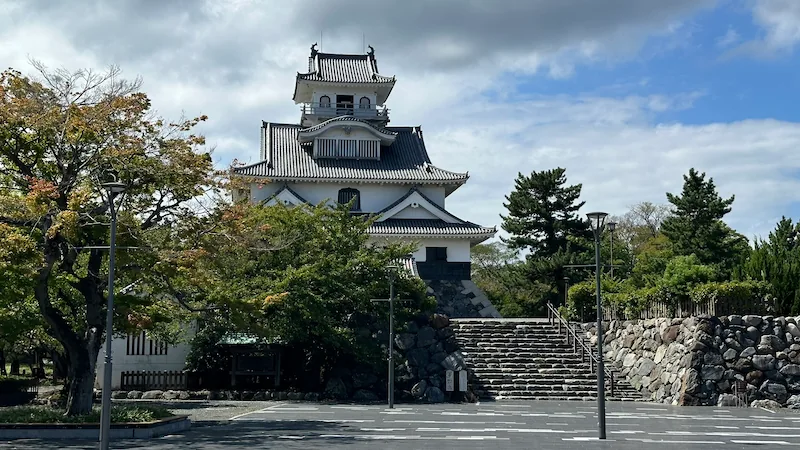
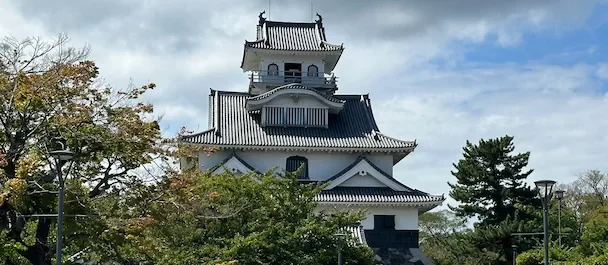
On the lakeshore where Lake Biwa catches the light in quick silver flashes, a white-walled keep rises cleanly into the sky. This is the Nagahama Castle site—the place where Hashiba Hideyoshi (later Toyotomi Hideyoshi), newly entrusted by Oda Nobunaga with Northern Ōmi after the fall of the Azai, rebuilt “Imahama” into “Nagahama” and laid out a new castle town beside it. By around the autumn of Tenshō 3 (1574), the castle was in working order, and Hideyoshi moved here from Odani Castle. From this mizujirō—a “water castle” designed with the lake itself in mind—he pushed campaigns toward Hokuriku and the Chūgoku region. The concept is pure Hideyoshi: a fortress that treats logistics, shipping, and military strategy as one seamless system, with waterways and boat traffic built into the plan from the start.
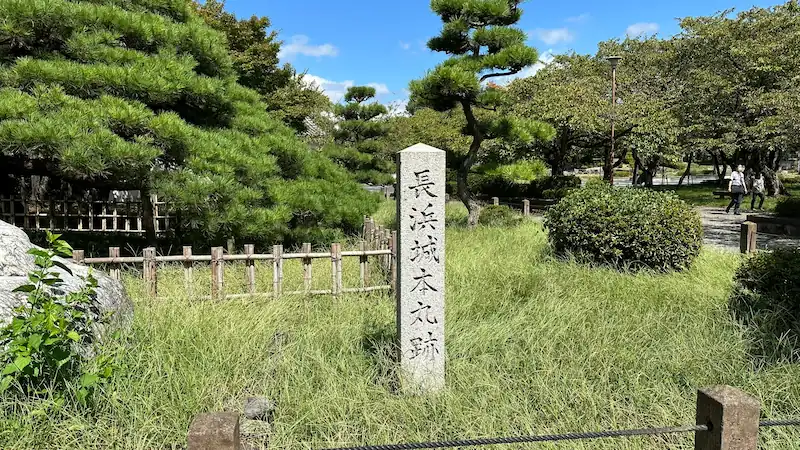
And it was Hideyoshi’s younger brother, Toyotomi Hidenaga, who is believed to have supported the castle and town’s daily reality. In periods when Hideyoshi was frequently away on campaign, Hidenaga handled the practical work—overseeing construction progress and managing governance—quietly stabilizing Northern Ōmi from behind the scenes. While battlefield glory draws the spotlight, administration is what makes power sustainable. Nagahama is where that division of labor becomes vivid: the elder brother advancing outward, the younger brother anchoring everything in place.
After the Toyotomi fell, Nagahama Castle was dismantled, and tradition holds that much of its stonework and materials were reused in the construction of Hikone Castle. The keep you see today is not an original surviving tenshu; it is a castle-style historical museum, completed through a reconstruction project that began in Shōwa 56 (1981) and opened in Shōwa 58 (1983), made possible by local donations and civic determination. Its greatest appeal is the way it lets you re-enter the castle town’s memory—through exhibitions that trace Nagahama’s story and Hideyoshi’s legacy, and through views that remind you why this shoreline mattered.
| Construction | Work began around Tenshō 1 (1573); completed around autumn of Tenshō 3 (1574) |
|---|---|
| Founder | Hashiba Hideyoshi (Toyotomi Hideyoshi) |
| Structure / Highlights | Flatland castle on the shore of Lake Biwa / “water castle” designed to leverage lake transport |
| Restoration / Reconstruction | Toyokōen Park opened in Meiji 42 (1909) / Reconstruction began in Shōwa 56 (1981) → opened in Shōwa 58 (1983) as a castle-style museum |
| What Remains | The original keep no longer exists (castle ruins). A reconstructed keep now serves as the Historical Museum. |
| Loss / Dismantling | Dismantled after the Toyotomi’s fall; many materials are said to have been repurposed for Hikone Castle |
| Historic Designation | Nagahama Castle Ruins: designated historic site by Nagahama City |
| Notes | Hidenaga is said to have supported Hideyoshi through hands-on administration such as overseeing construction and local governance |
🗺 Address:10-10 Kōen-chō, Nagahama City, Shiga Prefecture
🚶 Access
Nearest station: 5 minutes on foot from JR Hokuriku Main Line “Nagahama Station” (approx. 350m)
⏳ Suggested Time
Quick highlights: about 40 minutes
For an unhurried visit: about 1.5 hours
📍 Highlights
- The “water castle” setting and lakeside views: The castle’s relationship with Lake Biwa is Nagahama’s signature. Feel the lake wind and grasp, in a very physical way, how Sengoku planners turned water transport into strategy.
- Exhibits inside the castle-style museum: As a historical museum on the castle site, it’s an excellent place to learn Nagahama’s story and Hideyoshi’s connection to the region. Even the reconstruction itself has become part of the city’s modern history.
- Seasonal pleasures: In spring, the area around the castle turns into a spectacular cherry-blossom stroll (roughly 600 trees is a common benchmark).
📌 Trivia
- An unexpected historical detail: Once the castle was established, Hideyoshi changed the place name from “Imahama” to “Nagahama” and made it the base for running the castle town—proof that even a town name can be a surviving trace of Sengoku policy.
- For those in the know: After the Toyotomi’s fall, the castle was dismantled, and the stone walls and other materials are said to have been reused for Hikone Castle—an oft-told local story of a fortress “reborn” as the building blocks of another famed stronghold.
- Notable connections: While Hideyoshi surged outward into war, Hidenaga is believed to have managed the practical work—construction oversight and governance—making the brothers’ partnership the engine that propelled Nagahama forward.
Nagahama Hōkoku Shrine
⭐ Recommended Level
Historical Value:☆☆
Visual Appeal:☆☆
Hands-on Experience:☆☆
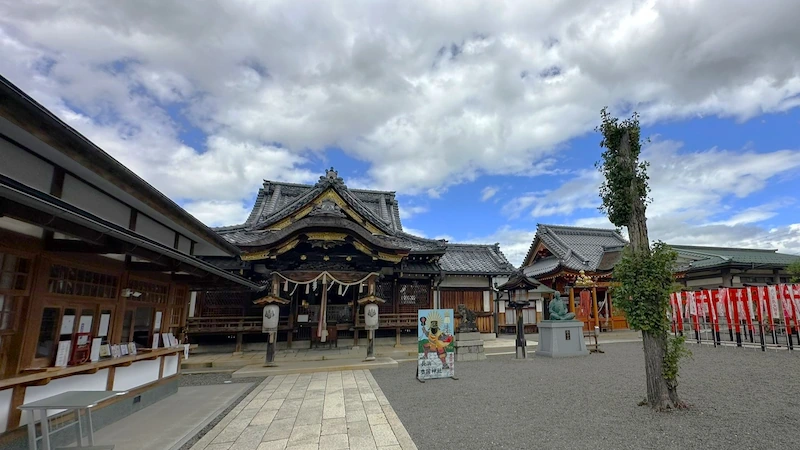
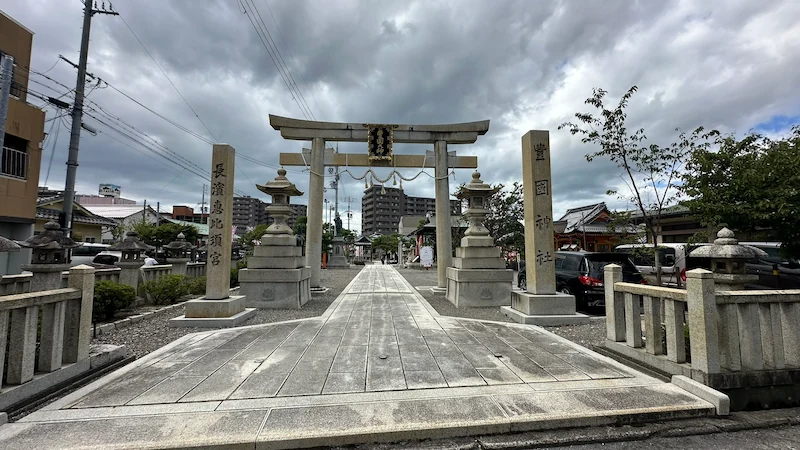
Step into Nagahama and you immediately understand why people call it “Taikō-san’s town.” In the spring of Tenshō 2 (1574), Hashiba Hideyoshi began building Nagahama Castle and shaping the streets below it, then governed with a reputation for good administration for roughly a decade. The bond with townspeople ran deep—so deep that tax exemptions granted by his red-seal letters remained a meaningful privilege all the way into the late Edo period. That collective memory became the force that led residents, after Hideyoshi’s death, to establish a shrine “modeled after the Toyokuni Mausoleum in Kyoto.” Under the Tokugawa, however, worshiping Hideyoshi as a deity was not permitted, and the shrine was once torn down. Still, the townspeople protected the deity’s image within the homes of the local “Ten-ninshū,” and in Kansei 5 (1793) they built an “Ebisu shrine” at the front while continuing to enshrine Hideyoshi quietly in the inner sanctuary. For four centuries, the longing Nagahama held close has never truly gone away—and you can feel it in the calm of the precincts today. Offer a prayer here, and your thoughts naturally drift to Toyotomi Hidenaga as well: the steady presence who supported governance behind Hideyoshi’s bold ascent. Only with that duet did the path toward “unifying the realm,” first sprouting in Nagahama, become something tangible. Architecturally, the site is richly layered: the main sanctuary features a kara-hafu gable with a cypress-bark roof, the worship hall carries a chidori-hafu gable with tiled roofing, and the inner sanctuary is in shinmei-zukuri style with chigi and katsuogi, clad in copper roofing (a mid-Edo structure). Look, too, for the seasonal birds-and-flowers painted on the coffered ceiling of the Inari sub-shrine, and for the gourd-shaped pond—small design choices that keep “Taikō-san” close at hand.
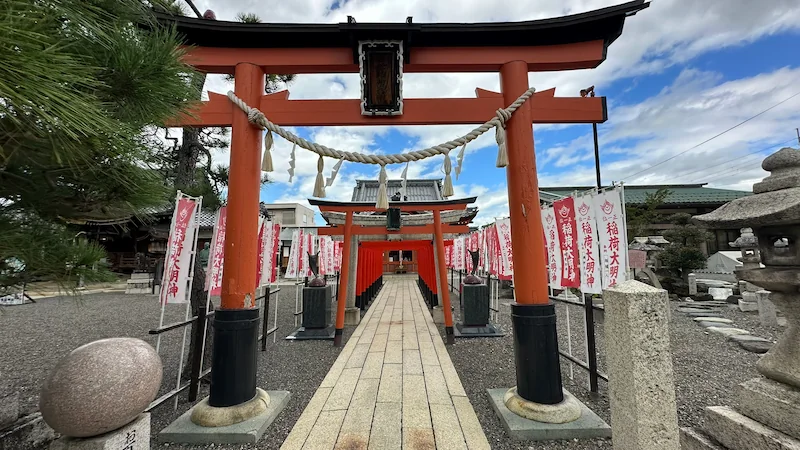
| Founded | Keichō 5 (1600) |
|---|---|
| Founder | Townspeople of Nagahama |
| Structure / Highlights | Main shrine: kara-hafu gabled porch with cypress-bark roofing; worship hall: chidori-hafu gable with tiled roofing / inner sanctuary: shinmei-zukuri with chigi and katsuogi, copper-roofed (inner sanctuary: mid-Edo construction) |
| Restoration / Reconstruction | Dismantled under the Tokugawa → Kansei 5 (1793) “Ebisu Shrine” built while Hideyoshi was quietly enshrined in the inner sanctuary → Kōka 3 (1846) called “Toyojinja (Minori Shrine)” → Meiji 31 (1898) shrine buildings constructed for Hideyoshi’s 300th memorial → Taishō 9 (1920) permitted to use the name “Toyokuni Shrine” |
| What Remains | Shrine buildings remain (inner sanctuary: mid-Edo; worship hall includes modern-era styles) |
| Loss / Dismantling | Once dismantled under the Tokugawa, when deifying Hideyoshi was not permitted |
| Cultural Property Status | No listing as a designated cultural property could be confirmed (the “Toyokuni Shrine” entry does not appear to be found in Nagahama City’s published list of designated cultural properties as of August 6, Reiwa 7) |
| Notes | The Tōka Ebisu festival is said to trace back to the 1793 establishment of the Ebisu shrine / Enshrined deities: Toyotomi Hideyoshi; Katō Kiyomasa; Yaekotoshironushi-no-Mikoto (Ebisu Shrine); Kimura Nagato-no-Kami Shigenari |
🗺 Address:6-37 Minami-Gofuku-chō, Nagahama City, Shiga Prefecture
🚶 Access
Nearest station: 3 minutes on foot from JR Hokuriku Main Line “Nagahama Station” (approx. 240m)
⏳ Suggested Time
Quick highlights: about 20 minutes
For an unhurried visit: about 1 hour
📍 Highlights
- Main shrine architectural details: From the cypress-bark kara-hafu porch to the chidori-hafu worship hall and the shinmei-zukuri inner sanctuary with chigi and katsuogi, you get a full sampler of styles in one compact visit.
- The Inari sub-shrine’s coffered ceiling and the stone-paved corridor: The seasonal birds-and-flowers painted overhead are brilliantly decorative the longer you look. The stone corridor supports the practice of o-hyakudo mairi (a repeated-circuit prayer), making the act of walking part of worship itself.
- Seasonal pleasures: In January, the “Tōka Ebisu” festival; in October, the “Toyokō Festival” with its samurai parade—events that transform the usually quiet grounds into a swirl of energy and “success luck.”
📌 Trivia
- An unexpected historical detail: During the Edo period, when worshiping Hideyoshi was prohibited, townspeople placed an “Ebisu shrine” at the front and continued to enshrine Hideyoshi quietly in the inner sanctuary.
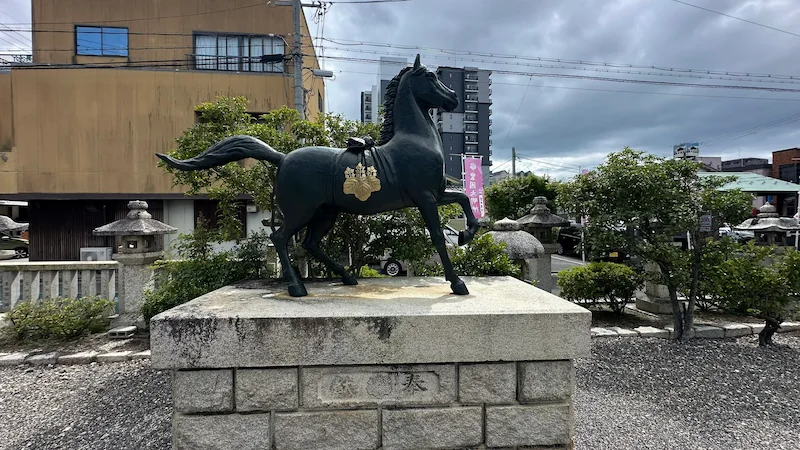
- For those in the know: The “Tiger Stone” (Reiseki Toraishi) near the gourd-shaped pond is said to have been moved during relocations after Nagahama Castle was abolished (1615). Legend claims it cried out at night until it was returned to Hōkoku Shrine—after which it fell silent.
- Notable connections: Katō Kiyomasa is enshrined here as one of Taikō-san’s famed retainers, and a bronze statue of Kiyomasa stands on the grounds—adding dimension to the Toyotomi legacy beyond Hideyoshi alone.
Chikubushima Island (Hōgon-ji Temple & Tsukubusuma Shrine)
⭐ Recommended Level
Historical Value:☆☆☆
Visual Appeal:☆☆☆
Hands-on Experience:☆☆☆
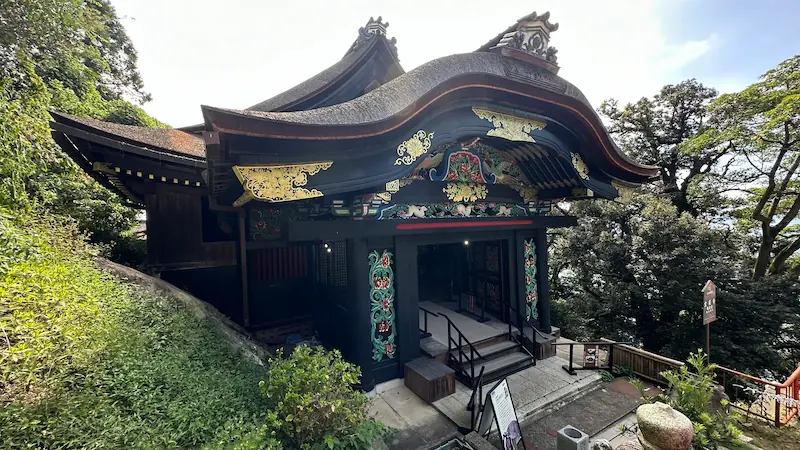
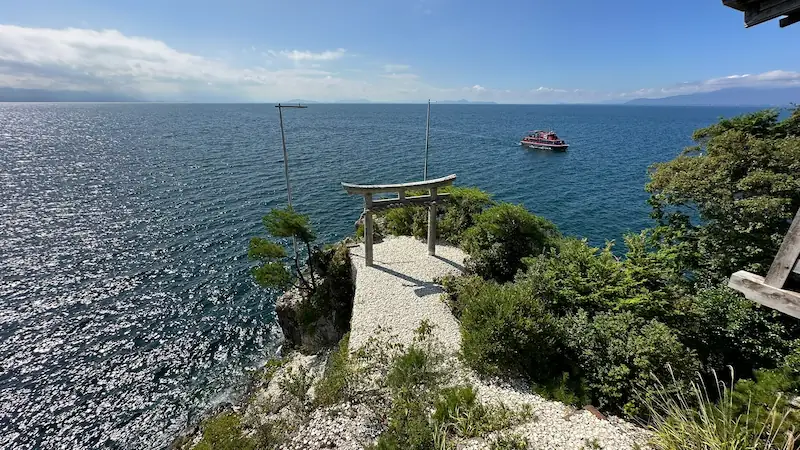
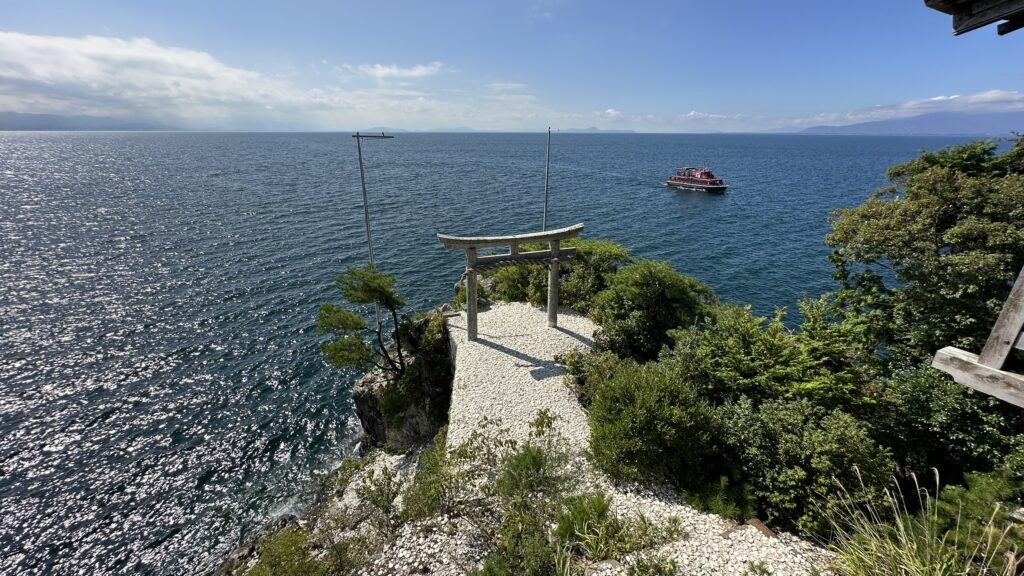
six kilometers or so out from Nagahama’s lakeside, Chikubushima appears as a small green presence floating in the blue of Lake Biwa—and the act of crossing to it is the beginning of the pilgrimage. Tradition holds that in Jingū 1 (724), the monk Gyōki founded Hōgon-ji under an imperial command from Emperor Shōmu. On the same island, devotion to Benzaiten and Kannon lives alongside the shrine approach to Tsukubusuma Shrine, and the atmosphere of shinbutsu-shūgō (Shinto-Buddhist fusion) still clings to the stone steps of the approach with remarkable intensity.
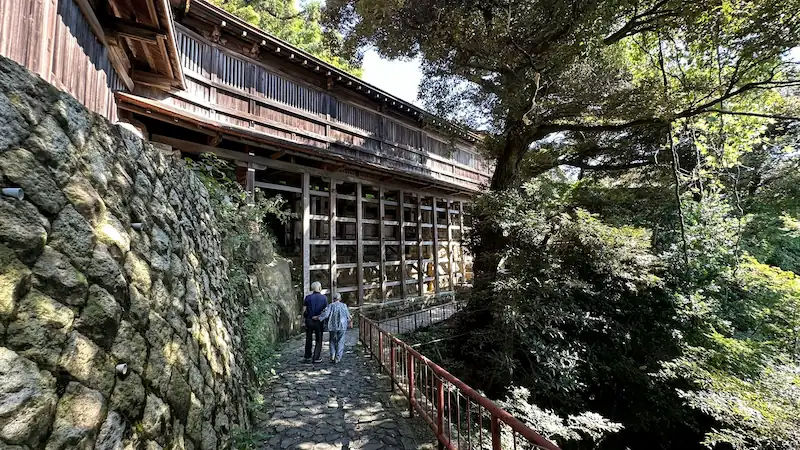
What binds this island so tightly to Nagahama—and to “Toyotomi”—is that the architecture itself functions as a time capsule. Hōgon-ji’s National Treasure Karamon Gate is said to have been relocated in Keichō 8 (1603) by Toyotomi Hideyori, with Katagiri Katsumoto serving as chief of works, alongside construction tied to the Kannon Hall. Its black lacquer, gilded metal fittings, and polychrome carvings distill Momoyama aesthetics into a single, astonishing threshold. Step further back into the lineage of tradition and the story becomes even more evocative: the gate is also said to have come from the “Gokuraku Gate” of the Toyokuni Mausoleum in Kyoto’s Higashiyama—an element that, in turn, was believed to have reused the kara-hafu portion (the “face” of an entrance) from the lavish corridor bridge known as Gokuraku Bridge, which once connected the North Bailey and the Second Bailey at Osaka Castle. In recent years, studies of folding screens depicting Toyotomi-period Osaka Castle have also pointed out similarities between the design at the front of Gokuraku Bridge and the appearance of Hōgon-ji’s Karamon, lending the tradition a texture that feels more than mere romance. Tsukubusuma Shrine’s National Treasure Main Hall likewise traces its core to a building Hideyori donated and relocated in Keichō 7 (1602), interwoven with portions rebuilt in the Sengoku era—a complex origin story that only deepens its allure. Even after Hideyoshi’s death, the Toyotomi family continued to regard Chikubushima as a vital guardian presence, and that priority is carved directly into the dignity of the precincts.
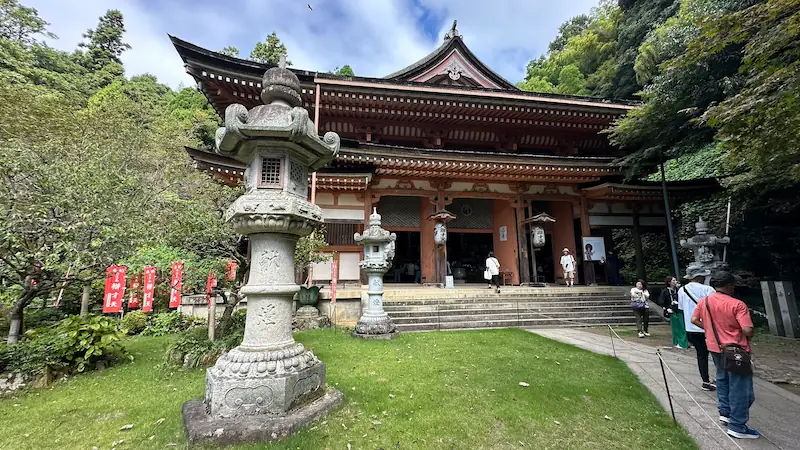
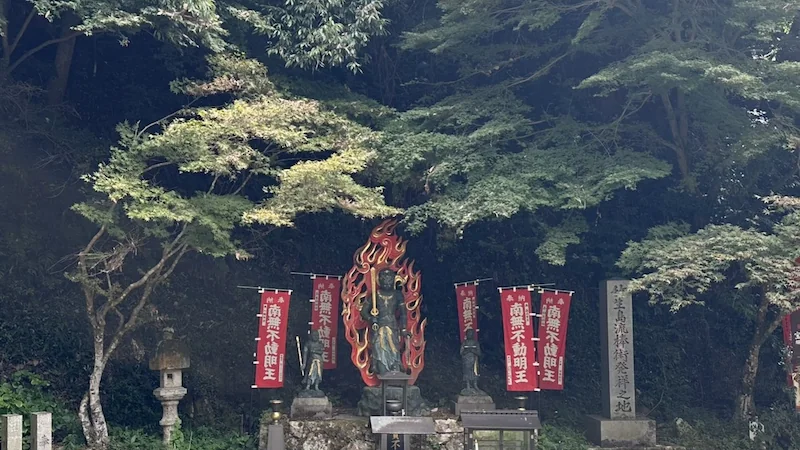
For Hideyoshi, Nagahama was the first place where he put down roots as a true domain lord. Historical records suggest that even Chikubushima was pulled into the realities of governance—for instance, timber stored on the island was transported for preparations tied to building Nagahama Castle. As for Toyotomi Hidenaga—so crucial to managing the domain during the Nagahama period—contemporary documentation directly linking him to Chikubushima is said to be scarce. And that scarcity is precisely what makes the island linger in the imagination: Hideyoshi’s “prayers and donations” remain clearly visible, while Hidenaga hovers as the indispensable, largely unseen administrator who kept the region turning behind the scenes. The moment you step off the boat, that quiet afterimage begins to rise.
| Founded | Jingū 1 (724): Hōgon-ji founded / Keichō 7–8 (1602–1603): major structures established through Hideyori’s relocations and donations |
|---|---|
| Founder | Gyōki (by imperial order of Emperor Shōmu) / (Momoyama-era development) Toyotomi Hideyori (tradition attributes the intention to Hideyoshi) |
| Structure / Highlights | A sacred island (approx. 2 km circumference) with both temple and shrine precincts. Dense concentration of Momoyama architecture, including National Treasures (Hōgon-ji Karamon Gate; Tsukubusuma Shrine Main Hall) |
| Restoration / Reconstruction | In 2000, the three-story pagoda was reconstructed for the first time in roughly 350 years |
| What Remains | Main temple and shrine buildings remain (open to worship and visits) |
| Loss / Damage | Tsukubusuma Shrine Main Hall was destroyed by fire in 1558; the present structure includes portions rebuilt during the Sengoku period |
| Cultural Property Status | National Treasures: Hōgon-ji Karamon Gate / Tsukubusuma Shrine Main Hall; Important Cultural Property: the Covered Boat Corridor; National Scenic Site & Historic Site: Chikubushima (also registered as Japan Heritage) |
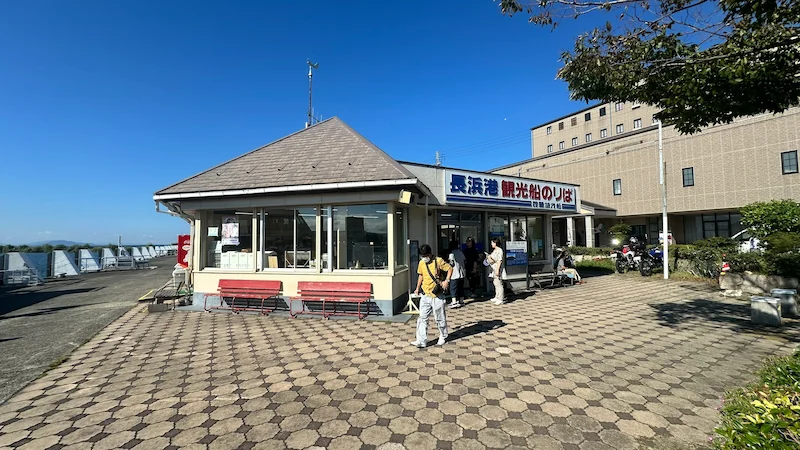
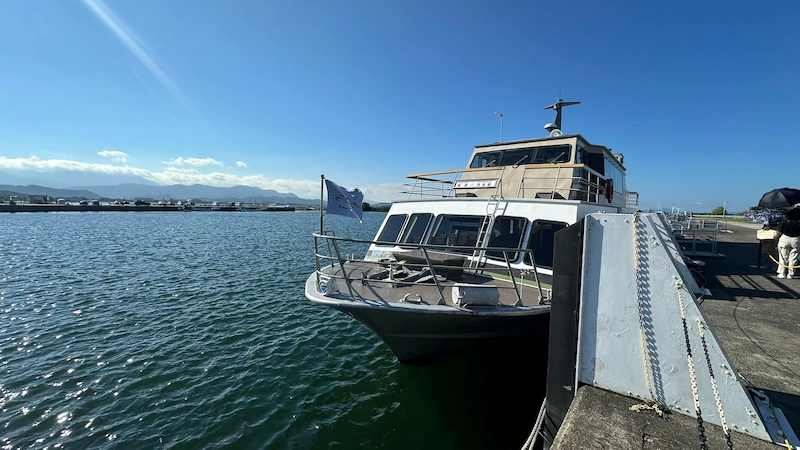
| Notes | About 30 minutes by cruise from Nagahama Port. “Crossing to worship” is the heart of the experience. |
🗺 Address:1664-1 Hayasaki-chō, Nagahama City, Shiga Prefecture (Chikubushima)
🚶 Access
Nearest station: 9 minutes on foot from JR Hokuriku Main Line “Nagahama Station” (approx. 700m), then about 35 minutes by ferry
⏳ Suggested Time
Quick highlights: about 150 minutes
For an unhurried visit: about 4 hours
📍 Highlights
- Hōgon-ji “Karamon Gate” (National Treasure): Black lacquer, gilded fittings, and vividly carved ornamentation—Momoyama’s “authority on display” compressed into a single bay of architecture.
- Tsukubusuma Shrine “Main Hall” (National Treasure) and kawarake-nage: With the afterglow of Momoyama splendor behind you, toss a small unglazed clay dish out toward the lake—an act that lets prayer dissolve into landscape.
- Seasonal pleasures: The Chikubushima Festival (June 10–15) is when the entire island is at its most vibrant.
📌 Trivia
- An unexpected historical detail: During preparations for building Nagahama Castle, records suggest timber stored on Chikubushima was transported—linking this sacred island to the very practical work of castle construction.
- For those in the know: The covered “Boat Corridor” connecting Hōgon-ji and the shrine is an Important Cultural Property. Tradition says its name comes from lumber used from Hideyoshi’s ceremonial vessel, the “Nippon-maru.”
- Notable connections: The island’s Toyotomi ties are most powerfully symbolized by the Karamon Gate (National Treasure) and the Main Hall (National Treasure). After Hideyoshi’s death, Hideyori’s relocations and donations shaped the dense cluster of Momoyama architecture you see today.


comment