

This page is the full profile of Toyotomi Hidenaga. It focuses on who he was, how he supported Hideyoshi, and why his quiet administrative power mattered so much to the Toyotomi regime.
On this page, you’ll learn:
- how Hidenaga became Hideyoshi’s most trusted partner;
- why he was more than just “Hideyoshi’s younger brother”;
- how he supported the Chugoku, Shikoku, and Kyushu campaigns;
- why Yamato Koriyama Castle became central to his rule;
- why his early death weakened the Toyotomi regime.
For castle chronology, visitor guides, and on-location reports, return to the main Toyotomi Hidenaga guide.
Quick answer: Toyotomi Hidenaga (1540–1591) was Toyotomi Hideyoshi’s younger brother and one of the most important stabilizing figures of the Toyotomi regime. While Hideyoshi stood at the front as Japan’s unifier, Hidenaga worked behind the scenes as a commander, negotiator, administrator, and trusted family ally.
He helped support Hideyoshi’s rise through the Chugoku, Shikoku, and Kyushu campaigns, governed major territories from Yamato Koriyama Castle, and became known as the “Yamato Dainagon.” His death in 1591 left a gap the Toyotomi clan never fully replaced — which is why later historians often ask whether the Toyotomi family might have survived if Hidenaga had lived longer.
- Early Life and the Making of Hideyoshi’s Shadow Partner
- The Chugoku Campaign, Yamazaki, and Shizugatake — The Strategist Behind the Scenes
- The Shikoku and Kyushu Campaigns — and the Rise to “Three Provinces, One Million Koku”
- Koriyama Castle and the Art of Governing — The Man Who Kept the Toyotomi Regime Running
- Illness and a Death That Came Too Soon — “Had Hidenaga Only Lived Longer…”
- Hidenaga’s Legacy
- Toyotomi Hidenaga and the 2026 Taiga Drama Toyotomi Brothers!
Early Life and the Making of Hideyoshi’s Shadow Partner
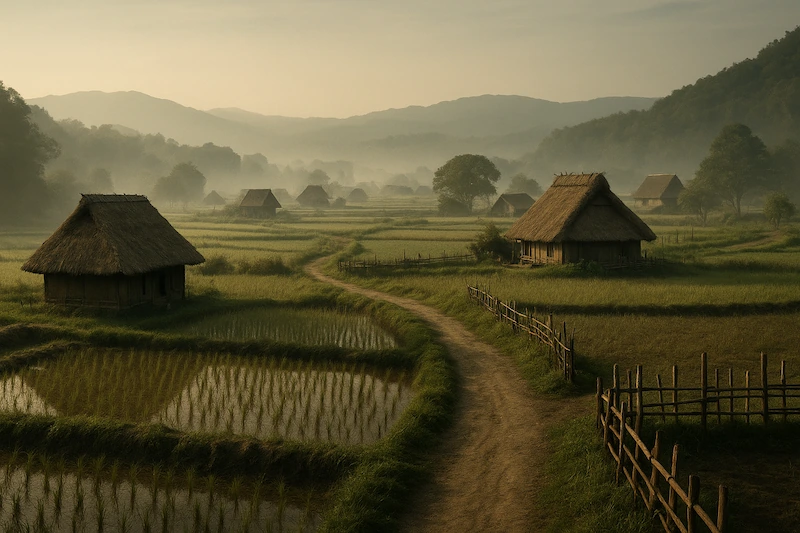
Hidenaga was born in 1540 in Nakamura, Owari Province — the same village as his brother — and went by the childhood names Koichiro or Kotake. When Hideyoshi entered service under the Oda clan and took the name Kinoshita Tōkichirō, Hidenaga eventually followed him into that world, choosing the path of a warrior over the fields where they had both grown up.
From early on, Hidenaga was described as perceptive, steady, and clear-headed — qualities that made him an essential counterweight to his brother’s volatile temperament. Where Hideyoshi charged forward on instinct, Hidenaga read the situation calmly and spoke plainly. When Hideyoshi became lord of Nagahama Castle, Hidenaga took on the role of castle administrator and domain manager, demonstrating a consistent talent for the practical work of governance.
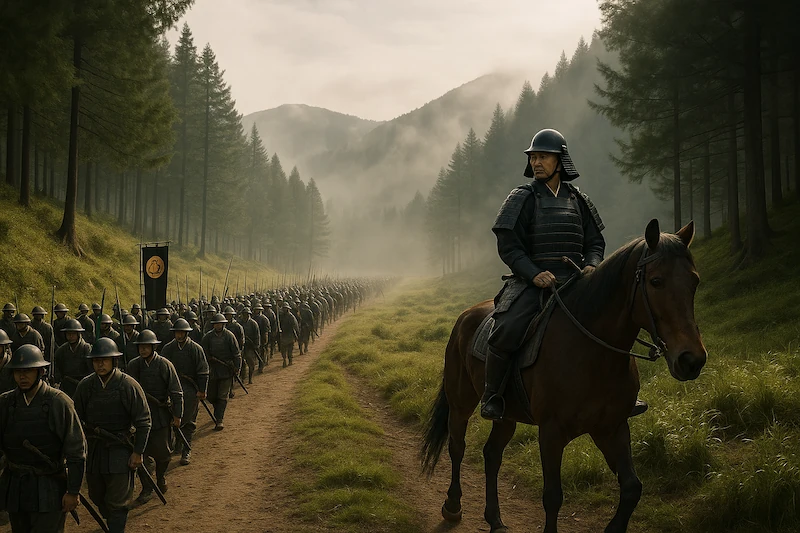
On the battlefield, he commanded forces in his own right — leading campaigns against the Nagashima Ikkō-ikki (1574), and taking charge of the first and second Tajima offensives (1577 and 1580), securing mountain strongholds including Izushi Castle and Takeda Castle in the San’in region. These campaigns supported the flank of Hideyoshi’s broader advance into the Chugoku region, and their success laid the groundwork for everything that followed — including Hidenaga’s eventual rise to lordship over more than a million koku.
The Chugoku Campaign, Yamazaki, and Shizugatake — The Strategist Behind the Scenes
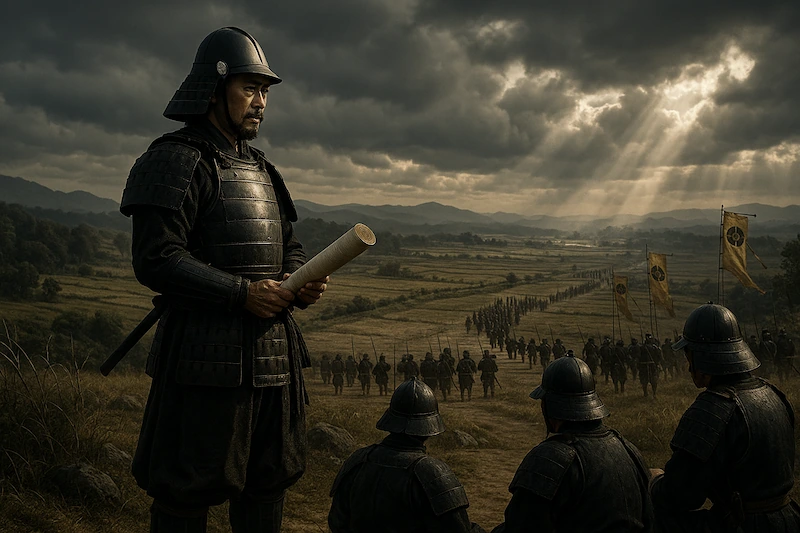
In the late 1570s, Oda Nobunaga ordered Hideyoshi to press westward against the Mōri clan — the campaign known as the Chugoku offensive. Hidenaga was assigned to pacify the Tajima and San’in regions, operating on the flank of his brother’s main force. During the extended siege operations at Miki Castle and Tottori Castle, he was responsible for maintaining supply lines and managing negotiations with the surrounding powers — the unglamorous but essential work of keeping a campaign functional.
In 1582, Oda Nobunaga was killed in the Honnō-ji Incident — ambushed and forced to his death by his own general, Akechi Mitsuhide, in a coup that shocked the country. Hideyoshi immediately turned his army around in what became known as the “Great Return from Chugoku,” racing back to Kyoto to defeat Akechi at the Battle of Yamazaki. Throughout this rapid reversal, Hidenaga managed troop coordination and rear-line support. He played a similar role at the Battle of Shizugatake (1583), where Hideyoshi’s forces clashed with those of Shibata Katsuie, another powerful general competing for dominance in the post-Nobunaga power vacuum.
During the conflict with Tokugawa Ieyasu and Oda Nobukatsu at Komaki and Nagakute (1584), as tensions escalated into direct confrontation, it was Hidenaga who reportedly urged Hideyoshi to seek a negotiated peace with Nobukatsu rather than press the fight. Securing the regime’s position through diplomacy and alliance-building rather than brute force — stepping back to see the whole board — was a recurring characteristic of Hidenaga’s approach.
The Shikoku and Kyushu Campaigns — and the Rise to “Three Provinces, One Million Koku”
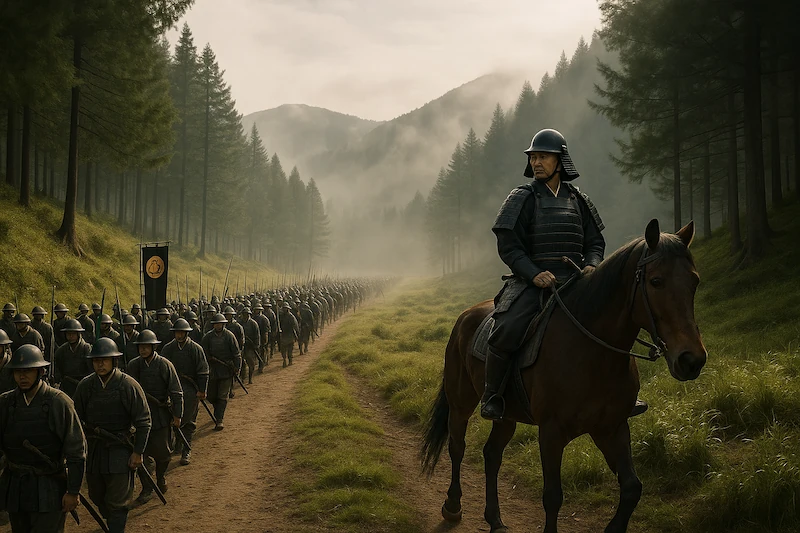
In 1585, Hidenaga was named commander-in-chief of the Shikoku Campaign — a force of over one hundred thousand troops deployed against Chosokabe Motochika, whose power base was Tosa Province on the island of Shikoku. Rather than driving toward a bloody conclusion, Hidenaga managed the campaign to bring about surrender terms while minimizing unnecessary bloodshed, ultimately receiving Chosokabe’s submission. For this, he was rewarded with the provinces of Kii and Izumi; later that same year, the addition of Yamato brought his total holdings to over one million koku across three provinces — making him one of the most powerful daimyo in the country. (A koku was the standard unit of domain productivity in this period, roughly equivalent to the amount of rice needed to sustain one person for a year; one million koku represented a domain of extraordinary scale.)
In the Kyushu Campaign of 1587, Hidenaga served as deputy commander, directing operations against the Shimazu clan along the Buzen, Bungo, and Hyuga fronts. After the campaign, he was involved in the redistribution of territories among the Kyushu daimyo — a task that required as much political skill as military authority.
Around this time, the imperial court conferred on him the rank of Junior Second Rank and the court title of Provisional Grand Counselor (Gonno-Dainagon), earning him the name by which he is still known: the “Yamato Dainagon.” In practice, Hideyoshi stood visibly at the front as the ruler of a unified Japan, while the operational work of holding that structure together fell largely to Hidenaga.
Koriyama Castle and the Art of Governing — The Man Who Kept the Toyotomi Regime Running
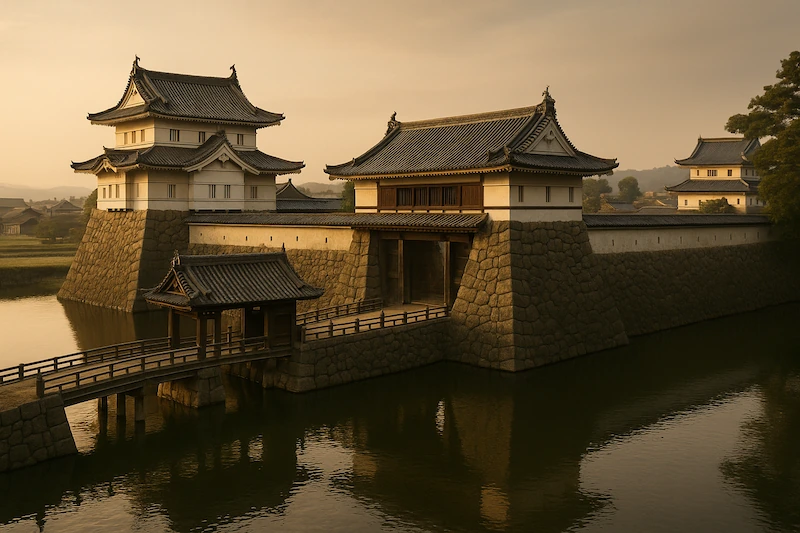
Yamato Koriyama Castle — in present-day Yamato Koriyama City, Nara Prefecture — had originally been built by Tsutsui Junkei. When Hidenaga took possession in 1585, he undertook a comprehensive rebuilding on a scale fitting a lord of over a million koku, repurposing stonework from nearby temples, Buddhist statues, and grave markers to construct triple moats and a fortified castle town of considerable size.
But what defined Hidenaga as a ruler was less the scale of his construction than the quality of his governance. Yamato, Kii, and Izumi were provinces with deep-rooted networks of religious institutions and local lords — territories that didn’t yield easily to outside authority. Hidenaga held those tensions in balance, applying firmness and negotiation in the right proportions, gradually establishing the Toyotomi regime’s order without triggering the backlash that heavier-handed administrators might have provoked.
The historical record consistently portrays him as the man who mediated disputes between rival daimyo and, when necessary, served as a brake on Hideyoshi’s more impulsive decisions. He fought at the front when campaigns required it and stepped back into an organizing role when governance demanded it. The ability to function effectively in both modes — as field commander and as institutional administrator — made him irreplaceable in a way that no single replacement could replicate.
Illness and a Death That Came Too Soon — “Had Hidenaga Only Lived Longer…”
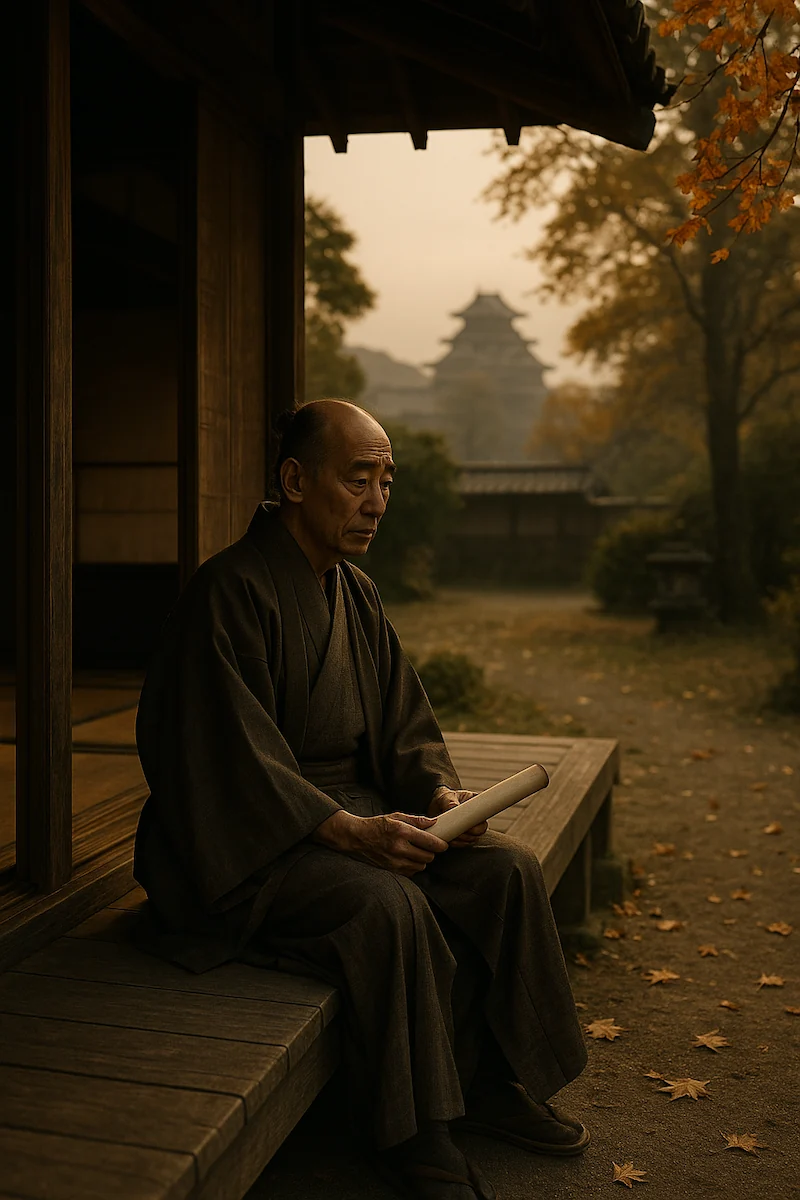
In the latter half of the 1580s, Hidenaga’s health began to fail. Records show repeated visits to Arima Onsen — a hot spring resort in present-day Hyogo Prefecture, historically used for therapeutic purposes — as he tried to manage what appears to have been a chronic illness. The Toyotomi regime was reaching its peak under Hideyoshi; the man most responsible for keeping it functional was quietly declining.
Hidenaga died at Yamato Koriyama in 1591 at the age of fifty. The loss to the Toyotomi clan went far beyond the death of one powerful daimyo. After his death, the internal balance of the regime began to fracture. The forced death of his nephew Hidetsugu, the protracted military entanglement of the Korean invasions, the unchecked decisions that accelerated the clan’s eventual collapse — these were the kinds of outcomes that Hidenaga, when present, had consistently prevented or contained.
It is this trajectory that gave rise to the historical assessment: “Had Hidenaga lived, the Toyotomi clan might have survived.” Whether that is ultimately true, no one can say. But the consensus among historians — that Hidenaga served as the regime’s essential stabilizing force — is difficult to dispute.
Hidenaga’s Legacy
Toyotomi Hidenaga left behind few of the dramatic episodes that make for compelling history writing — no shocking betrayals, no sudden reversals of fortune, none of the colorful excess that surrounds his brother’s story. That relative quietness has kept him in Hideyoshi’s shadow for centuries. But the reassessment of his historical significance has been gaining ground, and the picture that emerges is of a figure who was, in many respects, the more essential of the two.
The Sengoku period — Japan’s century of civil war — was an era in which brothers killed brothers without hesitation when interests diverged. Against that backdrop, Hidenaga’s lifelong loyalty to Hideyoshi stands out as something genuinely unusual. He supported him, advised him, and when necessary, pushed back against him — and he did all of this until the end, never wavering. The lesson his life offers is an old one but a durable one: behind every person who stands at the front, there is someone else making it possible. Hidenaga was that person.
The ruins of Yamato Koriyama Castle, his burial mound known as the Dainagon-zuka, and the temples and shrines connected to his life are all still there to be visited. They are not flashy destinations. But if you go knowing who Hidenaga was and what he built, you’ll find that the places look different — and that the history they carry feels closer than it did before.
Toyotomi Hidenaga and the 2026 Taiga Drama Toyotomi Brothers!
The 2026 NHK Taiga Drama series Toyotomi Brothers! places Toyotomi Hidenaga at the center of the story. Two brothers born into a peasant household, clashing and complementing each other across decades, until they have changed the shape of Japan — that is the arc the drama traces across a full year of episodes. (NHK’s Taiga Drama is Japan’s annual prestige historical drama series, a cultural institution comparable in standing to major period productions on the BBC or HBO.)
This site is built for anyone who came to Hidenaga through the drama and wants to go further. Alongside a historical account of his life and character, you’ll find guides to the places where he actually lived and worked — Yamato Koriyama Castle, Koriyama Hachimangu Shrine, the temples associated with his memory, and more. Walking those sites with the drama’s scenes in mind, or the history in mind, brings both into sharper focus. The story of the Toyotomi brothers becomes something you can stand inside, not just read about.