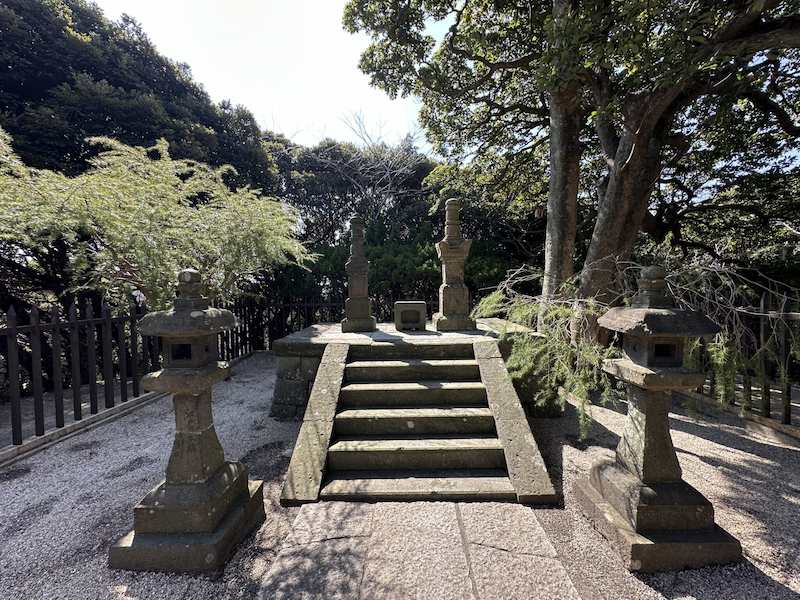
If you’ve just finished watching SHŌGUN and found yourself wondering—“Was Anjin a real person? Can I actually visit his grave?”—the answer is yes. And it’s closer than you might think.
William Adams, the English navigator who inspired Blackthorne’s character in the Emmy Award-winning drama SHŌGUN, is buried in Yokosuka, just one hour from Tokyo. I walked his entire trail in a single half-day—his grave, the shrine founded by his descendants, and his family temple—all still standing after 400 years. This is my personal account, with photos taken on-site and everything you need to plan your own visit.
Known in Japan as Miura Anjin (三浦按針), Adams arrived in 1600 aboard the Dutch ship Liefde, earned the trust of Tokugawa Ieyasu, and became one of the most remarkable foreigners in Japanese history. The term Anjin, meaning “pilot” or “navigator,” was bestowed upon him in recognition of his expertise in shipbuilding and maritime navigation. Under Ieyasu’s patronage, he constructed Japan’s first Western-style sailing ship and served as a key diplomatic advisor to the Tokugawa shogunate—a role dramatized in SHŌGUN through the character of John Blackthorne.
Following the Battle of Sekigahara, Adams was granted a fief of 250 koku in present-day Hemmi (Hemi), Yokosuka. Despite his influence and achievements, he never returned to England. Japan became his final resting place—and Yokosuka is where his memory lives on.
- A Journey Through Yokosuka: Following Anjin’s Footsteps
- From Anjinzuka Station to the Grave of Anjin and His Wife
- The Grave of Miura Anjin and His Wife
- A Panoramic View of Tokyo Bay from the Hilltop
- Kashima Shrine—Founded by Anjin’s Descendants
- Jōdoji Temple—Anjin’s Family Temple
- A Leisurely Walk Back to Yokosuka Station
- The Journey’s End: Why Anjin’s Story Still Matters
- 📍 Planning Your Visit: Step-by-Step Walking Guide
A Journey Through Yokosuka: Following Anjin’s Footsteps
Yokosuka is home to several historical sites that preserve the legacy of Miura Anjin. This journey takes us through places where history comes alive—Edo-period highways, Anjin’s final resting place, and a shrine believed to have been founded by his descendants. Following the footsteps of the “blue-eyed samurai,” we step back 400 years into a time of transformation and diplomacy.
From Anjinzuka Station to the Grave of Anjin and His Wife
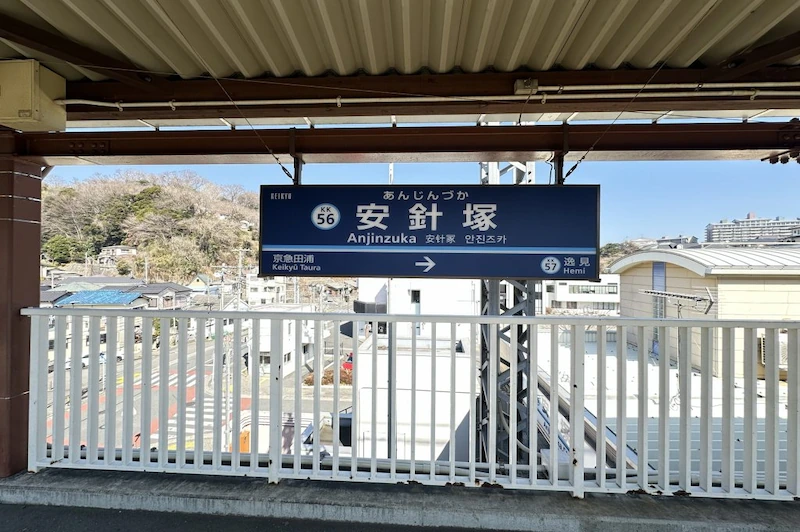
Stepping off the Keikyū Line at Anjinzuka Station (安針塚駅), I found myself in a quiet residential neighborhood. The station’s very name—Anjinzuka (“Anjin’s Mound”)—stands as a testament to the deep historical ties between this land and the man who once walked it.
After a short walk, I reached a steep slope leading up to the hill where the graves of Anjin and his wife rest. The incline was genuinely challenging—more of a workout than I expected—but this very path was once an important route connecting Edo to the Miura Peninsula.
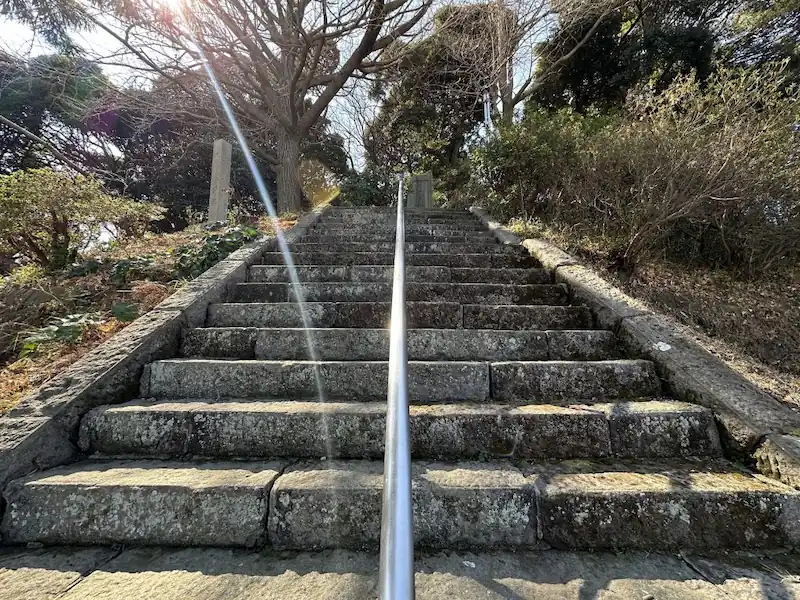
Passing through the residential area, I soon arrived at a park entrance, where an aged stone staircase, worn smooth by time, appeared before me.
The Grave of Miura Anjin and His Wife
At the top of the stone staircase stood the grave of Miura Anjin and his wife. The weathered tombstones, bearing the passage of over 400 years, quietly mark the place where he rests to this day.
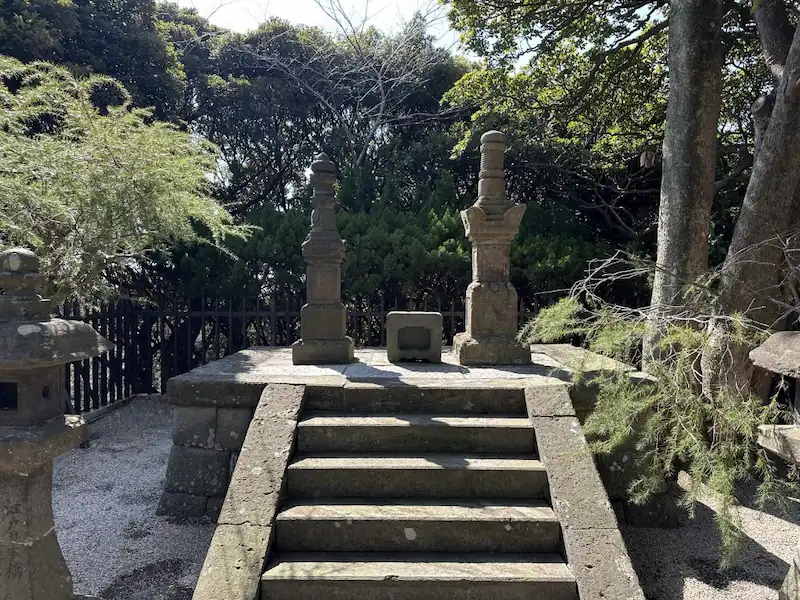
Standing before these stones, the weight of history felt immediate. In 1600, Miura Anjin arrived in Japan aboard the Liefde, a Dutch vessel that drifted ashore in Bungo (present-day Usuki, Oita Prefecture) after a treacherous voyage around Cape Horn. Tokugawa Ieyasu recognized his vast knowledge and appointed him as a diplomatic advisor. Beyond diplomacy, Anjin’s expertise in shipbuilding profoundly shaped the shogunate’s maritime policies—and the ships he helped construct once sailed the very waters visible from this hilltop.
A Panoramic View of Tokyo Bay from the Hilltop
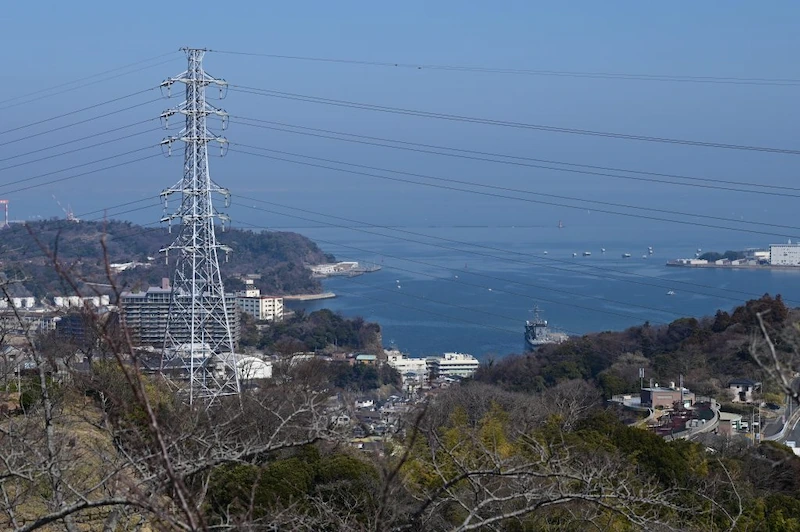
Near the grave, a scenic viewpoint offered a breathtaking vista. Below, the cityscape of Yokosuka stretched out, and beyond it, the shimmering waters of Tokyo Bay unfolded as far as the eye could see.
The sea breeze was refreshing, and as I gazed upon the view Anjin himself might have once known, I reflected on his extraordinary life. Perhaps, centuries ago, the very ships he built set sail from these waters, bound for Edo. It is one of those rare spots where history and landscape converge—worth lingering for a few quiet minutes.
Kashima Shrine—Founded by Anjin’s Descendants
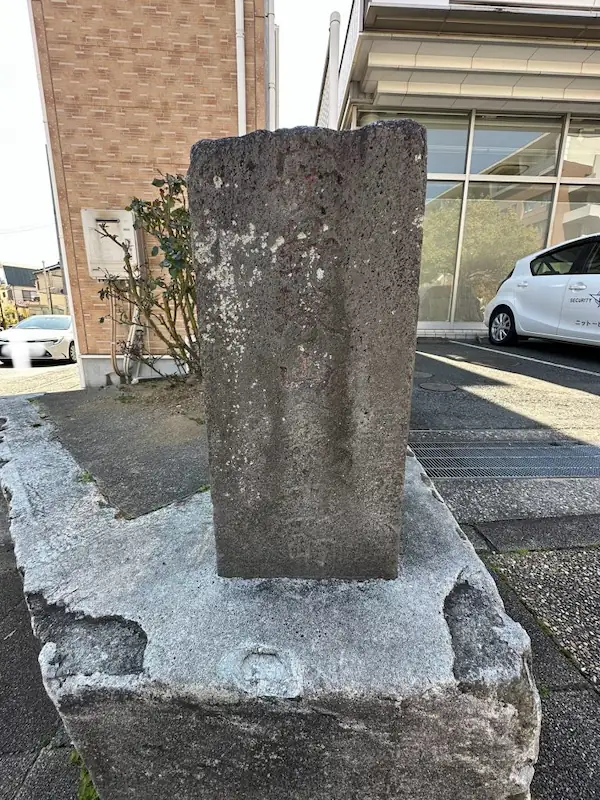
Following a gentle downhill path, I made my way toward the next destination. Along the route, an old stone marker stood as a silent testament to travelers who had once passed this way. This weathered signpost confirmed that the road had once been a key highway connecting Edo to Uraga—a reminder that Anjin lived at the crossroads of two civilizations.
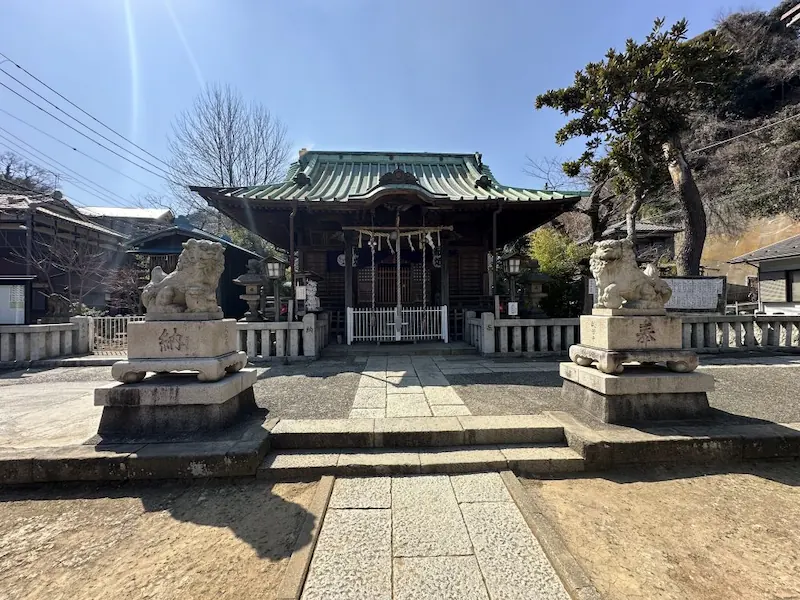
Before long, I arrived at Kashima Shrine (鹿島神社), dedicated to Takemikazuchi-no-Mikoto, a revered deity of thunder and a protector of the local community.
According to tradition, the shrine was founded by a descendant of Miura Anjin. After being granted land in Hemmi by Ieyasu, his lineage took root in this region, and one of his descendants is believed to have established the shrine. Standing there, I felt the deep passage of time—Anjin’s story was no longer just a historical record but a living heritage, still woven into the landscape of Yokosuka.
At Kashima Shrine, I received a goshuin (御朱印—a handwritten shrine seal) bearing Anjin’s name. For any history enthusiast visiting this trail, collecting the goshuin here and at Jōdoji Temple makes for a meaningful memento of the journey.
Jōdoji Temple—Anjin’s Family Temple
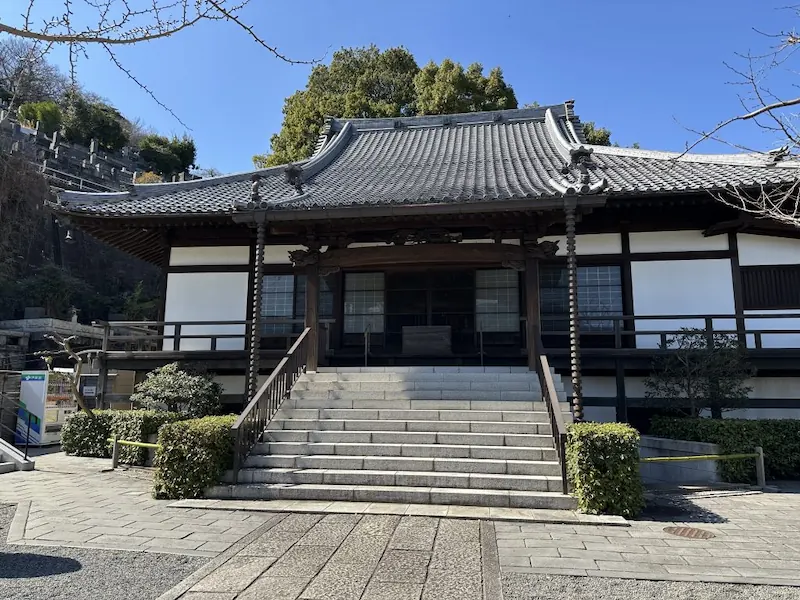
A short walk from the shrine led me to Jōdoji Temple (浄土寺), the family temple of Miura Anjin. The temple’s serene atmosphere carried the weight of centuries—its quiet grounds evoking a reverence that no museum exhibit could quite replicate. Receiving a goshuin here felt like a symbolic acknowledgment of Anjin’s enduring presence in this land.
In 1620, Miura Anjin passed away in Hirado (present-day Nagasaki Prefecture), far from Yokosuka. Yet he is said to have left a final wish:
“Bury me in a place where I can see Edo.”
To honor his request, a memorial tower was built in Hemmi, marking the land where he had made his greatest impact. Although the grave fell into neglect over the centuries, renewed interest emerged in 1872 when a British merchant residing in Yokohama brought attention to it in a newspaper article. Later, with contributions from both Japanese and British supporters, the Anjinzuka Monument was formally erected in 1918—ensuring that this Englishman who never returned home would not be forgotten.
A Leisurely Walk Back to Yokosuka Station
On the way back, I strolled toward Yokosuka Station, occasionally pausing to admire the old road markers that still stand quietly along the path. Amid the modern cityscape, these remnants of the Edo period linger on—a poignant reminder that the past continues to echo through time, if you know where to look.
The Journey’s End: Why Anjin’s Story Still Matters
Following Miura Anjin’s footsteps was more than a historical excursion—it was a glimpse into the life of a man who bridged two worlds. Though he never returned to England, Japan became his new homeland, and Yokosuka is where his name remains woven into the landscape: a station, a monument, a shrine, a temple—all bearing witness to one extraordinary life.
For history lovers, SHŌGUN fans, and those seeking a quiet, reflective walk within easy reach of Tokyo, Yokosuka’s Anjin Trail offers an unforgettable half-day—one that lingers long after the final step.
📍 Planning Your Visit: Step-by-Step Walking Guide
If this travel journal has inspired you to walk in Miura Anjin’s footsteps, our dedicated walking guide has everything you need to plan the trip—maps, exact timings, access from Tokyo, and practical tips for each site:
🔗 Explore Miura Anjin’s Legacy in Yokosuka – A Step-by-Step Walking Guide
Follow the exact route and immerse yourself in history.



comment