


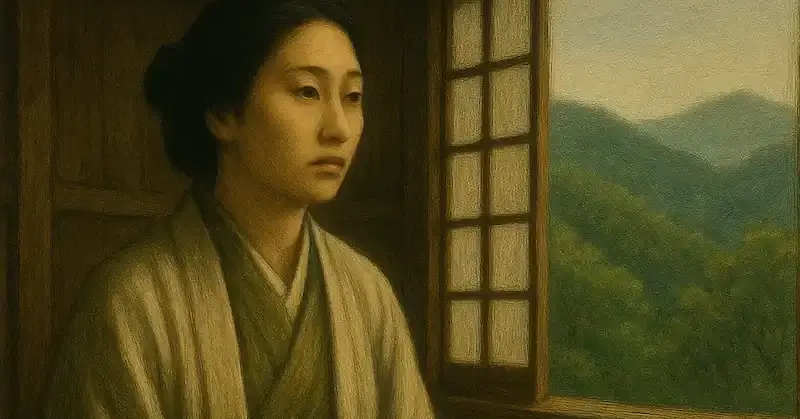
Who Was Hosokawa Gracia? The Real Woman Associated with Lady Mariko
Hosokawa Gracia—born Akechi Tama—was a Christian noblewoman whose life connected the Honnō-ji Incident, political confinement, and the hostage crisis before Sekigahara in 1600.
Hosokawa Gracia’s Life: From Akechi Tama to Christian Noblewoman
From Fiction to History – Lady Mariko and Hosokawa Gracia
Note on accuracy: SHŌGUN (and the novel it is based on) is historical fiction. Names, timelines, and relationships are dramatized for storytelling. This article separates well-supported historical points from interpretive or disputed details.
Gracia Hosokawa: A Life of Quiet Defiance
In the turbulent decades that marked the end of Japan's Sengoku period, few figures stood as still and luminous as Gracia Hosokawa. Born in 1563, she is recorded as Hosokawa Tama (also written as Akechi Tama/Tamako), later taking the baptismal name Gracia in 1587. She never commanded armies or drafted political strategy. Yet her decisions—made in isolation, under surveillance, and ultimately under threat of war—carved out one of the most compelling moral narratives of the era.
Her story is not about the pursuit of power, but the pursuit of an interior truth: the right to live, believe, and die on one's own terms in a time that rarely allowed women such choices.
A Childhood in the Akechi Household
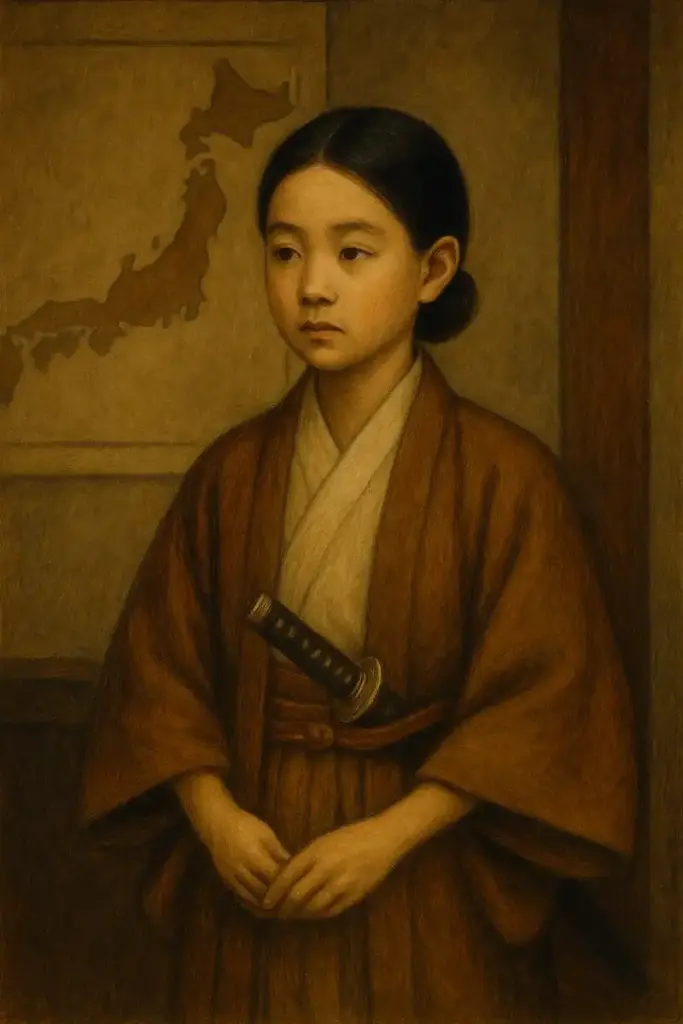
Hosokawa Tama (also written as Akechi Tama/Tamako) was born in 1563 as the daughter of Akechi Mitsuhide, a rising retainer of Oda Nobunaga. Raised in the strict and refined environment of a warrior household, she learned the etiquette, literacy, and composure expected of highborn daughters. But her childhood was shaped just as much by instability as privilege.
Japan in the late sixteenth century was a land where alliances shifted faster than seasons, and where a single betrayal could redraw the map overnight. Even as a girl, Tama would have sensed how fragile security could be.
A Political Marriage to Tadaoki Hosokawa
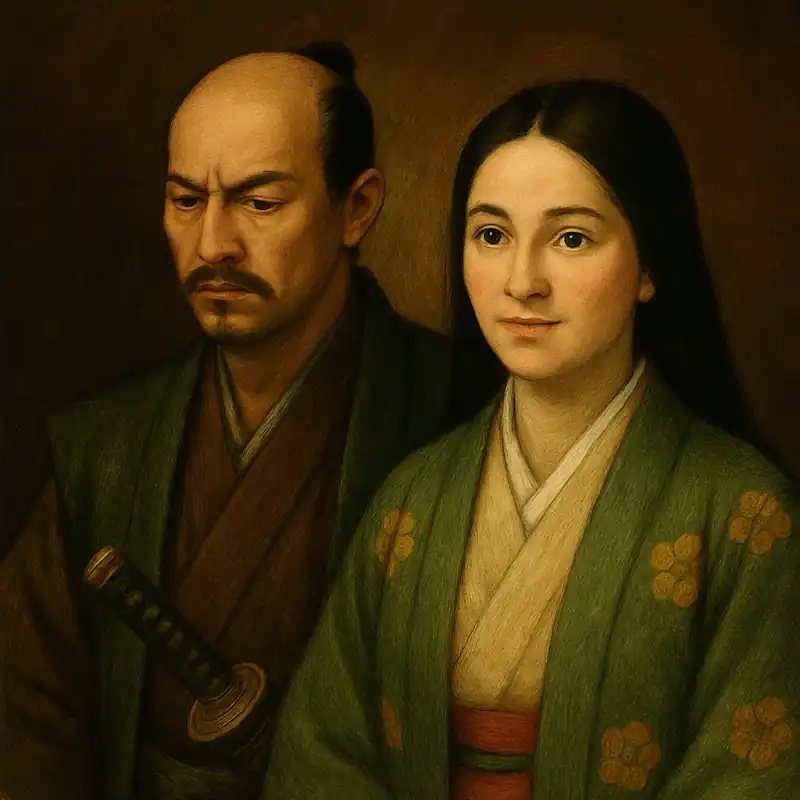
Around the age of sixteen, Tama married Tadaoki Hosokawa, a skilled and ambitious young warlord serving under Nobunaga. The union was purely political—a bridge between two powerful families—and Tadaoki's temperament did little to soften its edges.
Though capable and loyal as a retainer, he is often portrayed as stern, and many accounts emphasize that their union was shaped more by politics than affection. Still, Tama carried out her duties as a warrior's wife with dignity, raising several children and managing the household expected of her station.
For a brief moment, her path seemed set: a life defined by marriage, motherhood, and service to the Hosokawa clan.
That future shattered in one violent week.
The Incident That Upended a Nation — and Her Life
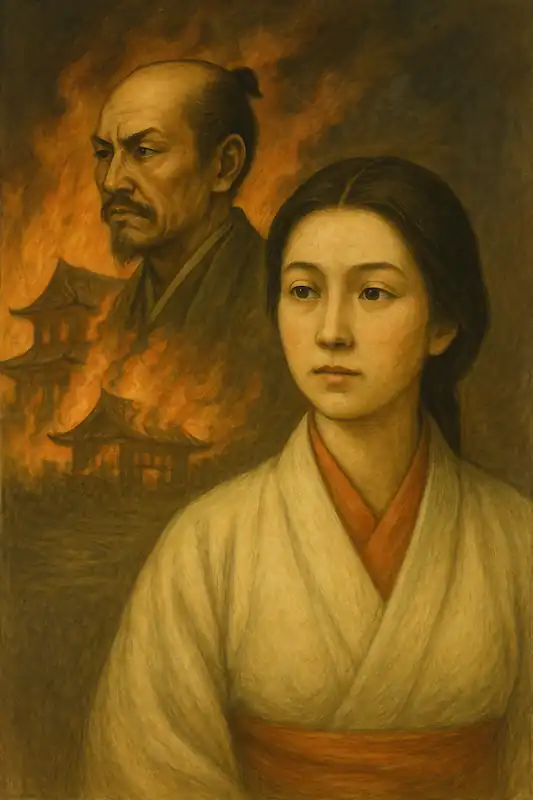
In 1582, Tama's father triggered an event that still reverberates through Japanese history. Akechi Mitsuhide launched a surprise attack on his lord, Oda Nobunaga, at Honnō-ji temple in Kyoto. Nobunaga perished, and Mitsuhide himself was killed days later by forces aligned against him.
For Tama, the consequences were immediate and devastating. Overnight, she became "the traitor's daughter."
In the aftermath of Honnō-ji, many accounts describe Tama being kept out of public view and moved under controlled living arrangements as the Hosokawa sought to distance themselves politically from Mitsuhide's rebellion. She was not simply "divorced" and cast away, yet the arrangements described in many retellings suggest a life that was politically constrained and carefully managed.
Her world contracted to the walls of a single compound.
Yet within that confinement, something unexpected began to grow.
Conversion and Rebirth — From Tama to Gracia
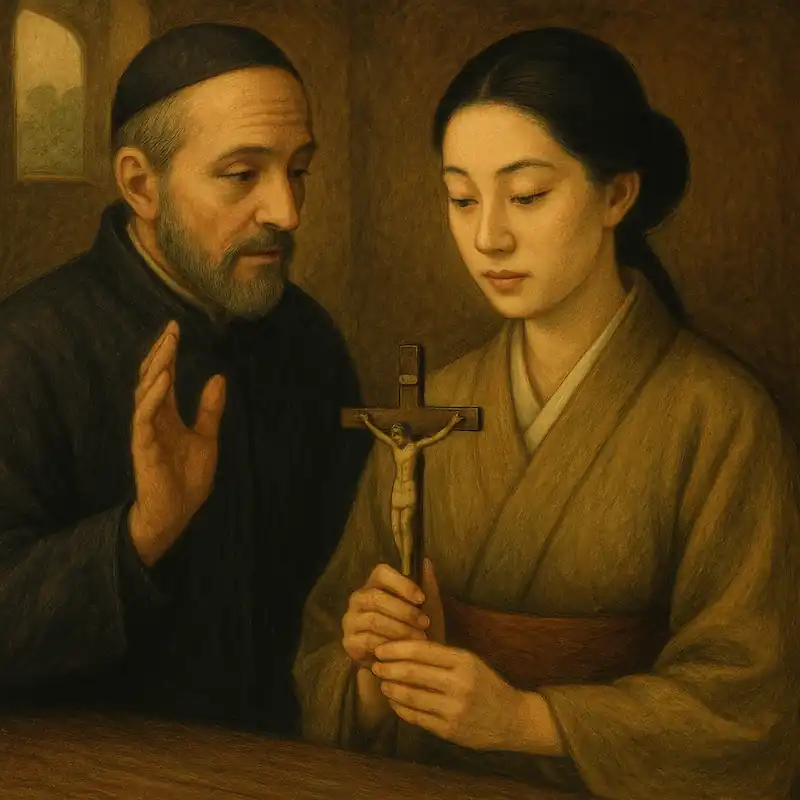
Cut off from public life and isolated from her children, Tama found herself drawn to ideas that offered a different kind of freedom. Through discreet encounters with Jesuit missionaries operating in Kyoto and Osaka, she learned about Christianity—a religion increasingly viewed with suspicion by Japan's rulers but still tolerated in scattered domains.
Its teachings of grace, forgiveness, and inner renewal resonated deeply with her.
At a moment when her identity had been defined by shame, the faith offered a way to reframe her life not as a political liability, but as a soul with inherent worth.
In 1587, Tama was baptized and received the Christian name "Gracia," a Latin word commonly rendered in English as "grace."
It marked a decisive shift: a life no longer governed solely by family, lineage, or obligation, but by conscience.
Tadaoki, wary yet pragmatic, allowed her to keep her faith under strict conditions. Still, with Toyotomi Hideyoshi's 1587 edicts expelling missionaries and restricting Christian activity, Gracia's beliefs could place her—and potentially the Hosokawa household—under greater scrutiny over time.
Life in Confinement — A Quiet but Unyielding Independence
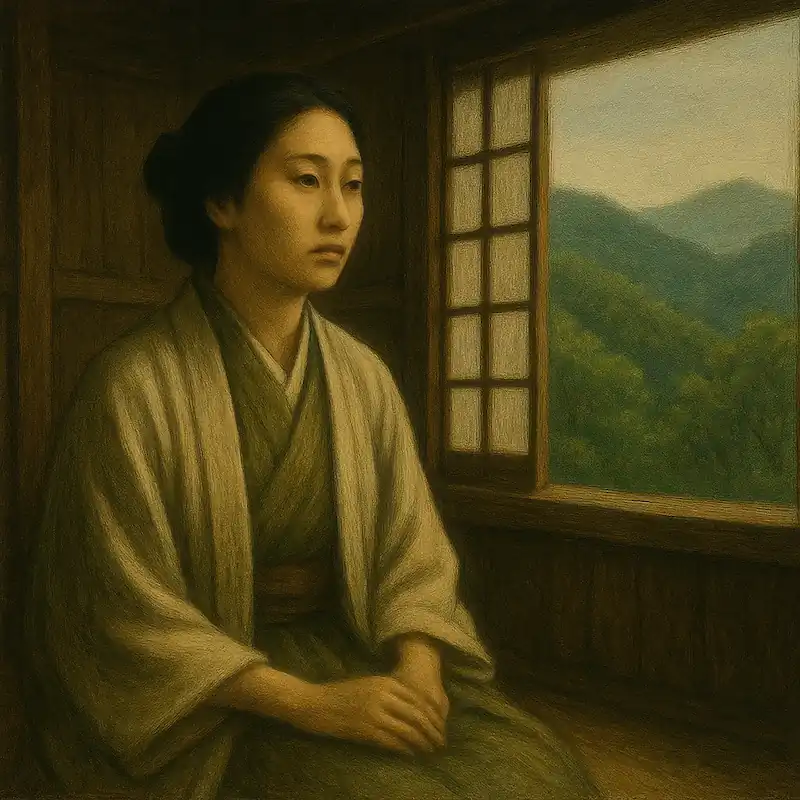
Despite restrictions, Gracia cultivated a rich inner world. Her residence became a place of quiet study, reflection, and private devotion. She exchanged letters with Jesuits and Japanese Christians, hosted clandestine conversations when possible, and won admiration for her intellect, poise, and hospitality.
Foreign missionaries described her as perceptive, articulate, and uncommonly composed.
For many noblewomen curious about Christianity, she became a symbol of spiritual integrity—a reminder that dignity could survive even when political agency had been stripped away.
This was resistance of a different kind: not rebellion, but the refusal to let adversity define her inner life.
The Road to Sekigahara and a Fatal Decision
The fragile balance of power collapsed again in 1598 with the death of Toyotomi Hideyoshi. By 1600, Japan stood on the brink of the decisive Battle of Sekigahara, with warlords dividing into Eastern and Western camps.
As Japan split into opposing camps ahead of Sekigahara in 1600, Ishida Mitsunari's side is often described as trying to pressure daimyō by seizing their families as hostages.
Because Tadaoki aligned himself with Tokugawa Ieyasu, Gracia became a prime target.
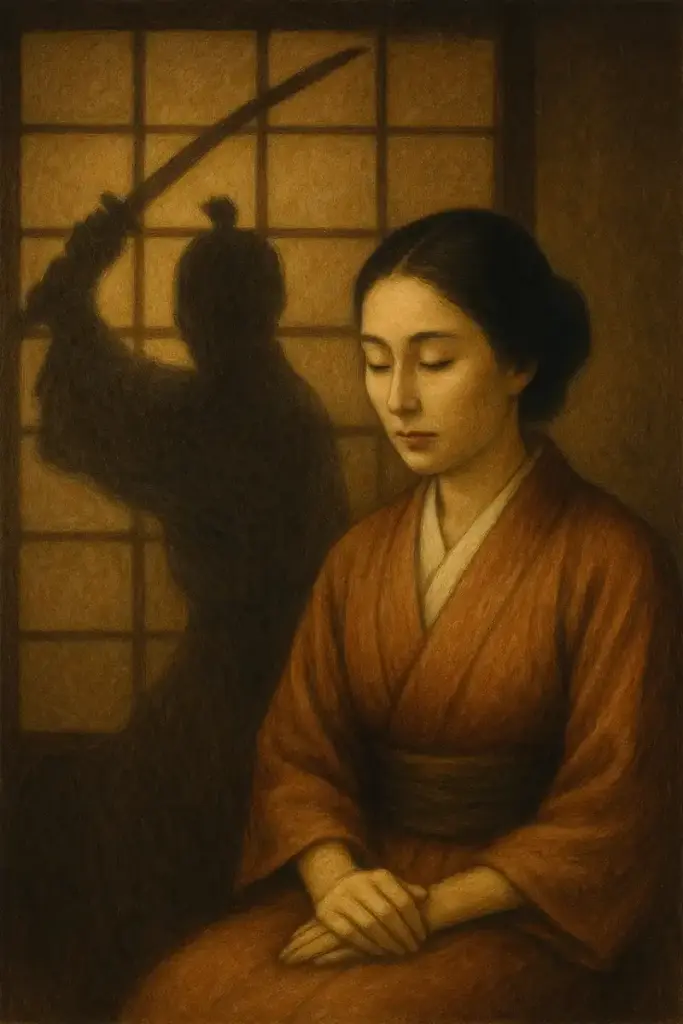
Left in the Hosokawa residence in Osaka, she faced an agonizing choice when Mitsunari's forces approached: be taken hostage—a violation of her dignity and a tool against her husband—or die on her own terms.
But as a Christian, suicide was forbidden.
So Gracia sought a third path.
She is widely reported to have died at the hands of a household retainer to prevent her capture, and some later accounts identify that retainer as Ogasawara Shōsai, though early reports and later retellings do not always frame the decision in exactly the same way. Shortly after, the residence was set ablaze, a detail commonly described as part of the household's effort to prevent the situation from being exploited after her death. She was thirty-seven.
Her death shocked contemporaries across cultural and political lines. To Japanese observers, it embodied honor and resolve. To Christians, it resembled martyrdom. To both, it became a defining image of principle in a time of chaos.
Hosokawa Gracia's Death Poem: Meaning and Translation
One reason Hosokawa Gracia's final story remains so powerful is the death poem traditionally attributed to her. In Japanese, it is often introduced as her jisei no ku — a farewell poem associated with the moment of death.
散りぬべき
時知りてこそ
世の中の
花も花なれ
人も人なれ
Chirinubeki: Time to fall.
Toki shirite koso: Knowing that time,
Yo no naka no: in this transient world,
Hana mo hana nare: a flower is truly a flower;
Hito mo hito nare: a person, too, finds their true being.
A literal translation would be:
Only by knowing when it is time to fall can a flower truly be a flower in this world; so too can a person truly be a person.
The poem uses the image of a flower falling at the proper time. On the surface, it is about beauty and impermanence. But in Gracia's story, it becomes something sharper: the idea that a person's dignity lies in understanding the moment when they must not yield, even when survival is still possible.
This is why the poem is so often connected to her final decision in 1600. Gracia was facing political capture during the hostage crisis before Sekigahara. As a Christian, she could not simply frame her death as suicide. Yet the poem, as it has been remembered, expresses a disciplined acceptance of timing — not death as despair, but death as the final preservation of conscience.
For readers who discovered her through Lady Mariko in SHŌGUN, this poem helps explain why Hosokawa Gracia is remembered not merely as a tragic woman, but as someone whose final act became a moral statement. The flower is beautiful because it knows when to fall. The person is fully human because they know when honor, faith, and dignity can no longer be separated.
Note on historical wording: As with many famous farewell poems from Japan's medieval and early modern periods, this poem should be understood as part of the historical memory surrounding Gracia. It is widely introduced as her death poem, but the safest wording in English is "traditionally attributed to Hosokawa Gracia."
The Legacy of Gracia Hosokawa
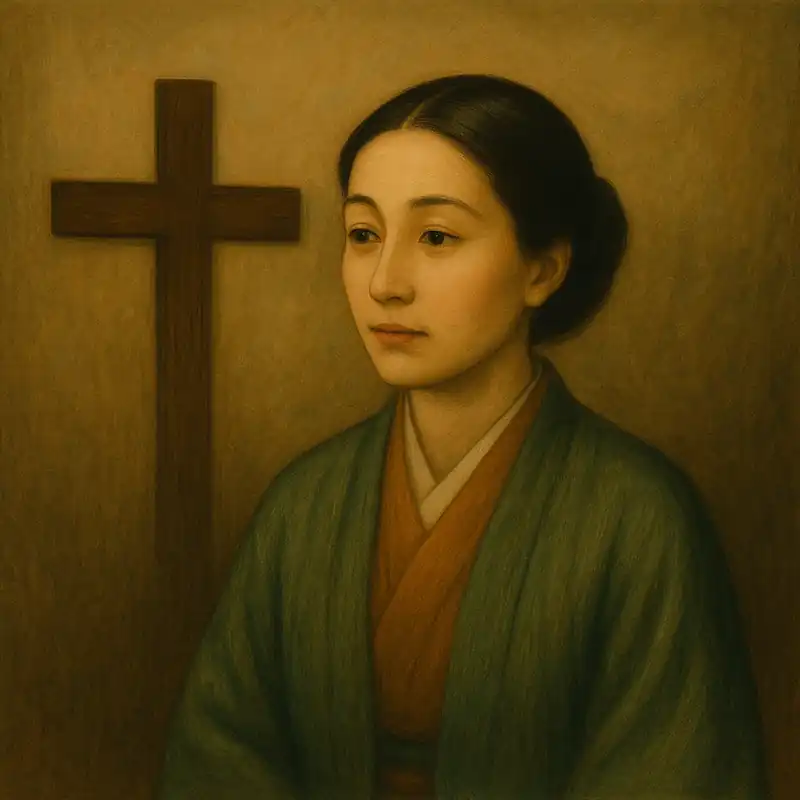
Gracia's life was short, but its imprint proved enduring.
Among early Japanese Christians
She quickly became a revered figure—an example of unwavering conviction and moral clarity amid persecution.
In literature and cultural memory
Her story inspired plays, novels, and historical studies, not because she wielded political influence, but because she demonstrated how a woman in a constrained society could assert her inner sovereignty.
In modern Japan
Statues, churches, and schools bearing her name reflect her ongoing resonance. She remains a rare figure whose legacy bridges Japanese ethical traditions and Western spiritual thought.
Gracia left behind no military victories, no political reforms, no grand monuments.
What she left instead was a model of quiet strength—proof that in an age ruled by ambition and violence, conscience could still draw an unbreakable line.
Hosokawa Gracia in Fiction: SHŌGUN, Assassin's Creed Shadows, and the Real Story
Hosokawa Gracia has inspired some of the most prominent portrayals of Sengoku-era women in modern storytelling — from James Clavell's 1975 novel to a 2025 video game. Each version draws on real elements of her life, then reshapes them for a different kind of story. Here is how the fiction compares to the history.
SHŌGUN (FX, 2024) — Lady Mariko
| Element | Lady Mariko in SHŌGUN | Hosokawa Gracia (Real History) |
|---|---|---|
| Name | Toda Mariko | Akechi Tama / Hosokawa Gracia |
| Father | Akechi Jinsai (fictional name) | Akechi Mitsuhide (real person) |
| Husband | Toda Buntarō (fictional name) | Hosokawa Tadaoki (real person) |
| Christian faith | Yes — central to her character | Yes — baptized 1587, central to her story |
| Role in the plot | Translator and ally of John Blackthorne (fictional English pilot) | No documented connection to William Adams (the real English pilot) |
| Romantic storyline | Falls in love with Blackthorne | No equivalent in the historical record |
| Death | Killed in an explosion during a raid on her compound in Osaka | Killed by a household retainer to prevent capture; residence set ablaze afterward |
| Political context | Hostage crisis in Osaka — closely mirrors real events | Hostage crisis before Sekigahara — real event, 1600 |
The drama preserves the emotional core of Gracia's story — Christian faith held under political pressure, a death in Osaka that becomes a turning point — while creating an entirely different set of relationships and a more dramatic manner of death. The fictional Mariko and the historical Gracia share a situation, not a storyline.
Assassin's Creed Shadows (Ubisoft, 2025) — Hosokawa Tama / "The Silver Queen"
| Element | Hosokawa Tama in AC Shadows | Hosokawa Gracia (Real History) |
|---|---|---|
| Name used | Hosokawa Tama / "The Silver Queen" | Akechi Tama / Hosokawa Gracia |
| Father | Akechi Mitsuhide | Akechi Mitsuhide ✓ |
| Political situation | Forced into service by a Portuguese Templar who holds her brother hostage | Lived under political constraints after her father's downfall; no Templar connection |
| Role in the game | Antagonist / ambiguous ally; manages silver mining for the Templar Order | No connection to silver mining or any secret order |
| Christian faith | Present as background detail | Central to her identity and her final decision in 1600 |
| Time period covered | Primarily 1579–1582 (before Honnō-ji) | Most historically significant events: 1582–1600 |
| What the game gets right | Her name, her father, her husband, and the political vulnerability she faced after 1582 are all grounded in real history. The Templar storyline is entirely invented. | |
The game uses her real name and her real family connections as a starting point, then places her inside a fictional secret-society narrative that has no basis in the historical record. Players who meet Hosokawa Tama in AC Shadows are encountering a real person's name attached to an invented story. The actual Gracia — a woman who spent nearly two decades navigating confinement, faith, and political danger — is considerably more complex than either the Templar agent or the villain the game presents.
Why the Real Story Still Matters
Both SHŌGUN and Assassin's Creed Shadows use Gracia's name and circumstances because her real story has the kind of tension that makes for good drama: a woman caught between loyalty and faith, between political survival and personal integrity, at one of the most consequential moments in Japanese history. The fiction borrows that tension. But the historical Gracia resolved it without a screenplay — in real time, under real pressure, with consequences that shaped the political landscape of 1600.
That is the story this page covers. The sections above trace her life from her childhood in the Akechi household through her baptism, her years of confinement, and her death in Osaka. The death poem traditionally attributed to her — and its meaning — is explained in the section above.
FAQ
Is Lady Mariko a real historical person?
No—Lady Mariko is fictional. However, her background is loosely inspired by the real woman Hosokawa Gracia (Hosokawa Tama, 1563–1600), and several key themes—Christian faith, political pressure, and the approach of Sekigahara—echo real historical contexts.
Who was Hosokawa Gracia, in one sentence?
Hosokawa Gracia was a Sengoku-era noblewoman, born as Hosokawa Tama (Akechi family), who was baptized in 1587 and became famous for how her faith and political circumstances shaped her choices in 1600.
What names did she go by (Tama / Tamako / Gracia)?
In Japanese sources she is commonly identified as Hosokawa Tama (also written as Akechi Tama/Tamako), and after baptism she used the Christian name "Gracia." English-language references may switch between these forms depending on context.
When did she become Christian, and why does 1587 matter?
Gracia was baptized in 1587, the same year Toyotomi Hideyoshi issued edicts that expelled missionaries and restricted Christian activity, which helps explain why her faith later carried political risk.
What can we say with confidence about her death in 1600?
Many accounts agree that, during the 1600 hostage crisis, she died at the hands of a household retainer and the residence was set on fire afterward. Details of who initiated the decision and how it was framed can differ between early Jesuit reports and later retellings, so it's best to avoid over-specific claims when summarizing the event.
What was Hosokawa Gracia's death poem?
The death poem traditionally attributed to Hosokawa Gracia is: "Chirinubeki toki shirite koso, yo no naka no hana mo hana nare, hito mo hito nare." In Japanese, it is written: 散りぬべき 時知りてこそ 世の中の 花も花なれ 人も人なれ.
What does Hosokawa Gracia's death poem mean?
It means that flowers are truly flowers because they know when to fall, and people are truly people when they know the right moment to act. In Gracia's story, the poem is remembered as an expression of dignity, timing, faith, and moral resolve at the moment of death.
Where is Hosokawa Gracia buried?
Multiple sources note that her remains were first buried in Sakai and later moved to Sōzen-ji (Osaka), and that she also has a grave associated with Kōtō-in (a sub-temple of Daitoku-ji in Kyoto) alongside Hosokawa Tadaoki. If you want a Kyoto visit that connects directly to the Hosokawa family, Daitoku-ji / Kōtō-in is the most commonly cited stop.
Is Hosokawa Gracia in Assassin's Creed Shadows?
Yes. She appears as Hosokawa Tama, also called "The Silver Queen," in Assassin's Creed Shadows (2025). In the game, she is portrayed as a Templar agent involved in silver mining — which is entirely fictional. Her real profile (daughter of Akechi Mitsuhide, wife of Hosokawa Tadaoki, political constraints after 1582) is historically grounded; the Templar storyline is Ubisoft's invention. See the comparison table above for a full breakdown.
How does Lady Mariko in SHŌGUN differ from the real Hosokawa Gracia?
The main differences: Mariko has a romantic relationship with the English pilot Blackthorne, which has no equivalent in Gracia's historical record; Mariko dies in an explosion, while Gracia was killed by a household retainer; and Mariko's husband uses a fictional name (Buntarō). What the drama preserves is the core situation — a Christian noblewoman caught in Osaka's hostage politics on the eve of a decisive battle. See the comparison table above for a point-by-point breakdown.
What Gracia-related places can I visit in Kyoto Prefecture?
Kyoto Prefecture's official tourism FAQ highlights three main areas: Kyotango (a hideout tradition), Miyazu (a statue associated with Miyazu Church), and Nagaokakyo (Shōryūji Castle Park). These work well as "real-world anchors" for readers who want to connect the story to locations.
What remains today—are there "ruins" or physical traces connected to her story?
What you can reliably visit today is less "battlefield ruins" and more memorials, temples, and designated sites tied to later remembrance (for example, Daitoku-ji's sub-temples connected to the Hosokawa family, and the Kyoto Prefecture-listed locations above). For many readers, the value is seeing where her story is remembered, rather than expecting intact Sengoku-era structures directly attributable to her daily life.
From History to Screen: Meet Toda Mariko

Visit the Places Behind Her Story
The biography explains what happened. The guides below show where her story is remembered today and how those places fit into a Japan itinerary.
☕ Support Following the Shogun
Following the Shogun is created through historical research and on-location reporting.
If this article helped you, your support makes future field guides possible.

You can also support the site with this QR code.

