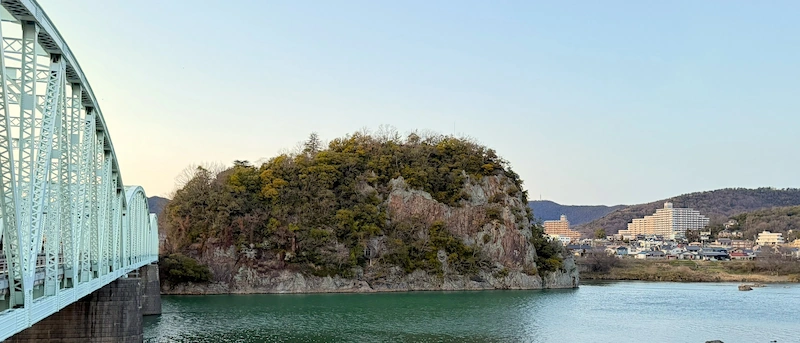
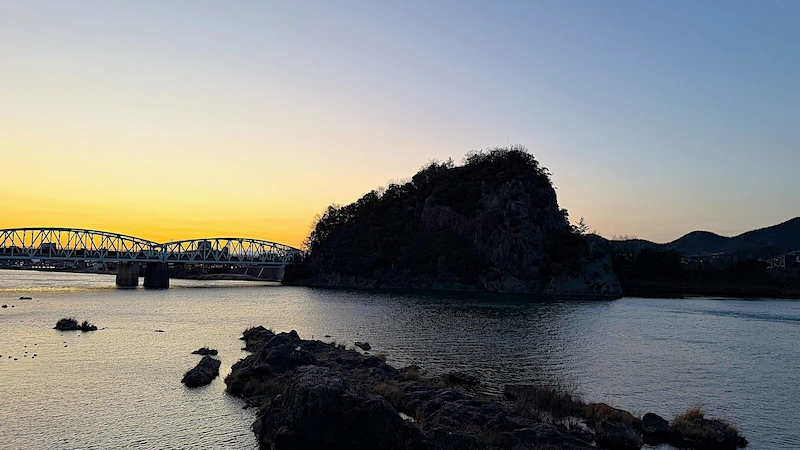
A rocky hill that juts into the Kiso River—known as “Shiroyama” (Castle Hill)—is believed to be the site of the former Unuma Castle (Unuma-jō Ato). Because Shiroyama is off-limits, this isn’t a castle ruin you can “climb and explore.”
As seen in the 2026 Taiga drama Toyotomi Brothers!—where it appears in the lead-up to the march on Inuyama Castle—the real highlight here is the terrain itself: a natural position that faces the Inuyama Castle area across the river. The classic way to enjoy Unuma Castle is to view it from easy vantage points such as around Inuyama Bridge, from the opposite bank of the Kiso River, or from Mt. Iki (the “Kewpie’s Nose” lookout).
Key takeaways in this article
・With the site off-limits, where to stand for the clearest view (Inuyama Bridge / opposite bank / Mt. Iki)
・How to “read” the standoff with Inuyama Castle—and where it’s easiest to take photos
・Common pitfalls on rainy days and late afternoons (backlight / sunset)
・How to pair this with Inuyama Castle and a castle-town stroll (quick stop to half-day plan)
Access tip: Because Shiroyama is closed to entry, the trick is to set your map destination not to a “trailhead,” but to a viewing spot (Inuyama Bridge / opposite bank / Mt. Iki).
Spot Overview
Unuma Castle Ruins (Unuma-jō Ato)
⭐ Recommended
Historical value:[☆☆]
Visual appeal:[☆☆☆]
Experiential value:[☆]
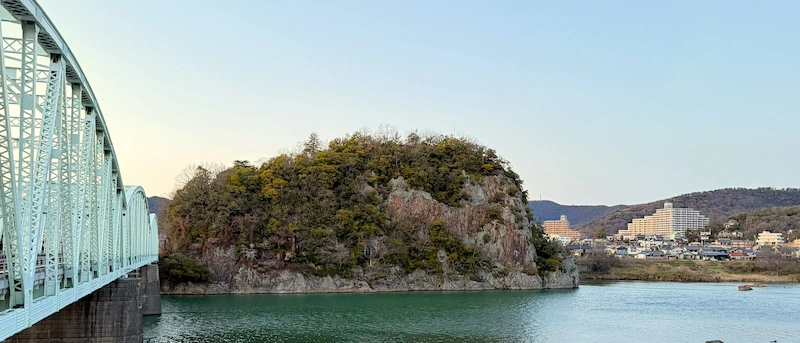
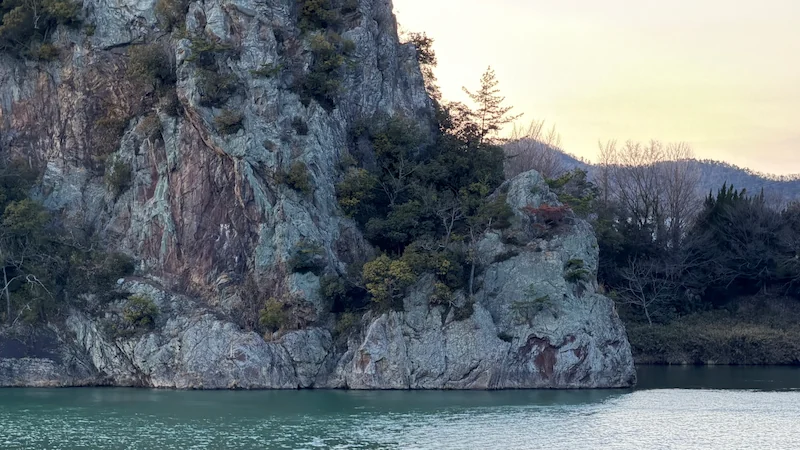
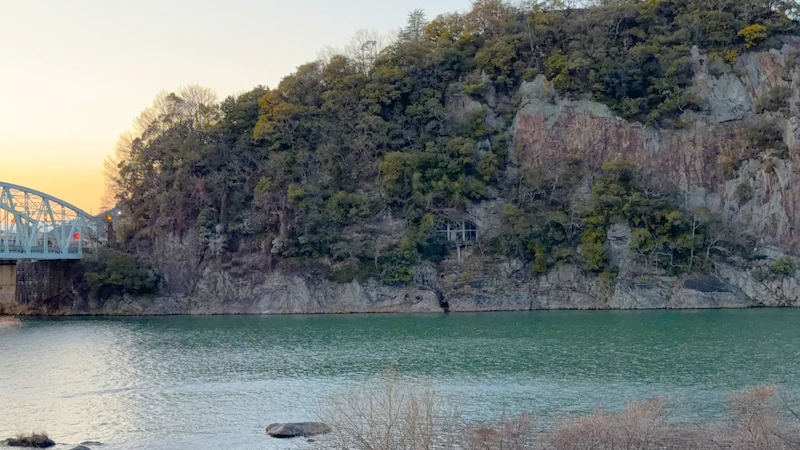
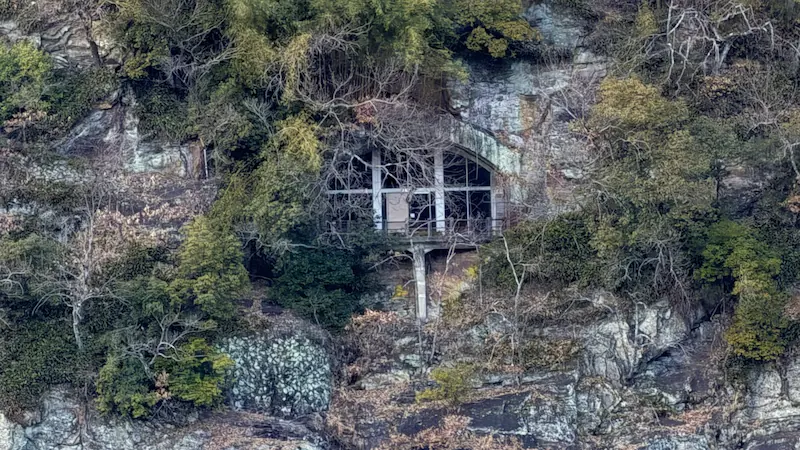
A rocky hill that seems to rake claws into the river’s flow—that is Shiroyama, the natural stronghold where Unuma Castle once stood. Guarded by steep cliffs, this rugged position faced Owari’s Inuyama Castle across the water, and the landscape still carries an unmistakable borderland tension. The castle is traditionally associated with the Ōsawa clan (including figures such as Ōsawa Jirōzaemon). In discussions of the political situation around Eiroku 8 (1565), it’s sometimes noted that the Shinchō Kōki mentions a fort being built on Mt. Iki (Ikiyama Castle) in connection with Nobunaga’s Mino campaign—and some explanations add that Unuma’s side surrendered in response (it would be strongest to cite the relevant passage within this article). Meanwhile, the Edo-period war tale Taikōki includes an episode in which Hideyoshi supposedly works to win over the Unuma castellan and even offers himself as a hostage to protect him from an execution order. Because gunki war chronicles are highly narrative-driven, they require caution when treated as fact. Even so, looking up at the rock face makes it easy to imagine a Sengoku-era world where betrayal and persuasion intertwined. Unuma is also sometimes linked to the 1584 Battle of Komaki and Nagakute, with accounts stating that Hideyoshi set up camp in Unuma and emphasized the river crossing toward Inuyama.
| Estimated construction | Around the Muromachi period (some theories place it in the Eikyō era) |
|---|---|
| Lord | Traditionally said to have been Ōsawa Jirōzaemon |
| Design / features | A fortress utilizing the rocky hill (Shiroyama) on the north bank of the Kiso River. Terrain close to sheer cliffs on all sides. |
| Renovation / restoration | Castle-focused renovation/restoration: unknown / A villa was built in the early Shōwa era; after the war it was used as the ryokan “Shiroyamasō,” which was dismantled and removed in Heisei 14 (2002). |
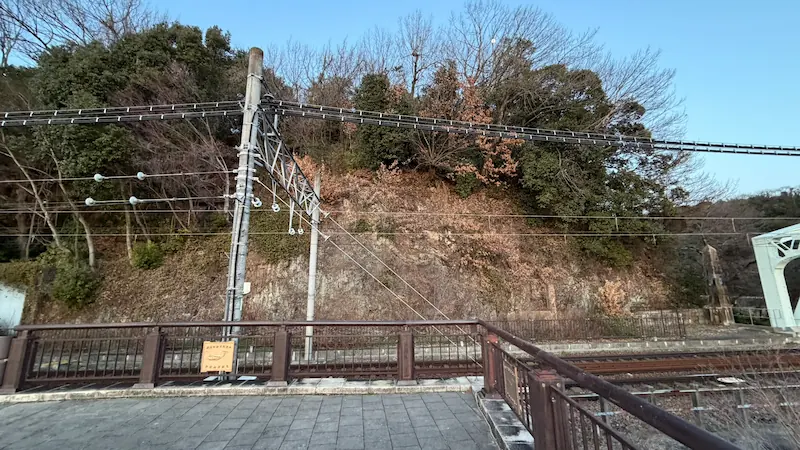
| Current condition | The interior of the site is off-limits. Visits are done by viewing Shiroyama’s exterior from surrounding points. |
| Loss / damage | Details of the castle remains are unclear (difficult to confirm due to the entry restriction). |
| Cultural property status | Unknown (some sources say it has no designation) |
| Notes | Recommended viewing spots: around Inuyama Bridge, and Mt. Iki’s “Kewpie’s Nose” lookout, among others. |
🗺 Address:7-23 Unuma Minamimachi, Kakamigahara, Gifu
🚶 Access
Because Unuma Castle Ruins (Shiroyama) are off-limits, the key is to treat viewpoint locations—around Inuyama Bridge, the opposite bank, or lookouts on Mt. Iki—as your destinations, rather than trying to “enter” Shiroyama. The walk between Shin-Unuma Station and Inuyama-Yūen Station is especially enjoyable for Kiso River scenery, and it also makes it easy to cross to the Inuyama side and continue on to Inuyama Castle and the castle town (the Inuyama side has riverside walkway guidance).
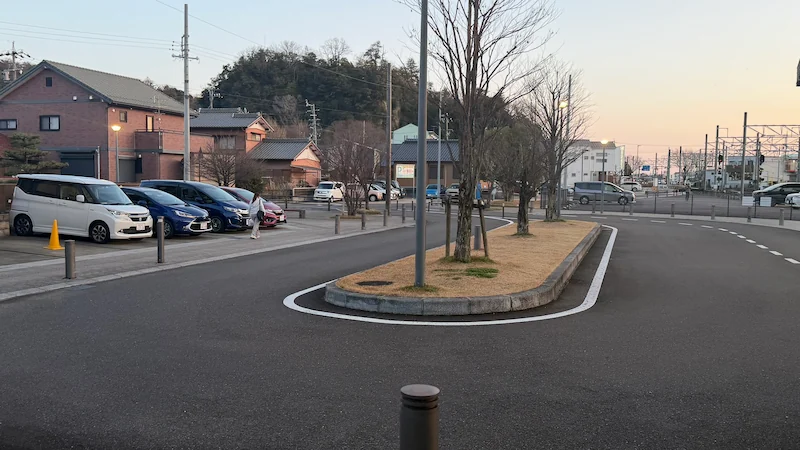
At the foot of Unuma Castle
→ Nearest station: 3 minutes on foot from Exit 1 of Meitetsu “Shin-Unuma Station”
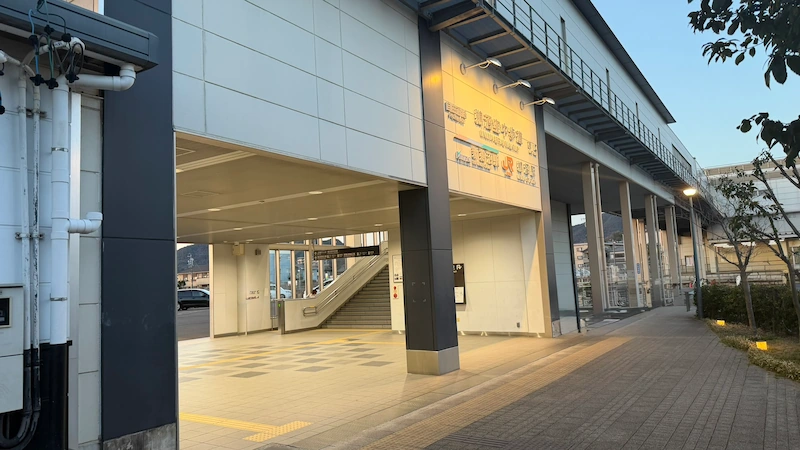
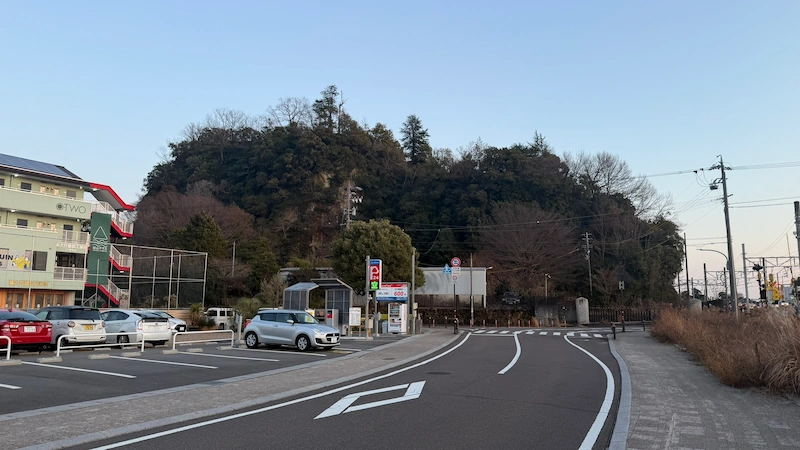
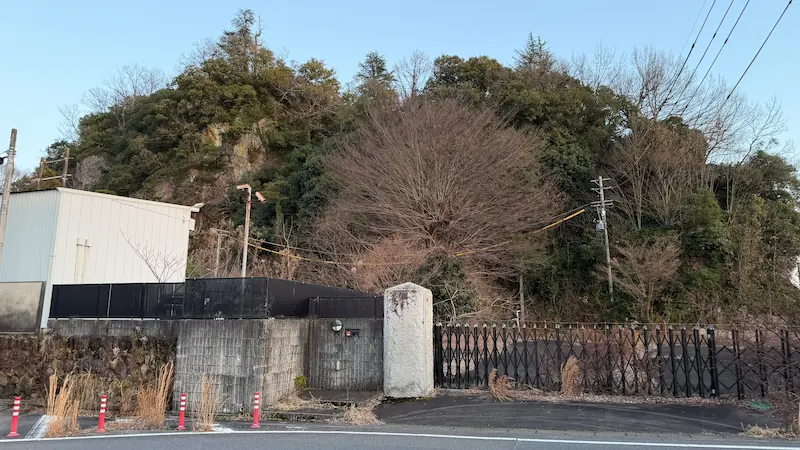
Viewing Unuma Castle from across the Kiso River
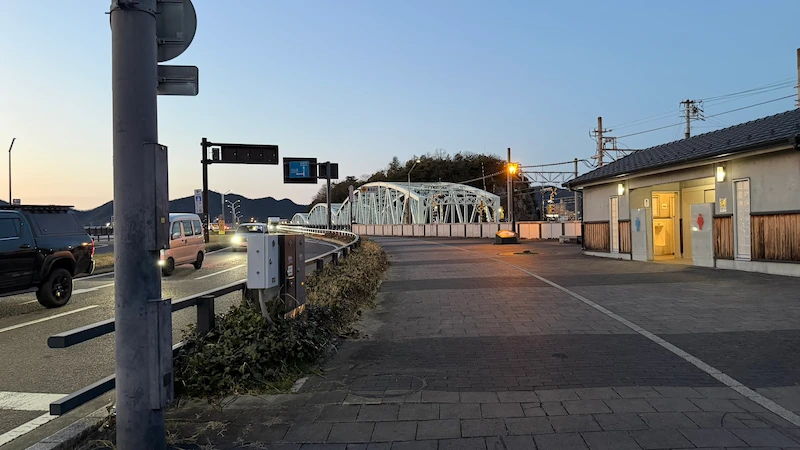
→ Nearest station: 2 minutes on foot from the exit of Meitetsu “Inuyama-Yūen Station”
⏳ Suggested time
Quick highlights: about 10 minutes (view from the base of Shiroyama, looking up)
For a deeper visit: about 40 minutes (cross to the opposite bank and view it across the Kiso River)
📍 Highlights
- Shiroyama view from across the Kiso River: The rocky hill thrusting into the river is striking. From here, you can instantly grasp how it “stares down” Inuyama Castle across the water.
- Mt. Iki “Kewpie’s Nose” lookout: From a slightly higher, pulled-back vantage point, you can take in the Kiso River, Inuyama Castle, and the Unuma Castle site in one sweep.
- Seasonal ways to enjoy it: Autumn color often heightens the contrast against the rock face, and spring tends to be an easy season for strolling.
📌 Trivia
- An unexpected historical backdrop: In 1565, as Nobunaga advanced into Mino, a fort was built on Mt. Iki, and the lord of Unuma is said to have judged the position “impossible to hold” and surrendered.
- What most visitors don’t realize: Shiroyama (the Unuma Castle site) is off-limits. Precisely because you can’t “storm the hill,” the more you know the surrounding viewpoints, the more the place makes sense.
- A tie to a famous figure: In the Edo-period Taikōki, an anecdote claims Toyotomi Hideyoshi tried to win over Unuma’s lord, Ōsawa Jirōzaemon, and protect him from punishment (handle the source with care).
FAQ
Q1. Is it easy to get there from the nearest station without getting lost?
A. From around Shin-Unuma Station, it’s fairly easy to keep your bearings because Shiroyama (the rocky hill identified with Unuma Castle) is a clear visual landmark.
Q2. How long does it take?
A. Since you can’t enter Shiroyama, the visit is essentially an “outside-only” view. If you’re just taking in the scene near Inuyama Bridge, it’s quick; if you add a stroll along the Kiso River promenade, plan extra time. If you include the Mt. Iki lookout as well, a half-day itinerary is easy to build.
Q3. Can I go on a rainy day?
A. Because it’s mainly a viewpoint-style visit, you can still go even in rain. That said, the riverside can feel slippery on certain days, and low visibility can make the Unuma Castle site harder to see.
Q4. Are there goshuin stamps?
A. Unuma Castle Ruins (Shiroyama) are off-limits, so this isn’t the same kind of destination as a shrine or temple with an on-site stamp office. If goshuin are your goal, it’s easier to plan a loop that pairs nearby shrines and temples with this stop.
Q5. Are any remains left? Has anything been reconstructed?
A. Because Shiroyama is off-limits, you can’t examine remains at close range. The best way to enjoy it is to understand (1) the landform—a rocky hill pushing into the Kiso River—and (2) how it faces Inuyama Castle across the water.
Q6. Is it OK for families with kids or older visitors?
A. Since you don’t climb Shiroyama, you can build your plan around easy walking near Inuyama Bridge or along the Kiso River. If you add the Mt. Iki lookout, choose a pace that fits everyone’s stamina and the weather.
Q7. Where’s the easiest place to take photos?
A. The opposite bank of the Kiso River is the most straightforward. If you want a wider, more “explainer” view, Mt. Iki (the Kewpie’s Nose lookout) lets you see the Kiso River, Inuyama Castle, and Shiroyama in one composition, making the geography click instantly.
Bonus
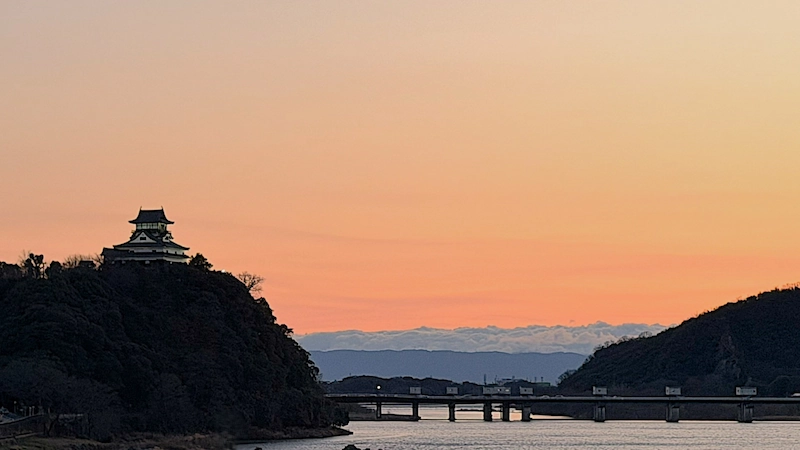
Inuyama Castle looks beautiful from Inuyama Bridge.
Related Pages
Introducing nearby Inuyama Castle and related spots.
Introducing Oda Nobunaga-related spots.



comment