· Museum: Final admission March 31, 2026 (closed from April 1)
· Castle Keep: Final admission May 18, 2026 (closed from May 19)
Both are expected to remain closed until late October 2027. The hilltop ruins (the presumed First Gate site, stone walls, and well remains) remain open to visitors as normal. Please check the Gifu City official website for the latest updates before your visit.
This guide covers the key sites in Gifu associated with the warlord Oda Nobunaga, all reachable from Gifu Station, with approximate travel times included. Fans of NHK’s long-running historical drama series (taiga dorama) may recognize “Inabayama Castle” — this is none other than the same site that Nobunaga renamed “Gifu Castle” after capturing it, around 1567. The essential route is: Golden Statue → Gifu Park / Gifu Castle (= Inabayama Castle). If you want to add one more stop, Sofukuji Temple offers the richest combination of exhibits and atmosphere.
※ Admission policies, exhibition content, and reception hours are subject to change. Please verify the latest information through official sources.
- Three Eras for Reading Gifu’s Nobunaga History
- Choose Your Itinerary
- The Essential Half-Day⏱ Half day or more
- The Full Day Deep Dive⏱ Full day
- The Golden Oda Nobunaga Statue
- Entokuji Temple
- Kenkun Shrine (Gifu Nobunaga Shrine)
- Gifu Park (Gifu Castle / Inabayama Castle)
- Kawaramachi Historic Streetscape
- Gifu Zenkoji Temple (Zenkoji Anjoin)
- Presumed Grave of Lady Nō (Hair-Lock Mound)
- Nishino Fudōdō
- Sofukuji Temple
- Tejikara-o Shrine
- Where to Collect Goshuin & Gojoin (Seal Stamps)
- Frequently Asked Questions
- Related Pages
Three Eras for Reading Gifu’s Nobunaga History
Keeping this timeline in mind before reading the individual site descriptions will sharpen your perspective considerably.
- Saitō Dōsan develops Inabayama Castle and the surrounding castle town
- The predecessor of Entokuji Temple, known as Jōsenbō, also dates to this era
- The religious tradition at Tejikara-o Shrine also has its roots in this period
- Renames Inabayama Castle “Gifu Castle” and adopts his famous motto tenka fubu (“rule the realm by force of arms”)
- Introduces the rakuichi rakuza free-market policy to stimulate commerce in the castle town
- Develops the hilltop residence and garden; brings the Zenkoji Buddha image to Gifu
- Kawaramachi flourishes as a river-port hub
- Nobunaga and his heir Nobutada are killed in the Honnoji Incident — the dramatic coup staged by his general Akechi Mitsuhide
- A mausoleum for father and son is preserved at Sofukuji Temple
- 1600: Gifu Castle falls during the prelude to the Battle of Sekigahara
Choose Your Itinerary
The Essential Half-Day⏱ Half day or more
The Full Day Deep Dive⏱ Full day
The Golden Oda Nobunaga Statue
A station-front landmark that switches you into Gifu mode
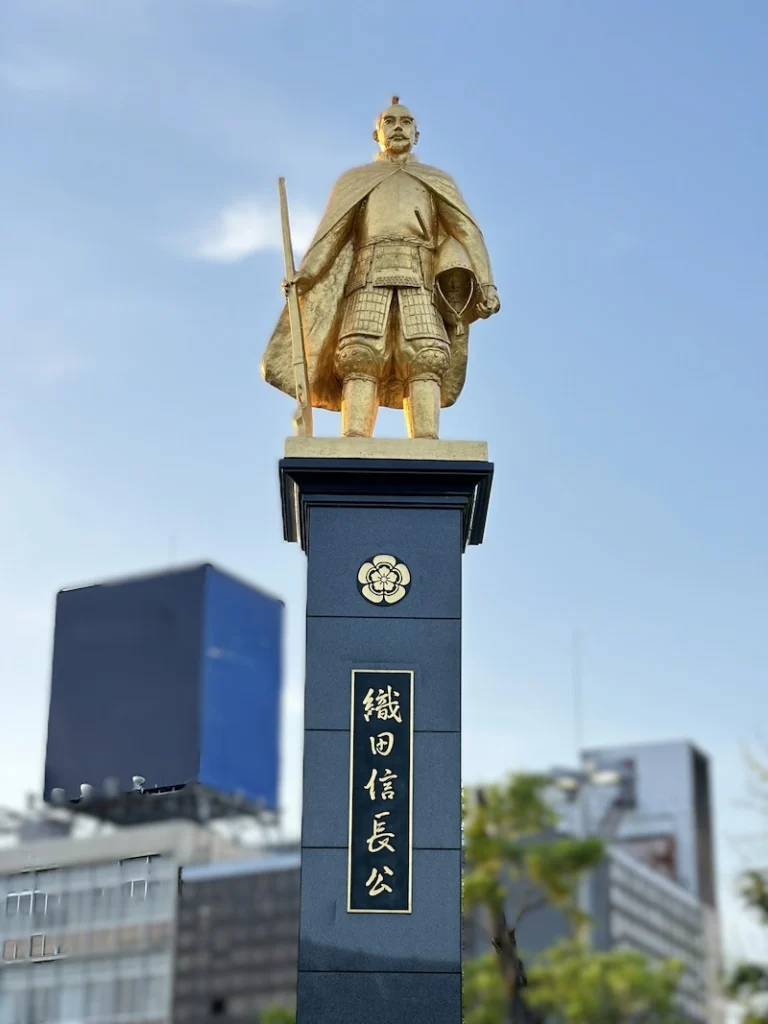
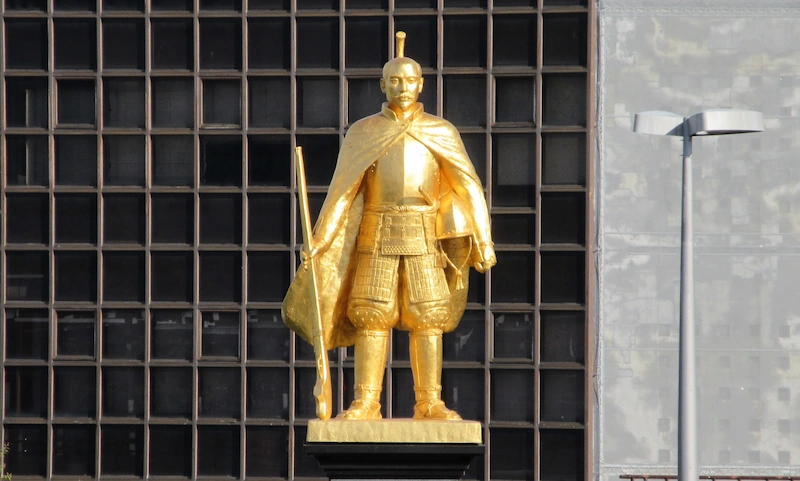
Before anything else, the statue in front of the station sets the tone for your Gifu experience. It announces clearly that you’ve arrived in a city shaped by Nobunaga, and acts as a gateway into everything that follows. The armor catches the light at sharp angles, and the impression it makes shifts dramatically depending on the time of day and the direction you’re standing. Wearing a flowing cape, holding a matchlock rifle in his right hand and a Western-style helmet in his left, the figure commands attention even in the bustle of a busy station plaza.
※ This is a modern commemorative monument, not a historical site in the archaeological sense. Think of it as the starting line — a place that frames the whole journey — and it won’t disappoint.
- Positioned overlooking the station plaza, you can frame a shot that captures both the statue and the full square below it.
- Golden light that changes with the hour: The statue looks dramatically different in bright midday sun, at golden hour, and under evening lighting — worth circling back to at a different time of day. Viewing the statue from the second-floor station exit puts you at roughly eye level for a striking photo.
- Winter is prime time: The crisp, clear air of winter makes the gold pop with particular brilliance. A cold, sunny day is the ideal window.
Address: 100 Hashimotocho 1-chome, Gifu City, Gifu Prefecture 1-minute walk from JR Gifu Station
| Year Installed | September 2009 |
|---|---|
| Installed By | Erected by the “Society to Gift a Bronze Statue of Lord Nobunaga” (to mark the city’s 120th anniversary) |
| Structure & Features | Gold-finished standing figure of Nobunaga (statue height approx. 3 m; approx. 11 m including the pedestal) |
| Cultural Property Status | None |
| Notes | Located at the north exit of JR Gifu Station |
- Why it was built: The statue transplants the spirit of Nobunaga’s city-building energy into the modern gateway of Gifu — the station forecourt — as a symbolic monument to his legacy.
- Photography tip: Angling slightly upward from below accentuates the three-dimensional depth of the armor and adds real impact to the shot.
- Established photo spot: It has cemented itself as the go-to opening shot for Gifu’s Nobunaga-themed itineraries — the city’s “front door” for fans of the warlord.
Entokuji Temple
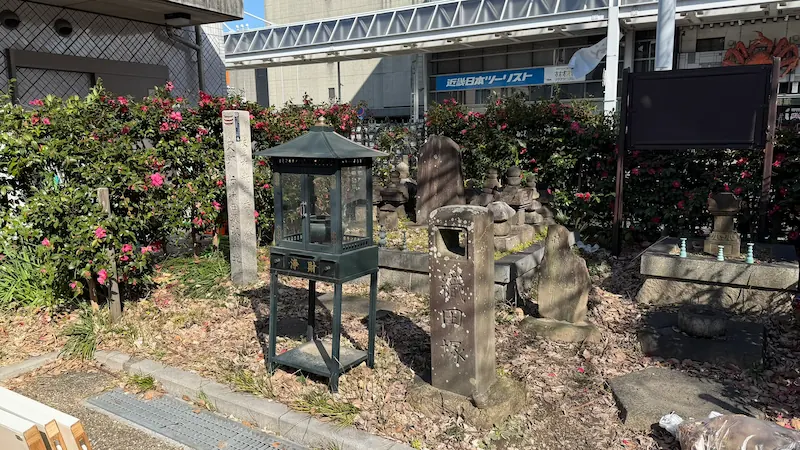
The Free-Market Edict and the Oda Burial Mound — encountering Nobunaga the administrator, not the warrior
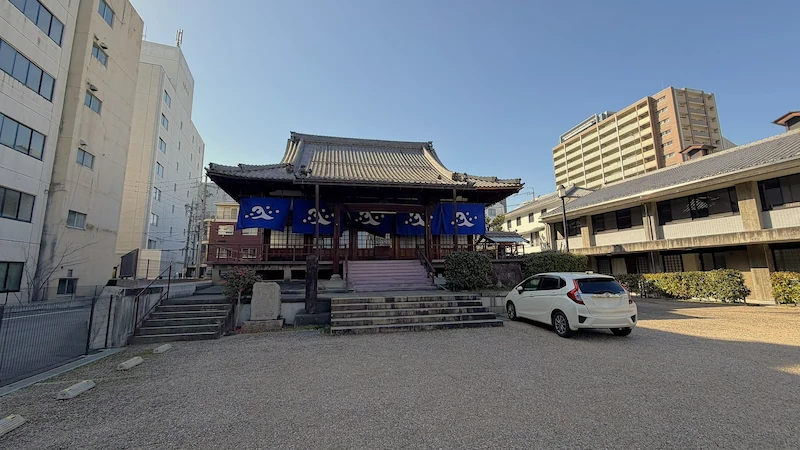
Tracing Nobunaga’s presence in Gifu means looking beyond castles and statues. It means engaging with the evidence of how he actually ran a city. Entokuji Temple, conveniently located in central Gifu, preserves what is said to be a regulatory placard (seisatsu) related to the rakuichi rakuza free-market policy — a set of documents handed down through the temple that are today designated as a National Important Cultural Property. The rakuichi rakuza system (楽市楽座) was Nobunaga’s landmark economic policy: by abolishing the guild monopolies that had controlled commerce for generations, he opened markets to all traders, slashed taxes, and cancelled debts — essentially creating free trade zones that fueled extraordinary urban growth. Standing here, the picture of Nobunaga shifts from battlefield commander to urban planner and economic innovator.
The temple also holds traditions connected to the “Oda Burial Mound” (Oda-zuka) and other memorials to the Oda clan. The layering of generations — Nobunaga’s father Nobuhide, Nobunaga himself, and his grandson Hidenobu — means a brief visit here opens up a sense that the story is far bigger than one man.
- The Free-Market Placard (rakuichi rakuza seisatsu): A tangible piece of evidence for the commercial policies that drove the castle town’s growth. Encountering it shifts focus from battles to governance and economics.
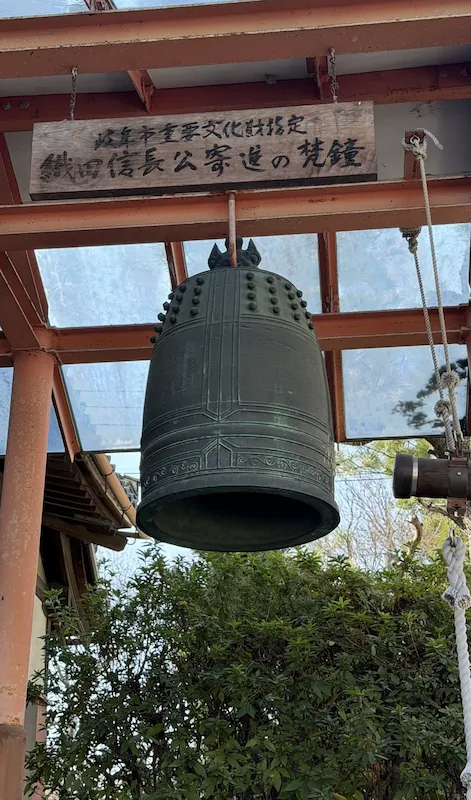
- The temple bell said to have been donated by Nobunaga: A designated cultural property that makes viscerally real the idea of a warlord’s patronage sustaining a temple’s rhythm for centuries.
- Summer tip: On summer evenings the temple grounds stay pleasantly cool, making it a fine rest stop on a walking tour between the Yanagase shopping district and Gifu Station.
Address: 〒500-8833, 6-24 Kandamachi, Gifu City, Gifu Prefecture Approx. 10 min from Gifu Station by bus and on foot
| Founded | Unknown (the predecessor temple, Jōsenbō, is cited in tradition) |
|---|---|
| Founder | Unknown |
| Structure & Features | Jōdo Shinshū Honganji-ha Buddhist temple / Preserves the rakuichi rakuza (free-market) regulatory placard / Houses the tradition of the Oda Burial Mound (memorial for fallen soldiers) |
| Cultural Property Status | Rakuichi Rakuza Regulatory Placard with Appended Nobunaga Peasant-Return Placard: National Important Cultural Property / Temple bell and others: Gifu City Important Cultural Property |
| Notes | Admission hours 9:00–17:00 / Free admission / No parking (use nearby paid parking facilities) |
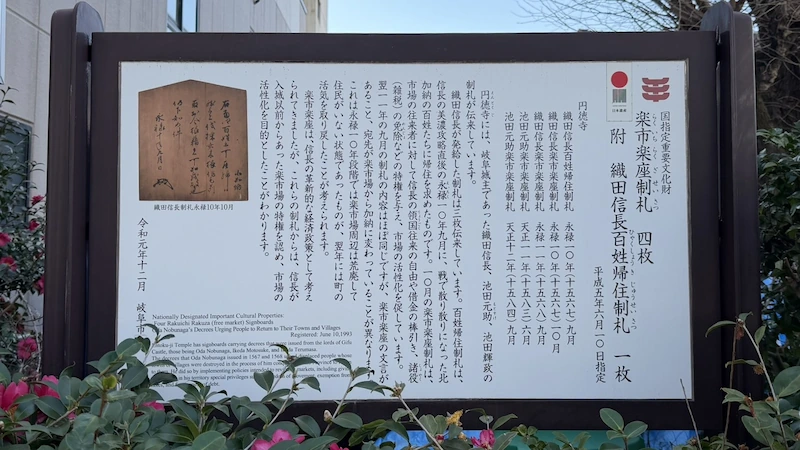
Entokuji Temple
National Important Cultural Property
Rakuichi Rakuza Seisatsu (Free-Market Regulatory Placards) — Four Pieces
Appended: Oda Nobunaga Hyakushō Kijū Seisatsu (Peasant-Return Placard) — One Piece
Designated: June 10, 1993
Oda Nobunaga Peasant-Return Placard: September, Eiroku 10 (1567)
Oda Nobunaga Free-Market Placard: October, Eiroku 10 (1567)
Oda Nobunaga Free-Market Placard: September, Eiroku 11 (1568)
Ikeda Mototsugu Free-Market Placard: June, Tenshō 11 (1583)
Ikeda Mototsugu Free-Market Placard: September, Tenshō 12 (1584)
Entokuji Temple has preserved placards (official regulatory notices) issued by Gifu Castle lords Oda Nobunaga, Ikeda Mototsugu, and Ikeda Terumasa. Three placards issued by Nobunaga survive. The Peasant-Return Placard, dated September of Eiroku 10 — immediately after Nobunaga’s conquest of Mino Province — called on the farmers of Kita-Kano who had been scattered by the fighting to return home. The October free-market placard extended privileges to all those travelling through the marketplace: freedom of movement throughout Nobunaga’s domain, cancellation of outstanding debts, and exemption from miscellaneous taxes, all designed to breathe life back into the market. The September placard of the following year is broadly similar in content, but now explicitly uses the term “rakuichi rakuza” and is addressed to the Kano district rather than the market itself — suggesting that by the second year the district had recovered enough vitality to be addressed as a functioning community. Historically regarded as a radical economic innovation, these documents reveal that Nobunaga was in fact recognizing and formalizing privileges that had existed in the marketplace before he arrived, with the goal of stimulating commercial activity.
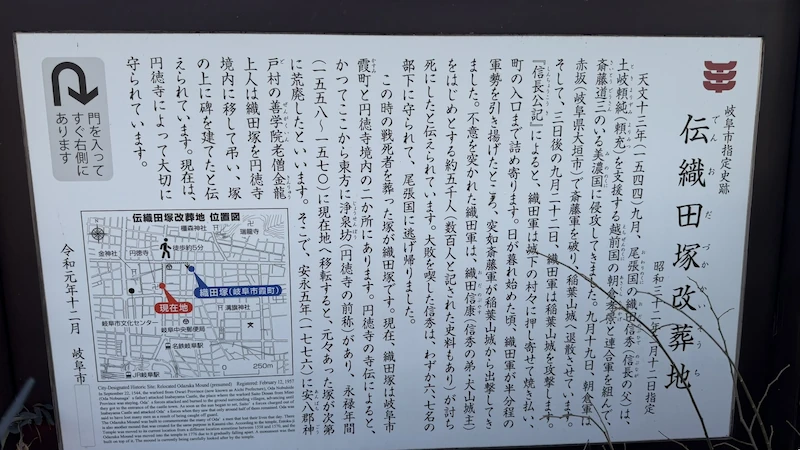
Gifu City Designated Historic Site
Presumed Oda Burial Mound Reinterment Site (Den Oda-zuka Kaisōchi)
Designated: February 12, 1957
In September of Tenbun 13 (1544), Oda Nobuhide (Nobunaga’s father) — lord of Owari Province — formed a coalition with Asakura Takakage of Echizen Province to invade Mino Province, where Saitō Dōsan held power, in support of Toki Yoritsugu. On September 19, Asakura forces defeated the Saitō army at Akasaka (present-day Ōgaki City, Gifu Prefecture) and drove them back to Inabayama Castle. Three days later, on September 22, the Oda forces attacked Inabayama Castle. According to the Shinchō Kōki (the primary chronicle of Nobunaga’s life), the Oda troops swept through the surrounding villages, burned them, and pressed as far as the castle’s gateway. As dusk fell and roughly half the Oda force had begun to withdraw, the Saitō army suddenly sortied from Inabayama Castle. Caught off guard, the Oda forces reportedly lost approximately five thousand men (some records cite several hundred) including Oda Nobuyasu (Nobuhide’s younger brother and lord of Inuyama Castle). The humiliated Nobuhide reportedly fled back to Owari with only six or seven retainers.
The burial mound raised for the fallen in that battle is the Oda Burial Mound. Today two such mounds exist — one in Kasumichō, Gifu City, and one within the grounds of Entokuji Temple. According to temple tradition, the original temple (then called Jōsenbō) once stood to the east of the current site. When it relocated to its present location during the Eiroku era (1558–1570), the burial mound was gradually neglected. In 1776 (Anei 5), a senior monk named Kinryū from Gakuin-in in Kanbara Village, Anpachi District, moved the burial mound into the temple grounds, offered prayers, and erected a stone monument above it. It is now carefully maintained by Entokuji Temple.
- The placard’s significance: The documents preserved here are valued not as trophies of military glory, but as evidence of post-war urban reconstruction and commercial policy — which is precisely why they earned National Important Cultural Property designation.
- Warring States history in the city center: Though situated in a walkable neighborhood close to the station, the temple grounds hold the “Oda Burial Mound” — a sobering glimpse at the human cost of the battles that shaped this city.
- Three generations of the Oda clan: The traces of Nobuhide, Nobunaga, and Hidenobu overlap here, making Entokuji an unusually compact window onto the clan’s full arc of rise and decline.
Kenkun Shrine (Gifu Nobunaga Shrine)
A quiet encounter with Nobunaga as a deity, not a warlord
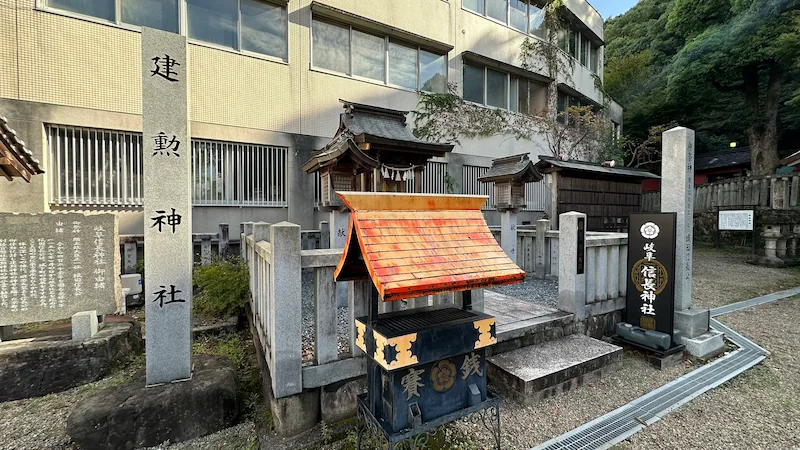
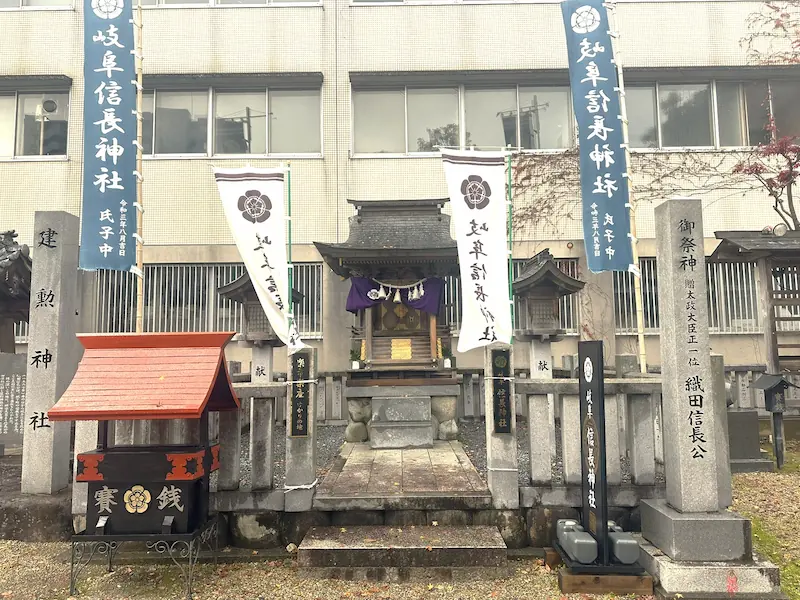
Tucked within the grounds of Kashimori Shrine stands Kenkun Shrine, locally known as Gifu Nobunaga Shrine. Its enshrined spirit is said to have been transferred from the main Kenkun Shrine in Kyoto — a practice in Shinto known as bunrei, essentially creating a satellite of the original divine presence. What this place offers is a different kind of encounter with Nobunaga: not the warlord of battles and ambitions, but a figure elevated to sacred status, carrying the weight of his historical achievements into the realm of the divine. The approach is unassuming, but stepping through into the inner precinct feels like crossing into a quieter, more reflective space. Slotted between more energetic sightseeing stops, it resets the mood.
Goshuin (Sacred Seal Stamp): The standard goshuin was available as a pre-written slip (kakioki) at the Kashimori Shrine office during our visit (subject to change). A special gold-ink goshuin was offered with in-person inscription on the last Friday of each month. ※ Dates and procedures may change — always verify on-site.
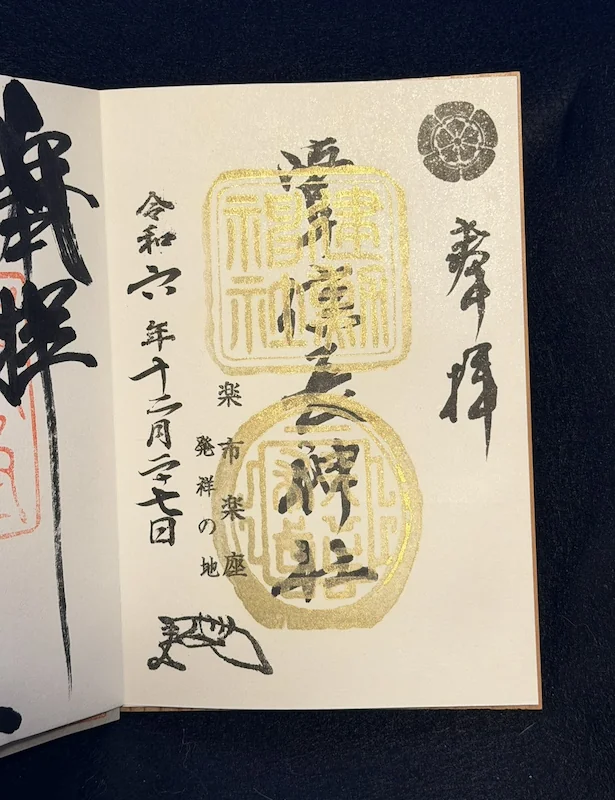
- Nobunaga as enshrined deity: Rather than encountering the man through castles or battles, this site invites you to contemplate the legacy he left — as an object of reverence.
- A shift in atmosphere: Though physically within Kashimori Shrine, the approach path is enclosed by trees, and the inner precinct feels distinctly set apart — a pocket of quiet in the middle of the city.
- Summer tip: The deep shade of the trees makes for a cooling, meditative pause in the heat — a genuinely pleasant contrast to the open street.
Address: 1-8 Wakamiyacho, Gifu City, Gifu Prefecture Approx. 16 min from Gifu Station by bus and on foot
| Founded | Meiji era (exact year unknown) |
|---|---|
| Founder | Unknown (enshrined spirit transferred from Kenkun Shrine, Kyoto) |
| Structure & Features | Subsidiary shrine within the grounds of Kashimori Shrine; Nobunaga is enshrined as the principal deity |
| Cultural Property Status | Unknown |
| Notes | Commonly referred to as “Gifu Nobunaga Shrine” |
- Origins of the enshrined spirit: Transferred from the Kenkun Shrine in Kyoto — Japan’s principal shrine dedicated to Nobunaga — this site gives Gifu its own focal point for Nobunaga veneration.
- The Gifu Three-Shrine Circuit: Kashimori Shrine is one of the three shrines in the “Gifu Three-Shrine Pilgrimage,” making this stop part of a broader devotional walking circuit.
- The enshrined deity is Nobunaga himself: The object of worship here is Oda Nobunaga — a spiritual anchor for any Nobunaga-themed itinerary through Gifu.
Gifu Park (Gifu Castle / Inabayama Castle)
The very heart of Nobunaga’s base of power. Half a day to savor, from foot of mountain to hilltop.
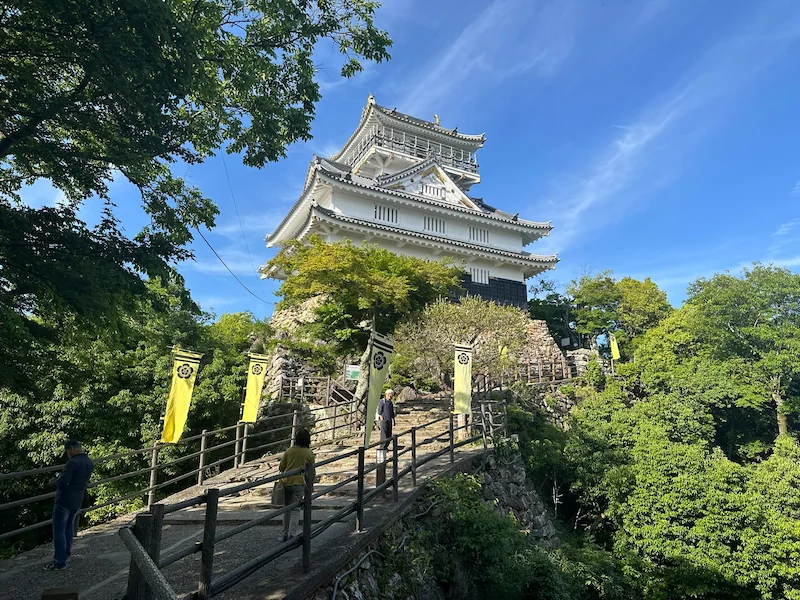
Gifu Park and Gifu Castle are covered in detail in a dedicated companion guide. From the hillside residence ruins, garden remains, and three-story pagoda at the base, up to the gate ruins, stone walls, and castle keep at the summit — the full route with walking directions is set out in the link below.
Gifu Castle & Gifu Park — Full GuideAddress: 1-chome Omiyacho, Gifu City, Gifu Prefecture Approx. 20 min from Gifu Station by bus and on foot
| Related Page | Gifu Castle & Gifu Park — Full Guide |
|---|---|
| Castle Keep Final Admission | May 18, 2026 (closed May 19, 2026 – late October 2027) |
| Museum Final Admission | March 31, 2026 (closed from April 1) |
| Notes | Hilltop ruins (presumed First Gate site, stone walls, well remains) remain open as normal |
Kawaramachi Historic Streetscape
The riverside port town that Nobunaga’s castle-town vision brought to life. White lattice townhouses that have survived to this day.
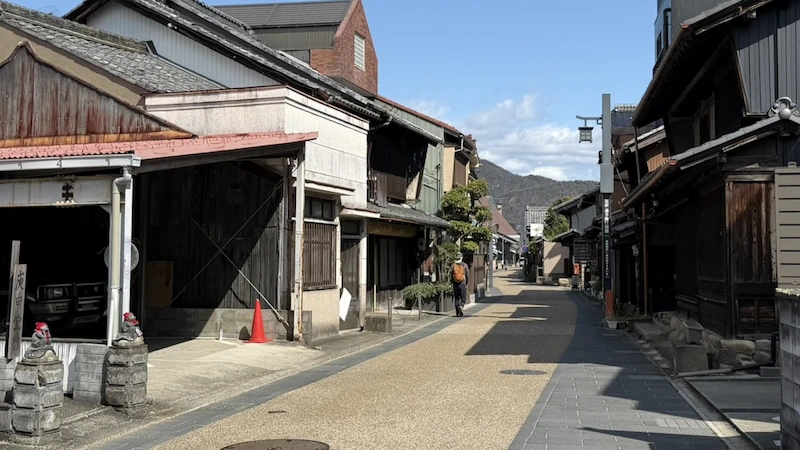
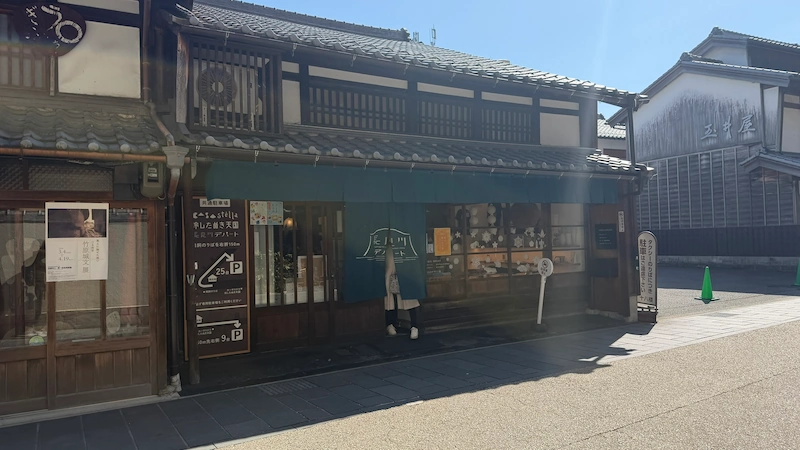
Kawaramachi sits quietly along the banks of the Nagara River, and its history runs directly through the figures at the center of this guide. The castle town was originally laid out by Saitō Dōsan — the warlord depicted in countless Japanese historical dramas as Nobunaga’s father-in-law — and it was Oda Nobunaga who dramatically expanded it after his conquest of Mino Province in 1567. After renaming Inabayama Castle “Gifu Castle,” Nobunaga rolled out the free-market policy that abolished guild monopolies and opened trade to all comers. He also granted river merchants the right to form the Funaki-za guild, encouraging a flexible, entrepreneurial approach to urban development. By leveraging the Nagara River as a freight artery, he transformed the castle town into one of the foremost commercial cities in the country.
Kawaramachi miraculously escaped the 1945 Allied bombing raids that reduced much of Gifu City to ash. As a result, the traditional townhouses (machiya) and earthen-walled storehouses built from the Edo period through the early Shōwa era — roughly the 17th through early 20th century — survive in remarkably good condition. These wooden buildings, characterized by their narrow street frontages and deep floor plans (a classic feature of Japanese merchant architecture that minimized the tax assessed on street-facing width), line the lanes while ordinary residents continue to live in them, keeping the streetscape alive rather than frozen.
- White lattice townhouses: With utility lines buried underground, nothing interrupts the view — the street feels uncannily like a step back into the Edo period.
- Kawaramachi-ya (former paper merchant’s house): A café and gallery converted from an old washi (Japanese paper) wholesale merchant’s building. Look for the red post box out front; the inner tearoom, housed in a converted storehouse, is an ideal place to slow down.
- Sumii Tomijiro Shoten: Gifu City’s only remaining workshop specializing in handmade uchiwa (round fans), applying persimmon tannin lacquer using centuries-old techniques. Artisans can often be seen at work in the shop.
- Nagara River Department Store Minatochō: A select shop curating traditional crafts and food products from the Nagara River basin — a good place to find Mino washi paper, Gifu lanterns, and Gifu umbrellas.
- Cormorant fishing season: From around May 11 to October 15, the Nagara River comes alive with ukai — a millennia-old fishing tradition in which trained cormorants catch sweetfish under torchlight while the fishermen steer wooden boats. Nobunaga himself patronized the cormorant fishermen, granting them the title usho (“cormorant master”) and a stipend of rice — making him arguably the first official sponsor of this extraordinary practice. Boats depart from the landing near Kawaramachi, and the night scene, with its lantern-lit boats, is unforgettable.
Address: Minatochō / Tamaichō / Motohamamachi area, Gifu City, Gifu Prefecture Approx. 5-min walk from the “Nagara Bridge” bus stop
| Founded | Castle town foundations laid by Saitō Dōsan in the mid-16th century; expanded by Nobunaga from 1567 onward. Surviving townhouses date from the Edo period through the early Shōwa era. |
|---|---|
| Founders | Saitō Dōsan (town infrastructure); Oda Nobunaga (commercial expansion via free-market policy and river port development) |
| Structure & Features | Merchant townhouses with white and rough-hewn lattice facades, earthen-walled storehouses, and black-plastered boundary walls. Narrow frontages with deep floor plans. The streetscape runs through Minatochō, Tamaichō, and Motohamamachō into the lumber district. |
| Restoration History | From 2000: utility lines buried underground, cobblestone pavement laid. 2001: Kawaramachi Town-Making Agreement enacted. |
| Current Status | Still standing. Miraculously survived the 1945 Gifu air raids; Edo- to early Shōwa-era townhouses and storehouses remain in good condition. |
| Cultural Property Status | National Significant Cultural Landscape: “Cultural Landscape of Gifu in the Middle Reaches of the Nagara River” (designated 2014) / Japan Heritage Site No. 1: “Lord Nobunaga’s Hospitality” constituent cultural property (certified 2015) |
- A miracle of survival: While most of Gifu City was destroyed in the 1945 air raids, Kawaramachi was spared — a stroke of fortune that preserved an intact slice of pre-modern Japan that had no business surviving the twentieth century.
- Rooftop Shinto shrines: Look closely at the rooftops of the older machiya and you may spot small yane-gami — miniature Akiba Shrine sanctuaries placed on the roof ridge. In this flood-prone region, it was common practice to enshrine a fire and flood deity on the highest point of the house. A small but telling window into local folk religion.
- Bashō and cormorant fishing: The haiku master Matsuo Bashō visited Gifu in 1688 and composed one of his most celebrated verses beside the Nagara River, capturing the bittersweet spectacle of the cormorant boats. Nobunaga, for his part, is credited as the first patron to formally recognize the cormorant fishermen — granting them an official title and stipend — making him a surprisingly central figure in the cultural history of this ancient tradition.
Gifu Zenkoji Temple (Zenkoji Anjoin)
Adding a dimension of sacred history to your Nobunaga itinerary
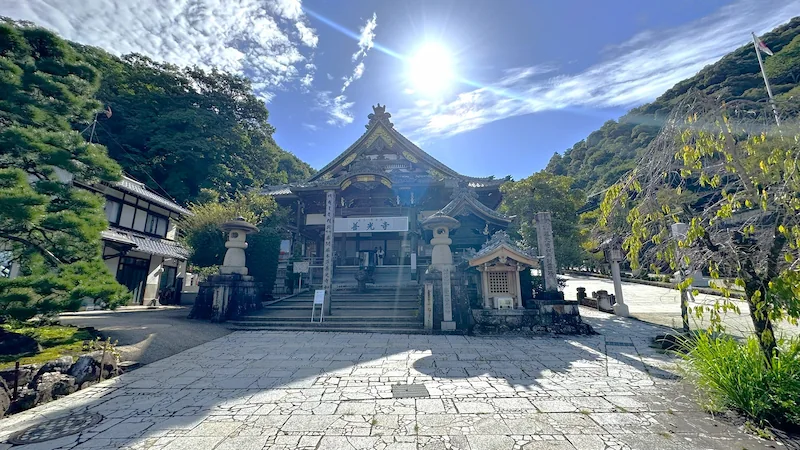
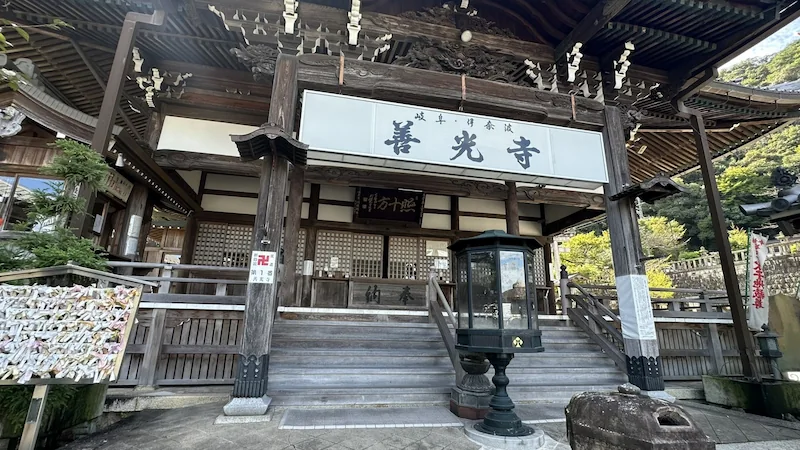
Close to Inaba Shrine lies Gifu Zenkoji Temple (formally: Zenkoji Anjoin), a temple with traditions tied to Nobunaga. The temple’s founding legend involves the movement of the Zenkoji Buddha image — a sacred statue associated with Japan’s famous Zenkoji Temple in Nagano Prefecture, which has drawn pilgrims for over a millennium. As with many such founding traditions, the details are transmitted as temple lore rather than documented history, so it is worth receiving them with that understanding. The original Zenkoji in Nagano is one of the most visited pilgrimage sites in Japan, drawing millions of visitors regardless of their Buddhist sect — a spiritual crossroads without parallel.
The main hall was destroyed in the 1891 Nōbi Earthquake — one of the largest earthquakes ever recorded in Japan’s interior — and rebuilt in the early Taishō era (early 20th century). It has the unhurried atmosphere of a neighborhood temple where locals come to pray, rather than a tourist attraction. The hall also houses a seated Shakyamuni Buddha image from the Heian period (794–1185 CE), designated a Gifu City Important Cultural Property. Dropping in here mid-itinerary creates space for a different kind of reflection: not the campaigns of a warlord, but the daily spiritual life of the people who lived through the same history.
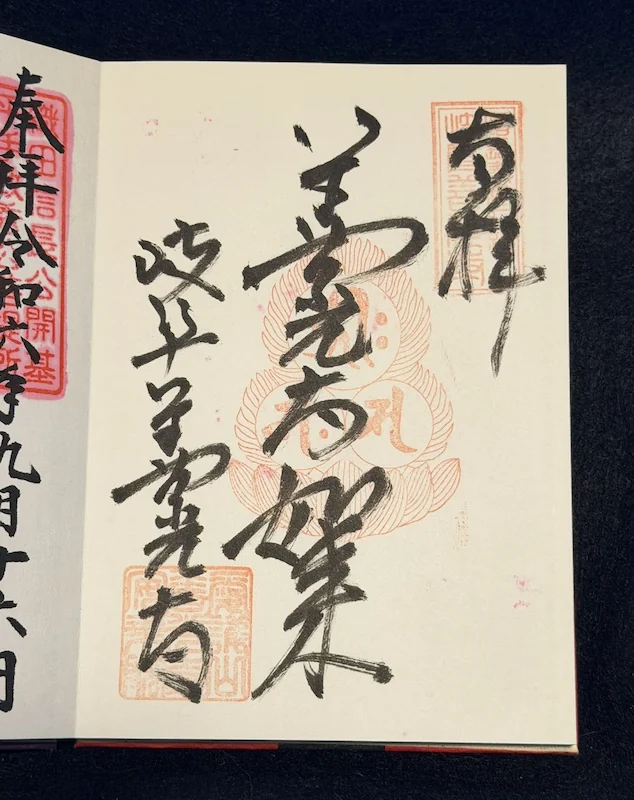
Goshuin: Received at the temple office after worship during our visit. The temple is busier around special observance days (Setsubun / the Cucumber Sealing ritual), and reception hours may change on those days.
- The itinerant Zenkoji Buddha image: The founding legend of this temple turns on the story of a sacred image said to have passed through the hands of the Takeda, Oda, Toyotomi, and Tokugawa clans before returning home — a reminder that religious objects, like people and power, were caught up in the turbulence of the Warring States era.
- A hall built in recovery: Rebuilt after a catastrophic earthquake, the main hall has none of the polish of a tourist landmark — and that is exactly its appeal. It is the kind of place that endures.
- If your timing allows: The Setsubun Star Festival in early February and the summer Cucumber Sealing ritual transform the visit into a participatory experience. Confirm dates and access in advance, as procedures change year to year.
Address: 〒500-8043, 1-8 Inabadori, Gifu City, Gifu Prefecture Approx. 20 min from JR Gifu Station by bus and on foot
| Founded | Unknown (current main hall rebuilt in the early Taishō era) |
|---|---|
| Founder | Temple founder: Oda Hidenobu (Nobunaga’s eldest grandson) |
| Structure & Features | Shingon-sect (Daigo branch) Buddhist temple / Principal image: Zenkoji Nyorai (a replica of the famous Zenkoji image in Nagano) / No. 1 temple of the Mino New Shikoku 88-temple pilgrimage circuit |
| Restoration History | Destroyed in the 1891 Nōbi Earthquake → main hall rebuilt in the early Taishō era |
| Cultural Property Status | Seated Shakyamuni Buddha image: Gifu City Important Cultural Property |
| Notes | Annual events include the Setsubun Star Festival (around early February) and the Cucumber Sealing ritual (summer). Schedules and procedures are subject to change each year. |
- The principal image’s odyssey: According to temple tradition, the Zenkoji Buddha image passed successively through the possession of the Takeda, Oda, Toyotomi, and Tokugawa clans before eventually returning to Nagano — a journey that traces the entire arc of Japan’s Warring States power struggles through a single object of faith.
- A pilgrimage starting point: As No. 1 on the Mino New Shikoku 88-Temple Circuit — a regional echo of the famous 88-temple pilgrimage on Shikoku island — this temple is where a dedicated circuit of sacred sites begins, and approaching it as such gives the whole city a different texture.
- The next generation of the Oda clan: That the founding patron was Oda Hidenobu — Nobunaga’s eldest grandson — makes this a rare site where you can trace the story of the Oda family beyond Nobunaga himself.
Presumed Grave of Lady Nō (Hair-Lock Mound)
A memory without documentation — sleeping in a residential alleyway
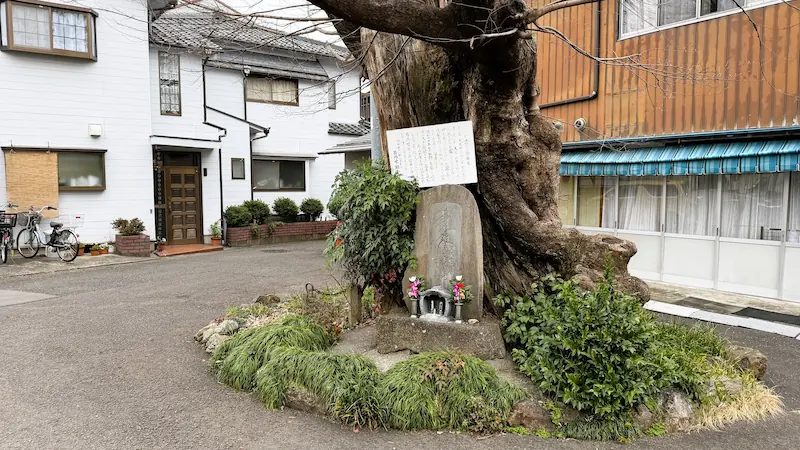
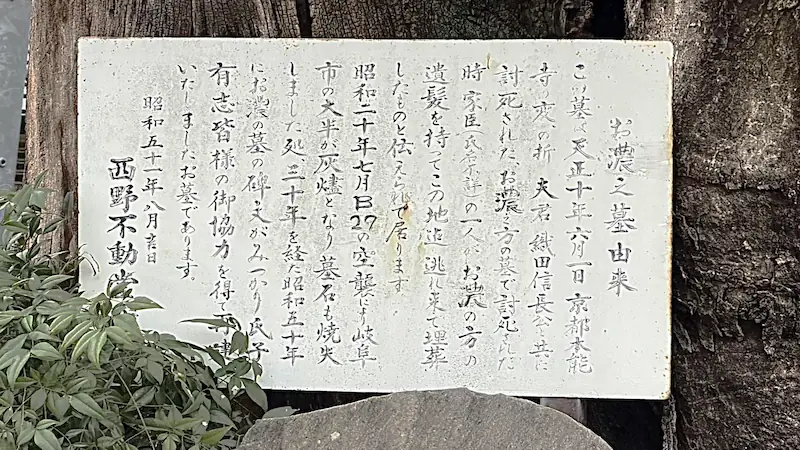
In a residential neighborhood of winding lanes, just in front of the Nishino Fudō shrine, stands a stone marker: the presumed grave of Lady Nō, also known as Kichō. Lady Nō was the daughter of Saitō Dōsan — the very warlord whose castle Nobunaga seized — and is said to have become Nobunaga’s principal wife. (For context: in the Warring States era, marriages between rival clans’ families were arranged as political alliances, making the union between Nobunaga and the daughter of his future target a particularly complex piece of political theater.) Despite her prominence in popular history and drama, virtually no reliable historical documents record her life after the marriage ceremony, and the full story of who she was and what became of her remains deeply obscure. That is precisely what makes this place resonate. The local tradition that a retainer fled the Honnoji Incident carrying a lock of her hair and buried it here is less a claim of historical fact than an act of communal remembrance — a way for Gifu’s people to keep her, and Nobunaga’s era, alive.
According to Gifu City records, the original hair-lock mound was destroyed in the 1945 air raids and was later restored through the efforts of local volunteers in 1976. Fresh flowers are sometimes placed in front of the stone marker, evidence that someone still comes to pay their respects.
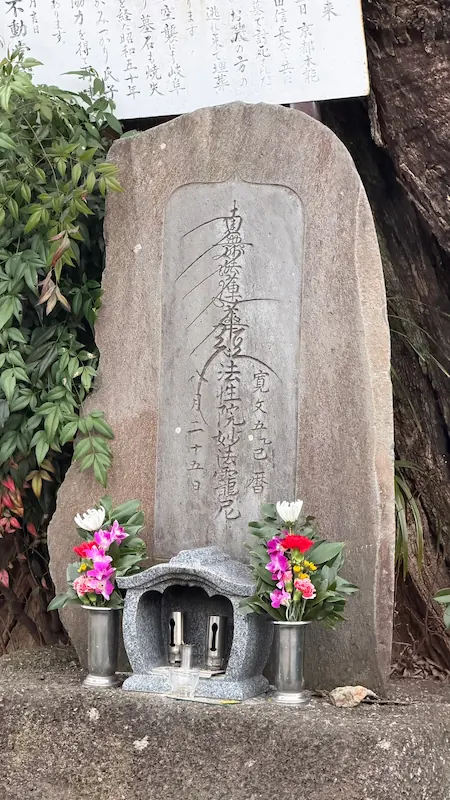
Origins of the Grave of Lady Nō
This grave is said to mark the resting place of Lady Nō, the principal wife of Lord Oda Nobunaga, who is believed to have perished alongside her husband during the Honnoji Incident on June 2 of the 10th year of Tenshō (1582). According to tradition, one of the retainers carried a lock of her hair to this place and buried it here.
The original monument was destroyed in the B-29 air raids of July 9, 1945. In 1975, the stone inscription of the Grave of Lady Nō was rediscovered, and the monument was rebuilt with the generous cooperation of local residents.
- The contrast of great tree and stone marker: The stone appears suddenly in the middle of an ordinary residential lane, beside an ancient tree. The effect is unlike anything you encounter at a castle or a temple — it is history embedded in everyday life.
- Sitting with tradition: Lady Nō is a figure for whom the historical record is thin. This site is best approached not as evidence, but as an experience of how a community chooses to remember — and what it preserves when documentation runs out.
- Summer lane-walking: The deep shade of summer makes a stroll through these alleys genuinely pleasant. The flowers that sometimes appear at the stone are a quiet reminder of the local devotion still alive around this place.
Address: 〒500-8802, Fudōchō, Gifu City, Gifu Prefecture (in front of Nishino Fudō shrine) Approx. 24 min from Gifu Station by bus and on foot
| Founded | Unknown (original mound destroyed 1945; rebuilt 1976) |
|---|---|
| Founder | Unknown (rebuilt through the efforts of local volunteers) |
| Structure & Features | Hair-lock mound (stone marker) / Preserved as the “Grave of Lady Nō” through local tradition / Located in a residential alleyway in front of Nishino Fudō shrine |
| Cultural Property Status | Unknown (Gifu City documentation notes it is “not a designated historic site”) |
| Notes | A site of tradition associated with Lady Nō (Kichō). Given the scarcity of historical records on this figure, all content here should be understood as transmitted tradition. |
- Destroyed and rebuilt: Not by a Warring States-era fire, but by the 1945 Gifu air raids — a reminder that the wounds of the twentieth century run through these sites as well as the sixteenth.
- Easy to miss: Set just off the main tourist pathways in a quiet residential area, this marker is the kind of place that disappears without a map app. Finding it feels like being let in on a secret.
- Lady Nō’s connection to Gifu: As Nobunaga’s principal wife and Saitō Dōsan’s daughter, Lady Nō embodies the intersection of the two great powers whose rivalry defined this land. Visiting sites connected to her adds a personal, human layer to an itinerary that could otherwise remain purely political and military.
Nishino Fudōdō
One of the four guardian deities Nobunaga stationed at the corners of his castle town — reading a spiritual city plan
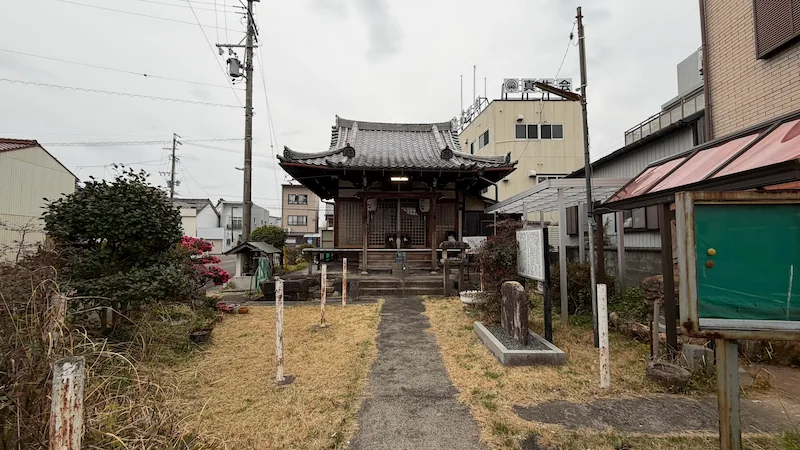
Directly across from the hair-lock mound of Lady Nō stands Nishino Fudōdō Hall. The grave marker tends to draw the eye first, but it is actually this small hall that holds one of the more intriguing pieces of Nobunaga’s city-planning story.
The principal image — a statue of Fudō Myōō (Acala), the immovable “Wisdom King” venerated across East Asia as a fierce protector who burns away delusion and evil — is said to have been carved by the monk Kōbō Daishi (Kūkai, 774–835 CE), the founder of Shingon Buddhism in Japan and one of the most revered religious figures in Japanese history. (For context: Kōbō Daishi is to Japanese Buddhism something like what St. Francis is to Western Catholicism — a beloved saint whose legacy is woven into the landscape through temples, pilgrimage routes, and folk tradition across the entire country.) According to tradition, Nobunaga had this image moved to this location after conquering Mino, installing it as a guardian deity of Gifu Castle. His plan, it is said, was to station four deities at the four cardinal points of the castle town — a spiritual perimeter analogous to a military defensive ring. The four were: the Zenkoji Nyorai at Inaba Shrine (north), Fudō at Nishino (west), Jizō at Oguma (Jion-ji Temple, south), and Kannon at Mie-ji Temple (east). These four were collectively called the “Four Heavenly Kings” — borrowing the Buddhist concept of four guardian kings who protect the world’s four directions.
Like the hair-lock mound beside it, Nishino Fudōdō was destroyed in the 1945 air raids and subsequently rebuilt. Knowing that Nobunaga intentionally positioned this statue as a spiritual anchor point transforms what looks like an unremarkable small hall into a window onto an entire theory of urban governance.
- The hall and its principal image: A small hall housing a Fudō Myōō image said to have been carved by Kōbō Daishi. The provenance — brought here by Nobunaga’s deliberate design from a distant location — gives this modest building an unexpected weight.
- Imagining the “Four Heavenly Kings” layout: Plotting the four sites on a map — Zenkoji Nyorai (Inabadori), Fudō (Nishino), Jizō (Oguma / Jion-ji), Kannon (Mie-ji) — reveals a rough quadrant that wraps around the castle town as a whole. A city protected by sacred geography.
- Best paired with nearby sites: Combining this with Sofukuji Temple, the road-marker mound of Dōsan, and other sites in the Nobunaga-Nō orbit reveals the surprising geographic spread of the Gifu castle town.
Address: 〒500-8802, Fudōchō, Gifu City, Gifu Prefecture Same location as the previous spot (directly adjacent to the hair-lock mound)
| Founded | The Fudō image is traditionally attributed to Kōbō Daishi. Relocated here by Nobunaga from 1567 onward. |
|---|---|
| Founder | Fudō image: Kōbō Daishi (tradition). Relocation to this site: Oda Nobunaga. |
| Structure & Features | Small hall with Fudō Myōō as principal image. Said to be the western station of Nobunaga’s “Four Heavenly Kings” guardian arrangement. |
| Restoration History | Destroyed in the 1945 Gifu air raids. Rebuilt after the war. |
| Cultural Property Status | Unknown |
| Notes | The hair-lock mound of Lady Nō is directly adjacent. The neighborhood name “Fudōchō” (Fudō district) derives from the Nishino Fudō shrine. |
- The logic of the “Four Heavenly Kings”: Nobunaga’s arrangement of four protective deities at the cardinal points of his castle town drew on the Buddhist concept of four guardian kings who protect the four directions. It reveals a ruler who understood that governing a city means managing its symbolic and spiritual fabric, not just its military defenses.
- A place name that outlasted the hall: The district name “Fudōchō” derives directly from the Nishino Fudō shrine — proof that even after the hall itself was destroyed and rebuilt, the presence of the deity left its mark permanently on the city’s map.
- Kūkai and Nobunaga, connected: An image traditionally attributed to a 9th-century monk, incorporated centuries later into the defensive spiritual framework of a 16th-century warlord — two eras of Japanese history joined by a single object of devotion.
Sofukuji Temple
The Nobunaga father-son mausoleum, blood-stained ceiling, and primary-source documents on display — quietly extraordinary
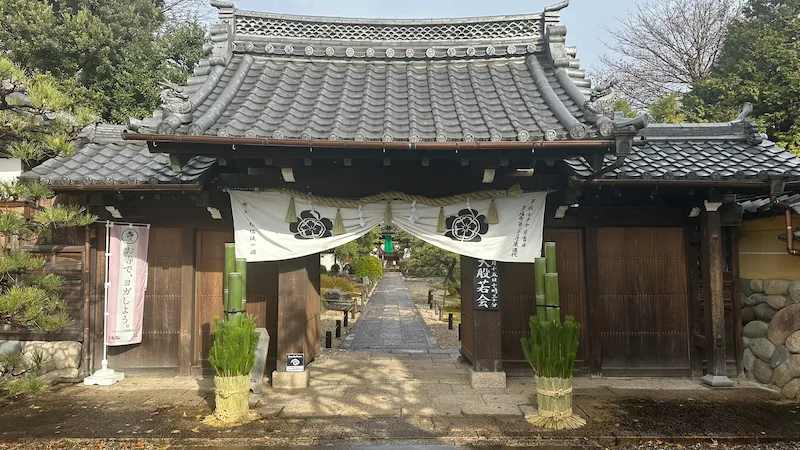
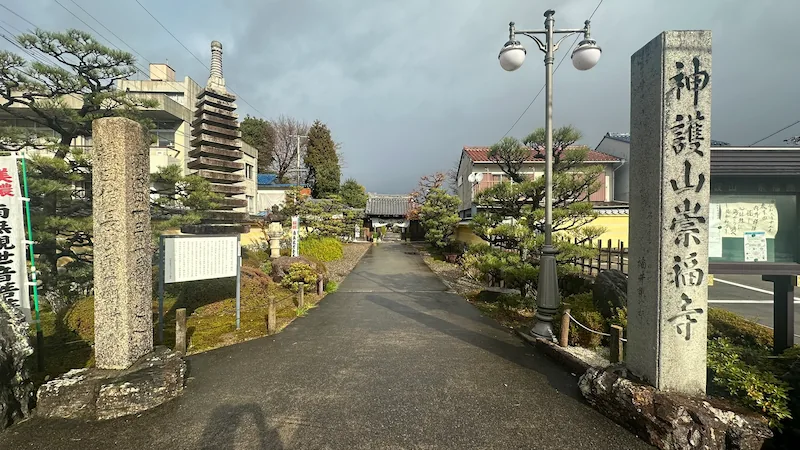
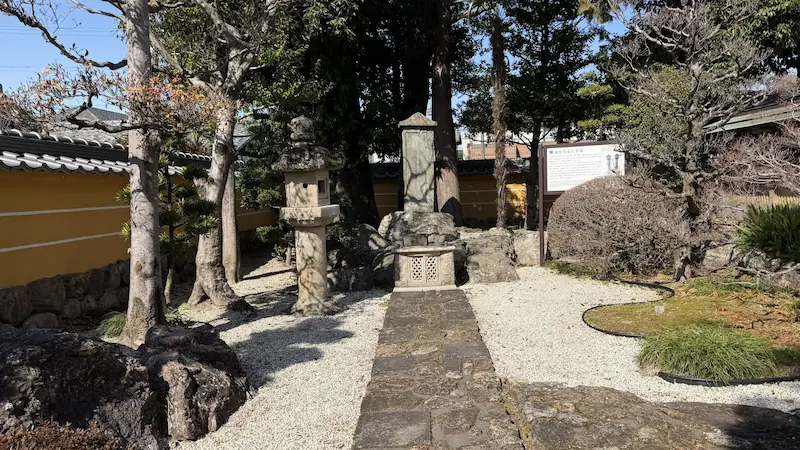
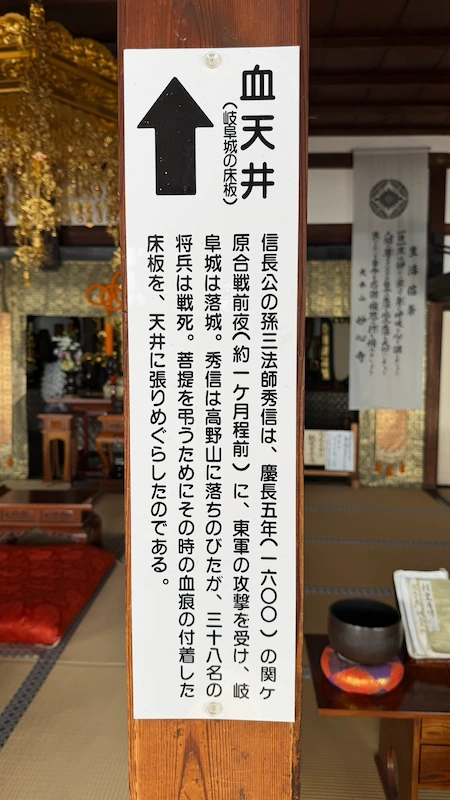
Sofukuji Temple is one of the sites most intimately connected with the era when Nobunaga made Gifu his base, beginning in 1567. When Nobunaga and his heir Nobutada were killed in the Honnoji Incident of 1582 — the sudden, decisive betrayal staged by one of Nobunaga’s own generals — it was Nobunaga’s concubine Onabe no Kata who sent relics to this temple, ensuring that a mausoleum would be established and protected here. The grounds are meticulously maintained, and because the temple sees relatively few visitors, you can walk them at your own pace. The main hall also houses what is said to be a “blood ceiling” — floorboards from Gifu Castle, on which soldiers died during the castle’s fall before the Battle of Sekigahara in 1600, and which were later incorporated into the ceiling as an act of memorial. Knowing the story and then looking up changes the whole atmosphere of the room.
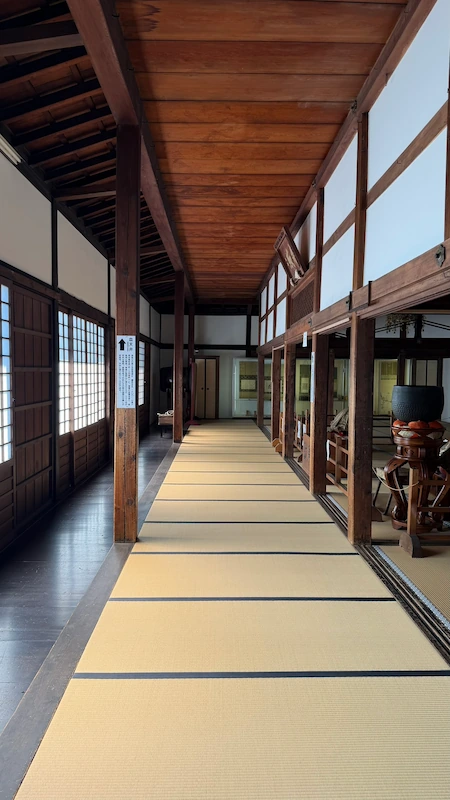
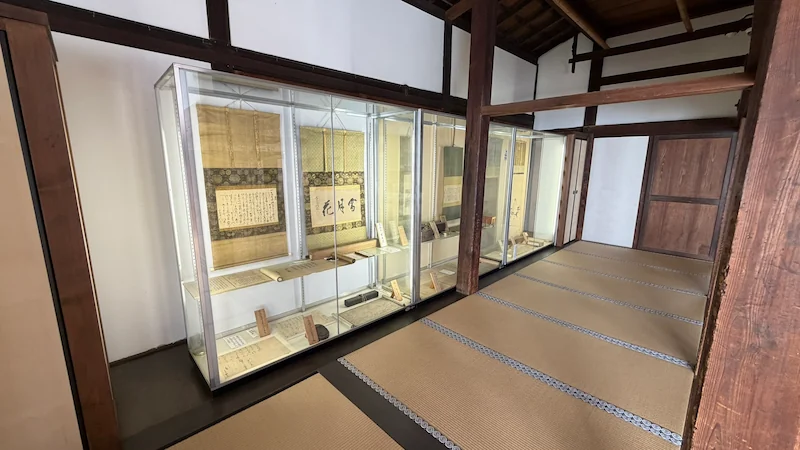
And then there are the exhibits. Sofukuji holds a collection of primary historical documents and artifacts — letters, official prohibitions, gold-ground folding screens, hanging scrolls — that bring the abstractions of Warring States history suddenly, vividly close. Without any theatrical staging or multimedia production, in a quiet room, these original materials pull you directly into the period in a way that no reproduction can replicate. Of everything at this temple, the chance to sit with actual historical documents in that kind of stillness was the single most memorable experience.
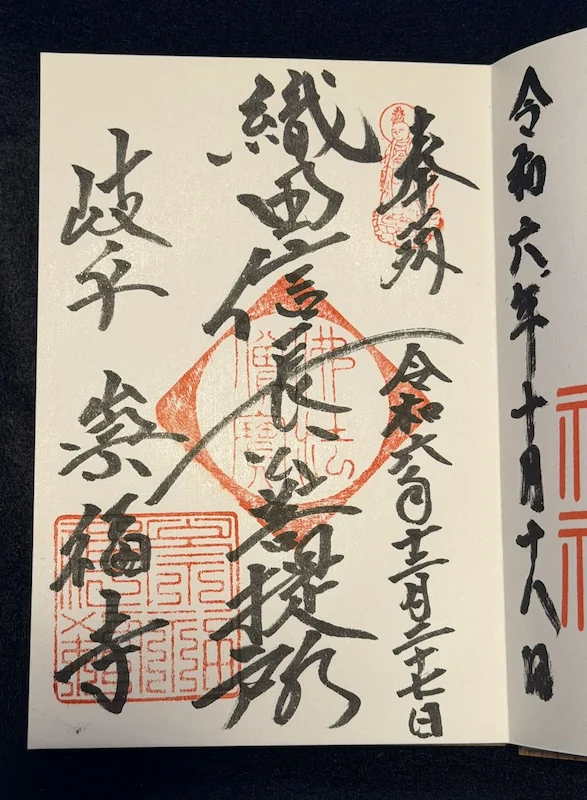
Goshuin:
- The Nobunaga father-son mausoleum: The quiet, private side of martial glory — a place of mourning. A composed, unhurried corner of the grounds where you can offer your respects.
- The blood ceiling (main hall): Said to preserve the memory of the fall of Gifu Castle. Once you know the story, looking up at that ceiling carries a weight that stays with you.
- Autumn foliage: In autumn, the enkianthus shrubs (dōdantsutsuji) blaze red across the garden — a welcome counterpoint to the gravity of the historical themes, and one of Gifu’s better-kept seasonal secrets.
Address: 〒502-0817, 2403-1 Nagarafukumitsu, Gifu City, Gifu Prefecture Approx. 27 min from Gifu Station by bus and on foot
| Founded | Unknown (traditional founding date: 1469 / Bunmei 1, among other accounts) |
|---|---|
| Founder | Traditionally attributed to Toki Narinori and Saitō Nagahiro |
| Structure & Features | Rinzai Zen (Myōshinji branch) temple / Oda Nobunaga father-son mausoleum, memorial tablet hall, blood ceiling (traditional account) |
| Cultural Property Status | Oda Nobunaga father-son mausoleum: Gifu City Designated Historic Site |
| Notes | Memorial services are sometimes held around the Gifu Nobunaga Festival (Gifu Nobunaga Matsuri). Dates and whether public attendance is possible vary by year — check on-site signage for details. |
- The memory of Sekigahara: The temple carries the echoes not only of Nobunaga’s era, but of the fall of Gifu Castle in 1600 — a prelude to the Battle of Sekigahara that decided the course of Japanese history for the next two and a half centuries.
- The Nobunaga Festival connection: During the annual Gifu Nobunaga Festival — a beloved local event in which participants dress in period armor and march through the city — memorial ceremonies are held at the temple, giving it a living role in the city’s ongoing relationship with its history.
- Onabe no Kata’s act of devotion: It was Nobunaga’s concubine Onabe no Kata who ensured the mausoleum was established here, sending the relics and setting the act of commemoration in motion — a detail that adds a human dimension to what could otherwise feel like official historical commemoration.
Tejikara-o Shrine
Where Nobunaga prayed for victory. The 1674 main hall and its dragon carvings will hold your gaze.
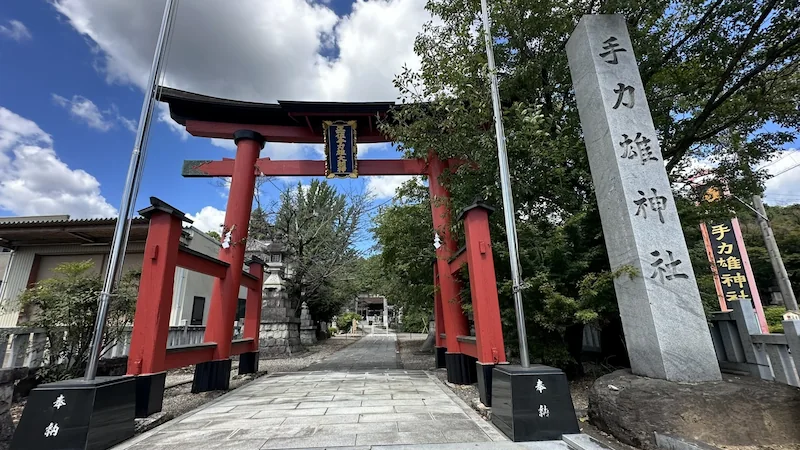
When the name “Nobunaga” comes up, most people think of castles and battlefields. Tejikara-o Shrine in Kakamigahara is neither — it is a place where Nobunaga came to pray for victory, and it has been receiving those kinds of prayers ever since. The enshrined deity is Ame-no-Tajikarao-no-Mikoto, the powerful god of physical strength who, in the creation myths recorded in Japan’s oldest chronicles, used his prodigious might to pry open the cave in which the sun goddess Amaterasu had hidden herself, restoring light to the world. The shrine’s origins are said to reach back to ancient rock-worship (iwakura) practices, long before the formalization of Shinto as an institutional religion. It has served as the principal shrine of the Naka district for centuries, marking the community’s rites of passage and seasonal turning points. According to tradition, Nobunaga prayed here for a successful assault on Inabayama Castle.
The real draw of this shrine is not so much its historical associations as the craftsmanship of the architecture itself. The main hall was rebuilt in 1674 (Enpō 2) and is a designated cultural property of Kakamigahara City. The piece that demands the most attention is a pair of dragon sculptures coiled around the ebi kōryō — the curved “shrimp beams” that span the shrine’s interior above the altar. Up close, the energy and precision of the carving pulls you in completely.
※ Important note: The shrine’s official information clearly states that this location is NOT the site of the famous “Tejikara Fire Festival.” That fire festival is held at a different Tejikara-o Shrine in Gifu City. The two share a name but are separate institutions.
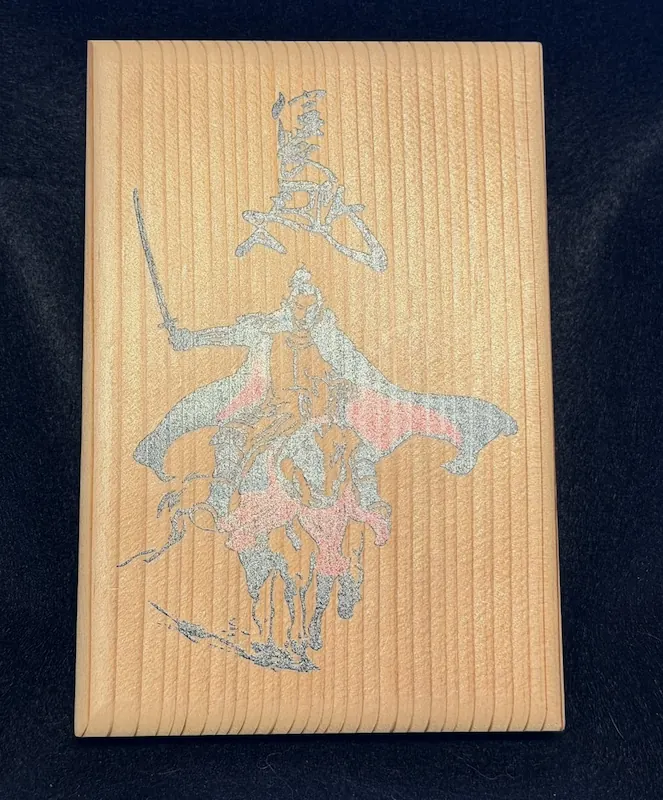
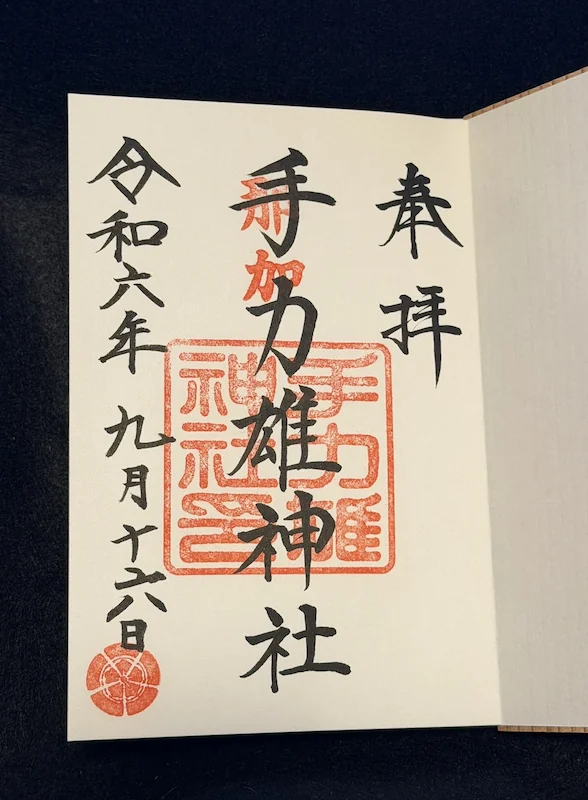
Goshuin and stamp books: The wooden goshuin book available here has a tactile quality completely unlike standard cloth-covered books — a genuinely distinctive travel keepsake. Offerings available may change seasonally.
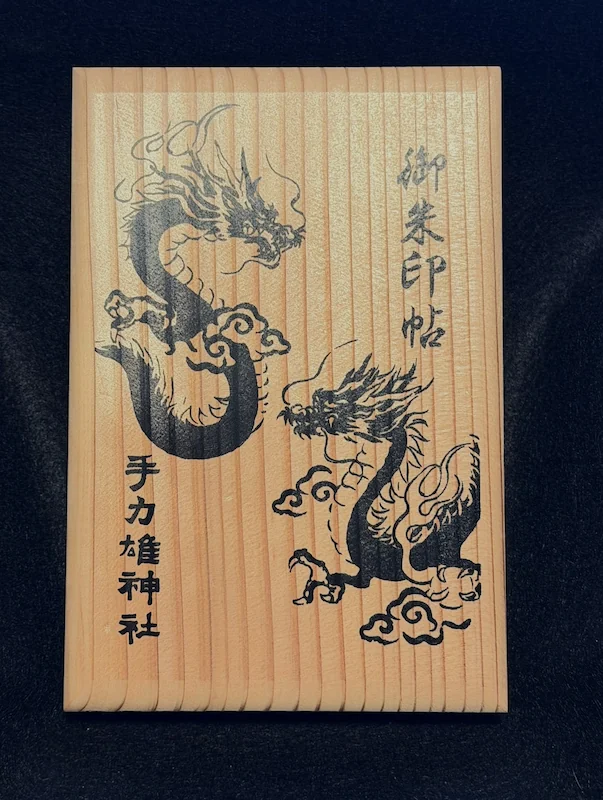
- The main hall’s dragon pair (“male and female dragons”): Coiled around the curved shrimp beams above the altar, this matched pair of sculptures rewards close inspection — the dynamism of the carving only becomes apparent when you step in near.
- The 1674 (Enpō 2) main hall: Among the older surviving wooden structures in Kakamigahara City, the building itself is a destination for anyone interested in traditional shrine architecture.
- If your timing coincides with a festival: The Grand Festival and divine procession (mikoshi parade) are typically held around late April / April 29. Dates vary by year — confirm through official channels before planning around it.
Address: 〒504-0043, 4 Naka Tejikara-cho, Kakamigahara City, Gifu Prefecture Meitetsu Gifu Station → Shinkano Station → approx. 13-min walk (total approx. 40 min)
| Founded | Founding date unknown (ancient origins described in shrine records) / Main hall rebuilt: 1674 (Enpō 2) |
|---|---|
| Founder | Unknown |
| Structure & Features | Principal shrine of the Naka district / Principal deity: Ame-no-Tajikarao-no-Mikoto / Main hall features a matched pair of dragon carvings |
| Cultural Property Status | Tejikara-o Shrine Main Hall: Kakamigahara City Designated Cultural Property (designated April 21, 1977) / “Male and Female Dragons”: Kakamigahara City Designated Cultural Property (designated July 13, 1957) |
| Notes | Tradition holds that Oda Nobunaga prayed here for victory in battle / This shrine does NOT host a fire festival |
- Ancient rock-worship origins: Shrine records describe origins in iwakura practices — the reverence of natural sacred rocks that predates organized Shinto — meaning this site carries a layer of ritual memory that extends back far beyond the Warring States era.
- Don’t confuse the fire festival: The official shrine information explicitly notes that this is not the venue of the “Tejikara Fire Festival” — that event takes place at a Tejikara-o Shrine in Gifu City. The shared name causes persistent confusion.
- A prayer for victory that echoes forward: The tradition of Nobunaga praying here before his assault on Inabayama Castle has fed a continuing cult of victory-seeking (kachiunshou) that draws visitors to this day — a living thread connecting the 16th century to the present.
Where to Collect Goshuin & Gojoin (Seal Stamps)
Whether a stamp is written in person, available as a pre-written slip, and current reception hours all change from day to day. This table focuses on the most likely window for each site. Confirm on the day via on-site notices or official channels. Note: Goshuin (御朱印) are the handwritten or stamped devotional seals collected at shrines and temples; gojoin (御城印) are the castle-specific equivalent, a more recently popularized tradition unique to Japanese castle sites.
| Site | Seal Stamp Available | Where to Receive | Notes |
|---|---|---|---|
| Kenkun Shrine (Gifu Nobunaga Shrine) | Yes | Kashimori Shrine office | As a subsidiary shrine, handled by Kashimori Shrine. Confirm gold-ink goshuin date on-site. |
| Gifu Zenkoji Temple | Yes | Gifu Zenkoji Temple office | Busier on observance days; reception hours may change. |
| Sofukuji Temple | Yes | Sofukuji Temple reception | Admission and reception may vary by season. |
| Entokuji Temple | Unconfirmed | — | Temple is open for worship. Confirm goshuin availability on-site. |
| Tejikara-o Shrine (Kakamigahara) | Yes | Tejikara-o Shrine office | Offerings including the wooden goshuin book may vary seasonally. |
| Gifu Park (Gifu Castle) | Gojoin (castle stamp) — Yes | 1F of the ropeway hillside station | Varieties may change seasonally. |
Frequently Asked Questions
※ This article is based on information current as of March 2026. Admission hours, entry fees, closure days, offerings available, and event schedules are all subject to change. Please verify the latest information with each facility’s official sources before your visit.
※ Whether goshuin and gojoin are written in person or available as pre-written slips, reception hours, and items offered for sale can all vary from day to day. We recommend confirming via on-site notices or official announcements on the day of your visit.
※ Descriptions based on tradition are marked with “traditionally” or “said to be.” For matters where historical documentation is limited, please defer to the guidance provided on-site by the temple or shrine itself.
Related Pages
For the full guide to Gifu Castle and Gifu Park, and for other Oda Nobunaga-related sites, see below.


comment