This guide lists the best “Nobunaga-related” spots you can visit from Gifu Station, with realistic walking & bus time estimates.
Quick answer: First-timers should do “Golden Statue (Station) → (Bus) Gifu Park / Mt. Kinka area” + add Entoku-ji if you have extra time (for the famous “free market” signboards).
For goshuin (temple/shrine stamps) and entry rules, I only write what I could confirm via on-site notices / official information.
The moment you arrive at Gifu Station, you’ll notice Nobunaga’s presence right away. Start with the golden statue to anchor the vibe—“Gifu = Nobunaga’s city”—then choose what fits your energy: compact city-center temples/shrines, or a bus ride to the Gifu Park / Mt. Kinka area. This page is not about “checking every box.” It’s designed for travelers who want a clear, low-stress plan and a few high-impact places that make the history feel real.
Instead of forcing one model course, this guide focuses on how to move (walk vs bus), where visitors tend to get confused, and how to “build” your day on the fly. Each spot is explained by what you can actually see on site (statues, plaques, memorials, relics, etc.), so you’ll understand the “why” in seconds. If something is uncertain (hours, stamping style, events), I don’t over-claim—because travel is smoother when expectations are honest.
Note: Opening hours, goshuin availability, and event schedules can change. Please double-check the latest on-site notices or official announcements before you go.
- Walk & Bus Planning (Mini Guide)
- Spot Guide
- Golden Statue of Oda Nobunaga
- Entoku-ji Temple
- Kenkun Shrine (Gifu Nobunaga Shrine)
- Gifu Zenko-ji (Zenko-ji Anjo-in)
- Gifu Park / Mt. Kinka Area (Gifu Castle Area)
- “Young Oda Nobunaga” Statue (by Seibo Kitamura)
- Sofuku-ji Temple
- “Tomb of Nohime” (Hair Memorial Mound, tradition)
- Tajikarao Shrine (Kakamigahara)
- FAQ
- Q1. How long does it take from Gifu Station to the Gifu Park / Mt. Kinka area?
- Q2. Can I do everything on foot, or do I need buses?
- Q3. If I only have half a day, what should I prioritize?
- Q4. Where can I likely get goshuin (stamps)?
- Q5. Is this enjoyable on a rainy day?
- Q6. Is Gifu Castle original?
- Q7. When should I go for special events?
- Q8. Is Tajikarao Shrine the same place as the famous fire festival?
- Goshuin / Castle Seal Counter Summary
- Related
Walk & Bus Planning (Mini Guide)
For a Nobunaga-themed visit around Gifu Station, the easiest structure is: Station Area (on foot) → Gifu Park / Mt. Kinka Area (by bus). This reduces wrong turns and helps you enjoy the day without rushing. Below is a practical “how to think” guide rather than a strict itinerary.
Common bus confusion (simple fix): For Gifu Park / Mt. Kinka, the stop name can vary by route. When boarding, check the destination display and choose a bus clearly heading toward “Gifu Park” (or the park/museum area). For Nagara-area sights like Sofuku-ji, it helps to pick a bus whose destination display includes “Nagara”.
Time-based quick plan:
Half day: Golden Statue → Gifu Park / Mt. Kinka area (add Entoku-ji if you still have time)
Full day: + add Zenko-ji / Kenkun Shrine / Sofuku-ji depending on your theme (goshuin, memorials, art & architecture)
1) The easiest rule: separate the “Walk Zone” and the “Bus Zone”
Best default: walk in the city center → bus to Gifu Park (and optionally Nagara). Keeping zones separate prevents wasted time and makes the day feel richer.
Walk-friendly zone (Station → city center)
- Golden Oda Nobunaga Statue (Gifu Station)
- Entoku-ji (city center)
- Kashimori Shrine & Kenkun Shrine (Gifu Nobunaga Shrine / goshuin window)
Bus recommended (Gifu Park / Nagara area)
- Gifu Park / Mt. Kinka area (ropeway, viewpoints, castle area)
- Sofuku-ji (Nagara area)
Separate day trip idea (Train + walk, Kakamigahara)
- Tajikarao Shrine (Kakamigahara)
2) Simple “build templates” that don’t fall apart
Even if your schedule is flexible, these templates stay stable.
Template A: first-timer classic (half day +)
- Golden Statue (quick photo at the station)
- (Walk) Entoku-ji or Kashimori Shrine
- (Bus) Gifu Park / Mt. Kinka area (base area walk → ropeway if you have time)
Template B: rainy / windy day (short distances, high satisfaction)
- Golden Statue → city center (Entoku-ji / Kashimori Shrine) and finish comfortably
- Save Mt. Kinka views for a clear day (fog can be atmospheric, though)
Template C: energetic day (+ add Nagara)
- After Gifu Park / Mt. Kinka, add Sofuku-ji (Nagara area) if you still feel good
- Don’t force long walks between zones—use the bus and treat each area as a clear destination
Template D: day that includes Tajikarao Shrine (Kakamigahara)
- It’s a different transit line and flow—splitting into a separate day is totally fine
- Meitetsu + walking is often easier to predict than chaining it into city-center routes
3) Tiny hacks that help a lot
Prevent “route scatter”
- Don’t mix too many spots across zones: keep Walk Zone (Station/city center) and Bus Zone (Gifu Park/Nagara) mostly separate
- A good density is 2–3 spots per area. You’ll remember more, and the day feels less rushed.
Mt. Kinka is not “summit or nothing”
- If weather/crowds make the ropeway or summit difficult, make the base-area walk (terrain & ruins) your main experience—you’ll still get a strong “castle-city” feeling.
Spot Guide
Golden Statue of Oda Nobunaga
⭐ Recommendation
Historical value: ☆
Visual impact: ☆☆
Experience: ☆
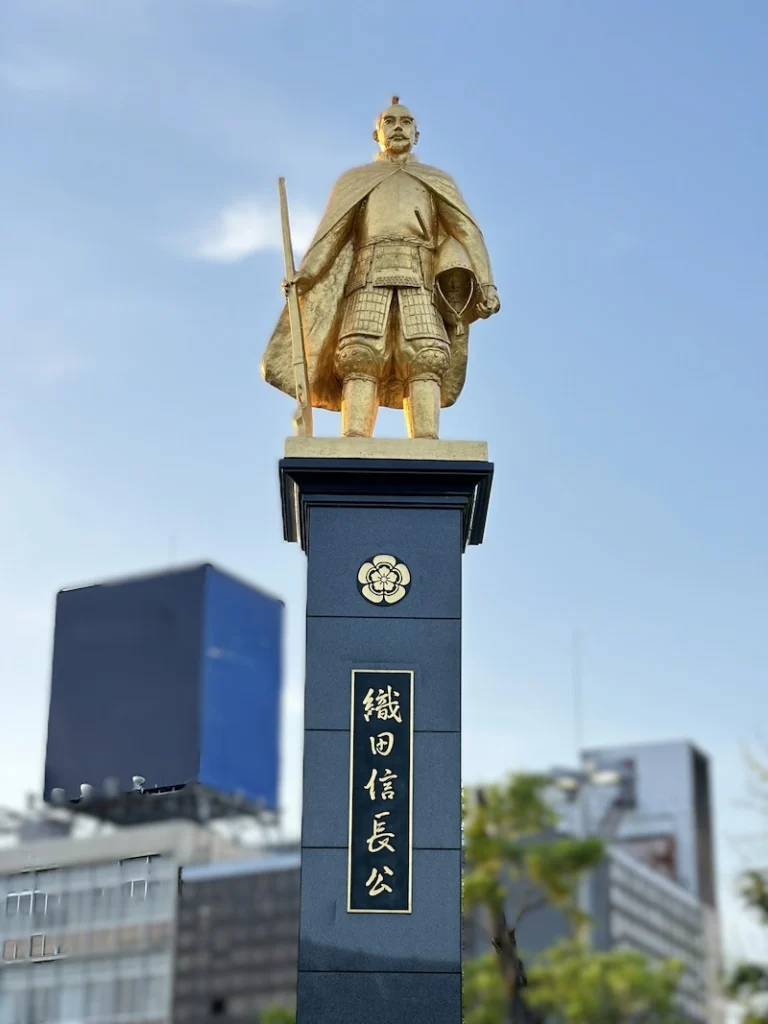
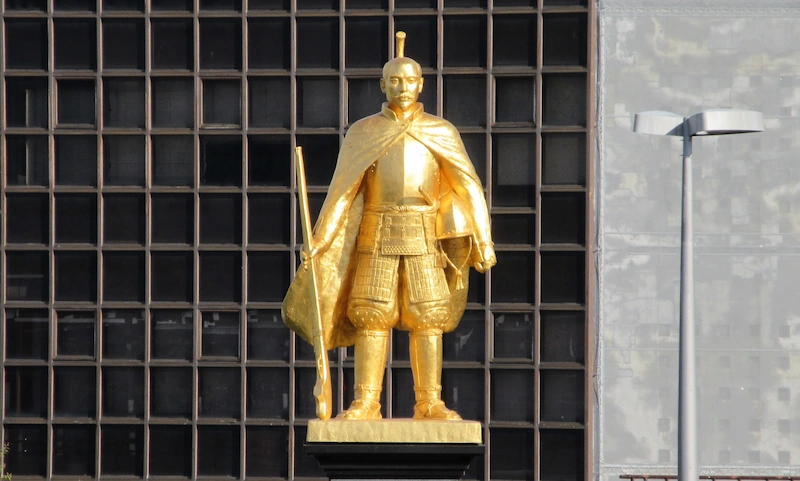
Start your Gifu trip by standing under pure gold swagger. The Golden Statue of Oda Nobunaga in front of JR Gifu Station is not a historical ruin—but it’s an instant “Welcome to Nobunaga’s city” moment. The armor catches light differently depending on angle, and the pose is memorable: matchlock gun in the right hand, Western-style helmet in the left. It works as a modern symbol for the energy Nobunaga brought to Gifu—new rules, new commerce, a new kind of castle town.
| Built | September 2009 |
|---|---|
| By | Installed by a local group (city anniversary project) / statue approx. 3m; about 11m including base |
| Type | Gold-finished standing statue (station plaza landmark) |
| Restoration | Unknown |
| Status | Standing |
| Damage/Loss | Unknown |
| Official designation | None |
| Notes | JR Gifu Station (North Exit side) |
🗺 Address: 1-100 Hashimotocho, Gifu City
🚶 Access
From JR Gifu Station: 1 minute walk (approx. 0.1 km)
⏳ Time needed
Quick stop: ~3 min
Enjoy & photograph: ~10 min
📍 Highlights
- Instant “Nobunaga city” mood: a perfect first checkpoint the moment you arrive in Gifu.
- Great photos in changing light: daytime shine, sunset warmth, and night lighting all feel different.
- Best season tip: on crisp winter days, the gold pops with high contrast.
📌 Trivia
- Not a ruin—still meaningful: it’s a modern monument that “translates” Nobunaga’s Gifu-era ambition into today’s gateway location.
- Photo trick: stand slightly lower and look up to emphasize the armor’s 3D form.
- Why it matters for travelers: it’s the easiest “I’m in the right place” landmark when starting your day.
Entoku-ji Temple
⭐ Recommendation
Historical value: ☆☆☆
Visual impact: ☆☆
Experience: ☆☆
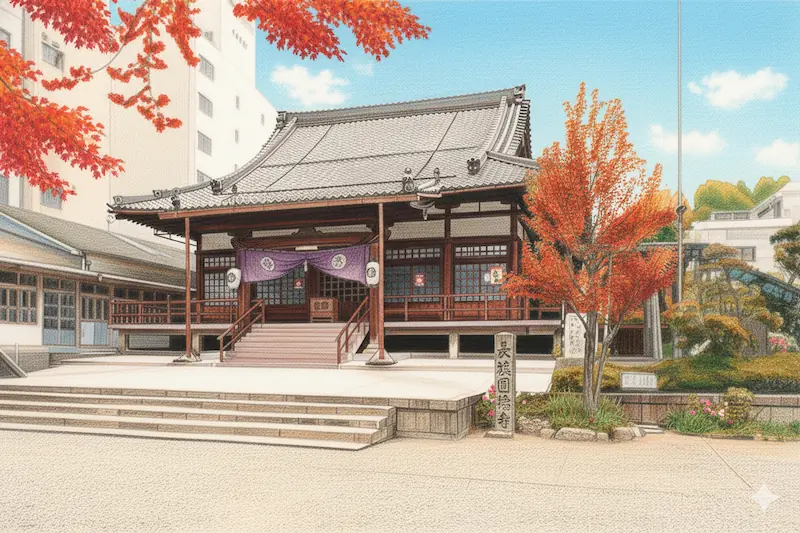
If you want something more “real” than statues and viewpoints, Entoku-ji is the key. This is where you touch Nobunaga as a city builder: the temple is known for signboards (plaques) associated with policies like rakuichi-rakuza—a “free market / open guilds” idea that helped revive and energize castle towns. In short: this is Nobunaga as a ruler who moves people, commerce, and rules—not only armies.
Entoku-ji also holds layered Oda-family memories: a mound said to honor war dead connected to Nobunaga’s father, and later stories linked to the family’s rise and decline. Even with a short visit, the history feels less like “names and dates” and more like a living city story.
| Founded | Unknown (a predecessor is mentioned in tradition) |
|---|---|
| Founder | Unknown |
| What to see | Jodo Shinshu (Honganji-ha) / plaques linked to “free market” policy / Oda-related memorial mound |
| Restoration | Unknown |
| Status | Active (visiting possible) |
| Damage/Loss | Unknown |
| Designation | Important Cultural Property (plaque-related materials) / additional local designations |
| Notes | Typical hours listed on-site: 9:00–17:00 / Free entry / No dedicated parking (use nearby lots) |
🗺 Address: 6-24 Kandamachi, Gifu City
🚶 Access
From Gifu Station: about 10 minutes by bus + walk (depends on bus timing)
⏳ Time needed
Quick visit: ~20 min
Slow visit: ~45 min
📍 Highlights
- “Free market” plaques: a tangible bridge from warlord history to city/economy history.
- Temple bell linked by tradition: cultural-property-level objects remind you how patronage shaped religious life.
- Good for pacing: a calm stop inside the city—nice for a break between walking segments.
📌 Trivia
- Why it matters: it highlights Nobunaga’s governance and urban policy, not only battles.
- Local memory layer: the site also carries stories of war dead and later Oda-family episodes.
- Compact “three generations” feeling: Nobunaga-related narratives are layered rather than isolated.
Kenkun Shrine (Gifu Nobunaga Shrine)
⭐ Recommendation
Historical value: ☆☆
Visual impact: ☆☆
Experience: ☆☆
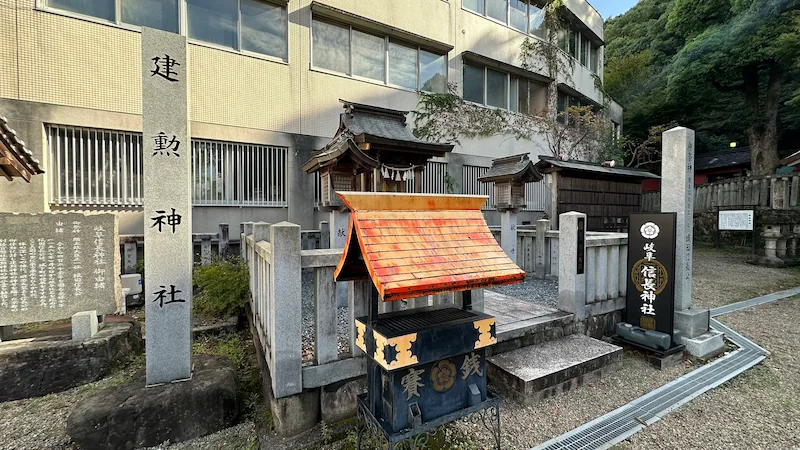
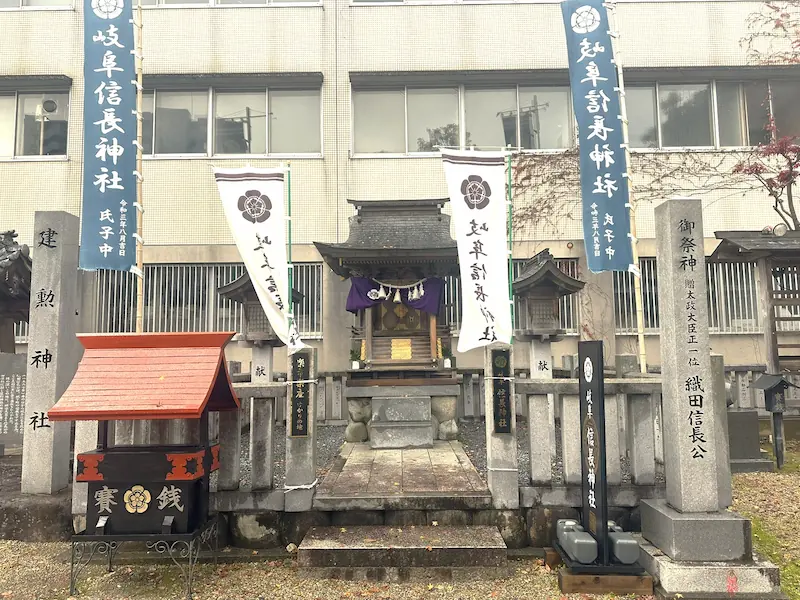
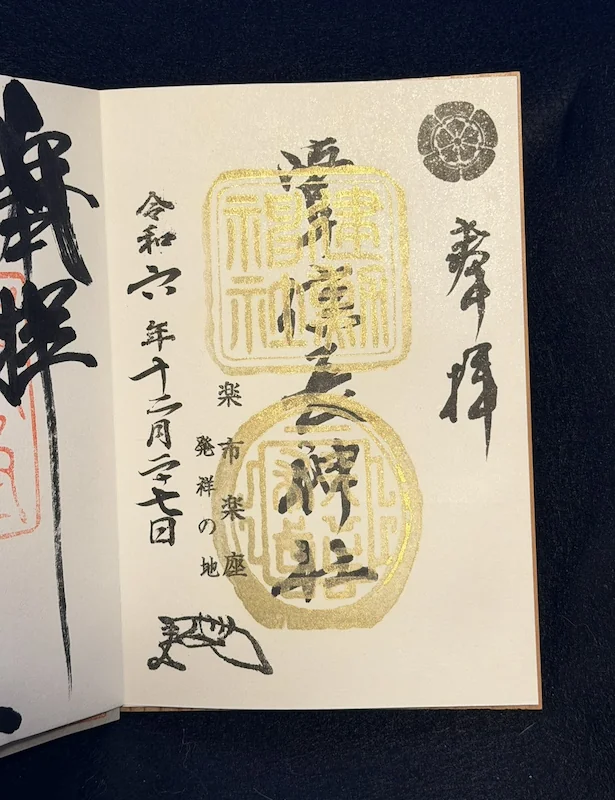
This is the spot where you meet Nobunaga not as a warlord, but as a deified figure. Kenkun Shrine (often called Gifu Nobunaga Shrine) sits within Kashimori Shrine’s grounds and is said to share lineage with the famous Kenkun Shrine in Kyoto. It’s a small place, but the atmosphere shifts when you pass through—quiet, focused, and surprisingly personal. If you want a “spiritual angle” on Nobunaga’s legacy, this is the most direct stop in central Gifu.
Goshuin (Temple/Shrine stamp)
On my visit, the regular goshuin was available as pre-written paper (kakioki) at the Kashimori Shrine office (because this is a shrine within its grounds). The “gold” goshuin was offered on a special schedule at that time. Since schedules can change, please confirm via on-site notices / official SNS / the shrine office on the day.
| Established | Meiji era (exact year unknown) |
|---|---|
| Origin | Unknown (said to be related to Kyoto’s Kenkun Shrine tradition) |
| Type | Shrine within Kashimori Shrine grounds (Nobunaga as enshrined deity) |
| Restoration | Unknown |
| Status | Active |
| Damage/Loss | Unknown |
| Designation | Unknown |
| Notes | Also called “Gifu Nobunaga Shrine” |
🗺 Address: 1-8 Wakamiyacho, Gifu City
🚶 Access
From Gifu Station: about 16 minutes by bus + walk
⏳ Time needed
Quick visit: ~20 min
Slow visit: ~1 hour
📍 Highlights
- “Enshrined Nobunaga” perspective: different from castles and battles—more reflective.
- Noticeable atmosphere shift: the quiet focus of a small shrine stop can reset your day.
- Seasonal comfort: summer shade here can feel like a relief during city walks.
📌 Trivia
- Connection story: said to share spiritual lineage with Kyoto’s Kenkun Shrine tradition.
- Local pilgrimage angle: Kashimori Shrine is also known in local “three shrine visit” customs.
- Why travelers like it: it’s a calm “meaning stop” that fits easily into a short itinerary.
Gifu Zenko-ji (Zenko-ji Anjo-in)
⭐ Recommendation
Historical value: ☆☆☆
Visual impact: ☆☆
Experience: ☆☆
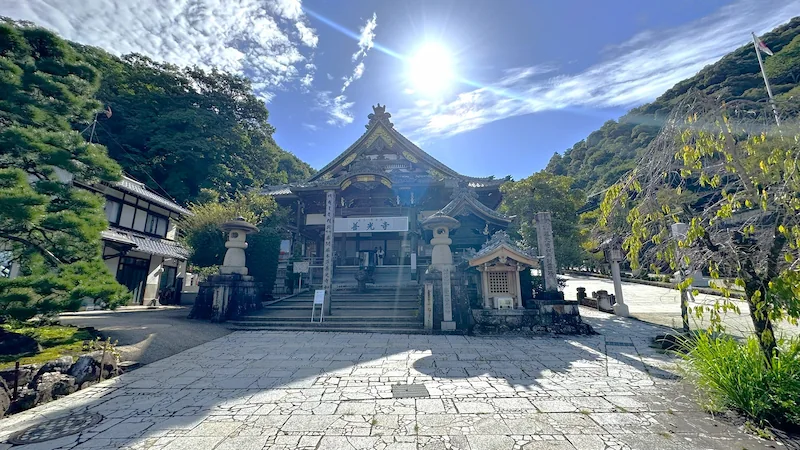
If you want a Nobunaga story that connects to faith and “what people protected in chaotic times,” Gifu Zenko-ji is a strong pick. According to the temple’s tradition, a revered image connected to the famous Zenko-ji in Shinano was moved through major warlord territories, and Nobunaga is said to have brought it to Gifu at one stage. After Nobunaga’s death, the story continues through later political shifts—making this a place where you feel how religion, power, and survival overlapped in the Sengoku period.
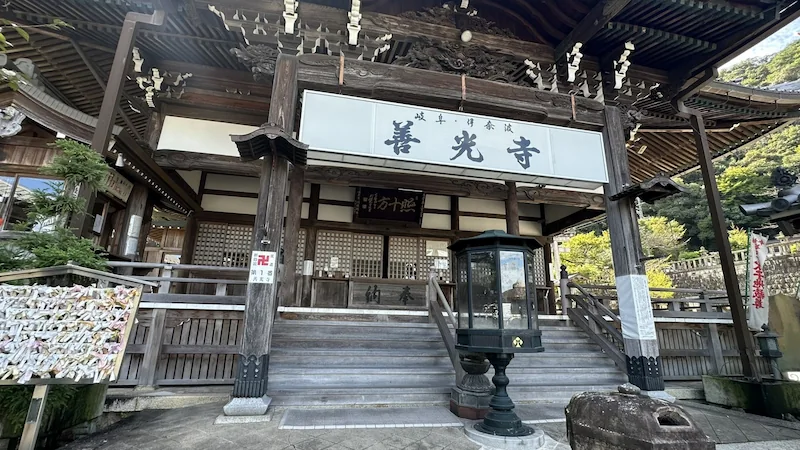
The current main hall reflects a later era: it burned in the 1891 Nobi earthquake disaster and was rebuilt in the early Taisho period. That “rebuilding after loss” theme fits the temple’s larger story. Inside, the atmosphere is more grounded and local than grand—an everyday place of prayer that quietly holds heavyweight history.
Goshuin (Temple stamp)
I received a goshuin at the temple office after visiting. Around special events (for example Setsubun season or the cucumber-related summer rite that is sometimes held), it can get busy and reception hours may change. If you are stamp-focused, arrive with time to spare.
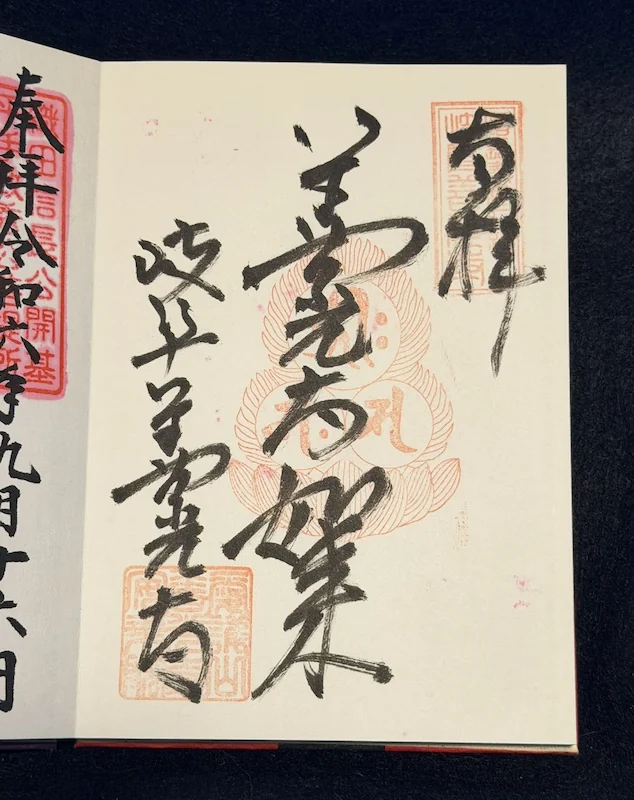
| Founded | Unknown (current hall rebuilt in early Taisho period) |
|---|---|
| Founder | Traditionally attributed to Oda Hidenobu (Nobunaga’s grandson) |
| What to see | Shingon (Daigo-ha) / Zenko-ji-linked tradition / part of local pilgrimage routes |
| Restoration | Burned in 1891 (Nobi earthquake) → rebuilt early Taisho period |
| Status | Active (visiting possible) |
| Damage/Loss | Destroyed by fire after the 1891 earthquake (then rebuilt) |
| Designation | A Shaka Nyorai seated statue is introduced as a Gifu City designated cultural property (per on-site guidance) |
| Notes | Events may be held seasonally; dates and reception methods can change. Please confirm via on-site notices / official announcements / phone. |
🗺 Address: 1-8 Inabadori, Gifu City
🚶 Access
From Gifu Station: about 20 minutes by bus + walk
⏳ Time needed
Quick visit: ~20 min
Slow visit: ~1 hour
📍 Highlights
- War-era faith story: adds a different lens to Nobunaga travel—belief and protection, not only conquest.
- Rebuilt history: the hall you see today reflects recovery after the 1891 disaster.
- Event option: seasonal rites can turn a simple visit into a cultural experience (check dates in advance).
📌 Trivia
- Power map in religious form: the temple’s tradition reflects how sacred objects moved across warlord territories.
- Pilgrimage angle: it is introduced as part of local pilgrimage routes, which changes how you walk the city.
- Generational link: tradition connects it to Oda Hidenobu (Nobunaga’s grandson), not only Nobunaga himself.
Gifu Park / Mt. Kinka Area (Gifu Castle Area)
⭐ Recommendation
Historical value: ☆☆☆
Visual impact: ☆☆☆
Experience: ☆☆☆
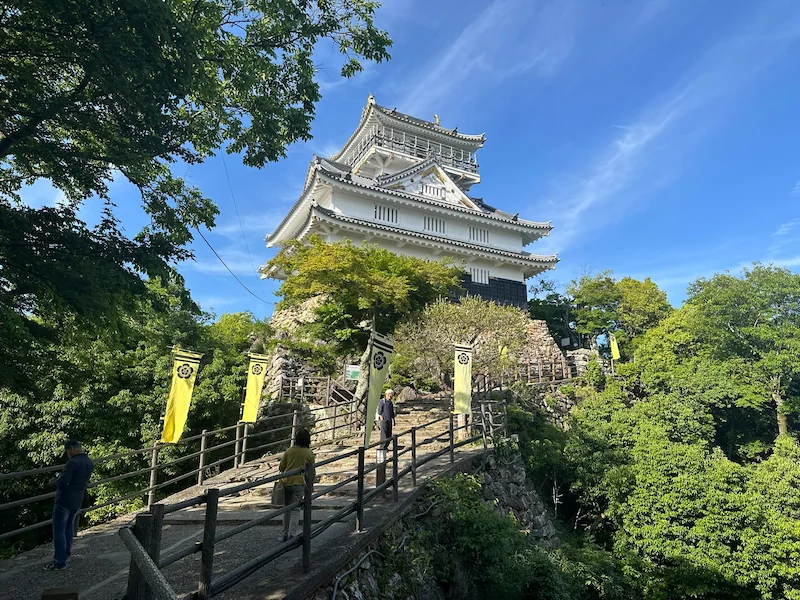
This section is intentionally written as “Gifu Park / Mt. Kinka area,” because the best experience is not only the tower on the summit. In 1567, Nobunaga took the former Inabayama Castle and is traditionally said to have renamed the place “Gifu”—a major turning point toward his national ambition. Today, the nationally designated historic site covers the mountain system, including summit fortifications and the base-area residence/terrain. In other words: the “castle” is a landscape, not one building.
The summit tower you visit today is a reconstructed symbol (rebuilt in 1956 after an earlier mock keep was lost in 1943). That’s not a problem—just good to know. Enjoy it as a viewpoint and a modern icon, and then let the base-area paths, slopes, and ruins deliver the deeper “how a mountain castle worked” feeling. If you only have limited time, even the lower area can give you a satisfying castle-city experience.
Castle seal (Goshuin-style souvenir)
Castle seals (gojoin / “castle stamp sheets”) and seal books are sold at the Ropeway Sanroku Station (1F).
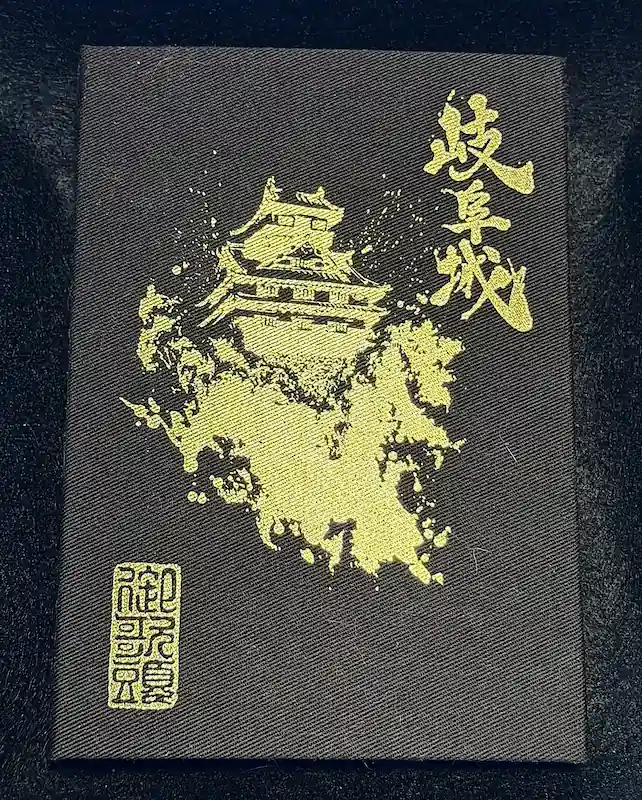
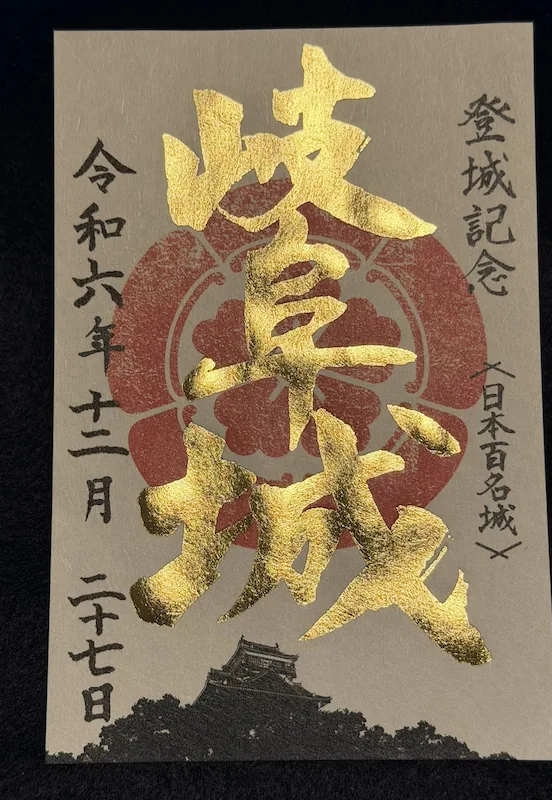
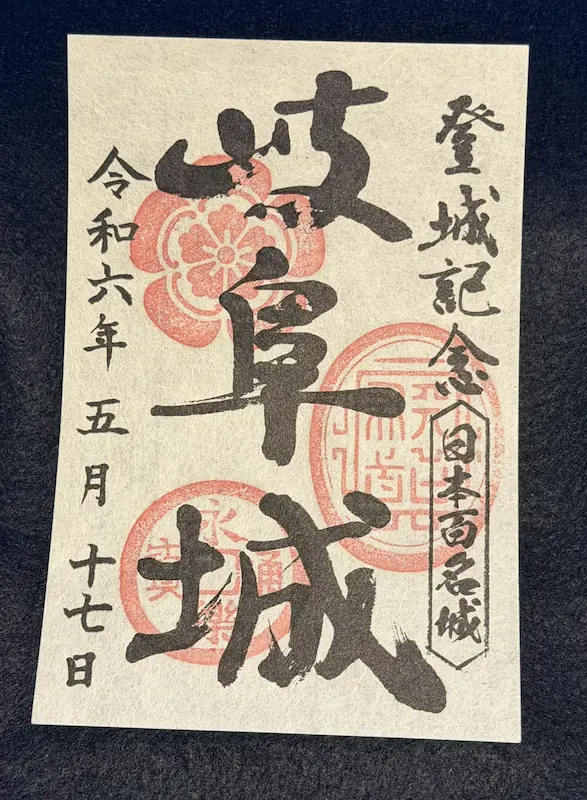
| Origins | Tradition: built 1201–1204 / Nobunaga’s takeover & “Gifu” renaming: 1567 / current keep rebuilt: 1956 |
|---|---|
| Builders | Traditional attribution varies / Sengoku-period development by the Saito clan → Oda Nobunaga |
| Type | Mountain castle system (summit fortifications + base residence area) / current keep is a reinforced-concrete reconstruction |
| Restoration | 1910 mock keep built → 1943 destroyed → 1956 rebuilt (current) |
| Status | Maintained as Gifu Park; open to visitors |
| Damage/Loss | Mock keep lost in 1943; the original Sengoku-period tower no longer survives |
| Designation | National Historic Site designation (Gifu Castle Ruins): 2011-02-07 |
| Notes | Access by ropeway or hiking trails. Shops/food facilities in the park area may change seasonally. |
🗺 Address: Gifu Park: 1-chome Omiyacho, Gifu City / Gifu Castle: Tenshukaku 18, Gifu City
🚶 Access
From Gifu Station: about 20 minutes by bus + walk
⏳ Time needed
Quick experience (base-area walk + ropeway round trip): ~60 min
Full visit (keep, museum areas, base ruins/paths): ~3 hours
📍 Highlights
- Summit panorama: sweeping views over the Nagara River and the Nobi plain—easy to understand why this became a strategic base.
- Base-area “castle system” feeling: paths, slopes, and ruins explain the castle as landscape, not a single structure.
- Seasonal beauty: cherry blossoms in spring, red leaves in autumn; lighting events may happen seasonally.
📌 Trivia
- Historic site scope: the national designation covers the wider mountain system, not only the summit.
- Reconstruction note: today’s keep is a modern rebuild (1956). The “historic core” is the terrain and ruins.
- World-history window: records by the Jesuit Luís Fróis are often cited when discussing Nobunaga’s international-era context.
“Young Oda Nobunaga” Statue (by Seibo Kitamura)
⭐ Recommendation
Historical value: ☆
Visual impact: ☆☆
Experience: ☆
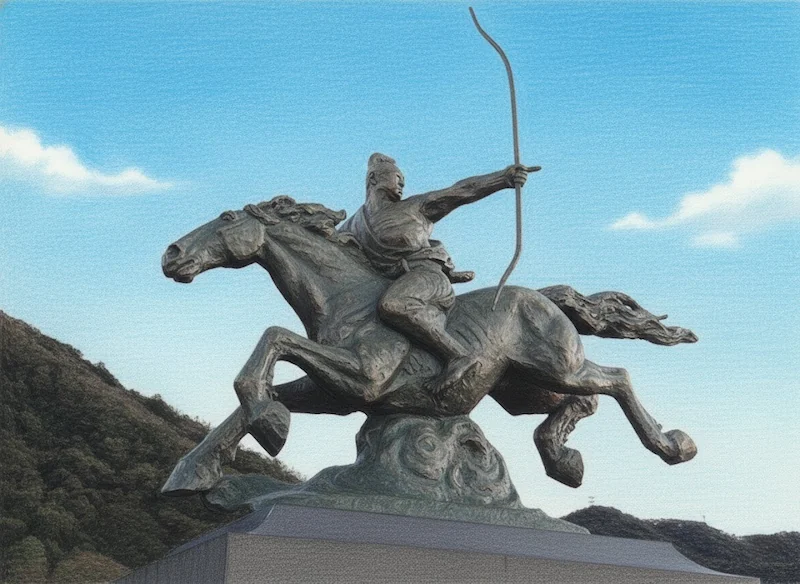
In front of the main gate of Gifu Park stands a dynamic bronze: a mounted “young Nobunaga” drawing a bow mid-gallop. The sculptor is Seibo Kitamura, also known for the Peace Memorial Statue in Nagasaki. This is a modern commemorative work (installed for a city anniversary project and later relocated), not a Sengoku artifact—yet it’s a fantastic “start of story” photo spot, especially with Mt. Kinka in the background.
| Built | 1988 |
|---|---|
| By | Artist: Seibo Kitamura / donated as a city anniversary commemorative work |
| Type | Bronze equestrian statue; “young Nobunaga” motif; popular photo point |
| Relocation | Moved to the current location near the park main gate in 2009 |
| Status | Standing |
| Damage/Loss | Unknown |
| Designation | Unknown |
| Notes | Similar titles/artist names may appear elsewhere; this entry refers specifically to the statue placed by Gifu Park’s main gate. |
🗺 Address: Gifu Park main gate area, 1-chome Omiyacho, Gifu City
🚶 Access
From Gifu Station: about 17 minutes by bus + walk
⏳ Time needed
Quick stop: ~10 min
Enjoy & photograph: ~30 min
📍 Highlights
- Movement captured in bronze: the pulled bow and the horse’s momentum make it feel fast.
- Great background options: adjust your angle and you can include Mt. Kinka / castle-area scenery.
- Seasonal color: blossoms and autumn leaves make the silhouette even stronger.
📌 Trivia
- Modern “legacy” piece: created for a city anniversary (1988), then relocated for better viewing (2009).
- Why it works for travelers: it’s a perfect “entering the story” photo moment right before the park/castle area.
- Artist note: Seibo Kitamura is a major Japanese sculptor, known widely beyond Gifu.
Sofuku-ji Temple
⭐ Recommendation
Historical value: ☆☆☆
Visual impact: ☆☆
Experience: ☆☆
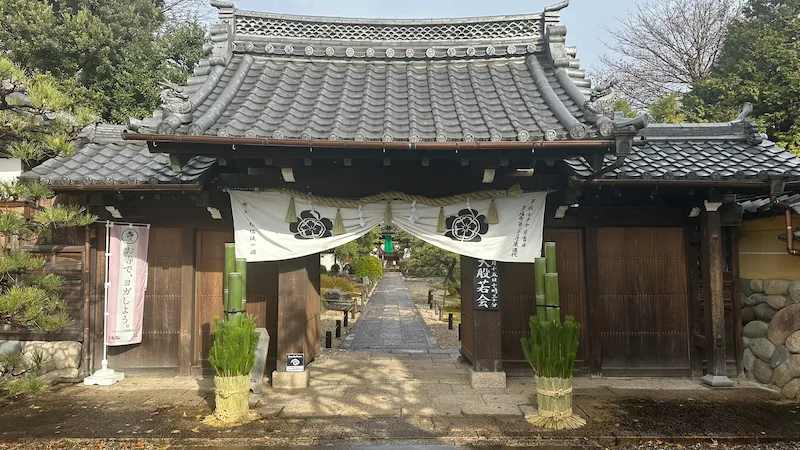
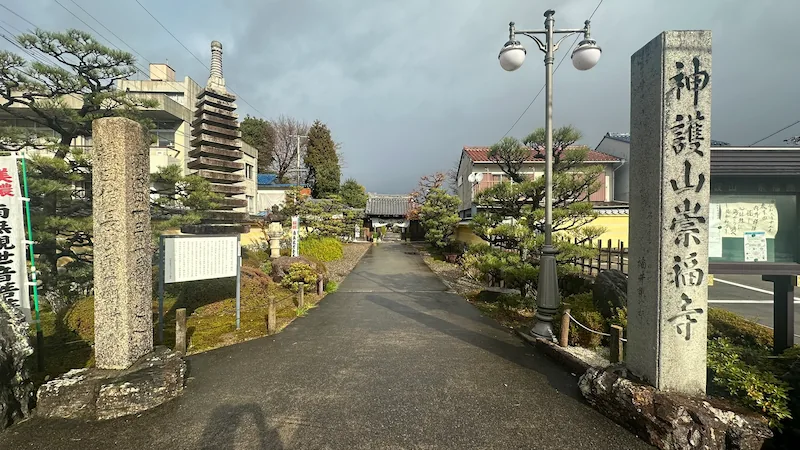
Sofuku-ji is one of the most emotionally powerful Nobunaga-related stops in Gifu. Tradition holds that after Nobunaga and his heir died in the Honnō-ji Incident, relics were sent here and memorial spaces were maintained. The grounds feel quiet in a way that makes history heavy—in a good, respectful sense. The temple is also known for a “blood ceiling” tradition connected to the broader Gifu Castle conflict period, reminding visitors how quickly power can turn to tragedy.
Goshuin (Temple stamp)
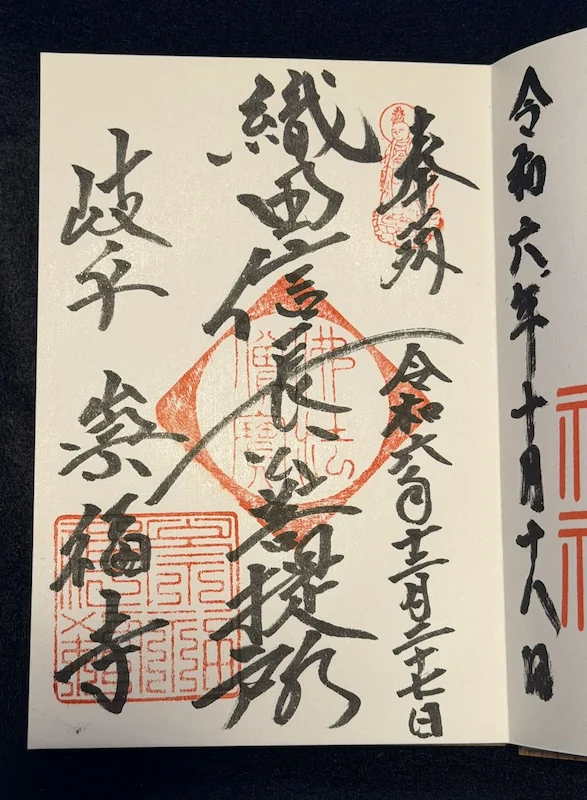
| Founded | Unknown (founding traditions vary; often introduced as very old) |
|---|---|
| Founder | Traditions include Toki / Saito-related origins |
| What to see | Rinzai (Myoshin-ji) / Nobunaga & heir memorial area / “blood ceiling” tradition |
| Restoration | Unknown |
| Status | Active (visiting possible) |
| Damage/Loss | Unknown |
| Designation | Nobunaga & heir memorial site: designated historic site by Gifu City |
| Notes | Memorial events may be announced around the Nobunaga festival season; schedules and whether visitors can join vary by year. Confirm via on-site notices. |
🗺 Address: 2403-1 Nagarafukumitsu, Gifu City
🚶 Access
From Gifu Station: about 27 minutes by bus + walk
⏳ Time needed
Quick visit: ~30 min
Slow visit: ~1 hour
📍 Highlights
- Memorial space for Nobunaga and heir: a quiet, reflective stop that deepens the story beyond “victory narratives.”
- “Blood ceiling” tradition: the atmosphere changes when you look up—learn the background on-site.
- Autumn beauty: seasonal foliage softens the heaviness and makes the visit visually calm and memorable.
📌 Trivia
- Layered history: the temple connects Nobunaga’s era with the broader Gifu Castle conflict memory.
- Event timing caution: memorial observances can vary year to year—confirm before aiming for a specific date.
- Etiquette note: it’s a quiet temple—keep voices low and photography respectful.
“Tomb of Nohime” (Hair Memorial Mound, tradition)
⭐ Recommendation
Historical value: ☆☆
Visual impact: ☆☆
Experience: ☆☆
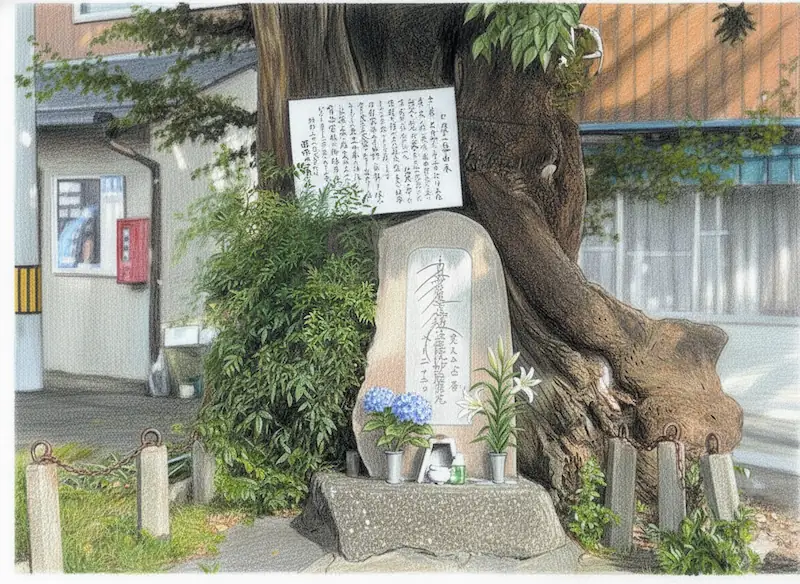
This is a “soft history” stop—more about local memory than firm documents. Nohime (also known as Kicho) is often introduced as Nobunaga’s wife and the daughter of Saito Dosan, but reliable records about her later life are scarce. The memorial here is traditionally described as a “hair mound,” linked to stories of loyal retainers and loss after the Honnō-ji Incident. Rather than treating it as proven fact, it’s better approached as: “This is how the city carried the story.”
According to local guidance, the site was lost during the 1945 Gifu air raid and later rebuilt by supporters in 1976. That modern layer—loss and restoration in the 20th century—makes the place feel more than just a legend. It becomes a small but moving point about how communities remember.
| Established | Unknown (stone monument date unclear; site said to have burned in 1945 and rebuilt in 1976) |
|---|---|
| By | Unknown (rebuilt by local supporters, per guidance) |
| Type | Memorial stone described as a “hair mound” tradition site |
| Restoration | Lost in 1945 air raid → rebuilt in 1976 (per local guidance) |
| Status | Standing |
| Damage/Loss | Destroyed in 1945 (then rebuilt) |
| Designation | Unknown (introduced as not an official historic site in some guidance) |
| Notes | Best approached as tradition rather than confirmed biography |
🗺 Address: Fudocho area, near Nishino Fudo-son, Gifu City
🚶 Access
From Gifu Station: about 24 minutes by bus + walk
⏳ Time needed
Quick stop: ~10 min
Slow visit: ~30 min
📍 Highlights
- Everyday-city history: unlike castles and temples, it sits quietly in a residential-feeling area.
- Experience “tradition” responsibly: a good example of how local memory fills gaps in written records.
- Shade & quiet: a calm micro-stop that can reset your pace.
📌 Trivia
- Modern disaster layer: the 1945 loss and 1976 rebuilding adds a 20th-century memory line to the Sengoku story.
- Navigation tip: it’s easy to miss without a map app; double-check the pin before walking into side streets.
- Theme add-on: adds “Nohime” as a perspective to a Nobunaga-focused day.
Tajikarao Shrine (Kakamigahara)
⭐ Recommendation
Historical value: ☆☆☆
Visual impact: ☆☆☆
Experience: ☆☆
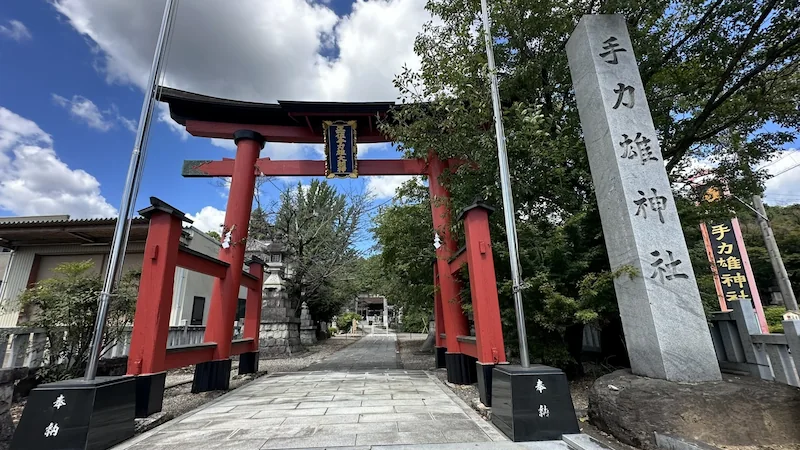
If you can spare extra time (or want a separate day trip), Tajikarao Shrine in Kakamigahara is a standout. The enshrined deity is a “strength” figure from Japanese mythology, and the shrine is traditionally linked to prayers for victory and good fortune. Nobunaga is said (in shrine tradition) to have prayed here around the Inabayama Castle campaign. Whether you visit for the story or the craftsmanship, this shrine delivers.
The main visual reason to go is the architecture and carvings: the honden (main sanctuary) rebuilt in 1674 is designated as a city cultural property, and the pair of dragon carvings wrapping around the beam (often called “male and female dragons”) is the kind of detail that feels museum-level when you see it up close. One important caution: this Kakamigahara shrine officially states it is not the shrine that holds the famous “Tairyoku no Himatsuri / fire festival.” That festival is associated with a different location in Gifu City—so don’t mix them up.
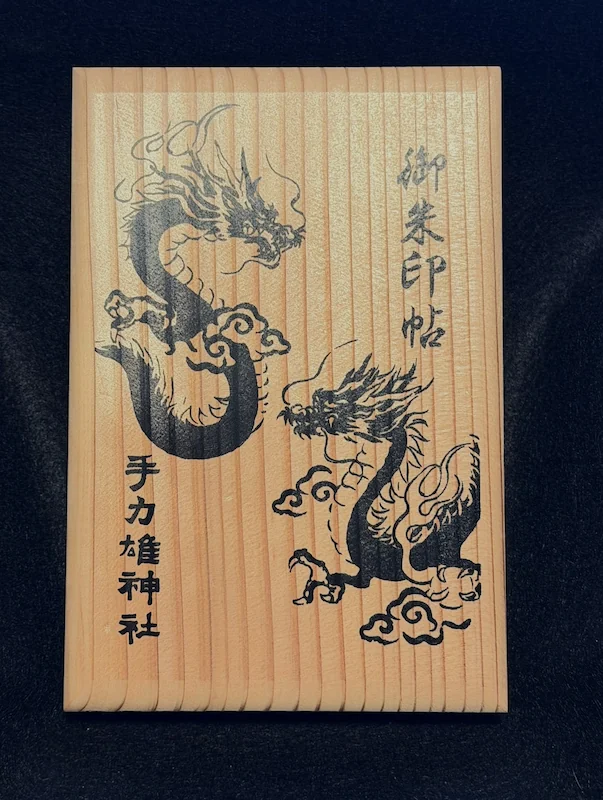
Goshuin & stamp book note
When I visited, the shrine offered a distinctive wooden goshuin book (different texture and feel from common cloth covers). Offerings can change seasonally, so if you’re collecting, confirm availability at the office.
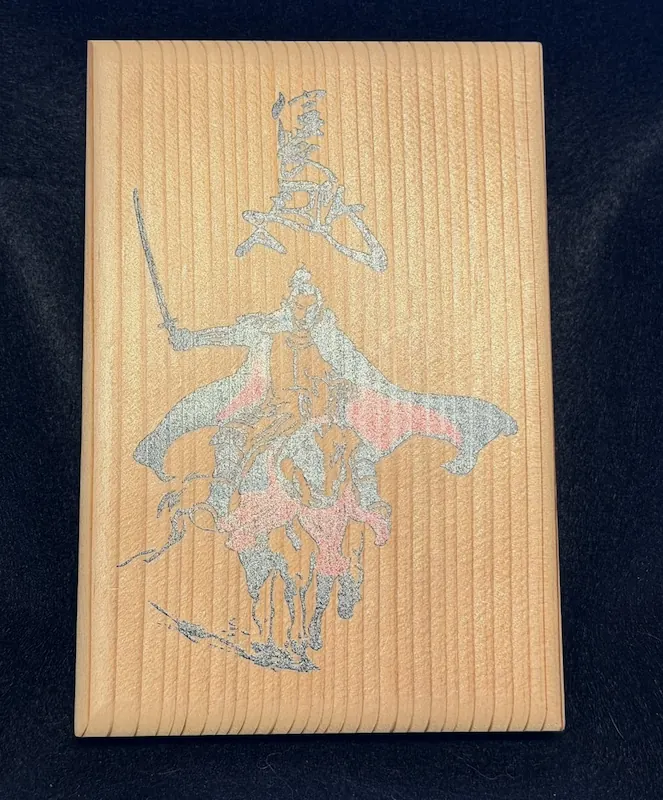
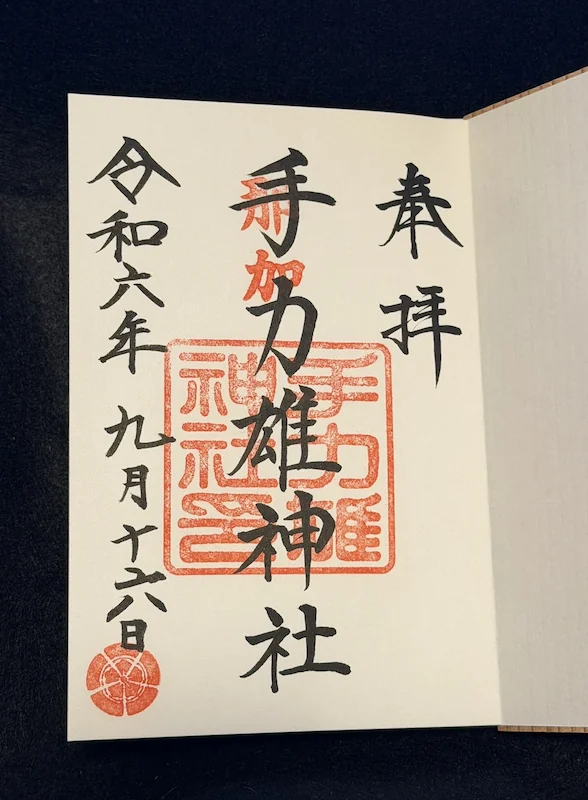
| Origins | Traditional ancient origin / honden rebuilt: 1674 |
|---|---|
| Founder | Unknown |
| What to see | Local main shrine of the Naka area / deity of strength / honden with dragon carvings (city-designated cultural properties) |
| Restoration | Maintained through repairs and roof work since 1674 |
| Status | Active (visiting possible) |
| Damage/Loss | Unknown |
| Designation | Honden: city-designated cultural property / Dragon pair carvings: city-designated cultural property (as introduced by local guidance) |
| Notes | Tradition links Nobunaga to victory prayers / officially not the “fire festival” shrine |
🗺 Address: 4 Nakatekaricho, Kakamigahara City
🚶 Access
Meitetsu Gifu → (Train) Shinkano Station → (Walk) ~13 min (total rough estimate: ~40 min)
⏳ Time needed
Quick visit: ~20 min
Slow visit: ~60 min
📍 Highlights
- Dragon carvings: the “paired dragons” wrapping the beam are the visual climax—look closely.
- 1674 wooden architecture: the honden is valuable even if you’re not a history specialist.
- Seasonal festival note: local festivals may be announced around late April; details can change, so check official notices before timing a visit.
📌 Trivia
- Older-than-shrine layer: tradition links it to earlier sacred rock worship (iwakura), adding depth beyond buildings.
- Name confusion warning: this shrine officially says it is not the “fire festival” location—double-check destinations.
- Why it’s a “hidden slugger”: it hits both themes—Nobunaga legend + top-tier carving/architecture.
FAQ
Q1. How long does it take from Gifu Station to the Gifu Park / Mt. Kinka area?
A. A good baseline is about 20 minutes by bus + walk. Once there, plan ~1 hour for a light base-area experience (plus ropeway round trip), or up to ~3 hours if you include the keep/museum areas and explore more deeply.
Q2. Can I do everything on foot, or do I need buses?
A. You can do the Golden Statue and city-center spots like Entoku-ji mostly on foot. But for the Gifu Park / Mt. Kinka area and Sofuku-ji (Nagara), using buses makes the day far easier and more time-efficient.
Q3. If I only have half a day, what should I prioritize?
A. This sequence is the safest win:
- Golden Statue (Gifu Station)
- Gifu Park / Mt. Kinka area (views + “castle system” feeling)
- If you still have time: Entoku-ji (for the “governance & city-building” angle)
Q4. Where can I likely get goshuin (stamps)?
A. It depends by spot and sometimes by day. As a practical guide:
・Kenkun Shrine (Gifu Nobunaga Shrine): handled at Kashimori Shrine office (because it’s within the grounds)
・Gifu Zenko-ji: temple office (hours may vary around events)
・Sofuku-ji: temple reception/office (rules can vary seasonally)
・Tajikarao Shrine (Kakamigahara): shrine office (offerings may change seasonally)
※Stamp type can change (direct writing vs pre-written sheet), so confirm via on-site notices/official info.
Q5. Is this enjoyable on a rainy day?
A. Yes—just reduce movement. A good rainy plan is: Golden Statue → Entoku-ji → (if conditions allow) Kashimori/Kenkun. Save Mt. Kinka views for a clear day (unless you want a moody fog atmosphere).
Q6. Is Gifu Castle original?
A. The current keep is a reconstruction (rebuilt in 1956). The historic “core” is the castle ruins and terrain across the mountain system, which is why the national historic site covers more than just the summit.
Q7. When should I go for special events?
A. Dates and reception methods can change year to year. This guide avoids hard claims—if you want to time your trip for events, check on-site notices / official posts / phone guidance shortly before your visit.
Q8. Is Tajikarao Shrine the same place as the famous fire festival?
A. No—this guide covers the Kakamigahara Tajikarao Shrine, which officially states it is not the “fire festival” shrine. If your goal is the festival, confirm the exact location in Gifu City before traveling.
Goshuin / Castle Seal Counter Summary
Goshuin can be handled at a different counter than you expect (especially for shrine-within-shrine cases). Also, the format may change by day (direct writing vs pre-written sheet). For that reason, this table focuses on where the counter is. Please confirm details via on-site notices / official information on the day.
| Spot | Stamp available? | Where to get it | Notes |
|---|---|---|---|
| Kenkun Shrine (Gifu Nobunaga Shrine) | Yes (on my visit) | Kashimori Shrine office | Because it’s within the grounds. Special “gold” versions may be date-limited—confirm on the day. |
| Gifu Zenko-ji | Yes (on my visit) | Gifu Zenko-ji office | Busy around events; reception hours can shift. |
| Sofuku-ji | Yes (on my visit) | Sofuku-ji reception/office | Visiting/stamp rules may vary seasonally; keep it respectful. |
| Entoku-ji | Not confirmed (not stated as definite here) | — | Visiting is possible; check on-site guidance for stamp availability. |
| Tajikarao Shrine (Kakamigahara) | Yes (on my visit) | Tajikarao Shrine office | Offerings (books, limited items) can change seasonally. |
| Gifu Park / Gifu Castle area | Castle seal available | Ropeway Sanroku Station (1F) | Designs may change by season. |
| Golden Statue / Young Nobunaga statue / Nohime memorial site | No | — | — |
Related
More Nobunaga-related spots (Japanese page):



comment