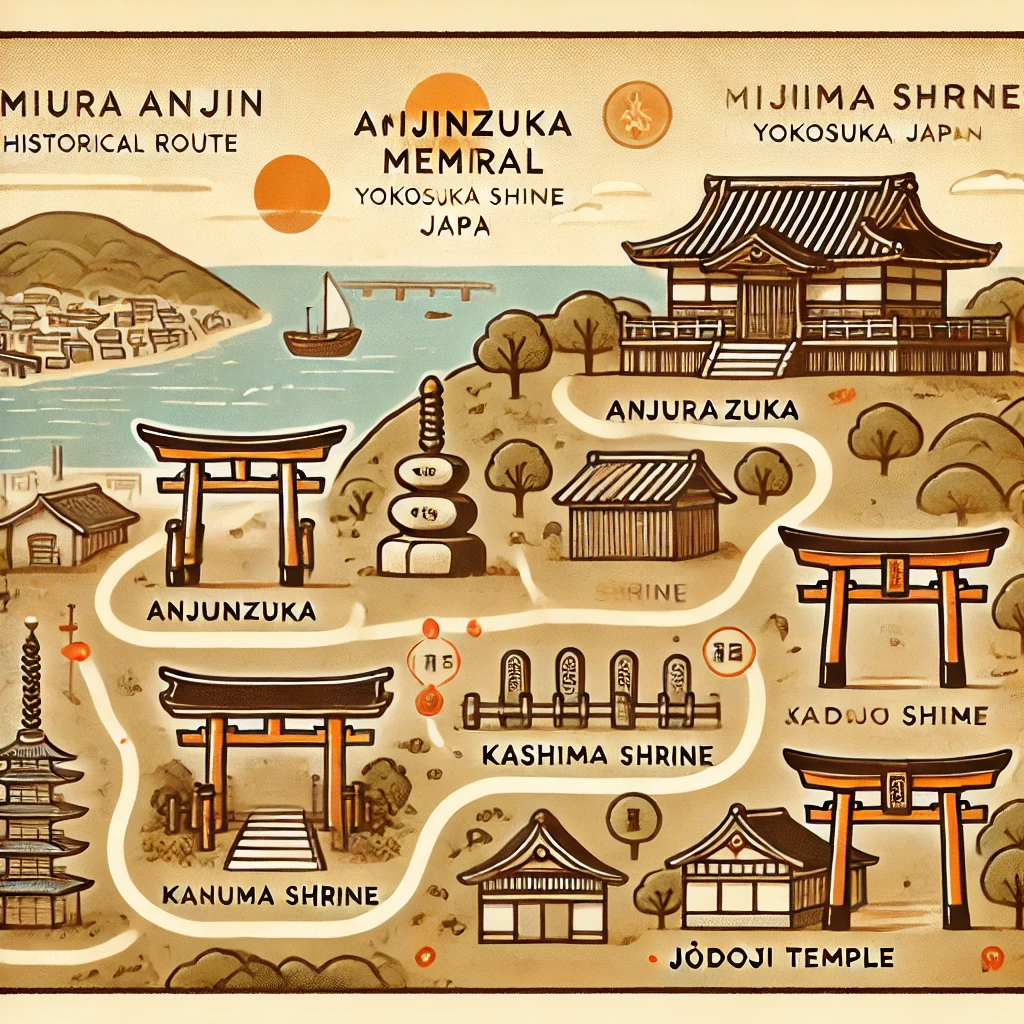
This self-guided walking tour takes you through the historic sites in Yokosuka where William Adams (Miura Anjin)—the real English navigator who inspired SHŌGUN’s Blackthorne—served the Tokugawa shogunate and left an enduring legacy.
The route starts at Anjinzuka Station and covers the Anjinzuka Monument (National Historic Site), Kashima Shrine (rebuilt by Adams’ son), and Jōdoji Temple (Adams’ family temple). Total walking time is approximately 2 hours. I have walked this route myself and documented every stop with on-site photos, 360° panoramic views, maps, and practical tips.
🗺 The Route
Anjinzuka Station – Starting Point of the Tour
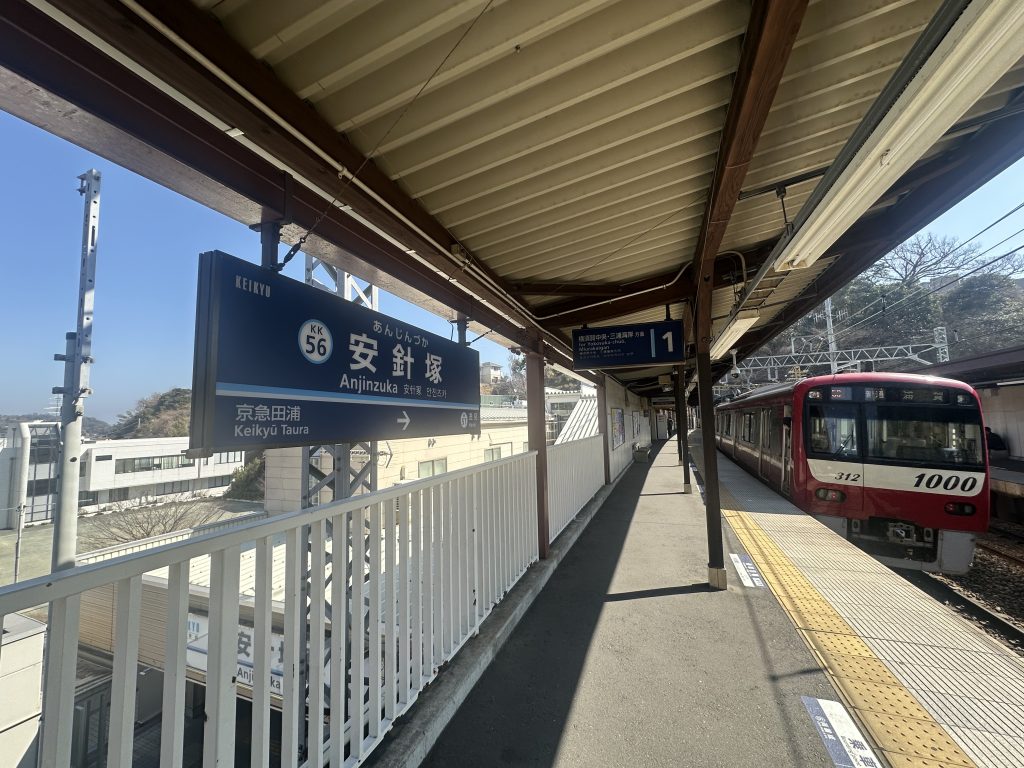
🚉 Access:
・From Tokyo Station: Approx. 1 hour
Tokyo Station → Shinagawa Station (JR Line)
Shinagawa Station → Anjinzuka Station (Keikyū Line)
・From Haneda Airport: Approx. 1 hour
Haneda Airport Terminal 1 & 2 Station → Keikyū Kamata Station (Keikyū Line)
Keikyū Kamata Station → Anjinzuka Station (Keikyū Line)
🗺 Address: 2-chome, Nagaura, Yokosuka, Kanagawa 237-0072, Japan
The name “Anjinzuka” literally means “Anjin’s Mound,” a direct reference to William Adams (Miura Anjin) and his deep historical connection to this area. From the station, it’s about a 20-minute walk to the Anjinzuka Monument.
Anjinzuka – Grave of William Adams and His Wife
⭐ Recommended Rating
Historical Significance: ☆☆☆
Visual Appeal: ☆☆☆
Experiential Value: ☆☆
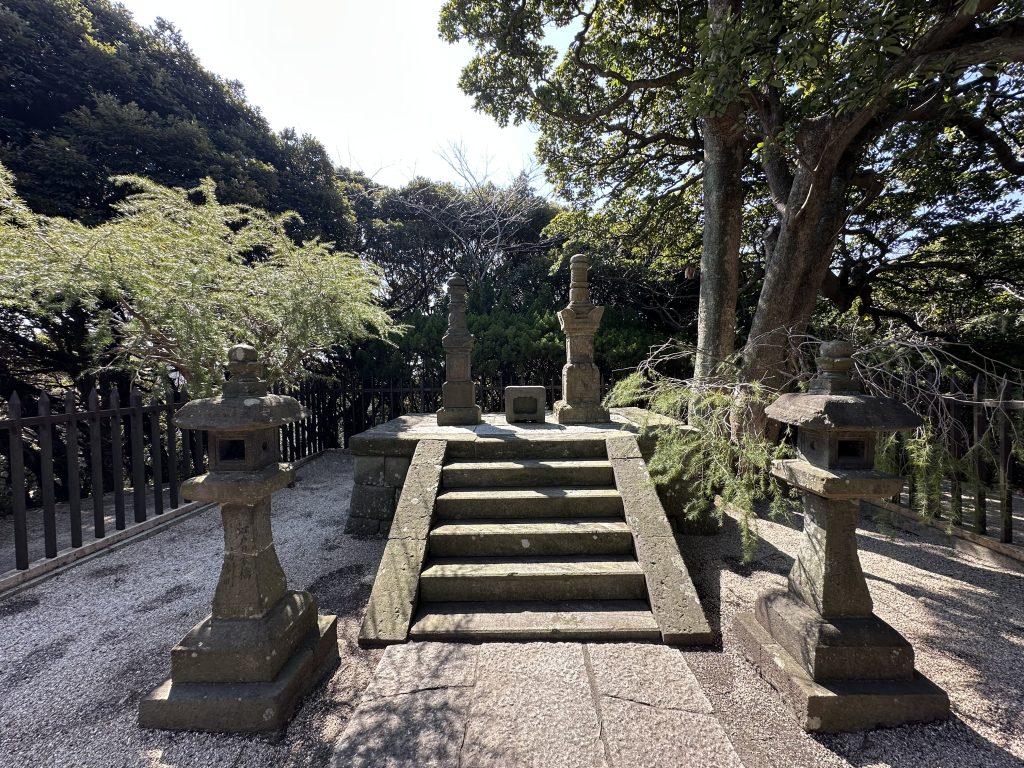
Known in Japan as “Miura Anjin,” the English navigator William Adams arrived in 1600 and earned the trust of Tokugawa Ieyasu. For his expertise in shipbuilding, gunnery, and diplomacy, he was granted 220–250 koku of land in Henmi Village, Miura District, and became a samurai. His memorial towers (Hōkyōintō) stand on the slope of Tsukayama Park: the right tower of tuff stone commemorates Adams himself, while the left tower of andesite honors his Japanese wife. In 1923, the site was designated a National Historic Site. Since the Taishō era, it has been reappraised as a symbol of Anglo-Japanese friendship. Every spring, the park is blanketed in cherry blossoms, and the Anjin Festival’s hanami celebrations are held here. From the park’s observation points, visitors can enjoy sweeping views of Yokosuka Harbor, imagining the Edo Bay landscape that Adams himself might have seen.
The 360° panoramic photos below let you explore Anjinzuka before your visit. Drag left or right to look around and get a feel for the site’s layout and atmosphere.
360° View: Front of Anjinzuka
The memorial towers of William Adams and his wife, as seen from the approach path in Tsukayama Park.
360° View: Stone Staircase Leading Up to Anjinzuka
The aged stone steps worn smooth by centuries of visitors—a quiet approach to one of Yokosuka’s most historically significant sites.
| Year of Construction | Early Edo period (memorial towers built after the late 1600s) |
|---|---|
| Builder | Commissioned by Tokugawa Ieyasu, built by local craftsmen |
| Structure & Features | Two Hōkyōintō towers (right: tuff stone, left: andesite) |
| Restoration History | Major restoration in 1906; continued maintenance after National Historic Site designation in 1923 |
| Current Condition | Well-preserved within Tsukayama Park |
| Damage or Loss | None |
| Cultural Property Status | National Historic Site (designated March 7, 1923) |
| Notes | The Hōkyōintō towers are memorials rather than burial sites, placed at Adams’ request so they would overlook Edo Bay. |
🗺 Address: Tsukayama Park, 3-chome Nishihemicho, Yokosuka, Kanagawa
🚶 Access: Approx. 20-minute walk (1.0 km) from Keikyū Main Line “Anjinzuka Station”
⏳ Suggested Visiting Time: Quick visit: about 10 minutes / Leisurely exploration: about 30 minutes
📍 Highlights
- Hōkyōintō Memorial Towers: The paired memorial towers for Adams and his wife, notable for their distinct materials and historical significance.
- Scenic Viewpoint: Breathtaking views of Yokosuka Harbor, Bōsō Peninsula, and Japan Maritime Self-Defense Force vessels.
- Seasonal Attractions: In spring, around 1,000 cherry trees bloom during the Sakura Festival, with lantern-lit night viewing creating a magical atmosphere.
📌 Trivia
- Unexpected Historical Context: The memorial towers were not burial sites but were built at Adams’ request so they could overlook Edo (Tokyo).
- Little-Known Fact: The station name “Anjinzuka” originates from this memorial. The site was renovated in 1906, influenced by the Anglo-Japanese Alliance.
- Connection to Notable Figures: Adams built Japan’s first Western-style sailing ships and significantly influenced Ieyasu’s foreign diplomacy and trade policies.
The observation platform near the memorial offers one of the finest views in Yokosuka. The 360° panoramic photo below captures the harbor panorama that Adams himself may have known.
360° View: Hilltop Panorama from Anjinzuka – Yokosuka Harbor and Tokyo Bay
Kashima Shrine (Nishihemicho, Yokosuka)
⭐ Recommended Rating
Historical Significance: ☆☆☆
Visual Appeal: ☆☆
Experiential Value: ☆☆
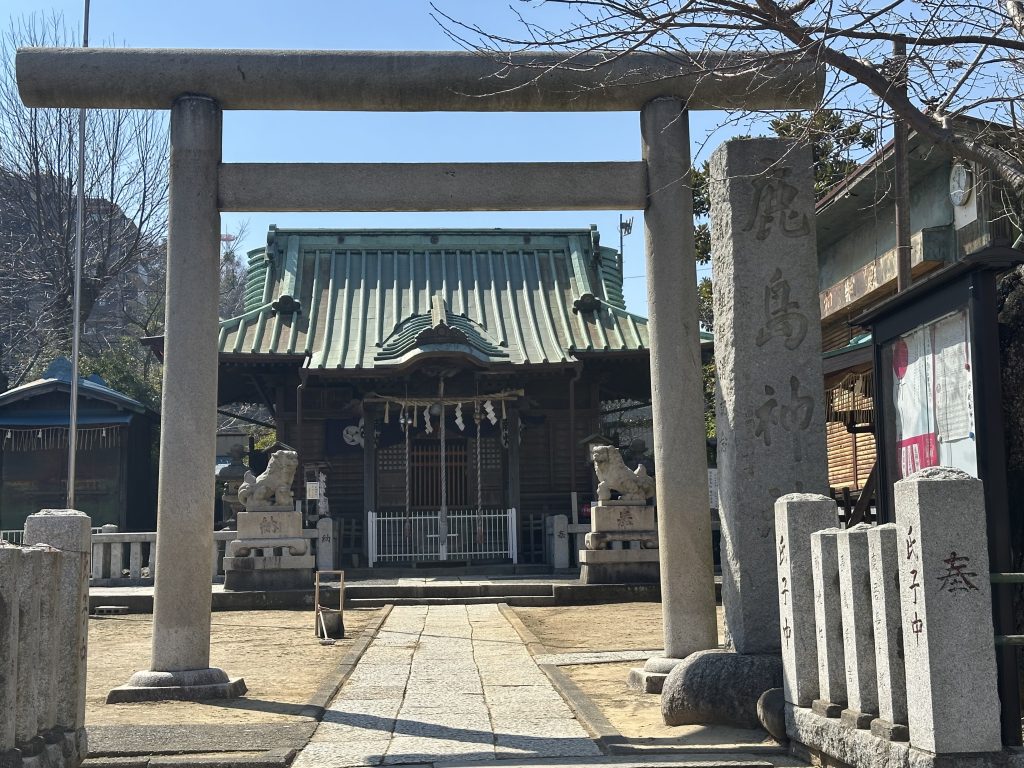
Kashima Shrine was established in 1410 (Ōei 17) when Lord Miura Tōtōmi-no-kami invited the deity from Kashima Jingū in Hitachi Province to serve as the guardian shrine of old Henmi Village. The ridge tag (munafuda) of the shrine still bears this date, attesting to its long history. Notably, in 1636 (Kan’ei 13), the shrine was reconstructed by Joseph, the son of William Adams—a rare surviving record of Adams’ descendants actively shaping the local community.
| Year of Construction | 1410 (Ōei 17) |
|---|---|
| Founder | Miura Tōtōmi-no-kami |
| Structure & Features | Shinmei-zukuri style main hall, carvings by Goto Kisaburō (disciple of Goto Yoshimitsu) |
| Restoration History | Rebuilt in 1574 (Tenshō 2); reconstructed in 1636 (Kan’ei 13) by Adams’ son Joseph; relocated and rebuilt in 1895 (Meiji 28) to current site |
| Current Condition | Well preserved; maintains Meiji-period structure and carvings |
| Damage or Loss | Destroyed by fire in 1891 (Meiji 24) |
| Cultural Property Status | Designated Village Shrine; registered by Kanagawa Prefecture |
| Notes | Closely associated with the site of Miura Anjin’s residence in the Henmi area |
🗺 Address: 2-70 Nishihemicho, Yokosuka, Kanagawa
🚶 Access: Approx. 16-minute walk (1.1 km) from Anjinzuka
⏳ Suggested Visiting Time: Quick visit: about 10 minutes / Leisurely exploration: about 20 minutes
📍 Highlights
- Historic Ridge Tags: Records show that in 1636 (Kan’ei 13), Joseph, the son of William Adams, helped rebuild the shrine—a tangible trace of the Adams family’s roots in Yokosuka.
- Carved Ornaments: Shrine carvings by Goto Kisaburō, from the same school as the carvings at Uraga’s Nishi-Kanō Shrine, are well worth a closer look.
- Pilgrimage Link to Jōdoji Temple: Jōdoji, Adams’ family temple housing his memorial Buddha, stands just a minute’s walk to the left of the shrine.
- Seasonal Festivals: In spring and autumn, the “Anjin Festa” is held around Kashima Shrine and Jōdoji Temple, featuring local festival music and markets.
📌 Trivia
- Shrine on the Former Residence Site: Local chronicles describe the shrine as standing on the former site of Miura Anjin’s residence in Henmi.
- Fire and Reconstruction: Local legend attributes the 1891 fire to a beggar’s accidental blaze, after which the shrine was rebuilt.
- Goshuin Seal Featuring Anjin’s Name: The shrine’s unique goshuin stamp bearing William Adams’ name is a favorite among visitors and history enthusiasts.
Jōdoji Temple (Nishihemicho, Yokosuka)
⭐ Recommended Rating
Historical Significance: ☆☆☆
Visual Appeal: ☆☆
Experiential Value: ☆☆
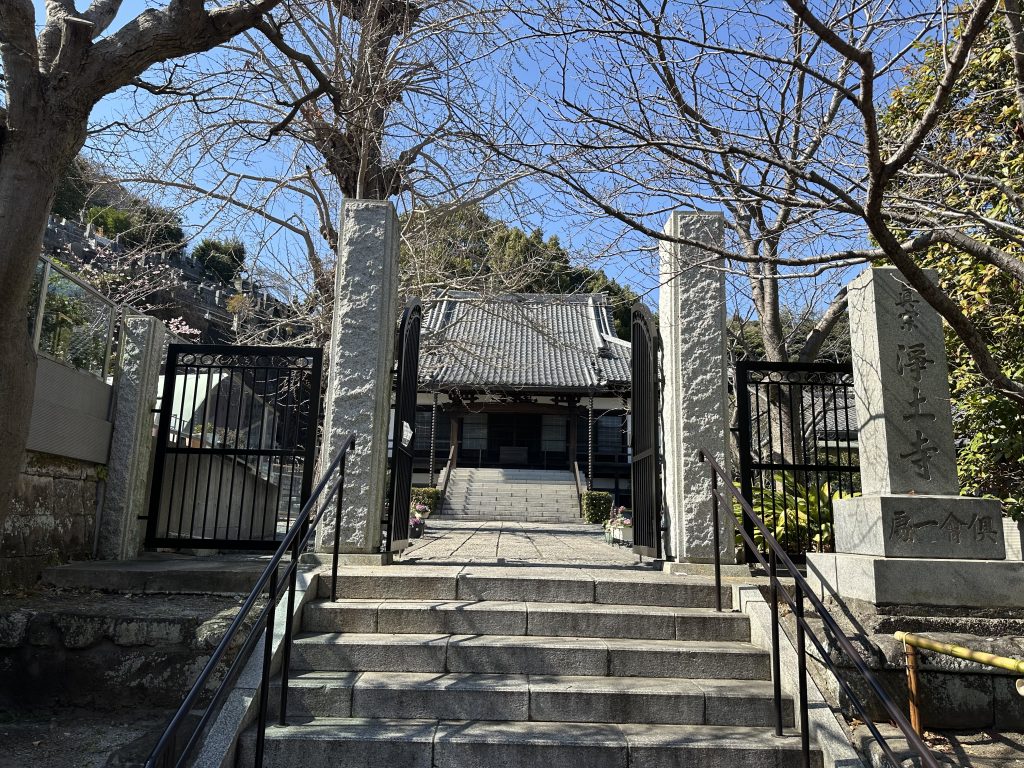
Affiliated with the Honganji school of Jōdo Shinshū Buddhism, Jōdoji Temple is best known as the family temple of Miura Anjin (William Adams). Located in the heart of Henmi Village—the land granted to Adams by Tokugawa Ieyasu—the temple’s main hall is a wooden structure rebuilt in 1712 (Shōtoku 2). Its grounds house treasures of exceptional historical value: a bronze statue of Kannon believed to have been brought by Adams himself, palm-leaf Buddhist scriptures (Baiyōkyō) likely brought back from Southeast Asia during the Red Seal trade, and a revered personal Kannon statue used for private devotion.
| Year of Foundation | Late Heian to early Kamakura period (exact date unknown) |
|---|---|
| Founder | Traditionally attributed to Hatakeyama Shigetada |
| Structure & Features | Main hall: mid-Edo architecture (1712), single-story wooden building |
| Restoration History | Fire in 1688 → rebuilt in 1712; seismic reinforcement and foundation upgrades in late Shōwa era |
| Current Condition | Well preserved |
| Damage or Loss | Fire in 1688 |
| Cultural Property Status | Municipal Important Cultural Property (personal Kannon statue, etc.) |
| Notes | Family temple of William Adams; houses a temple bell and treasures; site of memorial services and festivals throughout the year |
🗺 Address: 1‑11 Nishihemicho, Yokosuka, Kanagawa
🚶 Access: Approx. 2-minute walk (130 m) from Kashima Shrine
⏳ Suggested Visiting Time: Quick visit: about 10 minutes / Leisurely exploration: about 30 minutes
📍 Highlights
- Personal Kannon Statue: A 30 cm bronze Kannon statue said to have been personally venerated by Adams; designated a Municipal Important Cultural Property.
- Palm-Leaf Scriptures (Baiyōkyō): Buddhist texts engraved on palm leaves, believed to have been brought back from Southeast Asia during the Red Seal trade, illustrating Japan’s early global connections.
- Temple Bell: The bell was taken to the U.S. after World War II but later returned as a symbol of Japan–U.S. friendship.
📌 Trivia
- Temple of Japan’s First Foreign Lord: Records indicate that in 1615 Adams instructed local villagers to become parishioners, making this a rare example in Japanese history.
- Anjin Memorial Services & Festival: Annual memorial rites are held in spring, and the autumn “Anjin Festa” brings music and markets to the temple grounds.
- Bell Repatriation: The temple bell, requisitioned during WWII and taken to the U.S., was later returned—a cherished symbol of postwar reconciliation.
Other Nearby Spots
These aren’t essential stops on the tour, but here’s a look at every marker or location bearing the name “Anjin” along the way.
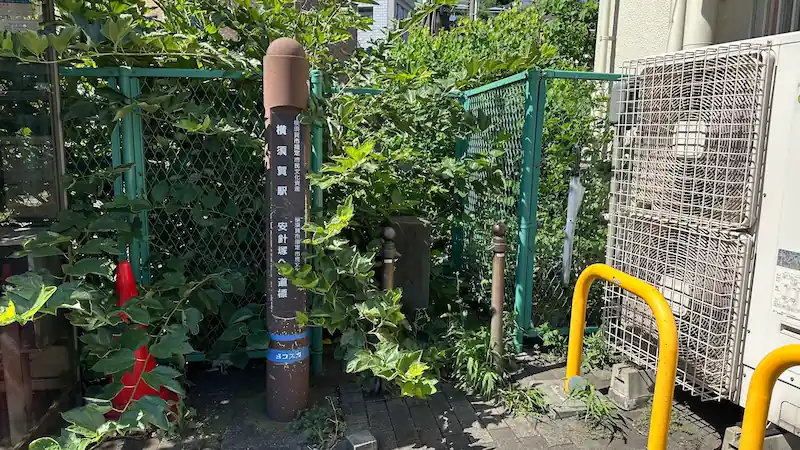
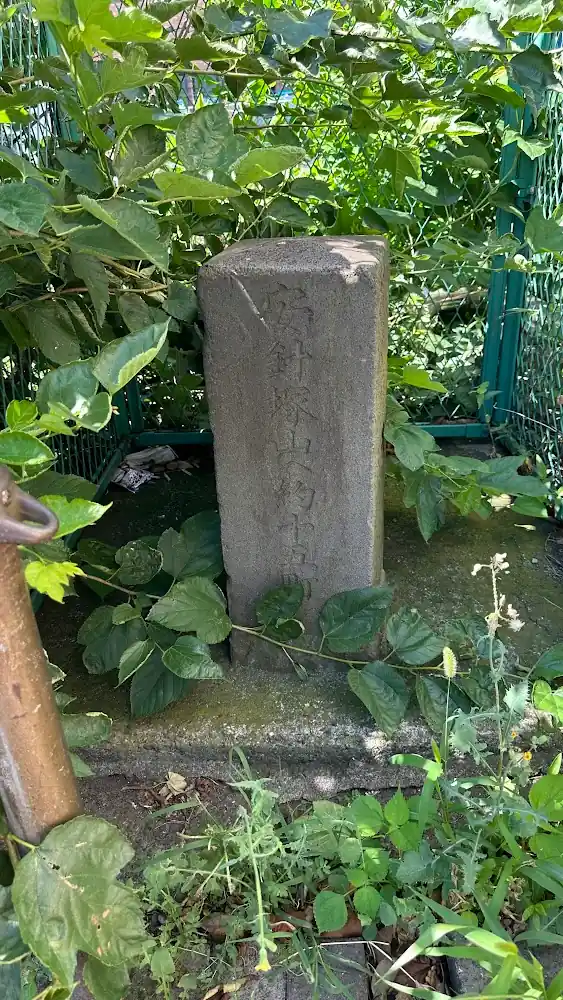
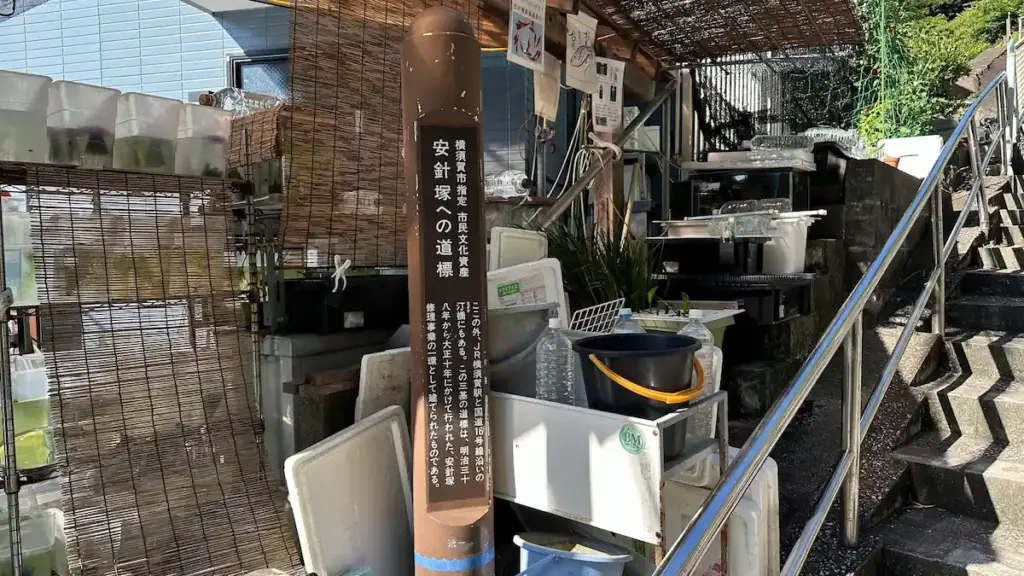
Guidepost to Anjinzuka (1)
This guidepost is located next to JR Yokosuka Station. When I visited, it was partly hidden by parked bicycles and overgrown plants, so keep an eye out when searching for it.
Guidepost to Anjinzuka (2)
This guidepost stands along a fairly busy road. It’s easy to miss unless you’re specifically looking for it, so be alert as you pass by.
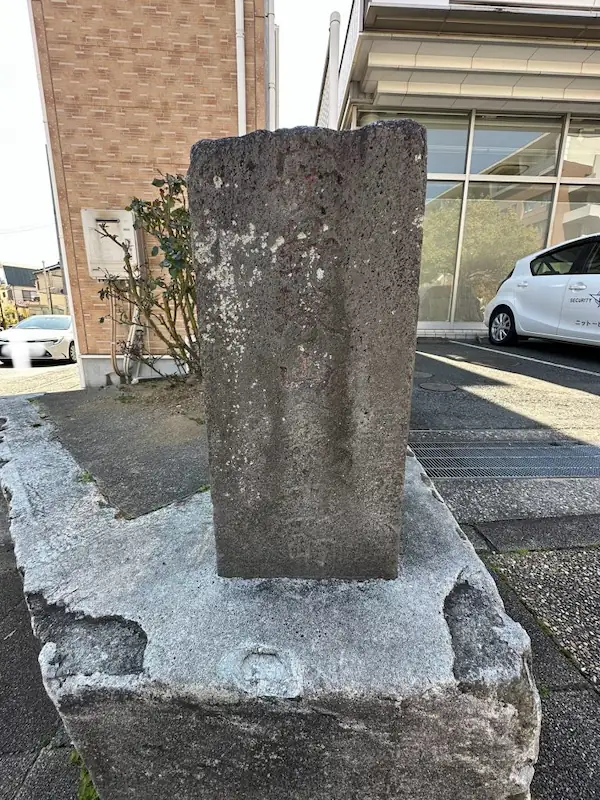
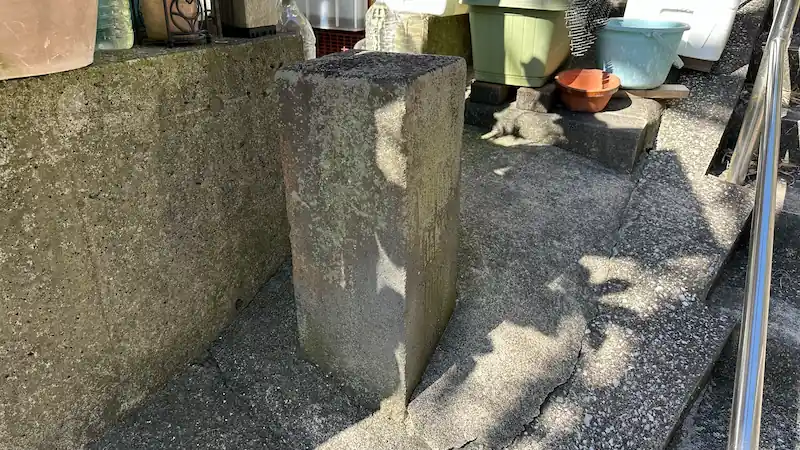
Guidepost to Anjinzuka (3)
This marker is located between Kashima Shrine and Anjinzuka. Look for the pedestrian-only tunnel nearby; the guidepost is placed by the stairs adjacent to it.
Anjindai Park
This park bears the name “Anjin,” but it doesn’t appear to have a direct historical link to William Adams. However, the observation platform at the back of the park offers a view of ships docked at the nearby U.S. naval base.
360° View: Anjindai Park Observation Platform
Drag to look around and spot the U.S. naval vessels docked at Yokosuka Naval Base.
🔹 Why This Tour is Special
✔ Walk in the footsteps of the real person behind SHŌGUN’s Anjin
✔ Visit a National Historic Site and sites rebuilt by Adams’ own descendants
✔ Collect rare goshuin stamps bearing William Adams’ name
✔ Explore each site with 360° panoramic photos before you arrive
📍 Ready to follow the path of Japan’s first English samurai? The trail begins at Anjinzuka Station.
📍 Want to get a feel for the journey first?
Check out the personal travel account and photos of this historical route below. ⬇
Map of Featured Spots



comment