


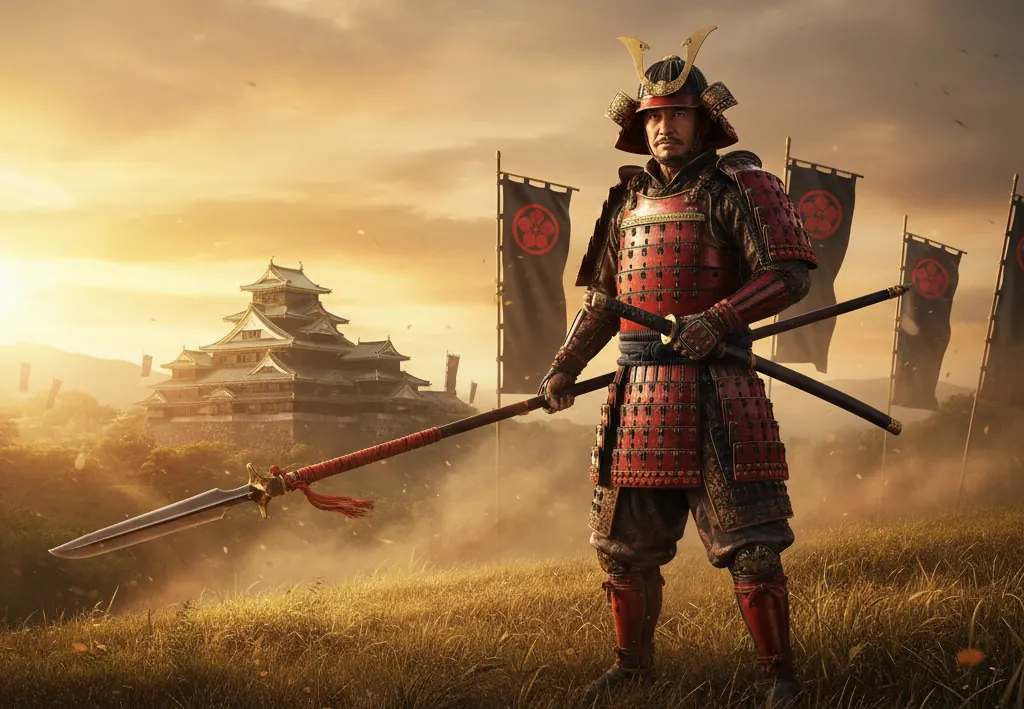
Maeda Toshiie: Who He Was, Why Ieyasu Feared Him, and Where to Visit
Maeda Toshiie (1538–1599) served Oda Nobunaga, became one of Toyotomi Hideyoshi's most trusted senior lords, founded the wealthy Kaga Domain, and was one of the few men strong enough to restrain Tokugawa Ieyasu.
Who Was Maeda Toshiie?
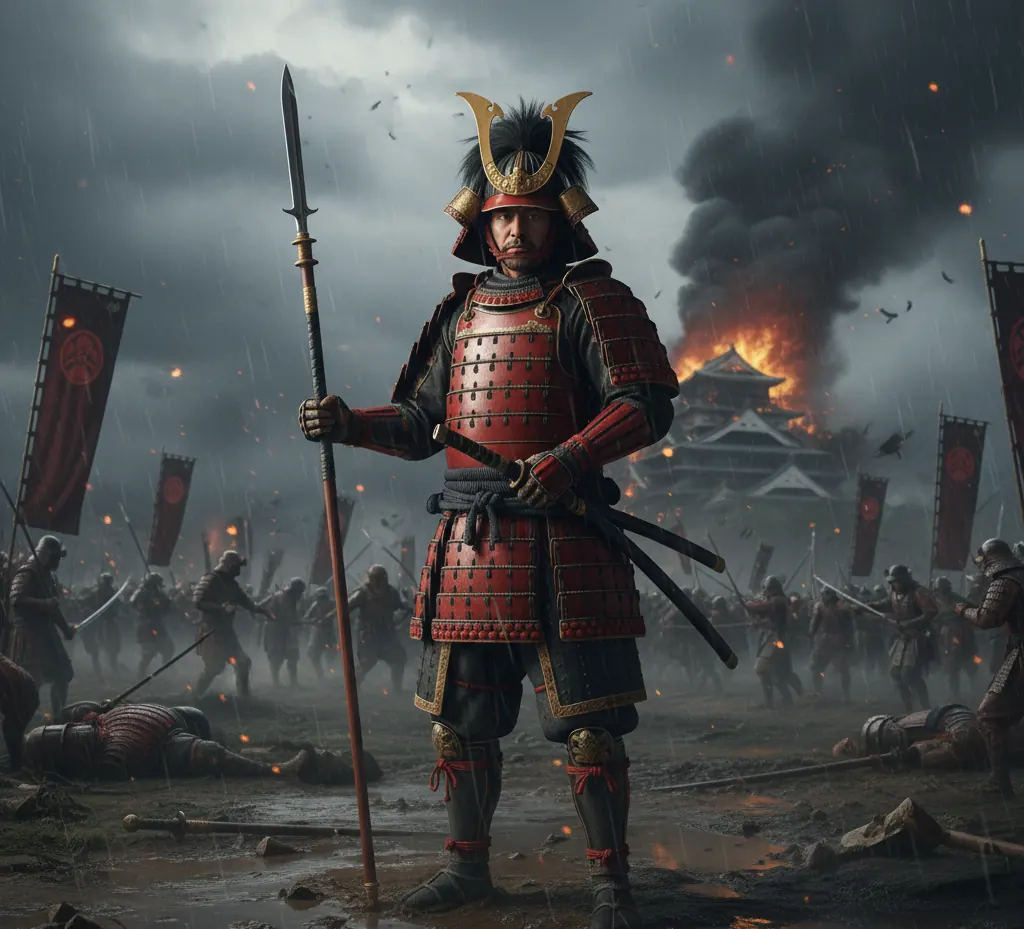
Maeda Toshiie (1538–1599) was one of the most powerful samurai lords of the Sengoku era — yet he remains largely unknown to English-speaking audiences. He began his career as a page serving Oda Nobunaga, rose through the ranks on the strength of his spear skills, and earned the nickname "Mataza of the Spear." After Nobunaga's assassination in 1582, he became one of Toyotomi Hideyoshi's most trusted generals and eventually controlled the largest domain in Japan outside the Tokugawa — the famed Kaga Domain.
At his peak, Toshiie was the only figure capable of holding the competing factions of Hideyoshi's government in check. Tokugawa Ieyasu — the model for "Toranaga" in SHŌGUN — exercised caution as long as Toshiie lived. When he died in April 1599, the restraint ended. The events that followed led directly to the Battle of Sekigahara and the birth of the Tokugawa shogunate.
His deep bond with his wife Matsu (later Hoshūin) is remembered as one of the great samurai love stories. After Toshiie's death, Matsu voluntarily offered herself as a hostage to Tokugawa Ieyasu — a remarkable act of courage that saved the entire Maeda clan from destruction. She is enshrined at Tentoku-in Temple in Kanazawa, where visitors can pay their respects today.
→ Read the full biography: Maeda Toshiie from page boy to lord of Japan's greatest domain
Why Maeda Toshiie Matters — Even If You've Never Heard of Him
Maeda Toshiie does not appear in SHŌGUN — but without him, the story would have unfolded very differently. The drama depicts the power struggle that erupted after the death of a ruler modeled on Toyotomi Hideyoshi. What the show doesn't explain is that the real stabilizing force of that era — the one figure Ieyasu genuinely feared — had already died months earlier.
Toshiie passed away in April 1599. Ieyasu began his open bid for power almost immediately afterward. In that sense, Toshiie's death is the true starting gun for the events SHŌGUN depicts. Understanding who he was makes the drama — and the real history behind it — significantly richer.
Where to Visit: Kanazawa, Nagoya & Kyoto
Unlike many Sengoku-era sites, Kanazawa was never bombed during World War II. The castle district, shrines, and samurai quarters that Toshiie and his descendants built survive in a form that feels genuinely close to the original. It's one of the few places in Japan where you can walk through a castle town and feel the texture of samurai-era governance still intact.
Kanazawa — His Castle Town
The city Toshiie built, surviving nearly intact to the present day
A journey through Kanazawa is a walk through Maeda Toshiie's world. Must-visit destinations include Kanazawa Castle Park — where you can see the reconstructed stone walls, gates, and turrets originally built by the Maeda clan — and Oyama Shrine, dedicated to Toshiie and Matsu. The atmosphere of the castle town still reflects the Maeda family's values of simplicity, strength, and refined aesthetic taste. Tentoku-in Temple, where Matsu is enshrined, is also well worth visiting.
Nagoya — Where He Was Born
Arako district, birthplace of Toshiie in Owari Province
Maeda Toshiie was born in Arako, in what is now Nakagawa Ward, Nagoya. He grew up in the same region as Toyotomi Hideyoshi and served under Oda Nobunaga from around age 14. The area retains connections to his early life and is a natural stop for visitors exploring Owari Province's Sengoku history.
Kyoto — Where He Died
Fushimi residence · memorial sites near Kōdai-ji Temple
Toshiie spent his final years in Kyoto and died at his Fushimi residence in April 1599. His grave is located near Kōdai-ji Temple — also the site of Nene's memorial, Hideyoshi's widow — making it a natural stop for anyone following the Toyotomi story through Kyoto.
Travel Guides: On-Location Reports from His Castle Town and Beyond
The guides below cover sites connected to Maeda Toshiie's life — from Kanazawa Castle Park to the streets of his birthplace in Nagoya. Each report includes what to look for when you visit, along with practical tips for getting there.

Visit Diary
On-location reports from Maeda Toshiie's sites — from his birthplace in Nagoya to the castle town he built in Kanazawa.
Frequently Asked Questions
Maeda Toshiie (1538–1599) was a senior samurai lord who served both Oda Nobunaga and Toyotomi Hideyoshi. He founded the Kaga Domain — one of the wealthiest and most culturally refined domains of the Edo period — and was regarded as the stabilizing conscience of the Toyotomi government. At his peak, he controlled Japan's largest non-Tokugawa domain.
No. Toshiie died in April 1599 — before the events depicted in SHŌGUN. However, the power vacuum his death created is central to the drama's story. Without his restraining presence, Tokugawa Ieyasu — the model for "Toranaga" — was free to make his move. In a real sense, Toshiie's death is where the SHŌGUN story begins.
Toshiie commanded enormous military resources and was widely respected across the Toyotomi factions. As long as he lived, Ieyasu had no safe opportunity to consolidate power openly. Historians widely believe that Toshiie's death in April 1599 was the moment that made Sekigahara — and the Tokugawa shogunate — possible.
The main sites are in Kanazawa (Kanazawa Castle Park, Oyama Shrine, Tentoku-in Temple), Nagoya (the Arako area, his birthplace), and Kyoto (near Kōdai-ji Temple, where his grave is located). Kanazawa is the most rewarding destination — the castle town he founded survived World War II intact and gives a genuine sense of samurai-era governance.
"Koku" was the unit used to measure a domain's wealth in Sengoku and Edo Japan — specifically, the volume of rice it could produce in a year. Toshiie's Kaga Domain produced close to one million koku annually, making it Japan's wealthiest non-Tokugawa domain — second in economic power only to the shogunate itself. In practical terms, this made the Maeda clan the rough equivalent of an independently wealthy regional kingdom, capable of fielding a large army but choosing to coexist with the Tokugawa for over 260 years.
Matsu (later known as Hoshūin) was Toshiie's wife. After Toshiie's death, she voluntarily offered herself as a hostage to Tokugawa Ieyasu to protect the Maeda clan from destruction. Her act of self-sacrifice is one of the most celebrated examples of courage and devotion in samurai history. She is enshrined at Tentoku-in Temple in Kanazawa, which she herself commissioned before her death.
It was a nickname earned through exceptional skill with the spear (yari) in battle. "Mataza" was a shortened form of his childhood given name, Matazaemon. He was selected for Oda Nobunaga's elite corps — the red-caped "Aka-horo-shū" — and distinguished himself at battles including Okehazama (1560) and Nagashino (1575).
Yes — Toshiie was entirely real, a historical figure of late 16th-century Japan. He does not appear in the fictional drama SHŌGUN, but the power struggle the drama depicts would not have unfolded the way it did without his death in 1599. English-language sources on him are limited; this site includes a detailed biography covering his full life.
Historians widely believe that Toshiie's death in 1599 removed the only figure capable of keeping Tokugawa Ieyasu in check. Within months of his passing, Ieyasu began consolidating power, leading directly to the Battle of Sekigahara (1600) and the establishment of the Tokugawa shogunate — a government that would rule Japan for over 260 years.
☕ Support This Site
Following the Shogun is built on original fieldwork and on-site research.
If you found this guide useful, your support helps keep it going.

You can also support via QR code

