If *SHŌGUN* captured your heart through the character Mariko Toda, I want you to do one thing: trace the footsteps of her real-life “model,” Hosokawa Gracia (Akechi Tama), and experience those places at ground level—at the temperature of the land itself. Between the lines of the historical record, she isn’t an abstract figure. In real terrain—water, slopes, quiet—she rises into view with startling clarity.
I felt that the instant I lifted my camera in Midono, Kyōtango. Once you turn inland on the Tango Peninsula, the scent of the sea suddenly fades, and a mountain village appears. There isn’t a parade of flashy ruins. But the narrow path toward the waterfall, the chill of spring water lingering in your palm, the “defensive distance” you can see across a valley from the tip of a ridge—those bodily sensations bring you closer to the time Tama lived as “the daughter of a traitor,” with an honest, unforced outline.
On this page, I’ve organized the route in the exact order I actually walked and photographed it: from the Midono area—[Garasha Otaki Waterfall / “Makeup Water” Spring / Women’s Castle Ruins & Men’s Castle Ruins]—to the Miyazu area—[Gracia Statue “Prayer” / Taiko Gate / Miyazu Castle Ruins / Seirin-ji Temple]—and finally to Maizuru—[Tanabe Castle Ruins]. The key is not to treat this as a random collection of sightseeing spots. When you line the locations up in the order her life was shaken, the same scenery stops being “just a view” and becomes a stage where the story happened.
Miyazu—known as the gateway to Amanohashidate—and the port town of Maizuru both become different places when you walk them through Gracia’s eyes. So let’s go—not by map pins, but by your own feet—following the trail to Gracia’s final chapter.
Midono Area
As you head inland on the Tango Peninsula, the presence of the sea slips away, and the mountain village of Midono (みどの) comes into view. This is the place said to have sheltered Tama—daughter of Akechi Mitsuhide (later known as Hosokawa Gracia)—after the Honnō-ji Incident (1582). Rather than a lineup of showy monuments, the story here lives in the land itself: the terrain, the water, and the silence.
The first stop you’ll want to walk to is “Midono Garasha Ōtaki,” a waterfall that drops into a tributary of the Ukawa River. It’s the spot in this area where you feel nature’s force most directly—a straight plunge that seems to split dark basalt. From there, head to “Garasha’s Makeup Water Spring,” and you’ll understand how mountain water sat at the center of everyday life. More than glamorous legends, it’s the simple acts—washing hands, smoothing hair, setting your face—that make Tama’s stay feel close and real.
The core of Midono is the pair of sites known as the “Women’s Castle Ruins” and the “Men’s Castle Ruins.” The Women’s Castle is a small, flat terrace—less a grand fortress than a modest, fort-like residence site. A quietly standing monument, the “Stone Marker for Lady Hosokawa Tadaoki’s Secluded Residence,” erected in 1936, supports the local tradition. Across the valley, the Men’s Castle is remembered as a lookout and guard post. When you stand on that ridge-end position, you can feel both truths at once: she was protected—and she was shut away.
Midono isn’t a “tourist destination with highlights scattered around.” It’s a place where a short walk lets you measure the distance between nature and history with your own body. The sound of falling water, the cold that stays on your skin, the small flat ground on a hill—follow them in sequence, and Gracia’s “Midono time” becomes just a little more concrete.
Garasha Ōtaki Waterfall
⭐ Recommendation Rating
Historical Value:☆☆
Visual Appeal:☆☆☆
Experiential Value:☆☆
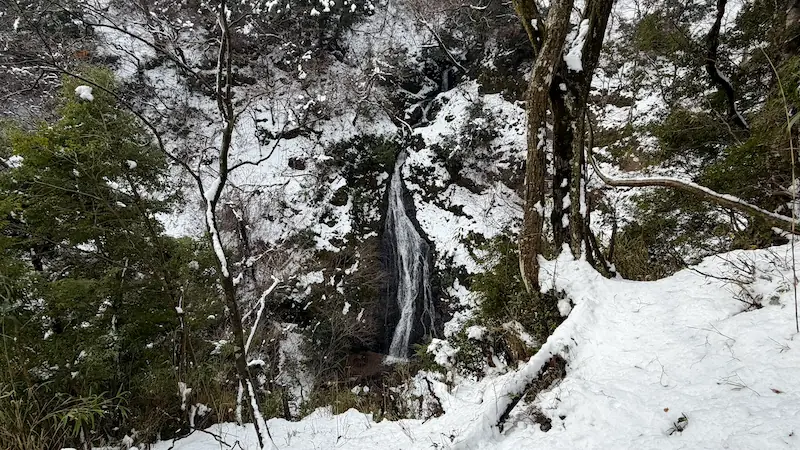
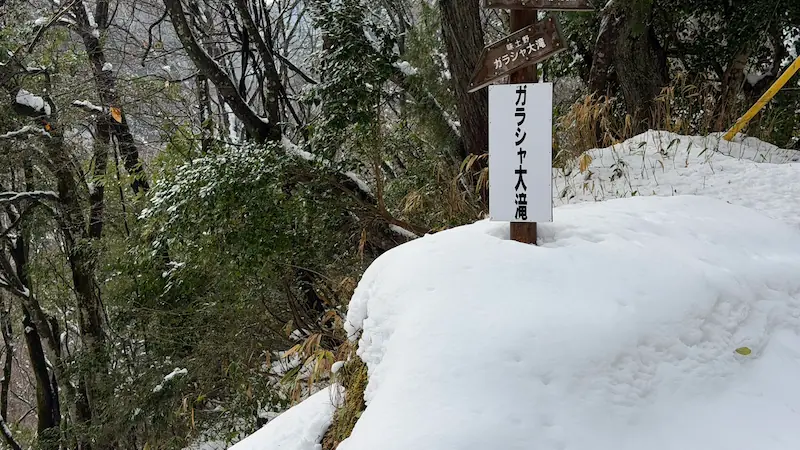
Midono, a deeply wooded settlement on the Tango Peninsula. In the middle of Sengoku-era upheaval, local tradition says Akechi Mitsuhide’s daughter, Tama (later Hosokawa Gracia), lived here in hiding, away from public eyes—and that memory still breathes in the village today. About 500 meters east of the settlement, a tributary of the Ukawa River drops as “Midono Garasha Ōtaki.” A roughly 40-meter straight waterfall plunges down over black basalt, and the echoing sound in the ravine is so clear it feels almost like a spoken prayer. In 2019, a viewing platform was developed, making it easier to feel the raw power of nature in this “place of confinement” up close—surrounded by deep spring greens or blazing autumn foliage.
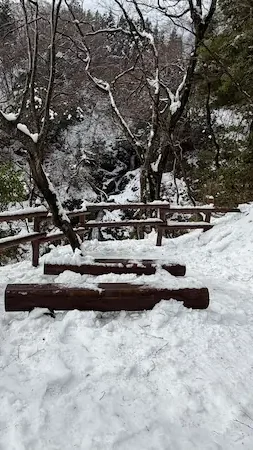
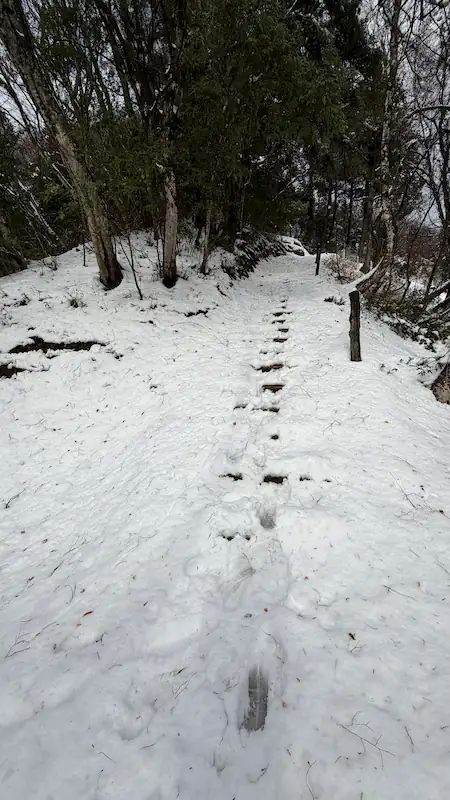
| Year Built | Naturally formed (formation period unknown) |
|---|---|
| Builder | Nature (erosion by a tributary of the Ukawa River) |
| Structure / Features | Total length approx. 51m / drop approx. 40m / straight plunge (vertical flow) / runs over basalt |
| Renovation / Restoration | Spring 2019: viewing area developed (stronger on-site guidance as “Midono Garasha Ōtaki”) |
| Current Condition | Extant (open year-round; in snowy season, watch road conditions nearby) |
| Loss / Damage | None noted |
| Cultural Property Designation | Kyōtango City Designated Cultural Property (Scenic Site): “Midono Ōtaki” (designated Feb 1, 2023) |
| Notes | Approx. 304m elevation / said to be the largest waterfall in the city and less likely to dry up even in summer |
🗺 Address:627-0102 Yasaka-chō Midono, Kyōtango City, Kyoto Prefecture
🚶 Access
60 minutes by car from Miyazu Station (Kyoto Tango Railway) (approx. 36.2 km)
There is a parking area about 120m past the waterfall signboard.
*There is no public transportation, so you’ll need a rental car or taxi.
⏳ Suggested Visit Time
Quick highlights: ~10 minutes
Unhurried visit: ~30 minutes
📍 Highlights
- Straight-fall view from the lookout: From the viewing platform, admire the white ribbon of water dropping in a single line, framed by trees—extremely photogenic.
- Contrast between basalt rock and water: Spray bursts against the black rock face, making the waterfall’s power feel even stronger.
- Seasonal ways to enjoy it: Fresh green in spring and summer, vivid foliage in autumn—the same place transforms completely.
📌 Trivia
- An unexpected historical thread: A postcard commemorating the 1936 unveiling of the “Lady Hosokawa Tadaoki’s Secluded Residence” monument also preserved a photo of Midono’s waterfall.
- Local insider tip: Head slightly downhill from the parking area and continue down the stairs for the “best seat”—you can feel the ravine air suddenly turn cool.
- Connection to a notable figure: Linked to the tradition that Hosokawa Gracia (Tama) lived in seclusion in Midono; in recent years, improvements like the viewing platform have progressed under the name “Midono Garasha Ōtaki.”
Garasha’s Makeup Water Spring
⭐ Recommendation Rating
Historical Value:☆☆
Visual Appeal:☆☆
Experiential Value:☆☆
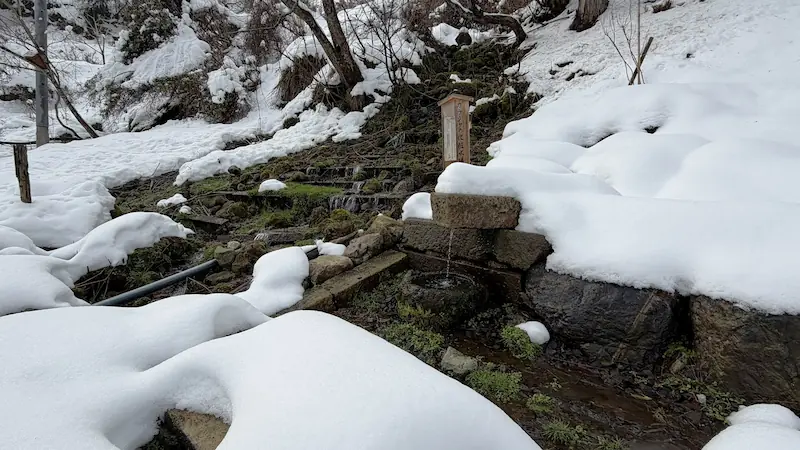
Midono’s quiet mountain village preserves a local tradition about a “Makeup Pond” (Kesho-ike). Nearby, water has been drawn and arranged into what is now called “Garasha’s Makeup Water Spring.” After the Honnō-ji Incident, Tama—daughter of Akechi Mitsuhide (later Hosokawa Gracia)—is said to have lived here in hiding. Far from the polished life of Kyoto, surrendered to the rhythms of the mountain seasons, cold water may have been more than grooming. It may have been a small “ritual” for steadying the heart. The spring’s charm is its plainness—no show, no spectacle. And that’s exactly why the texture of Tama’s time here feels as if it returns softly to your palm.
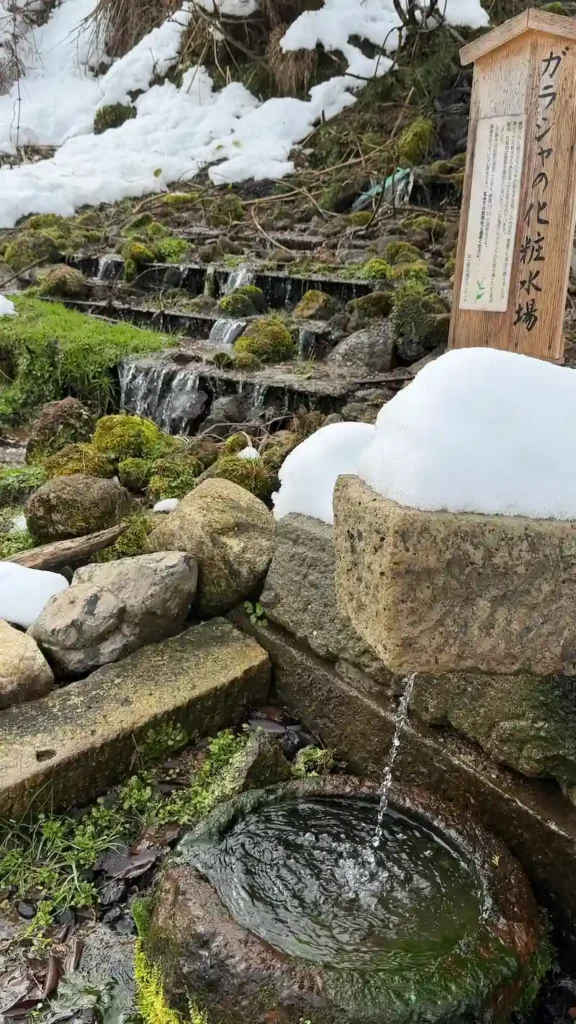
| Year Built | Unknown (recently maintained as an on-site water point) |
|---|---|
| Builder | Unknown (developed as a local guidance facility) |
| Structure / Features | A water point where you can draw water near the “Makeup Pond” tradition site (source water described as ultra-soft water) |
| Renovation / Restoration | Recent years: improved guidance as a water point (details unknown) |
| Current Condition | Extant (usable on site) |
| Loss / Damage | None noted |
| Cultural Property Designation | None |
| Notes | As the water is unsterilized source water, avoid drinking it as-is (follow on-site signage) |
🗺 Address:627-0102 Yasaka-chō Midono, Kyōtango City, Kyoto Prefecture
🚶 Access
There is no parking here, so walk 10 minutes from the previous spot “Garasha Ōtaki Waterfall” (approx. 550m).
⏳ Suggested Visit Time
Quick highlights: ~10 minutes
Unhurried visit: ~20 minutes
📍 Highlights
- A water point that follows the “Makeup Pond” tradition: No dramatic staging—its appeal is the simple feeling that the mountain water itself holds the story.
- Test the water’s texture with your hands: You can feel how soft it is the moment you draw it—an easy, refreshing reset in the middle of your walk.
- Seasonal ways to enjoy it: In summer, the water sounds and cool air feel wonderful; in winter, the snow-wrapped quiet deepens the atmosphere of “seclusion.”
📌 Trivia
- An unexpected historical thread: The “Makeup Pond” in the tradition isn’t a spot where you can see the original appearance preserved; it’s the kind of site where memory remains in the land.
- Local insider tip: Because it’s unsterilized source water, the rule is to avoid drinking it raw. Always follow on-site instructions.
- Connection to a notable figure: If you want to imagine Hosokawa Gracia (Tama) hiding in Midono in the most everyday way possible, think of “water.” More than ornate ruins, it brings you closer to her breath and presence.
Midono Women’s Castle Ruins
⭐ Recommendation Rating
Historical Value:☆☆☆
Visual Appeal:☆☆
Experiential Value:☆☆
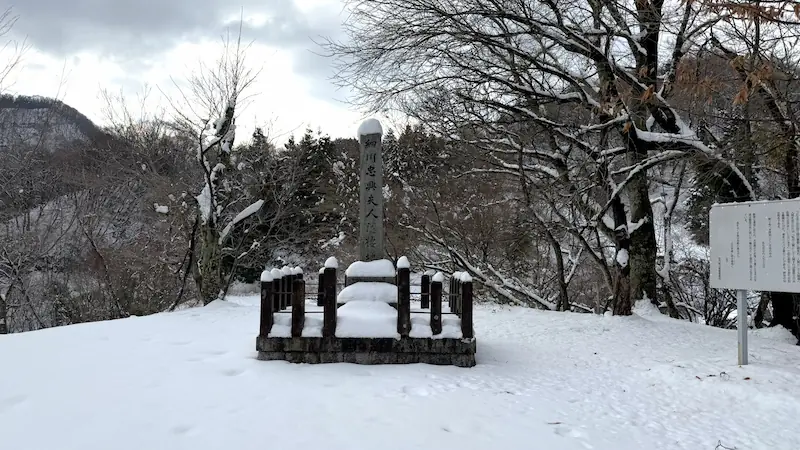
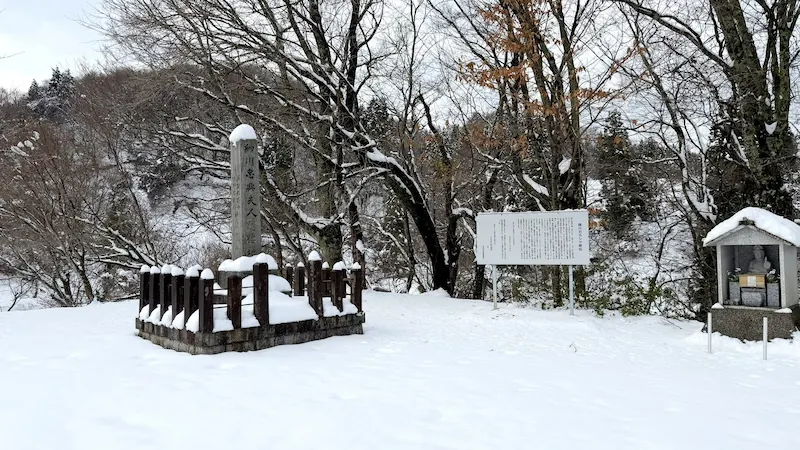
In mountain-locked Midono, there’s a small hill where even the wind seems to quiet down—that is the “Women’s Castle Ruins.” This is the place said to have confined Tama (later Hosokawa Gracia) after the Honnō-ji Incident (1582), from around Tenshō 10 to 12 (circa 1582–1584). Even though it’s called a “castle,” it wasn’t a stone-walled fortress. It was more like a fort-like residence site with a small flat area, where the land itself served as the defensive wall. A monument erected in 1936—the “Stone Marker for Lady Hosokawa Tadaoki’s Secluded Residence”—quietly tells you this was not just a rural hillside, but a stage where one woman’s fate layered itself into the landscape. If you walk it together with the tradition that guards were stationed at the Men’s Castle across the valley, you’ll feel both of Tama’s realities rise from the mountain air: time that protected her, and time that imprisoned her.
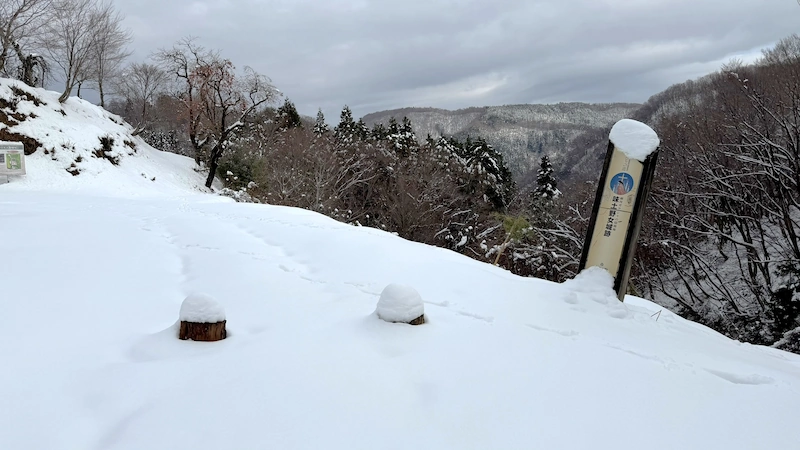
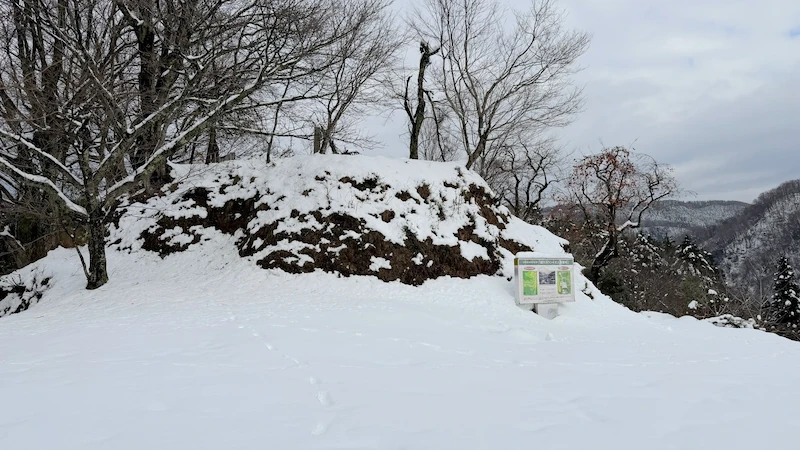
| Year Built | Unknown (Sengoku-period residence/fort site) / Tama’s confinement: around Tenshō 10–12 (1582–1584) |
|---|---|
| Builder | Unknown (traditionally said to have been arranged under Hosokawa control) |
| Structure / Features | Flat ground on a small hill (said to be around 20㎡) / a simple fort-like remnant that relies on terrain rather than stone walls |
| Renovation / Restoration | 1936: “Stone Marker for Lady Hosokawa Tadaoki’s Secluded Residence” erected / area improvements such as signage (date unknown) |
| Current Condition | Remains as terrain (no buildings extant) / memorial monument stands on site |
| Loss / Damage | Buildings lost; the main traces are the monument and landform remains |
| Cultural Property Designation | Kyōtango City Designated Cultural Property (Historic Site): “Hosokawa Gracia Lady’s Secluded Residence Site (Women’s Castle Ruins)” |
| Notes | Nearby is a tradition site for “Garasha’s Old Well” (said to have dried up in the 1927 North Tango Earthquake) |
🗺 Address:627-0102 Sugawa (Midono), Yasaka-chō, Kyōtango City, Kyoto Prefecture
🚶 Access
3 minutes on foot from the previous spot “Garasha’s Makeup Water Spring” (approx. 200km)
⏳ Suggested Visit Time
Quick highlights: ~15 minutes
Unhurried visit: ~1 hour
📍 Highlights
- “Stone Marker for Lady Hosokawa Tadaoki’s Secluded Residence”: A landmark that quietly links documented history and local tradition. Stand before it first, and the weight of the place arrives immediately.
- A landform that’s “more fort than castle”: A small flat area and surrounding rises create a defensive shape. Not grandeur, but the realism of hiding leaves the deeper impression.
- Seasonal ways to enjoy it: In fresh green season the valley breeze feels cool; in autumn the mountain colors deepen and the silence becomes sharper.
📌 Trivia
- An unexpected historical thread: The Midono seclusion tradition was clarified in later historical writings, and over time is said to have been officially acknowledged by the Hosokawa family.
- Local insider tip: The Women’s Castle isn’t a vast castle complex—it’s anchored by only a tiny flat area. That’s what makes the urgency of “hiding” feel so real.
- Connection to a notable figure: Some narratives find the roots of Tama’s later Christian name “Gracia” in the experiences of this confinement period, often told together with the presence of her attendant, Kiyohara Maria.
Midono Men’s Castle Ruins
⭐ Recommendation Rating
Historical Value:☆☆
Visual Appeal:☆
Experiential Value:☆
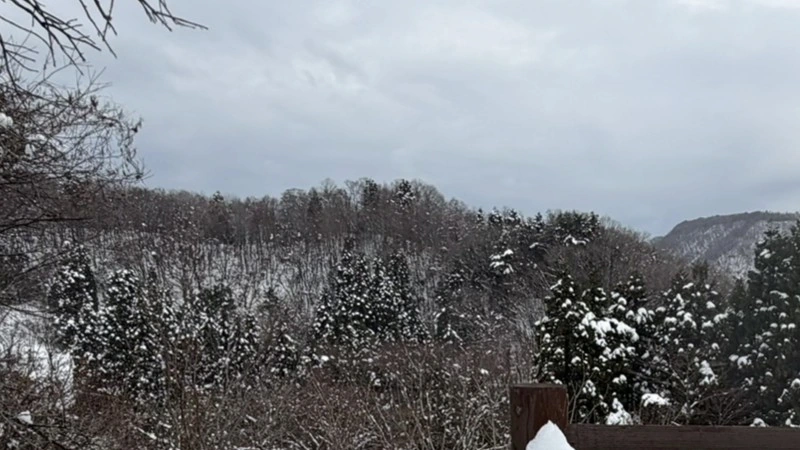
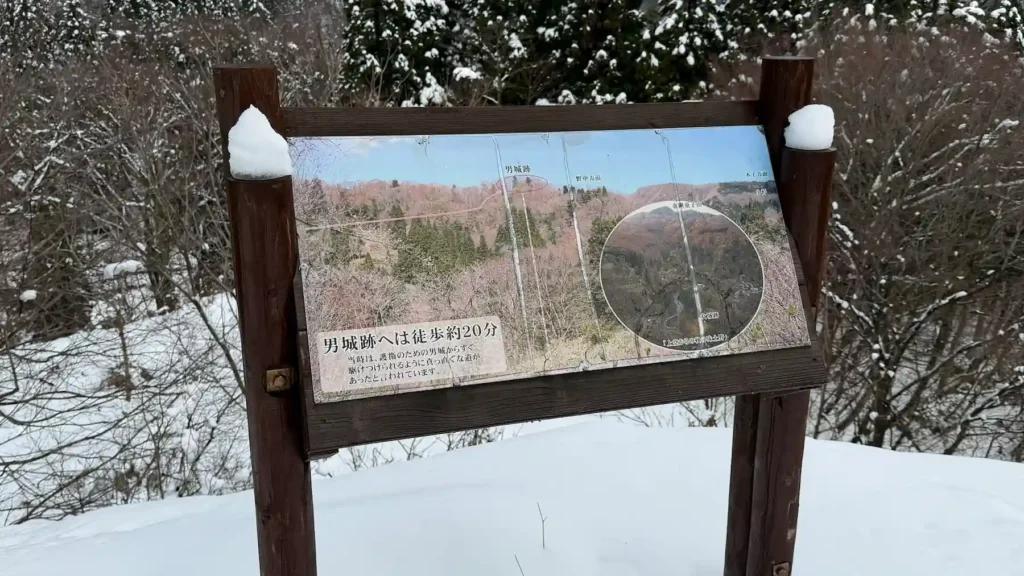
Across the valley from the Women’s Castle, the Men’s Castle Ruins are said to have “protected” Tama (later Hosokawa Gracia) with the eyes of a lookout. From Tenshō 10 to 12 (1582–1584), Tama—now branded the daughter of a “traitor”—was moved to remote Midono, where she lived through quiet days of prayer. Beside that life, tradition says retainers camped on the ridge-end where they could watch both the valley road and the Women’s Castle, keeping vigil in case of emergency. It’s less a castle than a simple fort, but the terrain still holds traces: a trench-like cut (horikiri) that severs the ridge, and stepped flat areas (kuruwa). The tension of guarding someone’s life is what remains—etched into the land.
| Year Built | Unknown (traditionally a guard post around Tenshō 10–12 = circa 1582–1584) |
|---|---|
| Builder | Unknown (said to have been manned by Hosokawa Tadaoki’s retainers for protection) |
| Structure / Features | Ridge tip cut off by a horikiri / stepped kuruwa (flat terraces) / lookout position overlooking the Women’s Castle |
| Renovation / Restoration | No restoration (signage notes the “path is not maintained”) |
| Current Condition | Terrain remains (horikiri, kuruwa, etc.) / no buildings extant |
| Loss / Damage | Buildings lost; forested (some sections can be slippery after rain) |
| Cultural Property Designation | Not designated |
| Notes | The position across the valley from the Women’s Castle lets you physically experience the guard’s perspective |
🗺 Address:Sugawa (Midono), Yasaka-chō, Kyōtango City, Kyoto Prefecture
🚶 Access
15 minutes on foot from the previous spot “Midono Women’s Castle Ruins” (approx. 900m)
⏳ Suggested Visit Time
Quick highlights: ~5 minutes
Unhurried visit: ~20 minutes
📍 Highlights
- The ridge-end lookout: A place where you can see the valley road and the Women’s Castle at once. The tradition of guards stationed here makes sense the moment you frame the view.
- Horikiri cut and stepped terraces: Traces like the ridge-cut trench and terraced flats remain, letting you “read” the fort’s outline from the land itself.
- Seasonal ways to enjoy it: Fresh green (May–June) and fall foliage (November) completely change the mountain path. Trekking shoes are recommended, as footing can be slippery.
📌 Trivia
- An unexpected historical thread: Although it’s called a “castle,” it’s remembered in practice as a guard fort supporting a life of confinement.
- Local insider tip: Before Route 655 existed, an old ridge-line path known as the “Midono Garasha Old Road” is said to pass through the Men’s Castle site—an advanced route for experienced hikers.
- Connection to a notable figure: While Gracia (Tama) lived in the Women’s Castle during Tenshō 10–12, retainers are said to have kept watch from the Men’s Castle—this valley-spanning “distance of protection” is the story of this place.
Miyazu Area
Miyazu, known as the gateway to Amanohashidate, is a town that doesn’t end with sea views. Near where the Ōtegawa River flows into Miyazu Bay, Hosokawa Fujitaka (Yūsai) once built Miyazu Castle, and the framework of the castle town still lingers in street lines and the relationship between roads and river. Even with short walking distances, you’ll find fragments of history appearing one after another—that’s the charm of the Miyazu area.
A perfect “entry point” is Sakurayama’s Ōkuboyama Castle Ruins (also written Ōkubo-yama). Walk just a little beyond the shrine precincts and you’ll get the feeling of a lookout overlooking the town. Traditions also overlap here with a period when Tama (later Hosokawa Gracia) was in Miyazu, making it an easy place to imagine her “Miyazu time” before she was moved to Midono.
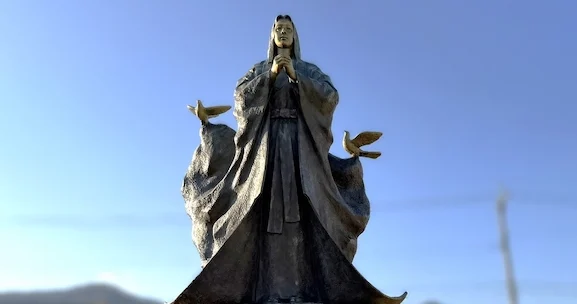
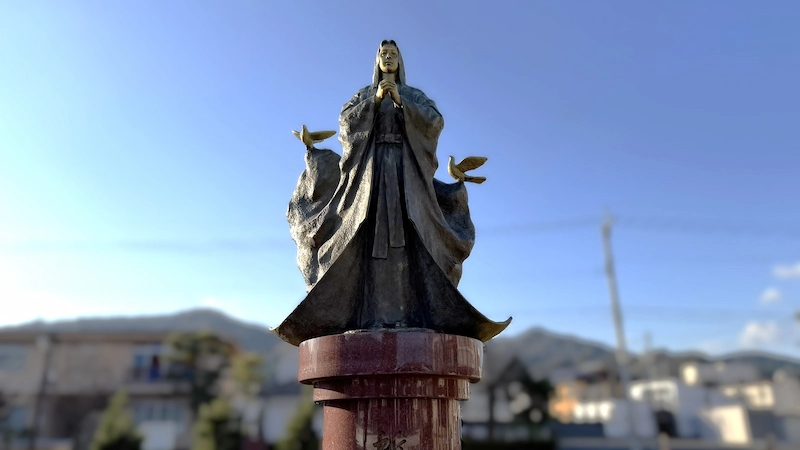
Back in town, head to the Gracia statue “Prayer” along the Ōtegawa River. Though it’s a modern installation, the composition is excellent—the statue gazes toward where Miyazu Castle once stood, naturally connecting past and present in the castle town. Nearby, Taiko Gate (Babasaki Gomon) is a “portable ruin”: even after the castle itself disappeared, this gate survived through relocation and preservation. Stand before it and you can feel how the castle town’s entrances and exits were directly tied to everyday life.
And Miyazu Castle Ruins are a place where you “feel the castle even when there’s nothing there.” If you walk using the restored wall sections (along the Ōtegawa) and the town layout as clues, the meaning of its location as a seaside castle slowly comes into focus. If you still have time, head up to Seirin-ji Temple on higher ground. With the tradition of Akechi Mitsuhide’s “head mound,” it quietly teaches you that Miyazu was not only a “castle town,” but also a “town of prayer.”
The Miyazu area is less about racing from landmark to landmark and more about walking the river and castle-town lines to confirm how places connect. Because scenery and history overlap without strain, Gracia’s story settles naturally into your mind.
Ōkuboyama Castle Ruins (Ōkubo-yama Castle Ruins)
⭐ Recommendation Rating
Historical Value:☆☆
Visual Appeal:☆
Experiential Value:☆
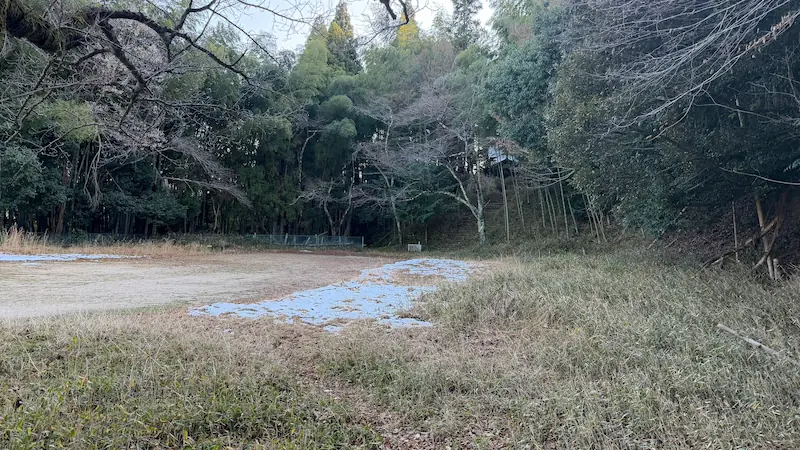
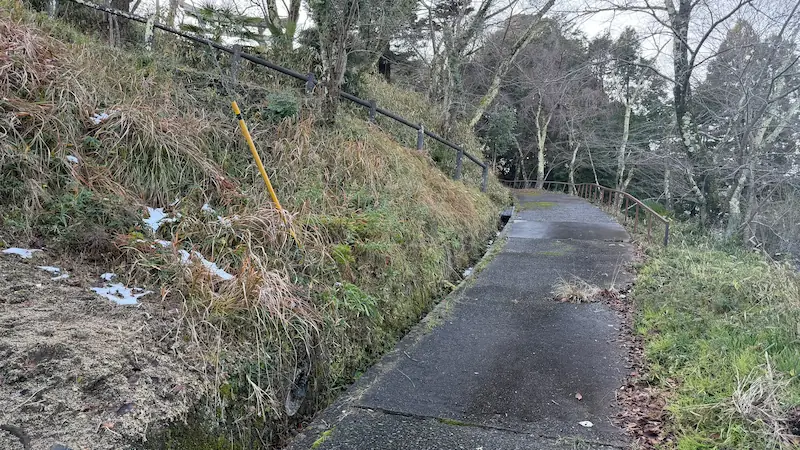
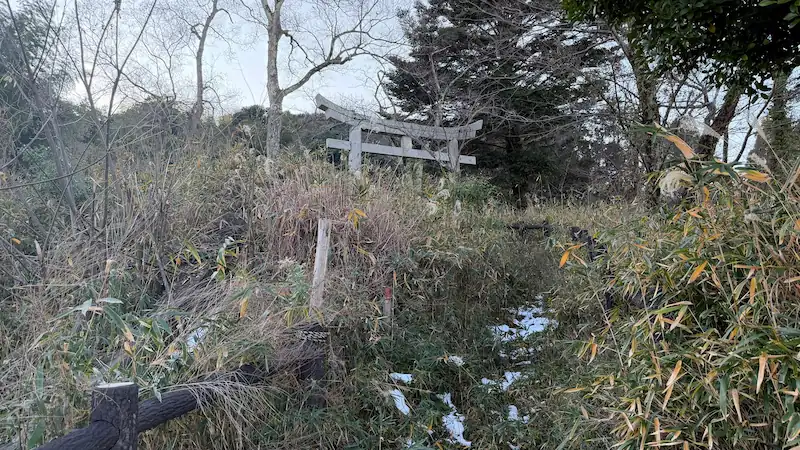
A small hill on Sakurayama overlooking the townscape of Miyazu—today wrapped in the presence of Tenman-gū and other shrines, yet remembered as the site of a castle called “Ōkubo (Ōkubō) Mountain Castle.” Tradition says that around the Tenshō era, when Tama—daughter of Akechi Mitsuhide, married to Hosokawa Tadaoki (later Hosokawa Gracia)—entered Miyazu, she may have lived in a castle in this area until a new stronghold was prepared. Another story adds that the following year, a tea gathering was held with Mitsuhide and Hosokawa Fujitaka and Tadaoki, and that this became the place where Tama and her father met “for the last time.” Before she disappeared into Midono’s deep mountain village—before she became “Gracia”—this hill invites you to imagine her quiet “Miyazu time.”
| Year Built | Medieval period (exact year unknown) |
|---|---|
| Builder | Unknown (traditionally: a senior retainer of the Isshiki clan, Ogura Harima-no-kami, and others) |
| Structure / Features | Considered a hilltop castle at approx. 52m elevation; primarily earthen remains such as terraces and embankments (currently heavily altered) |
| Renovation / Restoration | In 1856 (Ansei 3), soil removal for building the Shimazaki battery (artillery emplacement) significantly altered the Sakurayama terrain |
| Current Condition | Remains are fragmentary. The area is used for shrines, facilities, and park space; enjoy views from walking paths |
| Loss / Damage | Many remains were lost due to soil removal, land development, and maintenance works |
| Cultural Property Designation | Not designated (often introduced as part of a local historical walking area) |
| Notes | Approach from behind Honjō Shrine toward the castle hill. The “lookout” feeling over Miyazu city remains |
🗺 Address:Manmachi, Miyazu City, Kyoto Prefecture (around Sakurayama Tenman-gū / behind Honjō Shrine)
🚶 Access
13 minutes on foot from Miyazu Station (Kyoto Tango Railway) (approx. 950m)
⏳ Suggested Visit Time
Quick highlights: ~10 minutes
Unhurried visit: ~30 minutes
📍 Highlights
- Castle hill walk behind Honjō Shrine: With the shrine presence at your back, step into what used to be a castle hill. The remains are subtle, but you can feel the “hilltop castle” position.
- Viewpoint over Miyazu city: A satisfying overlook that makes it immediately clear why a castle needed to “watch” from here.
- Seasonal ways to enjoy it: In spring, cherry blossoms suit the name “Sakurayama”; in autumn, colored leaves make the walk especially pleasant.
📌 Trivia
- An unexpected historical thread: In the late Edo period, soil was taken from Sakurayama to build the Shimazaki coastal battery as Japan strengthened defenses after foreign ship arrivals, drastically reshaping the terrain.
- Local insider tip: The ruins are tucked quietly “behind the shrine.” Use Sakurayama Tenman-gū / Honjō Shrine as your landmark to avoid getting lost.
- Connection to a notable figure: Said to be one of the places where Tama (later Hosokawa Gracia) lived in Miyazu, with stories of her last meeting with her father, Akechi Mitsuhide.
Miyazu Hosokawa Gracia Statue “Prayer”
⭐ Recommendation Rating
Historical Value:☆☆
Visual Appeal:☆☆☆
Experiential Value:☆
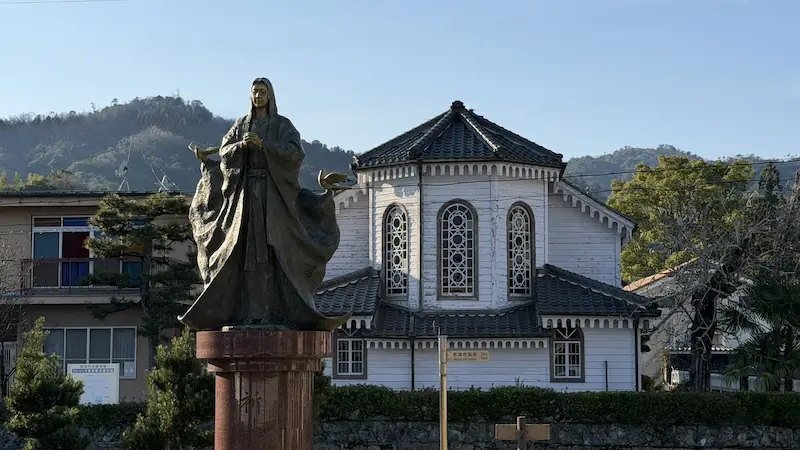
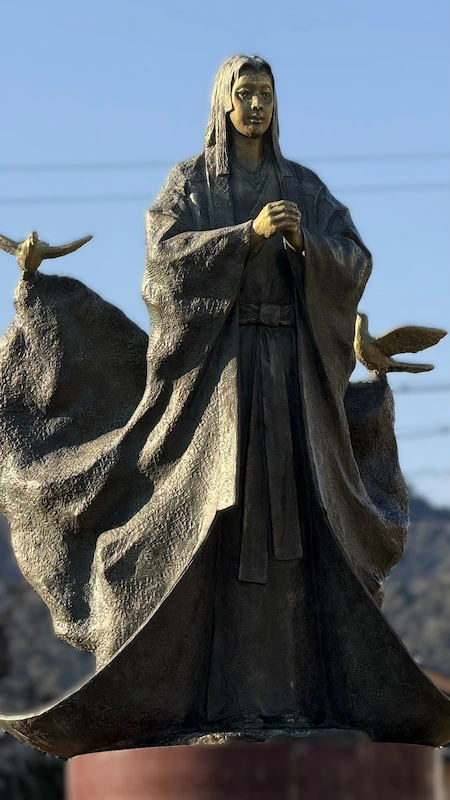
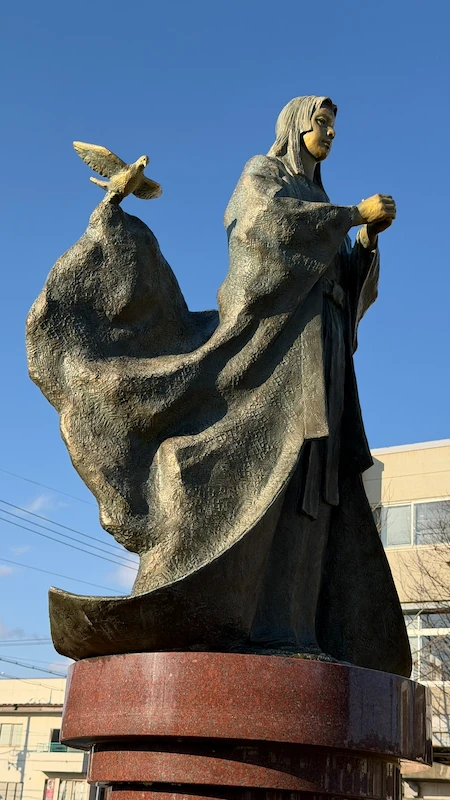
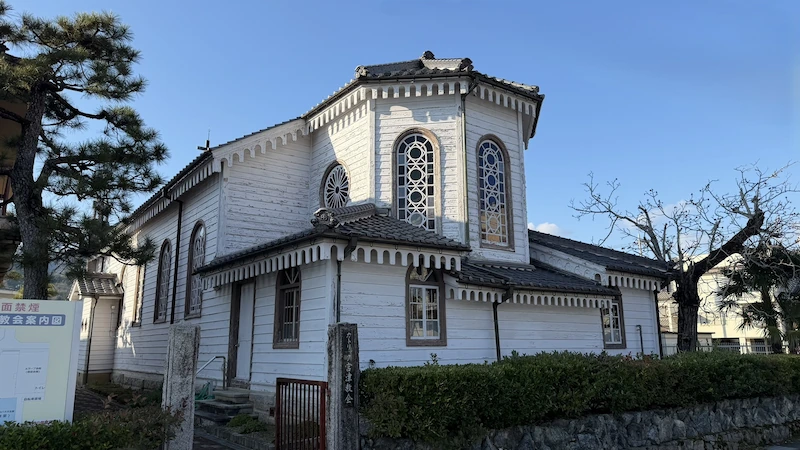
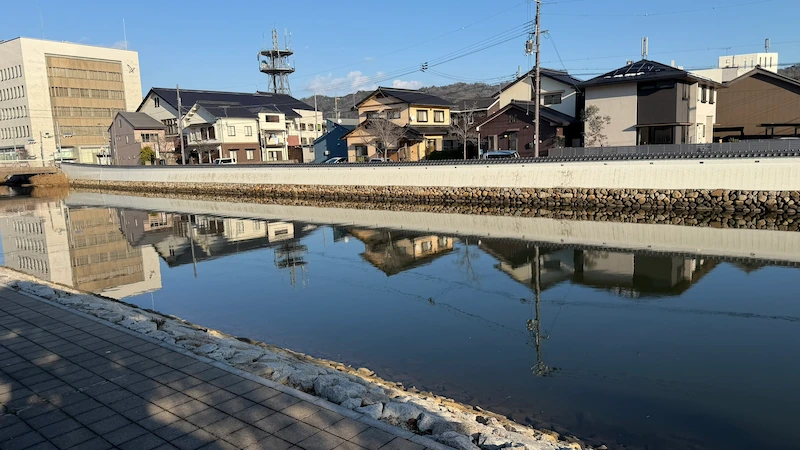
On the banks of the Ōtegawa River, beside the Catholic Miyazu Church, stands the Hosokawa Gracia statue “Prayer.” It was erected in November 2013 (Heisei 25) to commemorate the 450th anniversary of the births of Hosokawa Tadaoki and Lady Gracia. The design makes it feel as if her garment hem flutters in the river breeze, and the statue is positioned to gaze toward Miyazu Castle, where she is said to have lived. With the theme of “prayer,” it portrays Tama (later Gracia) wishing for lasting happiness for the Hosokawa family and the people of Miyazu. The sculpture was created by Shinsuke Yamamoto (a member of the Japan Art Academy), and the inscription was written by Morihiro Hosokawa, the 18th head of the Hosokawa family. When you remember the life of a woman who received the name “Gracia” (meaning “grace”), you’ll likely want to pause here and fold your hands in quiet reflection.
| Year Built | November 2013 (Heisei 25) |
|---|---|
| Builder | 450th Birth Anniversary Commemorative Project for Lord Hosokawa Tadaoki and Lady Gracia (a commemorative initiative by related organizations) |
| Structure / Features | Bronze statue. Stands at the center of a plaza along the Ōtegawa River, composed to face toward Miyazu Castle |
| Renovation / Restoration | None noted |
| Current Condition | On public display (outdoors) |
| Loss / Damage | None noted |
| Cultural Property Designation | None |
| Notes | Sculptor: Shinsuke Yamamoto / Inscription calligraphy: Morihiro Hosokawa |
🗺 Address:626-8501 344 Yanaginawate, Miyazu City, Kyoto Prefecture (Ōtegawa Fureai Plaza)
🚶 Access
5 minutes on foot from the previous spot “Ōkuboyama Castle Ruins (Ōkubo-yama Castle Ruins)” (approx. 0.33km)
⏳ Suggested Visit Time
Quick highlights: ~10 minutes
Unhurried visit: ~0.5 hour
📍 Highlights
- The “facing Miyazu Castle” position: The statue is composed to look toward Miyazu Castle from the riverbank—present-day town life and Gracia’s time overlap here.
- Inscription calligraphy (Morihiro Hosokawa): Written by the 18th head of the Hosokawa family, it quietly signals that this statue was erected as “family memory,” not only public decoration.
- Seasonal ways to enjoy it: In spring, the Ōtegawa riverside is lined with cherry blossoms, making the walk even more pleasant. The statue, river, and sakura also photograph beautifully.
📌 Trivia
- An unexpected historical thread: Rather than focusing only on “tragedy,” this statue highlights her life in Miyazu and her wish for people’s happiness—making “prayer” its central theme.
- Local insider tip: The “Ōtegawa Fureai Plaza” includes river decks and benches and has increasingly been opened as a casual rest stop you can drop into during a stroll.
- Connection to notable figures: The sculptor is Japan Art Academy member Shinsuke Yamamoto, and the inscription was written by former prime minister Morihiro Hosokawa. The piece carries a modern “Hosokawa family gaze” within the work itself.
Miyazu Castle Taiko Gate (Babasaki Gomon)
⭐ Recommendation Rating
Historical Value:☆☆☆
Visual Appeal:☆☆
Experiential Value:☆
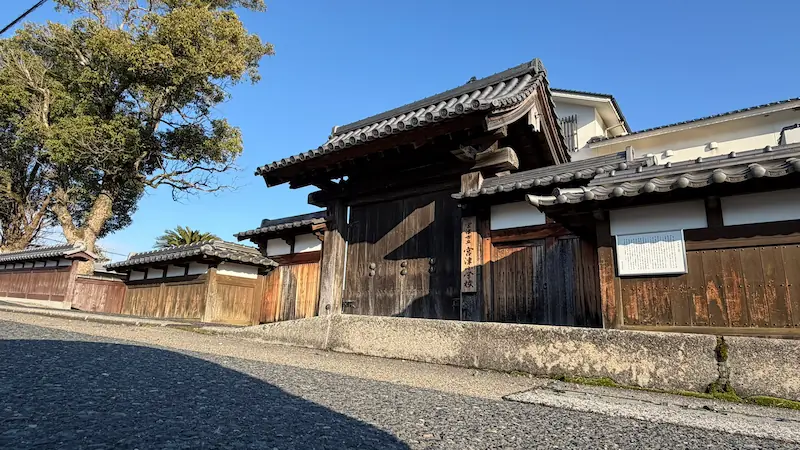
As you walk through central Miyazu, the layers of time suddenly rise up in the shape of a “gate.” That is Miyazu Castle’s Taiko Gate (Babasaki Gomon). The castle itself vanished after Meiji-era dismantling, but this gate survived through relocation and preservation, quietly watching over people’s daily comings and goings even now.
In a town where Hosokawa Gracia (Akechi Tama) is said to have spent her youth in the castle town, few things make the atmosphere of the period feel more tangible than an “entrance/exit” remnant like this. The weight of the wooden doors, the curve of the tiled roof, the continuous side walls—this boundary where order, tension, and everyday life intersected remains, blended into modern living space yet unmistakably present.
| Year Built | Early modern period (Edo period; year unknown / the gate is confirmed in at least 19th-century maps) |
|---|---|
| Builder | Unknown (built as part of Miyazu Castle’s Babasaki Gate) |
| Structure / Features | Castle gate remnant with tiled roof gate, wooden doors, and attached side walls (relocated and preserved) |
| Renovation / Restoration | Relocated and preserved after castle abolition. After relocation and repairs in 2010, it was opened at the current site |
| Current Condition | Extant (relocated preservation) |
| Loss / Damage | Miyazu Castle largely disappeared due to abolition; the gate survived through relocation |
| Cultural Property Designation | Not designated |
| Notes | Also called “Babasaki Gomon.” As it’s close to residential life, please observe good viewing manners |
🗺 Address:2508 Sotogawa, Miyazu City, Kyoto Prefecture (near the main gate of Miyazu Municipal Miyazu Elementary School)
🚶 Access
3 minutes on foot from the previous spot “Miyazu Hosokawa Gracia Statue ‘Prayer’” (approx. 230m)
⏳ Suggested Visit Time
Quick highlights: ~10 minutes
Unhurried visit: ~30 minutes
📍 Highlights
- The gate’s “still-in-use” feeling: Even as a relocated preservation piece, it feels alive—connected to everyday town life. The closer you get, the more the timber’s presence hits you.
- Imagine the castle-town boundary: Use this as a starting point to extend your gaze toward Miyazu Castle Ruins and the Ōtegawa scenery, and the relationship between castle and town becomes three-dimensional.
- Seasonal ways to enjoy it: Pair it with spring cherry blossom walks around the Ōtegawa. In softer light, the gate’s shadows and contours photograph beautifully.
📌 Trivia
- An unexpected historical thread: Even after the castle vanished, the gate survived through relocation—a “portable ruin” that carried the town’s memory forward.
- Local insider tip: Don’t stop at the Taiko Gate—walk a little farther to see nearby restored sections of white walls and stonework to grasp the castle’s scale more easily.
- Connection to a notable figure: The Miyazu castle town ruled by the Hosokawa clan overlaps with the youth of Akechi Tama, later known as Hosokawa Gracia. This gate preserves the memory of that castle town’s “entrance.”
Miyazu Castle Ruins
⭐ Recommendation Rating
Historical Value:☆☆
Visual Appeal:☆
Experiential Value:☆
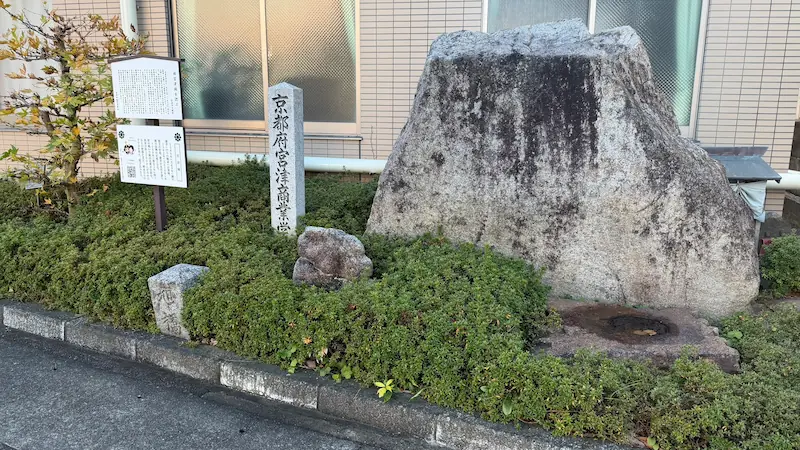
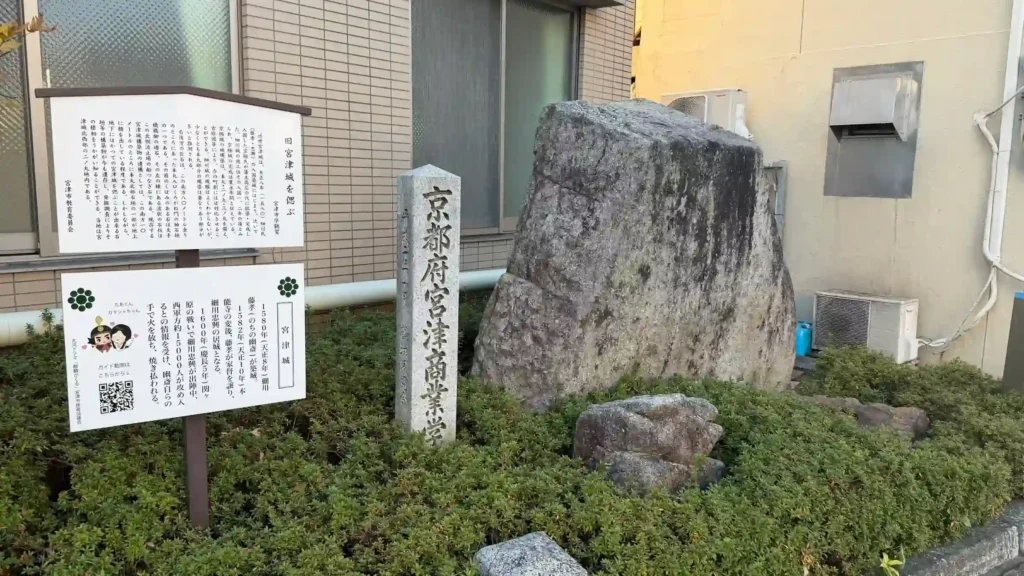
Near the mouth of the Ōtegawa River where its flow loosens into Miyazu Bay, there’s a strange moment: you see no keep, no turret—yet your body simply accepts, “A castle stood here.” Miyazu Castle was a “seaside castle” built as a strategic base for controlling Tango after Hosokawa Fujitaka (Yūsai) received the province from Oda Nobunaga. Choosing the bayfront as a site was itself a strategy, and the castle is sometimes positioned as an early forerunner of the more fully developed seaside castles that later flourished across Japan.
This site ties so strongly to “Gracia’s story” because her two families intersect here. Sources and traditions suggest that Gracia’s father, Akechi Mitsuhide, was deeply involved in the castle’s construction, and a letter is said to have been passed down in which Nobunaga instructed Fujitaka to “consult with Mitsuhide and build it strong.” Here, the father’s name is etched into the act of building, while the husband’s family—Hosokawa Tadaoki (Fujitaka’s son)—moved Tango’s politics from this base. Miyazu Castle Ruins quietly rises as a “key point on the map,” connecting Gracia’s life and her final chapter.
| Year Built | Construction began in Tenshō 8 (1580) |
|---|---|
| Builder | Hosokawa Fujitaka (Yūsai) / Hosokawa Tadaoki (records and traditions suggest Akechi Mitsuhide was involved in construction advice) |
| Structure / Features | An early modern flatland castle (seaside castle) built on Miyazu Bay’s shore. Planned with Honmaru, Ninomaru, Sannomaru, etc., located on the alluvial plain on the right bank of the Ōtegawa |
| Renovation / Restoration | Tradition says Fujitaka burned it himself in Keichō 5 (1600) → rebuilt under figures such as Kyōgoku Takahiro, reportedly completed in Kan’ei 2 (1625). In recent years, restored wall sections and the relocated Taiko Gate were completed in March 2010 (linked to Ōtegawa river improvement works) |
| Current Condition | Few above-ground remains are visible, but restored wall sections along the Ōtegawa help you feel the outline of the former castle |
| Loss / Damage | After abolition and urbanization, the castle’s form became hard to see from ground level |
| Cultural Property Designation | Not designated (listed in Kyoto Prefecture Board of Education site information) |
| Notes | A “crossroads” where the names of Mitsuhide (father), Tadaoki (husband), and Fujitaka (father-in-law) coexist in one castle’s history |
🗺 Address:Tsuruga, Miyazu City, Kyoto Prefecture (around the right bank of the Ōtegawa)
🚶 Access
7 minutes on foot from the previous spot “Miyazu Castle Taiko Gate (Babasaki Gomon)” (approx. 500m)
⏳ Suggested Visit Time
Quick highlights: ~5 minutes
Unhurried visit: ~10 minutes
📍 Highlights
- Restored castle walls along the Ōtegawa (“Shirakabe-no-michi” area): White walls running beside the water teach you the seaside castle’s “edge” at walking speed.
- Castle-town street layout that still shows the skeleton: The early modern outline—centered around Honmaru, Ninomaru, and Sannomaru—remains subtly in road bends and the river’s positioning.
- Seasonal ways to enjoy it: Spring is best for photo walks—the contrast of cherry blossoms and white walls along the Ōtegawa is especially striking.
📌 Trivia
- An unexpected historical thread: During the Tanabe Castle siege—often treated as a prelude to Sekigahara—tradition says Fujitaka burned Miyazu Castle himself.
- Local insider tip: While remains are hard to see above ground, accumulated excavation work and historical maps are steadily clarifying the castle’s true layout.
- Connection to a notable figure: Records suggest Gracia’s father, Akechi Mitsuhide, was deeply involved in the background of the castle’s construction—making this a rare castle where “the father’s name” touches the design philosophy itself.
Seirin-ji Temple
⭐ Recommendation Rating
Historical Value:☆☆☆
Visual Appeal:☆☆
Experiential Value:☆☆
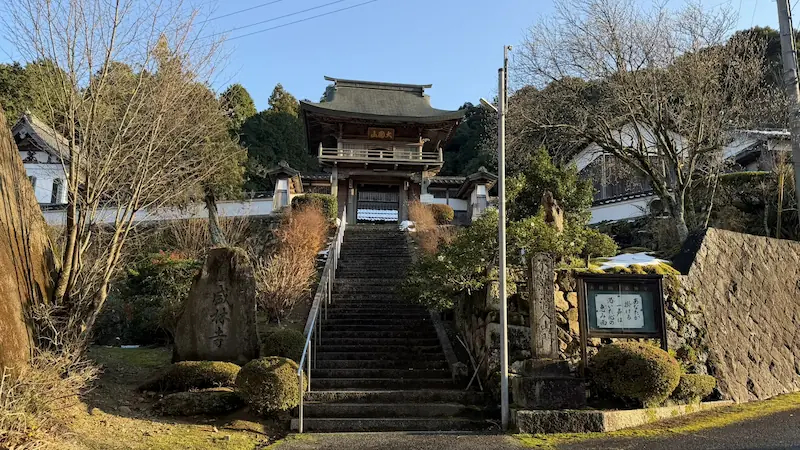
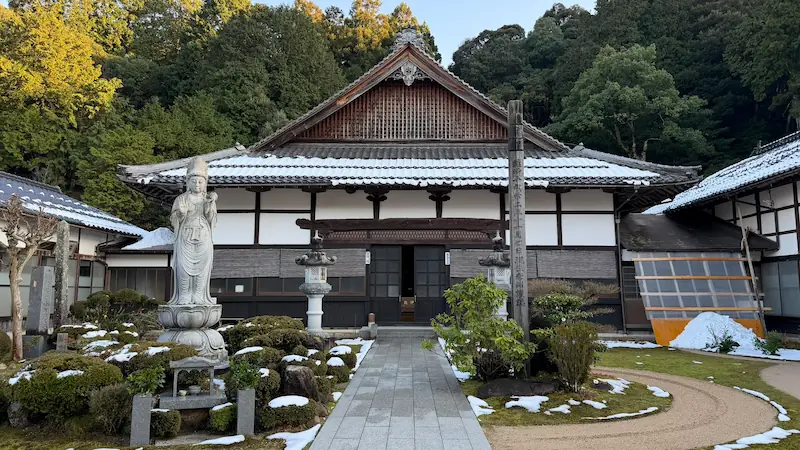
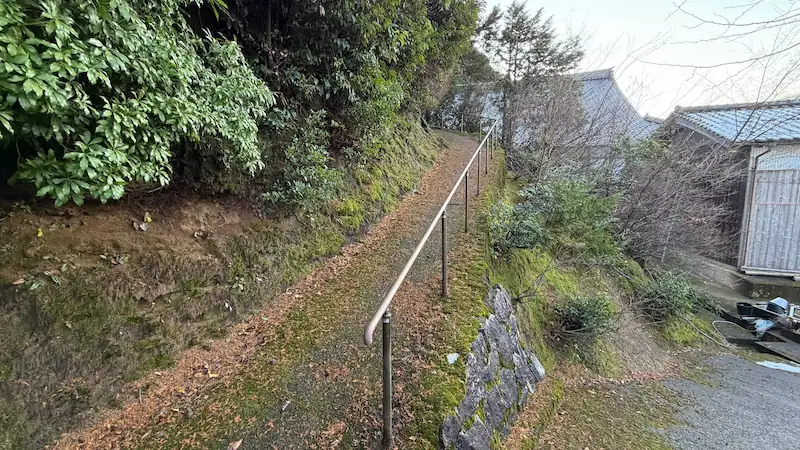
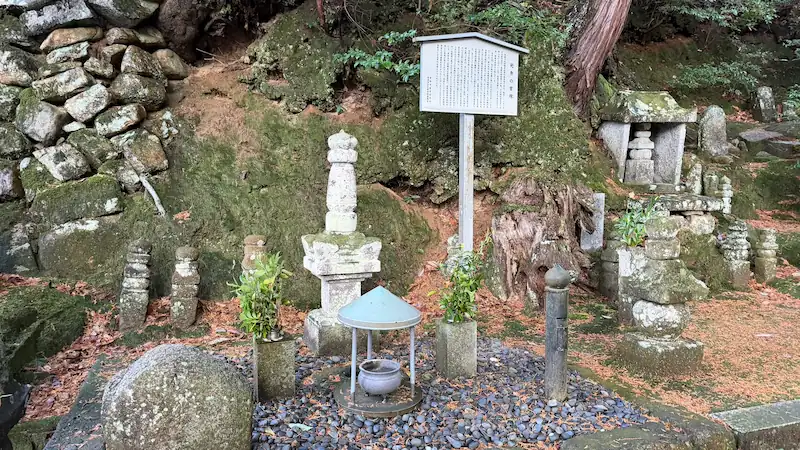
Leave the center of Miyazu and head up to higher ground. At the top of the stone steps, you’ll find the Sōtō Zen temple Daienzan Seirin-ji. Founded in Tenshō 5 (1577) as the family temple of Ogura Harima-no-kami—a castle lord of Kami-Miyazu Castle and senior retainer of the Isshiki clan—it later moved twice before settling at its current location in Jōkyō 2 (1685). In Tango, shaken by Sengoku-era tides, the place of prayer survived by changing its physical “home,” yet continuing its lineage. Seirin-ji connects to Gracia through a powerful tradition: the “head mound” of her father, Akechi Mitsuhide, remains on the hill behind the grounds. After Mitsuhide was killed, the story goes, his head was delivered to his daughter in Miyazu and buried here. On the base of the hōkyōintō (treasure-pagoda) are carved his posthumous Buddhist name, “Jōtetsu Mitsuhide Koji,” and the date “Tenshō 10, 6th month, 13th day.” Each character, standing at the border between fact and tradition, quietly brings Gracia’s “shadow of prayer” into focus. Beyond that, you’ll find layers to walk like a storybook: the founding priest Chōshitsu Sōhaku, said to have drawn learners of many backgrounds; the massive “Sangai Yuishin” stone stupa; and a garden fed by mountain water. Seirin-ji is a temple you read with your feet.
| Year Built | Founded in Tenshō 5 (1577) / relocated to current site in Jōkyō 2 (1685) |
|---|---|
| Builder | Founded as the family temple of Ogura Harima-no-kami (lord of Kami-Miyazu Castle; senior retainer of the Isshiki clan) / Founding priest: Chōshitsu Sōhaku |
| Structure / Features | Temple complex on higher ground; within the grounds a massive Sangai Yuishin stone stupa; Mitsuhide head mound (hōkyōintō) on the back hill; garden fed by mountain water |
| Renovation / Restoration | Moved twice from its original founding site (Ōkubo Valley, Miyazu) and relocated here in Jōkyō 2 (1685) |
| Current Condition | Main hall, gate, garden, etc. remain (the head mound also remains) |
| Loss / Damage | The original complex at the founding site no longer remains (due to relocation) |
| Cultural Property Designation | Miyazu City Designated Cultural Property: “Portrait of Soku’an Baishin Dōji” (color on silk) |
| Notes | It has been suggested the head mound may have been transferred to the current location / some discussions note possible overlap with passages in Luís Fróis’ *History of Japan* |
🗺 Address:696 Kita, Miyazu City, Kyoto Prefecture
🚶 Access
From the previous spot “Miyazu Castle Ruins,” take the train and walk 22 minutes (approx. 3.9km)
⏳ Suggested Visit Time
Quick highlights: ~25 minutes
Unhurried visit: ~1 hour
📍 Highlights
- Akechi Mitsuhide’s head mound (hōkyōintō): The carved posthumous name and date transform the tradition surrounding Gracia and her father into something you can physically touch.
- Sangai Yuishin stone stupa and stepped approach: A massive stone stupa said to have been erected by the founding priest, weighing around 2 tons. The act of climbing the steps itself becomes a memorable entry into the temple grounds.
- Seasonal ways to enjoy it: In fresh green season the garden’s water sound becomes even clearer; in autumn, the grounds color up into a “quiet scenic view.”
📌 Trivia
- An unexpected historical thread: After its founding, Seirin-ji moved twice, settling at the current location in 1685. It’s also said the head mound may have been carried here from the original site.
- Local insider tip: A carved inscription said to note that people of many social ranks gathered here to study is believed to remain on the Sangai Yuishin stupa. Try looking for it on site.
- Connection to a notable figure: Fróis’ *History of Japan* includes a passage about Mitsuhide’s daughter (Gracia/Tamako) visiting a Zen temple near a Tango castle, and some discussions suggest it may overlap with Seirin-ji.
West Maizuru Area
West Maizuru is the part of Maizuru where the “core” of a castle town is easiest to see—even in a city best known as a port. Step into Tanabe Castle Ruins (Maizuru Park), just a short walk from JR Nishi-Maizuru Station, and you’ll find white walls, gates, and stonework gathered at a readable scale. Even with limited time, you can grasp the castle’s outline. The simple sightseeing flow is very West Maizuru.
This place connects deeply to Gracia’s story because it was the stage for the “Tanabe Castle Siege,” often treated as a prelude to Sekigahara. In Keichō 5 (1600)—the same year Gracia died in Osaka—her father-in-law Hosokawa Fujitaka (Yūsai) entered the castle and accepted the pressure of a large Western Army force, even while her husband Hosokawa Tadaoki sided with the Eastern Army. The conflict wasn’t only about taking the castle. It also entangled the transmission of classical poetry and learning that Yūsai carried (Kokin Denju), ultimately leading to a court-mediated resolution and the lifting of the siege. It’s a slightly unusual kind of castle site—where military force and cultural authority collided within the same walls.
Inside the park, the easiest route is: Tanabe Castle Museum (reconstructed castle gate) → Shōkōkan (reconstructed two-story turret) → stone walls and the area around the main keep base. It’s straightforward, even for first-time visitors. The park is also known for cherry blossoms in spring, and the pairing of flowers with the gate and white walls is beautiful. Whether you’re here for history or just a pleasant walk, West Maizuru’s strength is that everyone can enjoy the same route with ease.
Tanabe Castle Ruins (Maizuru City)
⭐ Recommendation Rating
Historical Value:☆☆☆
Visual Appeal:☆☆☆
Experiential Value:☆☆☆
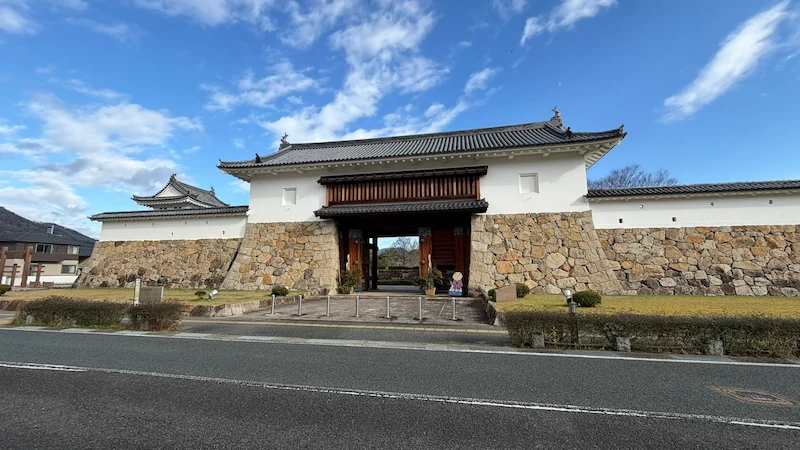
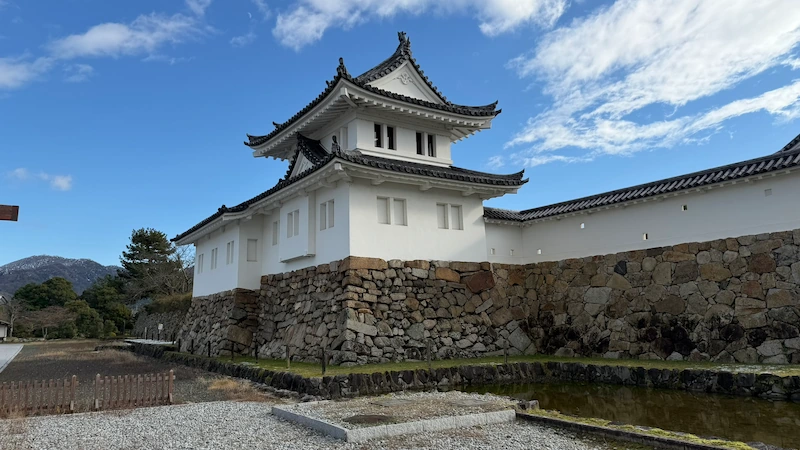
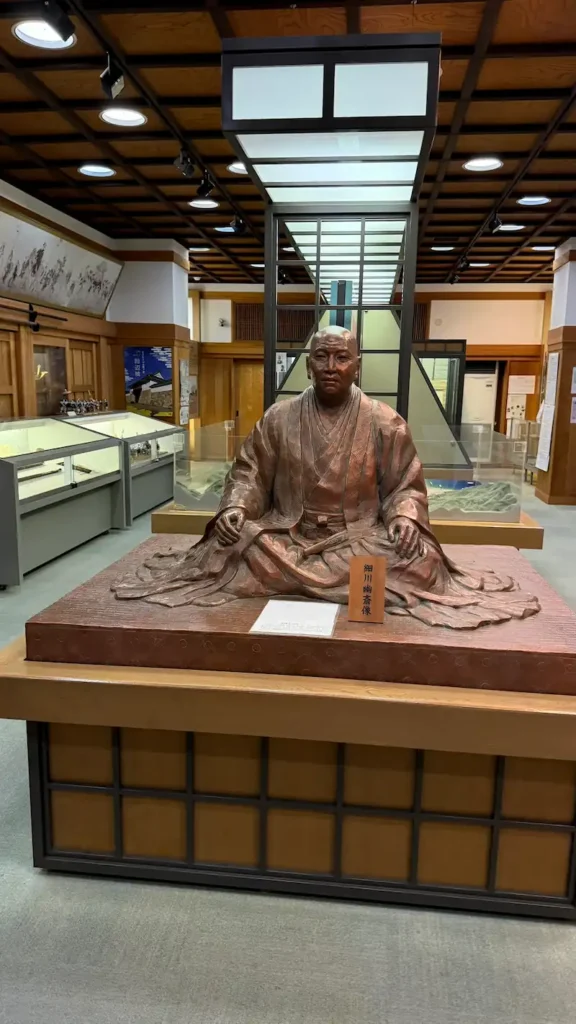
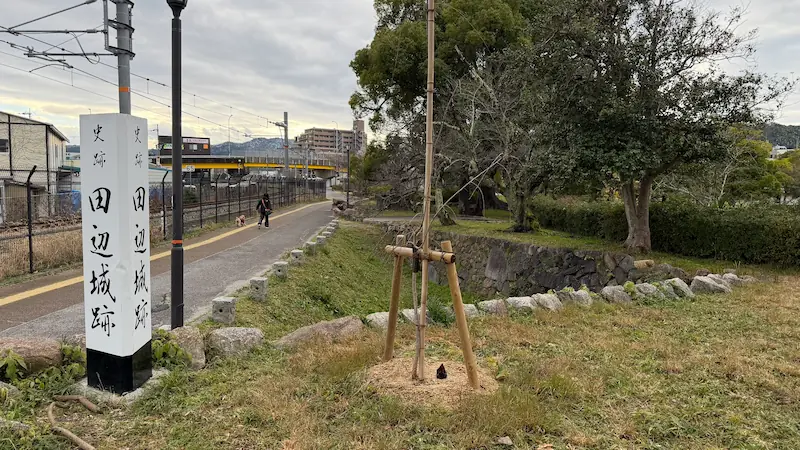
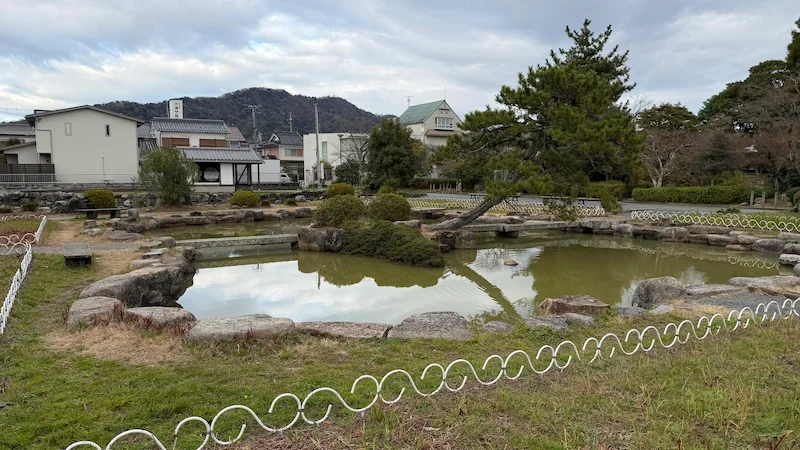
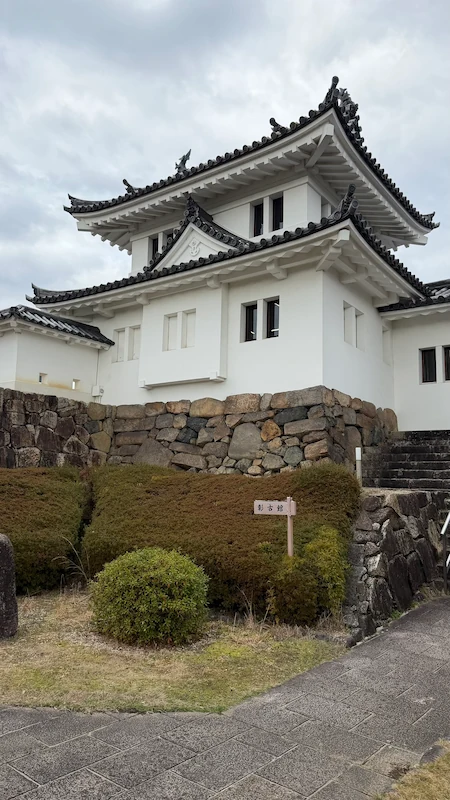
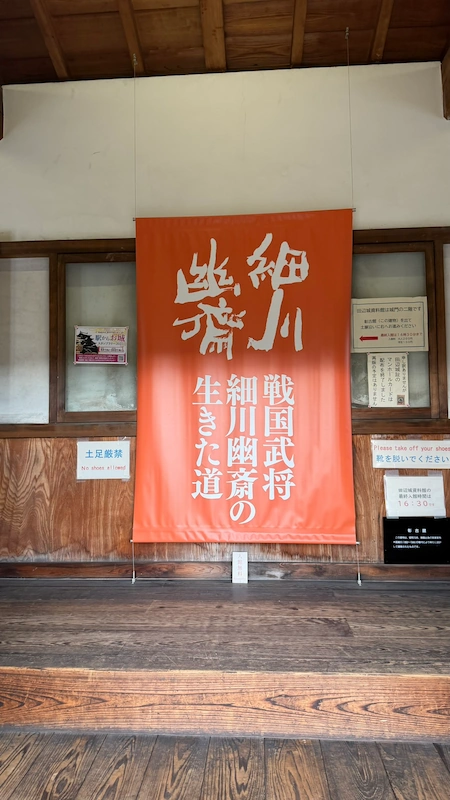
In the heart of Maizuru, there’s a place where white walls and stonework rise with crisp dignity. Tanabe Castle is an essential stage for telling the story of Hosokawa Gracia (Akechi Tama) in her “final era.” In Keichō 5 (1600), the year Gracia died in Osaka, her husband Hosokawa Tadaoki sided with the Eastern Army, while her retired father-in-law Hosokawa Fujitaka (Yūsai) entered the castle and faced a large Western Army force. In the currents of war, what he tried to protect wasn’t only the castle layout. As a transmitter of waka poetry and classical learning, Yūsai’s role overlapped with the inheritance of culture itself, and the siege was ultimately lifted through imperial court mediation. Stand at the edge of the stone walls and you can still feel, faintly mixed into the wind, the tension of “the night before Sekigahara”—where military force and refined learning collided.
| Year Built | Around Tenshō 9 (1581) (construction is also said to date to Tenshō 10 [1582]) |
|---|---|
| Builder | Hosokawa Fujitaka (Yūsai / Nagaoka Fujitaka) |
| Structure / Features | A “rinkakushiki” (perimeter-focused) flatland castle / equipped with stone walls and moats; served as the center of castle-town governance |
| Renovation / Restoration | Modified in the Edo period by the Kyōgoku and Makino clans / 1940: two-story turret “Shōkōkan” reconstructed / 1992: gate reconstructed in a model style and used as the Tanabe Castle Museum |
| Current Condition | Some remains survive, including stone walls and the main keep base stonework (maintained as Maizuru Park) |
| Loss / Damage | In 1874 (Meiji 7), most of the site was dismantled and the moats were filled in |
| Cultural Property Designation | Maizuru City Designated Historic Site (Tanabe Castle Ruins) |
| Notes | Stage of the “Tanabe Castle Siege,” a prelude to Sekigahara. Today, the Tanabe Castle Museum introduces the history of the castle and castle town |
🗺 Address:624-0853 15-22 Minami-Tanabe, Maizuru City, Kyoto Prefecture
🚶 Access
7 minutes on foot from JR Nishi-Maizuru Station (approx. 500m)
⏳ Suggested Visit Time
Quick highlights: ~30 minutes
Unhurried visit: ~1.5 hours
📍 Highlights
- Tanabe Castle Museum (reconstructed castle gate): A compact “entrance” where you can follow the siege story and Hosokawa Yūsai while tracing Tanabe’s castle-town history.
- Shōkōkan (reconstructed two-story turret) and stone walls: The white turret and stonework shadows photograph beautifully, and it’s an easy spot to imagine the former outline.
- Seasonal ways to enjoy it: Spring is cherry blossom season. During peak bloom, lanterns are lit, and the pairing of gate and night sakura deepens the travel mood.
📌 Trivia
- An unexpected historical thread: During the siege, Yūsai carried the weight of “Kokin Denju,” and the battle took the extraordinary turn of having attacks halted through court mediation—an iconic case of “culture” intervening on a battlefield.
- Local insider tip: The Tanabe Castle Museum distributes “Gojōin” castle stamps as well—your travel memory can remain as a “paper trophy.”
- Connection to a notable figure: The endurance of Hosokawa Yūsai—Gracia’s father-in-law—at this castle links directly in a single line to Gracia’s final moments.


comment